38 Best Board Games for 6-Year-Olds That Turn Family Game Night Into the Best Hour of the Day

The best board game for a 6-year-old is Ticket to Ride: First Journey. It gives a first grader a real strategy game with picture tickets and no reading, and the whole family enjoys it. A child of six plans a train route, claims it with colored cards, and finishes the game in about 30 minutes. If your child hates losing, start with Outfoxed! instead: everyone wins or loses together, so game night stays calm.
Six is the sweet spot for board games. Your little one reads a few words, follows three or four rules, waits for a turn, and plans one move ahead. A typical 6-year-old can also handle losing most days, which opens up competitive games that would have ended in tears at 4. That mix makes family game night work at last, and it makes a shelf of good games worth building.
These 38 board games for 6-year-olds cover cooperative games, first strategy games, classic family games, math games, word games, and quick dexterity games. Each pick names its players, its age range, its play time, its skills, its pros and cons, and who it suits best. The list fits a boy, a girl, and a neutral gift, since interest matters more than a label. Every game here is a real board game with real rules, not a toy with a board on the box.
This guide lists 38 games: 6 cooperative, 7 first strategy, 7 classic family, 7 learning, 6 quick and dexterity, and 5 thinking and deduction games. Every age, player count, and play time below comes from the maker listing or a named review, and every game is a real product with a real listing. Check the live listing before you buy, since prices and stock change, and count the pieces when the box opens.
Heads up: this post contains affiliate links. If you buy through them, MamaKinder may earn a small commission at no extra cost to you, and it helps keep these guides free.

⚡ Quick Picks
Short on time? These are the five picks that stood out for 6-year-olds:
Board Game Comparison at a Glance
Compare all 38 products
| Product | Best for | Key feature | Rating | Buy |
|---|---|---|---|---|
 |
Cooperative Game | Team mystery, clue decoder, no tears | – | Check Price |
| First cooperative game for a 6-year-old | Cooperative path-building race, ages 4 and up | – | Check Price | |
| Very first board game | Cooperative color matching, ages 4 and up, 15 minutes | – | Check Price | |
| Mazes and quiet, thoughtful play | Cooperative magnetic maze, ages 5 and up | – | Check Price | |
| Disney fan | Cooperative seek and find on a giant board, ages 4 and up | – | Check Price | |
| Ghosts and treasure hunts | Cooperative haunted house, 2 to 5 players, two ways to play | – | Check Price | |
 |
Grown-up game, and for the whole family | Trains, routes, picture tickets, no reading | – | Check Price |
 |
Pirates | Pirates, trading, building, whole table | – | Check Price |
| Very first strategy game for a 6-year-old | First tile strategy game, ages 4 and up, no scoring | – | Check Price | |
| Blocking and planning | Animal matching strategy, ages 3 to 6, 2 to 4 players | – | Check Price | |
| Plan ahead | Tile fitting strategy, 2 to 4 players, one rule | – | Check Price | |
| Colors and patterns | Tile matching strategy, ages 5 and up, two-sided boards | – | Check Price | |
 |
Bigger strategy game | Path building, plan ahead, jungle temples | – | Check Price |
| Very first board game | Classic color path game, ages 3 and up, no reading | – | Check Price | |
 |
Family game night | Pop the bubble, race home, family favorite | – | Check Price |
| Practising losing gracefully | Classic racing game, ages 6 and up, card moves | – | Check Price | |
| Quiet Two-Player Game | Two-player deduction, ages 6 and up, people and pet cards | – | Check Price | |
 |
Quick game after school | Four in a row, fast rounds, head to head | – | Check Price |
| Practicing counting | Classic counting game, ages 3 and up, no reading | – | Check Price | |
| Learning money | First money game, ages 5 and up, 2 to 4 players | – | Check Price | |
 |
Practicing adding and subtracting | Addition and subtraction on the move | – | Check Price |
 |
Learning sight words | Sight words, matching, fast rounds | – | Check Price |
| Practicing counting | Counting card game, ages 3 and up, sixteen ways to play | – | Check Price | |
| Learning to spell | First word game, ages 5 and up, two-sided board | – | Check Price | |
| Cats and memory games | Memory and number card game, ages 6 and up, 2 to 6 players | – | Check Price | |
| Practicing counting to ten | Counting game with cherries and a spinner, ages 3 and up | – | Check Price | |
| Animals and fine motor practice | Color matching with a squirrel squeezer, ages 3 and up | – | Check Price | |
 |
Quick game before dinner | Five minutes, wobbling yeti, big laughs | – | Check Price |
 |
Building and steady-hand games | Stacking cards, climbing rhino, steady hands | – | Check Price |
| Sports fan | Fast matching card game, ages 6 and up, 2 to 8 players, travel tin | – | Check Price | |
| Dragons and shiny gems | Dexterity gem game, ages 5 and up, 2 to 4 players | – | Check Price | |
 |
Fairy tales and memory games | Treasure hunt, fairy tale, remember the paths | – | Check Price |
| Quick game before dinner | Dexterity ice game, ages 3 and up, 2 to 4 players, 5 minutes | – | Check Price | |
 |
Mysteries and detective play | Who broke the toy, picture clues, no reading | – | Check Price |
| Silly games and steady-hand play | Electronic dexterity game, ages 6 and up, 1 or more players | – | Check Price | |
| Patterns and tile games | Tile matching strategy, ages 6 and up, 108 wooden tiles | Check Price | ||
| Family card game | Classic card matching game, 2 to 10 players, about 15 minutes | – | Check Price | |
| Mazes and quiet teamwork | Cooperative silent maze, ages 5 and up, 1 to 4 players | – | Check Price |
Cooperative Board Games for 6-Year-Olds
These six games end with the whole table winning or losing together. Each one suits a 6-year-old who still finds losing hard, and each one plays well with mixed ages.
Best Cooperative Game
👍 Pros
- Team play with no single loser
- Picture clues
- Quick 20-minute rounds
👎 Cons
- The game needs an adult for the first round
- The fox changes every game
- So a child who memorizes one answer must learn to deduce again
Specifications
| Spec | Details |
|---|---|
| Type | Cooperative Mystery Game |
| Publisher | Gamewright |
| Age range | ages 5 and up |
| Players | 2 to 4 players |
| Play time | 20 minutes |
| Details | cooperative whodunit with clue decoder |
The best cooperative board game on this list is Outfoxed!: the whole table solves one mystery together. Someone stole Mrs. Plumpert’s prized pot pie, and the players must find the fox who did it before the thief escapes. A child rolls the dice, moves around the board, gathers clues, and feeds them into the clue decoder to rule suspects out. The game ends with the team naming the fox together, so nobody loses alone.
A first-grader reads almost nothing here, since the clues are pictures and the decoder does the work. It quietly teaches deduction in small steps: each clue narrows the list, and a child who rules out the wrong fox feels clever, not tested. The 20-minute game fits a school-night table, and the pieces are chunky enough to survive small hands. Play it first when a child melts down after losing, since the shared win rebuilds trust in game night.
Safety: Keep the small clue tokens in the box after play, since a lost token breaks the decoder game.
Best First Cooperative Game

👍 Pros
- No reading
- Team planning
- Short game
- Gentle first co-op
👎 Cons
- The game feels easy for a confident 6-year-old after a few plays
- The ogre rarely wins once the team plans well
Specifications
| Spec | Details |
|---|---|
| Type | Cooperative Game |
| Publisher | Peaceable Kingdom |
| Age range | ages 4 and up |
| Players | 2 to 4 players |
| Play time | about 20 minutes |
| Details | path-building race against the ogre |
Race to the Treasure! wins on the best first cooperative game: the whole team builds one path together. Players lay path tiles to reach the treasure before the ogre does. Each turn, a child picks a tile, places it, and talks through the route with the team. The ogre moves on bad rolls, so the table plans together and cheers together when the path connects.
A kid this age plays this game with no reading at all, since the tiles are pictures. Your child learns planning in the open: a child sees the whole board, tries a route, and learns to change it when the ogre closes in. The 20-minute game suits a tired evening, and the rules fit in one minute of explaining. Keep it on the shelf for the nights when a competitive game would end in tears.
Safety: Play on a table, and keep the path tiles flat so the route stays clear.
Best Very First Board Game

👍 Pros
- No reading
- 15 minutes
- Suits mixed ages
- Gentle first game
👎 Cons
- A confident 6-year-old outgrows it fast
- The game offers little challenge for older siblings
Specifications
| Spec | Details |
|---|---|
| Type | Cooperative Matching Game |
| Publisher | Peaceable Kingdom |
| Age range | ages 4 and up |
| Players | 2 to 4 players |
| Play time | 15 minutes |
| Details | color matching to bring the owls home |
Look for simplest cooperative game and you will find Hoot Owl Hoot!: the best first board game for a 6-year-old who has never played one. Players draw color cards and move the owls along the path to the nest before the sun comes up. A child matches a color, moves an owl, and watches the sun token climb. The game ends with every owl home, or with the sun winning, and the team shares the result either way.
In first grade, your child needs no reading and no counting past ten, since the game is color matching all the way through. The 15-minute game fits the shortest attention span on this list, and the chunky owl pieces suit small hands. Parents reach for it when a younger sibling joins, since a 3-year-old can move an owl while the 6-year-old picks the cards. Children learn turn-taking without a single score, which suits a child who still counts winning and losing in tears.
Safety: Keep the small sun token in the box after play.
Best Mazes and Quiet

👍 Pros
- Magnetic play feels magical
- Builds memory
- Quiet game night pick
👎 Cons
- The magnets need a flat table to work well
- A lost magnet piece breaks the game
Specifications
| Spec | Details |
|---|---|
| Type | Cooperative Game |
| Publisher | Peaceable Kingdom |
| Age range | ages 5 and up |
| Players | 2 to 4 players |
| Play time | about 20 minutes |
| Details | magnetic maze with a shared map |
The maze moves under the players’ hands. No other pick on this list does it quite like Gnomes at Night. Two gnomes walk a garden maze at night, collecting treasures while the players guide them with magnets under the board. A child moves a magnet, watches the gnome glide, and plans the route with the team. The board hides the maze walls, so the team must remember the paths together.
A six-year-old child plays with pictures and memory, not words, since the maze is a picture and the treasures are pictures too. The game builds spatial thinking: a child pictures the maze, tests a route, and corrects it when the gnome hits a wall. The magnetic pieces feel like magic to a small child, and the 20-minute game ends before the wonder wears off. Play it when the table wants something quieter than a race.
Safety: Play on a flat table, and keep the magnets away from screens and cards.
Best for Disney Fans

👍 Pros
- Big board fits the whole family
- Picture cards
- Builds focus
👎 Cons
- The game runs long at full length
- The big board needs a large table
Specifications
| Spec | Details |
|---|---|
| Type | Hidden Picture Search Board Game |
| Publisher | Ravensburger |
| Age range | ages 4 and up |
| Players | 2 to 6 players |
| Play time | about 30 minutes |
| Details | seek and find on a giant board |
For Disney fan, or a family game night with six players, Eye Found It! Disney turns a whole table into a treasure hunt, and it suits a 6-year-old who loves to look closely. Players travel around a giant board filled with Disney scenes, hunting for hidden objects on the search cards. A child scans the board, spots a tiny teapot or a hidden shoe, and moves ahead for each find. The board is big enough for six players, so the whole family fits around it.
A child this age reads nothing here, since the search cards are pictures. The game builds focus and visual scanning: a child who looks carefully wins more turns, and a child who rushes misses the tiny objects. The game takes about 30 minutes at full length, so play a short round with fewer search cards when bedtime is near. Disney fans get a board full of characters they already know, which keeps a 6-year-old at the table longer.
Safety: Play on a large table, and keep the small search cards together after play.
Best Ghosts and Treasure Hunts

Best for: Ghosts and treasure hunts
6. Ghost Fightin’ Treasure Hunters Anniversary Edition
👍 Pros
- Real tension
- Great pieces
- Grows with the family
- Award winner
👎 Cons
- The box age is 8 and up
- So a 6-year-old needs a parent for the first games
- The game runs about 30 minutes
Specifications
| Spec | Details |
|---|---|
| Publisher | Mattel |
| Age range | box age 8 and up |
| Players | 2 to 5 players |
| Play time | about 30 minutes |
| Details | cooperative haunted house with two ways to play |
The most exciting cooperative game on this list is Ghost Fightin’ Treasure Hunters Anniversary Edition, the house fights back every round. Players work together to collect eight jewels from a haunted house before the ghosts take over. A child moves a treasure hunter, grabs a jewel, and fights a ghost with the dice, while new ghosts appear every round. The Anniversary Edition adds a one-versus-all mode for older children, so the game grows with the family.
By six, your child plays the basic cooperative mode with a parent at first, since the box age is 8 and up. The rules are simple once the first round is shown: move, collect, fight, and watch the ghosts multiply. The little ghost figures and jewel pieces that fit in tiny backpacks make the game feel real to a small child. It teaches teamwork under pressure, since the table must decide together which ghost to fight and which jewel to grab next.
Safety: Keep the small jewel pieces in the box after play, and play the basic mode first.
First Strategy Board Games for 6-Year-Olds
These seven games give a 6-year-old real choices without long rules. Each one teaches planning one move ahead, and each one still feels fun for the adults at the table.
Best Overall
👍 Pros
- Real strategy with no reading
- Adults enjoy it
- Grows with the child
👎 Cons
- The game takes the full 30 minutes
- A 6-year-old needs help counting the final score the first time
Specifications
| Spec | Details |
|---|---|
| Publisher | Days of Wonder |
| Age range | ages 6 and up |
| Players | 2 to 4 players |
| Play time | about 30 minutes |
| Details | train routes with picture tickets |
The best board game on this list is Ticket to Ride: First Journey. It is a real strategy game a first grader can play alone. Players collect colored train cards and claim routes across a map of the United States or Europe, connecting cities to finish their tickets. A child looks at a picture ticket, finds the two cities, and plans the route between them. The game ends when one player runs low on trains, and the longest route wins extra points.
A young first-grader reads nothing here, since the tickets are pictures and the routes are colors. The play teaches planning one move ahead: a child chooses between drawing cards and claiming a route, and learns to keep a backup plan when a rival takes the route first. The 30-minute game suits a full family night, and the chunky trains suit small hands. Parents enjoy it too, which is why it leads this list.
Safety: Count the pieces when the box opens, since a missing train breaks the count.
Best Family Game
👍 Pros
- Trading teaches counting
- Pirate theme
- Real choices
👎 Cons
- The game takes 30 minutes
- A 6-year-old needs help with the trading rules the first time
Specifications
| Spec | Details |
|---|---|
| Type | Board Game |
| Publisher | CATAN Studio |
| Age range | ages 6 and up |
| Players | 2 to 4 players |
| Play time | 30 minutes |
| Details | pirate trading and building |
Look for the best pirate game and you will find Catan Junior. It teaches trading with a story a child loves. Players build pirate hideouts and ships around a colorful island, trading wood, goats, molasses, and swords with the market and with each other. A child rolls the die, collects the resource the island gives, and decides whether to build, trade, or save. The first player to build seven hideouts wins.
At six, your child reads almost nothing, since the resources are pictures and the trading is spoken out loud. This game teaches counting and swapping in the open: a child counts resources, offers a trade, and learns that a fair trade helps both sides. The 30-minute game suits a family night, and the pirate theme keeps a 6-year-old at the table. The maker says the game is designed for players as young as 5, so a 6-year-old plays it now, not later.
Safety: Keep the small resource tokens in the box after play.
Best Very First Strategy Game

👍 Pros
- No scoring pressure
- Quick to learn
- Chunky wooden figures
👎 Cons
- A confident 6-year-old outgrows it within a year
- The game offers little challenge for adults
Specifications
| Spec | Details |
|---|---|
| Publisher | Z-Man Games |
| Age range | ages 4 and up |
| Players | 2 to 4 players |
| Play time | about 20 minutes |
| Details | tile laying with no scoring |
It has no scoring at all. No other pick on this list does it quite like My First Carcassonne. Players lay tiles to build a landscape of roads, meadows, and towns, then place their figures on the roads they complete. A child picks a tile, turns it until it fits, and places a figure on a road. The player who places all their figures first wins, so the game rewards finishing roads, not beating rivals.
Your child reads nothing, since the tiles are pictures and the rules fit in one minute. Playing it teaches spatial thinking: a child sees how a tile turns a road, plans where the road ends, and learns to save a tile for later. The 20-minute game suits a school-night table, and the chunky wooden figures suit small hands. Play it before full Carcassonne, since the same tile-laying idea returns there with scoring added.
Safety: Play on a table, and keep the wooden figures together after play.
Best Blocking and Planning

👍 Pros
- No reading
- Real blocking strategy
- Animal pictures
👎 Cons
- The box age tops out at 6
- So older siblings may find it easy
- The cards bend if small hands grip them hard
Specifications
| Spec | Details |
|---|---|
| Publisher | Jax |
| Age range | ages 3 to 6 |
| Players | 2 to 4 players |
| Play time | 15 to 30 minutes |
| Details | animal matching with four in a row |
For the best no-reading strategy game for a 6-year-old, Sequence for Kids is the pick: the whole game is pictures. Players match animal cards to the animals on the board, placing a chip on each match. A child looks at a card, finds the animal, and places a chip, aiming for four in a row. Wild cards add a twist, letting a child place a chip anywhere or remove a rival chip.
A kid in first grade reads nothing, since the cards show animals and the board shows the same animals. It sneaks in planning in two directions: a child builds a row while watching for a rival row to block. The game takes 15 to 30 minutes, and the animal pictures keep a young child engaged. The box age tops out at 6, so this is the year to play it most, before the child moves on to the full Sequence game.
Safety: Keep the cards flat in the box, since bent cards mark the deck.
Best for Planners

👍 Pros
- One rule to learn
- Deep strategy
- Bright pieces
👎 Cons
- The box age is 7 and up
- So a 6-year-old needs a parent for the first games
- The game runs long with four players
Specifications
| Spec | Details |
|---|---|
| Publisher | Mattel |
| Age range | box age 7 and up |
| Players | 2 to 4 players |
| Play time | about 30 minutes |
| Details | tile fitting with one rule |
Look for simplest strategy game to explain and you will find Blokus: one of the hardest to master. Each player gets 21 pieces in one color and takes turns placing them on the board, touching only at the corners. A child picks a piece, finds a corner, and places it, trying to use every piece before the board fills. The player with the fewest pieces left wins.
Your 6-year-old plays Blokus with a parent at first, since the box age is 7 and up. The rule is one sentence, so a 6-year-old learns it in a minute and spends the game learning the strategy: block a rival, save a big piece, and leave an escape corner. The game takes about 30 minutes with four players, and the bright pieces suit a child who loves puzzles. The game builds spatial thinking with every placement.
Safety: Count the pieces when the box opens, since a missing piece changes the game.
Best Colors and Patterns

👍 Pros
- Beautiful tiles
- Grows with the child
- Quick game
👎 Cons
- The tiles slide on a smooth table
- A 6-year-old needs help counting the score the first time
Specifications
| Spec | Details |
|---|---|
| Type | Board Game |
| Publisher | Plan B Games |
| Age range | ages 5 and up |
| Players | 2 to 4 players |
| Play time | about 20 minutes |
| Details | tile matching with two-sided boards |
Parents looking for the prettiest strategy game land on Azul Kids: the tiles look like stained glass. Players draft colorful tiles and place them on their boards to complete patterns, scoring for finished rows and columns. A child picks a tile, matches its color or shape, and places it where it fits best. The two-sided boards let a family start simple and flip to the harder side later.
A child of six reads nothing, since the game is colors and shapes. Kids learn pattern thinking: a child sees a row that needs one more tile and plans the pick that completes it. The 20-minute game suits a school-night table, and the chunky tiles suit small hands. Parents who love the grown-up Azul will enjoy this one too, since the same drafting idea returns with scoring added.
Safety: Play on a mat or a cloth, so the tiles stay put.
Best First Strategy Game
👍 Pros
- Real planning
- Nobody waits
- Beautiful jungle theme
👎 Cons
- The box age is 8 and up
- The game runs 30 to 40 minutes
- A 6-year-old needs help with the scoring the first time
Specifications
| Spec | Details |
|---|---|
| Publisher | HABA |
| Age range | box age 8 and up |
| Players | 2 to 4 players |
| Play time | 30 to 40 minutes |
| Details | jungle path building to the temples |
Ask for the best strategy game and Karuba is the answer. Each player builds paths through a jungle to guide four adventurers to their temples, collecting gold and crystals on the way. A child places a tile, extends a path, and decides whether to move an adventurer or keep building. The player who reaches the most temples first wins, and every player builds at the same time, so nobody waits long.
Your little one plays Karuba with a parent at first, since the box age is 8 and up. The game is all pictures and paths, so a 6-year-old who can follow a road can play it, and the simultaneous turns keep a restless child engaged. The game takes 30 to 40 minutes, so play it on a weekend, not a school night. The Family Gamers list it for ages 6 and up, and The Tabletop Family names it the best strategy game for 6-year-olds.
Safety: Play on a weekend when the full 40 minutes fits, and count the tiles after play.
Classic Family Board Games for 6-Year-Olds
These seven games are the classics most parents grew up with, in editions a 6-year-old can play today. Each one needs little or no reading, and each one fills a family game night.
Best Calm First Game

👍 Pros
- No reading
- No counting
- First board game
- Low price
👎 Cons
- A confident 6-year-old outgrows it fast
- Luck decides the winner
- Not skill
Specifications
| Spec | Details |
|---|---|
| Type | Kingdom of Sweet Adventures Board Game |
| Publisher | Hasbro |
| Age range | ages 3 and up |
| Players | 2 to 4 players |
| Play time | 15 to 30 minutes |
| Details | color path with no reading |
One reason Candy Land stands out as the classic first board game: it still suits a 6-year-old who is new to the table. Players draw color cards and move their gingerbread pawns along a rainbow path to the castle, past the Duke of Swirl and Grandma Gooey. A child draws a card, finds the color, and moves to the next square of that color. The game needs no reading and no counting, so a child plays it alone after one round.
A typical 6-year-old who already plays strategy games may find Candy Land too easy, and that is fine. The game suits a first board game, a game with a younger sibling, or a calm game before bed. The 15 to 30 minute game teaches turn-taking and waiting, and the sweet theme keeps a young child smiling. Parents who played it as children will enjoy sharing it, and the game costs little for the hours it fills.
Safety: Keep the gingerbread pawns in the box after play.
Best Classic
👍 Pros
- Bubble dice
- Pegs stay in the board
- Family favorite
👎 Cons
- The game takes the full 30 minutes
- A child who loses a peg to the start may need a calm word
Specifications
| Spec | Details |
|---|---|
| Type | Board Game |
| Publisher | Hasbro |
| Age range | ages 5 and up |
| Players | 2 to 4 players |
| Play time | 30 minutes |
| Details | racing with a popping dice bubble |
The pop of the dice bubble never gets old; that is what makes Trouble the best overall board game for a 6-year-old in parent guides. Players press the bubble to roll the die, then move their pegs around the board to the finish line. A child pops the bubble, counts the spaces, and cheers when a rival peg gets sent back to the start. The goal is to bring all four pegs home first, and the bubble keeps every turn fun.
A first-grader reads nothing and counts to six, since the die shows the move. It quietly teaches counting and taking turns with a race that stays close to the end. The 30-minute game suits a family night, and the pegs stay in the board, so nothing gets lost mid-game. The game is a bestseller for a reason: parents played it, children love it, and the bubble makes losing feel less bad.
Safety: Press the bubble gently, and keep the pegs in the board after play.
Best for Learning to Lose

👍 Pros
- Teaches sportsmanship
- Cards keep the race close
- Family classic
👎 Cons
- The bumping upsets a child who still hates losing
- The game takes 30 minutes
Specifications
| Spec | Details |
|---|---|
| Type | Family Board Game |
| Publisher | Hasbro |
| Age range | ages 6 and up |
| Players | 2 to 4 players |
| Play time | 30 minutes |
| Details | racing with cards and bumping |
If the classic game that teaches a 6-year-old to win and lose with grace is the goal, Sorry! delivers: bumping happens to everyone. Players draw cards and move their pawns around the board to the home zone, sending rivals back to the start with a Sorry! card. A child draws a card, counts the spaces, and learns to smile when a rival sends a pawn home. The game ends when one player brings all four pawns home.
A kid this age reads the numbers on the cards, which suits a first grader practicing counting. Your child learns sportsmanship in the open: every player gets bumped, and every player gets to bump back. The 30-minute game suits a family night, and the cards keep the race close. Parents should play it when the child is ready to lose a pawn without tears, since the bumping is the whole point of the game.
Safety: Play it when the child can lose a pawn without tears, and keep the cards together after play.
Best Quiet Two-Player Game

👍 Pros
- Teaches yes-or-no logic
- Quick rounds
- Travels well
👎 Cons
- The game suits two players only
- So a third child waits
- The faces wear out if small hands flip them hard
Specifications
| Spec | Details |
|---|---|
| Type | Board Game |
| Publisher | Hasbro |
| Age range | ages 6 and up |
| Players | 2 players |
| Details | mystery faces with yes-or-no questions |
Guess Who? Plus leads this list as the best two-player game for a 6-year-old who loves to ask questions. Each player picks a mystery person, then asks yes-or-no questions to rule faces out: does your person wear glasses, does your person have curly hair. A child flips down the faces that do not match, narrows the list, and guesses the mystery person. The Plus edition adds people and pet cards, so the game stays fresh longer.
In first grade, your child reads nothing, since the faces are pictures and the questions are spoken out loud. Children learn logic in small steps: each question should cut the list in half, and a child who asks a good question feels clever. The game takes 10 to 15 minutes, so the table can play three rounds in one sitting. The fold-up case travels well, which suits a car ride or a visit to grandparents.
Safety: Flip the faces gently, and keep the cards in the case after play.
Best Two-Player Game
👍 Pros
- Five-minute rounds
- Teaches blocking
- Resets fast
👎 Cons
- The game suits two players only
- A child who drops discs carelessly may tip the grid
Specifications
| Spec | Details |
|---|---|
| Type | Classic Grid |
| Publisher | Hasbro |
| Age range | ages 6 and up |
| Players | 2 players |
| Play time | 5 to 10 minutes |
| Details | four in a row with dropping discs |
The fastest strategy game crown goes to Connect 4: the best two-player game for a 6-year-old with a short attention span. Players drop colored discs into a standing grid, aiming for four in a row while blocking the rival. A child drops a disc, watches it fall, and learns to see the row forming two moves ahead. The game ends in 5 to 10 minutes, so the table can play best of three.
A child this age reads nothing and plans in straight lines, which suits a first grader learning to think ahead. It teaches blocking and pattern spotting with no rules to memorize. The grid stands on the table, the discs click in, and the game resets in seconds. Parents enjoy it too, since a child who spots a trap beats an adult who does not. The game costs little and travels well, which suits a car ride or a waiting room.
Safety: Hold the grid steady while dropping discs, and count the discs after play.
Best Counting Practice
👍 Pros
- Teaches counting to 100
- No reading
- Family classic
👎 Cons
- The game runs long at full length
- Luck decides the winner
- Not skill
Specifications
| Spec | Details |
|---|---|
| Publisher | Hasbro |
| Age range | ages 3 and up |
| Players | 2 to 4 players |
| Play time | 30 to 45 minutes |
| Details | counting with ladders and chutes |
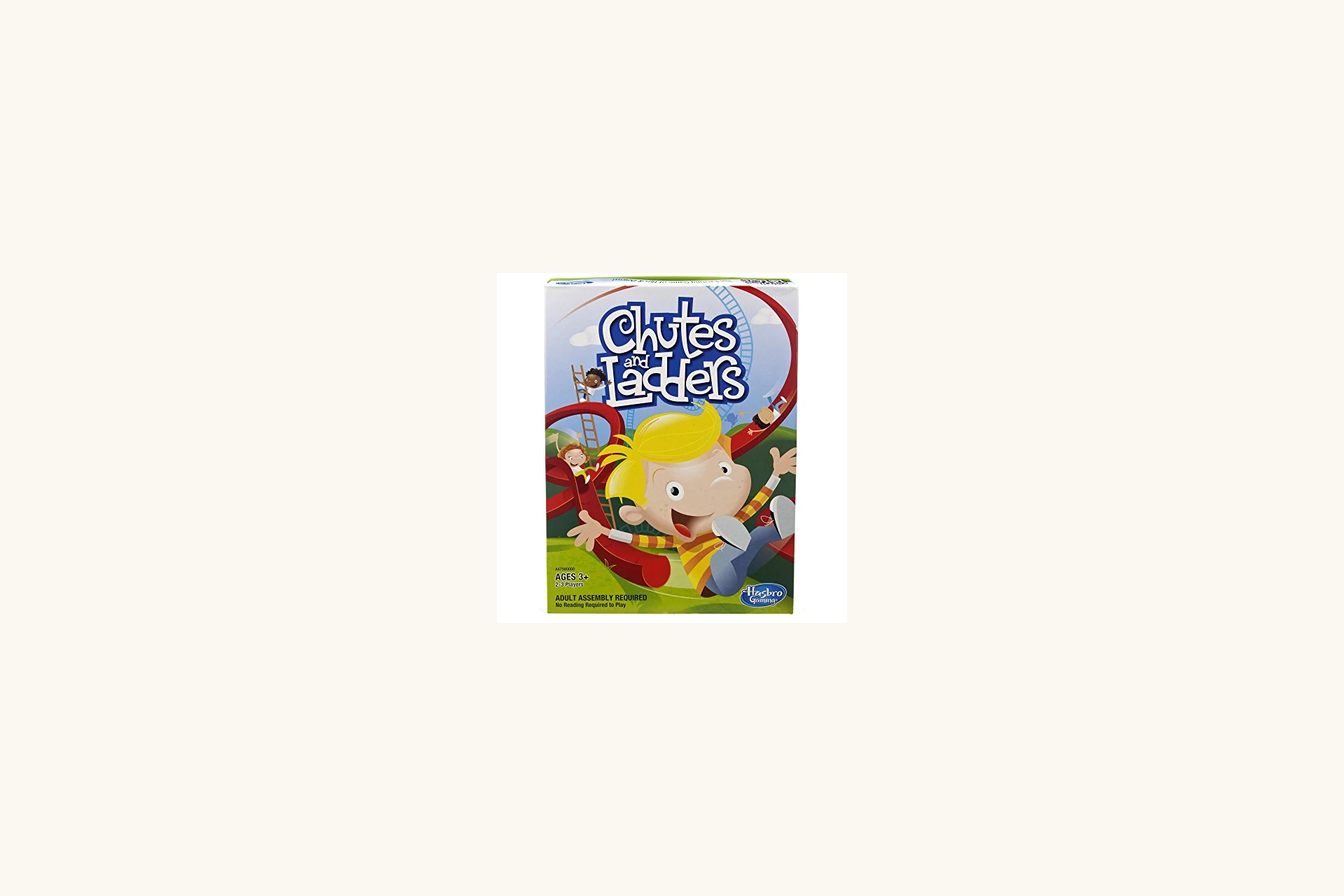
Chutes and Ladders earns its place as the classic counting game because it still suits a 6-year-old learning to count to one hundred. Players spin and move their pawns up the board, climbing ladders and sliding down chutes. A child spins, counts the spaces, and cheers at a ladder or groans at a chute. The game needs no reading, so a child plays it alone after one round.
By six, your child practices counting with every move, since the spinner shows the number and the board shows the squares. The play teaches counting to 100 in the open, which suits a first grader. The game takes 30 to 45 minutes at full length, so play a short game to square 50 when bedtime is near. The ladders teach hope and the chutes teach patience, since a slide down hurts less the second time.
Safety: Play a short game to square 50 when time is short.
Best First Money Game

👍 Pros
- Teaches money simply
- Small board
- Quick game
👎 Cons
- The game takes 30 minutes
- A 6-year-old needs help counting change the first time
Specifications
| Spec | Details |
|---|---|
| Type | Board Game |
| Publisher | Hasbro |
| Age range | ages 5 and up |
| Players | 2 to 4 players |
| Play time | about 30 minutes |
| Details | simple money with property buying |
For the best first money game, Monopoly Junior is hard to beat: the money is simple and the board is small. Players move around a small board, buy properties with kid-friendly money, and collect rent from visitors. A child rolls the die, counts the spaces, and learns to pay, collect, and save. The game ends when one player owns the most properties, and the simple money keeps the maths easy.
A young first-grader reads the property names with help, and counts money in ones, which suits a first grader learning to count and trade. This game teaches money in small steps: a child pays rent, collects a fee, and sees that saving buys more properties. The 30-minute game suits a family night, and the cute tokens keep a young child engaged. The game is the best board game for a 6-year-old boy in parent guides, and it suits a girl who loves money games just as well.
Safety: Keep the banknotes and Sold signs in the box after play, since a missing note breaks the bank.
Educational and Learning Board Games for 6-Year-Olds
These seven games teach while they play, and a 6-year-old rarely notices the lesson. Each one practices a skill a first grader uses at school, from adding to spelling to counting.
Best Math Game
👍 Pros
- Maths practice without a worksheet
- 10-minute game
- Award winner
👎 Cons
- The game suits 2 to 4 players only
- A child who struggles with adding may need a parent to help count
Specifications
| Spec | Details |
|---|---|
| Type | Game |
| Publisher | Learning Resources |
| Age range | ages 5 and up |
| Players | 2 to 4 players |
| Play time | 10 to 15 minutes |
| Details | addition and subtraction with dice |
The adding happens on the move. No other pick on this list does it quite like Sum Swamp. Players roll three dice, add or subtract the numbers, and move their frogs through the swamp to the finish. A child rolls, adds the numbers out loud, and moves the frog that many spaces. Swamp creatures send frogs back, and shortcuts send them forward, so the game stays close to the end.
At six, your child practices adding and subtracting with every turn, which suits a first grader learning maths at school. Playing it teaches addition and subtraction without a worksheet: a child who adds fast moves fast, and a child who adds slowly still moves. The 10 to 15 minute game suits a school-night table, and the game won an Oppenheim Best Toy award. Parents reach for it when homework needs a break but the maths still needs practice.
Safety: Help with the adding the first time, then let the child add alone.
Best Word Game
👍 Pros
- Sight-word practice
- Sturdy tiles
- Fits six players
👎 Cons
- The game needs the Zinger dispenser to work
- A lost tile breaks a card
Specifications
| Spec | Details |
|---|---|
| Type | Preschool Matching and Bingo Game |
| Publisher | ThinkFun |
| Age range | ages 4 and up |
| Players | 2 to 6 players |
| Play time | 15 to 20 minutes |
| Details | sight words with a sliding dispenser |
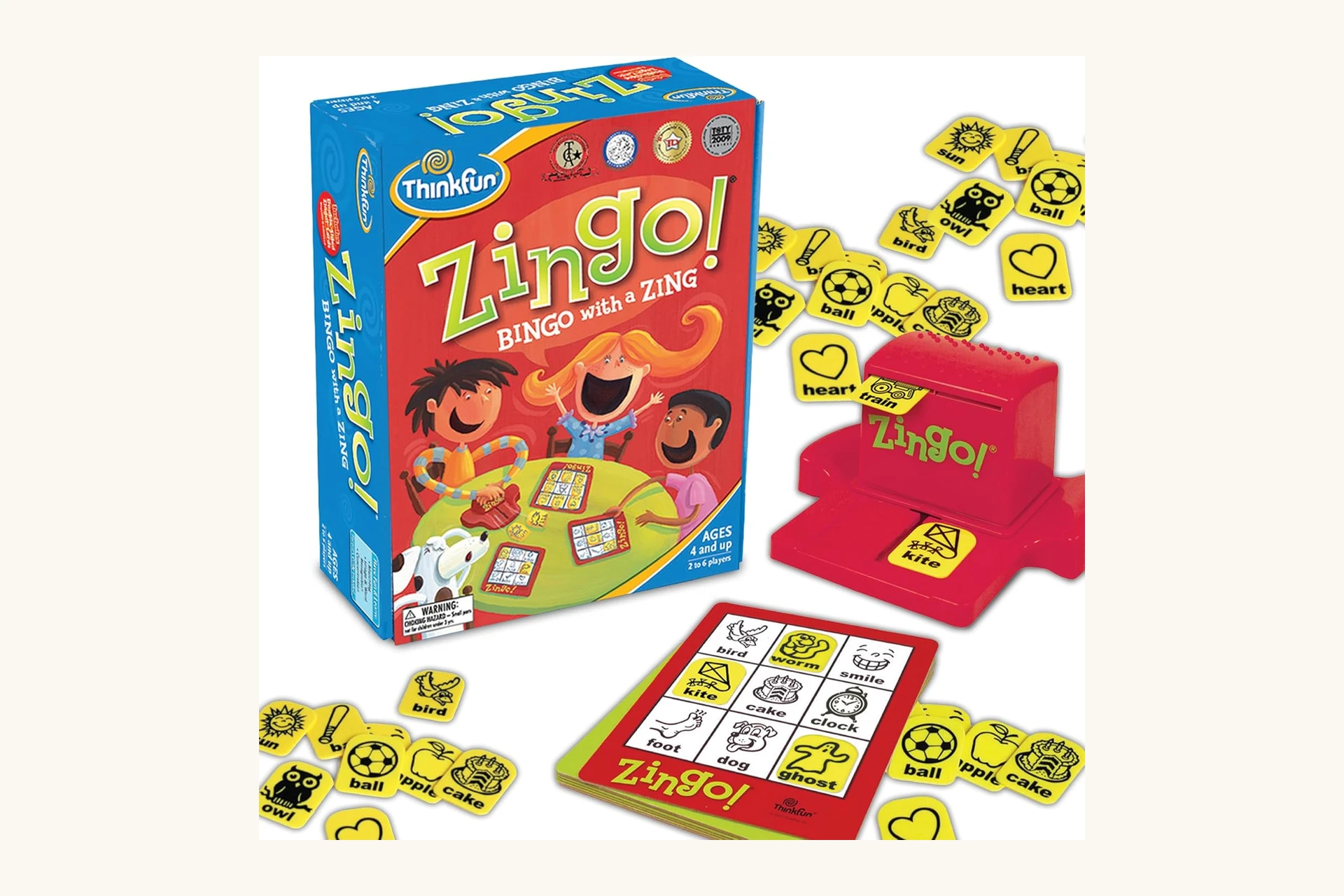
The sight words arrive in a sliding machine; that is what makes Zingo! the best word game for a 6-year-old. Players slide the Zinger, watch two tiles pop out, and match the words and pictures to their cards. A child reads the word, finds the picture, and covers the square. The first player to fill a row calls Zingo and wins.
Your child practices sight words with every tile, which suits a first grader learning to read. It sneaks in reading in short bursts: a child sees the word, says it, and matches it, which builds word recognition without a lesson. The 15 to 20 minute game suits up to six players, so the whole family fits. The tiles are sturdy, and the dispenser makes every round feel like a prize machine.
Safety: Keep the tiles in the dispenser after play, and count them when the box opens.
Best Travel Counting Game
👍 Pros
- Sixteen games in one deck
- Travels well
- Grows with the child
👎 Cons
- The game needs an adult to pick the right version for the child
- The rules change by the version
Specifications
| Spec | Details |
|---|---|
| Type | Counting Card Game |
| Publisher | Math for Love |
| Age range | ages 3 and up |
| Players | 1 to 6 players |
| Play time | about 15 minutes |
| Details | dot cards with sixteen ways to play |
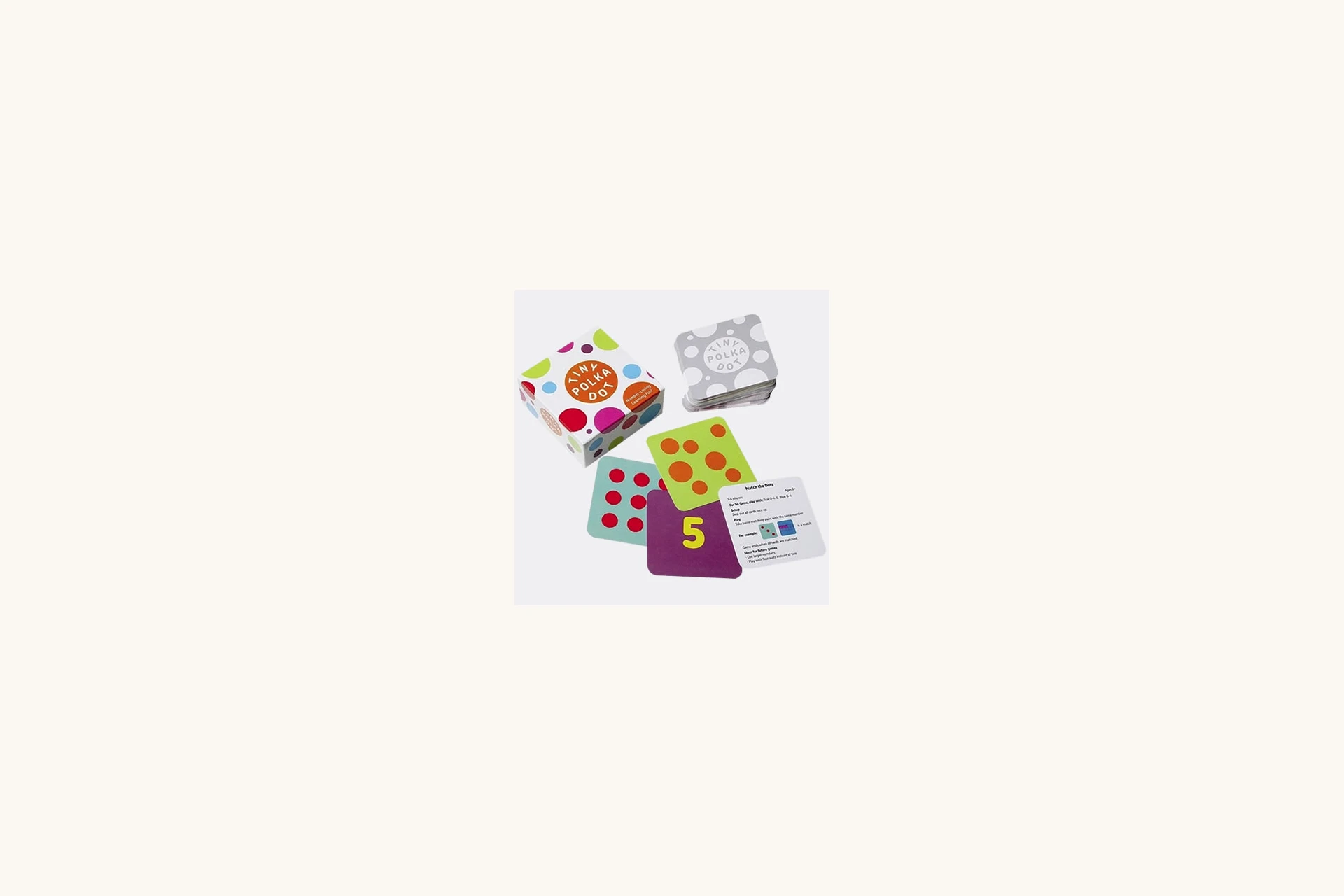
What makes Tiny Polka Dot the most flexible math game on this list is simple: one deck plays sixteen different games. Players match dot cards, count dots, and build sets, with the rules changing by the game picked. A child counts the dots on a card, finds the match, and plays it. The deck grows with the child: a 6-year-old starts with matching and counting, then moves to adding and comparing.
A kid in first grade practices counting with every card, since the dots are the whole game. Kids learn counting, comparing, and adding without a board or a spinner. The 15-minute game suits one player or six, so a child can play alone or with the family. The cards are big and sturdy, and the deck fits in a bag, which suits a car ride or a waiting room.
Safety: Start with the matching version, then add the harder versions one at a time.
Best Learning to Spell
👍 Pros
- Grows from matching to spelling
- 105 tiles
- Family favorite
👎 Cons
- The game takes 30 minutes
- The spelling side needs a child who reads a little
Specifications
| Spec | Details |
|---|---|
| Type | Kids Crossword Game |
| Publisher | Mattel |
| Age range | ages 5 and up |
| Players | 2 to 4 players |
| Play time | about 30 minutes |
| Details | two-sided board with matching and spelling |
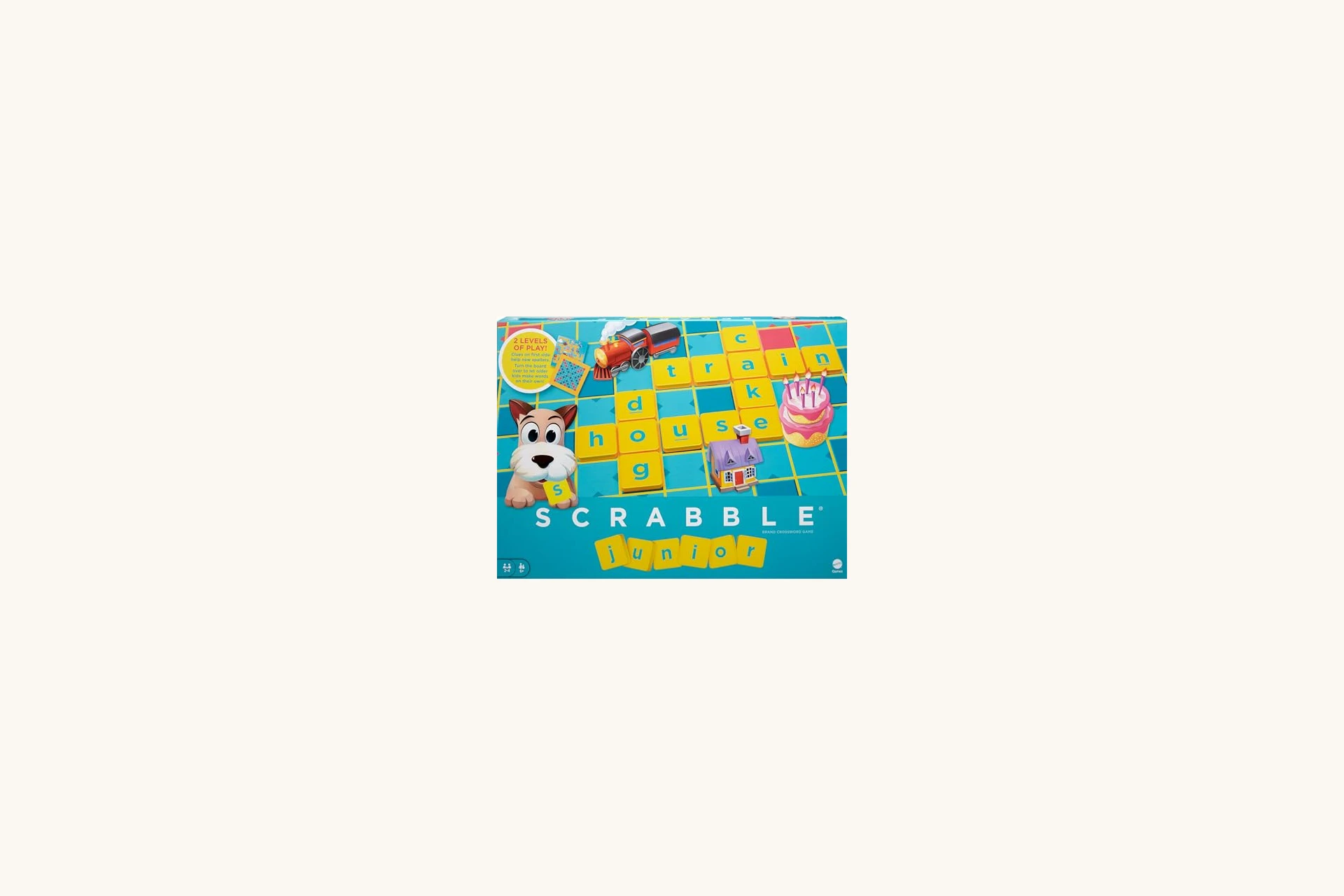
Scrabble Junior is the best spelling game pick here, because the board grows with the child. One side of the board has words already printed, so a child matches letter tiles to the words. The other side is blank, so a child who reads better builds words of their own. A child picks a tile, finds the letter, and places it, then scores the word. The game ends when the tiles run out.
A child of six starts on the matching side and grows into the spelling side, which suits a first grader learning to spell. It quietly teaches spelling in small steps: a child sees a word, finds its letters, and learns the order of the letters. The 30-minute game suits a family night, and the 105 letter tiles give plenty of words to build. Parents who love Scrabble will enjoy sharing it, and the game is the best educational game for 6-year-olds in parent guides.
Safety: Start on the matching side, then flip the board when the child reads better.
Best Cats and Memory Games

👍 Pros
- Teaches number memory
- Quick rounds
- Travels well
👎 Cons
- A 6-year-old needs help adding the total the first time
- The cards bend if small hands grip them hard
Specifications
| Spec | Details |
|---|---|
| Type | Card Game |
| Publisher | Gamewright |
| Age range | ages 6 and up |
| Players | 2 to 6 players |
| Play time | about 20 minutes |
| Details | memory and number cards with cats |
The best memory game on this list is Rat-a-Tat Cat: the numbers hide behind cute faces. Players hold four cards face down, peek at two, and swap cards to build the lowest total. A child remembers which card is low, swaps a high card away, and tries to keep the total down. Special cards let a player peek, swap, or draw twice, which adds a twist to every round.
Your little one practices number memory with every turn, since the game is remembering numbers, not reading words. Your child learns memory and adding in the open: a child adds four numbers, compares the total, and learns to keep the low cards. The 20-minute game suits up to six players, so the whole family fits. The cat cards keep a young child smiling, and the game fits in a bag, which suits a car ride.
Safety: Help with the adding the first time, and keep the cards flat in the box.
Best Counting to Ten
👍 Pros
- Counting to ten
- Chunky pieces
- Quick game
👎 Cons
- A confident 6-year-old outgrows it fast
- The game offers little challenge for older siblings
Specifications
| Spec | Details |
|---|---|
| Type | Preschool Game |
| Publisher | Hasbro |
| Age range | ages 3 and up |
| Players | 2 to 4 players |
| Play time | 10 to 15 minutes |
| Details | counting cherries with a spinner |
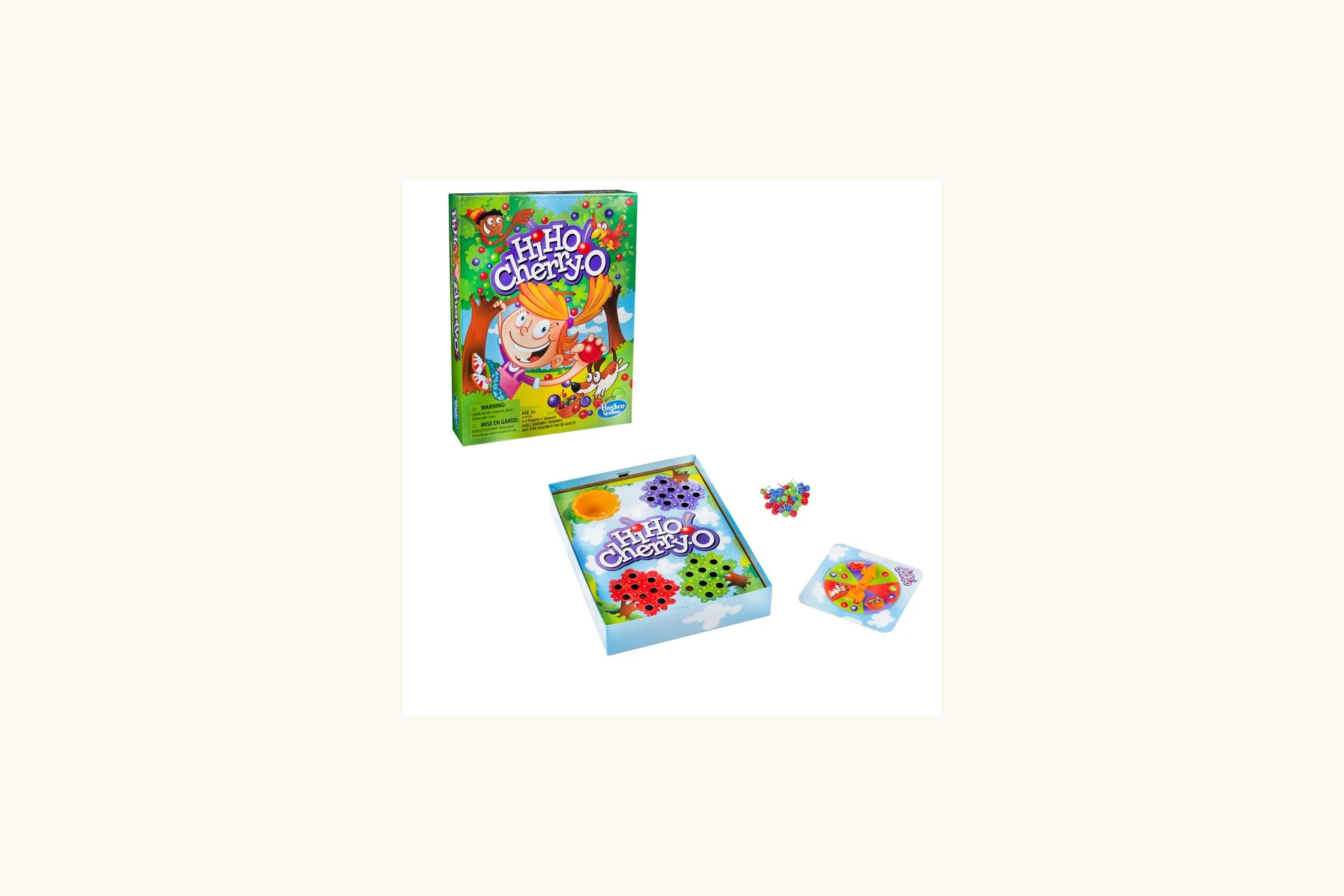
Hi Ho! Cherry-O takes the sweetest counting game crown. The cherries go in a basket one by one. Players spin the spinner, pick cherries from the tree, and fill their baskets. A child spins, counts the cherries, and places them in the basket, trying to pick all ten first. A spill sends the cherries back, so the game stays close to the end.
A typical 6-year-old practices counting to ten with every spin, which suits a first grader learning numbers. Children learn counting and adding in the open: a child counts the cherries, adds them to the basket, and learns to count on from where they stopped. The 10 to 15 minute game suits a school-night table, and the chunky cherries suit small hands. Girls in particular love this game in parent guides, and it suits a boy who loves counting just as well.
Safety: Keep the cherries in the basket after play, since a lost cherry breaks the count.
Best Fine Motor Practice

👍 Pros
- Builds fine motor skills
- Cute squirrel
- Quick game
👎 Cons
- A confident 6-year-old outgrows it fast
- The squeezer needs a firm grip that a younger child may lack
Specifications
| Spec | Details |
|---|---|
| Details | The Sneaky, Snacky Squirrel Game |
| Publisher | Educational Insights |
| Age range | ages 3 and up |
| Players | 2 to 4 players |
| Play time | 10 to 15 minutes |
| Details | color matching with a squirrel squeezer |
The squirrel does the picking; that is what makes The Sneaky, Snacky Squirrel the cutest educational game on this list. Players spin the spinner, then use the squirrel squeezer to pick up the matching acorn and drop it in their log. A child spins, finds the color, squeezes the squirrel, and places the acorn. The first player to fill their log wins, unless the sneaky squirrel steals an acorn.
A first-grader practices color matching and fine motor skills with every turn, since the squeezer needs a steady grip. It teaches color matching and hand strength without a lesson: a child squeezes, picks, and places, which builds the grip a first grader needs for writing. The 10 to 15 minute game suits a school-night table, and the squirrel makes every turn feel like play. The game is the cutest educational pick in parent guides, and it suits a 6-year-old who loves animals.
Safety: Squeeze the squirrel gently, and keep the acorns in the log after play.
Quick and Dexterity Board Games for 6-Year-Olds
These six games play fast and reward steady hands and sharp eyes. Each one ends in 20 minutes or less, so the table can play twice before bedtime.
Best Quick Game
👍 Pros
- Five minutes
- Big laughs
- Award winner
- Resets fast
👎 Cons
- The game ends fast
- So a child who wants a long game may ask for another round
- The noodles bend if pulled hard
Specifications
| Spec | Details |
|---|---|
| Type | Board Game |
| Publisher | PlayMonster |
| Age range | ages 4 and up |
| Players | 2 or more players |
| Play time | about 5 minutes |
| Details | pull a noodle without dropping the Yeti |
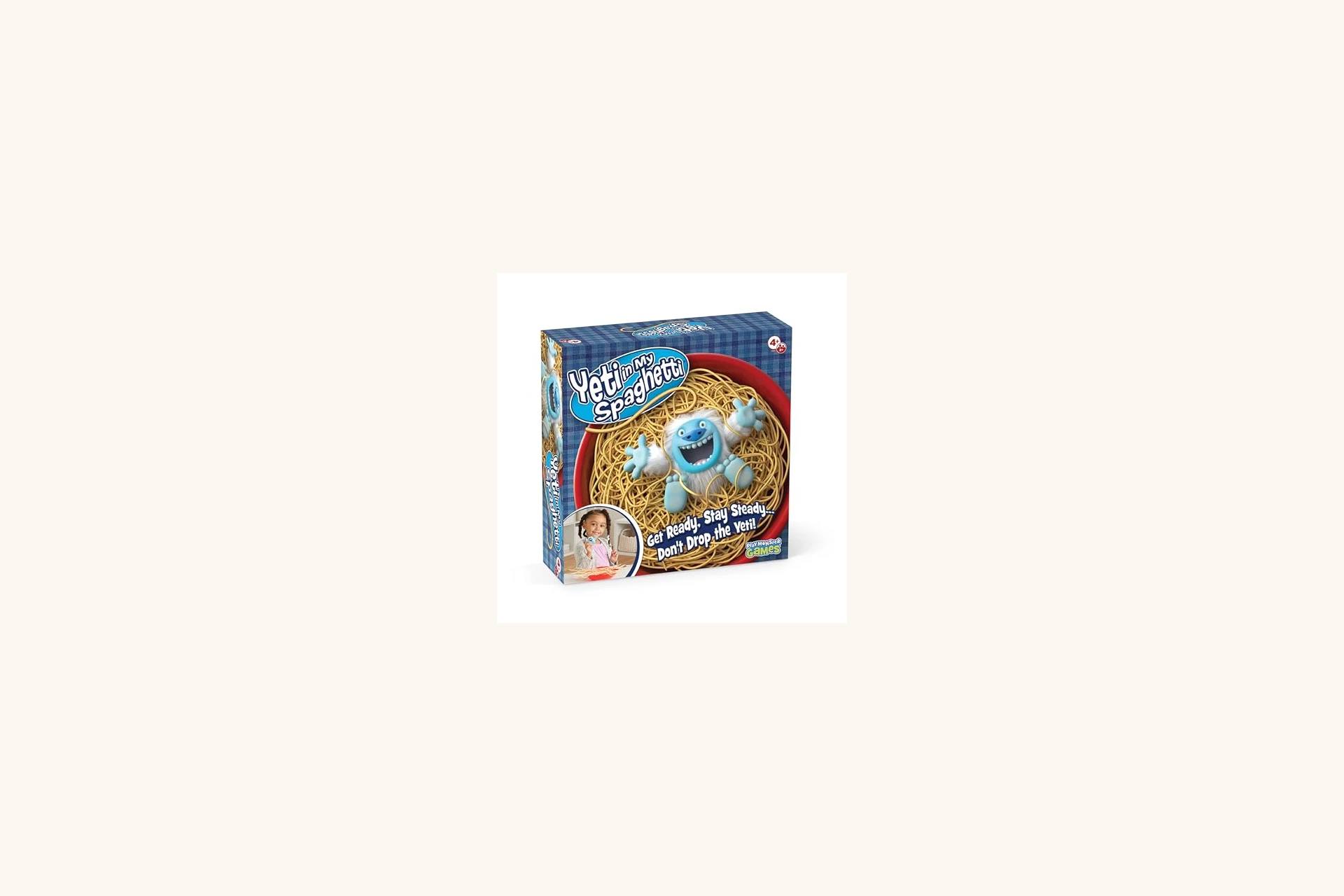
Yeti in My Spaghetti stands alone as the quickest game on this list, the best five-minute game for a 6-year-old. Players take turns pulling plastic noodles from a bowl while a Yeti figure balances on top. A child picks a noodle, pulls it gently, and holds their breath while the Yeti wobbles. The player who drops the Yeti loses, and the game resets in seconds.
A kid this age needs no reading and no counting, since the game is steady hands all the way through. The game builds hand-eye coordination: a child judges which noodle is safe, pulls it slowly, and learns that patience beats speed. The five-minute game suits the gap before dinner, and the game won Game of the Year awards. Parents reach for it when the table has five minutes and the child has energy to burn.
Safety: Pull the noodles gently, and keep the Yeti figure in the bowl after play.
Best Dexterity Game
👍 Pros
- Builds steady hands
- Award winner
- Quick rounds
👎 Cons
- The tower falls easily on a wobbly table
- The cards bend if small hands grip them hard
Specifications
| Spec | Details |
|---|---|
| Type | Game |
| Publisher | HABA |
| Age range | ages 5 and up |
| Players | 2 to 5 players |
| Play time | 5 to 10 minutes |
| Details | stacking cards with a climbing rhino |
Put Rhino Hero at the top of your list for best stacking game: the tower wobbles and the rhino climbs it. Players build a tower from folded cards, then move a wooden rhino up the floors. A child folds a card, places it carefully, and moves the rhino up one floor. The tower grows taller every turn, and the player who knocks it down loses.
Your little one needs no reading and no counting, since the game is steady hands and careful placing. The game builds fine motor skills and patience: a child who places a card gently keeps the tower up, and a child who rushes brings it down. The 5 to 10 minute game suits a school-night table, and the game won three awards. The 31 roof cards, 28 walls, and wooden rhino give the game plenty of pieces to build with.
Safety: Play on a flat, steady table, and keep the cards flat in the box.
Best for Sports Fans

👍 Pros
- Five mini-games
- Fits eight players
- Travels well
👎 Cons
- The game moves fast
- So a slow child may lose every round at first
- The cards wear out with heavy play
Specifications
| Spec | Details |
|---|---|
| Type | Card Game |
| Publisher | Asmodee |
| Age range | ages 6 and up |
| Players | 2 to 8 players |
| Play time | 15 minutes |
| Details | fast matching in a travel tin |
Start with Spot It! Sports for fastest matching game: every card matches every other card in exactly one picture. Players flip cards and race to spot the matching sport picture first. A child looks at two cards, finds the one matching picture, and calls it out. The game has five mini-games in the tin, so the table can change the rules without learning a new game.
A six-year-old child reads nothing, since the cards are pictures of sports. The game builds visual speed and focus: a child who scans fast wins more rounds, and a child who looks carefully learns to scan faster. The 15-minute game suits up to eight players, so the whole family fits, and the tin travels well, which suits a car ride or a holiday. The 55 cards give plenty of matches to find.
Safety: Play the easy mini-game first, and keep the cards in the tin after play.
Best Dragons and Shiny Gems

👍 Pros
- Sparkling gems
- Gentle dexterity
- Quick game
👎 Cons
- The small gems get lost easily
- A rough lift scatters the hoard
Specifications
| Spec | Details |
|---|---|
| Type | Board Game |
| Publisher | HABA |
| Age range | ages 5 and up |
| Players | 2 to 4 players |
| Play time | about 15 minutes |
| Details | gem collecting with a dragon hoard |
The sparkliest game on this list is Dragon’s Breath. The gems glow like ice. Players melt ice rings to release sparkling stones, then collect the gems that match their dragon. A child picks a ring, lifts it, and watches the gems fall, then keeps the ones that match. The player with the most gems at the end wins, and the dragon watches over the hoard.
A child this age reads nothing, since the game is colors and gems. The game builds color matching and gentle dexterity: a child lifts a ring slowly, so the gems fall where they want them. The 15-minute game suits a school-night table, and the 90 sparkling stones and 9 ice rings give the game plenty of pieces to play with. The game suits a child who loves dragons, and it suits a child who loves shiny things just as well.
Safety: Lift the rings slowly, and count the gems when the box opens.
Best Memory Game
👍 Pros
- Builds memory
- Fairy-tale theme
- Fits six players
👎 Cons
- The game runs long at full length
- The small treasure pieces get lost easily
Specifications
| Spec | Details |
|---|---|
| Type | Children’s Treasure Hunt Game |
| Publisher | Ravensburger |
| Age range | ages 4 and up |
| Players | 2 to 6 players |
| Play time | about 30 minutes |
| Details | memory treasure hunt in a fairy-tale forest |
Enchanted Forest is the best memory game for a 6-year-old who loves fairy tales, and the specs below show why. Players move through a forest to find hidden treasures, remembering where each treasure hides under the trees. A child rolls the die, moves to a tree, peeks underneath, and remembers the treasure for later. The player who finds the most treasures wins, and the king rewards the best memory.
By six, your child reads nothing, since the treasures are pictures and the forest is a picture too. The game builds memory in the open: a child who remembers where the crown hides wins more turns, and a child who forgets learns to watch the other players. The game takes about 30 minutes, so play a short game with fewer treasures when bedtime is near. The game suits 2 to 6 players, so the whole family fits around the forest.
Safety: Play a short game with fewer treasures when time is short, and count the pieces after play.
Best Quick Game Before Dinner

👍 Pros
- Five minutes
- Big suspense
- Resets fast
👎 Cons
- The game needs adult assembly
- The small ice blocks get lost easily
Specifications
| Spec | Details |
|---|---|
| Type | Game |
| Details | Classic Version, tap out ice blocks without dropping Phillip the Penguin |
| Publisher | Hasbro |
| Age range | ages 3 and up |
| Players | 2 to 4 players |
| Play time | about 5 minutes |
Don’t Break the Ice takes the most suspenseful five-minute game crown. The penguin could fall at any tap. Players take turns tapping out ice blocks with small mallets while Phillip the Penguin stands on top. A child taps a block, watches the ice wobble, and holds their breath. The player who makes Phillip fall loses, and the game resets in seconds.
A young first-grader needs no reading and no counting, since the game is tapping and watching. The game builds hand-eye coordination and patience: a child who taps gently keeps the penguin up, and a child who taps hard brings it down. The five-minute game suits the gap before dinner, and the game needs adult assembly the first time. The 32 small ice blocks and the penguin figure give the game plenty of pieces to tap.
Safety: Assemble the tray with an adult the first time, and keep the ice blocks together after play.
Thinking and Deduction Board Games for 6-Year-Olds
These five games ask a 6-year-old to guess, remember, and reason. Each one builds focus and logic, and each one stays fun when the child plays it again and again.
Best Mystery Game
👍 Pros
- Picture clues
- No scary theme
- Teaches deduction
👎 Cons
- A 6-year-old needs help with the notepad the first time
- The small furniture tokens get lost easily
Specifications
| Spec | Details |
|---|---|
| Type | Board Game |
| Details | Case of the Broken Toy, mystery with picture clues |
| Publisher | Hasbro |
| Age range | ages 5 and up |
| Players | 2 to 6 players |
| Play time | 15 to 20 minutes |
The clues are pictures; that is what makes Clue Junior the best mystery game for a 6-year-old. Someone broke a toy, and the players must find who did it, with what, and at what time. A child moves around the board, peeks under furniture tokens, and marks the clues on a detective notepad. The player who names the who, the what, and the when first wins.
A first-grader reads almost nothing, since the clues are pictures and the notepad uses pictures too. The play teaches deduction in small steps: each clue rules out a suspect, a toy, or a time, and a child who rules out the wrong answer feels clever. The 15 to 20 minute game suits a school-night table, and the game suits up to six players, so the whole family fits. The game is the kids’ version of the classic Clue, with a broken toy instead of a mystery that scares a small child.
Safety: Help with the notepad the first time, and keep the tokens in the box after play.
Best Silly Games

👍 Pros
- Builds a steady hand
- Plays solo
- Family classic
👎 Cons
- The game needs two AA batteries
- The buzzer startles a sensitive child
Specifications
| Spec | Details |
|---|---|
| Type | Electronic Board Game |
| Publisher | Hasbro |
| Age range | ages 6 and up |
| Players | 1 or more players |
| Play time | 10 to 20 minutes |
| Details | remove the Funatomy parts without the buzz |
One reason Operation stands out as the funniest game on this list: the buzzer goes off at the worst moment. Players draw a Doctor card, then use tweezers to remove the matching Funatomy part from Cavity Sam without touching the sides. A child picks a card, steadies a hand, and lifts the part out, earning play money for each success. The tweezers touch the metal edge, the buzzer sounds, and the table laughs.
Your child reads the card with help, since the ailments are funny words a first grader can sound out with a parent. The game builds fine motor skills and a steady hand: a child who moves slowly wins more parts, and a child who rushes hears the buzz. The game takes 10 to 20 minutes, and it plays solo too, so a child can practice alone. The game needs two AA batteries, so buy them with the game, since a game that waits for batteries loses its moment.
Safety: Buy two AA batteries with the game, and warn a sensitive child about the buzzer first.
Best Patterns and Tile Games
👍 Pros
- Beautiful wooden tiles
- Deep strategy
- Award winner
👎 Cons
- The game runs 30 to 45 minutes
- A 6-year-old needs help counting the score the first time
Specifications
| Spec | Details |
|---|---|
| Type | Board Game |
| Publisher | MindWare |
| Age range | ages 6 and up |
| Players | 2 to 4 players |
| Play time | 30 to 45 minutes |
| Details | tile matching with 108 wooden tiles |
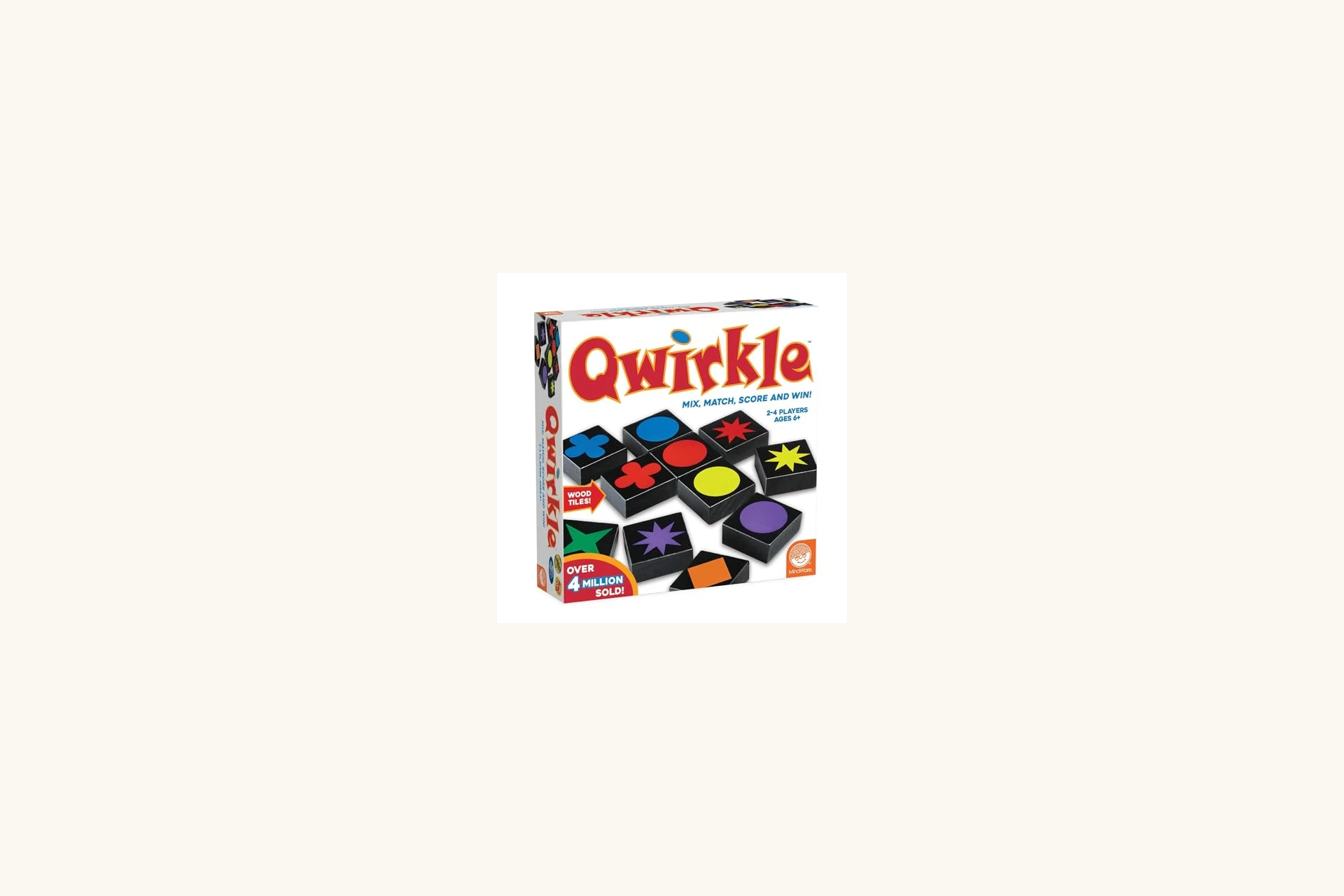
Look for the best strategy game and you will find Qwirkle. The tiles feel good in the hand. Players match wooden tiles by color or shape, building lines on the table and scoring for each line. A child picks six tiles, finds a match, and places it, scoring a Qwirkle for a line of six. The game uses 108 wooden tiles in six colors and six shapes, so every game plays differently.
At six, your child reads nothing, since the game is colors and shapes. This game teaches pattern thinking and planning: a child sees a line that needs one more tile and saves the tile for it. The game takes 30 to 45 minutes, so play it on a weekend, not a school night. The game won a Parents’ Choice Gold Award and a Mensa Select award, and it holds a 4.8-star average across more than 17,000 reviews. Stock varies by listing, so check the live listing before you buy.
Safety: Play it on a weekend when the full game fits, and count the tiles after play.
Best Family Card Game

👍 Pros
- Fits ten players
- Travels well
- Low price
- Family classic
👎 Cons
- The box age is 7 and up
- So a 6-year-old needs a parent for the first games
- The action cards confuse a new player at first
Specifications
| Spec | Details |
|---|---|
| Type | Classic Card Game |
| Publisher | Mattel |
| Age range | box age 7 and up |
| Players | 2 to 10 players |
| Play time | about 15 minutes |
| Details | color and number matching with action cards |
The short answer for most-played card game in the world is Uno: it suits a 6-year-old who can match colors and numbers. Players match cards by color or number, racing to empty their hands first. A child looks at a card, finds a match, and plays it, then calls Uno with one card left. Action cards skip, reverse, and draw, which keeps every round lively.
Your 6-year-old plays Uno with a parent at first, since the box age is 7 and up. The game is colors and numbers, so a 6-year-old who knows both can play it, and the action cards teach a child to plan one move ahead. The game takes about 15 minutes, and it suits up to ten players, so the whole family and the cousins fit. The game costs little, packs small, and travels well, which suits a car ride or a holiday.
Safety: Play without the action cards the first time, then add them one at a time.
Best Mazes and Quiet Teamwork

👍 Pros
- Silent teamwork
- Plays solo
- Builds patience
👎 Cons
- The silence frustrates a chatty child
- The game needs a parent to explain the silent rule the first time
Specifications
| Spec | Details |
|---|---|
| Publisher | Sit Down! |
| Age range | ages 5 and up |
| Players | 1 to 4 players |
| Play time | about 15 to 20 minutes |
| Details | cooperative maze with silent teamwork |
The team plays in silence. That is why Magic Maze Kids is the quietest cooperative game on this list. Players move animal heroes through a maze to collect treasures, but nobody may talk. A child moves a hero, points at the next move, and trusts the team to follow. The game ends when the team collects every treasure and escapes the maze together.
Your little one reads nothing, since the maze is a picture and the moves are silent. The game builds teamwork and patience: a child who waits for the team wins more often than a child who rushes. The 15 to 20 minute game suits 1 to 4 players, so a child can play it alone or with the family. Playing it teaches a 6-year-old to watch the board instead of talking over it, which suits a child who talks through every game.
Safety: Explain the silent rule before the first game, and let the child point instead of talk.
How to Choose a Board Game for a 6-Year-Old
Match the game to the way your child plays today, not to the age on the box. Your little one who hates losing needs a cooperative game first. A typical 6-year-old who loves to plan needs a first strategy game. A first-grader who cannot sit still needs a quick dexterity game. One right game beats a shelf of games nobody opens.
Pick games that take 10 to 30 minutes. A kid this age holds focus for about 20 to 30 minutes on a good day. A game that runs past 30 minutes loses most 6-year-olds before the end. Short games also let you play twice, which matters when the first round ends in tears.
Check the reading load before you buy. In first grade, your child reads a few words, not paragraphs. Games with pictures, colors, and symbols let a 6-year-old play alone. Games with cards full of text need an adult at the table for every turn. Picture-based play suits this age best, and word games with two-sided boards let a child grow from matching to spelling.
Weigh cooperative against competitive. Cooperative games end with the whole table winning or losing together, so no single child takes the blame. Competitive games teach a child to win and lose with grace, but only when the child is ready for it. Start a new game night with a cooperative game, then add a competitive game once the table feels safe.
Check the player count and the pieces before the first game. A two-player game suits a parent and a child after school. A game for 4 to 6 players suits a full family night. Small tokens, thin cards, and tiny dice bend, tear, and vanish under a table, so chunky wooden pieces, thick card, and big cards survive small hands best. Count the pieces when the box opens, and keep a small bag for spares.
Buy one game at a time, not a shelf at once. A child this age bonds with three games faster than with thirty. Play the same three games for two weeks, then add one new game. Rotation keeps game night fresh without overwhelming a small shelf or a small budget.
Best Board Games for 6-Year-Old Boys and Girls
Boys and girls at 6 love the same games, and most games on this list fit any child. A boy who loves trains fits Ticket to Ride: First Journey. A girl who loves trains fits the same game. A girl who loves dragons fits Dragon’s Breath. A boy who loves dragons fits it too. Pick by interest, not by label.
The best board games for a 6-year-old boy include train games, pirate games, dinosaur games, and racing games. Ticket to Ride: First Journey, Catan Junior, Monopoly Junior, and Trouble lead the boy picks in parent guides. The best board games for a 6-year-old girl include animal games, treasure hunts, mystery games, and memory games. Outfoxed!, Race to the Treasure!, Enchanted Forest, and Clue Junior lead the girl picks. Every pick here works for any child who loves its kind of play.
When a giver wants a gendered touch, pick a cover color, not a different game. A pink game box holds the same game as a blue one. The game matters, and the interest picks the game.
Best Cooperative Board Games for 6-Year-Olds
Cooperative games suit a 6-year-old who still finds losing hard. Everyone wins together or loses together, so no single child takes the blame. That shared result builds teamwork, and it keeps game night calm on a tired evening.
Start with a cooperative game when a child melts down after losing. Outfoxed!, Race to the Treasure!, Hoot Owl Hoot!, Gnomes at Night, Eye Found It! Disney, and Ghost Fightin’ Treasure Hunters all end with the whole table winning or losing as one team. A child who practices losing to the board learns to lose to a sibling later, with less drama.
Cooperative games also suit mixed ages. By six, your child and a 3-year-old can share one team, since the older child makes the choices and the younger child moves a pawn. The team format lets siblings play together without a scoreboard between them.
Best Family Board Games for 6-Year-Olds
The best family board game for 6-year-olds works for the adults too. Ticket to Ride: First Journey, Outfoxed!, Candy Land, Blokus, Qwirkle, and Uno suit a whole family. The games play well with adults and older siblings, and the rules stay simple enough for a 6-year-old. A family game night works best when the adults enjoy the game too.
Family games need short turns and a clear end. A young first-grader waits happily for a 30-second turn and fidgets through a 3-minute one. Pick games where every player acts on most turns, and where the end arrives before the yawns do. Most games in this guide end in 30 minutes or less.
Keep one family favorite on the shelf and rotate the rest. A family that plays the same favorite twice a week builds its own jokes and house rules around it. New games join the rotation one at a time, and the favorite stays until the child outgrows it.
Best Educational Board Games for 6-Year-Olds
The best educational board games for 6-year-olds hide the lesson inside the game. Sum Swamp teaches addition and subtraction, Zingo! teaches sight words, Tiny Polka Dot teaches counting, Scrabble Junior teaches spelling, and Rat-a-Tat Cat teaches number memory. The learning hides inside the game, so a child plays without feeling tested.
Learning games suit a first grader best when they match school skills. At six, your child in first grade practices reading, counting, adding, and spelling every day. A game that practices the same skill after school feels like play, not homework. Pick the skill your child finds hardest, and let the game do the drilling.
Keep learning games short and winnable. A learning game that runs long feels like a lesson. A 10 to 20 minute game with a real chance to win keeps a child coming back. Let the child win sometimes, and let the game teach the rest.
Buying Guidance for Current Picks, Including the UK
Picks for today share the same test. Is the box age 6 or close to it, does a 6-year-old read the pieces or just the pictures, does the game end in 30 minutes or less, and will it still feel fun on the tenth play? Check the edition before you buy: the standard editions in this guide are the ones parents review most, and character editions of the same game can carry different pieces or rules.
Families in the United States, the United Kingdom, Canada, Australia, and New Zealand buy the same games, with local editions and prices varying by country. The links in this guide go to Amazon US listings. Check the local listing before you buy, since the price and the stock vary. HABA games like Rhino Hero, Dragon’s Breath, and Karuba, and Ravensburger games like Enchanted Forest and Eye Found It! Disney, lead UK picks, and most games on this list also appear on Amazon UK, Amazon Canada, and Amazon Australia.
The best-rated board games for 6-year-olds earn their stars over thousands of plays. Outfoxed!, Ticket to Ride: First Journey, Rhino Hero, Blokus, Qwirkle, and Trouble carry the strongest parent reviews. Check the review count and the recent reviews before you buy a new release. A game with thousands of parent reviews and a 4.5-star average beats a brand-new game with ten reviews.
Budget for one main game, then add a quick game for the second slot. Start with the best game you can afford for the table your family plays at most. Add a quick game like Yeti in My Spaghetti or Don’t Break the Ice next: both cost little, play in minutes, and fill the gap while dinner cooks. A shelf of three good games beats a shelf of ten games nobody opens.
Check the stock before you buy, since offers move fast on games. A few listings in this guide show no featured offers on some days and a live price on others. Qwirkle carries a check-the-live-listing note for that reason. Prices and stock change, so confirm the live listing before you order.
Shop This Post
| Product | Name | Used For | Shop |
|---|---|---|---|
|
Outfoxed! | Cooperative mystery with a clue decoder, ages 5 and up. | Check Price |
|
Race to the Treasure! | Cooperative path-building race, ages 4 and up. | Check Price |
|
Hoot Owl Hoot! | Cooperative color matching, ages 4 and up, 15 minutes. | Check Price |
|
Gnomes at Night | Cooperative magnetic maze, ages 5 and up. | Check Price |
|
Eye Found It! Disney | Cooperative seek and find on a giant board, ages 4 and up, 2 to 6 players. | Check Price |
|
Ghost Fightin’ Treasure Hunters Anniversary Edition | Cooperative haunted house, 2 to 5 players, two ways to play. | Check Price |
|
Ticket to Ride: First Journey | First train strategy game, ages 6 and up, picture tickets. | Check Price |
|
Catan Junior | Pirate trading and building, ages 6 and up, 2 to 4 players. | Check Price |
|
My First Carcassonne | First tile strategy game, ages 4 and up, no scoring. | Check Price |
|
Sequence for Kids | Animal matching strategy, ages 3 to 6, 2 to 4 players. | Check Price |
|
Blokus | Tile fitting strategy, 2 to 4 players, one rule. | Check Price |
|
Azul Kids | Tile matching strategy, ages 5 and up, two-sided boards. | Check Price |
|
Karuba | Jungle path building, 2 to 4 players, simultaneous turns. | Check Price |
|
Candy Land | Classic color path game, ages 3 and up, no reading. | Check Price |
|
Trouble | Classic racing game, ages 5 and up, popping dice bubble. | Check Price |
|
Sorry! | Classic racing game, ages 6 and up, card moves. | Check Price |
|
Guess Who? Plus | Two-player deduction, ages 6 and up, people and pet cards. | Check Price |
|
Connect 4 | Four in a row strategy, ages 6 and up, 2 players. | Check Price |
|
Chutes and Ladders | Classic counting game, ages 3 and up, no reading. | Check Price |
|
Monopoly Junior | First money game, ages 5 and up, 2 to 4 players. | Check Price |
|
Sum Swamp | Math game with addition and subtraction dice, ages 5 and up. | Check Price |
|
Zingo! | Sight-word bingo, ages 4 and up, 2 to 6 players. | Check Price |
|
Tiny Polka Dot | Counting card game, ages 3 and up, sixteen ways to play. | Check Price |
|
Scrabble Junior | First word game, ages 5 and up, two-sided board. | Check Price |
|
Rat-a-Tat Cat | Memory and number card game, ages 6 and up, 2 to 6 players. | Check Price |
|
Hi Ho! Cherry-O | Counting game with cherries and a spinner, ages 3 and up. | Check Price |
|
The Sneaky, Snacky Squirrel | Color matching with a squirrel squeezer, ages 3 and up. | Check Price |
|
Yeti in My Spaghetti | Five-minute dexterity game, ages 4 and up, 2 or more players. | Check Price |
|
Rhino Hero | Stacking card game, ages 5 and up, 2 to 5 players. | Check Price |
|
Spot It! Sports | Fast matching card game, ages 6 and up, 2 to 8 players, travel tin. | Check Price |
|
Dragon’s Breath | Dexterity gem game, ages 5 and up, 2 to 4 players. | Check Price |
|
Enchanted Forest | Memory treasure hunt, ages 4 and up, 2 to 6 players. | Check Price |
|
Don’t Break the Ice | Dexterity ice game, ages 3 and up, 2 to 4 players, 5 minutes. | Check Price |
|
Clue Junior | Mystery game with picture clues, ages 5 and up, 2 to 6 players. | Check Price |
|
Operation | Electronic dexterity game, ages 6 and up, 1 or more players. | Check Price |
|
Qwirkle | Tile matching strategy, ages 6 and up, 108 wooden tiles. | Check Price |
|
Uno | Classic card matching game, 2 to 10 players, about 15 minutes. | Check Price |
|
Magic Maze Kids | Cooperative silent maze, ages 5 and up, 1 to 4 players. | Check Price |
Frequently Asked Questions
What are the best board games for 6-year-olds?
Start with Ticket to Ride: First Journey, Outfoxed!, Trouble, Sum Swamp, and Yeti in My Spaghetti. A first strategy game, a cooperative game, a classic game, a math game, and a quick game cover the five jobs a 6-year-old shelf needs. Add word games, memory games, and dexterity games next, based on what your child loves most.
What are the best cooperative board games for 6-year-olds?
Outfoxed!, Race to the Treasure!, Hoot Owl Hoot!, Gnomes at Night, Eye Found It! Disney, and Ghost Fightin’ Treasure Hunters lead cooperative picks. Everyone wins together or loses together, so no single child takes the blame. Start with Hoot Owl Hoot! for a first cooperative game, then add Outfoxed! for deduction.
What are the best family board games for 6-year-olds?
Ticket to Ride: First Journey, Outfoxed!, Candy Land, Blokus, Qwirkle, and Uno suit a whole family. The games play well with adults and older siblings, and the rules stay simple enough for a 6-year-old. A family game night works best when the adults enjoy the game too.
What are the best educational board games for 6-year-olds?
Sum Swamp, Zingo!, Tiny Polka Dot, Scrabble Junior, Rat-a-Tat Cat, Hi Ho! Cherry-O, and The Sneaky, Snacky Squirrel cover math and words. Sum Swamp teaches addition and subtraction, Zingo! teaches sight words, and Tiny Polka Dot teaches counting. The learning hides inside the game, so a child plays without feeling tested.
What are the best board games for a 6-year-old boy?
Pick by interest, not by gender. A boy who loves trains fits Ticket to Ride: First Journey. A boy who loves pirates fits Catan Junior. A boy who loves dinosaurs fits Monopoly Junior. Interest predicts play time better than any label.
What are the best board games for a 6-year-old girl?
Pick by interest, not by gender. A girl who loves animals fits Outfoxed! and Rat-a-Tat Cat. A girl who loves treasure hunts fits Race to the Treasure! and Enchanted Forest. A girl who loves mysteries fits Clue Junior. The game matters, and the interest picks the game.
What are the best strategy board games for 6-year-olds?
Ticket to Ride: First Journey, Catan Junior, My First Carcassonne, Sequence for Kids, Blokus, Azul Kids, and Karuba lead strategy picks. My First Carcassonne suits a first strategy game with no scoring. Ticket to Ride: First Journey suits a child ready for a grown-up game. Karuba suits a child ready to plan a few moves ahead.
What are the best math board games for 6-year-olds?
Sum Swamp, Tiny Polka Dot, Hi Ho! Cherry-O, and Rat-a-Tat Cat cover math for 6-year-olds. Sum Swamp teaches addition and subtraction with dice. Tiny Polka Dot teaches counting with dot cards. Hi Ho! Cherry-O teaches counting to ten with a spinner. Rat-a-Tat Cat teaches number memory.
What are the best board games for six-year-olds in the UK?
HABA games like Rhino Hero, Dragon’s Breath, and Karuba, Ravensburger games like Enchanted Forest and Eye Found It! Disney, and Ticket to Ride: First Journey lead UK picks. Check the UK edition on the listing you open, since UK editions differ from United States editions in box size and sometimes in the rules sheet.
What are the best-rated board games for 6-year-olds?
Outfoxed!, Ticket to Ride: First Journey, Rhino Hero, Blokus, Qwirkle, and Trouble carry the strongest parent reviews. Each game holds a high star average across thousands of reviews, and each one stays fun past the third play. Check the current listing for the latest reviews before you buy.
How long should a board game for a 6-year-old take?
Ten to thirty minutes covers most 6-year-olds well. Five minutes suits a quick game like Yeti in My Spaghetti or Don’t Break the Ice. Fifteen to twenty minutes suits a family game like Outfoxed! or Ticket to Ride: First Journey. Thirty minutes is the most for a 6-year-old, and a longer game needs a break in the middle.
Can a 6-year-old play board games with older siblings?
Yes, cooperative games and games with simple rules suit mixed ages best. Outfoxed! and Race to the Treasure! let a 6-year-old and an older sibling share one team. Ticket to Ride: First Journey and Blokus give a 6-year-old real choices beside an older sibling. Pick games where the 6-year-old makes choices, not just watches.
What is the best first board game for a 6-year-old who has never played one?
Start with Candy Land or Hoot Owl Hoot!. Candy Land needs no reading and teaches turn-taking in 15 minutes. Hoot Owl Hoot! adds teamwork with the same simple rules. Once those two feel easy, add Outfoxed! for thinking and Trouble for racing.
What board games for 6-year-olds work for travel?
Spot It! Sports, Uno, Rat-a-Tat Cat, and Qwirkle travel best. Spot It! Sports packs into a tin, Uno fits in a bag, Rat-a-Tat Cat is a card game, and Qwirkle packs small for a car ride. Leave big boards at home and pack the card and tile games instead.
Keep Reading
If you want more picks by age, the guides below cover the parent hub, nearby ages, toys, gifts, books, and bikes for 6-year-olds, so you can find the next age guide without a fresh search.
Keep Reading
Pick one game for tonight, play it twice, and let your child ask for it again tomorrow.