
How to Store Breast Milk Safely: 18 Smart Rules for Pumping Moms

Every ounce of breast milk you pump took time and effort. The last thing you want is to pour it down the sink because it sat out too long or froze wrong. Storing breast milk safely is mostly a matter of knowing a few numbers and following a few habits.
These 18 smart rules cover the whole journey of a bottle of pumped milk, from the moment it leaves the pump to the moment your baby drinks it. The times follow the current guidance from the Centers for Disease Control and Prevention (CDC): room temperature up to 4 hours, refrigerator up to 4 days, freezer 6 months for best quality and up to 12 months acceptable. Older guides sometimes say six hours on the counter or eight days in the fridge. Those are old numbers. The four and four here are current, and they are the ones to follow.
A quick note before we start. This guidance is for healthy, full-term babies. If your baby was born early, is ill, or has a health condition, your pediatrician may give you different storage times, and their advice comes first. When in doubt, throw it out. Milk can be replaced. Your baby’s health cannot.
Heads up: this post contains affiliate links. If you buy through them, MamaKinder may earn a small commission at no extra cost to you, and it helps keep these guides free.

The Storage Times, in One Place
Memorize this table and you know most of what matters.
| Where the milk is | How long it keeps |
|---|---|
| Room temperature (77F or colder) | Up to 4 hours |
| Insulated cooler with ice packs | Up to 24 hours |
| Refrigerator (back of the fridge) | Up to 4 days |
| Freezer (6 months is best) | Up to 12 months acceptable |
| Thawed milk, in the refrigerator | Up to 24 hours, never refreeze |
| Thawed milk, at room temperature | Up to 2 hours |
The free printable at the end of this article has this same table on one page, sized to stick on the fridge door.
Start Clean
Safe storage starts before the milk ever touches a bag.
1. Wash your hands before every pump. Wash your hands well with soap and water before you express or handle breast milk. If soap and water are not available, use an alcohol-based hand sanitizer with at least 60 percent alcohol. This is the easiest rule on this list, and the one the CDC puts first.

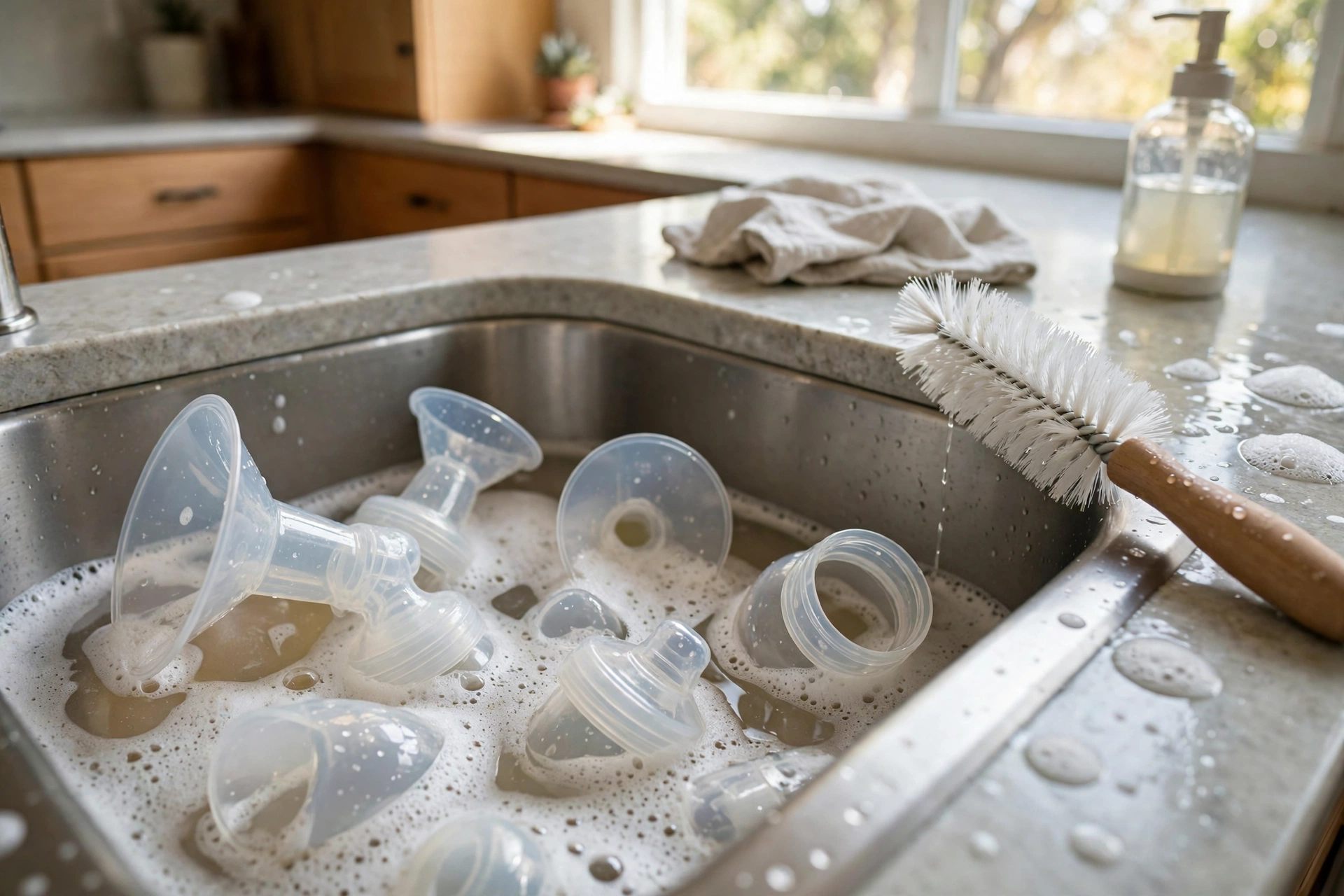
2. Wash pump parts after every use, and let them dry fully. After each pumping session, wash the parts that touch milk (flanges, valves, membranes, bottles, and connectors) in hot soapy water, rinse well, and air dry them on a clean towel or rack. The CDC also advises sanitizing pump parts at least once a day, in the dishwasher on a sanitize cycle or by boiling, if your pump manual allows it. Check your tubing too, and replace it if you see moisture or mold inside. The Boon Lawn Countertop Baby Bottle Drying Rack holds bottles, nipples, and pump parts upright so they dry fast and stay off the counter.
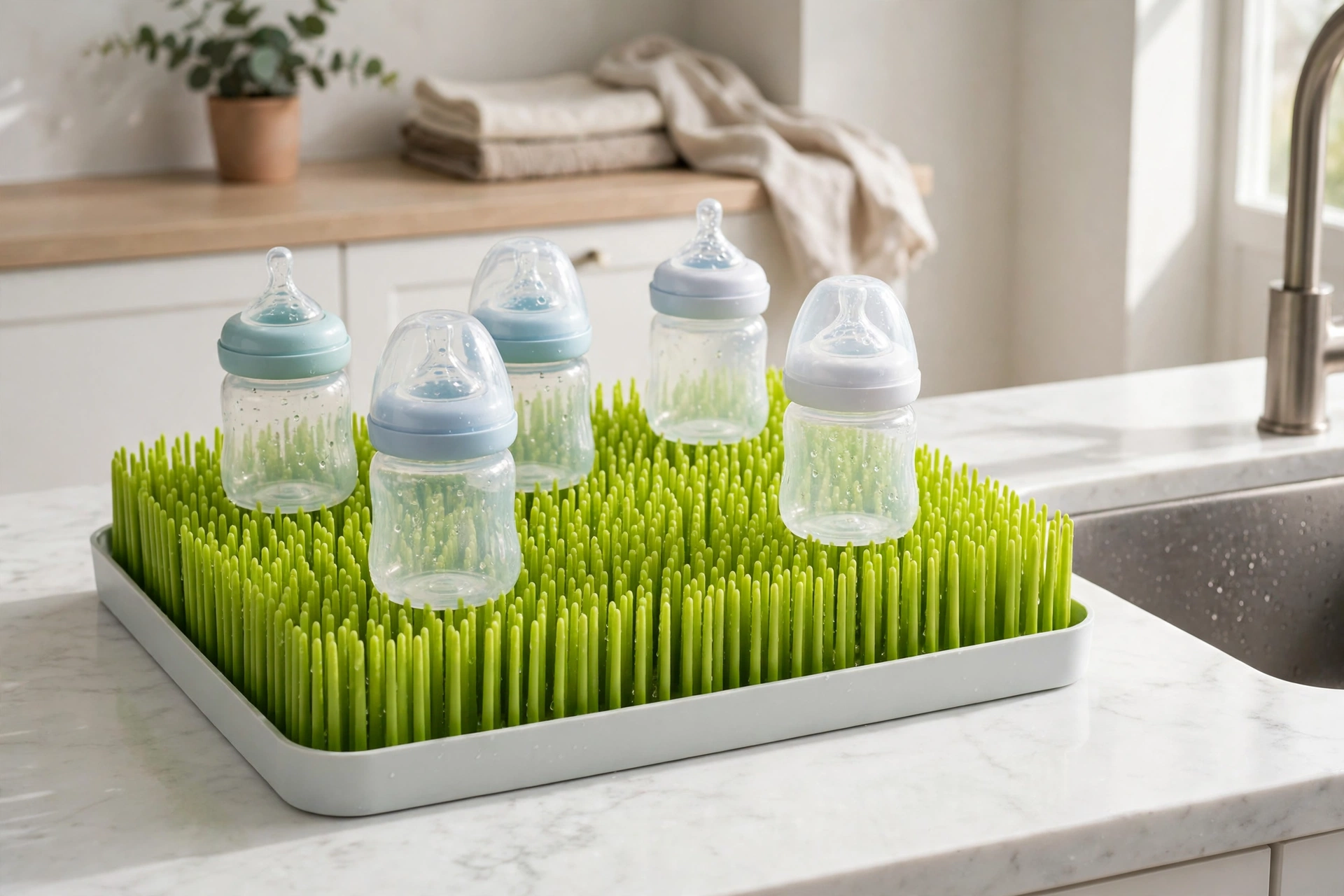
Boon Lawn Countertop Baby Bottle Drying Rack
Countertop drying rack with an antimicrobial tray. Holds bottles, nipples, and pump parts upright so they dry fast and stay off the counter.
3. Pump straight into a clean storage container. The fewer times milk changes containers, the fewer chances germs have to get in. Pump directly into the bottle or bag you plan to store it in whenever your pump allows it. If you use a shared pump, wipe the dials, power switch, and countertop with a disinfectant wipe first. The Spectra S1 Plus Electric Breast Pump is rechargeable, with up to 270 mmHg suction and 24mm and 28mm flanges. For catching letdown on the other side while you nurse or pump, the haakaa Silicone Breast Pump is a simple silicone manual pump with a suction base, made from food-grade silicone.

Spectra S1 Plus Electric Breast Pump
Rechargeable double electric pump with up to 270 mmHg suction, adjustable suction in let-down and expression modes, a night light, and a timer. Includes 24mm and 28mm flanges, bottles, backflow protectors, and tubing.

haakaa Silicone Breast Pump and Silicone Cap, 5 oz, Gen. 2
Silicone manual pump with a suction base and a silicone cap. Made from food-grade silicone, 5 oz capacity, and cleans by boiling for 2 to 3 minutes.

Pick the Right Container
Milk is only as safe as what holds it.
4. Use breast milk storage bags or BPA-free bottles with tight lids. Store expressed milk in breast milk storage bags or clean, food-grade containers made of glass or hard plastic, with tight-fitting lids. Bags are best for the freezer because they freeze flat and stack. Bottles are best for the fridge because they stand up and pour easily. Lansinoh Breastmilk Storage Bags, 100 Count are pre-sterilized, 6 oz each, with a double zipper seal, and they freeze flat and thaw fast. For bottles, Dr. Brown’s Natural Flow Anti-Colic Bottles are 5 oz with a Level 1 slow flow nipple, in a 4 pack, and their internal vent system is designed to reduce colic, spit-up, and gas.

Lansinoh Breastmilk Storage Bags, 100 Count
100 pre-sterilized breastmilk storage bags, 6 oz each, with a double zipper seal. Freeze flat and thaw fast; BPA and BPS free.

Dr. Brown’s Natural Flow Anti-Colic Bottles
Anti-colic baby bottles, 5 oz with a Level 1 slow flow nipple, 4 pack for 0 months and up. The internal vent system is designed to reduce colic, spit-up, and gas.

5. Never use disposable bottle liners or regular plastic bags. Never store breast milk in disposable bottle liners or in plastic bags that were not made for storing breast milk. Ordinary sandwich bags and grocery bags are too thin, they can leak or burst when frozen, and they are not sterile. Bottle liners are made to be used once inside a bottle, not to hold milk on their own.

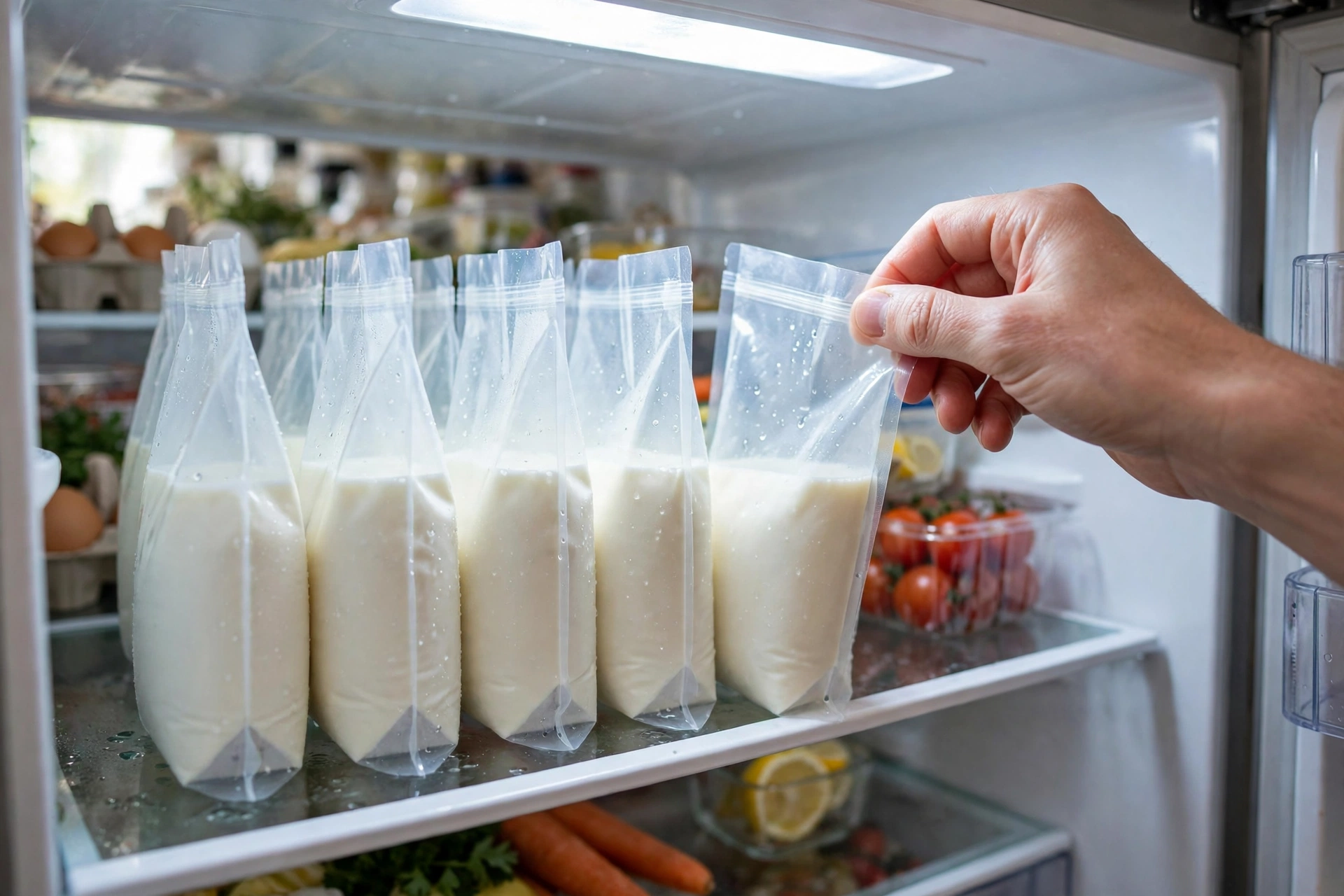
6. Leave an inch of room at the top. Breast milk expands as it freezes, just like water does. If you fill a bag or bottle to the brim, the seal can pop or the container can crack in the freezer, and you lose the milk. Leave about an inch of space at the top of every container you plan to freeze. For bags, squeeze the air out gently before you seal them, then lay them flat.

Portion and Label
Small portions and clear labels keep a freezer stash from turning into a guessing game.
7. Freeze in small 2 to 4 ounce portions. Freeze milk in the amount your baby drinks at one feeding, usually 2 to 4 ounces, instead of freezing big bottles. Small portions thaw faster, and you only warm what your baby will finish. A big frozen bag that your baby only half finishes is milk down the drain, because warmed milk cannot go back in the fridge for another day.

8. Label every bag with the date, and add your baby’s name for daycare. Label each container with the date you expressed the milk, and add the time if you pump more than once a day. If the milk is going to a childcare provider, add your baby’s name too. Most storage bags have a write-on panel, so write the date right on the bag before you fill it, while your hands are still dry. Do not trust your memory.

9. Use the oldest milk first. Always reach for the oldest milk in the fridge or freezer before you open a newer bag. This keeps a stash rotating instead of piling up. When you add new bags to the freezer, slide them behind the older ones, so the oldest is always at the front. If you find a bag older than the freezer limit, throw it out.
Know the Times
These four rules are the heart of the article.
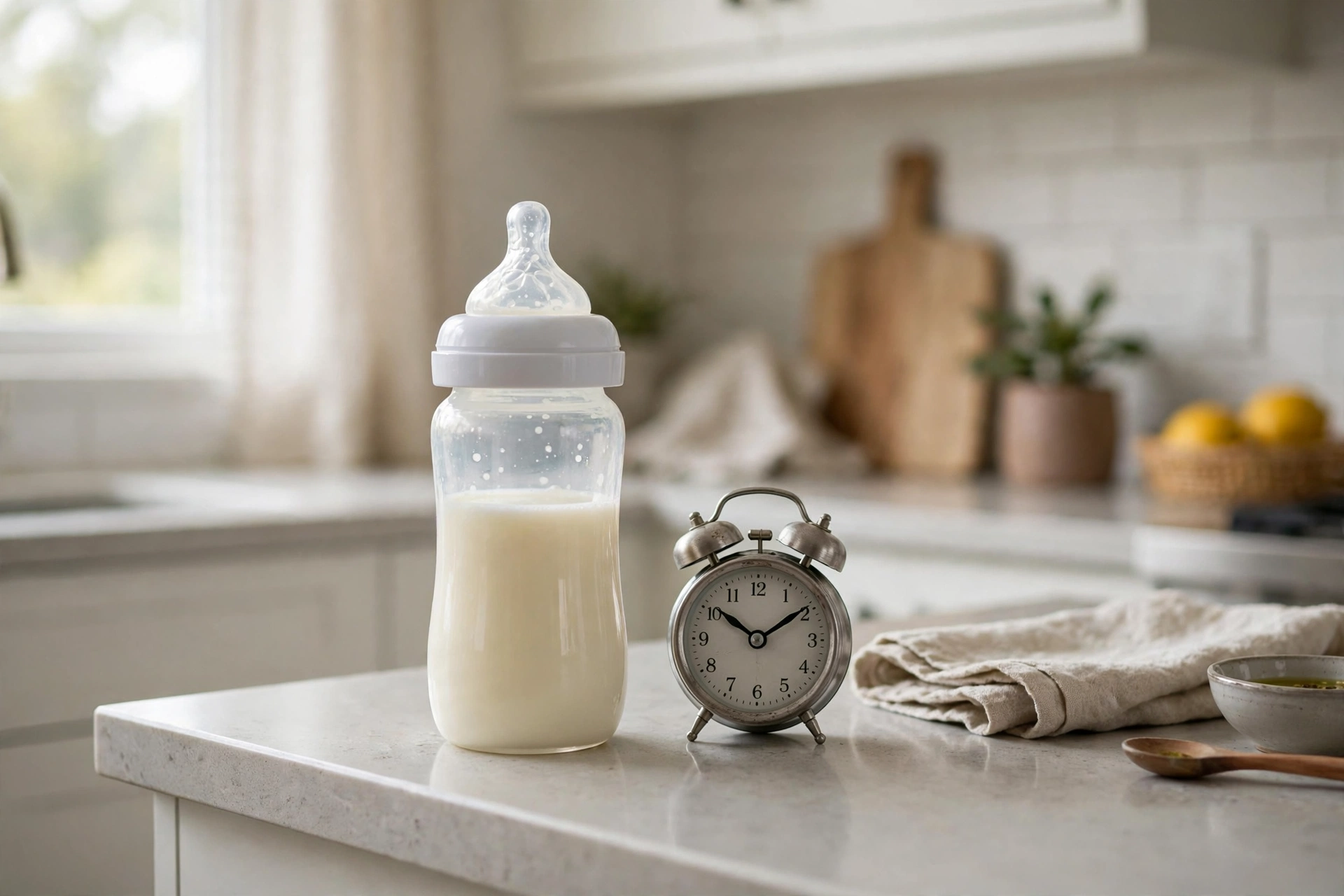
10. Room temperature: up to 4 hours. Freshly expressed breast milk can stay at room temperature, 77F or colder, for up to 4 hours. That covers the pump session at work, the bottle on the nightstand, and the feed you pumped an hour ago. If the room is warm, above 77F, get the milk into the fridge or a cooler sooner.
11. Cooler with ice packs: up to 24 hours. An insulated cooler bag with ice packs keeps freshly expressed milk safe for up to 24 hours, which makes it the tool for work days, car trips, and travel. When you get home, move the milk straight into the fridge or freezer. The Medela Breast Milk Cooler Set is a cooler bag with a contoured ice pack and four 5 oz BPA-free bottles for carrying expressed milk, and it keeps milk cold on the go.

Medela Breast Milk Cooler Set
Cooler bag with a contoured ice pack and four 5 oz BPA-free bottles for carrying expressed milk. Made without BPA; keeps milk cold on the go.

12. Fridge: up to 4 days, at the back. Freshly expressed milk keeps in the refrigerator for up to 4 days. Store it toward the back of the fridge, where the temperature is coldest and steadiest, never in the door, where the temperature swings every time someone opens it. If you will not use it within 4 days, freeze it right after pumping.

13. Freezer: 6 months is best, up to 12 months acceptable. In the freezer, breast milk keeps its best quality for about 6 months, and up to 12 months is acceptable. The CDC notes that freezing keeps food safe almost indefinitely, but the recommended times are about quality, not just safety. Milk stored longer slowly loses some nutrients, including vitamin C. Use frozen milk within 6 months when you can.

Freeze and Thaw the Right Way
Getting milk into the freezer is only half the job.
14. Cool fresh milk before adding it to cold or frozen milk. You can add freshly expressed milk to milk that is already refrigerated or frozen, but only after you cool the fresh milk first. Chill it in the fridge or in a cooler with ice packs, then add it. Never pour warm milk straight onto frozen milk. The warm milk partly thaws the frozen milk, and that thawed milk then has to be used within 24 hours.

15. Thaw in the fridge or warm water, never in the microwave. The safest ways to thaw frozen breast milk are overnight in the refrigerator, or by placing the sealed bag or bottle in a bowl of warm water, or under lukewarm running water. Never thaw or heat breast milk in a microwave. Microwaves heat unevenly and can create hot spots that burn your baby’s mouth, and they can also damage the nutrients in the milk. The Philips Avent Premium Fast Bottle Warmer uses smart temperature control and warms a 5 oz bottle in as few as 3 minutes, with milk circulating to prevent hot spots, and it keeps milk warm for up to 60 minutes before shutting off automatically.
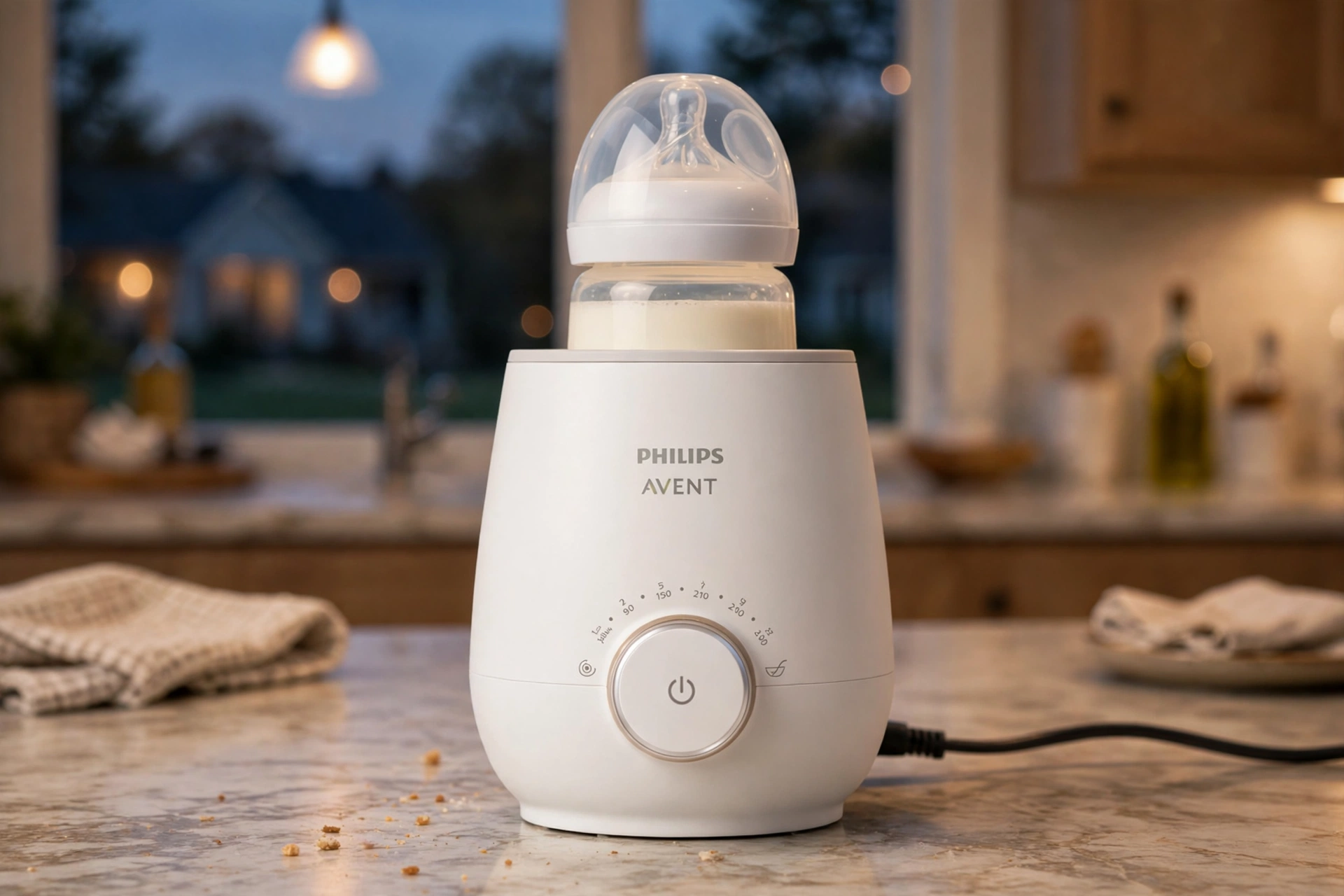
Philips Avent Premium Fast Bottle Warmer, with Smart Temperature Control, Water Bath Technology, Automatic Shut-Off, Model SCF358
Smart temperature control warms a 5 oz bottle in as few as 3 minutes, with milk circulating to prevent hot spots. Keeps milk warm for up to 60 minutes, then shuts off automatically. Fits bottles up to 11 oz, milk bags up to 6 oz, and baby food jars.

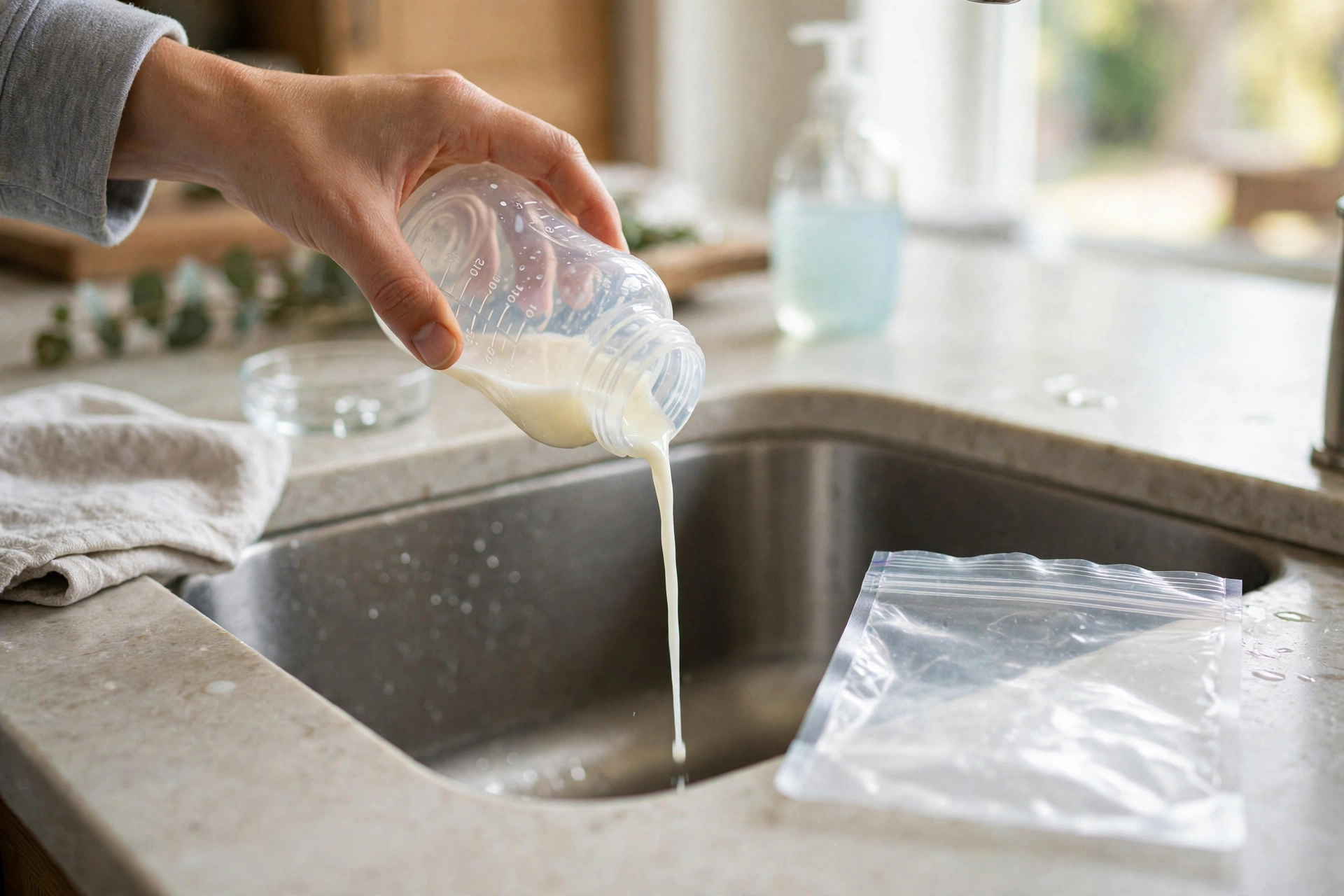
16. Never refreeze thawed milk, and use it within 24 hours. Once milk is thawed, keep it in the refrigerator and use it within 24 hours. If it has been at room temperature, use it within 2 hours. Never refreeze milk that has already been thawed. Thawing and refreezing degrades the quality of the milk and gives bacteria a second chance to grow. Thaw one small bag at a time.
Serve It Safely
The last two rules are about the moment of the feed itself.
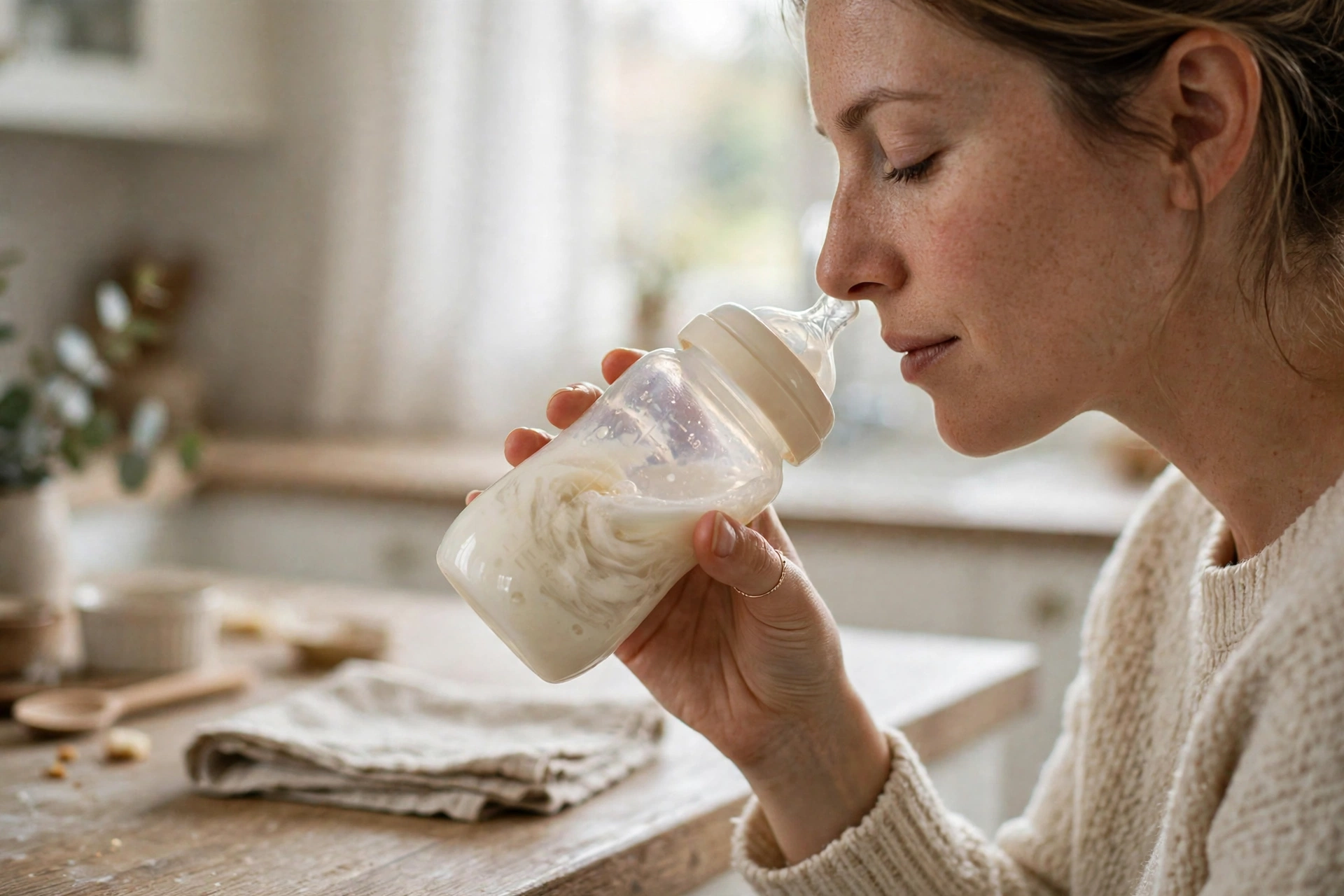
17. Warm gently, swirl instead of shaking, and smell it first. Warm thawed milk the same gentle way you thawed it, in warm water or a bottle warmer, and test a few drops on the inside of your wrist before you offer it. It should feel warm, not hot. Thawed milk often separates, with the fat rising to the top, and that is normal. Swirl it gently to mix it back together. Do not shake it hard. Give it a sniff too. Thawed milk can smell a little different because of lipase, an enzyme in the milk. But if it smells strongly sour or rancid, pour it out.
18. Throw away milk left in a used bottle. If your baby does not finish a bottle, throw the rest away. Do not save it for the next feed, and do not put it back in the fridge. Once your baby has drunk from a bottle, germs from their mouth are in the milk, and they multiply fast at room temperature. The same goes for milk that sat out past its time.

Your Free Breast Milk Storage Cheat Sheet
The whole article fits on one page, and that is the point of the printable. It has the storage-times table, the five rules that matter most (wash your hands, label with the date, use the oldest first, never microwave, never refreeze), and a short checklist for milk that smells off or runs past its time. Print it and stick it on the fridge door, where you will actually see it at 3 a.m.
Download the Free Breast Milk Storage Cheat Sheet (PDF)
Want the full kit? The Complete Breast Milk Storage Kit (coming soon)
The free cheat sheet covers the times and the rules, enough to store milk safely starting tonight. The expanded Complete Breast Milk Storage Kit will carry a 30-day pumping log, a freezer stash tracker with oldest-first rotation, printable daycare labels, a travel and flying-with-milk checklist, and thawing cheat cards for the fridge door. It is the paid, expanded version of this free sheet. There is no buy link yet, because the kit is still being finished.
Shop This Post
| Product | What it is for | |
|---|---|---|
| Boon Lawn Bottle Drying Rack | Drying pump parts, bottles, and nipples | Check Price on Amazon |
| Spectra S1 Plus Electric Breast Pump | Pumping directly into clean bottles | Check Price on Amazon |
| haakaa Silicone Breast Pump, 5 oz | Catching letdown while nursing or pumping | Check Price on Amazon |
| Lansinoh Breastmilk Storage Bags, 100 Count | Freezing milk flat in labeled portions | Check Price on Amazon |
| Dr. Brown’s Natural Flow Anti-Colic Bottles | Storing and serving milk from the fridge | Check Price on Amazon |
| Medela Breast Milk Cooler Set | Keeping milk cold at work or on the go | Check Price on Amazon |
| Philips Avent Premium Fast Bottle Warmer | Warming thawed milk gently and evenly | Check Price on Amazon |
Frequently Asked Questions
How long can breast milk stay out at room temperature? Freshly expressed breast milk can stay at room temperature, 77F or colder, for up to 4 hours. If the room is warmer, refrigerate it sooner. Thawed milk is different. Once thawed, it keeps for up to 2 hours at room temperature, then it must be used or thrown away.
Can I store breast milk in the fridge door? No. Store it toward the back of the fridge, where the temperature is coldest and steadiest. The door warms up every time someone opens it. The same goes for the freezer. Keep bags at the back, not in the door.
Can I add fresh milk to milk I already froze? Yes, but only after you cool the fresh milk first. Chill it in the fridge or in a cooler with ice packs, then add it. Never pour warm milk straight onto frozen milk, because it partly thaws the frozen milk and that milk then has to be used within 24 hours.
Why does my thawed breast milk smell different? Thawed milk can smell a little soapy or metallic because of lipase, an enzyme in the milk that breaks down fats. That is normal, and most babies drink it happily. If it smells strongly sour or rancid, it has turned. Pour it out.
Can I fly with breast milk? Yes. In the United States, the TSA allows breast milk in quantities over the usual liquid limit, with or without your baby traveling with you, as long as you declare it for inspection at the security checkpoint. Pack it in a cooler bag with ice packs and tell the officer you are carrying breast milk before screening starts.
Start With the Next Pump
You do not need a new system, a new fridge, or a perfect routine. You need clean hands, a bag with a date on it, and the four numbers: 4 hours on the counter, 24 hours in a cooler, 4 days in the fridge, 6 months in the freezer. Print the cheat sheet, stick it on the fridge, and follow it at the next pump.
More Breastfeeding Guides
Postpartum Essentials