37 Cozy Homeschool Room Ideas That Make Learning Feel Like Home

A homeschool room does not need to look like a classroom, and it does not need to cost a fortune. It needs one good work spot, storage kids can use alone, and a corner that feels cozy enough to read in.
This guide gives you **37 cozy homeschool room ideas**, grouped into work zones, storage, walls that teach, cozy corners, art zones, and small-space fixes, so you can pick what fits your home and budget. Every idea works in a spare room or a shared corner.
Heads up: this post contains affiliate links. If you buy through them, MamaKinder may earn a small commission.

How to Set Up Your Homeschool Room
Start with the work, not the decor. Pick the desk or table first, then add storage for the books and supplies that live there every day. Cozy touches and wall displays come last, because they are easy to add once the room works.
Measure before you buy. A desk that fits beats a beautiful desk that blocks the door, and bins that fit the shelf beat bins stacked on the floor. Start with what you own, then buy only what fixes a real problem.
Quick Picks
| If you have… | Start with |
|---|---|
| One corner | 33, 10, 21 |
| Two kids | 1, 9, 10 |
| Tiny budget | 3, 20, 31 |
| Little kids | 2, 8, 21 |
| A full room | 1, 8, 15, 23 |
The Work Zone
1. An Adjustable Desk That Grows.

Start with a desk that grows. A GDLF adjustable kids study desk and chair set adjusts through three height levels for ages 5 to 12, so the same desk fits a kindergartner and a fifth grader. The hutch and drawers hold books and supplies, and the built-in whiteboard suits morning math. Anchor it to the wall.
GDLF Kids Study Desk and Chair Set, Adjustable Children Study Table with Chair
Three height levels for ages 5 to 12, with a hutch, two drawers, a book stand, a whiteboard, and a fabric storage bag. CPSIA-certified.
2. A Low Table and Chairs.
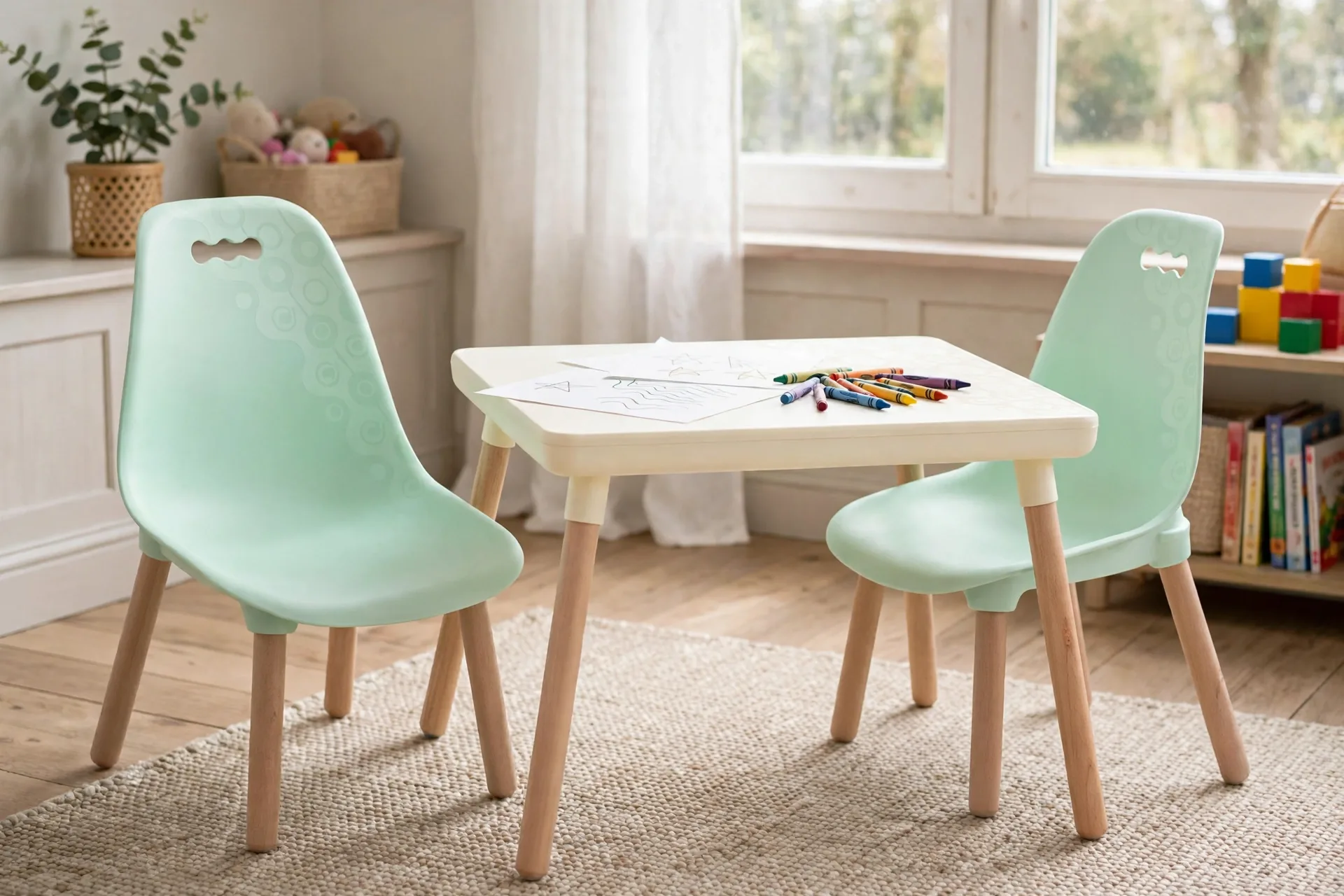
Little kids need furniture their size. A B. toys table and chair set lets them sit with both feet on the floor and reach their paper without climbing. Keep it near a window, with only today's work on top.
B. toys Table and Chair Set
A craft table with two chairs, sized for little learners.
3. The Family Table as the Main Desk.
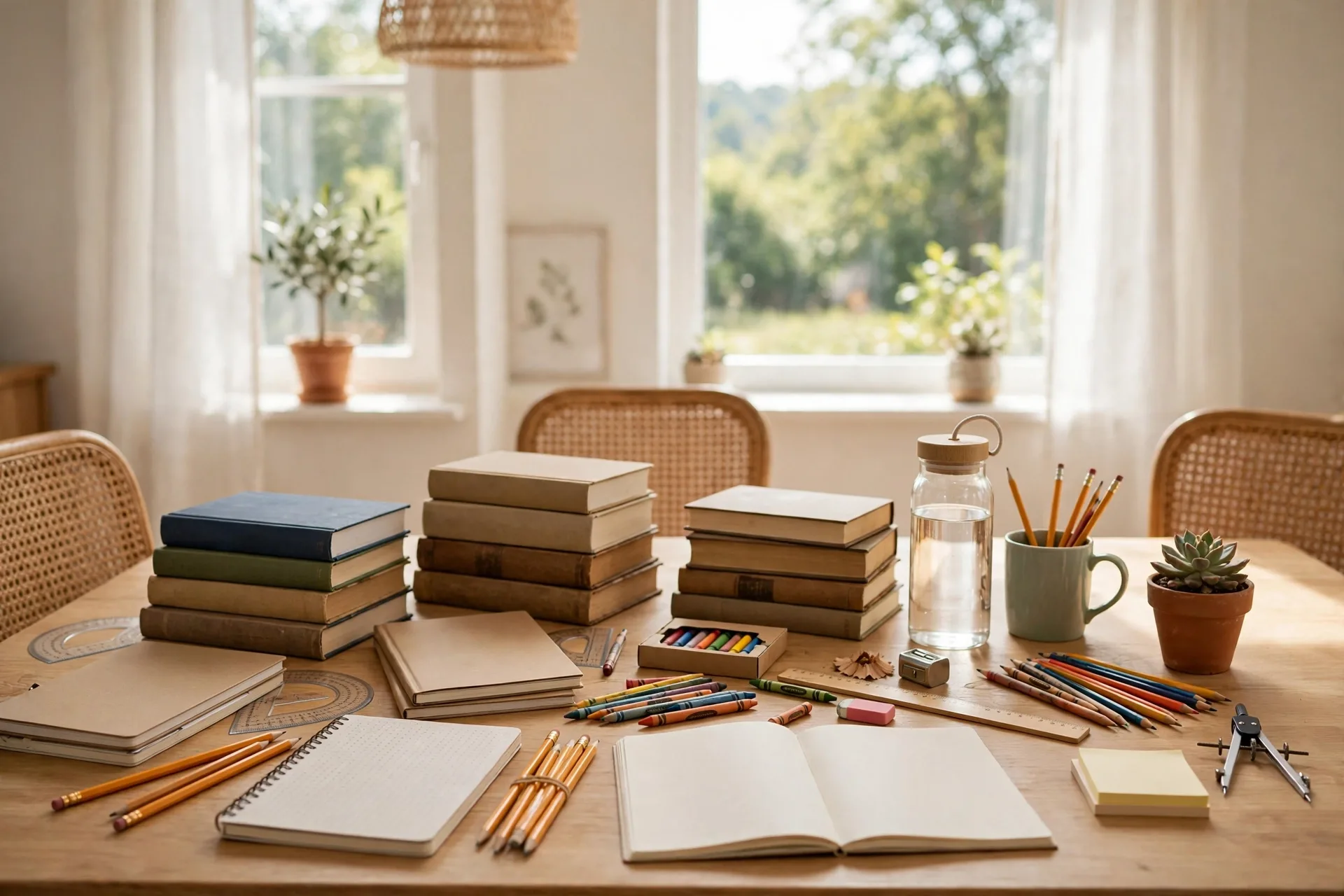
You do not need to buy a desk to start. The dining table already seats everyone, holds big projects, and cleans up fast. Give each child a basket for their books, and set a clear start and finish time.
4. A Standing Spot for Wigglers.

Some kids think better on their feet. A kitchen counter or a tall shelf makes a standing desk with zero cost, and it burns off the wiggles that kill focus. Let them stand for one subject a day, then sit for the next. Movement is fuel, not misbehavior.
5. A Desk Lamp for Dark Mornings.

Winter mornings start in the dark, and a ceiling light alone feels harsh. A HAITRAL small table lamp on the desk gives warm light right where the reading happens, and it tells kids that school has started. Pick a shade that softens the glare, and keep the cord behind the desk.
HAITRAL Small Table Lamp, Beige Linen Shade
A small table lamp with a beige linen shade for soft light on dark mornings.
6. A Second Seat for Read-Alouds.

Every homeschool room needs one seat for two. A spare dining chair pulled beside your child turns read-aloud time into the best part of the day. Sit close enough to point at the pictures together.
7. A Print Station for Worksheets.

Worksheets, coloring pages, and art prints all come from one spot, so give that spot a home. An Epson EcoTank ET-2800 printer with refillable ink tanks keeps the cost of printing low, and a small table beside it holds paper and finished work. Print the next day's pages the night before.
Epson EcoTank ET-2800 Wireless Color All-in-One Cartridge-Free Supertank Printer
A wireless color all-in-one printer with refillable ink tanks instead of cartridges, for worksheets and art prints.
Storage That Puts Itself Away
8. A Forward-Facing Bookshelf.

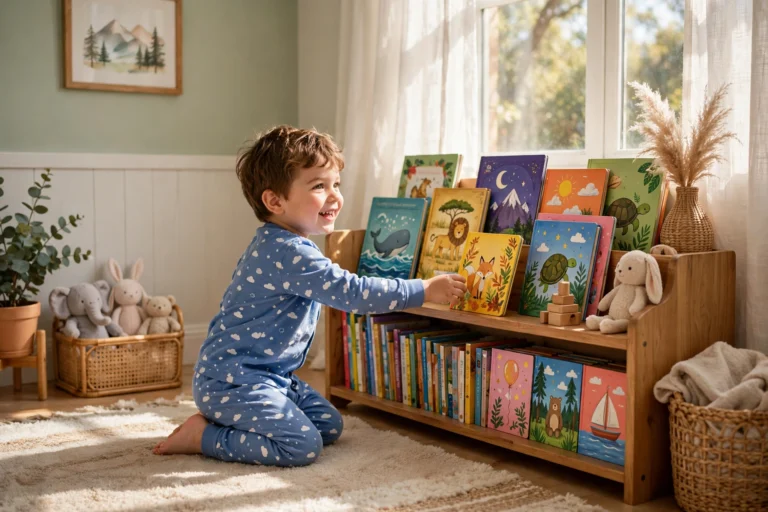
Kids pick books by their covers, so face them out. A forward-facing bookshelf turns the book collection into a shop window, and children choose their own reading without asking. It turns choosing a book into the lesson.
Forward-Facing Bookshelf
A forward-facing bookshelf that shows book covers, so kids pick what to read.
9. A Bin for Every Subject.

Give every subject its own bin, and cleanup becomes a game. A Humble Crew organizer with 20 bins holds math tools, art supplies, and workbooks in one sturdy frame, and the low height lets kids reach everything alone. Label each bin, and teach that everything goes home after use.
Humble Crew Kids Toy Organizer with 20 Bins
20 removable bins in two sizes, a sturdy engineered wood frame, and anti-tip straps. The bins sit low enough for a child to reach alone.
10. A Rolling Cart for Each Child.

When two kids share one room, give each one a cart. A SPACEKEEPER slim 3-tier rolling cart rolls to the desk in the morning and parks in a corner at night, and the lockable wheels keep it still during lessons. One cart per child ends the fight over the good markers.
SPACEKEEPER Slim Rolling Storage Cart, 3 Tier
A slim 3-tier rolling cart with lockable casters that fits narrow spaces and rolls where the learning happens.
11. Seagrass Baskets for Odds and Ends.

Every room collects odds and ends: yarn, blocks, nature finds, half-finished crafts. A set of GIB round seagrass storage baskets catches them all, and they look good enough to leave on open shelves. Tidy can look good too.
GIB Round Seagrass Storage Baskets, Set of 3
Three round seagrass baskets for the odds and ends that never had a home.
12. Drawer Bins Inside the Desk.

A desk drawer without dividers is a junk drawer by Friday. A set of mDesign fabric drawer organizer bins splits one drawer into homes for pencils, scissors, erasers, and tape, so kids find what they need in seconds. Teach them to put each tool back in its own bin, and the drawer stays tidy.
mDesign Fabric Drawer Organizer Bins, Gray/White Polka Dot, Set of 4
Four fabric drawer bins that turn one messy drawer into four tidy homes.
13. Stackable Cubes for Curriculum.

Curriculum grows every year, so storage should grow too. A UTEX stackable storage cabinet with 3 cubes holds this year's books now, and you add another row when the next year arrives. Keep the current term at eye level and last year's books on the bottom row.
UTEX Stackable Toy Storage Cabinet, 3 Cubes
Three stackable storage cubes that grow with the curriculum shelf by shelf.
14. Chalkboard Labels on Every Bin.

Labels turn bins into a system kids can use alone. A pack of erasable chalkboard labels sticks to bins, shelves, and drawers, and you can rewrite them when subjects change. One pack labels the whole room.
244 Erasable Chalkboard Labels, Includes 2 Chalk Markers
Two hundred forty-four erasable chalkboard labels with 2 chalk markers, for bins, shelves, and drawers.
Walls That Teach
15. Educational Posters at Eye Level.

Hang posters where kids can actually see them, not over their heads. A set of Hadley Designs 16 educational posters covers the alphabet, numbers, shapes, colors, and the days of the week, and the lamination survives sticky fingers. Swap one poster a month, and the wall keeps teaching.
Hadley Designs 16 Educational Posters for Toddler Learning Activities
Sixteen laminated 11 by 17 inch posters covering the alphabet, numbers, shapes, colors, and more.
16. A Whiteboard Wall for Lessons.

A whiteboard turns any wall into a teaching tool. A VIZ-PRO magnetic whiteboard takes the day's plan where everyone can see it, work through one math problem together, and let kids take a turn as teacher. The magnetic surface holds flashcards too, and it wipes clean for tomorrow.
VIZ-PRO Magnetic Whiteboard, 40 x 30 Inches
A magnetic dry erase board, 40 by 30 inches, with 1 eraser, 2 markers, and 4 magnets included.
17. A Corkboard for Work Worth Showing.

Kids work harder when their work gets displayed. An Amazon Basics cork bulletin board holds this week's best drawings, spelling tests, and nature finds, and you rotate it every Friday. Every piece on it earned its spot.
Amazon Basics Rectangular Bulletin Board, Cork Board for Wall, 35 x 47 Inches
A cork bulletin board, 35 by 47 inches, with an aluminum frame for pinning up work.
18. A Teaching Clock for Time.

Telling time clicks faster when kids can move the hands themselves. The Learning Resources Time Activity Set pairs a clock with movable hands and a write and wipe clock with time cards and dice, so time lessons feel like a game. Practice five minutes at the start of each day, and the skill sticks.
Learning Resources Time Activity Set
A teaching clock set with movable hands, a write and wipe clock, 24 time cards, and 3 time dice. Ages 5 and up.
19. A Globe for Geography.
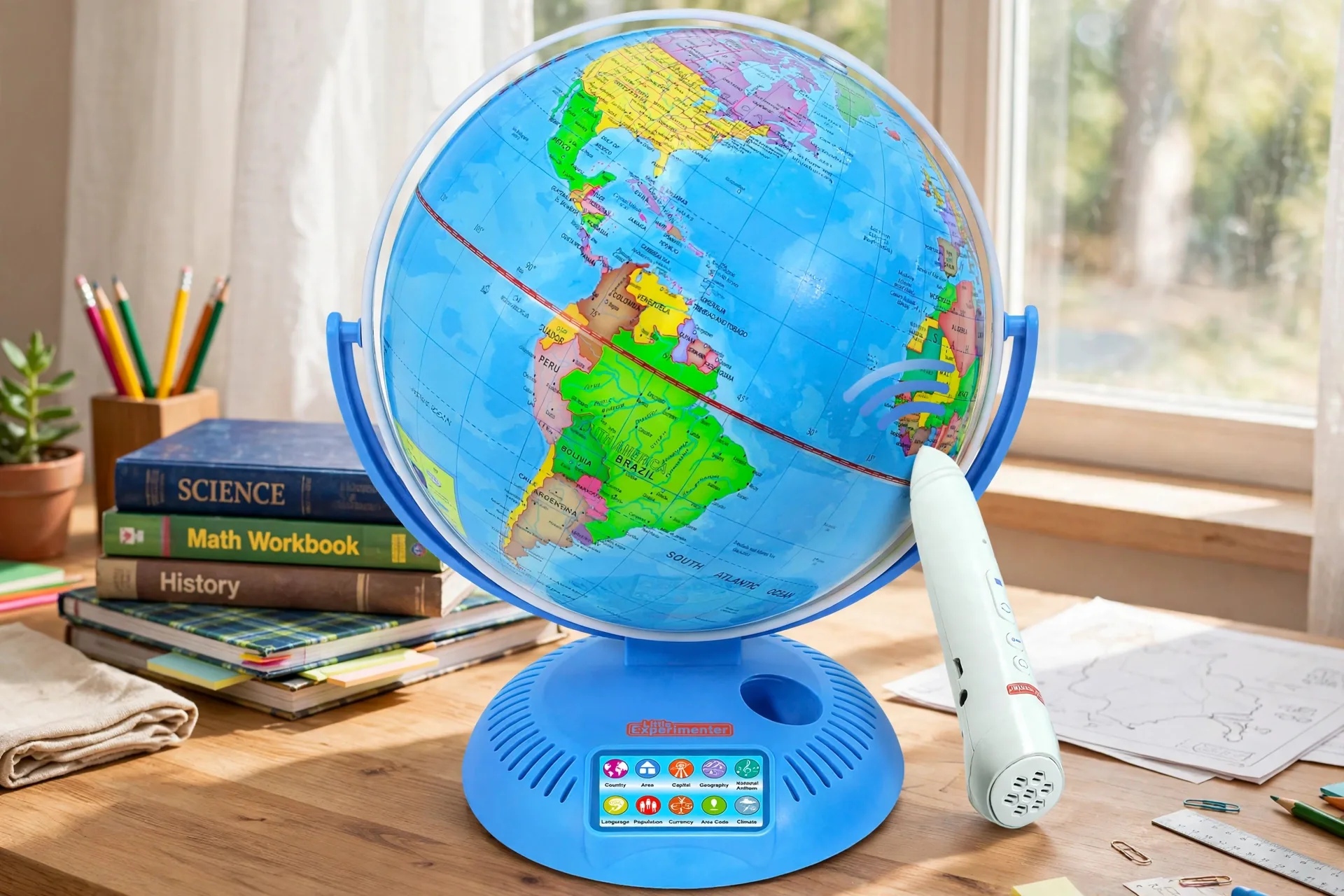
A globe makes geography real in a way a flat map cannot. The Little Experimenter interactive globe comes with a smart pen and 300 trivia questions, so kids can quiz themselves on countries and capitals. Keep it on the desk, not a high shelf, so little hands spin it daily.
Little Experimenter Interactive 9 Inch Globe with Smart Pen
A 9 inch interactive globe with a smart pen and 300 trivia questions. Ages 8 and up.
20. A Gallery Wall of Their Art.

Tape is all you need for the proudest wall in the house. Hang this month's best art in a neat row, and let your child choose what goes up. When the wall fills, photograph the pieces and start fresh. The gallery teaches them their work is worth framing.
Cozy Corners for Reading
21. A Reading Nook Chair.
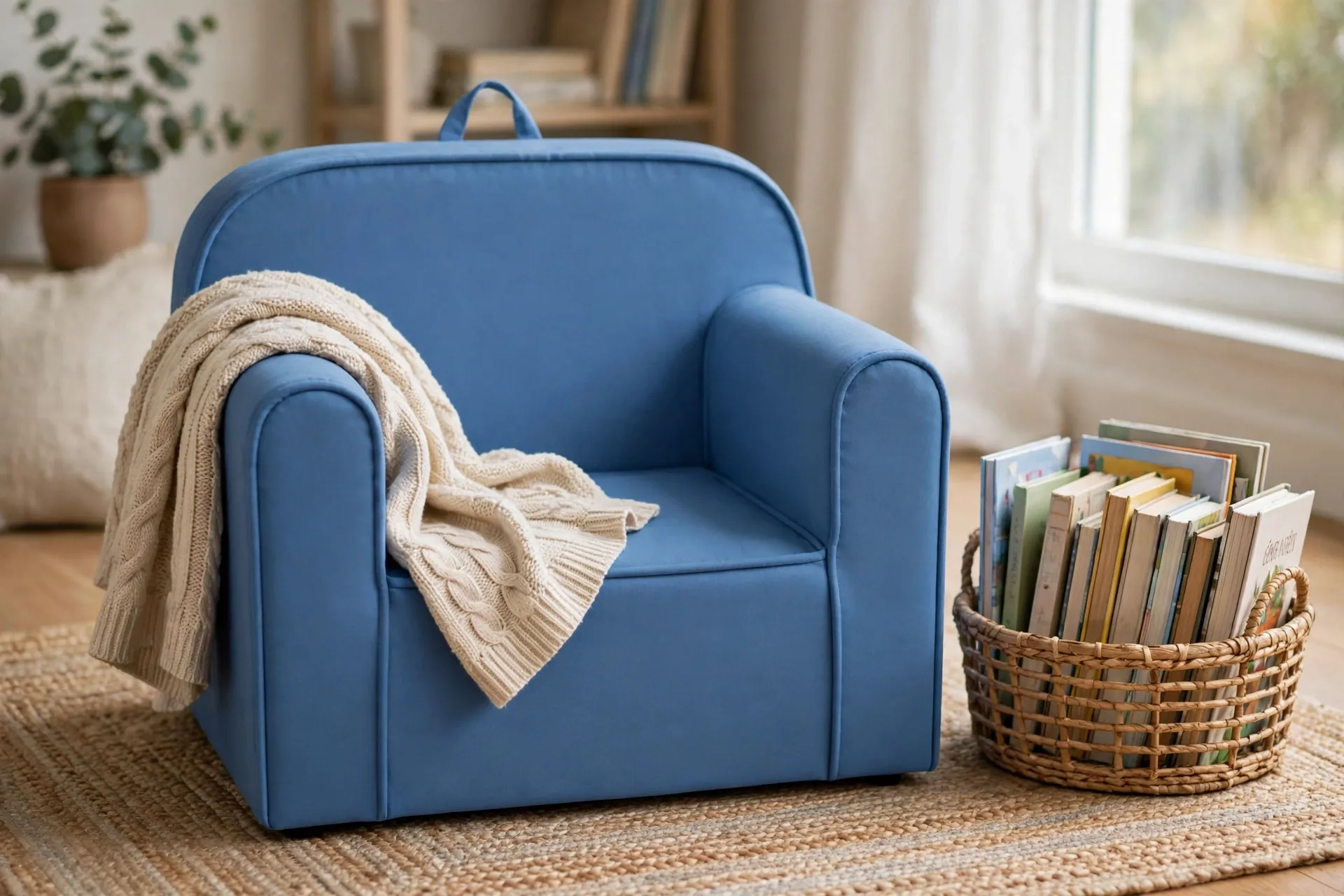
A reading nook needs one thing above all: a chair kids fight over. A Delta Children Cozee Chair with a soft blanket and a basket of books beside it becomes the spot where reading feels like a treat. Put it in the quietest corner, away from the desk.
Delta Children Cozee Chair
A small cozy chair sized for kids, for the reading nook.
22. A Bean Bag That Stores Toys.

A bean bag is a seat and a storage box in one. A storage bean bag chair holds soft toys and spare blankets inside, so the reading corner stays tidy and the seat stays soft. Kids can drag it to the window, the desk, or the rug.
Storage Bean Bag Chair
A bean bag chair with storage inside, so soft toys and blankets have a home.
23. A Washable Rug That Defines the Room.

A rug is the cheapest way to say this corner is school. A WITSHOCK washable geometric area rug marks the learning zone, softens the floor for sitting, and survives paint, juice, and muddy feet because it goes in the wash. Pick a pattern that hides stains, and let the rug do the zoning.
WITSHOCK Washable Geometric Area Rug, 6 by 9 Feet, Blue
A washable geometric area rug, 6 by 9 feet, that marks the learning zone and survives spills.
24. Floor Pillows for Circle Time.

Circle time works better when everyone has a spot. A set of round floor pillows stacks in a corner when lessons end, and they spread into a circle for stories, songs, and morning meetings.
Round Floor Pillows, 16-Pack, 16 Inches
Sixteen round floor pillows, 16 inches each, for circle time and floor reading.
25. Headphones for Quiet Focus.

Two kids, one room, two different lessons: that is when headphones save the day. CozyPhones kids headphones let one child listen to a lesson while the other reads aloud. Keep volume low and take a listening break every half hour. Two lessons, one room, no shouting.
CozyPhones Kids Headphones
Soft headband headphones made for kids, for quiet focus time.
26. A Sand Timer for Work Sprints.

A one-minute sand timer turns work into a game. Flip a SuLiao 1-minute hourglass sand timer for a spelling sprint, a tidy-up race, or a quiet minute before lessons start. Kids can see time running out, which beats any nagging, and it needs no batteries and no screen. Keep it on the desk.
SuLiao 1-Minute Hourglass Sand Timer
A 1-minute hourglass sand timer for short work sprints and tidy-up races.
Art and Hands-On Zones
27. An Art Case With Everything.

Art supplies scattered across the house never get used. The Crayola Inspiration Art Case holds 140 pieces: 64 crayons, 20 short colored pencils, 40 washable markers, and 15 sheets of paper, so art time starts in seconds. The case closes, latches, and travels from the table to the car.
Crayola Inspiration Art Case Coloring Set, 140 Pieces
A 140-piece art case with 64 crayons, 20 short colored pencils, 40 washable markers, and 15 paper sheets. Ages 5 and up.
28. Washable Markers for Little Hands.

Markers are the most used art tool in the house, so make them washable. Crayola Ultra-Clean washable markers wash off skin, clothes, and tables, which means kids can draw freely and you can stop hovering. Keep one set in the art case and one at the desk.
Crayola Ultra-Clean Washable Markers, 10 Count
Ultra-clean washable markers in 10 colors, made to wash off skin and clothes.
29. Crayons in a Cup.
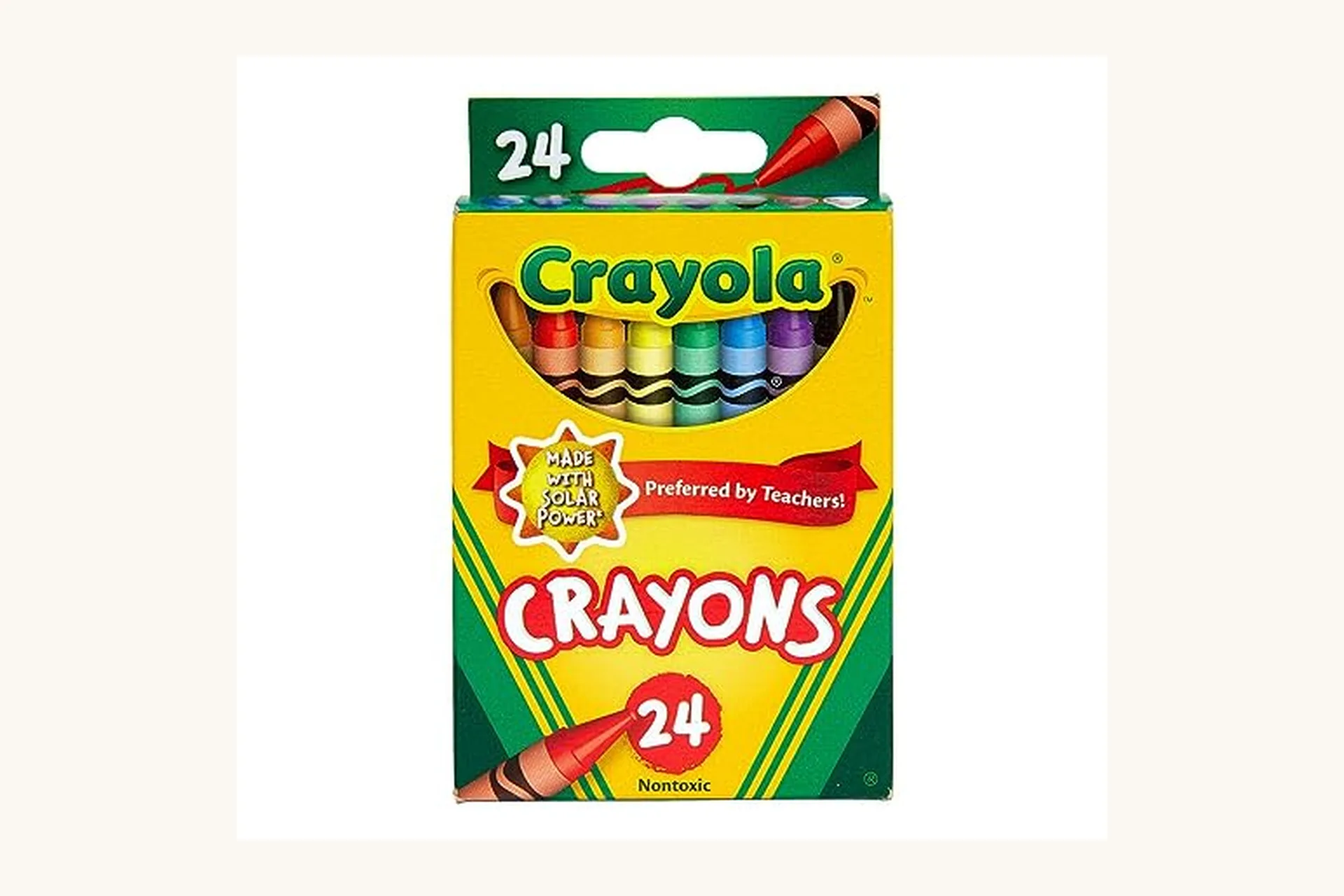
A cup of crayons on the desk beats a box buried in a drawer. A box of Crayola crayons, 24 count stands ready in a cup, and kids grab the exact shade they need without digging. Broken crayons go in the cup anyway, because they still color beautifully.
Crayola Crayons, 24 Count
Classic crayons in 24 colors for everyday drawing and coloring.
30. Construction Paper for Every Project.

Construction paper is the backbone of a hundred projects: cards, posters, paper chains, and cut-out animals. A pack of Crayola construction paper, 480 sheets lasts a whole term, and it costs less than one fancy craft kit. Store it flat in a bin, and use the good scissors for cutting.
Crayola Construction Paper, 480 Sheets
Construction paper in assorted colors, 480 sheets, for crafts, signs, and projects.
31. A Nature Table by the Window.
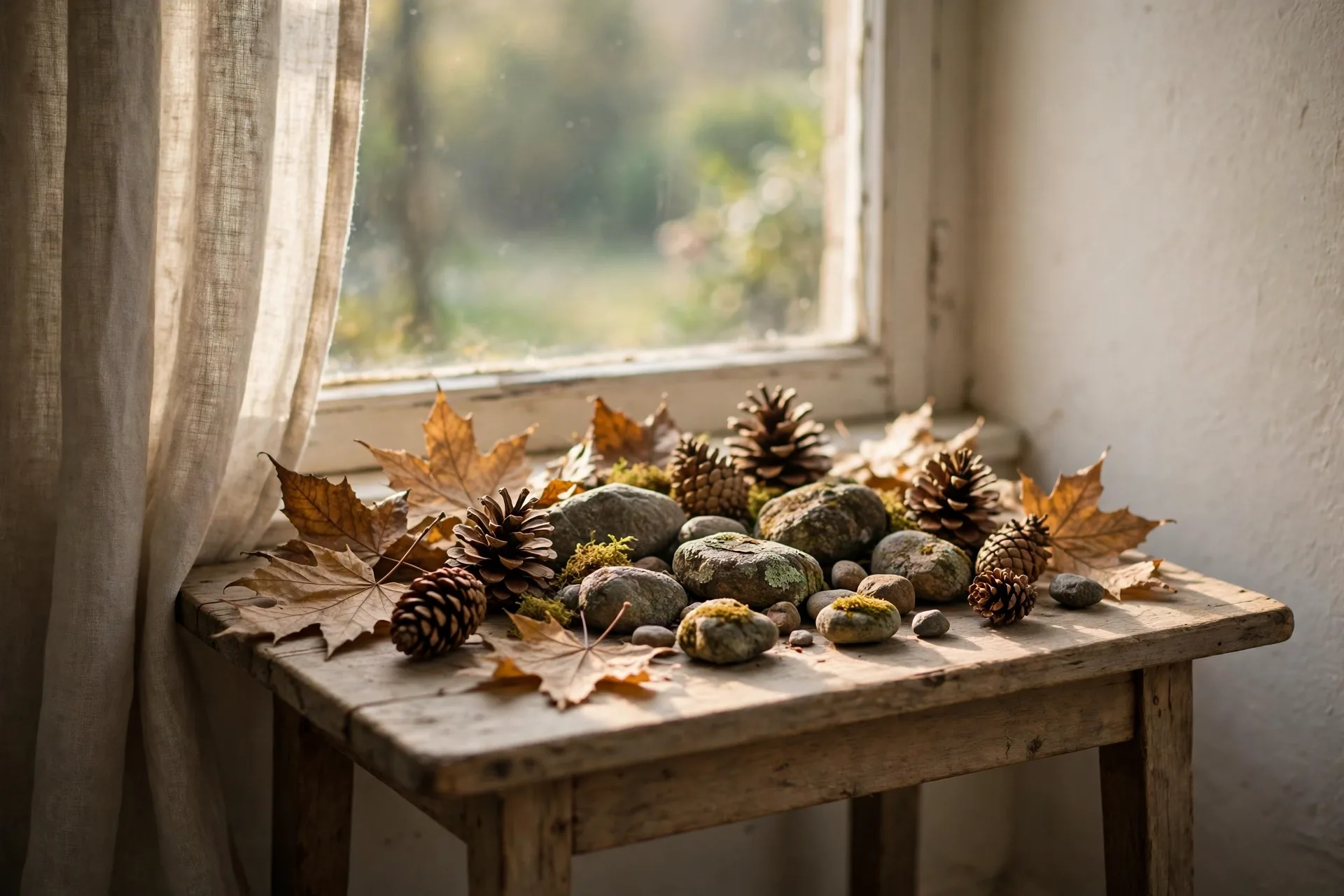
A nature table costs nothing and teaches everything. Leaves, pinecones, rocks, and feathers collected on walks get their own spot by the window, and each find starts a conversation about seasons and science. Change the display with the seasons, and it never gets boring.
32. A Messy Zone With Newspaper Down.

Messy projects need one rule: newspaper down first. Cover the table with yesterday's paper before the paint comes out, and cleanup takes two minutes instead of twenty. Mess stays welcome when it is contained.
Small Spaces and Smart Systems
33. A Closet Turned Into a Classroom.

A spare closet is a classroom waiting to happen. Take the doors off, add a desk and two shelves, and you have a nook that closes away at night. It works best for one child at a time, and it proves a homeschool room can be four feet wide.
34. Color Codes for Every Subject.

Give every subject a color, and kids find their work without asking. Math is blue, reading is green, art is yellow, and the bins and labels follow the same code from the shelf to the cart.
35. A Snack Shelf for Mornings.

A snack shelf buys you a quiet hour. Stock a low shelf with fruit, crackers, and water bottles the kids can reach themselves, and set the rule that snacks happen at break time. Independence tastes good.
36. A Mom Command Center.

You need a command center as much as the kids need desks. One shelf holds your planner, the week's lesson notes, and a calendar, all in one place you can see from the table.
37. A Reset Basket for Tomorrow.

The last five minutes of school decide tomorrow's first five. One basket collects tomorrow's books, pencils, and papers, and the kids fill it before they leave. Tomorrow starts ready, not rushed.
Want the Whole Room Planned for You?
These 37 ideas are the free start. The Homeschool Room Setup Pack is the bigger version we are building next: 60 room ideas in all, plus shopping lists for every idea, layout plans for small, medium, and large rooms, and printable bin labels, so the whole room is planned in one evening.
If you want the full pack when it is ready, keep an eye on this page. The free ideas above are yours today, and the pack will sit right here beside them when it launches.
Shop This Post
Frequently Asked Questions
How much space do I need for a homeschool room?
You need one work surface and one shelf, not a whole room. A corner with a desk, a bookshelf, and a rug works for most families, and a closet nook works for one child. Start small and add zones only when the room works.
How much does a homeschool room setup cost?
Most families spend between 50 and 300 dollars. A shared family table and bins you own cost nothing, while an adjustable desk and a bookshelf are the two pieces worth spending on. Buy the desk first, then add storage one piece at a time.
What if I do not have a spare room?
Use a corner of the living room or dining room. A rolling cart holds the day's supplies and parks in a closet at night, and a rug marks the school zone. The room does not need walls, it needs a clear start and finish to the school day.
How do I keep the room tidy every day?
Give everything a labeled home and end each day with a five-minute reset. Books go back in their bins, supplies back in their cart, and tomorrow's work in the reset basket. A room that resets daily never needs a big cleanup.
A Small Ritual
My rule is simple: the best homeschool room is the one your kids want to walk into every morning. Pick one work spot, one storage fix, and one cozy corner from this list, and the rest will fall into place.
If you are planning the whole first week, our School Lunch Ideas help you pack lunches the kids will actually eat.