
26 Toddler Parenting Tips That Make Hard Days a Little Easier
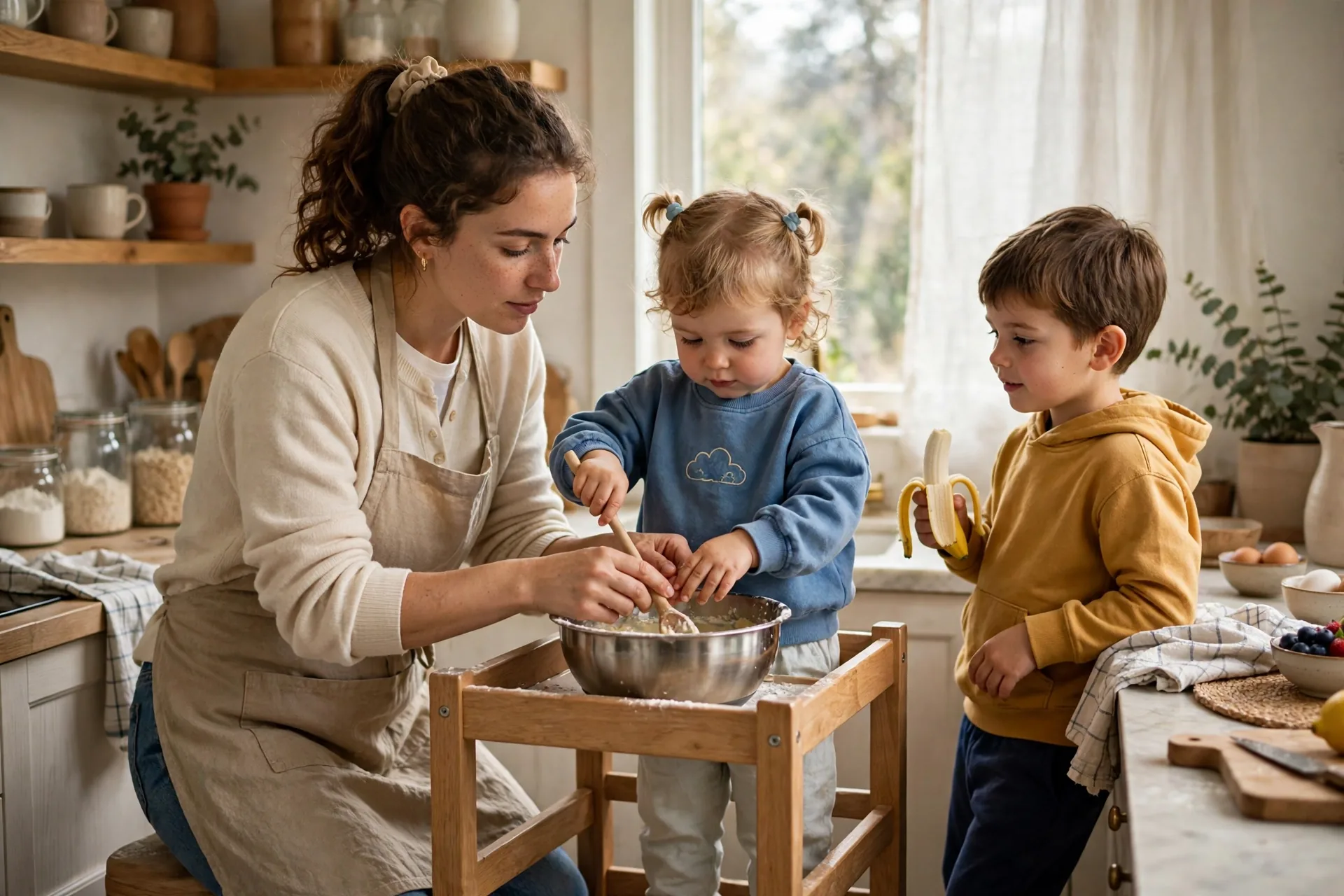
A toddler can be an angel at breakfast and on the floor screaming about a banana by five o’clock — same kid, same day, nothing “wrong” with either of you. I know because I live it twice over: my 4-year-old just graduated from toddlerhood, and my 2-year-old is in the middle of it, usually loudly, usually in public.
This guide collects the 26 toddler parenting tips that actually run our house: the exact words to say during a tantrum, routines that hold the day together, mealtime and bedtime fixes, and ways to give a small person real independence without surrendering the furniture. None of them needs a personality transplant — yours or theirs. Start with the section that matches your hardest hour.
Heads up: this post contains affiliate links. If you buy through them, MamaKinder may earn a small commission at no extra cost to you — it helps keep these guides free.

Big Feelings & Behavior
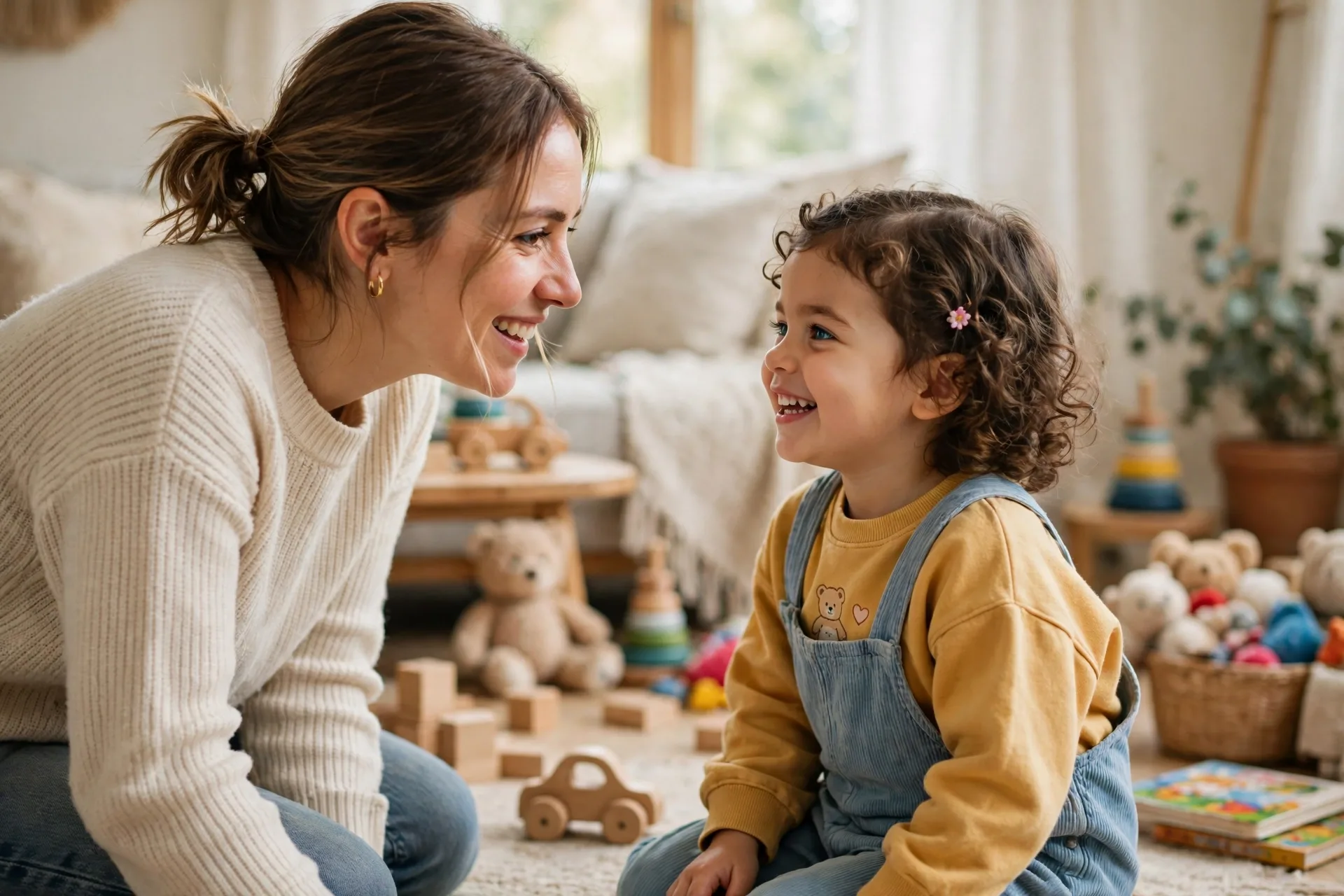
1. Get down to their level. Kneel, crouch, sit on the floor — whatever it takes to talk to their face instead of down at their head. It sounds too small to matter, but a toddler who can see your eyes hears your words differently. Half of “she never listens” is a height problem.
2. Name the feeling before you fix anything. “You’re mad. You wanted the blue cup.” That’s the whole first move. A toddler whose feeling gets named out loud settles faster than one who gets a lecture — the naming is the teaching, because feelings with words attached are feelings she can eventually say instead of scream.

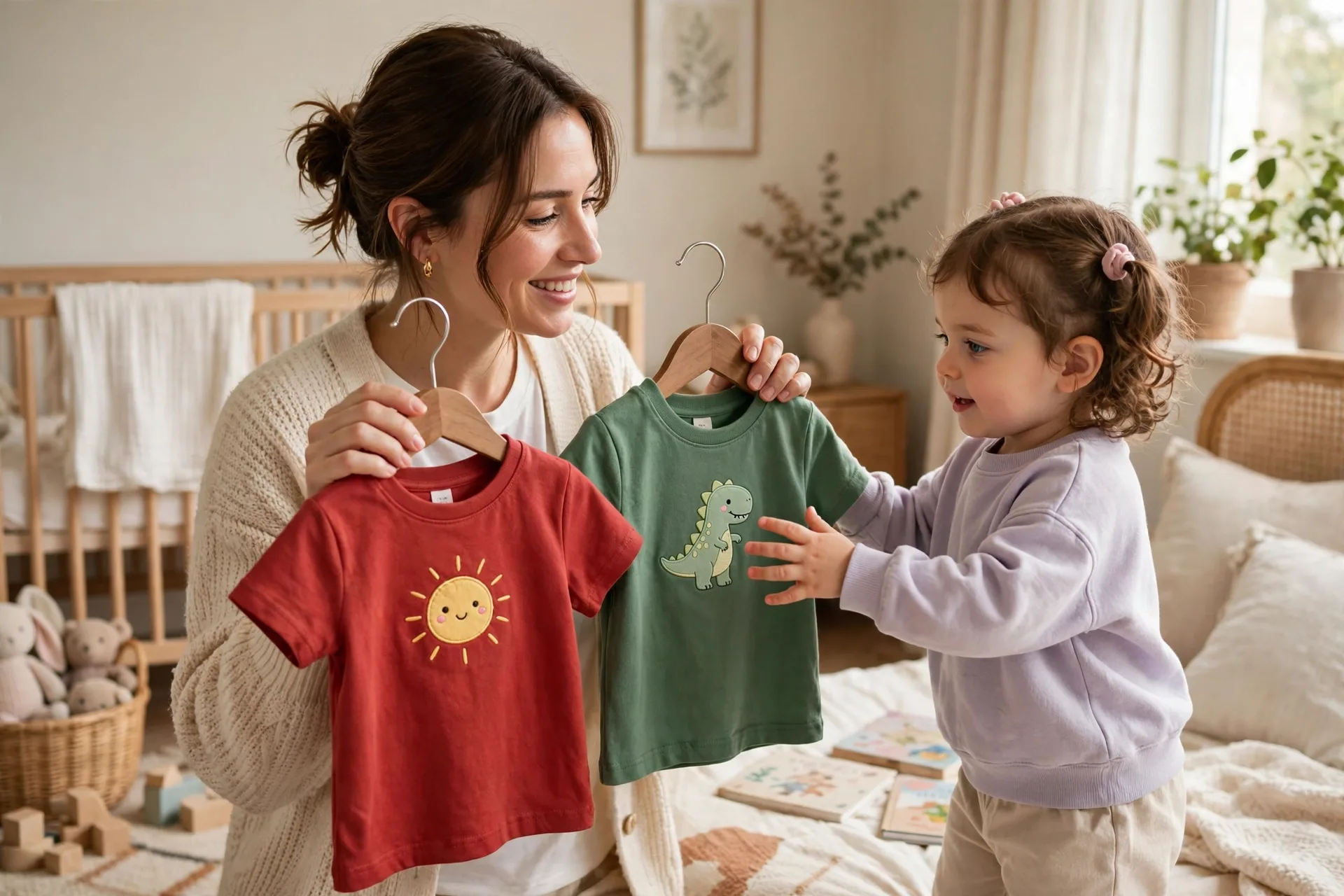
3. Offer two choices — both fine with you. “Red shirt or green shirt?” “Walk or be carried?” Toddlers are starving for control; two-choice questions feed it safely all day long. The trick is only offering options you can live with, because she will pick the one you secretly hate roughly every time.
4. Say what TO do, not what not to do. “Don’t climb” registers as “climb”; “feet on the floor” gives her an action. Same with “gentle hands” instead of “don’t hit,” and “walking feet” instead of “stop running.” It’s a small translation job that saves you a hundred repetitions a day.

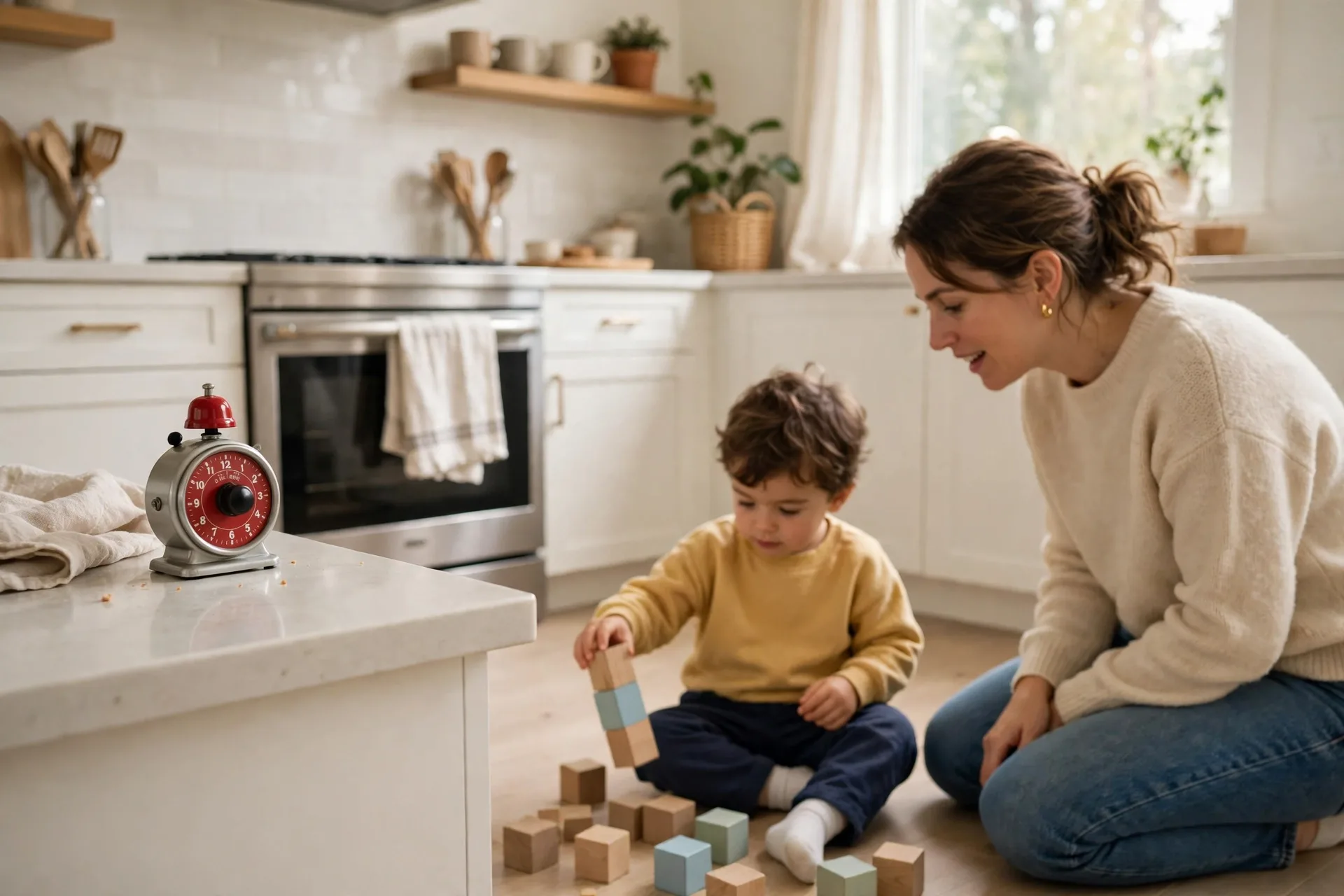
5. Warn before every transition. Leaving the park, ending bath, turning off a show: two warnings, five minutes and one minute. A little kitchen timer she can hear makes it the timer’s rule, not yours. Transitions without warnings are where a shocking number of meltdowns are born.
6. Ride out the tantrum; don’t negotiate with it. Mid-storm is not teaching time. Stay close, keep her safe, keep your words few: “I’m here. You’re safe. I’ll wait.” The cookie stays no even at full volume — but your lap stays available. Afterwards, when she’s calm, that’s when a short recap lands. Our full playbook is in Toddler Temper Tantrums, and How to Tame Toddler Tantrums covers the prevention side.

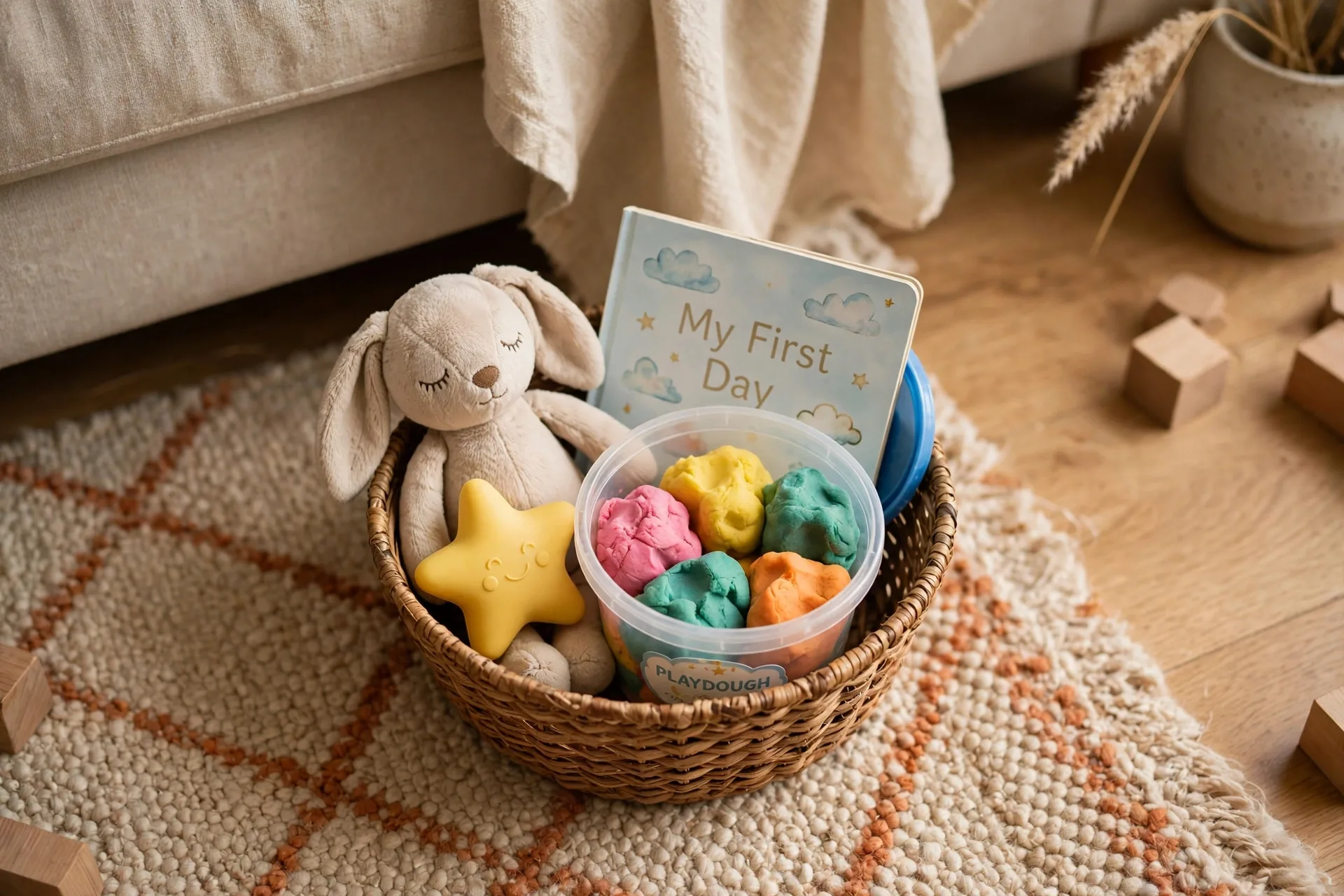
7. Keep a calm-down basket. A small basket in the living room: a stuffy, a board book, something to squeeze. It’s not a punishment corner — you go with her, or she raids it solo when she wants to. A tub of playdough to squash flat is the MVP of ours; big feelings come out through hands surprisingly well.
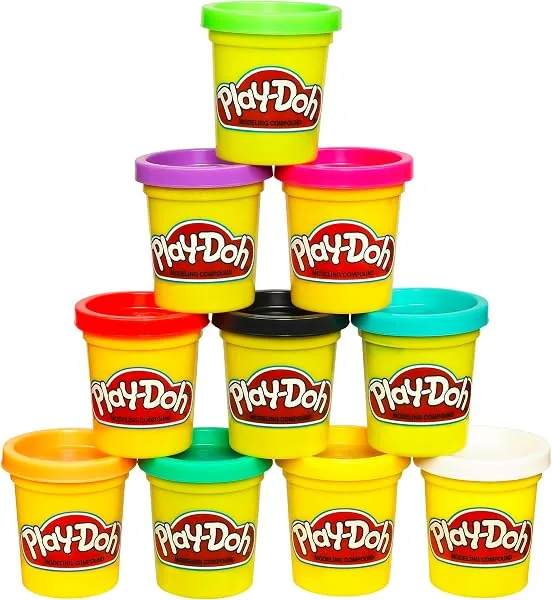
Play-Doh — 10-Pack of 2oz Colors
Ten little 2oz tubs in ten colors — one lives in our calm-down basket, one in the going-out bag. Squash it, roll it, poke it: big feelings come out through hands.
8. When hands hit, give them a job. Block the hit gently, name it: “I won’t let you hit. Hitting hurts.” Then redirect the energy — stomp like a dinosaur, squeeze the stuffy, rip paper for the recycling. If hitting is your current season, Why Does My Toddler Hit Me but Not Daddy? explains the part nobody warns you about, and new habits picked up from other kids get their own fixes in Toddler Picking Up Bad Habits at Daycare.

Routines That Hold the Day Together
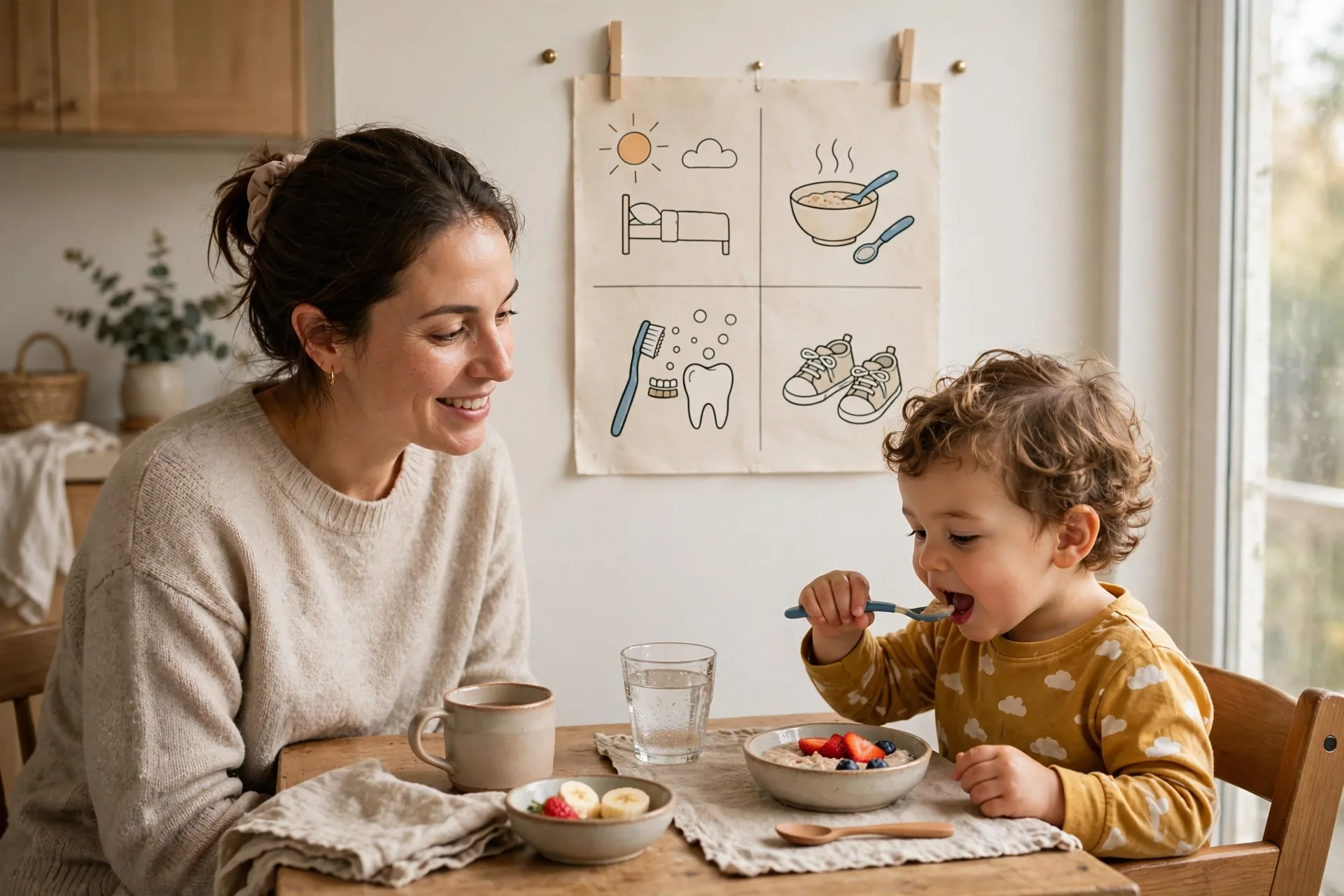
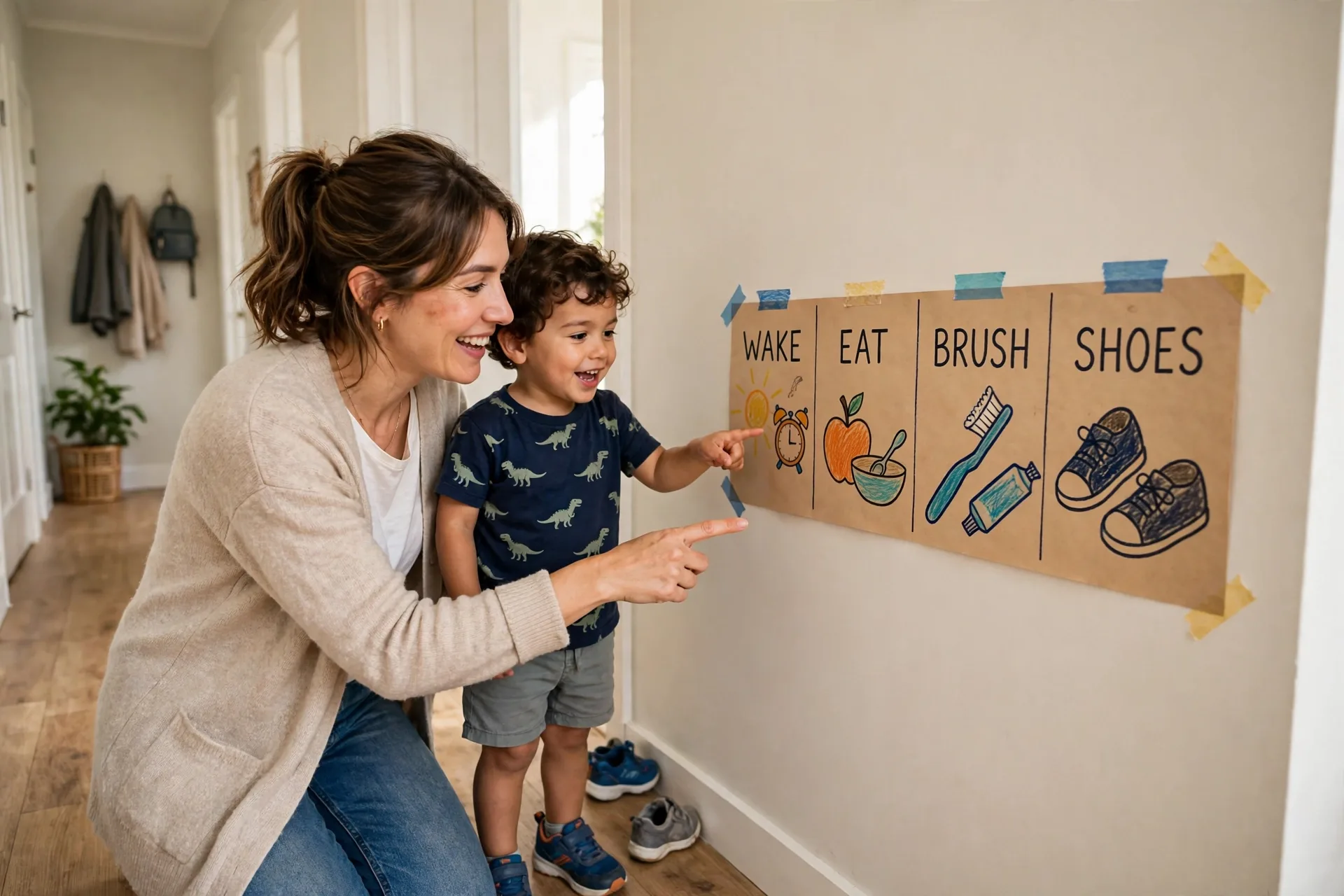
9. Same order beats same time. Toddlers don’t read clocks; they read sequences. Wake → potty → breakfast → dress works at 6:40 or 7:15. A simple picture chart at her height — wake, eat, brush, shoes — lets her check “what’s next” herself, which quietly removes twenty “what are we doing?” negotiations before breakfast.
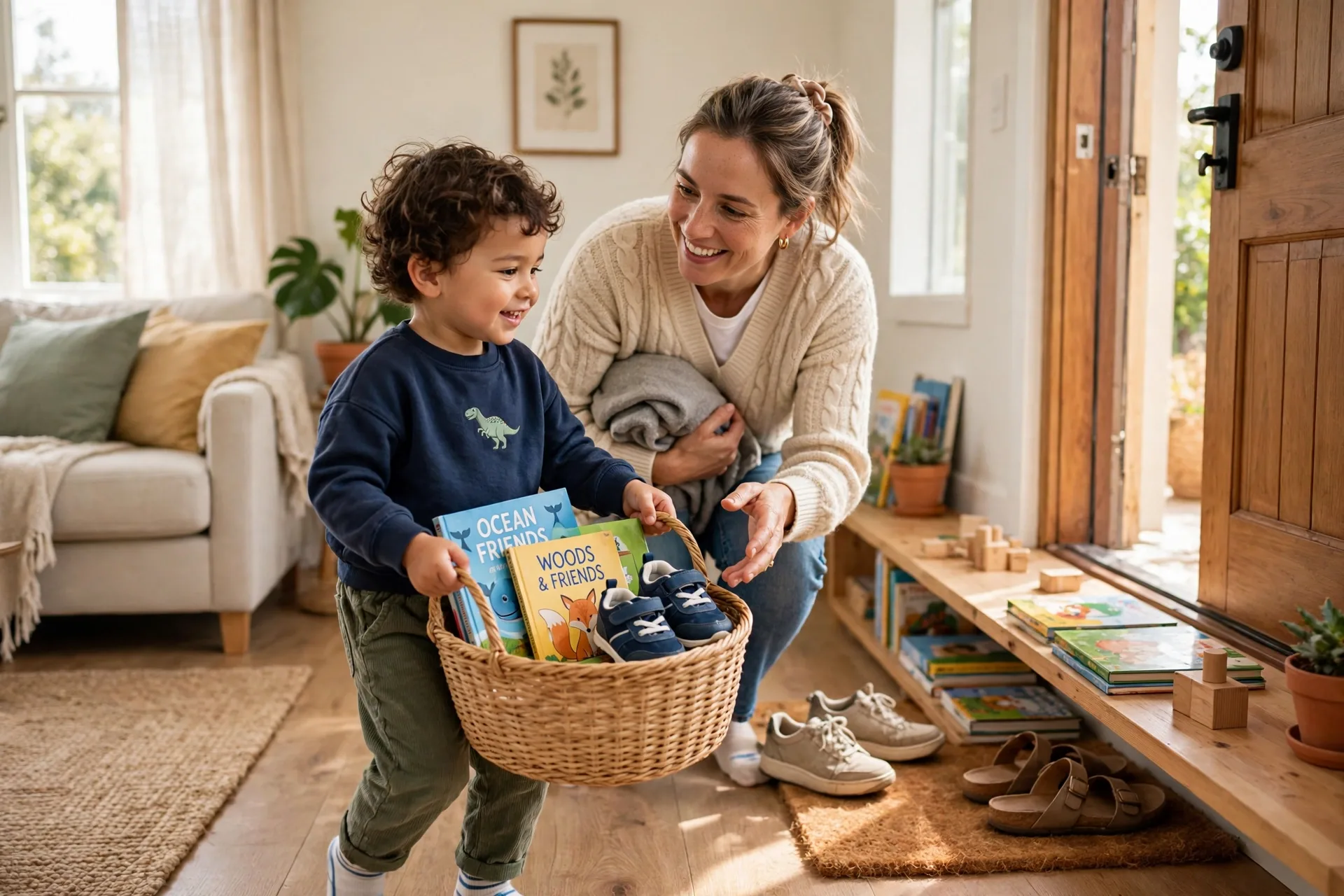
10. Do a 10-minute tidy reset, together. Timer on, basket in hand, everyone carries things home — including the toddler, whose jobs are real (shoes to the door, books to the shelf). It won’t look like a magazine. It looks like a floor you can cross, and the system behind it is in Keeping a House Tidy With Toddlers.
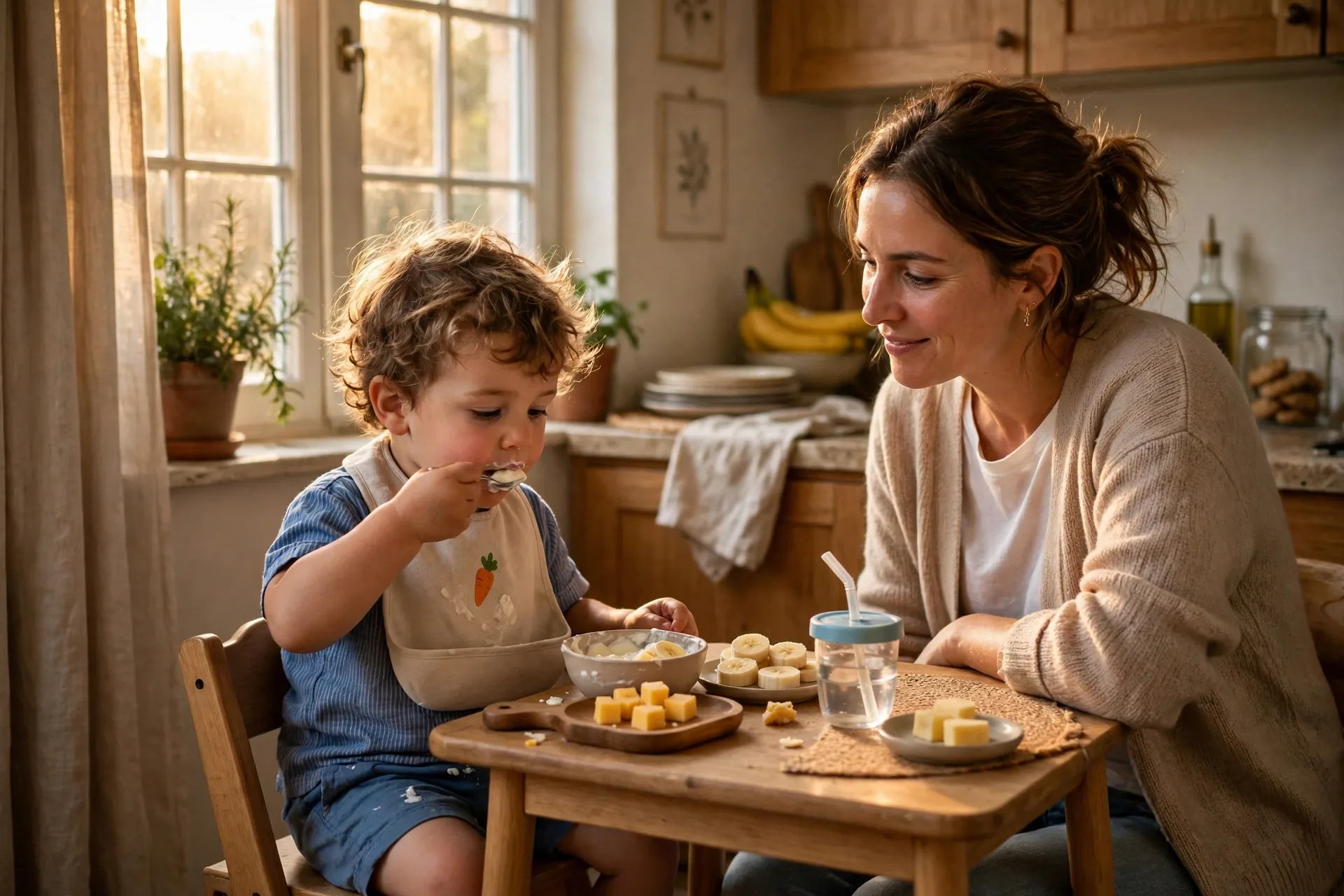
11. Snack before the storm. Hungry-plus-tired is the recipe for almost every late-afternoon meltdown, so we run a bridge snack around four: yogurt, cheese, banana, something with staying power. Two safety habits ride along: snacks happen sitting down, and round foods like grapes get quartered lengthwise before they reach little hands.
12. Win the morning the night before. Two outfits laid out (tomorrow’s two-choice question, pre-loaded), shoes by the door, your bag packed. Ten sleepy minutes at night buys a morning with half the friction. This single habit did more for our mornings than every other tip in this section combined.

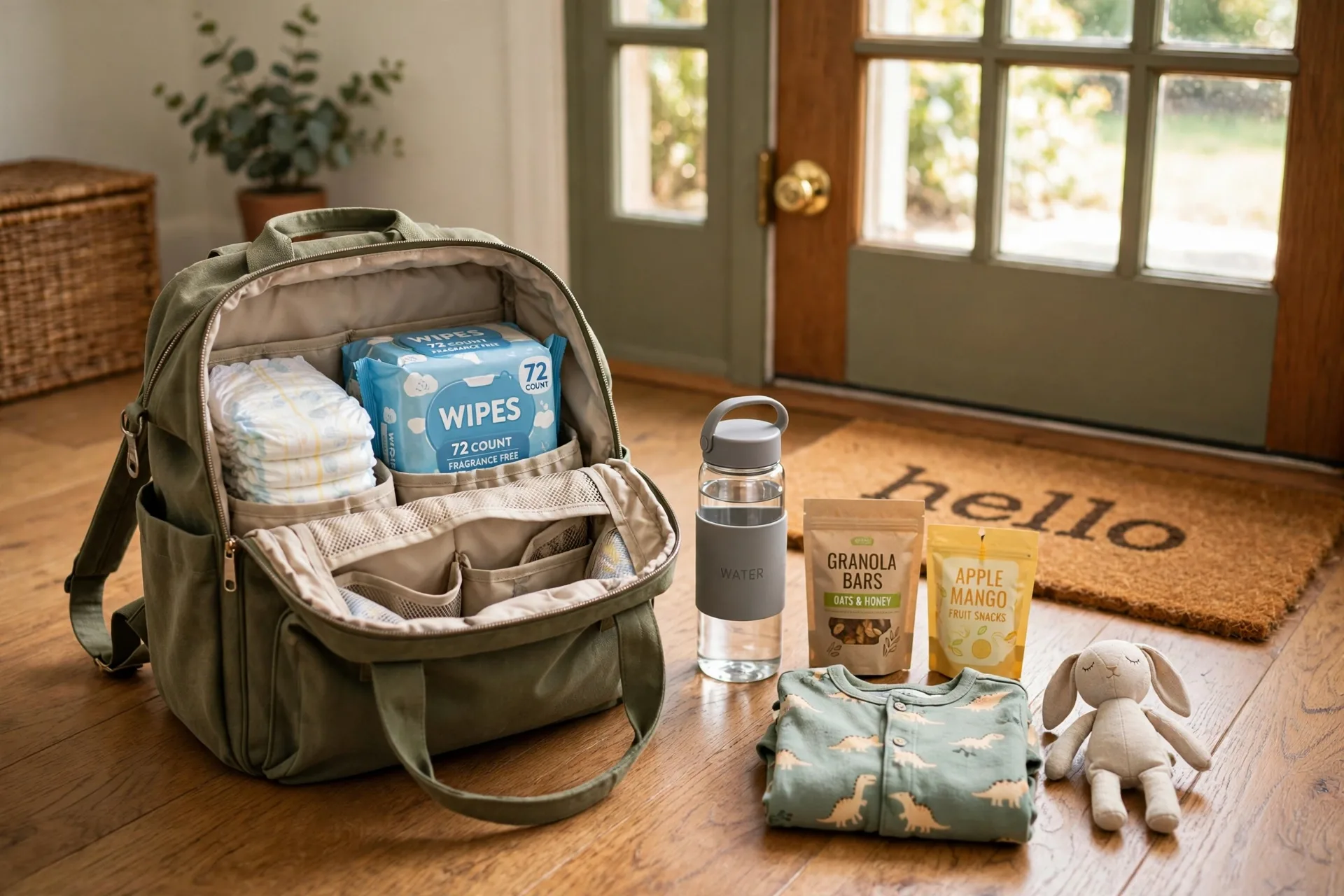
13. Keep a going-out kit that lives in the bag. Snacks, water, wipes, a spare outfit, one quiet toy. It never leaves the bag except to be restocked, so restaurants, waiting rooms, and surprise delays stop being ambushes. The full kit list — including the restaurant version — is in our Toddler Restaurant Kit Busy Bag DIY.
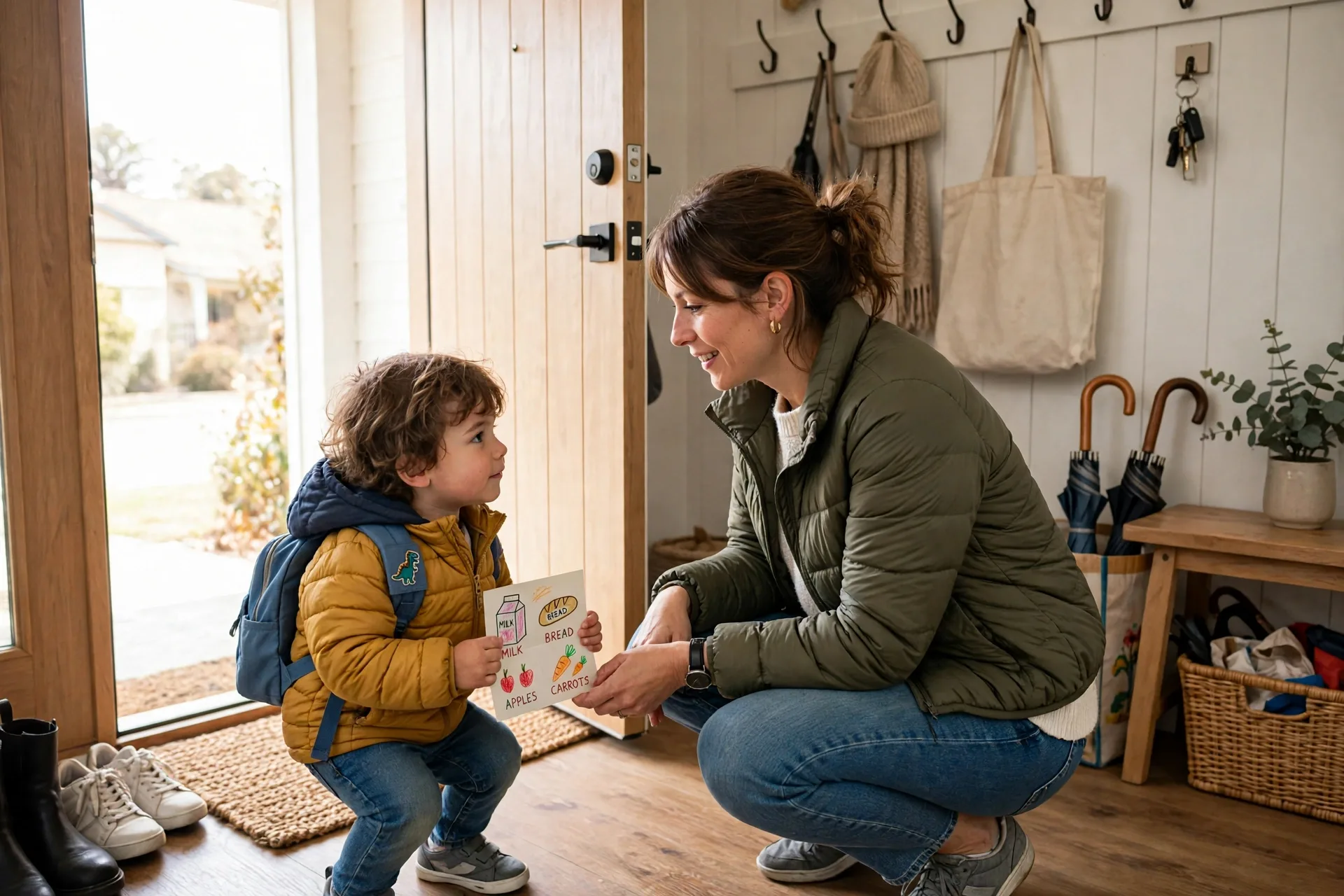
14. Preview the plan, and have an exit. Before you walk in, two sentences: what you’re doing, what her job is. “We’re buying bananas and bread. Your job is holding the list.” If it still goes sideways, leaving early is a strategy, not a defeat. For longer hauls, our Road Trip With Toddlers plan and Best Tips for Beach Trips With Babies and Toddlers cover the big days, and a stroller that’s still comfortable over 40 lbs — our picks are in Best Stroller for Toddlers Over 40 Lbs — saves more outings than any snack.
Food, Sleep & the Battles in Between
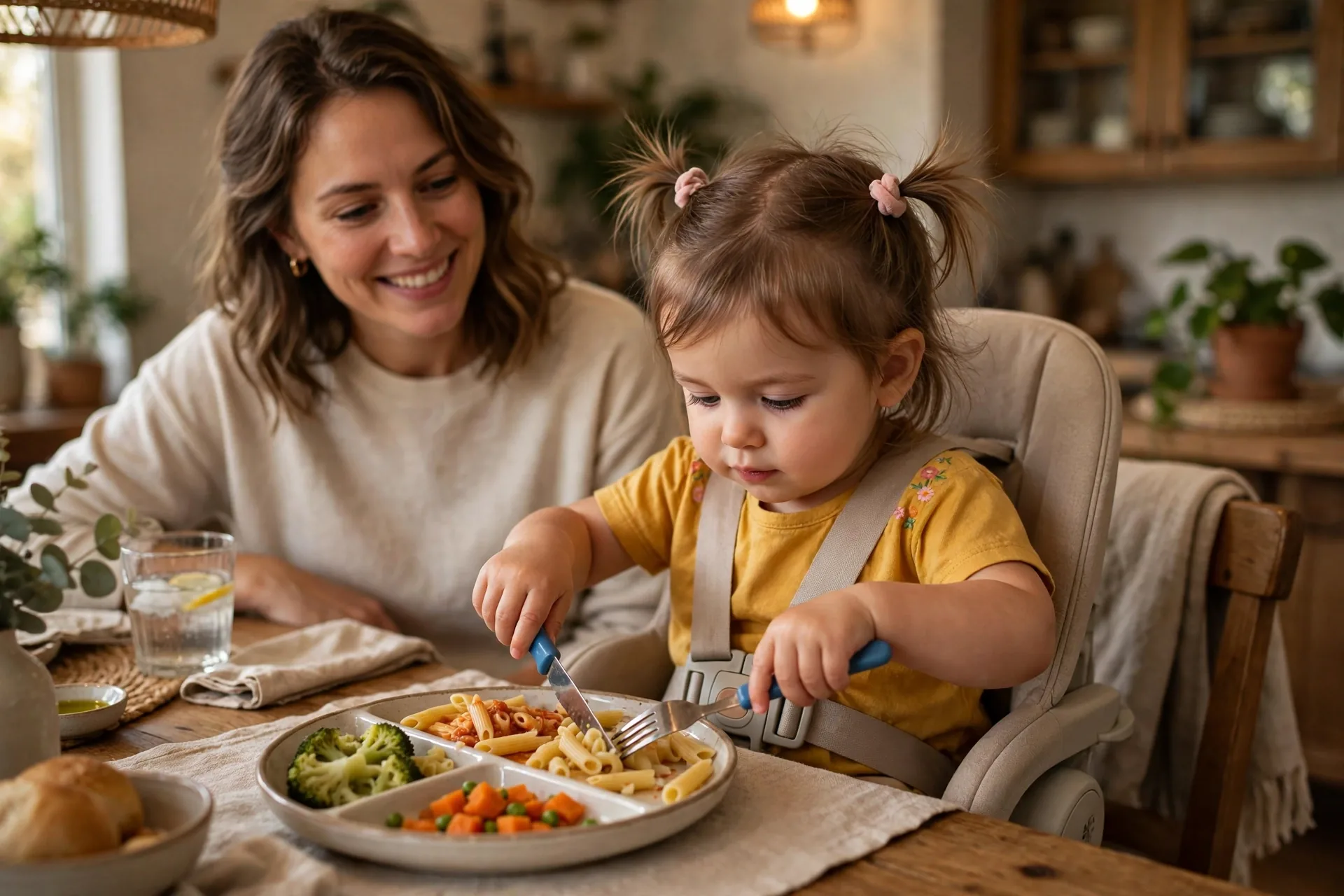
15. Split the mealtime jobs. Your job: what food, when, where. Her job: whether to eat it, and how much. Always include one “safe food” she reliably eats, and let the rest be low-pressure. No short-order cooking, no bite-counting, no airplane spoons at age two — the division sounds cold and feels like freedom.
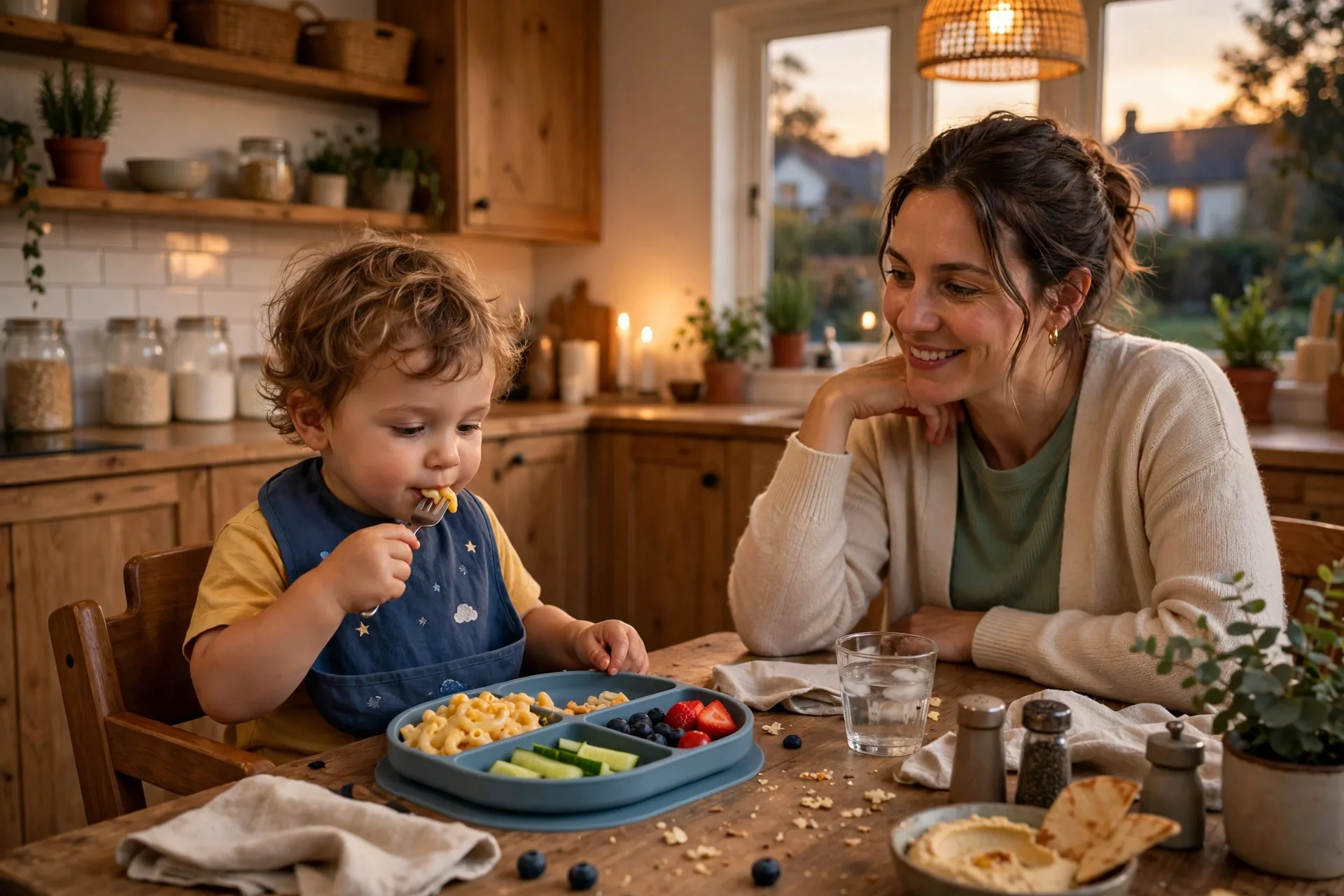
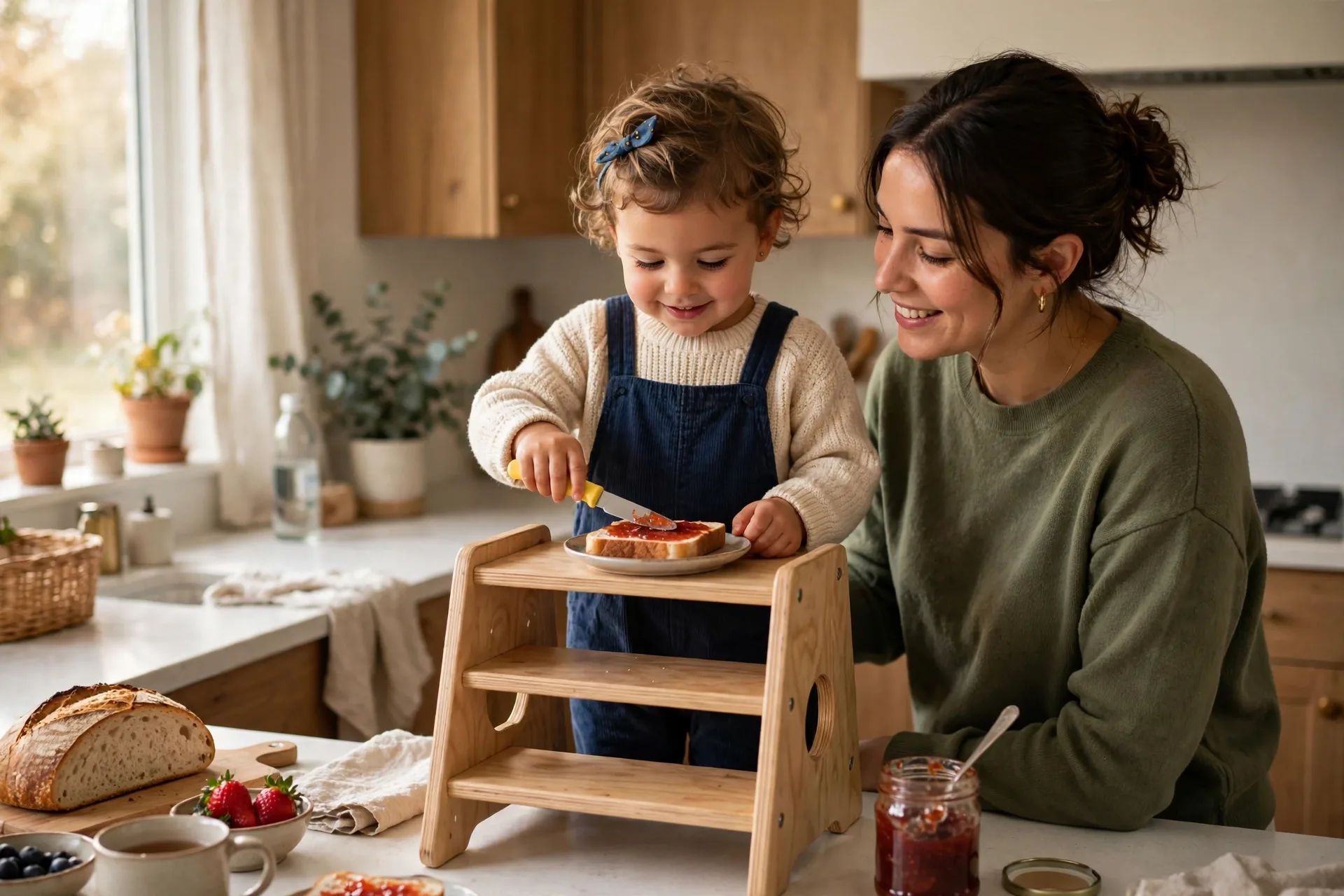
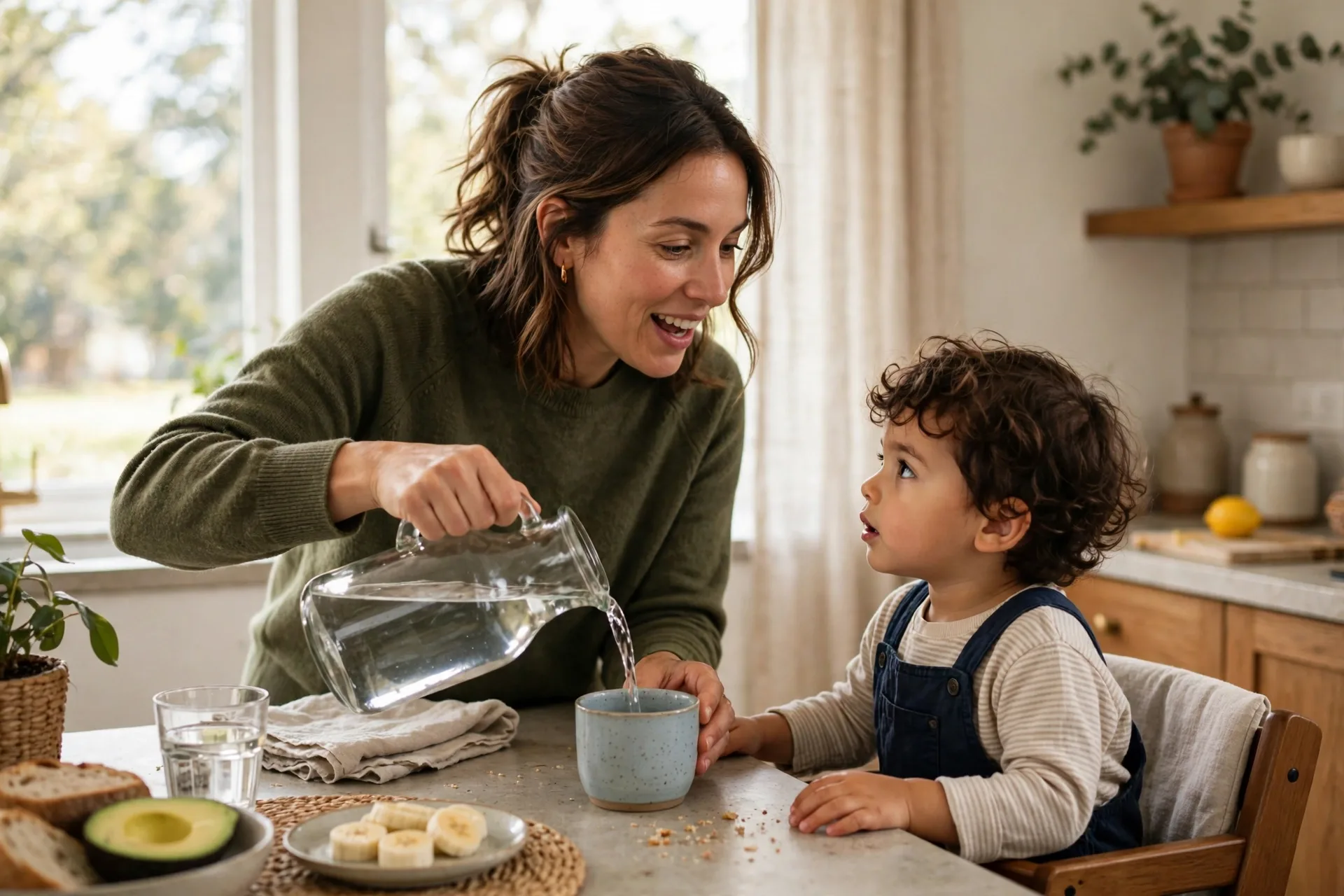
16. Let them do the last step. Spread the jam, sprinkle the cheese, pour from a tiny pitcher, cut the banana. A toddler who helped make lunch argues with it less. At our counter, soft-food cutting with a kid-safe serrated knife is the 2-year-old’s proudest job — grown-ups keep the stove, the sharp knives, and anything hot; she keeps everything she can reach from her tower, with me within arm’s reach.
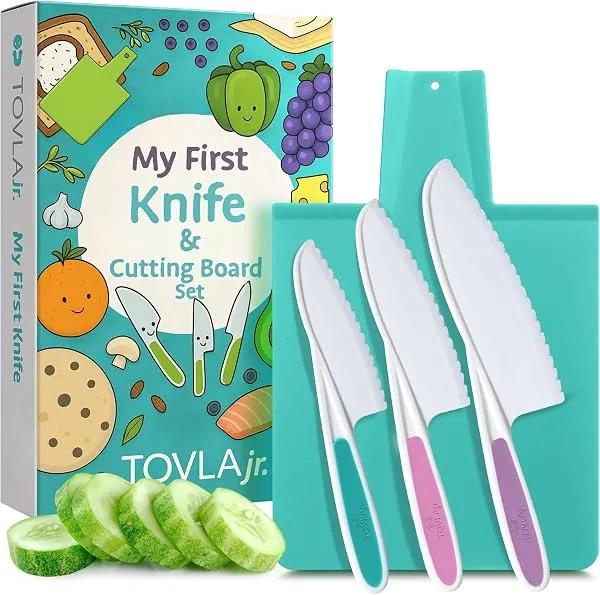
Tovla Jr. Kids’ Kitchen Knives
Kid-safe serrated knives sized for little hands to do real cutting — banana, cucumber, soft fruit. Grown-ups keep the stove and the sharp knives; your toddler gets a job that’s actually hers.
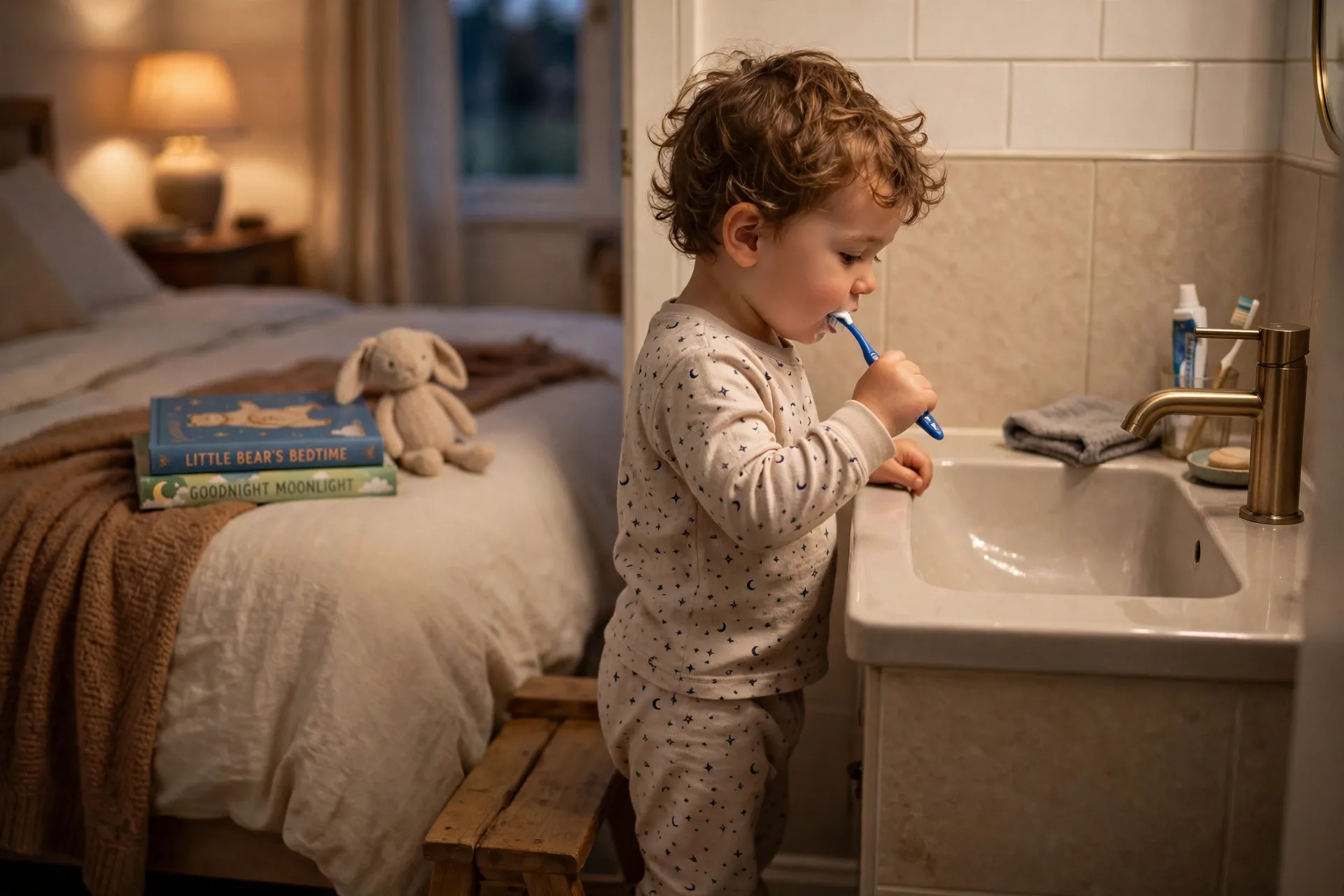
17. Run bedtime like a train. Same four or five steps, same order, every night: bath, pajamas, teeth, two books, lights out. When the routine never changes, there’s nothing new to negotiate — the steps themselves become the sleepy cue. Our Baby Sleep Guide walks through building the routine from the start.
18. Protect the nap — or rename it quiet time. Most toddlers still need roughly 11–14 hours of sleep across the day and night, nap included. When the nap starts shrinking, don’t drop it at the first protest: many “nap refusers” are mid-skip, not done. The real end-of-nap signs are listed in Signs That Your Toddler Is Ready to Stop Napping — until several show up for weeks, quiet time in the crib or bed with books still counts as a win.

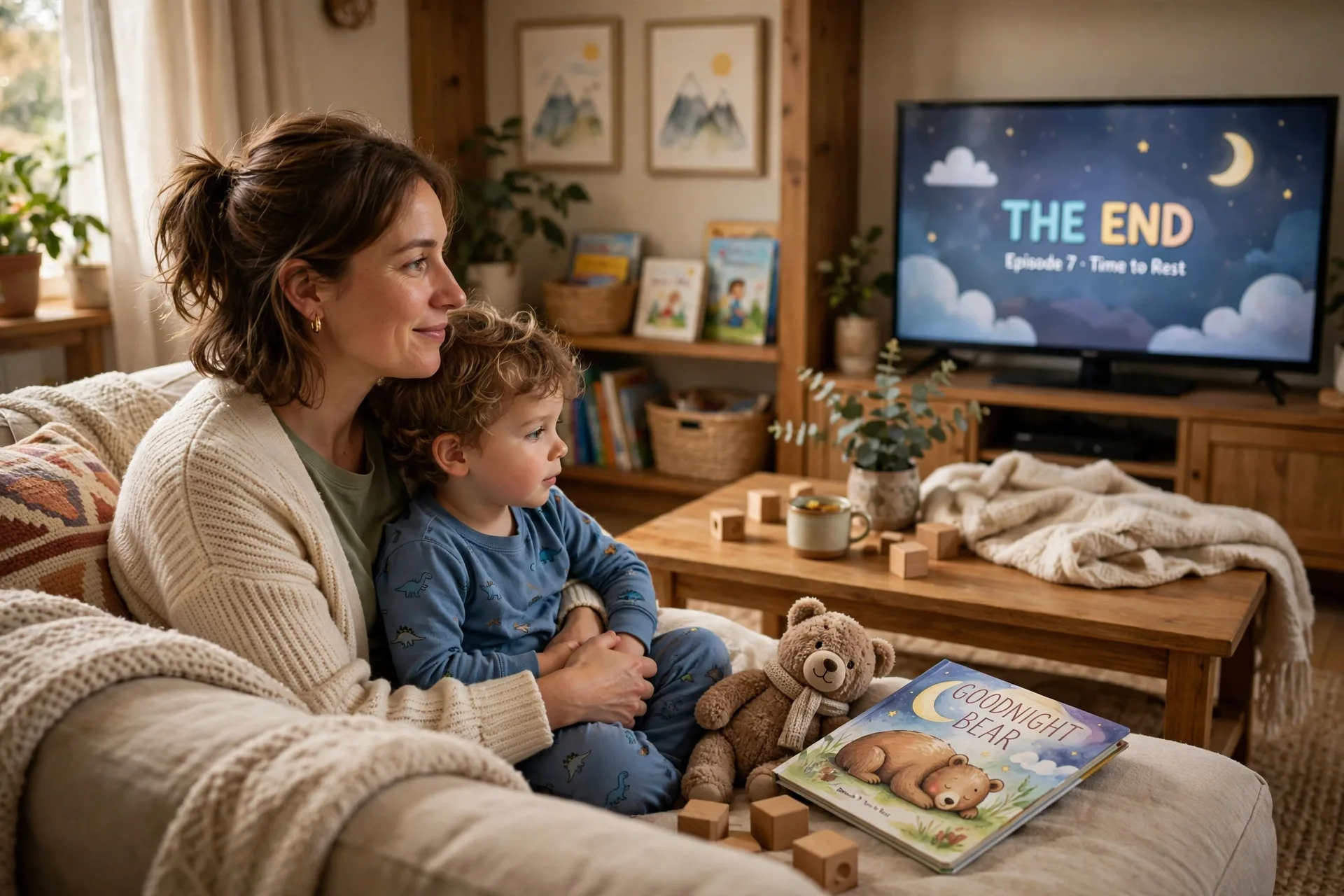
19. Keep screens small, shared, and finished. In our house: one short show, watched together when we can, and an episode that ends beats endless autoplay every time. The end is announced before it starts (“one Bluey, then bath”), and the next fun thing is named out loud — a screen that turns off into a vacuum is a tantrum with a RSVP.
Play, Words & Growing Independence
20. Narrate your day like a sportscaster. “I’m pouring the water. Now the cup is FULL.” It feels ridiculous for exactly one day, and then it becomes how your toddler’s vocabulary quietly stocks itself — everyday talk, attached to everyday things, all day long. Name feelings as often as objects and you’re feeding tip #2 at the same time.
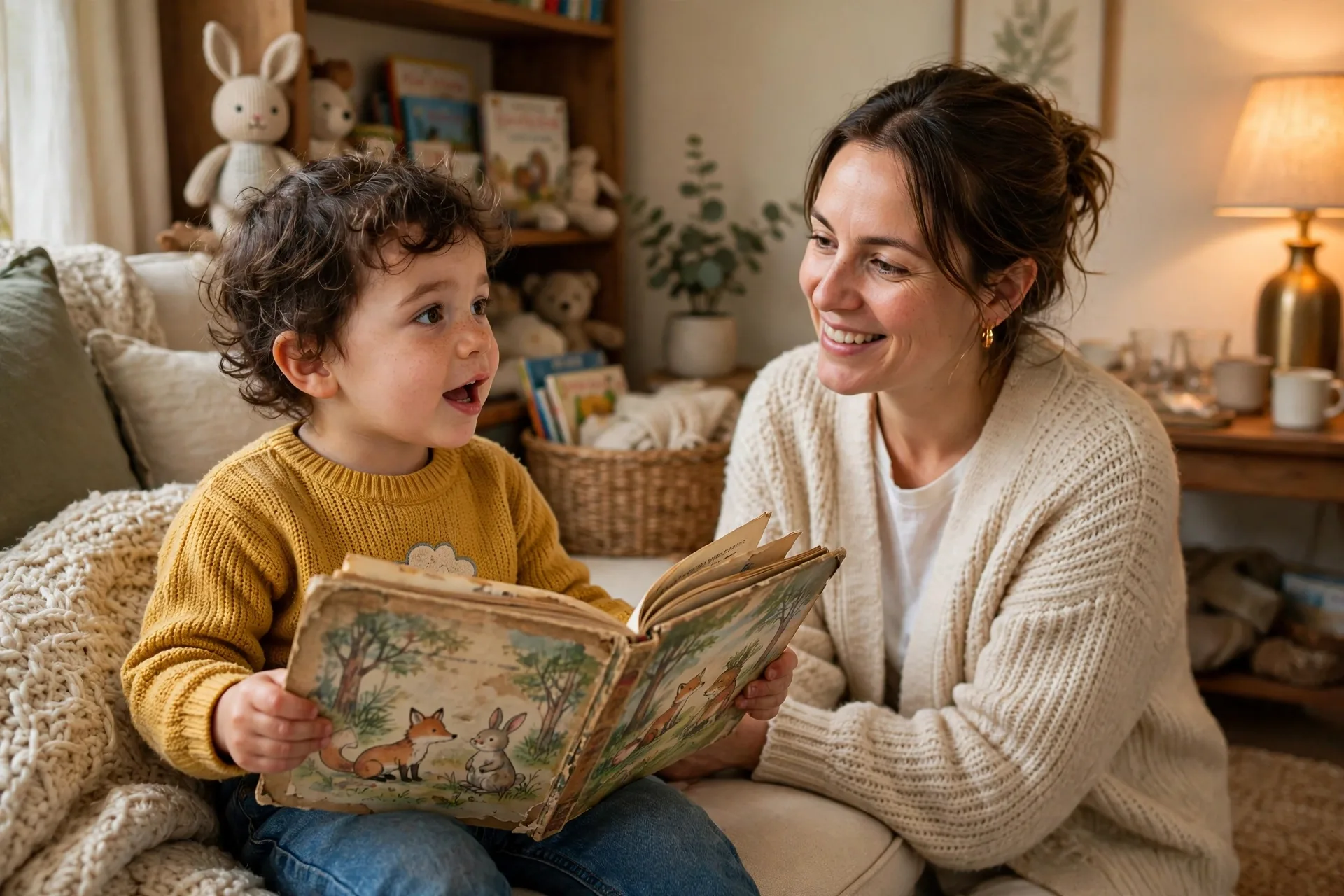
21. Let them read the same book forty times. Repetition isn’t a rut; it’s the method. She memorizes the page, “reads” it to you, catches you when you skip a word (you will be caught). Bedtime books, bath books, the falling-apart favorite — all of it counts, and all of it is building the reader she’ll be at five.
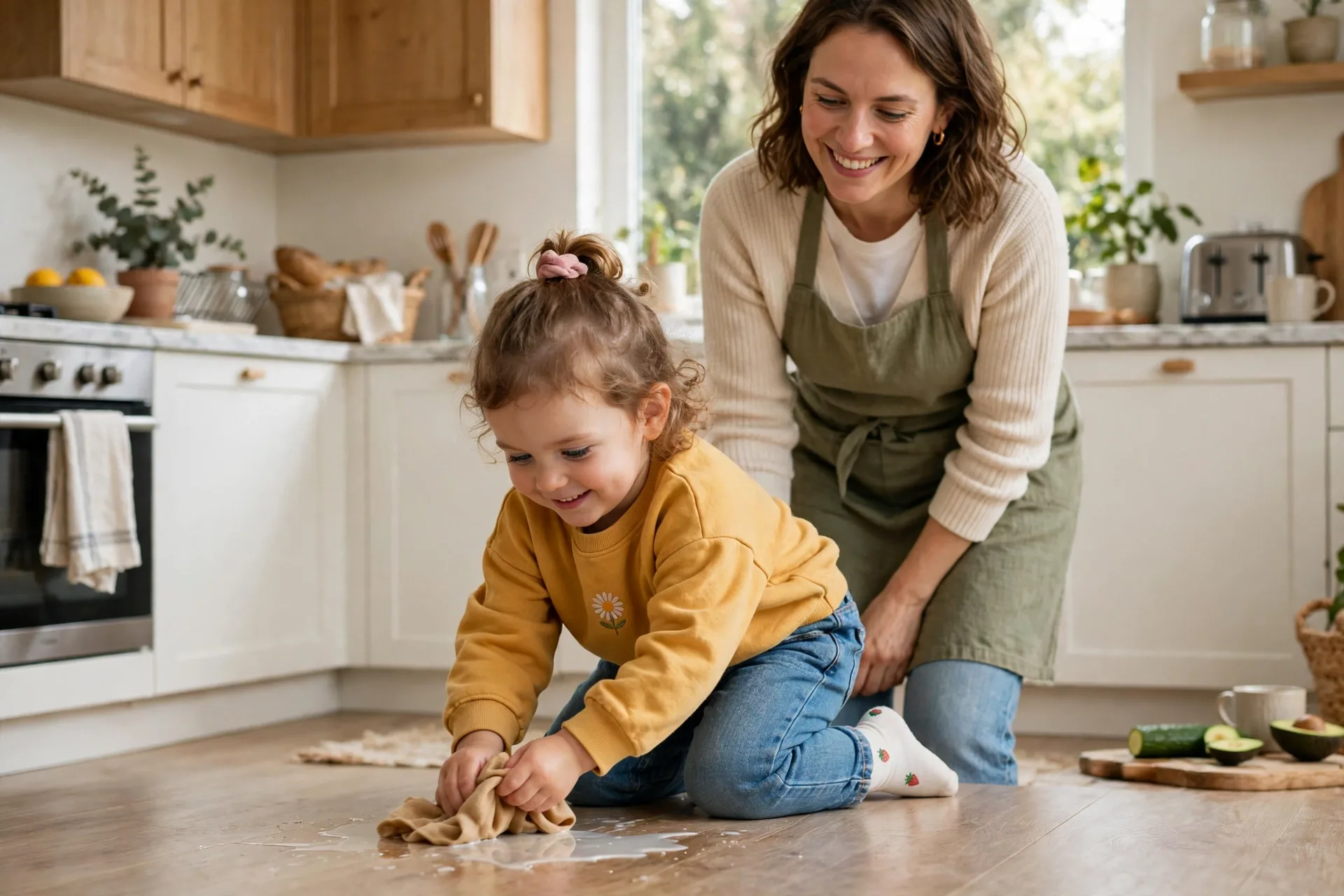
22. Give real jobs, not toy ones. Wiping a spill with her own little cloth, carrying laundry one sock at a time, watering the plant with a small cup. Expect it three times slower and ten times prouder. A toddler with real work to do spends noticeably less time inventing chaos — she’s too busy being staff.
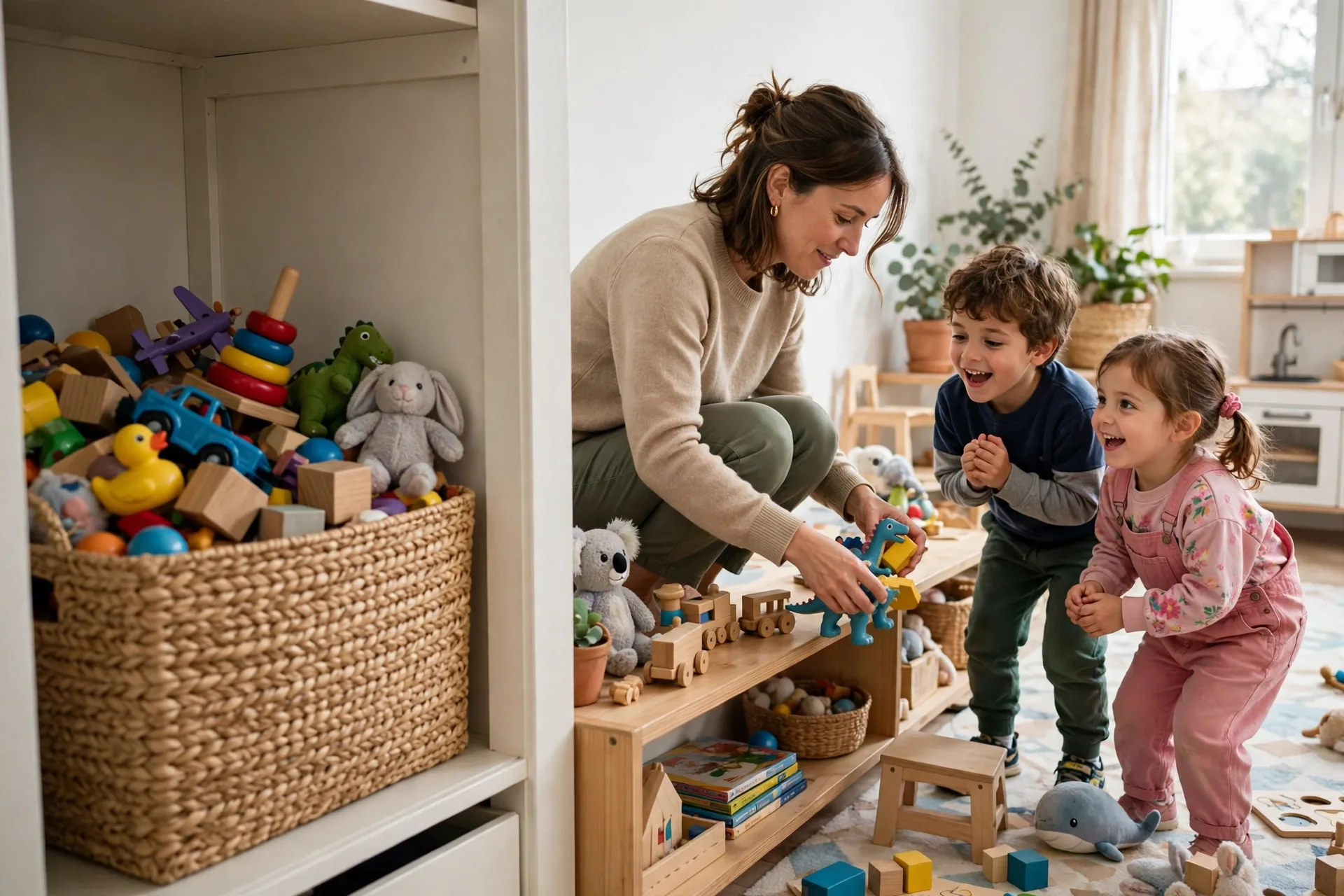
23. Fewer toys out, on rotation. A handful of open-ended toys on the shelf; the rest boxed away and swapped every week or two. Old toys come back like new releases, play stretches longer, and cleanup shrinks. For the shelf itself, our tested favorites are in 9 Best Learning Toys for Toddlers That Teach Through Play.
24. End the day with the replay. In the dark, at bedtime, name two specific good things from her day: “You shared the red truck. You helped carry the mail.” Specific beats “good girl” every time — she falls asleep collecting evidence of who she is, and tomorrow she’ll go looking for more of it.

25. Make goodbyes a ritual, not a vanishing act. Sneaking out while she’s distracted feels kinder, but it teaches her that people disappear without warning, and then every goodbye gets harder. Pick one short ritual and do it exactly the same way every time: same phrase at the door (“Mama always comes back”), same wave, same spot at the window where she watches you go. The first week she will still cry, and that is fine; the ritual is not a trick to stop the tears, it is a promise she can count on. Within a couple of weeks most toddlers stop clinging at the door and start running to the window to do their part. The goodbye stays the same even when the place changes: daycare, grandma’s, the babysitter’s. Same words, same wave, same return.

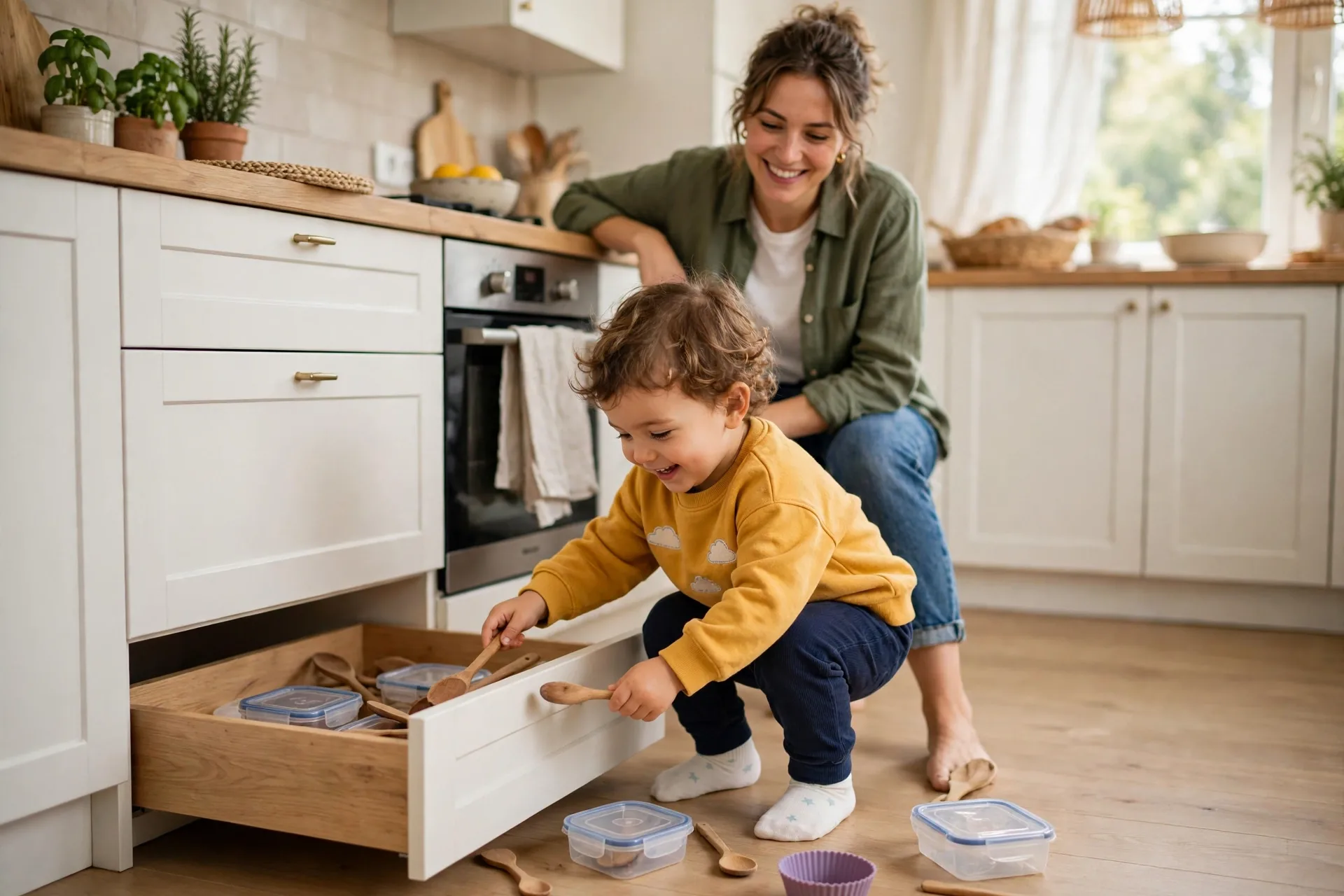
26. Keep one “yes” drawer in every room. Toddlers hear “no” all day, and every “no” is a small power struggle waiting to happen. Give each room one drawer, shelf, or basket that is always allowed: the kitchen drawer with wooden spoons and plastic containers, the living room basket with scarves to pull out and stuff back in, the bathroom shelf with empty bottles to line up. When she reaches for the forbidden thing, you are not just blocking her, you are redirecting her to a place where the answer is already yes. Restock the yes drawer when she gets bored of it, the same way you rotate toys. A house with a yes in every room has fewer battles, because she is not spending the whole day finding out where the walls are.
The two books on my nightstand. When my words run out, these are the ones I re-read: The Whole-Brain Child by Daniel J. Siegel and Tina Payne Bryson, for understanding what’s actually happening inside that little brain mid-meltdown — and How to Talk So Little Kids Will Listen by Joanna Faber and Julie King, for exact words to borrow on the days yours won’t come.
The Toddler Library: Every Guide in This Series
Every tip above has a deeper guide behind it — here is the whole toddler shelf, grouped by the problem it solves:
Big feelings & tricky habits
Out & about with toddlers
Home, gifts & play
Quick Picks: Start Where Your Day Hurts Most
| If the battle is… | Start with | Why it works |
|---|---|---|
| Morning chaos | Same order (#9) + prep the night before (#12) | The sequence carries the day so your voice doesn’t have to |
| Meltdowns in public | Going-out kit (#13) + preview & exit (#14) | Half of public tantrums are hunger, surprise, or no way out |
| Mealtime wars | Split the jobs (#15) + the last step (#16) | Pressure off, ownership on — eating becomes her project |
| Bedtime battles | Bedtime train (#17) + protect the nap (#18) | A fixed order ends negotiation; a rested toddler settles faster |
| Hitting & all-day storms | Name it (#2) + hands get a job (#8) | Feelings get words, hands get work |
Shop This Post
Everything we used in this guide, in one place:
| Product | Used For | Price |
|---|---|---|
| Play-Doh — 10-Pack of 2oz Colors |
The calm-down basket + going-out bag (tips #7, #13) | Check Price |
| Tovla Jr. Kids’ Kitchen Knives |
Soft-food cutting at the counter (tip #16) | Check Price |
Toddler Parenting Questions Moms Actually Ask
What age is a toddler, exactly?
Roughly one to three years — and the tips in this guide bend hardest toward ages two and three, the storm center. Most still work at 18 months if you shorten the words and the warnings; a 1-year-old needs the feeling named and the choice held up where she can point at it.
How many rules should a toddler actually have?
Fewer than you think. A short list of safety rules — hands are not for hitting, we hold hands in parking lots, feet stay on the floor — repeated identically every time. Everything else is taught by routine, redirection, and the setup of the room. If your rule list runs to thirty, it’s not a rule list; it’s a wish list.
Do time-outs work for toddlers?
Long, isolating time-outs don’t teach much at this age — a 2-year-old mostly learns that big feelings happen alone. Short, calm resets with you (the calm-down basket, a lap, a minute of quiet together) teach the actual skill. If your family uses time-out, keep it brief and reconnect right after; the reconnection is where the learning lives.
When should I worry about tantrums or behavior?
Tantrums themselves are a normal part of being one to three — frustrating, loud, and developmentally unremarkable. But you know your child. If something worries you — tantrums that regularly end in injury, a sudden change that scares you, or a gut feeling that won’t settle — your pediatrician knows your child and is the right first call. That’s not a brush-off; it’s genuinely the best next step.
Why does my toddler listen to everyone except me?
Because you’re the safe person. The worst behavior is saved for the lap where it’s most secure, which is backwards comfort but real. The fix isn’t being scarier; it’s both parents using the same few words for the same few rules, so the message is boringly identical from every direction.
Start With Two
You don’t need all 26 by Friday. Pick the tip that matches your hardest hour today, plus one routine anchor — the same-order morning, the bridge snack, the bedtime train. Two changes, held steady for a week, will tell you more about your toddler than a month of trying everything at once. And on the days it all still falls apart by five o’clock? That’s not the tips failing. That’s just Tuesday with a toddler — and tomorrow the same small moves work again.
More family guides on MamaKinder