Breast Milk Bath Benefits: How to Do It Right

The first time someone told me to bathe my baby in breast milk, I laughed. Then my daughter's cheeks went dry and patchy in her first winter, and plain lotion was not helping. A friend told me to try it, and I have kept it in my back pocket ever since.
A breast milk bath is exactly what it sounds like: your baby's normal bathwater with a splash of your own expressed milk stirred in, just enough to turn the water cloudy. It takes no special skill and no extra gear. Moms reach for it when their baby's skin is dry, rashy, or irritated, and the milk does the quiet work while your baby soaks.
This guide covers what a breast milk bath can and cannot do, the skin troubles it may help, and the safe step-by-step way to do one. If you are still building your feeding setup, our Breastfeeding Essentials guide covers the rest.
Heads up: this post contains affiliate links. If you buy through them, MamaKinder may earn a small commission.

What Is a Breast Milk Bath?
A breast milk bath is a regular baby bath with expressed breast milk added to the water. Fill the tub the way you normally would, pour in 150 to 300 milliliters of milk (5 to 10 ounces), and swirl until the water looks cloudy or milky. Your baby soaks for 5 to 15 minutes while you splash the water gently over the parts it does not reach.
You do not need a tub full of milk: a little goes a long way, and fresh, thawed, or past-its-window milk all work, as long as it still smells normal.
Why Breast Milk Helps Your Baby's Skin
Breast milk is more than food. It carries antibodies, fats, vitamins, and enzymes, several of which show up in drugstore moisturizers. Immunoglobulin A, or IgA, helps fight bacteria on the skin. Lauric acid is antibacterial. Palmitic acid is a natural moisturizer, and the milk's fats help hold water in the skin after the bath. The research is thin but real: a 2015 study found breast milk worked as well as hydrocortisone 1 percent cream for mild to moderate eczema in babies, and a 2013 study found the same for diaper rash. A milk bath is a gentle helper, not a medicine, and if a rash is spreading or not improving, your pediatrician comes first.
The Benefits of a Breast Milk Bath
Here is what a breast milk bath may help with, one skin trouble at a time.
Dry Skin

Dry patches are the most common reason moms try a milk bath. The fats in breast milk coat the skin and slow down water loss after the bath, so the skin often feels softer right away. Winter air and heated rooms dry out baby skin, and a milky soak puts a little moisture back.
For everyday dryness, one or two milk baths a week is plenty. Pat your baby dry, then smooth on a fragrance-free moisturizer while the skin is still damp.
Eczema

Eczema is the benefit with the strongest evidence behind it. A 2015 study compared breast milk with hydrocortisone 1 percent cream for mild to moderate eczema in infants, and the milk held its own. The milk's anti-inflammatory fats may calm the itch and redness while the soak softens dry, flaky patches.
A milk bath will not cure eczema, and it never replaces your pediatrician's treatment. If the eczema is oozing, crusted, or spreading, call your pediatrician. For extra itchy skin, stir a packet of colloidal oatmeal into the water first: the Aveeno Baby Eczema Therapy Soothing Bath Treatment forms a milky, soap-free soak that soothes as it cleanses.

Aveeno Baby Eczema Therapy Soothing Bath Treatment, 5 Count
Single-use bath packets of finely milled natural colloidal oatmeal. When dispersed in warm water, the powder forms a milky, soap-free soak that relieves dry, itchy, irritated skin from eczema and rashes. Fragrance-free and tear-free.
Diaper Rash

Diaper rash is one of the most common skin problems in babies, and a milk bath can reach the whole irritated area at once instead of one dab at a time. A 2013 study found breast milk worked as well as hydrocortisone 1 percent ointment for diaper rash, which is why so many moms swear by it.
Let your baby soak with the diaper area under the water. After the bath, pat the area completely dry and leave the diaper off for a few minutes before barrier cream. If the rash has open sores, blisters, or a yeasty smell, ask your pediatrician first.
Baby Acne

Baby acne shows up in the first few weeks, usually as tiny red bumps on the cheeks, chin, and forehead, caused by hormones your baby picked up before birth. It looks alarming and it almost always clears on its own. The lauric acid in breast milk is antibacterial, so a milk bath may help it fade a little faster.
Do not scrub the bumps and do not put adult acne products near your baby's face. A gentle milk bath and a soft washcloth are enough. If the bumps spread, fill with pus, or your baby seems uncomfortable, ask your pediatrician.
Cradle Cap
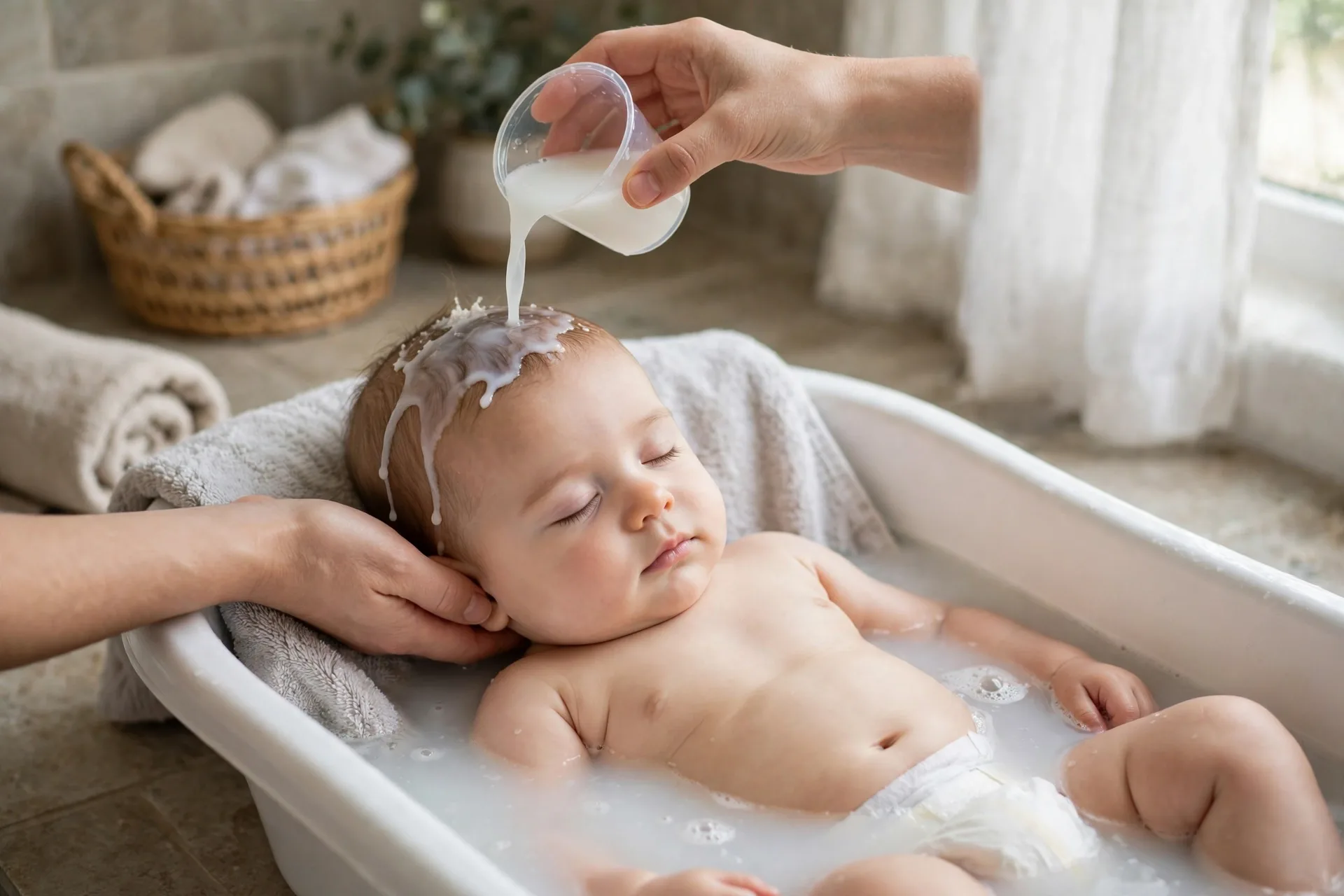
Cradle cap is the flaky, yellowish scale that shows up on a baby's scalp in the first months. It is harmless and it usually goes away on its own. A milk bath softens the scales while your baby soaks, and pouring the milky water over the scalp reaches the spots a washcloth cannot.
After the bath, use a soft brush or washcloth to lift the loosened flakes, and never pick at the scales. If the scalp looks red, swollen, or infected, call your pediatrician before you try again.
Minor Cuts, Scrapes, and Insect Bites
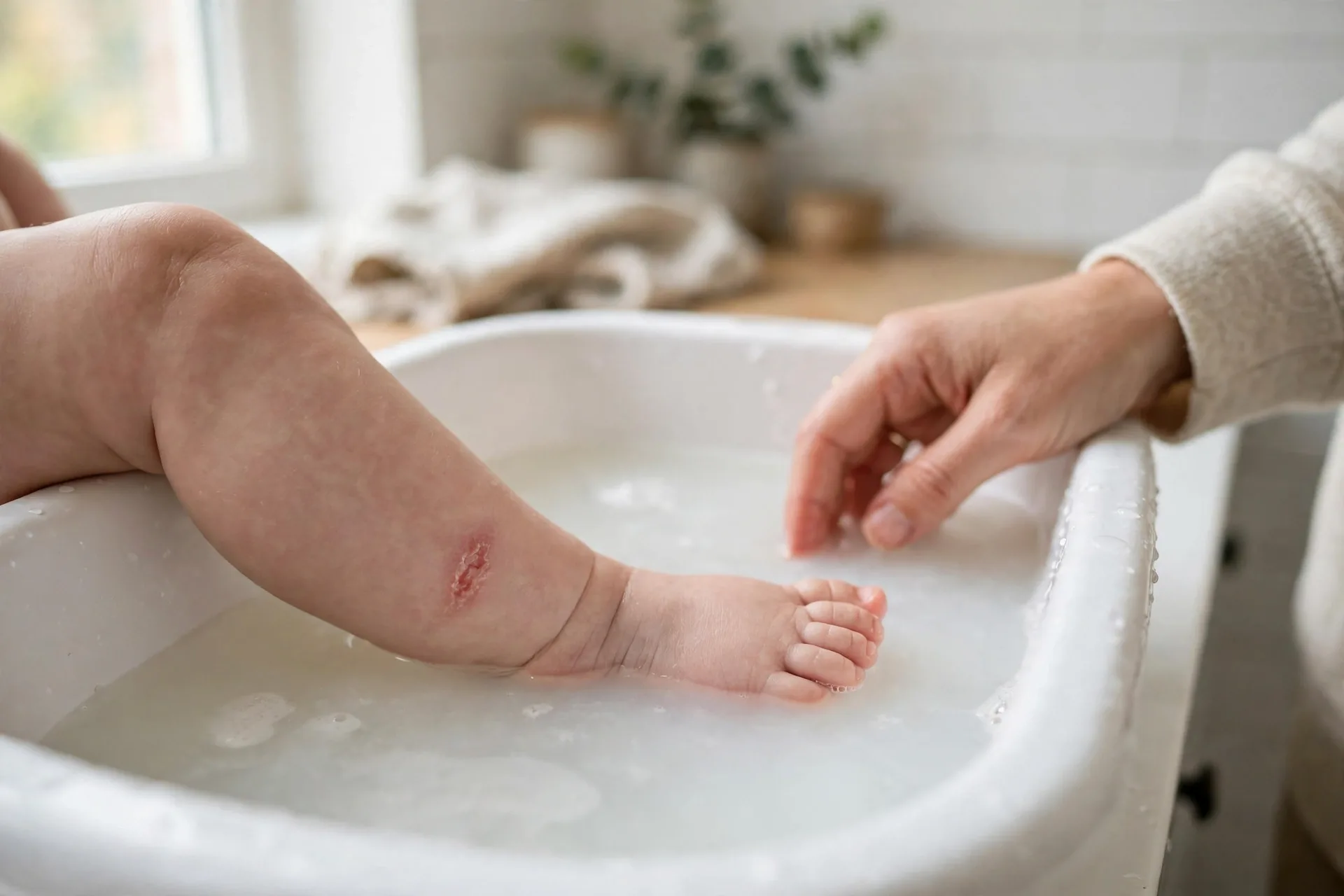
Once your baby starts moving, the small scrapes start too: a scratch from a tiny fingernail, a graze from the carpet, a mosquito bite that puffs up overnight. The IgA antibodies in breast milk help fight bacteria, and the soak keeps the area clean and calm without any stinging.
A milk bath is a good choice when the irritated area is large, like a rash of bites across the legs, because the whole body gets covered at once. For one small scratch, a dab of milk on a clean cloth works just as well. Skip the bath if a cut is deep, bleeding, or showing signs of infection.
Little Extras Beyond the Bath

The same milk has a few uses outside the bath. A few drops can help with a blocked tear duct, dabbed gently at the corner of the eye, and many nursing moms rub a little milk into sore, cracked nipples after a feed. These are the old tricks grandmothers pass down, and pediatric sources still mention them.
These extras are the same idea: your milk, used gently, on the outside. If a tear duct stays blocked or your nipples are cracked and painful, call your pediatrician or a lactation consultant.
How to Give Your Baby a Breast Milk Bath
The whole thing takes about fifteen minutes. Here is the full routine, step by step, with the safety rules built in.
Pick the Right Milk

Start with your own milk, and only your own milk. Never use milk from another mom or an unknown source without guidance from your pediatrician. Freshly pumped milk is ideal, and thawed frozen milk works just as well. If you need to pump a little extra, our Best Breast Pump guide can help you pick the right pump.
Before you pour, give the milk a sniff. If it smells sour or rancid, throw it out: spoiled milk can irritate your baby's skin. If it smells normal, it is fine for the bath, even a day or two past the drinking window. Our How to Store Breast Milk Safely guide covers the full storage times, and the Lansinoh Breastmilk Storage Bags, 100 Count freeze flat and stack neatly.

Lansinoh Breastmilk Storage Bags, 100 Count
100 pre-sterilized breastmilk storage bags, 6 oz each, with a double zipper seal. Freeze flat and thaw fast; BPA and BPS free.
Fill the Tub with Lukewarm Water

Run a shallow bath of lukewarm water in your baby's tub. The water should feel warm, not hot, about body temperature, roughly 98 to 100 degrees Fahrenheit. Test it on the inside of your wrist, which is more sensitive than your hand.
A small tub makes the milk go further, because less water keeps the milk more concentrated. The Fisher-Price Baby to Toddler Bath 4-in-1 Sling 'n Seat Tub grows from a newborn sling to a toddler tub, fits in most sinks and adult bathtubs, and has a drain plug. If you would rather not guess at the temperature, the Dreambaby Whale Shark Bath Thermometer reads the water in about ten seconds and flashes a warning if it is too hot.

Fisher-Price Baby to Toddler Bath 4-in-1 Sling 'n Seat Tub, Pacific Pebble
4-stage convertible baby tub with a soft mesh sling for newborns, a Sit-Me-Up insert for unsteady sitters, and a roomy toddler tub. Drain plug and hook for drying and storage; fits most sinks and adult bathtubs.

Dreambaby Whale Shark Bath Thermometer
USB rechargeable digital bath thermometer that reads water temperature in about 10 seconds, with a color-coded indicator for water that is too hot or too cold. Doubles as a floating bath toy; auto shut-off.
Add the Milk and Swirl

Pour in 150 to 300 milliliters of breast milk, about 5 to 10 ounces, and swirl until the water turns cloudy or milky. That cloudiness is your guide: if the water still looks clear, add a little more. If you cannot see your baby's body through the water at all, you have added too much.
Keep the water shallow, so the milk stays strong. You want enough to cover your baby's body when they lie back, but not so much that the milk disappears into a full tub. Swirl again before you set your baby in.
Settle Your Baby In Safely

Lower your baby into the milky water slowly, supporting the head and neck with one hand. Let them settle before you let go with the other hand, and keep your eyes on them for the entire bath. This is the rule that never bends: never leave your baby alone in the water, not for a second, not to grab a towel, not to answer the door.
Keep everything you need within arm's reach before the bath starts: the washcloth, the towel, the moisturizer. If the phone rings or someone knocks, let it wait, or lift your baby out first.
Soak, Splash, and Wash

Let your baby soak for 5 to 15 minutes, splashing the milky water gently over their body. Pay extra attention to irritated spots: the cheeks, the diaper area, the scalp. A soft washcloth makes this easier, because you can squeeze the water over the spots the bath does not reach.
Skip the soap for a milk bath. The milk does the cleaning on its own, and soap would wash away the very fats you want left on the skin. The Spasilk Baby Washcloths, 10-Pack are soft terry cloth, gentle enough for a newborn's face, and ten in a pack means you always have a clean one ready.

Spasilk Baby Washcloths, Soft Terry, Pack of 10
10 soft terry baby washcloths, 80 percent cotton and 20 percent polyester, machine washable. Gentle enough for a newborn's face and small enough for bath-time splashing.
Lift Out and Pat Dry

When the soak is done, lift your baby out and wrap them in a warm towel right away, so they do not chill. There is no need to rinse the milk off. Patting your baby dry, instead of rubbing, leaves a thin layer of milk on the skin that keeps moisturizing after the bath.
A hooded towel makes this step easier, because it covers the head and keeps your baby warm while you pat the rest dry. The Spasilk 5-Piece Hooded Towel and Washcloth Set includes a soft hooded towel and four washcloths. If your baby feels sticky afterward, a quick rinse with plain warm water is fine.

Spasilk 5-Piece Hooded Towel and Washcloth Set, Brown Bear
1 soft hooded bath towel and 4 baby washcloths in 100 percent cotton terry. The hood keeps your baby warm while you pat the rest dry; machine washable.
Moisturize to Lock It In
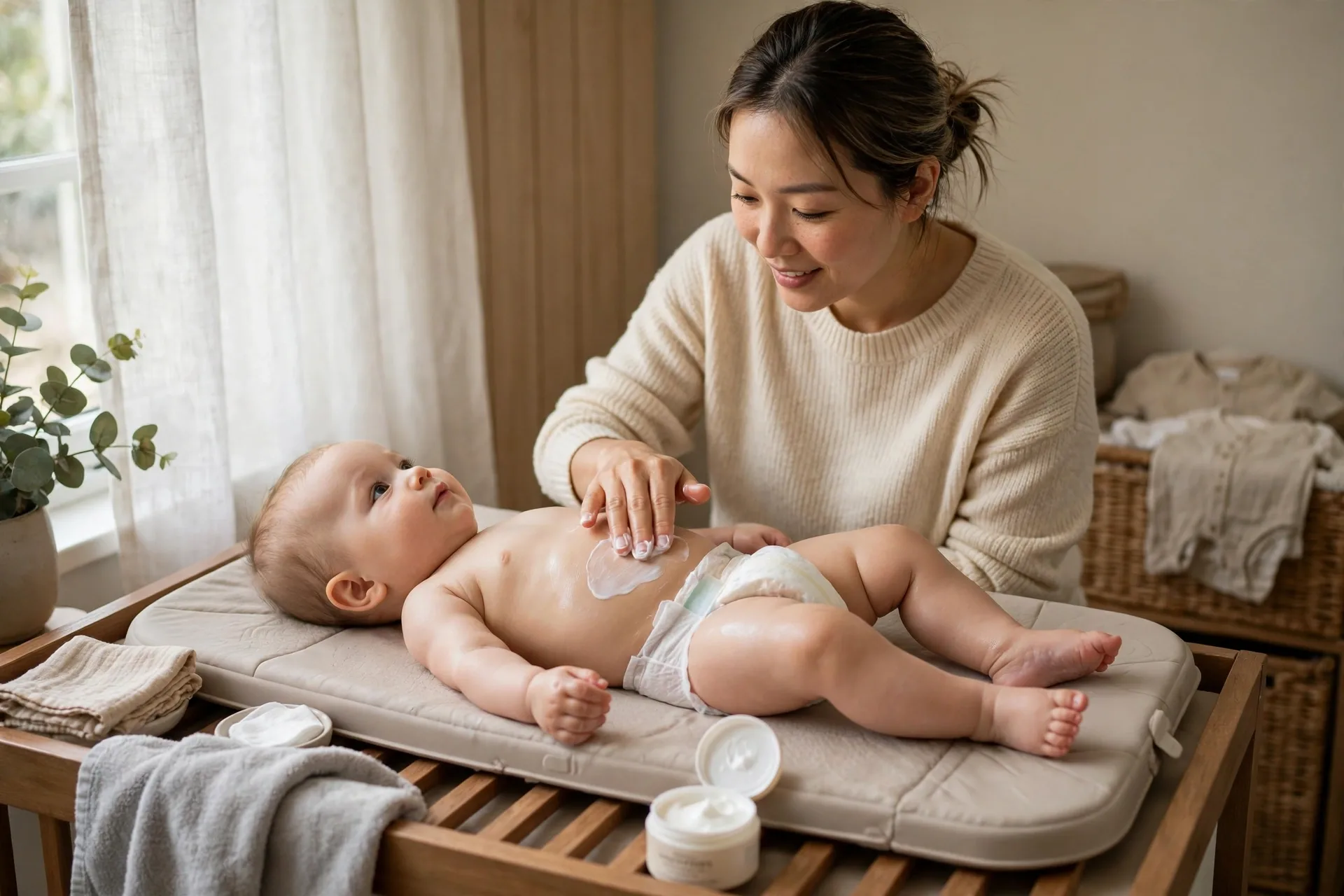
While your baby's skin is still slightly damp, smooth on a fragrance-free moisturizer. This locks in the hydration from the milk bath, and it matters most for dry skin and eczema. The CeraVe Baby Moisturizing Cream, 8 Ounce is fragrance-free, paraben-free, and dye-free, and it is accepted by the National Eczema Association, with three ceramides and hyaluronic acid for up to 24 hours of moisture.
Use a small amount and rub it in gently, paying attention to the dry patches and any spots that were irritated before the bath. Do this within a few minutes of toweling off, while the skin is still damp. Then dress your baby in soft cotton and let them rest.

CeraVe Baby Moisturizing Cream, 8 Ounce
Rich, non-greasy baby cream with 3 essential ceramides and hyaluronic acid, developed with pediatric dermatologists. Fragrance-free, paraben-free, and dye-free; accepted by the National Eczema Association; up to 24 hours of moisture.
Safety First: The Rules That Never Bend

A milk bath is simple and safe, but a few rules never bend. Use only your own milk, never milk from another source without your pediatrician's guidance. Keep the water lukewarm, about 98 to 100 degrees, and test it on your inner wrist. Keep the water shallow, and never leave your baby alone in the water, even for a second.
Wait until your baby's umbilical cord stump has fallen off, usually one to three weeks after birth. If your baby has eczema or any rash that is not improving, check with your pediatrician first, and stop if the skin looks worse after a bath.
Shop This Post
| Product | Used For | Price |
|---|---|---|
| Aveeno Baby Eczema Therapy Soothing Bath Treatment, 5 Count | Eczema benefit | Check Price |
| Lansinoh Breastmilk Storage Bags, 100 Count | Pick the Right Milk step | Check Price |
| Fisher-Price Baby to Toddler Bath 4-in-1 Sling 'n Seat Tub, Pacific Pebble | Fill the Tub step | Check Price |
| Dreambaby Whale Shark Bath Thermometer | Fill the Tub step | Check Price |
| Spasilk Baby Washcloths, Soft Terry, Pack of 10 | Soak, Splash, and Wash step | Check Price |
| Spasilk 5-Piece Hooded Towel and Washcloth Set, Brown Bear | Lift Out and Pat Dry step | Check Price |
| CeraVe Baby Moisturizing Cream, 8 Ounce | Moisturize step | Check Price |
Frequently Asked Questions
How much breast milk do I put in the bath?
About 150 to 300 milliliters, or 5 to 10 ounces, is enough. Pour it in and swirl until the water looks cloudy or milky. If the water still looks clear, add a little more; if you cannot see your baby's body through the water at all, you have added too much.
Can I use frozen or expired breast milk for a bath?
Yes. Thawed frozen milk works just as well as fresh milk, and milk past its drinking window is fine as long as it still smells normal. Thaw frozen milk in the fridge overnight or under cool running water, never in the microwave. If it smells sour or rancid, throw it out.
Do I need to rinse my baby after a milk bath?
No, there is no need to rinse. Patting your baby dry leaves a thin layer of milk on the skin, and that layer keeps moisturizing after the bath. If your baby feels sticky afterward, or you prefer a cleaner finish, a quick rinse with plain warm water is fine too.
How often can I give my baby a breast milk bath?
Once or twice a week is enough for most babies. That is plenty to keep the skin soft and to help with dry patches, eczema, or diaper rash. If you are short on milk, save it for feeding and skip the bath that week.
When can I start giving my baby a milk bath?
Wait until your baby's umbilical cord stump has fallen off, usually one to three weeks after birth. Once your baby is ready for regular baths, you can add milk to the water. If your baby has eczema, check with your pediatrician first.
A Small Ritual
My rule is simple: a milk bath is a small ritual, not a project. A little of your own milk, lukewarm water, fifteen quiet minutes, and a dab of moisturizer at the end. It costs nothing but the milk you already have.
If you are still sorting out the feeding side of things, our How to Choose a Breast Pump guide walks through flange fitting and pump types, and our Postpartum Essentials guide covers the rest of what those first weeks ask of you. Try one milk bath this week, watch your baby's skin, and keep it if it helps.