
Will a Clogged Milk Duct Eventually Dry Up? 10 Gentle Steps to Help It Clear

I found my first clogged duct on a Tuesday morning, a hard lump the size of a grape that ached every time my son latched. I spent that day pressing it and googling it. If you are sitting here with a sore lump and the same question, here is the short version first, then the plan that works.
A clogged milk duct usually clears within a day or two, and having one does not mean your milk is drying up. Your breast has many ducts, so one blocked duct only slows the flow on that side. The 10 steps below are grouped by job: keep the milk moving, calm the swelling, take the pressure off. They follow current guidance.
Heads up: this post contains affiliate links. If you buy through them, MamaKinder may earn a small commission.

The Short Answer: Yes, It Usually Clears in 1 to 2 Days
Yes. Most clogged ducts clear up on their own within 24 to 48 hours, especially if you keep feeding or pumping on that side. The lump is a small traffic jam: milk is not draining well through one duct, so it sits behind the blockage and the tissue swells and gets sore. Once the milk starts moving again, the lump softens, the soreness fades, and your supply on that side comes back to normal. If the lump is still there after two days of steady care, or if any red flag shows up, call your doctor the same day.
One more thing: soreness can linger after the lump is gone. The spot can still feel bruised for several days, sometimes a week. That is normal. Watch the lump: if it is getting smaller and softer, you are on the right track.
What a Clogged Milk Duct Feels Like
A clogged duct usually shows up as a tender lump in one spot on one breast. The skin over it may look a little red or feel warm, and the breast may feel full on that side even after a feed. Your baby may fuss at that breast because the milk comes more slowly. A small white dot on the nipple, called a milk bleb, sometimes sits over the blocked duct. You should not have a fever or feel sick all over. If you do, that points to mastitis, and the red-flag list below is where to look first.
Clogs happen when milk is not draining well: a shallow latch, missed feeds, a sudden change in schedule, a tight bra or bag strap pressing on the same spot, or oversupply. They are common in the early weeks, and again when your baby starts sleeping longer or eating solids, because the breast goes longer between drains.
Will Your Milk Supply Dry Up?
No, not from one clogged duct. Each breast has somewhere between 4 and 18 milk ducts, so one blocked duct is a small part of the whole system. Your supply on that side may dip for a day or two while the duct is blocked. Once the clog clears and you keep feeding or pumping, your supply usually comes back. The causes behind the clog matter more: keep missing feeds, or keep latching shallowly, and your supply can drop over time, so fixing the cause is part of fixing the clog.
What to Expect, Hour by Hour
Here is the usual pattern when a clog is clearing, so you are not guessing at 2 a.m.
| When | What you may notice | What to do |
|---|---|---|
| First few hours | Lump is sore; feeding stings | Feed on the sore side first; ice after |
| By 24 hours | Lump smaller or softer; pain eases | Keep the same routine; rest when the baby rests |
| By 48 hours | Lump mostly gone; spot still bruised | If nothing has changed, call your doctor |
The 10 Steps, Grouped by Job
Think in three jobs, not ten chores. The first four keep the milk moving. The next three calm the swelling. The last three take the pressure off and bring in help. Work through them in order, and give a full day of steady care before you decide anything is not working.
Keep the Milk Moving
1. Feed on the Sore Side First.

Start every feed on the clogged side, because your baby sucks hardest at the beginning of a feed, when they are hungriest. That strong early suck drains the blocked duct best. Offer the sore side first even when it stings, then switch once the lump softens. Feed every two to three hours and do not skip a feed, because a missed feed lets milk sit behind the clog and the lump grows. If the latch hurts, ask a lactation consultant to watch a feed: a shallow latch leaves milk behind, and that is often what caused the clog.
2. Point Your Baby's Chin at the Clog.

Your baby's chin is the strongest part of the latch, so aim it at the lump. Try the football hold, with your baby tucked under your arm, or lie on your side facing your baby and turn them so the chin rests over the sore spot. A nursing pillow helps you hold these positions without your arms going numb. The Boppy Original Nursing Pillow is the firm, simple one most moms start with, and its cover comes off and washes.

Boppy Original Nursing Pillow
Firm fiber-fill nursing pillow with a removable, machine-washable cover. Ergonomic shape lifts baby to breast height for nursing or bottle feeding.
3. Pump or Hand-Express Just Enough.

If your baby will not feed well on the sore side, or the lump is still there after a feed, pump that breast for about 10 to 15 minutes, or hand-express until it feels softer. The goal is comfort and drainage, not an empty breast and not a bigger supply. Do not add extra sessions to chase the clog, because making more milk adds pressure behind it. Check your flange size too, since the wrong size leaves milk behind. The Spectra S1 Plus Electric Breast Pump is rechargeable, so you can pump on the couch, and it comes with 24mm and 28mm flanges. A silicone collector like the haakaa Silicone Breast Pump and Silicone Cap, 5 oz, Gen. 2 catches let-down from the other side while you feed.

Spectra S1 Plus Electric Breast Pump
Rechargeable double electric pump with up to 270 mmHg suction, adjustable suction in let-down and expression modes, a night light, and a timer. Includes 24mm and 28mm flanges, bottles, backflow protectors, and tubing.

haakaa Silicone Breast Pump and Silicone Cap, 5 oz, Gen. 2
Silicone manual pump with a suction base and a silicone cap. Made from food-grade silicone, 5 oz capacity, and cleans by boiling for 2 to 3 minutes.
4. Change Positions at Every Feed.

Different positions drain different ducts, so do not feed in the same hold all day. Rotate between cradle, football, and side-lying, and try one dangle feed, leaning over your baby on all fours so gravity helps the milk flow down. It looks strange and it is worth one try if the lump has not moved after a day. Changing positions also drains the whole breast more evenly, which keeps the next clog from forming in the same spot.
Calm the Swelling
5. Ice After Every Feed.

Current guidance favors ice over heat, which surprises moms who grew up hearing about warm compresses. After a feed, lie on your back and lay a wrapped ice pack over the sore spot for about 10 minutes, then repeat after half an hour. Never put ice straight on your skin, and do not fall asleep with it on. Lying flat lets the cold reach the tissue. The Lansinoh TheraPearl 3-in-1 Hot or Cold Breast Therapy Pack with Cover, 2 Count chills in the freezer and comes with a soft cover. Use it cold only while the duct is clogged.

Lansinoh TheraPearl 3-in-1 Hot or Cold Breast Therapy Pack with Cover, 2 Count
TheraPearl 3-in-1 Breast Therapy packs snap onto a breast pump and work hot or cold. For a clogged duct, use them cold from the freezer to calm swelling and pain, with the soft cover on. BPA and BPS free, microwave safe, with soft covers.
6. Massage Gently, and Only Toward the Lymph Nodes.

Massage helps, but only if it is gentle. After icing, use your fingertips to make light strokes from the lump toward your nipple, then from the lump up toward your collarbone and armpit, where the lymph nodes drain swelling away. Stop if it hurts, and never dig into the lump or knead it hard: deep pressure bruises the tissue and adds swelling that keeps the duct blocked longer. A warm shower helps too, if you keep the water warm and the strokes light. If your hands get tired, a vibrating massager does the same job more easily. The LaVie Lactation Massager is waterproof and rechargeable, made from soft medical-grade silicone, with multiple vibration modes to help milk flow and ease discomfort.
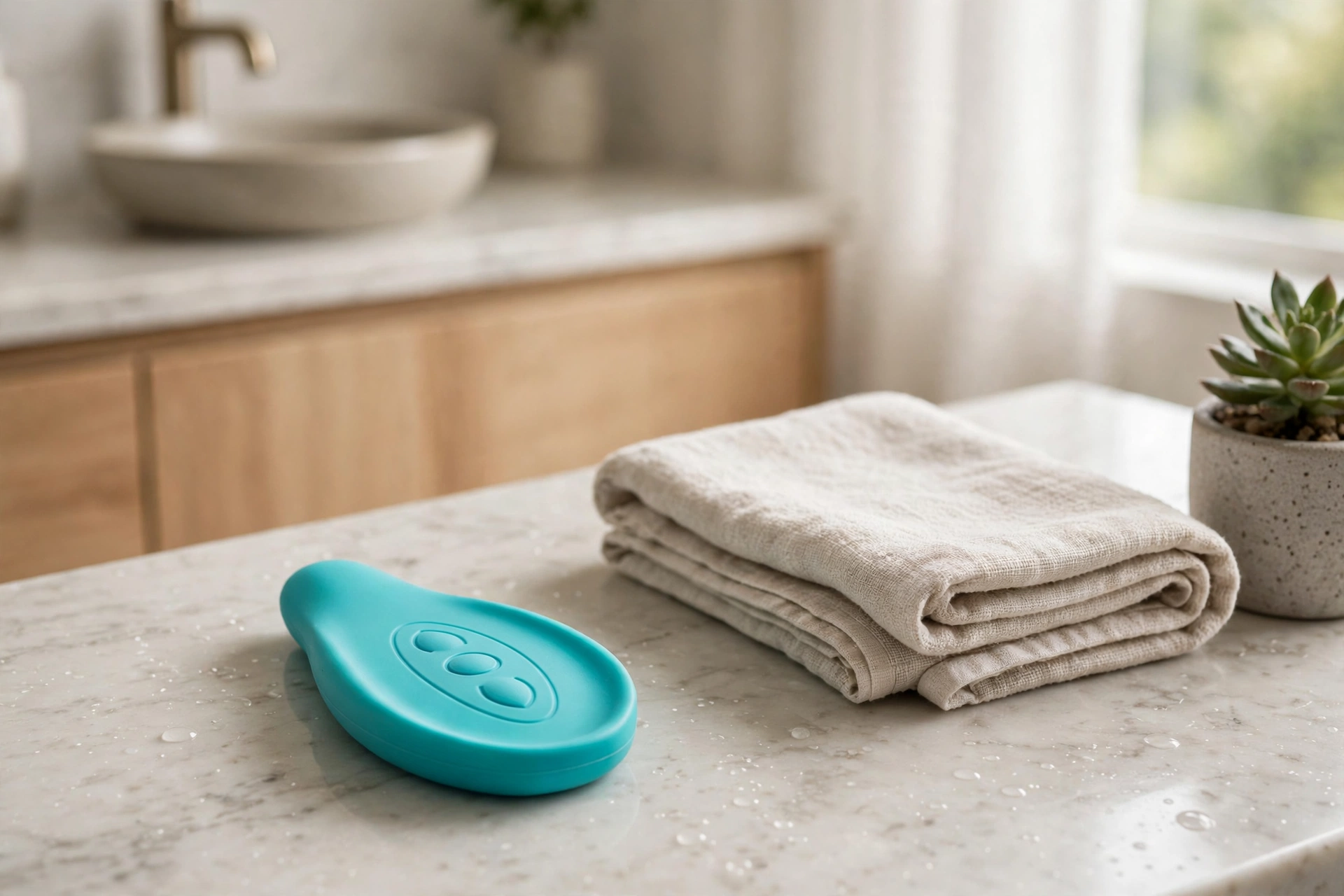
LaVie Lactation Massager
Patented lactation massager with multiple vibration modes to help milk flow and ease discomfort from clogged ducts and engorgement. Waterproof, rechargeable, made from soft medical-grade silicone, and 100 percent BPA free.
7. Rest, Drink, and Let Your Body Catch Up.

A clogged duct is inflammation, and inflammation heals faster when you rest. Lie down when the baby sleeps, even for 20 minutes, and let someone else handle the house for a day. Drink water whenever you feel thirsty, and keep a big bottle beside your nursing chair so you do not have to get up mid-feed. The Hydro Flask 32 Oz Wide Mouth Flex Straw Cap holds 32 oz, keeps drinks cold for hours, and the flex straw cap lets you sip one-handed or lying down. Rest is not laziness here; it is part of the treatment.

Hydro Flask 32 Oz Wide Mouth Flex Straw Cap
Insulated stainless steel water bottle with a wide mouth flex straw cap, 32 oz capacity. Keeps drinks cold for hours, leak-proof, dishwasher safe, and fits in a cup holder.
Take the Pressure Off and Get Help
8. Loosen Bras and Clothing.

Pressure on the breast is one of the most common causes of a clog, and the fix is simple: take the pressure off. Swap any underwire bra for a soft, wire-free nursing bra on the loosest hook. Loosen anything else that presses across your chest, like a diaper bag strap or a seat belt, and sleep without a bra if that feels better. The iLoveSIA 3PACK Nursing and Pumping Bra is wire-free, with drop-down clips you can open one-handed, and it holds pump flanges hands-free if you need to pump the sore side.

iLoveSIA 3PACK Nursing and Pumping Bra
Three-pack nursing and pumping bra with a wire-free design and drop-down nursing clips. One bra for nursing and hands-free pumping, in three colors.
9. Ask Your Doctor About Pain Relief.

Do not suffer through the pain when help is a phone call away. Many providers say acetaminophen or ibuprofen are generally considered compatible with breastfeeding, and they can ease the soreness and swelling while the other steps work. Ask your own doctor or midwife first, and tell them you are breastfeeding. Do not borrow a dose from a friend or an old bottle, and do not start antibiotics on your own. Antibiotics are for mastitis, not for a clog, and only your doctor can tell you which one you have.
10. Get a Lactation Consultant's Eyes on the Latch.

If the same duct clogs again, or the lump is not smaller after a day of steady care, the cause is often the latch, and that is a job for a lactation consultant. A consultant watches a whole feed, checks how deeply your baby latches and whether the breast drains fully, then fixes the small thing that is leaving milk behind. Many hospitals keep a consultant on staff, and many plans cover a visit. Bring your questions about flange size and feeding positions, and write down what they tell you. A clog that keeps coming back is a message, and a consultant is the person who reads it.
What Not to Do
A few common fixes make a clog worse, so skip them even when a well-meaning friend swears by them.
- Do not try to pop the clog or squeeze the lump hard, because that bruises the duct and adds swelling.
- Do not soak your breast in salt water, castor oil, or any other liquid: current guidance advises against soaking.
- Do not stop feeding on the sore side, since stopping lets milk sit and the lump grow.
- Do not add extra pumping sessions to force it out, and do not start antibiotics without a doctor.
- Do not lean on supplements like sunflower lecithin as a treatment: the evidence is thin, and it is no substitute for feeding, icing, and rest.
- If a folk remedy sounds strange, like potatoes or raw garlic on the breast, the evidence is thin. Spend your time on the 10 steps above.
Red Flags: Call Your Doctor Today
Most clogs clear in a day or two, but some turn into mastitis. Call your doctor or midwife the same day if you notice any of these:
- A fever of 100.4 F or higher, or chills and body aches
- Spreading redness, red streaks, or a wedge-shaped red patch
- A flu-like feeling, or feeling sick all over
- Worsening pain, or pain that is severe while nursing or pumping
- Pus or blood in your milk
- A lump that has not improved after 48 hours of steady care
Mastitis often needs antibiotics, and starting treatment early keeps a bad week from becoming a worse one. If you feel sick all over or the pain is severe, call sooner.
If You Are Weaning or Trying to Dry Up Your Milk
This question comes up most often from moms who are weaning. A clogged duct will still usually clear in a day or two, but do not just stop feeding and hope for the best. Infection can set in even while your supply is dropping, so clear the clog first, then go back to drying up slowly. Drop one feed at a time, a few days apart, and hand-express just enough for comfort if a breast gets painfully full. Do not bind your breasts tightly or stop cold turkey: both raise the risk of mastitis. If a lump shows up while you are weaning, treat it like any other clog: feed or pump that side until it clears, then keep weaning.
Want More Than 10 Steps?
These 10 steps are the free start. The Clogged Duct Relief Guide is the bigger version we are building next: a 25-step relief guide with the extra techniques moms ask for most, a printable feed-and-symptom tracker, a latch checklist for your consultant visit, and a when-to-call card for the fridge. If you want the full guide when it is ready, keep an eye on this page. The 10 steps above are yours to use today.
Shop This Post
| Product | Used For | Price |
|---|---|---|
| Boppy Original Nursing Pillow | Nursing Pillow, step 2 | Check Price |
| Spectra S1 Plus Electric Breast Pump | Electric Breast Pump, step 3 | Check Price |
| haakaa Silicone Breast Pump and Silicone Cap, 5 oz, Gen. 2 | Silicone Milk Collector, step 3 | Check Price |
| Lansinoh TheraPearl 3-in-1 Hot or Cold Breast Therapy Pack with Cover, 2 Count | Cold Therapy Pack, step 5 | Check Price |
| LaVie Lactation Massager | Lactation Massager, step 6 | Check Price |
| Hydro Flask 32 Oz Wide Mouth Flex Straw Cap | Water Bottle, step 7 | Check Price |
| iLoveSIA 3PACK Nursing and Pumping Bra | Nursing Bras, step 8 | Check Price |
Frequently Asked Questions
Will a clogged milk duct dry up on its own? Usually, yes, within 24 to 48 hours, especially if you keep feeding or pumping. But do not just wait: feeding on the sore side first, icing after feeds, and gentle massage help it clear faster and stop it turning into mastitis. If it has not improved after 48 hours, call your doctor.
Will a clogged duct lower my milk supply? It can lower the flow from that breast for a day or two, but one clogged duct does not dry up your supply. A breast has 4 to 18 ducts, and once the clog clears and you keep feeding, your supply usually comes back. If it stays low, ask a lactation consultant.
Should I use heat or ice on a clogged duct? Current guidance from the Academy of Breastfeeding Medicine favors ice. Use a wrapped ice pack for about 10 minutes after a feed, lying on your back. Warm compresses were the older advice, and heat can add swelling.
Should I take sunflower lecithin for a clogged duct? Some moms ask about sunflower lecithin, and the Academy of Breastfeeding Medicine notes it may help some people, but it is a supplement, not a treatment, and the evidence is thin. Ask your doctor before you take it, and do not use it to skip the feeding, icing, and rest steps above.
A Small Ritual
My rule is simple: feed on the sore side first, ice after the feed, stroke gently toward the collarbone, rest while the baby rests. Do that for a day, and most lumps soften and go. If yours does not, or if any red flag shows up, call for help the same day. Our Breastfeeding Essentials guide covers the kit that makes feeding easier, and Postpartum Essentials covers the rest of your recovery.
More Breastfeeding Guides
More Breastfeeding Guides