Beco Gemini Review: The Carrier With the Most Flexible Straps

Some carriers make you fit the carrier. With the Beco Gemini, it is the other way around: its straps cross, uncross, slide, and adjust until the carrier fits you, whatever your shape.
This review covers how the strap system actually works, what all four carry positions are for, how the fit works across body sizes, and the honest downsides you should know before you buy. I am Sarah Mitchell, mom of two (ages 4 and 2), and I have carried both of my kids through grocery runs, park mornings, and airport lines. A carrier earns its place in my house by fitting my body, keeping us both comfortable, and adjusting fast when my husband takes over.
Heads up: this post contains affiliate links. If you buy through them, MamaKinder may earn a small commission at no extra cost to you, and it helps keep these guides free.

At a Glance
Verdict: The carrier I recommend first to a mom whose body has never quite fit a standard carrier, and it is our Most Flexible Straps pick. The crossed strap option is a real solution, not a gimmick: it spreads the weight, stops the straps sliding off broad shoulders, and lets the same carrier fit parents of very different sizes.
Best for: parents sharing one carrier, plus size moms, and hot-weather walks.
Buy it if: you want straps that cross or wear straight and a carrier that fits almost any body.
Skip it if: your baby is on the bigger side and needs a roomier seat, or you want a hood for naps.
How I Tested It
- Carried both of my kids (ages 4 and 2) on grocery runs, park mornings, and airport lines
- Wore the straps straight and crossed, and slid the chest clip up and down to find the comfortable spot
- Tried all four carry positions: facing in, facing out, hip, and back
- Measured my waist where the belt sits and compared it to the stated range
Specifications
Pros and Cons
👍 Pros
- Shoulder straps cross over the back or wear straight, with a sliding chest clip, so the fit adjusts to almost any body
- Four carry positions in one carrier: facing in, facing out, hip, and back carry
- Newborn to toddler, 7 to 35 pounds, with no infant insert needed
- Adjustable width seat keeps the hips in the M position as your baby grows
- Waistband pocket holds your phone and keys
- Lightweight organic cotton fabric, good for hot weather
- Double release safety clips cannot pop open by accident
- Machine washable on cold
👎 Cons
- Seat can feel tight for bigger babies
- Forward facing can sit close to the chin and neck
- No hood, so less head support for a sleeping bigger baby
- Backwards-feeling strap tightening, with long straps to tuck away
- Stiff clips until broken in
- Hang to dry after washing, and it is harder to spot clean than some carriers
The Strap System, Explained

Here is how the flexibility works in real life. Start with the straps straight, like a backpack (the H position), which is the easiest way to put the carrier on. Clip the chest strap, tighten, and go. If your shoulders start to ache on a longer carry, unclip, cross the straps over your back in an X, and clip again. The weight moves from two shoulder points to a broad band across your back, and the pressure drops right away. It takes thirty seconds once you have done it twice, and it is the single best trick in this carrier’s whole design.
The chest clip slides along the straps, so you can set it high or low depending on your chest and shoulders. The waist belt sits level at your natural waist and carries a pocket for your phone and keys, which is a small detail you will miss on carriers that do not have one. The double release clips are a safety feature worth knowing about: each buckle needs two actions to open, so it cannot pop open by accident while your baby is in the carrier.
The straps are long, with plenty of webbing to work with, and they adjust smoothly. That matters more than it sounds: a strap system with room to adjust is a strap system that fits a petite mom, a tall dad, and a plus size mom with the same carrier.
The organic cotton straps are softer against skin than the webbing on many carriers, which matters when you are wearing a sleeveless top in summer. The one awkward bit: the straps pull away from your body to tighten rather than toward it, which feels backwards the first time, and there is a lot of strap length to tuck away once you have adjusted them. Both are small things you get used to in a day.
Four Carry Positions, Newborn to Toddler
Four ergonomic carry positions, and each one has a season in your baby’s life.
Front facing in is where you start. Your newborn rides chest to chest, knees tucked up in the hip-healthy M position with the seat supporting knee to knee. This is the position for naps on the go, for fussy evenings, and for the first months when your baby wants nothing more than to hear your heartbeat. It works from birth with no infant insert, for babies from 7 pounds.
Front facing out comes once your baby has strong head and neck control and starts craning to see the world. Keep facing out sessions shorter than facing in ones, and watch for overstimulation: if your baby turns their head away or gets fussy, turn them back in. Fair warning: some parents find the forward facing position less comfortable for their baby on this carrier, with the panel sitting close to the chin and neck. Try it at home first, keep the first sessions short, and trust what your baby tells you.
Hip carry is the position most carriers skip, and it is the one I missed most before I had it. Once your baby can sit with support, you slide them to your hip for quick ups and downs around the house. Do not try hip carry alone the very first time; have someone nearby until you know the move.
Back carry is for toddlers. Once your baby is sitting well and getting heavy, moving them to your back frees your front and balances the weight better. The Gemini covers newborn to toddler, 7 to 35 pounds, and the seat widens as your baby grows so the hips stay in the M position at every stage.
A Fit That Works Across Body Sizes

Fit is where this carrier stands out. The waist belt is reported to extend to about 52 inches, with extenders available on request, which is generous for a carrier in this size class.
The weight balances across your back and shoulders rather than hanging from one point, which is why several parents say they have not needed lumbar support on this carrier even though it does not have a dedicated lumbar panel. The fabric is lightweight, which makes it a good pick for hot weather and for longer walks in summer.
Before you buy, do what I do with every carrier: measure around your waist where the belt will sit and compare it to the stated range. Look for a belt that closes with two or three inches to spare, which leaves room for a winter coat and for your body to change across the postpartum months. If you are at the very top of the range, ask about the waist extender before you order.
One honest note on fit: lab testers found the design feels tight for the baby, with limited room in the seat, and some little testers showed discomfort. If your baby is on the bigger side for their age, check the seat width on the first wear and make sure little legs sit comfortably in the M position with room to move.
Setting It Up the First Time
Plan on ten unhurried minutes with the carrier and your baby the first time, not a rushed attempt at the front door. Set the seat width first: use the narrow setting for a newborn, then widen it as your baby’s legs grow. The seat should support your baby knee to knee, which is what keeps the hips in the M position.
Put the waist belt on first and tighten it snugly at your natural waist, where the belt sits level all the way around. Then settle your baby into the seat, knees up in the M shape, and bring the shoulder straps over. Choose straight straps for the first wear, since that is the easiest way to learn the carrier. Tighten the straps until the baby sits high enough to kiss, which is the quick safety check I use every time: if you can lean forward and kiss the top of your baby’s head without straining, the height is right.
Try the crossed strap position on your second or third wear, at home, with a mirror nearby. Unclip the chest strap, cross the straps over your back, and clip again. Most parents say it clicks into place after two or three practice runs. The clips can be stiff when new, so do not be surprised if they need a firm press at first.
The waistband pocket means you can leave the diaper bag in the car for a quick errand. There is no hood on this carrier, so if your baby naps in the carrier often, bring a light muslin cloth for shade and head support on sunny walks.
What Other Parents Say
Reading through buyer reviews turned up a few things my own testing had not: several parents switched to the Gemini from a wrap and found it easier to put on solo, and more than one reviewer calls it lighter and less bulky than the Ergobaby 360.
“Really loving this product! I have a 7week old and had been using a wrap style carrier. I find the beco alot easier to use (to put on by myself and adjust the straps etc) and so handy being able to breastfeed her in it.”
— Amazon customer review
“Great carrier! I’ve owned and tried quite a few and this is definitely the best, especially as you don’t need an infant insert, it’s a four position carrier and ergonomic.”
— Amazon customer review
“Fantastic sling – I have owned a couple but this one is far by the best in terms of value for money. The fabric is comfortable, baby loves being in it and most importantly it is hip healthy !!”
— Amazon customer review
How It Compares
Our roundup tested eleven carriers side by side. The Gemini is the flexible-straps pick; here is how the full set compares on type, weight range, positions, and fit.
| Carrier | Type | Weight range | Positions | Fit highlight | Pick it if |
|---|---|---|---|---|---|
| Beco Gemini Baby CarrierOUR PICK | Structured | 7–35 lb | 4 (in, out, hip, back) | Belt ~52 in, extenders available | You want straps that cross or wear straight |
| Baby Tula Explore Mesh Baby Carrier | Structured | 7–45 lb | 3 (in, out, back) | Waistband 27–57 in (4XL) | You want the widest fit and a breathable mesh panel |
| Ergobaby Omni Classic Baby Carrier | Structured | 7–45 lb | 4 (in, out, hip, back) | Waist ~24–52 in, lumbar support | You want one carrier that does every position well |
| Infantino Flip 4-in-1 Convertible Baby Carrier | Structured | 8–32 lb | 4 (in narrow, in wide, out, back) | Wide padded waist belt | You want the lowest price for a full-featured carrier |
| LÍLLÉbaby Complete All Seasons Baby Carrier | Structured | 7–45 lb | 6 (in narrow/wide, out, hip, back + newborn) | Waistband 24–61.5 in with extender | You want one carrier for summer and winter |
| Momcozy PureHug Baby Carrier | Structured | 7–45 lb | Front-in only (3-stage sizing) | Padded waistband, EVA lumbar support | Back support matters most to you |
| BabyBjörn Baby Carrier Harmony | Structured | 7–33 lb | 4 (newborn in, in, out, back) | Padded waist belt, lumbar support | You want the lightest structured carrier |
| Boba Baby Wrap Carrier | Wrap | 7–35 lb | 1 wrap method (front/hip) | One size, no waistband | You want a soft wrap with no buckles |
| Moby Classic Wrap | Wrap | 8–33 lb | Front + hip, buckle-free | Listed to XXL, fit mixed | You want the classic cotton wrap |
| KeaBabies Baby Wrap Carrier | Wrap | Up to 35 lb (best under 20 lb) | Front/hip wrap | One size, up to size 24 (disputed) | You want the longest wrap for bigger bodies |
| Momcozy Hip Seat Baby Carrier | Hip seat | 6–36 mo, up to 45 lb | 4 ways (cradle, face-to-face, forward, hip) | Wide Velcro waist belt | You want a seat to perch your toddler on |
This carrier is also one of our picks in Best Baby Carriers for Plus Size Moms.
Where to Buy
Most Flexible Straps
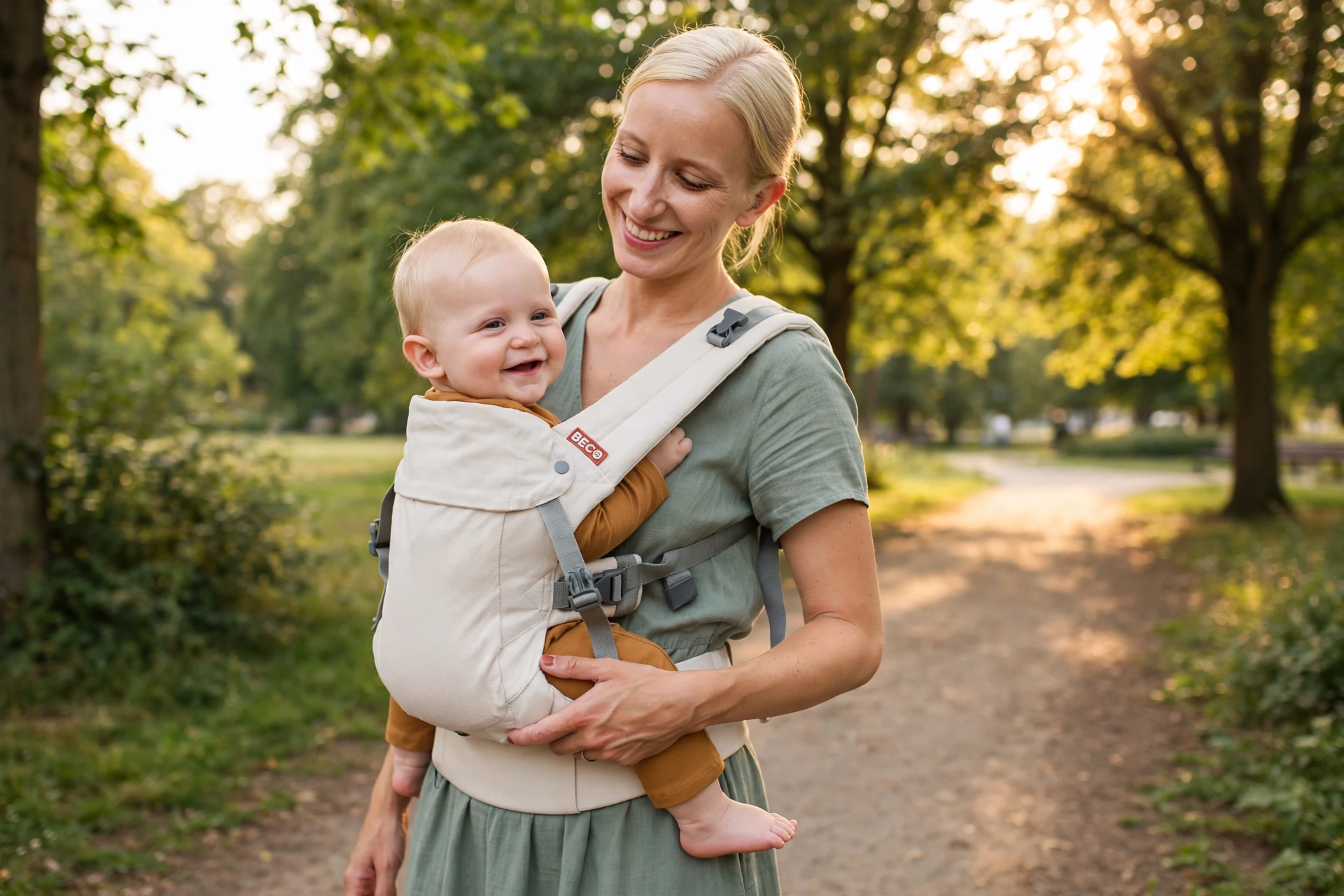
Beco Gemini Baby Carrier
Flexible carrier for newborn to toddler with 4 ergonomic carry positions, crossable shoulder straps, and no infant insert needed.
Frequently Asked Questions
Can you breastfeed in the Beco Gemini? Yes. Several parents mention breastfeeding in the Gemini without taking the baby out, and the adjustable straps make it easy to shift the baby’s height for feeding and back up after.
What is the difference between the Beco Gemini and the Gemini Cool? The Gemini Cool is the same carrier with a breathable 3D mesh vented panel instead of solid cotton, which suits hot weather better. The classic Gemini in this review is the 100% cotton version.
Is the Beco Gemini good for newborns under 7 pounds? The carrier is rated from 7 pounds with no insert. Some parents report using it from birth with babies as small as 6 pounds, but check the fit carefully on the first wear: the seat should support your baby knee to knee, and the baby should sit high enough to kiss.