Momcozy Hip Seat Review: The Best Hip Seat for Quick Ups and Downs
There is a stage every mom knows: your toddler wants up, then down, then up again, then down to chase the dog, then up because they are tired. A wrap takes two minutes to tie, a structured carrier takes buckles and straps, and by the time you are ready, your toddler has already run off. A hip seat is built for exactly this stage, and the Momcozy Hip Seat Baby Carrier is the best hip seat in our roundup for quick ups and downs.
This review covers what the seat actually feels like, how the wide belt supports your back, what each of the four ways to carry is for, and the honest downsides you should know before you buy. I am Sarah Mitchell, mom of two (ages 4 and 2), and I have carried both of my kids through grocery runs, park mornings, and airport lines. A carrier earns its place in my house by fitting my body, keeping us both cool, and adjusting fast when my husband takes over.
Heads up: this post contains affiliate links. If you buy through them, MamaKinder may earn a small commission at no extra cost to you, and it helps keep these guides free.

At a Glance
Verdict: For the up-down-up-down toddler stage, this is the hip seat I recommend first: your baby sits on the seat in seconds, the wide belt gives your back a break, and the built-in storage is genuinely useful. It is bulky, it runs hot under the band, the fit is disputed, and it is not hands-free, so weigh those trade-offs before you buy.
Best for: toddlers 6 to 36 months who want up and down all day, and parents who want back support without buckles and straps.
Buy it if: your toddler lives in the up-down stage and you want a seat you can perch them on in seconds.
Skip it if: you want hands-free carrying for long walks, or you need a carrier that packs down small.
How I Tested It
- Carried both of my kids (ages 4 and 2) through grocery runs, park mornings, and airport lines
- Measured around my waist where the belt sits, then put the belt on first, snug and level, pressing the Velcro down firmly
- Practiced switching between all four carry positions at home before the first outing
- Loaded the pockets with a diaper, a bottle, my phone, and my keys, and tested it on a short trip first
Specifications
Pros and Cons
👍 Pros
- The best hip seat for quick ups and downs: lift your toddler on and off in seconds
- Wide Velcro belt with extra padding that gives real lower back support
- Large, roomy, angled seat with a grippy surface that holds your baby in the M position
- Four ways to carry: cradle, face-to-face, forward-facing, and hip
- Suitable 6 to 36 months, up to 45 pounds, with comfort best under 35 pounds
- Built-in storage: hidden diaper pocket, side pockets, and a bottle holder
- Folds flat for travel and storage, and works as a nursing support pillow from birth
- C-section friendly belt positioning once healed, with a doctor’s okay
👎 Cons
- Buyers are split on it: parents love the seat and the back support, but mark it down for bulk, heat under the band, and fit
- Bulky: it does not pack down small
- Gets hot under the band in warmer weather
- Plus size fit is disputed: some larger parents find it fits well, others say it does not fit even on the loosest setting
- Not hands-free: you keep one arm around your baby at all times
- Padding can feel inadequate on extended use, and comfort drops past 35 pounds
- Switching between the four carry positions takes practice at first
- Not a carrier before 6 months: from birth it is a nursing support pillow only
A Wide Belt That Actually Supports Your Back
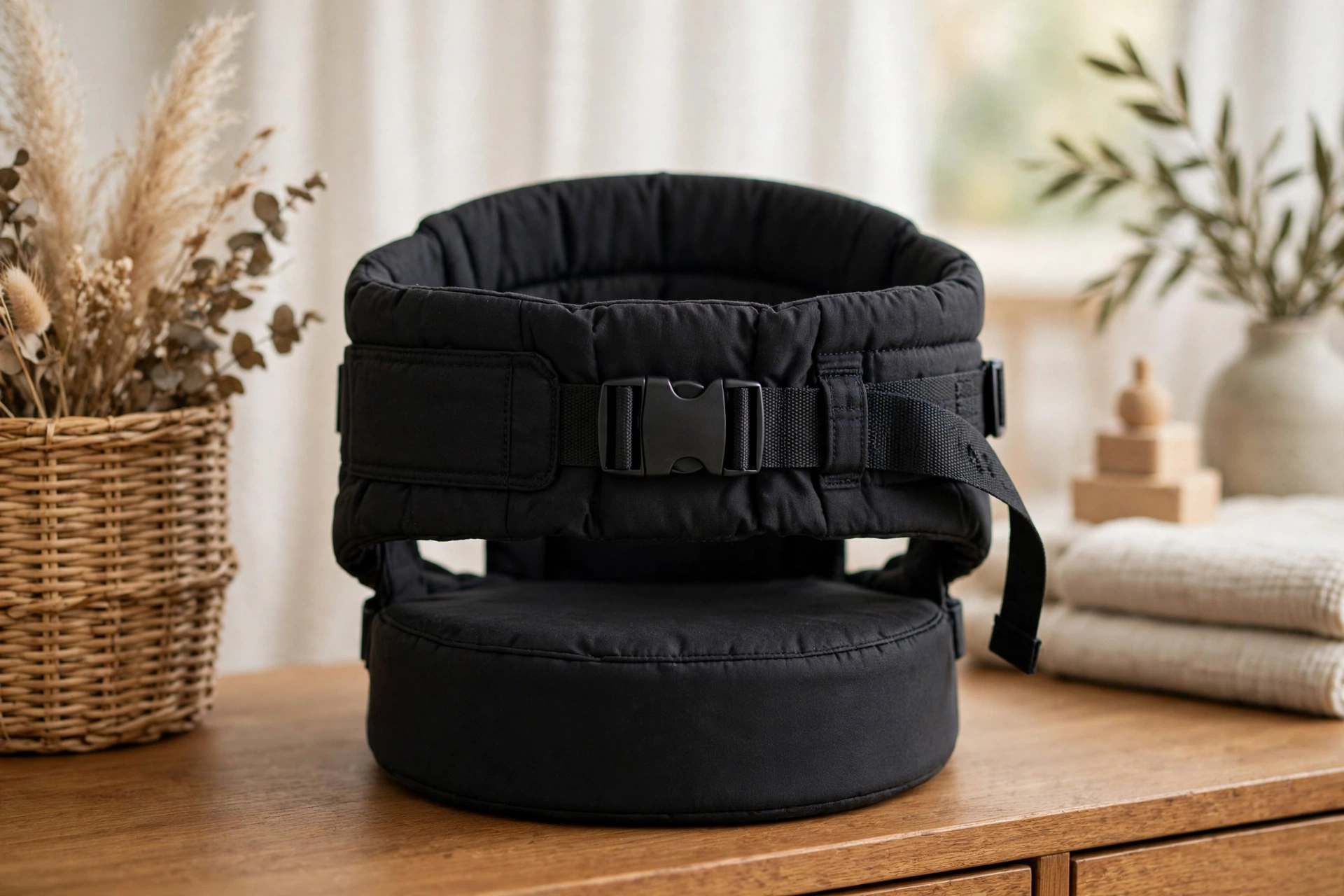
Of everything on this carrier, the belt is the best part, and it is the reason Babylist named it the best hip carrier for lower back support. It is wider than other hip carriers, fully covered in strong Velcro so it wraps snug like a belly band, and it has extra padding across the part where the seat sits. That width spreads the weight across your lower back instead of concentrating it on one hip, which is what makes a hip seat work for longer than five minutes. The buckle has a sliding tab that locks, so it cannot unbuckle by accident.
A few practical notes from real use. Parents say the wide belt is C-section friendly once you are healed, because you can position it to avoid your incision, but check with your doctor first. The belt is also the part that gets hot: reviewers say it gets warm under the band in hotter weather, so it is cozier than a wrap in summer. And the belt is bulky, which is the most common complaint about this carrier. It does not pack down small, and it looks like a lot of gear for a quick errand.
It comes in two sizes: regular fits waists 27 to 45 inches, plus fits 40 to 55 inches. Before you buy, do what I do with every carrier: measure around your waist where the belt will sit and compare it to the stated range for your size. The belt is size inclusive, but buyers are split: some plus size parents find it fits well, while others say it does not fit even on the loosest setting and call it too bulky for plus size bodies. Check the listing and the return policy before you order.
The Seat That Makes Quick Ups and Downs Easy
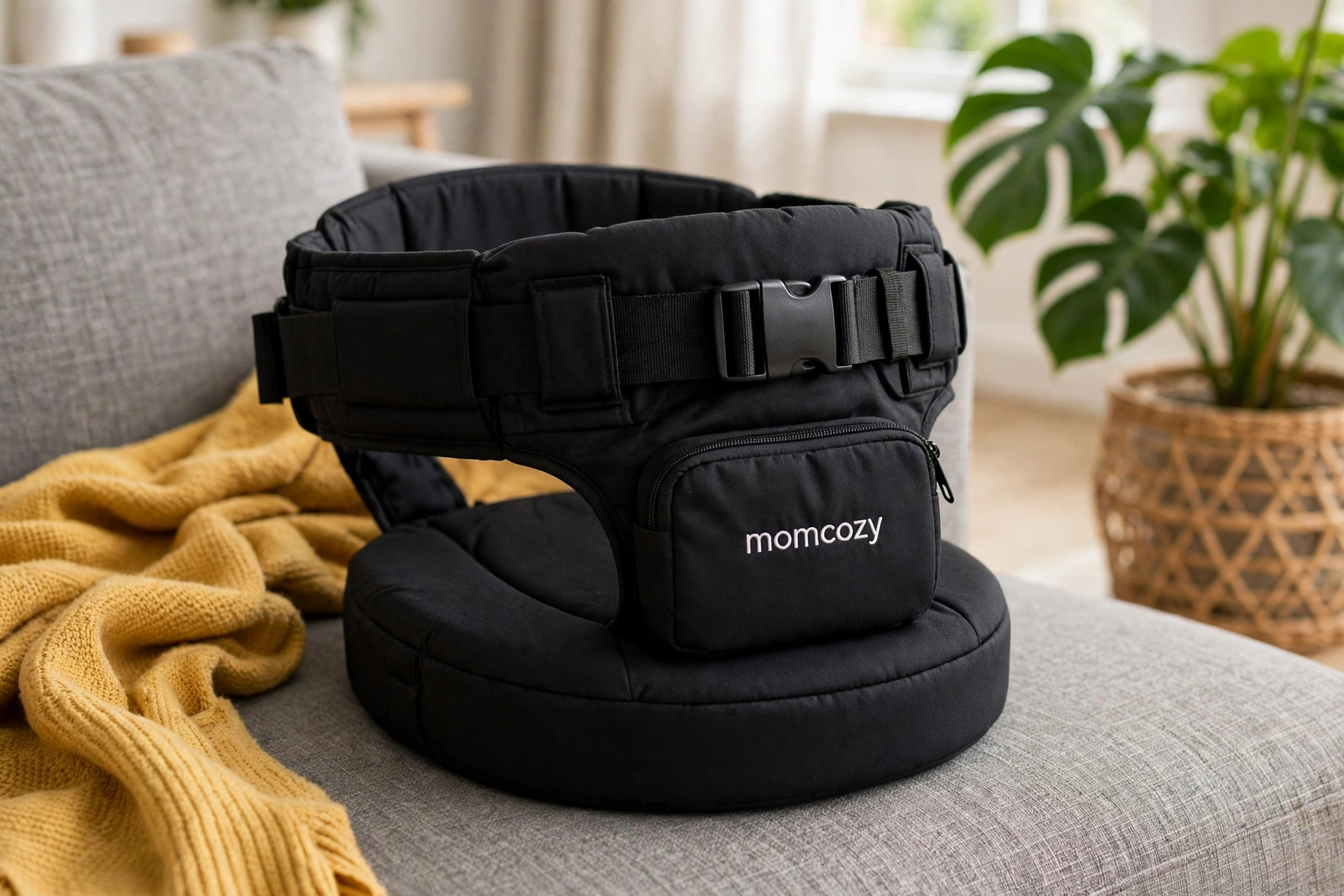
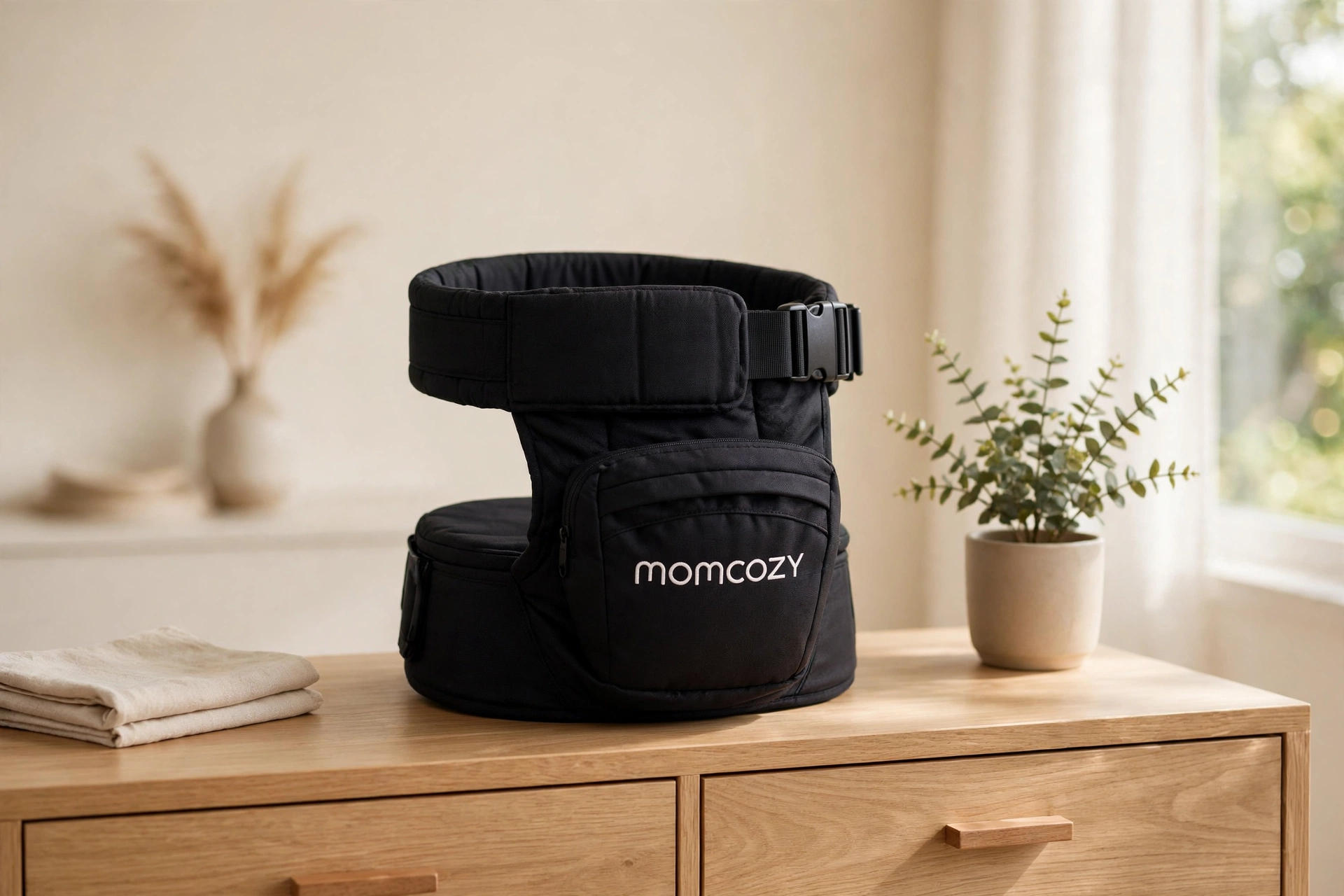
What you are really buying is the seat. It is a firm, padded shelf that holds your baby at hip height, angled so they sit naturally with their hips in the proper position and their weight spread evenly. Your baby sits down, you keep one arm around them, and your other hand is free for the shopping cart, the stroller, or your toddler’s sibling.
That one arm rule matters, and I want to be clear about it: a hip seat is not hands-free. You keep one arm around your baby at all times. If you want both hands-free for a long walk, a structured carrier or a wrap is the better tool. The hip seat is for the in-between moments: the grocery store, the park, the airport line, the times your toddler wants up for a minute and down the next.
It also folds flat, which helps with storage at home and in the car, and the built-in storage is genuinely useful: a hidden diaper pocket, side pockets, and a bottle holder keep the essentials close so you can leave the diaper bag behind for a quick trip.
Four Ways to Carry, Six Months to Three Years
You get four ways to carry, and each one has a season in your baby’s life.
Cradle is for the smallest babies, and it is helpful for feeding on the go. Face-to-face is for a baby who wants to see you. Forward-facing on the front is for a curious baby who wants to see the world. Hip carrying is the one you will use most, with your baby seated on the seat at your side.
As a hip seat, it is suitable for babies at least six months to 36 months, up to 45 pounds. That is the honest range: do not use it as a carrier before six months. From birth, you can use it as a nursing support pillow, which is a nice second use in the newborn weeks, but the carrying starts at six months. Comfort peaks under 35 pounds for extended use, so a heavier toddler is fine for quick trips and less comfortable for hours at a stretch.
Setting It Up the First Time
Plan on ten unhurried minutes with the hip seat and your baby the first time, not a rushed attempt at the front door. Put the belt on first, snug at your waist, level all the way around, and press the Velcro down firmly all the way across so it holds. The belt should sit high enough that the seat is at a comfortable height for your baby to sit on, not so low that you are lifting them up to it.
Then lift your baby onto the seat, knees in the M position, and keep one arm around them while you adjust. Practice switching between the four ways to carry at home before you need to do it out in the world: parents say there is a learning curve to switching positions, and the first few switches take practice. After a few runs, the up and down becomes second nature, which is the whole point of a hip seat.
Before your first outing, load the pockets with what you need: a diaper in the hidden pocket, a bottle in the holder, your phone and keys in a side pocket. Test it on a short trip first.
What Other Parents Say
Reading through buyer reviews turned up a few things my own outings had not: several parents use it daily with two kids of different ages, one mom of a long 8-month-old says he hates the stroller and a normal carrier squeezes him, and more than one parent says the pockets hold more than they expected: a full pack of wipes, a phone, keys. A few note the weight distribution feels odd at first, and one grandma says it supported her lower back well with her grandson.
How It Compares
Our roundup’s other ten carriers cover structured carriers and three wraps. Here is how this hip seat stacks up.
| Carrier | Type | Weight range | Positions | Fit highlight | Pick it if |
|---|---|---|---|---|---|
| Momcozy Hip Seat Baby CarrierOUR PICK | Hip seat | 6–36 mo, up to 45 lb | 4 ways (cradle, face-to-face, forward, hip) | Wide Velcro waist belt | You want a seat to perch your toddler on |
| Baby Tula Explore Mesh Baby Carrier | Structured | 7–45 lb | 3 (in, out, back) | Waistband 27–57 in (4XL) | You want the widest fit and a breathable mesh panel |
| Ergobaby Omni Classic Baby Carrier | Structured | 7–45 lb | 4 (in, out, hip, back) | Waist ~24–52 in, lumbar support | You want one carrier that does every position well |
| Infantino Flip 4-in-1 Convertible Baby Carrier | Structured | 8–32 lb | 4 (in narrow, in wide, out, back) | Wide padded waist belt | You want the lowest price for a full-featured carrier |
| Beco Gemini Baby Carrier | Structured | 7–35 lb | 4 (in, out, hip, back) | Belt ~52 in, extenders available | You want straps that cross or wear straight |
| LÍLLÉbaby Complete All Seasons Baby Carrier | Structured | 7–45 lb | 6 (in narrow/wide, out, hip, back + newborn) | Waistband 24–61.5 in with extender | You want one carrier for summer and winter |
| Momcozy PureHug Baby Carrier | Structured | 7–45 lb | Front-in only (3-stage sizing) | Padded waistband, EVA lumbar support | Back support matters most to you |
| BabyBjörn Baby Carrier Harmony | Structured | 7–33 lb | 4 (newborn in, in, out, back) | Padded waist belt, lumbar support | You want the lightest structured carrier |
| Boba Baby Wrap Carrier | Wrap | 7–35 lb | 1 wrap method (front/hip) | One size, no waistband | You want a soft wrap with no buckles |
| Moby Classic Wrap | Wrap | 8–33 lb | Front + hip, buckle-free | Listed to XXL, fit mixed | You want the classic cotton wrap |
| KeaBabies Baby Wrap Carrier | Wrap | Up to 35 lb (best under 20 lb) | Front/hip wrap | One size, up to size 24 (disputed) | You want the longest wrap for bigger bodies |
This carrier is also one of our picks in Best Baby Carriers for Plus Size Moms.
Where to Buy
Best Hip Seat

Momcozy Hip Seat Baby Carrier
Best hip seat for quick ups and downs. Wide lumbar belt, 4 ways to carry, 6 to 36 months up to 45 lb, with hidden diaper storage and a bottle holder.
Frequently Asked Questions
Should I switch sides when using a hip seat? Yes. A pediatric physical therapist recommends alternating sides regularly: it keeps the strain even on your baby’s developing muscles and on your own posture, so one side does not take all the work.
Can both parents share one hip seat? Yes, and switching is quick. The Velcro belt adjusts between different waist sizes easily, and several buyer reviews mention both parents using the same seat on family walks.
How do you clean the Momcozy Hip Seat? The seat wipes clean, which helps after snack-time carries. Check the care label on your carrier before washing it.