25 Brilliant Educational Toys for 10-Year-Olds That Turn Curiosity Into Real Skills

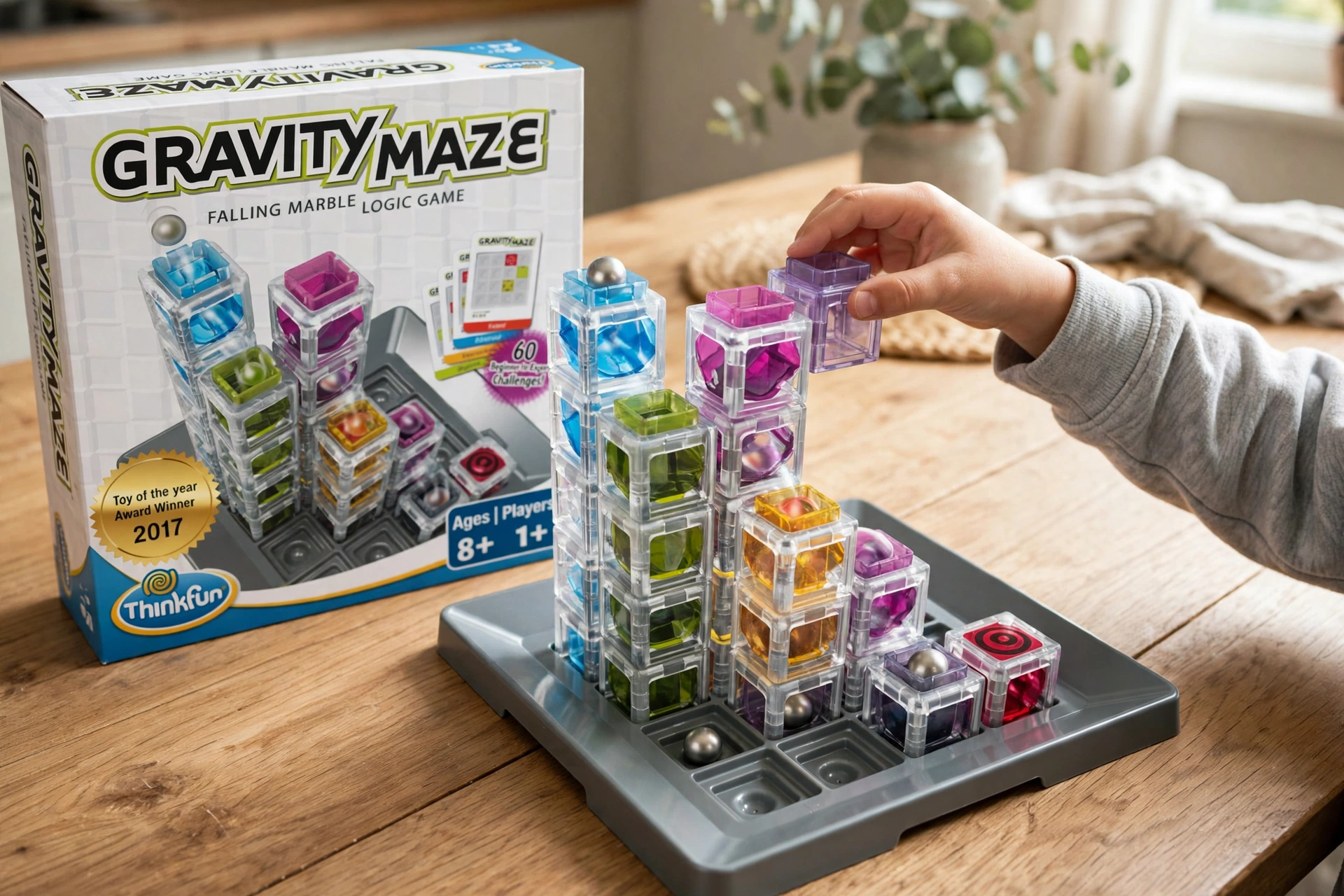
The best educational toy for a 10-year-old is ThinkFun Gravity Maze. It hands a child 60 challenges, nine towers, and three marbles, then asks for a path that works. No screen, no luck, no shortcut. A ten-year-old plans four moves ahead, tests the marble, watches it fail, and rebuilds. That loop of plan, test, and fix is the skill that pays off in math, science, and coding, and Gravity Maze teaches it through play.
Ten is the thinking age. A ten-year-old can hold several steps in mind, follow a real set of instructions, run an experiment, and stick with a hard problem long enough to crack it. The best learning toys for 10 year olds respect that growth. They hand over a real problem and trust the child to solve it: a circuit that only lights when the logic is right, a chemistry set that changes color when the steps are followed, a robot that draws exactly what the code says.
Buy by interest, not by the picture on the box. A child who loves rocks needs the geodes kit, not the coding robot. A child who loves cars needs the LEGO Technic Lamborghini, not the chemistry set. This guide covers five kinds of play so every interest has a match: logic games, real science, building and coding, strategy board games, and creativity and puzzles. Each pick names its age range, its piece count or challenge count, its pros and cons, and who it suits best.
This guide lists 25 picks: 5 logic games, 5 science kits, 7 building and coding toys, 4 strategy board games, and 4 creativity and puzzle picks. These are the best educational toys for 10 year olds that lead with thinking, building, and experimenting, and each pick names its specs, its pros and cons, who it suits best, and a safety note. Prices come from the makers and the listings named in November 2026, so check the live listing before you buy, since prices and stock change.
Heads up: this post contains affiliate links. If you buy through them, MamaKinder may earn a small commission at no extra cost to you, and it helps keep these guides free.

⚡ Quick Picks
Short on time? These are the five picks that stood out for 10-year-olds:
Educational Toy Comparison at a Glance
Compare all 25 products
| Product | Best for | Key feature | Rating | Buy |
|---|---|---|---|---|
 |
Puzzles, mazes, and figuring things out alone | 60 challenges, ages 8+, the pick that outlasts the novelty | – | Check Price |
 |
Quick puzzle with one clear goal | 40 challenges, ages 8+, the sliding-block puzzle that teaches planning | – | Check Price |
| Asking how lights and switches work | Place the tokens, complete the circuit, and light the beacons | – | Check Price | |
 |
Fidget puzzle they can solve anywhere | 200+ puzzles, ages 7+, pocket-sized, about $11 | – | Check Price |
| After Kanoodle | 120 challenges in a pocket, from flat grids to 3D pyramids | – | Check Price | |
 |
Curious about science | 50 experiments, ages 7+, color changes and fizzing reactions | – | Check Price |
 |
Asking for a real chemistry set, not a toy one | 100+ experiments, ages 8+, crystal growing and real reactions | – | Check Price |
| Rock collector | Ten real geodes to crack open, each hiding crystals inside | – | Check Price | |
| Asking what things look like up close | A real microscope with 40x to 400x zoom and slides to start with | – | Check Price | |
| Rocks, volcanoes, and the planet | A volcano, a gemstone dig, and 100-plus earth science activities | – | Check Price | |
 |
Building something that actually works | 200+ projects, ages 8+, the kit teachers actually use | – | Check Price |
 |
Coding Robot | Draws what you code, ages 7+, grows to typed code | – | Check Price |
 |
Real Technic build | 806 pieces, ages 9+, working V10 engine and steering | – | Check Price |
| After Snap Circuits 203 | 300-plus projects from a snap-together electronics kit | – | Check Price | |
| Building their own games | Turn a banana into a game controller with a real circuit board | – | Check Price | |
| Builds that move | Eight kinetic creatures built from LEGO gears and a book | – | Check Price | |
| Trying electronics for the first time | 100-plus circuits from a starter kit a child can follow alone | – | Check Price | |
 |
Real strategy game the whole family can play | 2 to 4 players, ages 7+, the maze shifts every turn | – | Check Price |
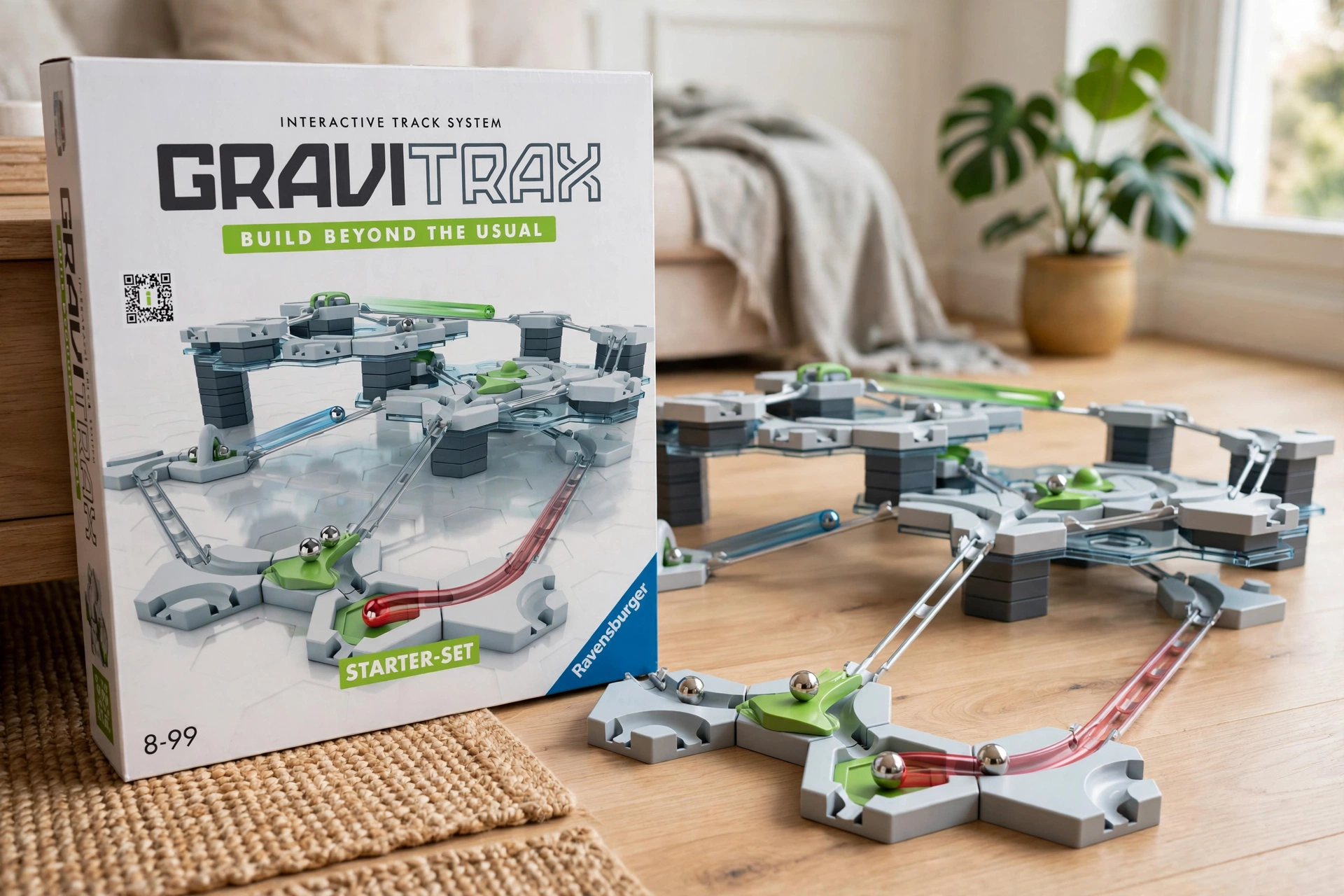 |
Marble runs and building big | 120+ pieces, ages 8+, gravity and magnets in one build | – | Check Price |
| First trading game | A pirate trading game that teaches planning in 30 minutes | – | Check Price | |
| Trains, maps, or collecting sets | Claim routes, collect cards, and race across the country | – | Check Price | |
| Puzzle with a real payoff | 43 quintillion combinations, one solution, and a skill for life | – | Check Price | |
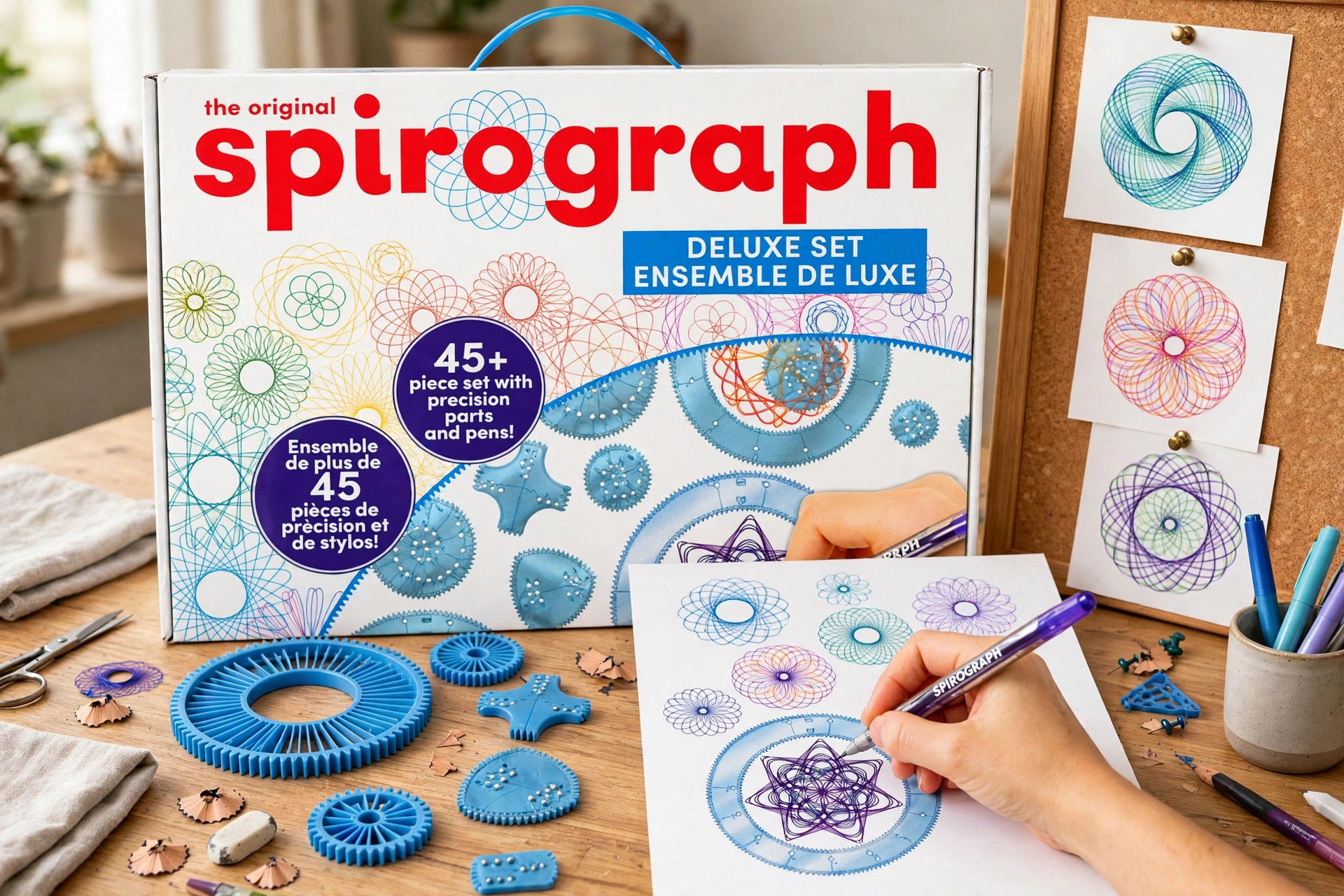 |
Art and patterns | 19 wheels, ages 8+, geometry you can hang on the wall | – | Check Price |
| Building from imagination, not from a manual | 790 bricks in 33 colors and no instructions to follow | – | Check Price | |
| Guided build | One pile of bricks, three animals: parrot, frog, or fish | – | Check Price |
Logic Games and Brain Teasers
These five games are the best learning toys for 10 year olds who love a puzzle: single-player, screen-free, and genuinely hard at the top end. A ten-year-old plans several moves ahead here, and the hardest challenges reward patience, not luck.
Best Overall
👍 Pros
- [’60 challenges from easy to expert
- So it lasts years’
- ‘Builds planning
- Logic
- Patience in one box’ and ‘Screen-free and quiet enough for a car or waiting room’]
👎 Cons
- [‘Marbles roll under the sofa
- Get lost’
- ‘The hardest levels may frustrate younger or less patient children’]
Specifications
| Spec | Details |
|---|---|
| Age | 8+ |
| Challenges | 60 (beginner to expert) |
| Contents | 9 towers, 3 marbles, 1 target piece, game grid |
| Players | 1 |
For the best educational toy for a 10-year-old, start with ThinkFun Gravity Maze: a marble-run logic game with 60 challenges. The child arranges towers on a grid so the marble reaches the target, then drops it and watches. When the path fails, the child rebuilds it. The hardest challenges ask for several moves of planning at once, which is exactly the skill ten-year-olds are building. It costs about $20 to $28, it fits in a backpack, and the puzzle set wins awards year after year.
Safety: Marbles are small: keep them away from younger siblings.
Best Logic Classic
👍 Pros
- [‘Teaches sequencing and planning with zero setup’
- ‘Small
- Durable
- Easy to take on trips’
- ‘The expert cards genuinely challenge adults too’]
👎 Cons
- [‘A single trick repeated across 40 cards’
- ‘Small pieces can go missing in a bag’]
Specifications
| Spec | Details |
|---|---|
| Age | 8+ |
| Challenges | 40 (beginner to expert) |
| Contents | Traffic grid, 15 vehicles, 1 red car |
| Players | 1 |
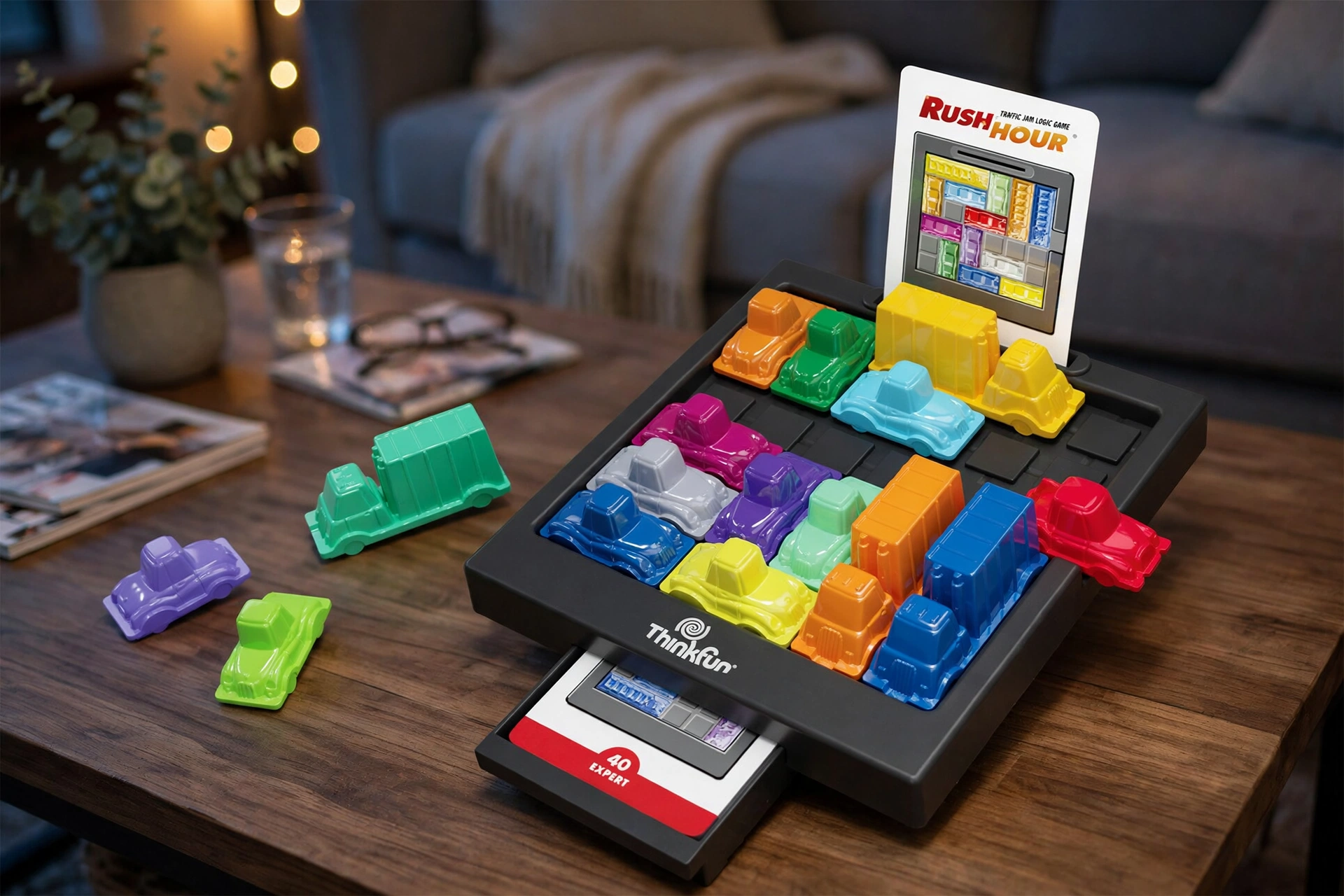
The sliding-block traffic puzzle that teaches planning with 40 challenges and one red car to free here is ThinkFun Rush Hour. The child slides cars and trucks to clear a path for the red car. Every move changes the board, so a ten-year-old learns to think before sliding. The 40 challenge cards run from beginner to expert, and the game fits in a small box for travel. It costs about $22, and it has sold for years because the puzzle stays honest.
Safety: Small vehicles: keep them away from younger siblings.
Best How Things Work
👍 Pros
- [‘Real circuit concepts with instant light-up feedback’
- ’60 challenges that grow from simple to tricky’
- ‘A gentle bridge to Snap Circuits later’]
👎 Cons
- [‘Needs 3 AAA batteries
- Not included’
- ‘The grid is small for children with larger hands’]
Specifications
| Spec | Details |
|---|---|
| Age | 8+ |
| Challenges | 60 cards |
| Contents | 5 x 5 grid, 17 game tokens, 3 LED beacons |
| Batteries | 3 AAA, not included |
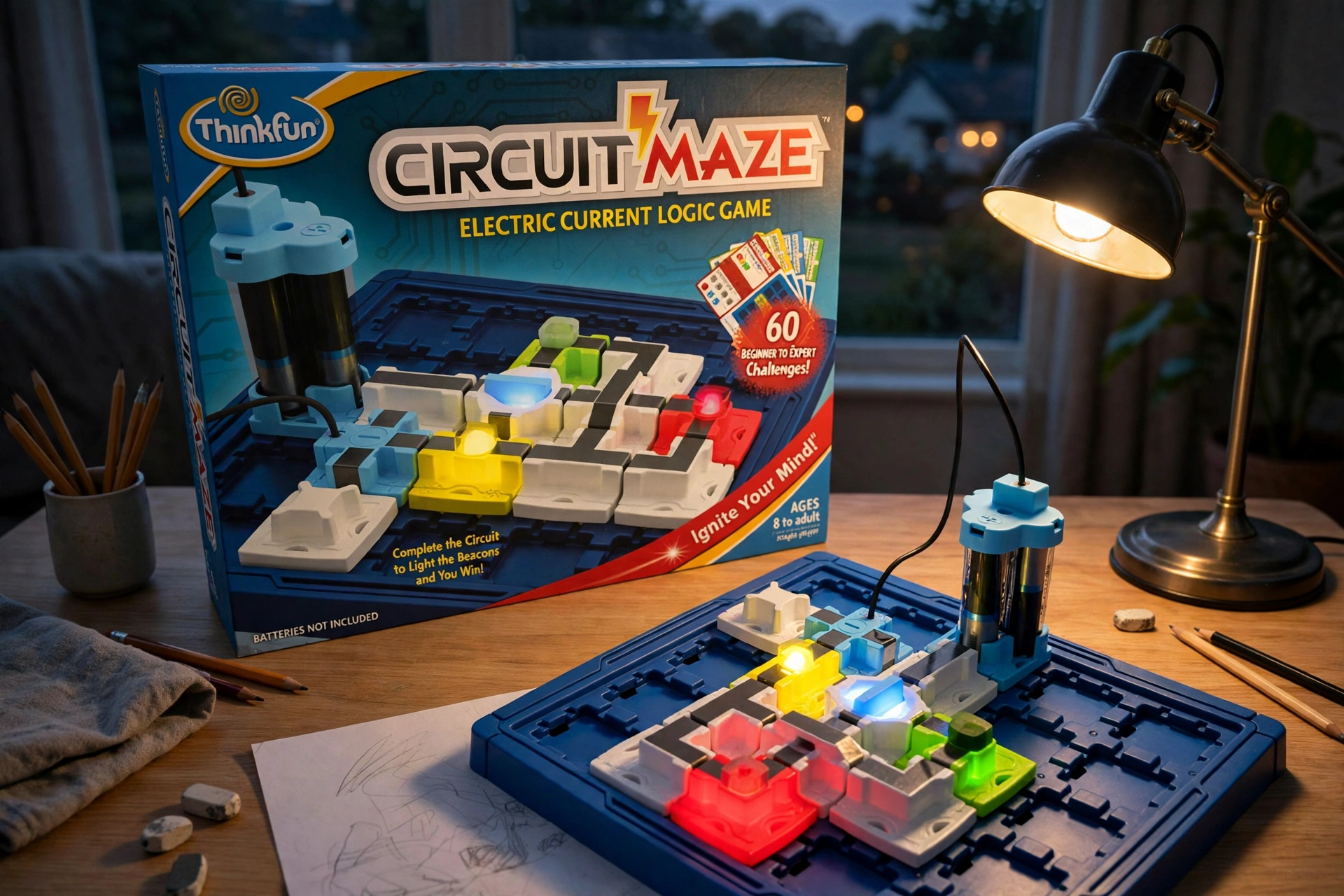
For a ten-year-old who asks how lights and switches work, ThinkFun Circuit Maze teaches real circuit logic with 60 challenge cards and three light-up LED beacons. The child places tokens on a grid to complete a circuit and light the beacons. If the circuit is wrong, nothing lights. That instant feedback is the teaching: a ten-year-old learns that a circuit is a path, and a broken path means no light. It costs about $30, and it is the friendliest first step into electronics in this guide.
Safety: Batteries: use the size shown on the box and keep spares away from younger siblings.
Best Budget Brain Teaser
👍 Pros
- [‘200-plus puzzles for about $11
- The best value here’
- ‘Fits in a pocket
- So it travels anywhere’
- ‘A two-player mode for a sibling or friend’]
👎 Cons
- [‘Small pieces can go missing’
- ‘The 3D puzzles frustrate children who prefer the 2D board’]
Specifications
| Spec | Details |
|---|---|
| Age | 7+ |
| Challenges | 200+ |
| Contents | 11 pieces, 2D and 3D puzzle booklet, travel case |
| Players | 1 or 2 |
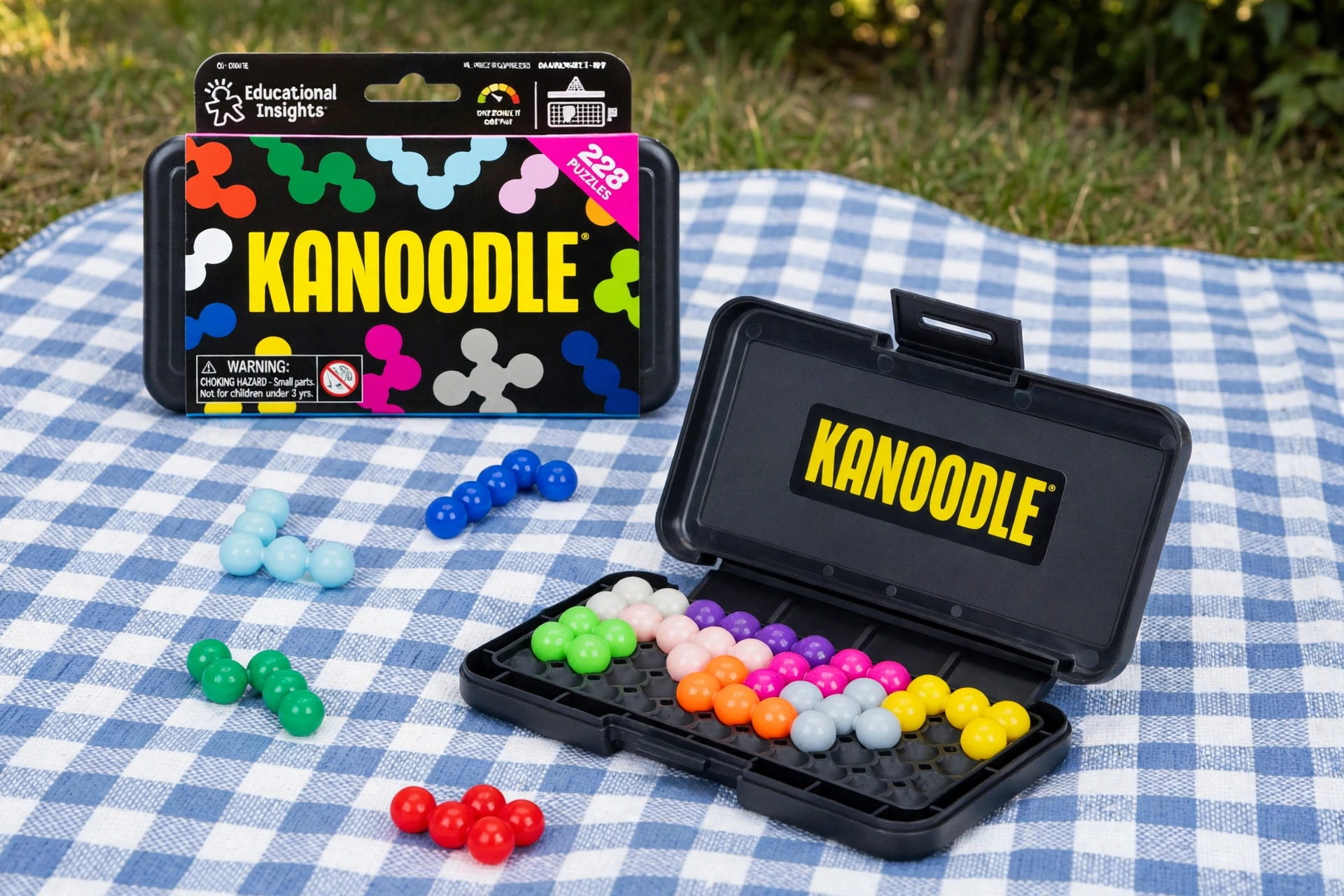
Kanoodle 3D Brain Teaser Puzzle is the best budget brain teaser in this guide, and the specs below show why. Kanoodle packs 200-plus puzzles into a pocket-sized case for about $11. The child fits eleven colorful pieces into a 3D shape or a 2D board. The puzzle booklet runs from easy to expert, and the case holds everything, so the game survives a car ride, a flight, and a waiting room. At about $11, it is the cheapest way to buy a ten-year-old a real challenge, and it is a natural gift for a birthday or a holiday stocking.
Safety: Small pieces: keep them away from younger siblings.
Best Next Level After Kanoodle
👍 Pros
- [‘120 challenges across 2D and 3D play’
- ‘Pocket-sized and quiet for travel’
- ‘One of the cheapest serious logic games you can buy’]
👎 Cons
- [‘The case lid can be fiddly for small hands’
- ‘Pieces are small
- Easy to lose’]
Specifications
| Spec | Details |
|---|---|
| Age | 6+ |
| Challenges | 120 (2D and 3D) |
| Contents | 12 colorful pieces, travel case with lid grid |
| Players | 1 |
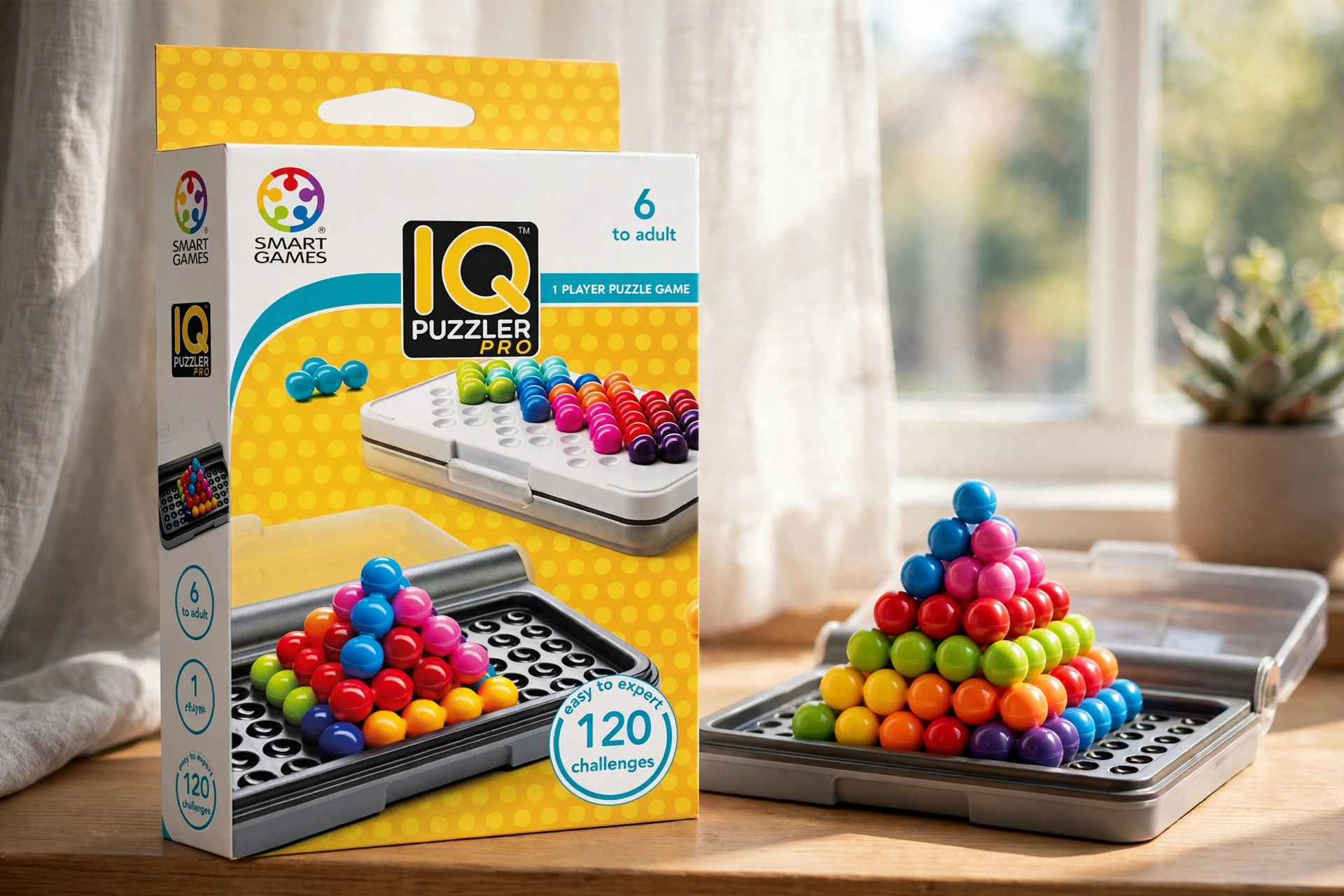
A pocket logic game with 120 challenges in two modes: flat puzzles and 3D pyramid puzzles. That is SmartGames IQ Puzzler Pro. The child fits twelve pieces onto a grid, first flat and then in a pyramid. The 2D mode is quick and friendly. The 3D mode is the real test: the pieces stack, and the top of the pyramid has only one right answer. At about $13, it costs less than a movie ticket and outlasts most toys three times its price.
Safety: Small pieces: keep them away from younger siblings.
Real Science to Do at the Table
These five kits hand a ten-year-old something real to investigate, from color chemistry to pond-water microscopy. At ten, science stops being magic tricks and starts being method: observe, predict, test. Adult supervision stays on for the chemistry sets and the geodes kit.
Best First Chemistry
👍 Pros
- [’50 experiments with visible
- Colorful results’
- ‘A friendly first chemistry set for a cautious child’
- ‘The guide explains the science in plain words’]
👎 Cons
- [‘Adult supervision needed for the chemical steps’
- ‘Some experiments use up consumables
- So they cannot be repeated forever’]
Specifications
| Spec | Details |
|---|---|
| Age | 7+ |
| Experiments | 50 (16 out of the box) |
| Contents | 48 pieces, including test tubes, color tablets, and flasks |
| Players | 1+ |
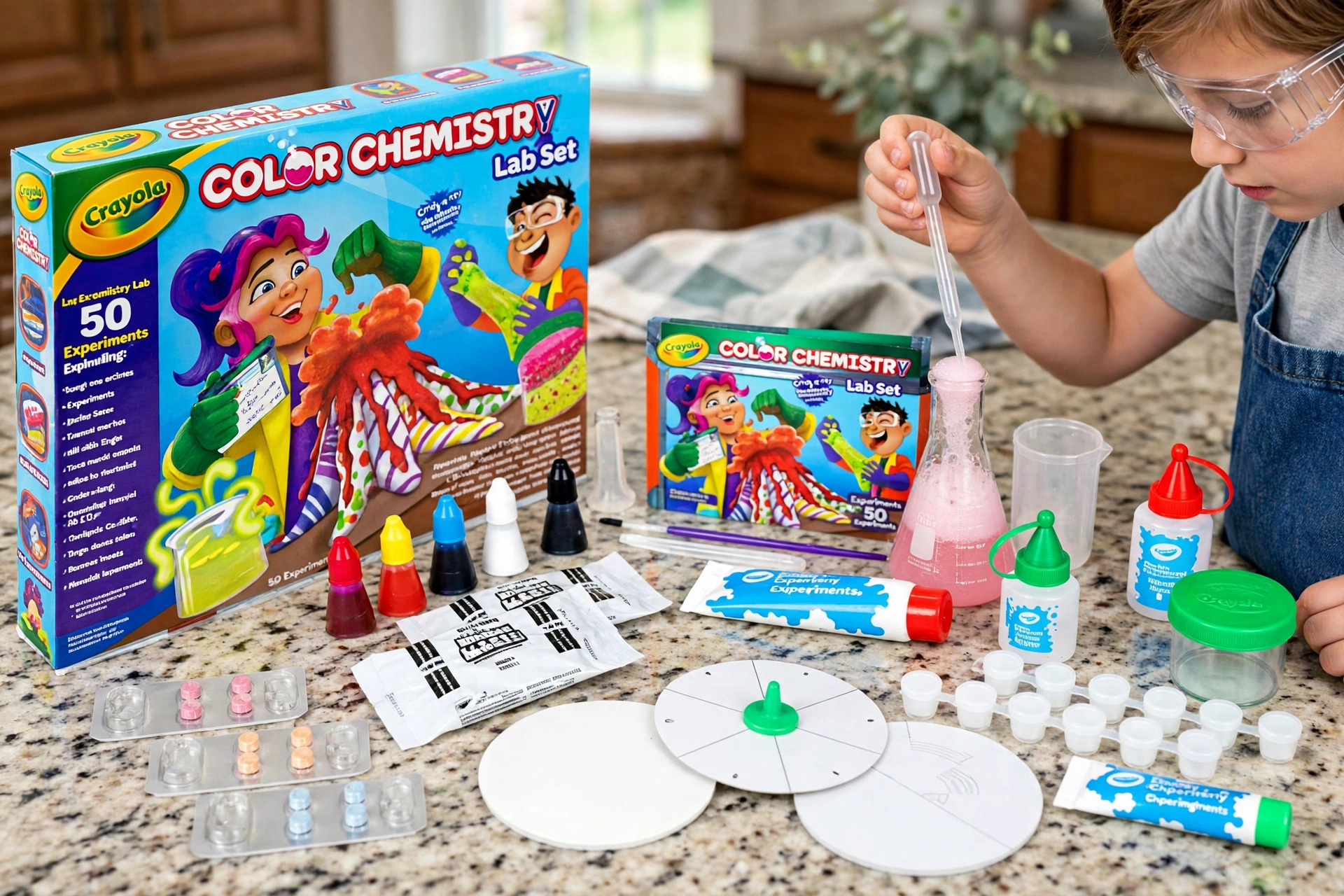
For a ten-year-old who is curious about science but has never run an experiment, Crayola Color Chemistry Set gives a ten-year-old 50 experiments built around color, fizz, and changing states. The child mixes color tablets, watches water change, and runs 16 experiments straight out of the box, then 34 more from the guide. It costs about $30, and it is the best first chemistry set for a child who is not sure they like science yet, because every result is visible and colorful. Adult supervision stays on for the steps that use real chemicals.
Safety: Adult supervision required. Keep chemicals away from younger siblings and follow the guide.
Best Deep Science
Best for: Asking for a real chemistry set, not a toy one
7. National Geographic Amazing Chemistry Set
👍 Pros
- [‘100-plus experiments
- The deepest chemistry set here’
- ‘A real guide with clear steps and explanations’
- ‘Crystal growing and glowing worms keep a child coming back’]
👎 Cons
- [‘Adult supervision needed throughout’
- ‘Consumables run out
- So some experiments are one-time’]
Specifications
| Spec | Details |
|---|---|
| Age | 8+ |
| Experiments | 100+ (15 in the box, 85 in the guide) |
| Contents | Crystal growing, bouncy ball, glowing worms, test tubes |
| Players | 1+ |
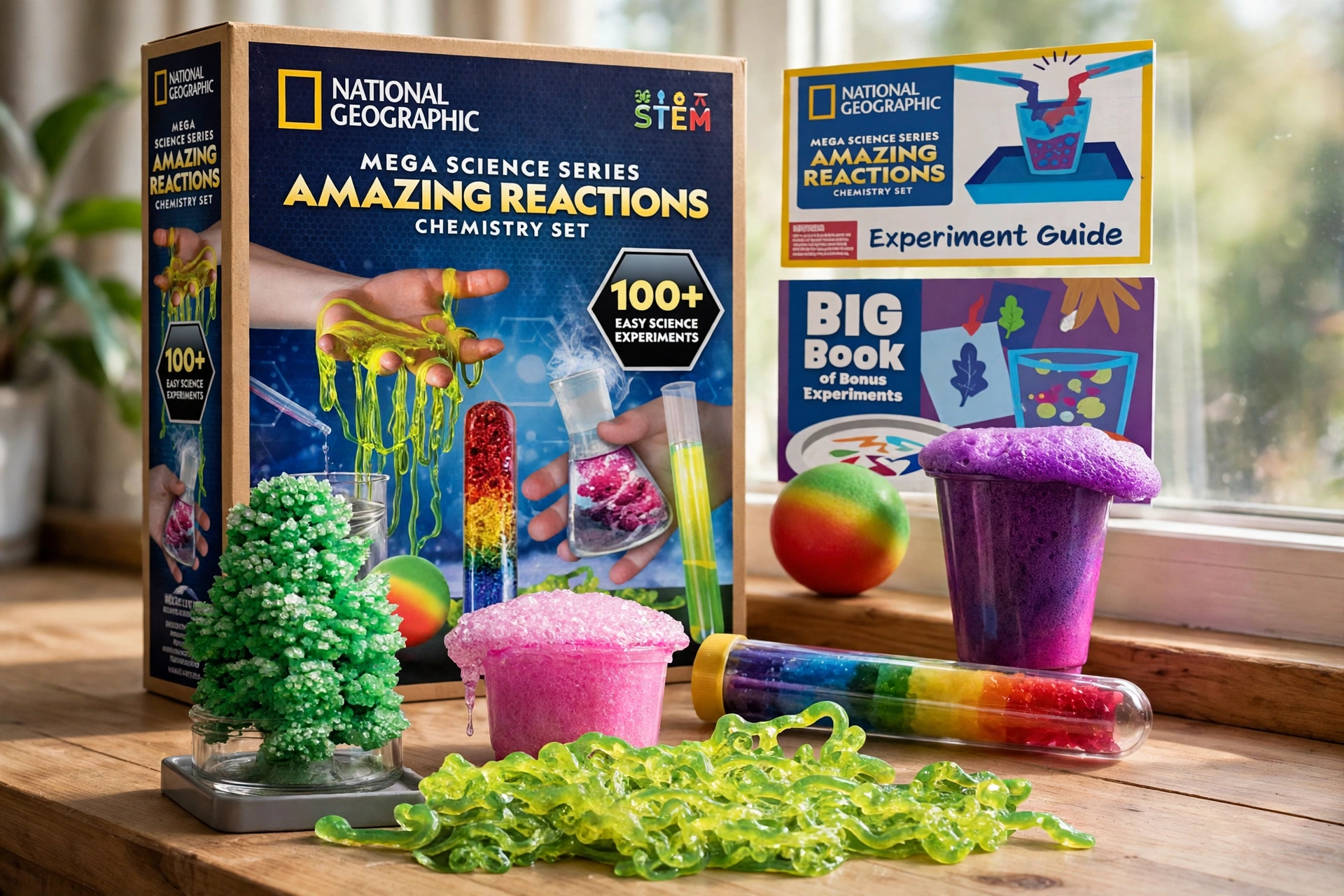
What the National Geographic Amazing Chemistry Set does: runs 100-plus experiments, from crystal growing to glowing worms, for about $40. The child grows a crystal, makes a bouncy ball, and mixes reactions that change color and glow. Fifteen experiments come in the box and 85 more sit in the guide, so a ten-year-old can run a new one most days for months. It costs about $40, and it is the deepest chemistry set in this guide. Adult supervision stays on for every chemical step.
Safety: Adult supervision required. Goggles included: wear them for every experiment.
Best Rock Collector

👍 Pros
- [‘Ten real geodes
- So the surprise repeats’
- ‘Goggles and display stands included’
- ‘The guide explains how crystals form’]
👎 Cons
- [‘Rock dust
- Chips: needs a safe outdoor or covered space’
- ‘A hammer is needed and not included in every bundle’]
Specifications
| Spec | Details |
|---|---|
| Age | 8+ |
| Contents | 10 geodes, safety goggles, 2 display stands, learning guide |
| Players | 1+ |
National Geographic Break Open 10 Premium Geodes kit hands a ten-year-old a hammer and ten real geodes to crack open. The child puts on the goggles, strikes a geode, and finds crystals inside a plain-looking rock. Ten geodes means ten chances, and each one opens differently. It costs about $32, and it is the best gift in this guide for a child who collects rocks or loves the idea of a treasure hunt. The learning guide explains how geodes form, so the surprise comes with the science.
Safety: Adult supervision required. Wear the goggles and break geodes outdoors or over a tray.
Best for Looking Up Close
Best for: Asking what things look like up close
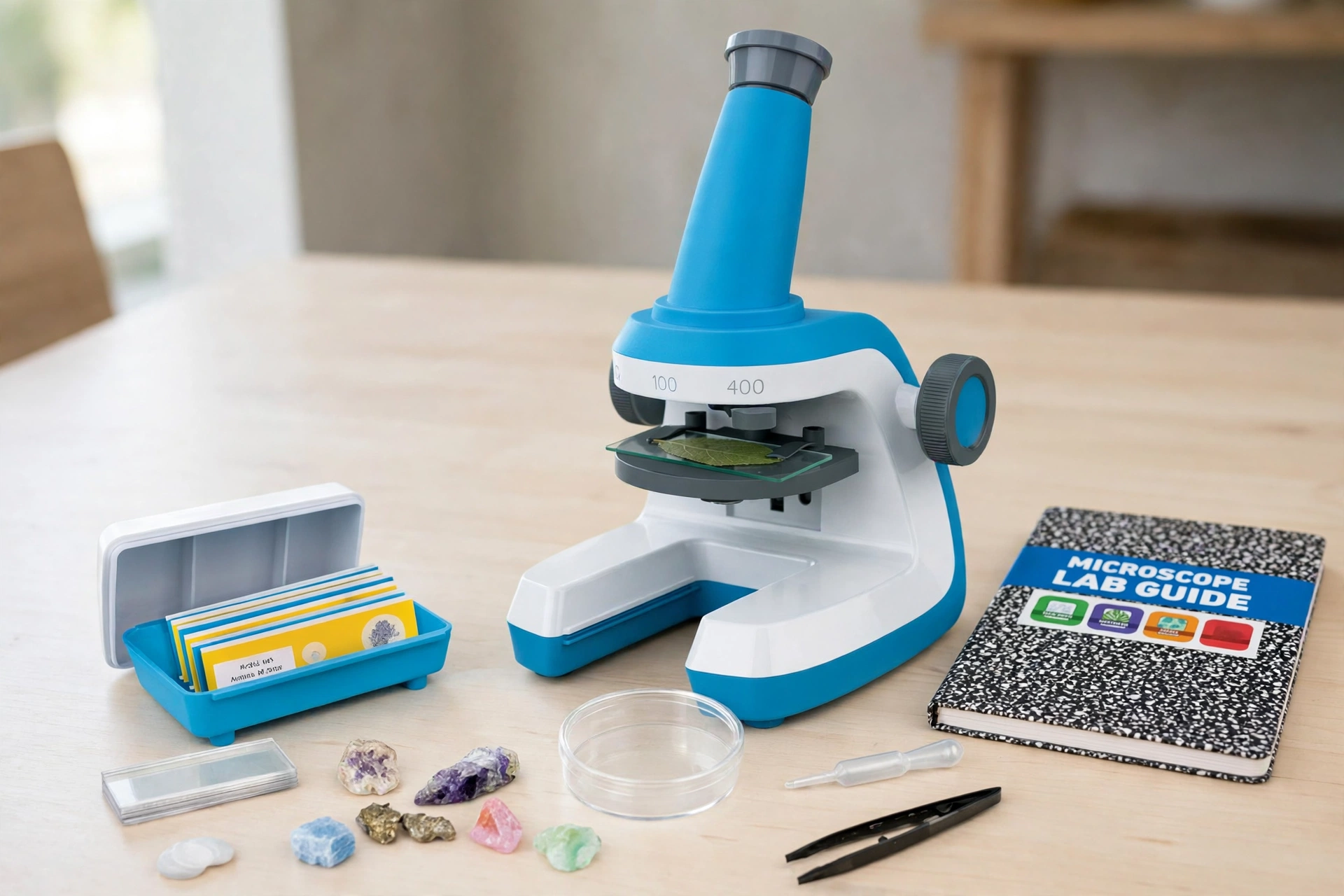
9. National Geographic Dual LED Kids Microscope
👍 Pros
- [’40x to 400x zoom with two LED lights’
- ‘Prepared slides get a child started in minutes’
- ‘A sturdy case keeps 37 pieces together’]
👎 Cons
- [‘About $80
- The priciest pick in this guide’
- ‘Focusing takes patience the first few times’]
Specifications
| Spec | Details |
|---|---|
| Age | 8-12 |
| Zoom | 40x, 100x, and 400x |
| Contents | 37 pieces, 6 prepared slides, 6 blank slides, storage case |
| Players | 1 |
For a ten-year-old who keeps asking what things look like up close, National Geographic Dual LED Kids Microscope magnifies from 40x to 400x and comes with 37 pieces, including prepared slides. The child puts a leaf, a hair, or a drop of pond water under the lens and sees a world that is invisible without it. The dual LED lights from above and below, so slides and solid objects both work. It costs about $80, and it is the one splurge in this guide worth the price for the child who keeps asking how things work. The case holds every slide and lens.
Safety: Glass slides are breakable: handle them on a table and store them in the case.
Best Rocks and Volcanoes

👍 Pros
- [‘100-plus activities across volcanoes
- Crystals
- Gems’
- ‘Ten real rock specimens to keep and study’
- ‘The guide explains the geology behind every activity’]
👎 Cons
- [‘Messy: best run on a tray or outside’
- ‘Adult supervision needed for the volcano
- The dig’]
Specifications
| Spec | Details |
|---|---|
| Age | 8+ |
| Activities | 100+ (15 in the box, 85 in the guide) |
| Contents | Volcano eruption, crystal growing, gemstone dig, tornado tubes, 10 rock specimens |
| Players | 1+ |
National Geographic Earth Science Kit packs 100-plus activities into one box: a volcano, a gemstone dig, crystal growing, and ten rock specimens. The child erupts a volcano, digs out a gemstone, grows a crystal, and studies ten real rock specimens. It costs about $40, and it is the best earth science kit here for a child who likes rocks, weather, and the planet. The guide covers 85 more activities, so the kit lasts well past the first weekend. Adult supervision stays on for the messy steps.
Safety: Adult supervision required. Run the volcano outdoors or over a tray.
Build, Wire, and Code It
These seven picks are the making and engineering shelf. Each one has a real payoff: a circuit that works, a robot that draws, a car with a moving engine, a creature that walks. That payoff is exactly what keeps a ten-year-old focused through a long build.
Best Electronics
Best for: Building something that actually works
11. Snap Circuits 203 Electronics Exploration Kit
👍 Pros
- [‘200-plus projects with a clear
- Colorful manual’
- ‘Snap-together parts: no soldering
- No loose wires’
- ‘Real circuits that teach how electronics work’]
👎 Cons
- [‘Needs 3 AA batteries
- Not included’
- ‘Some projects need patience to seat the parts flat’]
Specifications
| Spec | Details |
|---|---|
| Age | 8+ |
| Projects | 200+ |
| Contents | 42 parts, full-color manual |
| Batteries | 3 AA, not included |
Snap Circuits 203 Electronics Exploration Kit is the electronics kit teachers actually use, with 200-plus projects and 42 snap-together parts, and the specs below show why. The child snaps parts onto a base grid and builds a working doorbell, a radio, a flying saucer launcher, and a light that reacts to sound. The parts click, so there is no soldering and no loose wires. It costs about $38 to $46, and it is the best electronics pick in this guide. A ten-year-old who finishes it is ready for the bigger SC-300.
Safety: Batteries: use the size shown on the box. No mains power, no soldering.
Best Coding Robot
👍 Pros
- [‘Code shows up as a drawing
- So mistakes are visible’
- ‘Grows from drag-and-drop to typed JavaScript and Python’
- ‘Four washable markers included
- So art is part of the play’]
👎 Cons
- [‘Needs a phone
- Tablet
- Or computer’ and ‘Needs 4 AA batteries and not included’]
Specifications
| Spec | Details |
|---|---|
| Age | 7+ |
| Coding | Drag-and-drop, then JavaScript and Python |
| Contents | Coding robot, 4 washable markers, quick-start guide |
| Needs | Phone, tablet, or computer |
| Details | 4 AA batteries |
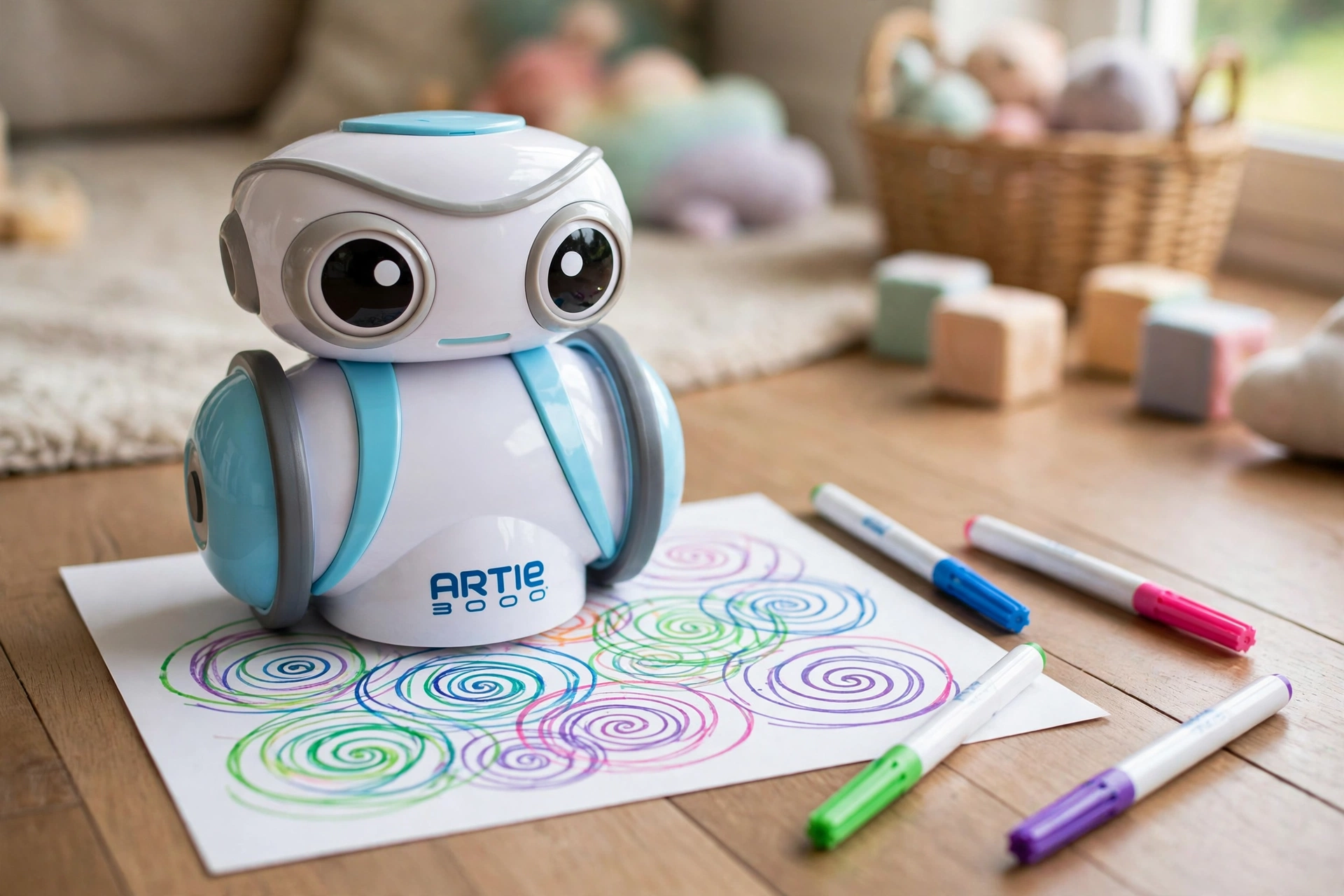
If the best robot learning toy is what you want, Educational Insights Artie 3000 is it. The child drags code blocks on a tablet and Artie draws the result on paper. A wrong angle shows up as a wonky line, so debugging feels like fixing a drawing, not fixing homework. It starts with blocks and grows into typed JavaScript and Python, so a beginner and a child who has coded before both find a level. It costs about $39 to $50, and it needs a phone, tablet, or computer to run.
Safety: Use washable markers on paper only. Keep the robot away from water.
Best Builder
👍 Pros
- [‘806 pieces with a moving V10 engine and steering’
- ‘A display model a ten-year-old is proud to keep’
- ‘Teaches real mechanical thinking: gears
- Axles
- Steering’]
👎 Cons
- [‘About $50
- One of the pricier builds here’
- ‘A long build: best spread over several sittings’]
Specifications
| Spec | Details |
|---|---|
| Age | 9+ |
| Pieces | 806 |
| Contents | V10 engine with moving pistons, steering, opening doors |
| Size | About 11 inches long when built |
Meet the LEGO Technic Lamborghini Huracan Tecnica 42161: an 806-piece build with a working V10 engine, steering, and opening doors. The child builds a supercar that actually steers and whose engine pistons move. It is the most grown-up build in this guide, and a ten-year-old who finishes it has built a model that looks and works like the real car. It costs about $50, and it suits the child who is ready to leave simple brick builds behind. The finished car is about 11 inches long, so it needs shelf space.
Safety: Small pieces: keep them away from younger siblings.
Best After Snap Circuits 203

👍 Pros
- [‘300-plus projects
- The most in any Snap Circuits set here’
- ‘A clear manual a ten-year-old can follow alone’
- ‘Builds real electronics understanding
- Project by project’]
👎 Cons
- [‘Needs 4 AA batteries
- Not included’
- ‘The larger set costs more than the 203’]
Specifications
| Spec | Details |
|---|---|
| Age | 8+ |
| Projects | 300+ |
| Contents | 60+ parts, full-color manual |
| Batteries | 4 AA, not included |
Snap Circuits Classic SC-300 leads this list as the big Snap Circuits set, with 300-plus projects and 60-plus parts. The child builds everything from a light switch to an AM radio. The manual is clear enough for a ten-year-old to follow alone, and the parts snap together with no soldering. It costs about $40 to $70 depending on the bundle, so buy the 203 first if the budget is tight, and buy the SC-300 when a child finishes the smaller set and asks for more.
Safety: Batteries: use the size shown on the box. No mains power, no soldering.
Best for Inventors

👍 Pros
- [‘Turns any object into a controller
- So ideas come first’
- ‘Teaches circuits through play
- Not through a worksheet’
- ‘Works with free games and music apps online’]
👎 Cons
- [‘Needs a computer with USB’
- ‘Open-ended: a child who wants instructions may feel stuck’]
Specifications
| Spec | Details |
|---|---|
| Age | 8+ |
| Contents | Makey Makey board, USB cable, alligator clips |
| Needs | Computer with USB |
Makey Makey turns everyday objects into computer keys: a banana becomes a space bar, a bowl of water becomes a drum. That is why it is on this list. The child clips the board to a banana, a pencil drawing, or a cup of water, then plays a game or makes music with it. It costs about $50, and it is the most inventive kit in this guide: there is no fixed project, only the child’s own ideas. A ten-year-old who likes to tinker gets more from it than a child who wants step-by-step instructions.
Safety: Use food-safe objects only. Keep the board dry and away from water.
Best LEGO That Moves
👍 Pros
- [‘Eight moving creatures from one box’
- ‘The book explains gears and motion in plain words’
- ‘Papercraft parts add a second kind of making’]
👎 Cons
- [‘Papercraft parts tear if handled roughly’
- ‘A younger sibling can undo a build fast’]
Specifications
| Spec | Details |
|---|---|
| Age | 8-12 |
| Contents | 62 LEGO elements, 64-page book, 8 kinetic creature builds, papercraft |
| Players | 1 |
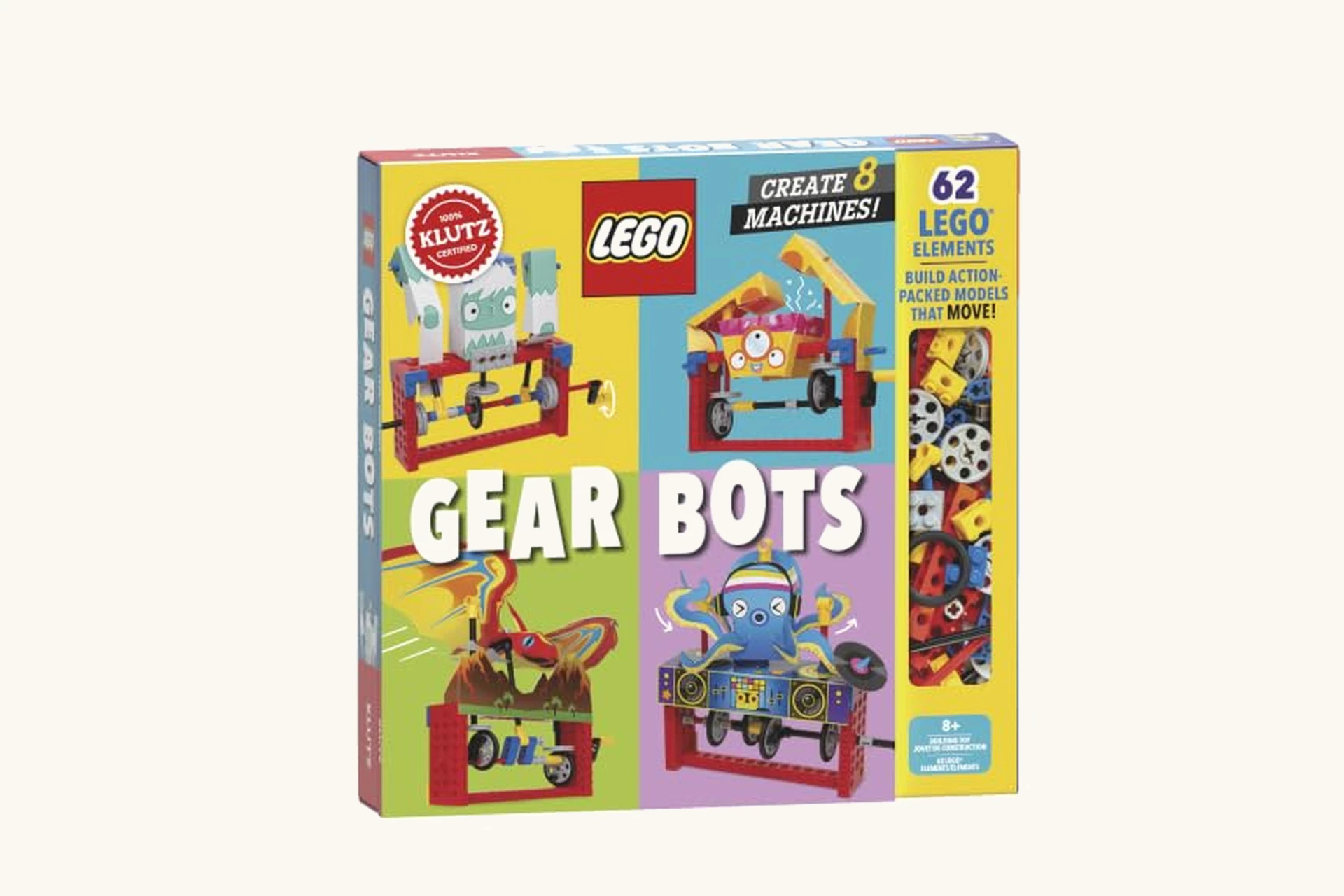
Klutz LEGO Gear Bots builds eight creatures that actually move, from 62 LEGO elements and a 64-page book. That is why it is on this list. The child follows the book to build a creature, then turns a crank and watches it walk, waddle, or flap. The gears are the lesson: a ten-year-old sees how teeth and axles turn a spin into a step. It costs about $25, and it is the best screen-free robot-style build for a child who likes LEGO but wants something that moves.
Safety: Small LEGO pieces: keep them away from younger siblings.
Best First Electronics

👍 Pros
- [‘100-plus projects with a picture-led manual’
- ‘The cheapest way into Snap Circuits’
- ‘A good starter before the bigger sets’]
👎 Cons
- [‘Needs 2 AA batteries
- Not included’
- ‘A ten-year-old may outgrow it fast’]
Specifications
| Spec | Details |
|---|---|
| Age | 8+ |
| Projects | 100+ |
| Contents | 30 parts, full-color manual |
| Batteries | 2 AA, not included |
Snap Circuits Jr. SC-100 is the starter electronics kit, with 100-plus projects from 30 snap-together parts, and the specs below show why. The child builds a doorbell, a light, and a fan from parts that click onto a grid. The manual uses pictures more than words, so a ten-year-old works through it alone. It costs about $30, and it is the right first Snap Circuits set for a child who is not sure about electronics yet. Buy the 203 or the SC-300 when they finish it.
Safety: Batteries: use the size shown on the box. No mains power, no soldering.
Strategy Board Games for Family Night
These four games teach the social side of thinking: planning against a real opponent, negotiating, and losing gracefully. They suit a ten-year-old who is ready for real strategy, and they play best with the whole family at the table.
Best Family Strategy Game
👍 Pros
- [‘The maze changes every turn
- So no two games play alike’
- ‘Teaches planning against a real opponent’
- ‘Short enough for a school-night game’]
👎 Cons
- [‘Younger players may need help with the shifting maze’
- ‘The box is large for a travel game’]
Specifications
| Spec | Details |
|---|---|
| Age | 7+ |
| Players | 2-4 |
| Contents | Game board, 34 maze cards, 24 treasure cards |
| Time | 20 to 30 minutes |
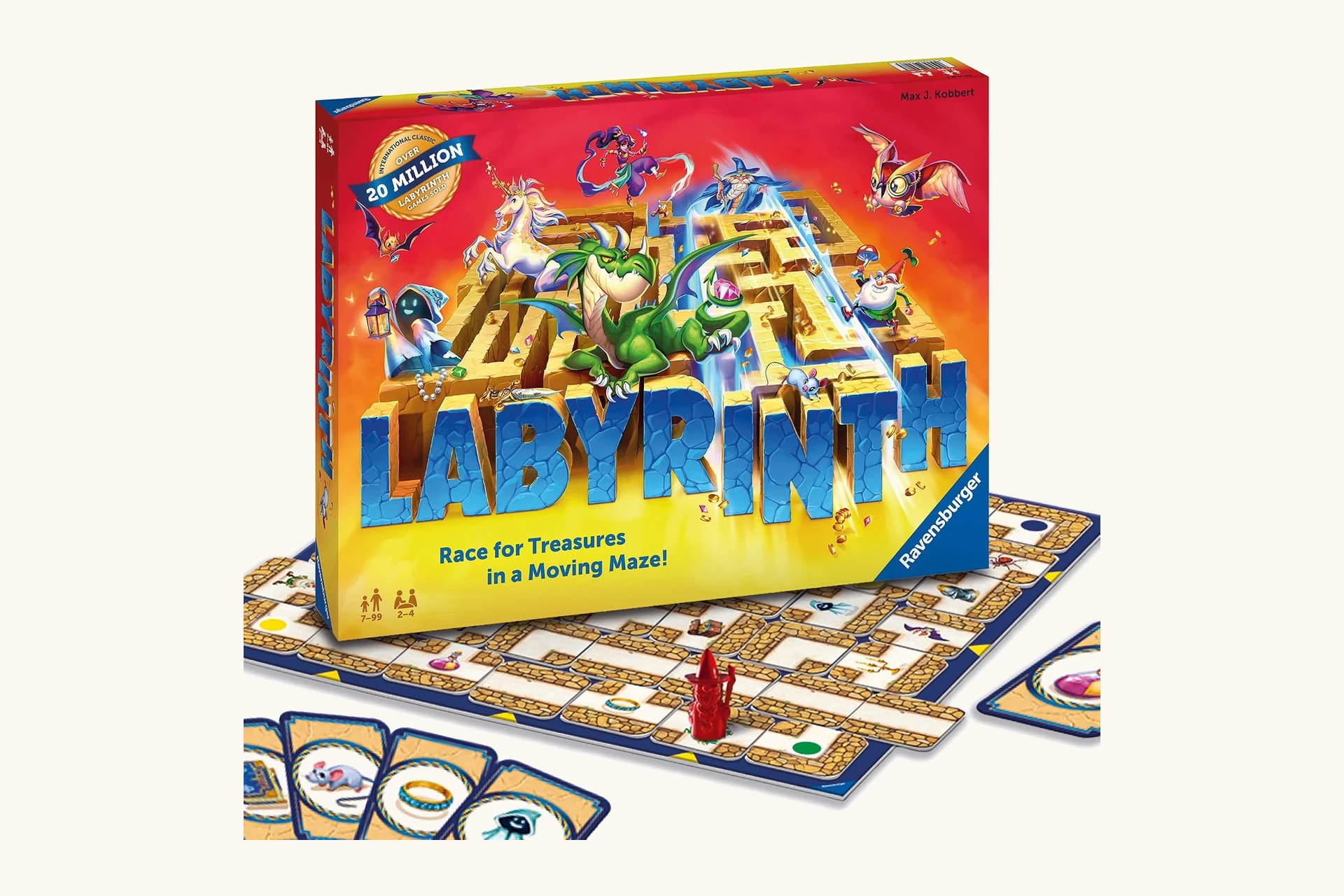
Planning ahead is the only way to win. No other pick on this list does it quite like Ravensburger Labyrinth. Each player pushes a tile into the maze, slides the paths, and races to collect treasures. The board changes on every turn, so a ten-year-old must re-plan constantly. It costs about $20 to $28, it plays in 20 to 30 minutes, and it works for two to four players. It is the best family strategy game in this guide for a ten-year-old who is ready for real tactics.
Safety: Small treasure cards: keep them together in the box.
Best Marble Run
👍 Pros
- [‘120-plus pieces with open-ended track design’
- ‘Teaches gravity
- Speed
- Magnets through play’
- ‘Expansion sets add pieces as the child grows’]
👎 Cons
- [‘About $40 to $60
- A mid-range price’
- ‘Marbles roll away and need a contained space’]
Specifications
| Spec | Details |
|---|---|
| Age | 8+ |
| Contents | 120+ pieces, 6 balls, construction booklet |
| Players | 1+ |
Is a marble run with 120-plus pieces that teaches gravity and magnets through building. That is Ravensburger GraviTrax Starter Set. The child builds a track from hexagonal tiles, curves, and height stones, then releases a ball and watches it roll, drop, and speed up. The booklet teaches the physics in plain words, and the open system invites a ten-year-old to design their own track. It costs about $40 to $60, and it is the best marble run in this guide for a child who loves to build and test.
Safety: Marbles are small: keep them away from younger siblings.
Best First Trading Game
👍 Pros
- [‘Real trading and planning in a 30-minute game’
- ‘Pirate theme that ten-year-olds love’
- ‘A gentle step toward the full Catan’]
👎 Cons
- [‘A ten-year-old may outgrow it in a year or two’
- ‘Some luck in the dice rolls’]
Specifications
| Spec | Details |
|---|---|
| Age | 6+ |
| Players | 2-4 |
| Contents | Pirate island board, 4 pirate ships, resource tiles |
| Time | About 30 minutes |
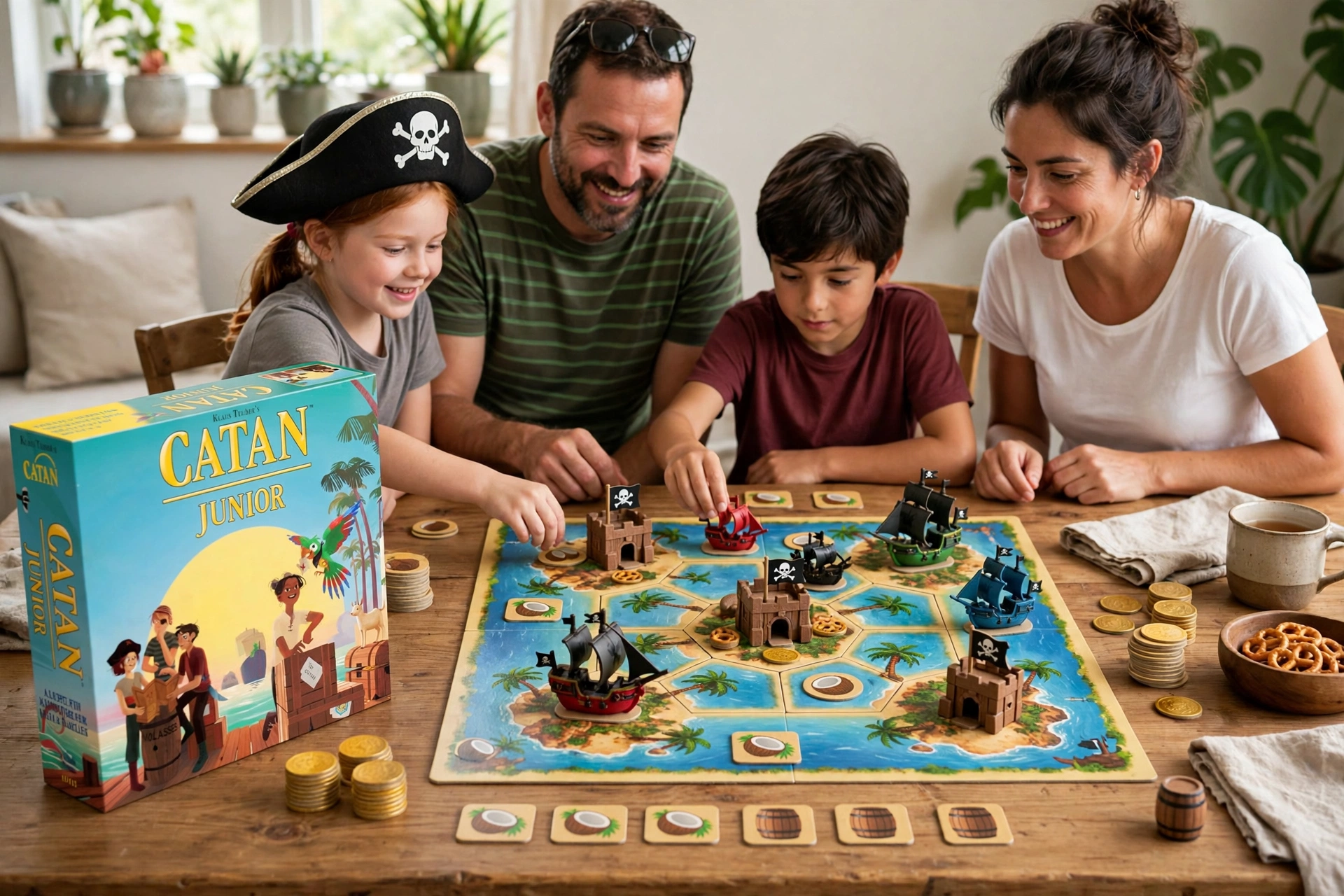
Catan Junior is the pirate version of Catan, simplified for younger players and still strategic enough for a ten-year-old, and the specs below show why. Players build pirate hideouts, trade resources, and race to control the island. The rules are simpler than full Catan, so a ten-year-old learns trading and planning without a long rulebook. It costs about $25 to $35, it plays in about 30 minutes, and it is the best first trading game for a family that wants to move beyond luck-based games.
Safety: Small pieces: keep them away from younger siblings.
Best Trains and Maps

👍 Pros
- [‘Simple rules
- So the first game starts fast’
- ‘Teaches route planning and set collection’
- ‘Short enough for a school-night game’]
👎 Cons
- [‘A ten-year-old may outgrow it
- Want the full game’
- ‘Some luck in the card draws’]
Specifications
| Spec | Details |
|---|---|
| Age | 6+ |
| Players | 2-4 |
| Contents | Game board, train pieces, ticket cards |
| Time | 15 to 30 minutes |
It teaches route planning in 15 to 30 minutes; that is what makes Ticket to Ride: First Journey the beginner version of the train game. Players collect train cards and claim routes across the country, racing to finish their tickets first. The rules are simple, the board is bright, and a ten-year-old plans routes several turns ahead. It costs about $25 to $35, and it is the best first Ticket to Ride for a family that wants a game everyone can play on the first night.
Safety: Small train pieces: keep them away from younger siblings.
Creativity and Puzzle Play
These four picks turn pattern, color, and bricks into play. The Rubik’s Cube has one solution and 43 quintillion wrong turns. Spirograph turns math into art. LEGO Classic turns a pile of bricks into anything a ten-year-old can picture.
Best Puzzle with a Real Payoff
👍 Pros
- [‘One solution
- 43 quintillion wrong turns: a real challenge’
- ‘About $10 to $15
- The cheapest classic here’
- ‘A skill a ten-year-old can show off for years’]
👎 Cons
- [‘Hard to solve without learning a method’
- ‘Stickers can peel with heavy use’]
Specifications
| Spec | Details |
|---|---|
| Age | 8+ |
| Combinations | 43 quintillion |
| Contents | 1 cube, 6 sides, 9 squares per side |
| Players | 1 |
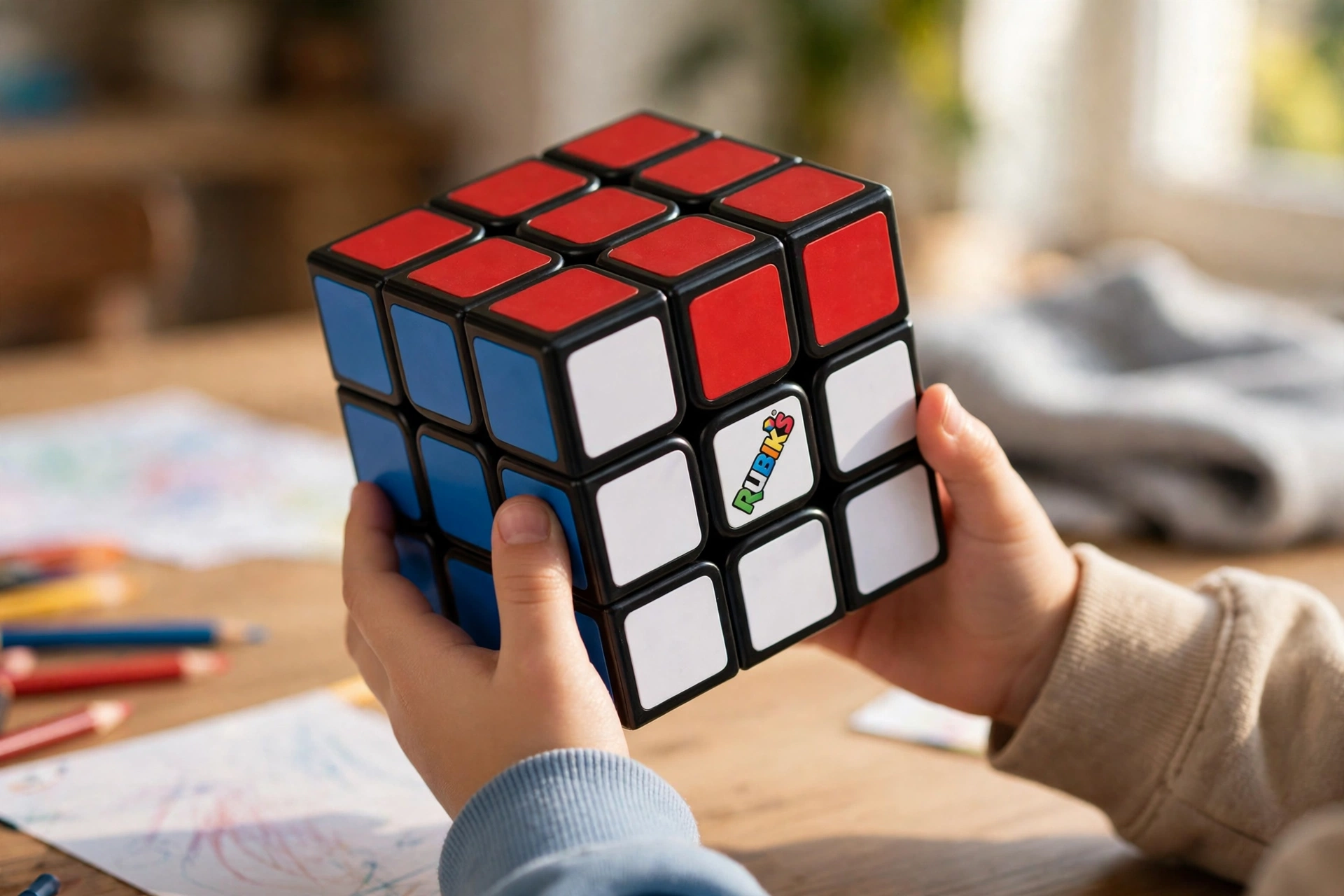
Rubik’s Cube Original 3×3 leads this list as the classic puzzle every ten-year-old should try once. The Rubik’s Cube has 43 quintillion combinations and one solution. The child twists the cube to match each side to one color. It takes most children days to solve it the first time, and the method they learn (solve a layer, then the next) is the same layered thinking that coding and math use. It costs about $10 to $15, it fits in a pocket, and the current edition turns smoothly without catching.
Safety: No small parts to lose: the cube stays in one piece.
Best Art and Math
👍 Pros
- [‘Turns geometry into art a child can hang up’
- ’19 wheels mean endless patterns’
- ‘Quiet
- Calm
- Screen-free’]
👎 Cons
- [‘Pens
- Paper are consumables’
- ‘The first patterns take practice to keep steady’]
Specifications
| Spec | Details |
|---|---|
| Age | 8+ |
| Contents | 19 wheels, 2 rings, pens, 75+ pieces |
| Players | 1+ |
For a ten-year-old who loves art and patterns, the Spirograph Deluxe Set turns geometry into art, with 19 wheels and 75-plus pieces for about $20 to $30. The child places a wheel inside a ring, puts a pen through a hole, and spins a perfect geometric pattern. Change the wheel, change the pattern. It costs about $20 to $30, and it is the best art-and-math pick in this guide: a ten-year-old learns symmetry and pattern while making something worth hanging on the wall.
Safety: Pens stain clothes: use them at a table with an old shirt.
Best Building from Imagination
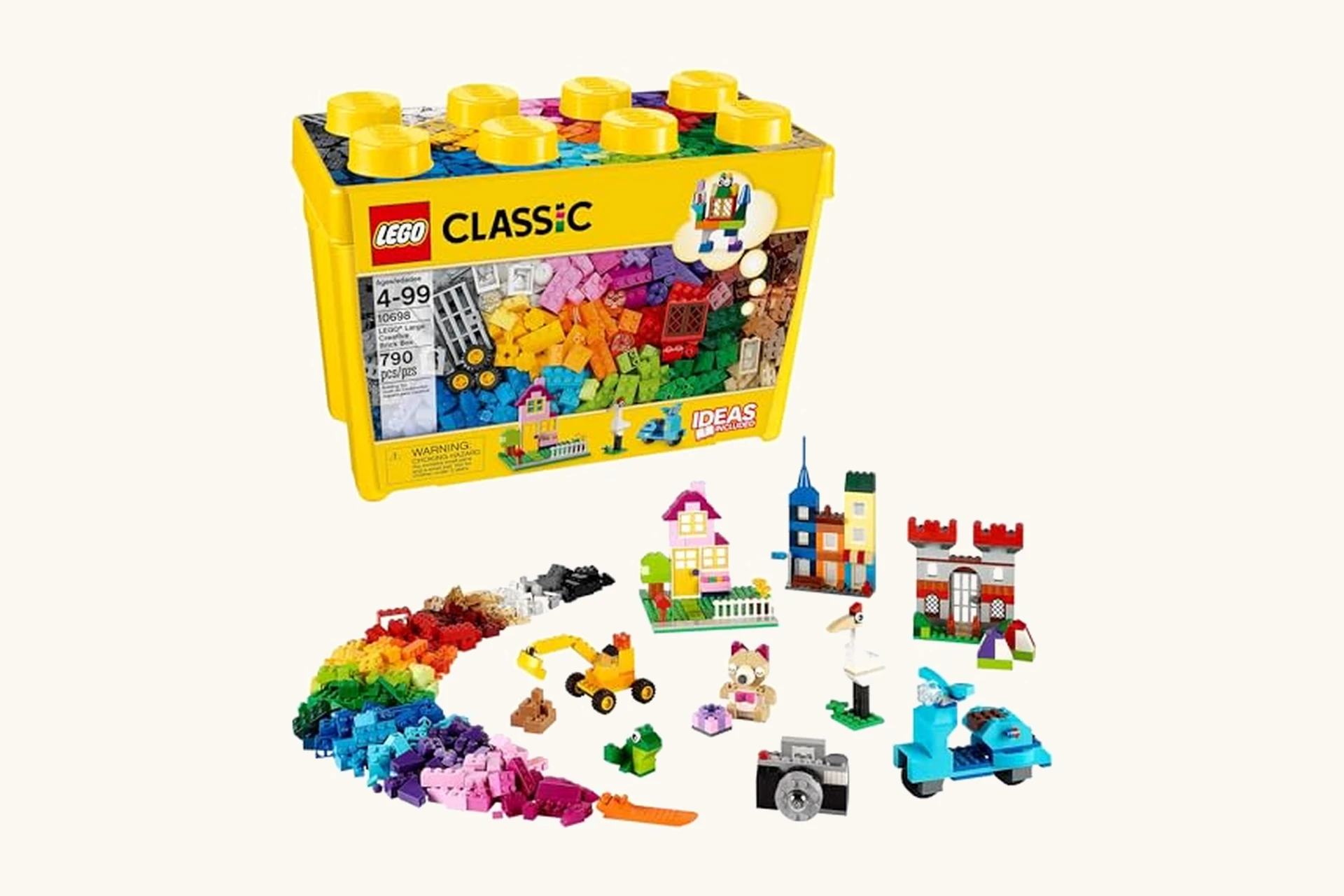
Best for: Building from imagination, not from a manual
24. LEGO Classic Large Creative Brick Box 10698
👍 Pros
- [‘790 pieces in 33 colors for open-ended building’
- ‘Windows
- Doors
- Wheels included for fast builds’
- ‘A box a ten-year-old returns to for years’]
👎 Cons
- [‘About $50 to $70
- A mid-range price’
- ‘No instructions: a child who wants a guided build should pick a themed set’]
Specifications
| Spec | Details |
|---|---|
| Age | 4+ |
| Pieces | 790 |
| Contents | 33 colors, 8 windows and doors, 2 baseplates, 6 tires, 1 green baseplate |
| Players | 1+ |
For a ten-year-old who builds from imagination, not from a manual, LEGO Classic Large Creative Brick Box 10698 gives a ten-year-old 790 pieces in 33 colors and no instructions to follow. The child builds whatever they picture: a house, a car, a creature, a city. The box includes windows, doors, wheels, and two baseplates, so the first build starts fast. It costs about $50 to $70, and it is the best open-ended LEGO set in this guide. A ten-year-old uses it for free building, stop-motion sets, and display models.
Safety: Small pieces: keep them away from younger siblings.
Best for Animal Lovers

👍 Pros
- [‘Three builds from one set
- So the play repeats’
- ‘About $20
- The best value LEGO set here’
- ‘Bright colors that look great on a shelf’]
👎 Cons
- [‘Only one animal can stand at a time’
- ‘A ten-year-old may finish it in one sitting’]
Specifications
| Spec | Details |
|---|---|
| Age | 7+ |
| Pieces | 253 |
| Contents | Builds a parrot, a frog, or a fish from one pile |
| Players | 1 |
For a ten-year-old animal lover who likes a guided build, LEGO Creator 3-in-1 Exotic Parrot 31136 builds three animals from one pile of 253 pieces: a parrot, a frog, or a fish. The child builds the parrot first, then takes it apart and builds the frog, then the fish. One set, three builds, and a lesson in how the same pieces make different things. It costs about $20, and it is the best value LEGO set in this guide for a ten-year-old who likes animals and guided builds.
Safety: Small pieces: keep them away from younger siblings.
What Makes a Great Educational Toy for a 10-Year-Old?
A great toy for ten hands over a real problem. A logic game with one right answer, a circuit that either works or does not, a chemistry experiment with a visible result. The child does the thinking. A toy that performs for the child teaches nothing, and a ten-year-old spots the difference fast.
Look for a challenge that grows. Gravity Maze starts easy and ends genuinely hard. Snap Circuits SC-300 starts with a light switch and ends with an AM radio. A toy with 60 challenges or 300 projects lasts months, while a toy with one trick lasts a weekend. Count the challenges before you count the price.
Check the age label, then check the child. Most picks here carry an 8+ label, which fits a ten-year-old well. A few carry 6+ or 7+, which means a ten-year-old will master them fast and use them as a warm-up, not a main event. The label is a floor, not a ceiling, and interest matters more than the number on the box.
Best Educational Toys for a 10-Year-Old Boy and Girl
Boys and girls at ten love the same educational toys. Pick by what the child already loves, not by a label. A boy who loves space fits the Earth Science Kit. A girl who loves space fits the same kit. Interest beats the label every time, and the best educational toys for 10 year old boys are the same as the best educational toys for a 10 year old girl: the ones that match what the child already wonders about.
The best educational toys for 10 year old boy picks in this guide include Gravity Maze, the LEGO Technic Lamborghini, Snap Circuits, and GraviTrax. Cars, circuits, and marble runs carry those picks. The best educational toys for 10 year old girl picks include the National Geographic chemistry set, Artie 3000, Spirograph, and the LEGO Creator parrot. Color, crystals, code, and pattern carry those picks. Every toy in this guide works for any child who loves what it does.
When a giver wants a gendered touch, pick a color of the box, not a different toy. A pink or blue box holds the same challenges inside. The toy matters; the box color does not. Ask the child what they are curious about, then buy the toy that answers it.
Best Robot Learning Toy for a 10-Year-Old
The best robot learning toy for 10 year old children is Artie 3000. It draws what the child programs, so a wrong angle shows up as a wonky line on paper. That visible feedback is the lesson: code has consequences, and debugging is just fixing the drawing. It starts with drag-and-drop blocks and grows into typed JavaScript and Python, so a beginner and a child who has coded before both find a level.
Makey Makey is the runner-up for a child who likes invention more than drawing. It turns a banana, a bowl of water, or a pencil drawing into a computer key. A ten-year-old builds a controller from kitchen objects, then plays a game with it. It needs a computer, and it rewards a child who likes to tinker.
Klutz LEGO Gear Bots and Snap Circuits build the robot habit without a screen. Gear Bots builds eight kinetic creatures from LEGO elements and a book. Snap Circuits builds working electronics from snap-together parts. Both teach the same lesson as a robot kit: follow the steps, test the result, fix what fails. A child who finishes these is ready for a real robotics kit next birthday.
Best Developmental Toys for a 10-Year-Old
The best developmental toys for a 10 year old build executive function: planning, patience, and working memory. Logic games build planning. Long builds build patience. Science kits build working memory, since a child must hold the steps in mind while the experiment runs. Every pick in this guide names the skill it builds, so a parent can match the toy to the skill the child is working on.
Strategy board games build the social side of development. Labyrinth, Catan Junior, and Ticket to Ride First Journey teach turn-taking, negotiation, and losing gracefully. A ten-year-old who can lose a game without a meltdown has learned something no worksheet teaches. Family game night is developmental play with the volume turned up.
Creativity picks build the third leg: imagination with structure. Spirograph turns geometry into art. LEGO Classic turns a pile of bricks into anything. The Rubik’s Cube turns pattern into a puzzle with one solution. A ten-year-old needs all three kinds of play: logic, science, and making things, and this guide covers all three.
Buying Guidance for 2025 and 2026, Including the UK, the US, and Australia
Picks for 2025 and 2026 share the same test. Does it hand the child a real problem, does the challenge grow, and does the child already care about the subject? The 2025 and 2026 sets in this guide are the current editions: LEGO Technic 42161, Snap Circuits 203, the National Geographic Mega Science kits, and the current Rubik’s Cube. Check the listing for the edition before you buy, since bundles change across years.
Families in the United States, the United Kingdom, and Australia buy the same toys, with local prices varying by country. Gravity Maze costs about $20 to $28 in the US and about 20 to 25 pounds in the UK. Kanoodle costs about $11 in the US and about 10 pounds in the UK. The LEGO Technic Lamborghini costs about $50 in the US and about 43 pounds in the UK. Check the local listing before you buy, since the price and the stock vary.
Budget for one strong pick, not five weak ones. The best value here is under $15: Kanoodle at about $11 and the IQ Puzzler Pro at about $13. The $20 to $40 range (Gravity Maze, Rush Hour, Circuit Maze, Snap Circuits 203, Artie 3000, the chemistry sets, and the LEGO Technic car) is where most generous birthday gifts land. The one splurge worth it is the National Geographic microscope at about $80, for the child who keeps asking how things work.
Keep the screen time honest. Artie 3000 and Makey Makey need a screen to run, and that is fine: the screen is a tool, not the toy. The rest of this guide is screen-free. A ten-year-old gets the most from a mix: one coding toy with a screen, and the rest hands-on. Set the batteries aside in one box, keep small parts away from younger siblings, and supervise the chemistry sets and the geodes kit, since both involve real chemicals and real rock dust.
How Many Educational Toys Does a 10-Year-Old Need?
Three strong picks cover a ten-year-old well. One logic game, one science kit, and one build or code toy. That mix covers planning, method, and making, and it costs less than a shelf of single-trick toys. Add a board game for family night and the set is complete.
Let the child choose the subject. A ten-year-old who picks their own kit finishes it. A kit chosen for them gathers dust. Show them this guide, let them point, and buy the one they point at. The second pick can wait for the next birthday.
Retire a toy when the child outgrows its challenge. Pass it on to a younger cousin or a classroom. Logic games and science kits hold their value in parent groups. Keep the manuals and the small parts together, since a missing tower or a lost marble ends the play.
Shop This Post
| Product | Name | Used For | Shop |
|---|---|---|---|
|
ThinkFun Gravity Maze | A single-player logic game that teaches a ten-year-old to plan several moves ahead. | Check Price |
|
ThinkFun Rush Hour | Slide the traffic, free the red car, and think three moves ahead. | Check Price |
|
ThinkFun Circuit Maze | Place the tokens, complete the circuit, and light the beacons. | Check Price |
|
Kanoodle 3D Brain Teaser Puzzle | 200-plus puzzles in a pocket-sized case for about $11. | Check Price |
|
SmartGames IQ Puzzler Pro | 120 challenges in a pocket, from flat grids to 3D pyramids. | Check Price |
|
Crayola Color Chemistry Set | 50 experiments where color changes and fizz teach real chemistry. | Check Price |
|
National Geographic Amazing Chemistry Set | 100-plus experiments with crystals, glowing worms, and real reactions. | Check Price |
|
National Geographic Break Open 10 Premium Geodes | Ten real geodes to crack open, each hiding crystals inside. | Check Price |
|
National Geographic Dual LED Kids Microscope | A real microscope with 40x to 400x zoom and slides to start with. | Check Price |
|
National Geographic Earth Science Kit | A volcano, a gemstone dig, and 100-plus earth science activities. | Check Price |
|
Snap Circuits 203 Electronics Exploration Kit | 200-plus working circuits from 42 snap-together parts. | Check Price |
|
Educational Insights Artie 3000 | A robot that draws what you code, from blocks to real Python. | Check Price |
|
LEGO Technic Lamborghini Huracan Tecnica 42161 | 806 pieces, a moving V10 engine, and a supercar that steers. | Check Price |
|
Snap Circuits Classic SC-300 | 300-plus projects from a snap-together electronics kit. | Check Price |
|
Makey Makey Classic | Turn a banana into a game controller with a real circuit board. | Check Price |
|
Klutz LEGO Gear Bots | Eight kinetic creatures built from LEGO gears and a book. | Check Price |
|
Snap Circuits Jr. SC-100 | 100-plus circuits from a starter kit a child can follow alone. | Check Price |
|
Ravensburger Labyrinth | A shifting maze, four players, and a race for treasure. | Check Price |
|
Ravensburger GraviTrax Starter Set | A marble run that teaches gravity with 120-plus pieces. | Check Price |
|
Catan Junior | A pirate trading game that teaches planning in 30 minutes. | Check Price |
|
Ticket to Ride: First Journey | Claim routes, collect cards, and race across the country. | Check Price |
|
Rubik’s Cube Original 3×3 | 43 quintillion combinations, one solution, and a skill for life. | Check Price |
|
Spirograph Deluxe Set | Geometry you can hang on the wall, from 19 wheels and a pen. | Check Price |
|
LEGO Classic Large Creative Brick Box 10698 | 790 bricks in 33 colors and no instructions to follow. | Check Price |
|
LEGO Creator 3-in-1 Exotic Parrot 31136 | One pile of bricks, three animals: parrot, frog, or fish. | Check Price |
Frequently Asked Questions
What are the best educational toys for a 10-year-old?
Gravity Maze is the top pick. It is a single-player marble logic game with 60 challenges that stay genuinely hard at the top end. For range, mix categories: a logic game (Gravity Maze or Rush Hour), a real science kit (the Crayola or National Geographic chemistry set, or a microscope), and something to build or code (Snap Circuits, the Artie coding robot, or a LEGO Technic set).
What are the best learning toys for 10 year olds who hate science?
Start with a logic game, not a science kit. Gravity Maze, Rush Hour, and Kanoodle teach the same skills as science (planning, testing, patience) without a single beaker. Once a child trusts their own problem solving, the chemistry set stops looking like school and starts looking like fun.
What is the best robot learning toy for a 10-year-old?
Artie 3000 is the best robot learning toy for a 10-year-old. It draws what the child programs, so wrong code shows up as a wonky drawing. It starts with drag-and-drop blocks and grows into typed JavaScript and Python. Makey Makey is the runner-up for a child who likes invention more than drawing.
What are the best developmental toys for a 10 year old?
Logic games, long builds, and strategy board games. Logic games build planning and working memory. Long builds like the LEGO Technic Lamborghini build patience. Strategy games like Labyrinth and Catan Junior build negotiation and losing gracefully. A mix of all three covers the skills a ten-year-old is developing fastest.
How much should I spend on educational toys for a 10-year-old?
About $20 to $40 buys the best value. Kanoodle costs about $11 and Gravity Maze and Rush Hour cost about $20 each, and all three last for years. The $30 to $40 range (Circuit Maze, Snap Circuits, the chemistry sets, the Artie robot, and the LEGO Technic car) is where most generous birthday gifts land. The one splurge worth it is the National Geographic microscope at about $80.
Are these toys good for a 10-year-old boy and a 10-year-old girl?
Yes. Every toy in this guide suits any ten-year-old who loves what it does. Pick by interest, not by the picture on the box. A boy who loves crystals fits the geodes kit. A girl who loves cars fits the LEGO Technic Lamborghini. The guide names boy and girl picks by interest, and the toys do not change with the child.
Which Snap Circuits kit is best for a 10-year-old?
Snap Circuits 203 is the best first Snap Circuits kit for ten. It covers 200-plus projects with 42 parts and a full-color manual, and it costs about $38 to $46. SC-300 adds 100 more projects and costs more, so buy it when a child finishes the 203 and asks for more. SC-100 is the budget starter for a younger sibling.
Is 10 too old for LEGO Classic?
No. Ten is a great age for open-ended LEGO. A ten-year-old uses the Large Creative Brick Box for free building, stop-motion sets, and display models, not just following instructions. The Creator parrot set adds a guided build with three creatures from one pile. For a harder build, step up to LEGO Technic.
What educational toys for 10 year olds work in the UK?
The same toys, bought from a UK listing. Gravity Maze, Kanoodle, the Rubik’s Cube, and LEGO Technic are all sold in the UK, with prices in pounds. The IQ Puzzler Pro comes from SmartGames, a European maker, and is easy to find in UK toy shops. Check the UK listing for the price and the stock before you buy.
What are the best educational toys for 10 year olds in 2025 and 2026?
The current editions of the classics. Gravity Maze, Rush Hour, Kanoodle, Snap Circuits 203, the National Geographic Mega Science kits, and LEGO Technic 42161 are the 2025 and 2026 editions in this guide. Check the listing for the edition and the age guidance before you buy, since bundles change across years.
Do these toys need batteries or a screen?
Most need neither. Two need a screen, and four need batteries. Artie 3000 and Makey Makey need a phone, tablet, or computer. Circuit Maze needs 3 AAA batteries, Snap Circuits 203 needs 3 AA batteries, SC-300 needs 4 AA batteries, and Artie 3000 needs 4 AA batteries. Everything else in this guide runs on hands alone.
What should I buy first if I can only buy one?
Buy Gravity Maze. It costs about $20 to $28, it fits in a backpack, it has 60 challenges from easy to expert, and it teaches the planning skill that every other toy in this guide builds on. Add a science kit second and a building toy third.
Keep Reading
More age guides and toy guides from MamaKinder, including the other educational toy ages and the board games and gifts that pair with this list.
Keep Reading
Ten is the year a child stops playing with toys and starts working with them. Pick the toy that matches what your child already wonders about, hand it over, and let the problem do the teaching.