66 Easter Activities for Kids: Hunts, Crafts & Sweet Spring Fun
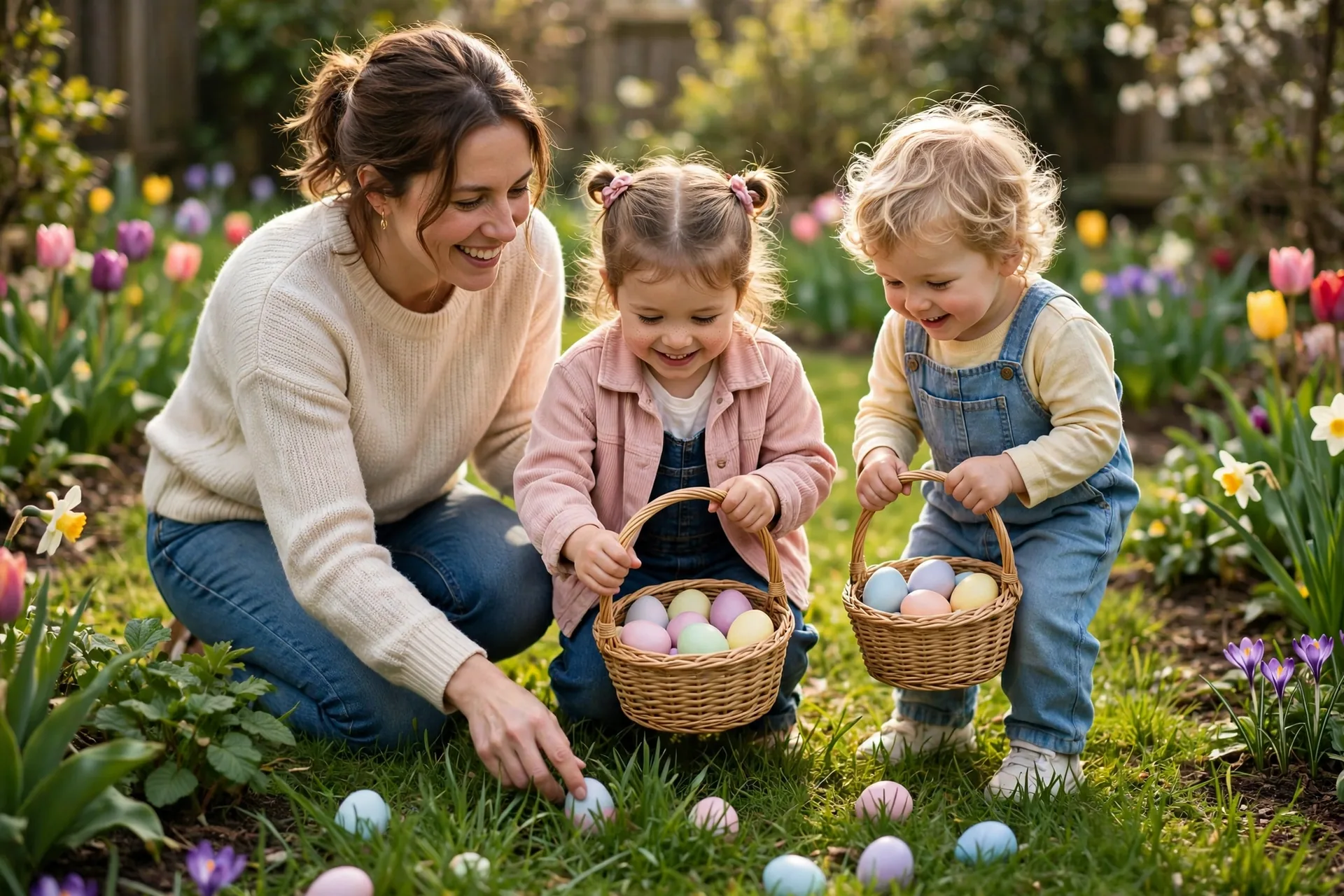
Easter has a way of sneaking up in our house. One week it’s snowing, the next the stores are wall-to-wall pastel and my 4-year-old is asking, daily, when the bunny is coming. Here’s the good news: kids don’t need a production. They need something to hunt, something to make, and something sweet at the end — and this guide has all three covered.
Inside are 66 Easter activities for kids: egg hunts with actual twists (not just “scatter and pray”), egg decorating that won’t destroy your kitchen, crafts that genuinely take 20 minutes or less, games for mixed ages, and a few slow, sweet finishes. Every idea carries an honest age mark — including which ones actually work with a 2-year-old, because I test these with my own 4- and 2-year-old, and the toddler reviews are not gentle. Pick three or four. That’s a whole Easter.
Heads up: this post contains affiliate links. If you buy through them, MamaKinder may earn a small commission at no extra cost to you — it helps keep these guides free.
Egg Hunts With a Twist
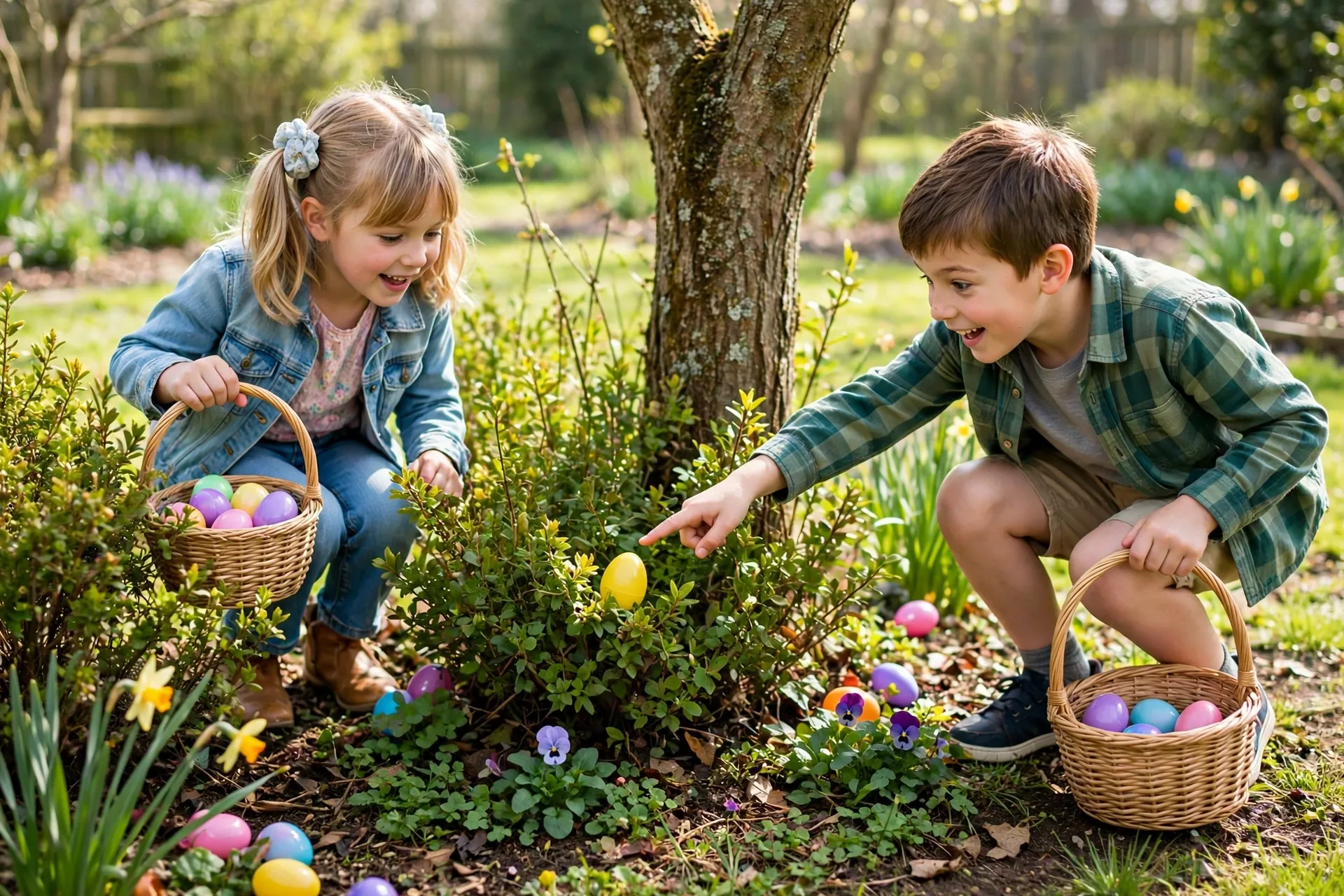
The classic hunt lasts about four minutes. These versions stretch it into the main event. One safety note before any hunt: fill eggs for kids under 3 with stickers, chunky crayons, or a few of their usual snacks — mini candies, jelly beans, and tiny toys are choking hazards for the littlest hunters. And if other families are joining, a quick “any nut allergies?” text before you fill the eggs makes you the hero of Easter.
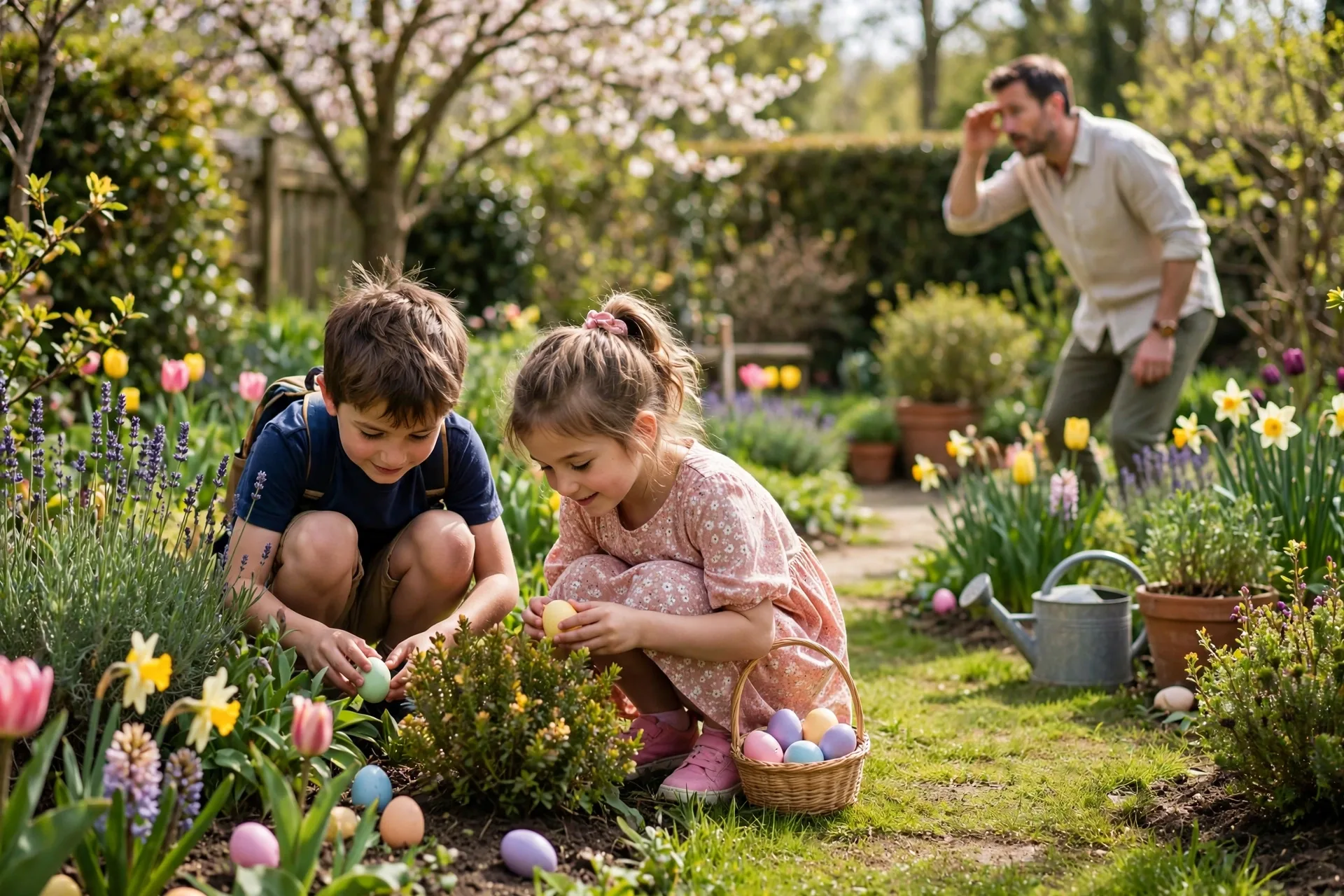
1. The classic backyard hunt, done fairly (ages 2+). Scatter most eggs in plain sight for the little kids, hide a handful properly for the older ones, and give toddlers a two-minute head start. That head start is the whole trick — by the time the big kids are released, the littles already have eggs in the basket and nobody’s crying into the tulips.
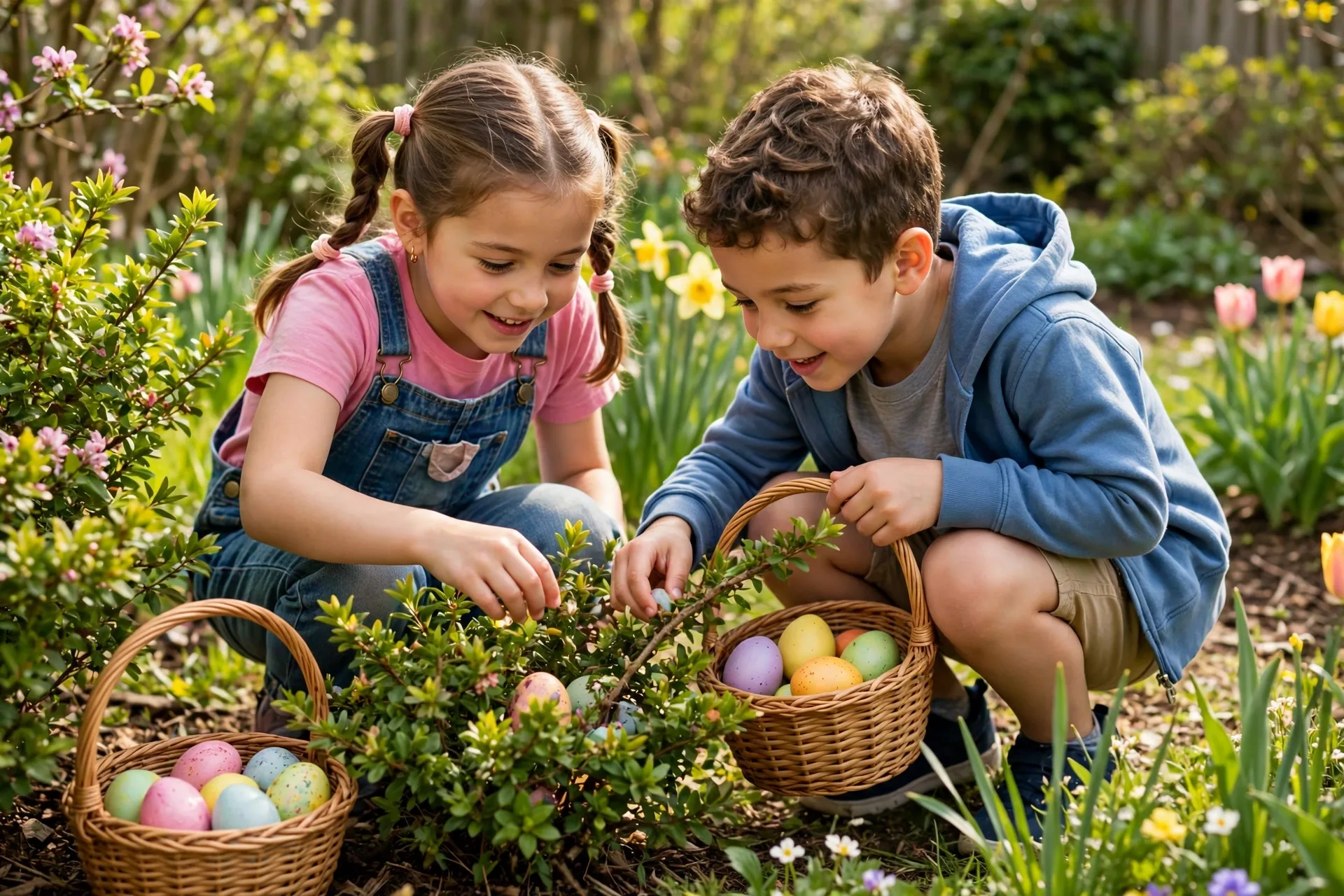
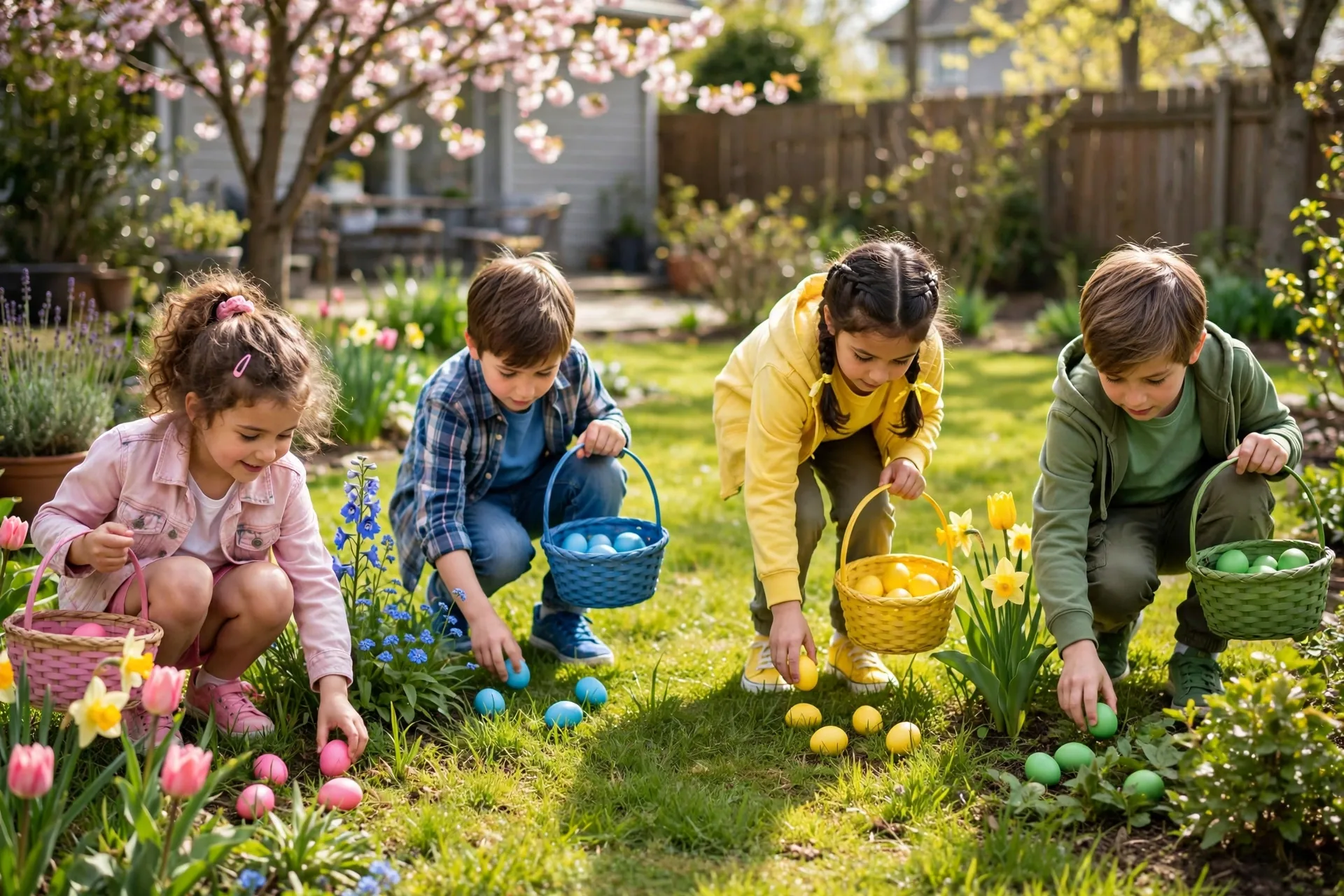
2. The color-coded hunt (ages 2+). Each child hunts one color only: “You find pink, you find blue.” Everyone finishes with the same number of eggs, the toddler can actually play instead of competing, and the finish-line photo has zero tears in it. It feels like a small cheat. It is actually genius.
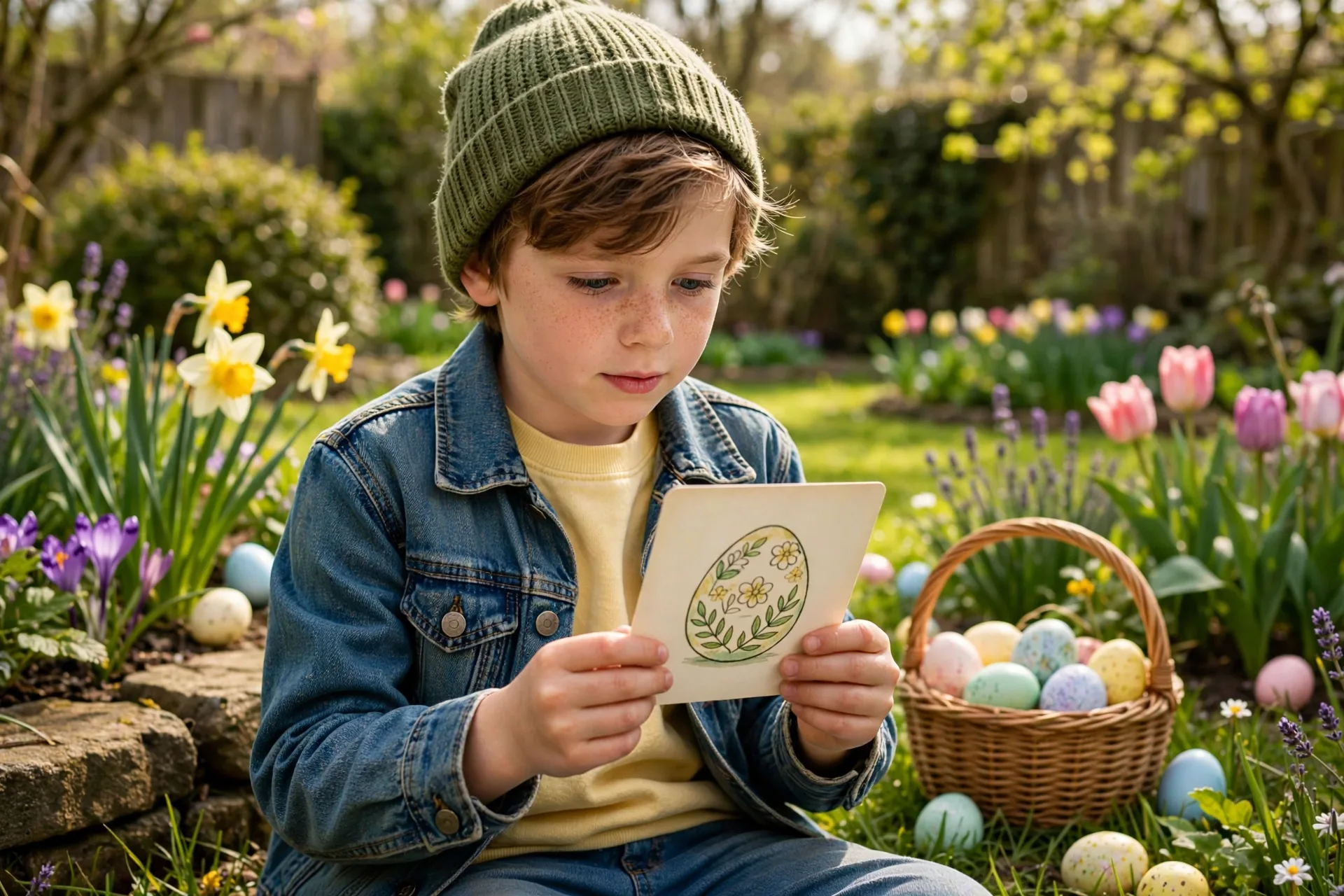
3. The clue hunt (ages 3+ with picture clues, 6+ with riddles). Put a clue inside each egg that leads to the next one, ending at a basket or a bigger surprise. Pre-readers get picture clues — a drawing of the mailbox, the dog’s bowl, the red chair. Our Easter Scavenger Hunt With Picture Cards guide walks through the picture-card version step by step.
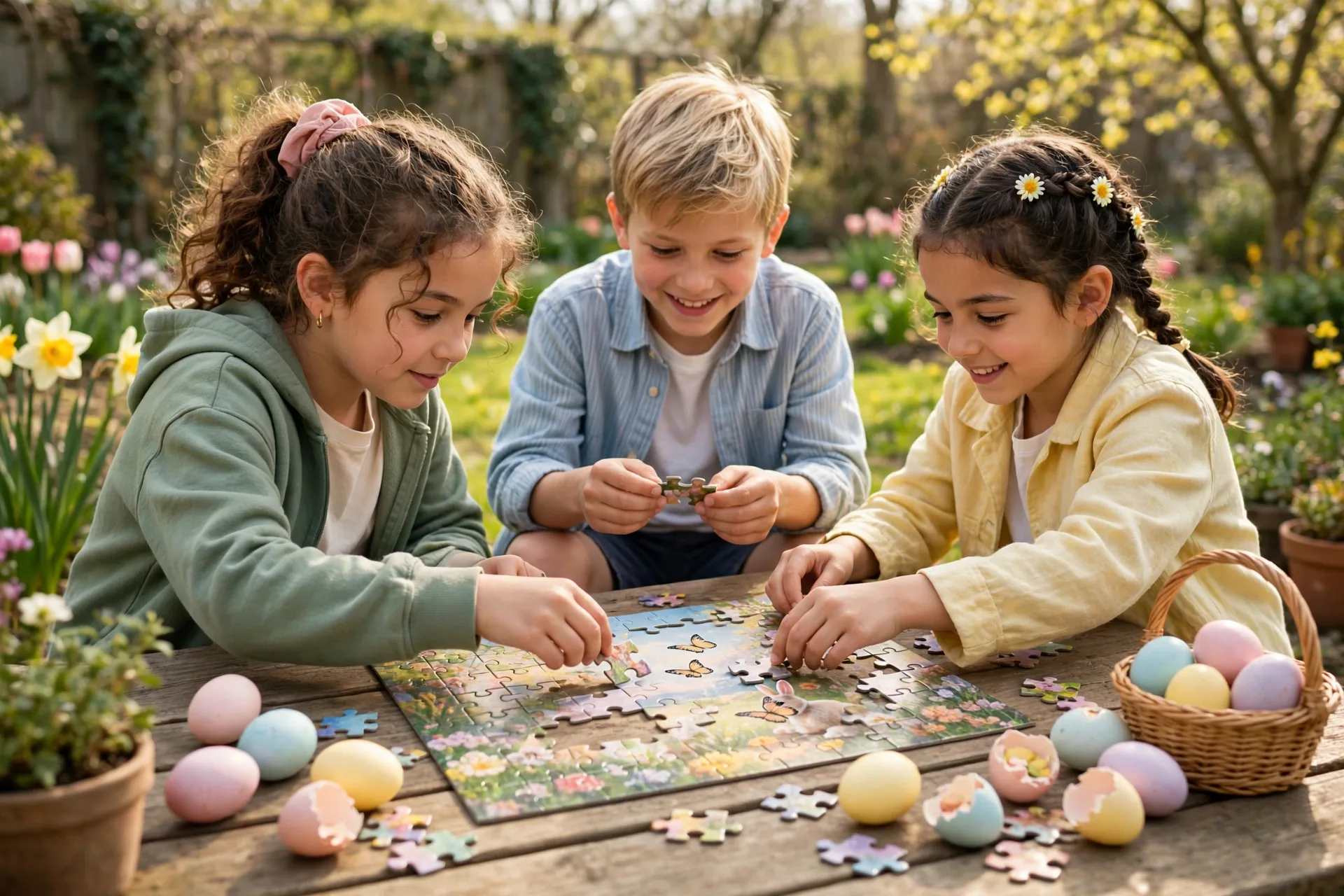
4. The puzzle piece hunt (ages 4+). One jigsaw piece per egg. The hunt isn’t over when the eggs are found — it’s over when the puzzle is built, which buys you a full extra activity and a room full of kids cooperating instead of comparing candy counts. Use a small puzzle (24–48 pieces) so it ends in triumph, not tears.
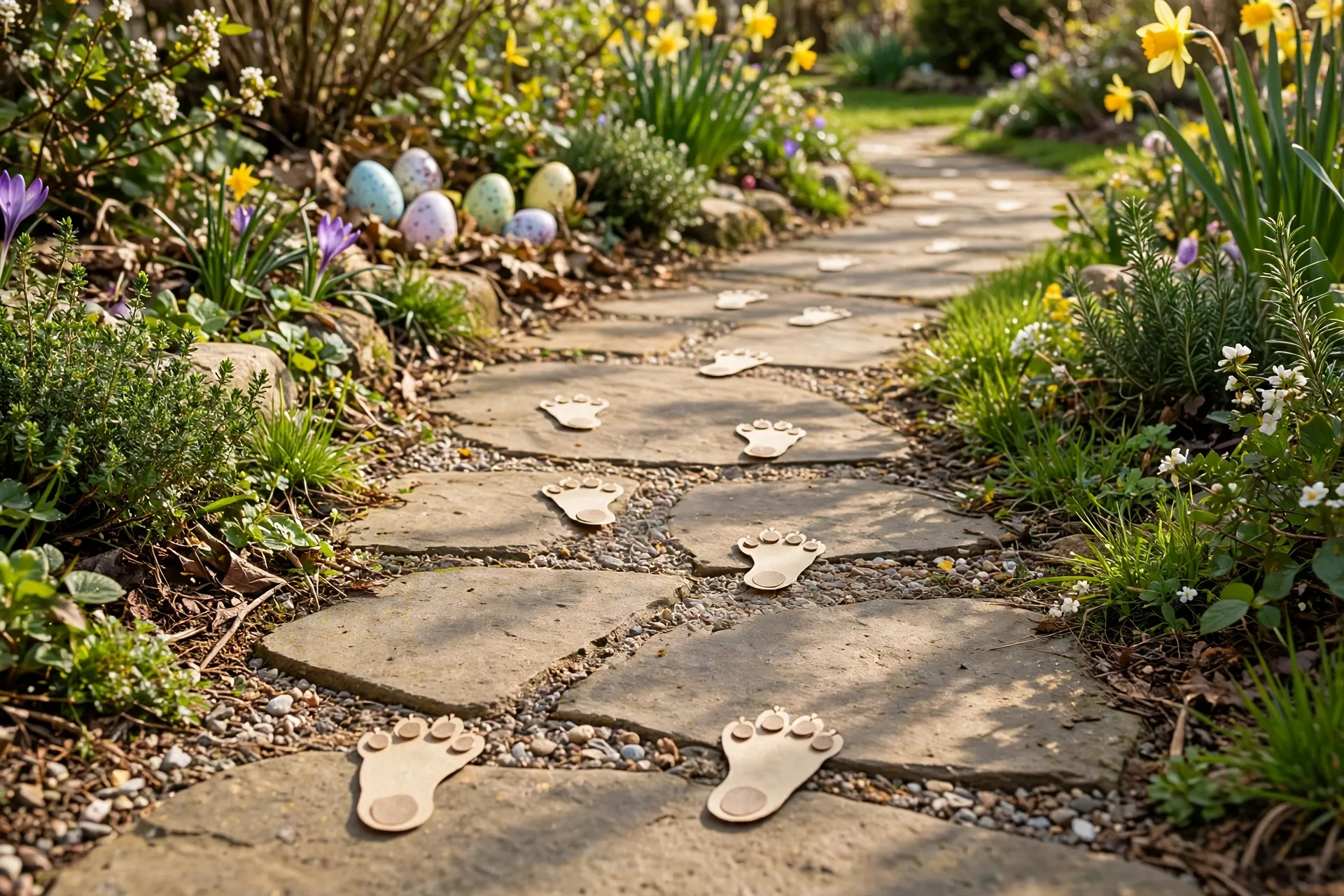
5. The bunny trail hunt (ages 2+). Cut paper bunny footprints (or draw them in chalk on the path) leading from hiding spot to hiding spot. Toddlers who can’t hunt can follow, and following a trail feels like a story they’re inside of. End the trail at the baskets for maximum drama.
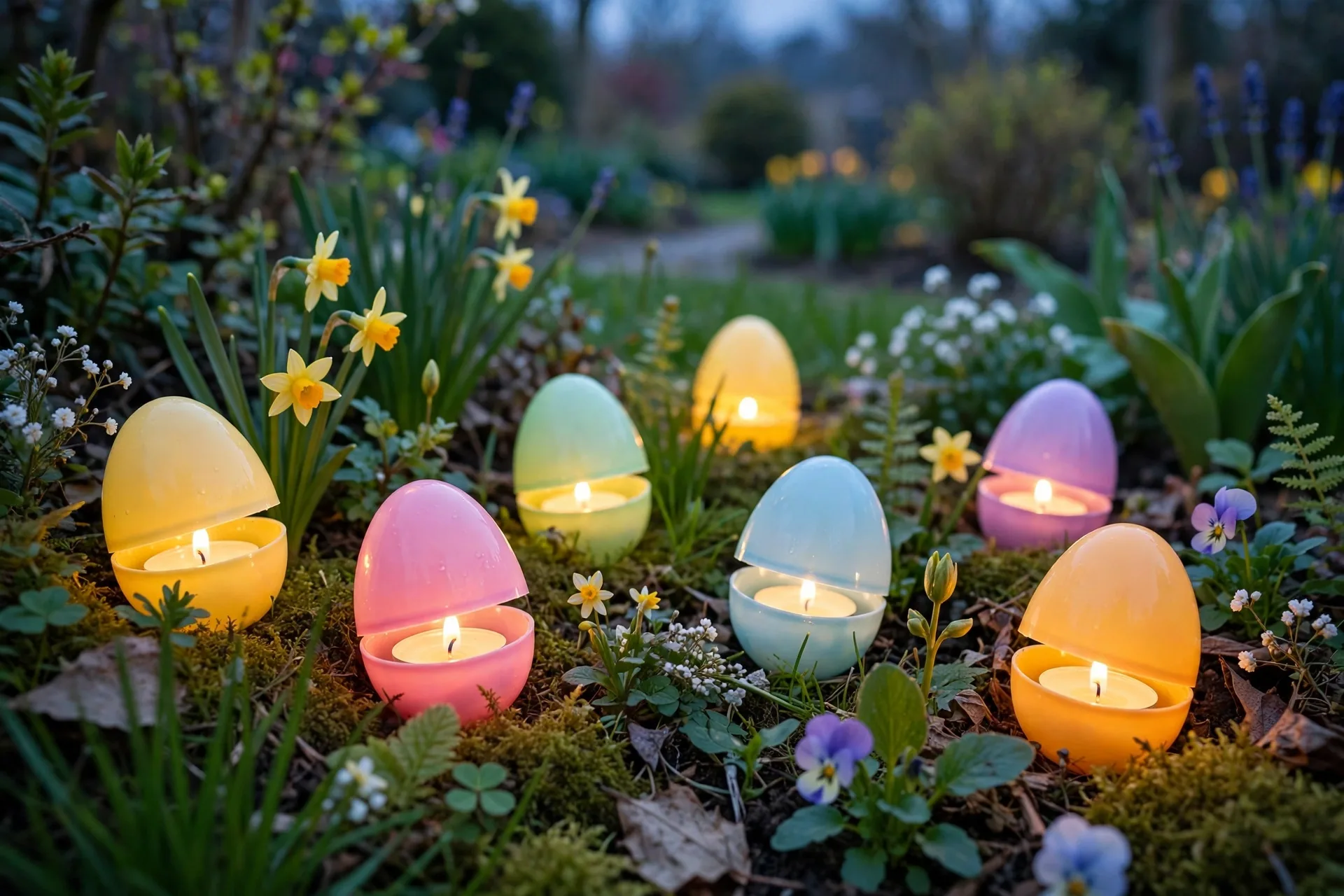
6. The twilight glow hunt (ages 4+). As the light fades, drop a flameless LED tea light into translucent plastic eggs and hide them around the yard — the eggs glow like little lanterns. Grown-ups load the eggs: tea lights have button-battery compartments, so the lights themselves are a setup tool, never a toy, and this hunt is for the older crew while toddlers watch the magic from a blanket.
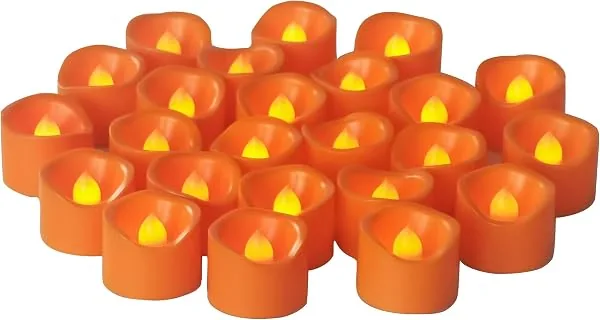
Flameless LED Tea Lights, Orange — 24 Pack
The glow inside the twilight hunt eggs — flameless, so all the magic and none of the fire risk. Grown-ups load them into the eggs; the battery compartments stay out of little hands.
7. The reverse hunt (ages 4+). The kids hide the eggs; the grown-ups hunt. Children find this unspeakably funny, hide eggs in places of staggering cruelty, and learn exactly how it feels to be the one saying “you’re getting warmer.” You will not find the egg in the mailbox. Nobody ever finds the egg in the mailbox.
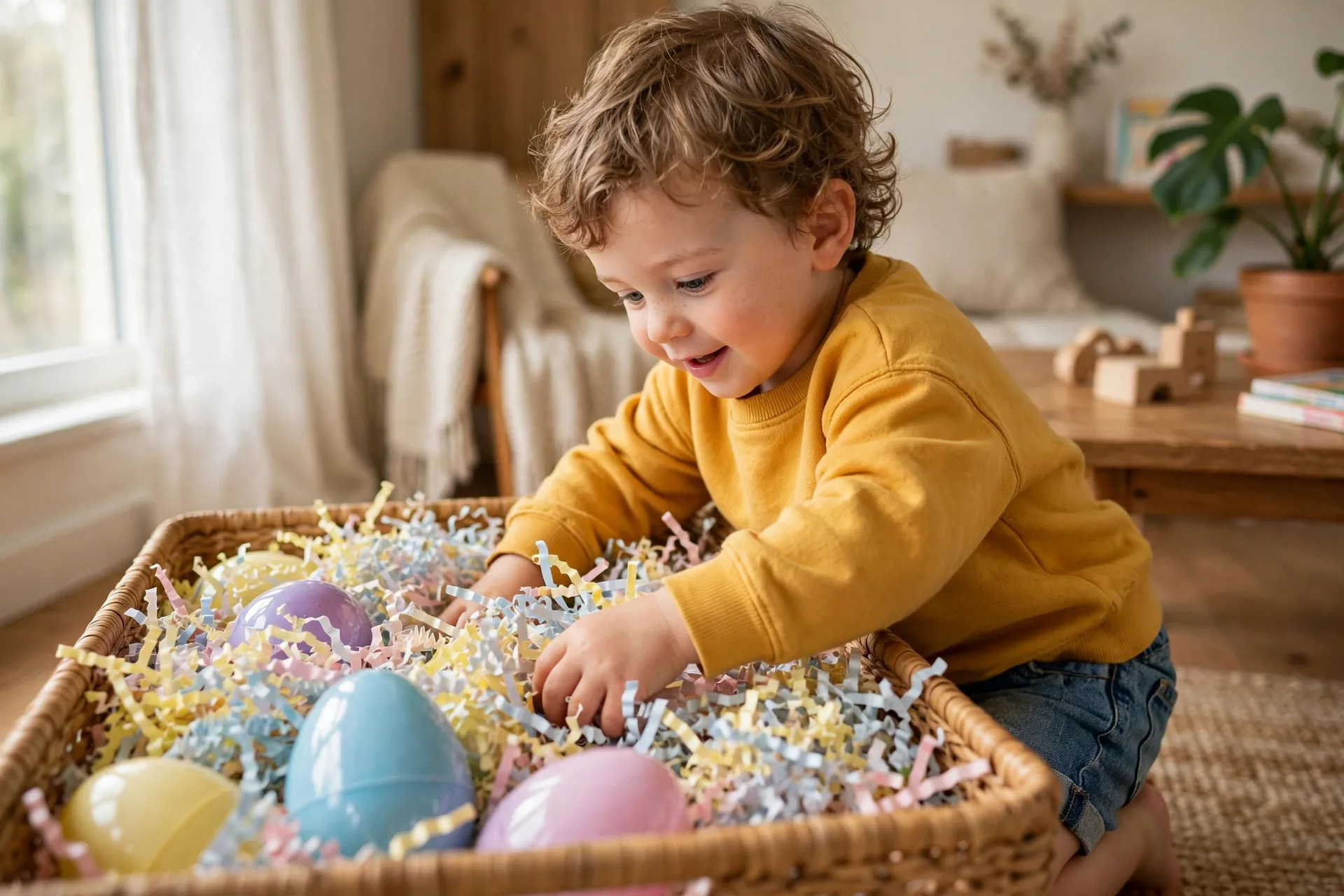
8. The indoor sensory bin hunt (ages 18 months+). Rainy Easter? Fill a big bin or box with shredded paper or Easter grass (save loose rice for the 2+ crowd), bury the (big) plastic eggs, and hand your toddler a scoop. It’s a hunt at their speed, entirely findable, and it doubles as the quiet activity that saves the morning while you cook. Stay close — little hunters taste-test everything.
Egg Decorating Without the Disaster
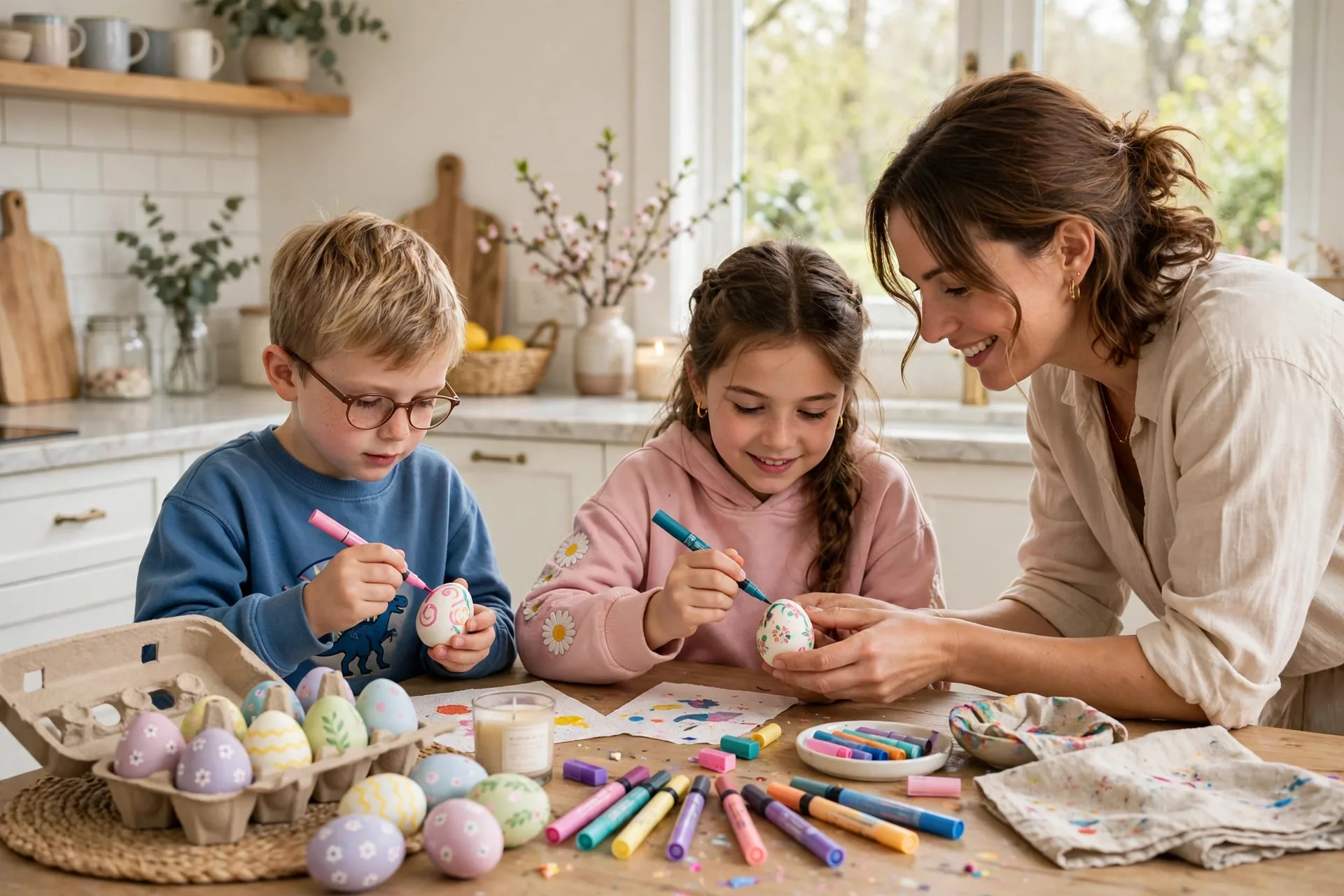
Real eggs, honest methods, and a table that survives. A standing rule at our house: anything involving hot water, vinegar pots, or melting is a grown-up job — kids decorate, adults handle the chemistry.
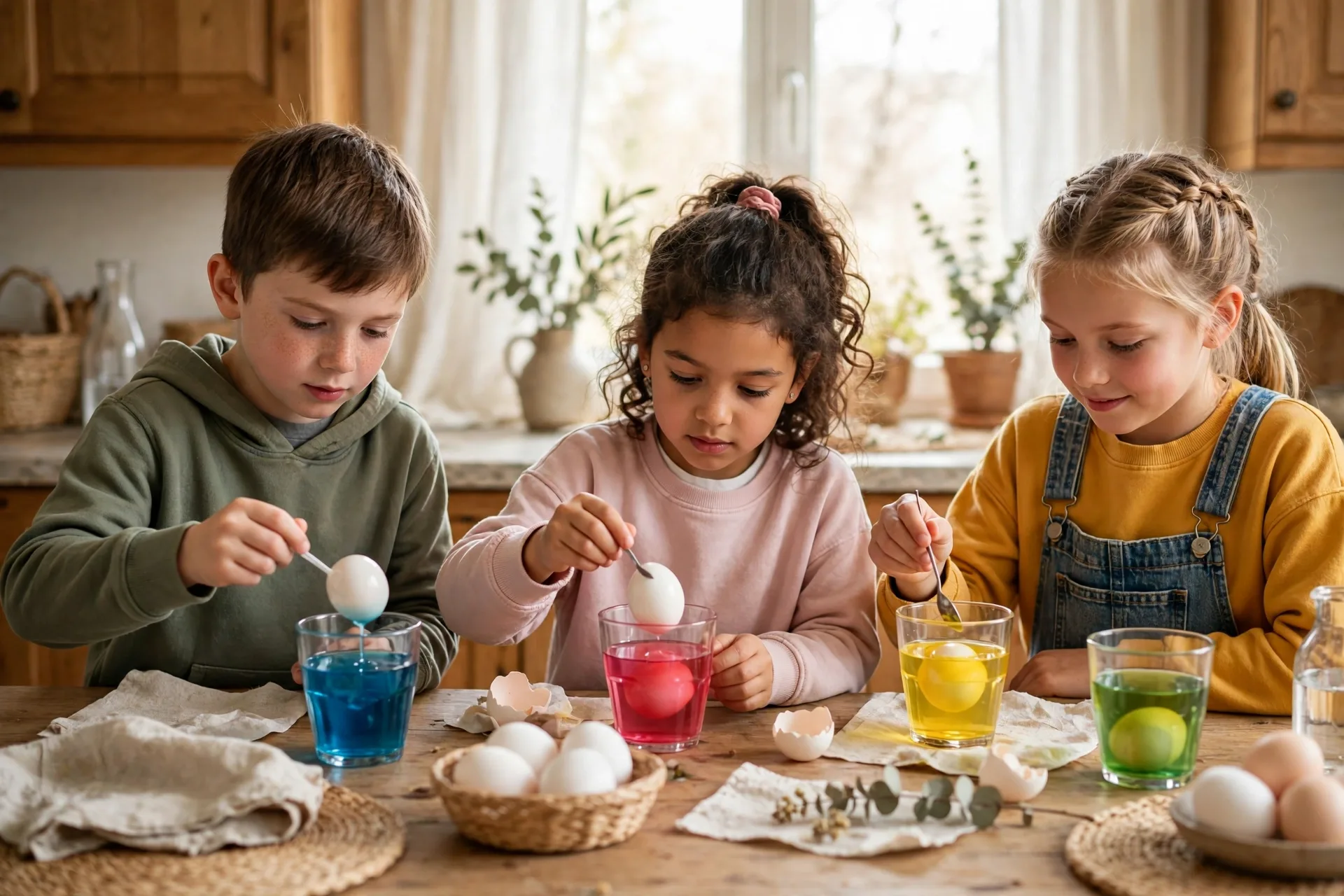
9. Classic dye cups (ages 3+). The kit-or-tablet dye in cups of water with a splash of vinegar, eggs lowered in on a spoon. Old clothes, a tray under everything, newspaper down. It’s the classic for a reason — just let a grown-up run the cups while the kids run the color decisions, which are the part they actually care about.
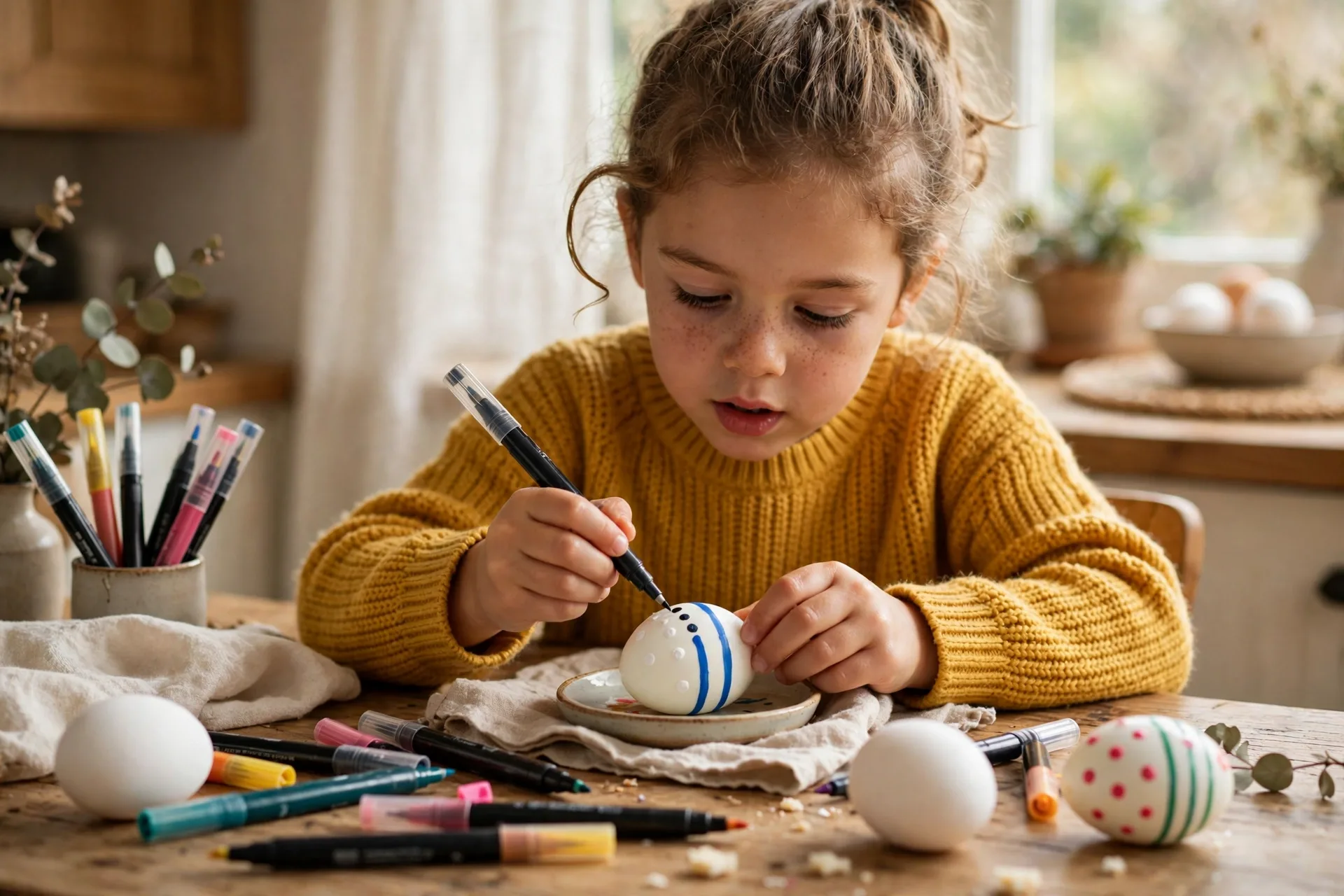
10. Paint pen eggs (ages 3+). Hard-boil the eggs, let them cool, and hand over acrylic paint pens instead of dye cups: dots, stripes, faces, whole tiny landscapes — with no cups to knock over and no vinegar smell. This is our house’s main method now, because cleanup is putting the caps back on.
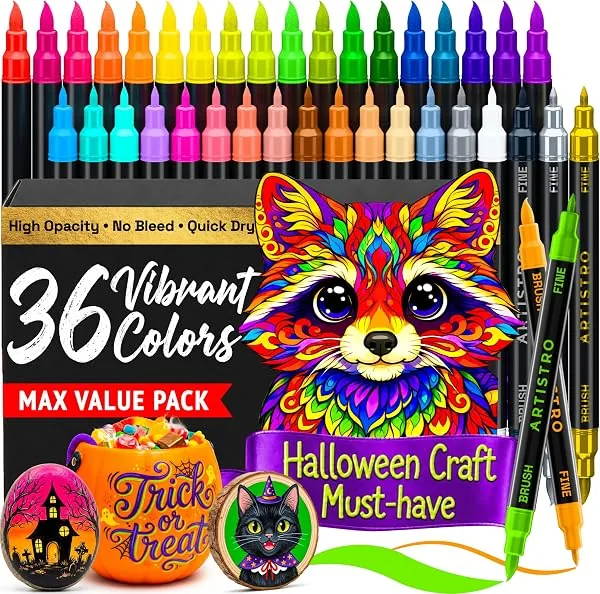
ARTISTRO Acrylic Paint Pens
Our egg-decorating heroes — dots, stripes, and faces on shells with no dye cups to spill, and cleanup is just putting the caps back on.
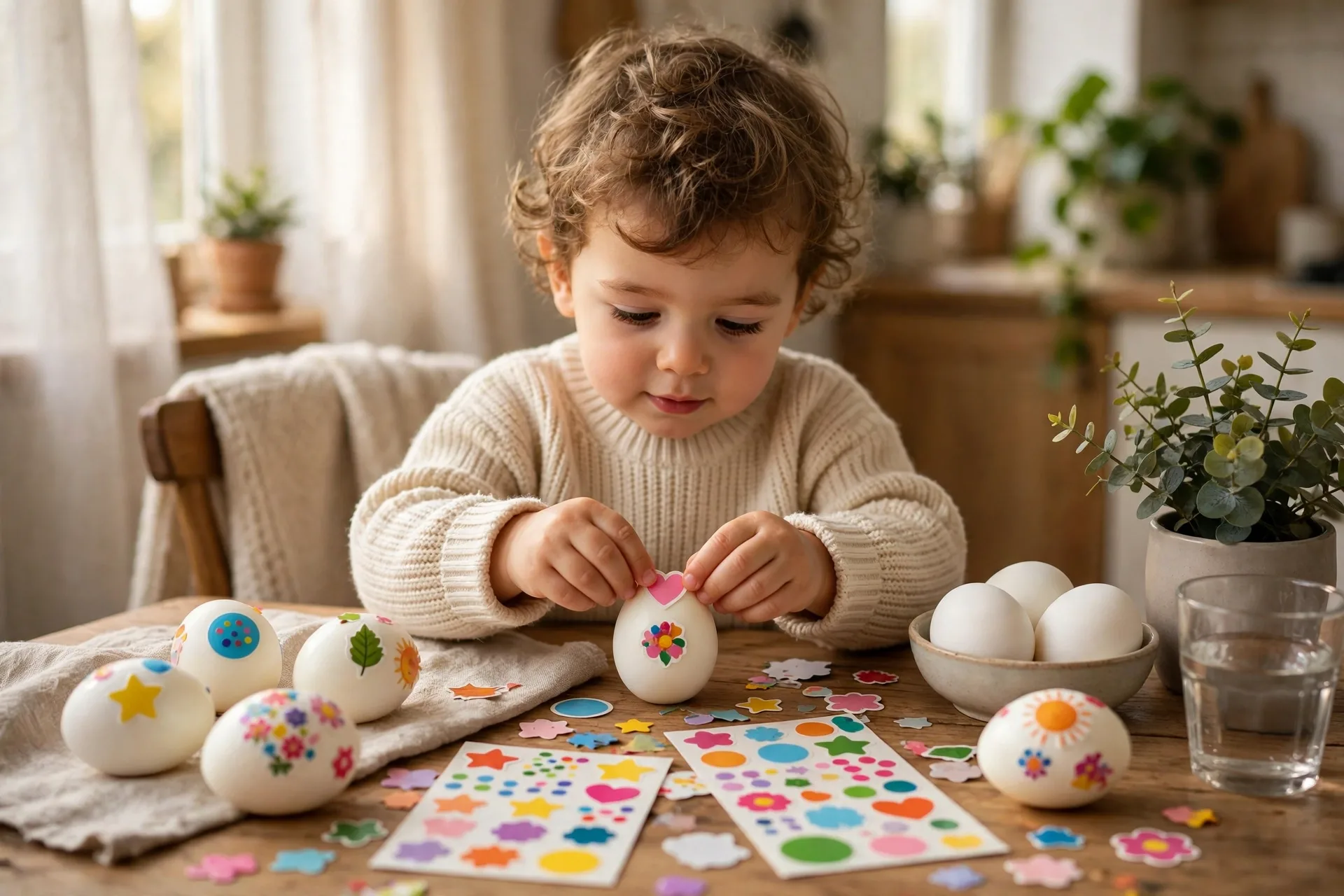
11. Sticker eggs (ages 2+). The toddler decorating method: hard-boiled (or wooden) eggs plus a sheet of stickers. Peeling stickers is real fine-motor work at this age, the eggs come out genuinely cute, and nothing — nothing — gets dyed, including your child.
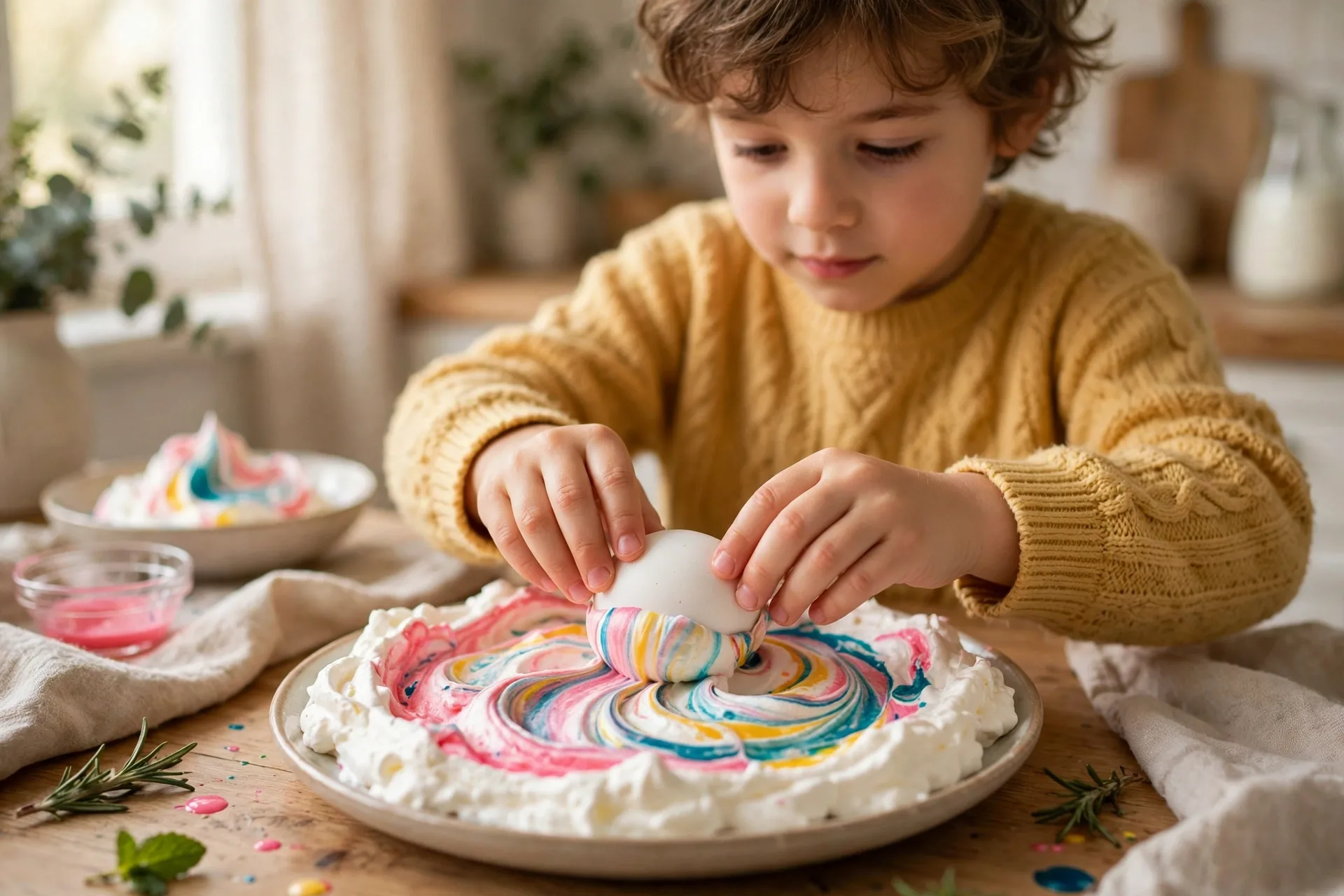
12. Whipped topping swirl eggs (ages 3+). Spread whipped topping on a tray, dot it with food coloring, swirl with a toothpick, roll a hard-boiled egg through, let it sit, then rinse for a marbled shell. We use whipped topping instead of the shaving-cream version on purpose: at this age, everything heads for somebody’s mouth, and this version is food-safe when it does.
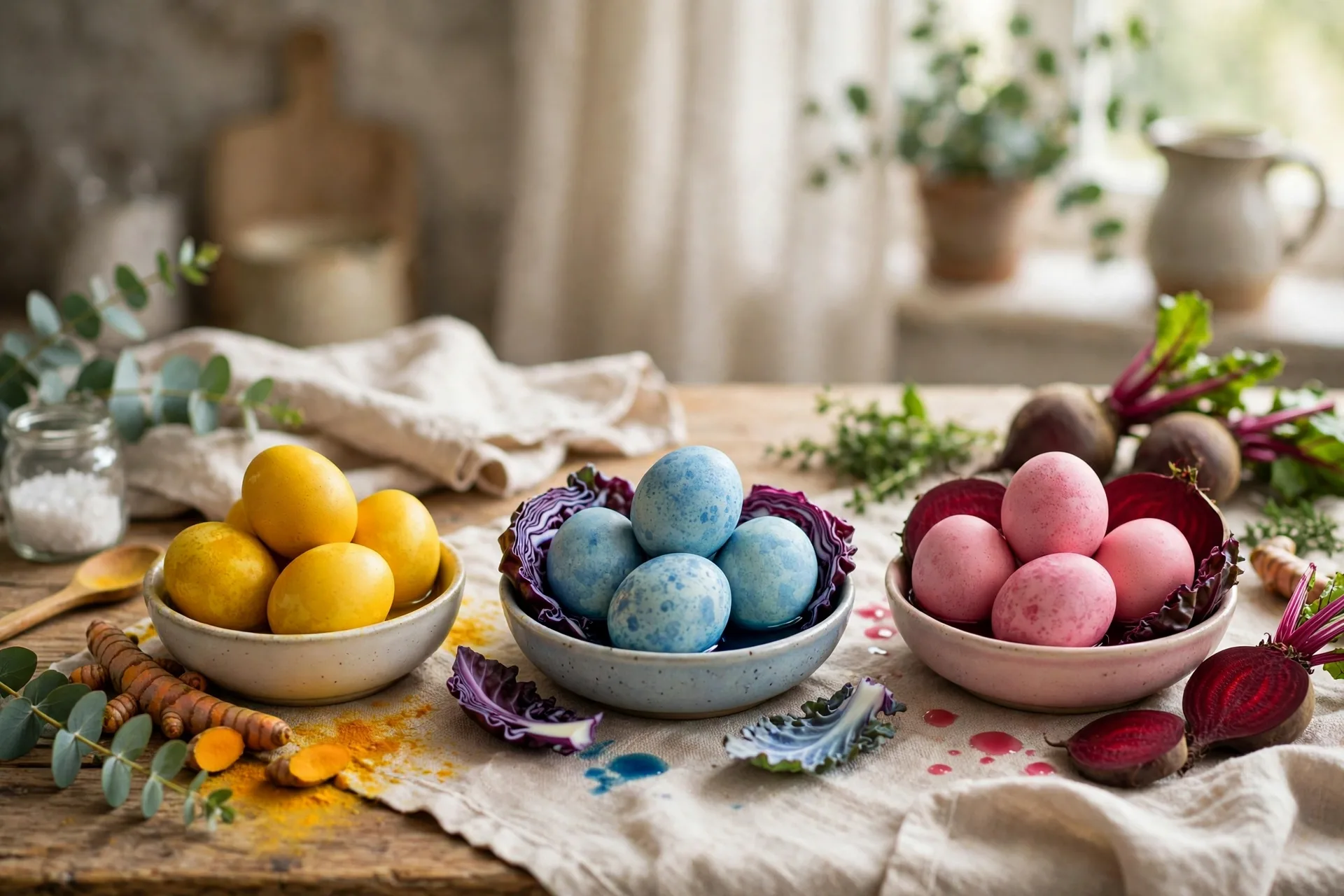
13. Kitchen-dye eggs (ages 4+). Dye from the pantry: turmeric for gold, red cabbage for blue, beet juice for pink. A grown-up does the boiling and simmering the day before; kids do the dipping and the gasping. The colors are softer than the box kits and the “we made this from a cabbage” bragging rights are enormous.
14. Napkin decoupage eggs (ages 5+). Cut the pretty flowers or bunnies out of paper party napkins, brush them onto eggs with a little glue wash, and let them dry into eggs that look hand-painted by someone talented. Older kids can manage the cutting and smoothing; the results go straight into the keepsake box.
Crafts That Take 20 Minutes or Less
Every craft here uses what you probably already own, and none of them needs to dry overnight before it counts as finished.
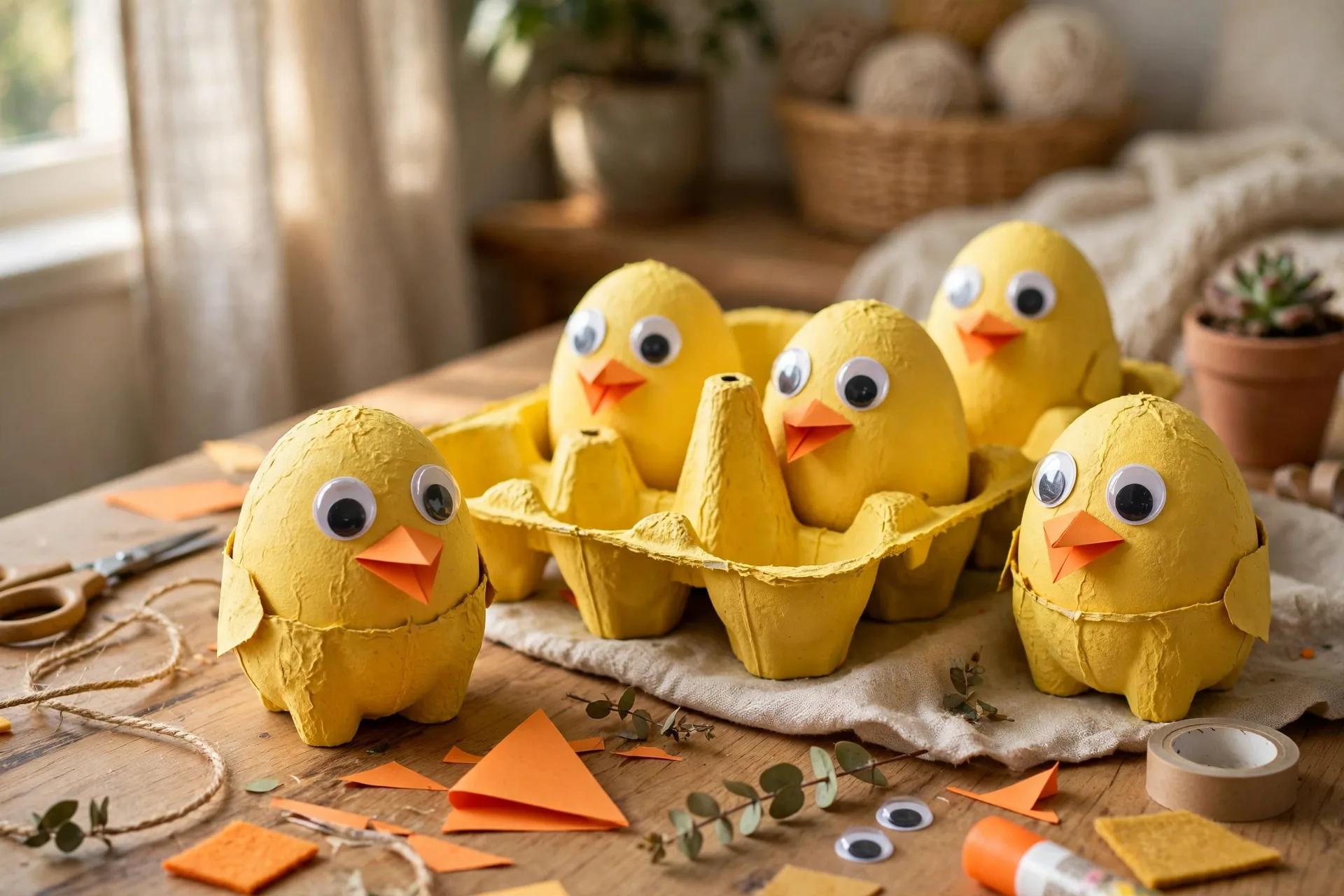
15. Egg carton chicks (ages 3+). Cut the cups from a cardboard egg carton (grown-up cuts), paint them yellow, add an orange paper beak and googly eyes, and you have a chick army in fifteen minutes. Googly eyes are small parts — a grown-up passes them out, and they stay at the table, away from under-3s.
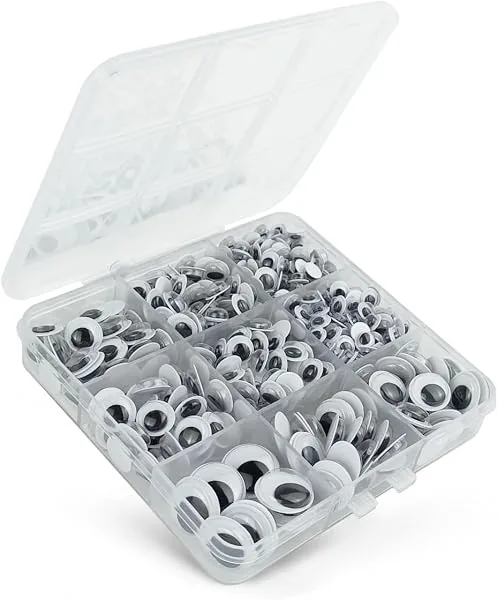
Googly Eyes — 520 Pcs
For egg carton chicks and every bunny face after — a grown-up passes them out at the table, and small parts stay away from under-3s.
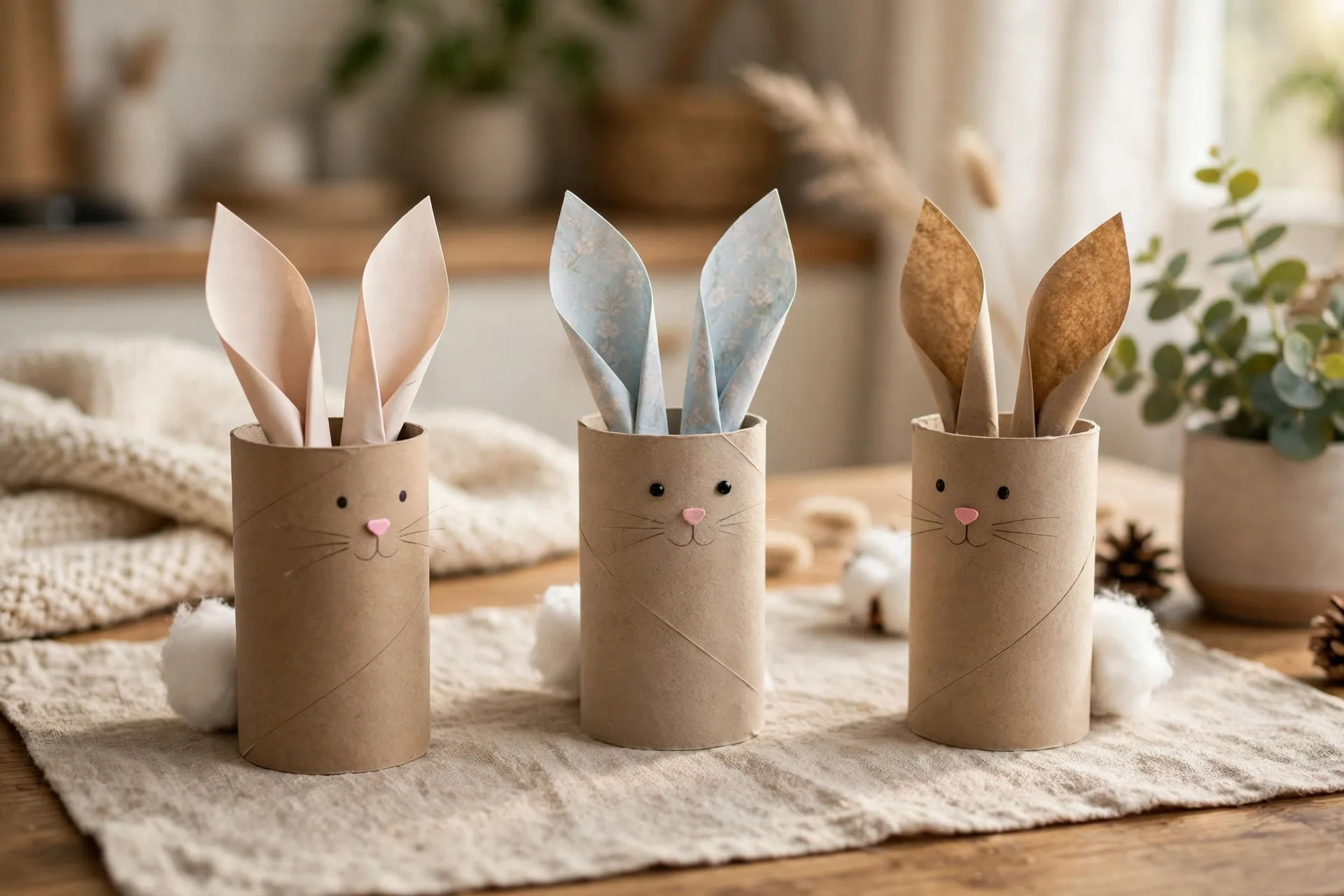
16. Toilet roll bunnies (ages 3+). Fold the top of a cardboard tube down into two ear shapes, paint it white or pastel, draw the face, glue on a cotton-ball tail. Free, fast, and the ears never come out even, which is somehow the cutest part.
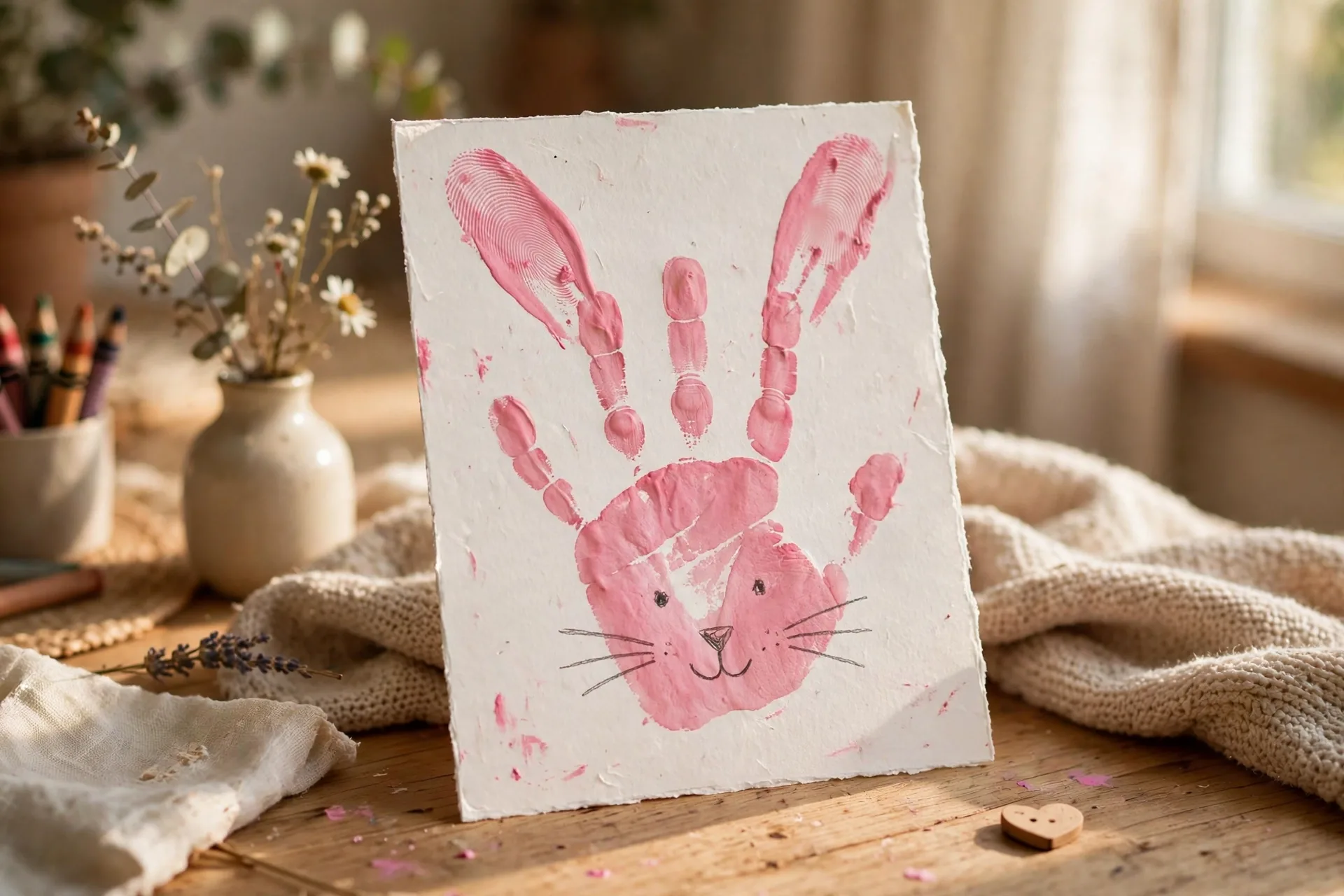
17. Handprint bunny & chick cards (ages 1+). Paint a little hand, press it to cardstock — fingers up become bunny ears, fingers down become a chick’s body with a drawn-on beak. Grandparents receive these like they’re gallery art. Our Easter Handprint Template Printable guide has the layouts if you want the polished version.
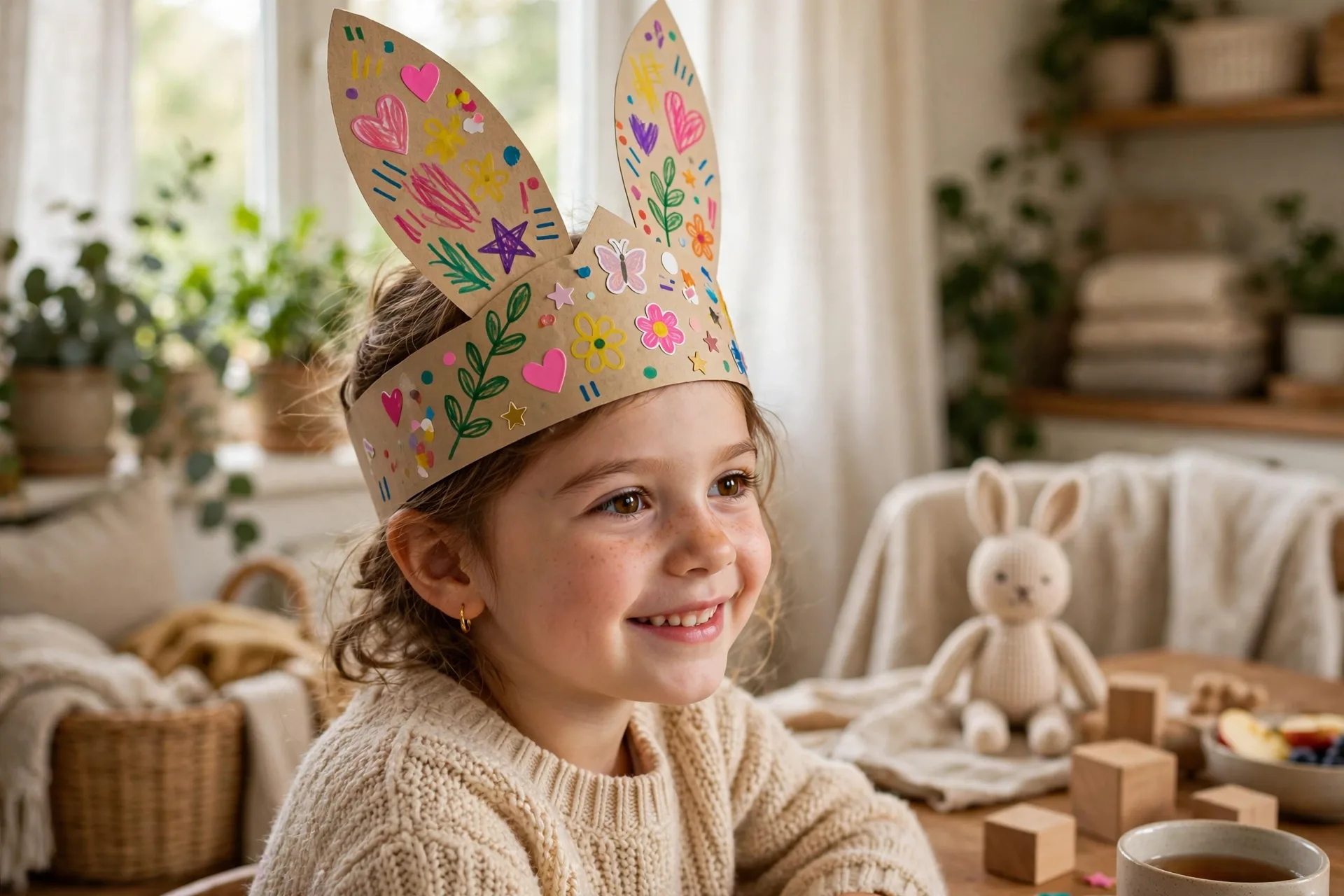
18. Bunny ear crowns (ages 3+). Paper ears glued to a paper headband strip, decorated with markers and stickers. Skip the elastic-string masks — crowns stay on better, fit every head, and nobody gets a snapped string to the cheek. Instant costume for the hunt photos.
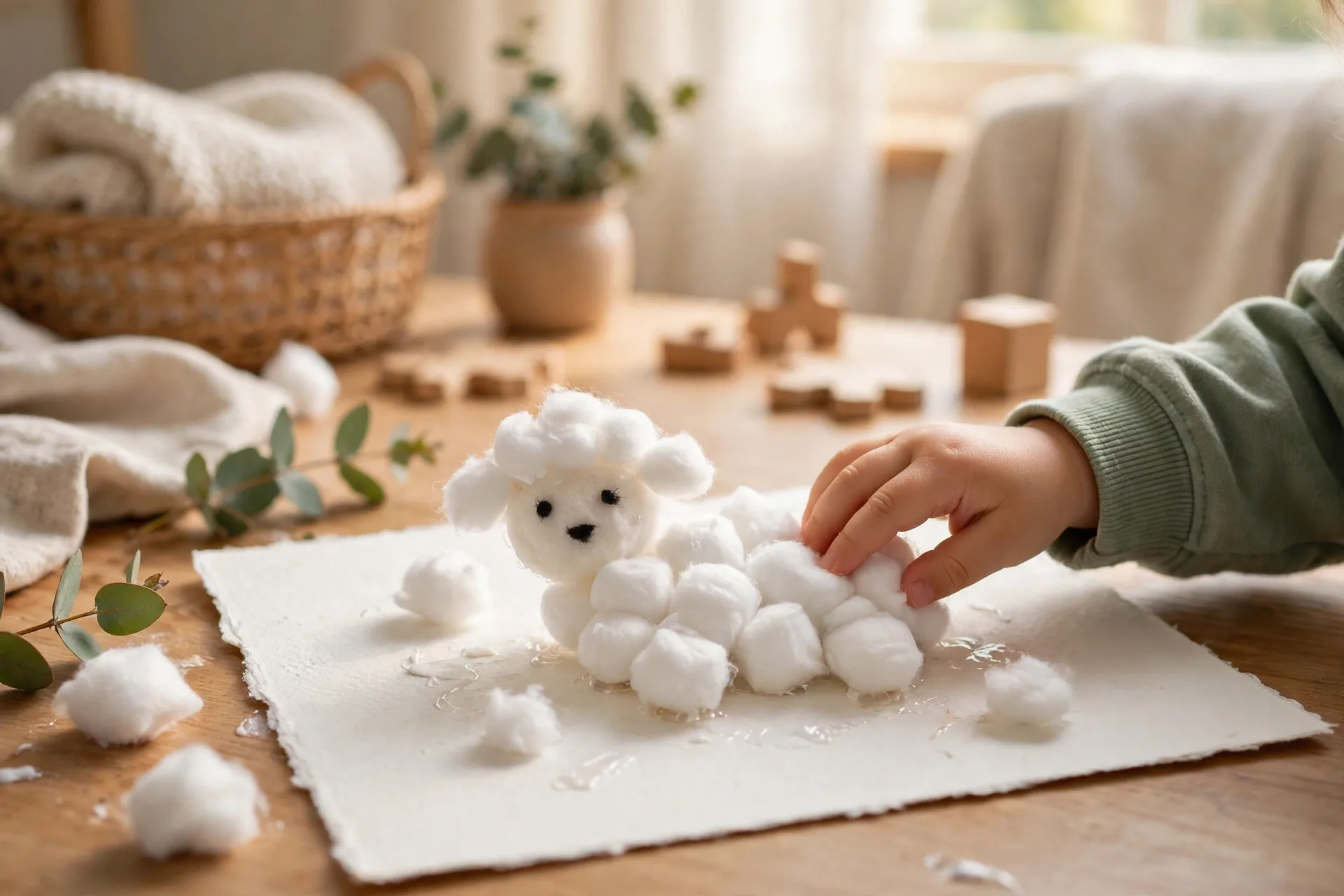
19. Cotton ball lambs (ages 2+). Glue cotton balls onto a paper lamb outline until it’s gloriously fluffy, add a drawn face. Toddlers can glue-and-press with total success, and the finished lambs make a genuinely sweet spring wall display.
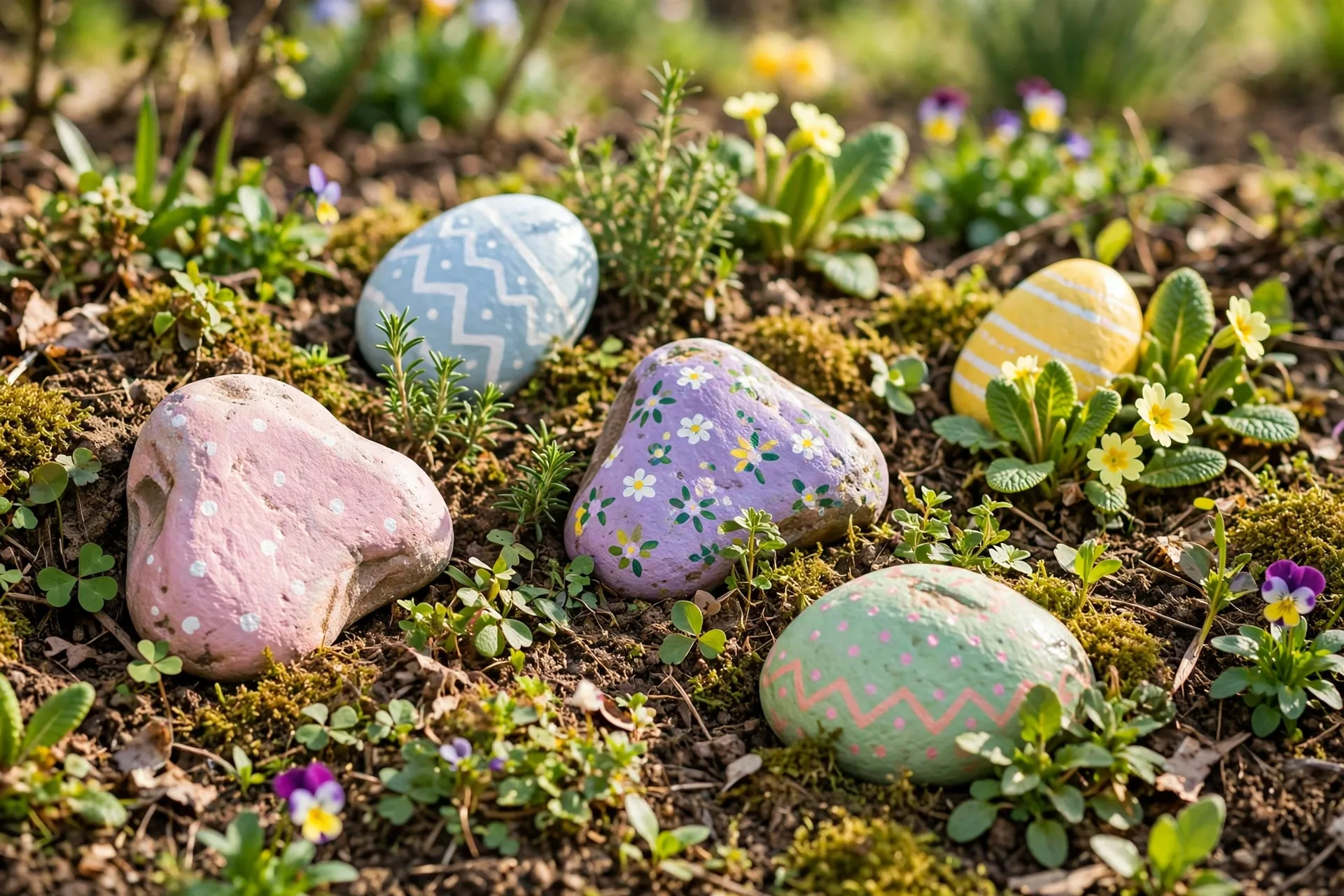
20. Painted rock Easter eggs (ages 3+). Smooth oval rocks, painted like decorated eggs — stripes, dots, zigzags — then hidden in the garden for a hunt that never melts, cracks, or attracts ants. Our Easter Egg Painted Rock Ideas and Easter Painted Rock Ideas guides are full of designs, from five-minute dots to full bunny faces.
Games for the Whole Crew
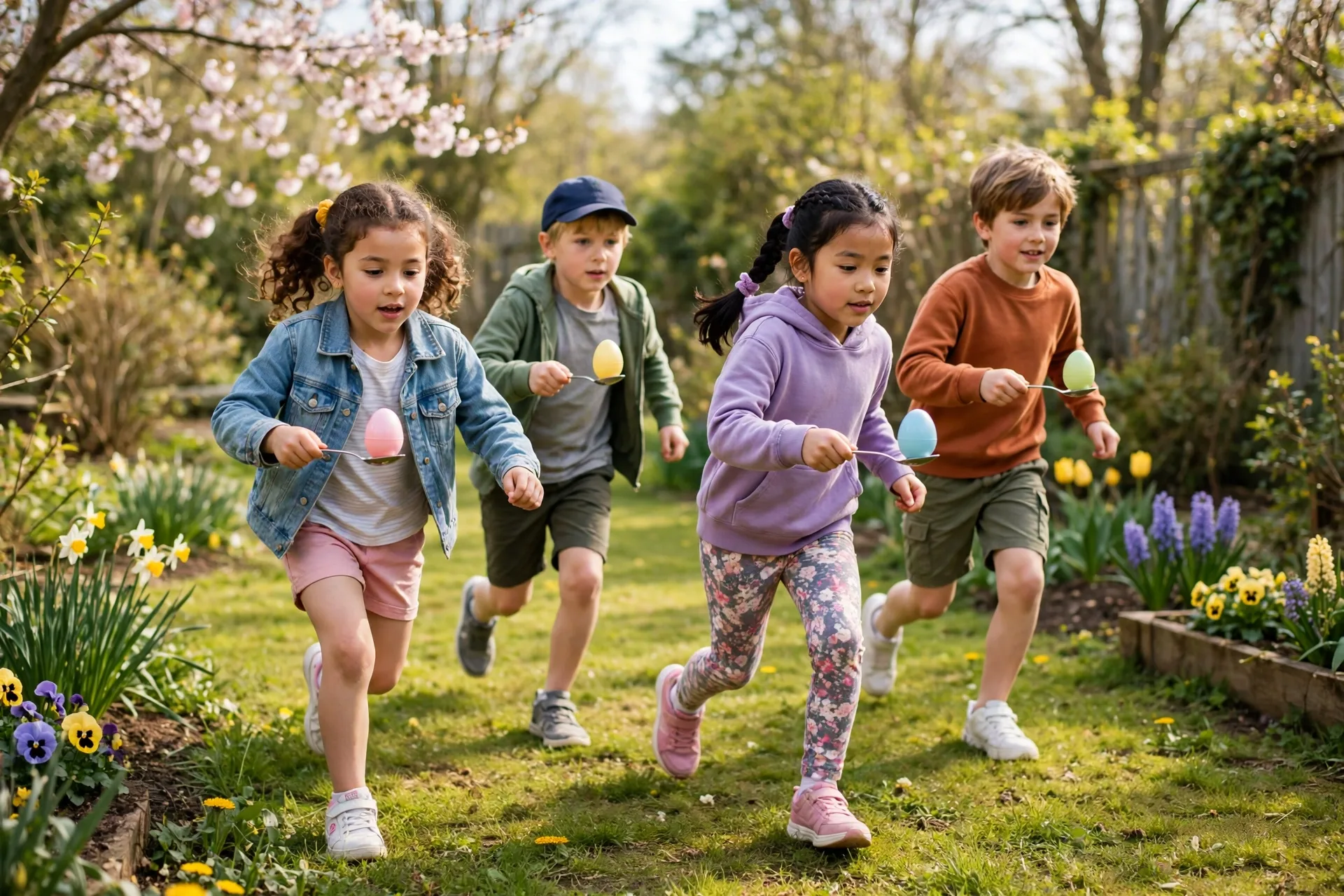
21. Egg-and-spoon relay (ages 4+). Teams, spoons, plastic eggs (save the real ones for kids with steady hands), and a lawn. Every dropped egg means back to the start of your leg, which keeps it dramatic to the very end. Toddlers get their own parallel race carrying an egg in both hands — winning optional, finishing essential.
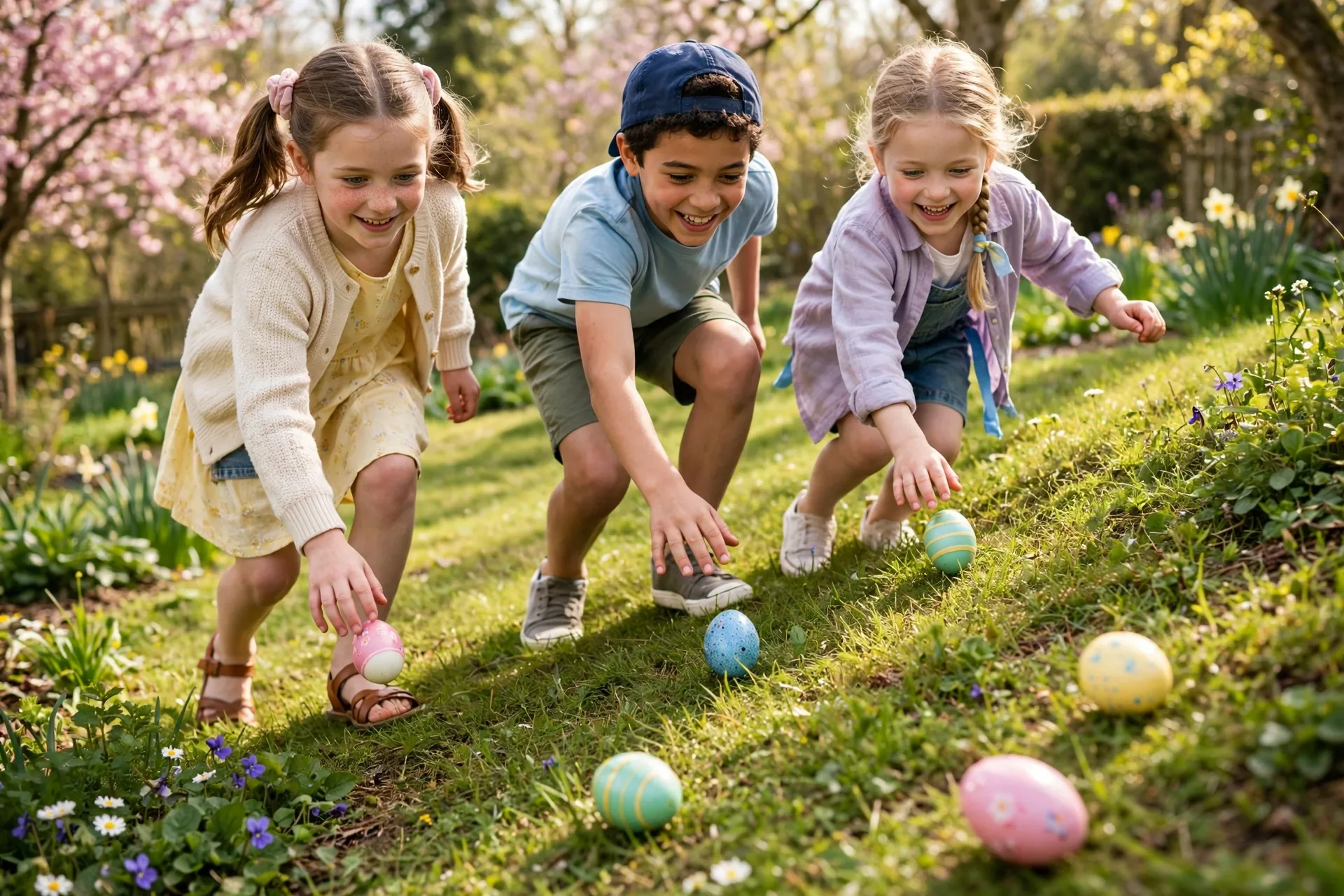
22. Egg rolling race (ages 3+). The old White House tradition, backyard edition: roll a decorated hard-boiled egg down a gentle slope with a long spoon or a stick, or race them across the floor indoors. First unbroken egg over the line wins. Decorate the eggs first (#9–#14) and this is two activities in one.
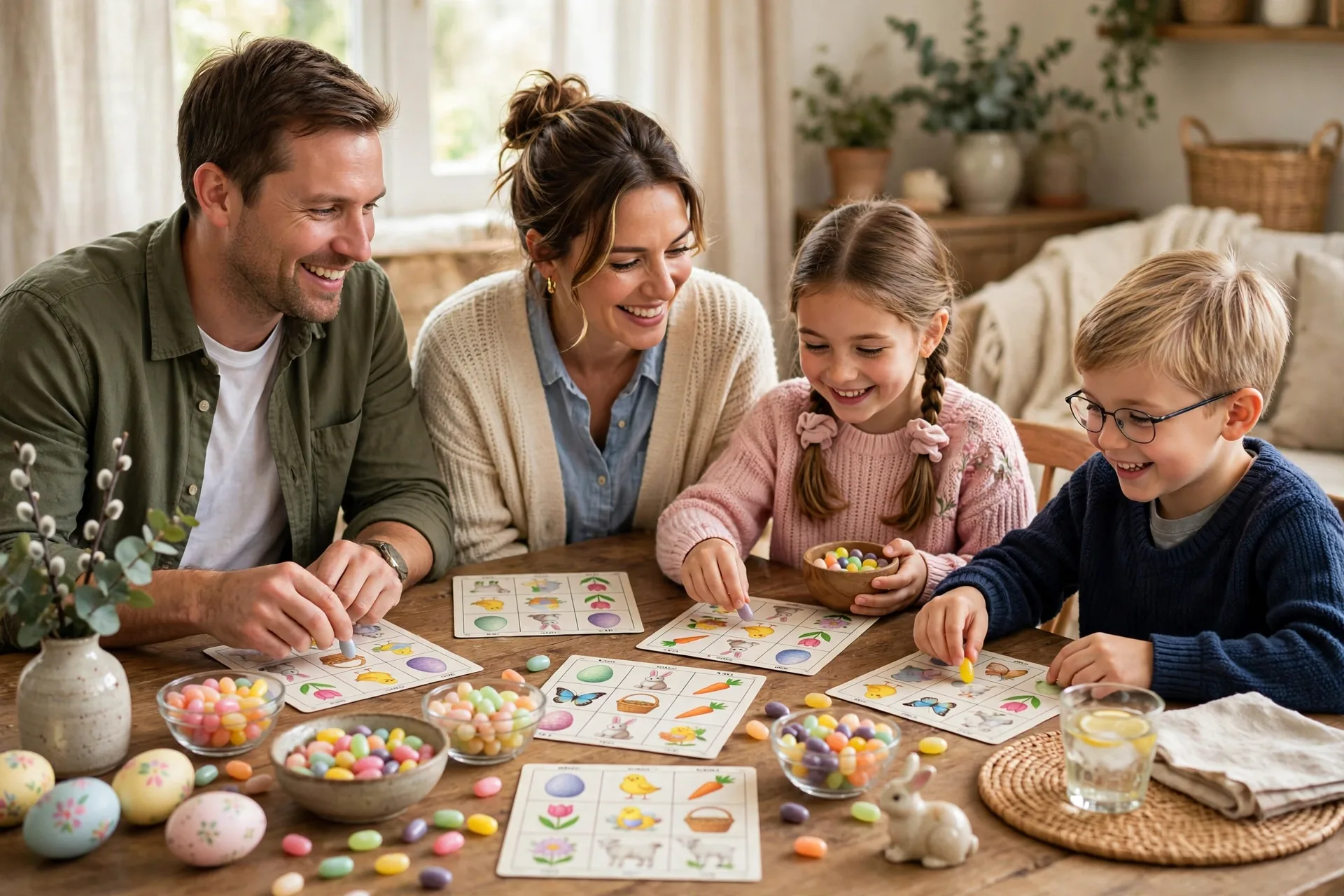
23. Easter bingo (ages 4+). Picture bingo works for pre-readers and readers together, which makes it the rare whole-family game that doesn’t need handicapping. Our Easter Bingo Game guide covers cards and calling pieces — play for jelly beans or for glory; glory lasts longer.
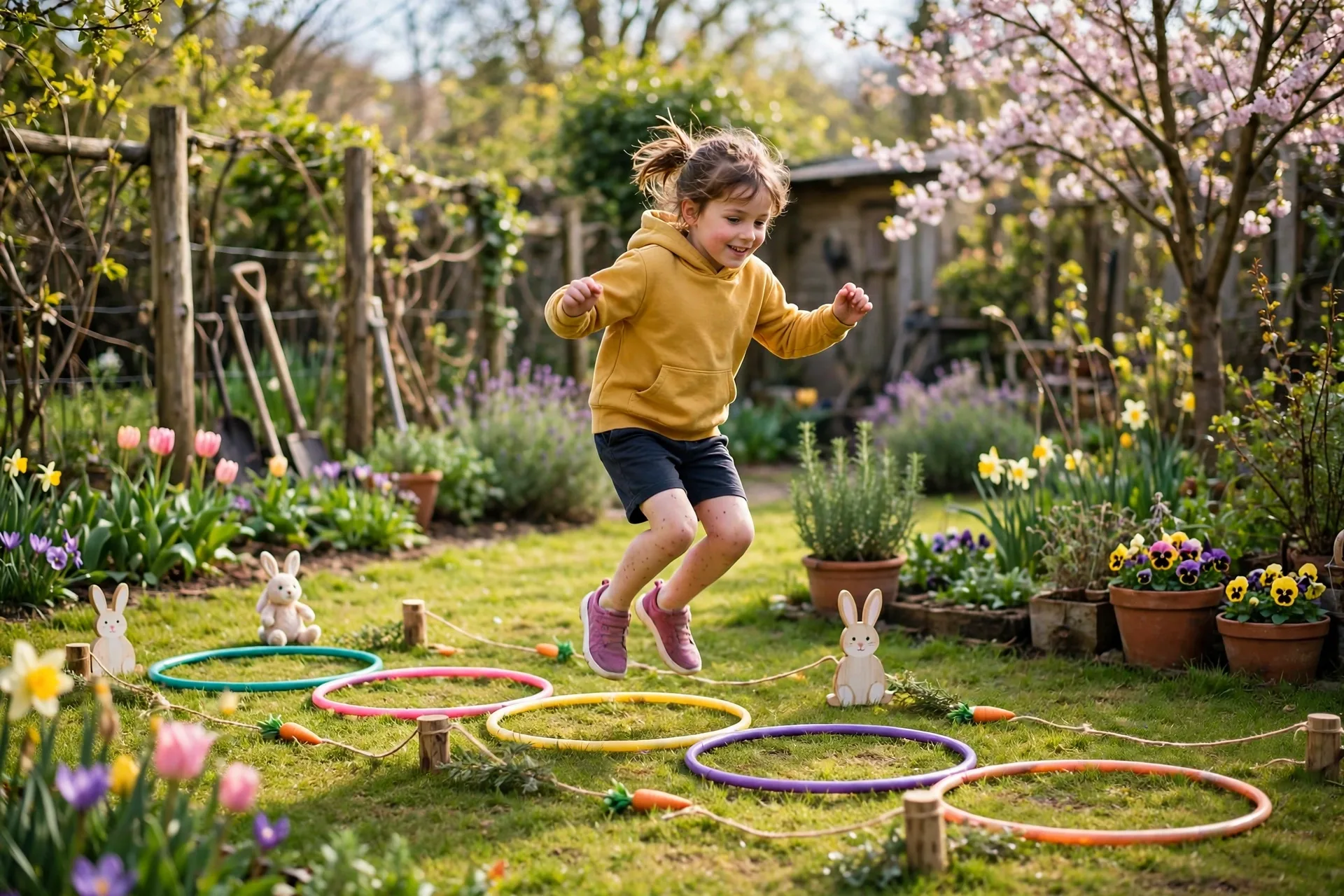
24. Bunny hop obstacle course (ages 4+). Hop through hula hoops, around cones, under a “carrot patch” limbo stick, holding a soft toy bunny that must not be dropped. Time each kid against their own record — beating yesterday’s score is motivation enough, and the hopping burns off exactly the energy you need burned off before lunch.
25. Trivia & would-you-rather at the table (ages 6+). While dinner settles, run a round of Easter Would You Rather Questions (“hop like a bunny for a day or lay one golden egg?”) and our Easter Trivia Game questions. It’s the activity that turns “can we have dessert now” into another twenty happy minutes.
Sweet Finishes: Treats & Slow Moments
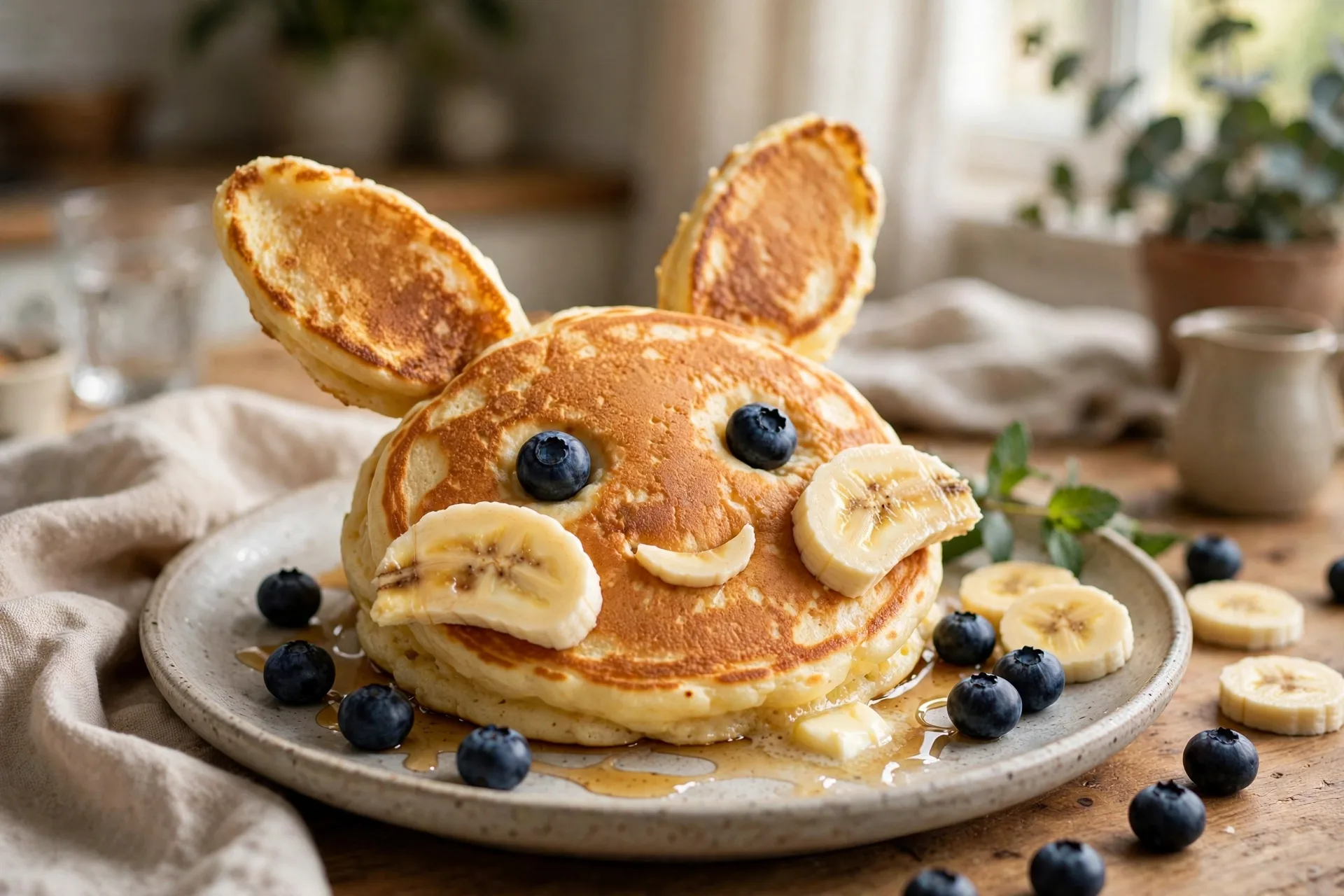
26. Bunny pancakes (all ages). One big pancake for the face, two ear-shaped ones on top, banana-slice cheeks, blueberry eyes. A grown-up runs the pan; kids do the faces. It takes ten extra minutes and becomes the photo you use for the next five Easters.
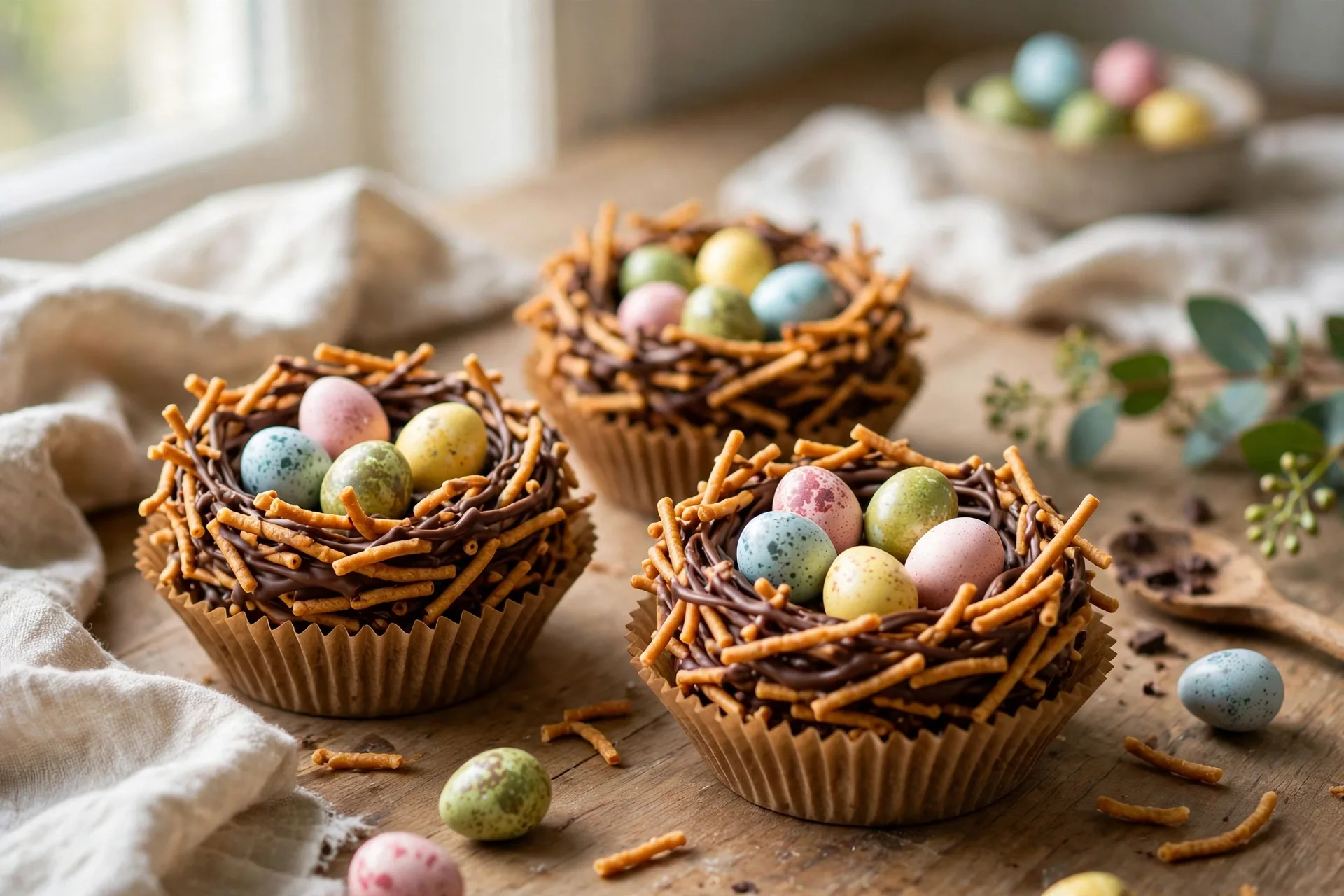
27. Chocolate nests (ages 4+ helping). A grown-up melts the chocolate; kids stir in crunchy noodles or pretzel sticks, spoon nests into cupcake liners, and press in mini eggs. No oven, all glory. Using noodles? They contain wheat — pretzel sticks swap in for gluten-free kids, and sunflower-seed “eggs” work for the nut- and candy-free crowd.
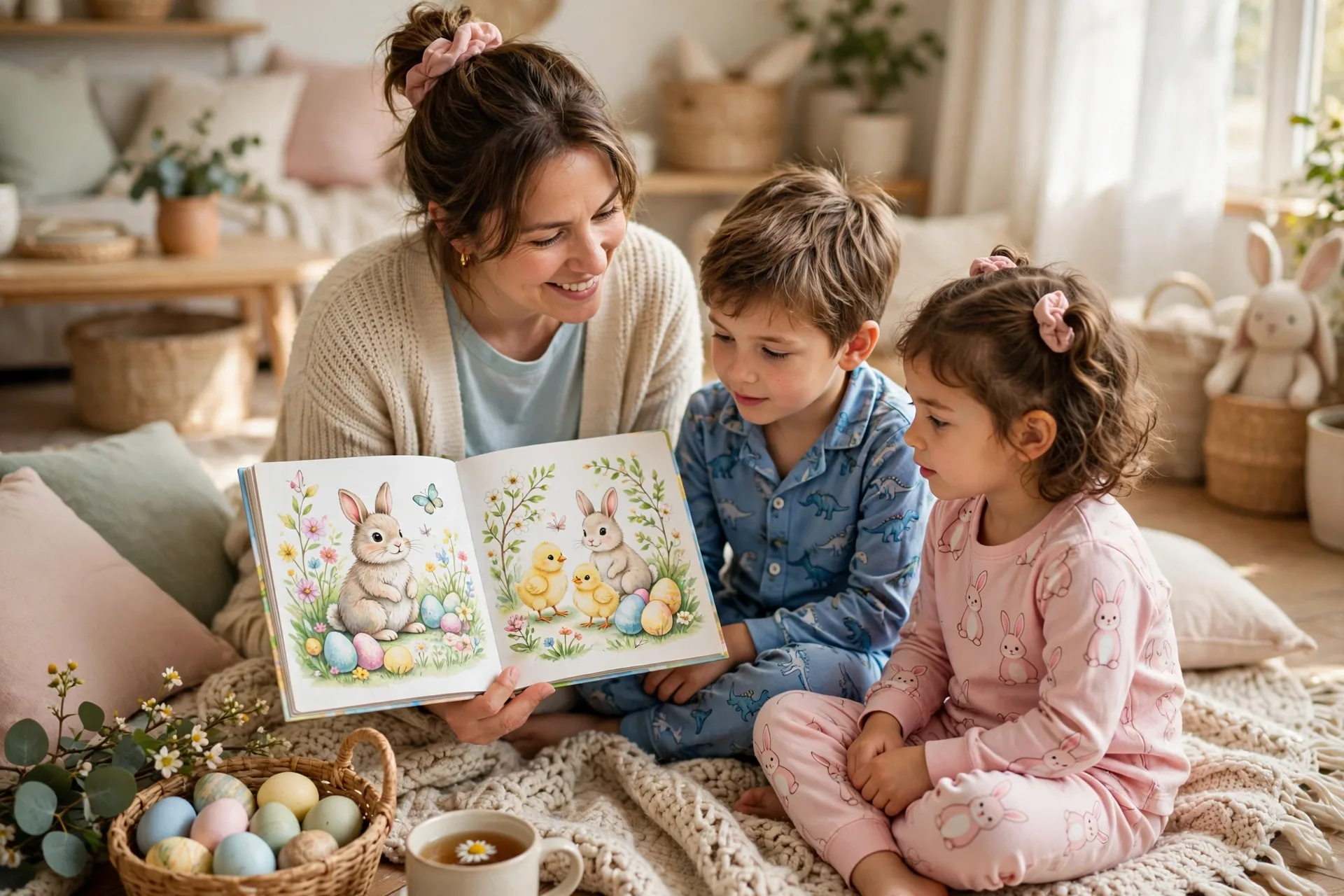
28. Easter story time (all ages). End the day slower than it started: a basket of Easter picture books on a blanket, everyone in pajamas. Our Best Easter Story Books for Kids list is where we found our favorites. For families marking the faith side of Easter, a set of resurrection eggs — plastic eggs holding a small symbol and a line of the Easter story, opened one by one — gives little kids the story in a way their hands can follow.
More Egg Hunts
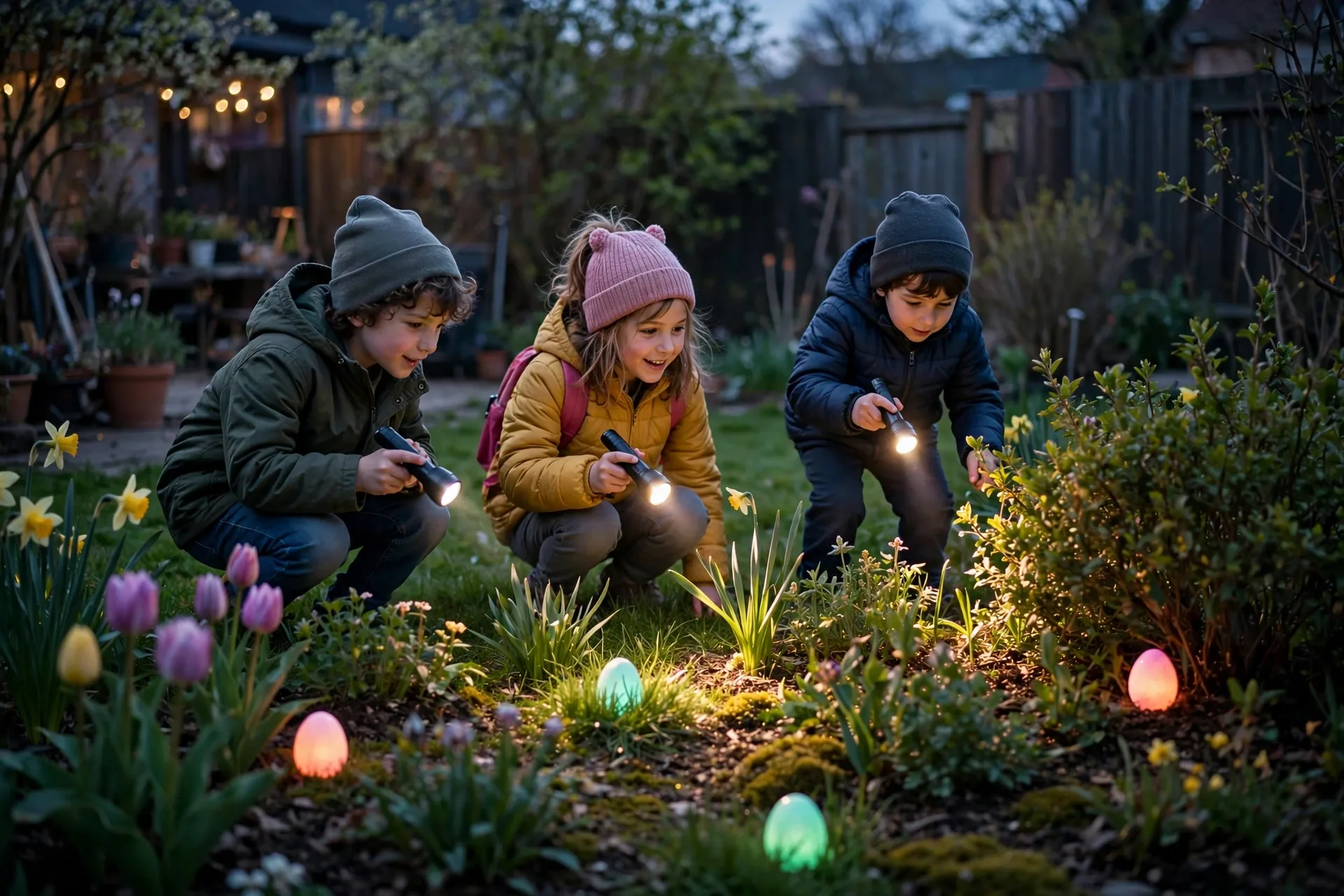
29. The flashlight egg hunt (ages 4+). Wait until the sky goes properly dark, hand each child a flashlight, and hide the eggs in the yard. The hunt becomes a treasure expedition, because every egg is a little discovery in the beam of light. Use plastic eggs in bright colors so they catch the light, and put one glow stick inside a few special eggs so the yard sparkles. My 4-year-old treats her flashlight like a magic wand, and the hunt lasts twice as long in the dark because every bush gets checked twice. Keep the hunting area small and flat, because running in the dark over uneven ground is how Easter ends with a scraped knee.
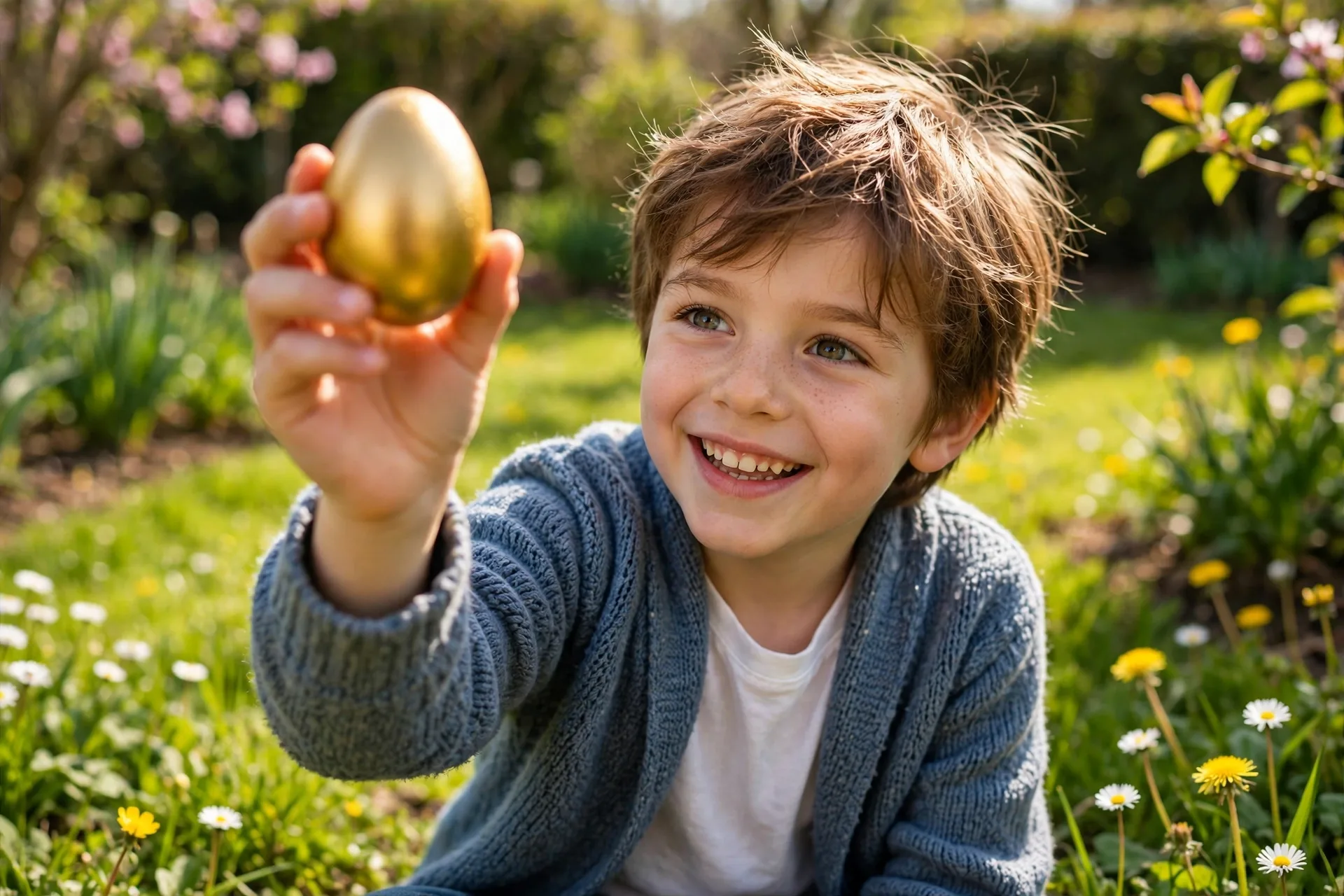
30. The golden egg hunt (ages 3+). Hide one golden egg among all the regular ones, and the child who finds it wins a special prize. The golden egg turns an ordinary hunt into a quest, because every child is secretly hunting for gold. Use a plastic egg painted gold or wrapped in gold foil, and make the prize something worth the hunt, a small toy, a book, or a special treat. My kids forget all about counting their eggs when there is gold on the line, and the hunt gets a second wind just when it would normally wind down. Hide the golden egg last, in a genuinely tricky spot, because a golden egg found in the first minute is a short story.
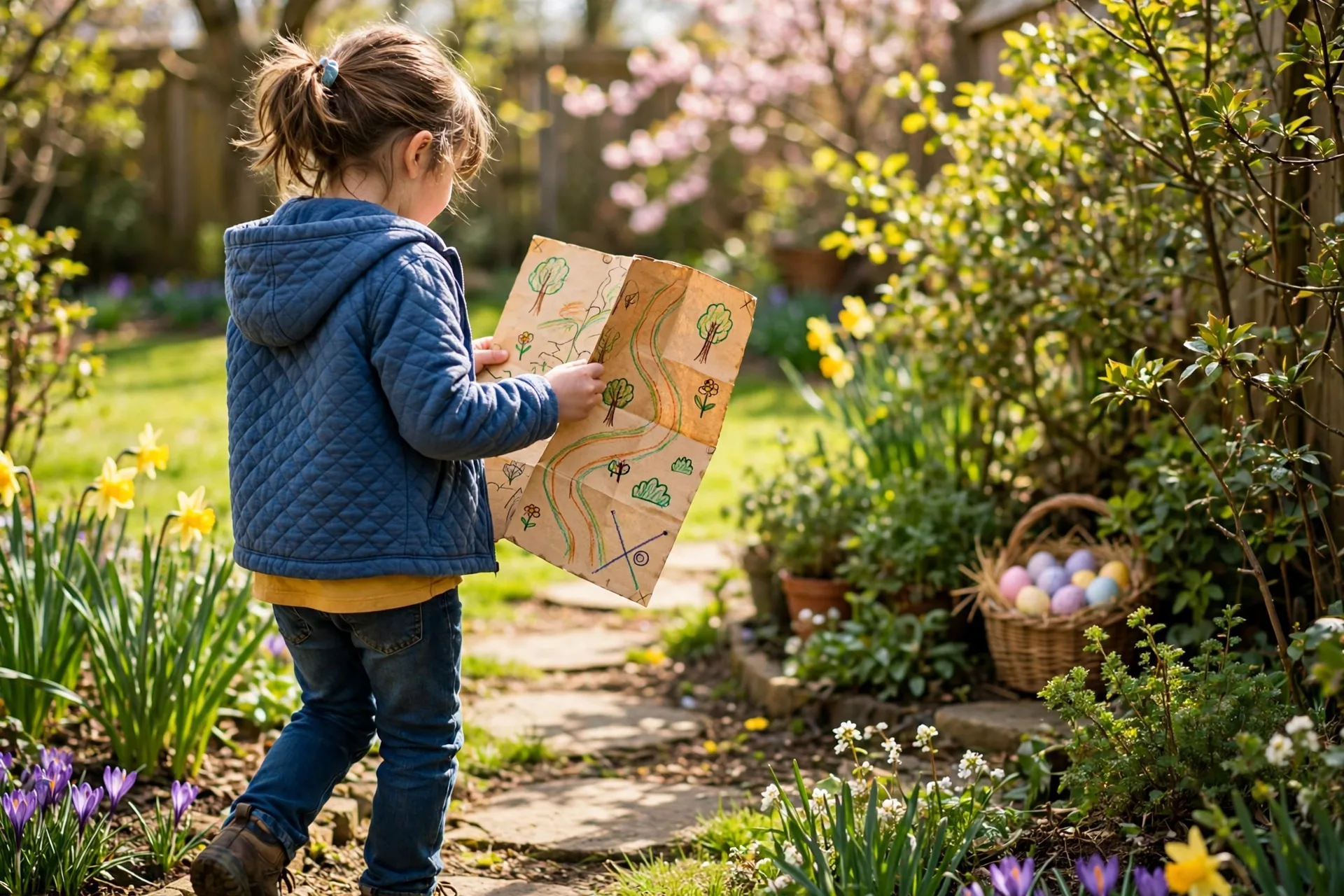
31. The backyard treasure map hunt (ages 5+). Draw a simple map of your yard on a piece of paper, mark three or four spots with an X, and hide an egg at each one. The map turns the hunt into an adventure, because the kids have to read the map, find the landmarks, and follow the trail. Draw the big tree, the fence, the flower bed, and the back steps, and keep the drawings simple enough that a 5-year-old can match them to the real yard. My 4-year-old needed a grown-up navigator for the first map, and by the second one she was leading the expedition. The basket at the final X is the treasure, and the map is the souvenir.
32. The photo clue hunt (ages 4+). Take close-up photos of hiding spots around the house and yard, print them, and put one photo inside each egg. The photo leads to the next egg, which holds the next photo, and the chain ends at the basket. Close-up photos are the trick, because a photo of just the red doorknob or the corner of the rug is a puzzle, not a giveaway. My kids study each photo like detectives, and the hunt takes twice as long because every clue gets discussed. Use five or six photos for a good length, and keep one grown-up on clue duty, because a lost photo clue is a hunt that stops dead.

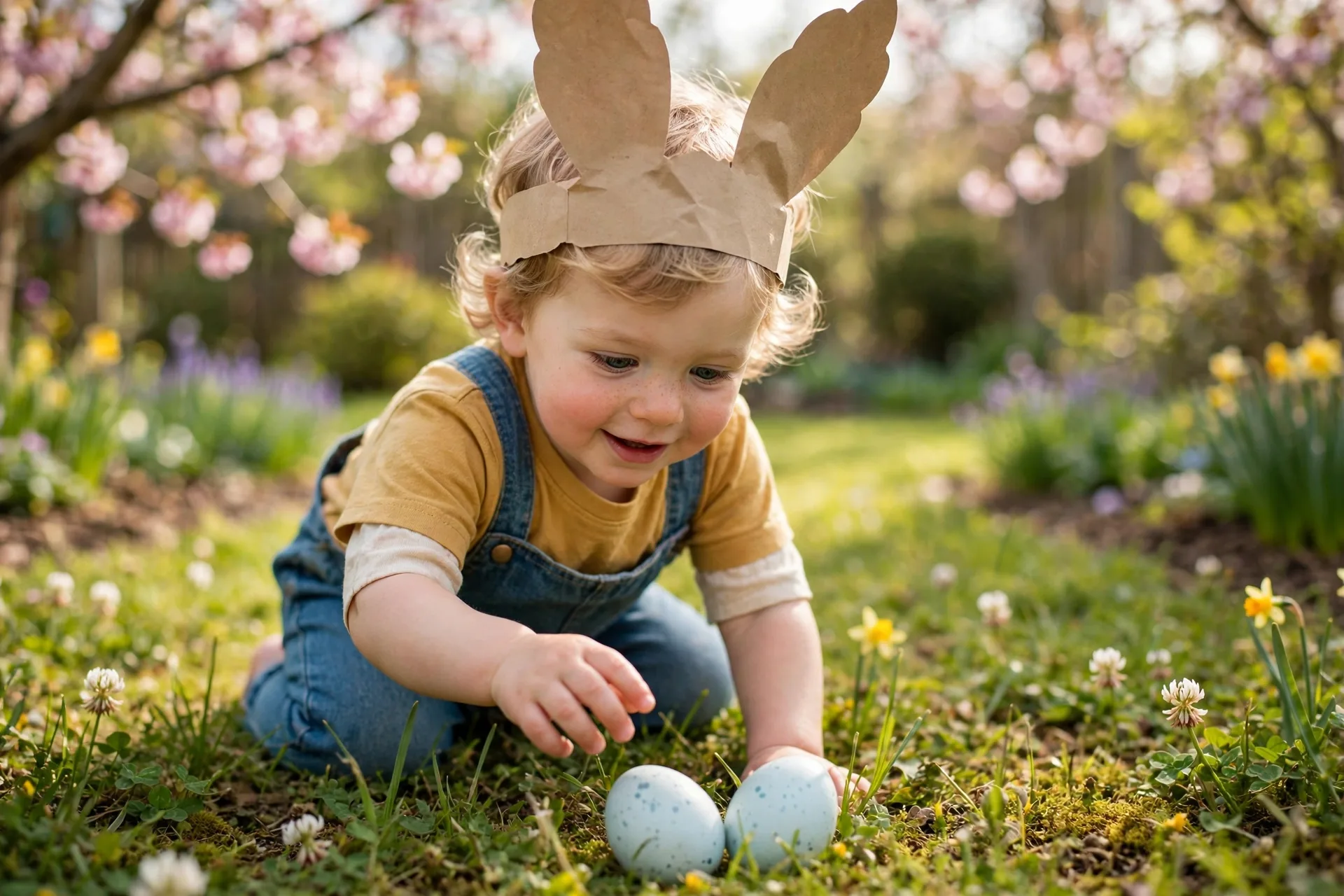
33. The bunny ears matching hunt (ages 3+). Give every child a pair of paper bunny ears to wear, and hide eggs in matching pairs. Each child hunts for the pair that matches their ears, pink ears hunt pink eggs, blue ears hunt blue eggs, and the matching makes the hunt fair without any counting. The ears make every photo adorable, and the matching gives toddlers a clear job instead of a race they cannot win. My 2-year-old wears her ears all day after the hunt, and the eggs get found at her speed, which is the whole point. Cut the ears from construction paper and tape them to a headband, because ears that stay on are ears that get worn.
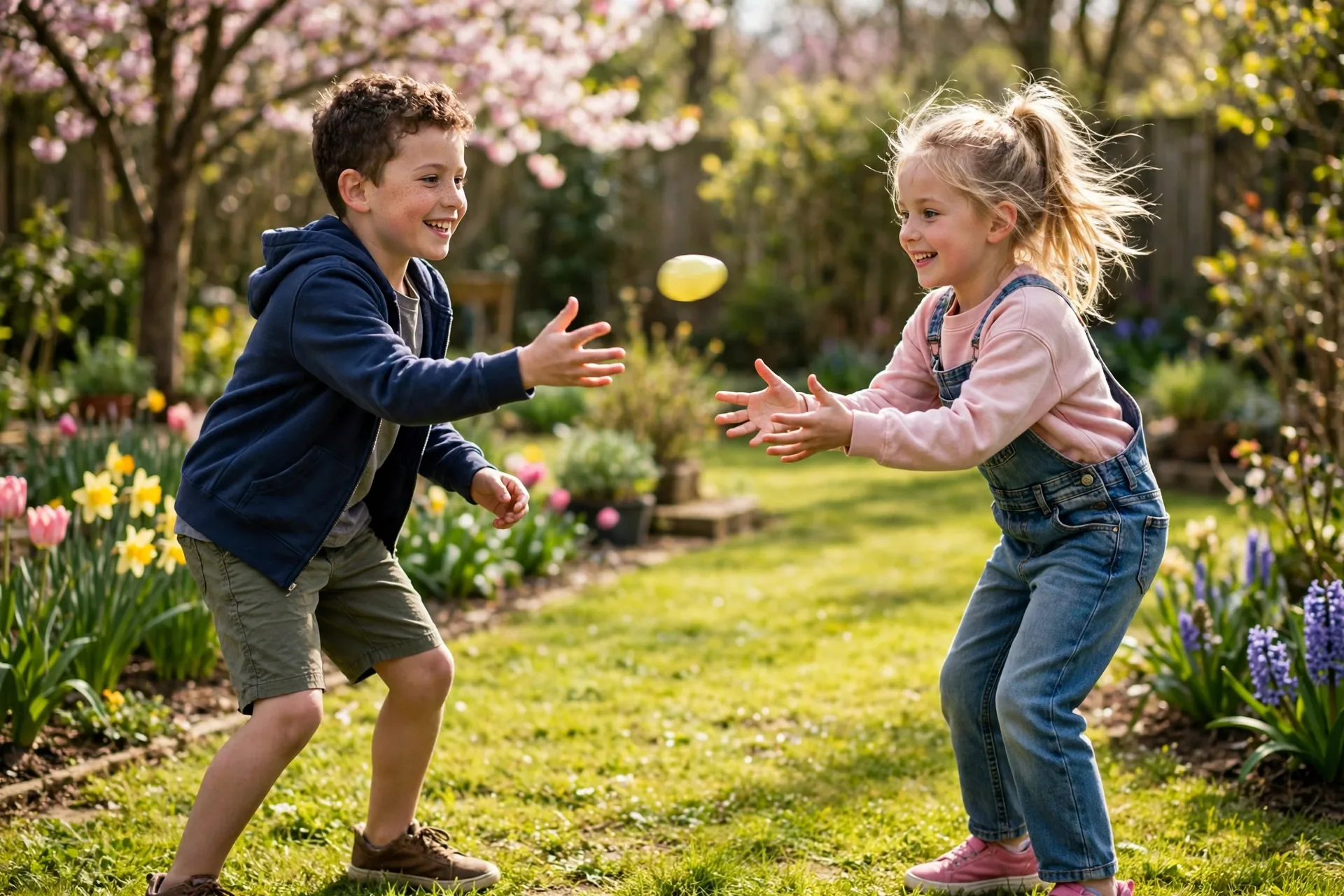
34. The egg toss hunt (ages 4+). Hide the eggs, then make the finding only half the game. Once an egg is found, the finder tosses it gently to a partner, who tosses it back, and the egg joins a growing pile at home base. Dropped eggs go back into hiding, which keeps the hunt going and the tossing gentle. Use plastic eggs, never real ones, because a real egg does not survive a toss, and keep the tossing distance short for little arms. My kids treat the toss like a ceremony, and the hunt stretches out because every found egg gets a parade back to base. This is the hunt for a small yard, because the tossing needs open space, not flower beds.
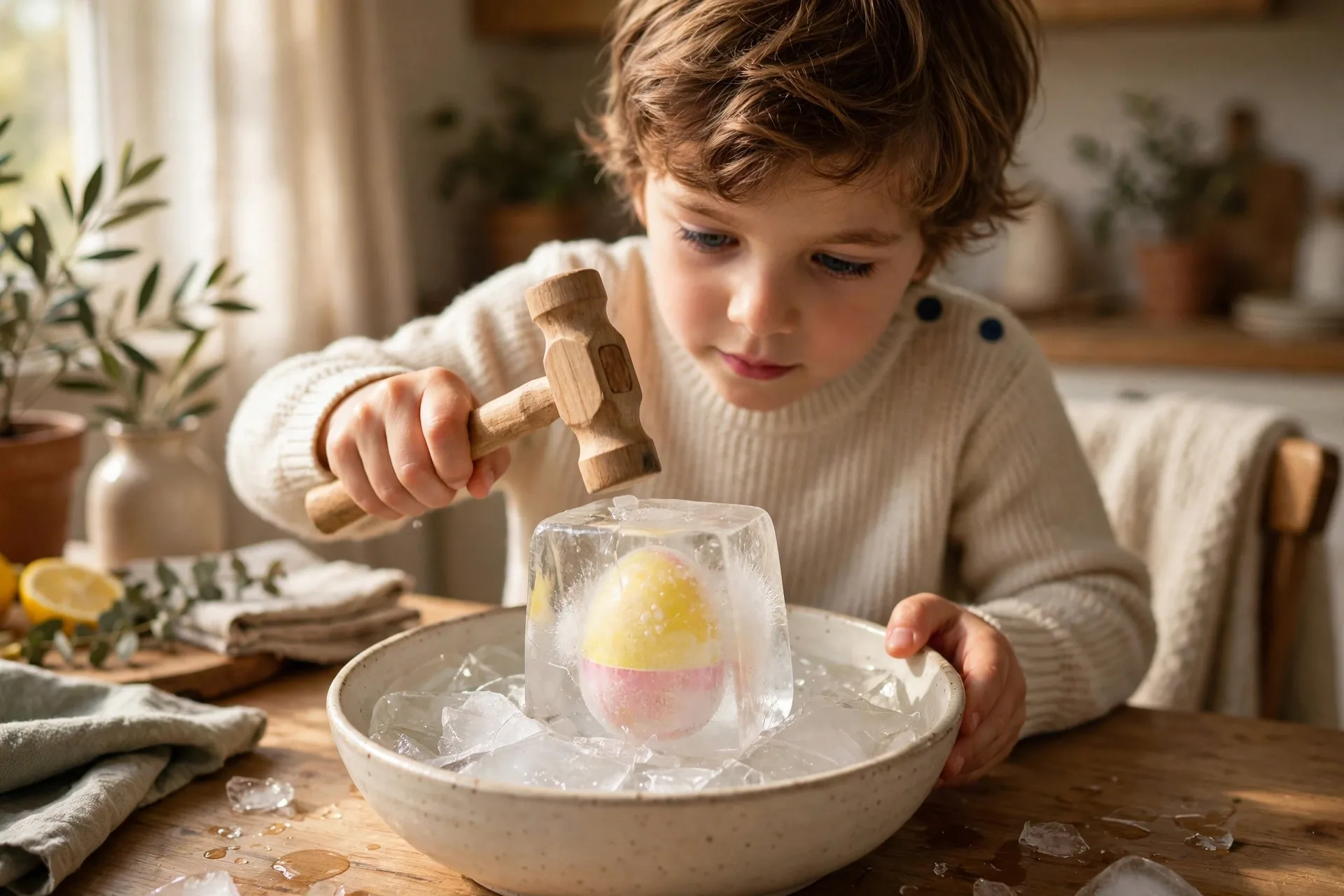
35. The frozen egg hunt (ages 4+). Freeze small plastic eggs inside blocks of ice the night before, then hide the ice blocks around the yard. The kids find the ice, then work out how to free the egg, warm water, sunshine, or good old banging it on the grass. The freezing turns a hunt into a science experiment, because the ice melts slowly and the egg appears like magic. My 4-year-old checks her ice block every ten minutes, and the waiting is part of the fun. Use small containers and fill them only halfway, because a huge block takes all afternoon to melt, and little hands lose patience long before the egg is free.
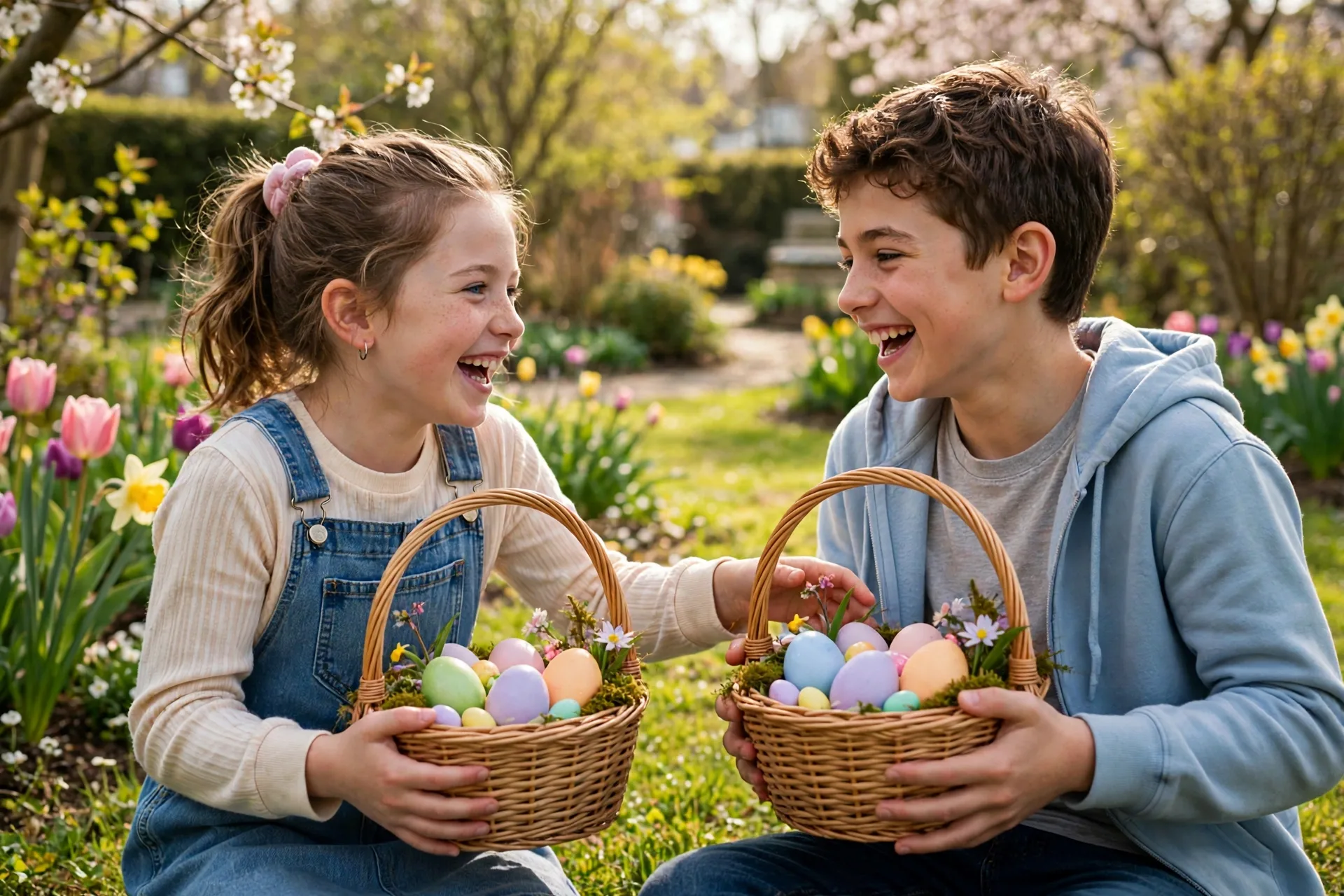
36. The sibling swap hunt (ages 4+). Each child hunts for a basket that is not their own, then swaps at the end. The swap turns the hunt into a gift, because every egg you find is for your brother or sister, and the giving is the best part. My kids hunt harder for each other than they ever hunt for themselves, and the swap at the end feels like Christmas morning. Set a simple rule, that you hunt for the basket with the other name on it, and keep the baskets clearly labeled so nobody hunts the wrong one. This is the hunt that ends with hugs instead of counting, and the counting never mattered anyway.
More Egg Decorating
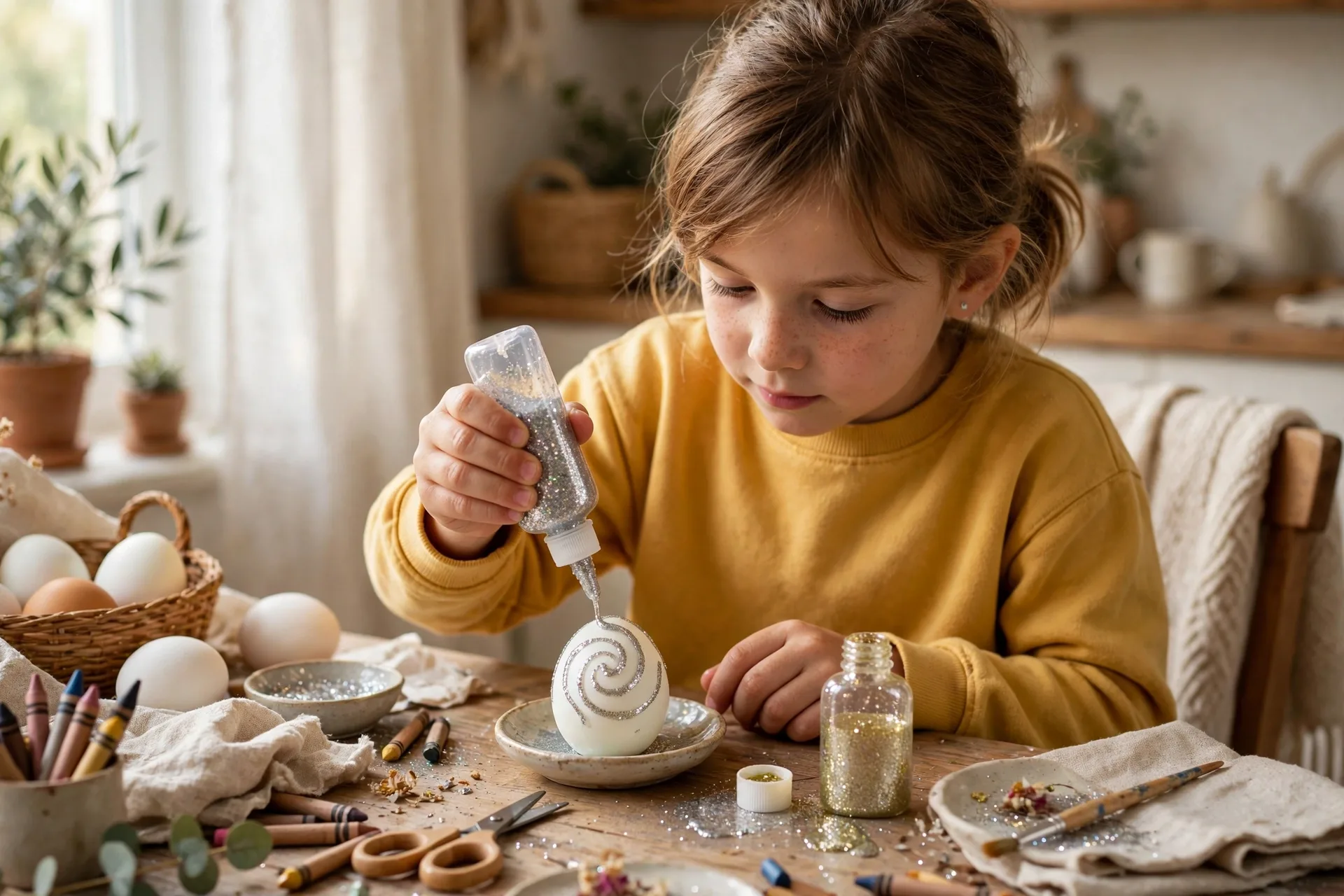
37. Glitter glue eggs (ages 4+). Draw swirls, zigzags, and dots on hard-boiled eggs with glitter glue, then let them dry. The glitter dries into raised sparkly lines that catch the light, and the eggs look like they came from a fancy shop. A grown-up squeezes the glue for little kids, because the tubes need a firm grip, and the kids do the drawing. My 4-year-old draws a spiral on every egg and calls it a galaxy egg, which is exactly right. Put the drying eggs back in the carton so they do not roll off the table, and use washable glitter glue, because glitter has a way of getting everywhere, including on the dog.
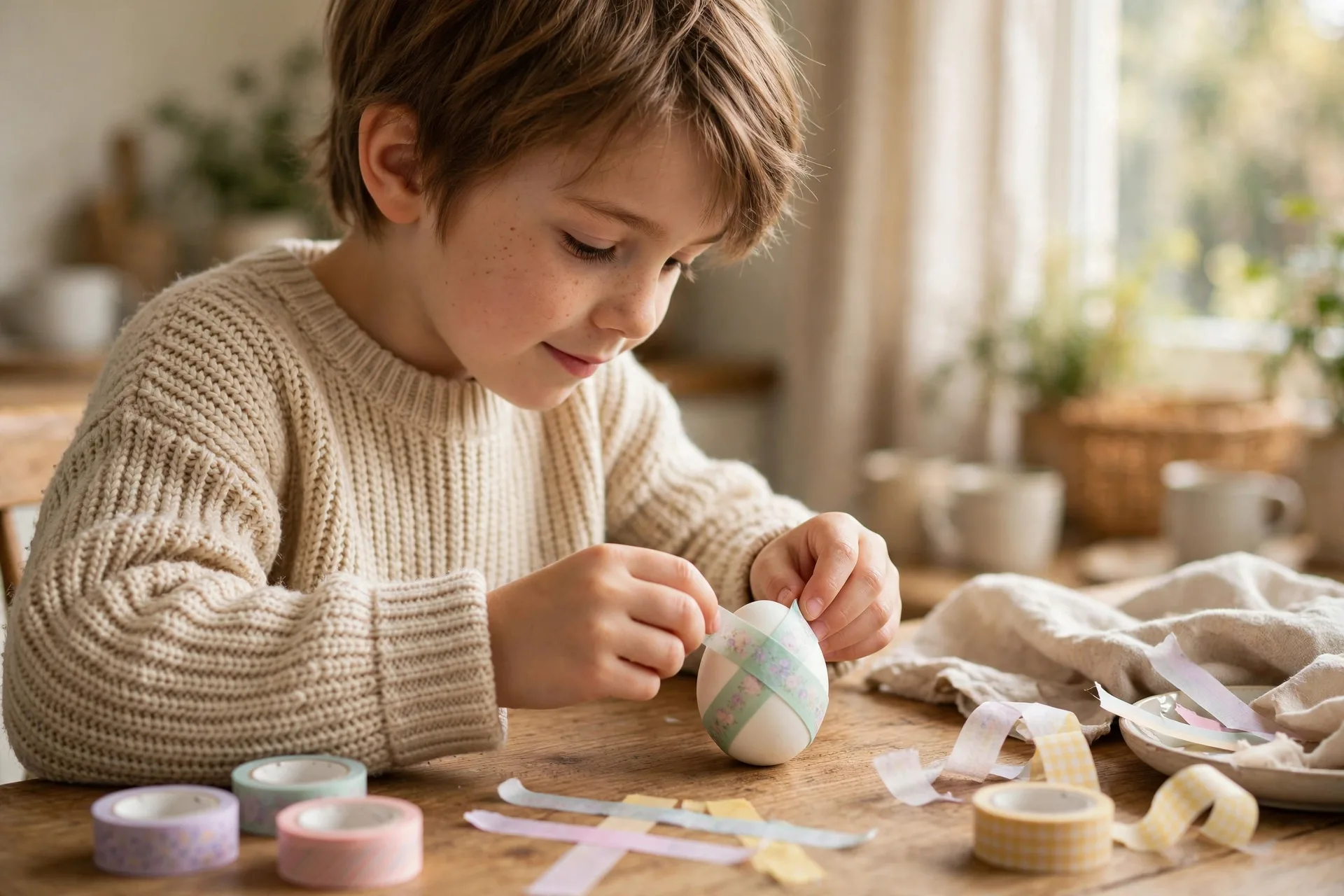
38. Washi tape eggs (ages 3+). Wrap strips of washi tape around hard-boiled or wooden eggs in stripes, crisscrosses, and bands. The tape peels off cleanly, so mistakes are free, and the patterns look sharp with zero skill required. My 2-year-old wraps one strip around and around until the egg is fully covered, and it still looks great, because washi tape forgives everything. Keep a few rolls in pastel colors and one roll with a fun pattern, because the pattern roll is always the first one to run out. These eggs never crack, never stain, and they go straight into the Easter display when the decorating is done.
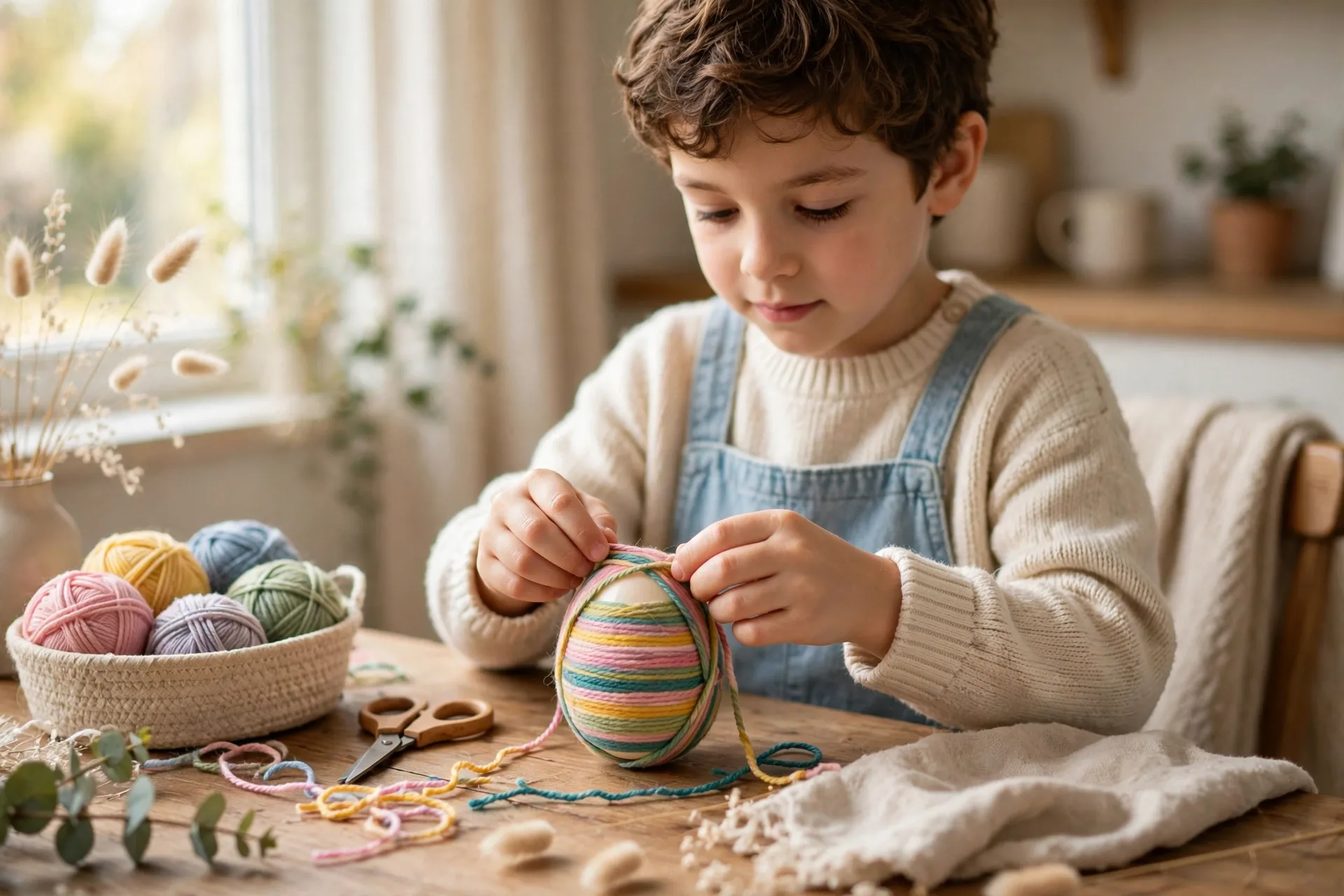
39. Yarn wrapped eggs (ages 4+). Wrap yarn around a plastic egg in stripes, changing colors as you go, and glue the end down when you are done. The yarn makes a soft, cozy egg that looks handmade in the best way, and the wrapping is a calm, repetitive job that suits a quiet afternoon. My 4-year-old wraps while I hold the egg steady, and the color changes are her favorite decision of the day. Use chunky yarn, because thin yarn takes forever and little hands lose interest, and keep the glue to a single dot at the start and the end. These eggs are too pretty to hide, so they go on the mantel.
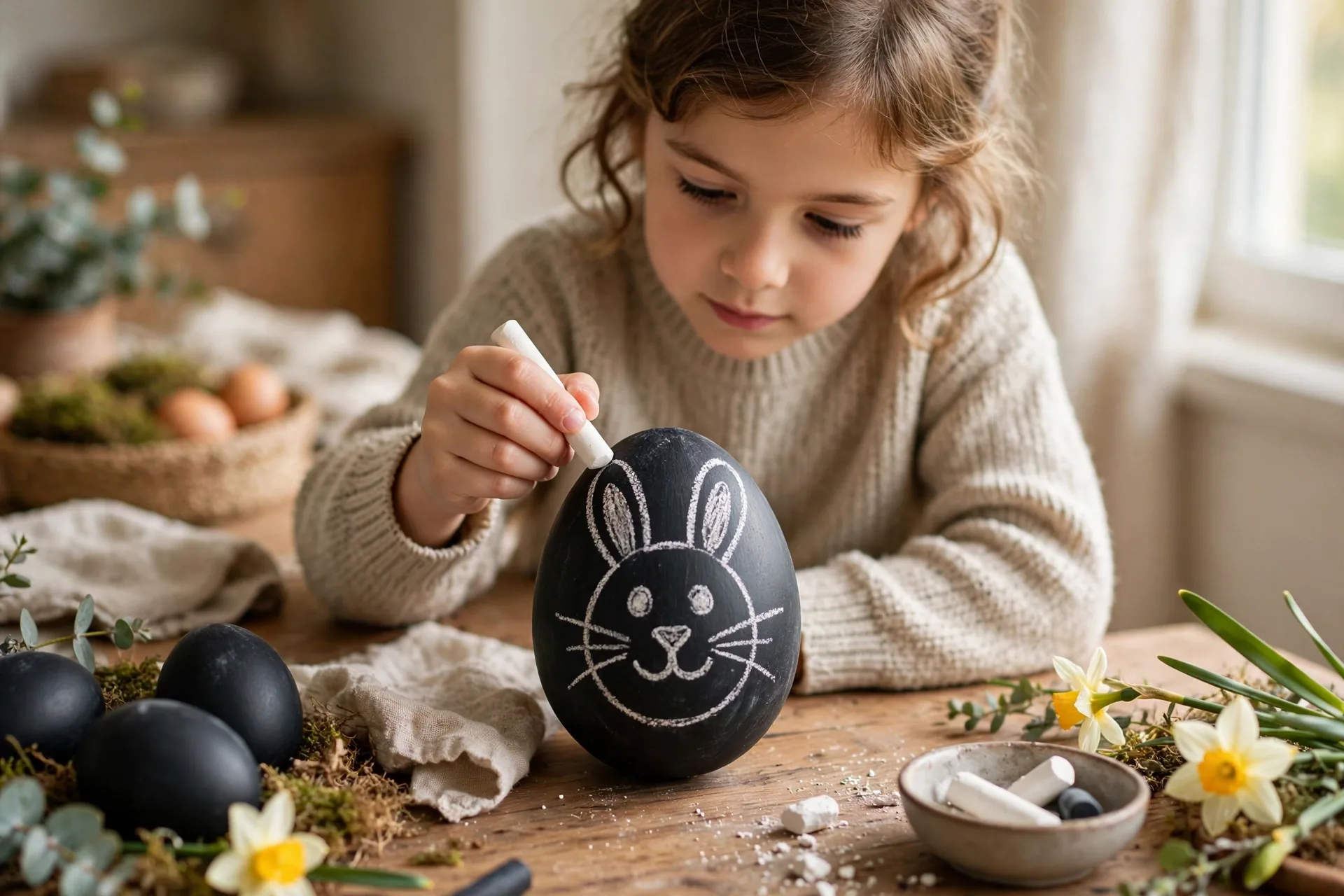
40. Chalkboard paint eggs (ages 5+). Paint wooden or plastic eggs with chalkboard paint, let them dry, and hand your child a piece of chalk. The eggs become tiny chalkboards, and every drawing can be wiped off and started again. My kids draw a face, erase it, draw a flower, erase it, and the eggs never run out of ideas. A grown-up does the painting, because chalkboard paint is not a kid supply, and the kids do the drawing. Keep a damp cloth nearby for erasing, and store the finished eggs in the carton, because chalk dust gets on everything, including the Easter dress, if you let it.
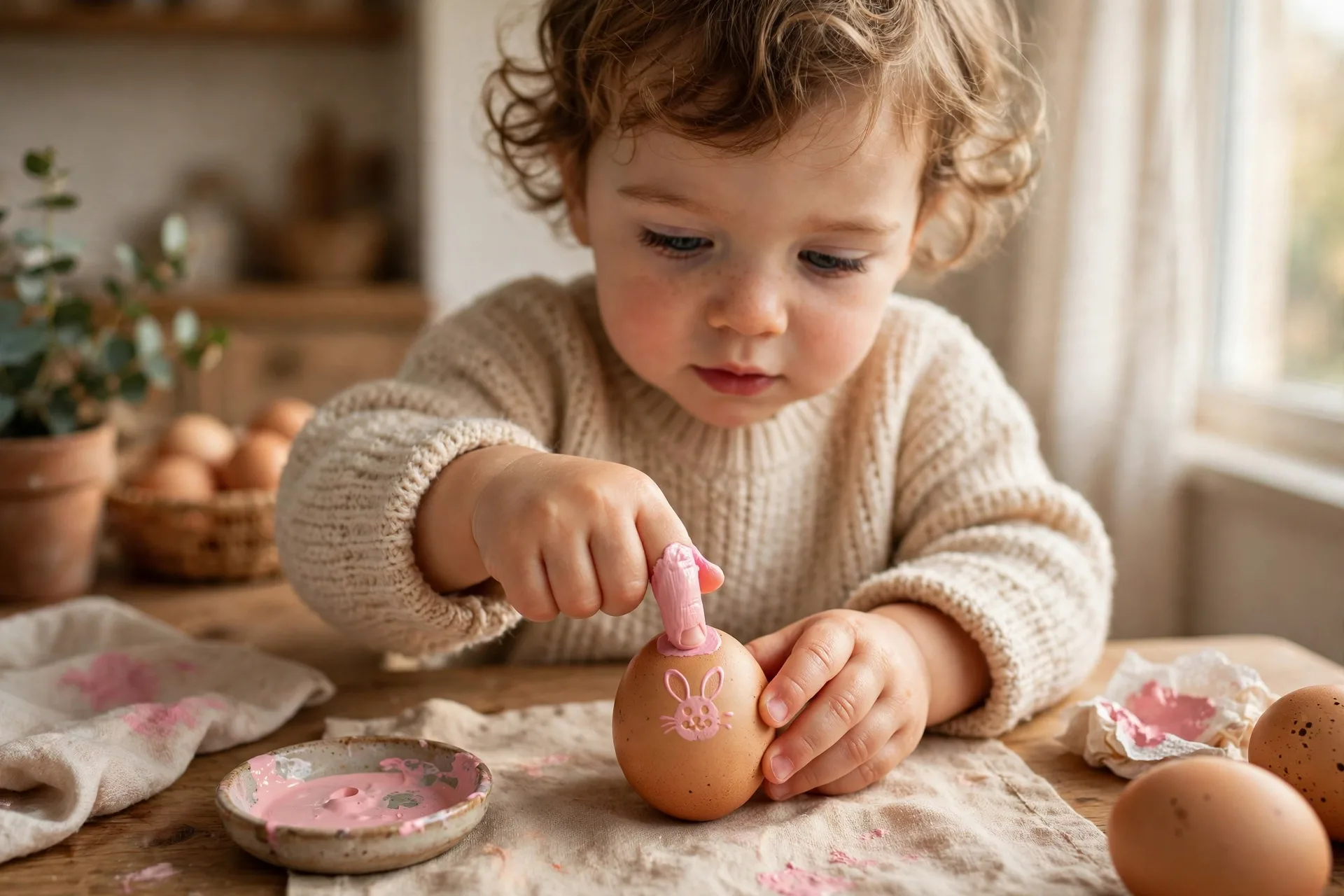
41. Thumbprint bunny eggs (ages 2+). Press a painted thumb onto a hard-boiled egg to make a bunny body, then draw ears, eyes, and whiskers around the print with a marker. The thumbprint is the bunny, and the drawing finishes it, so even the youngest artist makes a recognizable bunny. My 2-year-old stamps thumbprint after thumbprint, and every egg gets a whole bunny family. Use washable paint on the thumb and a fine marker for the details, because the details are a grown-up job on a wobbly egg. These are the eggs to photograph, because the thumbprint bunnies are the ones you will want to remember.
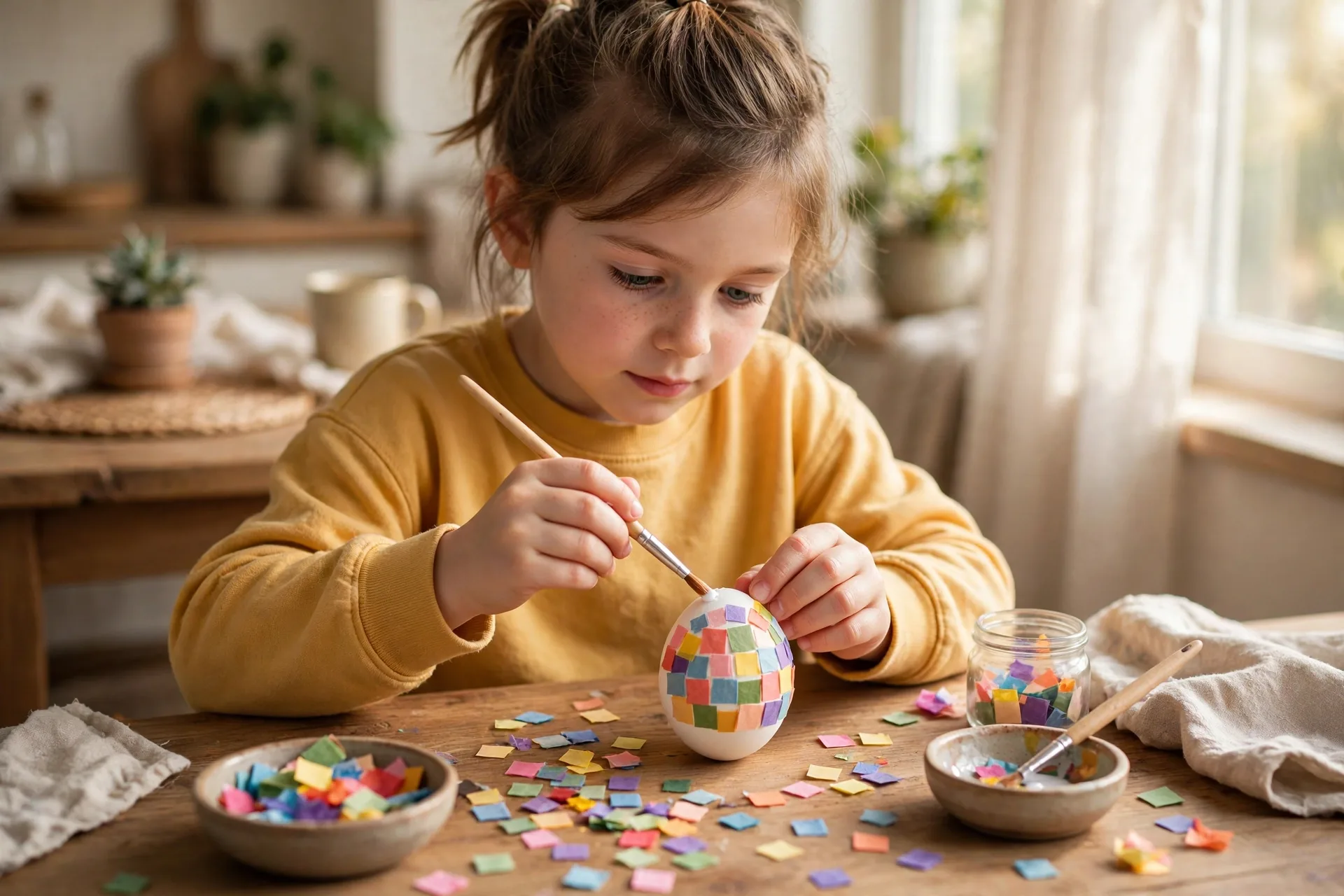
42. Tissue paper mosaic eggs (ages 3+). Tear tissue paper into small squares, brush a little glue wash onto a hard-boiled or wooden egg, and stick the squares on in overlapping layers. The tissue goes slightly see-through when it is wet, so the colors blend into a stained-glass mosaic when it dries. My 4-year-old tears the paper herself, because tearing is half the fun, and the sticking is a slow, careful job that keeps her at the table. Use a small brush for the glue wash, because fingers get too sticky to pick up the tiny squares, and work over a tray, because tissue paper floats away on the smallest breeze.
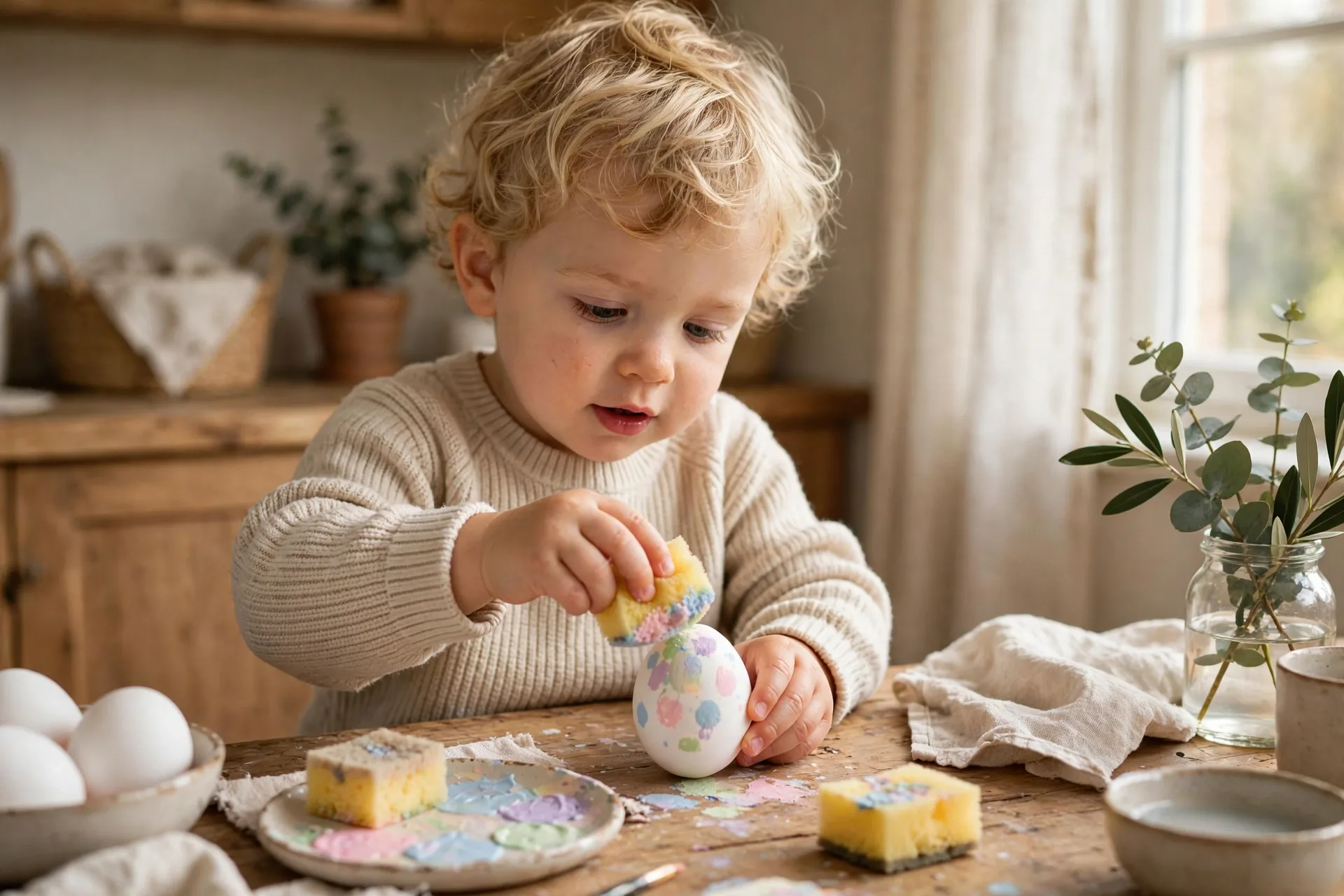
43. Sponge dabber eggs (ages 2+). Dip a small sponge or a cotton ball into paint and dab it onto hard-boiled or wooden eggs. The dabbing makes soft, cloudy spots of color, and the sponge is the perfect toddler tool, because it cannot drip and it cannot be used wrong. My 2-year-old dabs with total concentration, and the eggs come out looking like watercolor. Use a separate sponge for each color, because mixed sponges make brown, and brown is the color of every toddler art project that went one color too far. These eggs dry fast and look lovely in a basket lined with tissue paper.
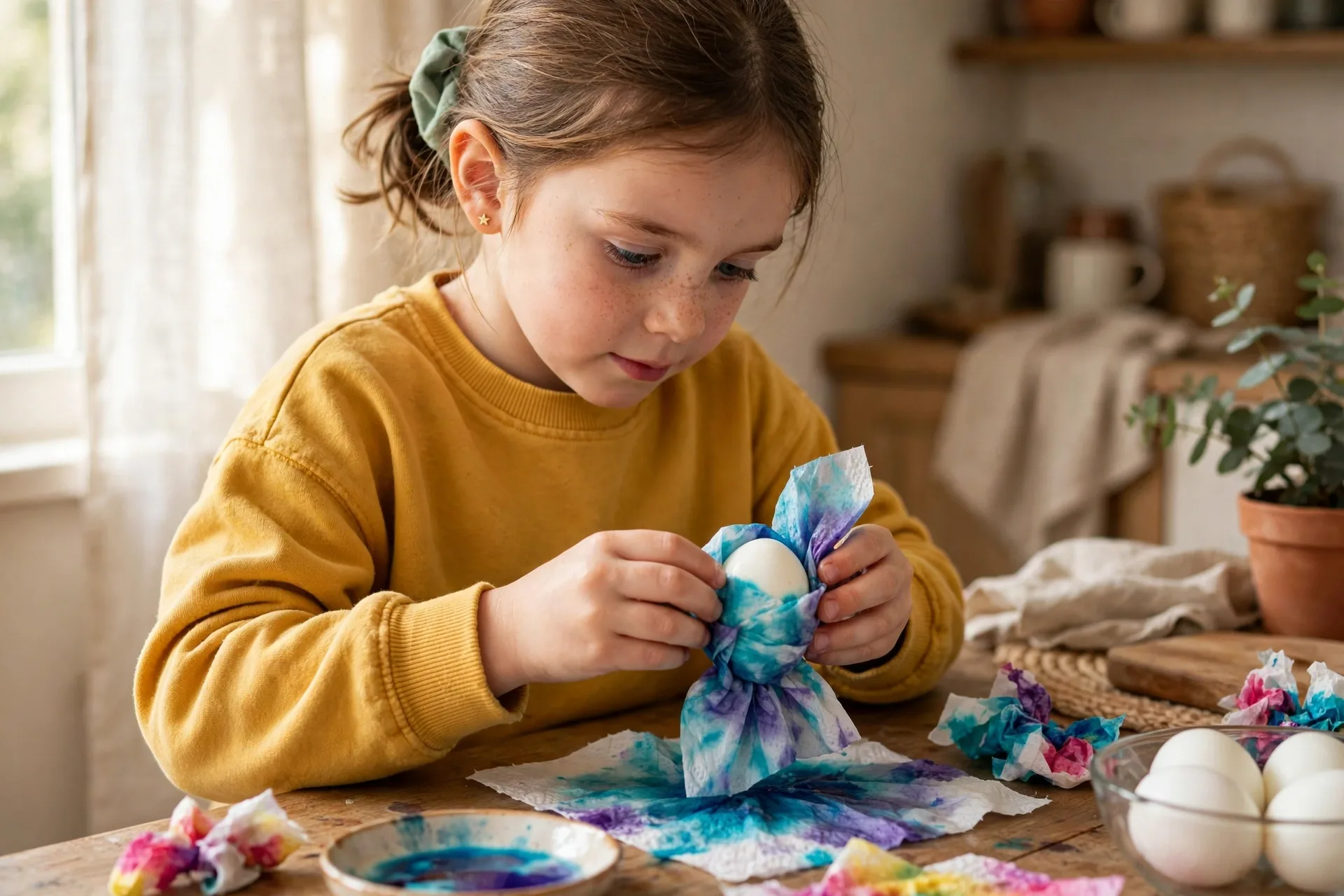
44. Tie-dye eggs (ages 4+). Wrap a hard-boiled egg in a paper towel, drop food coloring onto the towel in different spots, then spritz it lightly with water and let it sit. Unwrap the egg to find a tie-dye pattern in swirls of color, and no two eggs ever match. My 4-year-old picks the colors like a designer, and the unwrapping is the best part, because the reveal is always a surprise. A grown-up handles the food coloring bottles, because the dye stains hands for a day, and the kids do the wrapping and the choosing. Wear old clothes, because tie-dye is a beautiful mess that does not stay on the paper towel.
More Spring Crafts
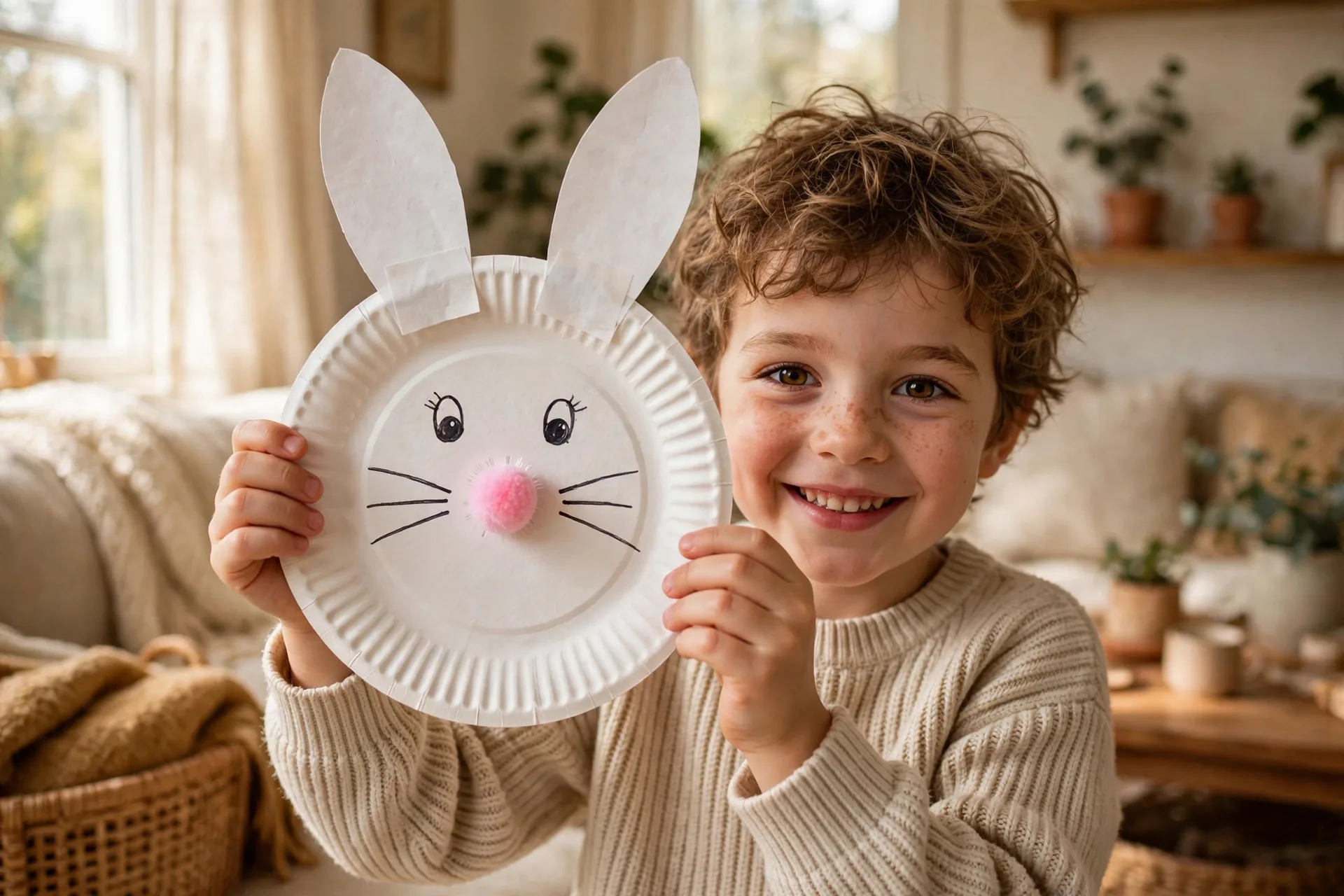
45. Paper plate bunny faces (ages 3+). Paint a paper plate white or pink, glue on paper ears, draw the eyes and whiskers, and add a pink pom-pom nose. The plate becomes a bunny face, and the bunny face becomes a mask, a wall decoration, or a puppet, depending on the mood. My 2-year-old does the nose and the whiskers, because those are the fun parts, and my 4-year-old does the ears and the painting. Punch holes on the sides and add yarn if the bunny needs to be worn, or glue a craft stick on the back for a puppet. Make one for every member of the family, because a wall of bunny faces is the Easter decoration that makes everyone smile.
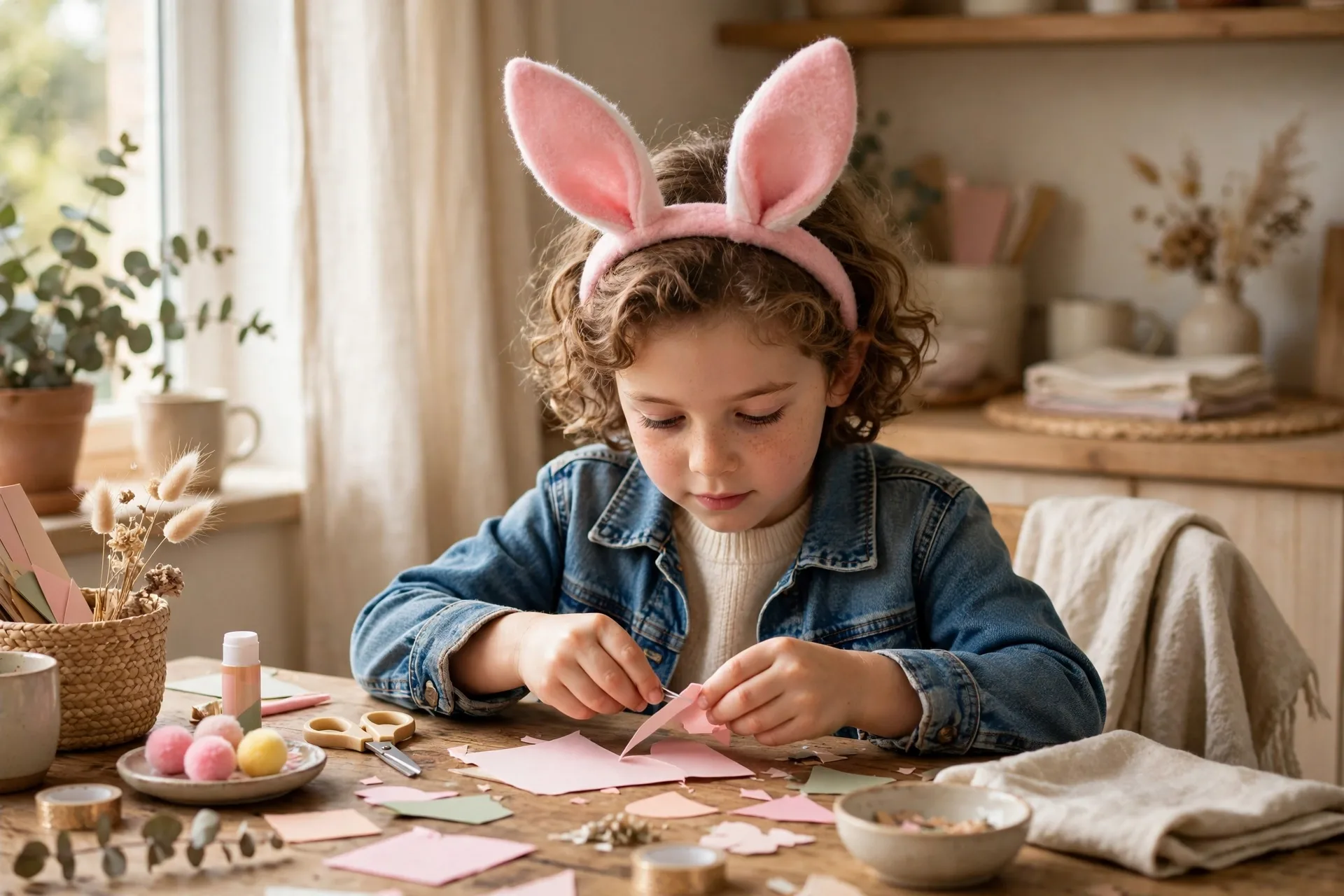
46. Felt bunny ears (ages 3+). Cut two bunny ear shapes from felt, a big outer ear and a smaller pink inner ear, glue them together, and attach them to a headband. The felt ears are soft, they stay upright, and they survive a whole day of being worn, which paper ears do not. My kids wear theirs from breakfast to bedtime on Easter, and the ears go into the dress-up box afterward for a second life. Use a plain headband and hot glue handled by a grown-up, because felt needs a strong bond to stay standing. Make a pair for every guest, because a room full of people in bunny ears is a party, not just a craft.
47. Carrot paper garland (ages 4+). Cut carrot shapes from orange paper, add green paper tops, and string them together into a garland for the mantel or the front door. The cutting is the craft and the hanging is the ceremony, because a garland always needs a grand unveiling. My 4-year-old cuts the carrots while I cut the tops, and the stringing is a threading job that keeps little fingers busy. Use a hole punch for the string holes, because punched holes do not tear, and alternate big carrots and small carrots for a pattern that looks intentional. This is the decoration that stays up all spring, because carrots are not just for Easter.

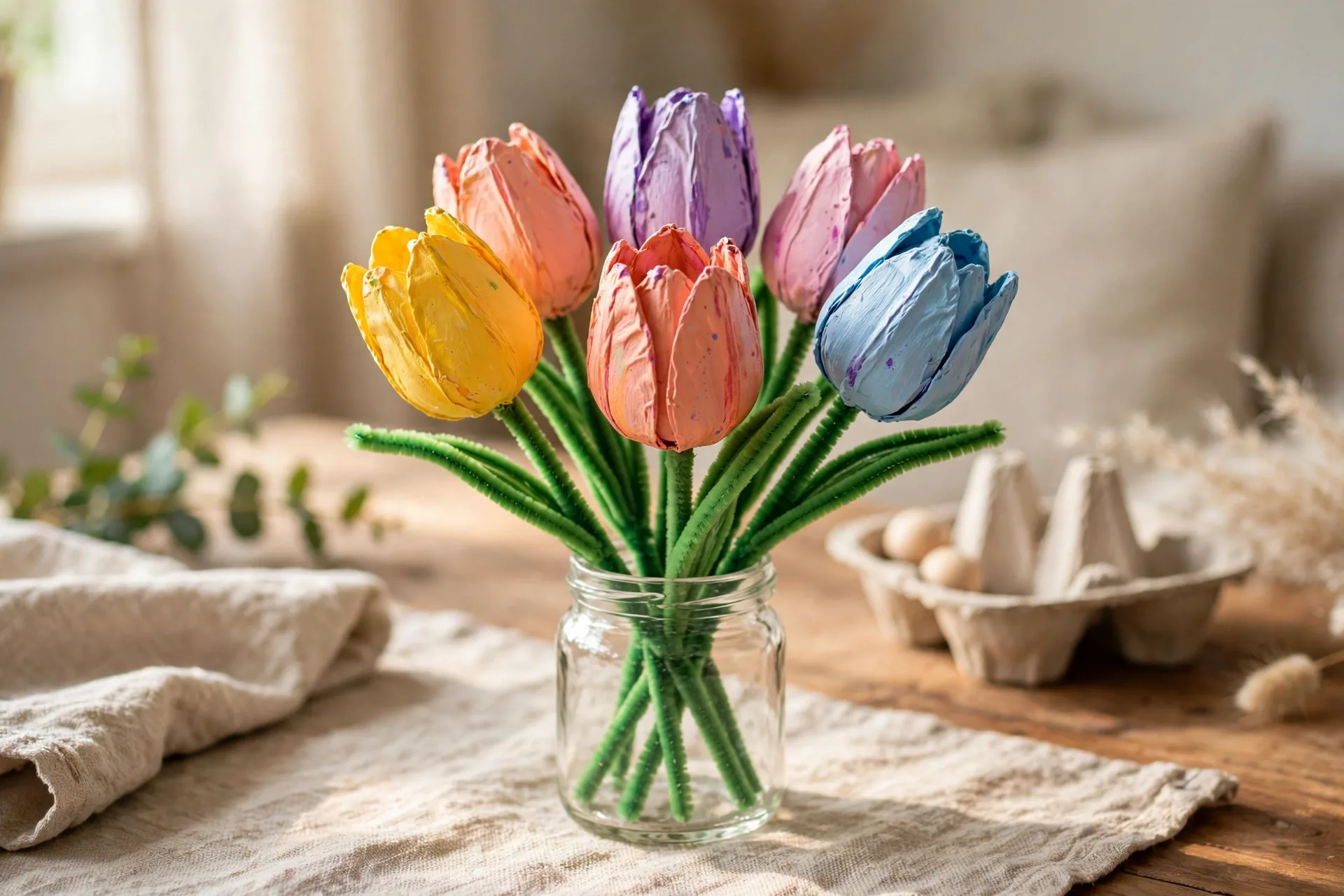
48. Egg carton tulips (ages 3+). Cut the cups from a cardboard egg carton, paint them red, yellow, and pink, and glue a green pipe cleaner stem into each one. The cups open like tulip petals, and a jar full of them looks like a spring bouquet that never wilts. A grown-up does the cutting, because egg cartons are tougher than they look, and the kids do the painting and the arranging. My 2-year-old paints every tulip purple, and my 4-year-old makes a rainbow, and both bouquets are beautiful. These are the flowers to make for grandma, because they last longer than the real ones and they come with a story.
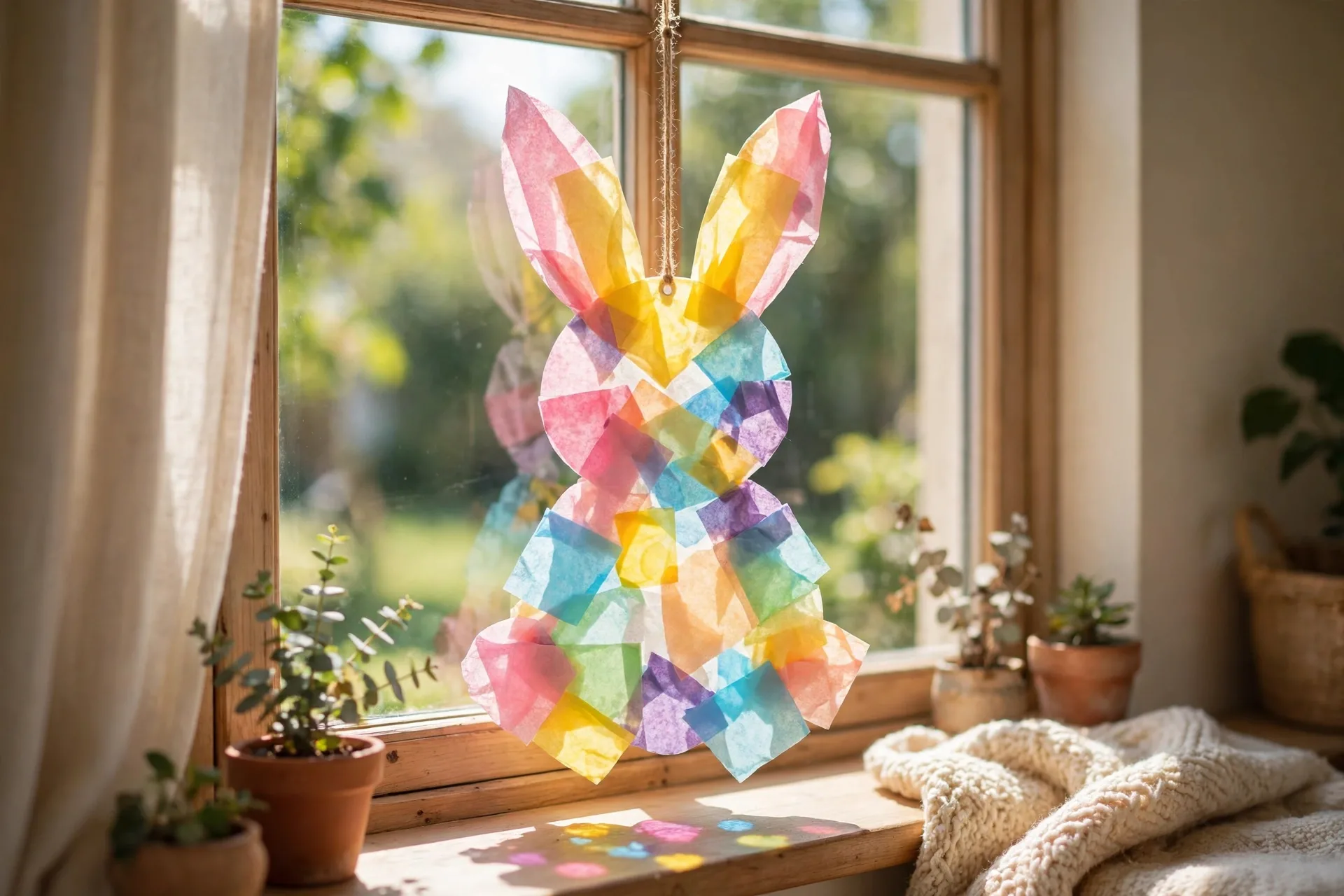
49. Spring suncatchers (ages 4+). Cut a bunny or egg shape from clear contact paper, stick small pieces of colored tissue paper onto the sticky side, and hang it in a sunny window. The light shines through the tissue and paints the room in color, and the suncatcher is the craft that keeps giving every sunny morning. My kids make one each and then argue about whose window gets which one, which is a lovely problem to have. Use contact paper rather than glue, because the sticking is instant and there is no drying time to wait through. Make a whole window full, because one suncatcher looks lonely and six look like spring arrived early.
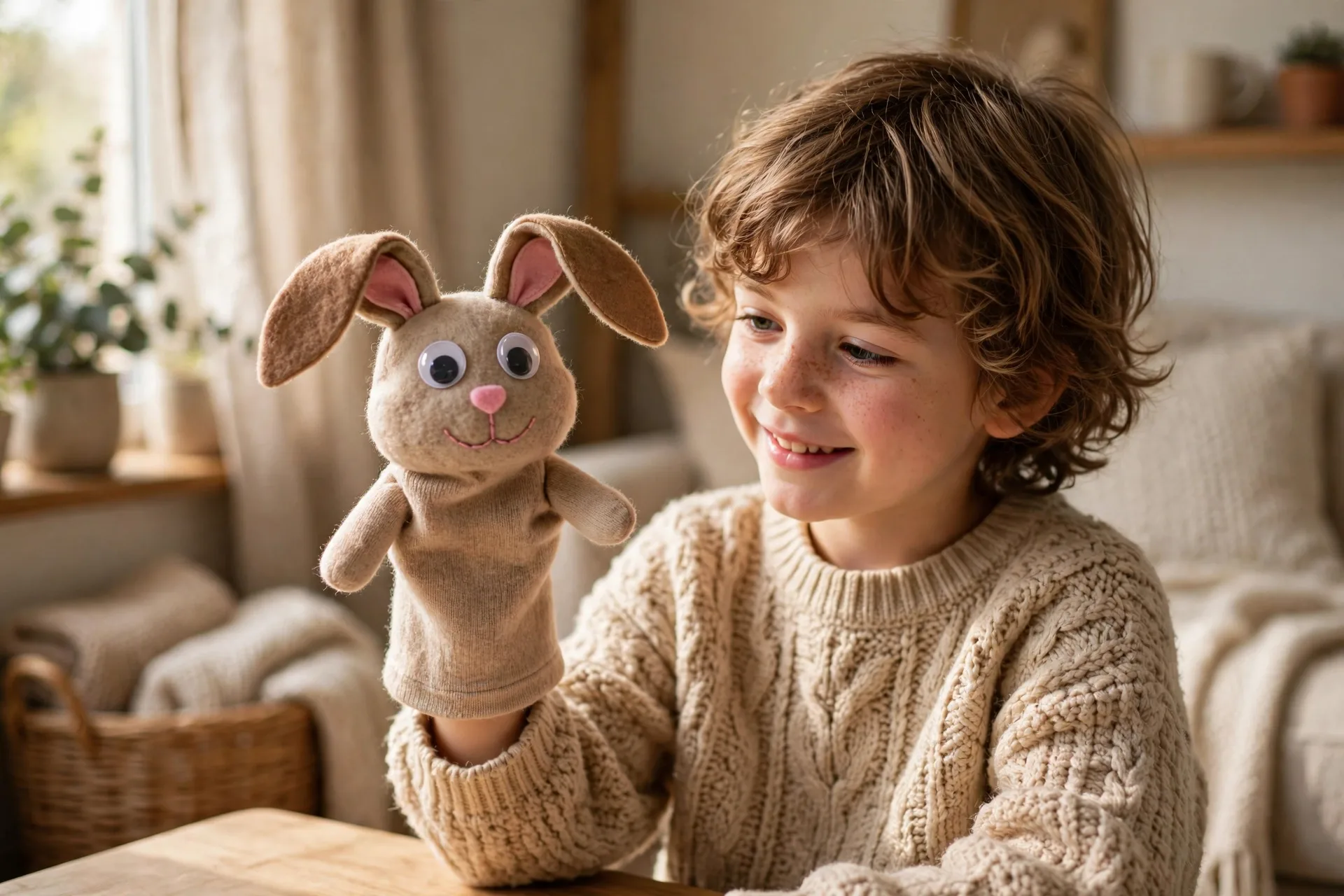
50. Bunny sock puppets (ages 3+). Take a clean white sock, glue on felt ears, googly eyes, and a pink pom-pom nose, and you have a bunny puppet with a mouth that actually moves. Two puppets minimum, because a puppet alone is a craft and two puppets are a show, and the show is what buys you time to drink your coffee while it is warm. My kids put on a puppet show for the grandparents over video call, and the bunny puppets stole the whole call. Use fabric glue or a grown-up with a glue gun, because regular glue does not hold felt to a sock for long. Keep the puppets in the dress-up box, because they come back out for every holiday.
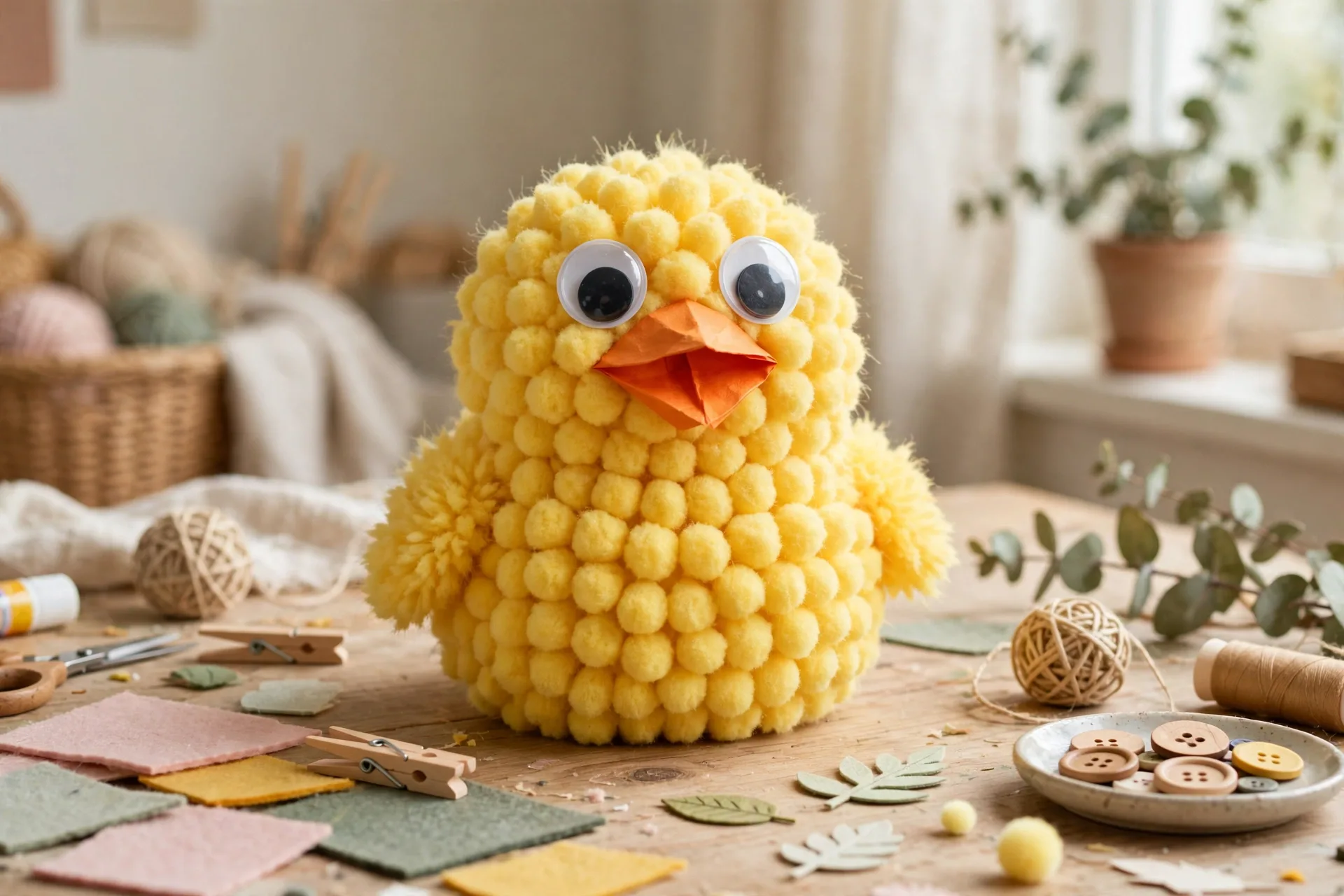
51. Chick pom-poms (ages 4+). Wrap yellow yarn around a fork or a piece of cardboard, tie it in the middle, cut the loops, and fluff it into a pom-pom. Glue on an orange paper beak and googly eyes, and the pom-pom becomes a chick. The wrapping is the patient part and the fluffing is the magic part, because a flat bundle of yarn becomes a round chick in one snip. My 4-year-old wraps while I tie, and the chick gets a name before the glue is even dry. Make a whole brood of chicks in different sizes, because one chick looks lonely and five chicks look like a farmyard.
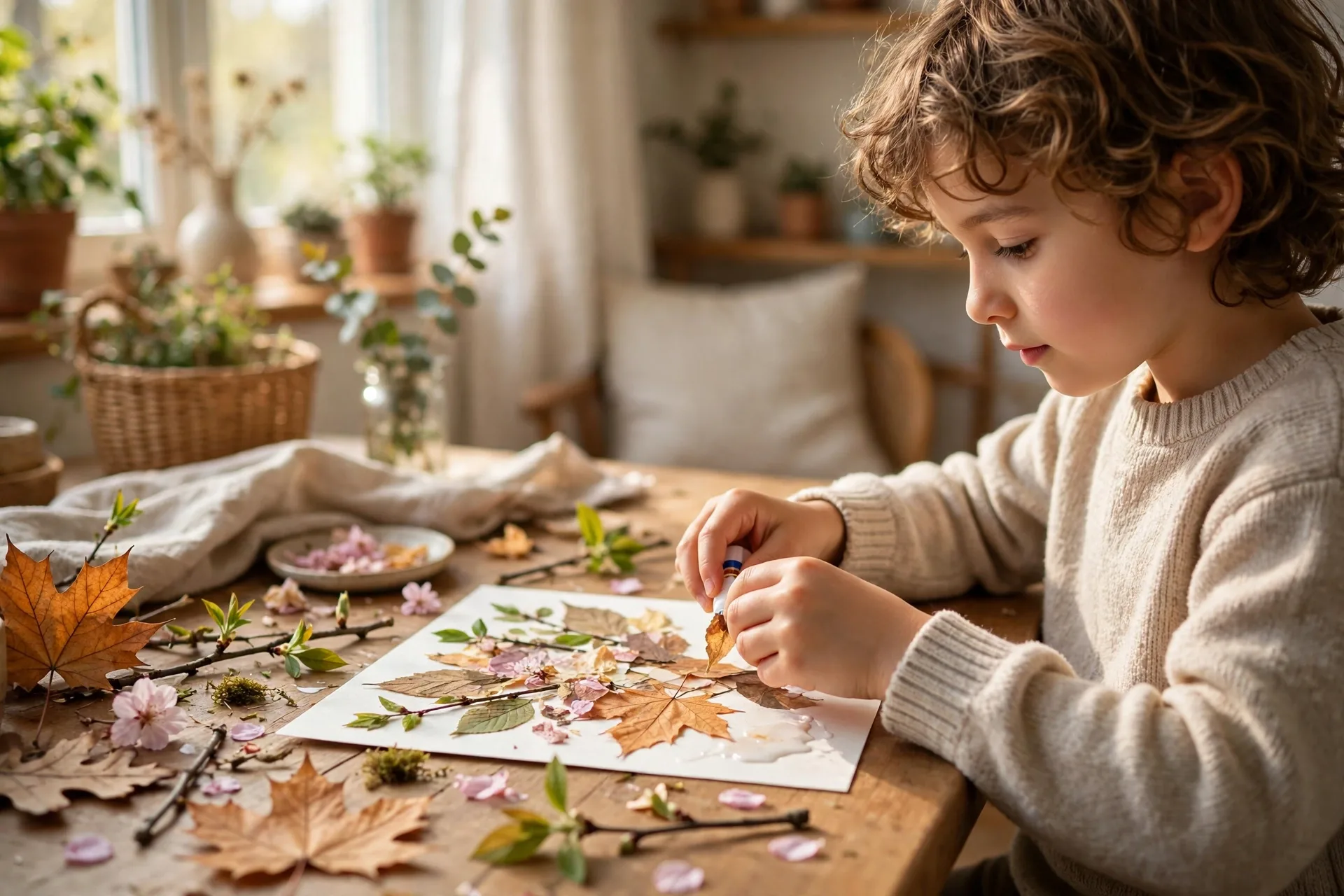
52. Spring nature collages (ages 3+). Go on a walk and collect leaves, petals, twigs, and seed pods, then glue them onto a sheet of paper in any arrangement your child likes. The collecting is half the activity, and the gluing is the quiet part that follows, so this craft fills a whole morning. My kids bring back pockets full of treasures and then spend ages deciding where each leaf belongs. Use thick white glue and a big sheet of paper, because nature collage needs room to spread out, and press the finished collage under a heavy book overnight so the leaves dry flat. This is the craft that turns a walk into art, and the art into a memory of spring.
More Easter Games
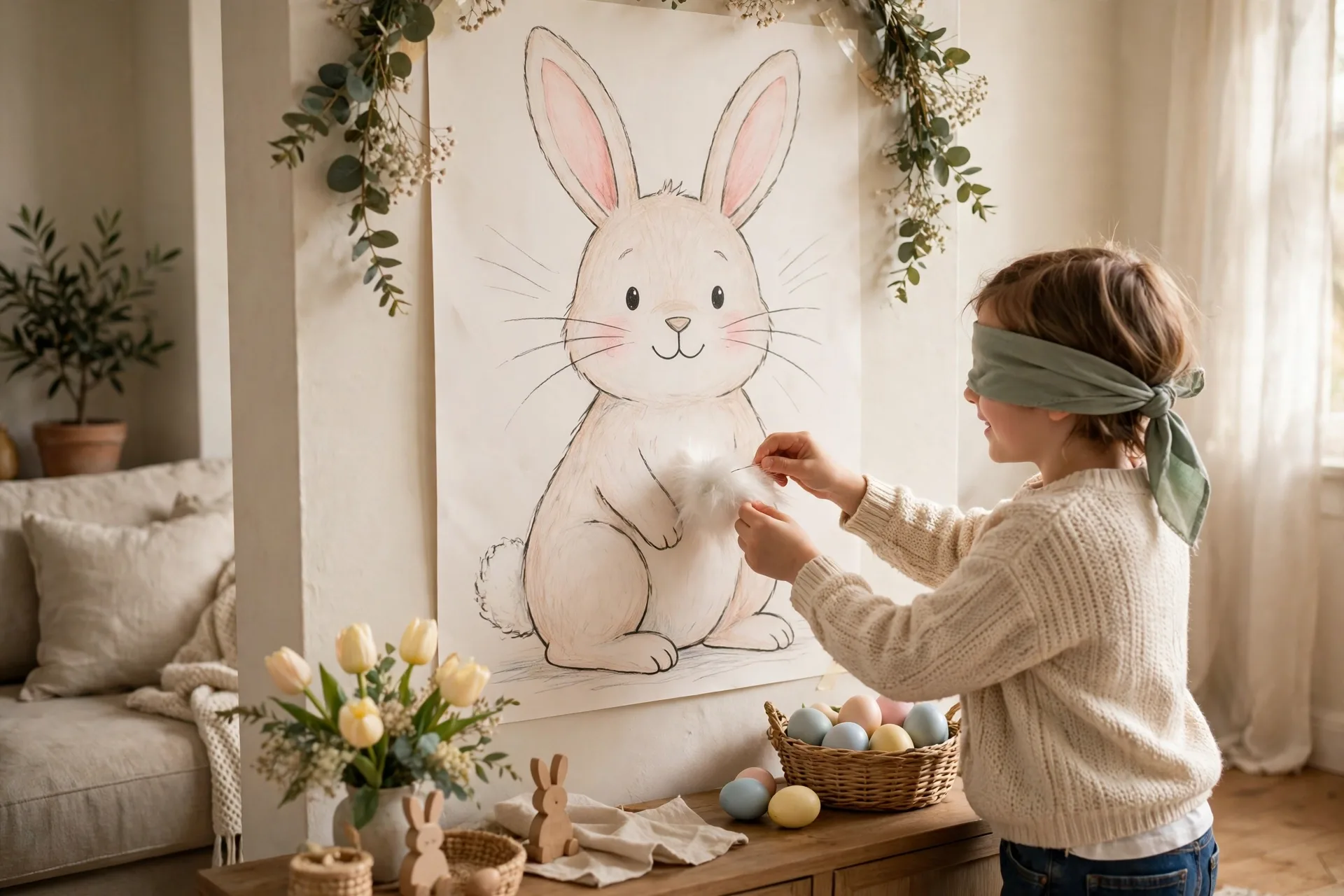
53. Pin the tail on the bunny (ages 4+). Draw a big bunny on a poster board, cut out fluffy tails from cotton balls or white paper, and let each child try to pin the tail in the right spot while blindfolded. The blindfold is the whole game, because a bunny with a tail on its ear is funnier than a bunny with a tail in the right place. My kids take turns spinning once, walking forward, and sticking the tail wherever their hand lands, and the results get funnier every round. Use tape on the back of each tail instead of pins, because pins and blindfolds do not belong in the same game. This is the party game that works for a crowd, because everyone watches and everyone laughs.
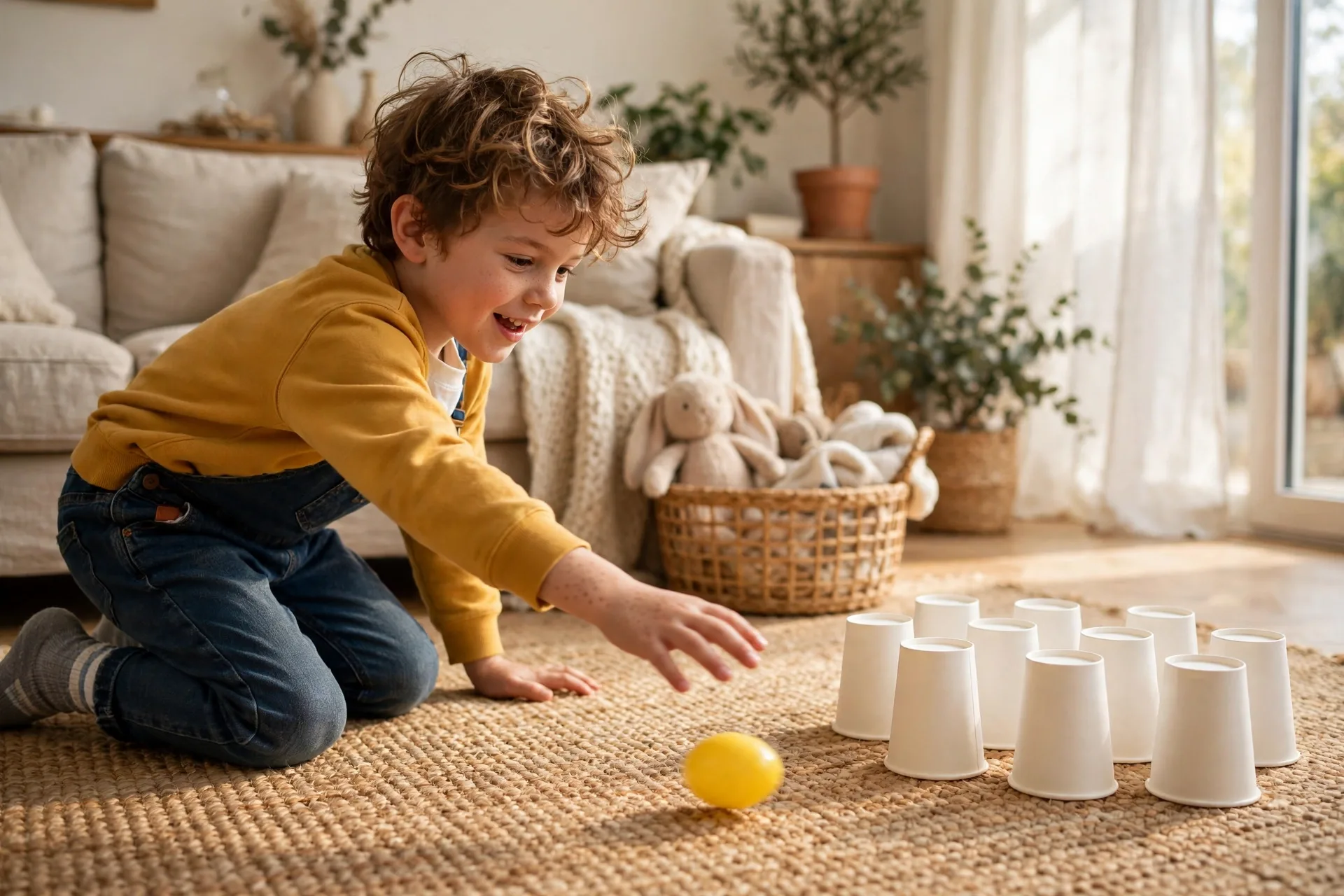
54. Egg bowling (ages 3+). Set up paper cups or empty bottles as pins, and roll a plastic egg along the floor to knock them down. The egg rolls in a wobbly, unpredictable way, which is exactly what makes it funny, because nobody can aim an egg. My 2-year-old bowls sitting down, which is a perfectly valid technique, and my 4-year-old keeps score on a piece of paper like a professional. Use a smooth floor and lightweight pins, because a heavy pin does not fall for an egg, and a carpet slows the roll to a crawl. This is the game for a rainy Easter, because it needs nothing but cups, an egg, and a hallway.
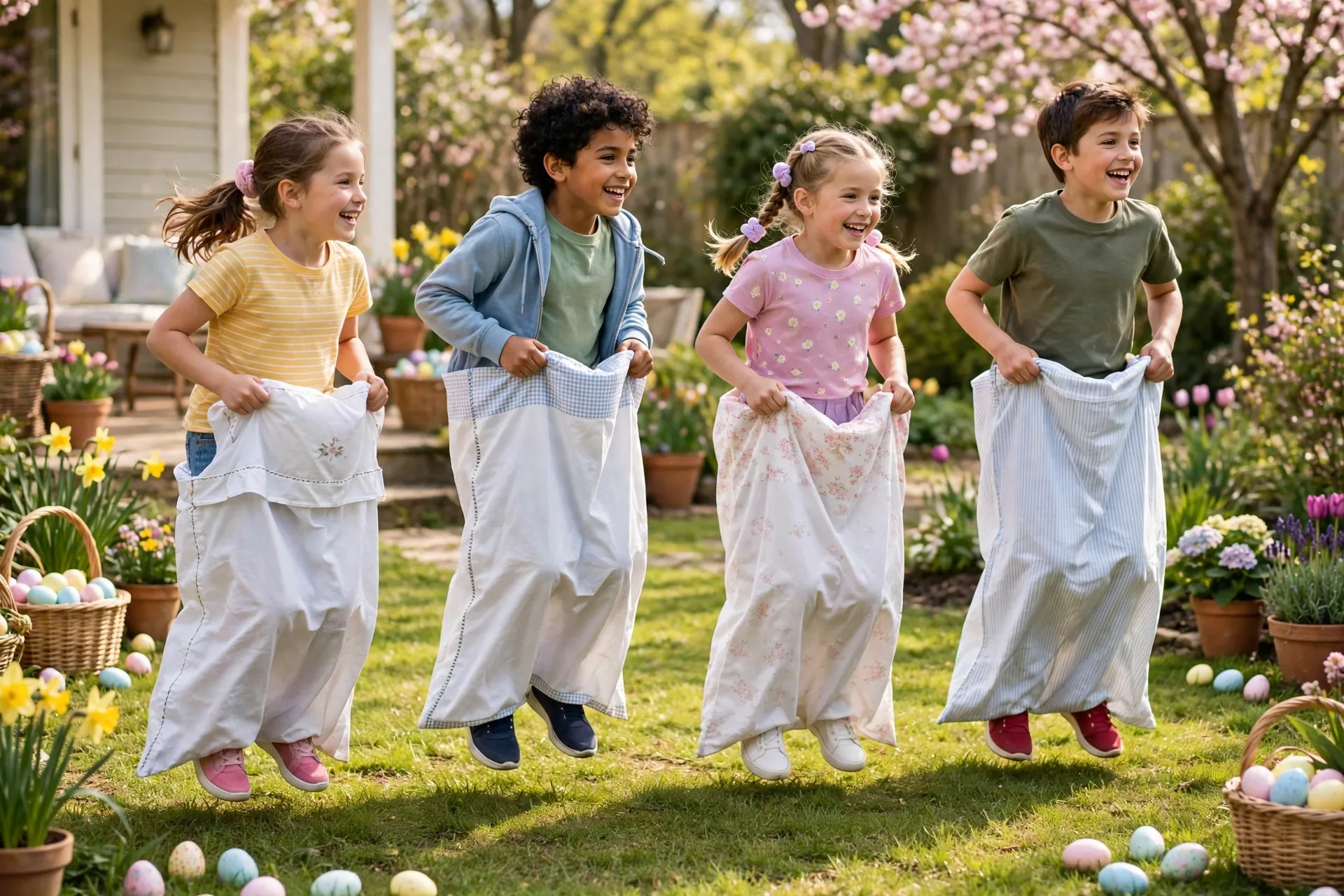
55. Bunny hop sack race (ages 4+). Put each child in a pillowcase or a sack, line them up, and race across the yard hopping like bunnies. The hopping is the whole game, because hopping in a sack is hard, silly, and impossible to do without laughing. My kids fall over, get up, and keep hopping, because the race is not about winning, it is about the hopping. Use pillowcases for little kids, because full sacks are too long and trip them up, and race on grass, because grass is soft and forgiving. This is the game that burns off the chocolate energy, which is exactly what you need before lunch.
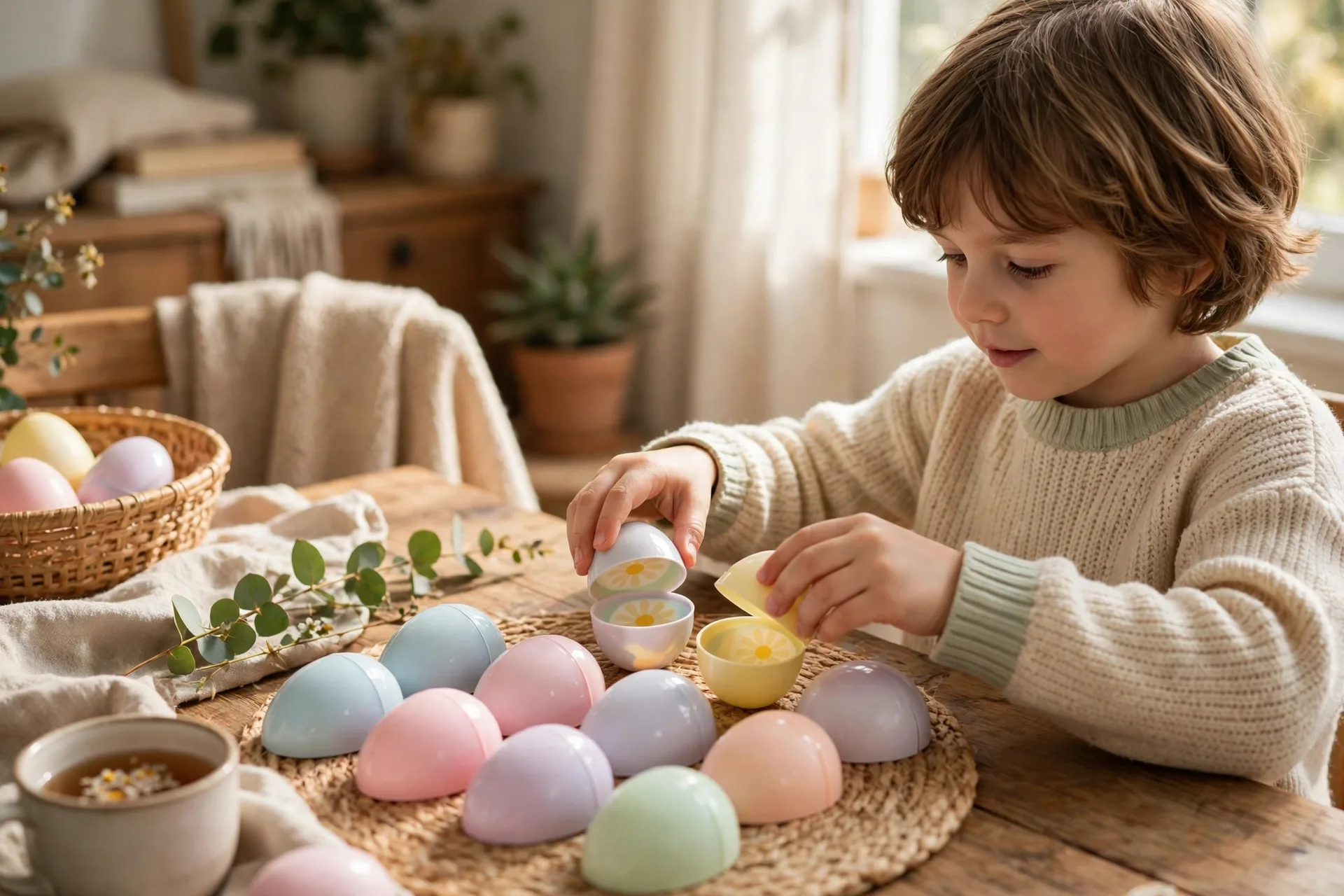
56. Egg memory match (ages 4+). Put small objects or matching pictures inside pairs of plastic eggs, mix the eggs up on a table, and take turns opening two eggs to find a match. The eggs make memory match feel like a treasure hunt, because every opened egg is a little surprise. My 4-year-old remembers where the pairs are with scary accuracy, and my 2-year-old just likes opening eggs, which is also a valid way to play. Use six to eight pairs for a good game length, and keep the objects simple, stickers, buttons, or small toys. This is the quiet game for after lunch, because it needs a table, not a yard, and tired kids do it best.
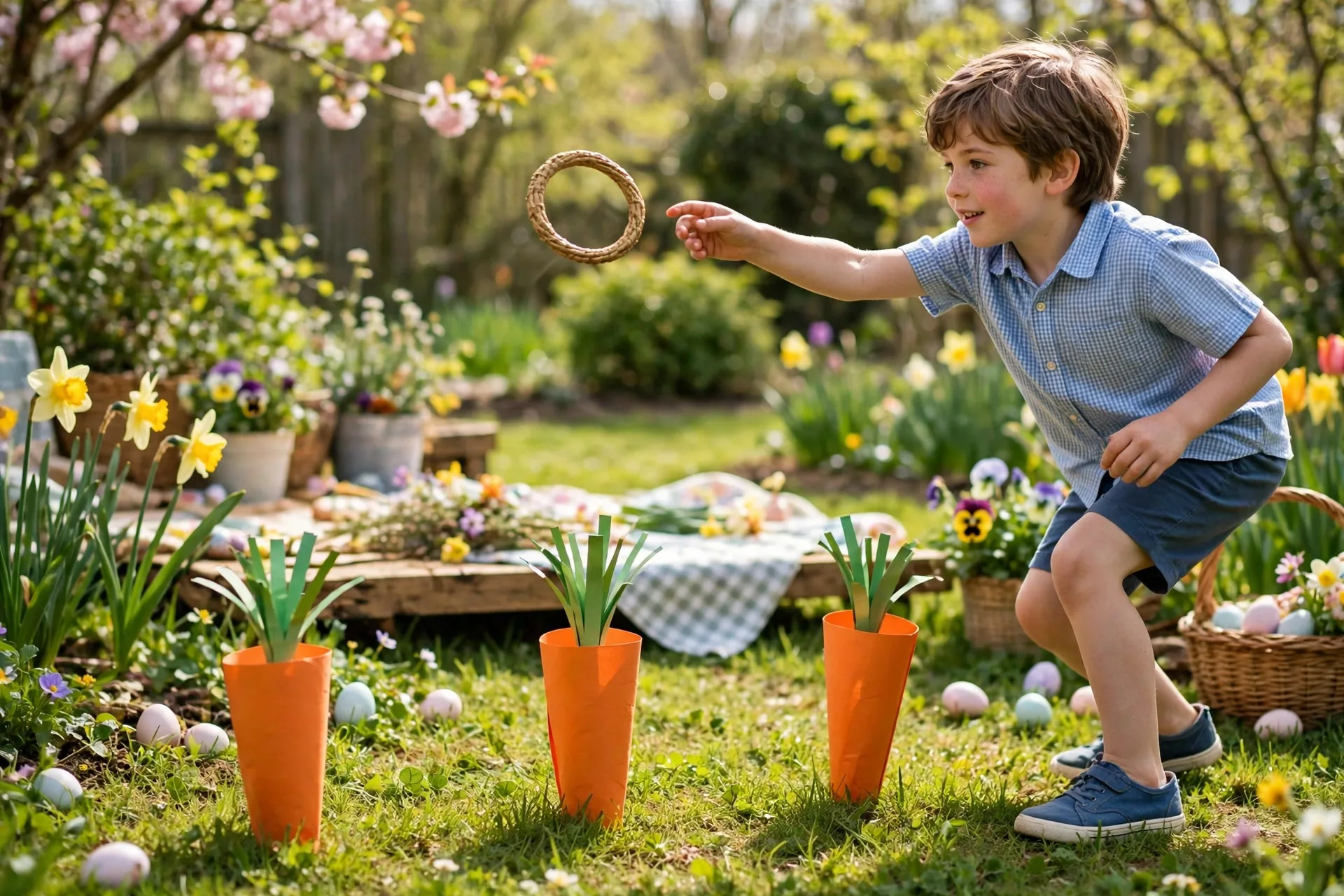
57. Carrot ring toss (ages 3+). Make carrot cones from orange paper with green tops, stand them in a row, and toss rings made from paper plates with the middles cut out. The rings land on the carrots, or they do not, and the trying is the fun part. My kids stand close for the first round and then step back a little further each time, because the challenge grows with them. Use sturdy paper for the carrots, because a floppy carrot falls over and a fallen carrot cannot be ringed. This is the game for the front yard, because it needs a flat patch of grass and a bucket of rings, and it keeps itself going while the grown-ups talk.
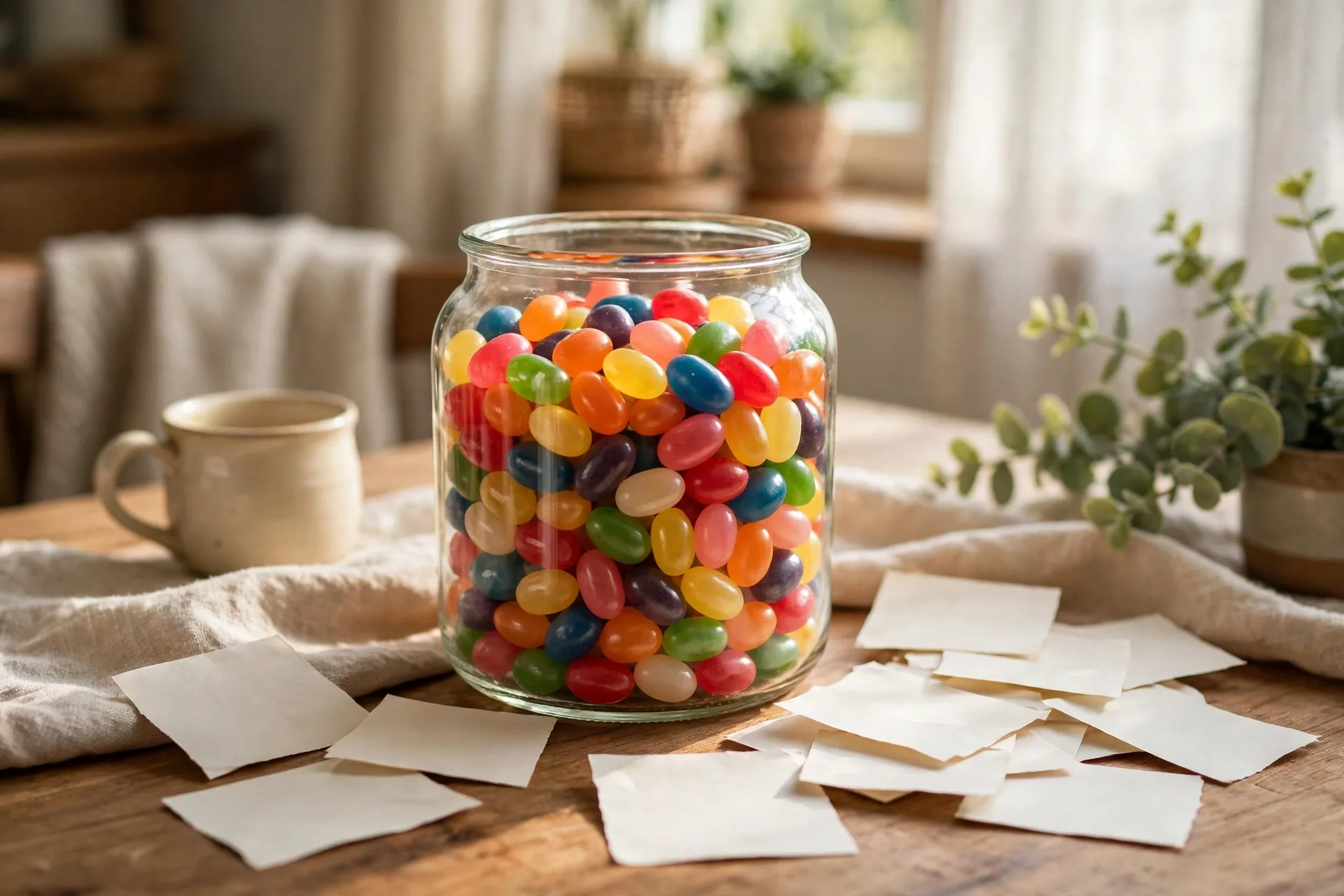
58. The jelly bean guessing jar (ages 5+). Fill a jar with jelly beans, and let everyone guess how many are inside. The closest guess wins the jar, which is the prize and the game in one. My kids count the layers, estimate by handfuls, and argue about their methods like scientists, which is the best part. Use a clear jar and a single size of jelly bean, because mixed sizes make the guessing unfair, and write every guess on a slip of paper so nobody changes their number. This is the game that runs itself all day, because the jar sits on the table and every guest has to have a guess.
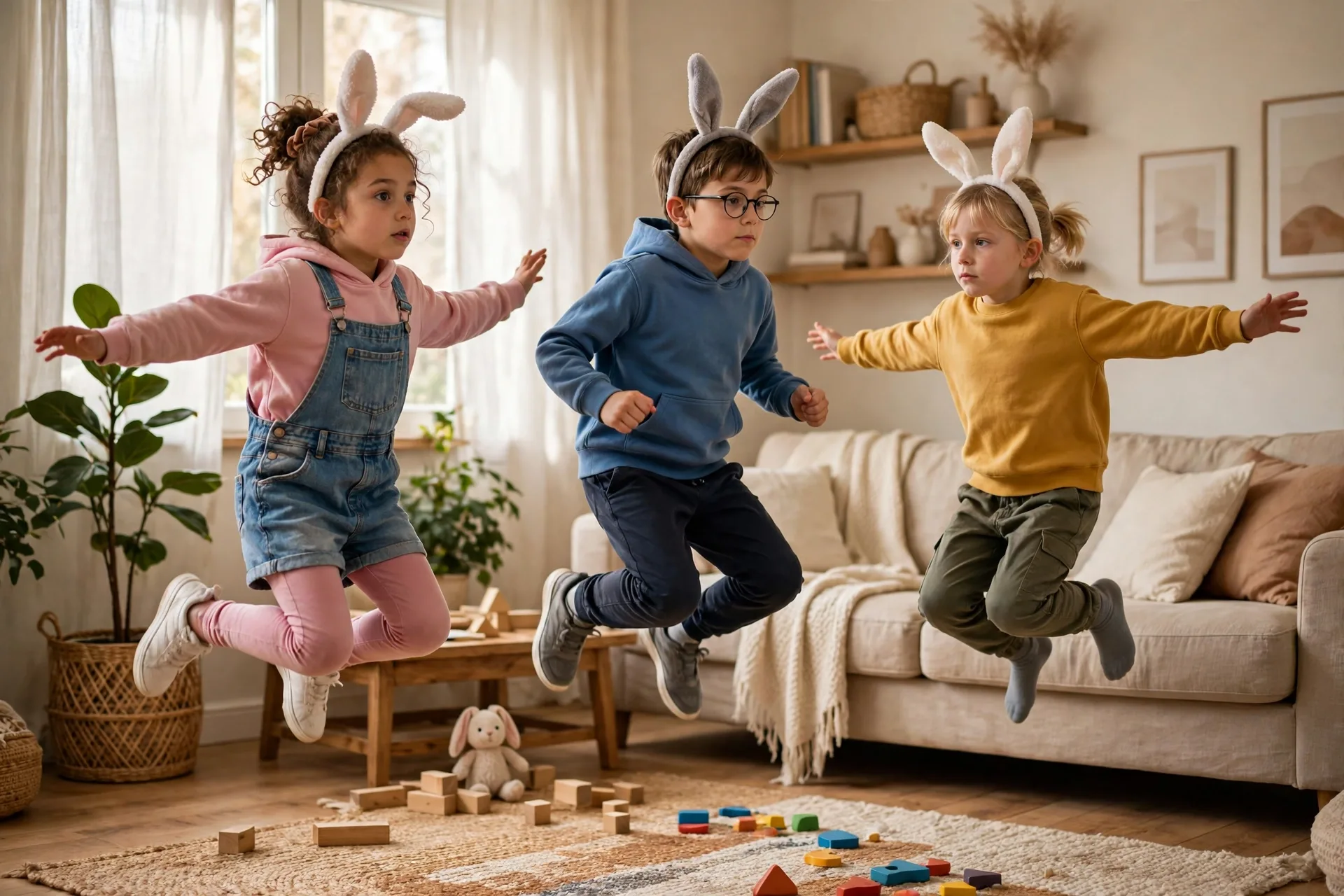
59. Bunny freeze dance (ages 3+). Play music, let everyone hop around like bunnies, and freeze when the music stops. The last bunny still moving is out, or in our house, the last bunny moving has to do a silly hop, because nobody likes being out. My 2-year-old freezes like a statue and then falls over laughing, which is the correct way to play. Use a playlist of happy songs and a grown-up on pause duty, because the pausing is the whole game. This is the game for the end of the party, because it burns the last of the energy and ends with everyone on the floor, giggling.
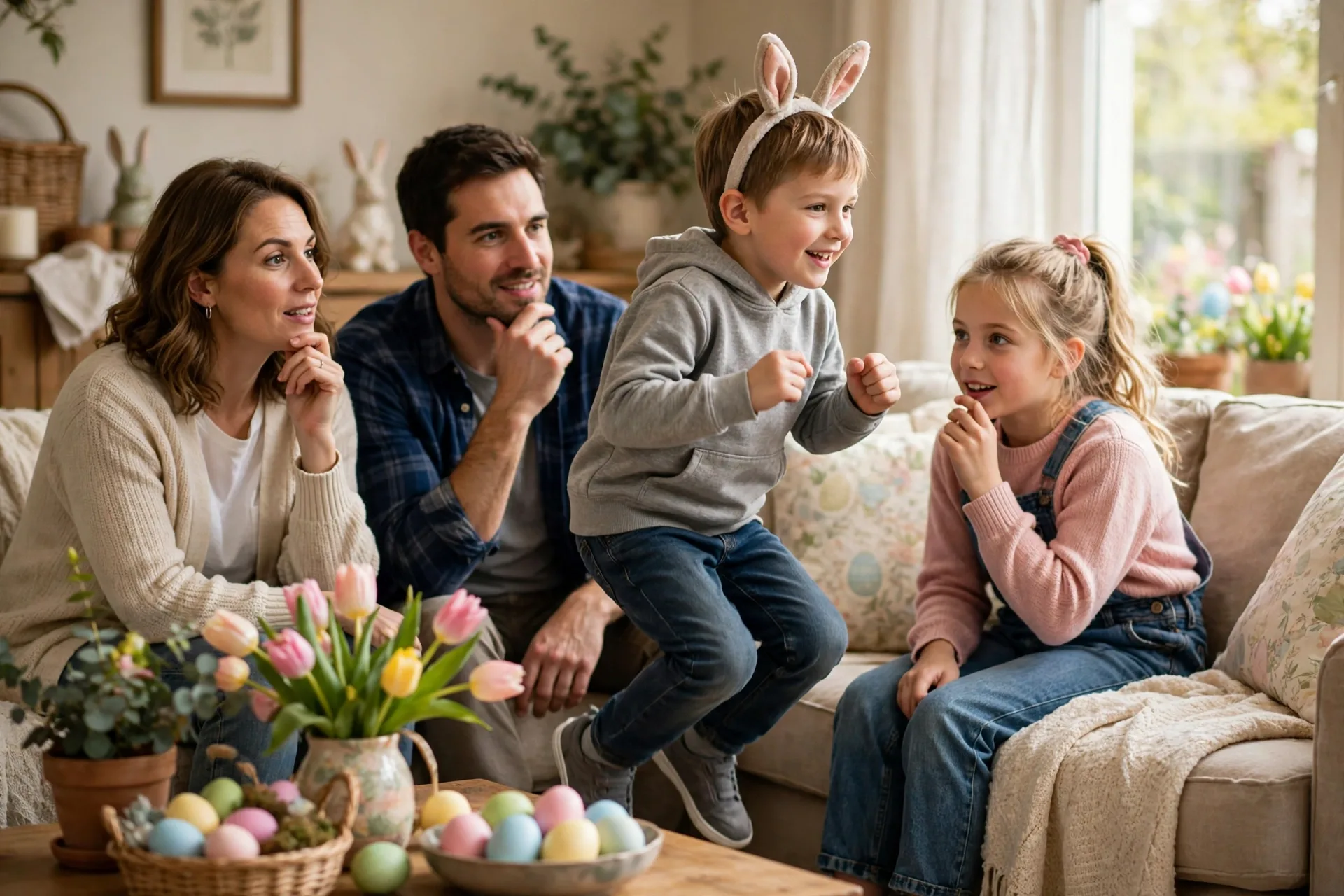
60. Easter charades (ages 5+). Write Easter words on slips of paper, a bunny, an egg, a chick, a basket, and act them out without talking while everyone guesses. The acting is the entertainment, because watching a grown-up silently hop like a bunny is comedy no script can touch. My kids act out the bunny by hopping in circles, and the egg by curling up very small, and the guessing takes about three seconds. Keep the words simple and the timer generous, because little actors need time to get brave. This is the game for after dinner, because it needs nothing but paper slips and a room full of people willing to look silly.
More Sweet Finishes
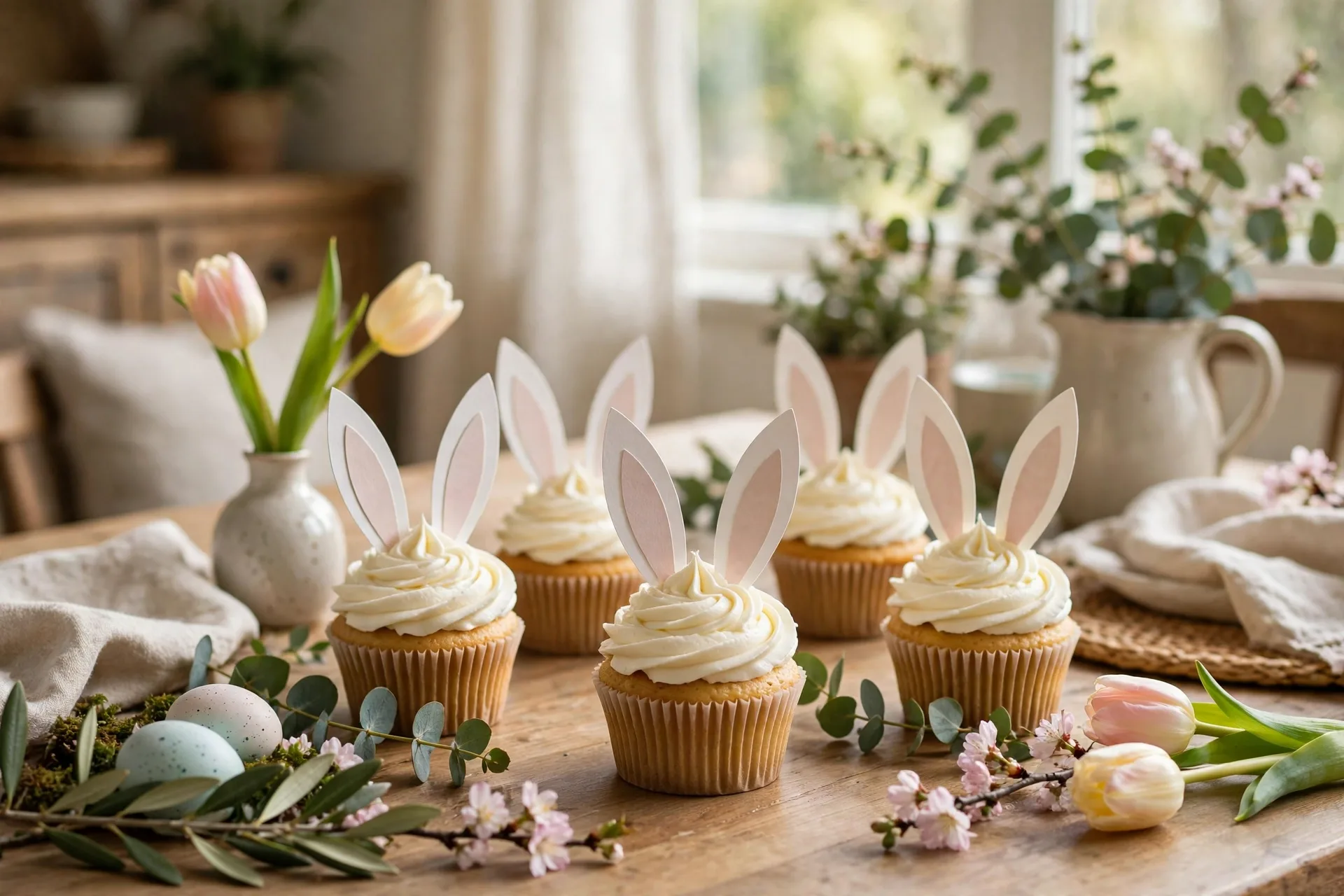
61. Bunny ear cupcakes (ages 4+ helping). Frost cupcakes white, add two paper bunny ears on top, and draw a face with a pink nose and whiskers. The ears make an ordinary cupcake into a bunny, and the decorating is a job every child can do. My 4-year-old does the ears and the face while I handle the frosting, because frosting is a grown-up job when the cupcakes need to look like bunnies. Use paper ears rather than candy ones, because paper ears stay upright and candy ears slide off. These are the cupcakes to make for the Easter table, because they look like spring and they taste like a party.
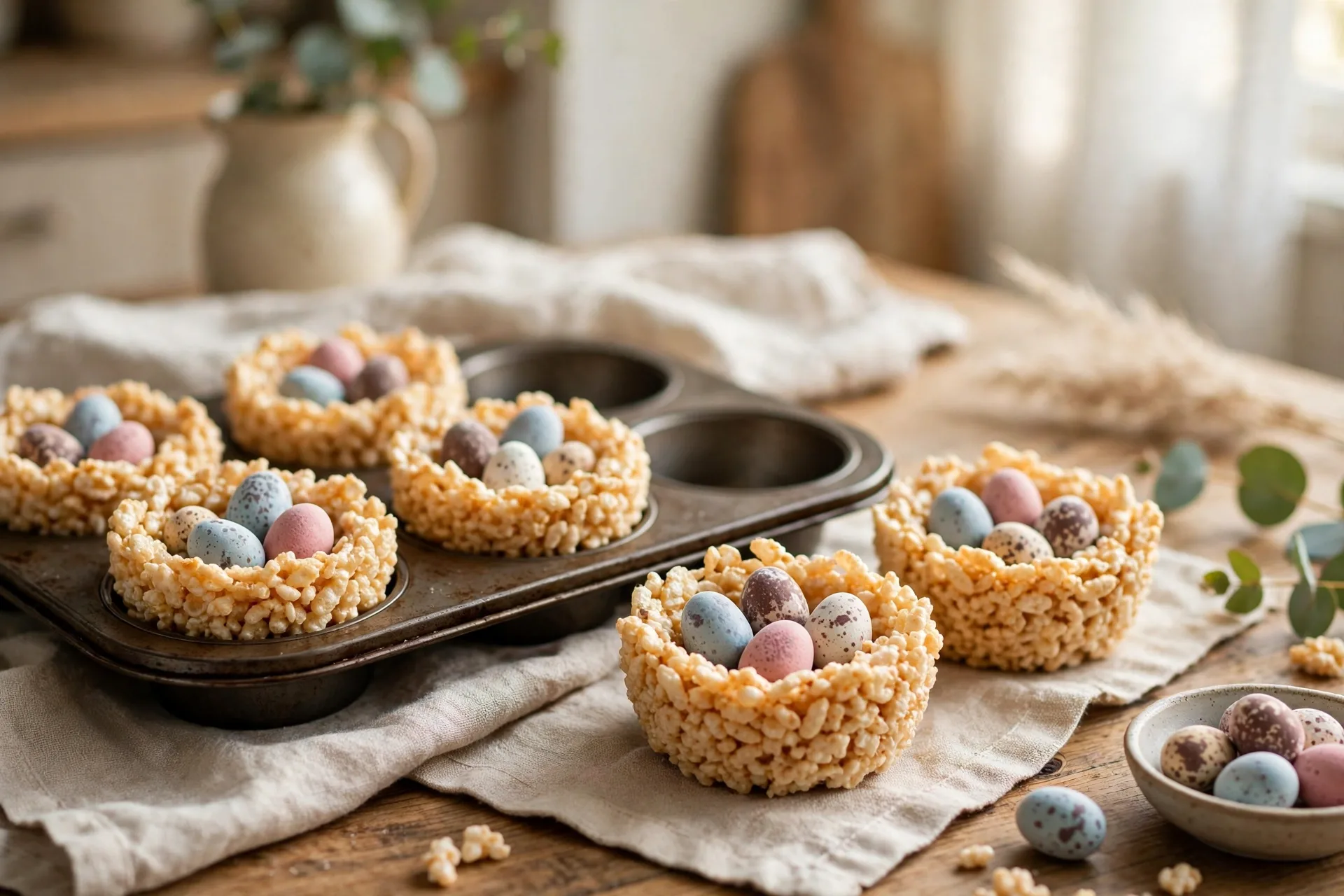
62. Rice krispie nests (ages 4+ helping). Press warm rice krispie treats into muffin cups to make nests, let them cool, and fill each nest with mini chocolate eggs. The nests look like a bird made them, and the filling is the part every child wants to do. A grown-up melts the marshmallows and handles the warm mixture, because hot sugar is not a kid job, and the kids do the pressing and the filling. My kids fill each nest with exactly three eggs, because three is the correct number of eggs for a nest. Use butter on little hands before pressing, because the mixture sticks to everything, including fingers that are trying to help.
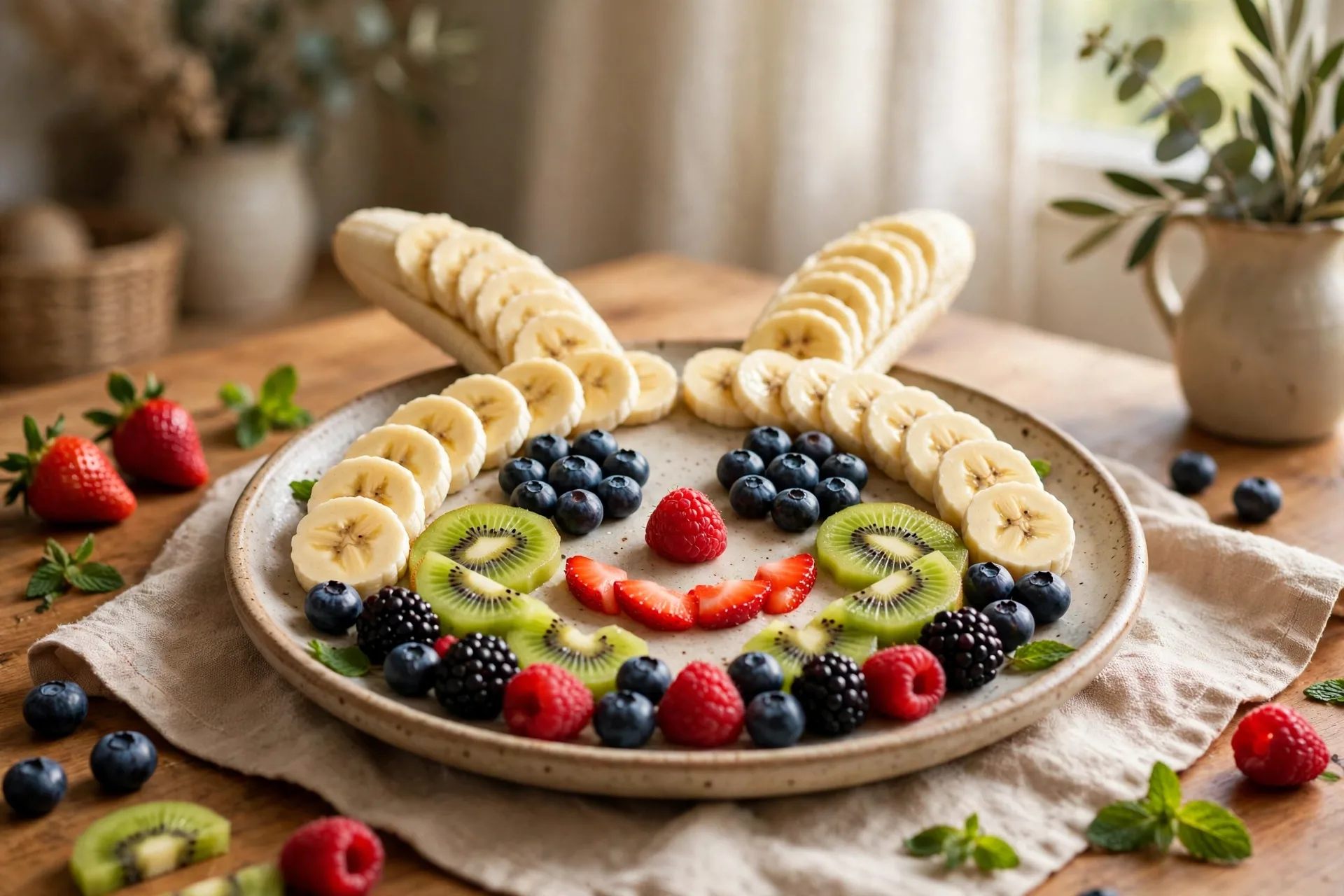
63. Fruit bunny platter (ages 3+). Arrange fruit on a platter in the shape of a bunny face, banana slices for ears, blueberries for eyes, and a strawberry nose. The arranging is the craft and the eating is the reward, because a fruit bunny is a snack and a decoration in one. My kids arrange the face themselves, because placing blueberries is a job a 3-year-old takes very seriously. Use firm fruit that holds its shape, because soft fruit slides around and the bunny ends up looking like a blob. This is the treat for the Easter table, because it is sweet, it is healthy, and it disappears faster than the cupcakes.
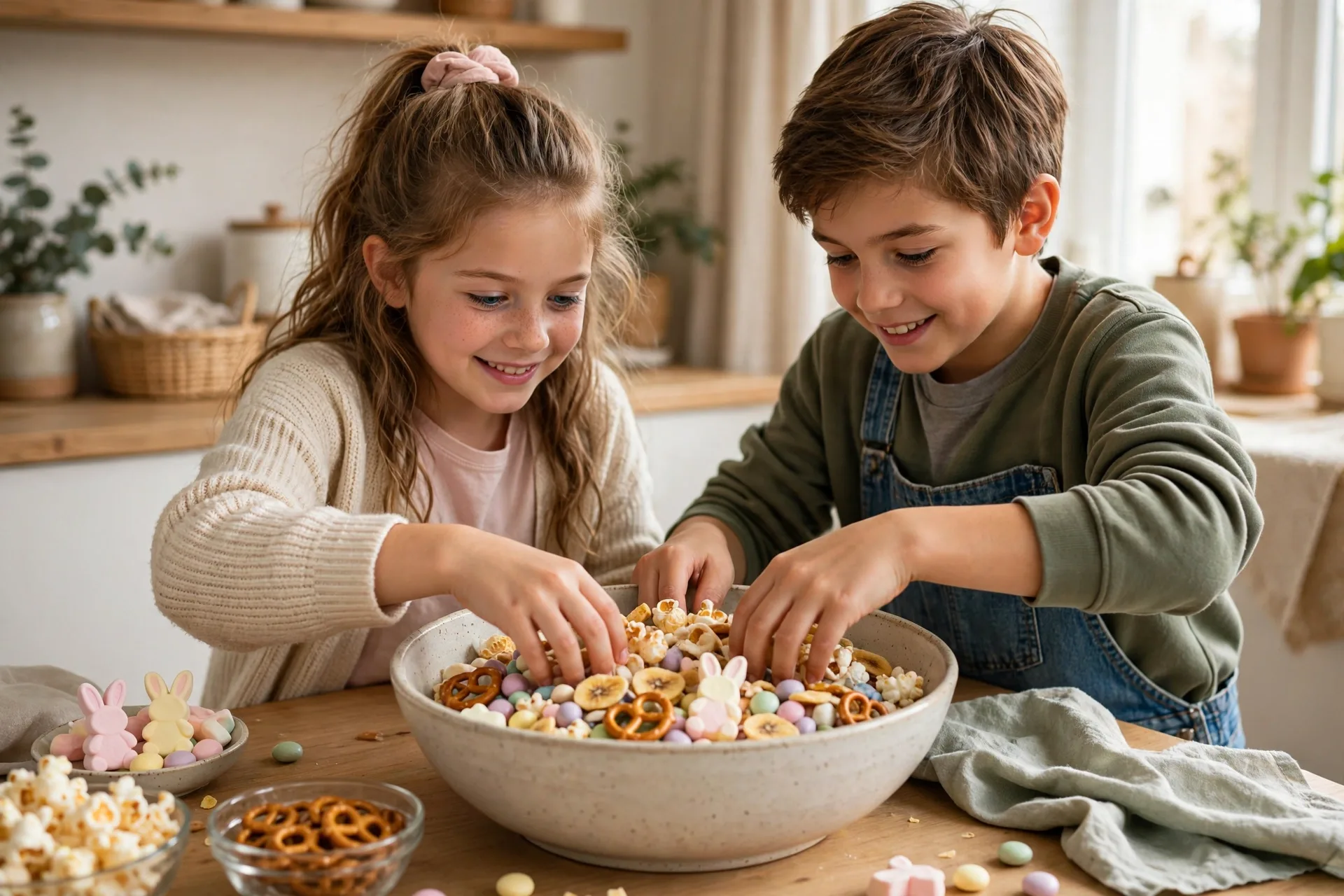
64. Bunny trail mix (ages 3+). Mix popcorn, pretzels, dried fruit, and a handful of pastel candies in a big bowl, and let each child fill their own little bag. The mixing is the activity and the bag is the take-home treat, because every guest leaves with a snack. My kids take turns adding one ingredient each, because the turn-taking is the game. Use a big bowl and small scoops, because little hands with big scoops make a trail mix explosion. This is the treat to make for a party, because it takes five minutes, it feeds a crowd, and the bags double as party favors.
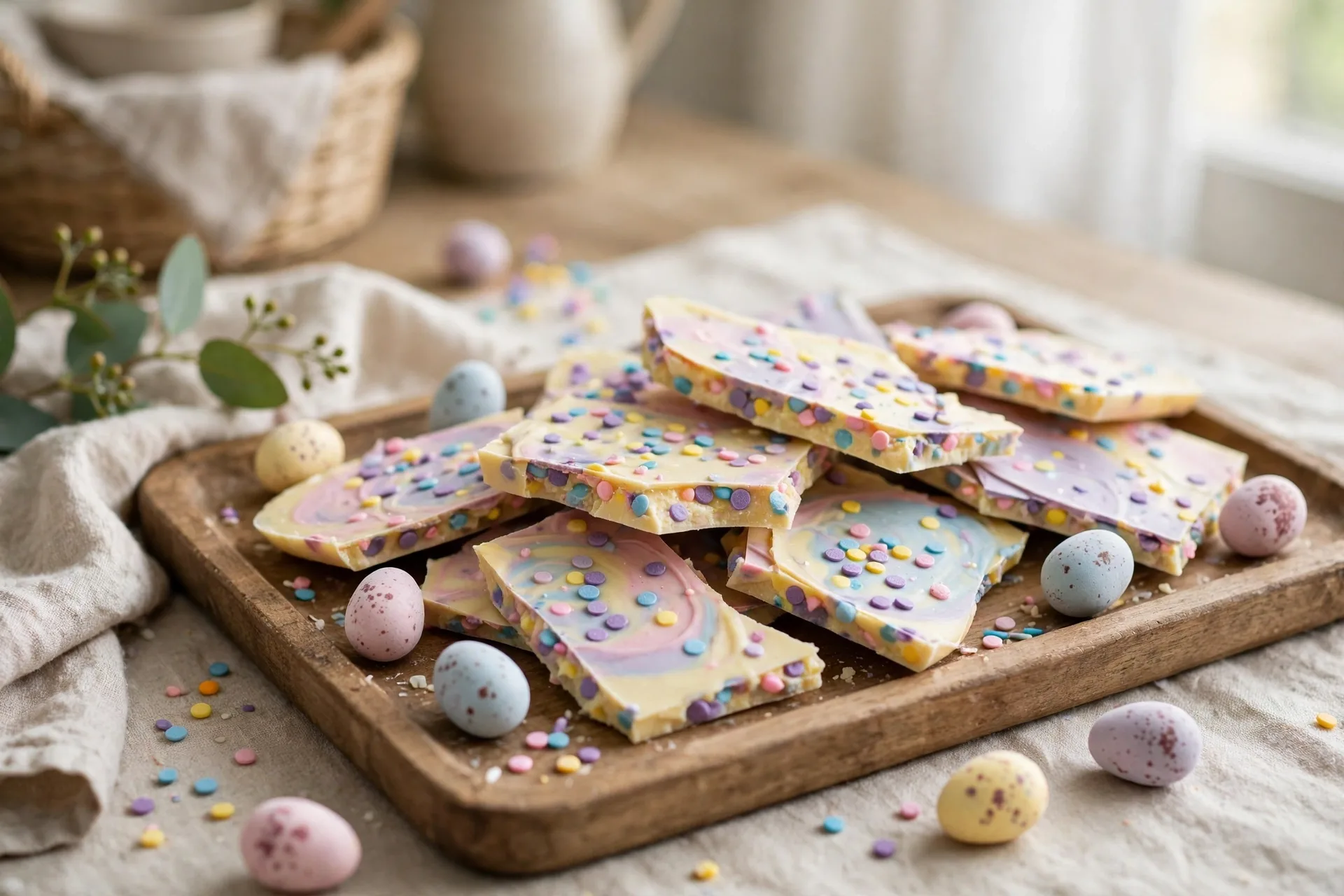
65. Easter bark (ages 4+ helping). Melt white chocolate, spread it thin on a tray lined with paper, and sprinkle it with pastel candies, sprinkles, and crushed cookies. Let it set, then break it into pieces like bark. The sprinkling is the job every child wants, because sprinkling is the best part of any dessert. A grown-up melts the chocolate, because hot chocolate is not a kid job, and the kids do the decorating. My 4-year-old sprinkles with great ceremony, and the bark breaks into pieces that are never the same shape twice. This is the treat to make ahead, because it keeps in a tin for days and it looks like a fancy shop made it.
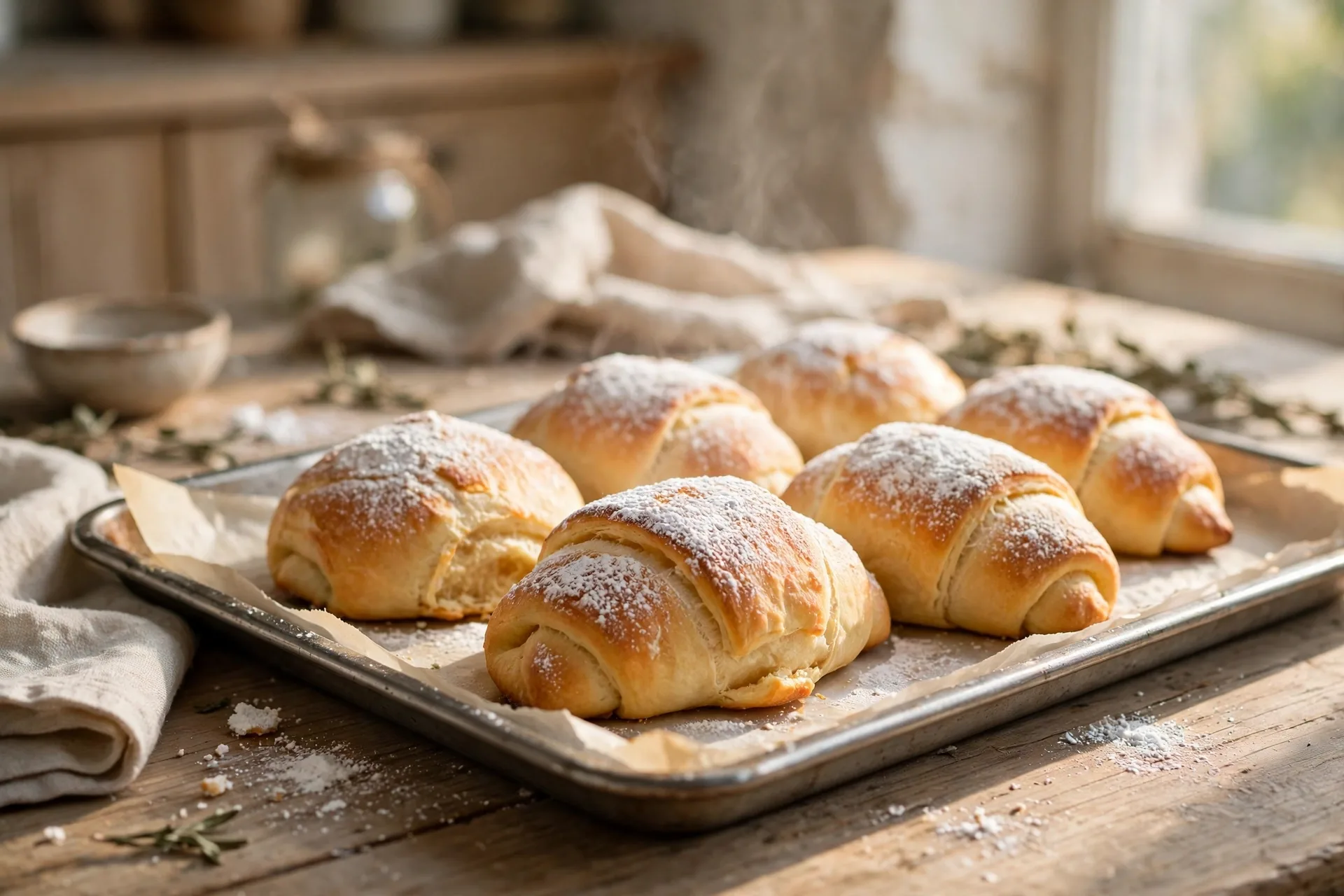
66. Resurrection rolls (ages 5+ helping). Wrap a marshmallow in crescent roll dough, dip it in butter and cinnamon sugar, and bake it. When the rolls come out of the oven, the marshmallow has disappeared, leaving a sweet, empty space inside, which is the story of Easter told in a baking tray. My kids roll the marshmallows themselves, because the wrapping is the lesson, and the waiting for the oven is the hardest part. A grown-up handles the oven, because the rolls bake hot and fast, and the kids do the dipping and the wrapping. Serve them warm, because a warm resurrection roll is the taste of Easter morning.
Quick Picks: Easter by Age
| Age | Start With These | Why They Work |
|---|---|---|
| Babies & toddlers (0–3) | Sensory bin hunt (#8), sticker eggs (#11), handprint cards (#17), cotton ball lambs (#19) | Everything is findable, holdable, and mouth-safe-adjacent — and they are in the photos from year one |
| Preschoolers (4–5) | Color-coded hunt (#2), paint pen eggs (#10), egg carton chicks (#15), egg rolling race (#22) | One clear job per activity, no competing with big kids, finishes before attention does |
| School-age kids (6–9) | Clue hunt (#3), puzzle piece hunt (#4), twilight glow hunt (#6), reverse hunt (#7) | Challenge, secrecy, and a hunt that respects their skills |
| Tweens & teens (10+) | Glow hunt setup crew (#6), trivia host (#25), kitchen-dye lab (#13), decoupage eggs (#14) | Give them a role with status — running the hunt beats doing the hunt |
More Easter Ideas by Theme
Sixty-six ideas is a start, not a ceiling. These are our step-by-step guides for every Easter theme your kids will eventually demand — bookmark this page and work your way down together:
Games, hunts & giggles
Printables, coloring & quiet time
Crafts, baskets & the Easter table
Shop This Post
Everything we used in this guide, in one place:
| Product | Used For | Price |
|---|---|---|
| Flameless LED Tea Lights, Orange — 24 Pack |
Twilight glow hunt (#6) — glowing eggs at dusk | Check Price |
| ARTISTRO Acrylic Paint Pens |
Paint pen eggs (#10) — decorating without dye cups | Check Price |
| Googly Eyes — 520 Pcs |
Egg carton chicks (#15) and critter faces | Check Price |
Easter Questions Moms Actually Ask
How many eggs should I hide per kid?
Ten to fifteen per child is the sweet spot. Fewer and it’s over in a minute; more and the finding stops being an event and starts being a chore. For mixed ages, hide the same count per child but grade the hiding spots — eye-level and obvious for the littles, genuinely sneaky for the big kids.
What can I put in eggs besides candy?
Stickers, chunky crayons, puzzle pieces (#4), coins for a piggy bank, hair clips, tiny notes with privileges (“pick tonight’s movie”), and one golden egg with the big prize. For under-3s, keep it to stickers, crayons, and familiar snacks — anything small and hard is a choking hazard at that age.
What if it rains on Easter?
Move the hunt indoors and lean in: the sensory bin hunt (#8), the bunny trail (#5) down the hallway, crafts (#15–#20), and bingo (#23) are all weatherproof. Some of our best Easters have been rainy ones — the day gets slower and the kids get craftier.
How do I keep Easter fair with a big age gap?
Color-coding (#2), head starts, and jobs. Little kids hunt their color with a head start; big kids hunt harder spots and then graduate to hiding, clue-writing, and trivia hosting. A kid with a job never feels like the baby of the day.
How can we mark the faith side of Easter with little kids?
Keep it concrete and story-shaped: a children’s Easter story at story time (#28), resurrection eggs opened one at a time, and gratitude at the table — one thing each person is thankful for this spring. Small hands understand objects and stories long before they understand sermons.
When should I start?
The Saturday before, ideally: boil and dye eggs, fill the hunt eggs, and set out the craft basket. Easter morning then runs on rails — hunt, breakfast, one craft, one game — and you’re a person enjoying a holiday instead of producing one.
Start With Three
If 66 ideas feel like a lot, here’s the whole system: one hunt, one make, one treat. The color-coded hunt, paint pen eggs, and bunny pancakes will carry an entire Easter morning — and next year, when your kids ask “are we doing the glowing eggs again?”, you’ll know it became a tradition. For the table they’ll gather around afterward, our Tablescape Ideas guide is the finishing touch.
Happy Easter, mama. The part they’ll remember is you, in the yard, pointing at the egg they walked past three times.
More holiday guides on MamaKinder