30 Valentine’s Day Activities for Kids: Sweet Cards, Crafts & Games
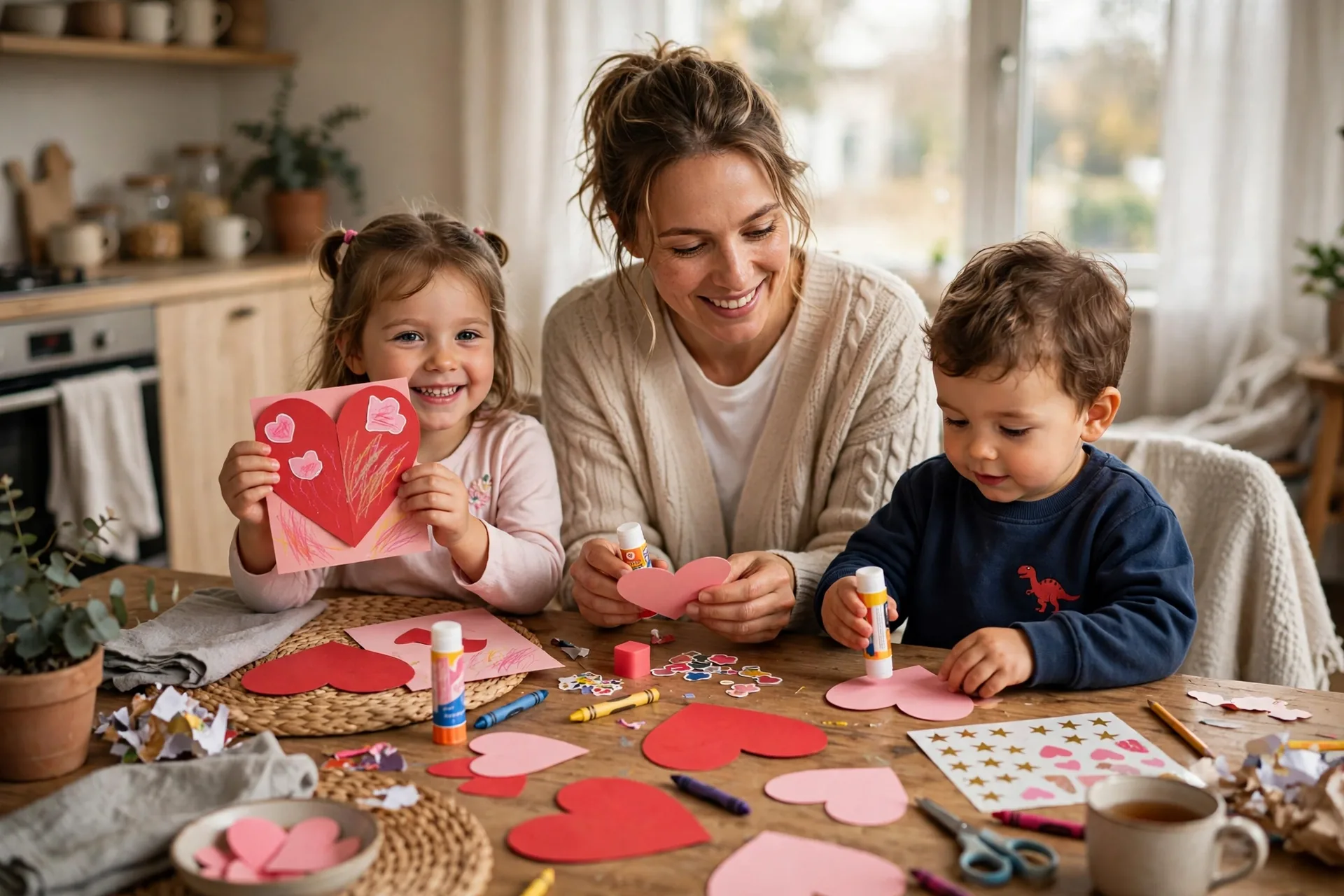
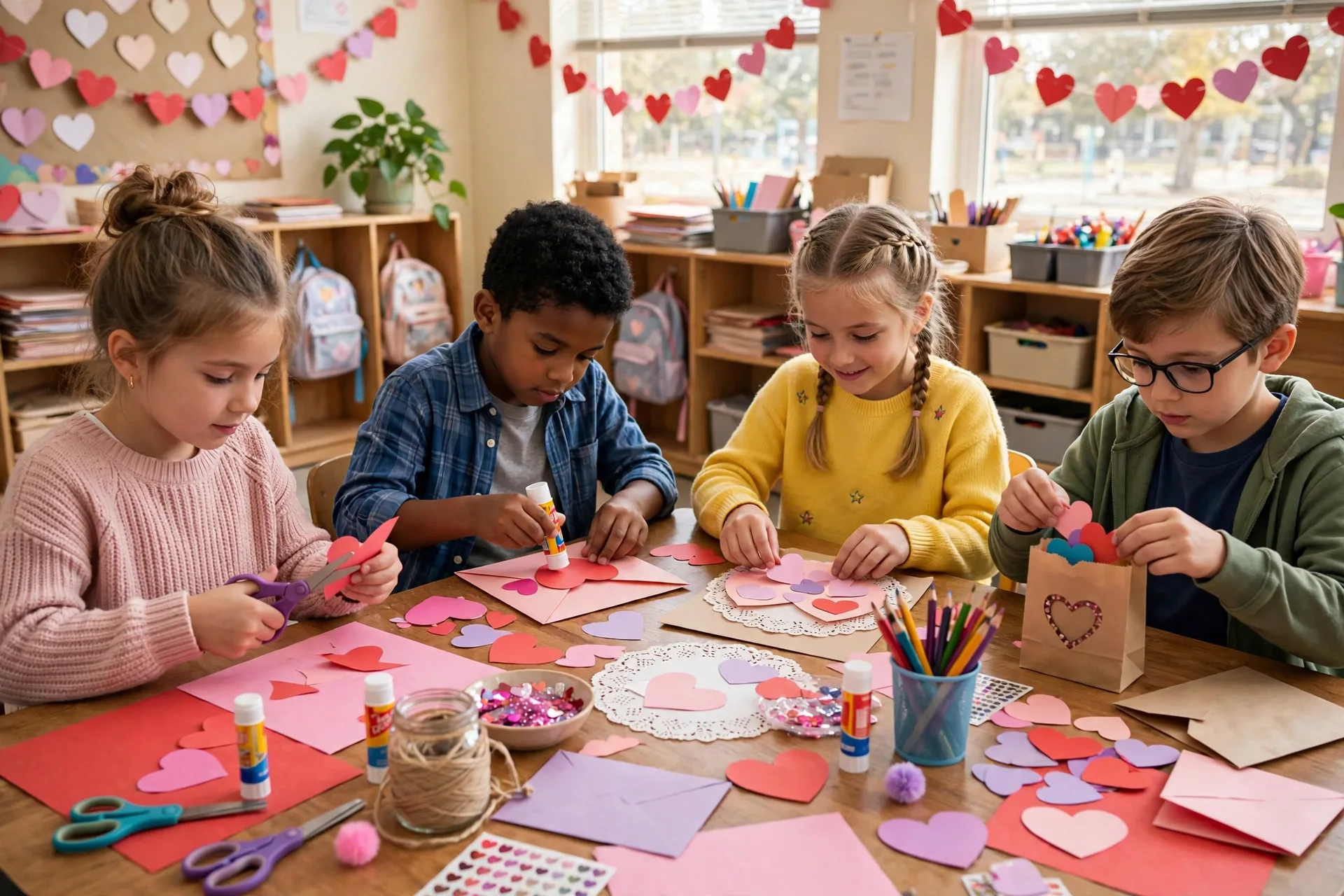
Valentine’s Day with little kids is not candlelit dinners. It’s glue sticks, a classroom list with 24 names on it, and a 4-year-old who takes card-making extremely seriously. And honestly? It’s better. Nobody tells people “I like you” with more enthusiasm than a preschooler with a sticker sheet.
This guide collects 30 valentines day activities for kids: handmade cards that survive the backpack ride, keepsake crafts, sensory play, games that burn off the sugar energy, kitchen jobs by age, and a corner for baby’s very first Valentine’s Day. Most use what’s already in your craft drawer. Pick four or five, not all thirty — February 14th is a school night for everyone.
Heads up: this post contains affiliate links. If you buy through them, MamaKinder may earn a small commission at no extra cost to you — it helps keep these guides free.
Two Ground Rules That Save the Day
A card for everyone. If your child hands out valentines, there’s one for every kid in the class — friends, not-yet-friends, everyone. Many schools require it, and even when they don’t, it’s the whole point of the holiday at this age. The trick that saves tears: sign cards “From: [your child’s name]” with no “To:” name at all — distribution takes half the time and nobody’s card goes missing.
Check the candy rule before you buy anything. A lot of classrooms are candy-free now, and nut allergies are serious — a peanut treat in the wrong backpack is not a small mistake. Read the teacher’s note first. If treats are allowed, individually wrapped and nut-free is the safe lane; if not, activity #28 is built for your classroom.
Cards & Kind Words
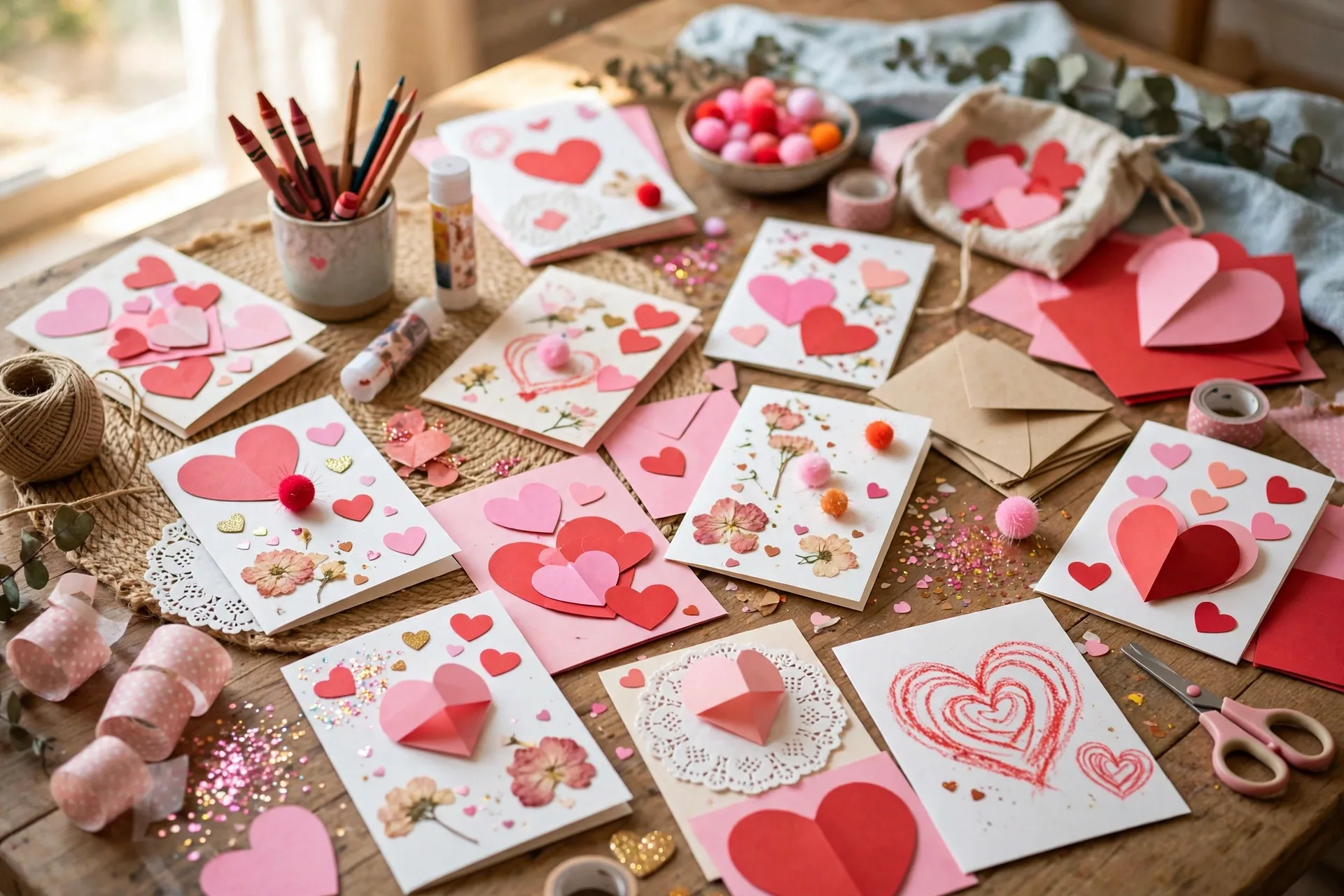
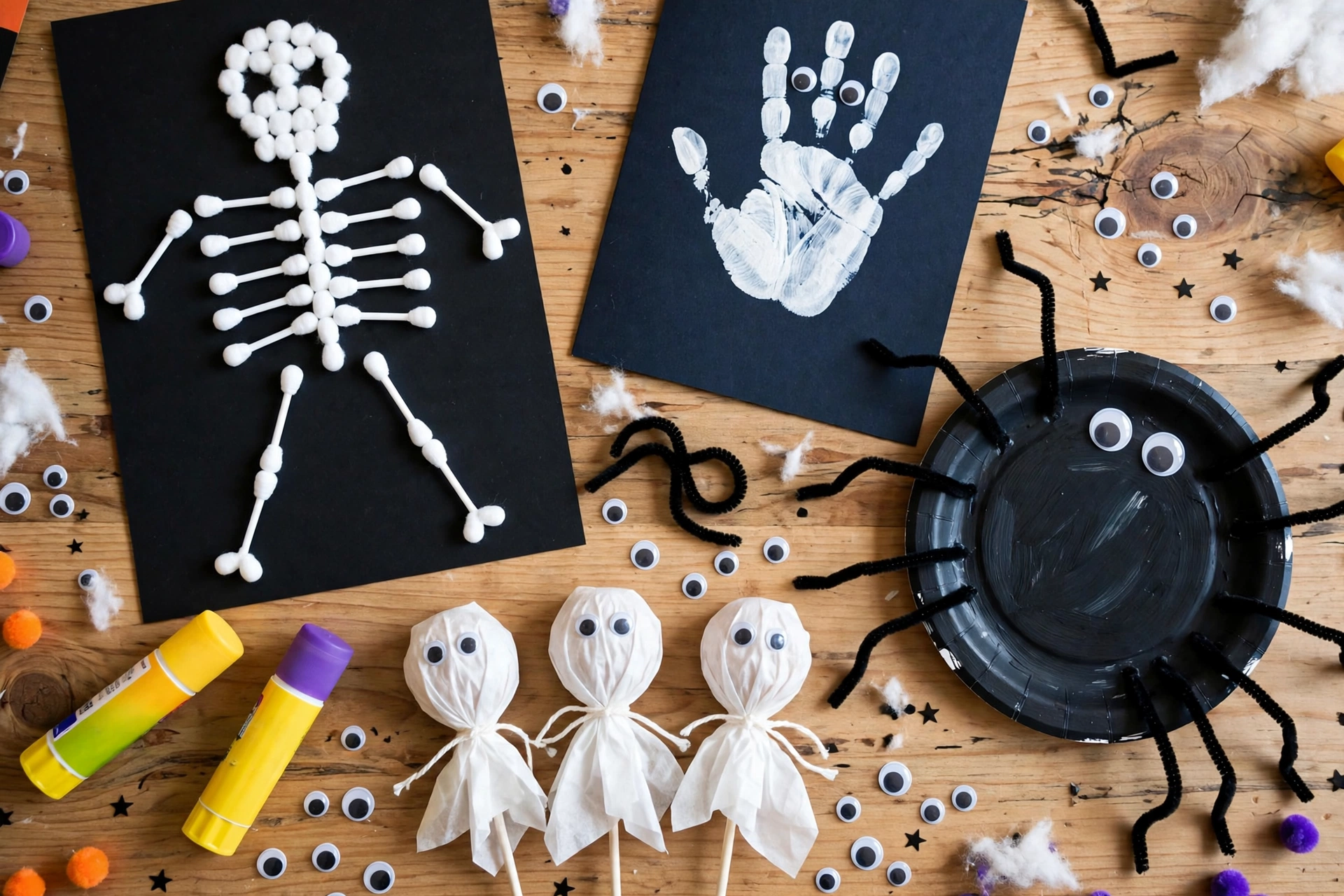
1. The classic fold-and-decorate card (ages 3+). Fold construction paper in half, decorate the front, scribble-sign the inside. The supply list is one stack of red, pink, and white paper — our craft drawer runs on a 480-sheet construction paper pack because one pack covers every card, heart, and paper emergency until spring.

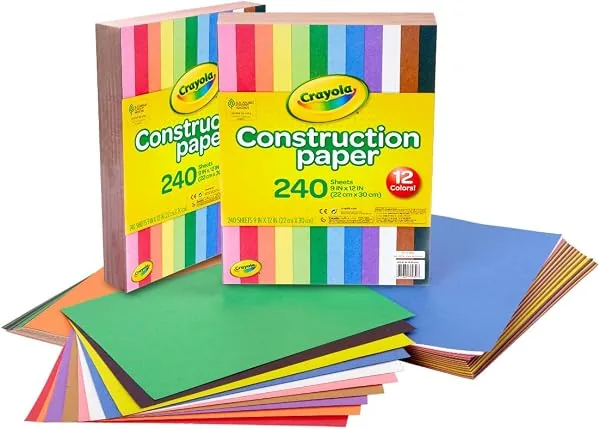
Crayola Construction Paper — 480 Sheets
The paper behind half this guide — a big 480-sheet pack in assorted colors, so the cards, hearts, and garlands never run out mid-February.
2. Handprint heart cards (ages 1+). Paint both little hands, then press them onto card stock, fingers angled together and heels of the hands touching — the print forms a heart. Grandparents keep this one forever. Our Easy Valentines Day Handprint Crafts guide shows how to get a clean print from a wiggly toddler.
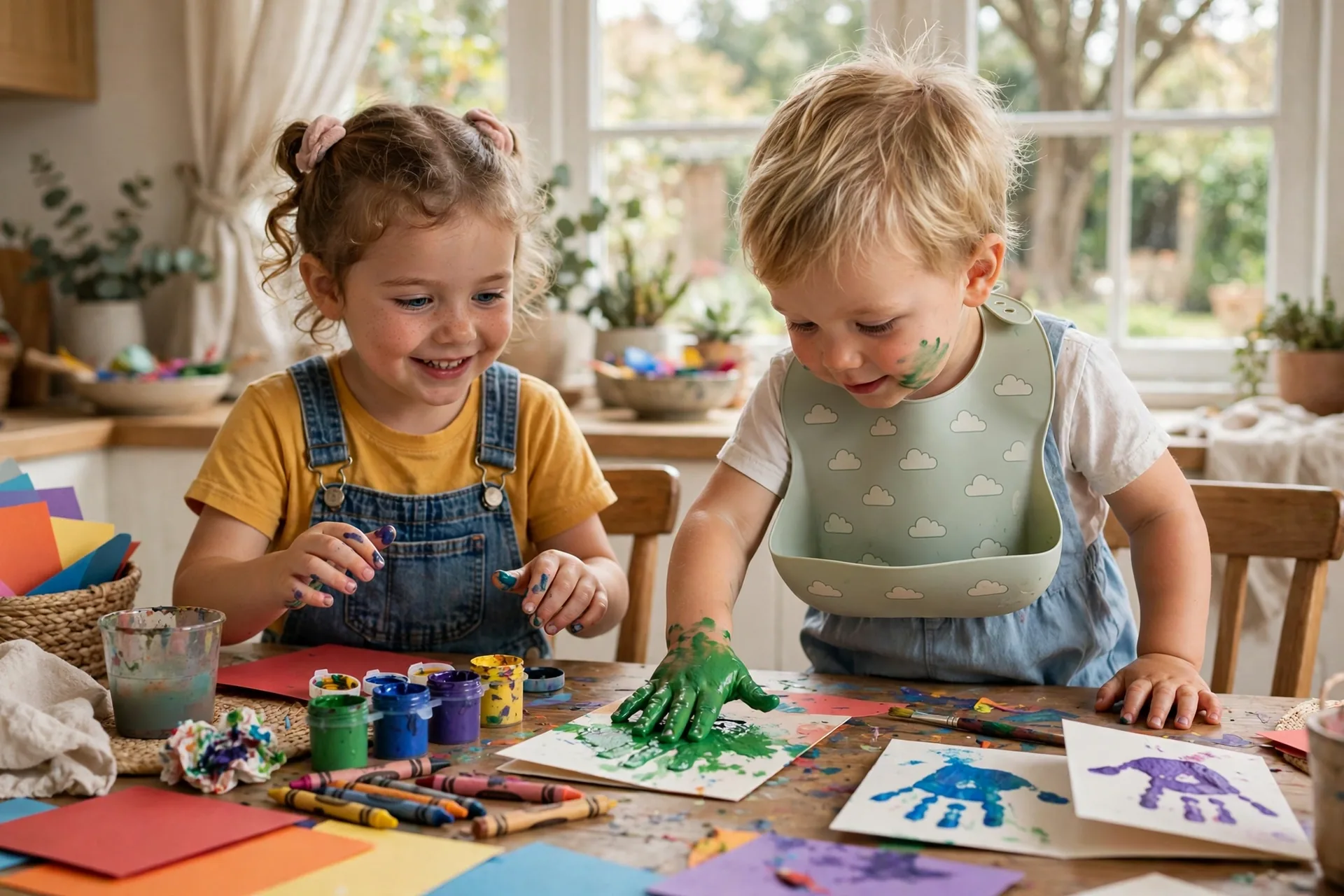
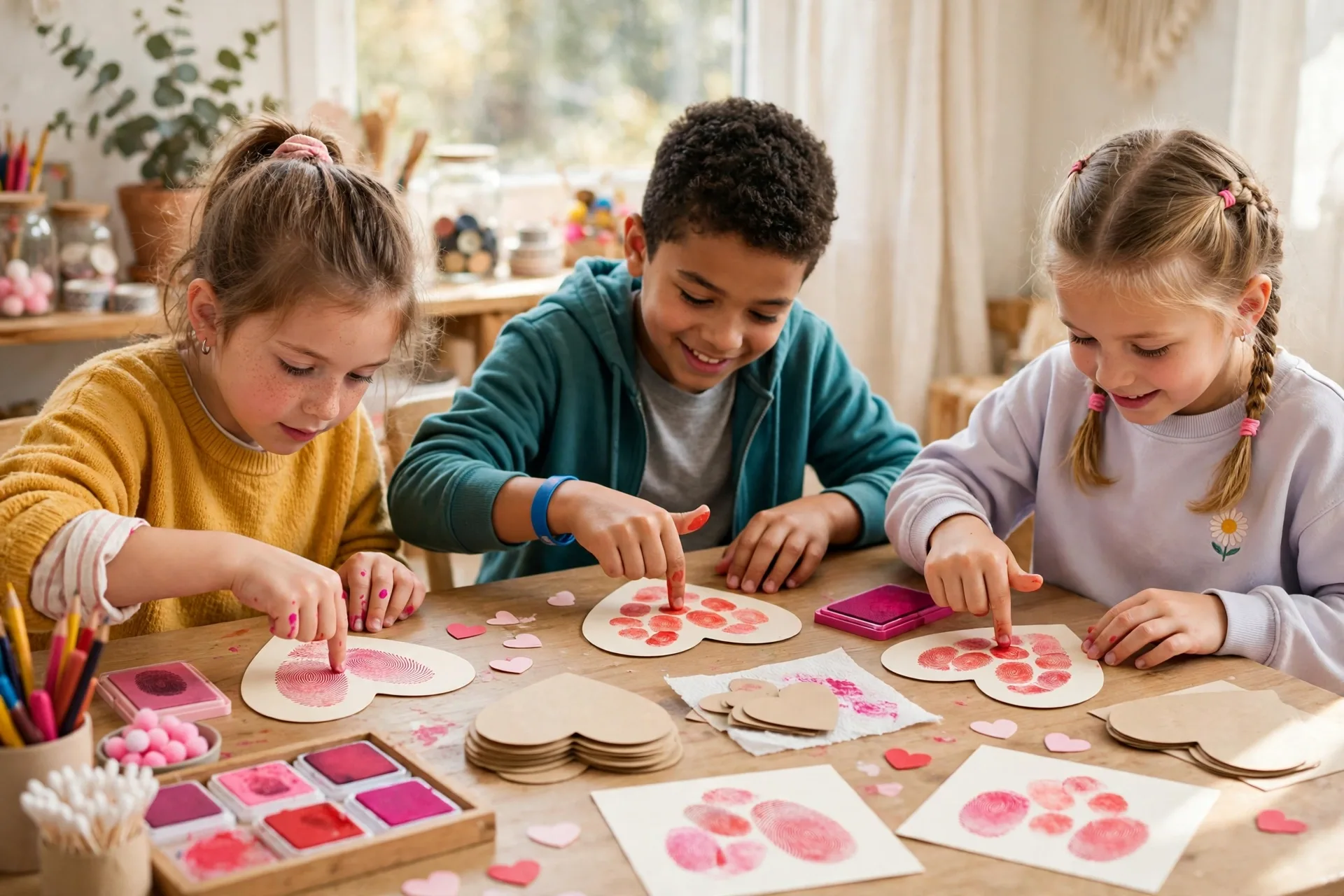
3. Fingerprint heart cards (ages 2+). Two thumbprints, tilted toward each other, make one tiny heart. Stamp a row of them across a card and even the least crafty kid produces something genuinely cute. Washable ink only — this gets on sleeves, faces, and at least one wall if you look away.
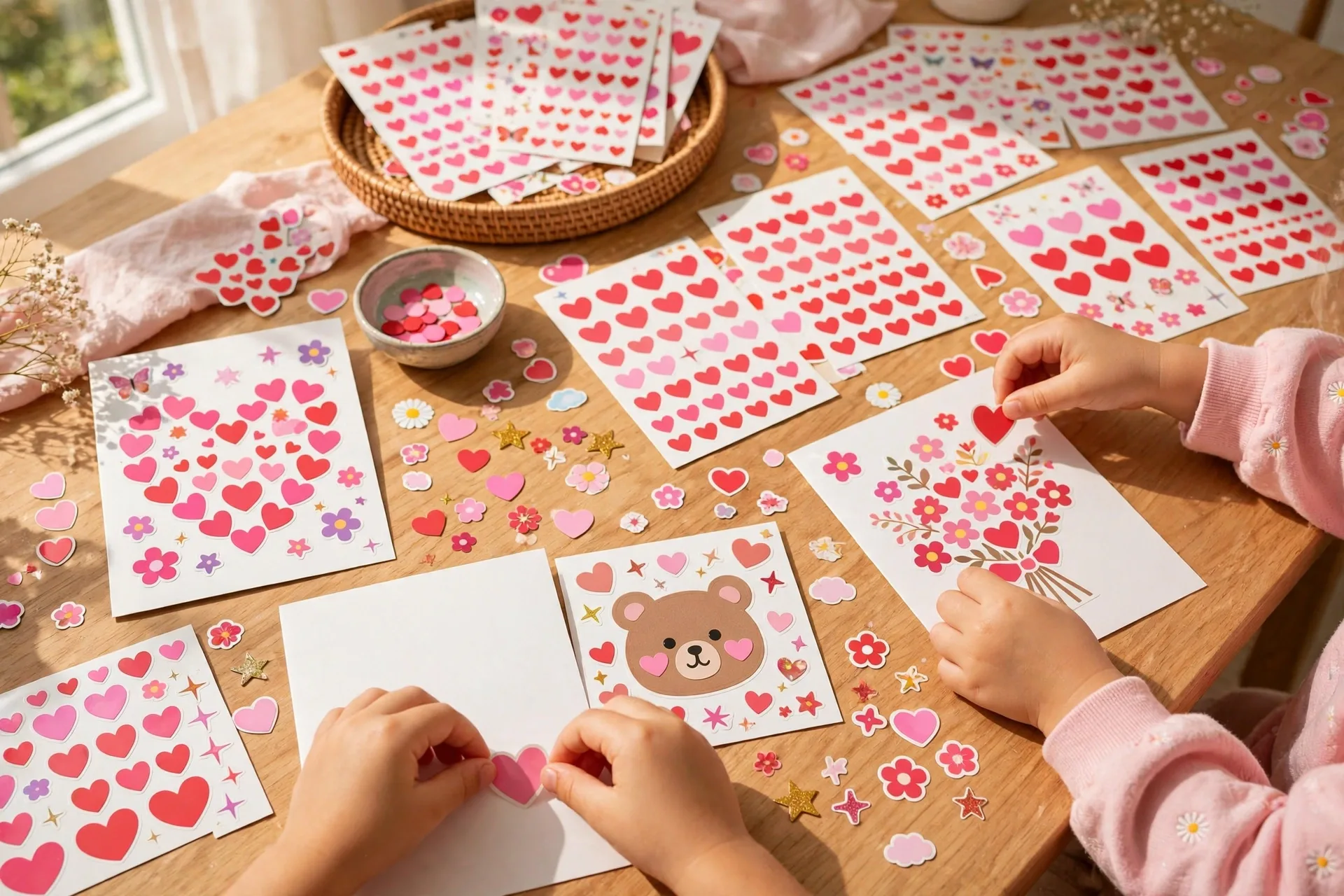
4. Sticker-only cards (ages 18 months+). Blank cards, one heroic sheet of heart stickers, done. Peeling stickers is real fine-motor work, and a card covered edge-to-edge in stickers is a masterpiece by 2-year-old standards. No glue, no drying time, no glitter in the couch cushions.
5. The family valentine mailbox (ages 3+). Decorate a shoebox with a mail slot in the top, and from February 1st everyone drops in little notes and drawings for each other; open it together on the 14th. Our 4-year-old checks “her” mailbox like a bank manager — it’s become the sweetest part of our February.

6. Love notes that travel (ages 4+). Short notes tucked where they’ll be found: lunchboxes, coat pockets, under a pillow. Yours can be written; theirs can be drawn — a heart with your name spelled mostly right is the best mail there is. Keep blank cards in the kitchen drawer and this runs itself all month.

7. Cards for people who need them most (ages 4+). Make an extra batch for a nursing home, hospital ward, or neighbors who live alone. Call ahead about drop-off rules, and let the kids sign every one. Parents write to me about this one long after February ends.
Crafts & Keepsakes
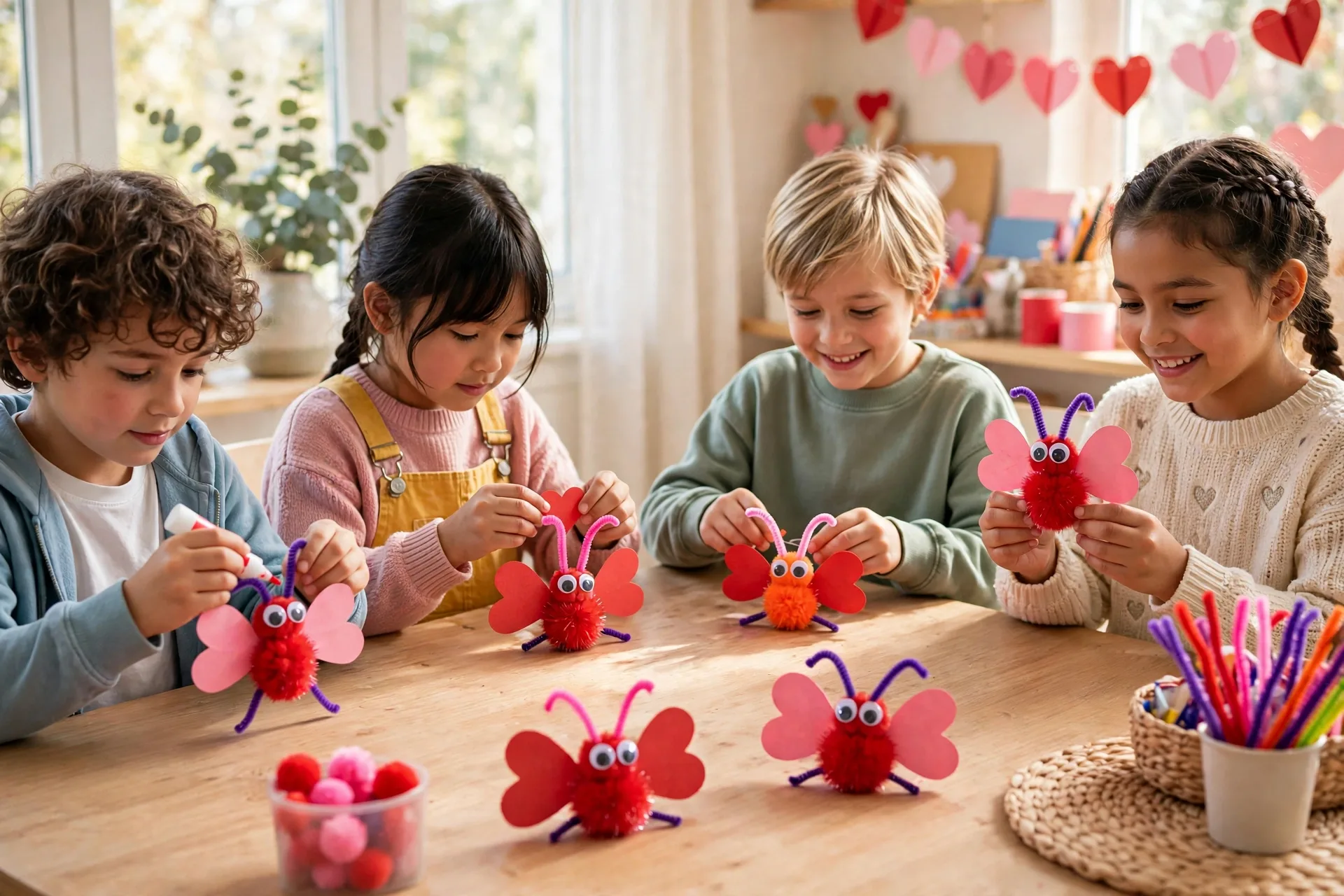
8. Love bugs (ages 3+). A cardboard tube becomes a bug: wrap it in paper, add pipe-cleaner antennae, paper heart wings, and two big googly eyes. The 520-piece googly eye pack we use has self-adhesive backs on the bigger sizes, which keeps this moving. One honest rule: googly eyes are a choking hazard for under-3s — for toddlers, a grown-up does the gluing and the finished bug lives up high.
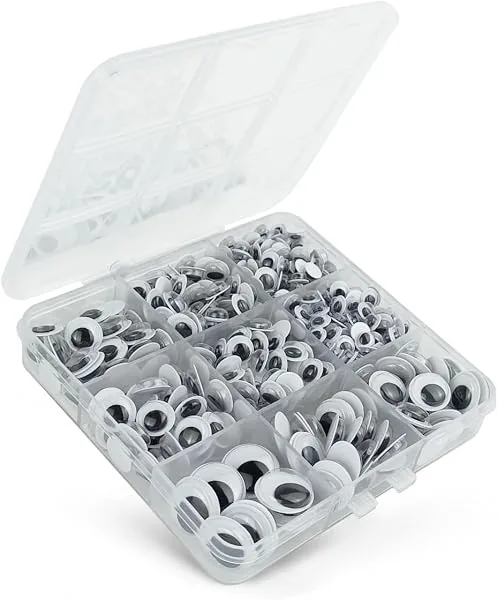
Googly Eyes — 520 Pcs, Self-Adhesive
For love bugs and every creature card in this guide — the bigger sizes are self-adhesive, so little hands can place them without a glue battle. Grown-ups do the gluing for under-3s.
9. Coffee filter color-bleed hearts (ages 3+). Scribble all over a flattened coffee filter with washable markers — the darker the better — then drip on water and watch the colors bloom. Dry flat (about an hour), cut out a heart, hang it in a window. It looks like watercolor art and costs almost nothing.

10. Heart tear-art mosaic (ages 2+). No scissors required: kids tear red, pink, and purple paper into bits and glue them inside a big heart outline. Tearing is a genuine hand-strength workout, the “mistakes” are invisible, and a 2-year-old and an 8-year-old can do this side by side, both feeling like artists.
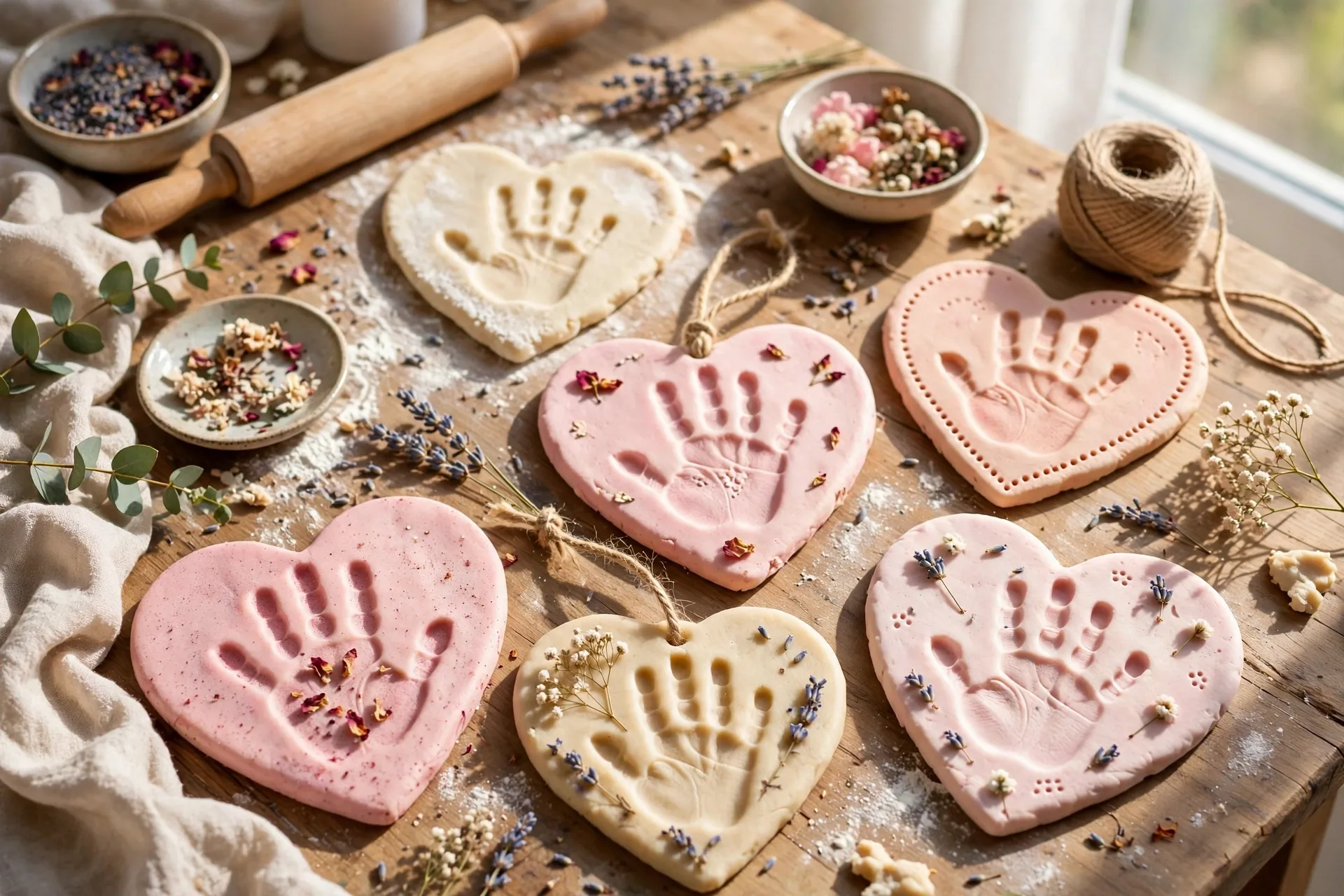
11. Salt dough handprint hearts (ages 2+, grown-up baking). Press handprints or cut big hearts from salt dough; a grown-up handles the oven — the dough needs a long, low bake and a full cool-down before small hands touch it again. Painting day is tomorrow, once the hearts are completely dry: that’s when acrylic paint pens earn their keep — fine tips let kids write names and draw faces without a brush-and-water mess. Write the year on the back; it’s the keepsake you unbox every February.
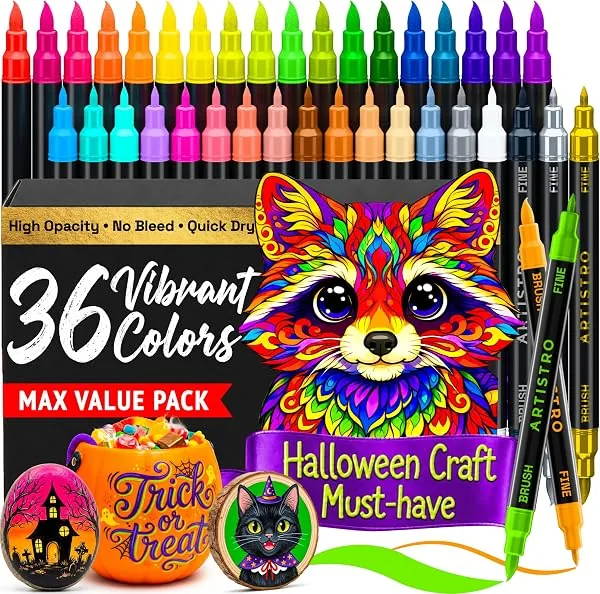
ARTISTRO Acrylic Paint Pens
What we paint the salt dough hearts with once they are fully dry — fine tips for names and faces, no brushes or water cups to spill. A grown-up runs the decorating session.
12. Tissue paper heart wreath (ages 4+). Cut the middle out of a paper plate, then glue on scrunched tissue paper squares in every shade of pink. Scrunching is oddly satisfying for grown-ups too. Hang it on the front door — house decorated, craft budget spent: one paper plate.
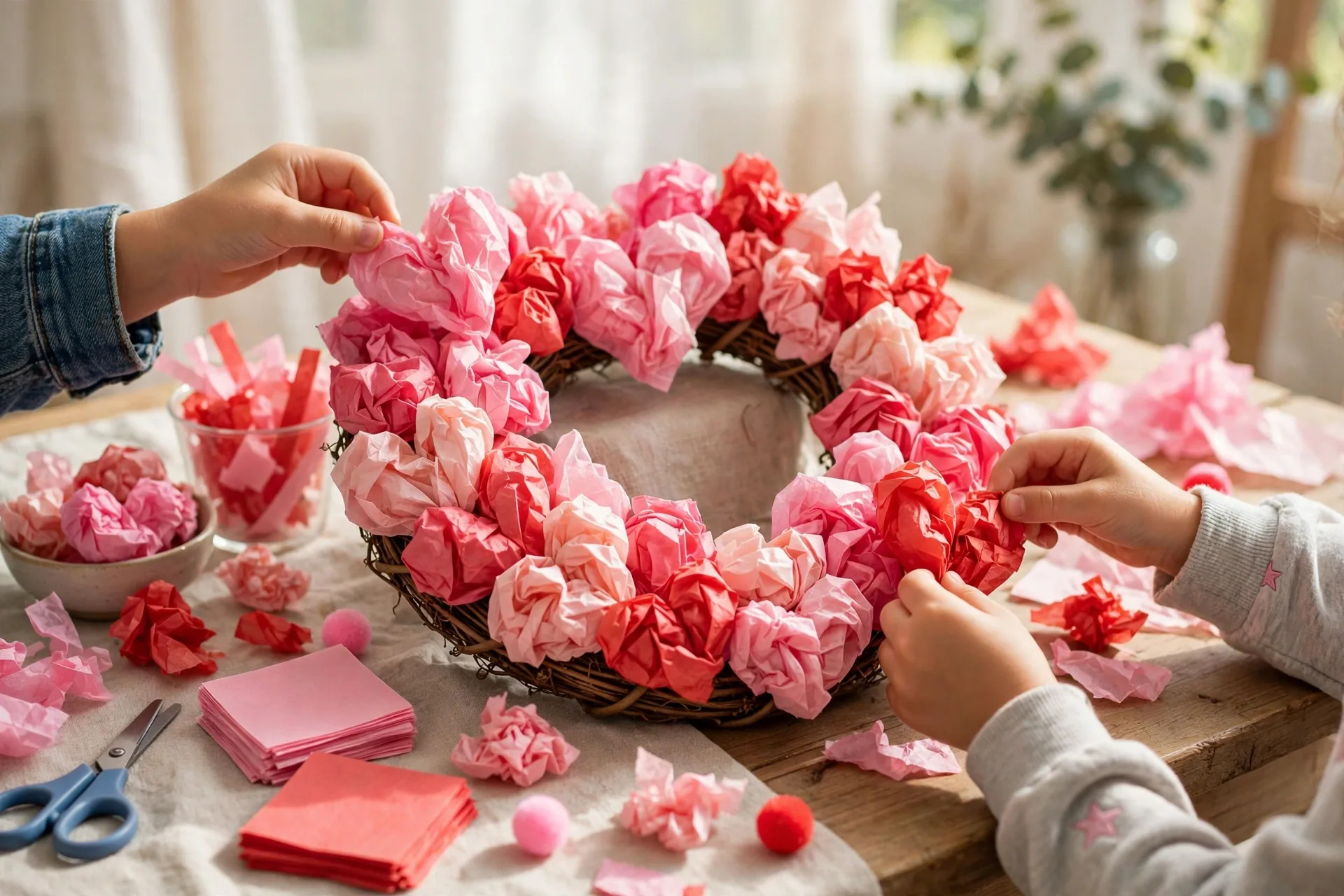
13. Paper heart garland (ages 4+). Cut a pile of paper hearts and tape, glue, or staple them along a length of string; older kids can fold hearts accordion-style for a 3D version. Drape it over a doorway — it’s the decoration our kids ask for by name.

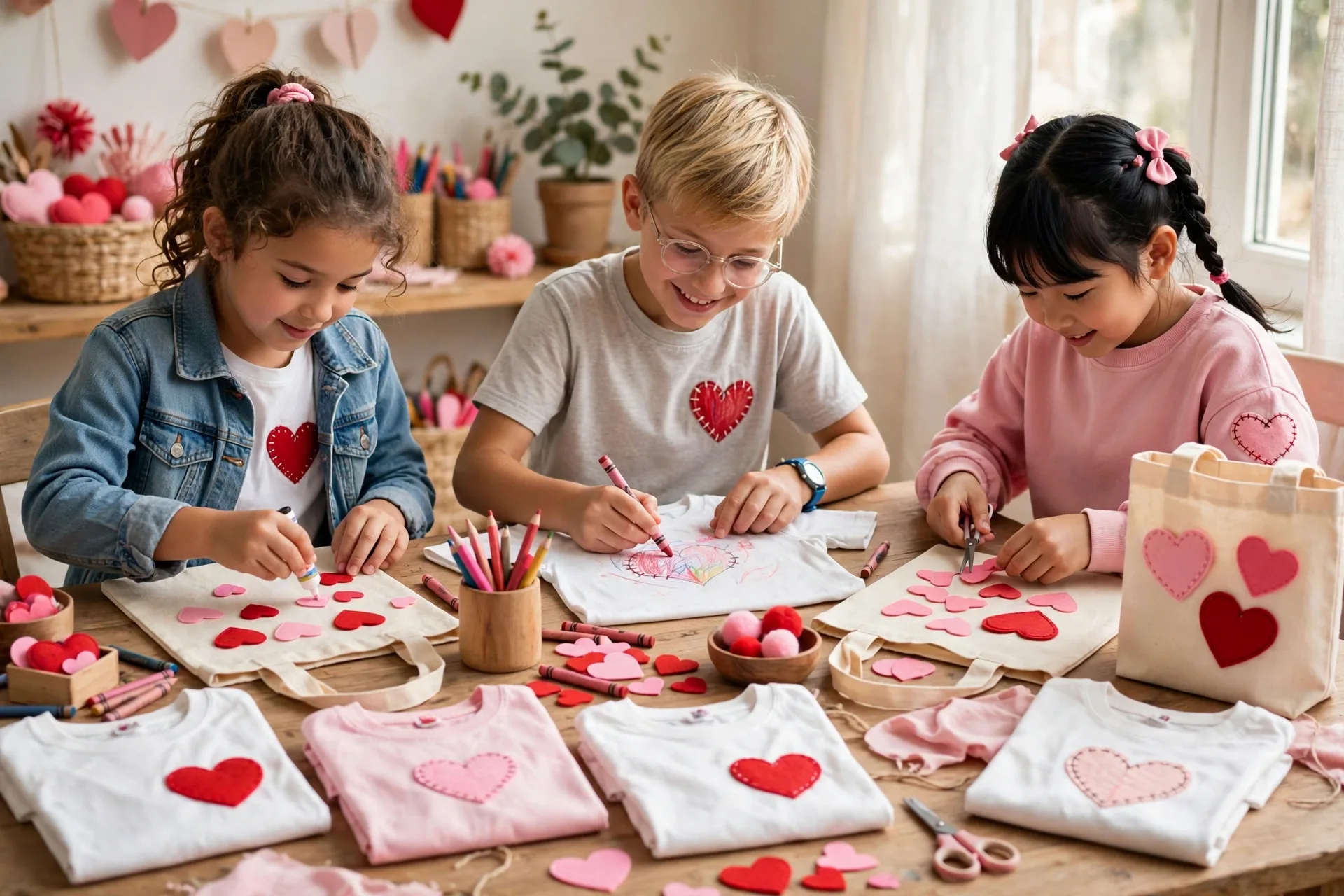
14. Heart tees and totes (ages 5+). A plain tee, tote, or bandana plus fabric markers becomes a wearable valentine: draw hearts, write kindness words, dry flat overnight before wearing. We use Tulip fabric markers — the brand says the color withstands multiple washings. One warning: fabric markers are permanent on everything, so smocks on and the good tablecloth off. (Short on time? Our Easy Peasy Valentines Crafts for Kids roundup is the shortcut shelf of this section.)
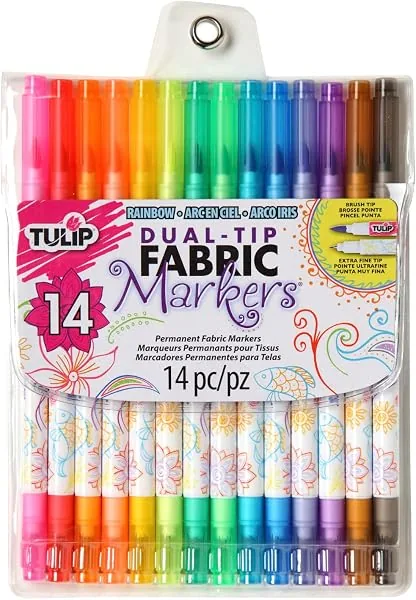
Tulip Fabric Markers
For the wearable valentines in #14 — draw hearts, write kindness words, dry flat overnight, and the color survives the wash.
Sensory Play for Little Hands
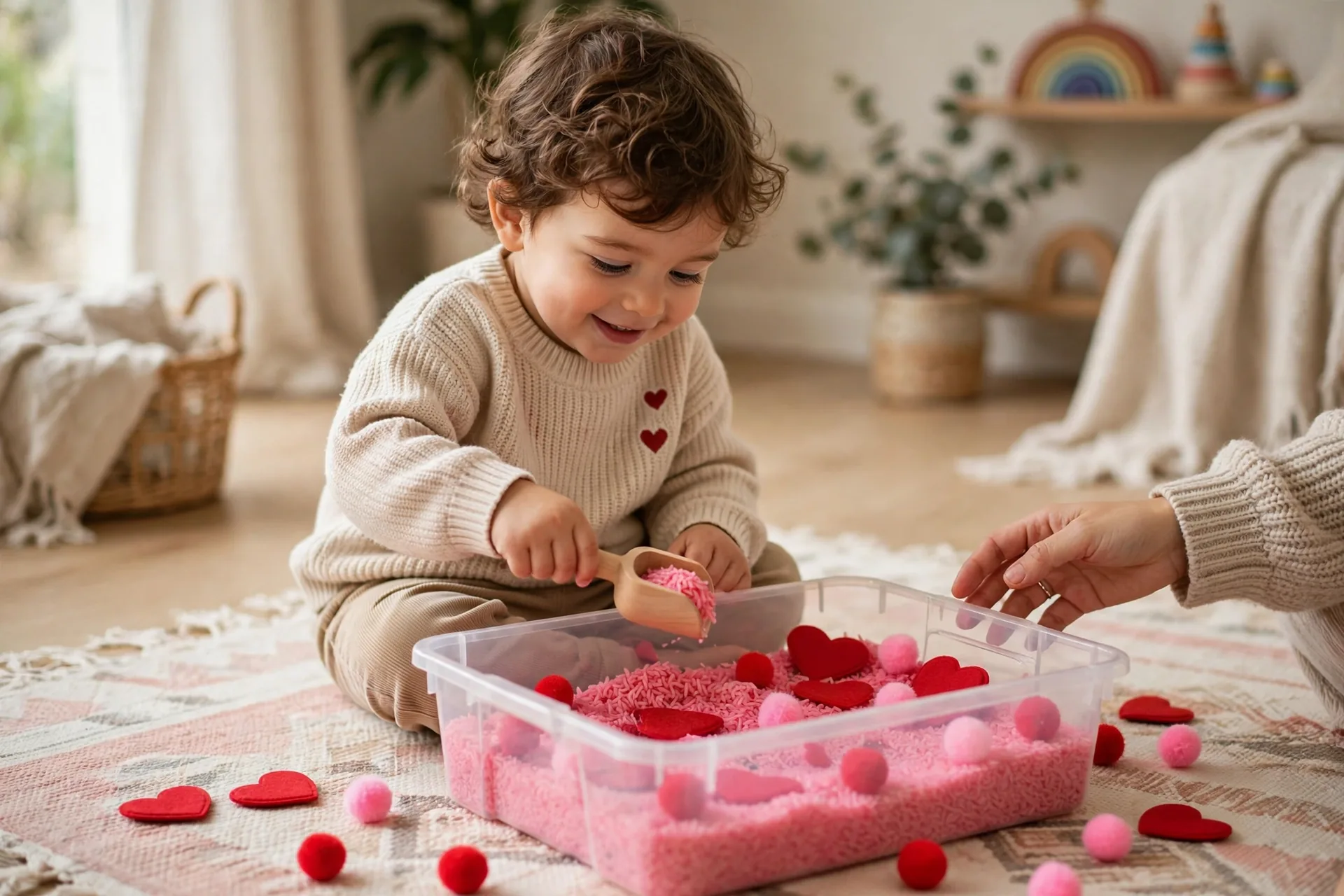
15. Pink rice sensory bin (ages 18 months+). The February classic: rice dyed pink and red in a shallow bin with foam hearts, pom-poms, scoops, and cups. Do the dyeing the night before — shake dry rice with a few drops of food coloring and a splash of vinegar in a sealed bag, spread on a tray, and let it dry completely. Dry rice, happy bin; damp rice, pink everything. For under-2s, big items only, and stay within arm’s reach.
16. Cloud dough hearts (ages 2+). Mix flour and oil (about 8 parts flour to 1 part oil) into a soft dough, tint it pink, and hand over heart cookie cutters. It packs like wet sand and crumbles like a cookie. It is not a snack — it smells like baking, so supervise the mouthers, and it lives at the table, not in the carpet.
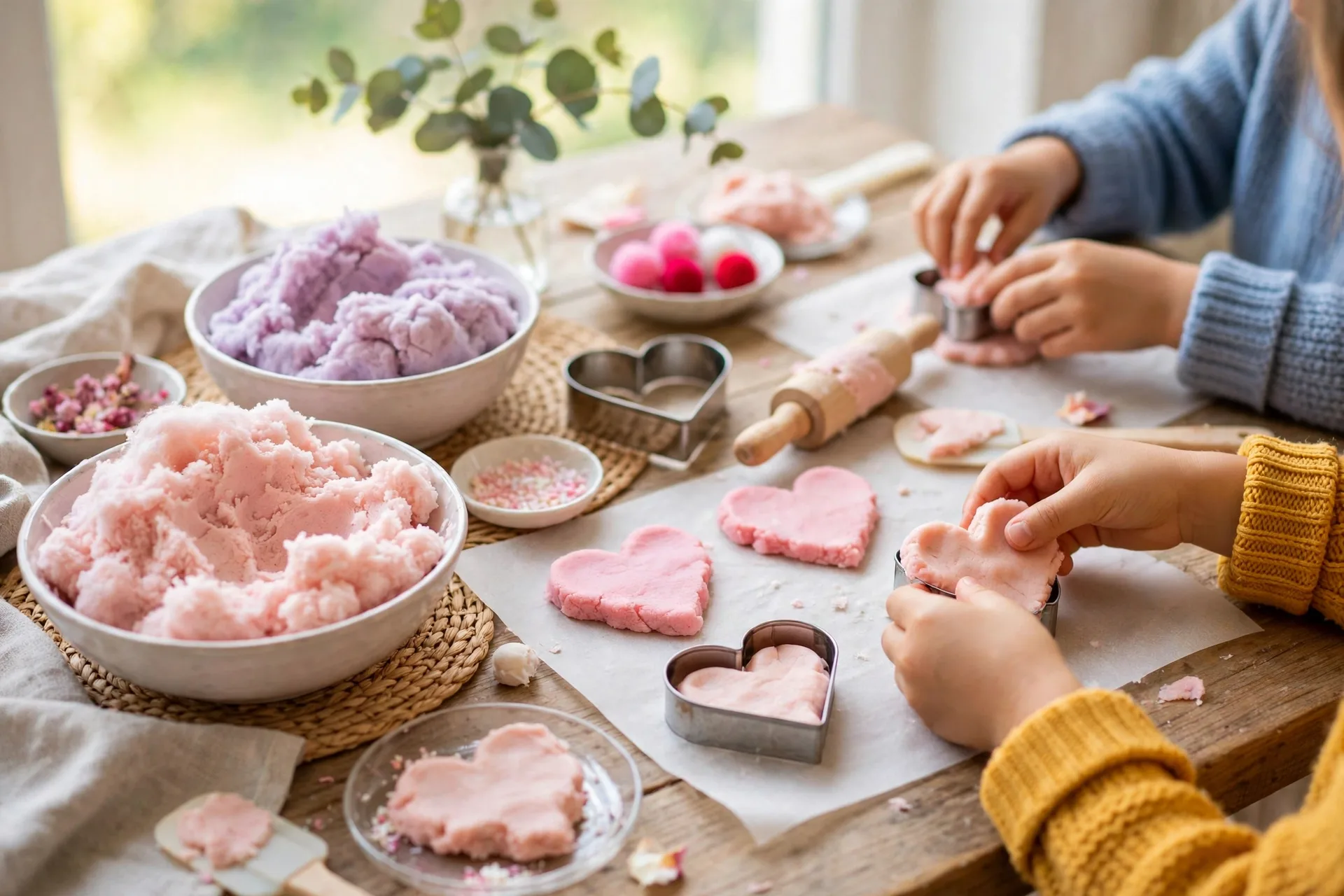
17. Calm-down heart jar (ages 3+). Fill a clear plastic jar with water, a squeeze of clear glue, and heart confetti and glitter; seal the lid (a grown-up can hot-glue it shut) and watch it settle. Glass jars and toddlers are a combination we skip — plastic survives the drop test. Quiet, mesmerizing, and useful at the witching hour.

18. Pom-pom heart drop (ages 12 months+). Tape a cardboard tube to the wall at toddler height, set out a bowl of big soft pom-poms, and show your little one how to drop one in the top and catch it at the bottom. Use the biggest pom-poms you have, and keep this a together activity for mouthy babies.
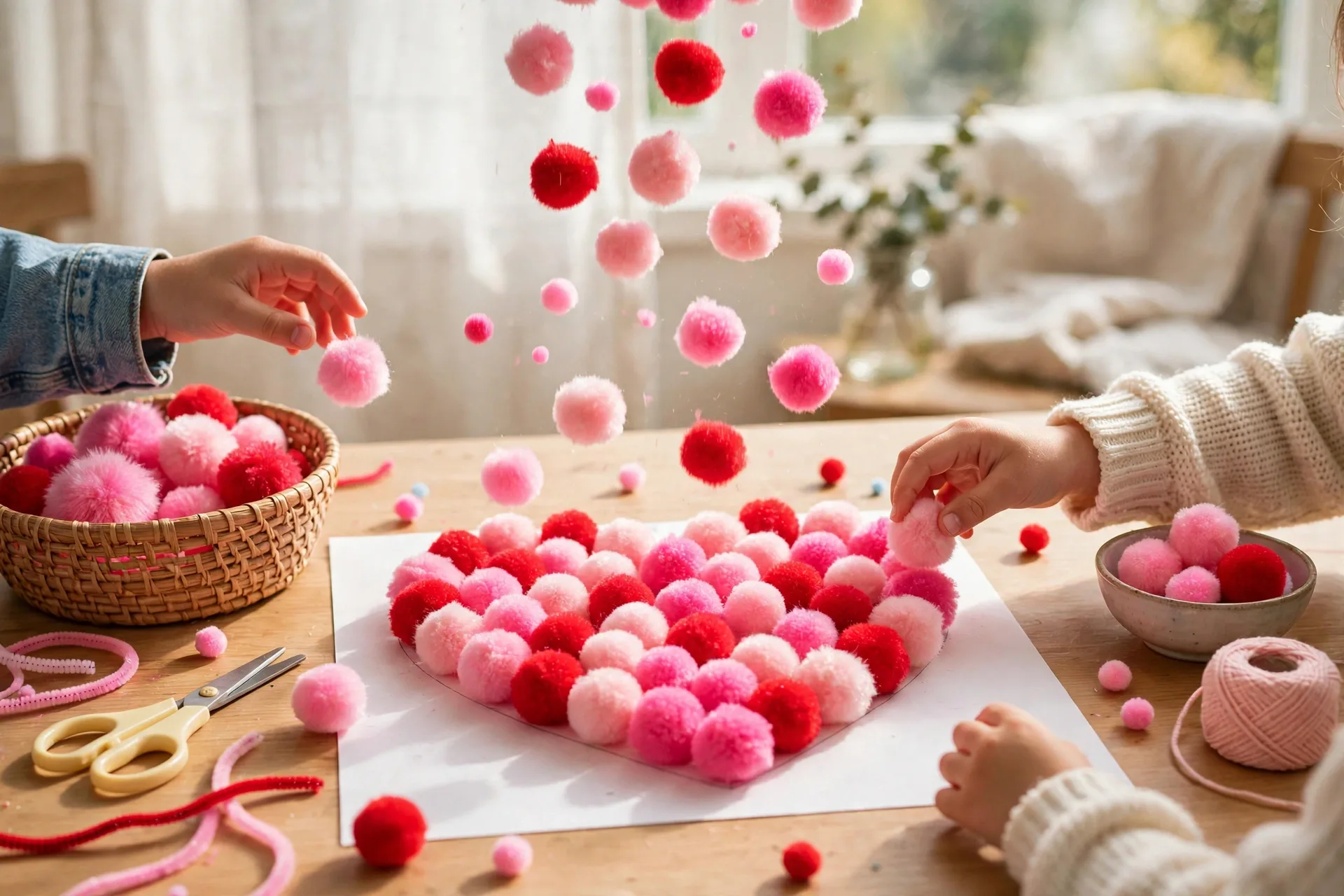
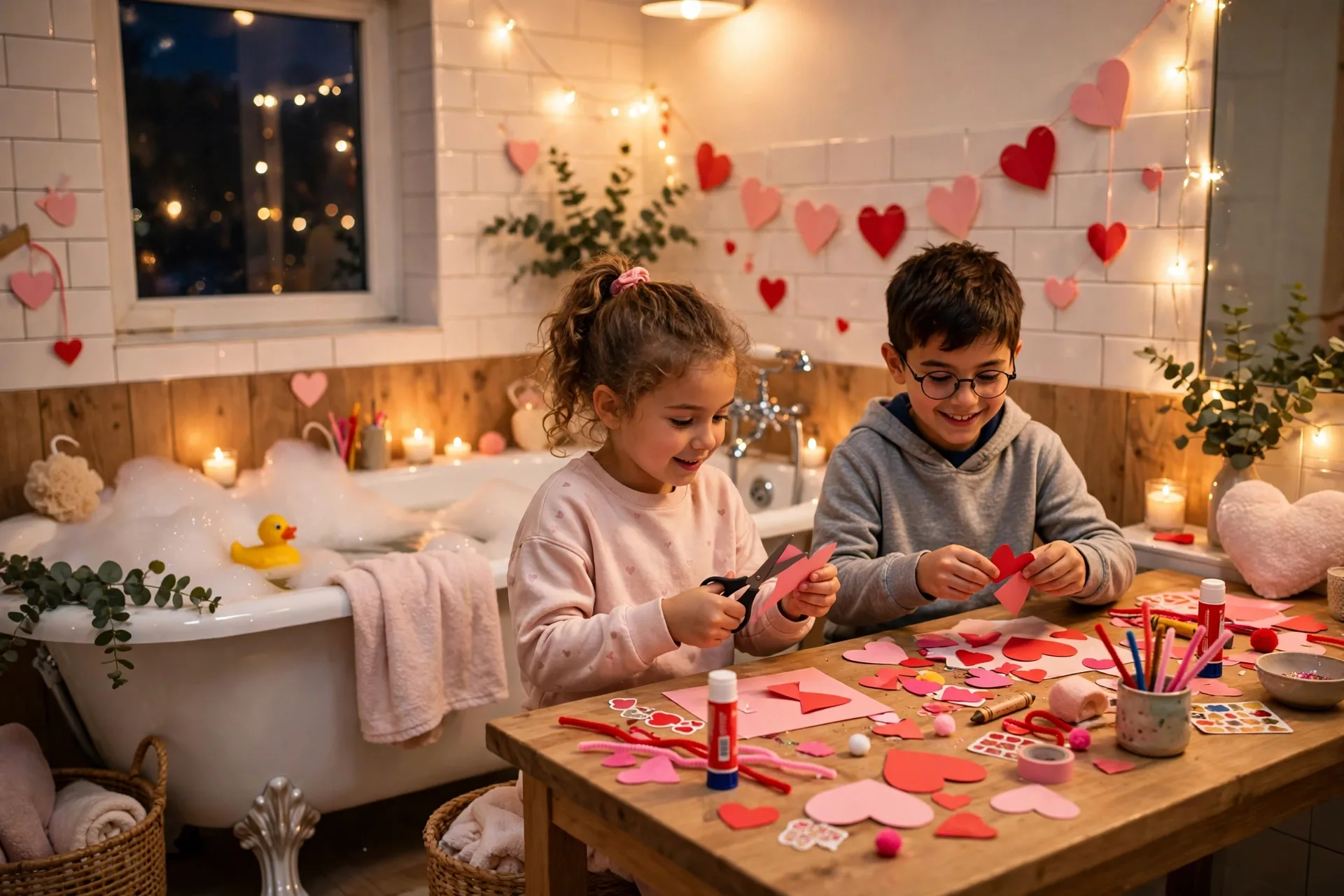
19. Valentine bath night (ages 1+). Pink-tinted bath water (a drop of food coloring does it), foam hearts stuck to the tile, sponges, and cups for pouring. Sensory play with the easiest cleanup in this whole guide. Bath rules as always: a grown-up stays in the room, the whole time, no exceptions.
20. Playdough heart station (ages 2+). Set out pink and red dough with heart cutters, a rolling pin, and buttons or gems to press in as decorations. The Play-Doh 10-pack of 2oz colors is what we pull out — ten little tubs, so color-choosing is half the fun and every kid guards their own colors. Pressed-in pieces get fished out at cleanup; dough with buttons in it doesn’t go back in the tub.
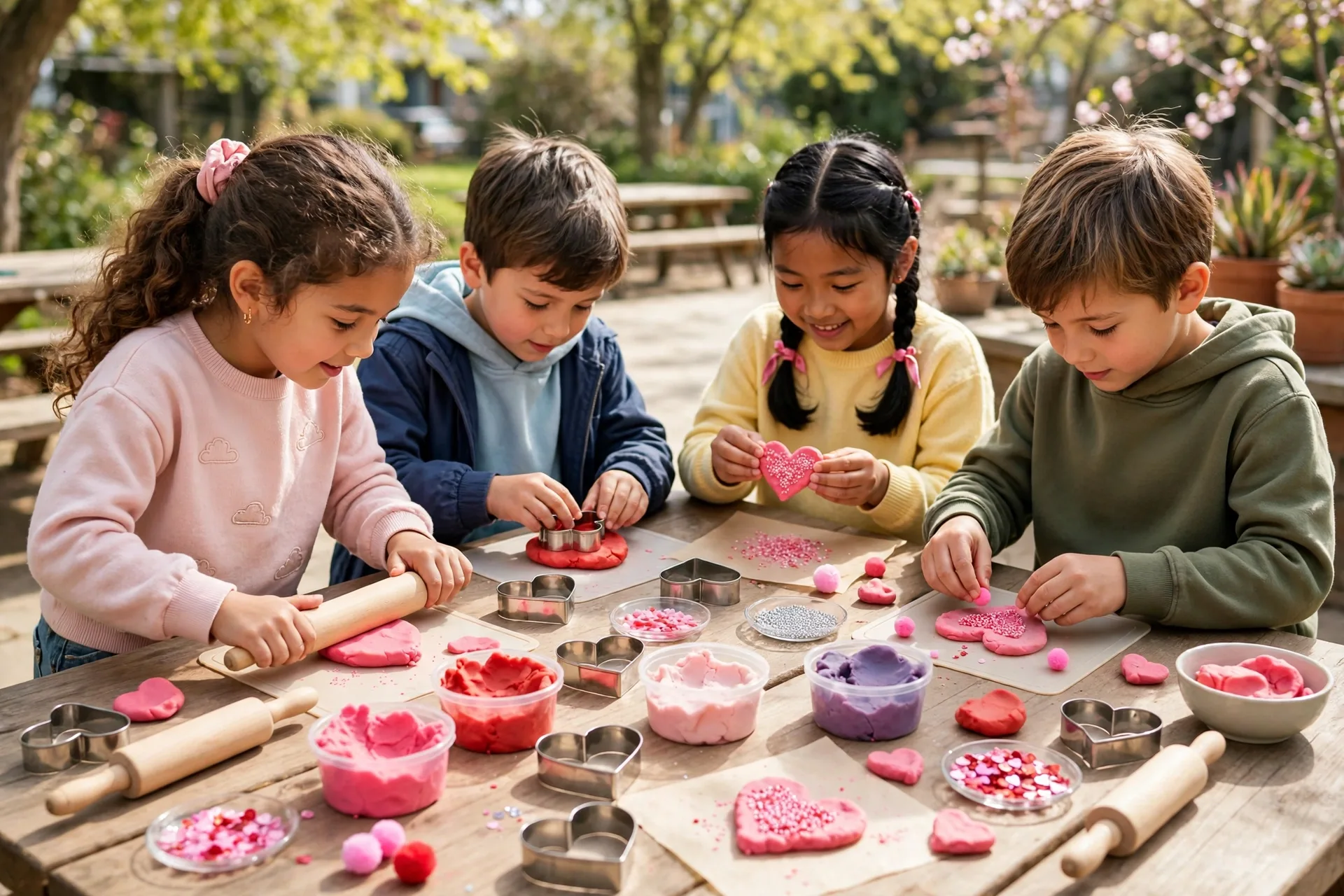
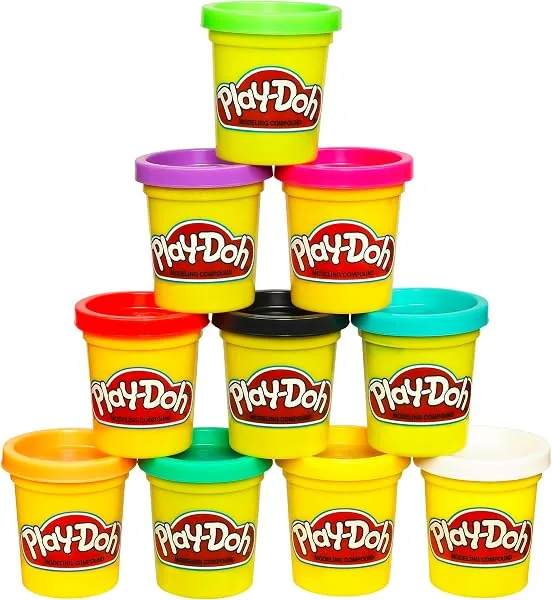
Play-Doh — 10-Pack of 2oz Colors
The ten-color pack from our dough station — ten little tubs, so color-choosing is half the fun and every kid gets their own colors.
Games & Giggles
21. The great paper heart hunt (ages 2+). Hide 20–30 paper hearts around one room — under cushions, on shelves, one in the dog’s bed for drama — and hand each kid a basket. Toddlers hunt the “hidden in plain sight” ones; older kids get a timer or a challenge list (“find a striped heart, the biggest heart”). Five minutes of setup, an hour of replay.
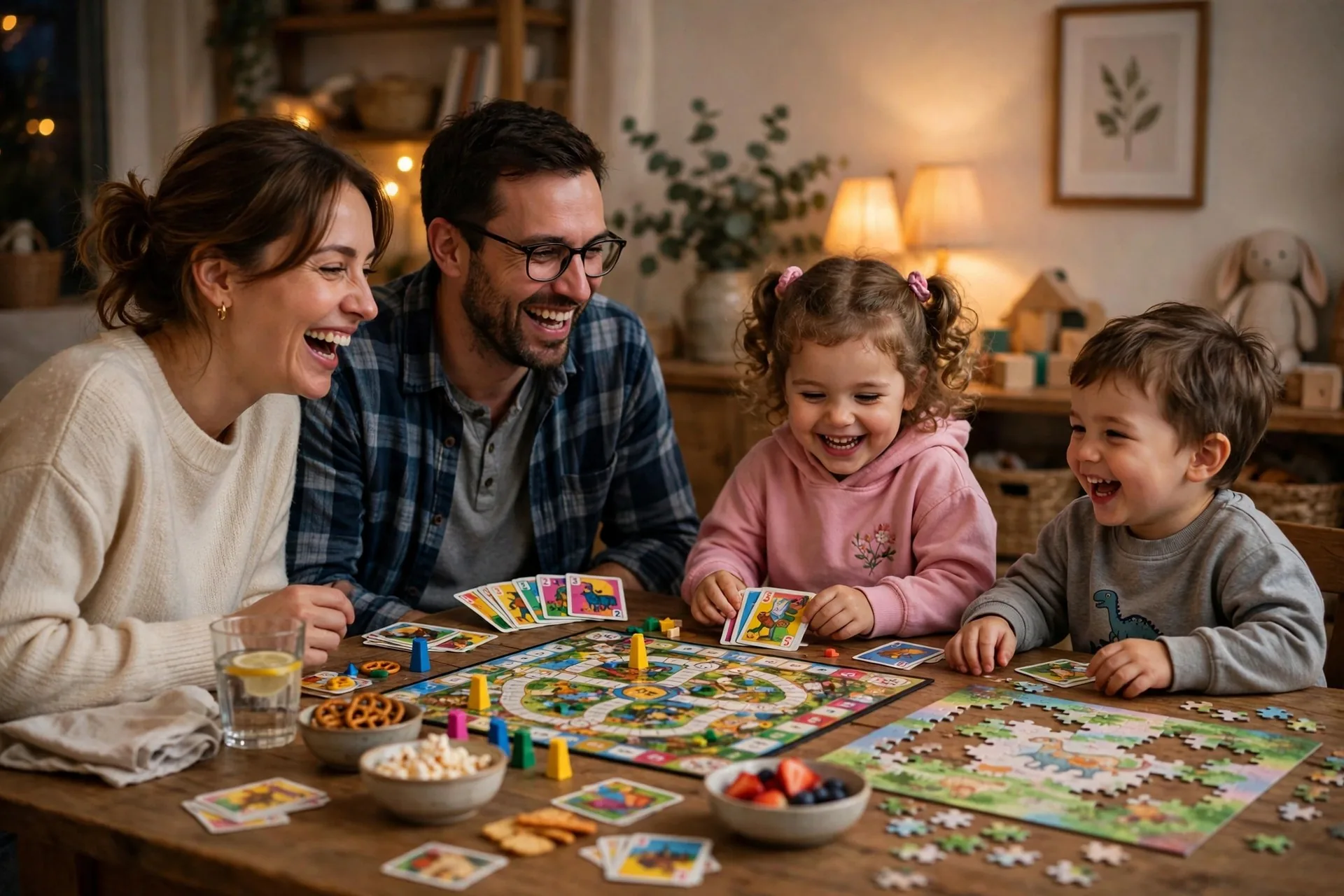
22. Valentine bingo night (ages 4+). Simple picture cards — hearts, cupcakes, arrows, love bugs — in short rounds with pom-poms or buttons as markers (candy markers get eaten mid-round; ask me how I know). Our Valentines Bingo guide has the game laid out for family and classroom groups.
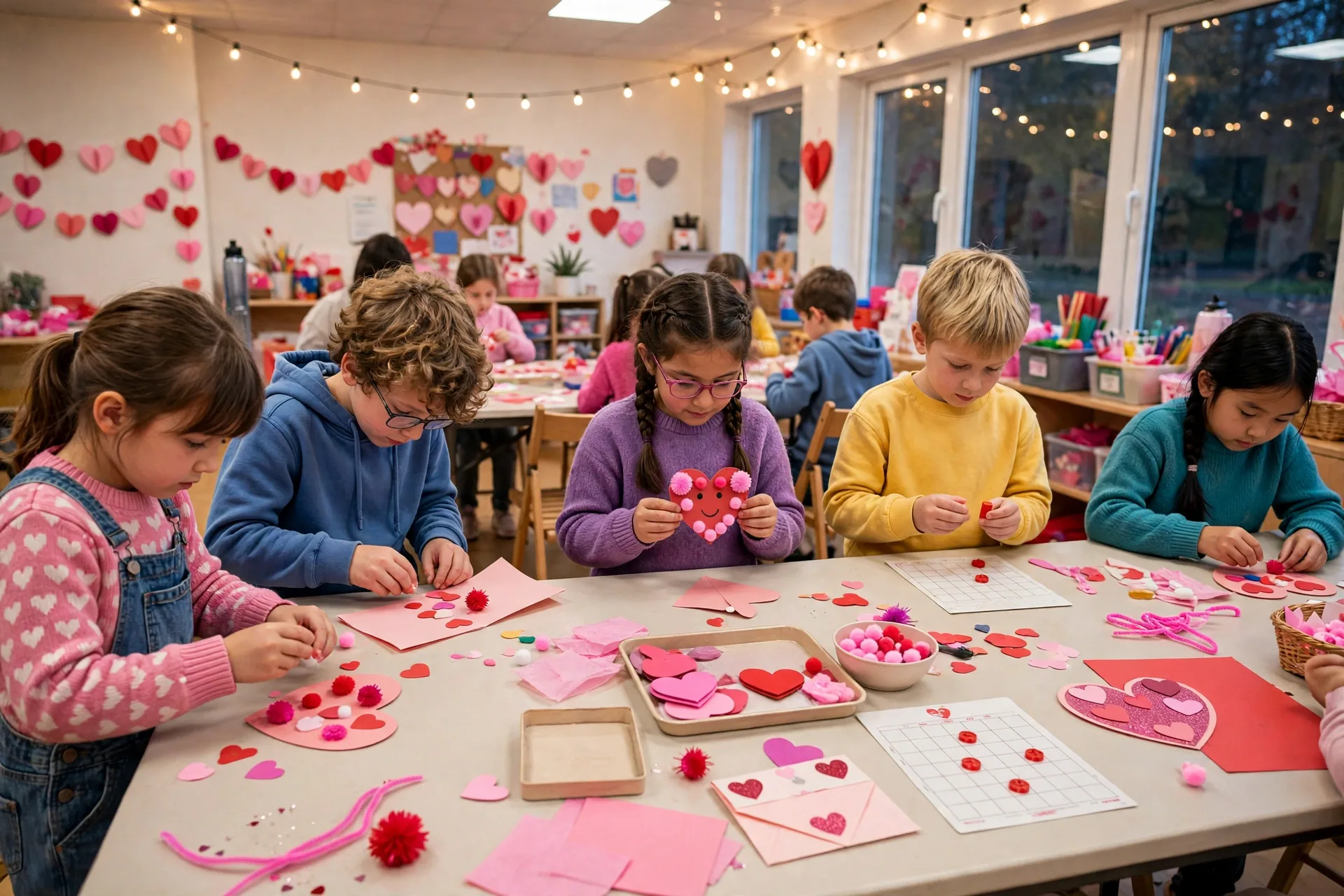
23. Heart match memory game (ages 3+). Make pairs of matching hearts — same color, pattern, or sticker — lay them face down, and flip two at a time. Six pairs for preschoolers; school-age kids can handle twelve and will beat you fairly. Drawing the pairs is itself a quiet rainy-afternoon craft.

24. Living-room heart obstacle course (ages 3+). Cushions to hop between, a “river of love” (a blanket) to cross on stepping-stone hearts, a tunnel to crawl through, and a finish line where you deliver a paper valentine. Let the kids help design the course — designing is half the activity.

25. Game night for the big kids (ages 8+). When the littles are down, the older crew gets the word games: describe valentine words without saying them, race the clock on quick-fire questions. Our Valentines Taboo Game rounds end with everyone shouting — in the good way.

For quiet gaps between games, our Valentines Day I Spy Printable is the waiting-room and pre-dinner lifesaver in our kitchen drawer.
Sweet Kitchen Activities
26. Heart cookie decorating (ages 3+). A grown-up bakes heart-shaped sugar cookies ahead (or buys plain ones — zero judgment, it’s February). Kids get pink and white icing, sprinkles, and full artistic control. Give every decorator their own sprinkle bowl or you’ll referee the red-sugar negotiations all afternoon. Check allergies before these travel anywhere near a classroom.
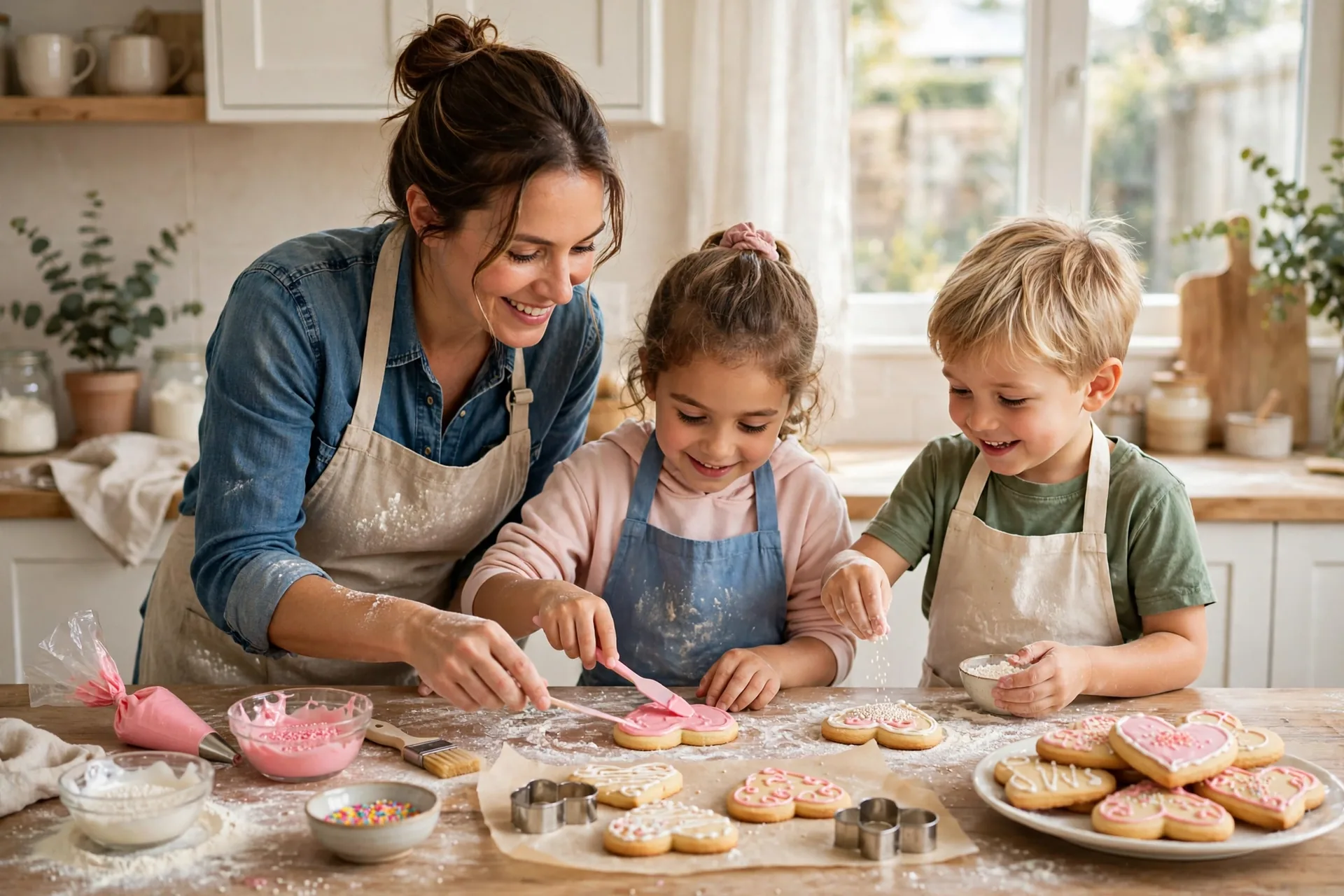
27. Heart-shaped mini pizzas (ages 4+). Stretch pizza dough into a rough heart (it will look like a blob; call it rustic) and let kids sauce and top their own. Little kids spread sauce and rain cheese; older kids get the serious job of olive placement. Grown-up hands run the oven. This is our family’s actual Valentine’s dinner now — reservations never stood a chance.

28. Non-food classroom valentines (ages 4+). For candy-free classrooms — and honestly, any classroom — a pencil, eraser, sticker sheet, or tiny notepad taped to a card is a valentine kids keep past Friday. “You’re the write one for me” on a pencil gets a groan from every adult and a grin from every kid. Nothing edible also means nothing to check against the allergy list.
Baby’s First & Toddler Corner
29. Mess-free bag painting (ages 6 months+). Put a paper heart in a sturdy zip bag with a few squirts of red and pink paint, seal it well (tape the top for insurance), and let your baby squish the paint around from outside the bag. All the sensory joy of finger painting, none of the repainting-the-baby cleanup. Dry the heart and it becomes the valentine you send to grandparents.

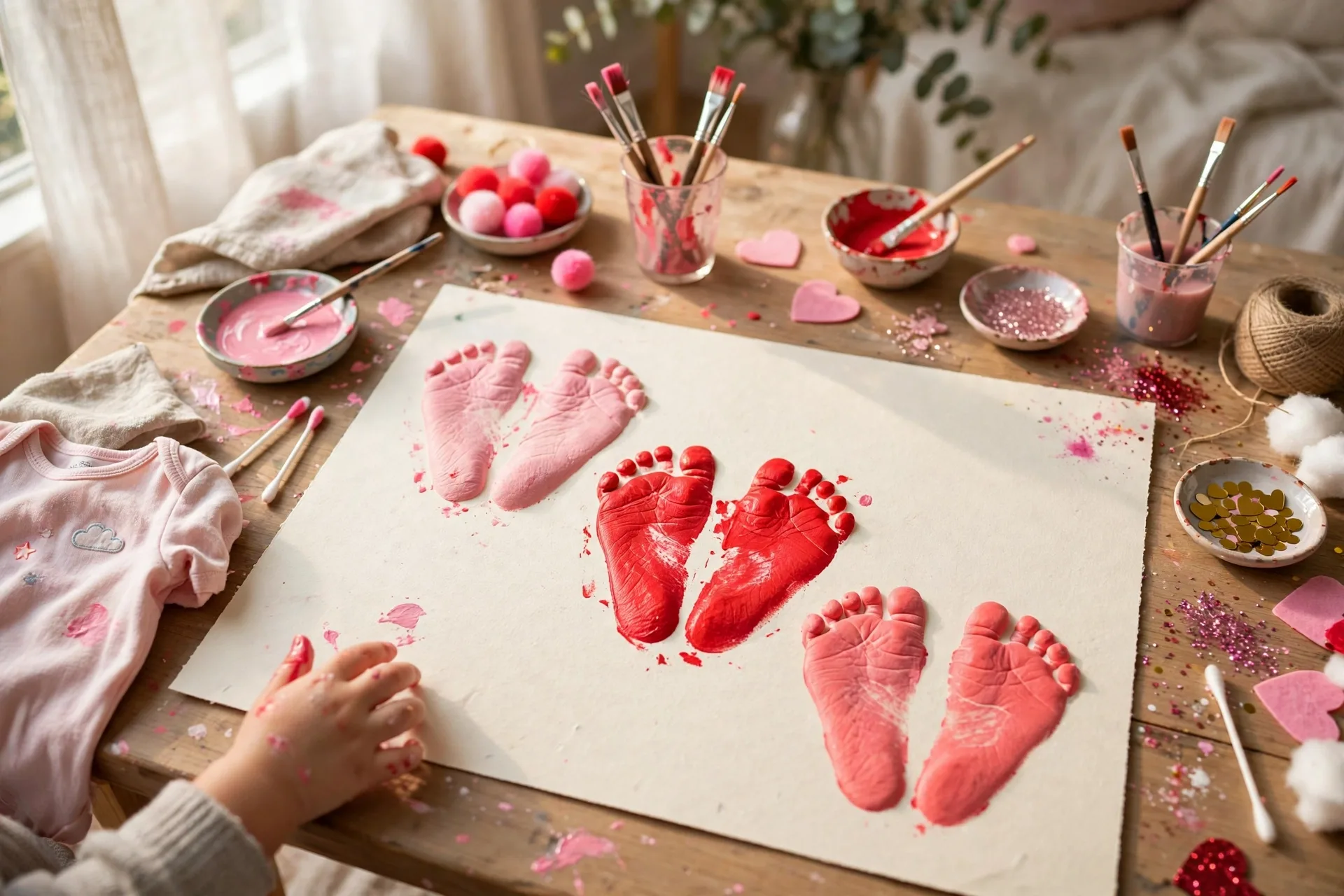
30. First valentine footprint hearts (ages 0+). Two baby footprints, heels together and toes angled out, form a heart — the keepsake that launches a thousand fridge doors. Use washable, non-toxic paint, one foot at a time, and have the wipes open before you start; a painted baby foot waits for no one. Add “First Valentine’s Day” and the year — future-you will thank present-you.
Quick Picks: Activities by Age
| Age | Start With These | Why They Work |
|---|---|---|
| Babies (0–1) | Footprint hearts (#30), bag painting (#29), pom-pom drop (#18) | Zero rules, all sensory, and they produce the keepsakes |
| Toddlers (18 months–3) | Sticker cards (#4), sensory bin (#15), tear-art hearts (#10), valentine bath (#19) | Short, sturdy, built for attention spans measured in minutes |
| Preschoolers (4–5) | Classic cards (#1), love bugs (#8), heart hunt (#21), cookie decorating (#26) | Real jobs, real giving, crafts they’re proud to sign |
| School-age kids (6–9) | Mailbox + love notes (#5, #6), bingo (#22), memory game (#23), mini pizzas (#27) | Games with stakes, words they can write, kitchen jobs with status |
| Big kids (10+) | Taboo game night (#25), kindness cards (#7), garland + tee decorating (#13, #14) | Give them the funny games and the design jobs — they’ll run the holiday |
More Valentines Day Ideas in the Library
Thirty activities is a start, not a ceiling. Our step-by-step guides for every valentine theme:
Games & printables
Crafts & coloring
Cards, gifts & sweet extras
Shop This Post
Everything we used in this guide, in one place:
| Product | Used For | Price |
|---|---|---|
| Crayola Construction Paper — 480 Sheets |
Cards, hearts & garlands — the base supply (#1) | Check Price |
| Googly Eyes — 520 Pcs |
Love bugs (#8) and creature cards | Check Price |
| ARTISTRO Acrylic Paint Pens |
Painting the dried salt dough hearts (#11) | Check Price |
| Play-Doh — 10-Pack of 2oz Colors |
The playdough heart station (#20) | Check Price |
| Tulip Fabric Markers |
Wearable valentines — heart tees & totes (#14) | Check Price |
Valentines Day Questions Moms Actually Ask
How many valentines does my child actually need for class?
One per classmate, plus two or three spares. Leave the “To:” side blank and sign only “From:” — most teachers request exactly this, and it turns a 25-minute distribution into five.
Our classroom is candy-free. What can we send instead?
Start with activity #28: pencils, erasers, stickers, or mini notepads on a card. They dodge every allergy rule and survive the backpack. Always follow your school’s note over any blog — including this one.
Which activities are actually safe for a 1-year-old?
Bag painting (#29), footprint hearts (#30), the pom-pom drop with oversized pom-poms (#18), and the valentine bath (#19) — all with you right there. Skip googly eyes, beads, and small parts for now; those are for the 3+ crowd or grown-up hands only.
It’s February 13th and I have nothing. What do I do?
Sticker cards (#4): blank cards, one sticker sheet, fifteen minutes. Or cut hearts from any paper you own and run the heart hunt (#21). The kids will not know you planned it in the grocery store parking lot.
How do I make Valentine’s Day about kindness, not just candy?
Build one outward activity into the day: the nursing-home cards (#7), love notes that travel (#6), or the family mailbox (#5). Kids rise to being the givers — the sugar is forgotten by bedtime, but “we made cards for the grandmas at the home” gets retold for weeks.
Start With One Card
If this list feels like a lot, here’s the whole holiday in one sentence: make one card together, give it to someone, and eat something heart-shaped. The classic card, the mailbox, and a plate of heart cookies will carry your whole February — and next year, when your kid asks “are we doing the mailbox again?”, you’ll understand. For the grown-up side of the day, pair this with our Gift Ideas For The Family guide.
Happy Valentine’s Day, mama. The card they’re going to keep forever is the lopsided one.
More family fun on MamaKinder