51 Easy Kids Craft Ideas with Supplies You Already Have
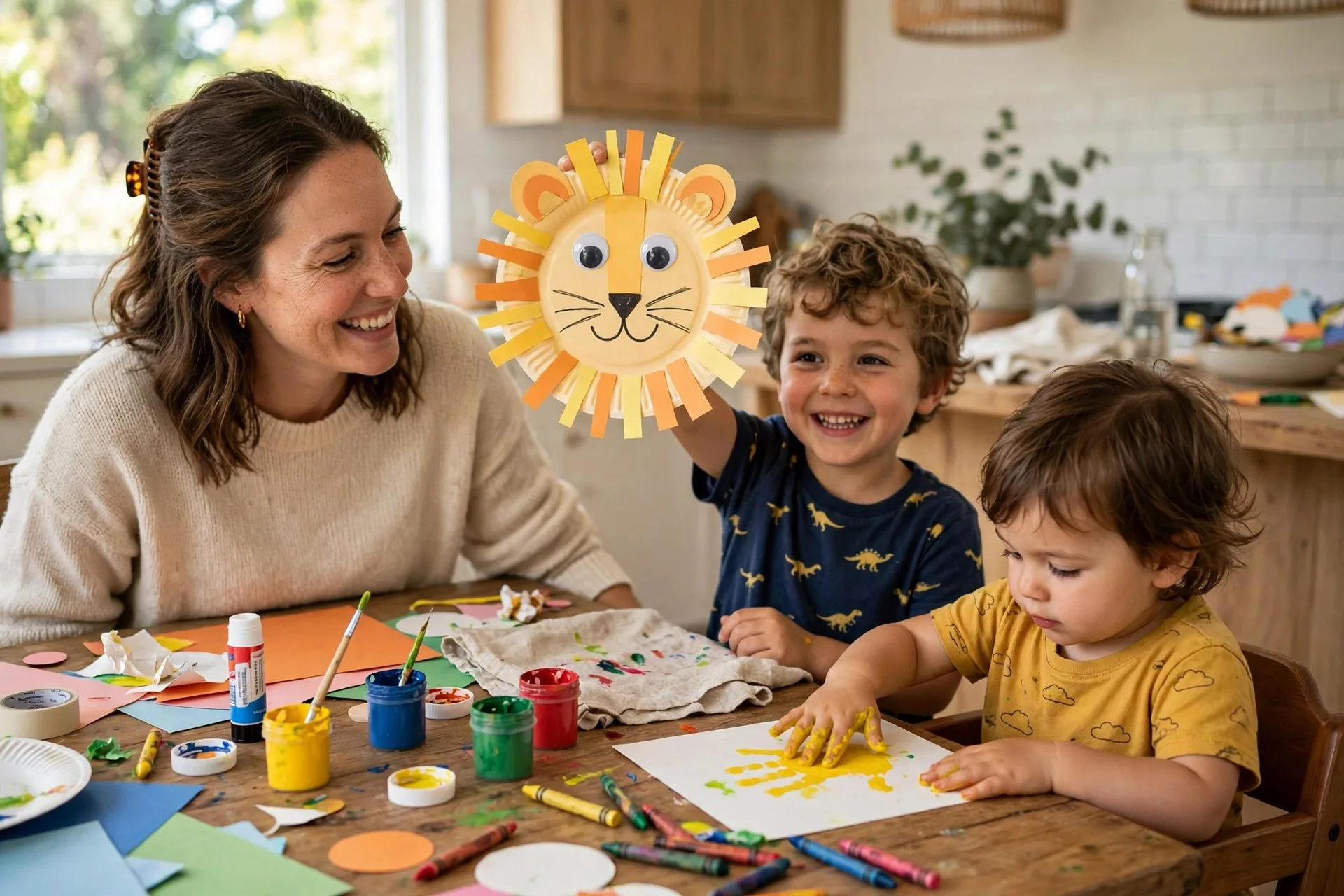
Let’s be honest about what “easy” has to mean when you’re a mom: supplies you already own, setup that takes less than ten minutes, and a cleanup you can survive. A craft that needs a special trip to the craft store and a glue gun is not an easy craft — it’s a second job.
This guide collects 51 easy kids craft ideas that pass that test, organized by the mess you’re willing to sign up for: paper, paint, playdough, and nature-and-recycled. Every craft carries an honest age — my kids are 4 and 2, so when a craft says “ages 4+,” that’s because I watched my 2-year-old try it and mostly eat a crayon. When both kids can genuinely join, I say so, and I name the toddler’s real job inside the bigger-kid crafts, because “watching” is not a job a toddler accepts.
Heads up: this post contains affiliate links. If you buy through them, MamaKinder may earn a small commission at no extra cost to you — it helps keep these guides free.
The Starter Craft Basket (Buy Once, Craft All Year)
Almost everything in this guide runs on six supplies: construction paper, washable paint, a glue stick or white glue, crayons or washable markers, safety scissors, and a pack of big stickers. Add playdough and you’ve covered a year of afternoons. Everything else — paper plates, cardboard tubes, leaves, an empty box — your house produces for free. Keep it all in one basket or bin your kids can see; a craft that starts with ten minutes of hunting for the glue is a craft that doesn’t happen.
Paper Crafts (Start Here — Cheapest, Calmest)
Paper is where every craft habit starts: no drying time, no special tools, and the mess sweeps up in thirty seconds.
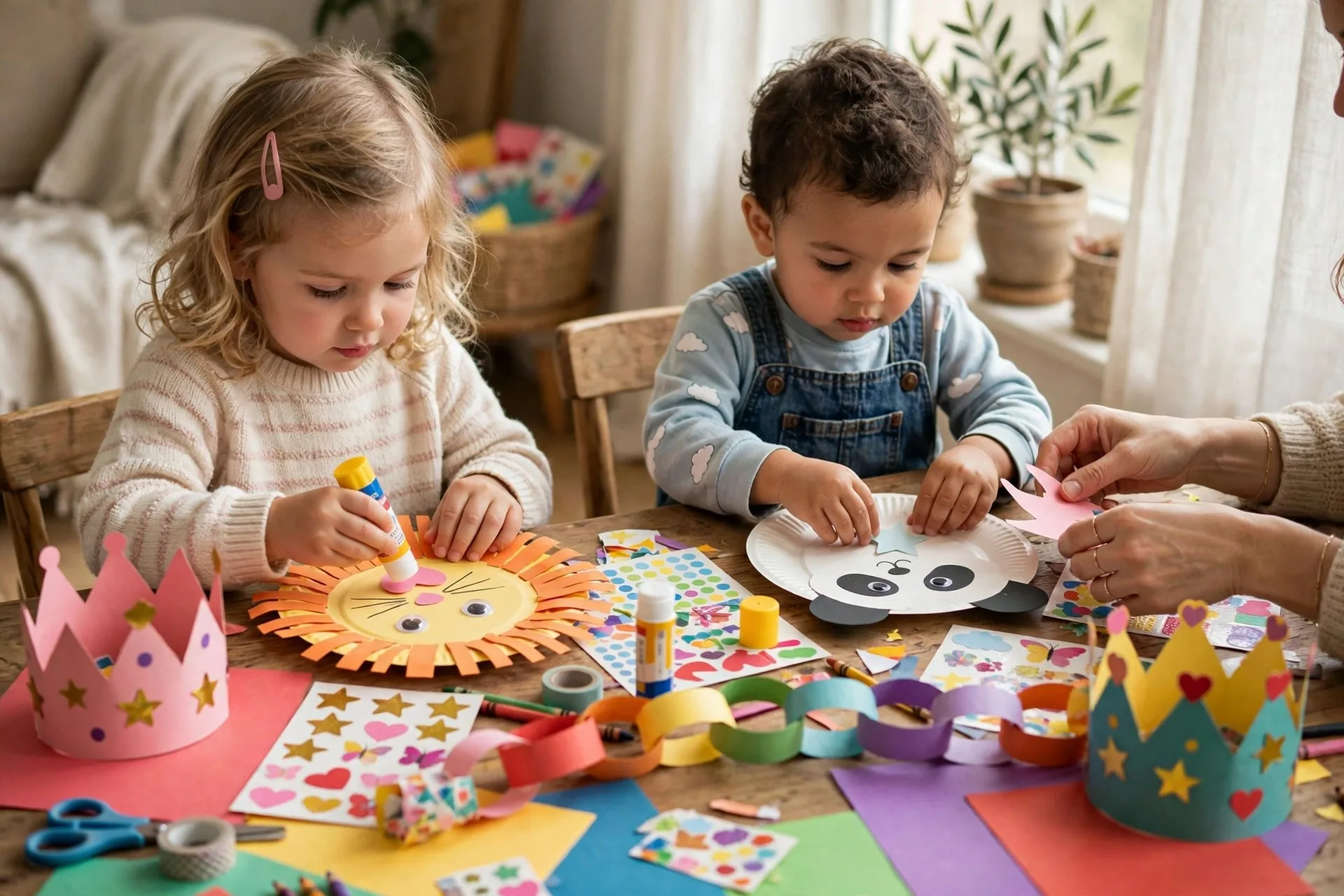
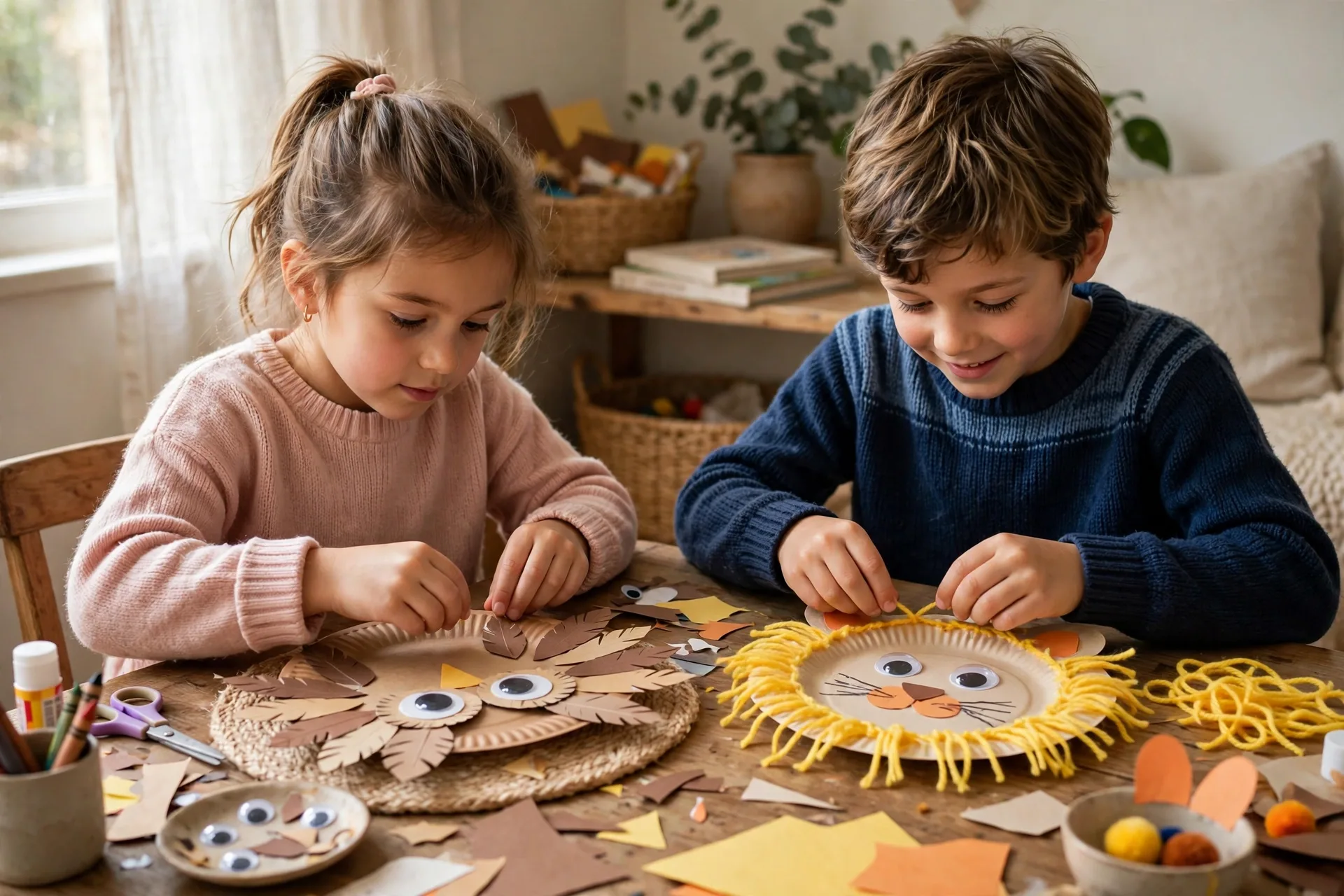
1. Paper plate animals (ages 3+; a 2-year-old joins with pre-cut pieces). A paper plate, paint or crayons, and construction paper ears, noses, and whiskers turn into lions, owls, and very personal interpretations of cats. Grown-up cuts the pieces for little kids; the sticking and the face-drawing is theirs. This is the first craft my 4-year-old could finish start-to-finish alone, and she still asks for it.
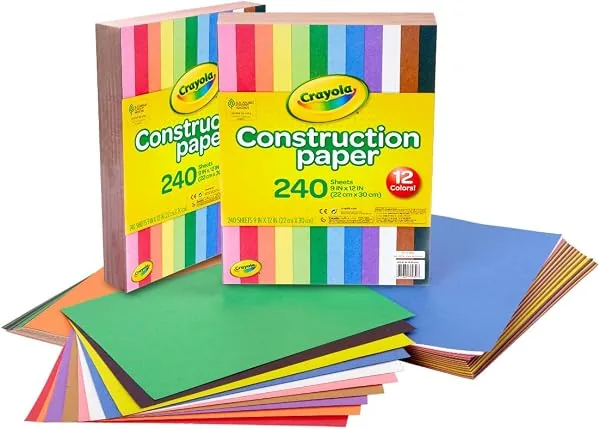
Crayola Construction Paper — 480 Sheets
The paper behind half this guide — a big 480-sheet pack in assorted colors, so the crowns, chains, and paper plate animals never run out mid-afternoon.
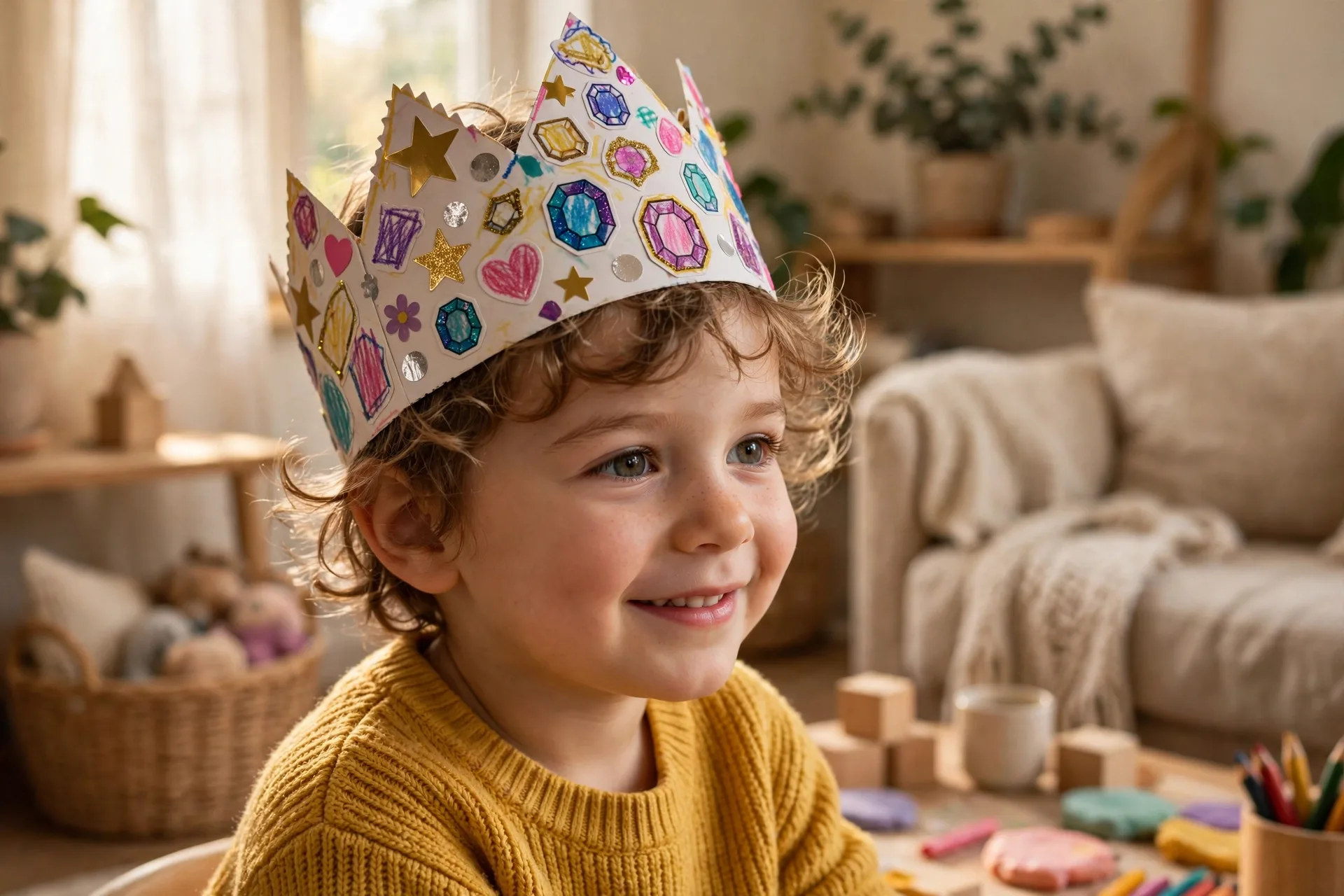
2. Paper crowns (ages 3+). A strip of construction paper, measured around the head, decorated within an inch of its life, and stapled or taped to fit (the stapling is a grown-up’s two-second job). Stickers and drawn jewels beat glitter here if you value your floors. For a printable version with the fancy points done for you, print our Tiara Printable Art and let the kids color and wear their own designs.
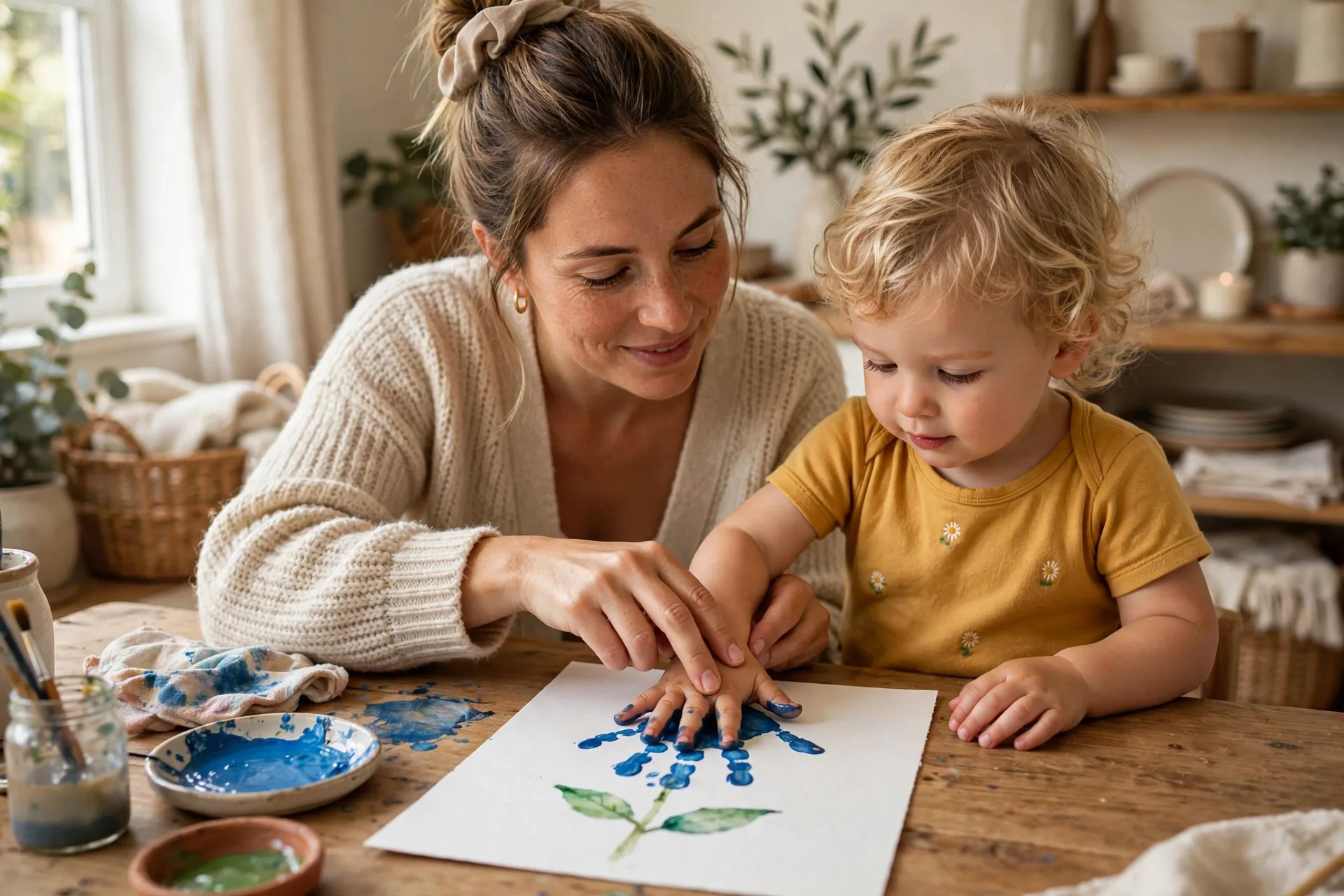
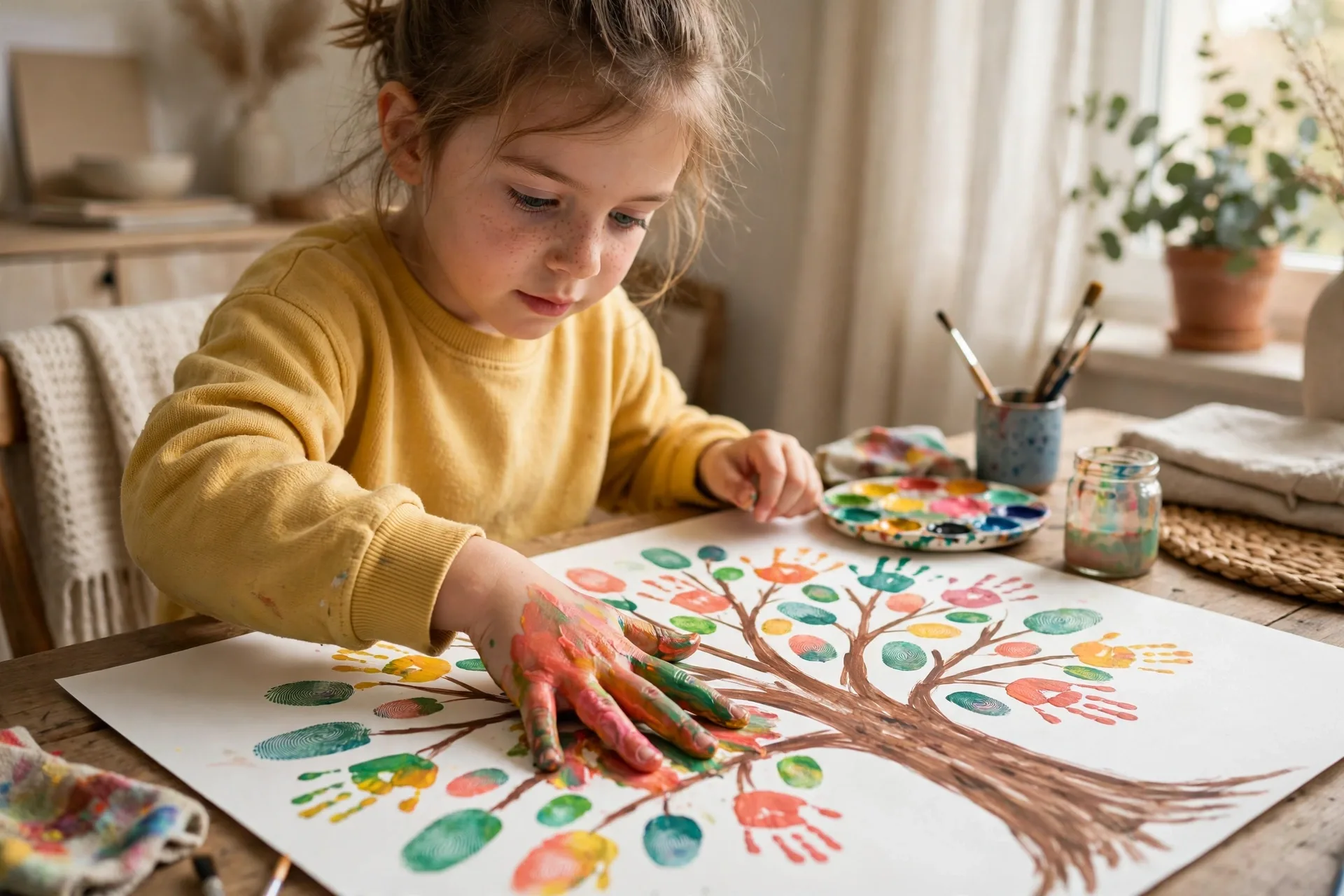
3. Handprint keepsakes (ages 2+). Paint the palm, press, done — and somehow it’s the craft you’ll keep for a decade. Handprint flowers, handprint animals, a whole handprint family tree for grandma. Use washable paint and keep a wet cloth next to you; the gap between “press the paper” and “touch the couch” is exactly one second at age 2.
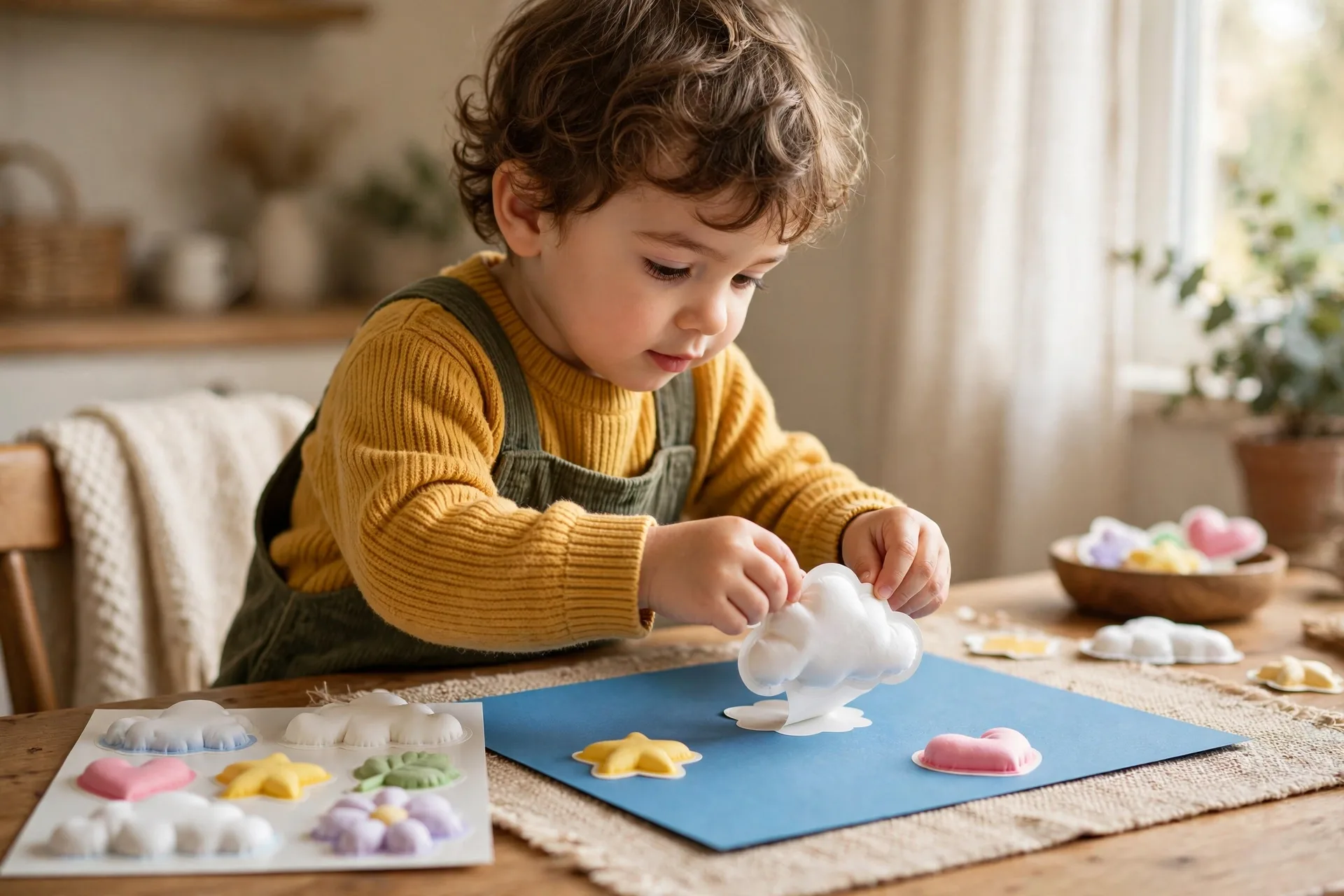
4. Sticker collages (ages 2+). The true toddler craft: big stickers, a sheet of construction paper, zero rules. Peeling is the fine-motor workout, sticking is the art. Buy the big, puffy, easy-grip stickers for under-3s — the tiny flat ones frustrate small fingers and end up in mouths. Ten minutes, no drying, no mess: this is my emergency craft.
5. Paper chains (ages 4+; the toddler job is tearing). Strips of colored paper, looped and glued into chains that take over a doorway. Cutting straight strips is real scissor practice for preschoolers — safety scissors, and a grown-up in the room. Your 2-year-old’s genuine job: tearing last week’s chains’ worth of scrap paper into confetti, which she will take extremely seriously.
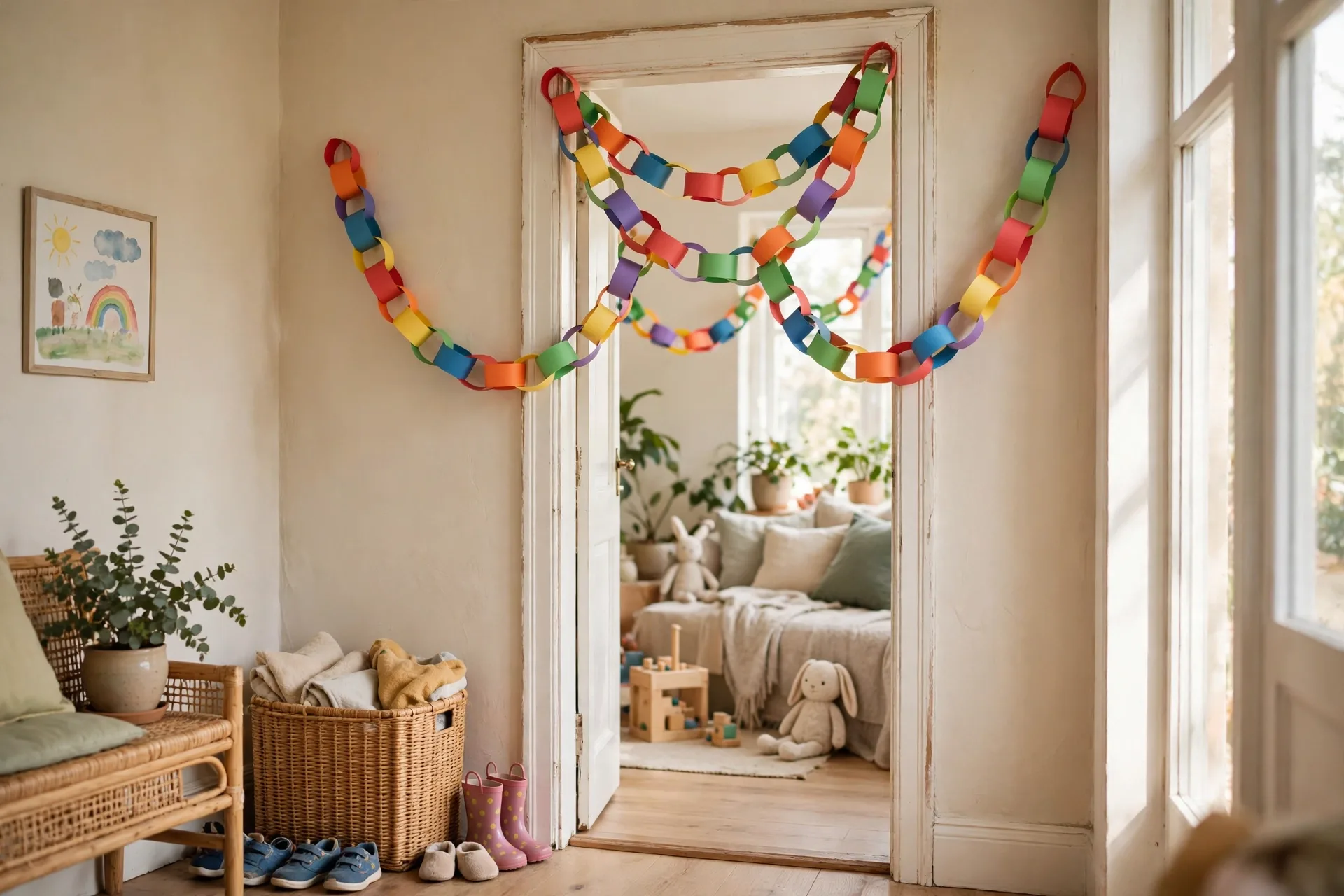
6. Paper bag puppets (ages 3+). A lunch bag, crayons, glued-on paper ears and yarn hair, and you have a character with a mouth that actually moves. Two puppets minimum — a puppet alone is a craft, two puppets are a show, and the show is what buys you time to drink your coffee while it’s warm.

Paint Crafts (The Fun Kind of Mess — Honestly Labeled)
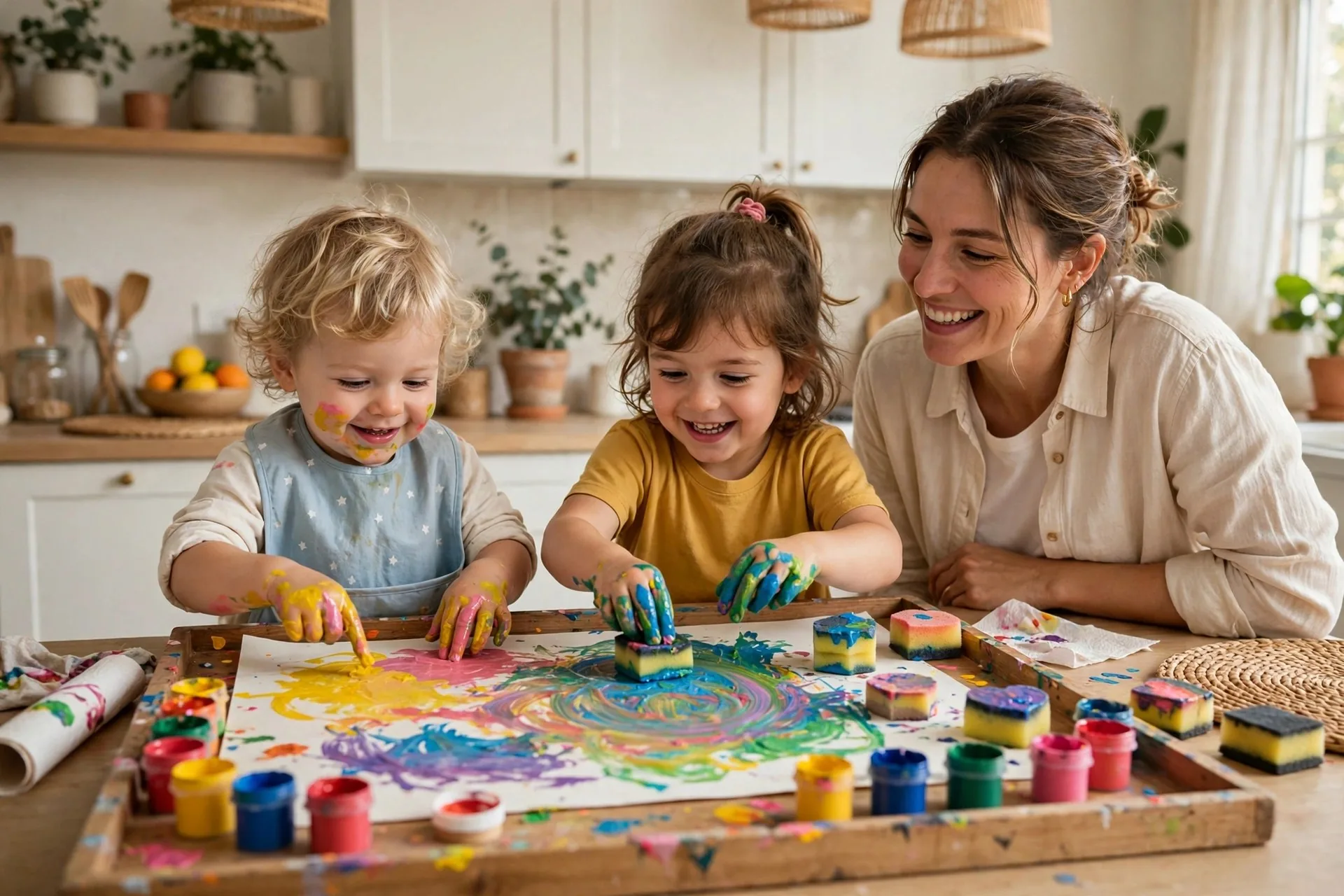
Paint crafts are not low-mess, and anyone who tells you otherwise is selling something. They are, however, contained-mess if you do two things: work on a tray or a flattened box, and use washable paint so the cleanup is a wet cloth, not a meltdown. Smocks or old t-shirts on, sleeves up.
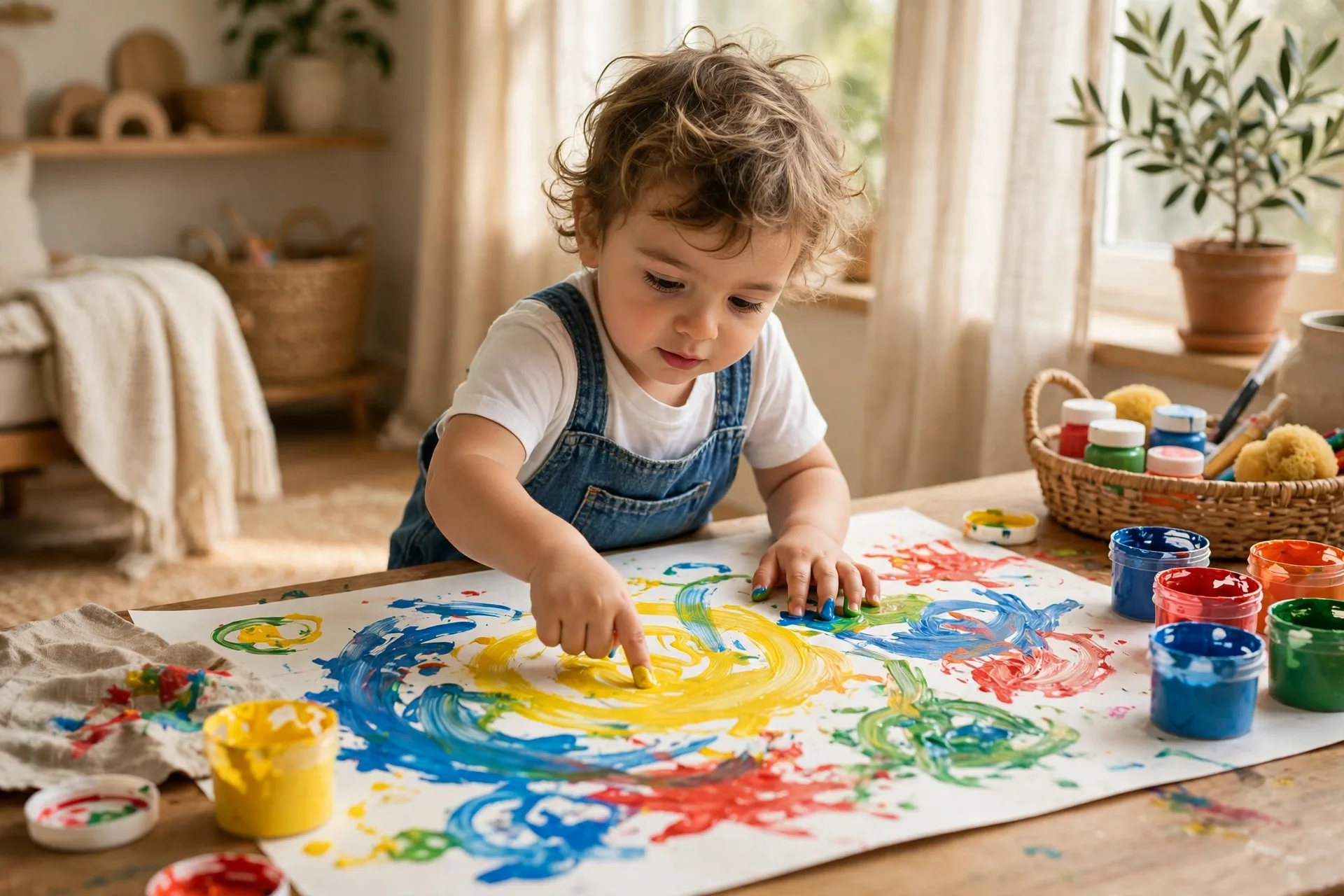
7. Finger painting (ages 2+). No brushes, no instructions, just paint and hands and a big sheet of paper. This is the first real painting a toddler can do, and the sensory joy of it is the entire point — the finished product is a beautiful swamp and that is correct. Washable paint only, and if your youngest is still in the everything-in-the-mouth stage, our Summer Crafts for 2 Year Olds are all toddler-first ideas built for exactly that stage.
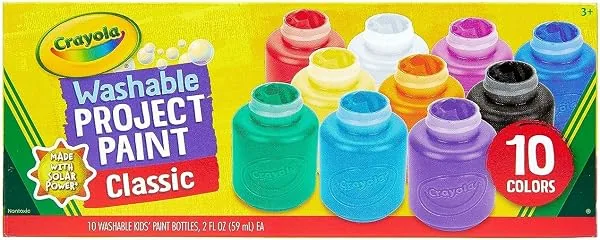
Crayola Washable Kids’ Paint — 10 Count
The craft-table paint: washable, so the finger paintings and the party clothes survive the afternoon. Ten colors, so the choosing is half the fun.
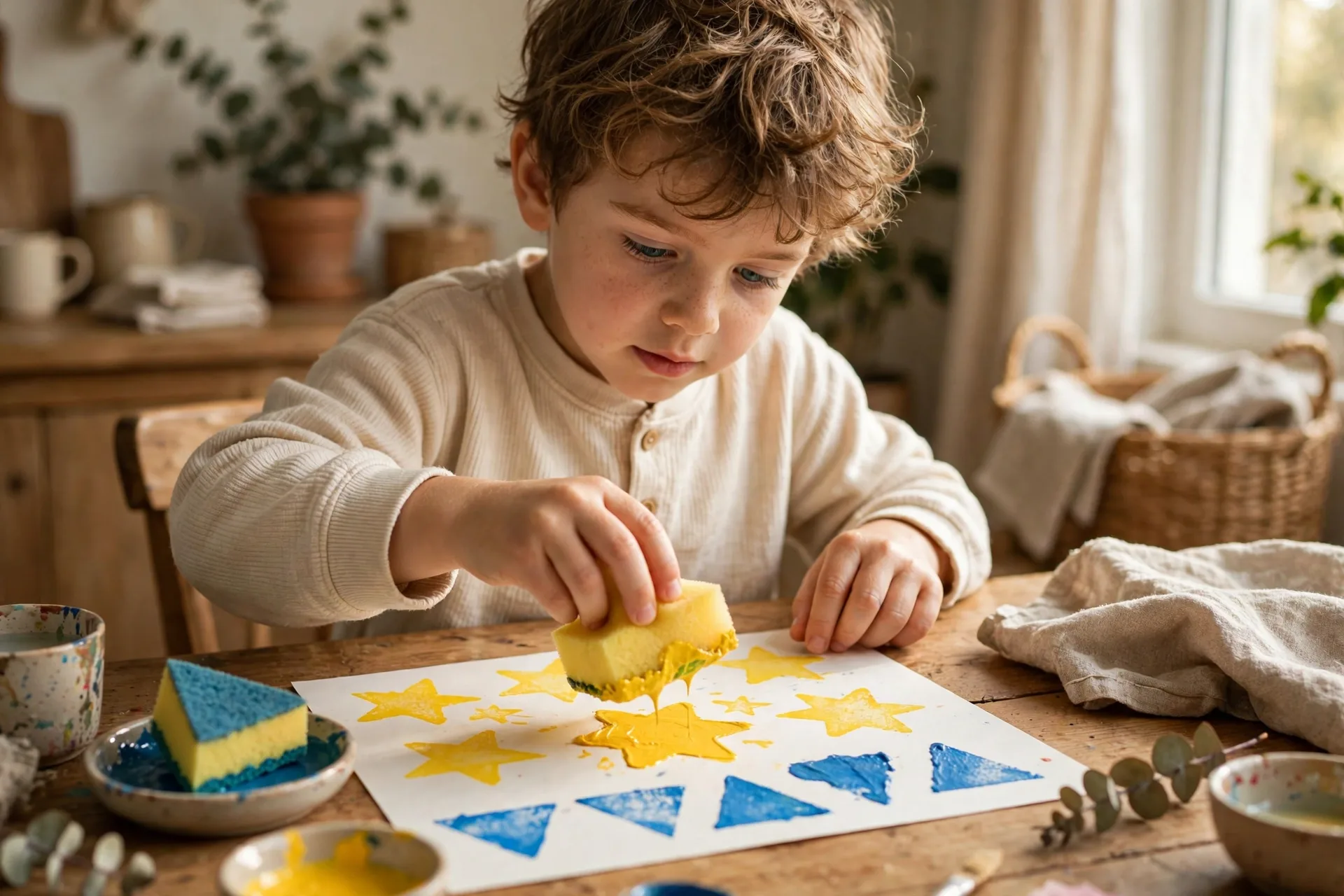
8. Sponge stamping (ages 2+). Cut a kitchen sponge into simple shapes — a triangle, a circle, a very forgiving star — dip in paint, stamp. Toddlers can do this entirely themselves, which is rare and precious. Make two sponges per child minimum; sharing a sponge mid-stamp is how stamp art becomes wrestling.
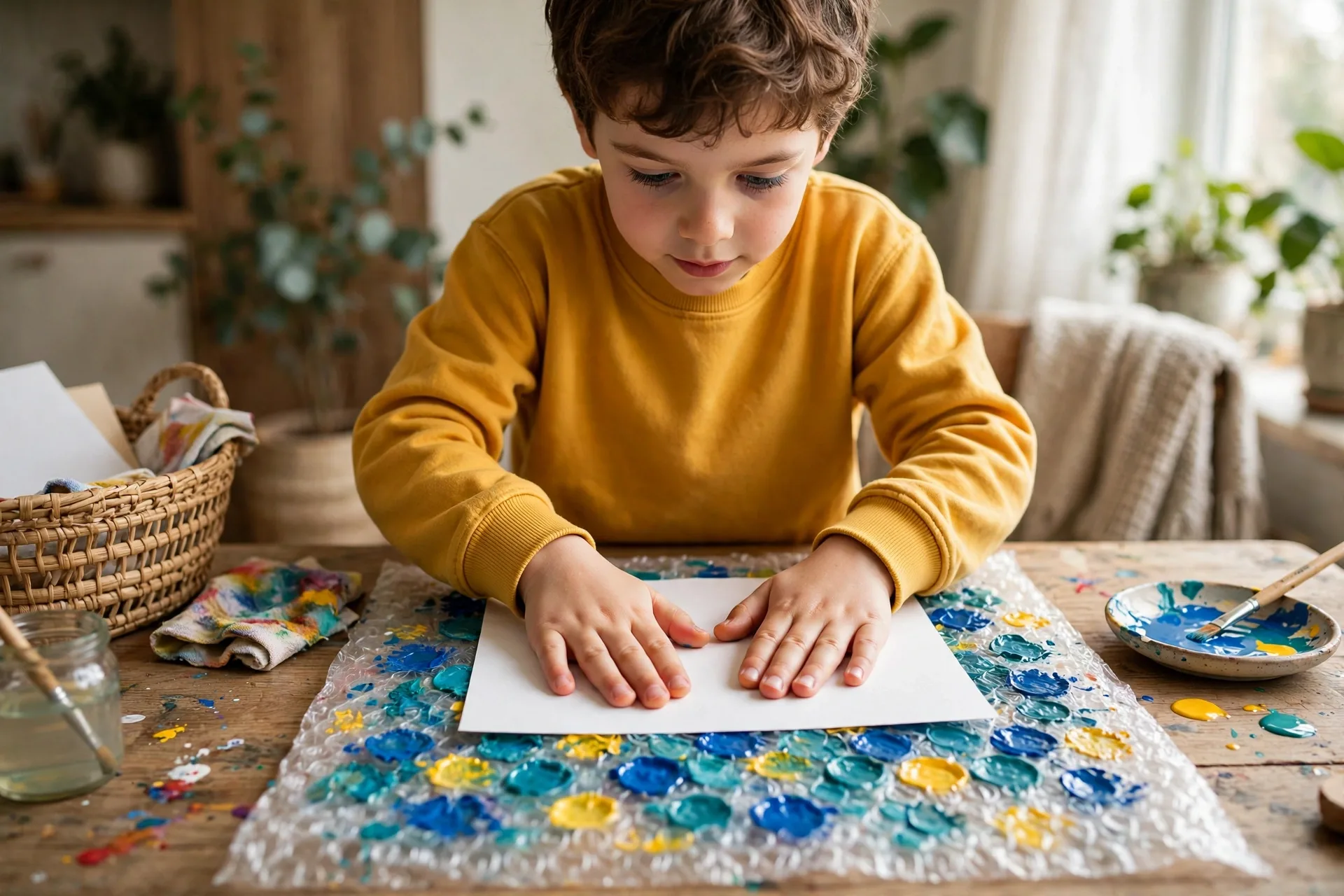
9. Bubble wrap printing (ages 3+). Paint the bumpy side of a piece of bubble wrap, press paper on top, peel, and gasp at the polka-dot print. It works as wrapping paper, card backgrounds, and “modern art” for the fridge. Cut the bubble wrap to paper size for the kids and keep the sheet you’re not using out of reach — unwrapped bubble wrap will be popped, all of it, immediately, by everyone including you.
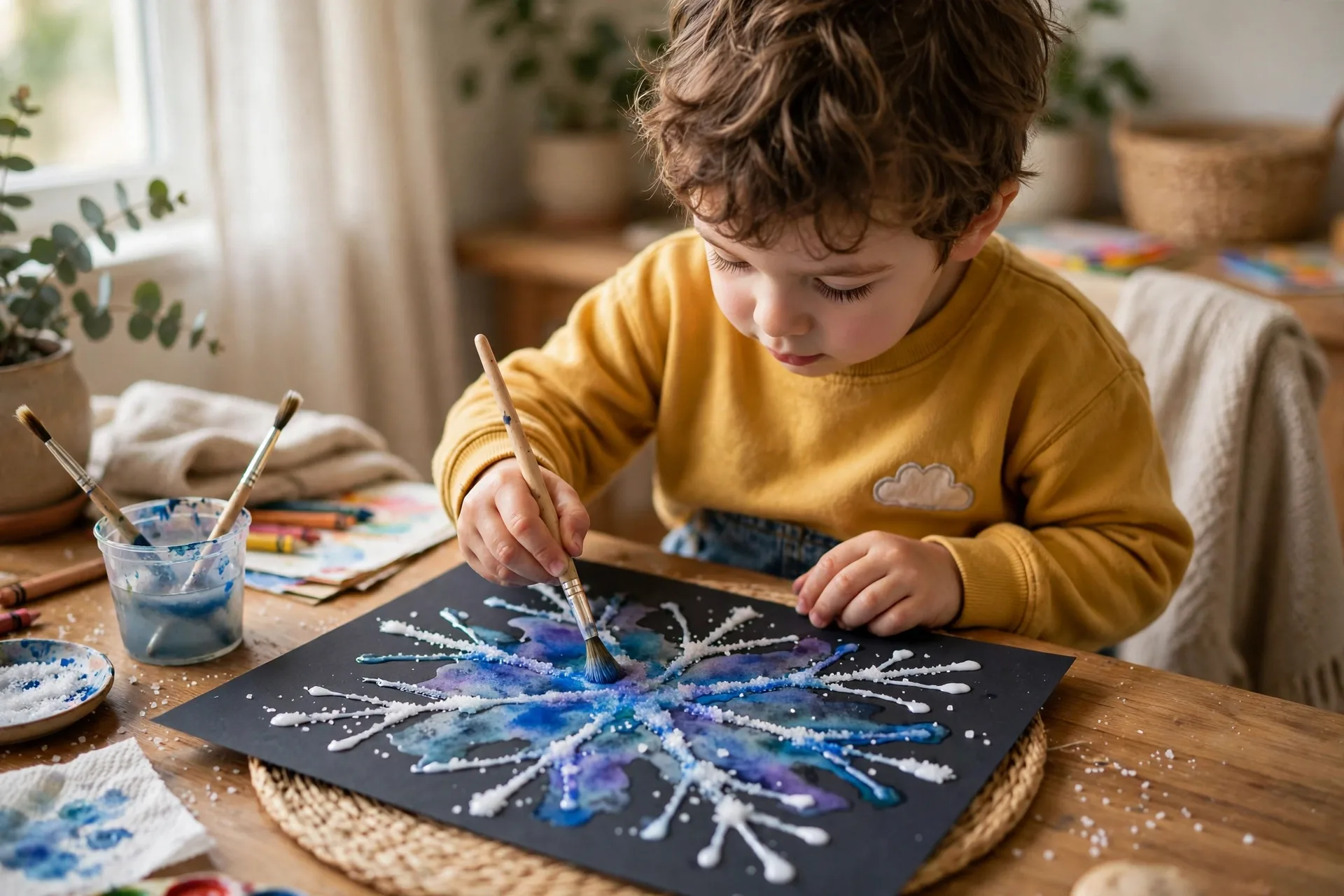
10. Salt painting (ages 4+). Draw with white glue on dark construction paper, pour salt over the glue lines, shake off the extra, then touch the salty lines with a paintbrush loaded with watery paint and watch the color travel. It’s part craft, part science trick, and it’s the one that makes a preschooler say “again” before it’s dry. This is a two-hands-and-full-attention craft — save it for when you can sit down too.
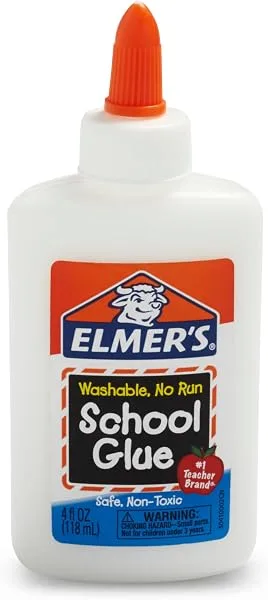
Elmer’s Washable School Glue — 4 oz
The glue for salt painting and paper chains: washable, so hands, bowls, and the table all rinse clean after. A little goes a long way on dark paper.
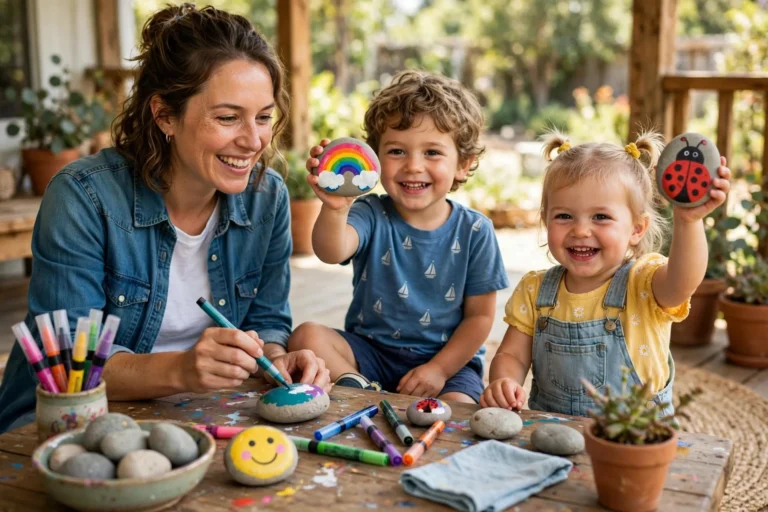
11. Rock painting (ages 4+). Smooth, flat stones — washed and dried first — become ladybugs, story stones, and garden markers. Acrylic paint pens beat brushes here: no water cups to spill, the color goes exactly where the pen goes, and the pens work on the construction paper and cardboard in the rest of this guide too. Adult picks the rocks (big ones, too big to be a choking worry) and this is a sitting-at-the-table craft, not a wandering one.

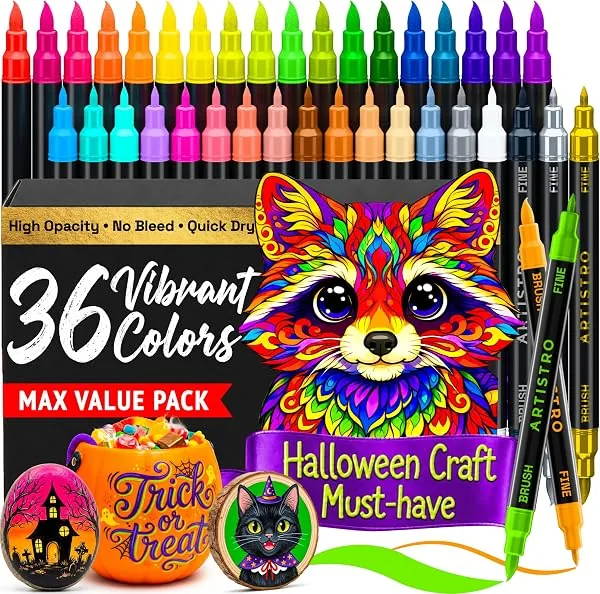
ARTISTRO Acrylic Paint Pens
The pens from our rock painting — they write on stone, paper, and cardboard, with no water cups to spill. Best with a grown-up at the table; click the caps shut between uses.
Playdough Crafts (The Quiet-Afternoon Section)
Playdough is the closest thing crafting has to a pause button: quiet, seated, repeatable, and genuinely doable by both my kids at the same table.
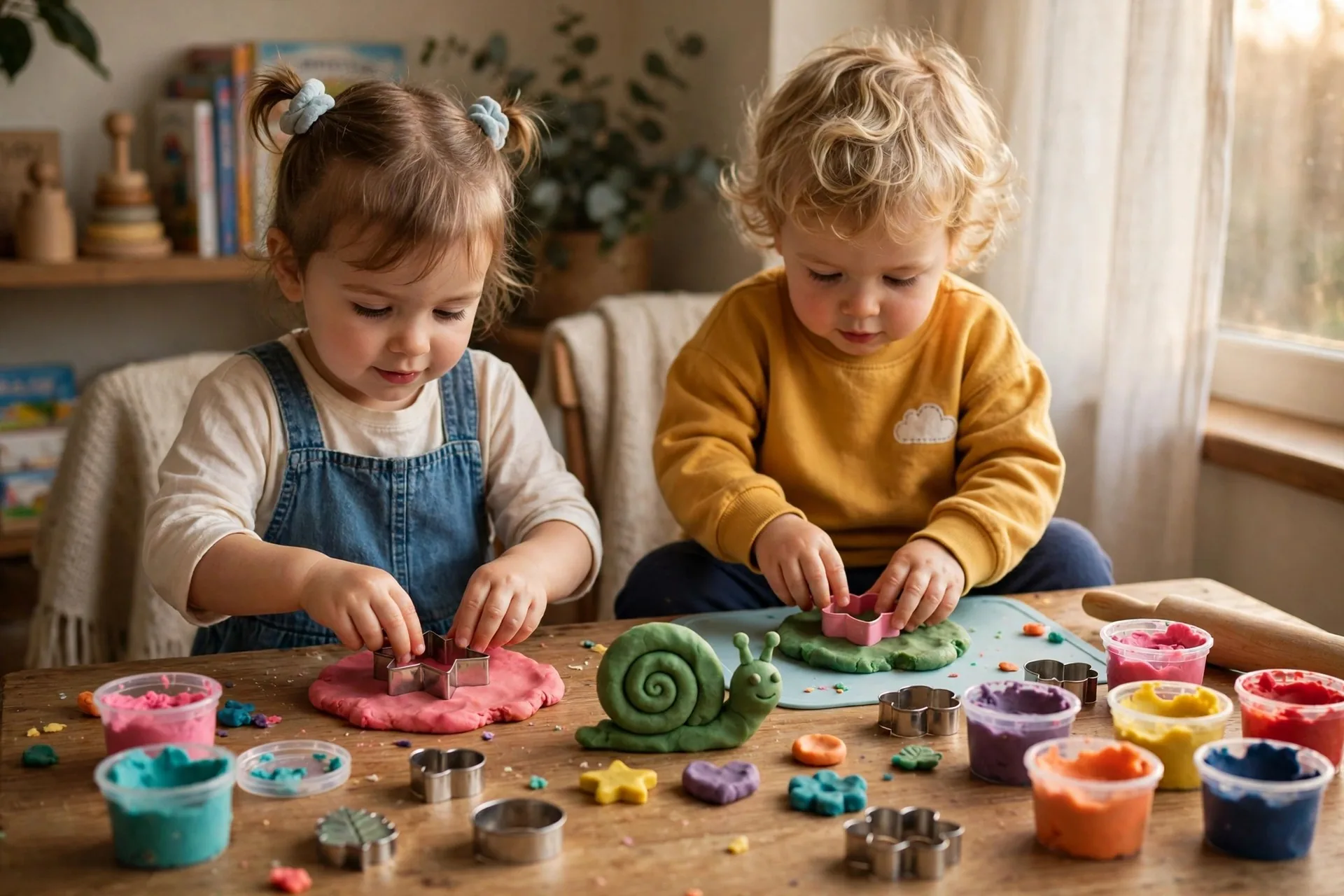
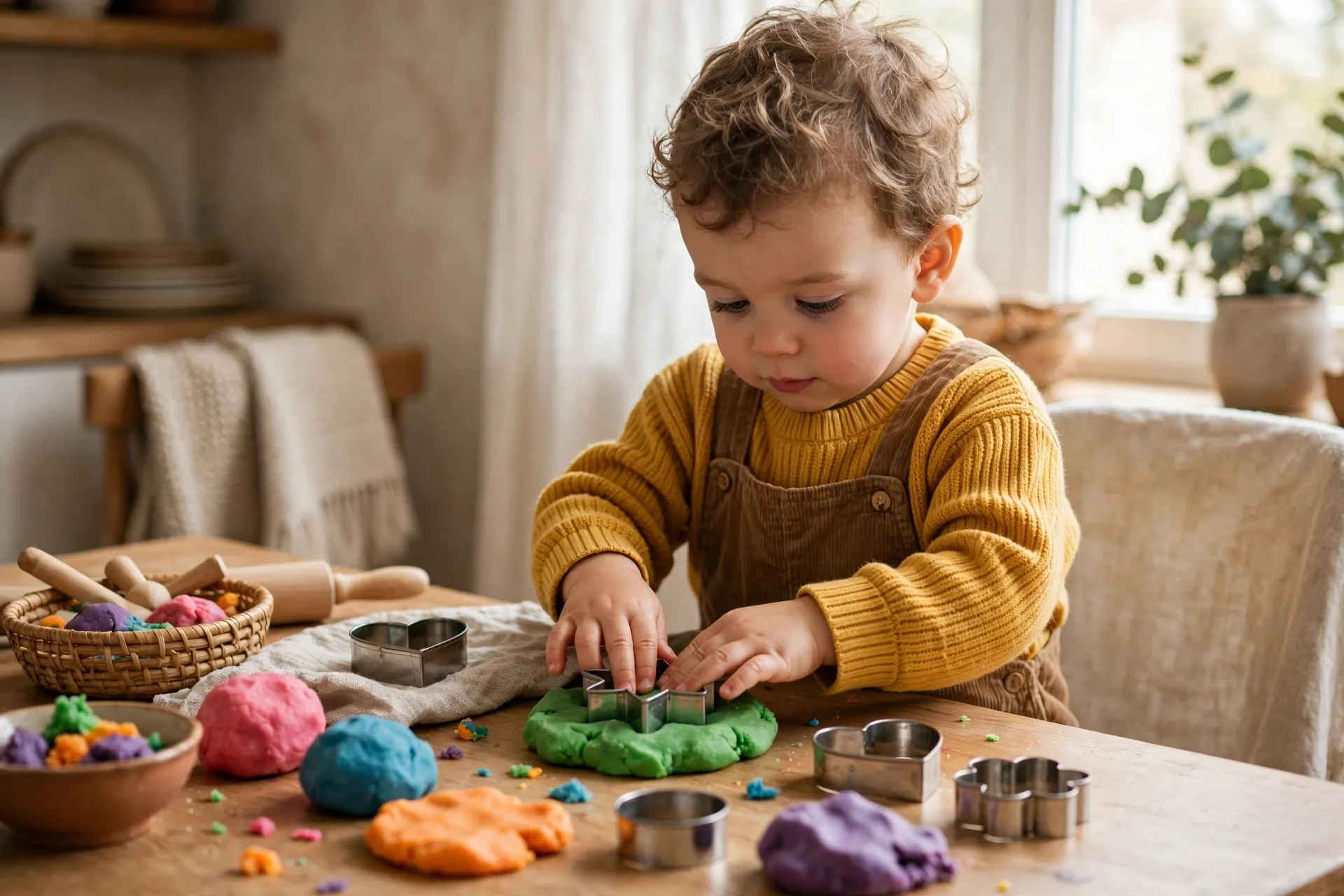
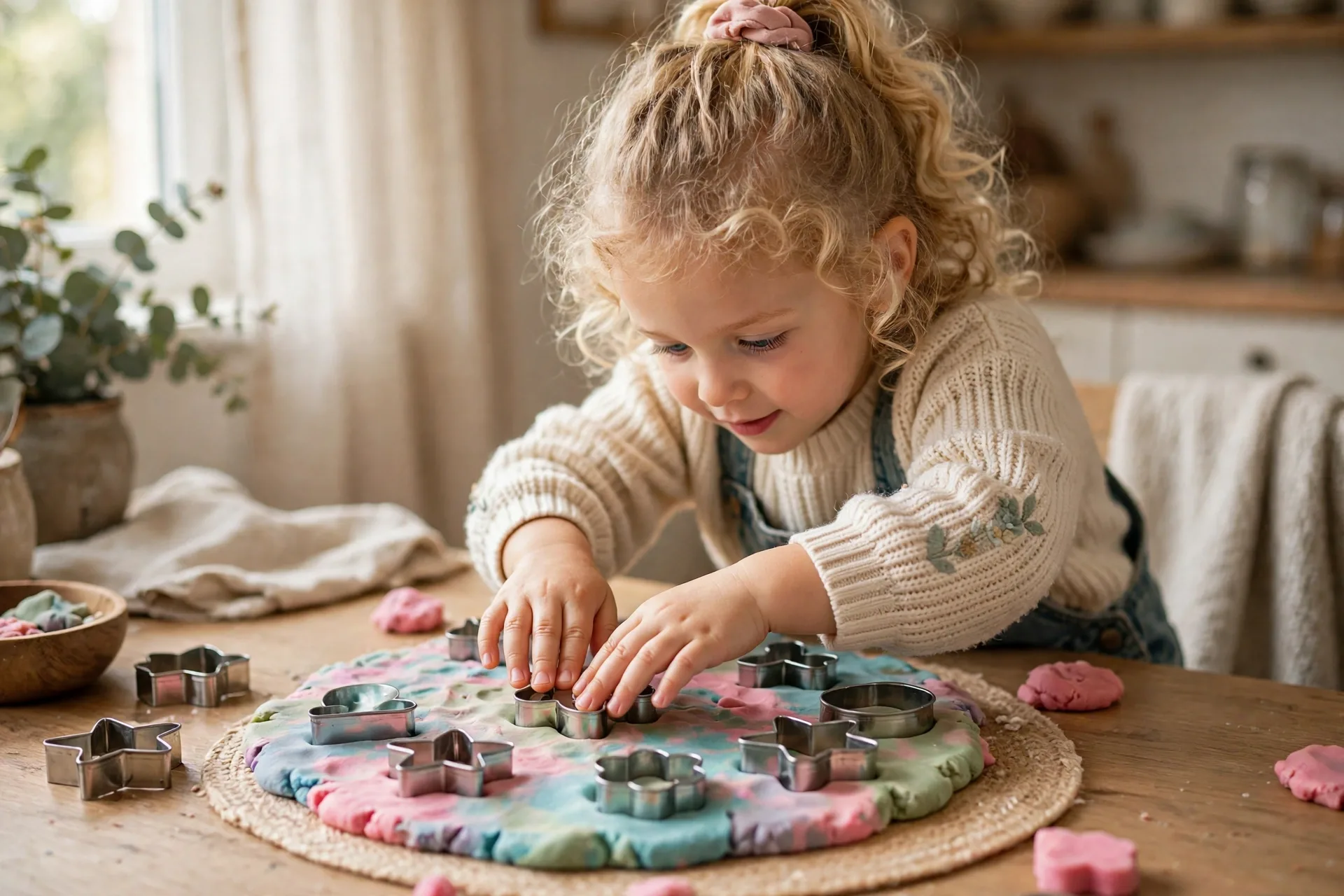
12. Cookie-cutter shapes and stamping (ages 2+). Roll (or pat) the dough flat, press cookie cutters and anything with a texture — forks, bottle caps, a clean toy dinosaur’s feet. My 2-year-old will do this for twenty minutes straight, which in toddler time is a sabbatical. A ten-color pack means the choosing is half the fun and the inevitable color-mixing tragedy is spread across many tubs.
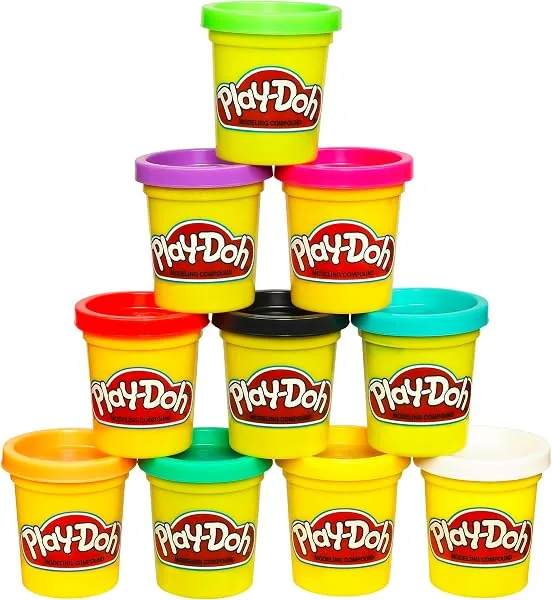
Play-Doh — 10-Pack of 2oz Colors
The ten-color pack from our dough table — ten little tubs, so color-choosing is half the fun and every kid gets their own. The inevitable color-mixing tragedy gets spread across many tubs.
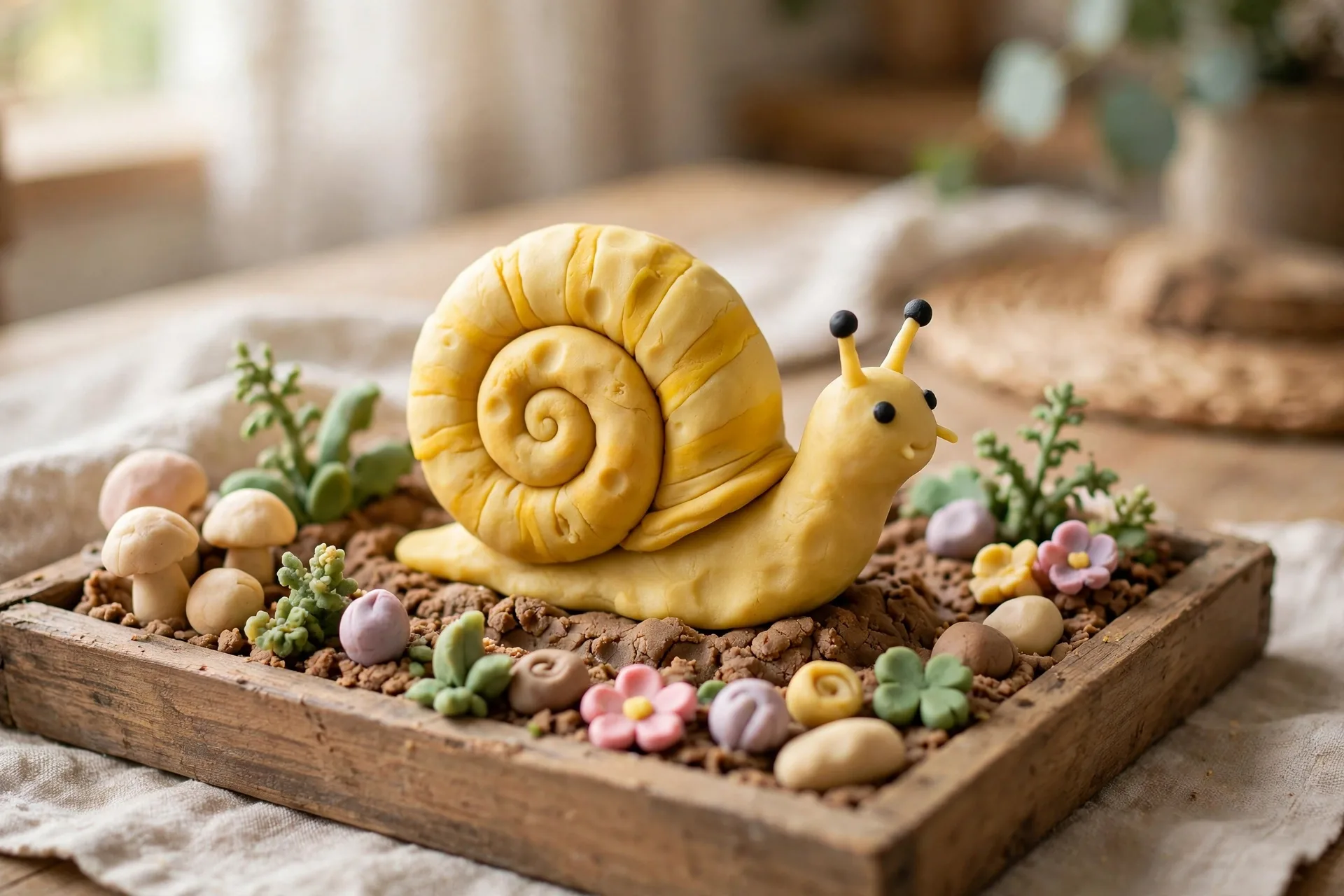
13. Playdough snails and gardens (ages 3+). Roll a snake, coil it into a snail shell, stick it on a dough ball body. Then build the garden it lives in: dough flowers, dough carrots, a dough sun if ambition strikes. This is storytelling with dough — ask what the snail’s name is and you’ll get a saga.
14. Homemade playdough day (ages 2+ to play; the making is a grown-up job). Flour, salt, water, a little oil, and food coloring, cooked briefly on the stove — the dough costs almost nothing and lasts for weeks in a sealed tub. Make it once on the weekend and after that it’s a grab-and-play supply like everything else here. Be honest about the division of labor: the stove part is yours; the kids’ jobs are choosing colors and the first squish. Warm fresh dough on a rainy day is a core-memory smell.

Nature & Recycled Crafts (Free Supplies, Real Adventures)

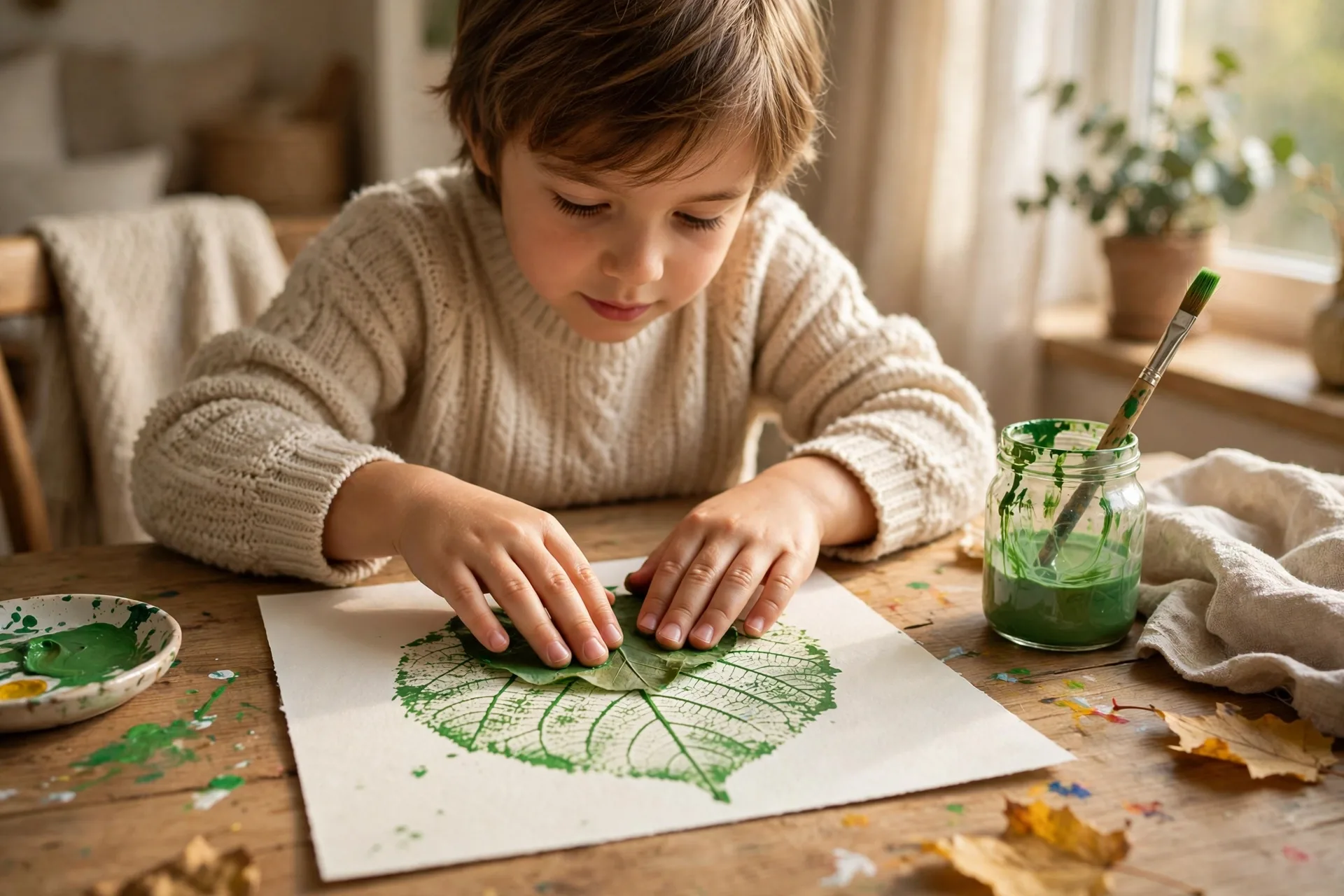
15. Leaf printing (ages 3+). Collect leaves with strong veins, paint the veiny side, press onto paper. The print shows every line of the leaf like magic. A nature walk + a craft in one, and the collecting is half the activity. Our Autumn Tree Painting Sensory Craft for Toddlers and Kids takes the same idea further for fall.
16. Cardboard tube binoculars (ages 4+). Two toilet paper tubes, taped or glued side by side, decorated, with a short string to hang around the neck — keep the string short, and binoculars come off when the exploring turns into climbing — then straight outside for a bird hunt. The decorating is the craft; the binoculars’ real gift is the forty minutes of backyard exploring afterward.
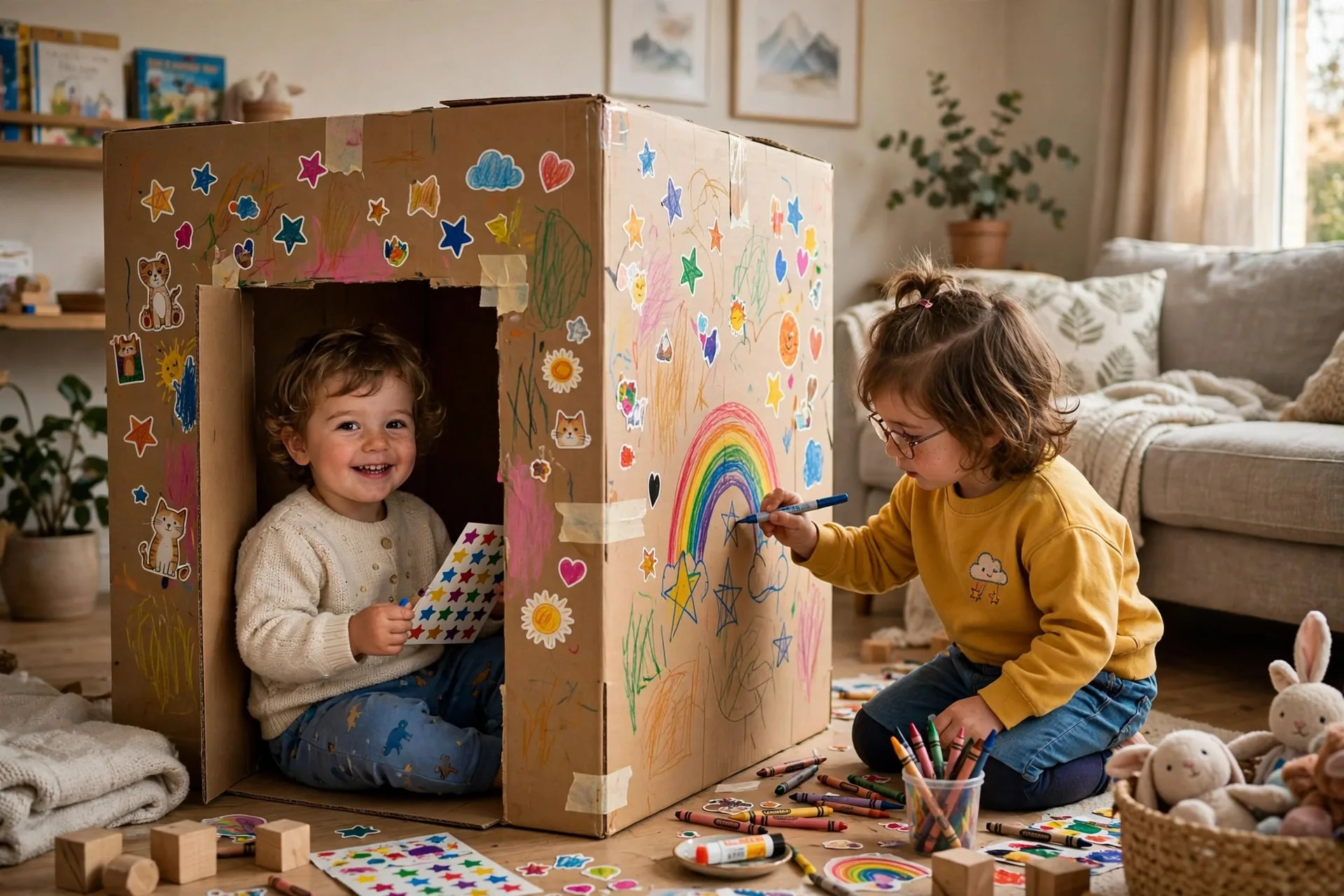
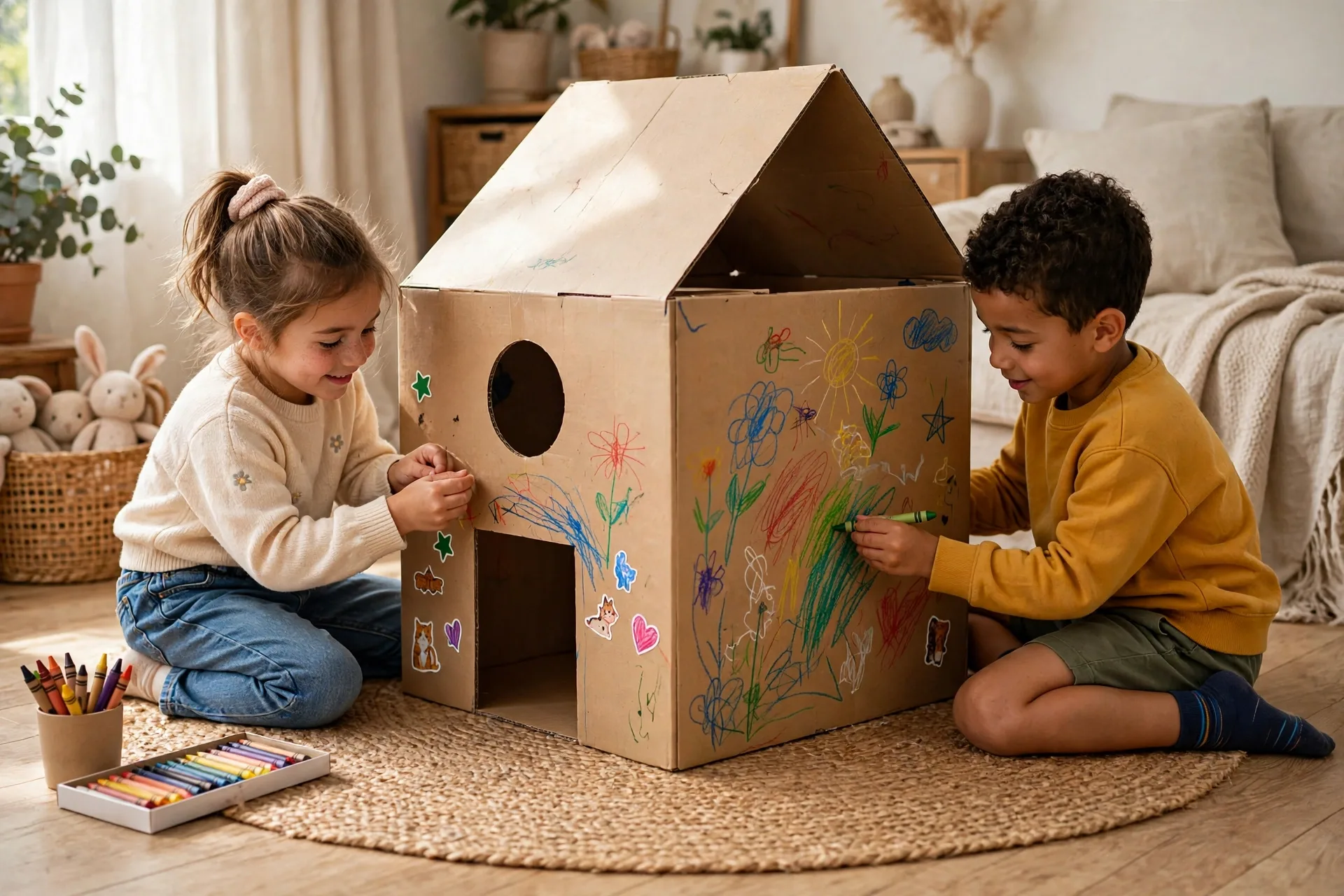
17. The big box project (ages 2+). The day a big delivery arrives is craft day: the box becomes a house, a car, a shop, a rocket — your kids decide, you cut the door (grown-up job: box cutters are not a kid tool), and everyone decorates with crayons, stickers, and paint pens. Both my kids fit in a good appliance box together, and it stayed in our living room for nine days. I regret nothing.
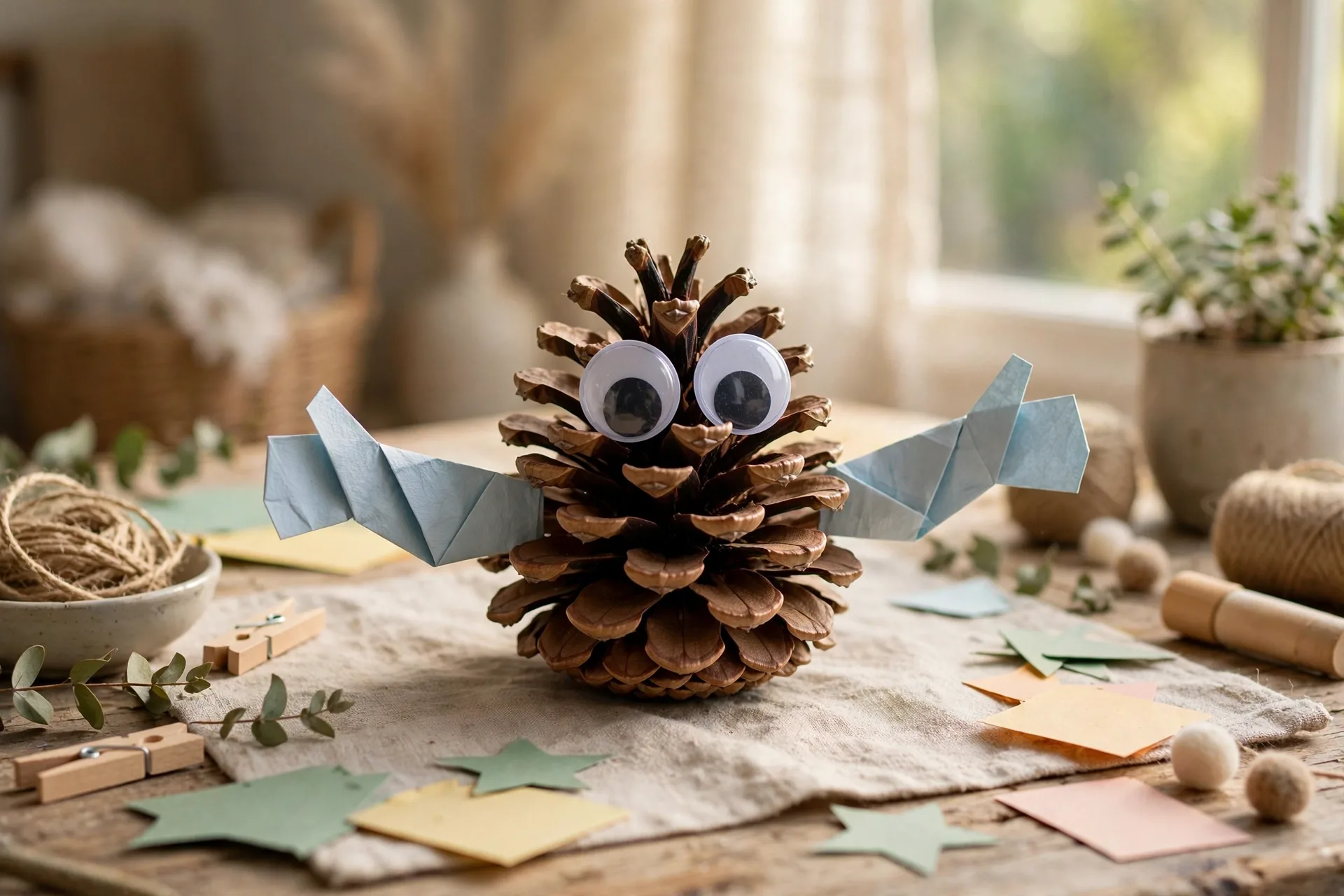
18. Googly eye monsters (ages 3+ — eyes are small parts). Paper, dough, pinecones, a plain rock — anything becomes a monster once it has eyes. Honest safety note: standard googly eyes are small parts, so this is a 3+ craft with you at the table, and for under-3s swap in big eye stickers instead — same monster energy, nothing mouth-sized. Count the eyes out and count them back in if your toddler is supervising from the high chair.
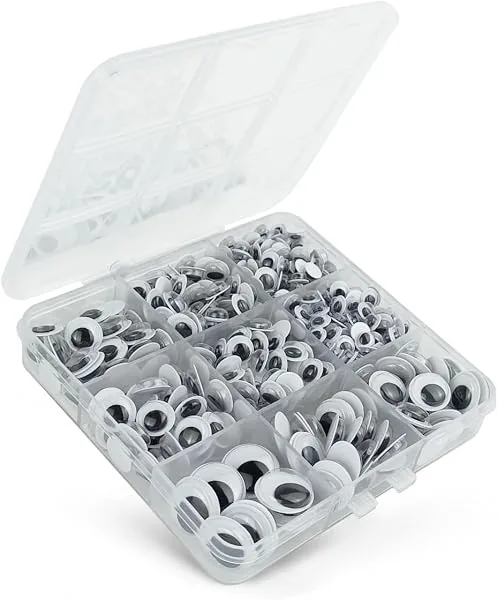
Googly Eyes — 520 Pieces, Self-Adhesive
The eyes behind our monsters — 520 self-adhesive googly eyes in assorted sizes. Small parts: a 3+ craft with a grown-up at the table — swap in big eye stickers for under-3s.
More Paper Crafts
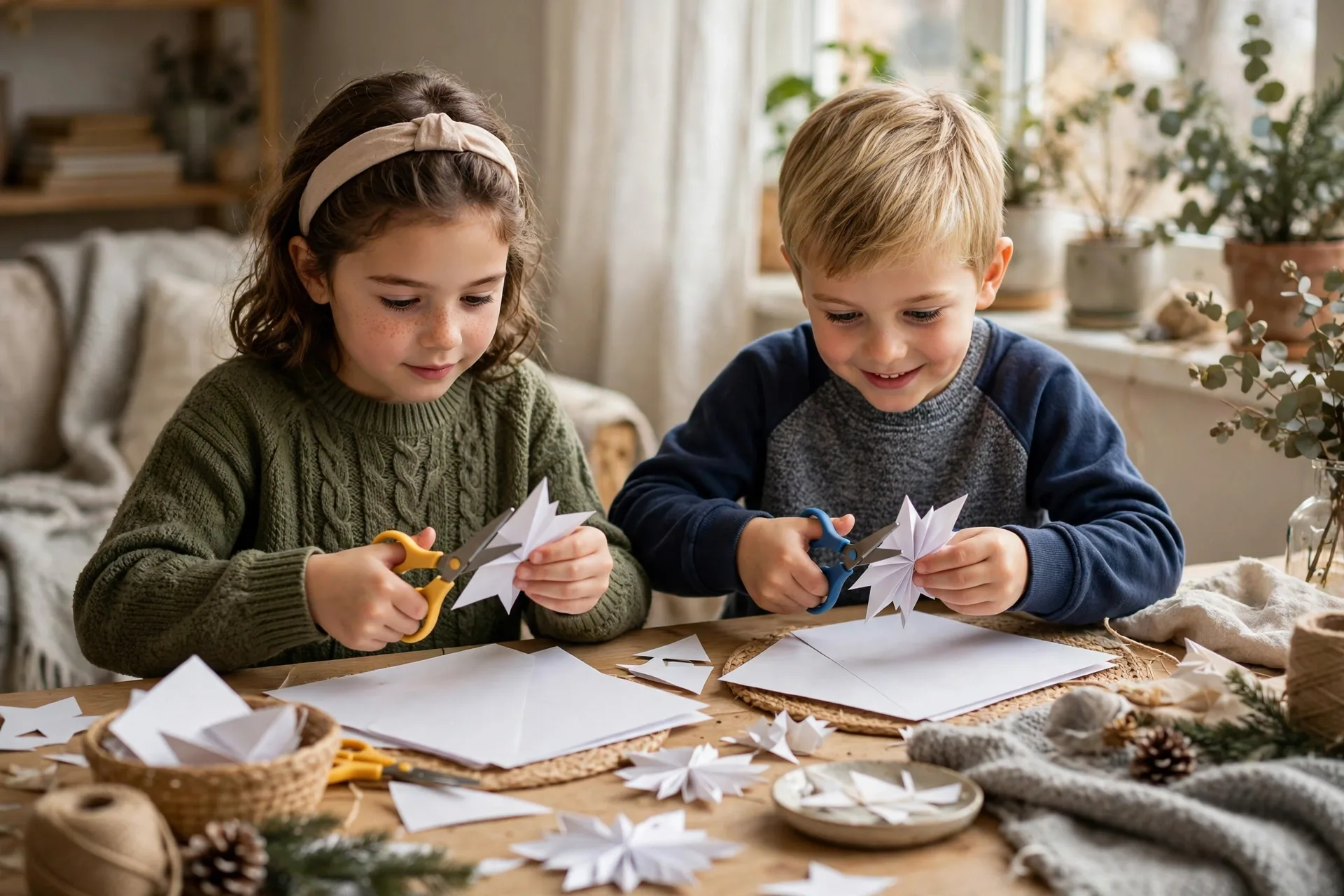
19. Paper snowflakes (ages 4+). Fold a square of white paper into a triangle, fold it again, and snip little triangles and diamonds out of the folded edges. Open it up and you have a snowflake, and no two ever come out the same, which is the whole delight. My 4-year-old cuts the big notches while I handle the tricky corners, and my 2-year-old gets the job of unfolding, which she treats like opening a present. Hang them in the window with tape or string them into a garland across the mantel. Coffee filters work too and are even easier to cut, so keep a stack in the craft basket for snow days.
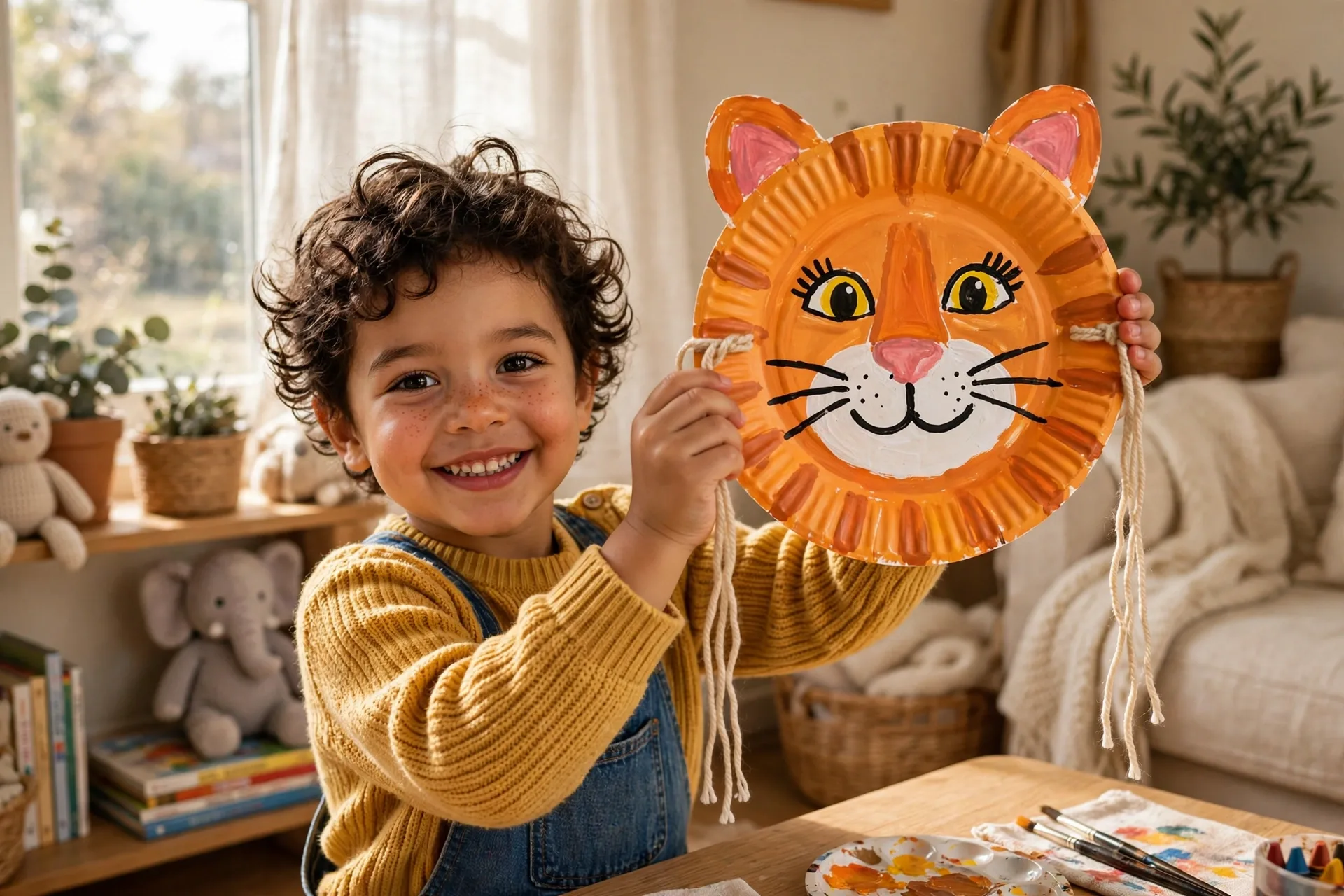
20. Paper plate masks (ages 3+). A paper plate, two eye holes cut by a grown-up, and paint turns into any animal your child can dream up. Lions need orange paint and a paper mane, cats need triangle ears, and owls need big round eyes drawn on with markers. Cut the eye holes before the painting starts, because a painted plate is much harder to cut neatly. Punch a hole on each side and tie yarn or elastic so the mask stays on for the parade around the living room. This is the craft that becomes a costume, and the costume becomes an afternoon of pretending.
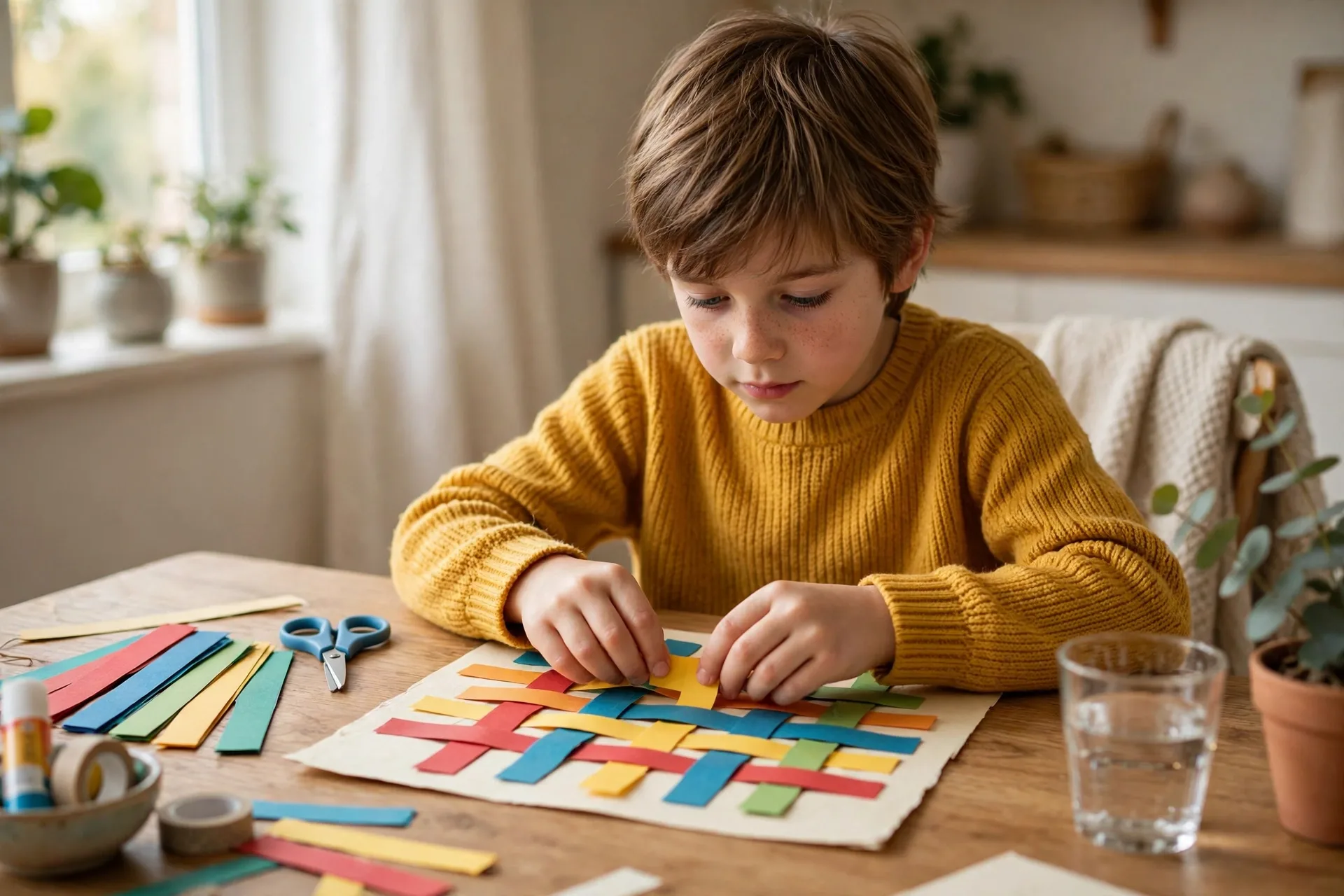
21. Paper weaving mats (ages 4+). Cut slits into a sheet of colored paper, leaving a border all around, and cut strips from a second color. Then weave the strips over and under, over and under, and watch a pattern appear. It looks like real weaving because it is real weaving, just with paper instead of yarn. My 4-year-old needed one slow demo round and then she was off, and the finished mats become placemats, book covers, and gifts for grandparents. Use two bright colors that contrast, like yellow strips on blue paper, so the pattern is easy to see while little hands learn the rhythm.
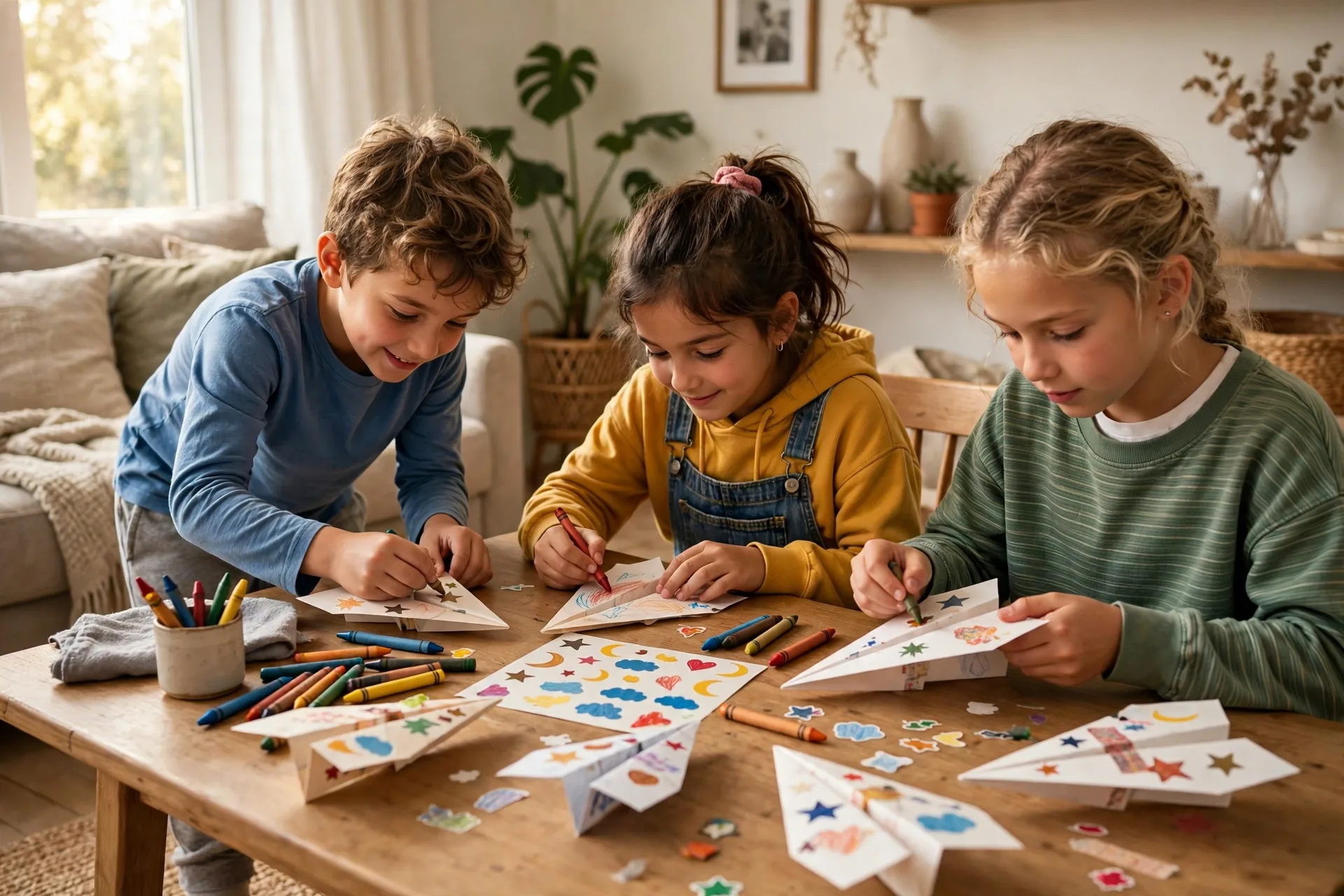
22. Decorated paper airplanes (ages 4+). Fold a classic paper airplane, then decorate it before the first flight. Crayon stripes, sticker windows, a name on the wing, and a paperclip on the nose if it needs a little weight to fly straight. The decorating is the craft and the flying is the reward, so set up a landing strip with a laundry basket on the floor and see whose plane makes it in. My kids decorate five planes each and then spend twenty minutes testing them, which is the best return on a sheet of paper I know. Keep a stack of scrap paper nearby, because every crash is a redesign opportunity.
23. Paper bead necklaces (ages 4+). Cut old magazines or colored paper into long triangles, roll each one tightly around a pencil or a straw, and glue the tip down. Slide the beads off and thread them onto yarn, and you have a necklace made entirely from paper. The rolling is wonderful fine-motor practice, and the beads look like real painted wood when they are done. My 4-year-old rolls while I glue, and my 2-year-old sorts the finished beads by color into little piles. Make extras, because every necklace becomes a gift for someone by the end of the day. Keep the finished necklaces in a small box, because paper beads are sturdier than they look and the necklaces last for months.

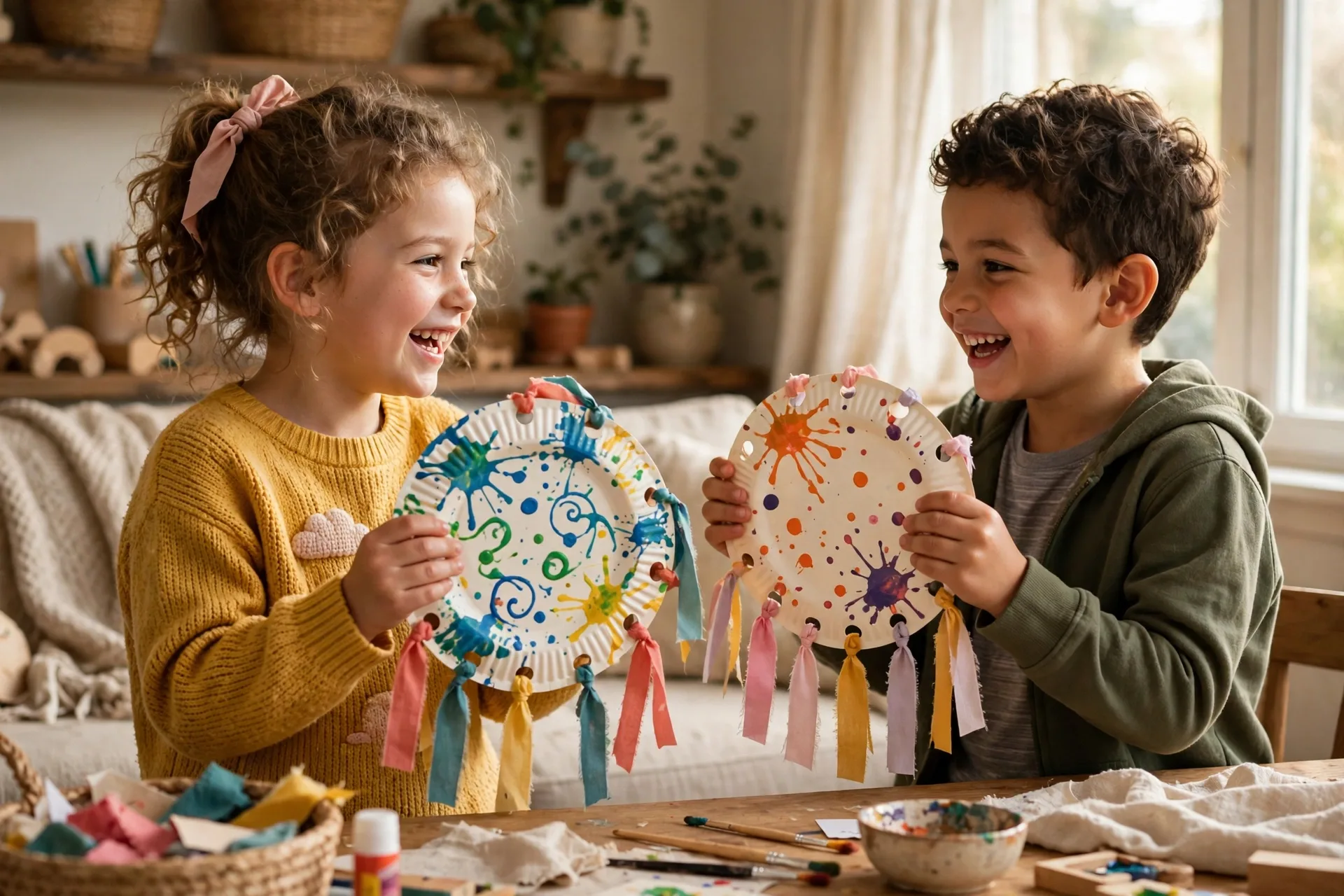
24. Paper plate tambourines (ages 3+). Staple or glue two paper plates together with a few dried beans or bells inside, decorate the outside with paint and stickers, and tie ribbons around the edge. The shaking is instant music, and the decorating is the craft, so this one earns its mess twice over. A grown-up does the stapling, and the kids do everything else. Keep the beans to a small handful, because too many turns a tambourine into a maraca that never stops. This is the craft to pull out before a dance party, and the tambourines always come back out for the next one.
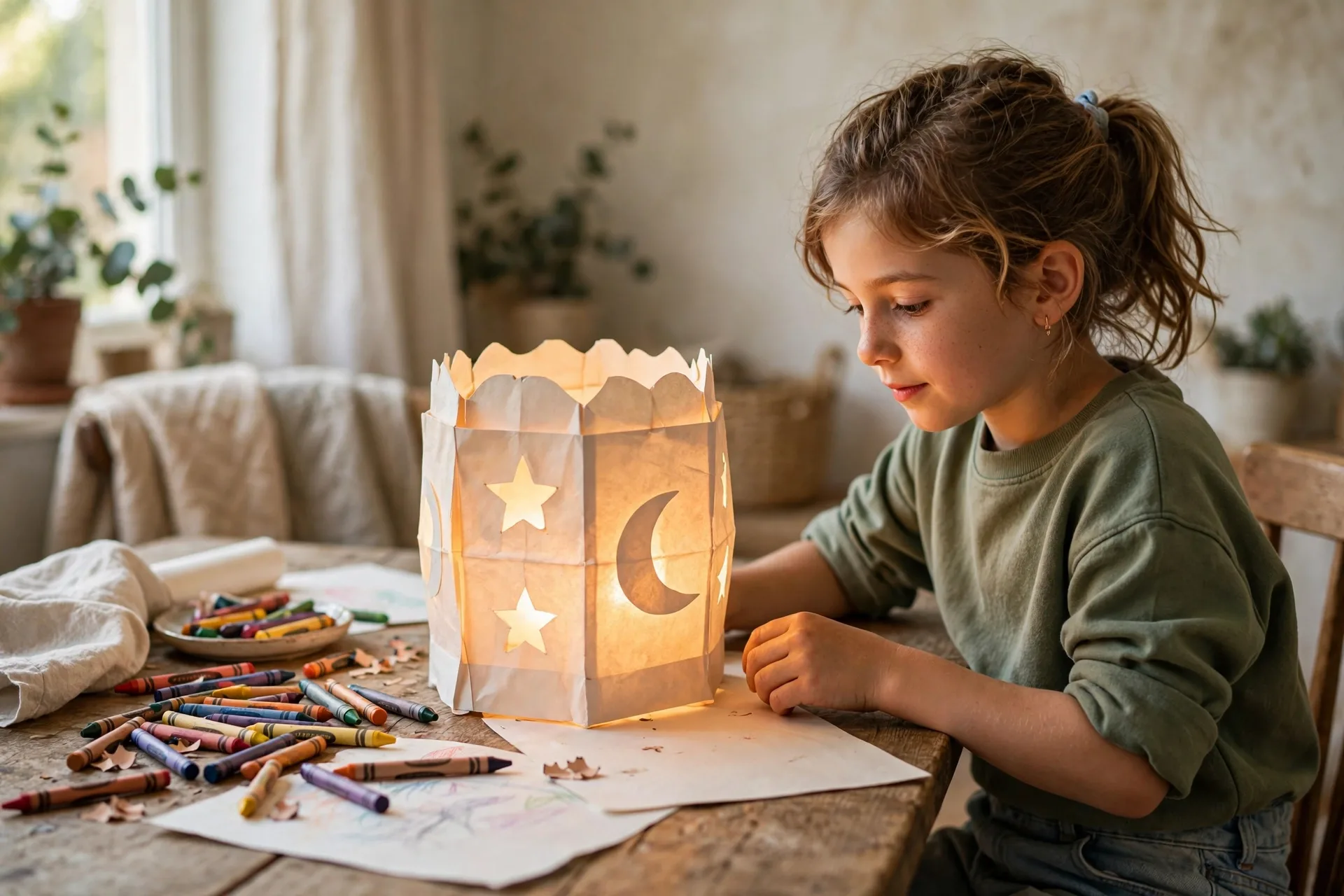
25. Paper lanterns (ages 4+). Fold a sheet of colored paper in half, cut slits from the folded edge toward the open edge, then open it up and roll it into a tube. The slits puff out into a lantern shape, and a battery tea light inside makes it glow. Tape a paper handle on top and hang it in a window or from a bedroom ceiling. My kids make one lantern each and then want a whole string of them, which is how a ten-minute craft becomes an afternoon. Use light colors like yellow and pink so the glow shows through, and keep real candles far away from paper, always.
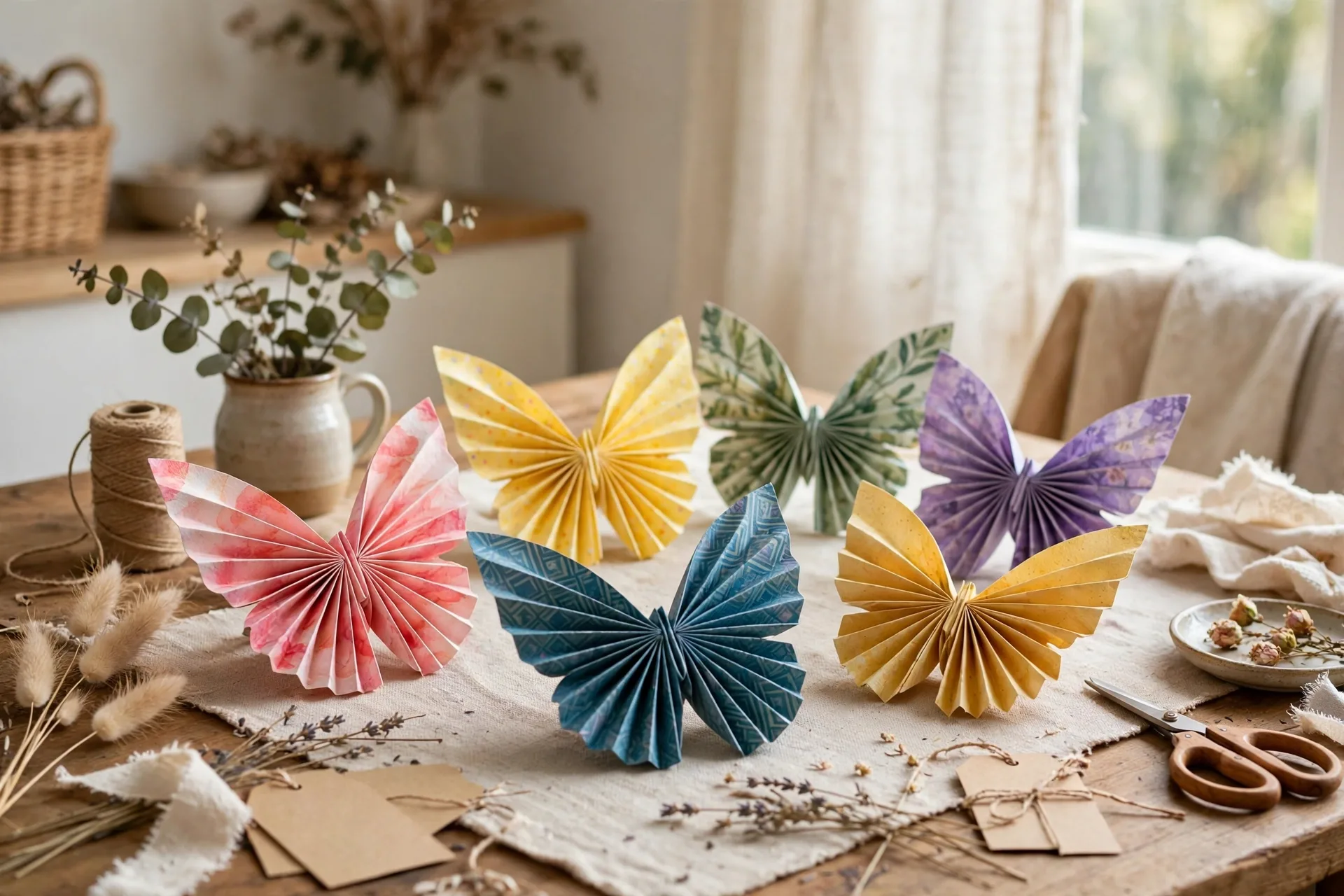
26. Paper fan butterflies (ages 3+). Fold a sheet of paper back and forth like a fan, pinch it in the middle, and you have butterfly wings. Add a body made from a rolled piece of paper or a craft stick, glue on paper antennae, and paint or color the wings before you fold. The wings flutter when you wave the butterfly through the air, which is the part my 2-year-old cannot stop doing. Make a whole flock in different colors and tape them to a window, or tie them to string for a mobile. This is a five-minute craft with a very high flutter-to-effort ratio.
More Paint and Print Crafts
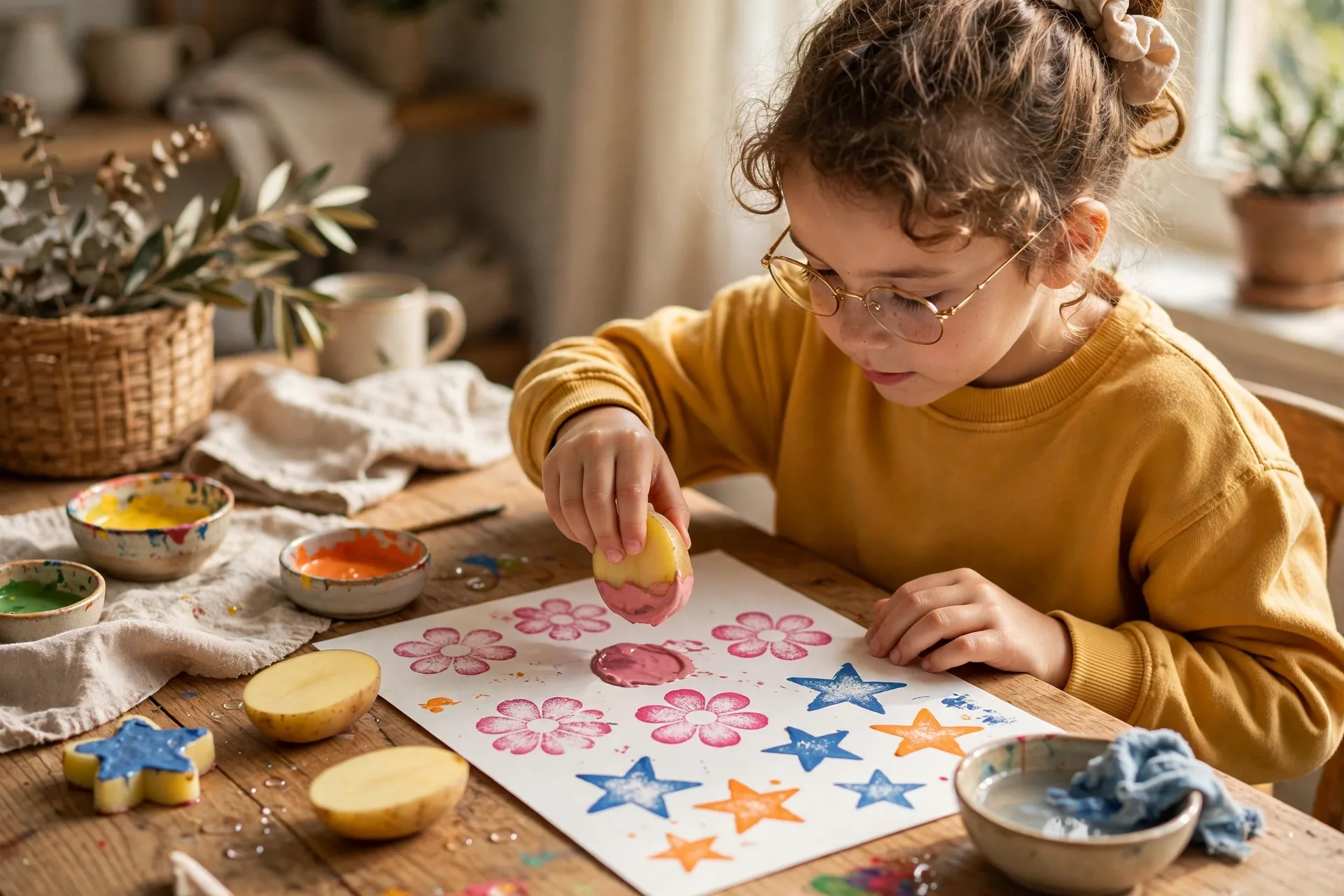
27. Potato stamping (ages 3+). Cut a potato in half and carve a simple shape into the flat side, a star, a flower, a heart, and a grown-up does the carving with a knife. Dip the flat side in paint, press it onto paper, and lift to see a perfect stamped shape. The shapes repeat beautifully, so this is how you make wrapping paper, cards, and gift tags that look like a shop made them. My 2-year-old can stamp all by herself once the potato is ready, and the stamping motion is satisfying in a way that keeps her at the table for ages. Use a shallow tray for the paint so the potato does not slide around.
28. Marble painting (ages 3+). Put a sheet of paper in the bottom of a shallow box lid, drop in a few spoonfuls of paint, add two or three marbles, and tilt the box so the marbles roll through the paint. The lines they leave are wild and swirly and completely unrepeatable. My kids call it marble racing and narrate the whole thing, which is half the fun. Use washable paint and a box with high sides, because one marble always tries to escape. This is a perfect rainy-day craft, because the mess stays inside the box and the art dries into something genuinely frameable.

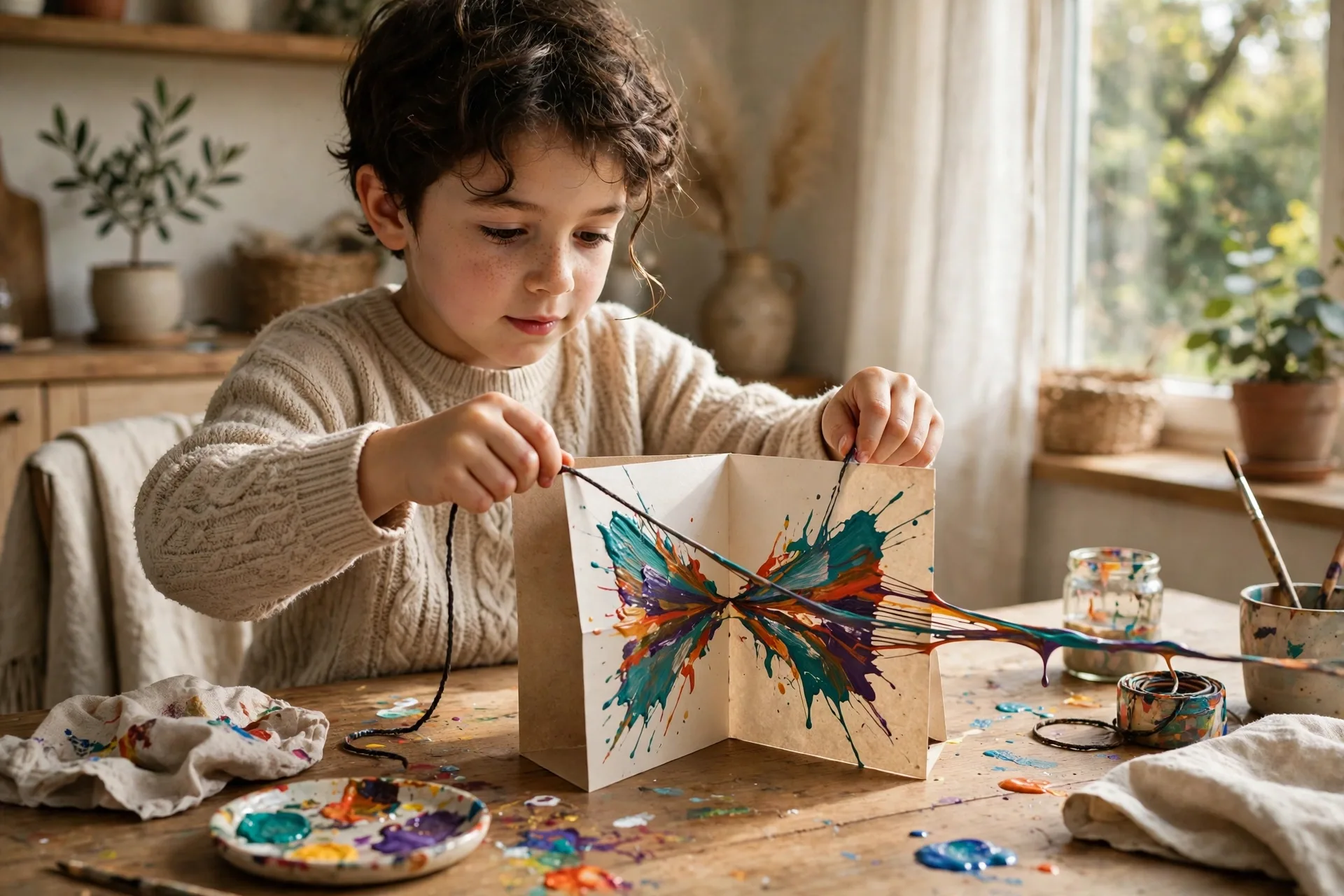
29. String painting (ages 4+). Dip a piece of yarn or string in paint, lay it in wavy loops on one half of a folded sheet of paper, fold the paper shut, press it flat, and pull the string out by the end. Open the paper and you have a symmetrical painting that looks like a butterfly, a flower, or something entirely new. The surprise of opening the paper is the best part, so let your child do the big reveal every time. Use two colors of paint on the same string for extra drama, and keep the string short enough that little hands can pull it in one smooth motion.
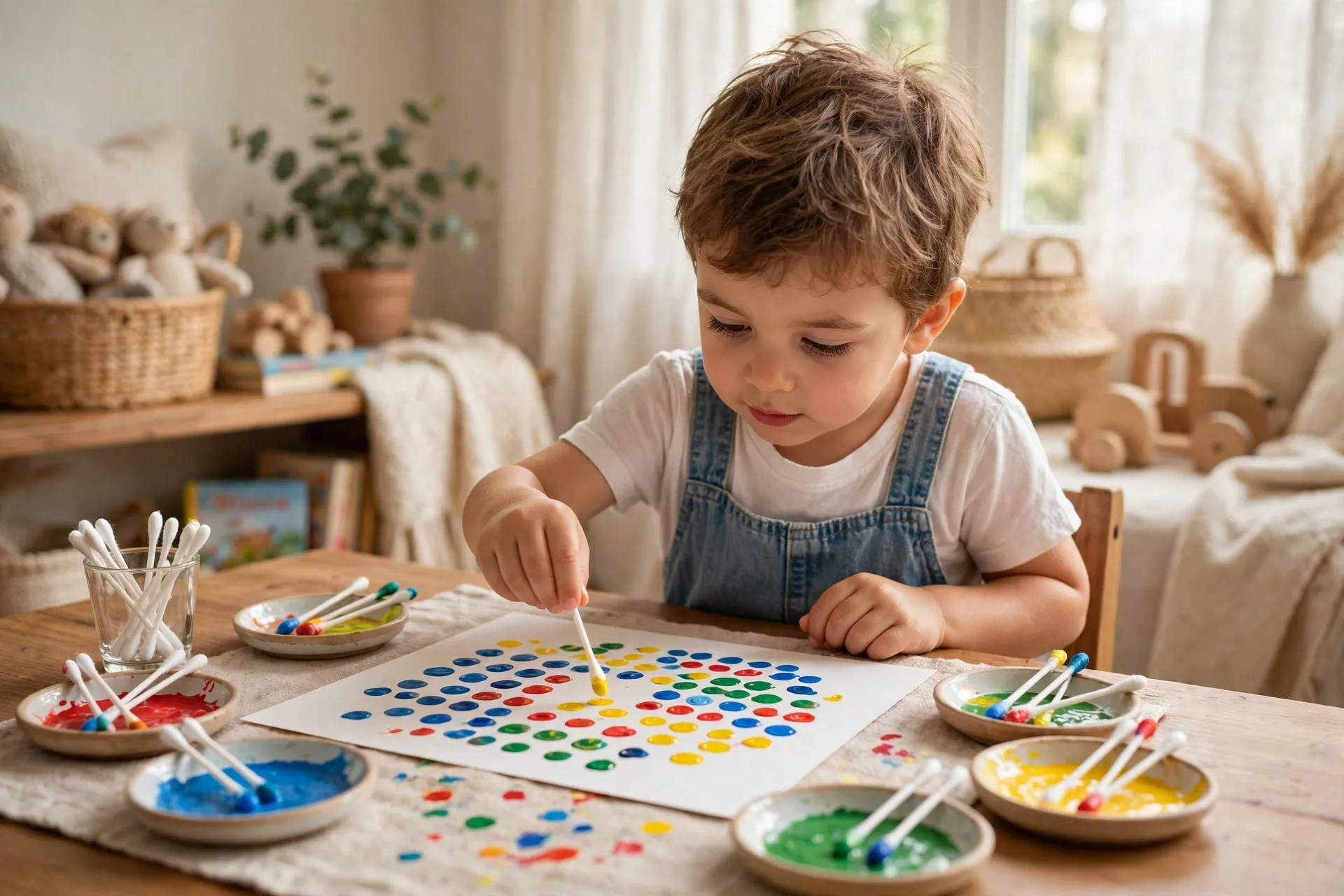
30. Q-tip dot painting (ages 2+). Give your toddler a cotton swab, a puddle of paint, and a sheet of paper, and let them dot. Dot the outline of a shape, dot a whole rainbow, dot a picture of the dog. The swab is the perfect toddler paintbrush, because it holds just enough paint for one dot and nothing drips. Draw a simple outline first, a heart, a star, a flower, and let the dotting fill it in. My 2-year-old dots with total concentration, and the finished pages look like pointillist art. Tape the paper down first, because a dot painter who chases a sliding page is a frustrated dot painter.
31. Handprint trees (ages 2+). Paint a little hand brown and press it onto paper to make the trunk and branches of a tree, then add fingerprint leaves in green, red, and yellow. The handprint becomes the tree, and the fingerprints become the leaves, so the whole picture is made of hands. Make one for each season, green leaves for spring, red and orange for fall, and white fingerprint snow for winter. My kids love comparing their handprint trees year after year, because the hands get bigger and the trees get taller. Keep a wet cloth nearby, because painted hands touch everything within reach.
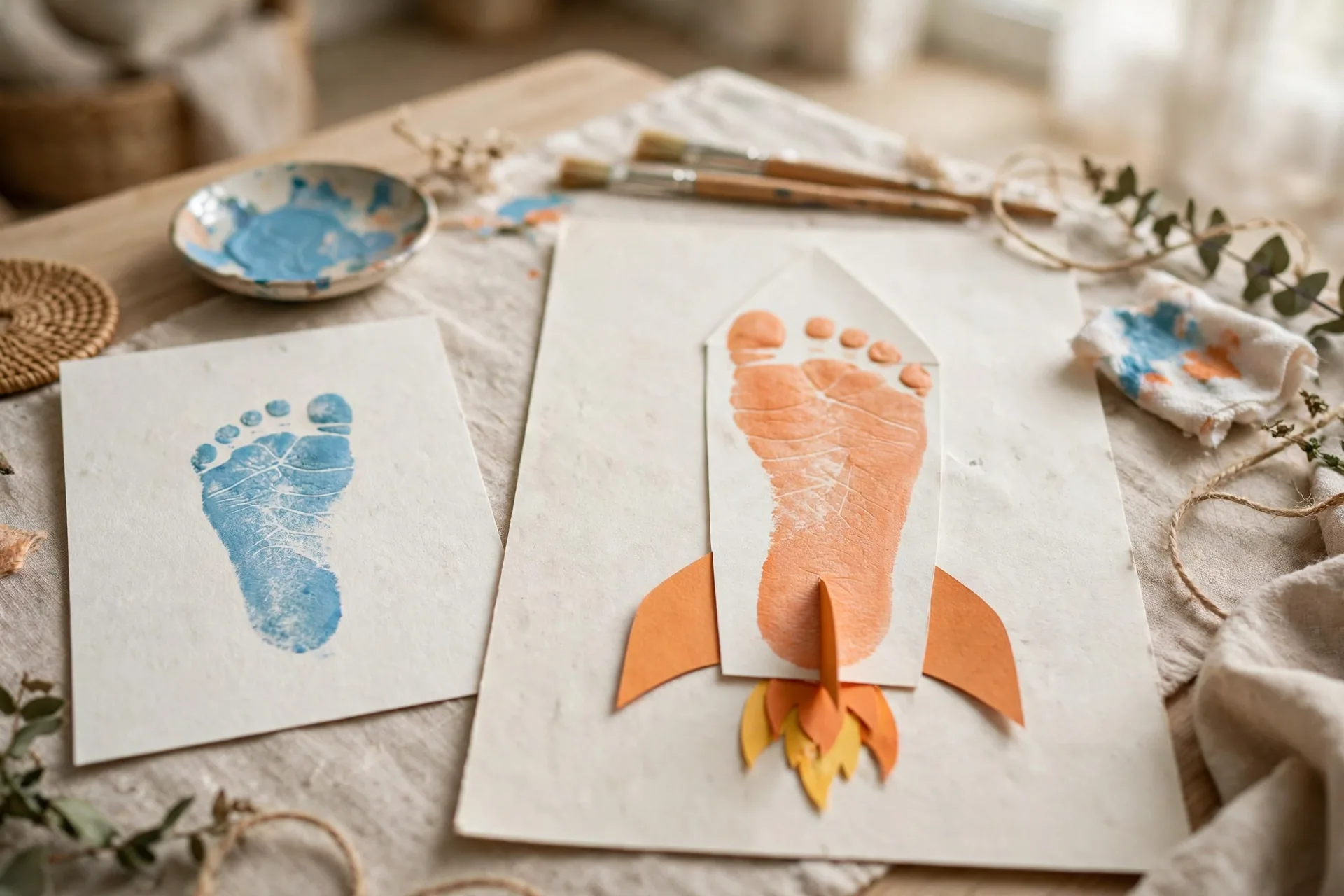
32. Footprint art (ages 1+). Paint the bottom of a little foot and press it onto paper, and you have a rocket, a fish, a butterfly, or a penguin, depending on which way you turn the print. Footprint rockets need a paper triangle on top, footprint fish need a drawn fin and a bubble or two, and footprint butterflies need two prints side by side. This is the craft for the very youngest artists, because the only skill it needs is a foot and a grown-up with a paintbrush. Do it on a tray with a towel underneath, because a painted foot walks exactly where it wants to walk.
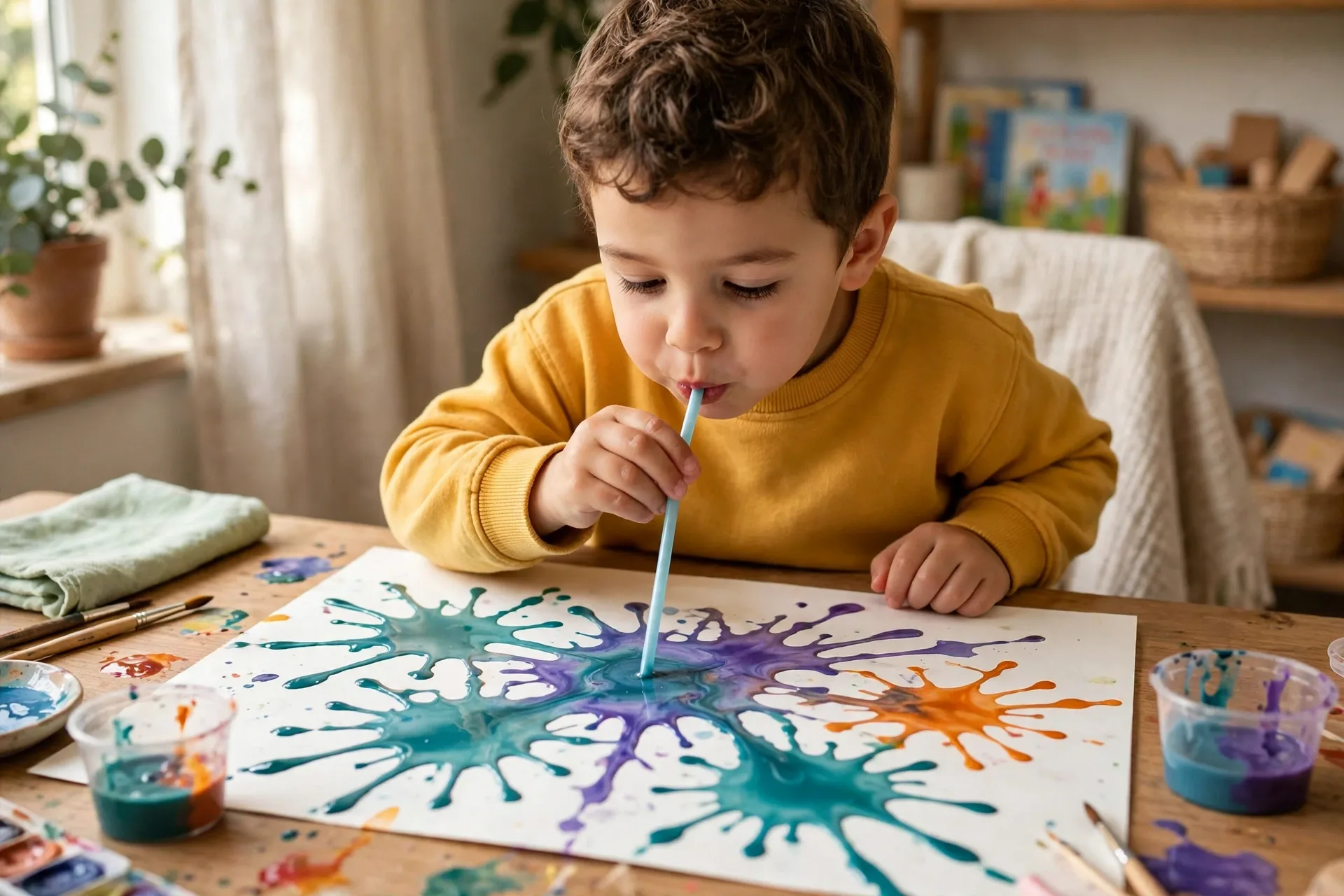
33. Straw blow painting (ages 4+). Put a blob of watery paint on paper, hand your child a straw, and let them blow the paint across the page. The paint spreads into spiky, starburst shapes that look like monsters, fireworks, or strange flowers. Add googly eyes after it dries and every blob becomes a creature with a name. This is a 4+ craft, because blowing through a straw takes coordination and little ones tend to suck instead of blow, so practice with plain water first. Keep the paint thin, like milk, and the blobs small, because a little paint travels a long way when a preschooler is doing the blowing.
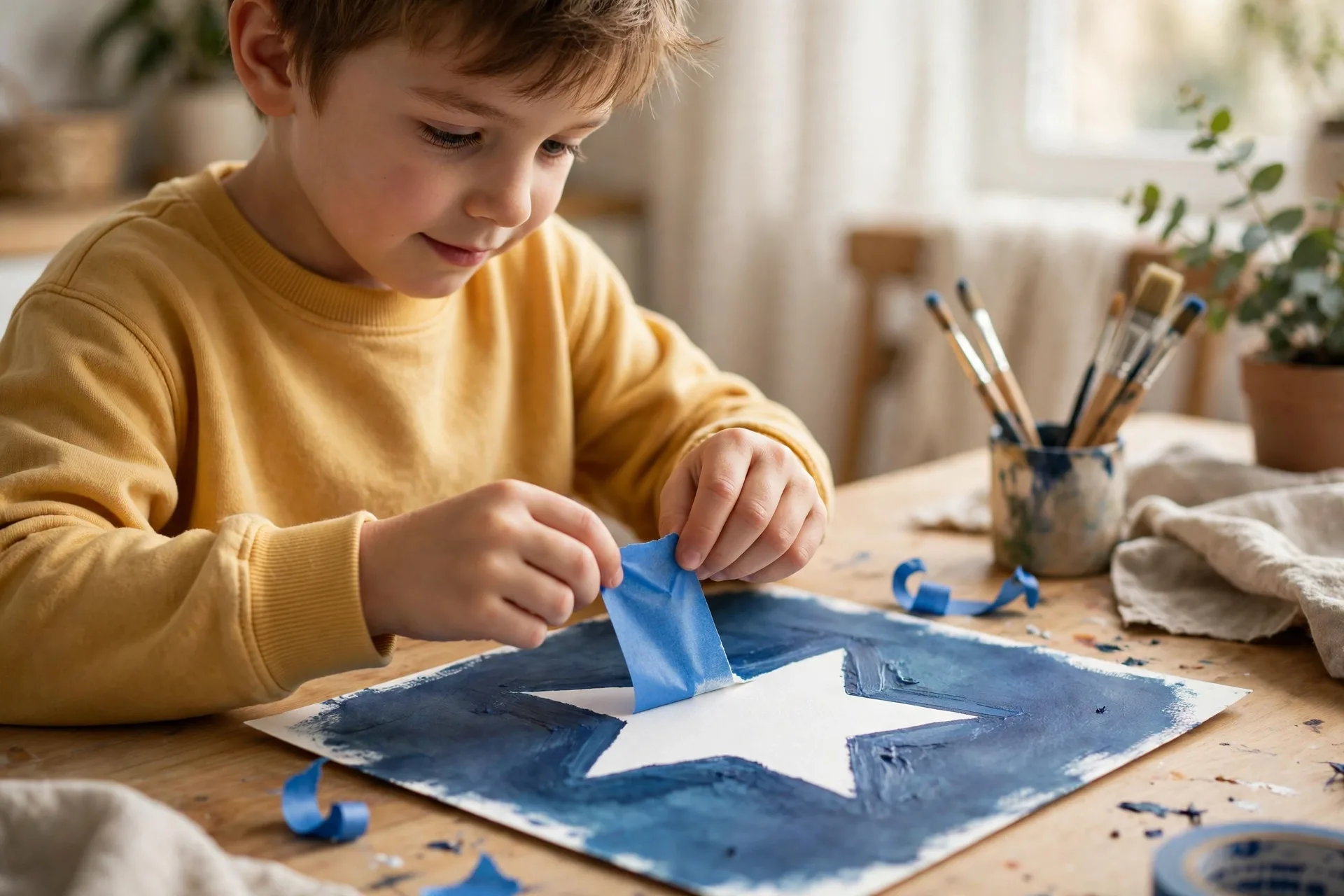
34. Tape resist art (ages 3+). Stick strips of painter tape across a sheet of paper in any pattern, a star, a name, a crisscross, and paint right over the whole thing. When the paint is dry, peel the tape off slowly and the lines underneath are crisp and white. The peeling is the most satisfying part, so let your child do it slowly, one strip at a time. Use painter tape rather than sticky tape, because it peels off cleanly without tearing the paper. This is the craft that makes every child feel like a real artist, because the reveal looks like something from a gallery wall.
More Dough and Modeling Crafts
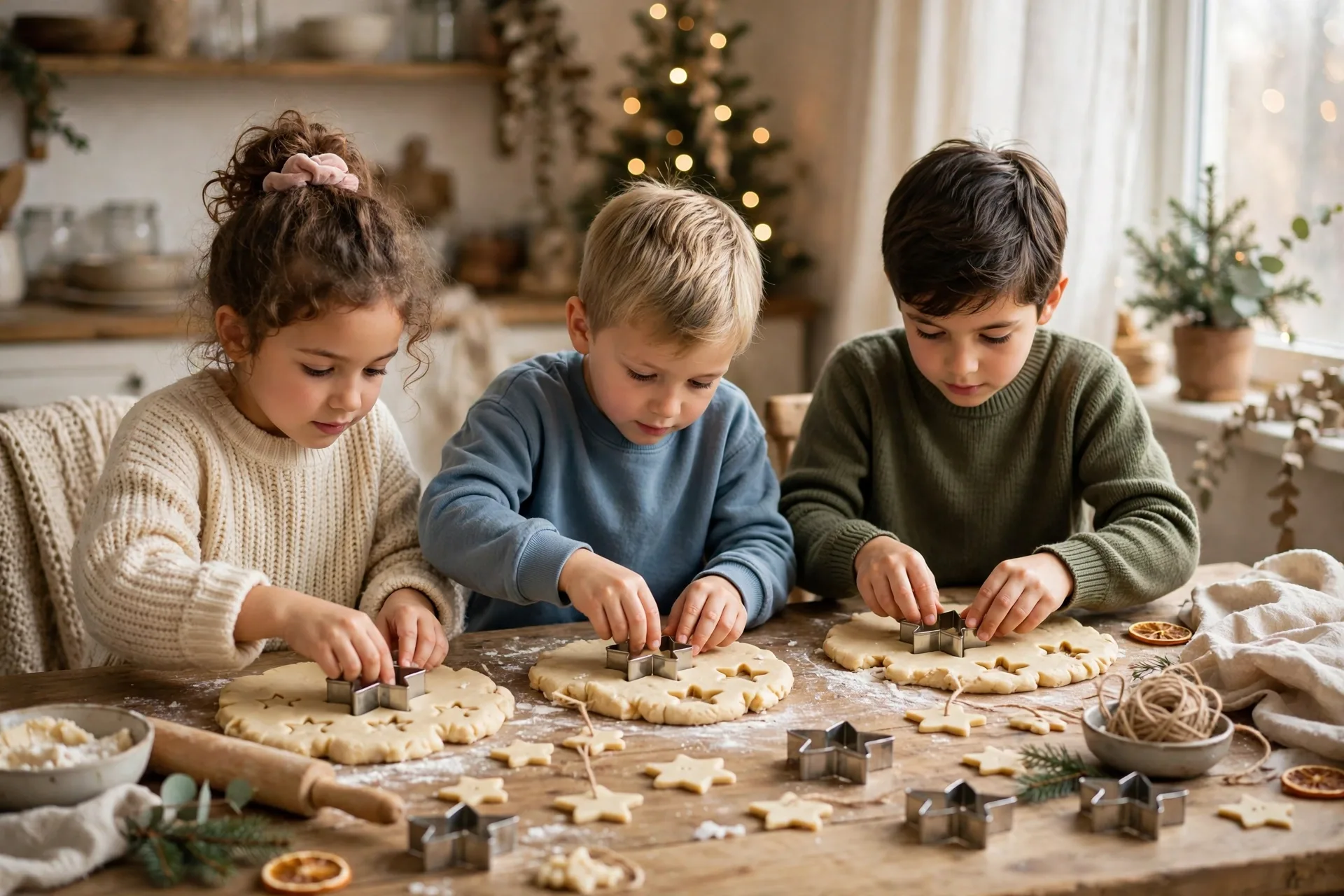
35. Salt dough ornaments (ages 3+). Mix flour, salt, and water into a dough, roll it flat, and cut shapes with cookie cutters. Poke a hole at the top with a straw, bake the shapes on low until they are hard, and paint them when they are cool. The ornaments last for years, so date the back with a marker and keep one from every Christmas. My 4-year-old rolls and cuts while I handle the oven, and my 2-year-old presses her thumbprint into a round one for a keepsake. Seal the finished ornaments with a brush of glue or clear nail polish if you want them to survive small hands and damp Decembers.
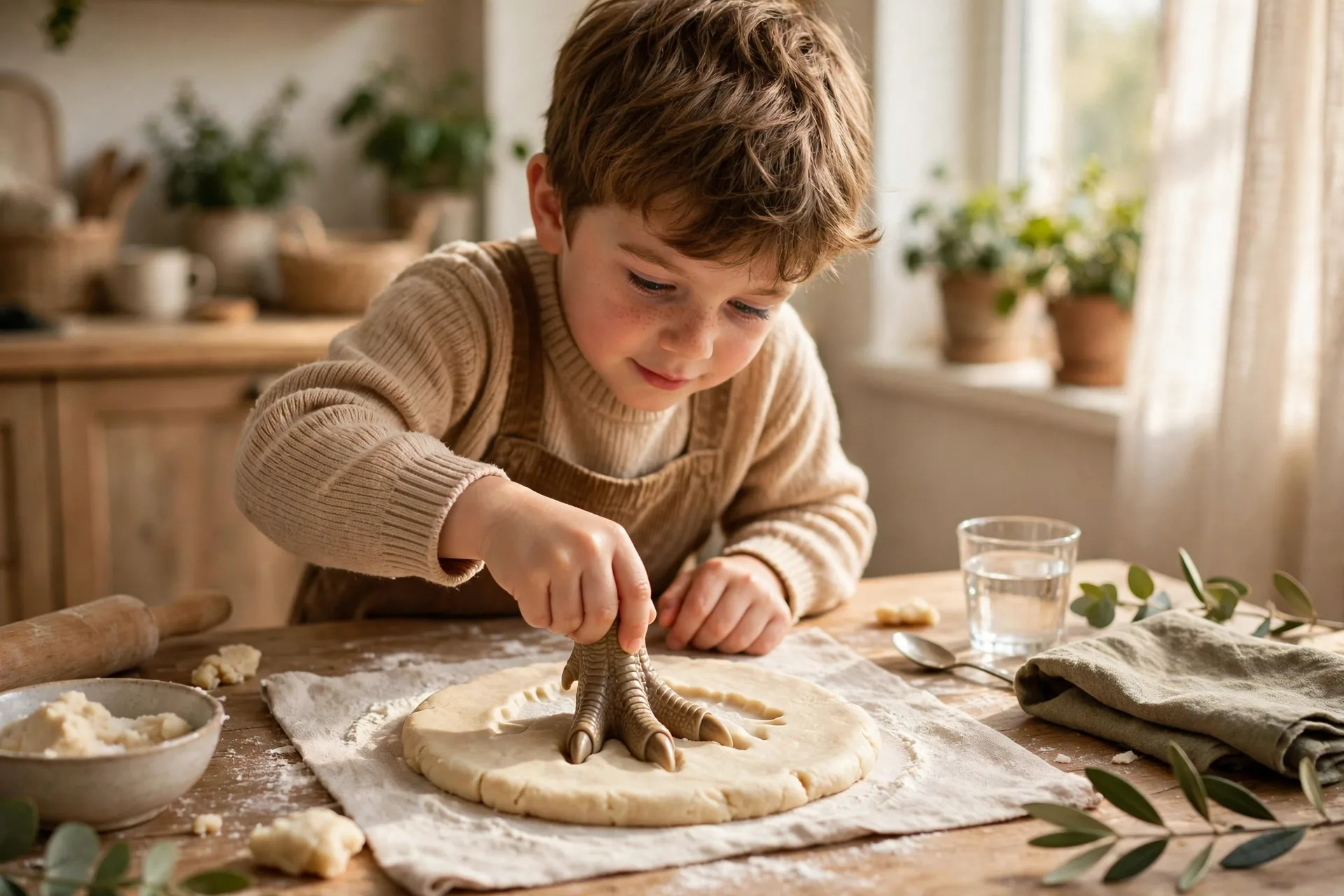
36. Dough fossils (ages 3+). Roll salt dough or playdough flat, press a toy dinosaur foot, a shell, or a leaf into it, and lift it out to reveal a fossil. The imprint is the whole magic, so press firmly and lift straight up without wiggling. Let salt dough versions dry hard, or keep playdough fossils for a day of play before they get squished back into the tub. My kids make a whole museum shelf of fossils and then give tours, which is the best part. Use small toys with strong textures, because smooth toys leave faint prints and faint prints disappoint a young paleontologist.
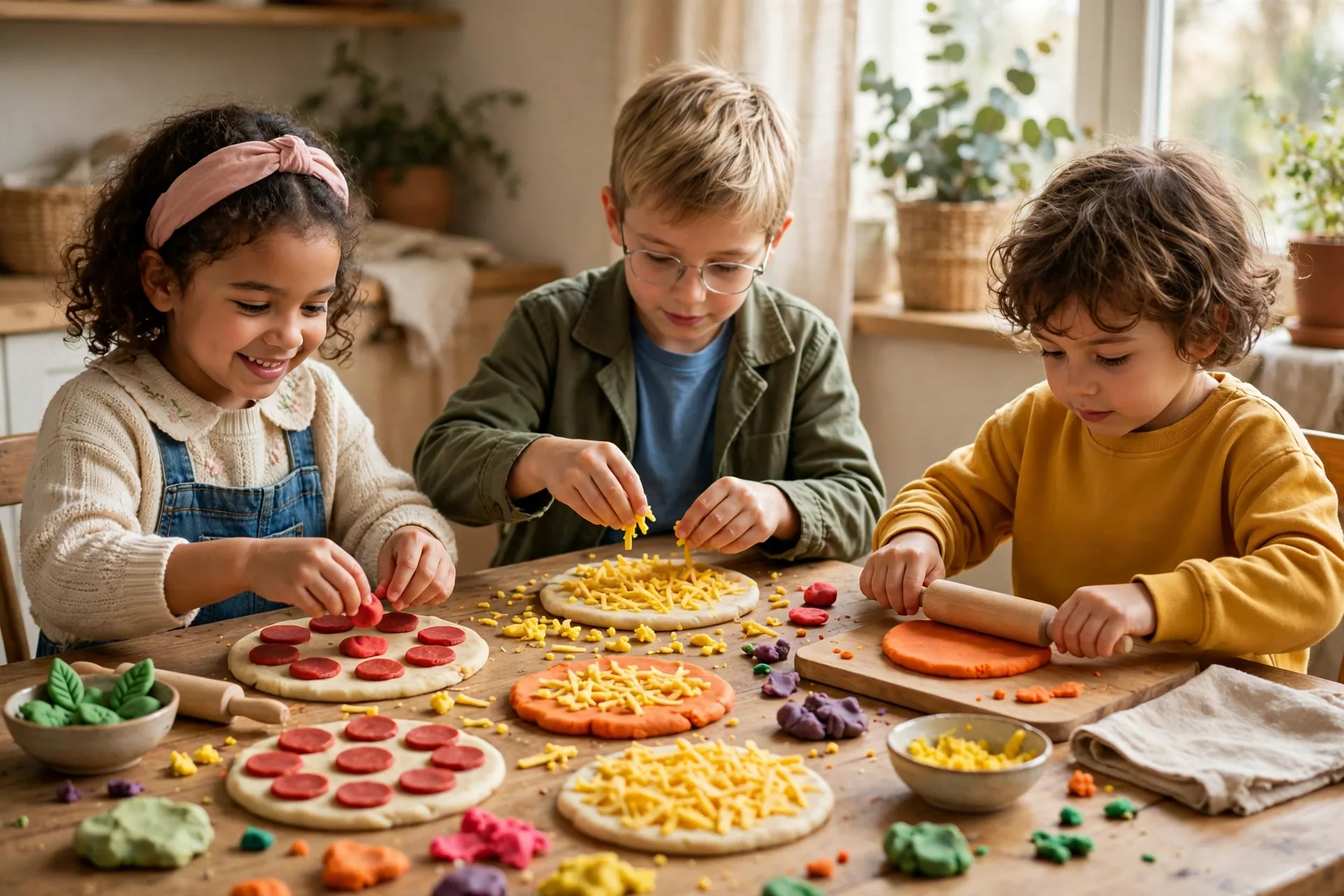
37. Dough pizza shop (ages 3+). Flatten a ball of dough into a pizza base, roll a thin snake of dough for the crust edge, and add toppings made from tiny dough balls and shapes. Pepperoni is a flattened red circle, mushrooms are a small white blob with a cap, and cheese is a sprinkle of yellow crumbs. Then comes the best part, which is taking orders. My 4-year-old runs the shop, my 2-year-old is the delivery driver, and I am the customer who always orders extra cheese. Keep a toy pizza cutter nearby, because slicing the finished pizza into pieces is a ceremony that must not be skipped.
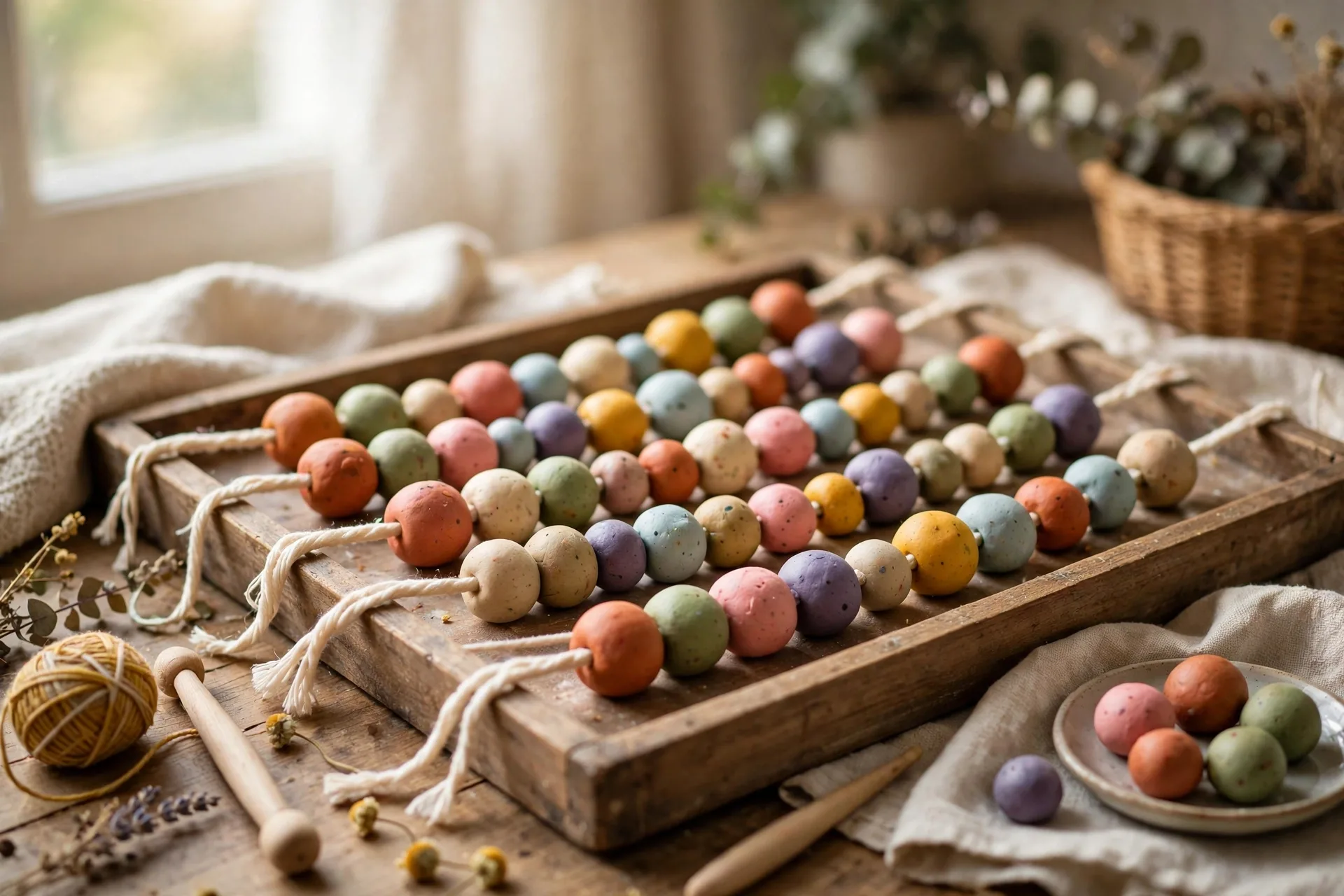
38. Dough bead necklaces (ages 4+). Roll small balls of playdough or salt dough, poke a hole through each one with a straw, and let them dry hard if you used salt dough. Then thread them onto yarn for a necklace that your child truly made from scratch. The rolling is the fine-motor workout, and the threading is the patience test, so start with big beads and a stiff piece of yarn with tape on the end. Paint the dried beads in bright colors for a second craft session, because a necklace that takes two days to finish feels like a real project to a preschooler.
39. Dough letter tiles (ages 4+). Roll dough flat, cut out letters with alphabet cookie cutters, and let your child spell their name, then your name, then the dog’s name. The letters are big and squishy, so little fingers can pick them up and rearrange them without frustration. Bake salt dough versions to keep, and use them as fridge magnets or a name plate for a bedroom door. My 4-year-old spells her name first every time, then adds letters until the whole alphabet is laid out on the table like a puzzle. Keep the cutter set in the craft basket, because this one comes out at least once a week.
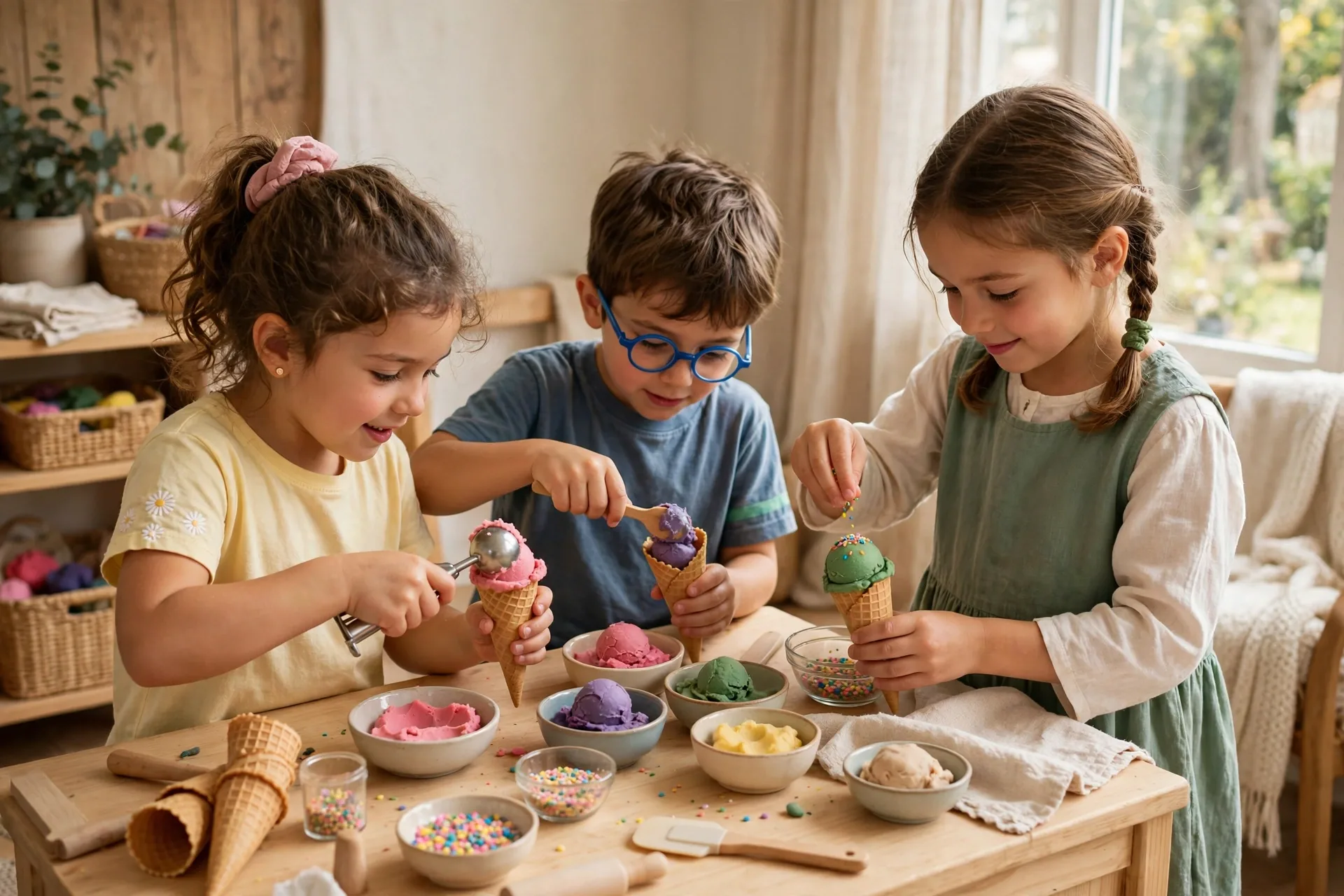
40. Dough ice cream shop (ages 3+). Roll dough into scoops, stack them on a cone made from a rolled piece of brown dough, and add sprinkles made from tiny dough crumbs. The shop needs a menu, so write one on a piece of paper, three flavors and a price in hugs. My kids take turns being the scooper and the customer, and the customer always orders the tallest cone, which always falls over, which is the funniest part of the game. Keep the cones short and the scoops small, because a tall dough cone is a toppling dough cone, and toppling is only funny the first three times.
More Nature and Recycled Crafts
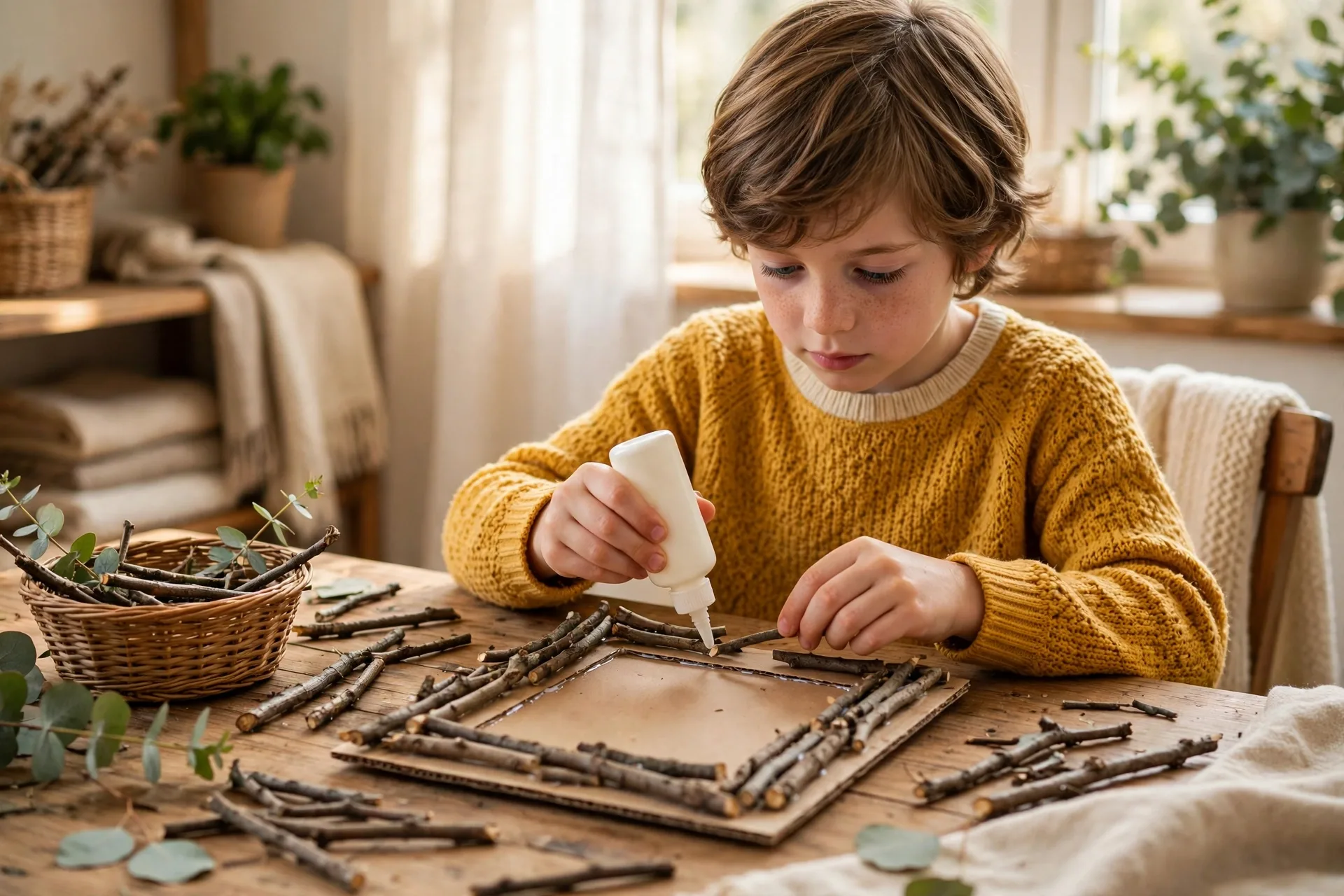
41. Twig picture frames (ages 4+). Collect straight twigs on a walk, snap them to size, and glue them around a cardboard frame with a photo in the middle. The twigs overlap at the corners like a log cabin, and the finished frame looks like something from a craft fair. My kids collect the twigs themselves, which is half the activity, and the gluing is a slow, careful job that suits a quiet afternoon. Use a low-temperature glue gun handled by a grown-up, or thick white glue with a long drying time and a heavy book on top. Hang the finished frames in a row and you have a gallery wall made of sticks.
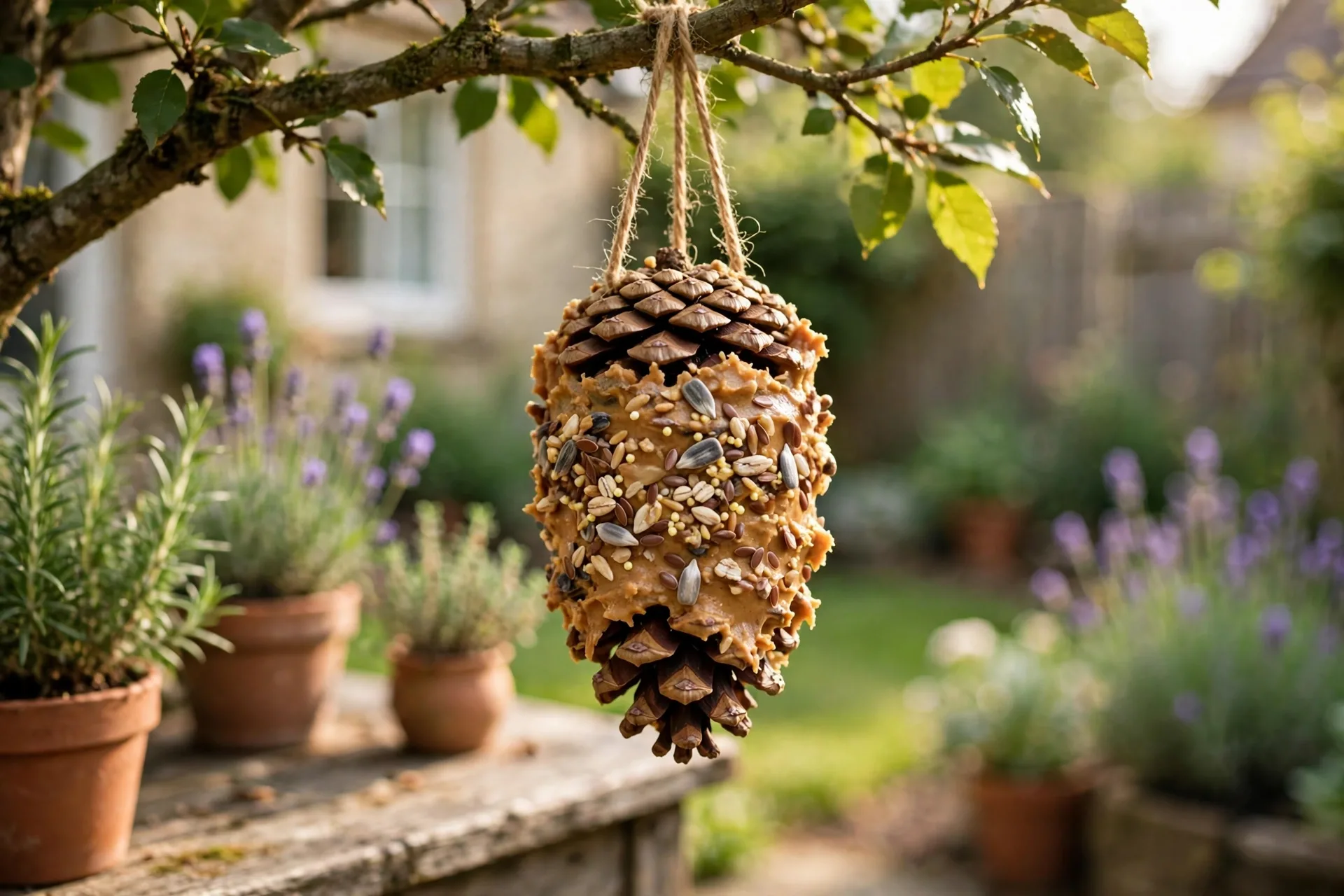
42. Pinecone bird feeders (ages 4+). Tie a string around a pinecone, spread it with peanut butter or sunflower seed butter, and roll it in birdseed until it is fully coated. Hang it from a branch outside a window and watch who comes to visit. The spreading is the messy part, so do it on a tray and keep a damp cloth handy, and use sunflower seed butter if your house is nut-free. My kids check the feeder every morning like it is a mailbox, and the first bird sighting gets announced like a royal visit. Make two, because one always disappears into the bushes.
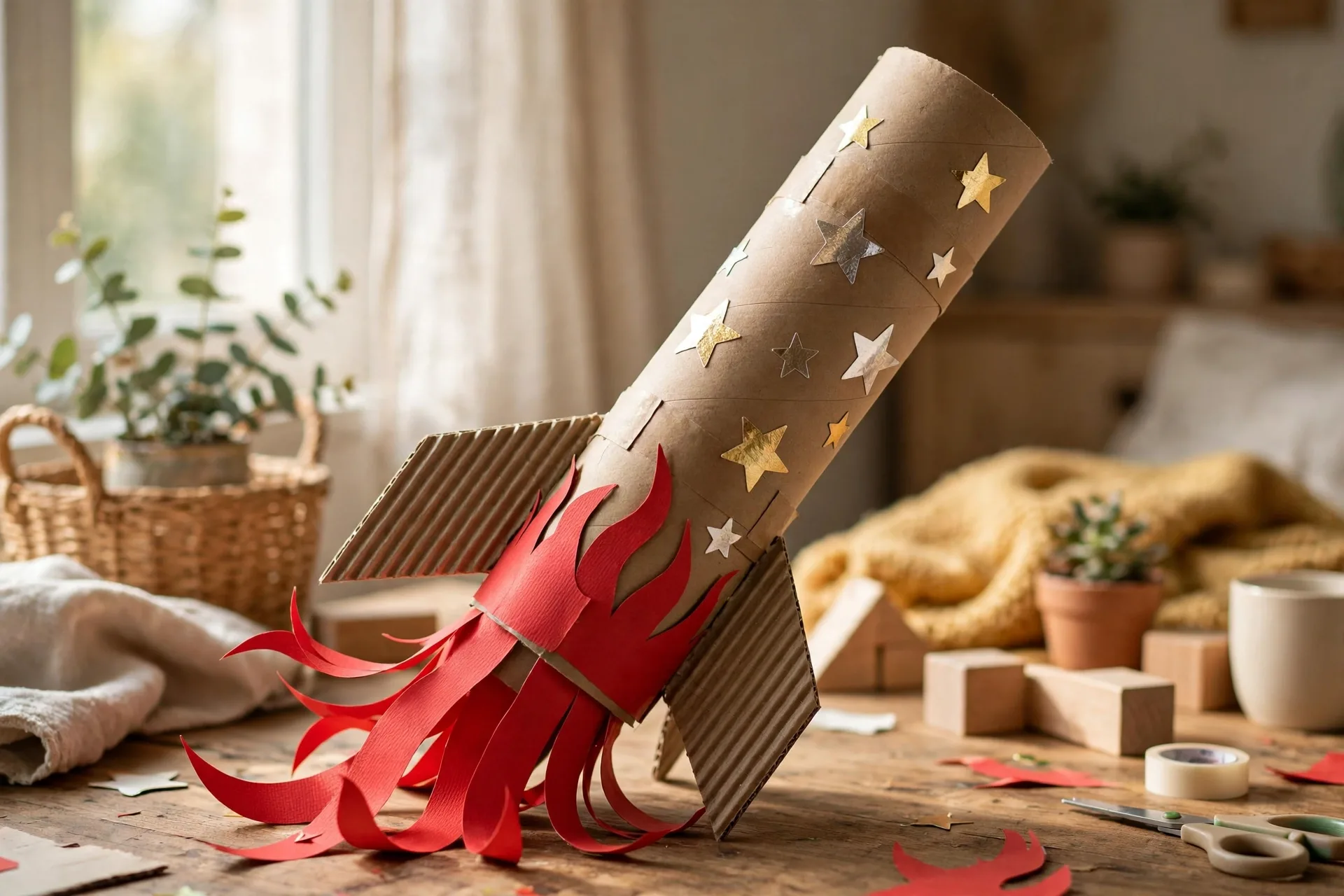
43. Cardboard tube rockets (ages 3+). Paint a cardboard tube silver or white, glue on a paper cone nose and paper fins, and add a flame made from red and yellow paper streamers at the bottom. The decorating is the craft, and the launching is the game, because every rocket needs a countdown and a blast-off. My 4-year-old counts down from ten while my 2-year-old shouts blast-off at three, every single time. Tape the cone on firmly, because a rocket that loses its nose on the first flight is a rocket that needs repairs before it can fly again. Make a whole fleet and line them up on the windowsill.
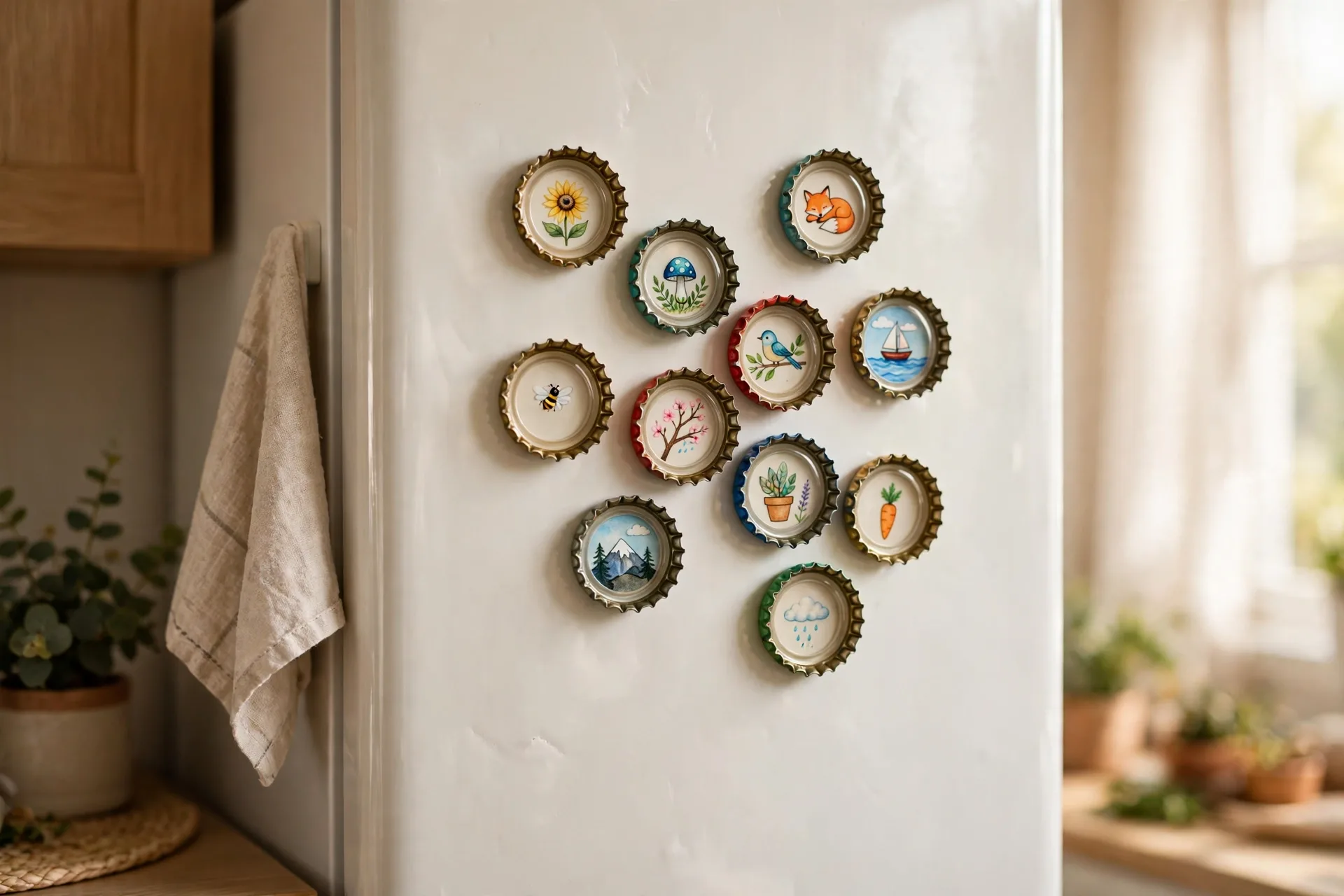
44. Bottle cap magnets (ages 4+). Glue a small photo or a tiny drawing inside a bottle cap, stick a magnet on the back, and you have a fridge magnet made from trash. The tiny circle is the perfect size for a fingerprint flower, a mini portrait, or a single letter. My kids make a set for the fridge and a set for grandma, because the magnets are small enough to post in an envelope. Use strong glue and let it dry fully before the magnets go on the fridge, because a magnet that falls off mid-photo is a tragedy. Collect caps for a week first, because you need more than you think.
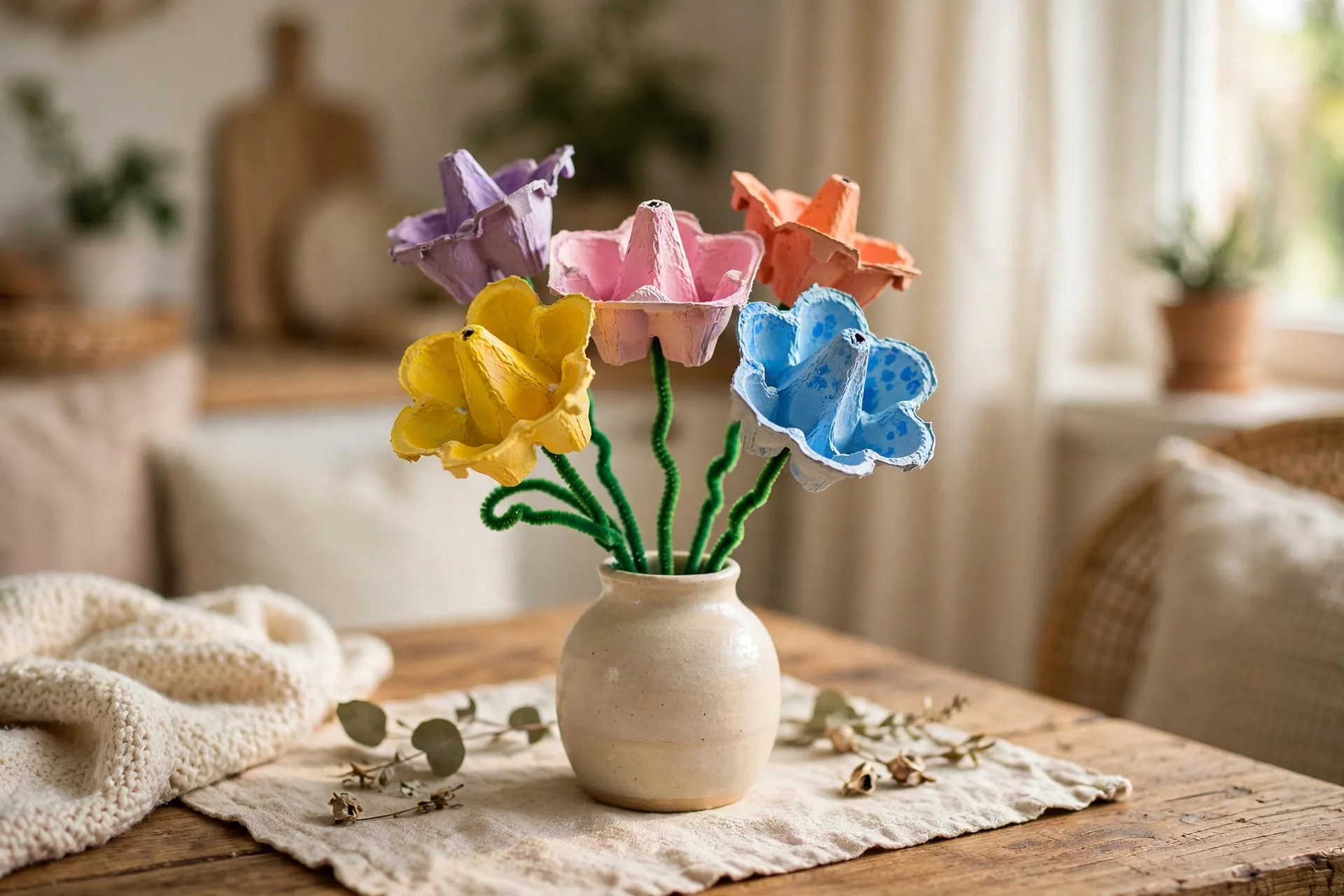
45. Egg carton flowers (ages 3+). Cut the cups from a cardboard egg carton, paint them bright colors, and glue a pipe cleaner stem into the middle of each one. The cups open like petals, and a whole bunch of them in a jar looks like a real bouquet that never wilts. A grown-up does the cutting, because egg cartons are tougher than they look, and the kids do the painting and the arranging. My 2-year-old paints every flower purple, and my 4-year-old makes a rainbow, and both bouquets are beautiful. These are the flowers to make for grandma, because they last longer than the real ones.
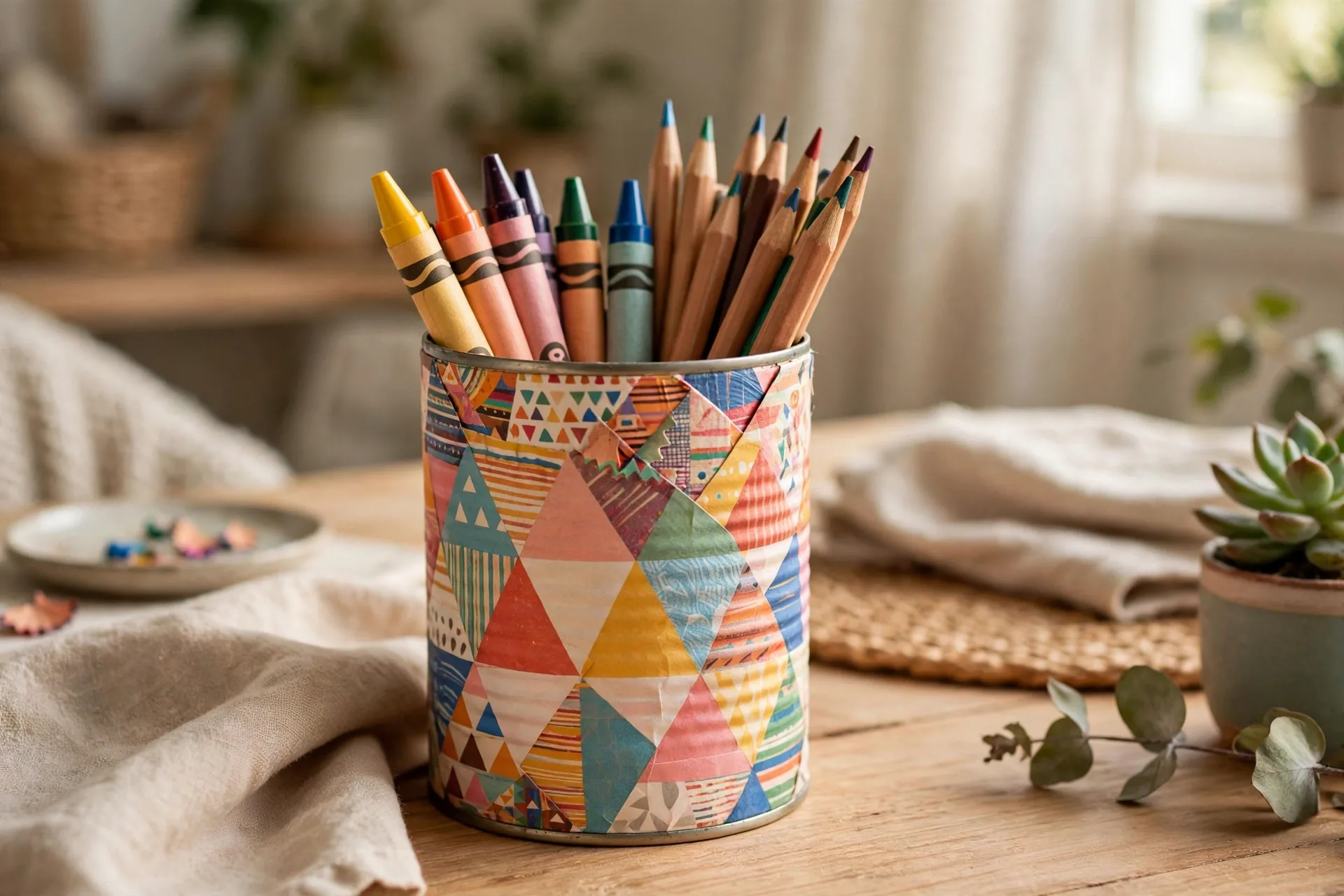
46. Tin can pencil holders (ages 4+). Wash an empty tin can, check the rim for sharp edges and cover it with tape if needed, then wrap it in colored paper and decorate it with stickers, washi tape, and drawings. The can becomes a pencil holder, a paintbrush holder, or a home for the good scissors. A grown-up handles the can preparation, because the rim is the only risky part, and the kids handle the decorating. My kids each made one for their own desk, and the desks have been tidier ever since, because a pencil with a home is a pencil that gets put away. Make one for the kitchen too, for the pens that always go missing.
Crafts That Become Gifts
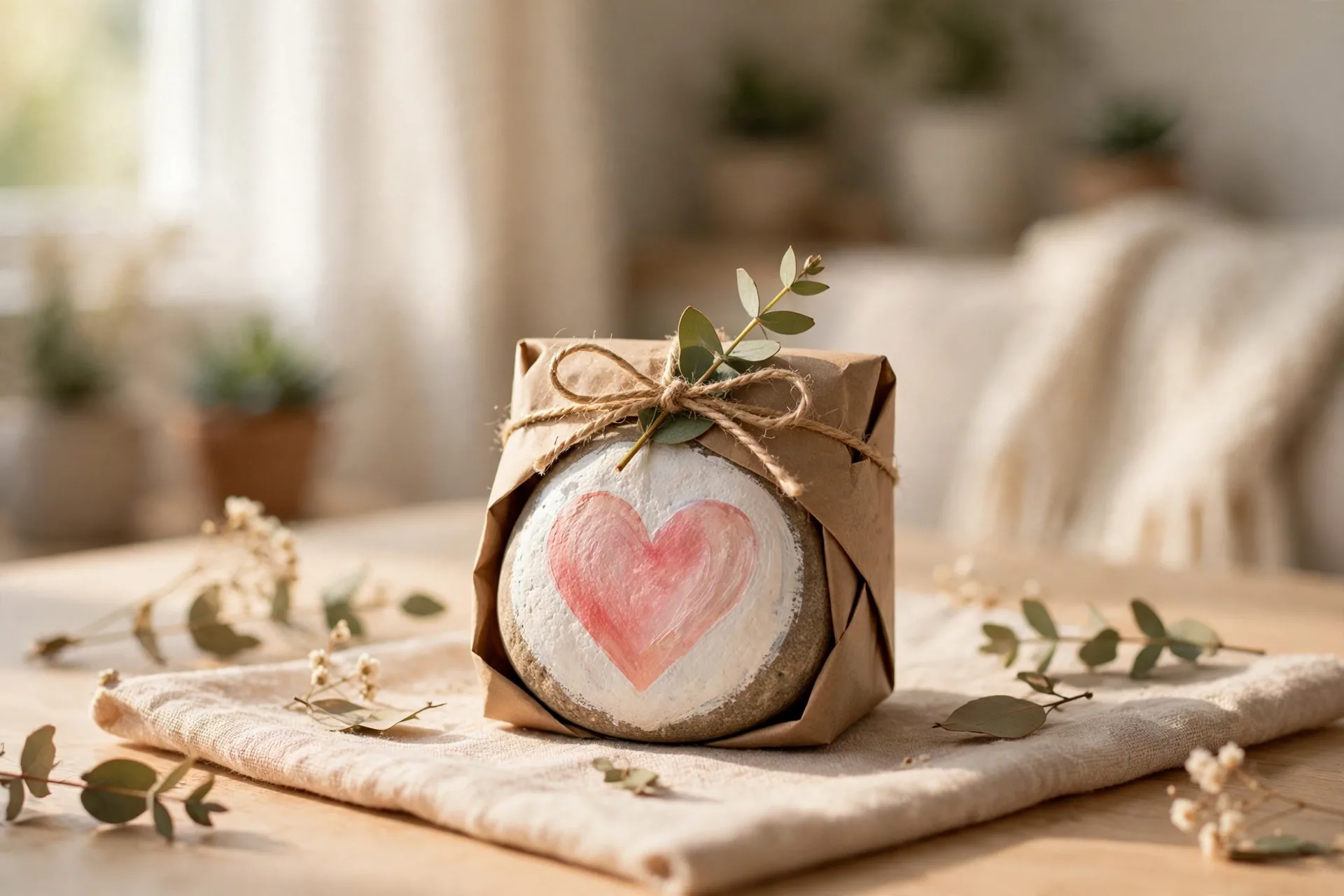
47. Painted rock gifts (ages 4+). Paint a smooth rock with a heart, a name, or a simple picture, and wrap it in tissue paper as a gift. A painted rock is the smallest handmade present that still feels like a real present, and grandparents treat them like treasure. Let your child choose who gets each rock, because the choosing is the gift, and write the year on the back so the rock becomes a keepsake. Use the paint pens from the rock painting section, because they draw clean lines on stone without a brush or a water cup. One rock, one person, one very proud artist handing it over.
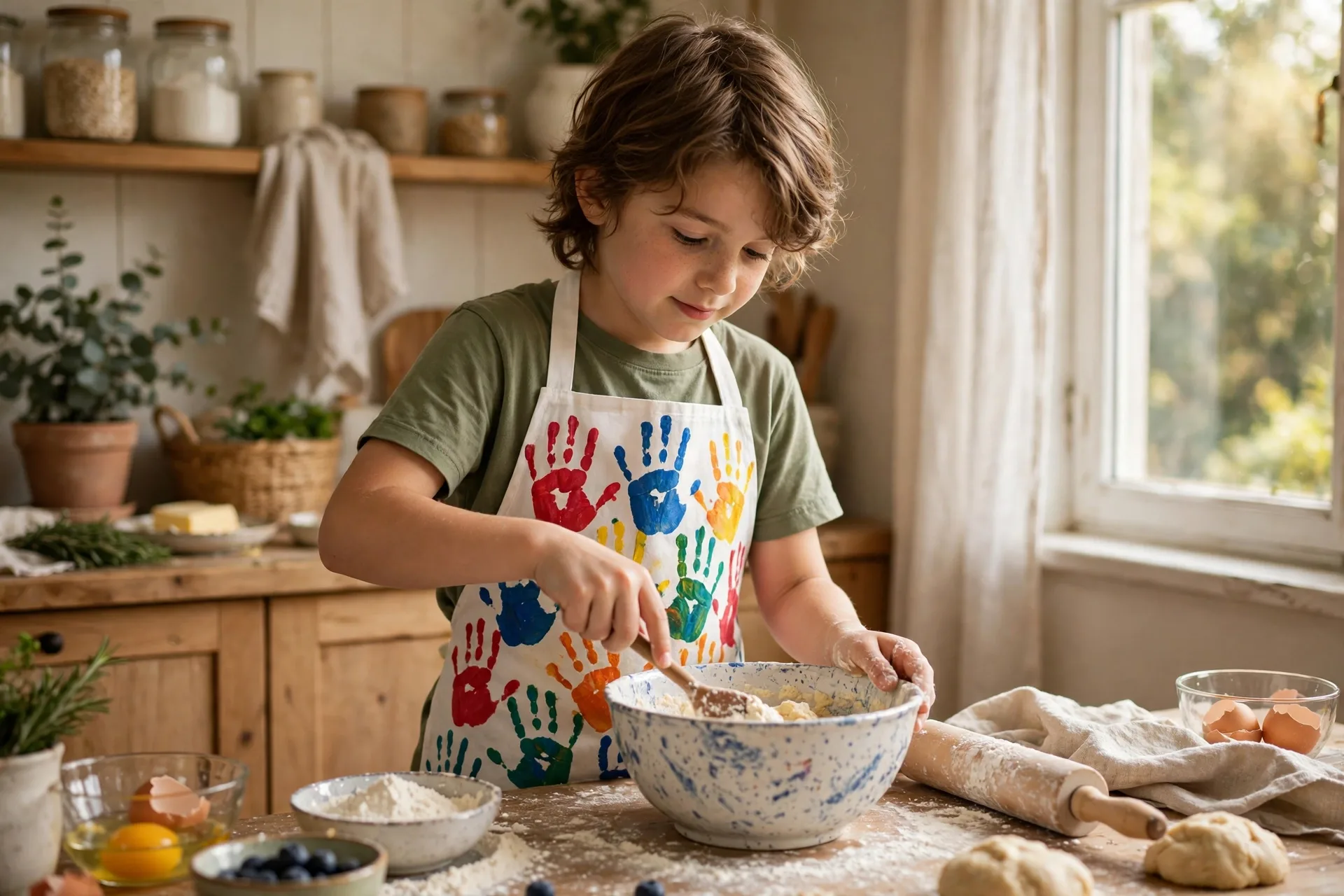
48. Handprint aprons (ages 2+). Buy a plain white apron, or use an old t-shirt, and let your child stamp handprints all over it in fabric paint. The apron becomes their baking uniform, and every baking day starts with putting it on. Use fabric paint or fabric markers so the prints survive the wash, and let the paint dry fully before the first wear. My 2-year-old pressed both hands on the front and declared it done, and my 4-year-old added a row of handprints along the hem like a border. This is the gift to make for a grandparent who bakes, because they will wear it every single time.
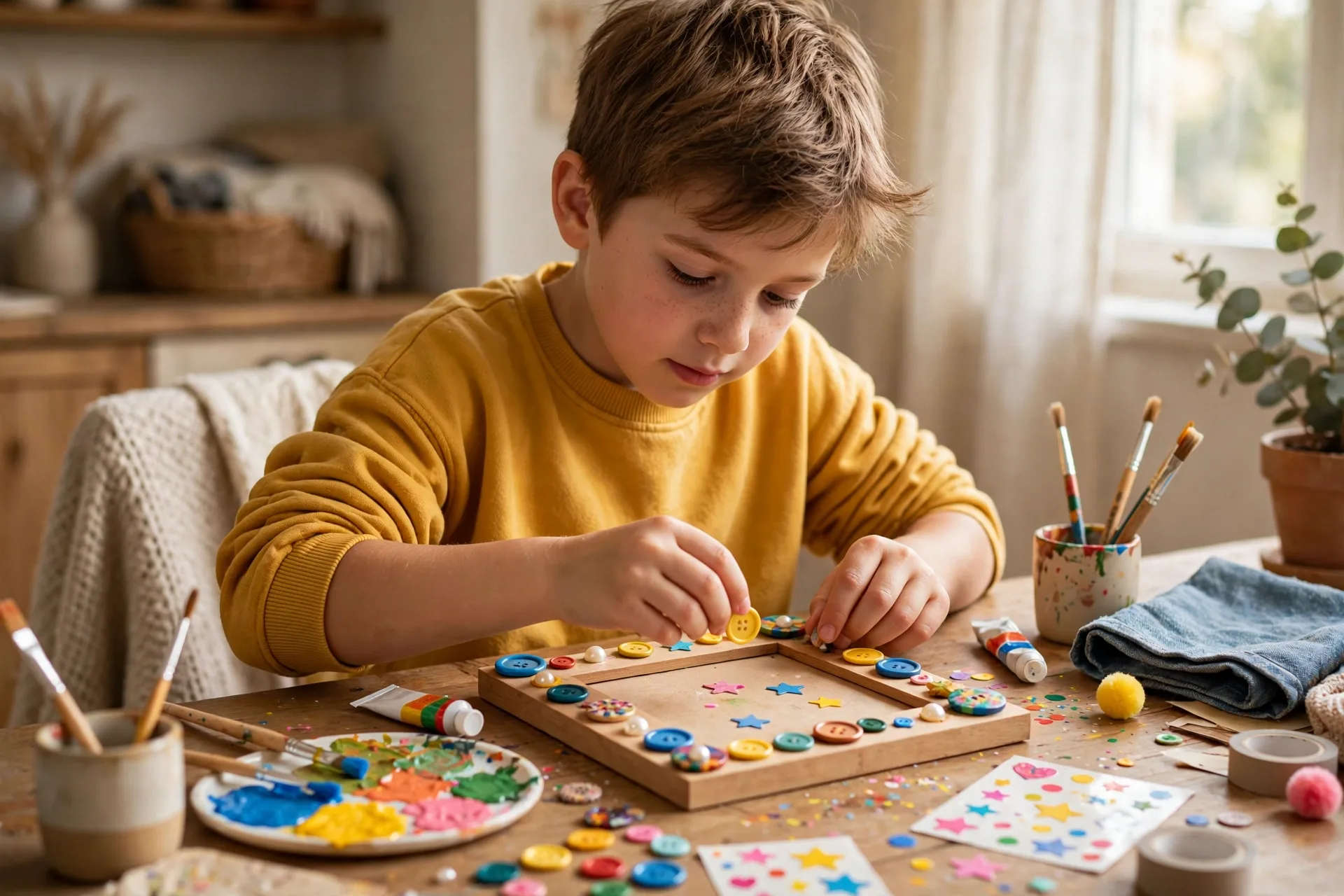
49. Decorated photo frames (ages 4+). Take a plain wooden frame from the dollar store, paint it, and glue on buttons, shells, beads, or anything small and pretty. Slip in a photo of the child with the person the frame is for, and you have a gift that gets kept on a desk for years. The gluing is the slow part, so put on some music and let your child place each button exactly where it belongs. My 4-year-old made one for her teacher with every button in rainbow order, and the teacher still has it on her desk. Keep the decorations flat enough that the frame still stands up straight.
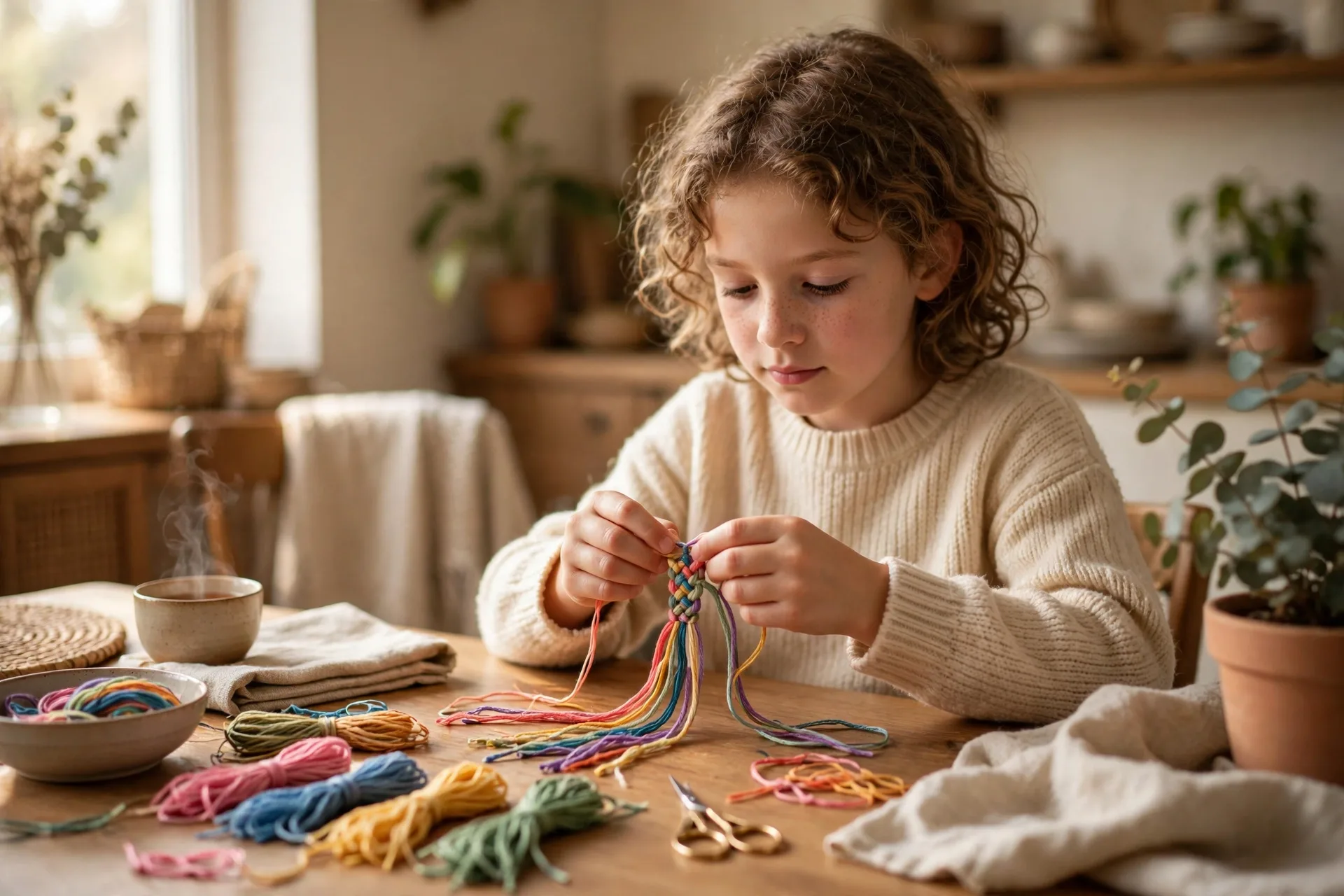
50. Friendship bracelets (ages 5+). Cut three strands of embroidery thread, tie them to a table leg or a clipboard, and braid. The braiding is the whole craft, and the first finished bracelet is always for the best friend, which is the rule. This is a 5+ craft, because braiding needs three strands held in order, and younger kids do better with a simple bead bracelet instead. Teach the braid slowly, one cross at a time, and let your child practice on a thick piece of yarn first. The finished bracelets stack up fast, because every friend needs one and every bracelet takes ten minutes once the braid clicks.
51. Decorated gift bags (ages 3+). Take a plain paper gift bag and turn it into part of the present. Stamp it, stick it, draw on it, and write the name of the person it is for in big letters. The bag becomes handmade, which makes the gift inside feel handmade too, even when it is not. My kids decorate the bag for every birthday party we go to, and the bag always gets more comments than the present. Keep a stack of plain bags in the craft basket with the stamps and stickers, because a decorated bag takes five minutes and saves the last-minute wrapping panic every single time.

Take It Through the Seasons
Crafts don’t have to stop when the season changes — the same basket carries you all year. Spring means flowers, eggs, and garden themes in our DIY Spring Craft Ideas; summer takes everything outside in our DIY Summer Craft Ideas. When the holidays come around, two reader favorites are the Easy Snowflake Ornament Craft for Kids and the Easy Ribbon Star DIY Tree Ornament Craft for Kids — both built from the same paper-and-glue basics as this guide.
Quick Picks: Which Craft, Right Now?
| You Need… | Start With | Why It Works |
|---|---|---|
| Ten quiet minutes, almost no mess | Sticker collages (#4) | No drying, no paint, toddlers do it alone |
| A craft your 2-year-old can really do | Finger painting (#7) | It’s all process — there’s no wrong way |
| A keepsake for grandma | Handprint art (#3) | Five minutes, kept for a decade |
| Scissor practice | Paper chains (#5) | Straight strips, real skill, pretty result |
| A wow moment for a preschooler | Salt painting (#10) | The color travels like a science trick |
| A rainy-day big project | The big box project (#17) | Both kids, one box, hours of play |
Shop This Post
Everything we used in this guide, in one place:
| Product | Used For | Price |
|---|---|---|
| Crayola Construction Paper — 480 Sheets |
Paper plate animals & paper crafts (#1) | Check Price |
| ARTISTRO Acrylic Paint Pens |
Rock painting (#11) | Check Price |
| Play-Doh — 10-Pack of 2oz Colors |
Cookie-cutter shapes & stamping (#12) | Check Price |
| Googly Eyes — 520 Pieces, Self-Adhesive |
Googly eye monsters (#18) | Check Price |
| Crayola Washable Kids’ Paint — 10 Count |
Finger painting (#7) | Check Price |
| Elmer’s Washable School Glue — 4 oz |
Salt painting (#10) | Check Price |
Craft Questions Moms Actually Ask
What age can kids actually start crafting?
Around 18 months to 2 years, with you right there: sticking big stickers, scribbling, finger painting, squishing dough. Keep sessions short — ten good minutes is a win at 2 — and judge success by whether they want to do it again, not by the finished product. The toddler crafts in this guide (#3, #4, #7, #8, #12) are the ones that genuinely work at that age.
How do I keep craft time from destroying the kitchen?
Three rules run our house: crafts happen on a tray or a flattened cardboard box (the mess has borders), one wet thing at a time (paint OR glue, never both with a toddler loose), and washable everything. Also: craft before bath day, in clothes that are already doomed. If the thought of cleanup is stopping you from starting, start with the paper section — it’s a thirty-second sweep.
What should I buy first, on a real budget?
The starter basket above, in this order: construction paper, washable paint, glue, crayons, big stickers, safety scissors. That’s it — paper plates, tubes, boxes, and leaves are already in your house. Skip the giant everything-kit; half of it is glitter and regret.
My toddler puts everything in her mouth. Are crafts even possible?
Yes — you just shop and supervise differently. Big pieces only, washable and non-toxic supplies, nothing smaller than a toilet-paper tube is wide (the classic choke test), and you stay at the table. The mouthing stage is exactly what our Toddler Parenting Tips cover beyond crafts, too — it’s a season, not a life sentence.
Are craft kits worth it, or should I stick to supplies?
Both have a place. Open supplies (this guide) are cheaper per craft and build real skills; a good kit wins on zero-prep days and gifts. If you’re kit-shopping, our guide to Art Toys for Kids separates the ones that actually get used from the ones that gather dust.
What do I do with the mountain of finished art?
Photograph everything, keep the best, recycle the rest without guilt — the value was in the making. We keep one flat box per kid per year; when it fills up, something has to be a true favorite to stay. Handprints and firsts almost always survive the cut.
Easy crafts aren’t about producing fridge-worthy art on a schedule. They’re about having an answer ready when a small voice says “I’m bored” — one that takes ten minutes to set up and gives you both something better than a screen. Start with the paper basket, mama. The paint can wait until you’re feeling brave.
More family guides on MamaKinder
3 Comments
Comments are closed.