How Often Should You Pump Milk? A Simple Schedule
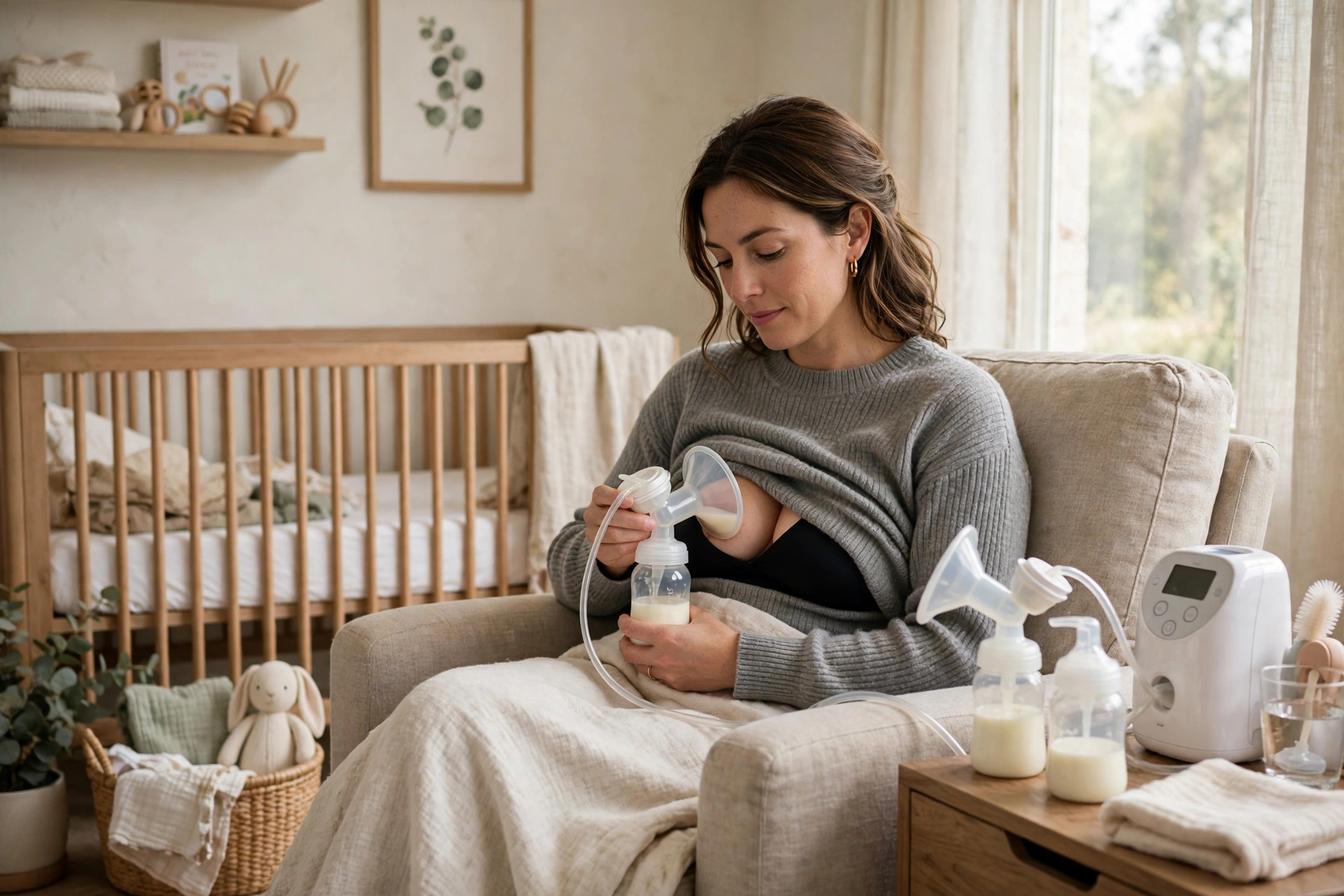
The first time I sat down to pump, I stared at the clock and wondered how long I was supposed to sit there, and how soon I would have to do it again. My first baby was two weeks old, I was figuring out feeding on very little sleep, and every source gave me a different number. By my second baby, I had learned what matters: how often you pump depends on your situation, not on a single magic number.
This guide gives you the simple version: a schedule for exclusive pumping, for pumping while you nurse, for work days, for building a freezer stash, and for weaning down, plus session length, safe storage, and a free pumping log to print. Our Breastfeeding Essentials guide covers the kit that goes with this schedule.
Heads up: this post contains affiliate links. If you buy through them, MamaKinder may earn a small commission.
How to Use This Schedule
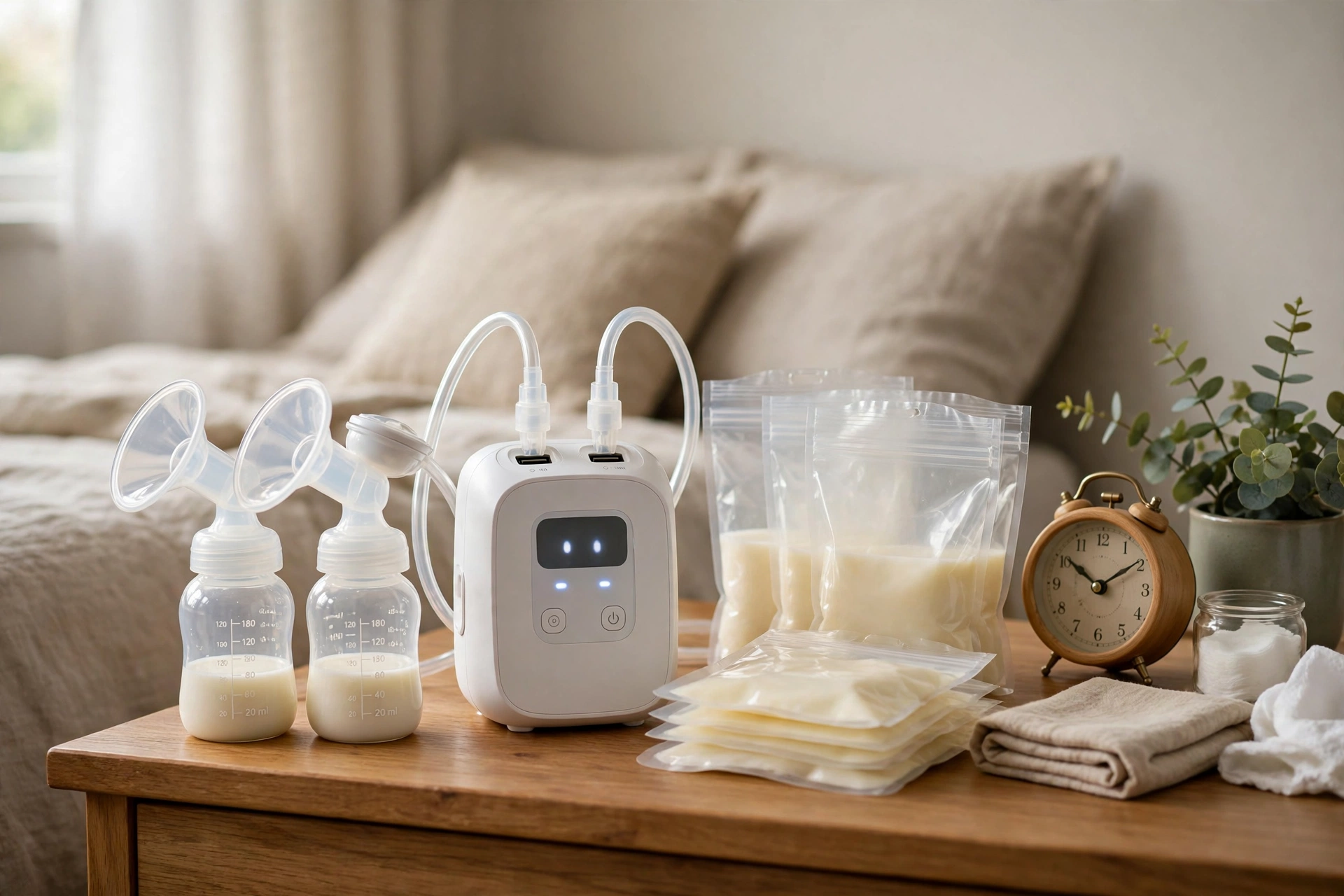
Start with the table below. Find the row that matches your situation right now: that is your starting schedule. The rest of the guide walks through each row in turn, with a sample day to copy.
One honest note first: no pump, food, or drink is proven to raise your milk supply on its own. Frequency and emptying the breast well are what signal your body to make more milk. If you worry about supply, or if pumping hurts, a lactation consultant is the right call.
Pumping Frequency at a Glance
| Situation | Sessions per 24 hours | Gap between sessions | Session length | Goal |
|---|---|---|---|---|
| Exclusively pumping, newborn (first 6 to 8 weeks) | 8 to 12 times | Every 2 to 3 hours, incl. one night session | 15 to 20 minutes | Build and protect supply |
| Exclusively pumping, supply established | 6 to 8 times | Every 3 to 4 hours | 15 to 20 minutes | Maintain supply |
| Nursing and building a stash | 1 to 2 extra sessions | Once a day, after the morning feed | 10 to 15 minutes | Small surplus for bottles |
| Back at work, away from baby | Pump for every missed feed | Every 2 to 3 hours at work, usually 3 times a day | 15 to 20 minutes | Replace missed feeds |
| Weaning down from the pump | Drop one session every 3 to 7 days | Shorten first, then drop one | 10 to 15 minutes | Step down gently |
Exclusively Pumping With a Newborn

If your baby is not nursing directly, your pump does the job your baby would do, so your schedule has to match a newborn's feeding rhythm: 8 to 12 times in 24 hours, about every 2 to 3 hours, including one session overnight. That frequency builds your supply in the first 6 to 8 weeks.
A sample day: 6 a.m., 9 a.m., noon, 3 p.m., 6 p.m., 9 p.m., midnight, and 3 a.m. Shift the times to fit your day, as long as no gap stretches past four hours. Double pump when you can: both breasts at once takes about fifteen minutes, not thirty. The Spectra S1 Plus Electric Breast Pump is the rechargeable double electric most moms in our house start with, because you can pump on the couch instead of beside an outlet. A hands-free pumping bra holds both flanges in place: the Kindred Bravely Sublime Sleep Pumping Bra works for both jobs.

Spectra S1 Plus Electric Breast Pump
Rechargeable double electric pump with up to 270 mmHg suction, adjustable suction in let-down and expression modes, a night light, and a timer. Includes 24mm and 28mm flanges, bottles, backflow protectors, and tubing.

Kindred Bravely Sublime Sleep Pumping Bra
Hands-free pumping and nursing bra with EasyClip, adjustable straps, and a hook-and-eye back closure. Wire-free, with removable padding.
Pumping While Nursing to Build a Stash

If you are nursing well and only want a small freezer stash, you do not need a full pumping schedule. Add one extra session a day, and make it the morning one: milk volume is usually highest after the first feed, so pump 30 to 60 minutes after that feed. Expect small amounts at first.
A silicone collector is the easiest way to start: it suctions onto the side you are not nursing from and catches the let-down that would otherwise soak your bra. The haakaa Silicone Breast Pump and Silicone Cap, 5 oz, Gen. 2 holds 5 oz, is food-grade silicone, and cleans by boiling for 2 to 3 minutes.
Do not pump right before a feed. One extra session a day for two weeks builds a useful backup without pushing you into oversupply.

haakaa Silicone Breast Pump and Silicone Cap, 5 oz, Gen. 2
Silicone manual pump with a suction base and a silicone cap. Made from food-grade silicone, 5 oz capacity, and cleans by boiling for 2 to 3 minutes.
Pumping When You Go Back to Work
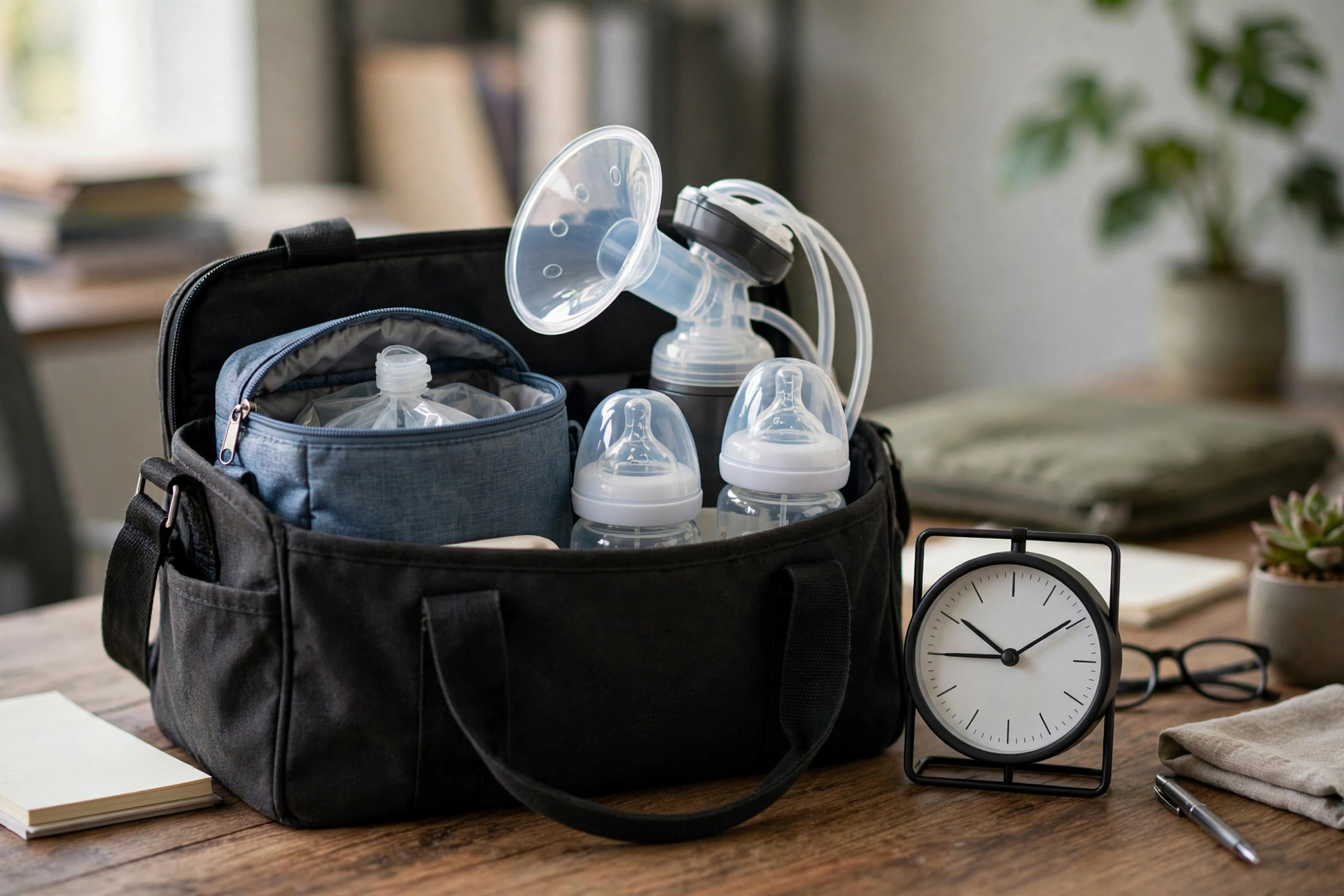
When you go back to work, pump about as often as your baby would have nursed while you were apart: every 2 to 3 hours, usually three sessions in an eight-hour shift, for example mid-morning, lunch, and mid-afternoon. Nurse or pump before you leave, and nurse as soon as you get home.
A double electric pump is the workhorse here, and a wearable pump is what makes the schedule possible on a busy day: it fits inside your bra and runs quietly. The Medela Pump In Style with MaxFlow offers two-phase expression with ten vacuum levels and PersonalFit Flex shields in two sizes. The Momcozy S12 Pro Hands-Free Breast Pump, 2-Pack is the wearable in our rotation: three modes and nine levels.
Carry the milk home cold. The Medela Breast Milk Cooler Set carries four 5 oz bottles in an insulated bag with a contoured ice pack. Tuck nursing pads in the same bag: the Lansinoh Stay Dry Disposable Nursing Pads, 100 Count have an InvisiLock core that absorbs 20 times their weight. In the US, the PUMP Act requires your employer to give you break time and a private space that is not a bathroom.

Medela Pump In Style with MaxFlow
Hospital-strength double electric pump with MaxFlow technology and 2-Phase Expression, 10 vacuum levels, and PersonalFit Flex shields in 21mm and 24mm. Includes 4 bottles, a cooler bag, a battery pack, and a microfiber bag.

Momcozy S12 Pro Hands-Free Breast Pump, 2-Pack
Wearable pump with a soft double-sealed flange, 3 modes and 9 levels, a smart display, and a 6 oz capacity. Up to 7 to 8 sessions per charge; BPA-free, food-grade silicone.

Medela Breast Milk Cooler Set
Cooler bag with a contoured ice pack and four 5 oz BPA-free bottles for carrying expressed milk. Made without BPA; keeps milk cold on the go.

Lansinoh Stay Dry Disposable Nursing Pads, 100 Count
100 disposable nursing pads with an InvisiLock core that absorbs 20 times their weight. Individually wrapped, with two adhesive strips.
Pumping to Increase Your Supply: Power Pumping

If your supply has dipped, frequency beats length. Add sessions before you lengthen them: one extra pump a day, or a power pumping session once a day for three to seven days. Power pumping copies cluster feeding: pump for 20 minutes, rest for 10, pump for 10, rest for 10, then pump for 10 more. That is one hour, once a day.
A few honest limits: no food, tea, or supplement is proven to raise supply, and power pumping is not a shortcut. It works by asking your body for more milk, more often, and it takes a few days to show. Check the easy things first: flange fit, worn pump parts, and suction set too high.
Pumping Less: Weaning Down From the Pump

When you are ready to pump less, go slowly: dropping sessions too fast is how clogs and engorgement happen. Shorten one session by a few minutes every few days, then drop it, and wait three to seven days before you drop the next one. Most moms finish in two to four weeks.
If a breast feels full between sessions, hand express or use a manual pump just enough to feel comfortable, and no more: emptying it fully tells your body to keep making the same amount. The Lansinoh Manual Breast Pump with 5 oz Bottle is a solid manual pick, with a ComfortFit flange and a 5 oz bottle. It is light and quiet, with few parts to clean. If a painful red area comes with a fever, call your doctor the same day.

Lansinoh Manual Breast Pump with 5 oz Bottle
Hand pump with a ComfortFit flange, two flange sizes (25mm and 30.5mm), and a 5 oz bottle with a slow-flow nipple. Lightweight, with few parts to clean.
How Long Should Each Pumping Session Last?
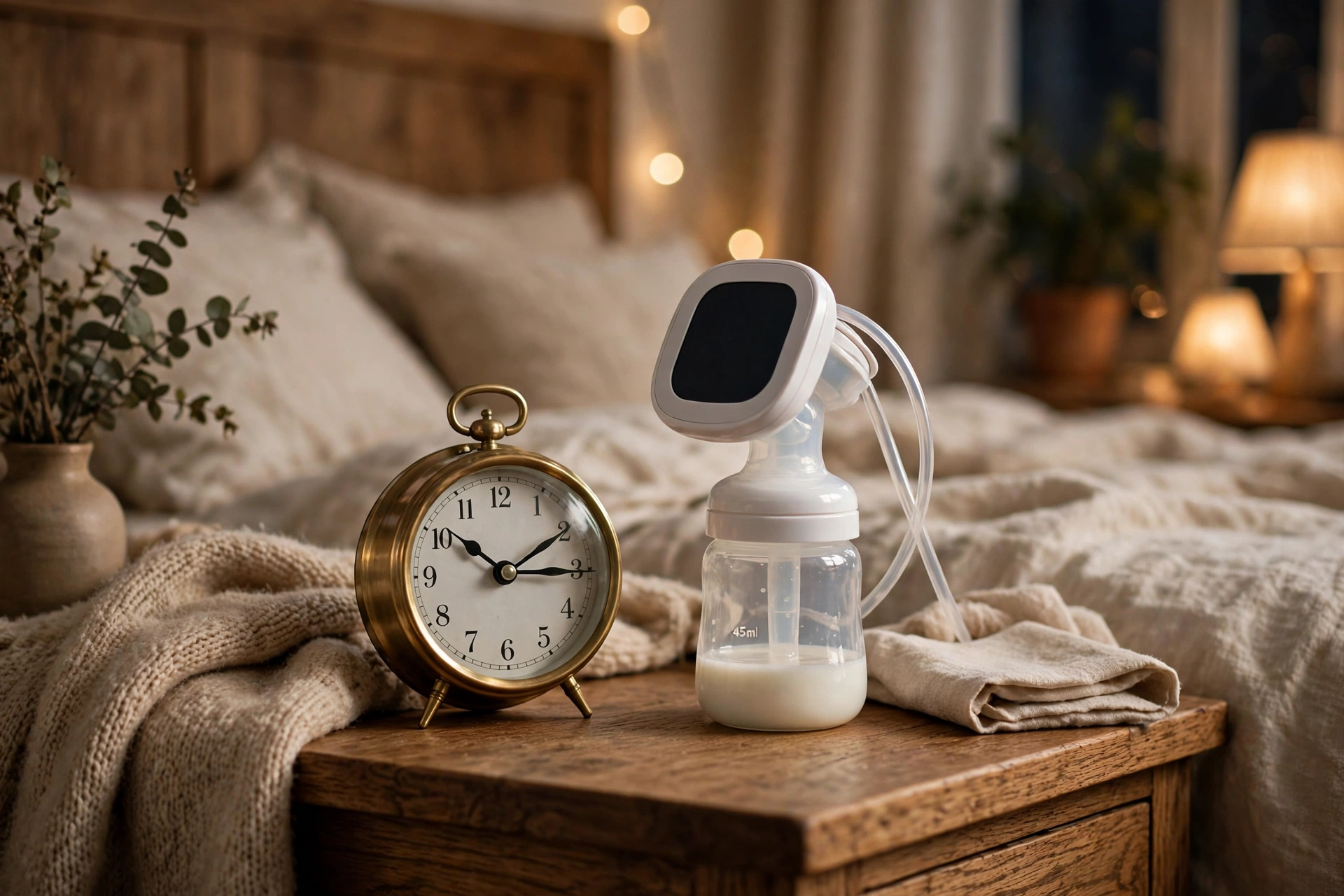
Most sessions last 15 to 20 minutes, or about two minutes after the last drops of milk stop flowing. That is the whole rule. Double pumping usually finishes in that same 15 to 20 minutes, while one side at a time takes closer to 30. Sessions get shorter as your body settles.
Longer is not better: pumping past the point where milk has stopped does not make more milk, and it can make your nipples sore. If you are still getting milk after 25 minutes, check your flange fit and suction level before you add time. If pumping hurts, turn the suction down first.
Flange Fit: The Part Most Moms Get Wrong

A flange that does not fit is the most common reason pumping hurts or yields less than it should. The right size lets your nipple move freely in the tunnel without rubbing the sides. If your nipple rubs, if the areola is pulled deep into the tunnel, or if you finish with a white ring around the nipple, the flange is the wrong size. Most pumps ship with 24mm and 28mm flanges, and many moms need a smaller size than the one in the box.
Sore nipples need care while you sort the fit. After every session, let a few drops of your own milk dry on them, then dab on a pea-sized amount of lanolin. The Lansinoh Lanolin Nipple Cream, 1.41 oz, Pack of 2 is 100 percent natural, ultra-purified lanolin with no petroleum, parabens, or fragrance, and need not be removed before breastfeeding. If soreness turns into cracks or bleeding, get help early.

Lansinoh Lanolin Nipple Cream, 1.41 oz, Pack of 2
100 percent natural, ultra-purified lanolin. No need to remove before breastfeeding; no petroleum, parabens, or fragrance.
Storing Your Milk Safely
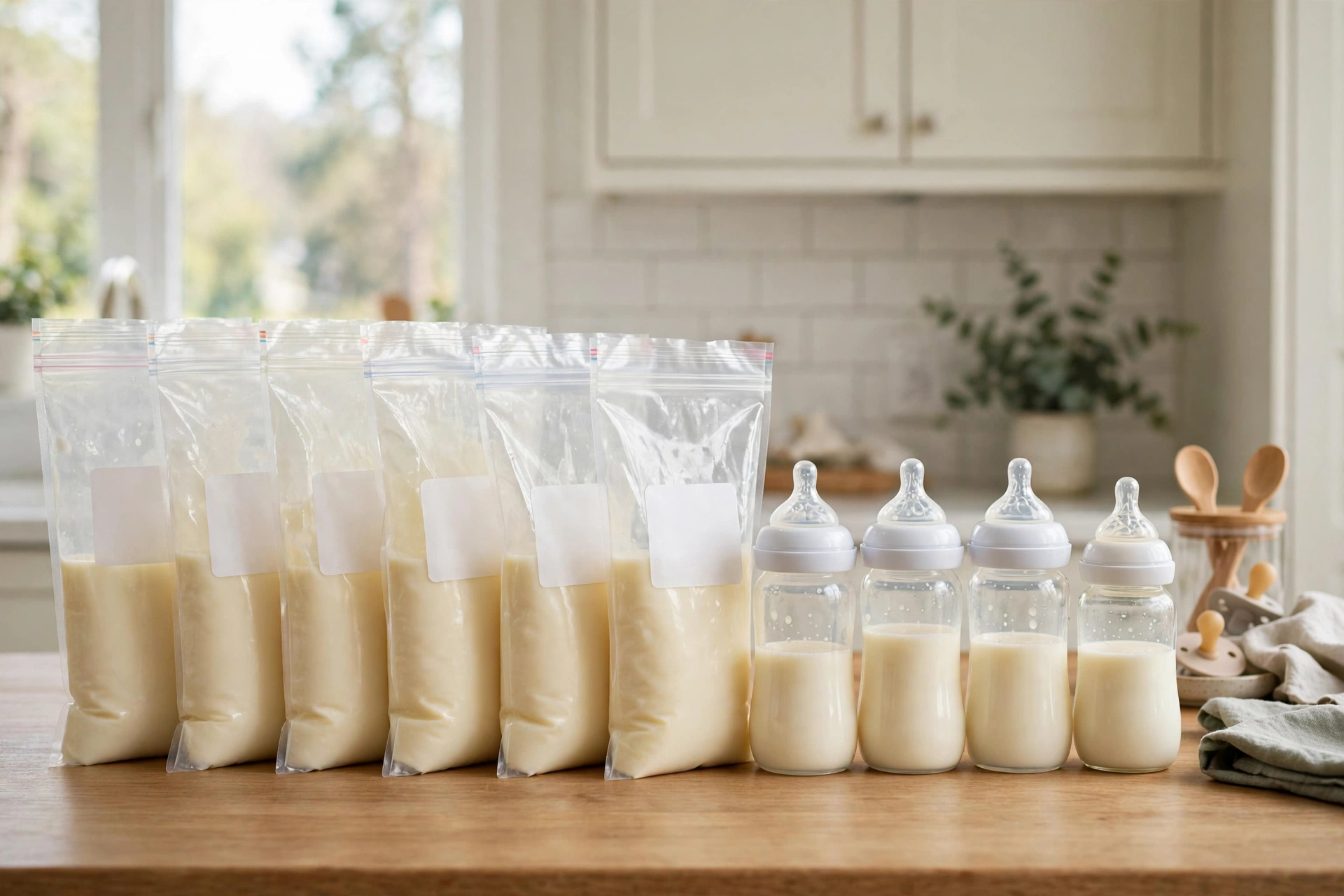
Follow the CDC times: fresh milk keeps up to 4 hours at room temperature, up to 4 days in the fridge, and up to 6 months in the freezer, with 12 months as the outer limit. Label every container with the date and the amount, use the oldest milk first, and never refreeze thawed milk.
Bags are for the freezer, bottles are for the fridge and feeding. The Lansinoh Breastmilk Storage Bags, 100 Count are pre-sterilized, hold 6 oz each, and freeze flat. The Dr. Brown's Natural Flow Anti-Colic Options+ Wide-Neck Baby Bottles 5 oz/150 mL, with Level 1 Slow Flow Nipple, 4 Pack, 0m+ come with a Level 1 slow flow nipple and an anti-colic vent. Thaw frozen milk in the fridge overnight, or hold the sealed bag under warm running water. Never microwave breast milk: it heats unevenly and can scald your baby.

Lansinoh Breastmilk Storage Bags, 100 Count
100 pre-sterilized breastmilk storage bags, 6 oz each, with a double zipper seal. Freeze flat and thaw fast; BPA and BPS free.

Dr. Brown's Natural Flow Anti-Colic Options+ Wide-Neck Baby Bottles 5 oz/150 mL, with Level 1 Slow Flow Nipple, 4 Pack, 0m+
Wide-neck anti-colic bottles with a Level 1 slow flow nipple, 4 pack of 5 oz bottles. The internal vent system is designed to reduce colic, spit-up, burping, and gas; BPA-free and dishwasher safe.
Cleaning Your Pump Parts the CDC Way

Wash your hands before every session, then wash every part that touches milk after every use: hot water, dish soap, a clean brush used only for pump parts, and air dry on a clean towel. Do not towel dry. Keep a second set of parts so one set can dry while the other is in use.
Once a day, sanitize the parts as well. The CDC asks for daily sanitizing in the first three months, for premature babies, and for babies with weakened immune systems. The Medela Quick Clean Micro-Steam Bags, 12 Count disinfect bottles and pump parts in about 3 minutes using only water and a microwave, and each bag is reusable up to 20 times.

Medela Quick Clean Micro-Steam Bags, 12 Count
Microwave steam bags that disinfect bottles and breast pump parts in about 3 minutes using only water and a microwave. Each bag is reusable up to 20 times and eliminates 99.9 percent of most common bacteria and germs; made without BPA.
Troubleshooting: When Pumping Is Not Working

Output dropped suddenly? Check the basics before you change the schedule: flange fit, a worn valve or membrane, suction set too low, and whether you are drinking and resting enough. Valves wear out every few weeks to a few months with daily use, and a tired valve is the most common cause of a slow drop in output. Replace them first.
One side making less is normal: most moms have a stronger side, and the difference is usually a few ounces a day. A missed session happens too: just pump when you remember, and add one extra session later in the day if you can. Do not try to make it up by pumping twice as long. If output stays low after a week, or pumping stays painful, talk to a lactation consultant.
Your Free Pumping Log Printable

A schedule only works if you can see it, so this guide comes with a free pumping log to print and keep by your pump. One page covers a full week: each day has room for the session times, the ounces from each side, and a notes column. The second page is a single-day detail log for the first week. Print one copy per day while you establish supply, then switch to the weekly page.
The log is free, and it stays free: no email signup, no account, just the PDF. Print it, fill it in by hand, and take it to your lactation visit. The schedule card version for your fridge is part of the bigger Pumping Planner Pack we are building next, with 30 days of logs, schedule cards, and milk-storage labels.
Download the Pumping Log (PDF)
When to Call a Lactation Consultant or Your Doctor

Get help the same day if pumping stays painful past the first week, if your nipples crack or bleed, if you see a painful red area with a fever, or if your baby has fewer than 6 wet diapers in 24 hours after day four or is not gaining weight. These are signs a professional should look at.
You can also call just because you are worried. A lactation consultant would rather see you early, when a small flange fix solves the problem, than late, when pain has made pumping something you dread. Keep your pediatrician's number on the fridge, and your pump manual nearby.
Shop This Post
Frequently Asked Questions
How many times a day should I pump if I am exclusively pumping?
Pump 8 to 12 times in 24 hours in the first 6 to 8 weeks, about every 2 to 3 hours, including one session overnight. Once your supply is established, most exclusive pumpers can drop to 6 to 8 sessions a day, then fewer as your baby gets older.
How long should each pumping session last?
Most sessions last 15 to 20 minutes, or two minutes after the last drops stop flowing. Double pumping usually finishes in that same 15 to 20 minutes. Pumping longer does not make more milk, and it can make your nipples sore.
What is the 5-5-5 rule for breast milk?
The 5-5-5 rule is a popular shorthand: 5 hours at room temperature, 5 days in the fridge, 5 months in the freezer. The CDC guidance is stricter: up to 4 hours at room temperature, up to 4 days in the fridge, and up to 6 months in the freezer.
Can I skip the night pump?
In the first 12 weeks, skipping the night session can signal your body to make less milk, because prolactin peaks overnight. Once your supply is well established, many moms can drop the night pump by adding a little time to daytime sessions, but do it gradually.
My output dropped suddenly. Should I pump more or less often?
Almost always, more frequent, shorter sessions work better than longer ones. First check the basics: flange fit, worn valves or membranes, and suction level. Then add a session or two, or try power pumping once a day for a few days. If output stays low, talk to a lactation consultant.
A Small Ritual
My rule is simple: pick the row that matches your life right now, set the times on your phone, and let the schedule carry the thinking for a week. A pump that fits, clean parts, and labelled milk cover most of pumping.
If you are still deciding which pump to buy, our How to Choose a Breast Pump guide walks through the choice, and Best Breast Pump compares the double electrics side by side. When the stash is bigger than your baby can drink, our Breast Milk Bath Benefits guide puts the extra milk to good use, and Postpartum Essentials covers the rest of your recovery kit.
More Breastfeeding Guides
More Breastfeeding Guides