
51 Mom Life Tips for Calmer Mornings and Lighter Days
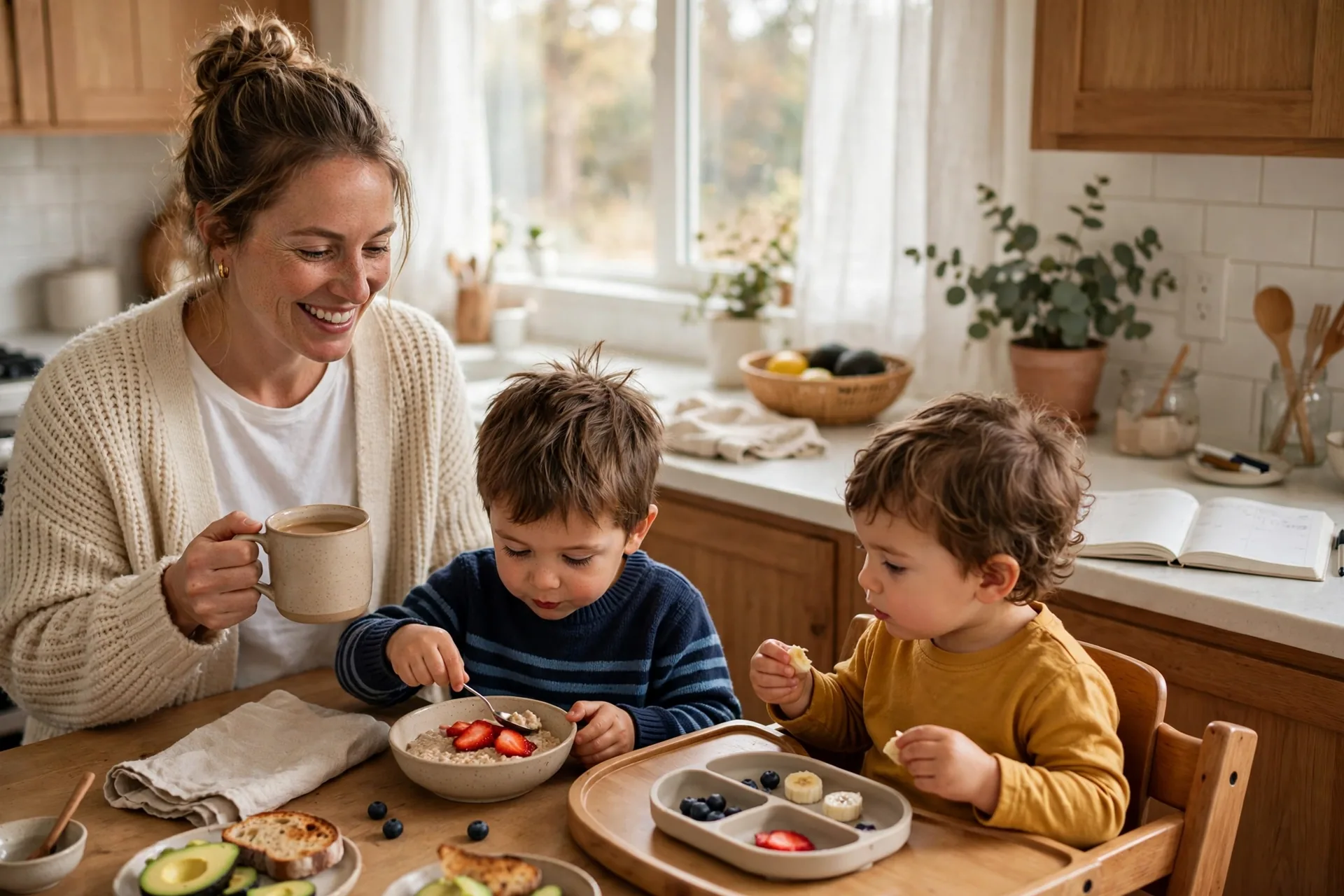
Nobody hands you a system when you become a mom. You just wake up one day as the only person who knows where the spare batteries are, when the permission slip is due, and which cup is the right cup. The mental load isn’t a buzzword — it’s your actual Tuesday.
These 51 mom life tips are the systems that run our house with a 4-year-old and a 2-year-old: calmer mornings, dinners that don’t start with panic, a home that mostly resets itself, and small ways to protect your own energy — because a household runs on its mom, and she is not a renewable resource unless somebody lets her rest. Most cost nothing, and most take under fifteen minutes to set up — the rest take one weekend morning, once. You don’t need all 51. Start with two.
Heads up: this post contains affiliate links. If you buy through them, MamaKinder may earn a small commission at no extra cost to you — it helps keep these guides free.
The 51 tips are organized by the part of the day they rescue: mornings, dinner, the house itself, your energy, and the evenings and weekends that hold a family together. Read it straight through once, then go back and steal the two that match your current chaos. Every tip here has survived contact with a real preschooler, a real toddler, and a real mom who is not a morning person and never will be.
Quick Picks: Where to Start
| When this is your problem… | Start with |
|---|---|
| Mornings feel like a fire drill | Tip 2 — the launch pad |
| 5 PM finds you staring into the fridge | Tip 8 — the emergency dinner list |
| Your brain won’t stop buzzing at night | Tip 16 — one list, one place |
| The house resets slower than it explodes | Tip 11 — the 10-minute family tidy |
| You cannot remember the last thing you did for you | Tip 17 — ten minutes that are yours |
| The week has no off-switch | Tip 21 — the Friday finish line |
| Leaving the house takes twenty minutes | Tip 30 — the mom bag, Tip 42 — the library bag |
Mornings That Don’t Start in Chaos
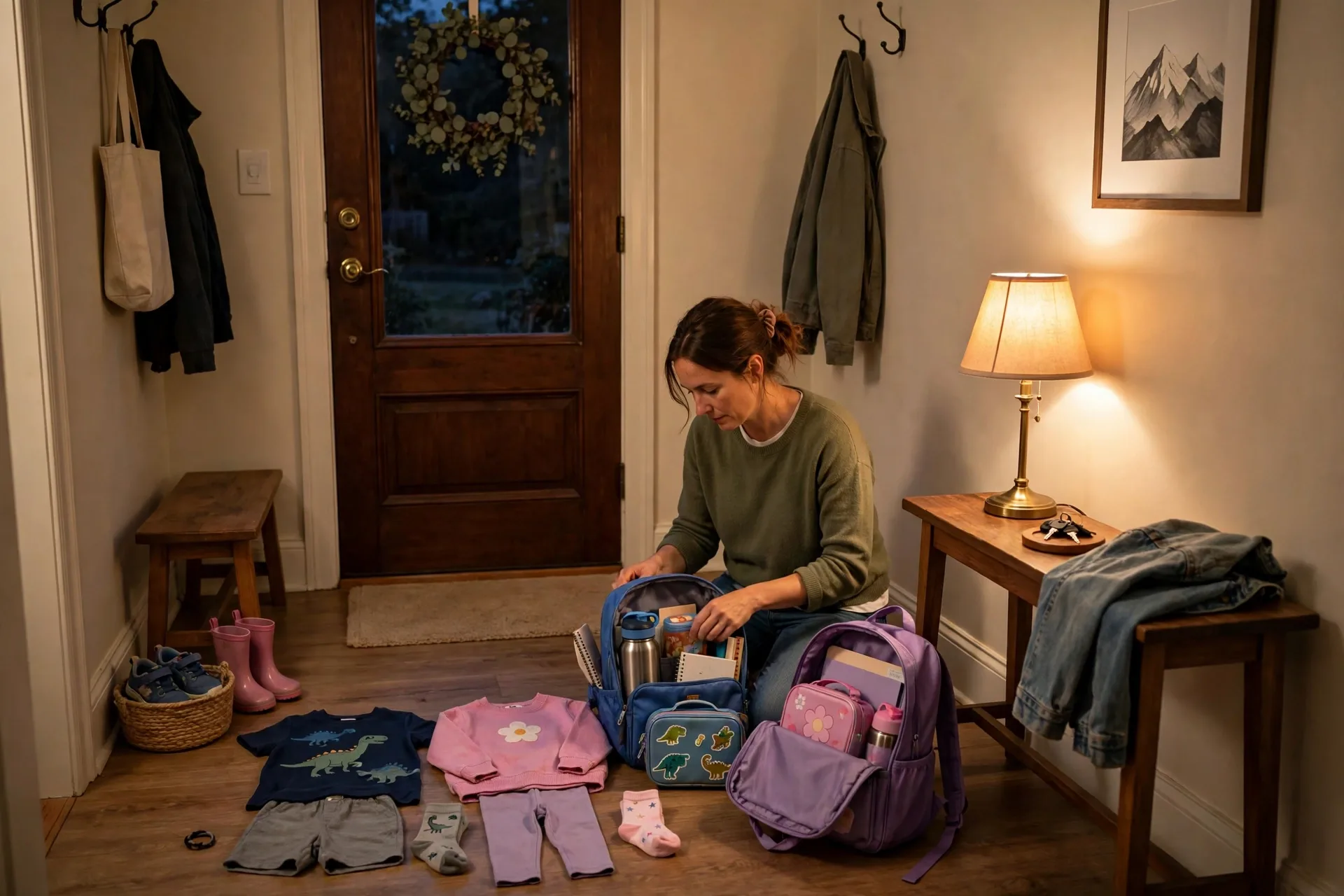
1. Tomorrow starts tonight. Ten minutes before bed: outfits out (yours too), bags packed, shoes by the door, one look at tomorrow’s calendar. Morning-you is half asleep and outnumbered — don’t make her make decisions. Night-you is tired, but she’s upright and the house is quiet. Let her do the thinking.
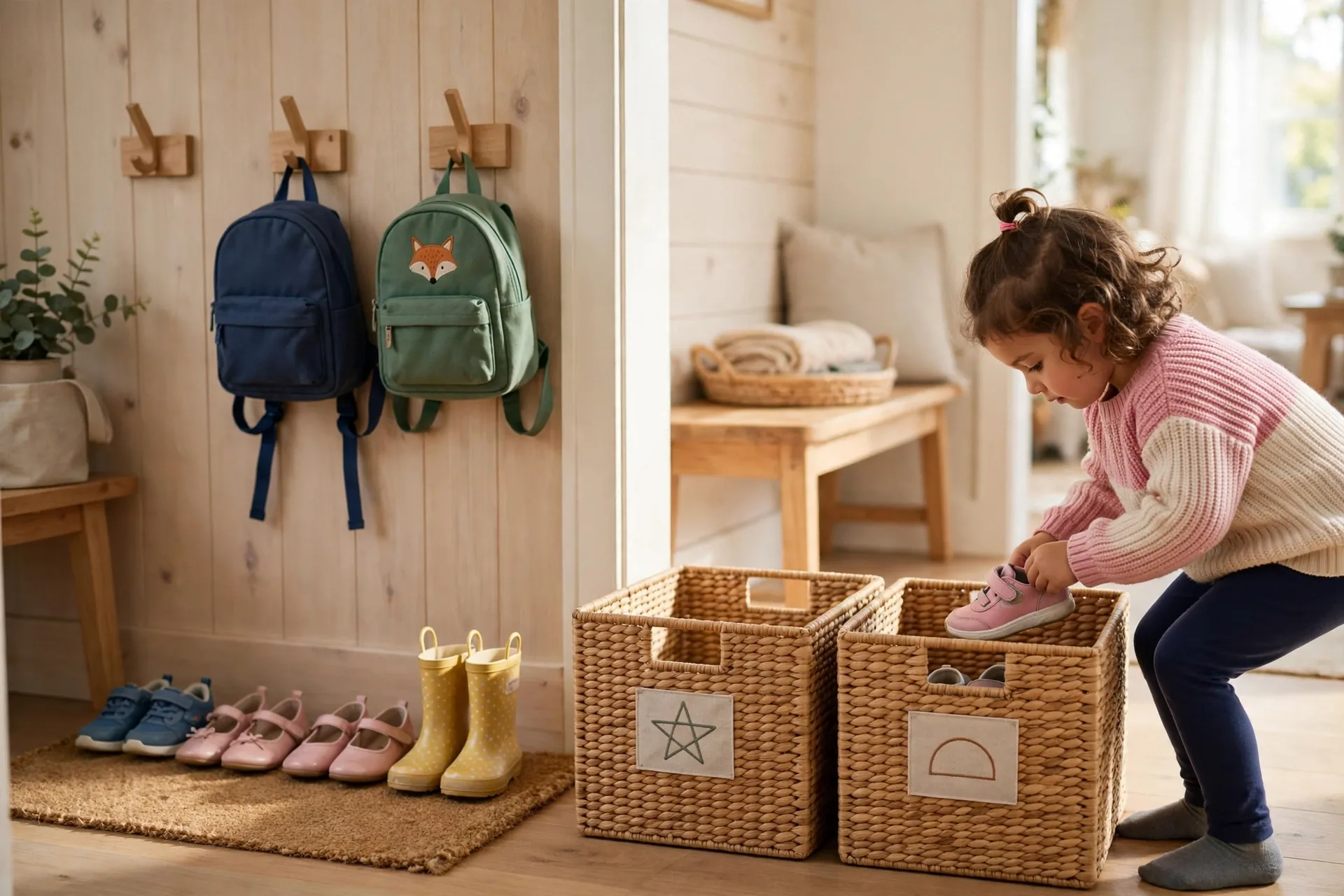
2. Build a launch pad. One spot by the door where leaving-the-house things live permanently: a bin for shoes, hooks for coats and backpacks, a tray for keys and permission slips. Nothing migrates. When everything has exactly one home, “where is my shoe?!” stops being your family’s morning anthem. Ours took one Saturday morning and a bin we already owned to set up, and it has paid for itself every single weekday since — including the days it catches the library book, the water bottle, and my own sunglasses.
3. Borrow twenty quiet minutes. When your season allows it, get up a little before the kids: coffee while it’s hot, your top three for the day, one quiet breath before the noise. And hear this clearly — some seasons (a baby who’s up all night, a sick toddler) make this impossible. Skip it without a shred of guilt. A tip that punishes you isn’t a tip.

4. Put breakfast on rails. Three breakfasts on rotation — oatmeal with toppings, eggs and toast, yogurt with fruit and granola — and that’s the menu until someone files a formal complaint. One decision, made once, covers five weekday mornings. Save the pancake artistry for Saturday.

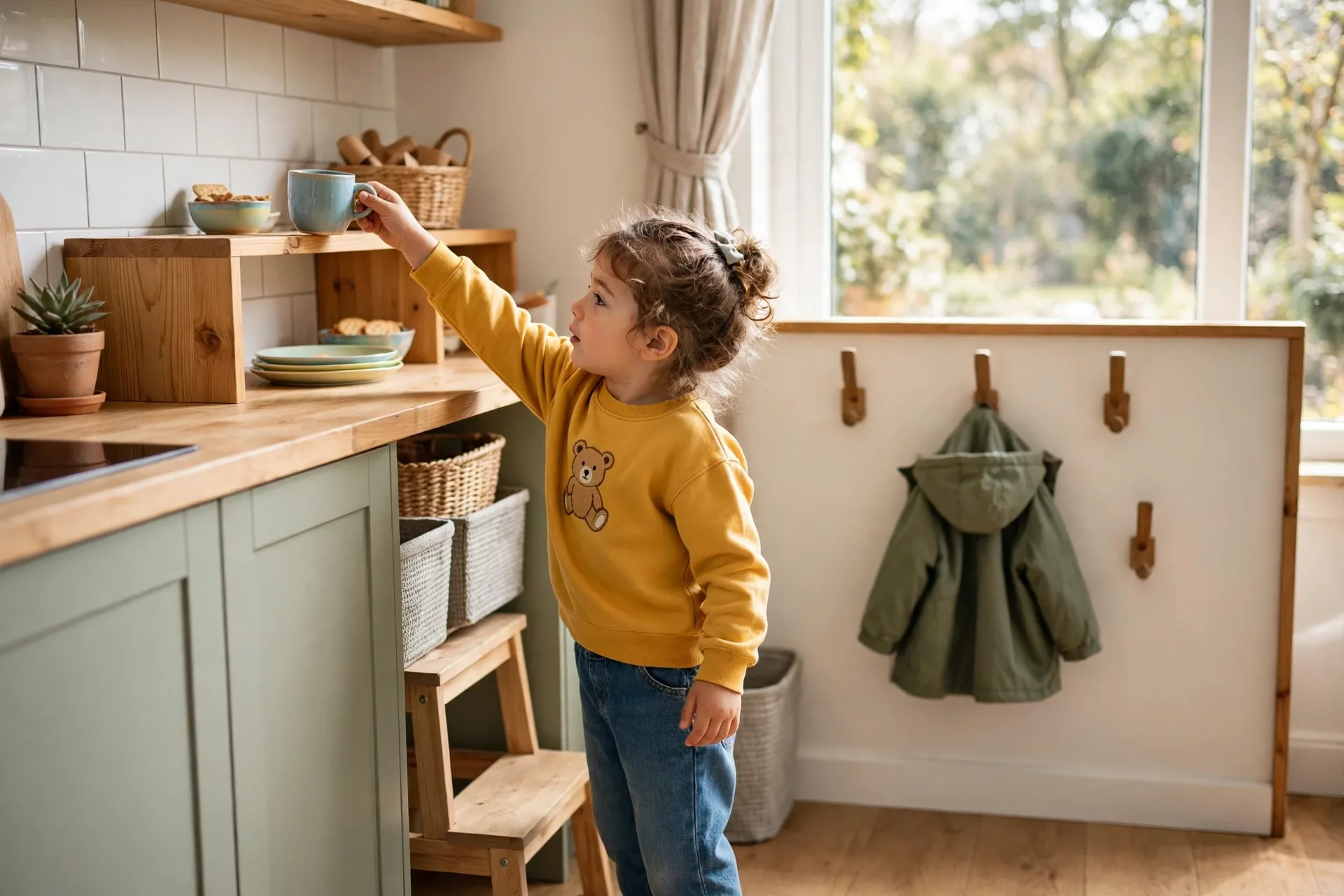
5. Put things at kid height. Hooks they can reach, cups on the low shelf, shoes in the launch pad bin. Every thing a 4-year-old can do alone — hang her coat, get her cup, find her shoes — is a thing off your list forever. Independence isn’t just good for them. It’s a time-saving strategy for you.
Dinner Without the 5 PM Panic
6. Plan four dinners, not seven. Four planned dinners, one leftover night, one freezer or takeout night, one wild card. Planning seven is how meal plans die by Wednesday. Give each night a loose theme — pasta, tacos, sheet pan, soup — and the plan practically writes itself while you shop.
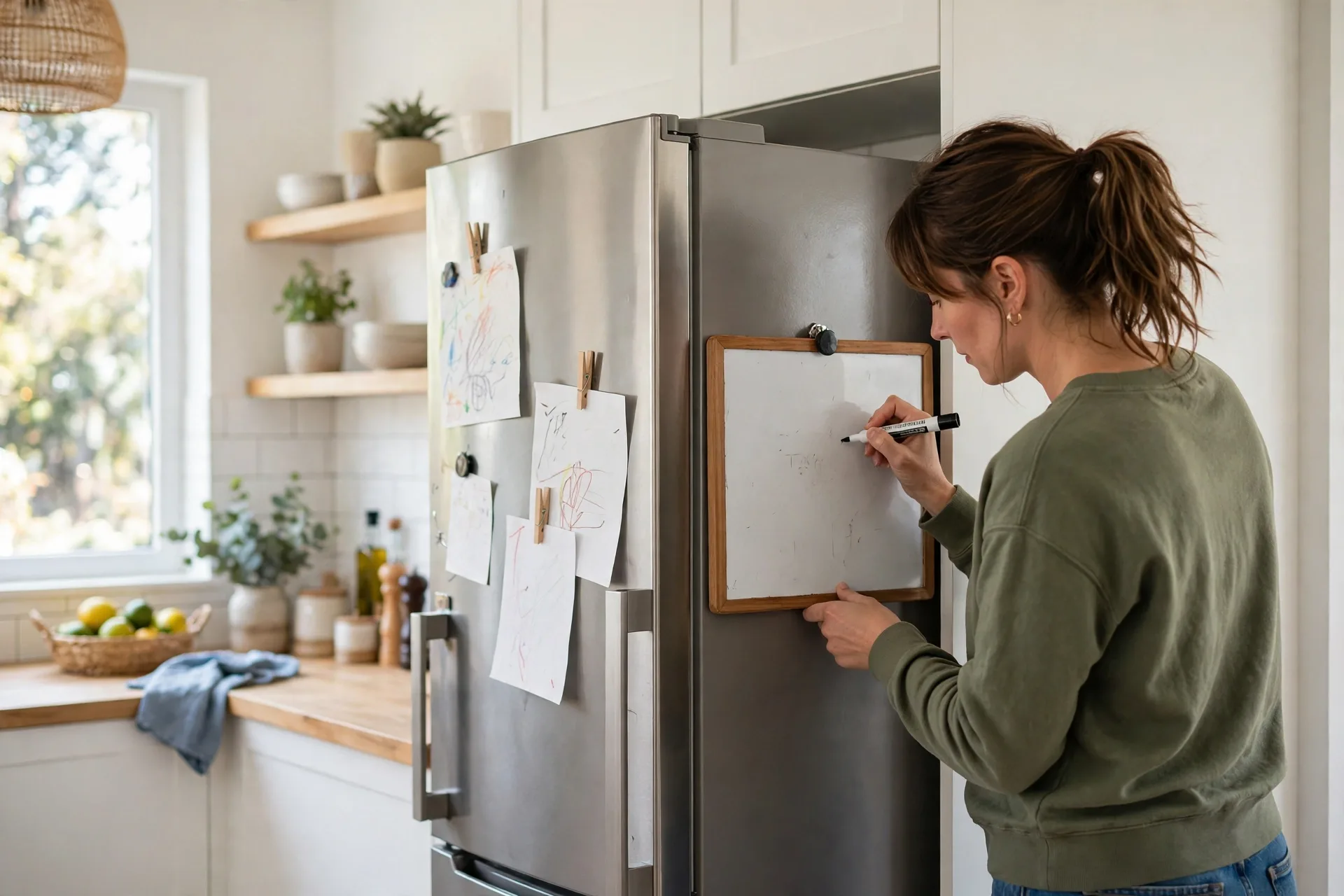
7. Cook once, eat twice. Whenever you cook something freezable, double it and freeze half flat in a labeled bag (name + date, future-you cannot identify mystery chili). Flat bags stack like books, thaw fast in a sink of water, and take almost no freezer room. Within a month you have a freezer bank of real dinners for the days that go sideways. Those days are coming. Feed them from the bank, and let the bank — not willpower — be your dinner plan B.
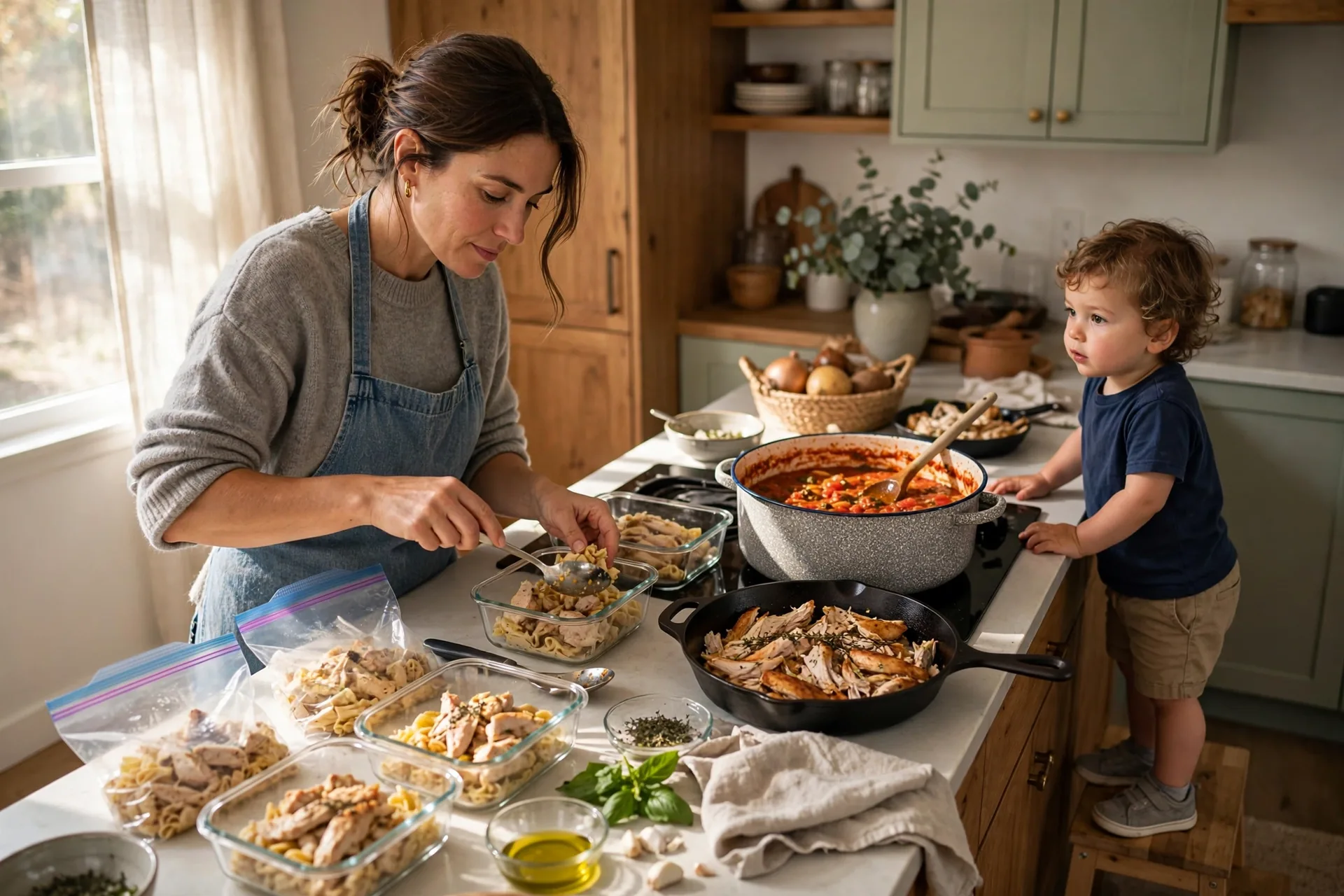
8. Keep an emergency dinner list. Five no-think dinners, written on paper, stuck on the fridge: pasta and jar sauce, quesadillas, breakfast-for-dinner, soup and grilled cheese, and one freezer-bank meal. A hard day with a plan taped to the fridge is just a day. A hard day with no plan is a drive-thru argument.
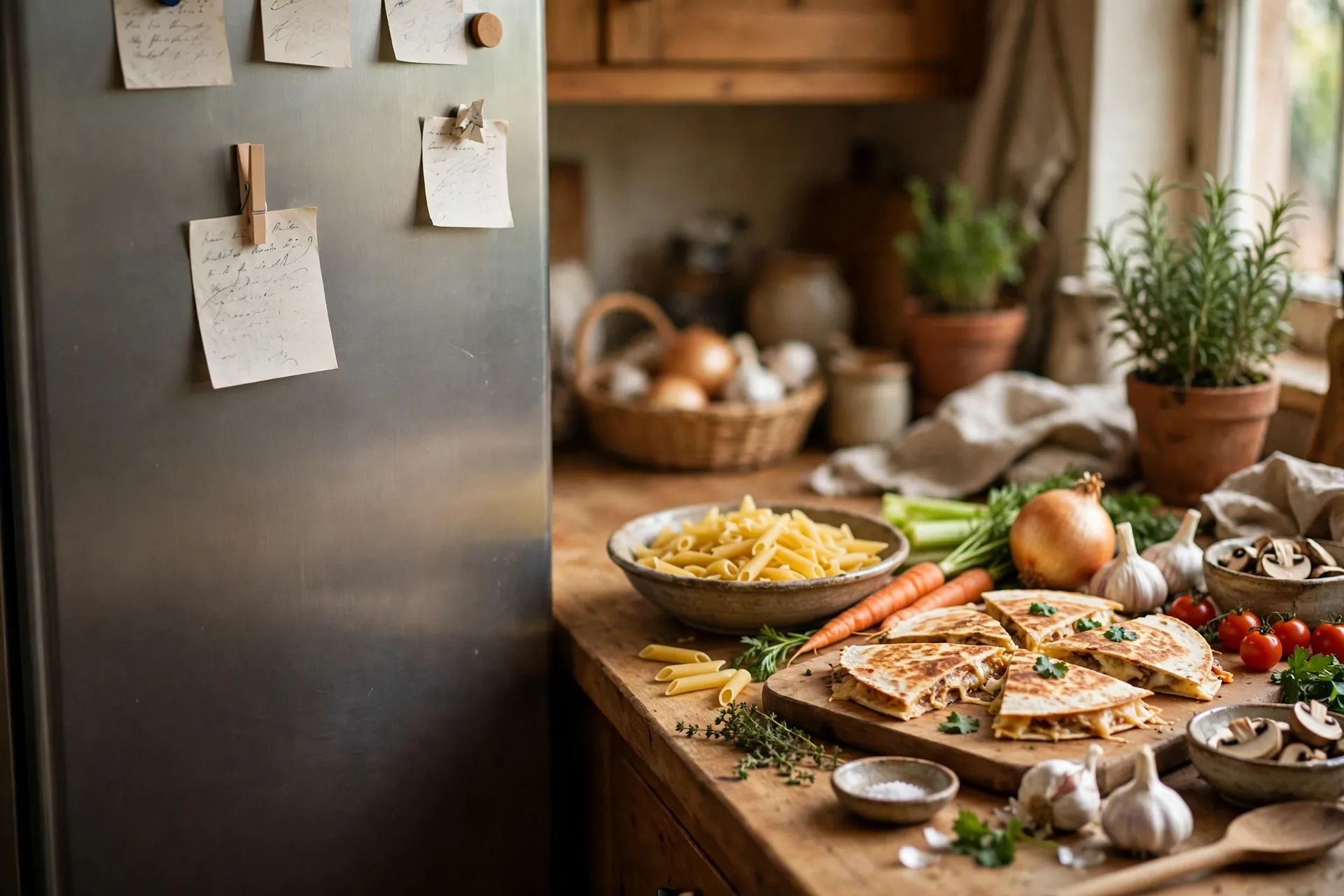
9. Make snacks self-serve, and let the store come to you. One low drawer or fridge shelf is the yes-zone: washed fruit, cheese, crackers — anything in it can be eaten without asking you. And move the weekly shop to pickup or delivery where you can; the apps that run our grocery list and family calendar are in our Best Apps for Moms roundup. An hour of aisle-wandering is worth more than the delivery fee.
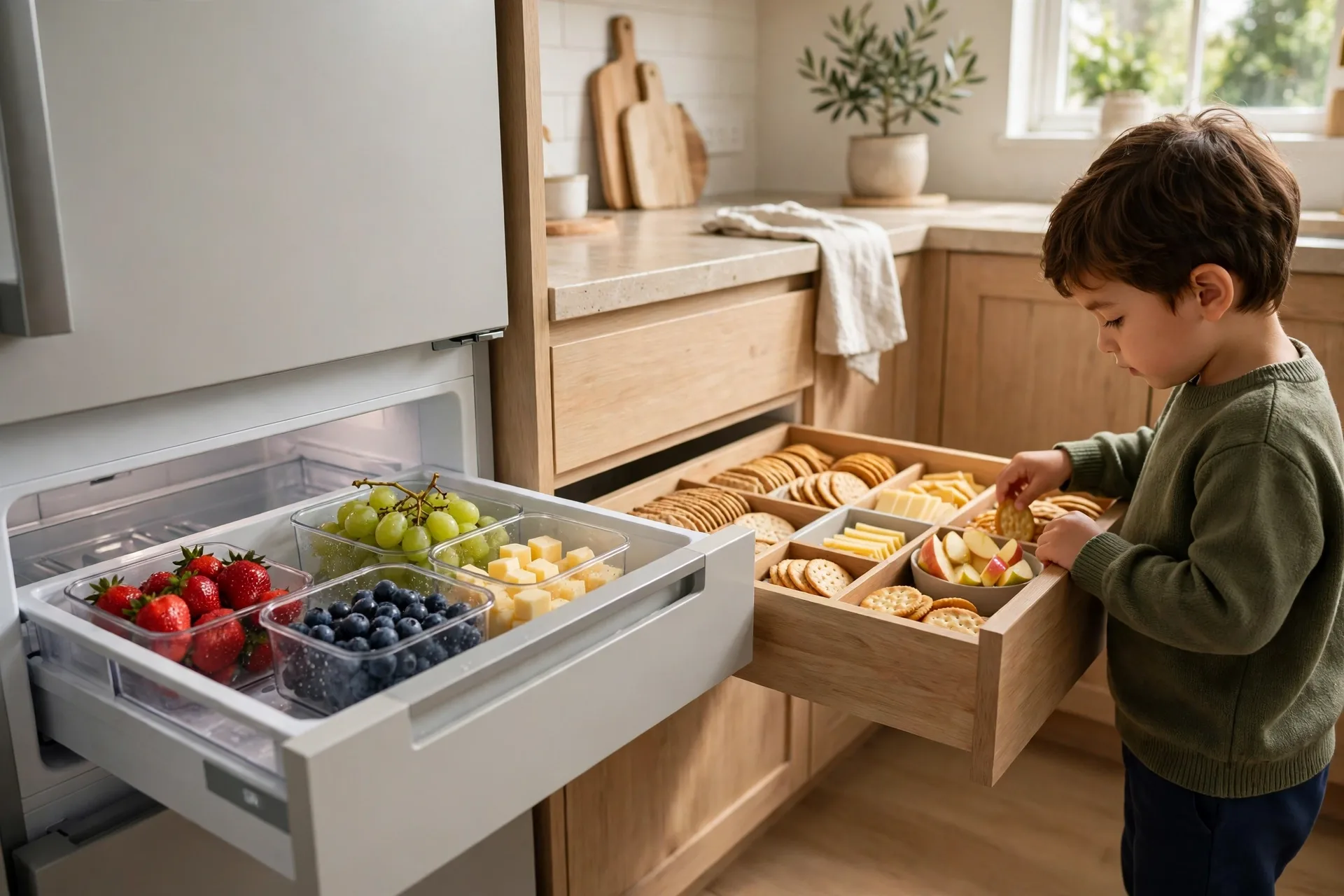
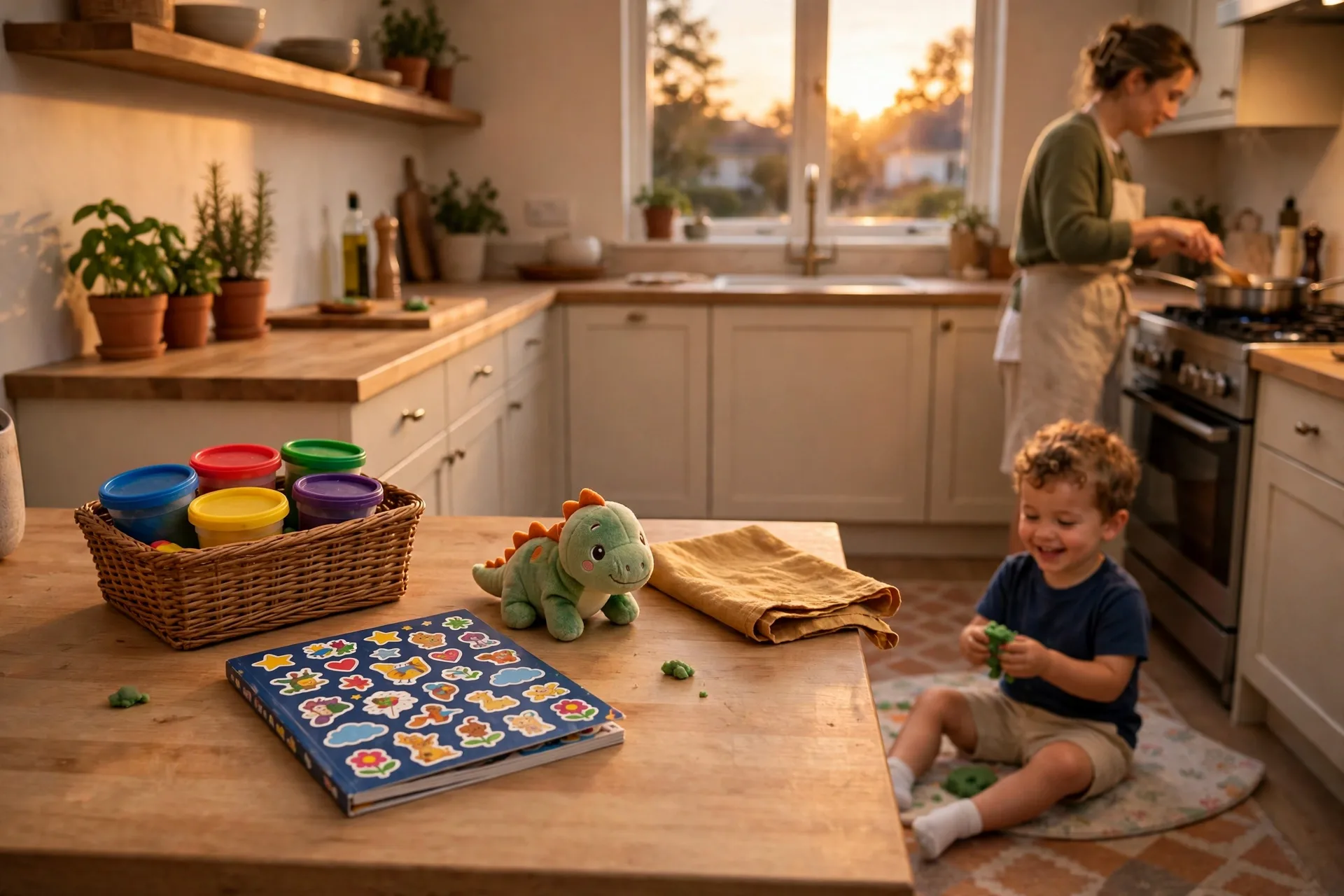
10. Keep an independent-play bin for cooking time. A small bin of things that only come out while dinner cooks — playdough, a sticker book, one “special” toy. Scarcity makes it exciting, and twenty focused minutes of play is the difference between cooking in peace and cooking with a toddler wrapped around your ankle.
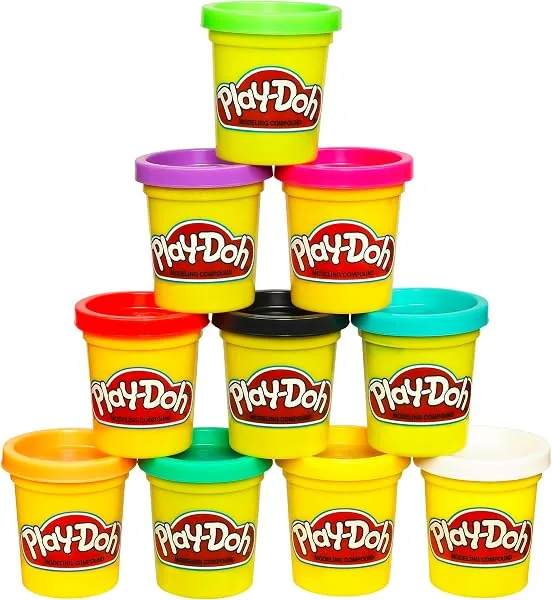
Play-Doh — 10-Pack of 2oz Colors
The heart of our cooking-time bin — ten little tubs, so color-choosing is half the fun and every kid gets their own. It only comes out while dinner cooks, which is exactly what keeps it exciting.
A House That (Mostly) Runs Itself
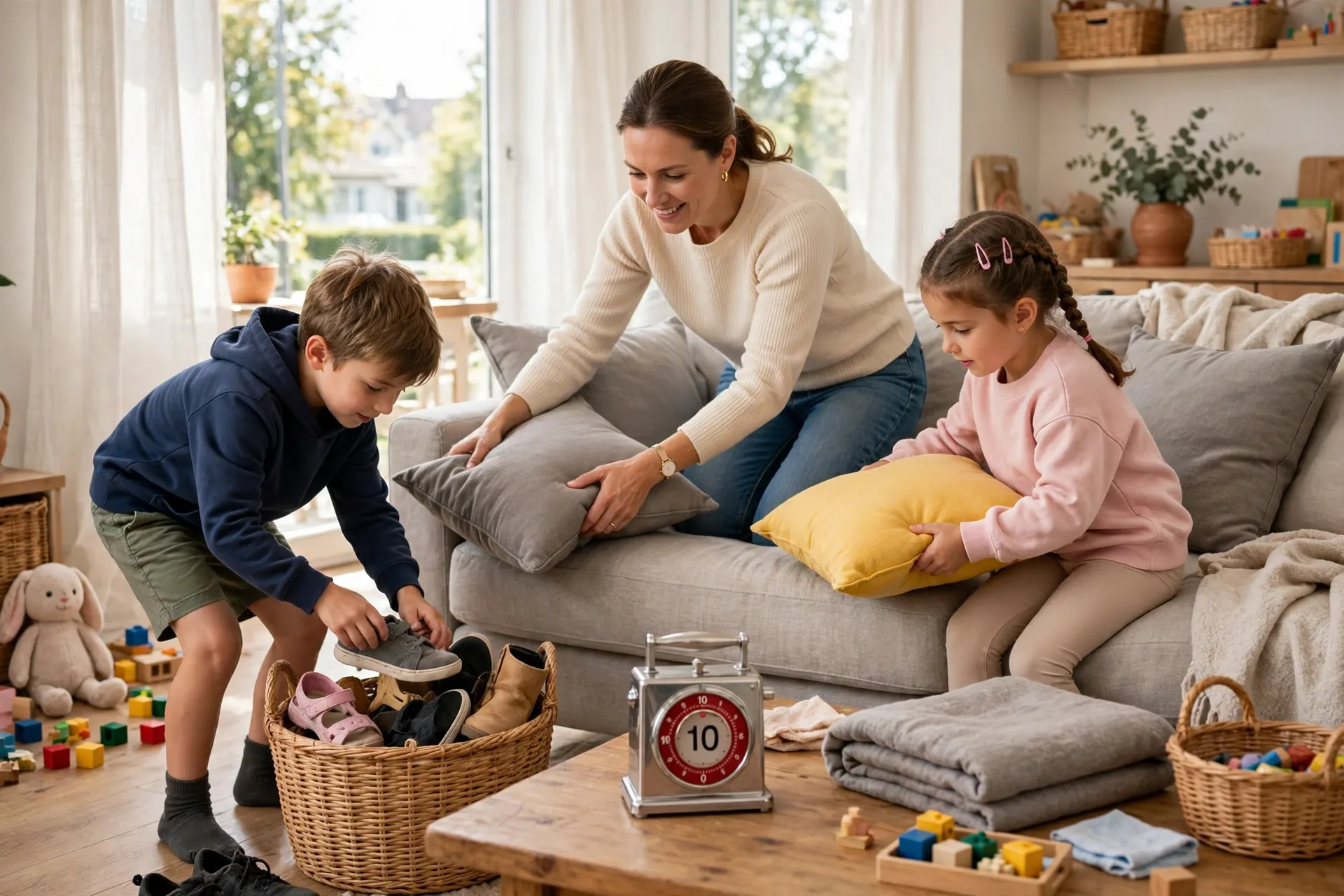
11. Run the 10-minute family tidy. Timer on, music up, everyone rescues one room — kids included, with jobs sized to them (all the cushions, all the shoes, anything with wheels). Ten minutes of four people tidying beats an hour of you tidying alone and resenting the furniture. The trick that makes it stick: when the timer beeps, you stop — mid-mess if that’s where you are. A tidy that always ends on time is a tidy nobody dreads, and a house rescued to “good enough” every night never reaches disaster. Done beats perfect, every single evening.
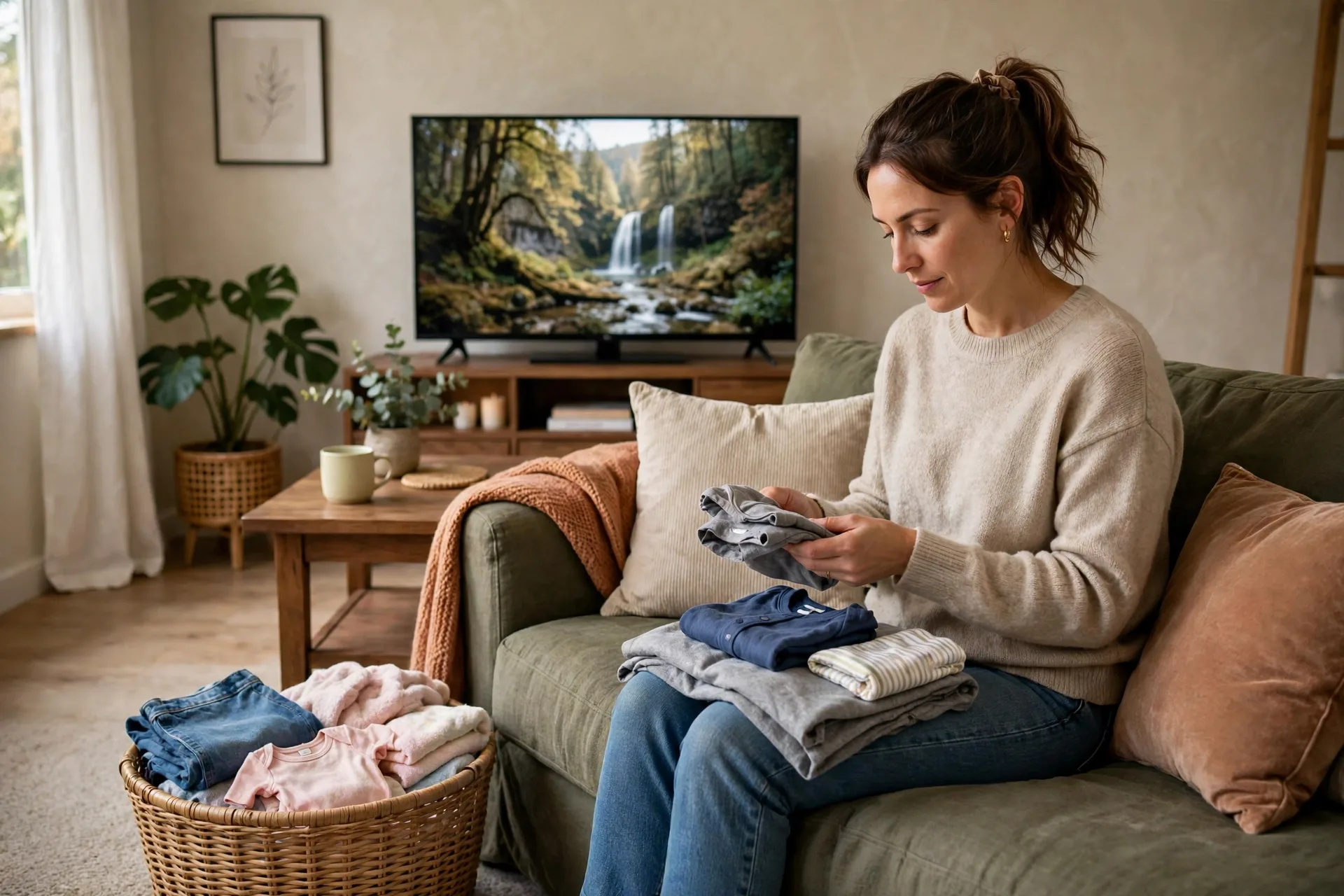
12. Do laundry by the load, not the mountain. One small load a day — in the morning, folded during one show or podcast — instead of a weekend mountain range. Small kids produce laundry like it’s their job; a daily rhythm keeps it boring. Boring is the goal with laundry.
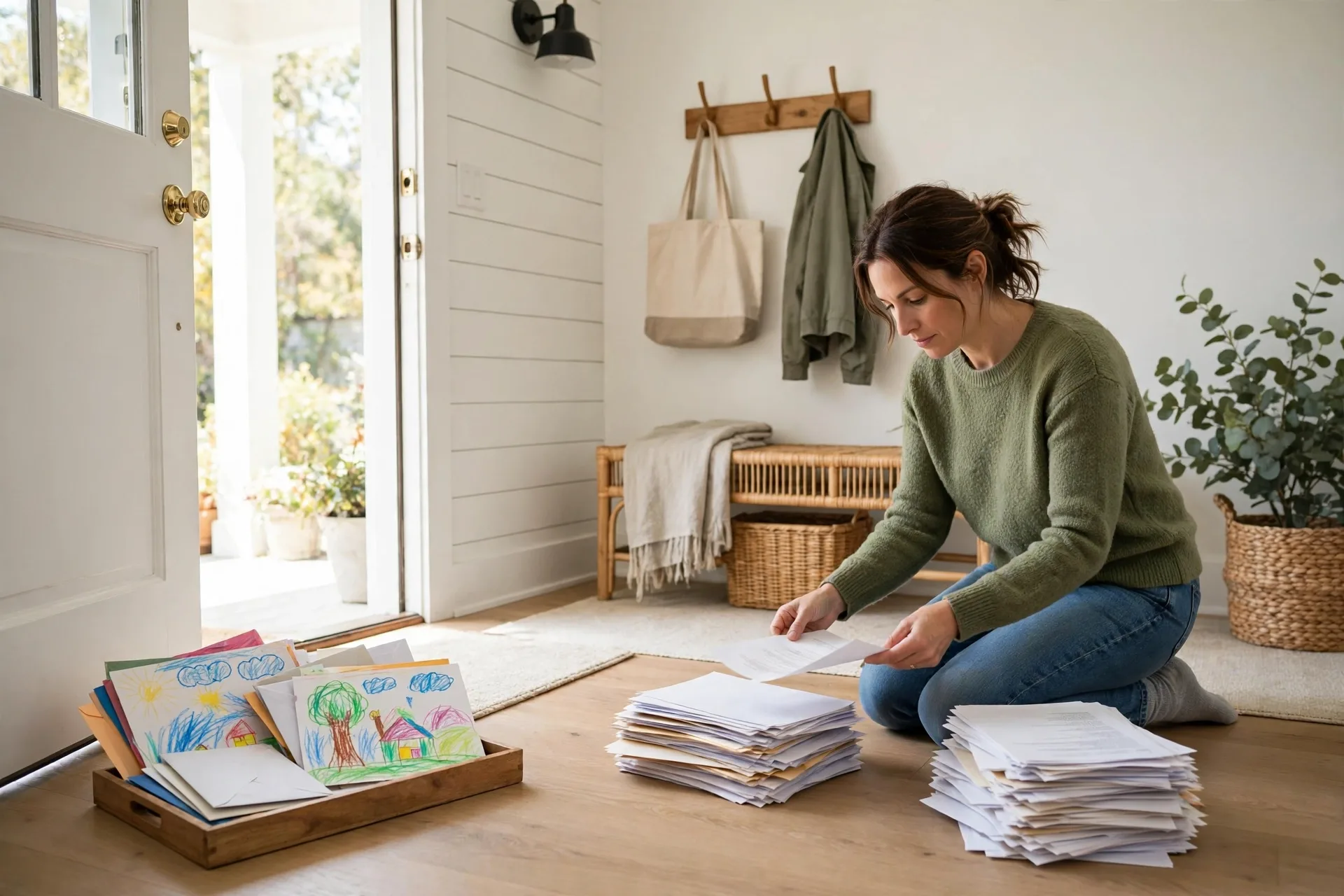
13. Handle paper exactly once. Mail, school forms, and artwork land in ONE tray by the door — never on the counter, never in a “to sort” pile that becomes archaeology. Ten minutes on Friday: sign it, file it, or recycle it. One tray, one appointment with it, no paper drift across every surface you own.
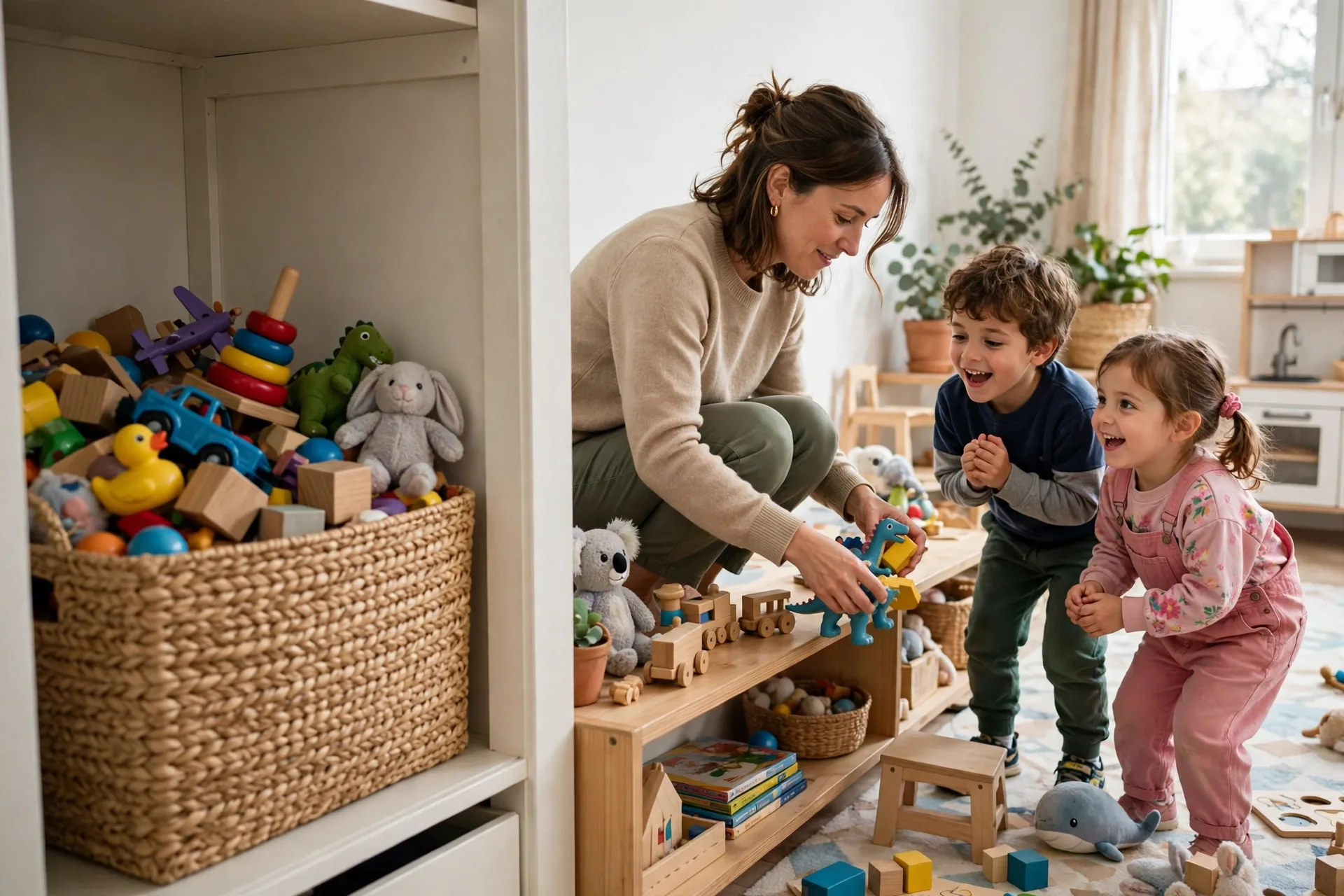
14. Rotate toys instead of drowning in them. Half the toys live in a closet bin; swap monthly. Fewer toys out means faster cleanup, and the rotated ones feel brand new (because to a 3-year-old, they basically are). This also quietly shows you what’s outgrown — that’s your donation pile, already sorted.
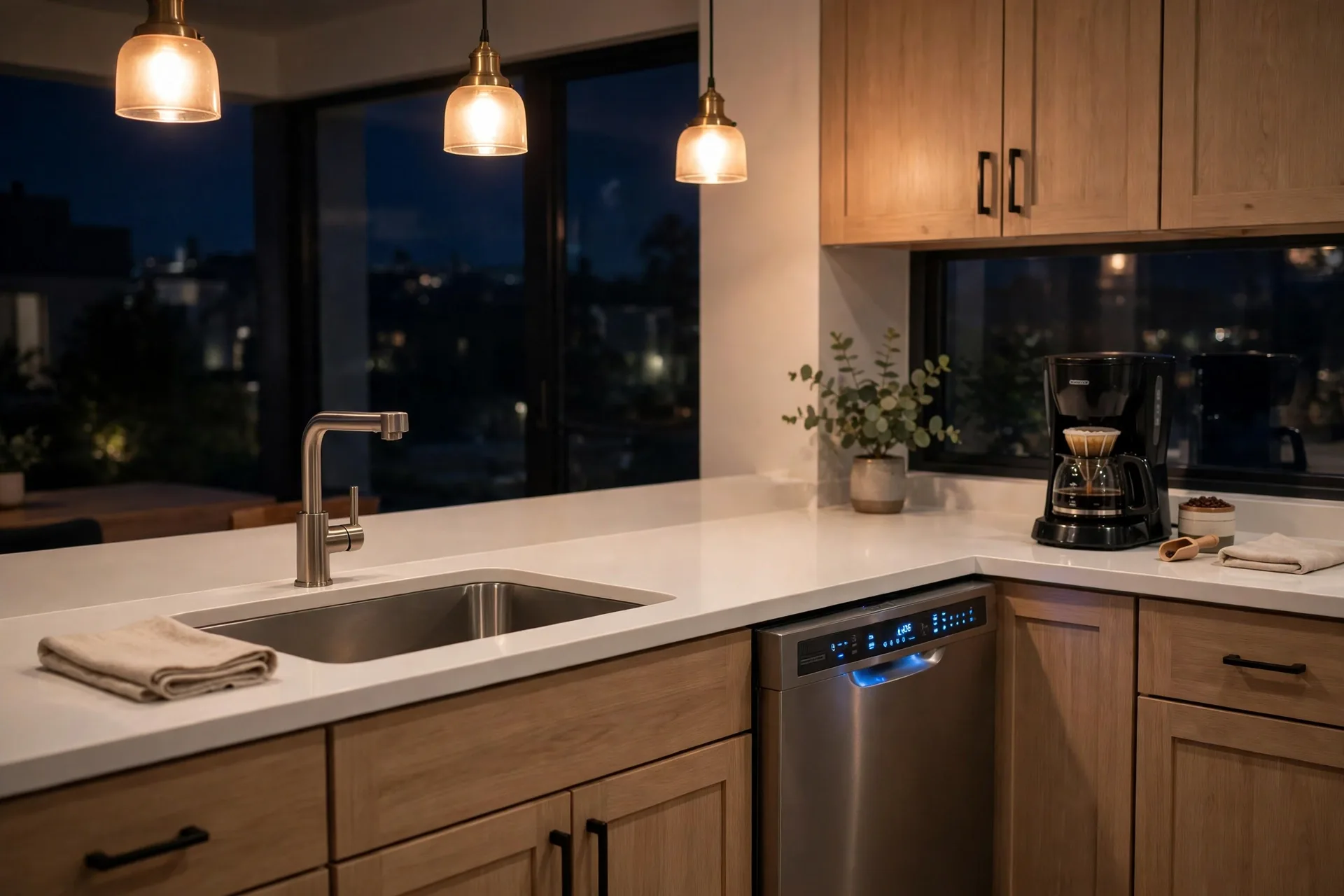
15. Close the kitchen every night. Counters wiped, dishwasher running, tomorrow’s cups and the coffee maker set out. It takes eight minutes and it changes the entire emotional weather of the next morning. Walking into a clean kitchen at 6 AM feels like someone helped you. Someone did — last night’s you.
Your Energy Is a Household Resource
16. Keep one list, in one place. Every task, idea, and “don’t forget” goes into ONE notebook or ONE app — not sticky notes, not your head, not three apps and a prayer. Then pick tomorrow’s top three the night before: one for the family, one for the house or work, one for you. Three finished things beat fifteen half-carried ones, and a short list you complete is kinder than a long one you stare at.

17. Claim ten minutes that are actually yours. A walk around the block, a chapter of a book, sitting in the parked car finishing your coffee in silence. Small, daily, and defended like an appointment — because it is one. Our Self Care Ideas for Moms are all ten-minute sized on purpose: that’s the size that actually survives a toddler day.

18. Lower the bar on purpose. A good-enough house is a standard, not a failure. Guests are coming to see you, not audit your baseboards, and your kids will remember the mom who sat on the floor and played — not the one with the folded fitted sheets. If most days feel heavy in a way rest doesn’t fix, that’s information, not weakness; our Mom Burnout guide is the honest read for that season, and talking to someone you trust is a strength move, not a last resort.
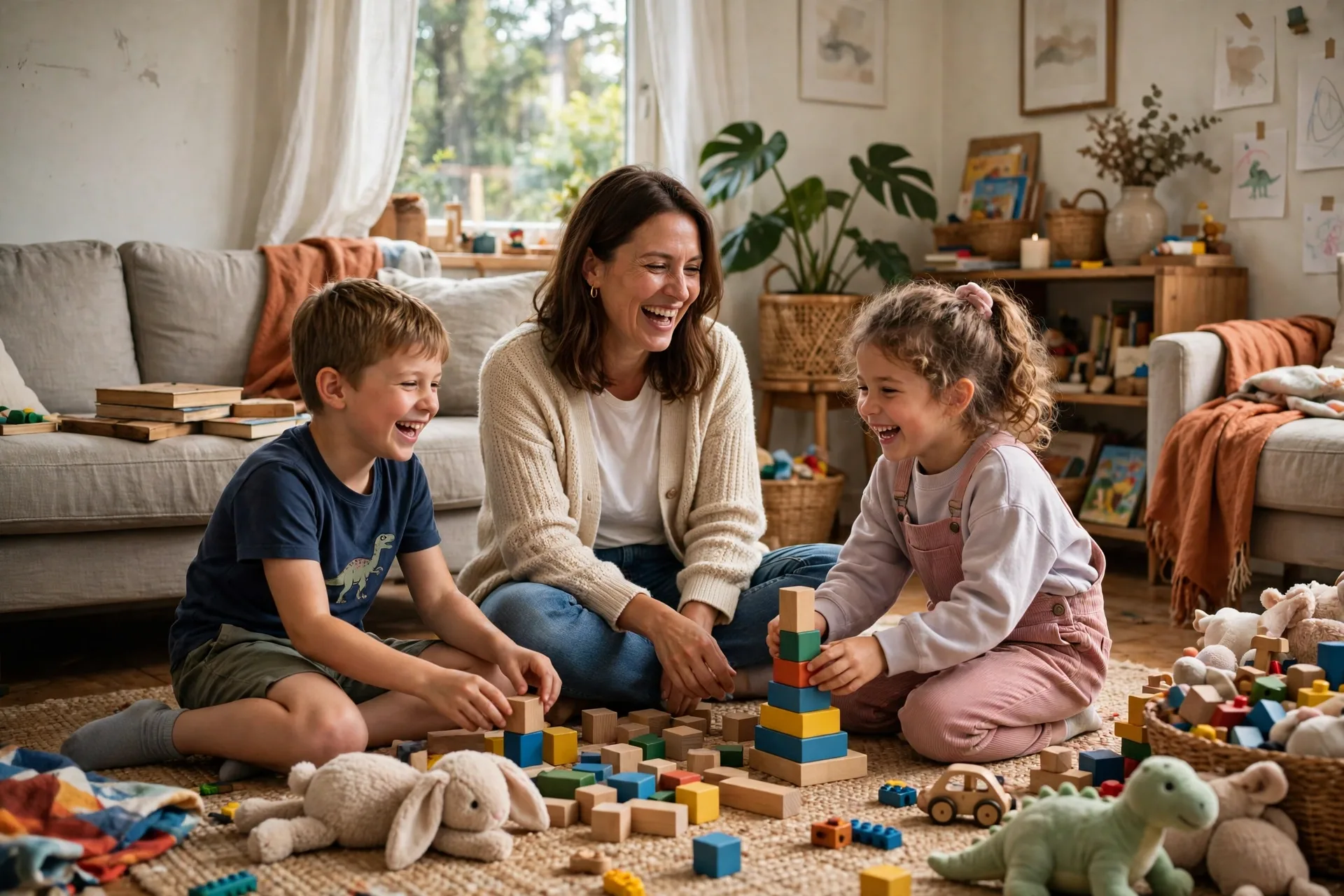
19. Ask for help like you mean it. “Can you help more?” gets you nothing. “You own bath time on Tuesdays and Thursdays” gets you bath time. Hand over whole jobs — not tasks you still have to manage — to partners, grandparents, and older kids. People who love you generally want a job description, not a guessing game.

20. Protect one small evening ritual. After the kids are down, one thing that is only yours: tea and the good blanket, twenty pages of a novel, a show nobody else in the house appreciates. Ours is flameless candles clicking on at dusk and a book on the couch — the house visibly exhales, and so do I. A day that ends on purpose feels different from a day that just runs out.

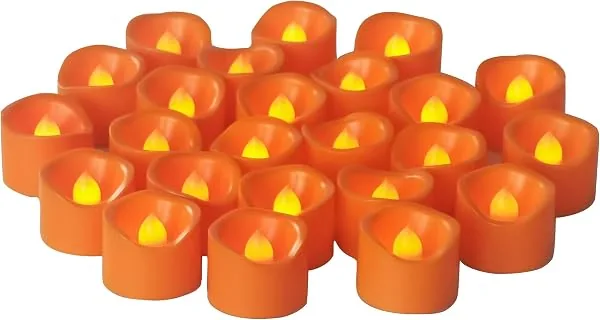
Flameless LED Tea Light Candles
The glow of our evening ritual — flameless LED candles that click on at dusk, no open flame around little hands and paperback pages, and warm enough to make the whole room exhale.
Evenings, Weekends, and Each Other
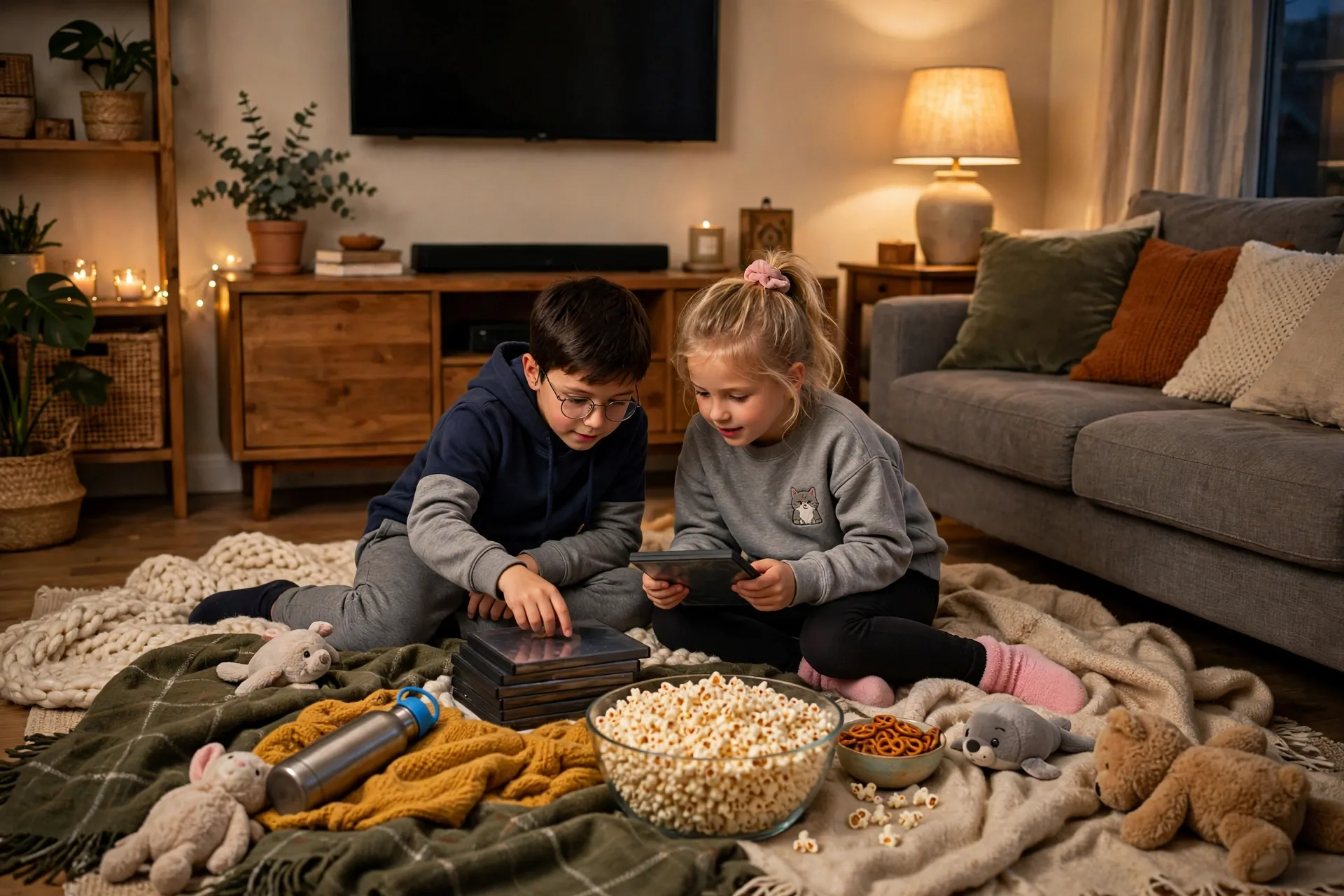
21. Give the week a finish line: Friday movie night. Same night every week — popcorn, blankets on the floor, a movie the kids pick on rotation. It costs almost nothing, the kids count down to it, and it tells everyone (including you) that the week officially ends and rest is allowed to start.
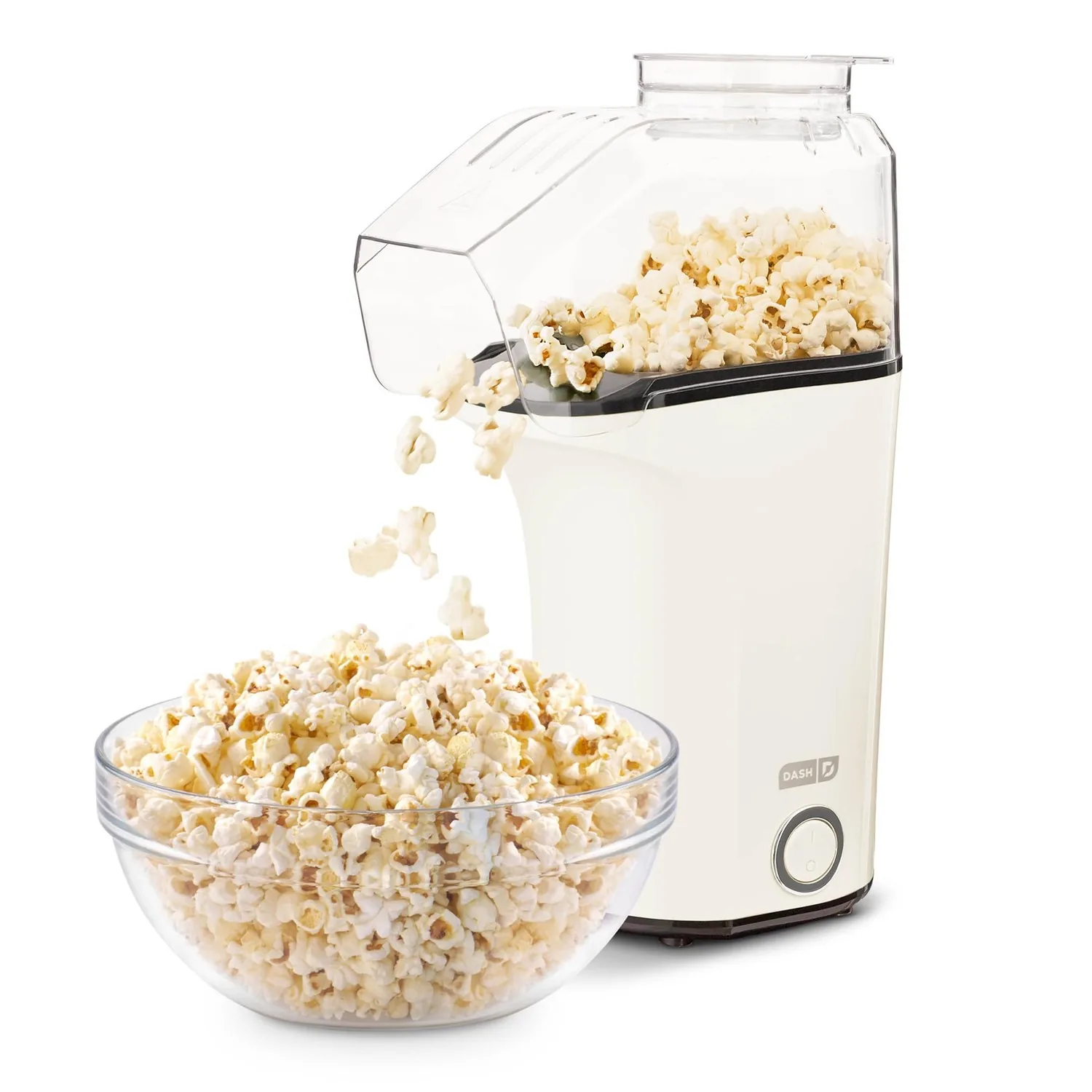
DASH Hot Air Popcorn Popper — 16 Cups
Friday movie night runs on this — a hot-air popper that makes up to 16 cups using hot air instead of oil. In our house, the popping is the opening act and everybody has a job: one pours, one holds the bowl.
22. Run a 20-minute Sunday reset. Calendar peek, launch pad restocked, fridge scanned, the four dinners chosen, bags by the door. Twenty minutes on Sunday buys back an hour of Monday scrambling. Kids “help” by matching socks and choosing Friday’s movie — a reset they join is a reset that survives. And if Sunday is sacred rest in your house, run it Saturday morning or Monday naptime instead. The day doesn’t matter. The habit of looking at the week before the week looks at you — that’s the whole tip.
23. Guard one no-chores evening a week. One night where after dinner, nothing gets folded, sorted, or optimized. The house will survive one evening of you sitting down, and so will the laundry. Rest that’s scheduled actually happens; rest that’s “when everything’s done” never does, because everything is never done.

24. Put yourselves on the calendar too. One thing for you, one thing for you as a couple — a walk, a coffee out, an actual date when you can swing it. The kids’ events get written down and defended; yours deserve the same ink. Our Marriage Advice For New Parents has the longer version of how we protect that without a babysitter budget.
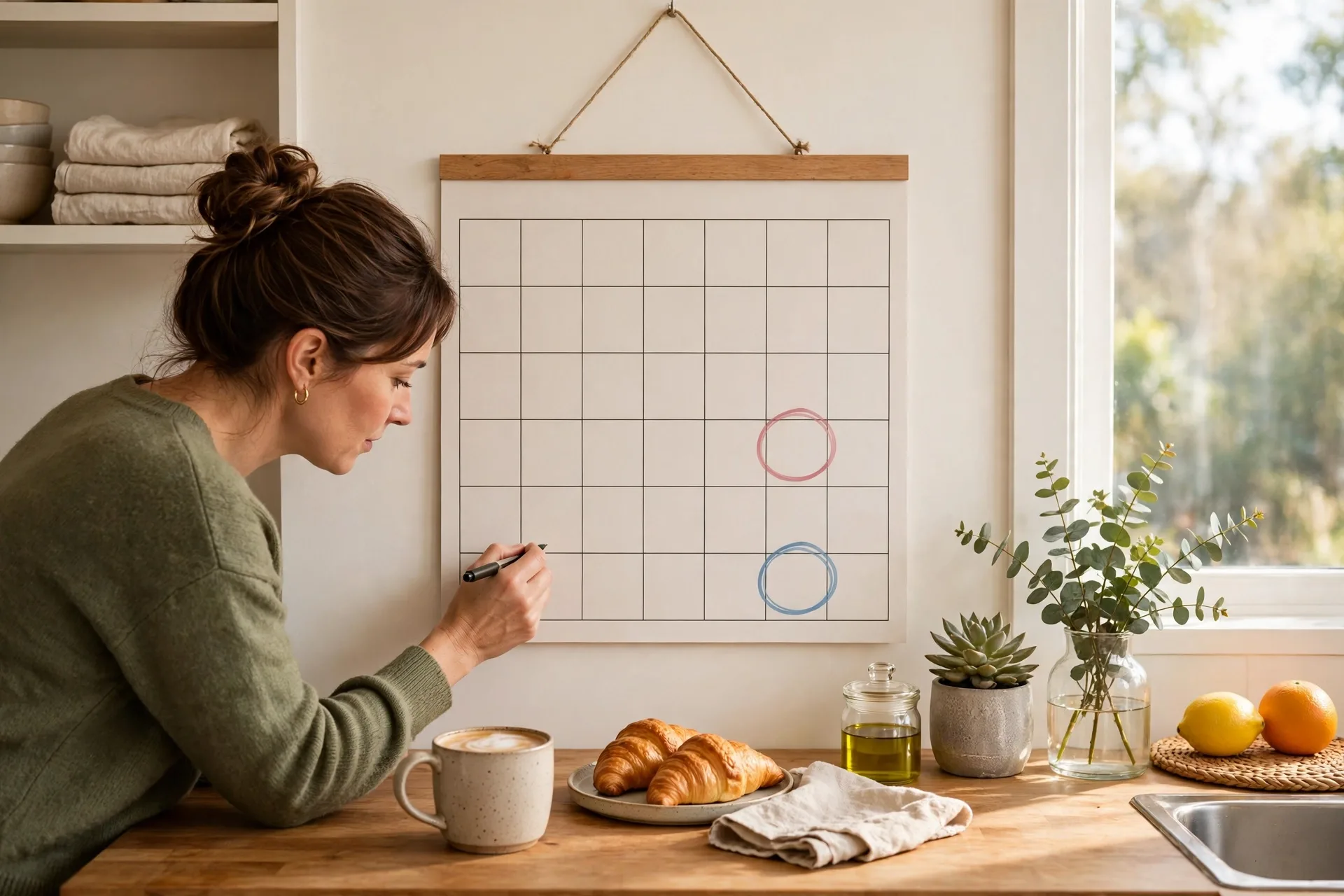
More Mom Life Tips: 27 More Systems for Calmer Days
The first 24 tips cover the day. These 27 are the extras: more systems for the gaps, the car, the seasons, and the moments nobody plans for. Pick any two and the week gets lighter.
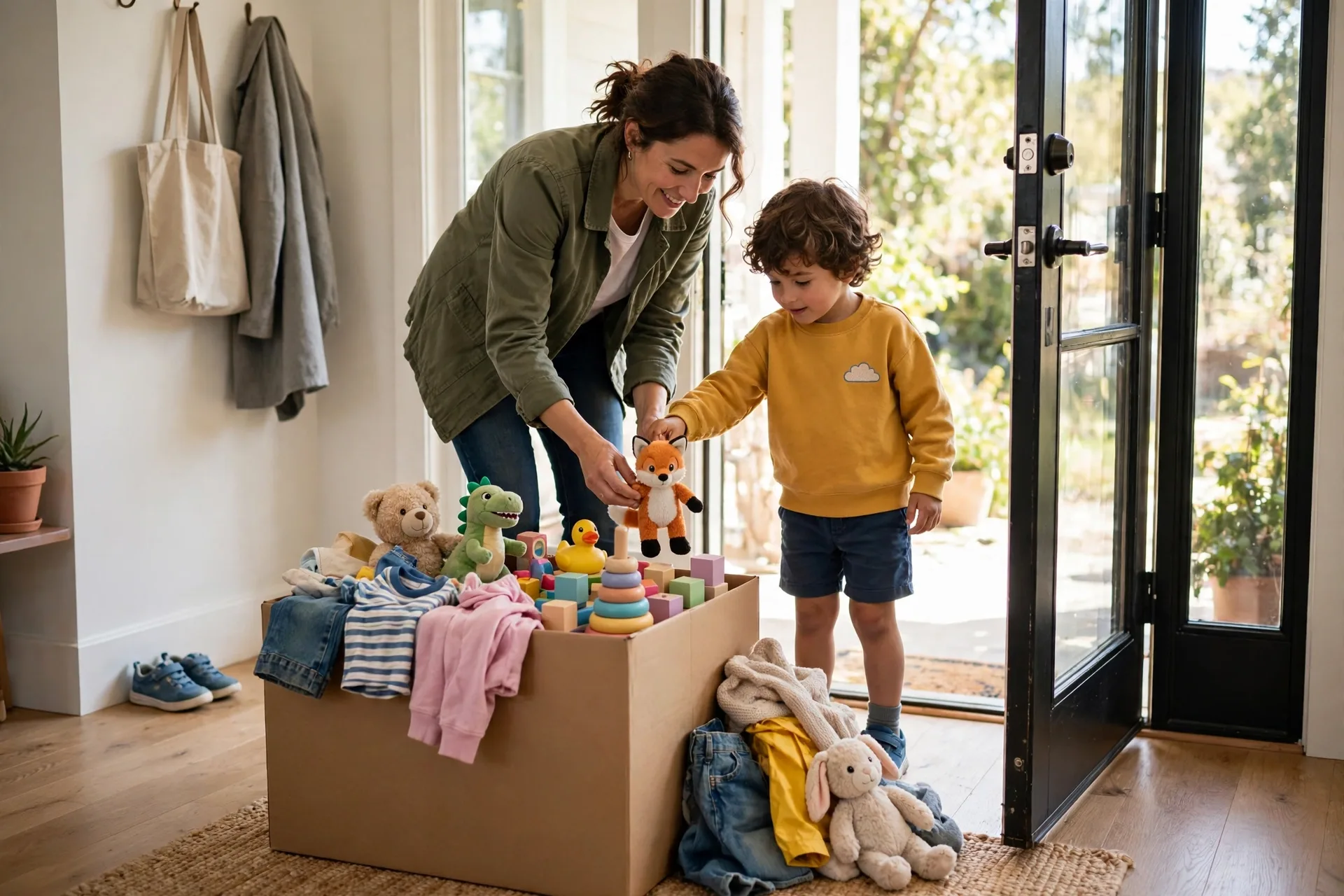
25. Keep a “donation station” by the door. A box or a bag by the door, labeled donations, where outgrown clothes and unloved toys go the moment you notice them. No sorting sessions, no guilt piles in the closet. When the box is full, it goes in the car, and the next errands loop drops it off. The kids help decide what goes in, which teaches them that letting go is a normal part of having things. It also quietly shows you what they have outgrown before the closet bursts. The station works because it turns decluttering from a weekend project into a ten-second habit, and a house with a donation station never reaches the point where you cannot find the floor.
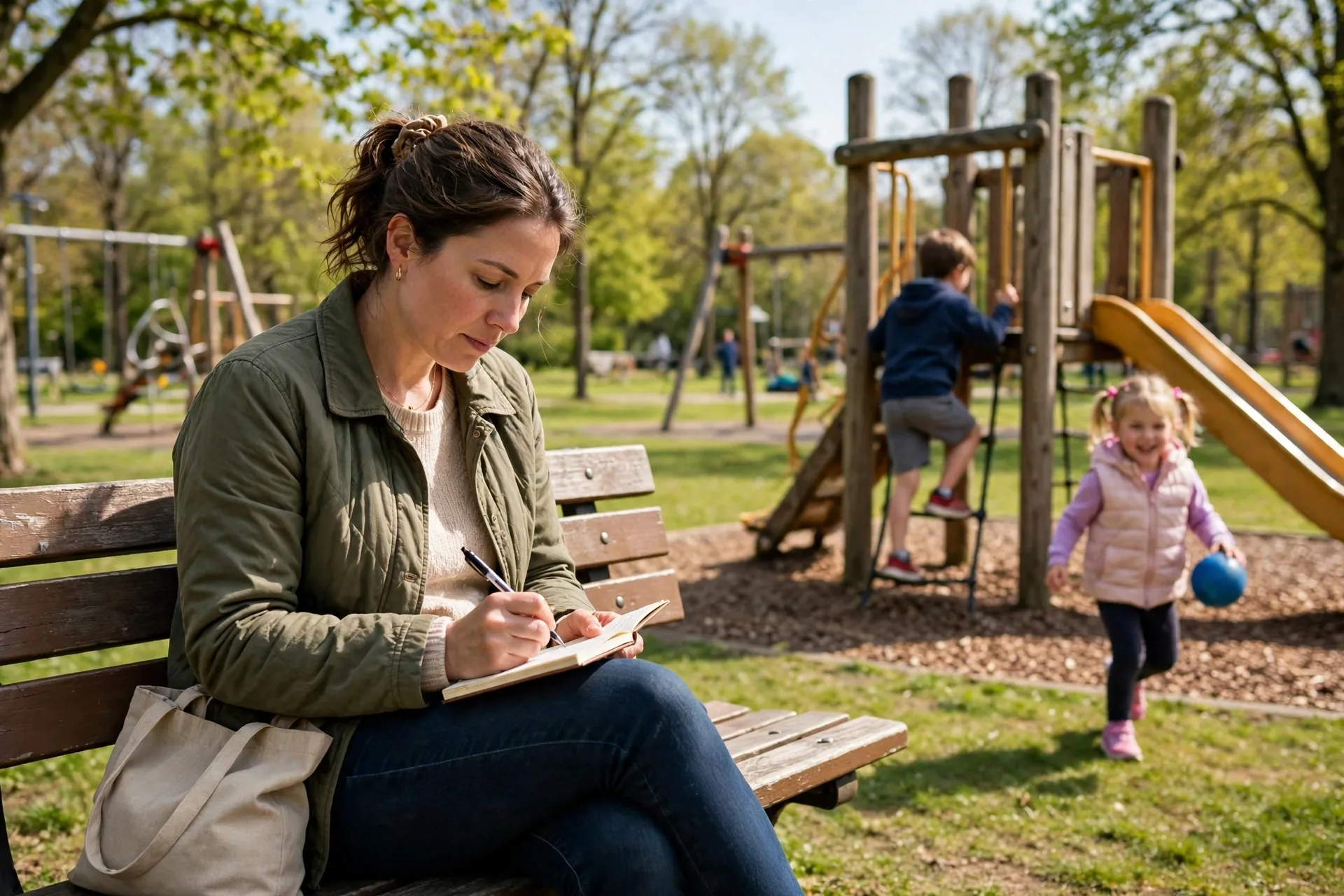
26. Make a “while you wait” list for the gaps. The minutes that leak away at playgrounds, waiting rooms, and pickup lines add up to hours a week. Keep a short list of two-minute jobs on your phone: reply to that message, book the dentist, order the birthday present, text the sitter. When a gap appears, pick one and do it. The list is not a second to-do list, it is the small stuff that never earns a slot on the big list but still weighs on your mind. Clearing two of them a day feels like a superpower, and the waiting stops feeling wasted.
27. Batch the errands into one weekly loop. One trip, one list, one loop: groceries, pharmacy, library returns, the donation box from tip 25. Everything else waits for next week’s loop unless it is genuinely urgent. Batching works because every errand has the same fixed cost, the getting-ready and the driving, and doing five in one trip costs one fixed cost instead of five. The kids come along and learn the route, and the week has exactly one errands day instead of five scattered ones. The loop also ends the daily question of whether you need to go out, because the answer is almost always next Tuesday.

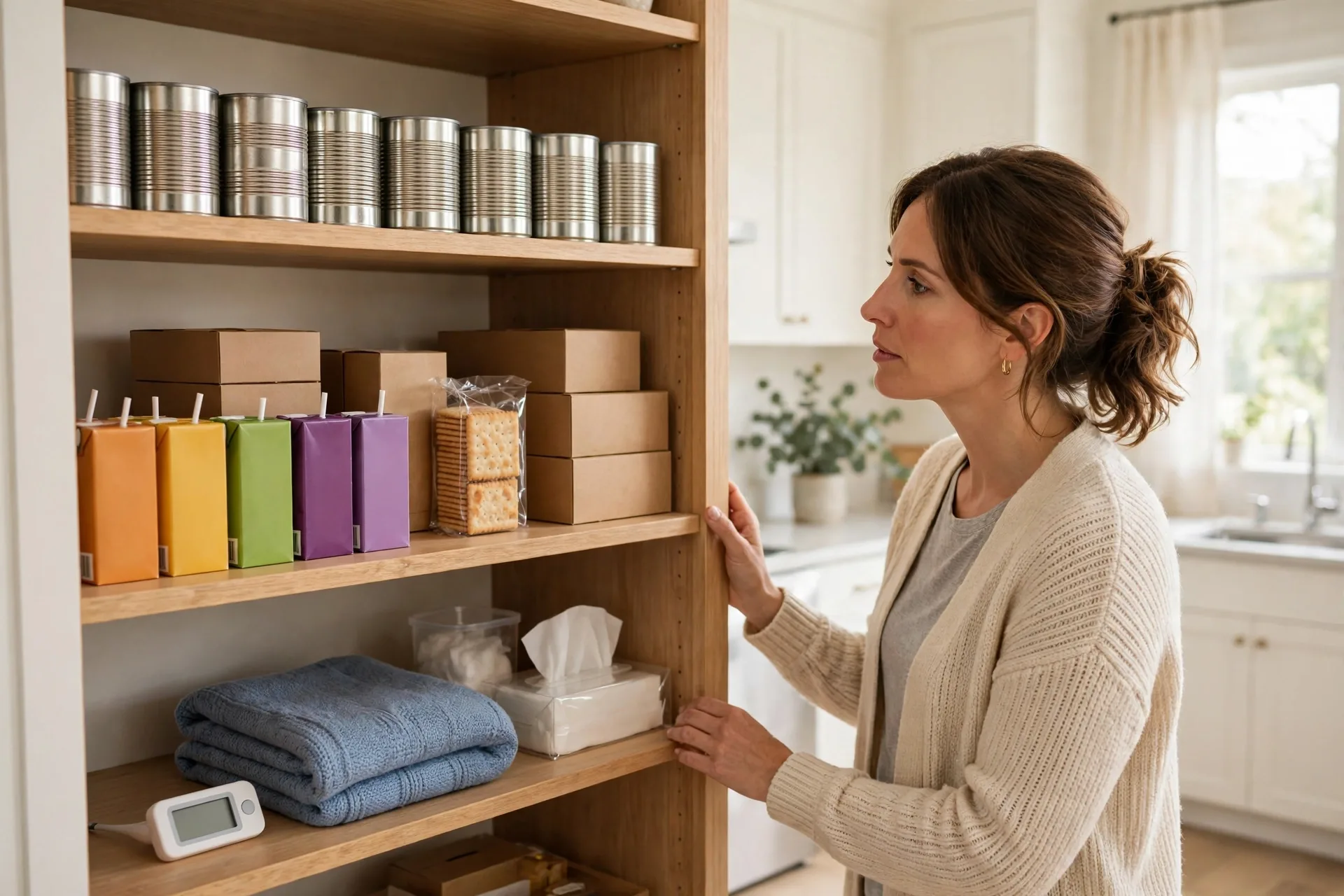
28. Keep a “sick day” shelf in the pantry. One shelf, stocked and left alone: soup, crackers, juice boxes, a thermometer, the medicine you always reach for, and a couple of quiet activities. When a kid wakes up feverish at 2 AM, you are not hunting through the cupboards in the dark. Restock it the week after you use it, not the month after, because the next sick day does not announce itself. The shelf is not about being prepared for disaster, it is about making a bad morning ten minutes easier, which is exactly the margin that matters when you are tired and a small person needs you.
29. Keep a “done list” to see what you actually did. At the end of the day, write down what you finished, not what you planned: three loads of laundry, the permission slip signed, the toddler’s shoes found, dinner on the table. A to-do list shows you what is left, which on a hard day looks endless. A done list shows you what you actually carried, which on a hard day is a lot. Keep it in the same notebook as your one list from tip 16, on the facing page, so the plan and the proof sit side by side. On the days you feel like you did nothing, the done list is the evidence that you did.

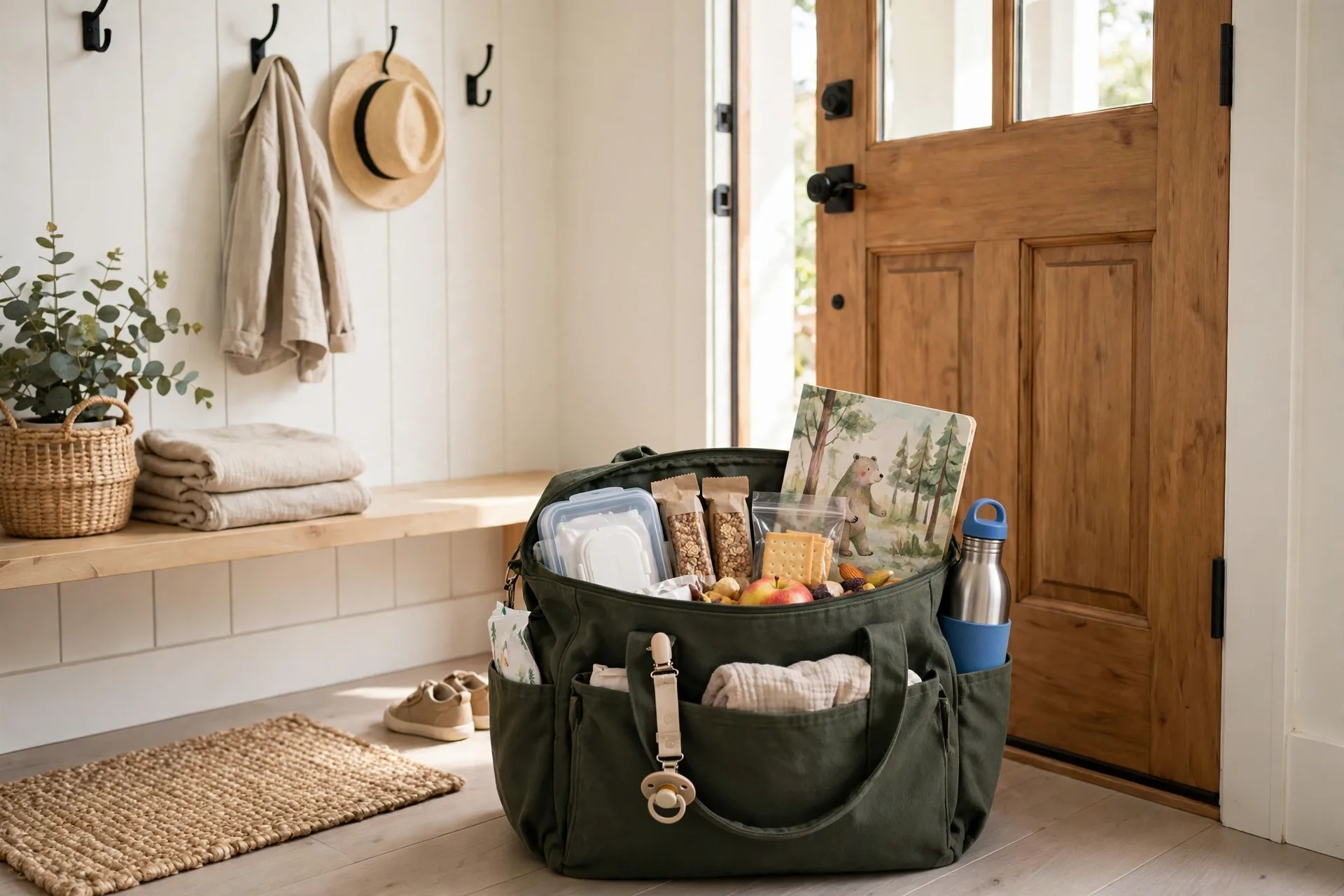
30. Keep a “mom bag” packed by the door. One bag, packed and hanging by the door, with the things you always forget: snacks, wipes, a water bottle, a book, a spare hair tie, the library card. Leaving the house becomes grab the bag and go, instead of a ten-minute scavenger hunt while the kids wait in the hallway. Restock it when you come home, not when you are leaving, because leaving is already the busy part. The bag works the same way the launch pad from tip 2 works: the thinking happens once, on a calm evening, and every morning after that runs on the decision you already made.
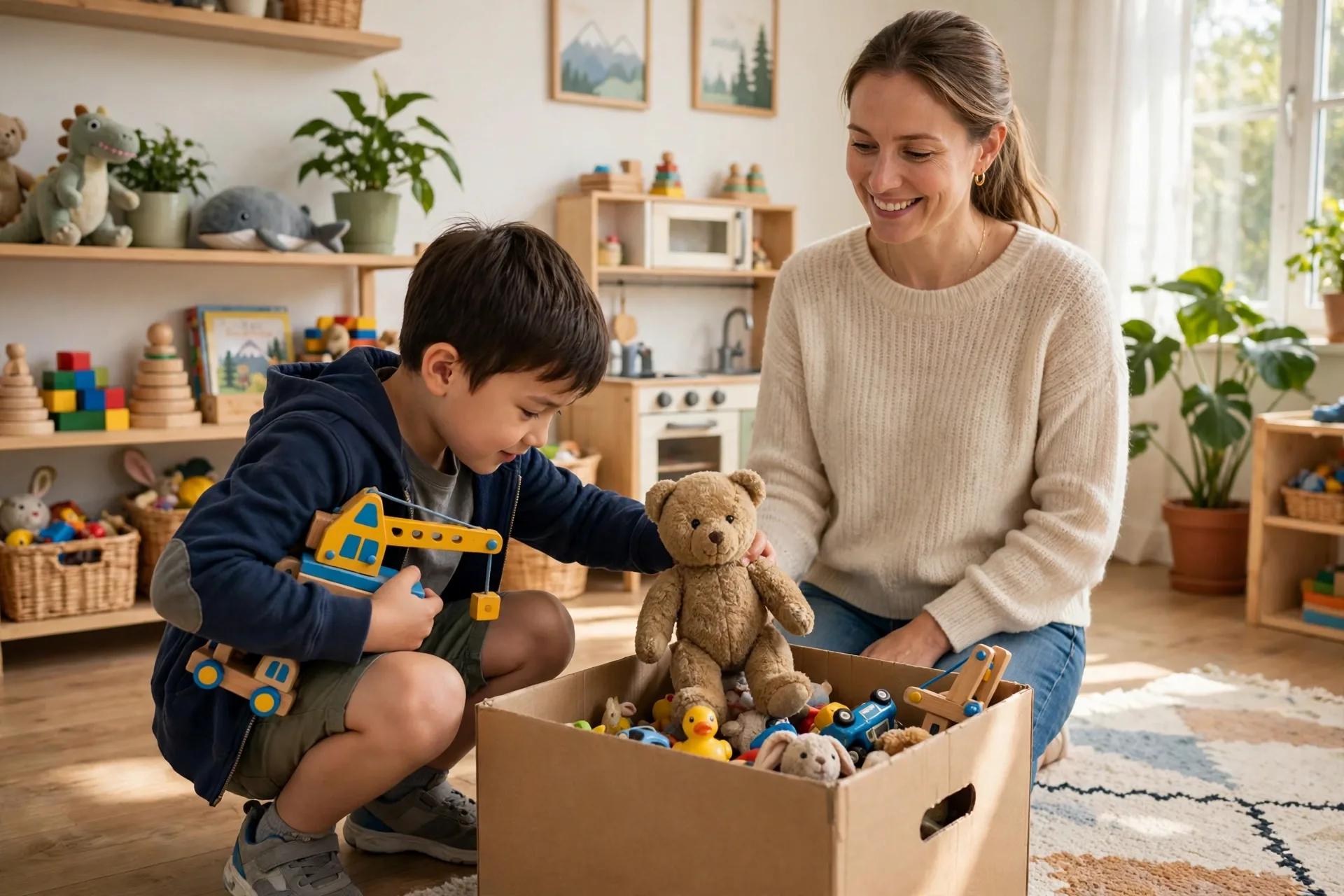
31. Set a “one in, one out” rule for toys. Every new toy that comes in, one old toy goes out to the donation station from tip 25. The rule is simple enough for a four-year-old to explain, and it stops the toy pile from growing faster than the house. Birthdays and holidays are when the rule matters most, so make it part of the celebration: the new toy gets a welcome, the old toy gets a goodbye. Kids who choose what leaves learn to value what stays, and the playroom stays at a size where cleanup takes ten minutes instead of an hour.
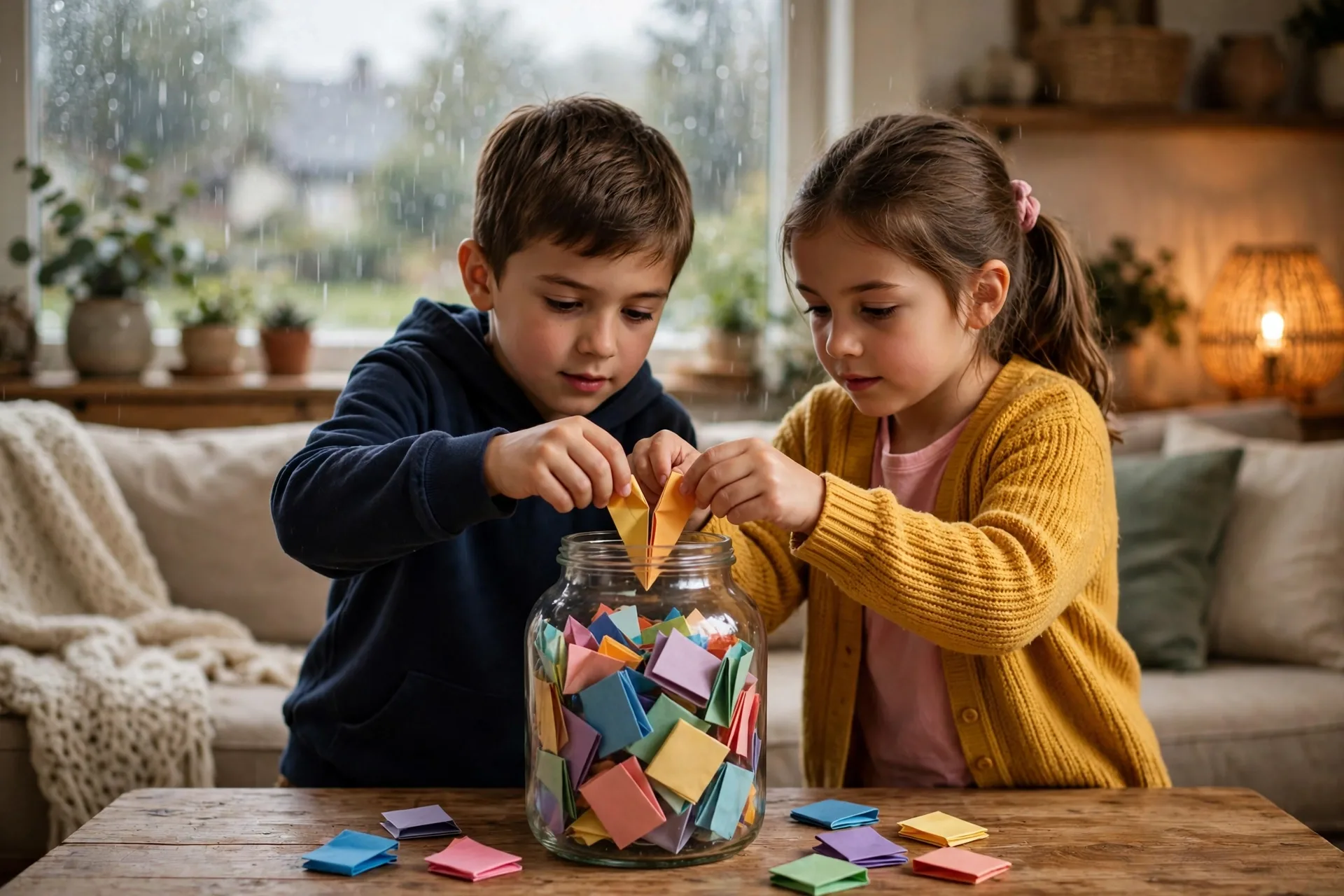
32. Keep a “boredom buster” jar for rainy days. A jar full of folded slips, each one a small activity: build a fort, make a card for grandma, put on a puppet show, draw the family as animals. When the kids say they are bored, they pull a slip instead of asking you to invent entertainment. The jar works because the idea comes from the jar, not from you, which makes it feel like a game instead of an assignment. Refill it together on a Sunday, ten new slips at a time, and retire the ones that never get pulled. Rainy days stop being a crisis and start being a jar day.
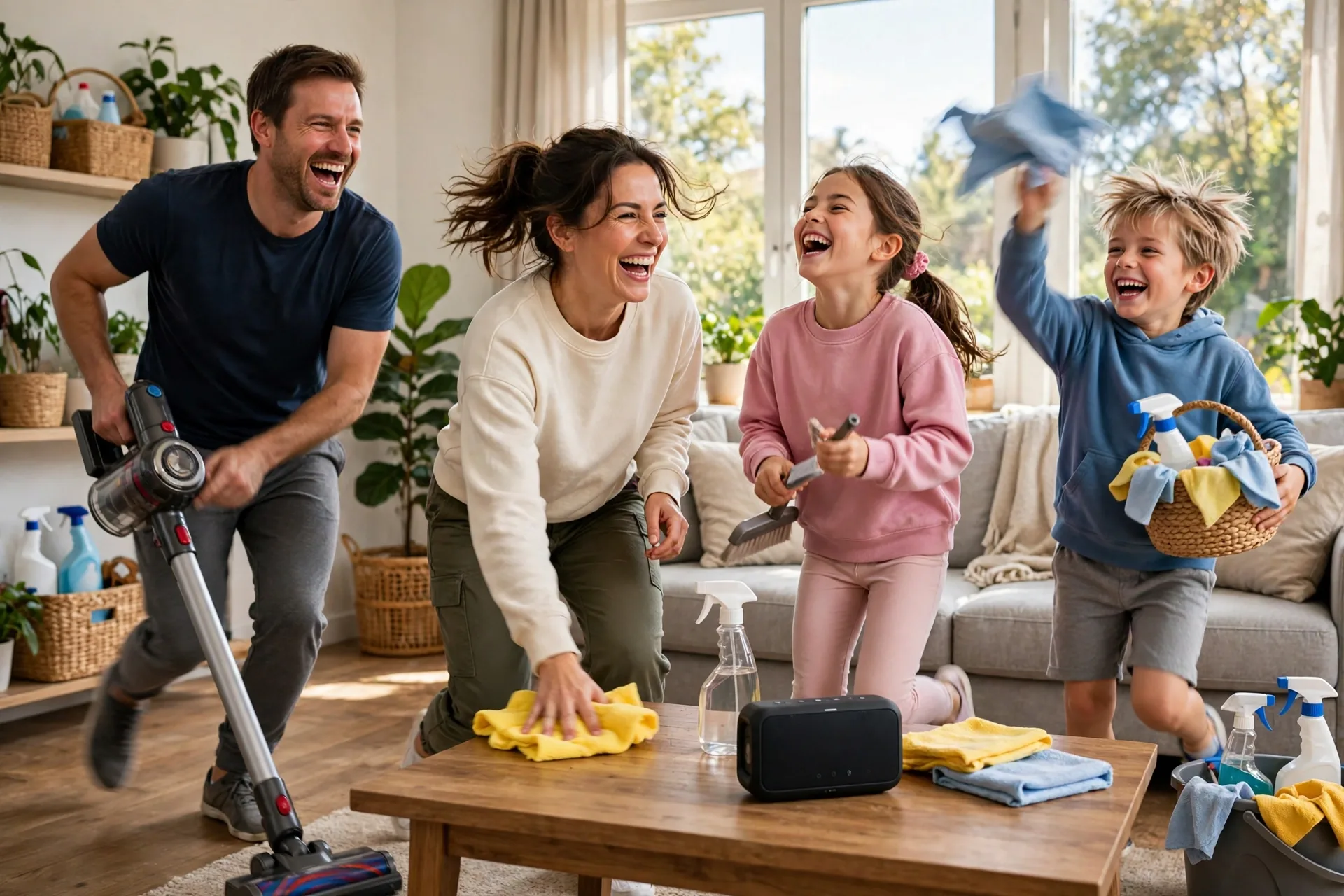
33. Make a “reset playlist” for the house. One playlist, the same every time, that means the house is resetting: upbeat, familiar, about fifteen minutes long. Press play and everybody tidies until the last song ends, the same way tip 11 runs the ten-minute tidy. The playlist works because the music sets the pace and the ending, so nobody has to watch the clock or argue about when to stop. Pick songs the kids love and let them add one each week, because a playlist they chose is a playlist they will actually tidy to. The house gets reset, the kids get their songs, and the timer never has to be the bad guy.
34. Keep a “thank-you” note habit with the kids. Once a week, the kids write or draw one thank-you note: to grandma for the parcel, to the teacher for the sticker, to dad for the Saturday pancakes. Little kids draw, bigger kids write two lines, and you help with the spelling only when asked. The habit matters because gratitude is a muscle, and a weekly note is the lightest possible exercise for it. The notes also become a keepsake pile, and reading last year’s notes together is a better family tradition than any gift. It takes ten minutes, it costs a stamp, and it teaches the kids to notice who helped them.

35. Set a “no phone at dinner” rule. Phones go in a basket on the counter before dinner and stay there until the plates are cleared. The rule covers everybody, including you, because a rule the kids watch you break is not a rule. Dinner gets louder, funnier, and longer in the good way, because nobody is half-listening while scrolling. The first week is the hard one, and then the basket becomes part of setting the table. If work genuinely needs you, the phone stays on vibrate in the basket, and you check it once after dessert. The table is for the people at it, and the basket is how you prove it.

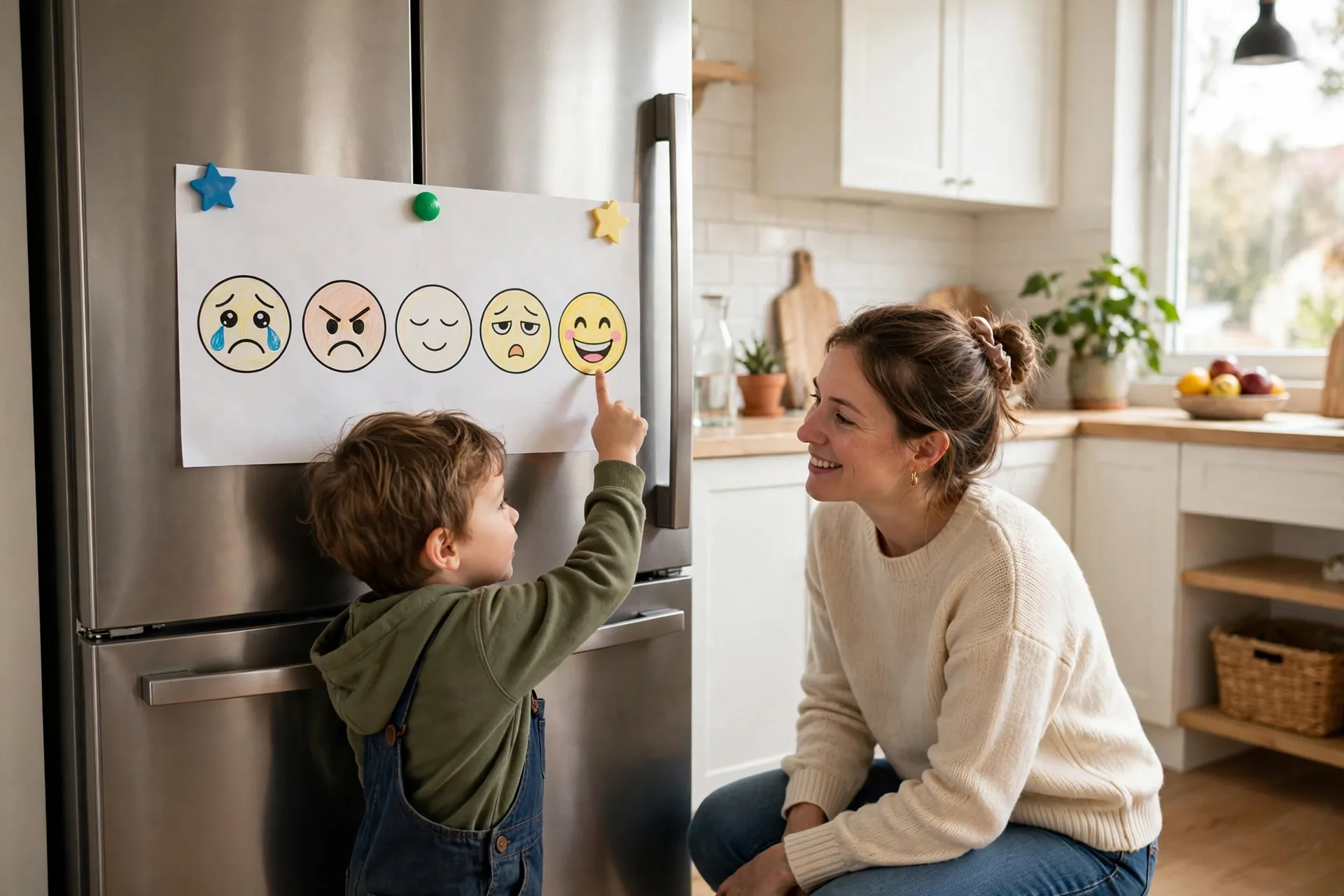
36. Make a “feelings chart” for the fridge. A simple chart with faces, happy, sad, angry, tired, worried, stuck on the fridge at kid height. When a child cannot find the words, they point. The chart works because naming a feeling is the first step to handling it, and pointing is easier than explaining when you are four. Use it yourself too, and point at tired on the days you are, because kids who see their mom name her feelings learn that feelings are normal. The chart is not a discipline tool, it is a translation tool, and the translation is what keeps small frustrations from becoming big meltdowns.
37. Make a “Sunday lunch” tradition. One meal a week where everybody sits down together and nobody is in a hurry: a big shared dish in the middle, everyone serving each other, phones in the basket from tip 35. Sunday lunch is not about the food, it is about the table being the place where the week gets talked about. The kids tell you things at a slow lunch that they never tell you in the car. Keep the cooking simple, a roast, a pasta, a soup, because a tradition that needs a three-hour cook will not survive a busy month. The lunch is the anchor, and the week hangs off it.

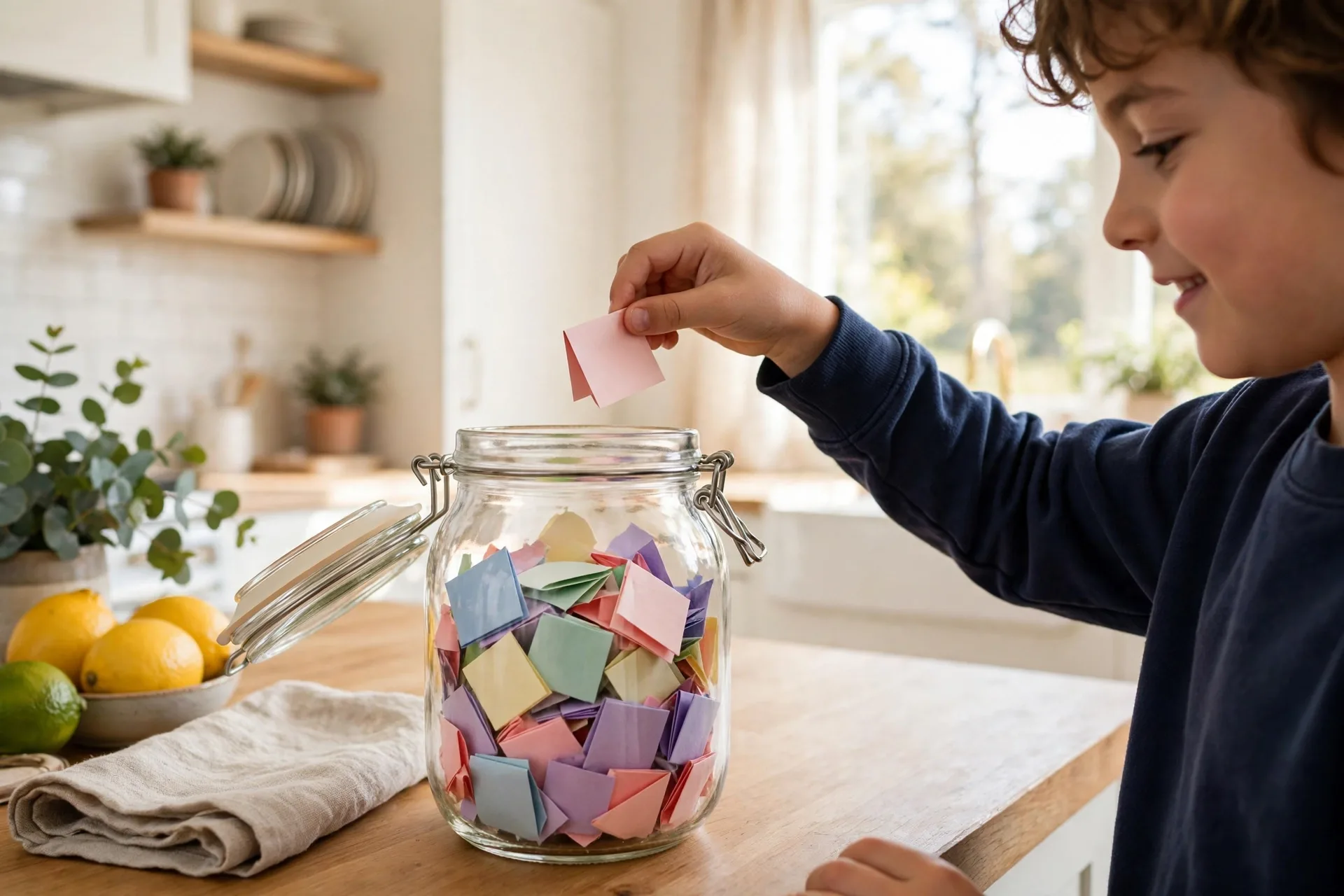
38. Keep a “win jar” for the week. A jar on the kitchen counter, and every time something goes right, a slip goes in: the toddler put her shoes on alone, the meeting went well, dinner worked, the baby slept. On Sunday, read them aloud at dinner. The jar works because bad weeks feel endless, and the slips are proof that good things happened anyway. Kids love adding slips, and they start noticing wins everywhere once they know the jar is watching. On the worst week of the year, the jar is the thing that reminds you the week was not all bad, and that reminder is worth more than any system on this list.
39. Set a “bedtime buffer” of 30 minutes. Bedtime starts thirty minutes before bedtime: screens off, lights low, baths and books, no new projects, no more snacks that need cooking. The buffer works because kids do not switch off like lights, they wind down like clocks, and the winding down needs time. The thirty minutes belong to the routine, not to you, so guard them the way tip 23 guards the no-chores evening. A calm bedtime means a calm morning, because a child who falls asleep peacefully wakes up peacefully, and the whole house runs on that difference.

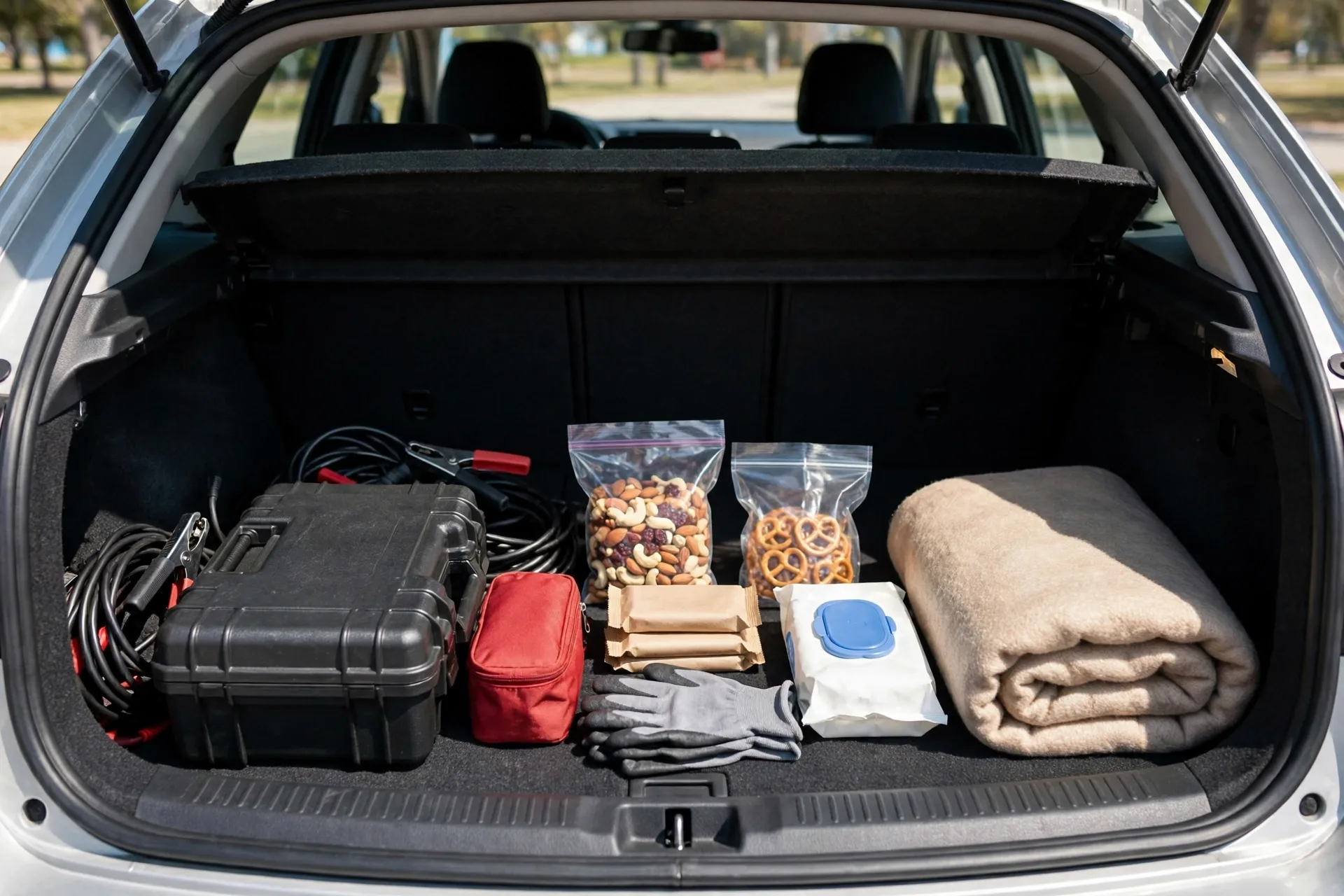
40. Keep a “car kit” in the trunk. A small bag in the trunk with the things that save a trip: wipes, a spare outfit, a water bottle, a snack, a first aid bag, a plastic bag for the inevitable mess. The kit lives in the trunk, not in the house, because the moment you need it is the moment you are already out. Restock it monthly, on the first Sunday, alongside the Sunday reset from tip 22. The kit is not about being a perfect mom, it is about the difference between a ruined outing and a funny story, and that difference is usually one spare outfit.
41. Make a “morning playlist” that means go time. One playlist for the mornings, the same songs in the same order, that starts when the kids wake up and ends when the shoes go on. The playlist works because kids who will not listen to instructions will listen to a song, and the last song means shoes, coats, and out the door. Let each kid pick one song, and keep the playlist short enough to fit the morning, about twenty minutes. The mornings stop being a series of reminders and start being a routine with a soundtrack, and the soundtrack is the part the kids will remember.

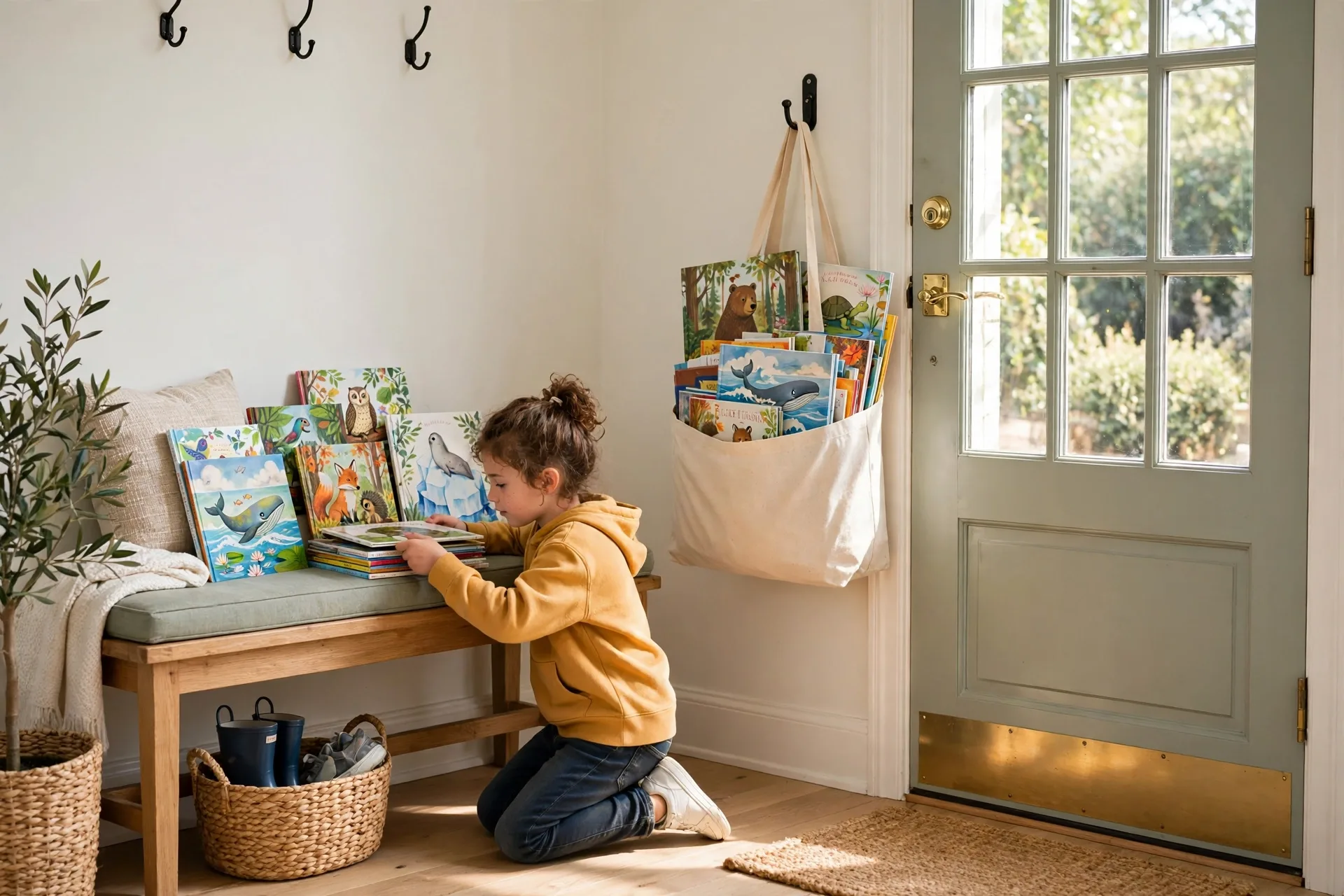
42. Keep a “library bag” always packed. A bag by the door, always packed with the library books and the library cards, so the library is a ten-minute stop instead of a hunt for the books you cannot find. Returns go straight into the bag the moment the kids finish a book, and new picks come home in the same bag. The library bag works the same way the mom bag from tip 30 works: the thinking happens once, and every trip after that is easy. Kids who can grab the bag and go read more, because the library stops being a project and starts being a habit.
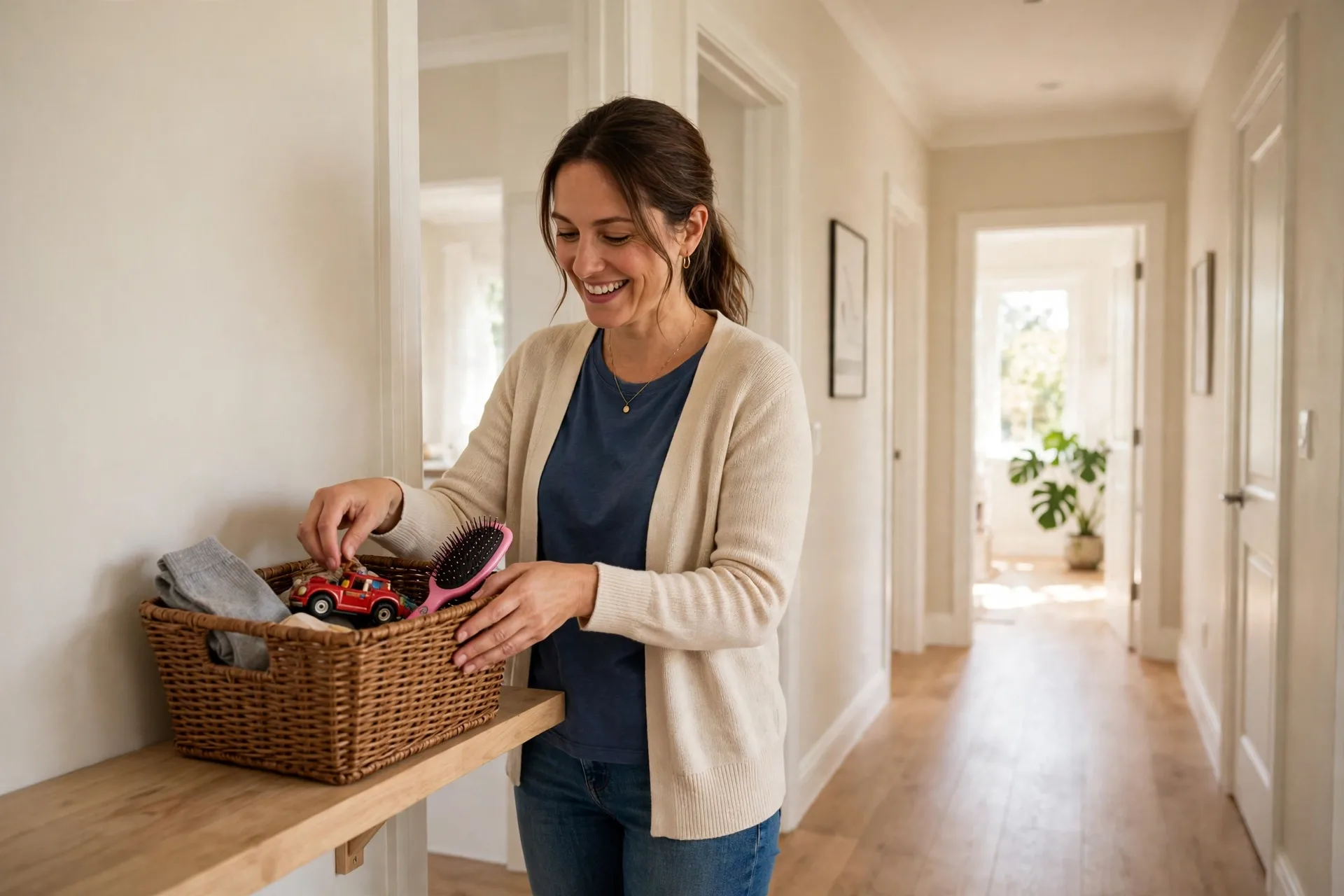
43. Keep a “lost and found” basket for the house. One basket on a hallway shelf where every stray sock, toy car, and hairbrush goes the moment it is found in the wrong room. Once a week, the family empties the basket together and everything goes home. The basket works because lost things are usually not lost, they are just in the wrong room, and a single collection point beats searching the whole house. Kids learn to check the basket first, which means fewer cries of “where is my…” and more things found without you. The basket is small, it costs nothing, and it quietly ends the daily hunt for the missing shoe.
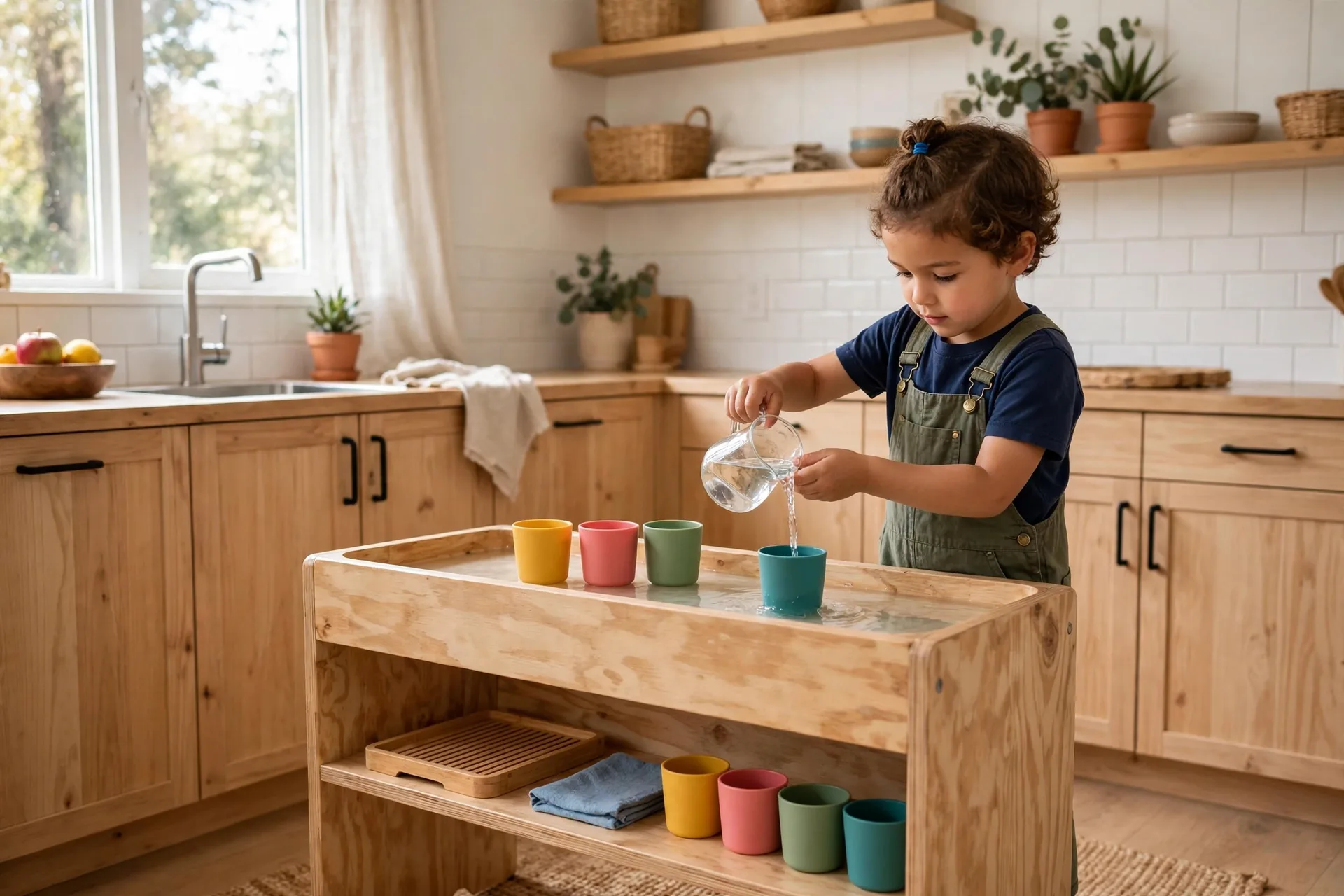
44. Keep a “water station” the kids can reach. A small pitcher and cups on a low shelf or a low table, where the kids can pour their own water without asking you. The station works because thirst is the most common reason a child interrupts you, and a child who can pour her own water is a child who does not need you for that. Refill the pitcher at breakfast and at dinner, and keep a towel underneath for the spills, because spills are part of learning. The kids drink more water, you get interrupted less, and the low shelf teaches them that the house is partly theirs to run.
45. Make a “highs and lows” dinner-table round. At dinner, everybody shares one high and one low from the day: the best part, the worst part, no fixing, no judging. The round works because it gives the kids a daily habit of telling you things, and the telling is what keeps you close as they grow. Keep your own answers honest, including a real low, because kids who hear their mom say the meeting was hard learn that hard days are normal. The round takes five minutes, it needs no supplies, and it is the closest thing to a daily check-in that a busy family gets.

46. Keep a “calm-down kit” for meltdowns. A basket in a quiet corner with a soft toy, a glitter bottle, a few crayons, and a book, where a child can go when the feelings get too big. The kit is not a punishment and not a reward, it is a place. The child uses it, or you sit with them next to it, until the storm passes. The kit works because a meltdown is a child who has run out of words, and the glitter bottle gives their hands something to do while the words come back. Refill it together and let the kids choose what goes in, because a kit they chose is a kit they will actually use.

47. Set a “screen sunset” one hour before bed. Screens go off one hour before bedtime, every night, no exceptions for the adults either. The hour belongs to books, baths, and quiet play, the same wind-down the bedtime buffer from tip 39 protects. The screen sunset works because screens keep brains buzzing, and a buzzing brain does not fall asleep on schedule. The first week is the adjustment, and then the hour becomes the calmest hour of the day. If the kids protest, the answer is the same every night, because a rule that bends on a Tuesday is not a rule.

48. Keep a “date jar” for couple time. A jar full of folded slips, each one a small date idea: a walk, a coffee out, a puzzle on the couch after the kids are down, a drive with no destination. Pull one slip a week and do it, even if the date lasts twenty minutes. The jar works because the hardest part of couple time is deciding what to do, and the jar decides for you. The dates do not need a babysitter or a budget, they need twenty minutes and a decision, and the jar makes the decision. A couple that dates, even briefly, is a couple that stays a team.

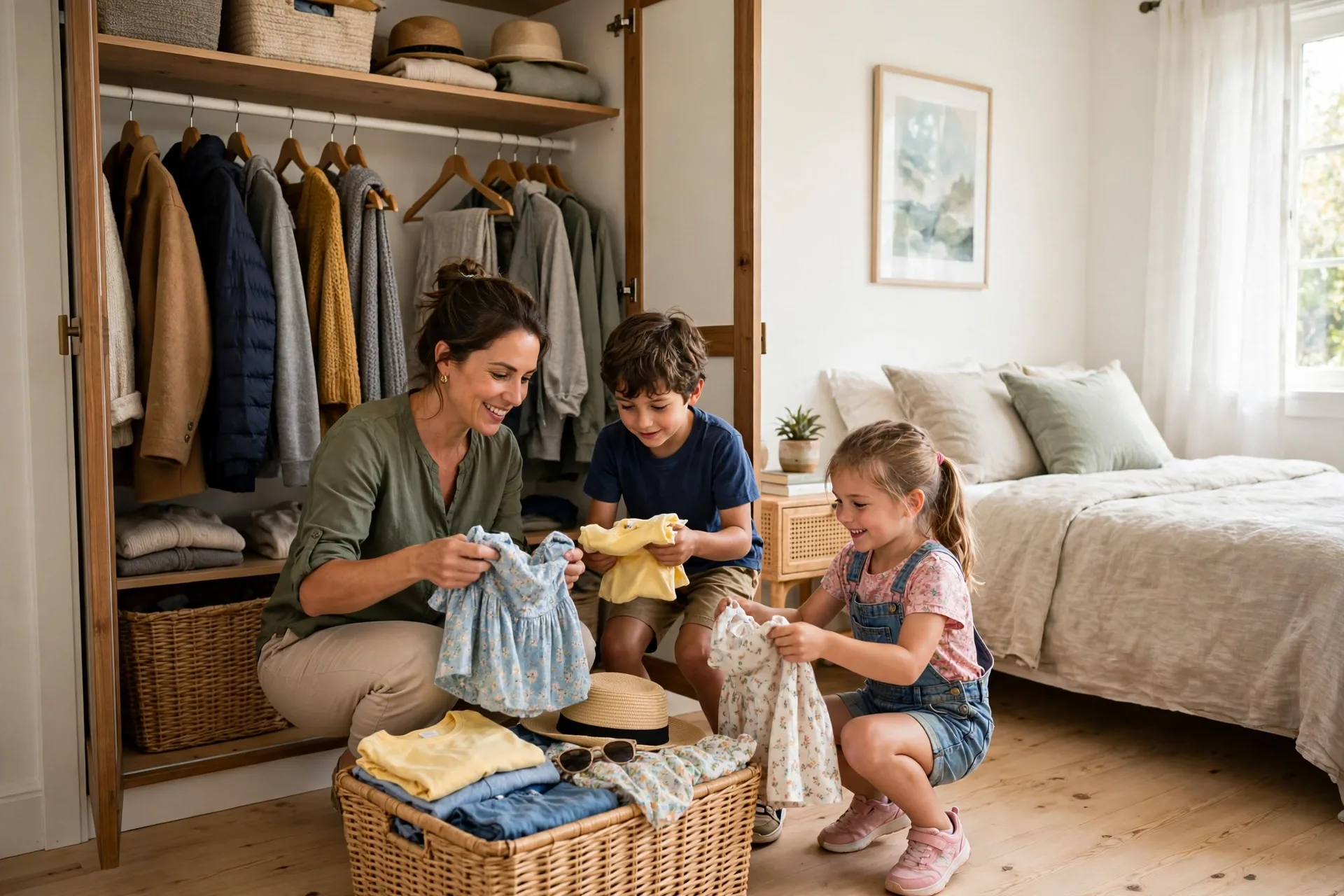
49. Make a “seasonal swap” day each quarter. One day a quarter, the family swaps the seasonal clothes: outgrown things go to the donation station from tip 25, next season’s clothes come down, and the closets get a reset. The kids try things on, which is a fashion show and a fitting in one, and anything that does not fit goes straight into the donation box. The swap works because it turns a chore into an event, and an event gets done while a chore gets postponed. Mark it on the calendar at the start of the season, because a swap day that is scheduled actually happens.
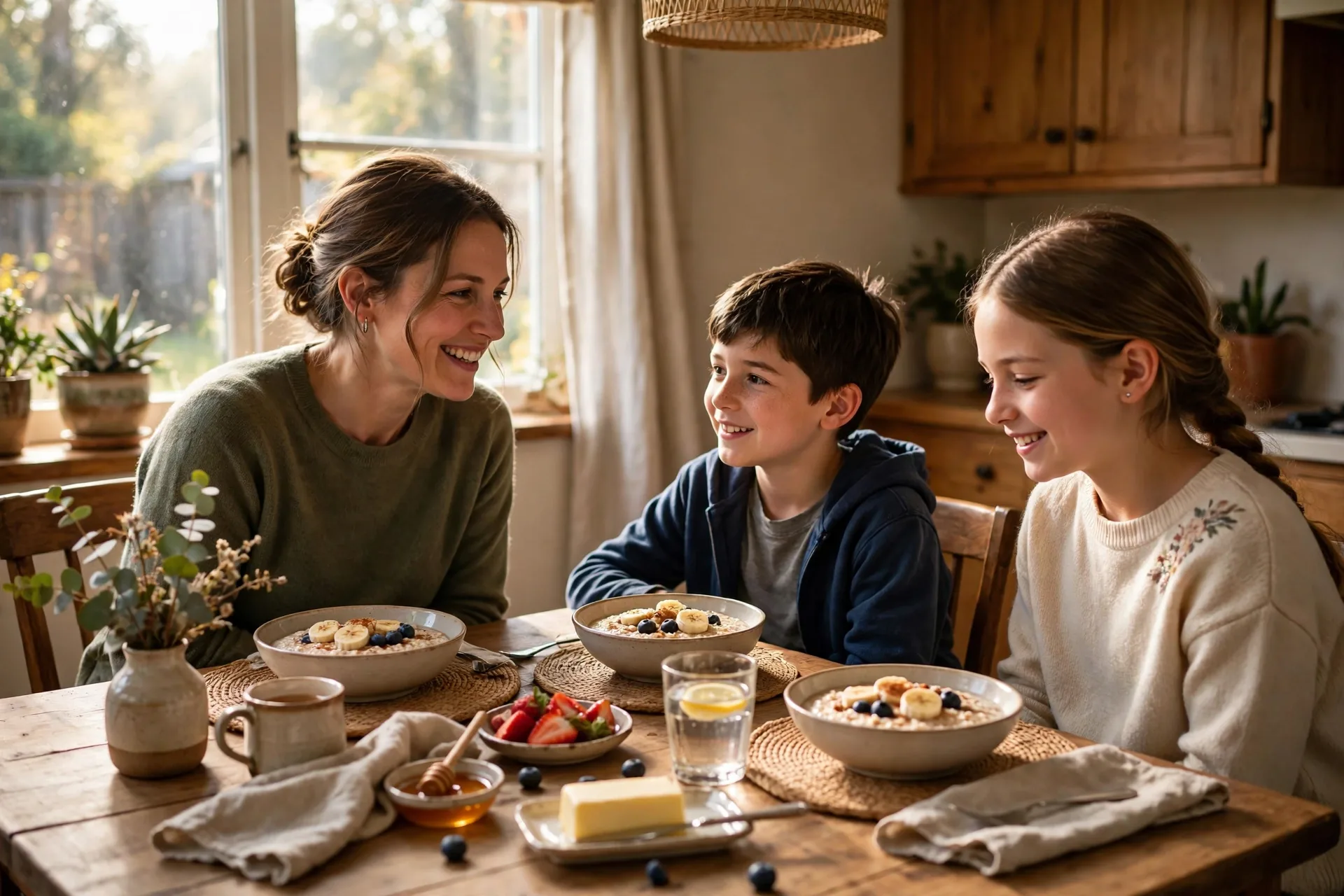
50. Keep a “gratitude minute” at breakfast. One minute at breakfast, everybody says one thing they are grateful for: the toast, the sunshine, the dog, the fact that the baby slept. The minute works because gratitude is easiest when it is small and daily, and breakfast is the one meal where everybody is already sitting down. Kids who practice gratitude at breakfast carry it into the day, and the practice costs sixty seconds. On the hard mornings, the gratitude minute is the thing that reminds you the day started with something good, and that reminder sets the tone for everything after it.
51. Set a “monthly mom audit” to drop one thing. Once a month, look at everything you do and drop one thing: a commitment that drains you, a routine that no longer fits, a standard nobody asked you to keep. The audit works because a mom’s list only ever grows, and nothing on it ever leaves unless somebody removes it on purpose. Dropping one thing a month is twelve things a year, and twelve dropped things is a lighter life. The audit is not about doing less for your family, it is about doing less of the things that do not matter, so you have more left for the things that do.

Shop This Post
The three things that actually power the systems in this guide:
| Product | Used For | Price |
|---|---|---|
| Play-Doh — 10-Pack of 2oz Colors |
The independent-play bin that buys you dinner-cooking time (tip 10) | Check Price |
| Flameless LED Tea Light Candles |
The evening wind-down ritual (tip 20) | Check Price |
| DASH Hot Air Popcorn Popper — 16 Cups |
Friday movie night, the week’s finish line (tip 21) | Check Price |
Frequently Asked Questions
Where do I even start if everything feels chaotic?
With exactly one tip: the launch pad (tip 2) if mornings are the worst, or the one list (tip 16) if your head is the messiest room. Systems grow tip by tip, week by week. Nobody installs all 51 on a Tuesday, and anyone who says they did is lying to you on the internet.
Do these work with a baby and a toddler?
Yes — this guide is written from exactly that season (mine are 4 and 2). Some tips shrink: the “quiet twenty minutes” might be five, with a baby in one arm. Tip 18, lowering the bar, is the real first tip of the baby year. The systems bend; they don’t break.
I work outside the home. Does this still fit?
Most of it, yes — these systems are about decisions, not about being home all day. The launch pad, the four-dinner plan, and the Sunday reset were borrowed from working moms in the first place. If you’re weighing a bigger change in how work fits family life, our Stay-at-Home Mom Jobs guide runs the honest numbers on the work-from-home side.
How long until a routine actually sticks?
A few weeks of repeats for most of these — long enough that the kids start policing the system for you (“Mom, shoes go in the bin!”). And some tips simply won’t fit your house. Swap those out without ceremony. A system serves the family; the family doesn’t serve the system.
What if I keep dropping every system after a week?
Then the system was too big, not you too weak. Shrink it: one dinner planned instead of four, a five-minute tidy instead of ten, one evening ritual instead of a whole wind-down routine. Tiny systems survive bad weeks. Grand ones don’t. And on the days when even tiny fails — that’s a day, not a verdict. If you need a lift, our Encouraging Words for Moms is the page I read on those days.
Start With Two
If this list feels like a lot, here’s the whole philosophy in one line: pick one system tip and one energy tip. The emergency dinner list and your ten minutes. The launch pad and the Friday finish line. Two small systems, kept for a month, will change the texture of your days more than a total life overhaul abandoned by Thursday.
You’re not behind, mama. You’re running an entire household on love and very little sleep, and the fact that you’re reading a guide like this one means you’re already doing the job on purpose. Start with two. Keep them small enough to survive your worst week, not just your best one — that’s the difference between a system and a resolution. A month from now, when the shoes land in the bin without anyone asking, you’ll feel it: the house didn’t get perfect, but it got kinder. That’s the whole goal.
More mom life guides on MamaKinder