
15 Simple Power Pumping Steps and Tips to Lift Your Milk Supply With Confidence

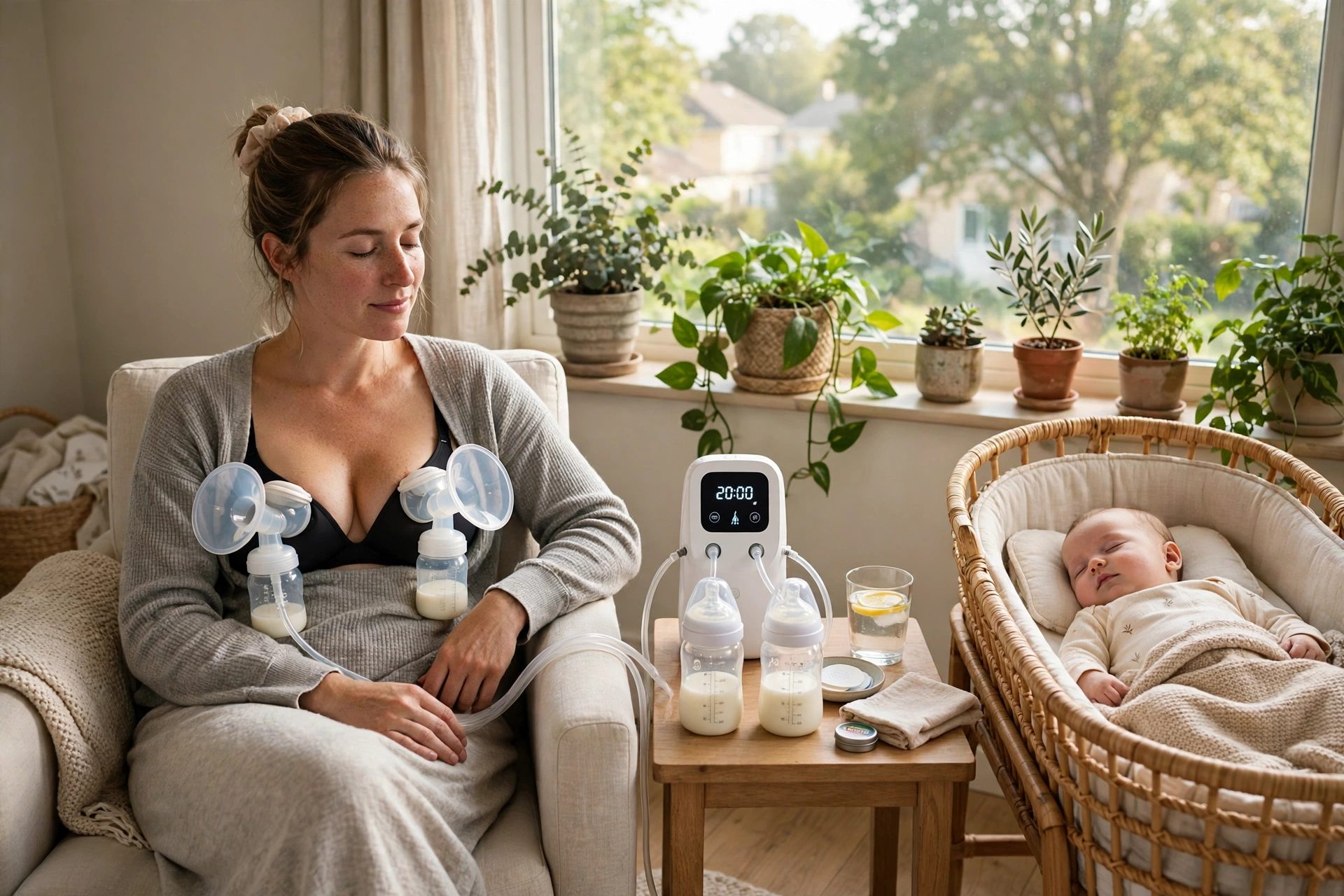
It is 10 at night, the baby is finally asleep, and the freezer stash is smaller than you hoped. You have heard the words “power pumping” from your mom group, your lactation consultant, and half the internet, and you are wondering whether an hour of pumping in bursts can really move your milk supply. The short answer is yes, it can help, because it copies the one thing that has always raised supply: a baby who cluster feeds.
Power pumping is a simple technique. You pump in short bursts with rests in between, for about an hour, once a day, for a few days. The repeated emptying tells your body that demand just jumped, and your body answers by making more milk over the next few days. These 15 simple power pumping steps and tips give you the exact schedule, the setup that makes the hour bearable, and the small moves that make every minute work harder, so you can lift your milk supply with confidence instead of guesswork.
No food, tea, or product is proven to raise milk supply on its own. Power pumping works through frequent, effective milk removal, and that is the honest mechanism behind everything below. If your baby is not gaining weight, or you have too few wet diapers, please talk to your doctor or an IBCLC before you start.
Heads up: this post contains affiliate links. If you buy through them, MamaKinder may earn a small commission at no extra cost to you, and it helps keep these guides free.

First, Is Power Pumping Right for You?
Power pumping is a tool, not a test, and it is not for every mom on every day. It helps most when your supply has dipped after an illness, a stressful week, your period returning, or going back to work, or when your pediatrician or IBCLC has found that your baby is not gaining enough weight on breast milk alone. It is also the classic move for building a small freezer stash before you return to work.
Skip it, or check with an IBCLC first, if you already have oversupply, a history of mastitis or clogged ducts, or pumping that hurts. Pushing an oversupply higher can cause painful engorgement and clogged ducts, and pain is a sign to stop and check your flange fit, not to push through. Power pumping replaces only ONE of your regular pumping sessions, never your feeds, and your baby is still more effective than any pump, so never skip a nursing session just to power pump.
The 60-Minute Power Pumping Schedule
The classic schedule is one hour, once a day. Five steps, three pumping bursts, two rests. Here it is, step by step.
1. Pump for 20 minutes to start the hour. Sit down, get comfortable, and pump both breasts at once for 20 minutes. Start on a low suction setting and turn it up only to a level that feels comfortable, never painful. This first stretch does most of the emptying, and it is the one where you will usually see the most milk. Use the let-down or massage mode first if your pump has one, then switch to expression mode once the milk starts flowing.

2. Rest for 10 minutes, pump off. Turn the pump off and take a real break. Stand up, stretch your shoulders, drink some water, and let your breasts rest. This rest is not wasted time. It is the pause that makes the next burst work, because each restart triggers a fresh let-down and a fresh signal to make more milk. Do not keep the pump running through the rest. The on-off rhythm is the whole point.

3. Pump for 10 minutes more. Put the flanges back on and pump for another 10 minutes. You may see very little milk this time, and that is normal. The milk in this burst is not the measure of success. The stimulation is. Even pumping for what feels like air still tells your body that demand is high.

4. Rest for 10 minutes again. Take the second rest the same way as the first. Massage your breasts gently during this break if they feel full or tender, using light, sweeping strokes toward the nipple.

5. Finish with a final 10 minutes of pumping. This last burst closes the hour: 20 minutes, rest, 10 minutes, rest, 10 minutes, for 60 minutes in total and 40 minutes of actual pumping. When the hour is done, label and store whatever you collected, wash your pump parts, and go back to your normal routine. One hour a day, for three to seven days in a row, is the classic course, and most moms who respond see the change two to three days in.

Set Up Your Session for Success
The schedule is only half the job. The hour is long, and a good setup is what turns it from a chore into a habit you can repeat for a week.
6. Pick your hour, and guard it. Milk volume is usually highest in the morning and falls through the day, so the morning is the best time if you can manage it. A morning nap window works, or the first hour after your baby’s morning feed. If mornings are chaos, pick any hour you can protect from interruptions and use the same hour every day. Guard the hour: put your phone on silent and treat it like an appointment.
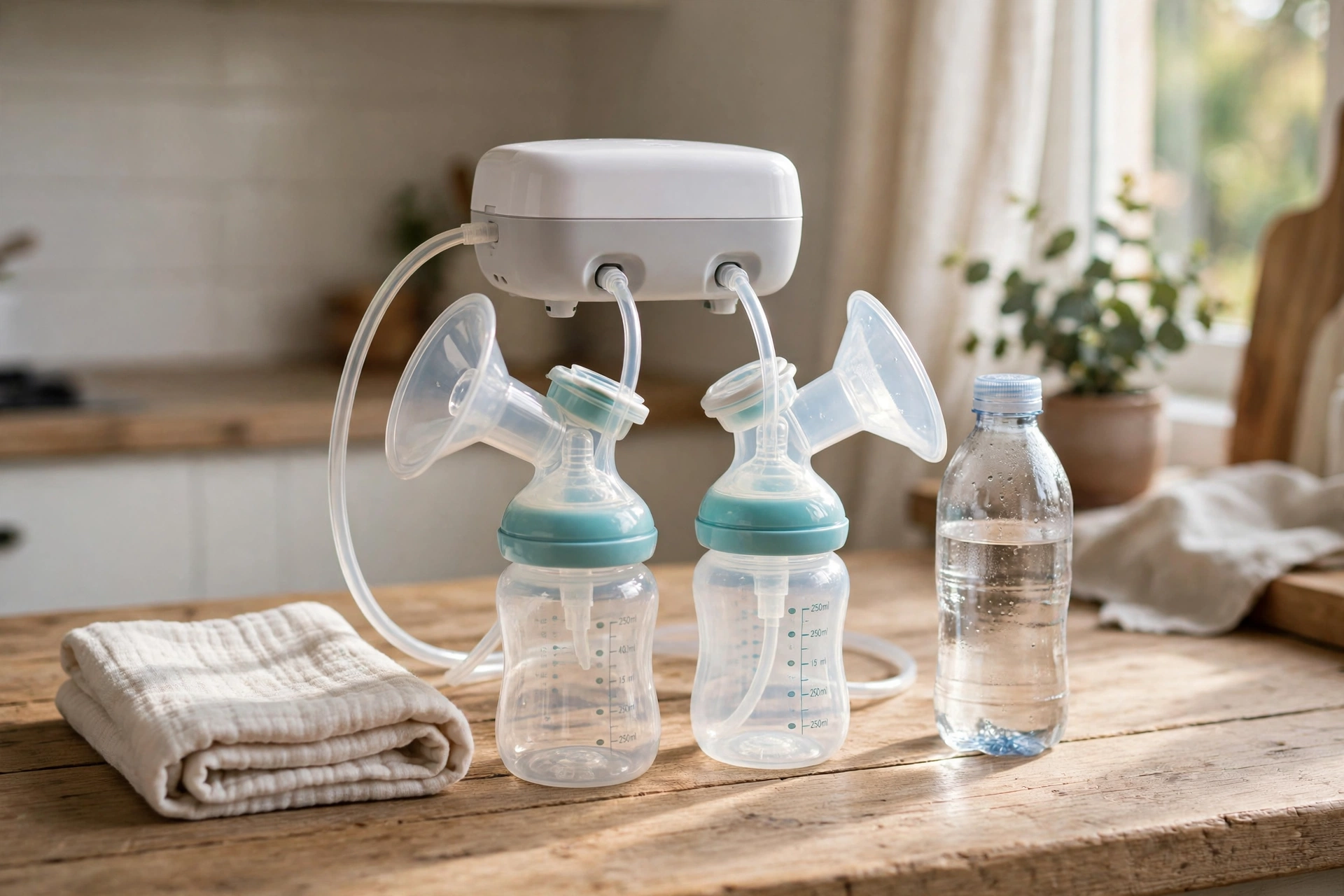
7. Use a double electric pump. A double electric pump empties both breasts at the same time, which saves time and stimulates supply more effectively than one side at a time. Single pumps can work, but they double the hour and halve the signal, so a double electric pump is the right tool for this job. The Spectra S1 Plus Electric Breast Pump is the lactation consultants’ first pick: rechargeable, with up to 270 mmHg suction and 24mm and 28mm flanges included, so you can start with the size that fits and adjust from there.

Spectra S1 Plus Electric Breast Pump
Rechargeable double electric pump with up to 270 mmHg suction, adjustable suction in let-down and expression modes, a night light, and a timer. Includes 24mm and 28mm flanges, bottles, backflow protectors, and tubing.
8. Wear a hands-free pumping bra. Holding two flanges for an hour is the fastest way to hate power pumping. A hands-free pumping bra holds the flanges in place so your hands are free to massage, hold a snack, or just rest. The iLoveSIA 3PACK Nursing and Pumping Bra covers both jobs: clips drop down for nursing, and it holds pump flanges hands-free. It is wire-free, and the three-pack covers the wear, wash, and clean rotation.

iLoveSIA 3PACK Nursing and Pumping Bra
Wire-free nursing and pumping bra with one-handed clips. Drops down for nursing and holds pump flanges hands-free. Three-pack covers the wear, wash, and clean rotation.

9. Check your flange fit before you blame your supply. The wrong flange size is the most common reason pumping hurts or underperforms, and it is also the easiest fix. Your nipple should move freely in the tunnel, with little or no areola pulled in. Friction or rubbing means the flange is too small, and lots of areola pulled in means it is too big. Most pumps ship with more than one size, and the Spectra above includes both 24mm and 28mm flanges, so try the other size before you decide your supply is the problem. If pumping still hurts after a size change, stop and ask an IBCLC to check the fit.

10. Build a small pumping station and keep it stocked. An hour is a long time to sit still, so set up one spot with everything in reach: your pump, your bra, a full water bottle, a snack, your phone or a book, and a few burp cloths for drips. Fill your bottle before you sit down, because thirst hits hard during let-down and you will not want to stand up mid-session. The Hydro Flask 32 Oz Wide Mouth Flex Straw Cap is an insulated stainless steel bottle, 32 oz, that keeps drinks cold for hours, is leak-proof and dishwasher safe, and fits in a cup holder. Tuck a stack of Comfy Cubs Muslin Burp Cloths, 20 x 10 Inches, Pack of 10, White in the basket too: 20 by 10 inches with 6 layers of cotton, so one cloth handles a whole session of drips.

Hydro Flask 32 Oz Wide Mouth Flex Straw Cap
Insulated stainless steel water bottle with a wide mouth flex straw cap, 32 oz capacity. Keeps drinks cold for hours, leak-proof, dishwasher safe, and fits in a cup holder.

Comfy Cubs Muslin Burp Cloths, 20 x 10 Inches, Pack of 10, White
Large 20 by 10 inch muslin burp cloths with 6 layers of 100 percent cotton. Absorbent enough for a whole feed, soft enough for baby’s skin.

Make Every Minute Work Harder
You have the schedule and the setup. These five moves squeeze more signal out of the same hour.
11. Massage and compress while you pump. Breast massage during pumping helps milk flow and empties the breast more fully, and a fuller emptying sends a stronger signal. Make a C shape with your hand, index finger under the breast and thumb on top, and press gently in a slow, pulsing rhythm while the pump runs. Alternate between the left and right breast, and spend a little extra time on any spot that feels full or firm. Keep it gentle. Hard pressure and aggressive kneading can bruise tissue and make things worse.

12. Warm up before you start. Warmth helps the let-down reflex, and a warm compress before a session can make the first ten minutes far more productive. A warm, damp cloth works, and so does a heat pack made for breasts. The Lansinoh TheraPearl 3-in-1 Hot or Cold Breast Therapy Pack with Cover, 2 Count does both jobs: warm it in the microwave for heat before pumping, or chill it for cold relief on sore nipples after. Use heat before the session and cold after, never heat on a breast that is already hot, red, and painful, because that needs a same-day call to your doctor.

Lansinoh TheraPearl 3-in-1 Hot or Cold Breast Therapy Pack, 2 Count
Hot or cold therapy for engorgement, plugged ducts, and sore nipples. Chill for cold relief or warm in the microwave for heat, with a soft cover included. Snaps onto a pump.

13. Soothe sore nipples between sessions. An hour of suction every day can leave nipples sore, and sore nipples make the next session harder to face. A little lanolin after each session protects the skin and keeps small cracks from getting worse. Lansinoh Lanolin Nipple Cream, 1.41 oz, Pack of 2 is 100 percent natural lanolin, with no need to remove it before breastfeeding. If the soreness does not ease in a day or two, or you see cracks or bleeding, get your latch and flange fit checked by an IBCLC instead of just adding more cream.

Lansinoh Lanolin Nipple Cream, 1.41 oz, Pack of 2
100 percent natural, ultra-purified lanolin for sore nipples. No need to remove before breastfeeding, and safe for mom and baby.

14. Look at your baby, or a photo of her. Let-down runs on oxytocin, the same hormone that rises when you hold your baby close, so use it. Pump near your baby if you can, or look at a photo or video of her while you pump, and think about her smell and the weight of her in your arms. Stress does the opposite: it blocks oxytocin and slows let-down, which is why the calmest hour of your day is the best hour to power pump.

15. Track it, store it right, and clean your parts. You cannot tell whether power pumping is working if you do not write it down. Note the date, the hour you pumped, and roughly how much you collected each day, then compare day three with day one. Store the milk in labeled bags, oldest first, and never refreeze thawed milk. Lansinoh Breastmilk Storage Bags, 100 Count hold 6 oz each, freeze flat, and thaw fast. Wash your pump parts after every use with soap and water, following CDC guidance, and when you are away from a sink, Medela Quick Clean Wipes for On-the-Go Cleaning of Breast Pumps, Accessories, and Various Surfaces, Plant-based, Resealable, 1 Pack of 30 are a handy stopgap until you can wash properly at home. The free log below makes the tracking easy.

Lansinoh Breastmilk Storage Bags, 100 Count
6 oz breastmilk storage bags with a double zipper seal. Freeze flat for easy stacking and fast thawing. Pump straight into them from a Lansinoh pump.

Medela Quick Clean Wipes for On-the-Go Cleaning of Breast Pumps, Accessories, and Various Surfaces, Plant-based, Resealable, 1 Pack of 30
Plant-based wipes for quick on-the-go cleaning of breast pump parts and accessories. Resealable pack of 30, a handy stopgap until you can wash parts properly at home.

What Can Quietly Work Against You
A few things can undo a good week of power pumping without you noticing. Long gaps between feeds, more than five hours while pumping, or skipping night feeds for several nights in a row can signal your body to slow down, so keep your normal feeds and pumps in place and let power pumping ADD to them, not replace them. Certain medicines can lower supply, including antihistamines, decongestants, and some hormonal birth control that contains estrogen, so always check with your doctor before starting a new medication while nursing. If you supplement with formula, pump at the same time so your body still gets the demand signal for that feed. If seven days change nothing, take a break and talk to an IBCLC before another round, because a supply problem can have a cause that pumping alone cannot fix.
The Classic Schedule at a Glance
| Step | What to do | Minutes |
|---|---|---|
| 1 | Pump both breasts | 20 |
| 2 | Rest, pump off | 10 |
| 3 | Pump both breasts | 10 |
| 4 | Rest, pump off | 10 |
| 5 | Pump both breasts | 10 |
| Total | One hour, once a day, 3 to 7 days | 60 |
Your Free 7-Day Power Pumping Log
The log from step 15 is a real printable, not a promise. It is one page, with seven days of rows for your power pumping hour, your daily total, wet diapers, and notes, plus a space to record the pattern you spotted. Print it and fill it in for a week.
Download the Free 7-Day Power Pumping Log (PDF)
Want the full 30 days? The 30-Day Power Pumping Journal (coming soon)
The free log covers one week, enough to spot your pattern. The expanded 30-Day Power Pumping Journal will carry the same daily log for a full month, plus a weekly output chart, a flange-fit checklist, and space for your lactation consultant’s plan. It is the paid, expanded version of this free log. There is no buy link yet, because the journal is still being finished.
Shop This Post
| Product | What it is for | |
|---|---|---|
| Spectra S1 Plus Electric Breast Pump | Double electric pumping and power pumping | Check Price on Amazon |
| iLoveSIA 3PACK Nursing and Pumping Bra | Hands-free pumping and one-handed nursing | Check Price on Amazon |
| Hydro Flask 32 Oz Wide Mouth Bottle | Water at your pumping station | Check Price on Amazon |
| Comfy Cubs Muslin Burp Cloths, Pack of 10 | Drips and spills at your station | Check Price on Amazon |
| Lansinoh TheraPearl 3-in-1 Breast Therapy | Warm compress before pumping, cold relief after | Check Price on Amazon |
| Lansinoh Lanolin Nipple Cream | Soothing sore nipples between sessions | Check Price on Amazon |
| Lansinoh Breastmilk Storage Bags, 100 Count | Freezer stash storage | Check Price on Amazon |
| Medela Quick Clean Wipes, Pack of 30 | On-the-go pump part cleaning | Check Price on Amazon |
Frequently Asked Questions
How long does power pumping take to work? Most moms who respond see a change in two to three days, and some need up to seven days of once-a-day sessions. Give your body at least 48 to 72 hours before you judge it, and track it with the free log above.
Does power pumping replace my regular nursing or pumping? No. It replaces only one of your usual pumping sessions. Keep nursing on demand and keep your other pumping sessions, because the extra demand only works on top of your normal routine.
Can I power pump twice a day? You can, if one session a day is not enough and your nipples are coping well, but start with one. Twice a day raises the risk of sore nipples and exhaustion, and stress blocks let-down.
What if I get almost no milk during the short bursts? That is normal, and it does not mean the session failed. The stimulation is the signal, not the volume in the bottle. The increase shows up in your daily total over the next few days, not in the ten-minute burst itself.
When should I stop and call a lactation consultant? Stop and call if pumping hurts even after a flange change, if you have a painful red area with a fever, if your baby has too few wet diapers or slow weight gain, or if seven days of power pumping has changed nothing. An IBCLC can watch one feed or one pumping session and find the cause.
Start With Three
Pick three to start: the classic hour, a hands-free bra, and the free log. Those three alone give your body the signal, make the hour bearable, and show you whether it is working. Add the warm compress and the massage next if you need them. A week from now, when the log shows fuller days and steadier diapers, you will feel it: your body was listening all along. You are doing a hard, beautiful job, mama.
More Breastfeeding Guides
7 Best Hands Free Pumping Bras Worth Buying
Breastfeeding and Pumping at the Same Time
Breastfeeding Tips for New Moms
Postpartum Essentials