Thanksgiving Minute to Win It Games: 16 Quick Challenges
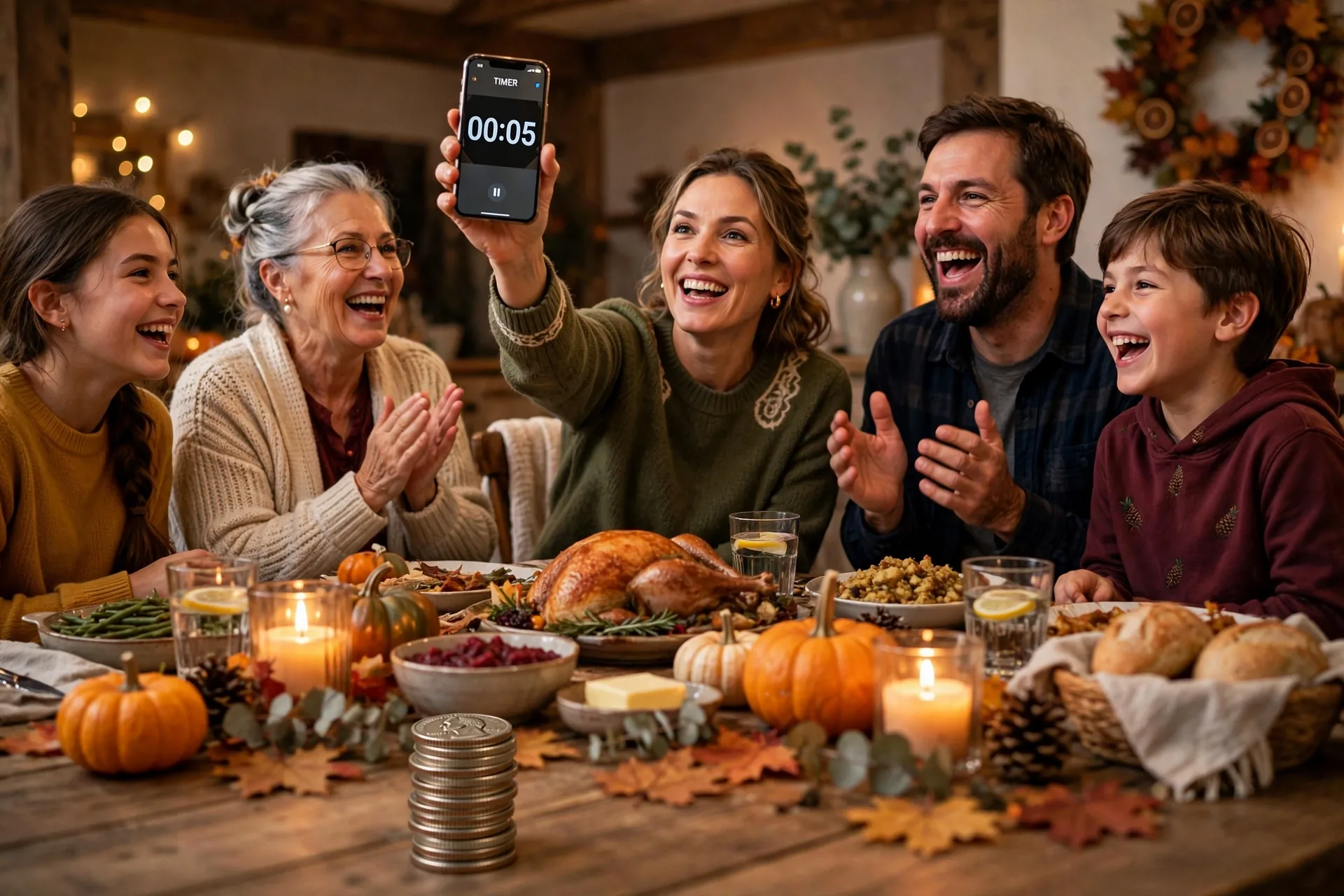
Last Thanksgiving my four-year-old announced at 3 p.m., with dinner still two hours out, that she was “dying of boredom, actually dying.” The cousins were wrestling over the good couch spot, my mother-in-law was guarding the turkey like it owed her money, and I had exactly one tool: the timer on my phone. I said, “Sixty seconds. Stack ten coins with one finger. Go.” The room went silent in a way that felt like a miracle.
Minute to Win It games are exactly what they sound like: one player, one silly challenge, sixty seconds on the clock, everyone else watching and heckling. No board, no pieces, no printing, nothing to buy. Every one of the 16 challenges below uses ordinary household items you already own. Spoons, cups, socks, a potato. If you can find a couch cushion and a handful of coins, you can run all sixteen before dinner hits the table.
The challenges are grouped by energy level, because a game that works at 3 p.m. at the table is not the same game that works at 8 p.m. after pie. Four are calm and seated, four get everyone moving, three are loud team chaos for the post-dessert crowd, and five wind the evening down. Every challenge lists its supplies, rules, how to win, and a little-kid adaptation, with a safety note wherever something flies or rolls.
Heads up: this post contains affiliate links. If you buy through them, MamaKinder may earn a small commission at no extra cost to you. It helps keep these guides free.

Why These Games Own Thanksgiving
Some party games need a sales pitch. These explain themselves in one sentence: “You have sixty seconds, go.” Here is why they work so well on Thanksgiving specifically.
They fill the dead hour. Every Thanksgiving has one: the stretch between arrival and dinner, or the slump after the plates are cleared. These challenges drop into either gap with zero setup and fill five minutes or fifty.
Nothing needs buying. Most minute-to-win-it lists on the internet assume you own craft feathers, mini pumpkins, and a bag of candy corn. This one does not. Every supply below is something already in your house. That matters at 3 p.m. on Thanksgiving Day, when every store is closed.
They fit the actual mix in the room. Ages four to eighty-four, cousins who see each other once a year, the new partner meeting everyone for the first time.
The Ground Rules (Read Once, Play All Day)
One setup covers all sixteen challenges.
The clock: one player or one team attempts a challenge at a time. Everyone else watches, heckles lovingly, and counts down the last ten seconds out loud. When the timer ends, the attempt ends. No “just five more seconds.” Each challenge below names its own win condition; just read the challenge card before each round.
Supplies for the whole day: a phone timer, a pen, and a scrap of paper for scores. Everything else is listed per challenge, and all of it comes from your own house.
Three ways to score the day. Pick one in the morning and stick with it. Simple points: one point per completed challenge, most points at the end wins. Tournament bracket: two players go head to head, winner advances, until there is a champion. Team totals: split into teams, rotate through the challenges as stations, and add up each team’s score. Teams are the best pick for ten or more people, and for shy players who do not want the solo spotlight.
The host’s call is final. If a landing or a stack is questionable, the host decides and the decision stands.
The safety rules, all in one place. A grown-up sets up anything involving throwing or rolling, and clears the flight path of lamps, toddlers, and the good china. Coins and other small items are a choking hazard, so kids under three spectate the coin challenges. A grown-up collects all the small pieces when a round ends, because a penny on the floor will find a two-year-old faster than you will.
Calm and Seated (At the Table, Between Courses)
These four run right where everyone is sitting. No floor space, no noise, no cleanup. Perfect for the dead hour while the turkey rests.
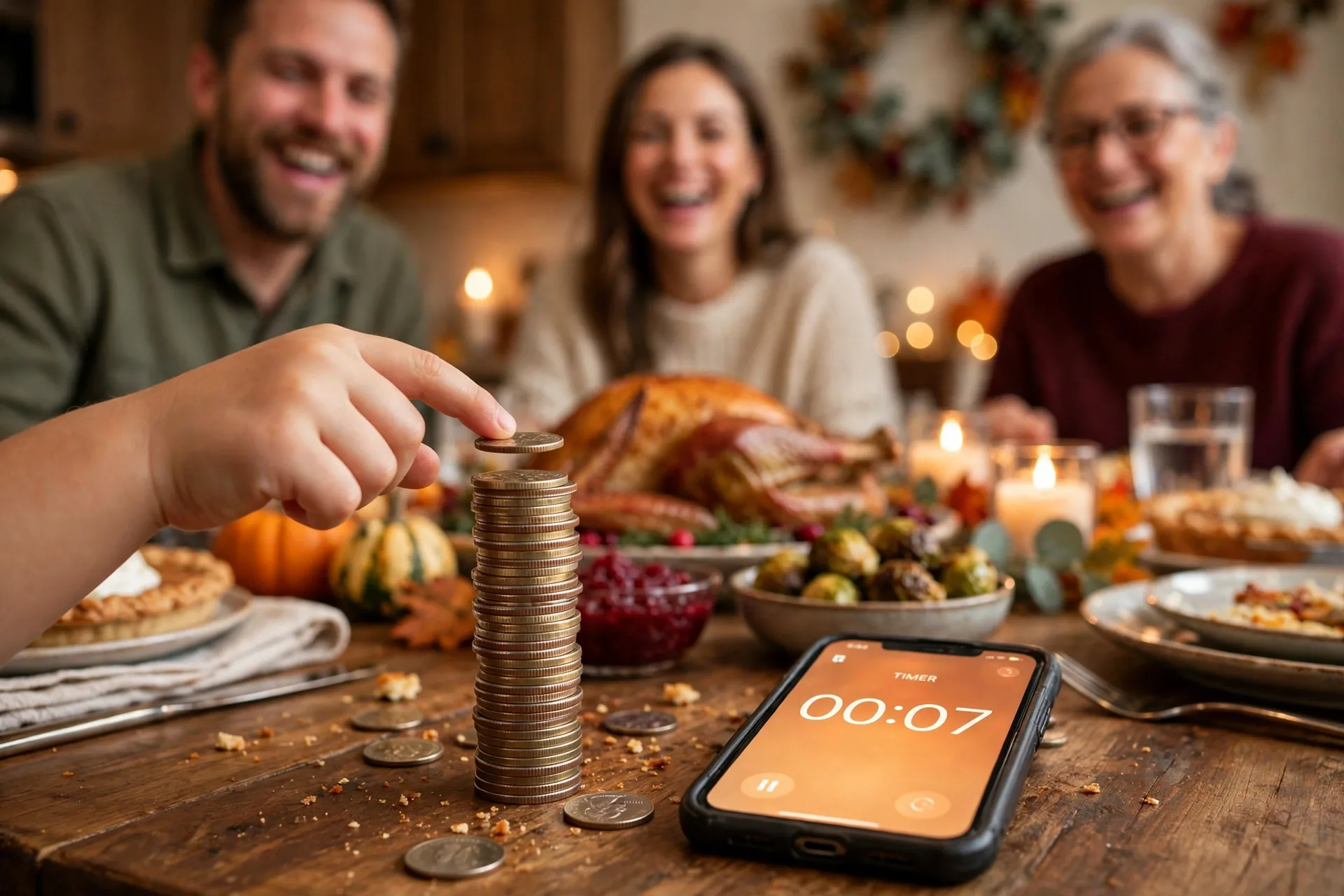
1. One-Finger Coin Tower. Supplies: 10 coins, a flat table. Using only the index finger of your non-dominant hand, stack all ten coins into a tower. You have sixty seconds, and the tower has to stand on its own for three seconds after time ends to count. Tallest standing tower wins. Little-kid version: under-sixes can use any one finger of either hand and only need six coins. Safety: coins are a choking hazard, so this one is ages three and up, and a grown-up gathers every coin when the round is over.
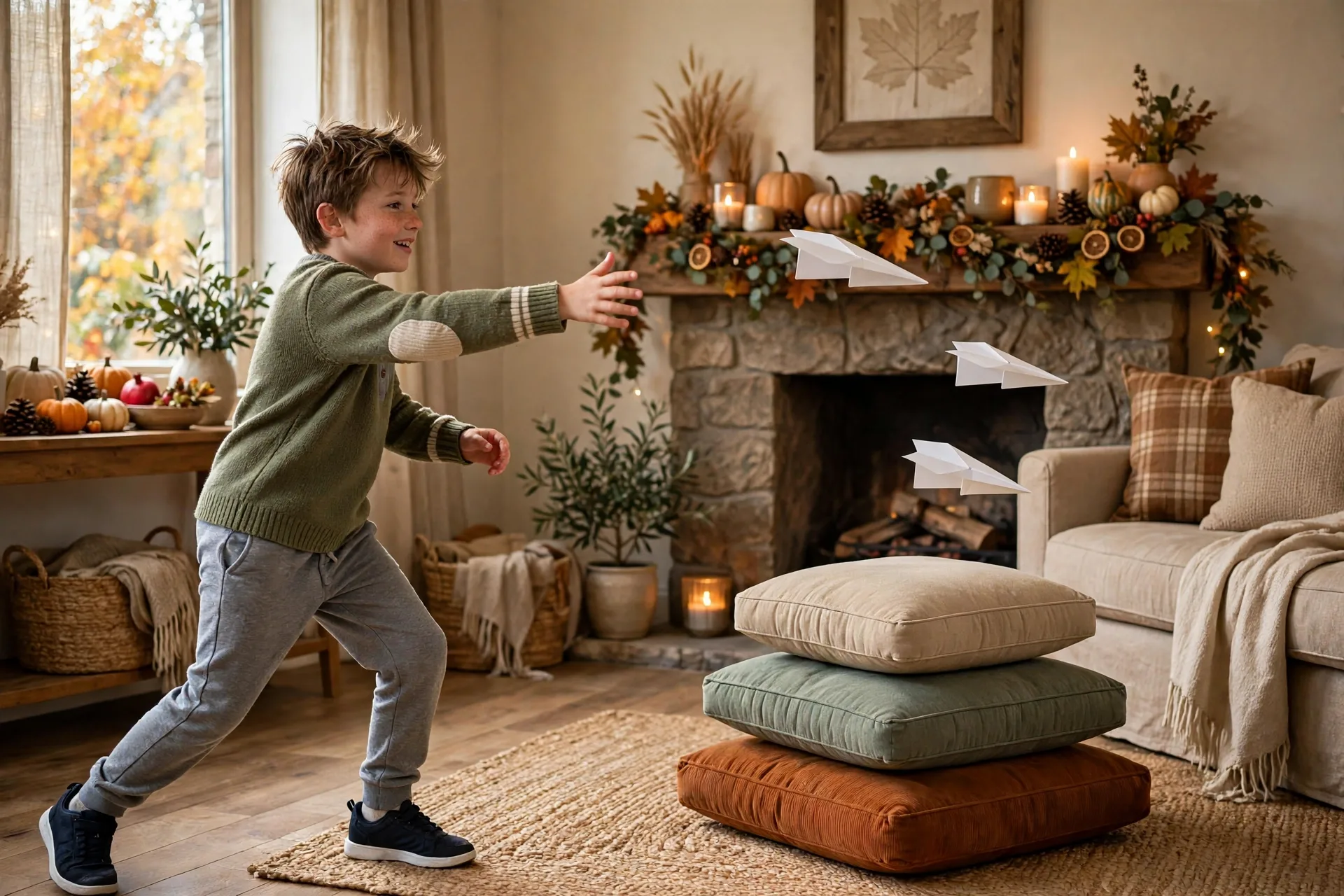
2. Paper Airplane Landing Strip. Supplies: paper, a couch cushion or pillow as the target. Fold any paper airplane you like (folding happens before the clock starts). Then, from behind a line on the floor, throw plane after plane for sixty seconds. Most landings that stay on the cushion win. Little-kid version: move the line closer and swap the cushion for a laundry basket. Safety: a grown-up clears the flight path first. No throwing toward the fireplace, the television, or anyone’s pie.
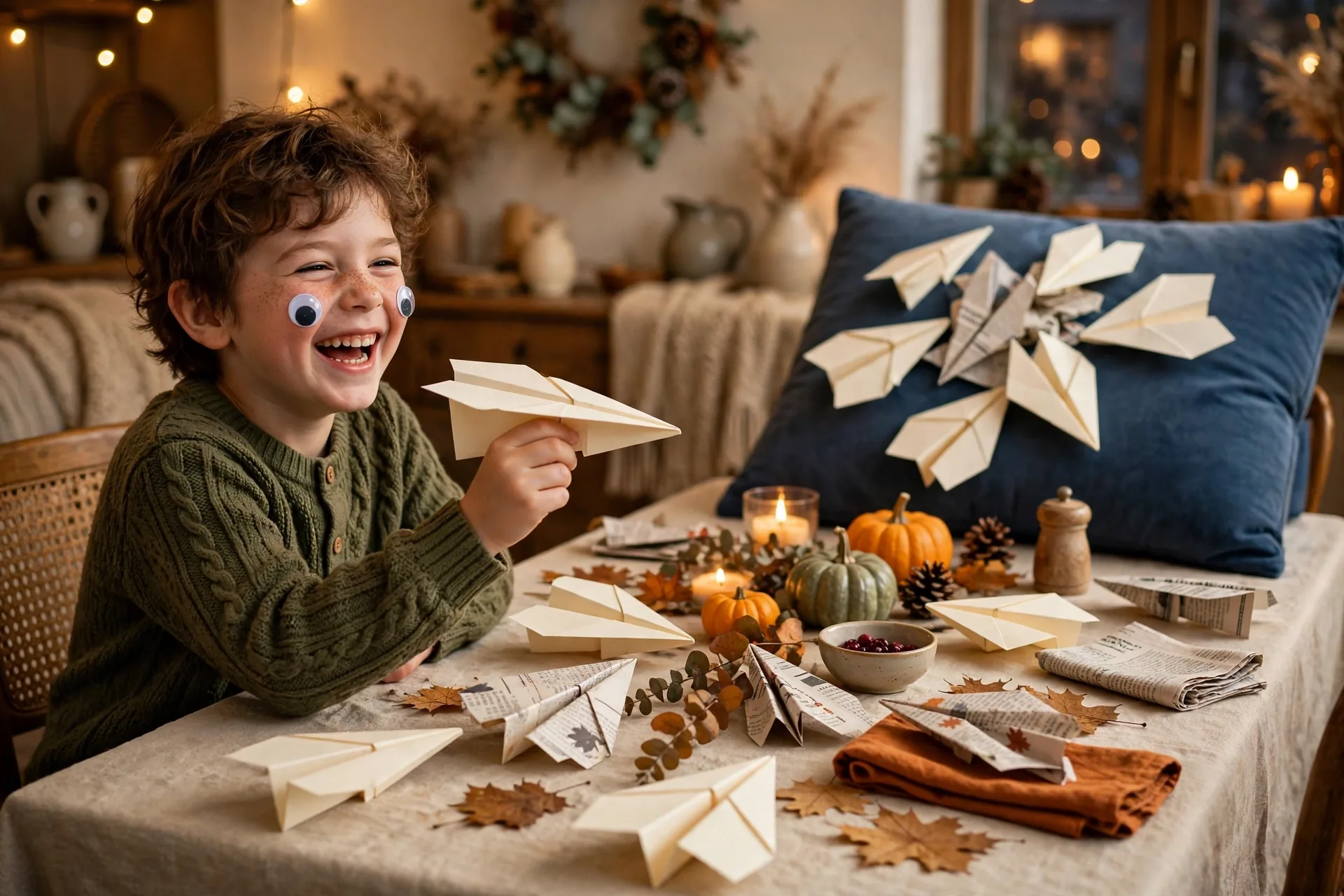
3. Googly-Eye Blitz. Supplies: self-adhesive googly eyes, no mirror allowed. Stick as many googly eyes as you can onto your own face in sixty seconds: forehead, cheeks, chin, the bridge of your nose. No mirror, no checking your phone camera, no help. Most eyes still stuck when time ends wins. Little-kid version: cheeks and forehead only, and a grown-up pre-peels the backing so little fingers just press and stick. Safety: they come off skin easily, but keep them away from real eyes and mouths.
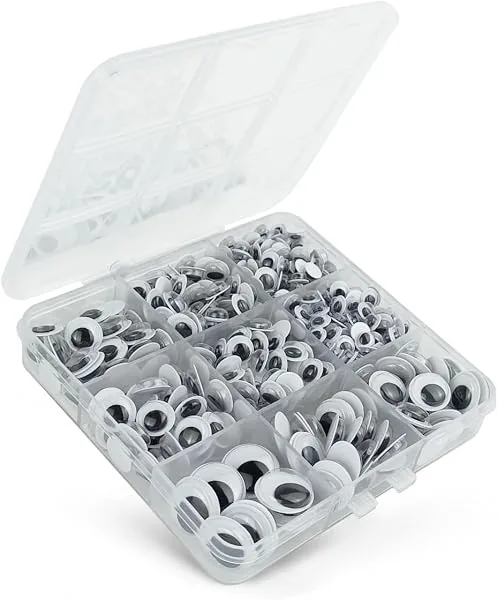
Googly Eyes — 520 Pieces, Self-Adhesive
The eyes behind Googly-Eye Blitz: 520 self-adhesive googly eyes in assorted sizes. Peel the backing and press them straight on. Cheeks and foreheads only for little kids, and keep them away from real eyes.

4. Fork Football Flick. Supplies: a folded paper triangle football, two cups as goalposts. Set the goalposts on the table, mark a flicking line about two feet back, and flick the paper football through the goal with one finger. Most goals in sixty seconds wins. Little-kid version: widen the goal to three cups across and move the line to one foot. No safety issues here, unless someone flicks the football into the gravy, which has happened and was ruled a field goal.
Moving Around (Living-Room Energy)
These four need floor space and get legs involved. Run them after dinner when everyone needs to move, or outside if the weather cooperates.
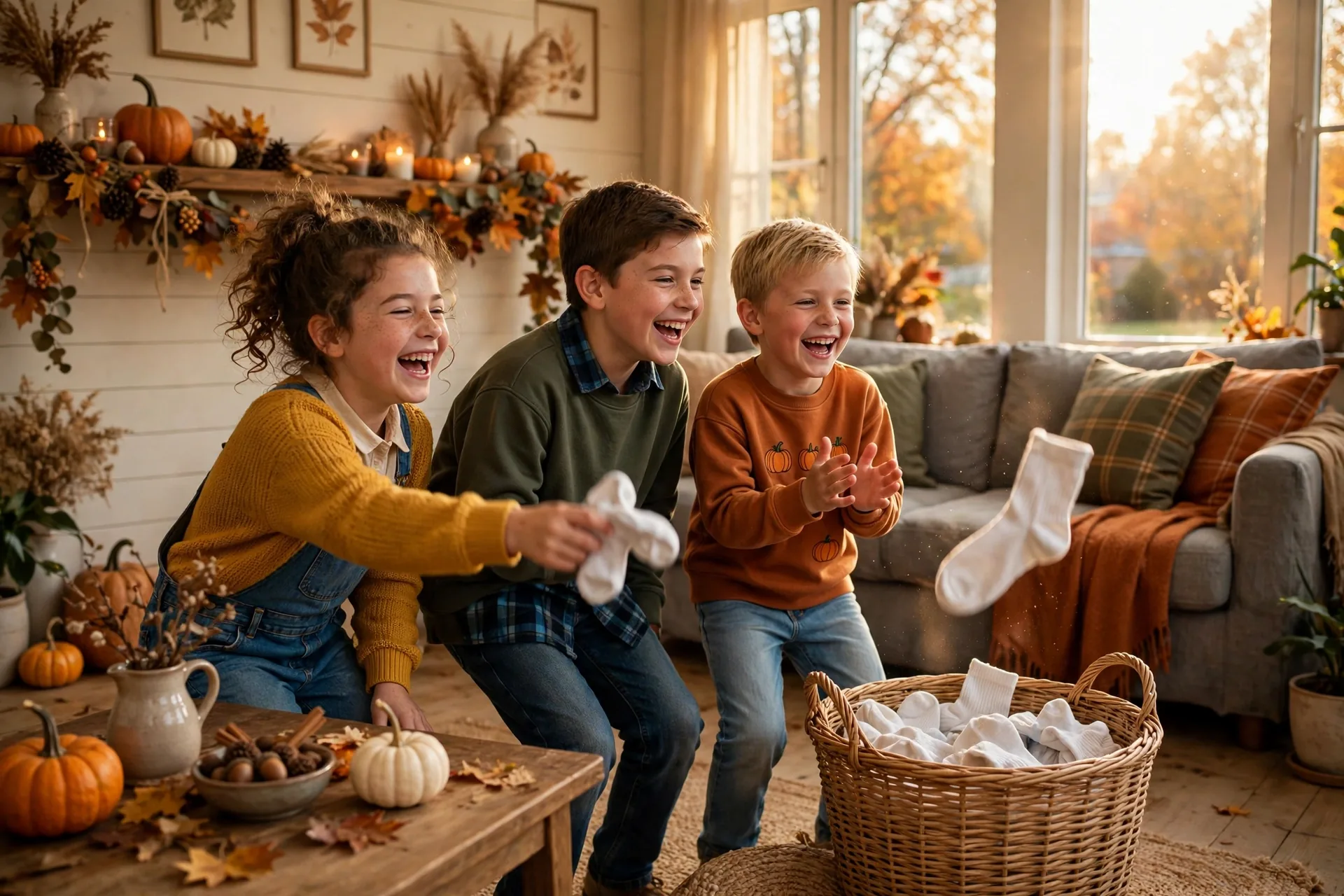
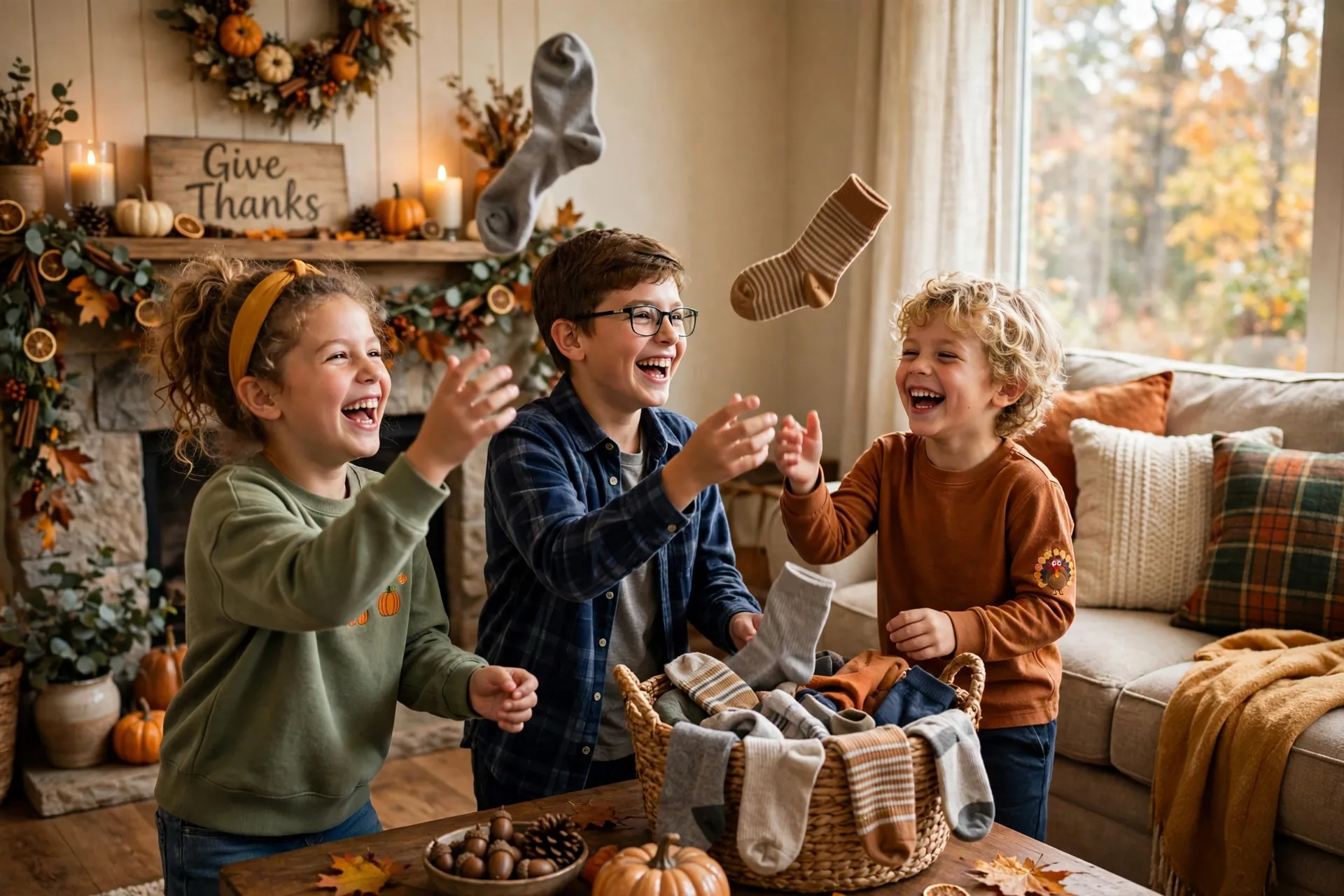
5. Sock Toss Showdown. Supplies: balled-up socks, a laundry basket. Stand behind a line and toss balled socks into the basket. Most socks in when sixty seconds ends wins. Little-kid version: half distance, bigger basket or a wide storage bin. Safety: socks only, nothing hard goes in the basket, and nobody aims at faces. Balled socks are soft; thrown remotes are not, and someone always tries.
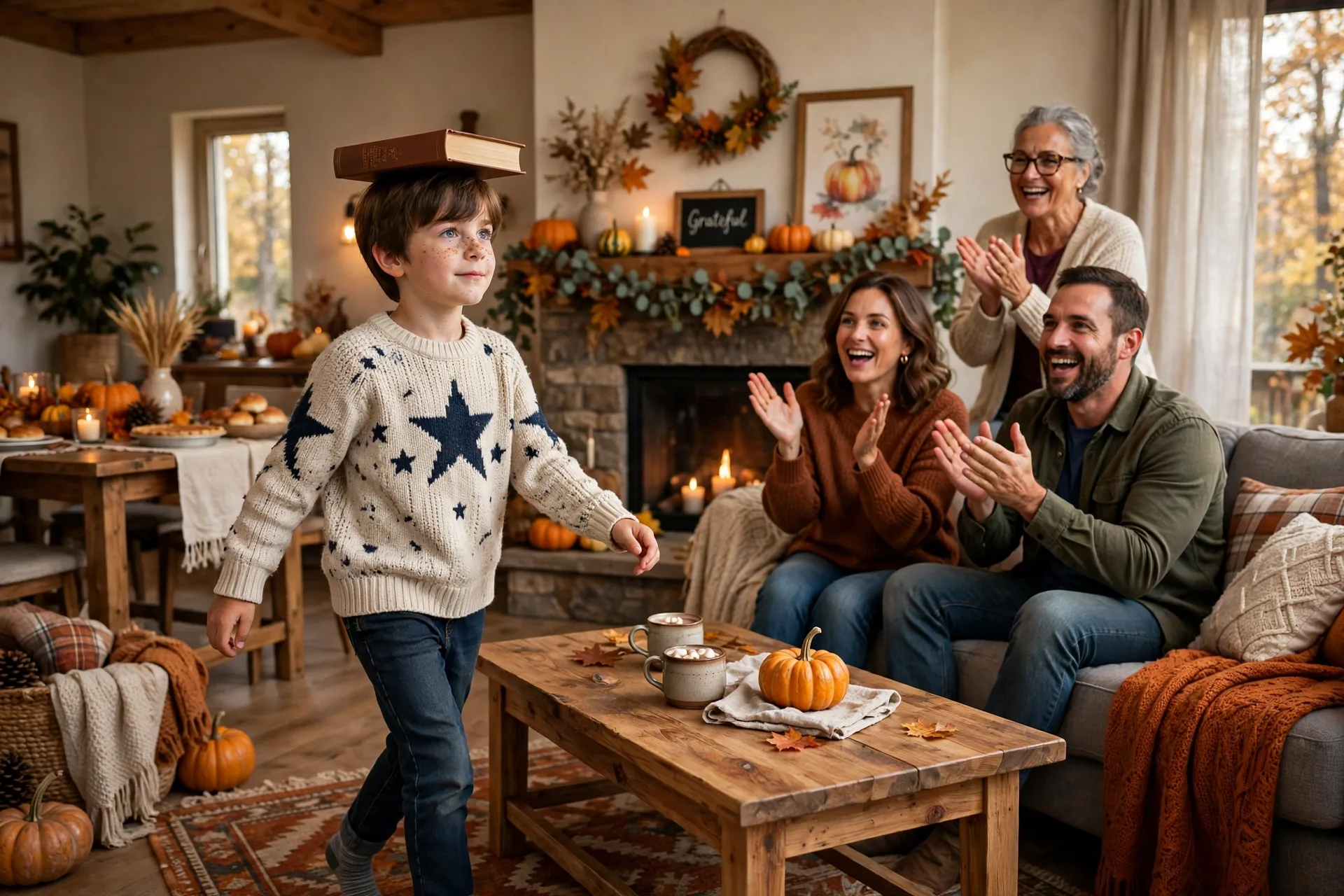
6. Book Balance Walk. Supplies: one hardcover book per player, a marked course (around the coffee table and back works). Balance the book on your head and walk the course. If the book drops, go back to the start line and begin that lap again. Most completed laps in sixty seconds wins. Little-kid version: a lighter paperback, or steady it with one hand. Safety: walking only, no running, and the course gets cleared of sharp corners and stray toys before anyone starts.
7. Pillowcase Stuff Sprint. Supplies: three throw pillows and three pillowcases. Stuff all three pillows into their cases as fast as you can. Fastest total time wins, or most completed stuffs in sixty seconds if everyone goes at once. Little-kid version: one pillow, no timer, a grown-up handles the far corners while the kid pushes the near ones. The softest game on the list, which is exactly why it is the palate cleanser between the rowdier rounds.

8. Cup Pyramid Collapse and Rebuild. Supplies: six plastic or paper cups. Stack them into a 3-2-1 pyramid, knock it down with a soft underhand toss of a balled sock, then rebuild it. Each full stack-knock-rebuild cycle is one point. Most cycles in sixty seconds wins. Little-kid version: a three-cup mini pyramid, skip the knockdown round. Safety: the knockdown toss is underhand and gentle, and the tower goes up well away from drinks, candles, and anything breakable.
Loud Team Chaos (Post-Dessert, Everyone Plays)
Save these three for the coffee-and-pie phase, when the little kids are wired, the grown-ups are loose, and the volume limit is officially off. Split into two teams for all three.
Keep the prizes cheap and instant: glow-stick bracelets for the winning team double as party favors. A grown-up cracks and activates the sticks; little hands do not do the bending.

Glow Sticks — 100 Pack
The winner prize that doubles as a party favor. Hand out glow-stick bracelets to the winning team, and the 100-pack covers the whole table. A grown-up cracks and activates the sticks; little hands don’t do the bending.
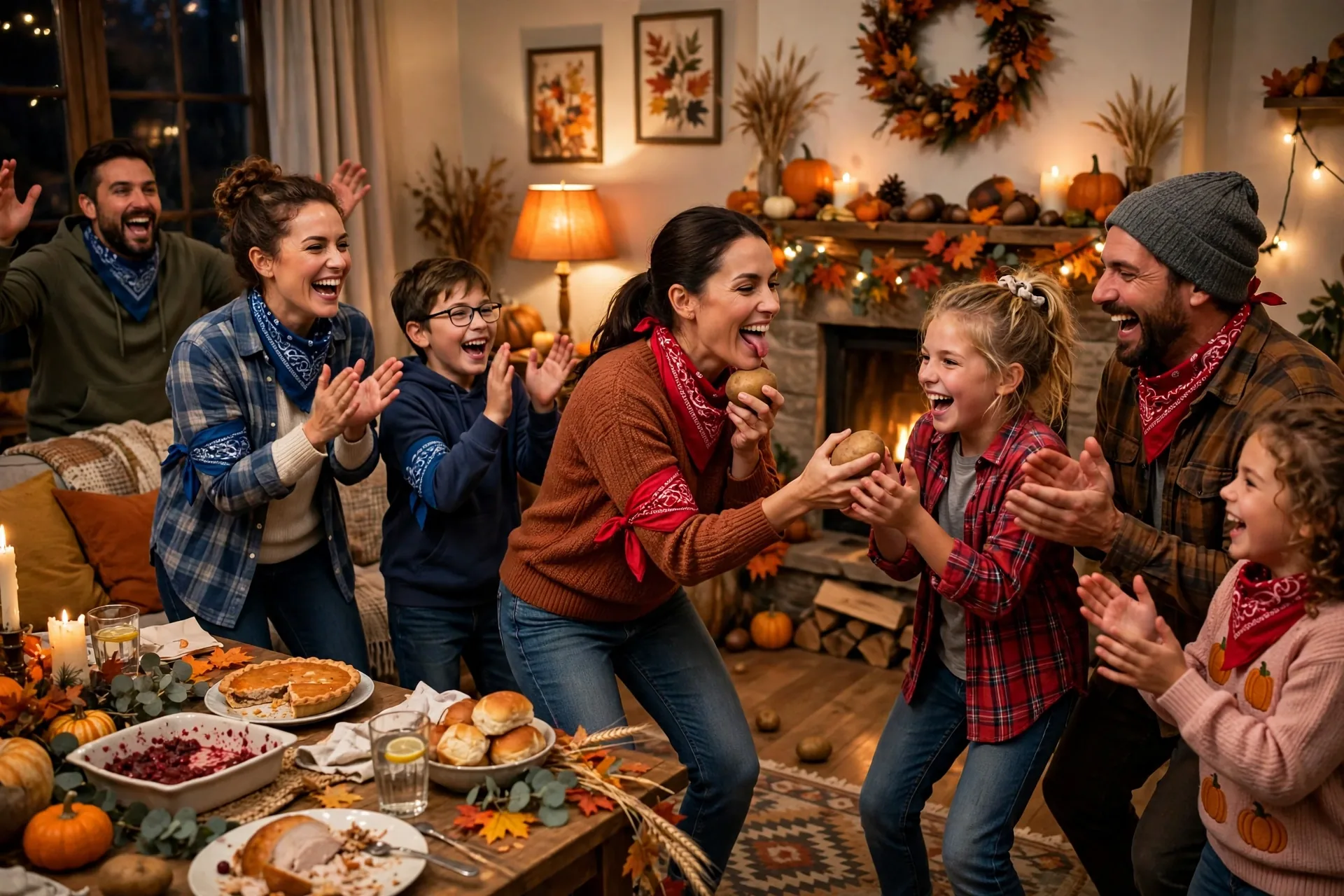
9. Potato Chin Pass. Supplies: one potato per team. Each team lines up. The first player tucks the potato under their chin, no hands, and passes it chin-to-chin down the line. Every successful handoff is one point. Drop it and the team restarts from the front of the line. Most completed passes in sixty seconds wins. Little-kid version: kids can use hands to receive and chin to pass, or swap the potato for a soft plush toy. Safety: gentle passes only. No lunging, no head-butting. Potatoes are harder than they look.
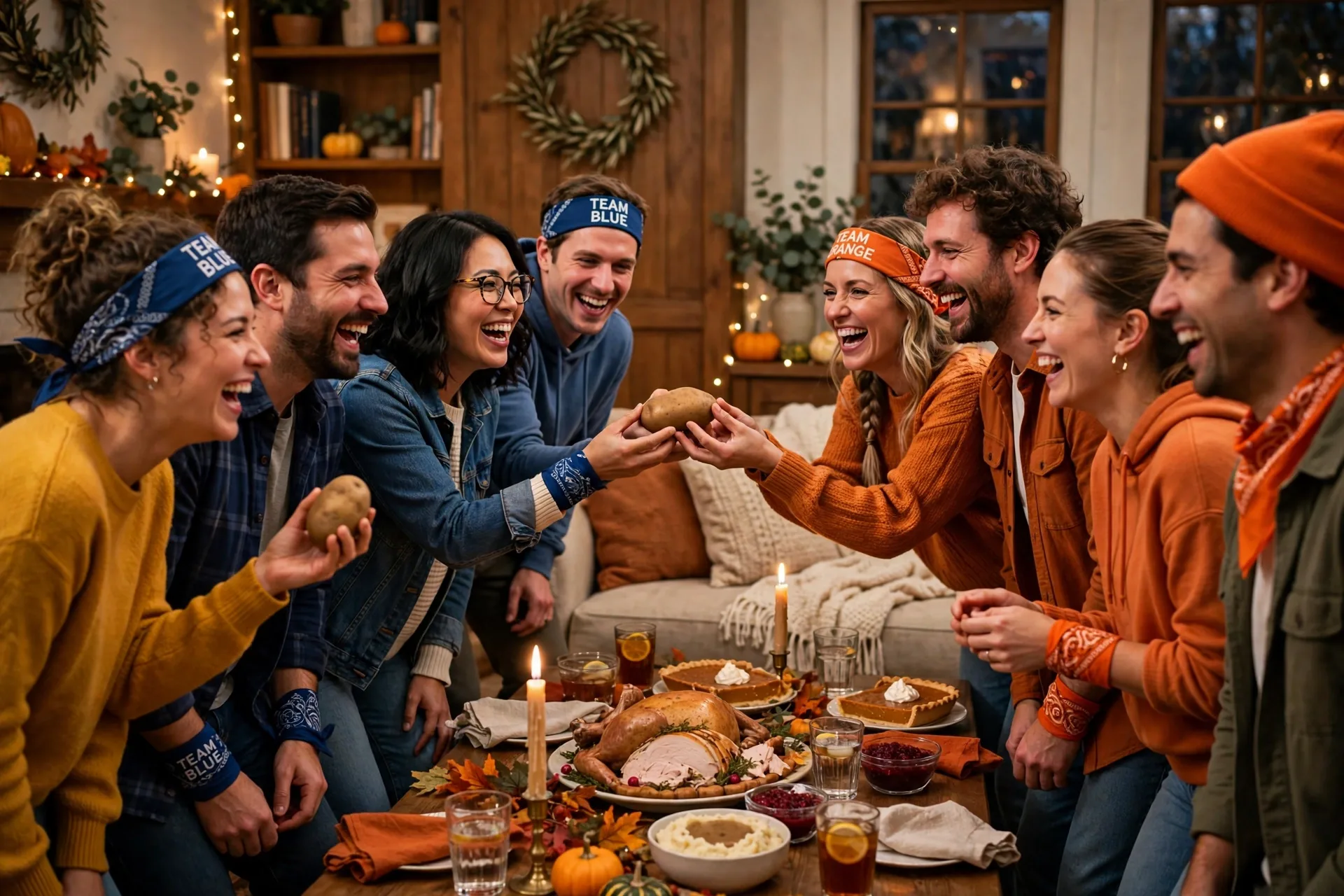
10. Napkin Fan Relay. Supplies: paper napkins, one paper plate per team as a fan. Mark a finish line across the table. The first player uses only the paper plate to fan their napkin across the line, then tags the next teammate. Most completed crossings in sixty seconds wins. Little-kid version: shorter distance, and they can just blow the napkin directly. Watching a grown-up fail at the plate technique is half the entertainment. No safety issues: it is a napkin and a paper plate.

11. Broomstick Turkey Limbo. Supplies: a broom or a wrapping-paper tube, held by two grown-ups. Classic limbo with a timer twist: players take turns ducking under the bar, and every successful pass is one point. After each full rotation, the bar drops lower. Sixty seconds per round, rotate players fast. Little-kid version: kids go first while the bar is high, and they get a cheer whether they clear it or not. Safety: grown-ups hold the bar, never kids. Clear the floor first, and the rule is bend, not dive.
Wind-Down Games (After the Chaos, Before Bed)
These five are the landing. The chaos games burn the energy off; these five bring the room back down, still laughing, still playing, but sitting down and breathing normally. Run them in the last half hour, when the little kids are getting sleepy and the grown-ups are ready for one more round that does not involve running.
12. Thankful Alphabet Sprint. Supplies: nothing but the table. Go around the table in order: the first player names something they are thankful for starting with A, the next with B, and so on. Sixty seconds for the whole table to get as far through the alphabet as it can. Stuck on a letter? The table can shout hints, but the player has to say it. Little-kid version: skip the hard letters (Q, X, Z) and let little ones pass to the next player. Safety: none, unless someone gets too competitive about the letter X.

13. Story Chain in Sixty Seconds. Supplies: nothing. One player starts a Thanksgiving story with a single sentence (“The turkey escaped from the oven…”), then the next player adds one sentence, and so on around the table. Sixty seconds on the clock, and the story has to reach an ending before time runs out. Most sentences added wins, but the real prize is the story itself. Little-kid version: little ones can add a sound effect instead of a sentence, and the grown-up next to them helps shape it. Safety: none.

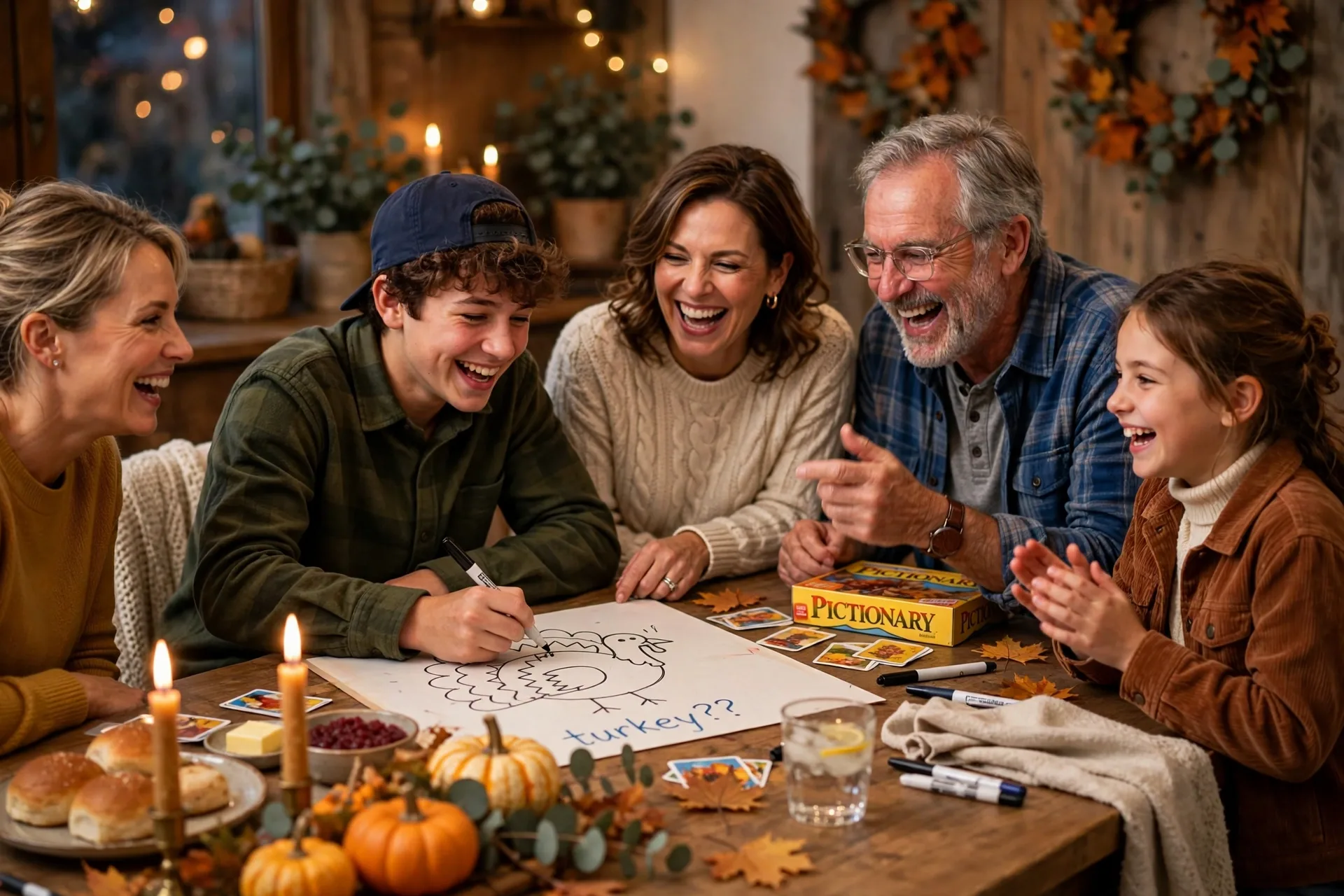
14. Pumpkin Spice Pictionary. Supplies: paper and pens, one per team. One player draws a Thanksgiving word (turkey, pie, pilgrim hat, football) while their team guesses. Sixty seconds per word, most correct guesses wins. The drawer cannot talk, spell, or point at the real thing. Little-kid version: use picture cards the little ones can pick from, and let them draw with a grown-up’s help. Safety: none, unless the drawing is so bad it causes actual tears of laughter.
15. Guess the Gratitude. Supplies: slips of paper and pens. Everyone writes one thing they are thankful for, folds the slip, and drops it in a bowl. The host reads them one at a time, and the table guesses who wrote each one. Sixty seconds to write, then guess away. Most correct guesses wins. Little-kid version: little ones dictate theirs to a grown-up, and their slips get read first so they stay in the game. Safety: none, and the rule is kind guesses only.

16. The Quietest Turkey. Supplies: nothing. The whisper chain: the host whispers a Thanksgiving phrase (“The gravy boat is empty again”) to the first player, who whispers it to the next, all the way around the table. Sixty seconds for the whole chain. The last player says it out loud, and the table compares it to the original. Closest match wins, but the mangled version is usually funnier. Little-kid version: short phrases only, three or four words, and the grown-ups go first to model whispering. Safety: none, and it is the only game on this list that gets quieter as it goes, which is the whole point at 9 p.m.

Timer Options (The Timer Is Half the Game)
The timer is the whole pressure engine. Pick your weapon.
Your phone’s timer. The honest default. Use one that makes a sound, and have someone other than the player run it so nobody is juggling two jobs.
The whole table counts down. Everyone chants the last ten seconds together. Zero equipment, maximum drama, and the best option when little kids are playing.
A kitchen timer. The twisty kind. The ticking sound makes people sweat in a way a silent phone never does. Keep it in the middle of the table where everyone can hear it.
A sand timer for the big rounds. The drama pick: flip it and the whole room watches the sand instead of a screen. A 1-minute hourglass sand timer runs a full minute, exactly the length of these challenges, so it times every round on this page. It is a sand timer, so someone still calls time when the last grain drops, and it is glass, so the host holds it and the kids just watch the sand fall.
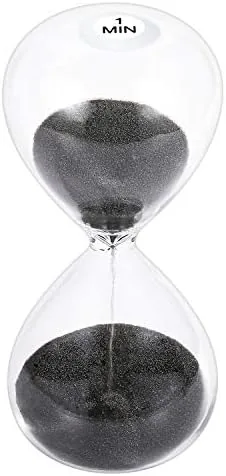
Sand Timer — 1 Minute Hourglass
The drama pick for team rounds and finals: flip it and the whole room watches the sand fall. This one runs a full minute, exactly the length of these challenges. It is glass, so the host holds it.
How to Host It Across the Day
Knowing the challenges is one thing. Placing them in the day is what makes it feel effortless.
Morning setup, two minutes. Gather the day’s supplies into one basket: coins, paper, cups, socks, a laundry basket, three pillows with cases, a potato, a broom, napkins, paper plates. One basket means each round starts in seconds.
The seated four: the dead hour. Run challenges 1 through 4 between arrival and dinner, or while the turkey rests. Nobody leaves the table, nothing gets loud, and the cousins stop wrestling over the couch because they are too busy flicking paper footballs.
The moving four: the post-dinner burn. Challenges 5 through 8 go after the plates are cleared and before dessert. Everyone needs to move at exactly that moment, and these four burn the fidgets off without anyone leaving the house.
The chaos three: after dessert. Challenges 9 through 11 are the finale, for the coffee phase when the volume limit is off and the day needs a big laugh to close on. End with the limbo. There is no better last image of Thanksgiving than Grandpa attempting the broomstick at six inches.
The wind-down five: the last half hour. Challenges 12 through 16 close the night. Everyone is sitting again, the little kids are getting sleepy, and these five keep the laughing going without anyone running. End with the Quietest Turkey. There is no better last sound of Thanksgiving than a whole table whispering.
A Quick Word on Keeping It Kind
These games are chaos-fun, and keeping them that way is the host’s job.
Match the challenge to the ages in the room. The little-kid versions above are not afterthoughts. A four-year-old who gets the closer line and the bigger basket has just as much fun as the teenager going for the record. If the ages are mixed, default to the easier version and let the older players enjoy the handicap.
A grown-up runs the timer when little kids are playing. Not a suggestion. The host runs the clock, clears the flight paths, collects the coins, and knows when to quietly move on if a little one freezes. In our house rules, “pass” is always allowed for kids under seven.
Laugh with the attempts, never at a frozen kid. If a little one locks up mid-challenge, the host smiles and moves to the next player. No spotlight, no commentary.
Keep the small stuff away from under-threes. Coins, googly eyes, and balled socks are all interesting to a two-year-old in exactly the wrong way. Toddlers spectate the small-item challenges from a grown-up’s lap, and join the big-item ones like the limbo and the pillow stuffing.
Shop This Post
Everything used in this guide, in one place:
| Product | Used For | Price |
|---|---|---|
| Googly Eyes — 520 Pieces, Self-Adhesive |
The Googly-Eye Blitz face challenge | Check Price |
| Sand Timer — 1 Minute Hourglass |
Dramatic timer for team rounds and finals | Check Price |
| Glow Sticks — 100 Pack |
Winner prizes that double as party favors | Check Price |
Frequently Asked Questions
What are Thanksgiving minute to win it games?
Sixty-second party challenges with a Thanksgiving crowd in mind. One player attempts a silly physical task while everyone else watches and counts down. The 16 here are grouped by energy: four calm and seated, four moving around, three loud team games, and five wind-down games.
Do I need to buy anything to play these?
No. Every challenge here uses ordinary household items: coins, paper, cups, socks, pillows, a potato, a broom, napkins. Nothing needs a store run, which matters on Thanksgiving Day itself.
How many people can play?
Four is the minimum for the team games to make sense. Up to about eight, play as individuals with simple points scoring. Ten or more, split into two teams and run the challenges head-to-head.
What ages are these good for?
The challenges are written for ages four and up, and every one includes a little-kid adaptation. Under-fours can join the big-item games (pillow stuffing, limbo) teamed with a grown-up, and they make excellent countdown chanters.
What is the best timer to use?
Your phone’s timer is the honest default. For little kids, the whole-table countdown chant is the winner: no equipment, and the chanting is half the fun. A one-minute sand timer is the drama pick for team rounds and finals.
Set the Timer and Go
That is the whole playbook: gather the basket in the morning, run the seated four in the dead hour, the moving four after dinner, the chaos three after dessert, and the wind-down five before bed. Sixteen challenges, zero shopping, one timer.
Our table ended last year with my father-in-law demanding a limbo rematch and the kids begging for “just one more round” until the pie ran out. Yours will too. Happy Thanksgiving, mama.
More Thanksgiving guides on MamaKinder
Thanksgiving Ideas For FamiliesThanksgiving Party GamesThanksgiving Jeopardy GameTablescape Ideas