Thanksgiving Taboo Game: 11 Tricky Cards to Play
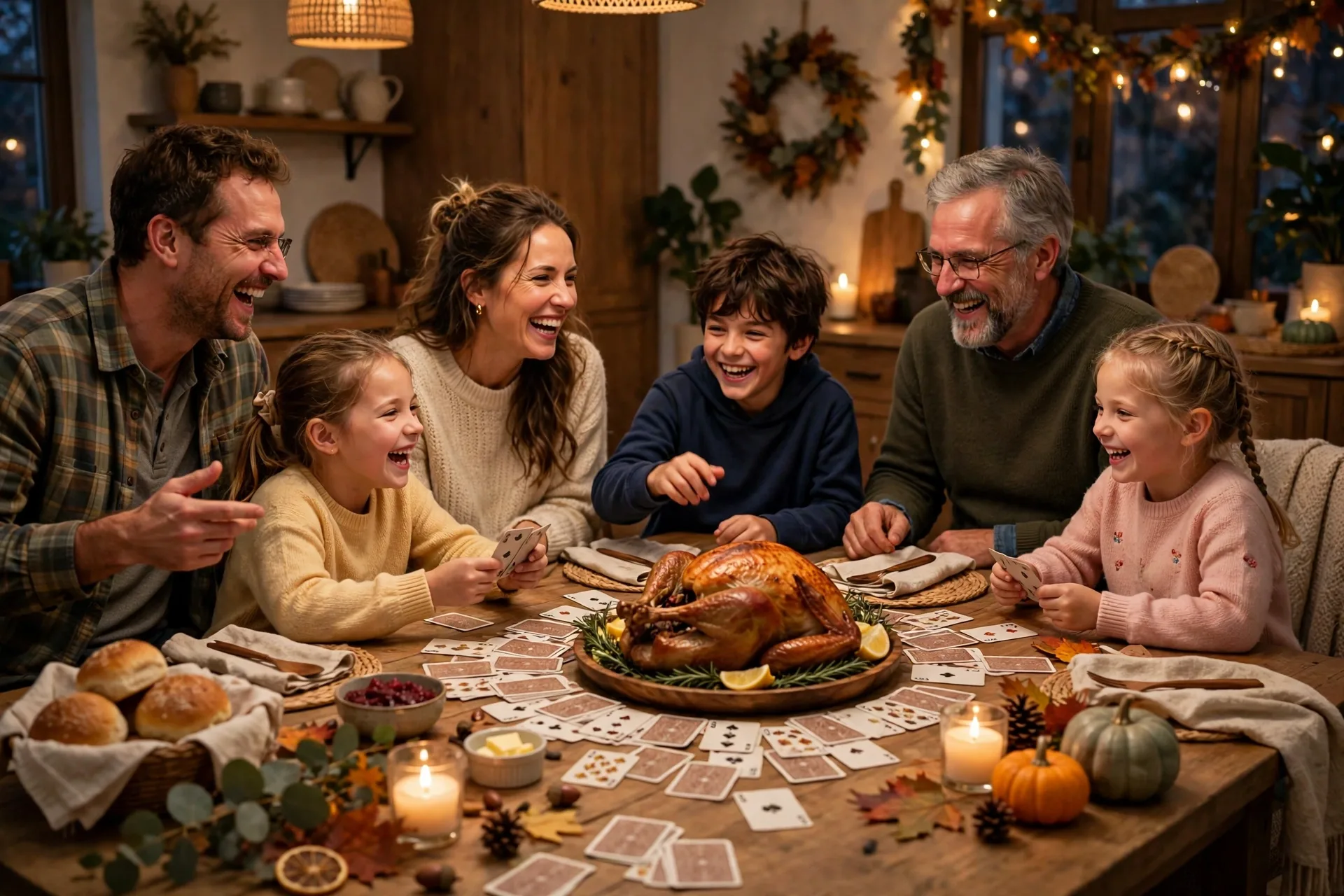
Last Thanksgiving, dinner ended at six and the evening stalled. The kids had been adorable for exactly one meal and were done. The uncles were circling back toward politics. My two-year-old was banging a spoon on a bowl with the focus of a tiny drummer. I grabbed a stack of index cards and a marker and said, “New game. One of you describes, everyone else shouts. Sixty seconds.” By the time my four-year-old screamed “TURKEY!” at a clue that had nothing to do with birds, the whole table was laughing so hard nobody remembered what the uncles had been arguing about.
That is what Taboo does. One player gives clues to get their team to guess a word, but five “taboo” words are banned on every card, and saying any of them kills the card. It is charades’ chatty cousin, the one who cannot stop talking but has to watch every single word. The 11 cards below are the ones I actually use at our table. Each guess word comes with its five taboo words, plus a note on why that card is trickier than it looks. Copy them onto index cards in about ten minutes, grab a timer, and you have the whole post-dessert hour covered.
Heads up: this post contains affiliate links. If you buy through them, MamaKinder may earn a small commission at no extra cost to you. It helps keep these guides free.
Why Taboo Owns the Post-Dinner Slot
Every Thanksgiving has a gap that needs filling: the hour after the plates are cleared, when everyone is too full to move but too restless to sit. Taboo was built for exactly that gap.
It explains itself in one sentence. “Describe the word, don’t say the five banned words.” No board, no pieces, no twenty-minute rules lecture while the gravy gets cold. Grandma gets it in one round. The four-year-old gets it in two.
It fits the actual mix in the room. Ages four to eighty-four, cousins who see each other once a year, the new partner meeting everyone for the first time. The shouting is the point, so even a shy seven-year-old yelling guesses from behind a grown-up’s shoulder feels like part of the team.
It runs on almost nothing. Cards, a timer, two teams. That is the whole equipment list, which matters on Thanksgiving Day, when every store is closed and nobody is driving anywhere.
The laughs compound. Round one is funny. Round three is the kind where someone’s uncle describes gravy without saying “brown,” “sauce,” or “pour” and the table loses it.
The 11 Tricky Thanksgiving Taboo Cards
Copy each guess word onto the top of an index card with its five taboo words underneath. Deal them in waves: easy ones first, sneaky ones after dessert.
The Food Table
1. TURKEY (bird, gobble, feathers, stuffing, roast). Tricky because every natural clue leads straight to the bird. “The main event on your plate” works, but say “dinner” and half the table yells “feast.”
2. CRANBERRY SAUCE (red, berries, jelly, can, wobbly). Tricky because the can shape is the giveaway and you cannot mention it. Good clues lean on the ridges (“it keeps the shape of its container”) or the family fight over whether it should exist.
3. PUMPKIN PIE (dessert, crust, whipped cream, cinnamon, latte). Tricky because the two most famous partners are both banned. Describers end up doing whipped-cream sound effects, which is half the fun.
4. GRAVY BOAT (pour, brown, pitcher, mashed potatoes, lumpy). Tricky because without “pour” and “pitcher” you are describing a tiny boat that holds a sauce, and everyone guesses “canoe” first.
Traditions and History
5. WISHBONE (pull, snap, lucky, wish, bone). Tricky because the forbidden list bans the entire action, so clues go sideways: “the thing two people fight over before the dishes,” or “it dries on top of our fridge until someone remembers it.”
6. PILGRIM HAT (black, buckle, tall, costume, head). Tricky because the buckle is the whole visual and it is banned. “The thing kindergarteners make out of construction paper every November” usually lands it.
7. THANKSGIVING PARADE (floats, balloons, New York, marching band, Macy’s). Tricky because the two proper nouns that define it are both banned. “Giant cartoon characters floating down a street while everyone watches in pajamas” gets there slowly, which is the point.
8. CORNUCOPIA (horn, harvest, overflowing, plenty, basket). Tricky because almost nobody can say it under pressure, and half the table has never said it out loud. If your crowd is stuck, let the describer act out the shape. A house rule beats a dead round.
Family and Feelings
9. LEFTOVERS (fridge, reheat, tomorrow, containers, turkey sandwich). Tricky because the banned list covers every stage of the lifecycle. “What your mother packs for you in foil against your will” finally cracked it at our table last year.
10. NAP (sleep, tired, couch, eyes, doze). Tricky because the five banned words are essentially the word’s entire vocabulary. Describers resort to “the thing Dad does at halftime,” which Dad objects to.
11. GRATEFUL (thankful, blessed, gratitude, appreciate, lucky). Tricky because the obvious synonyms are all banned and the word is an abstract feeling. Save it for the last round. “The word on every Thanksgiving napkin” works about half the time, which makes the wins feel enormous.
How to Play the Thanksgiving Taboo Game
One quick read-through covers every round you will play all day.
What you need: your card stack, a timer (a phone works), and two teams. Optional: a buzzer or bell for the other team to hit when someone slips. No buzzer? They just shout “BUZZ!” and it works exactly as well.
The three roles. Each round, one team sends a describer, who holds the cards and gives the clues. Everyone else on that team guesses out loud. The other team sends a buzzer, who stands behind the describer, watches the card, and calls fouls.
The fouls, read once. The describer may not say the guess word or any part of it, nor any of the five taboo words in any form (plurals and -ing versions count). No rhyming clues (“sounds like”), no spelling it out, no giving the first letter, no gestures, no translating the word into another language. If the describer slips, the buzzer calls it, that card is dead, and the describer moves on. No points for a dead card, no arguing.
A round, step by step. The describer takes the top card, the timer starts (sixty seconds is the classic length; with little kids, thirty seconds keeps it snappy). The team shouts guesses. A correct guess scores one point, the describer grabs the next card, and the team keeps rolling until time runs out. Stuck on a card? Skip it. A skipped card costs nothing but the seconds it ate.
Scoring and winning. One point per correct card, zero for a fouled or skipped one. Two ways to finish, pick one up front: most points after everyone has described at least once, or first team to 20 cards. In our house the describer rotates every round so nobody gets stuck as the permanent clue machine.
A walkthrough with card 1. The card says TURKEY, and bird, gobble, feathers, stuffing, roast are banned. The describer might say, “The big thing in the middle of the table, the reason we are all here.” The team yells “turkey!,” the card lands in the win pile, and the describer flips to the cranberry sauce. That is the whole game.
How to Make Your Own Taboo Cards
The 11 above will carry one Thanksgiving easily, but making your own is half the fun, and it is a great job for the older kids while dinner cooks.
The blurt test. Pick a Thanksgiving word. Now write down the five words everyone would blurt out trying to describe it. Those five ARE your taboo words. If the first words that come to mind are not on your list, the list is wrong. Test each new card on one person first: guessed in five seconds means add a harder taboo word; unguessable in a minute means drop one.
The format. Guess word on top of an index card, five taboo words underneath. A 3-by-5 index card fits one card with room to spare. Keep the handwriting big enough for the buzzer to read over a shoulder.
Print at home. If handwriting eleven cards sounds like a chore, type them in two columns in a document and print a sheet to cut up. We print a lot of game pages at our house, and an ink-tank printer handles that kind of batch printing without the cartridge shuffle.
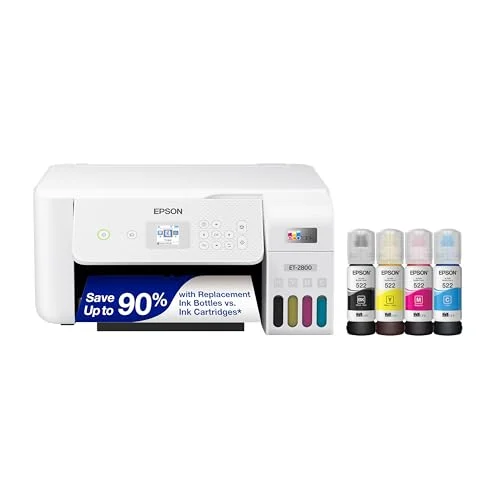
Epson EcoTank ET-2800 Printer
The one upgrade that changes the math on a print-heavy week: a refillable ink-tank printer, so no cartridges at all. Epson rates a single ink set at up to 4,500 black and 7,500 color pages, a whole season of game cards for pennies of ink per page.
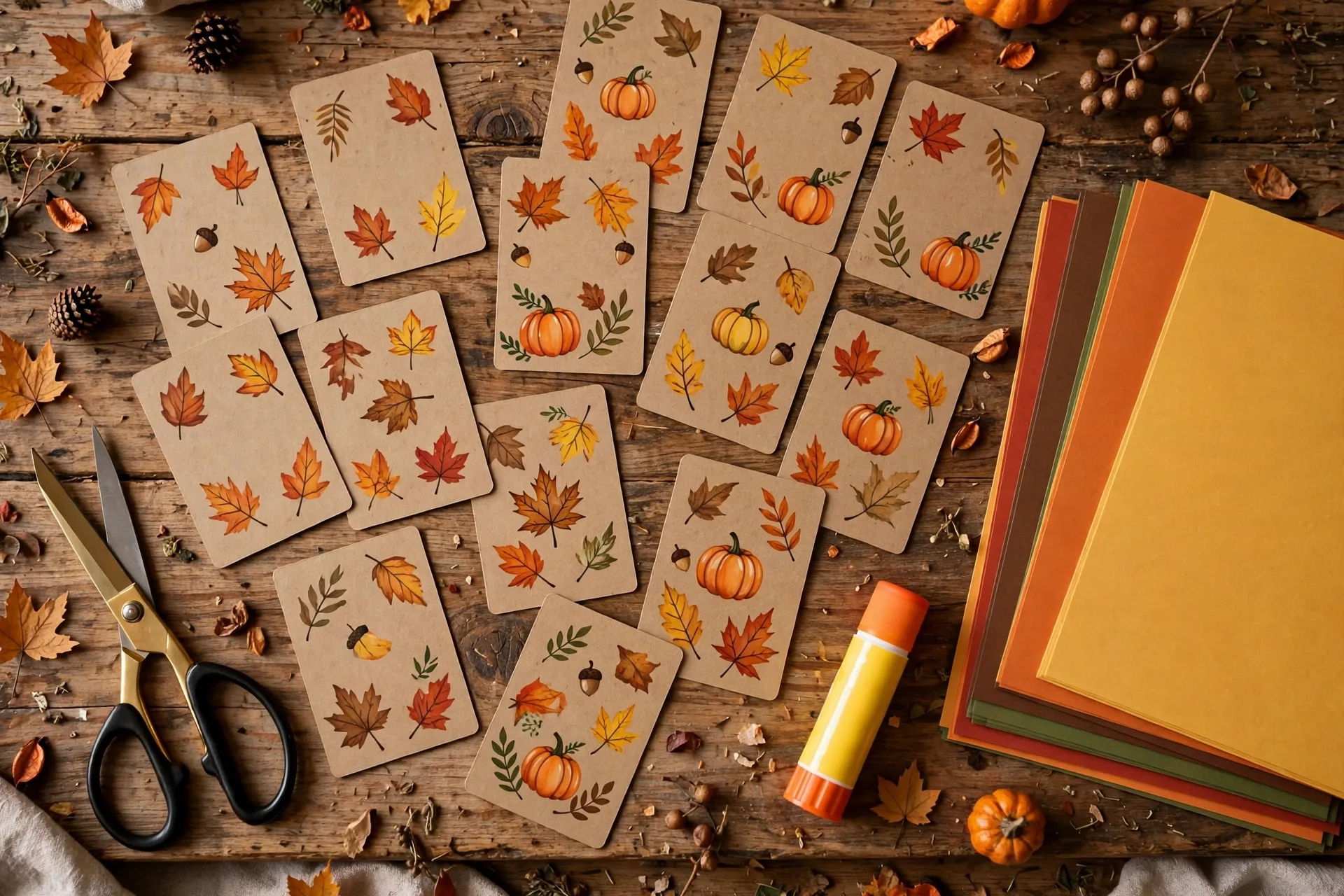
The little-kid art project. Hand the little ones the printed or handwritten cards, some glue, and construction paper, and let them glue each card onto a colored sheet and cut it out. The cards end up sturdier, the little ones have a job during the cooking chaos, and the slightly crooked cutting becomes part of the charm. A grown-up handles the scissors for under-fives.
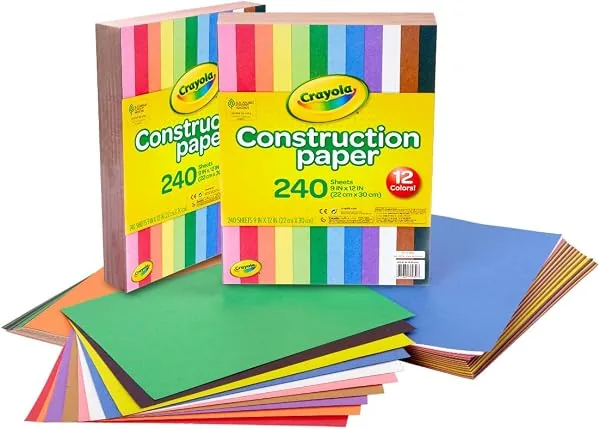
Crayola Construction Paper — 480 Sheets
The paper behind the little-ones’ card-decorating step: a big 480-sheet pack in assorted colors, so the glue-and-cut card project never runs out mid-afternoon.
The last-minute version. No printer and no time? Tear notebook paper into strips, write one card per strip, and fold them into a bowl. The game does not care what the cards look like.
Timer Options (The Timer Is Half the Game)
Sixty seconds of pressure is what makes a frozen describer funny instead of awkward. Pick the timer that fits your crowd.
Your phone’s timer. The honest default. Set it for one minute where the buzzer can see it, and have someone other than the describer run it.
The whole-table countdown. Everyone chants the last ten seconds together. Zero equipment, maximum drama, and the best option when little kids are playing, because the chanting is half the fun for them.
A kitchen timer. The twisty kind. The ticking makes people sweat in a way a silent phone never does; keep it mid-table where everyone hears it.
A sand timer for the finals. The drama pick: flip it and the whole room watches the sand instead of a screen. A 1-minute hourglass sand timer runs a full minute, exactly the length of these rounds. It is a sand timer, so someone still calls time when the last grain drops, and it is glass, so the host holds it while the kids just watch the sand fall.
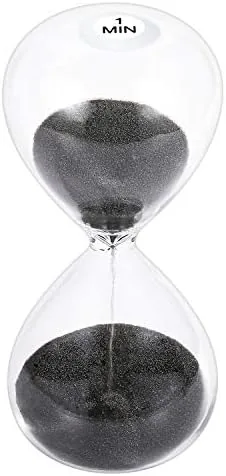
Sand Timer — 1 Minute Hourglass
The drama pick for team rounds and finals: flip it and the whole room watches the sand fall. This one runs a full minute, exactly the length of these rounds. It is a sand timer, so someone still calls time when the last grain drops, and it is glass, so the host holds it.
Team and Age Variations for Thanksgiving Taboo
The classic game assumes grown-ups. These twists keep it fun for the actual ages around a Thanksgiving table.
The classic: two teams, everyone rotates. Best with six to twelve players, two to six per side. Every round has a new describer, so the quiet cousin and the loud uncle both get their turn. This is the version to start with.
Little ones (ages 4 to 6): drop the taboo words. Give the little describer the guess word only, with the five banned words covered or left off. They can say anything except the word itself. It is barely Taboo and completely delightful.
The reverse round. Let a little one be the describer and put the grown-ups on the guessing team. The grown-ups will overthink themselves into wrong answers while the kids’ table howls.
Tweens (7 to 12): drop two or three. Cover the two or three hardest taboo words on each card and play with the rest. It keeps the game challenging without the freeze-ups.
The classroom or big-group twist. The whole team except one person sees the card. They take turns asking that person questions to lead them to the word, without saying any taboo words in the questions. Slower and thinkier, and great for a classroom or youth group.
Three games in one. The same card stack works for Pictionary (draw the guess word, no letters or numbers) and for charades (act it out, no sounds). One set of cards, three games, the whole evening.
The house kindness rules. “Pass” is always allowed, for any age, no questions asked. If a little one freezes mid-round, the host smiles and moves to the next player, no spotlight, no commentary. The buzzer job is the perfect first role for a shy guest.
How to Host It Across the Day
Knowing the cards is one thing. Placing the game in the day is what makes it feel effortless.
Make the cards in the morning. Ten minutes with index cards while the turkey goes in. Leave the stack in a bowl on the sideboard. Visible games get played; games in a drawer do not.
Split the teams at the table. Do it during dessert, out loud, alternating seats so the teams are already interleaved. Nobody has to move when the game starts, and the kids spend dessert buzzing with anticipation.
Appoint one scorekeeper. A pen and a scrap of paper, one column per team. The host cannot also be scorekeeper, timer, and buzzer-watcher. Hand the sheet to the most organized teenager.
Play the easy cards first. Run the Food Table group while everyone is still full and mellow. Save Traditions for the coffee round and Family and Feelings for the finale, when the room is loose and the grateful card can land as the sweet ending it is.
Keep the rounds moving. Sixty seconds per round, new describer each time, no replays of disputed cards. The host’s call is final on any questionable call, and the decision stands. Momentum is the whole game; a five-minute rules debate kills it faster than anything.
Shop This Post
Everything used in this guide, in one place:
| Product | Used For | Price |
|---|---|---|
| Sand Timer — 1 Minute Hourglass |
Dramatic timer for the 60-second rounds | Check Price |
| Epson EcoTank ET-2800 Printer |
Batch-printing the card sheets at home | Check Price |
| Crayola Construction Paper — 480 Sheets |
The little-ones’ glue-and-cut card project | Check Price |
Frequently Asked Questions
What do I need to play Thanksgiving Taboo?
The 11 cards above copied onto index cards, a timer, and at least four people in two teams. A buzzer or bell for calling fouls is nice but optional; the other team can just shout “buzz.”
How many people can play?
Four is the minimum for two teams of two. It plays best with six to twelve, and past sixteen you can split into more teams or run two separate games and compare scores.
Can little kids play Taboo?
Yes, with the kid twists above: drop the taboo words for ages 4 to 6 so they only avoid the guess word itself, let them be the guessers on a grown-up’s team, and always allow “pass.” A grown-up should run the timer and watch over the game when little kids are playing.
What happens if the describer says a taboo word?
The other team’s buzzer calls it, the card is dead (no point), and the describer moves on. No replays, no arguments; plurals and -ing versions count too.
How do I make my own Thanksgiving Taboo cards?
Write a guess word on top of an index card, then list the five words everyone would blurt out describing it. Those are the taboo words. Test each card on one person: guessed in five seconds means it needs a harder taboo word, unguessable in a minute means drop one.
Deal the Cards and Go
That is the whole playbook: copy the 11 cards in the morning, split the teams over dessert, and let the shouting start. Turkey without “bird,” gravy without “pour,” grateful without “thankful.” Somewhere around card eight, someone’s uncle will freeze with the clock running, and the table will laugh harder than it has all day.
Our table ended last year with the four-year-old demanding to describe “a hundred more times” while the uncles argued the wishbone ruling. Yours will find its own version. Happy Thanksgiving, mama.
More Thanksgiving guides on MamaKinder