Toddler Birthday Card for Dad: 7 Handmade Ideas He’ll Keep
A toddler cannot buy a present, wrap a box, or write a single word. But a toddler can hand Dad a card with a paint-covered handprint on the front and watch his whole face change. That is the entire job of a toddler birthday card for dad: a little proof, in smudges and stickers, that small hands love him a lot.
These 7 handmade toddler birthday card ideas for dad are built for ages 1 to 3, so every idea assigns real work to the toddler and leaves the fiddly parts to you. You will need one quiet afternoon (craft time, then drying time) and a stack of cardstock. If you are also planning the party itself, our kids birthday party ideas guide has the full theme map to pair with the card.
Heads up: this post contains affiliate links. If you buy through them, MamaKinder may earn a small commission at no extra cost to you. It helps keep these guides free.
Pick Paper and Paint That Won’t Let You Down
The card is the project, so the paper matters more than it does for ordinary coloring. Use heavyweight cardstock or construction paper in the 60 to 90 lb range for every idea on this list. Thin copy paper wrinkles under wet paint, curls at the edges, and tears when a toddler presses hard. Heavyweight paper keeps marker ink in place, survives a glue stick without bubbling, and holds up in an envelope.
For paint, washable tempera or washable finger paint is the only choice for toddler skin. It stamps cleanly, rinses off hands with soap and water, and comes out of the smock in the wash. Keep the good stuff simple: three or four colors is plenty. A full rainbow on the table is how you end up with brown handprints, because toddlers mix everything together and they are right to do so.
The grown-up’s tools live in a separate cup, out of reach. A fine-tip marker or paint pen for your lettering and the drawn details (balloon strings, toenail dots, the interview answers), a pencil for guide lines you erase later, and scissors that stay in your hand only. When the tools are sorted by owner, nobody argues over them.
The Toddler-Safe Setup (Do This First)
Every card on this list uses non-toxic, washable supplies only. That is the whole rule. Paint means washable tempera or finger paint, never craft acrylic on skin. An adult runs scissors and the glue gun (a regular washable glue stick is fine for toddlers to handle). Anything smaller than a golf ball, buttons, gems, beads, stays in the grown-up’s hand only, because it is a choking hazard.
Set up for success before you call the toddler over. Cover the table with a plastic tablecloth or an old shower curtain, put a smock or an old t-shirt on the artist, and keep a bowl of water and a towel within arm’s reach. Paint-covered toddler hands are predictable; paint on the dog is optional. Work near the sink if you can, and leave every card flat on a drying rack or the kitchen counter overnight. Never stack wet cards.
One more thing: the toddler owns the front of the card and you own the writing inside. That division is what makes each of these ideas work at this age, and it is why Dad can tell exactly whose hand made it.
Quick Picks: Which Card Fits Your Kid?
| If this is your toddler… | Start with |
|---|---|
| Loves getting messy and squishing things | Idea 1. The “Hands Down” handprint card |
| Stands still for about ten seconds at a time | Idea 2, the handprint balloon bouquet |
| Prefers dots and tiny taps to big smears | Idea 3, the thumbprint heart constellation |
| Has a wingspan that surprises you every month | Idea 4. The “I love you this much” fold-out |
| Is basically a walking foot right now | Idea 5, the footprint card |
| Just wants to stick things and scribble | Idea 6, the sticker-scribble collage card |
| Chatters nonstop and answers everything | Idea 7, the dictated “All About Dad” interview |
The 7 Ideas
1. The “Hands Down” Best Dad Handprint Card
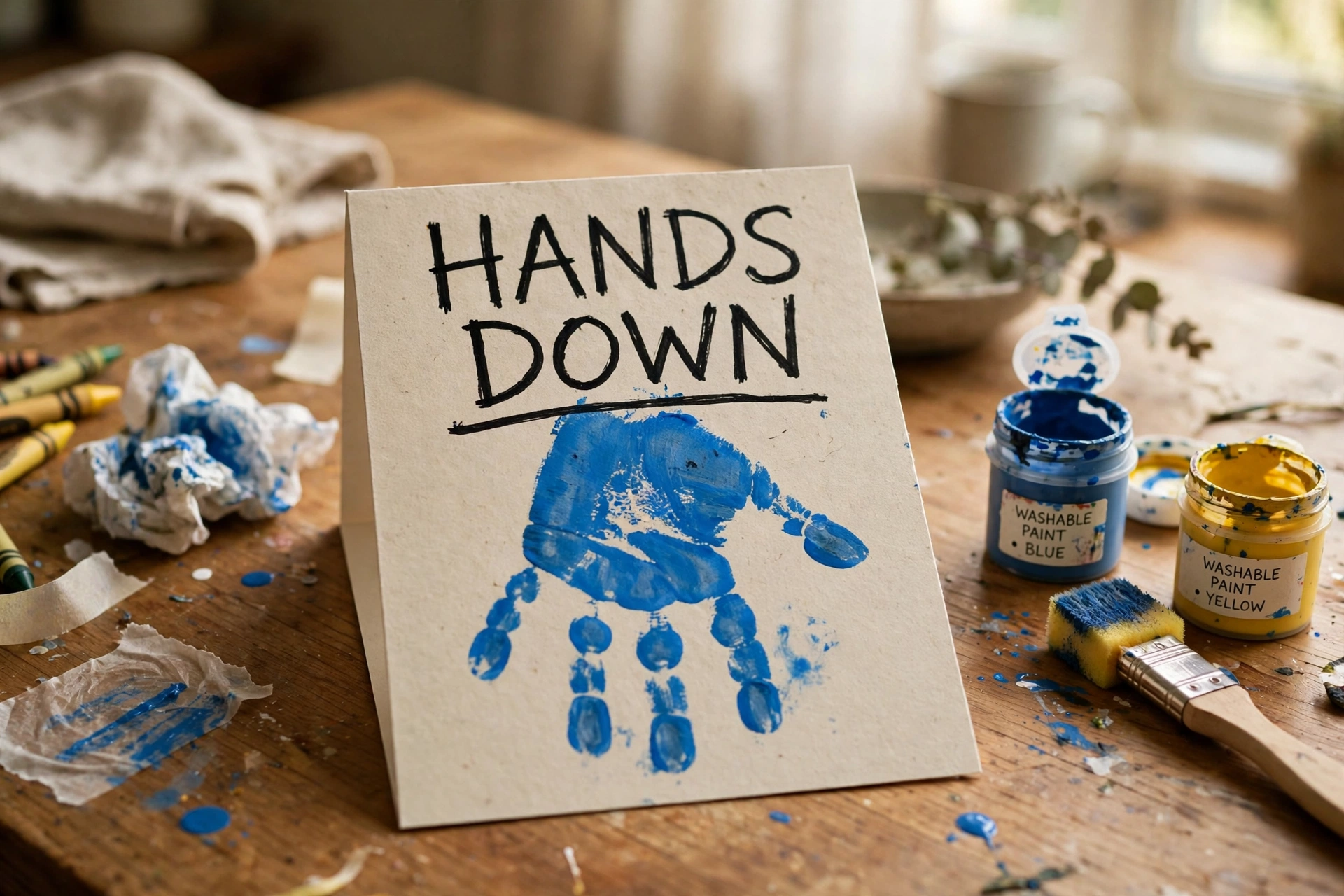
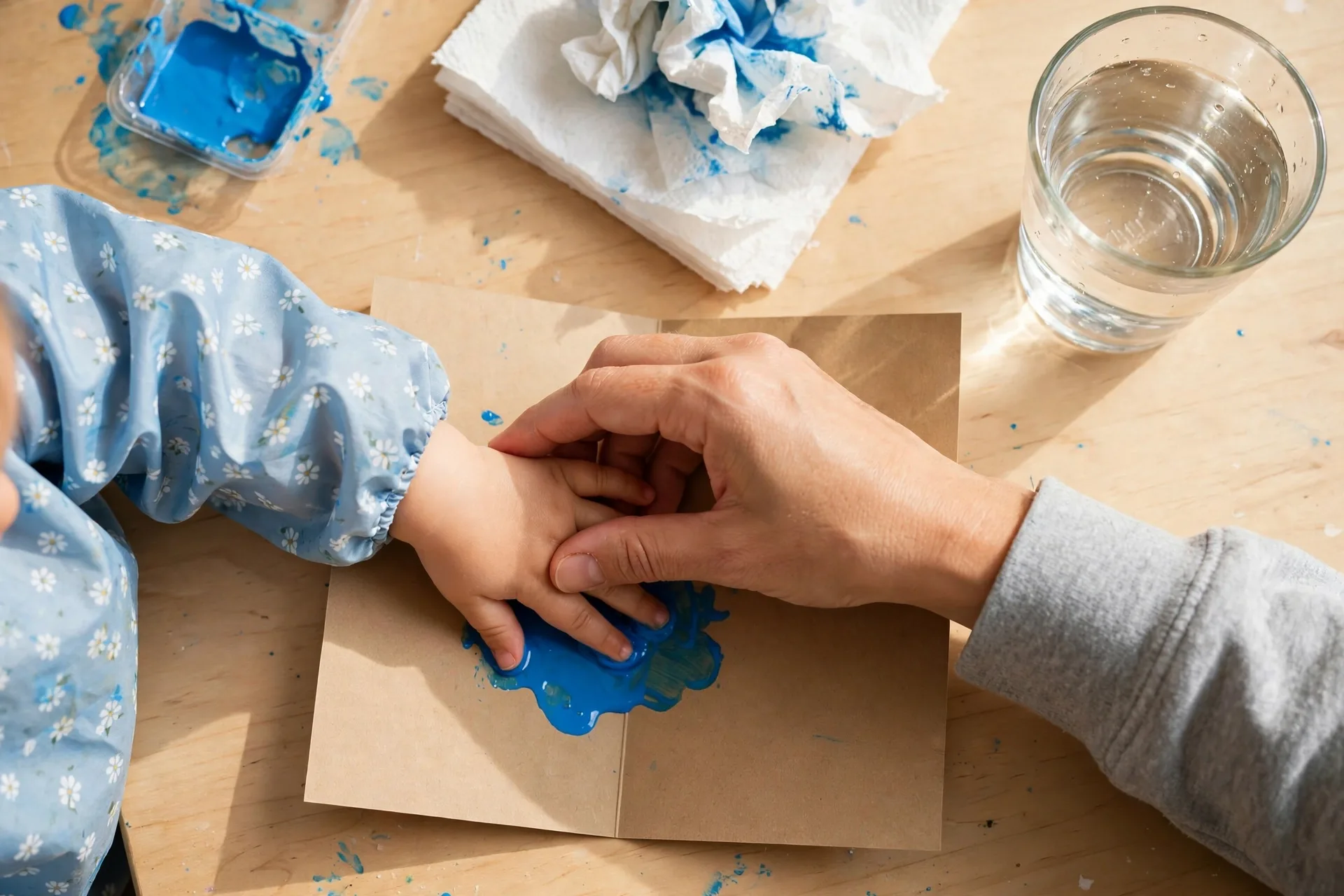
The classic for a reason. Fold a sheet of heavy construction paper in half. The toddler’s job: press one paint-covered hand onto the front with the fingers pointing down, so the handprint looks like a little trophy. Your job: write “HANDS DOWN” in big letters above the print and “…you’re the best dad!” inside the card.
Two passes beat one. If the first print comes out smudgy, let it dry completely and do a second card rather than layering wet paint on wet paint. A thin, even coat of paint on the hand (dab, don’t dunk) gives the cleanest print. Cardstock-weight paper keeps the wet paint from wrinkling the card.
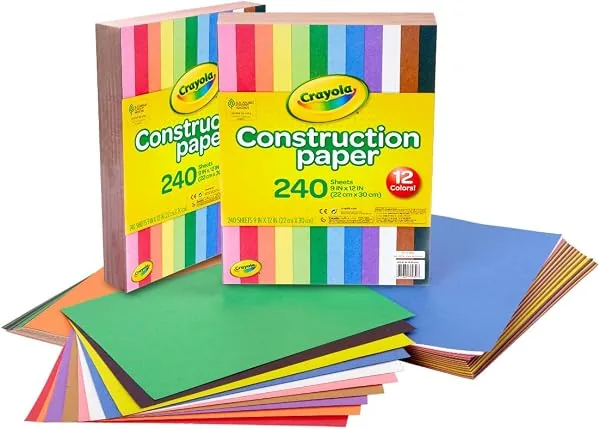
Crayola Construction Paper
The cardstock-weight paper behind all seven cards: heavyweight sheets that hold wet paint without wrinkling, keep marker ink where it belongs, and survive an envelope without folding. A grown-up cuts and folds; the toddler does the pressing.
Grown-up’s helping role: you apply the paint, guide the hand straight down with firm, even pressure (no wiggling), and lift it off cleanly. The toddler chooses the color. If you are making cards with two kids, do the younger one’s print first while the paint tray is clean, then let the older one pick a second color. Label the back of each card with name and age before the paint dries, while you still remember whose hand was whose.
2. The Handprint Balloon Bouquet
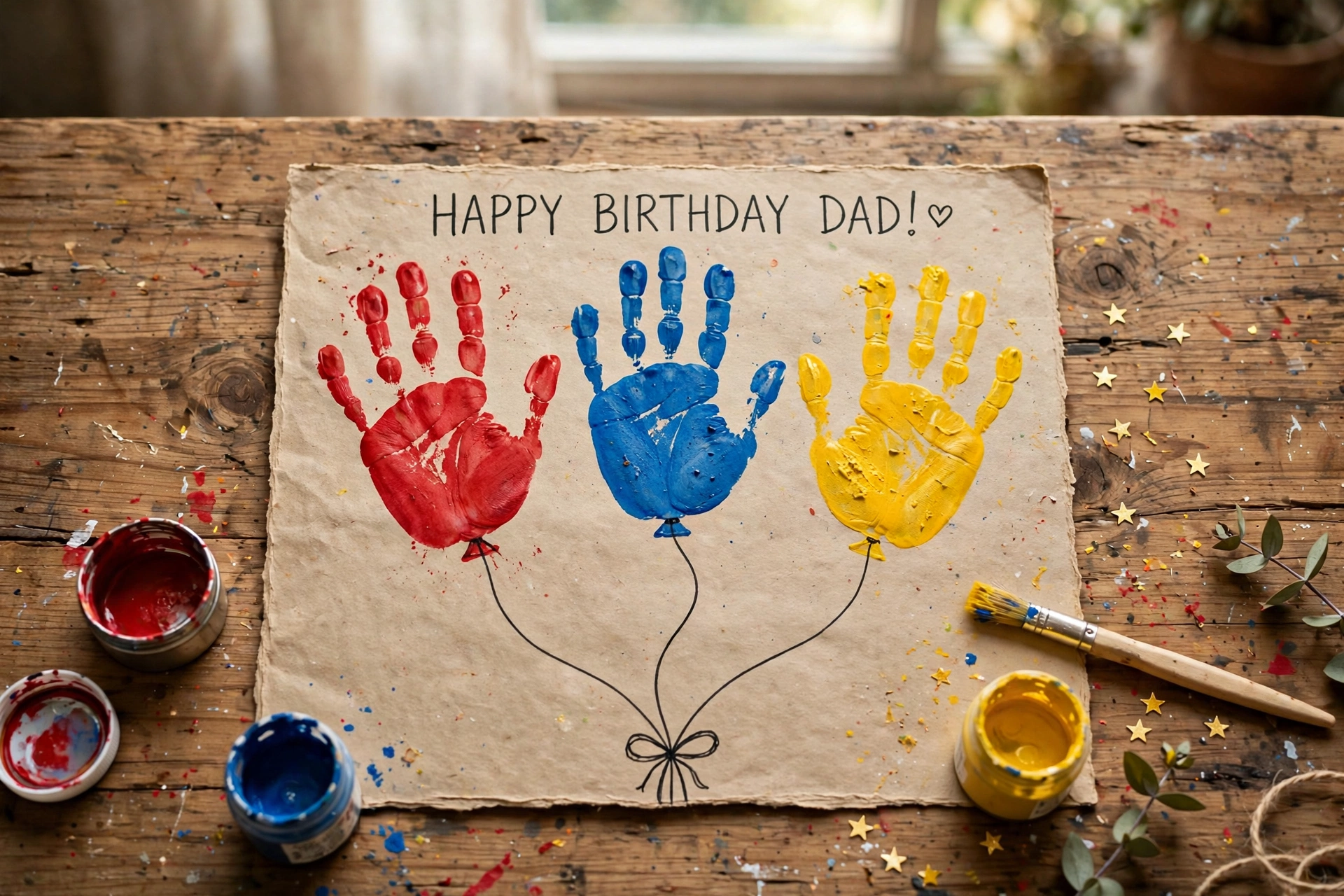
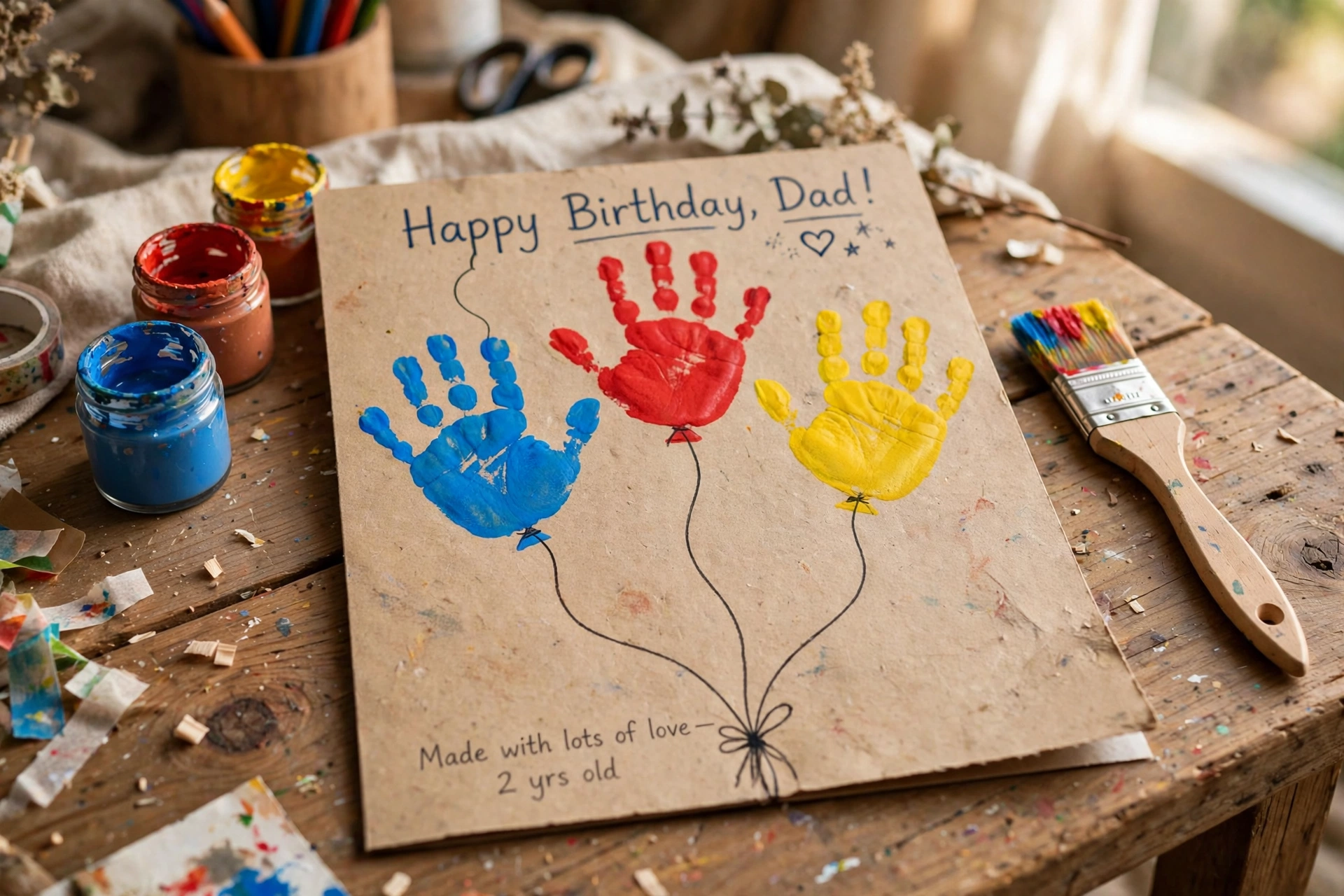
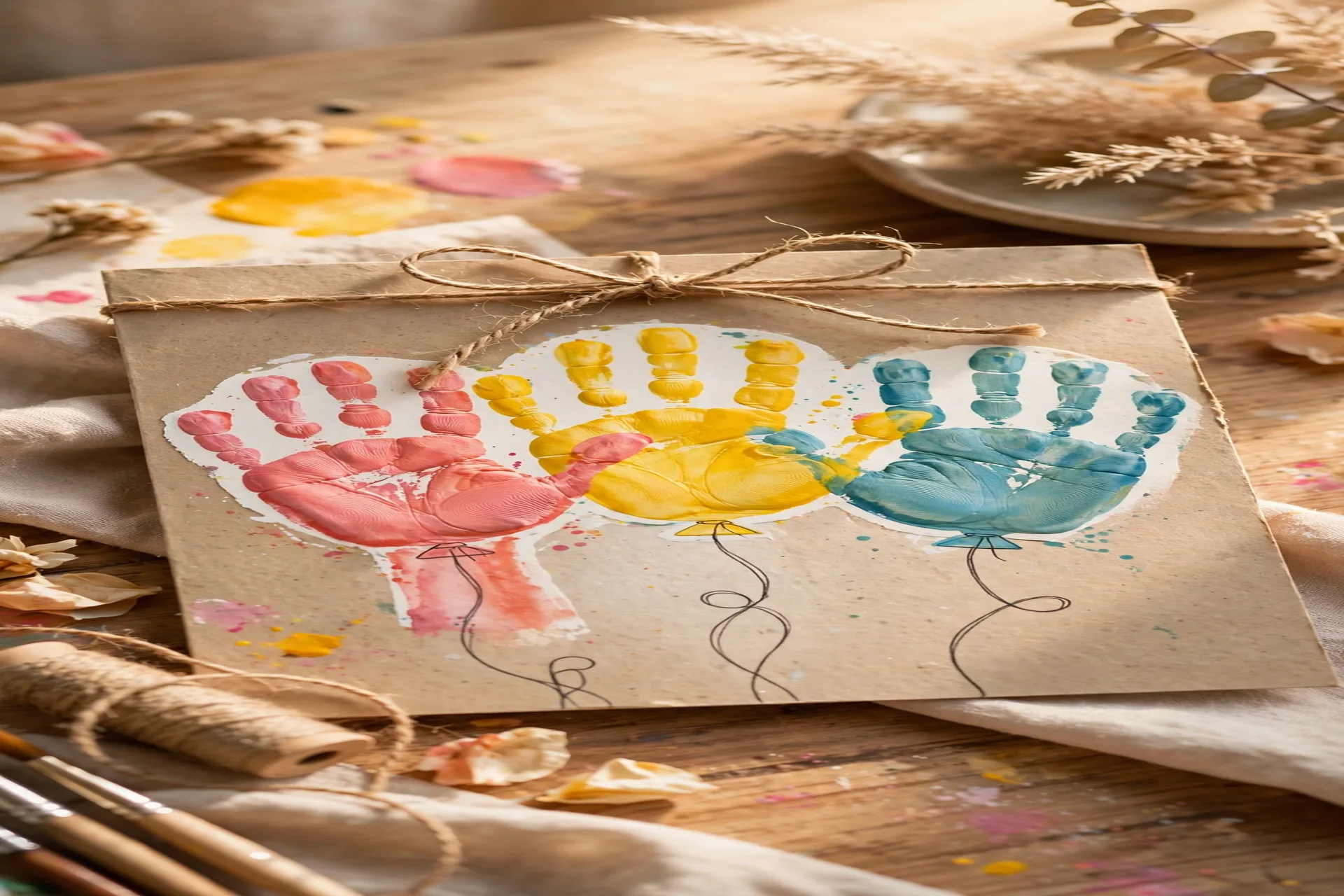
Three handprints in three bright colors become a bouquet of balloons on the front of the card. Let each print dry before adding the next, then you draw the balloon strings in marker, curving down to a little hand-drawn bow at the bottom. Write “Your love lifts us up! Happy birthday, Dad!” above or below the bouquet.
This is the best pick for the toddler who will not sit still, because each print takes five seconds and then they are free. Split the prints across a naptime gap if you want: one balloon before nap, two after. The card reads as one project.
Grown-up’s helping role: you draw the strings and the bow, and you write the message. Paint pens in a fine tip make the strings look tidy without stealing the handmade feel.
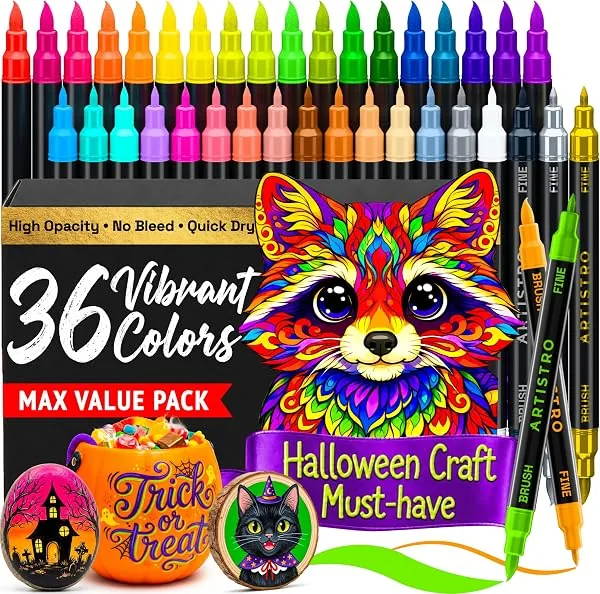
ARTISTRO Acrylic Paint Pens – 36 Colors
The grown-up’s lettering tool for these cards: the balloon strings on Idea 2, the toenail dots on Idea 5, and every message written inside. Adult hands only; the toddler’s job is the stamping.
3. The Thumbprint Heart Constellation
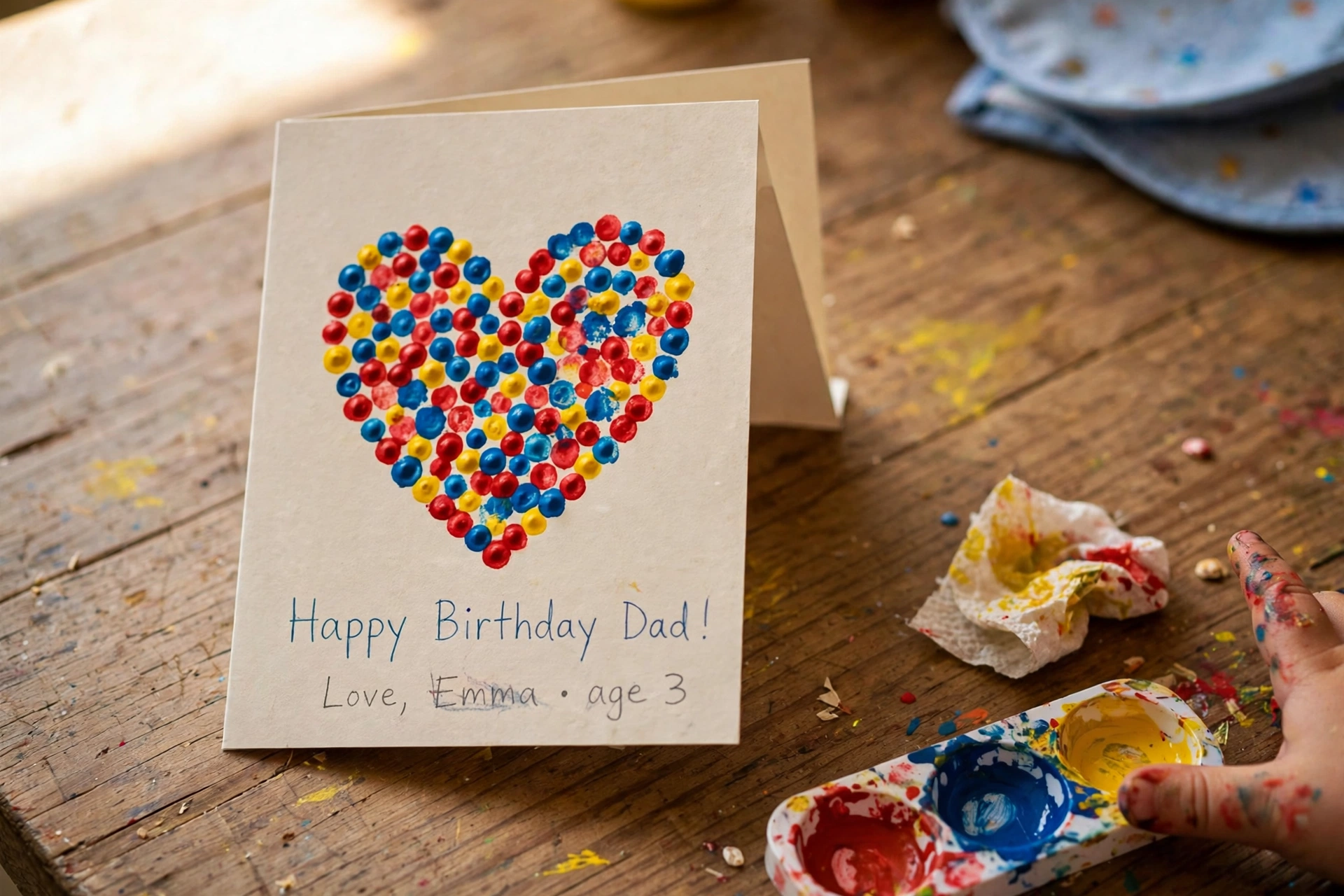
This one is pure toddler joy: dip the toddler’s thumb in paint and stamp a loose heart shape made of tiny thumbprint dots. No whole-hand smear, no wrist paint, no drama. Older toddlers can do every dot themselves; younger ones get a thumb dipped and guided once per dot.
Draw a faint pencil heart as a guide for yourself, then wipe the pencil away after the paint dries (or leave it, because handmade is the point). Once the dots are dry, add the message: “A heart full of love from your littlest one.” This is also the lowest-mess idea on the list, which makes it the best card to make on the kitchen table twenty minutes before dinner.
Grown-up’s helping role: you draw the guide heart and hold the paint tray steady. The toddler does the stamping. Wash hands immediately after, because a thumbprint artist will find the couch next. If the heart drifts lopsided, leave it. A perfect heart looks printed; a lopsided one looks loved.
4. The “I Love You This Much” Fold-Out Card
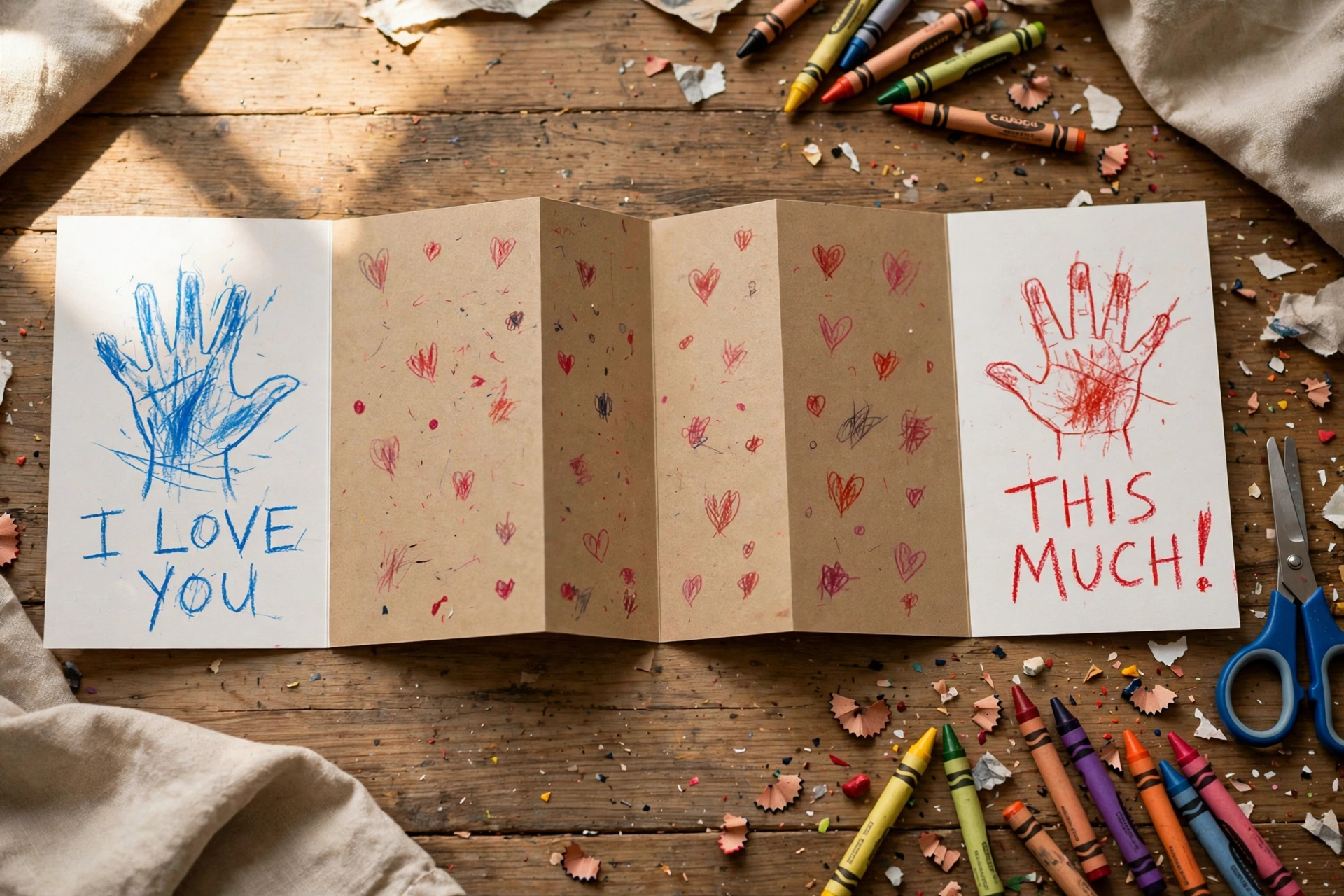
The accordion card dads actually gasp at. Trace both of the toddler’s hands on cardstock and cut them out yourself. Then accordion-fold a long strip of paper and glue one hand to each end. On the outside, write “I love you…” and when Dad pulls the hands apart, the strip unfolds to “…THIS MUCH!”
Measure the strip to your toddler’s actual arm span for the full effect. It is a lovely little length lesson, too: count the folds together out loud. Use a strip about two inches tall so it folds neatly without tearing, and crease every fold firmly with the back of a spoon so the accordion opens smoothly.
Grown-up’s helping role: you trace, cut, fold, and glue, since the strip needs to be exact. The toddler colors the two hands before they are attached. Glue stick only; a toddler can run a glue stick along a strip with supervision, but you do the final press. Write the “…THIS MUCH!” reveal in your biggest, happiest letters. This is the card that gets unfolded at the table while everyone watches.
5. The “I Toe-Tally Love You” Footprint Card
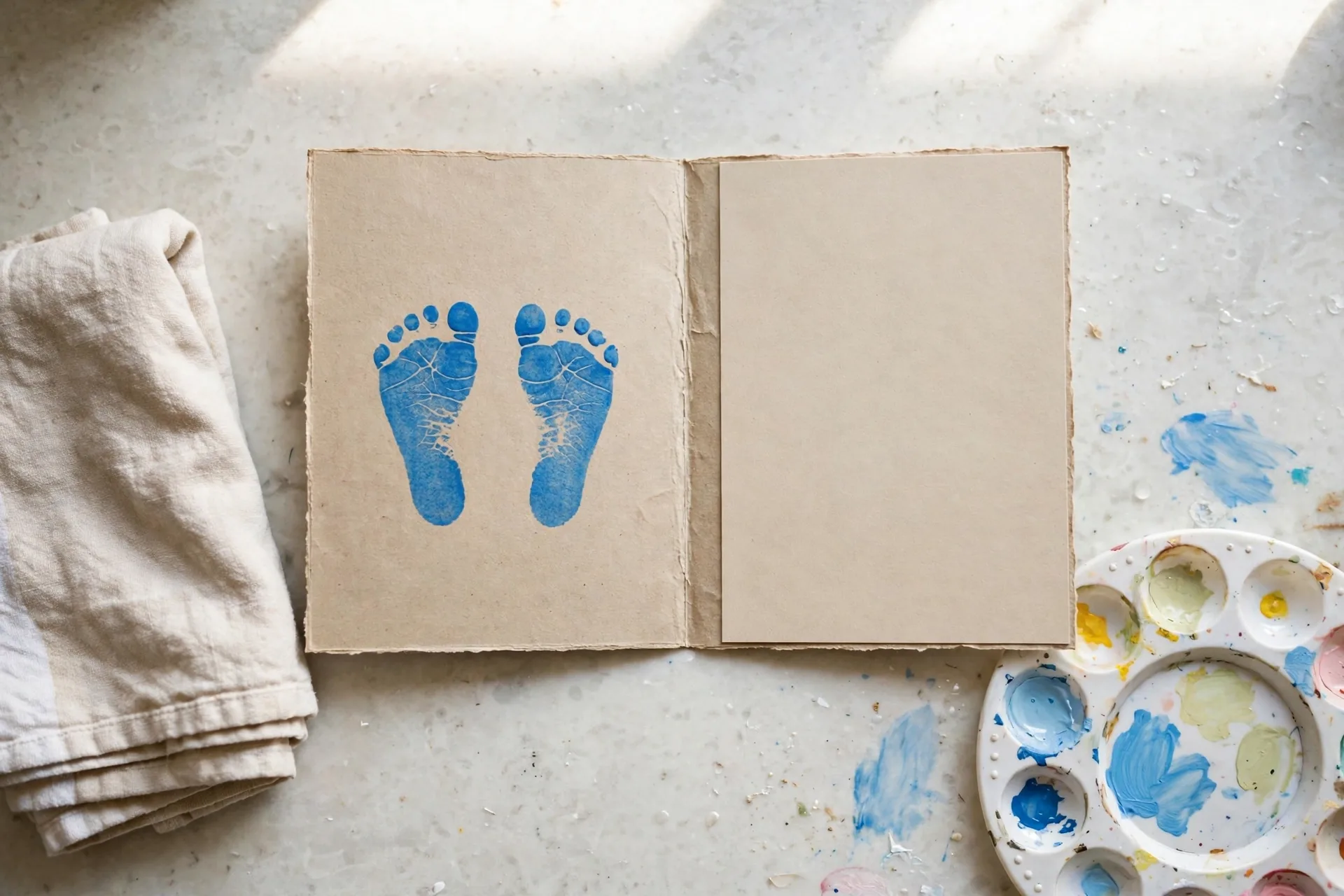
Footprints are easier than handprints for wiggly one-year-olds, because a foot stays put on command where a hand wanders. Fold the card, spread washable paint on the bottom of one little foot with a sponge brush (thinner coat, cleaner print), and press it onto the left panel of the open card.
Inside, write “I toe-tally love you, Dad! Happy birthday!” Once dry, dot five tiny toenail dots at the top of each toe with a marker for the finish that makes dads laugh. Two feet side by side on the front also works; one foot inside the card and one on the envelope is the sleeper move.
Grown-up’s helping role: everything about this one is yours except the giggling. Paint the foot, press it down firmly, lift straight up, and carry the toddler straight to the sink. Then write the message.
6. The Sticker-Scribble Collage Card
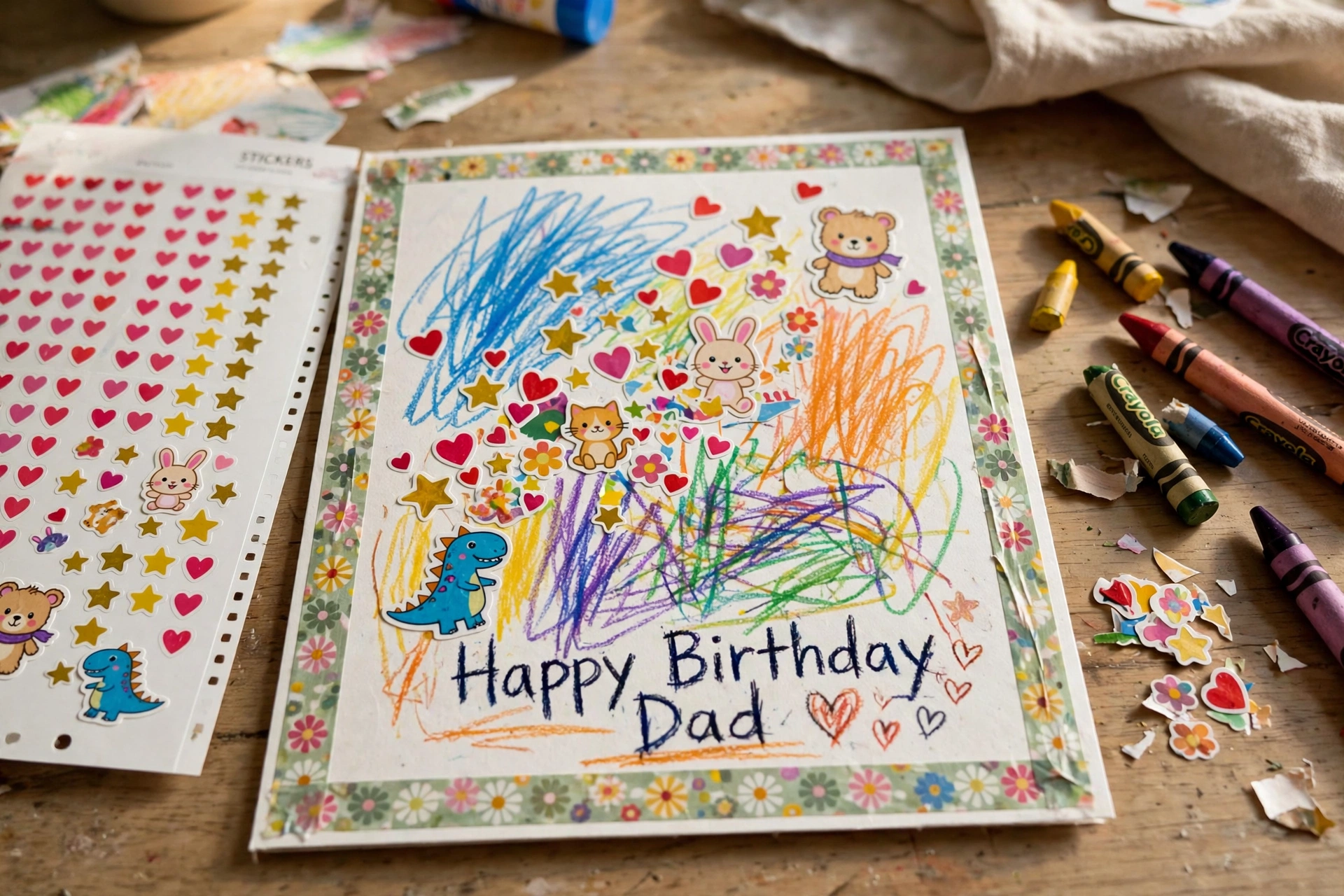
Some toddlers want zero part of paint, and that is fine. Give them a card, a fistful of crayons, and a sheet of stickers, and let them make their masterpiece. Big heart stickers, star stickers, animal stickers: whatever they pick is the right choice. Add a strip of washi tape along the edge if you have it.
Then you add the frame that turns chaos into keepsake: write “Happy Birthday Dad! Love, [name]” in your best handwriting across the top, date the back of the card, and resist every urge to “fix” the scribbles. The scribbles are the art. Ten years from now, this card will be the one that makes him go quiet.
Grown-up’s helping role: you supply the materials and write the message and the date. Peel the sticker backing and hand over stickers one at a time, because a toddler given the whole sheet will use the whole sheet in one corner. Keep one small corner of the front reserved for your message, and tell the toddler that corner is yours before they start. Boundaries set before the stickers come out are boundaries that hold.
7. The Dictated “All About Dad” Interview Card
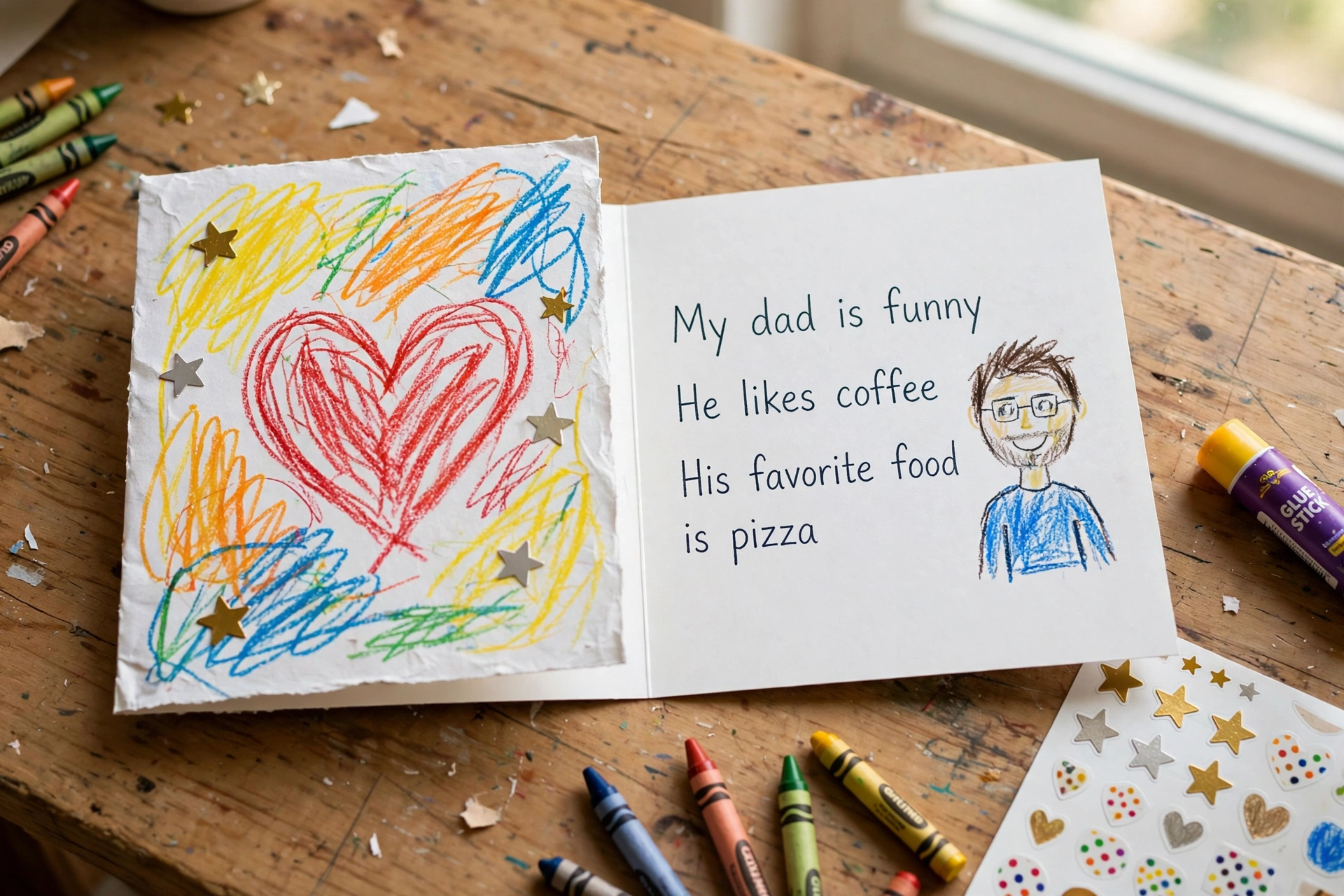
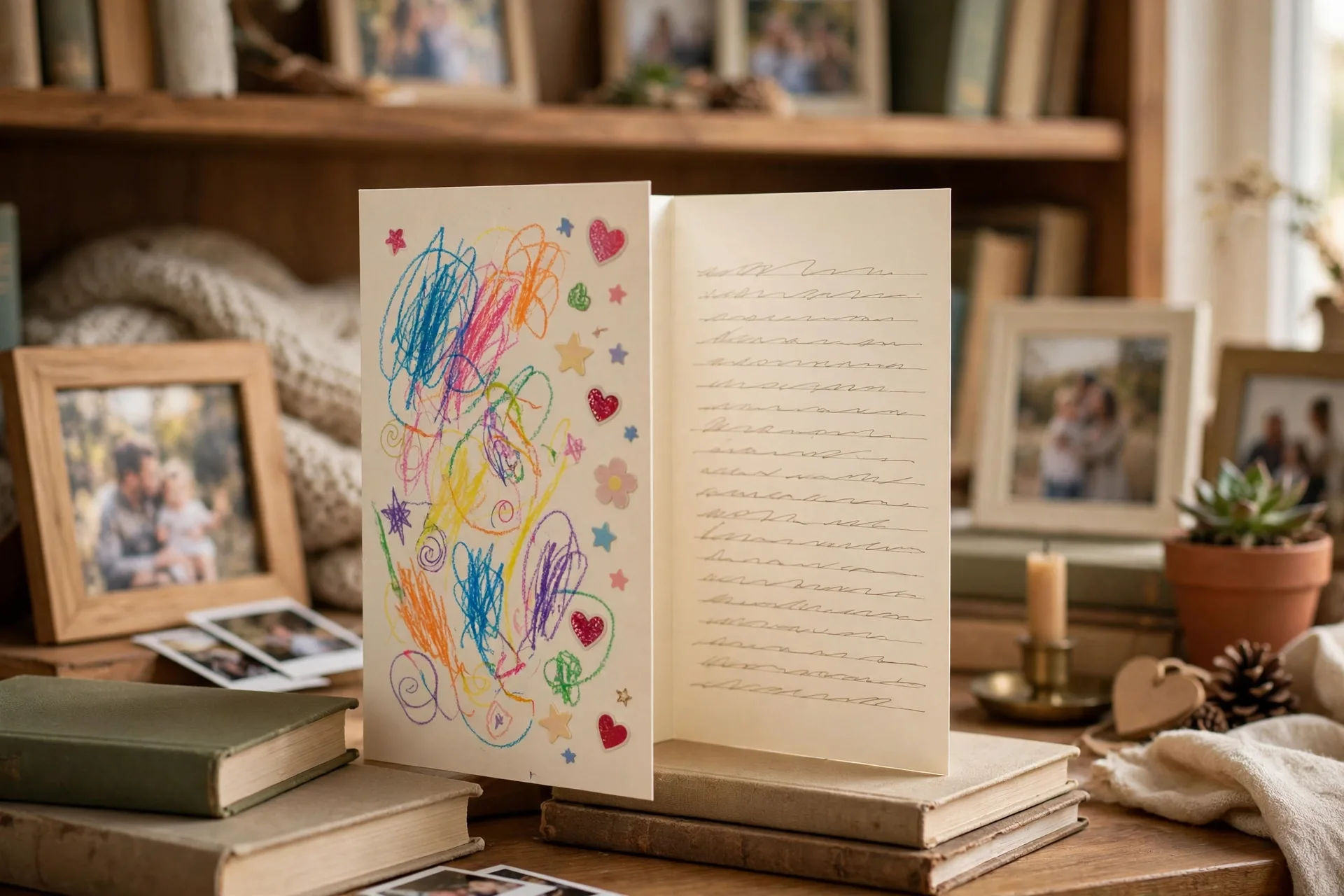
This is the card that gets read out loud at the table. Ask the toddler five questions and write their exact answers inside the card, word for word, no matter how funny: How old is Daddy? What is Daddy’s job? What is Daddy’s favorite food? What makes Daddy happy? Why do you love Daddy?
The answers at this age are gold. “Daddy is four. His job is sitting on the chair and talking to the computer. He loves noodles. Me.” It is a snapshot of exactly how small they think he is and exactly how big he feels to them, and it is the card he will keep in his nightstand for decades.
Grown-up’s helping role: you are the scribe. Ask the questions at a calm moment (after a snack, not during a chase) and write quickly before the answers change. The toddler decorates the front with stickers or crayons while you write. If an answer is too good to lose, read it back to them and watch them crack up. That laugh is the moment this card stops being a craft and becomes a memory.
When the Card Goes Sideways (It Will, Once)
The hand wiggles and the print smears. The paint lands on the sleeve instead of the card. The toddler announces they are done after one dot. None of this ruins the card. It ruins the plan, and the plan was always the flexible part.
Keep a second folded card blank and ready before you start. A smudged print is not fixed; it is replaced. Letting the toddler watch you toss a bad print without drama teaches them something good about making things, and it keeps craft time from curdling into a standoff. If the paint dries on the tray while you manage a meltdown, add a drop of water and stir; washable tempera forgives.
And if the whole session collapses at dot number three, you have a finished card anyway. One honest thumbprint and your message inside is a complete card. Dad does not grade on coverage. He grades on the fact that small hands made it for him.
What to Write Inside (The Message Bank)
Pick one line and pair it with the toddler’s name in your handwriting. Sweet: “Happy birthday to the best dad in the whole wide world. I love you more than my snacks.” Funny: “Dada, can we have cake for your birthday? Pleeease?” From the heart: “Thank you for being my dad. You make me feel safe and loved.”
If the card is a handprint or footprint card, the classic pairing is a pun: “Hands down, you’re the best dad!” for hands, “I toe-tally love you!” for feet. Short lines beat long paragraphs here, because the print is the message and the words are the caption.
Let It Dry, Then Make the Delivery Special
Do the crafting the day before the birthday, not the morning of. Paint needs a full dry before cards can be stacked or slipped into an envelope, and rushed cards smudge at the worst moment. Once dry, write the date and the toddler’s age on the back of every card. Future-you will be grateful.
For the delivery, skip handing it over with the other gifts. Tuck the card under Dad’s pillow, prop it against the coffee maker, or let the toddler carry it to him first thing in the morning. And put a thumbprint “stamp” on the envelope: one little painted thumbprint where a stamp would go, because the envelope deserves to be cute too.
Shop This Post
Everything used in these cards, in one place (all links below carry tag=moeeziqb02d-20): the washable paint behind every handprint and footprint, the heavyweight construction paper the cards are built on, and the paint pens for grown-up lettering and the drawn balloon strings.
| Product | Used For | Price |
|---|---|---|
| Crayola Washable Paint | The washable, non-toxic paint behind every handprint, footprint, and thumbprint (Ideas 1, 2, 3, 5) | Check Price |
| Crayola Construction Paper |
Heavyweight cardstock the cards are built on (all 7 ideas) | Check Price |
| ARTISTRO Acrylic Paint Pens – 36 Colors |
Grown-up lettering and drawn details (Ideas 2, 5, 7). Adult hands only | Check Price |
Frequently Asked Questions
What age is this actually realistic for?
Ages 1 to 3, with different ideas fitting different months. Footprint and handprint cards (ideas 1, 2, 5) work from around 12 months, because you do the pressing. The sticker collage (idea 6) and the dictated interview (idea 7) fit better from 2 onward, when toddlers answer questions and peel stickers with intent. The accordion card (idea 4) works at any age since the toddler only colors the hands.
How do I keep the handprint from smearing?
Thin paint, straight down, no wiggling. Dab the paint on the hand with a sponge brush instead of dunking the hand in a tray, press the hand down once with firm even pressure, and lift straight up. If the toddler wiggles, let the card dry and make a second one rather than fixing the first. Two cards cost you three minutes; a “fixed” smudge costs you the card.
Which paint is safe for toddler skin?
Washable tempera or washable finger paint labeled non-toxic only. Never use craft acrylic, poster paint that is not labeled washable, or any paint with a strong chemical smell on a toddler’s hands or feet. Wash the paint off skin right after stamping, and keep painted hands away from the mouth until they are clean.
My toddler won’t keep their hand still. What then?
Use ideas 5 or 6. A foot stays planted longer than a hand, so the footprint card is the wiggly-kid classic. And the sticker-scribble collage needs zero stillness at all. Never hold a toddler’s hand down by force for a print: the card is supposed to be fun, and a forced print shows in the smudge.
How do I preserve the card so it lasts?
Write the date and the child’s age on the back, let the paint cure for a full day before storing, and keep the card flat in a book or a large envelope rather than pinned where sunlight fades it. Washable paint is not fade-proof, but a card kept flat and out of direct sun still looks the same years later.
The Card He Keeps
You do not need all seven. Pick the one that matches your toddler’s current personality, make it the day before, and let the toddler carry it to Dad. He will read the words you wrote and touch the handprint they made, and that combination is why handmade beats store-bought every single time.
Happy birthday to the dad who deserves a card made with tiny, paint-covered hands. He is going to keep it forever.
More birthday guides on MamaKinder