Crayola Washable Kids Paint Review: 10 Classic Colors That Wash Off Hands, Clothes, and Tables

My 4-year-old’s first paint session ended with paint everywhere except the paper. Her hands were blue, her shirt had a red streak, and the table had a yellow handprint. That afternoon taught me the only question that matters about kids paint: does it actually come out? With the Crayola Washable Kids Paint set, the answer is yes, with one condition you should know before you buy, and this review covers it honestly.
This is the paint behind most of the projects in our easy kids craft ideas post, and it is the set I have bought more than any other craft supply. I am Sarah Mitchell, mom of two, a preschooler and a toddler (ages 4 and 2), and I have cleaned paint off hands, shirts, tables, and one memorable kitchen floor. Here is what I have learned from using it.
Heads up: this post contains affiliate links. If you buy through them, MamaKinder may earn a small commission at no extra cost to you, and it helps keep these guides free.

At a Glance
Verdict: Of all the kids paint I have used, this is the set I recommend first and keep buying. It is the easiest paint to clean up that I have found, and the colors look good on paper.
Amazon rating: ★★★★☆ 4.7/5 (20,589 ratings)
Best for: paper crafts, painted rocks, school projects, and everyday painting sessions.
Buy it if: you want paint your kids can use freely and you can clean up without a battle.
Skip it if: you mainly paint wood or canvas, or you need big bottles for a classroom.
How I Tested It
- Painted with my kids (ages 4 and 2) across several sessions, using brushes, sponges, stamps, and fingers
- Tried paper, wood, air-dry clay, and canvas
- Washed hands at the sink, washed stained clothes the same day, and noted where dried paint left a mark
- Mixed colors for pastels and shadows
Specifications
Pros and Cons
👍 Pros
- Washes off hands with soap and water
- 10 colors, with white and black for mixing
- Non-toxic, water-based, ACMI Approved Product seal
- One-coat coverage on paper, dries glossy
- 2 oz bottles are easy for small hands to hold and pour
- One set covers most kid craft projects
👎 Cons
- Chemical smell when a bottle is first opened
- Thin coverage on wood, clay, and canvas
- Small 2 oz bottles
- Dried paint can stain clothes
- No brushes or palette included
Washability: What Actually Comes Out

Start with hands, because that is where most of the paint lands. Soap and water take it off, usually in one wash, even after a full finger painting session. I keep a damp cloth beside the table for the worst of it and send the kids to the sink when they are done.
Clothes need a little more attention. Paint that goes into the wash the same day comes out of most washable fabrics in a normal cycle. Paint that dries on a shirt is a different story, and red is the color to watch: it is the one parents report staining most. Rinse a stained spot under cold water before it dries, and it almost always comes out.
Tables and floors are the easy part. The paint wipes off sealed wood, laminate, and tile with a damp cloth while it is wet, and even dried drips lift with a little water and a wipe. Unfinished wood and porous surfaces can hold the color, so cover the table if you are painting on raw wood or cardboard you care about.
The 10 Colors and How They Paint
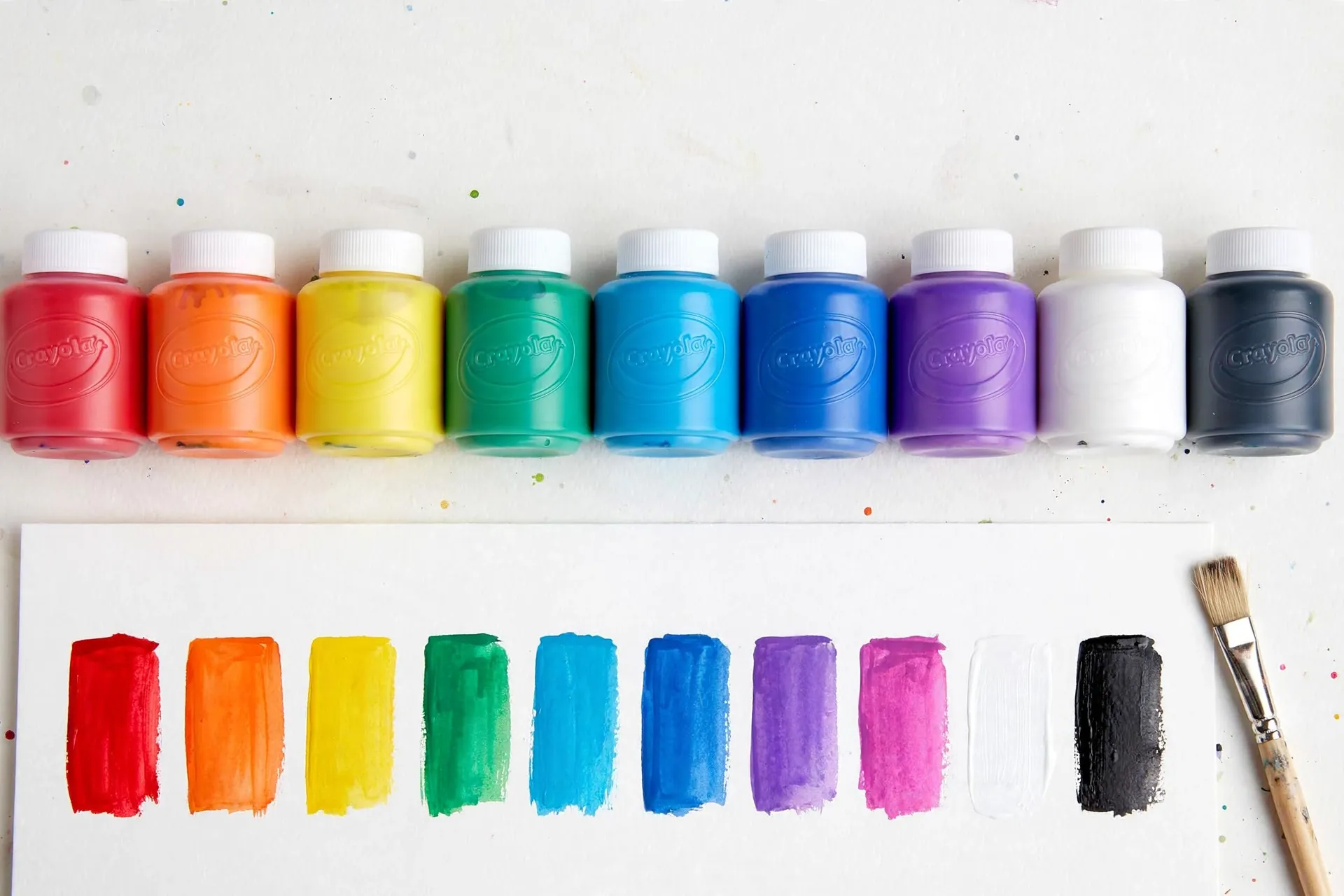
First, what kind of paint this is: a tempera, or project paint, also sold as poster paint. It is thicker than finger paint, made for brushes, sponges, and stamps as well as little hands.
Red, orange, yellow, green, turquoise, blue, violet, magenta, white, and black. That lineup covers mixing as well as painting straight from the bottle: white lightens any color for pastels, black darkens for shadows, and the primaries mix cleanly into secondary colors. My kids learned color mixing with this set before they learned it anywhere else.
On paper, the paint goes on smooth and covers in one coat. The colors dry close to how they look wet, and the finish is smooth and glossy rather than chalky. On wood, air-dry clay, and canvas, the paint is thinner, and you will want a second coat once the first has dried. That is the main trade-off of a washable formula: easy cleanup comes with lighter coverage on hard surfaces.
Drying takes about two hours for a normal coat, which is long enough to keep a project safe from smudges once it is done and short enough that a morning painting is dry enough to hang by lunch.
Smell and Safety
Some parents notice a chemical smell when a bottle is first opened. It is strongest at opening and fades as the paint dries, and painting with a window open helps.
It is non-toxic and water-based, safe for skin contact when used as intended, carries the ACMI Approved Product seal (evaluated under ASTM D4236, the US safety standard for art materials), and the box lists ages 3 and up. Non-toxic does not mean edible, so keep the bottles out of reach when painting time is over.
Setting Up a Paint Session (Without the Mess Taking Over)
A smock or an old shirt comes first, for you as well as the kids, because paint finds the adult too. Cover the table with newspaper or a plastic tablecloth, and put the water cup somewhere it cannot be knocked over easily. I use a heavy mug for rinse water and keep a roll of paper towels in reach.
Pour small amounts into a palette, a muffin tin, or a paper plate instead of painting straight from the bottles. A little paint goes a long way, the bottles stay clean, and you can mix colors without muddying the whole bottle. Close each bottle as soon as you have poured, because an open bottle is one elbow away from the floor.
When the painting is done, hands go to the sink first, then the table gets a wipe, then the smocks and any splashed clothes go straight into the wash. Doing it in that order takes five minutes.
What Other Parents Say
Reading through buyer reviews turned up a few things my own sessions had not: the white is see-through on handprint crafts, and dark colors need a thorough wash to come off hands completely. Repeat buyers keep coming back to this set, and several mention its shelf life, with paint still good long after the box was opened.
“Really nice colours and they wash off easily. Great for finger painting too.”
— Amazon customer review
“Wonderful product, and you may want to put a small amount in a container and add water to make it last longer. It is fab to let the child enjoy using the colours without worrying about stains.”
— Amazon customer review
“Kids safe. Easily washable.”
— Amazon customer review
How It Compares
Two other paint sets come up a lot: Cra-Z-Art, the bulk washable set with bigger bottles, and Apple Barrel, the craft-store acrylic that stays put once it dries.
| Set | Colors | Total paint | Dry time | Washability | Pick it if |
|---|---|---|---|---|---|
| Crayola Washable Kids Paint, 10 CountOUR PICK | 10 classic | 20 fl oz | About 2 hours | Washes from skin and most washable clothing | Little kids are painting and cleanup matters most |
| Cra-Z-Art Washable Classic Paint, 8 Count | 8 classic | 32 fl oz | 4 hours | Washes from skin and clothes | You need more paint per bottle for groups |
| Apple Barrel Acrylic Paint Set, 16 Colors | 16 matte | 32 fl oz | About 2 hours | Soap-and-water cleanup only while wet; permanent once dry | You want more colors and a finish that stays put on wood and crafts |
If your kids want sparkle, Crayola also sells a 12-count set with 6 classic and 6 glitter colors, for ages 3 and up.
This set is also one of our picks in Best Practical Gifts for 2 Year Olds.
Where to Buy
Our Pick

Crayola Washable Kids Paint, 10 Count
Customer Rating ★★★★☆ 4.7/5 (20,589 Amazon reviews)
Ten 2 oz bottles of non-toxic washable tempera paint in classic colors, for ages 3 and up. Washes from skin and most washable clothing.
Frequently Asked Questions
Can you use Crayola Washable Kids Paint on T-shirts or fabric? It is not made for fabric. The paint is designed to wash out of clothes, so a painted shirt would lose its design in the first wash. For shirts, use fabric paint instead.
How should I store the bottles between sessions? Caps on tight, upright, at room temperature.
Is one set enough for a classroom? For a class of 20 or more, buy two sets. One set runs out fast on big painting days, and the popular colors go first.