Baby Tula Explore Mesh Review: The Breathable Carrier That Fits 27 to 57 Inches
My first carrier fit my baby perfectly and fit me not at all. The waistband stopped short, the straps dug in, and I spent the whole walk holding the buckle together with one hand. That walk is why I measure every carrier before I trust it, and it is why the Baby Tula Explore Mesh caught my eye: a waistband that actually closes on a wide range of bodies, and a mesh panel that breathes on warm days.
This review covers what the mesh feels like on a warm day, how the fit works across body sizes, what each of the three carry positions is for, and the honest downsides you should know before you buy. I am Sarah Mitchell, mom of two (ages 4 and 2), and I have carried both of my kids through grocery runs, park mornings, and airport lines. A carrier earns its place in my house by fitting my body, keeping us both cool, and adjusting fast when my husband takes over.
Heads up: this post contains affiliate links. If you buy through them, MamaKinder may earn a small commission at no extra cost to you, and it helps keep these guides free.

At a Glance
Verdict: Of all the carriers I have worn, this is the one I recommend first to a mom who has been burned by one size fits all. It fits a wide range of bodies, breathes on warm days, and lasts from the newborn weeks to the toddler years, which is why it is our Best Overall pick.
Best for: warm-weather carrying, plus-size fit, and parents who share one carrier.
Buy it if: you want one carrier that fits your body as it is today and keeps you both cool.
Skip it if: your baby has very sensitive skin at the leg openings, or you want lumbar support included in the box.
How I Tested It
- Carried both of my kids (ages 4 and 2) through everyday outings and travel days
- Wore it on warm park mornings to see how the mesh feels next to a solid cotton carrier
- Adjusted the panel across its widths and heights as my baby grew
- Measured my waist where the belt sits and checked the belt closes with room to spare
- Practiced the first setup at home, then handed the carrier to my husband with a strap adjustment
Specifications
Pros and Cons
👍 Pros
- The waistband fits 27 to 57 inches, covering a size 4XL, with dual adjustment straps you can tighten alone
- Breathable mesh panel keeps you and your baby cooler on warm days
- Three carry positions: facing in, facing out, and back carry
- Newborn to toddler, 7 to 45 pounds, with no infant insert needed
- Panel adjusts in 3 widths and 2 heights, so the seat grows with your baby
- Tuck-away hood for shade and naps, plus a front pocket that holds your phone and keys
- Adjusts fast between caregivers, so both parents can share one carrier
👎 Cons
- Mesh feels less soft than cotton at the leg openings
- First setup takes a few practice runs to learn
- Extra lumbar support is an optional accessory rather than included, so check the listing if you want it
- It is a structured carrier, so it packs bigger than a wrap or a sling for travel
Breathable Mesh That Actually Keeps You Cool

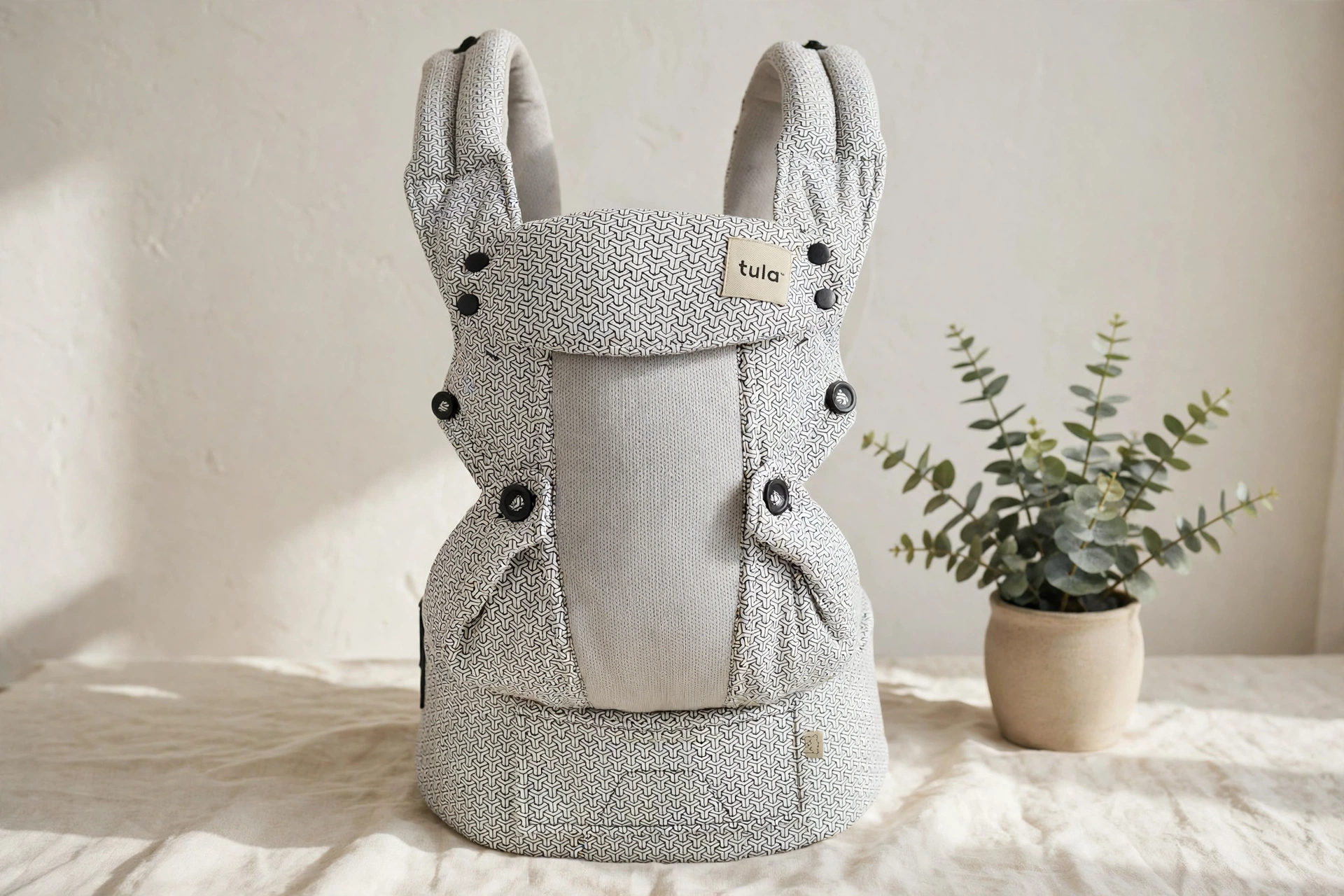
Mesh is the reason to choose this version of the Explore over the cotton one. Tula calls its mesh carriers Coast, and the center panel is a soft, open mesh that lets air through, and the rest of the carrier uses the same light grey and white geometric fabric, so the whole thing breathes instead of trapping heat in one spot. On a summer park morning, that is the difference between a baby who stays settled and a baby who gets sweaty and fussy twenty minutes in.
A few practical notes from real use. The mesh keeps both of you cooler, and parents of warm babies notice it most. The fabric is light, so the carrier itself never feels heavy before you even put the baby in. One honest trade-off: the mesh is not quite as soft as cotton where it meets the backs of little legs, and some parents notice that on longer carries. It is a small thing, and it is the most common complaint I found, but it is worth knowing if your baby has sensitive skin.
Mesh also dries faster than solid fabric after a spit-up or a juice spill, which is a quiet advantage when you have a toddler and a baby and laundry is already a full-time job.
A Fit That Works From Size XS to 4XL
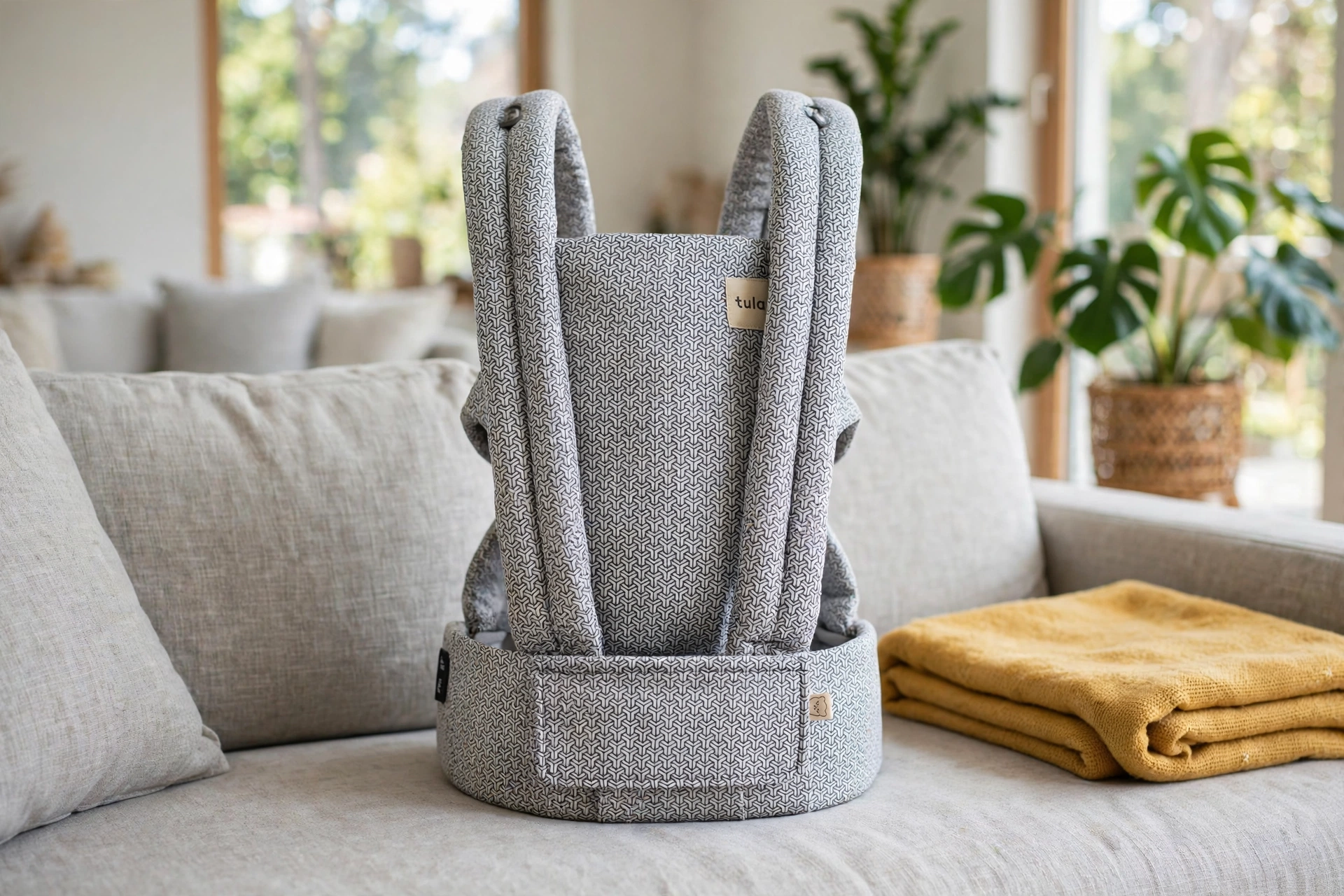
Fit is where this carrier stands out. The waistband fits 27 to 57 inches, and the dual adjustment straps mean you tighten from the front, where you can reach, instead of wrestling with a strap behind your back. The padded shoulder straps sit flat and spread the weight across your shoulders, and the wide waistband puts most of the weight on your hips, which is where your body is built to carry it.
That range matters in real households. It fits a size 4XL mom with room to spare, and it also adjusts down small enough to share between parents. I have heard from families where one parent is petite and the other is over six feet and two hundred pounds, and both wear the same carrier comfortably after a thirty-second strap adjustment. If you and your partner share baby duty, that quick hand-off is a bigger deal than it sounds.
Before you buy, do what I do with every carrier: measure around your waist where the belt will sit and compare it to the stated range. Look for a belt that closes with two or three inches to spare, which leaves room for a winter coat and for your body to change across the postpartum months. With a 57-inch top end, this one gives most moms that margin.
Three Carry Positions, Newborn to Toddler
Three ergonomic, hip-healthy carry positions cover the whole arc, and each one has a season in your baby’s life. No infant insert is needed at any stage: the panel adjusts in three widths and two heights, so you set the narrowest, lowest setting for a newborn and open it up as your baby grows, which is what lets one carrier cover 7 to 45 pounds.
Facing in is where you start. Your newborn rides chest to chest, knees tucked up in the M position with the seat supporting knee to knee. This is the position for naps on the go, for fussy evenings, and for the first months when your baby wants nothing more than to hear your heartbeat.
Once your baby has strong head and neck control and starts craning to see the world, facing out opens up. The Explore is the Tula model that offers this position, and it is the one curious babies love most. Keep facing-out sessions shorter than facing-in ones, and watch for overstimulation: if your baby turns their head away or gets fussy, turn them back in.
Back carry is for toddlers. Once your baby is sitting well and getting heavy, moving them to your back frees your front, balances the weight better, and lets you carry a 30-pound toddler up a hill without your shoulders giving out. The panel height adjusts down for this position, which keeps the carrier from riding up into your neck.
Setting It Up the First Time
Plan on ten unhurried minutes with the carrier and your baby the first time, not a rushed attempt at the front door. Set the panel width first: use the snap buttons to choose the narrow setting for a newborn, then widen it as your baby’s legs grow. Set the panel height next, lower for a small baby so the panel supports their head, higher as they grow.
Put the waistband on first and tighten it snugly at your natural waist, where the belt sits level all the way around. Then settle your baby into the seat, knees up in the M shape, and bring the shoulder straps over. Tighten the straps until the baby sits high enough to kiss, which is the quick safety check I use every time: if you can lean forward and kiss the top of your baby’s head without straining, the height is right.
Most parents say the first setup takes a little learning, and Tula’s own video tutorial helps. After two or three practice runs, it becomes a one-minute job.
Before you need it, know about the tuck-away hood: it folds out for shade on sunny walks and for a little privacy when your baby falls asleep, then tucks away again. The front pocket holds your phone and keys, so you can leave the diaper bag in the car for a quick errand.
What Other Parents Say
Reading through buyer reviews turned up a few things my own sessions had not: parents of sweaty babies say the mesh makes the biggest difference for them, several call the sun hood the feature they use most on walks, and a few note that a newborn fits best once they are closer to 9 or 10 pounds rather than right at 7. In the babywearing community, Tula carriers hold their value well secondhand, which matters when you buy once and pass the carrier on.
“The mesh is great for the hot summer months in Florida. It’s breathable and light. It’s also not scratchy like some other carrier fabrics.”
— Amazon customer review
“It is so soft, so lightweight, so versatile, and you just have two clips (which are both very reachable). I love this baby carrier.”
— Amazon customer review
“This one is much more breathable and the mesh helps if you have a sweaty baby.”
— Amazon customer review
How It Compares
Our roundup has ten other carriers, from structured all-rounders to wraps and a hip seat. Here is how the Explore Mesh sits among them.
| Carrier | Type | Weight range | Positions | Fit highlight | Pick it if |
|---|---|---|---|---|---|
| Baby Tula Explore Mesh Baby CarrierOUR PICK | Structured | 7–45 lb | 3 (in, out, back) | Waistband 27–57 in (4XL) | You want the widest fit and a breathable mesh panel |
| Ergobaby Omni Classic Baby Carrier | Structured | 7–45 lb | 4 (in, out, hip, back) | Waist ~24–52 in, lumbar support | You want one carrier that does every position well |
| Infantino Flip 4-in-1 Convertible Baby Carrier | Structured | 8–32 lb | 4 (in narrow, in wide, out, back) | Wide padded waist belt | You want the lowest price for a full-featured carrier |
| Beco Gemini Baby Carrier | Structured | 7–35 lb | 4 (in, out, hip, back) | Belt ~52 in, extenders available | You want straps that cross or wear straight |
| LÍLLÉbaby Complete All Seasons Baby Carrier | Structured | 7–45 lb | 6 (in narrow/wide, out, hip, back + newborn) | Waistband 24–61.5 in with extender | You want one carrier for summer and winter |
| Momcozy PureHug Baby Carrier | Structured | 7–45 lb | Front-in only (3-stage sizing) | Padded waistband, EVA lumbar support | Back support matters most to you |
| BabyBjörn Baby Carrier Harmony | Structured | 7–33 lb | 4 (newborn in, in, out, back) | Padded waist belt, lumbar support | You want the lightest structured carrier |
| Boba Baby Wrap Carrier | Wrap | 7–35 lb | 1 wrap method (front/hip) | One size, no waistband | You want a soft wrap with no buckles |
| Moby Classic Wrap | Wrap | 8–33 lb | Front + hip, buckle-free | Listed to XXL, fit mixed | You want the classic cotton wrap |
| KeaBabies Baby Wrap Carrier | Wrap | Up to 35 lb (best under 20 lb) | Front/hip wrap | One size, up to size 24 (disputed) | You want the longest wrap for bigger bodies |
| Momcozy Hip Seat Baby Carrier | Hip seat | 6–36 mo, up to 45 lb | 4 ways (cradle, face-to-face, forward, hip) | Wide Velcro waist belt | You want a seat to perch your toddler on |
This carrier is also one of our picks in Best Baby Carriers for Plus Size Moms.
Where to Buy
Best Overall
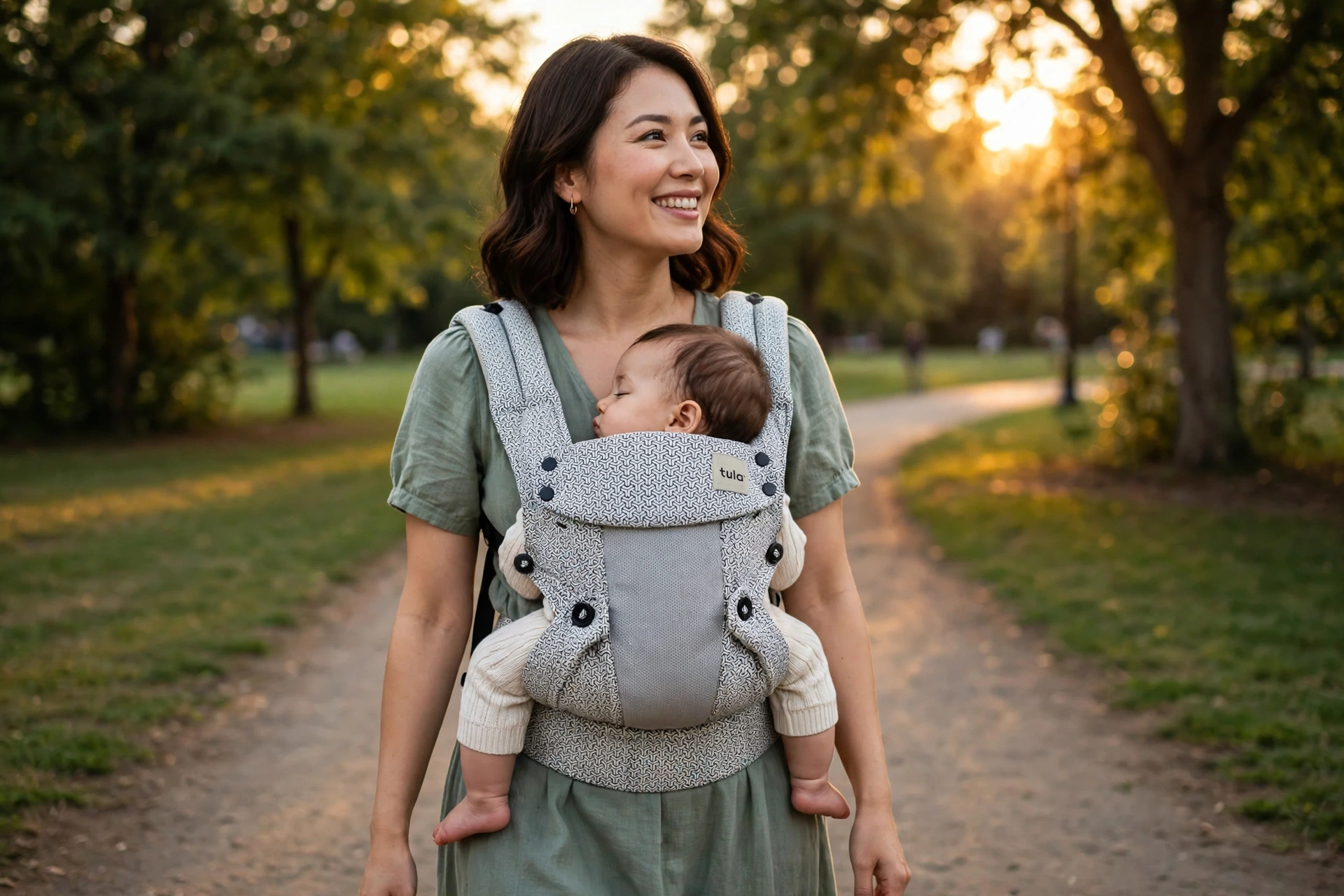
Baby Tula Explore Mesh Baby Carrier
Breathable mesh carrier for newborn to toddler with 3 ergonomic carry positions and a waist belt that fits 27 to 57 inches. No infant insert needed.
Frequently Asked Questions
How do you wash the Tula Explore Mesh? Machine wash on a gentle cold cycle and air dry, and check the care label on your carrier first. Spot clean small messes right away so the mesh stays fresh between washes.
Is the mesh version worth it over the cotton Explore? If you carry in warm weather or your baby runs warm, yes: the mesh moves air through the whole panel instead of trapping heat. If you mostly carry indoors or in cool weather and your baby has sensitive skin, the softer cotton may suit you better.
Can I use the Explore Mesh for hiking? Yes, for easy trails and day walks: the wide waistband and padded straps carry the weight well, and the mesh helps on warm trails. For long treks with a heavy toddler, a framed hiking carrier carries the load better.