Ergobaby Omni Classic Review: The Everyday Carrier That Does All Four Positions
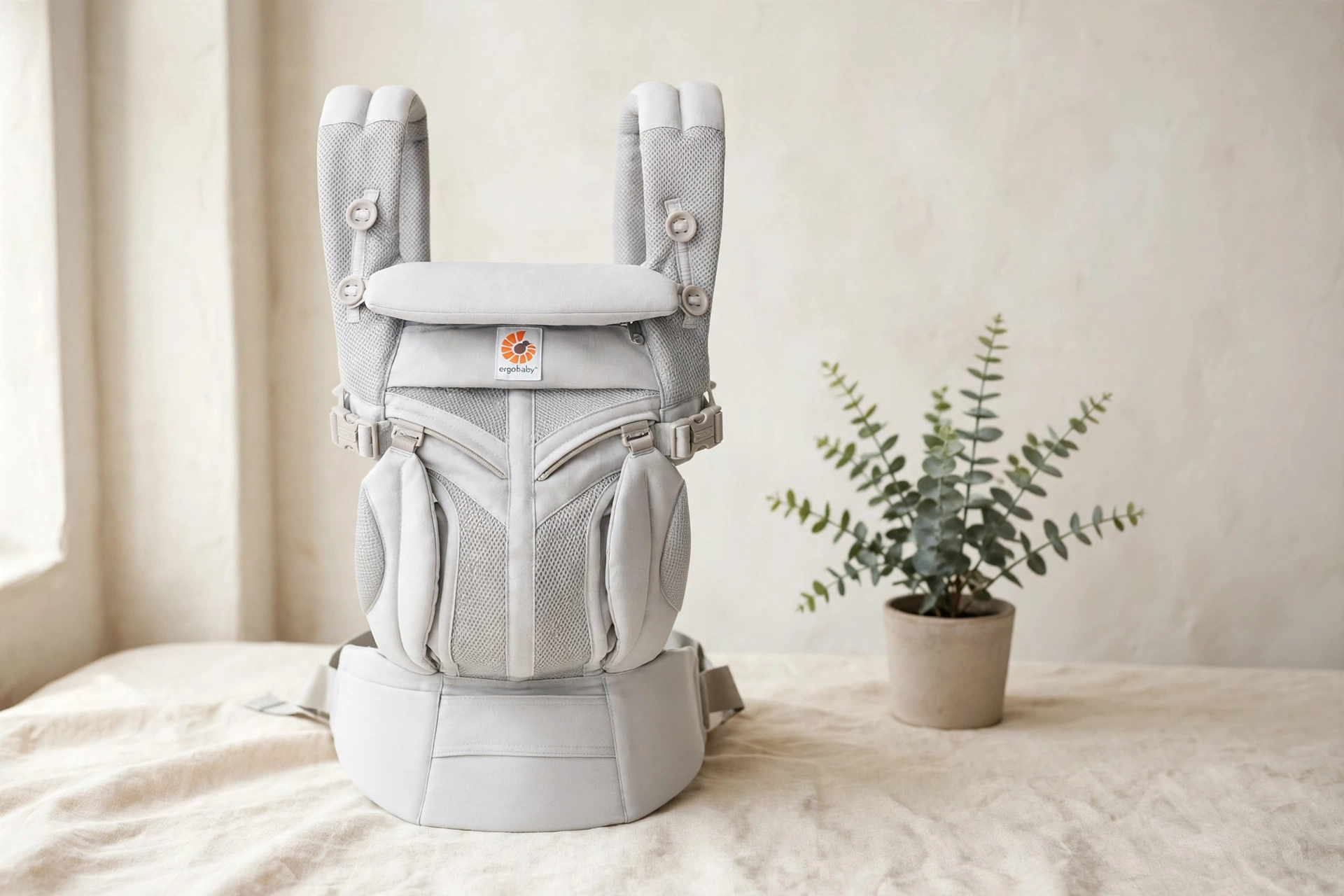
By my front door hangs the carrier I reach for without thinking. It is not the prettiest one I own, but it works for a newborn, a curious six-month-old, and a heavy toddler, and it works the same way whether I am wearing it or my husband is. That is the Ergobaby Omni Classic, and it has been the default carrier in my house since the day it arrived.
This review covers what all four carry positions are actually for, how the fit works across body sizes, what the lumbar support does on a long day, and the honest downsides you should know before you buy. I am Sarah Mitchell, mom of two (ages 4 and 2), and I have carried both of my kids through grocery runs, park mornings, and airport lines. A carrier earns its place in my house by fitting my body, keeping us both comfortable, and adjusting fast when my husband takes over.
Heads up: this post contains affiliate links. If you buy through them, MamaKinder may earn a small commission at no extra cost to you, and it helps keep these guides free.
At a Glance
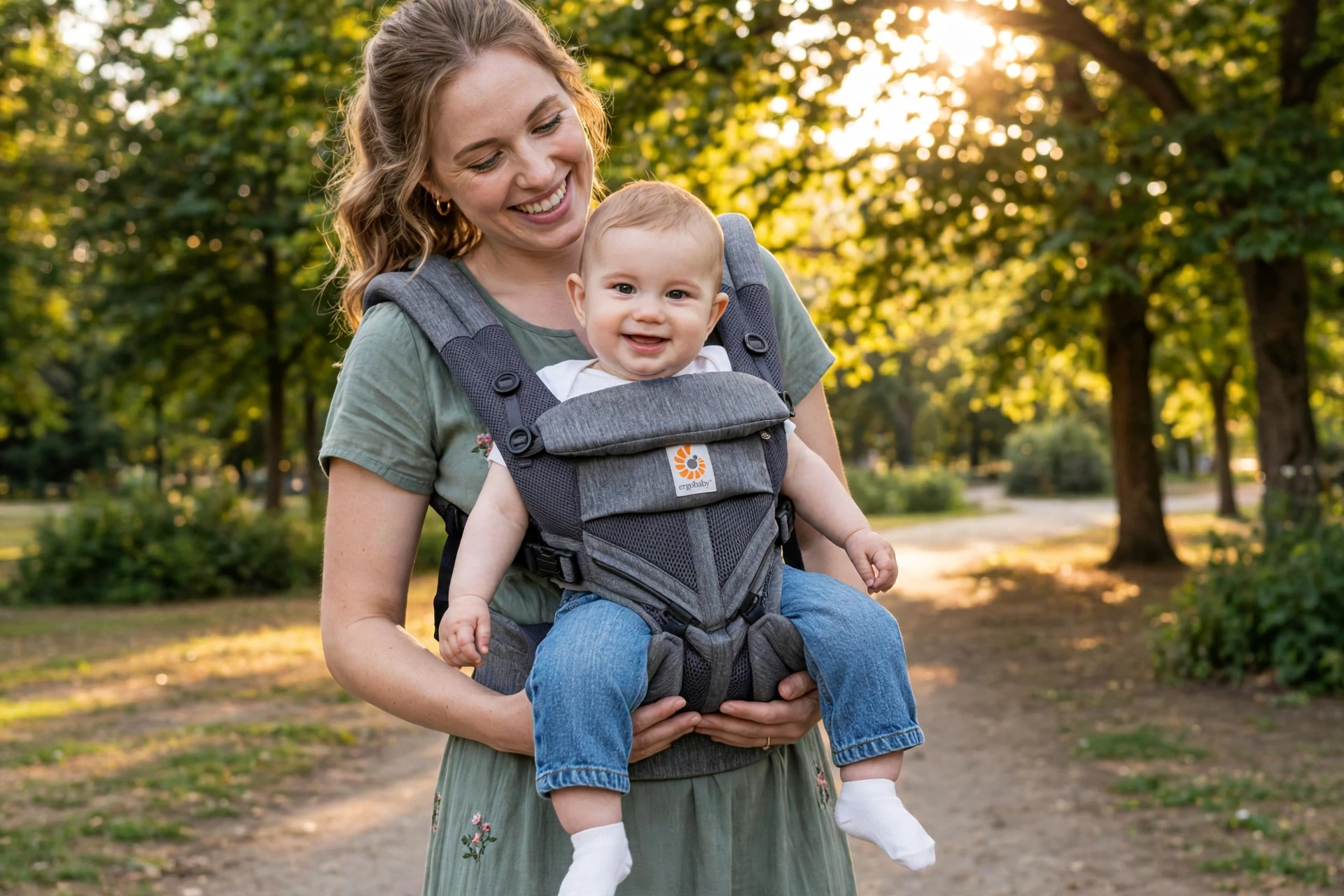
Verdict: The carrier I recommend first to a mom who wants one carrier and wants it to do everything. Four positions, newborn to toddler, no insert, lumbar support, and a fit that adjusts between parents in under a minute: that is the whole job, in one box, which is why it is our Best All-Rounder pick.
Amazon rating: ★★★★☆ 4.6/5 (3,836 ratings)
Best for: everyday carrying from newborn to toddler, hip carry, and parents who share one carrier.
Buy it if: you want to buy once and be done, with a position for every stage.
Skip it if: you are petite and want a lighter, less bulky carrier, or you need mesh for hot weather, which is the separate Cool Air Mesh version.
How I Tested It
- Carried both of my kids (ages 4 and 2) through everyday outings and travel days
- Tried all four carry positions, including hip carry for quick ups and downs around the house
- Switched the seat between facing in and facing out with the large button adjusters
- Adjusted the straps between my frame and my husband’s, and checked the lumbar panel on long walks
- Practiced the top shoulder strap buckle solo at home before the first outing
Specifications
Pros and Cons
👍 Pros
- Four carry positions in one carrier: facing in, facing out, hip, and back carry
- Newborn to toddler, 7 to 45 pounds, with no infant insert needed
- Padded lumbar support waistband takes the weight off your shoulders
- Large button adjusters switch the seat between facing in and facing out
- Smooth-gliding straps adjust fast between caregivers, so both parents can share one carrier
- Cushioned head support adjusts 3 ways for naps and awake time
- Storage pouch holds your phone and keys
👎 Cons
- A tiny newborn can feel a bit lost in it at first, so some parents start with a smaller carrier and switch once baby is sturdier
- Top shoulder buckle is hard to reach solo at first
- It feels bulky compared with a wrap or a sling, so it packs bigger for travel
- Back buckle can sit high on a very tall frame
Four Carry Positions, Newborn to Toddler

Four ergonomic, hip-healthy carry positions cover the whole arc, and each one has a season in your baby’s life. It is the only current Ergobaby model with all four, and it needs no infant insert at any stage: the seat cinches down for a newborn and expands as your baby grows, which is what lets one carrier cover 7 to 45 pounds.
Facing in is where you start. Your newborn rides chest to chest, knees tucked up in the M position with the seat supporting knee to knee. This is the position for naps on the go, for fussy evenings, and for the first months when your baby wants nothing more than to hear your heartbeat.
Once your baby has strong head and neck control and starts craning to see the world, facing out opens up. The large button adjusters on the seat let you switch from facing in to facing out without taking the carrier apart, which is a small detail you will appreciate the first time your baby demands a view in the middle of a grocery aisle. Keep facing-out sessions shorter than facing-in ones, and watch for overstimulation: if your baby turns their head away or gets fussy, turn them back in.
Hip carry is the position most carriers skip, and it is the one I missed most before I had it. Once your baby can sit with support, you slide them to your hip for quick ups and downs around the house, for a toddler who wants to be held but also wants to look around, and for those in-between moments when a full front carry feels like too much setup. It is the fastest position to get in and out of, which matters when you are doing it ten times a day.
Back carry is for toddlers. Once your baby is sitting well and getting heavy, moving them to your back frees your front, balances the weight better, and lets you carry a 30-pound toddler up a hill without your shoulders giving out. The cushioned head support adjusts three ways, so it supports a sleeping head on your back and folds down when your toddler is awake and looking around.
A Fit That Works Across Body Sizes

Fit is the reason this carrier works as the everyday default. The waistband carries a padded lumbar support panel, so the weight sits on your hips and lower back instead of hanging from your shoulders. On a long walk, that is the difference between a carrier you forget you are wearing and one you are counting down the minutes with.
Straps glide smoothly and adjust in several places, so the same carrier fits parents of very different sizes. The reported body-size range is generous, with a waist range of about 24 to 52 inches and a height range of about 150 to 190 cm, so one carrier can genuinely work for both parents, plus-size moms included. I have heard from families where one parent is petite and the other is well over six feet, and both wear the same carrier comfortably after a short strap adjustment. If you and your partner share baby duty, that quick hand-off is a bigger deal than it sounds.
Padded shoulder straps sit flat and spread the weight across your shoulders, and the chest clip keeps them from sliding off. Before you buy, do what I do with every carrier: measure around your waist where the belt will sit and compare it to the stated range. Look for a belt that closes with two or three inches to spare, which leaves room for a winter coat and for your body to change across the postpartum months.
One honest note on fit: a few taller parents report that the back buckle can sit high, near the neck, on a very tall frame. If you or your partner are well over six feet, it is worth a try-on style check on the first wear, with the straps loosened before you tighten.
Setting It Up the First Time
Plan on ten unhurried minutes with the carrier and your baby the first time, not a rushed attempt at the front door. Set the seat width first: use the large button adjusters to choose the narrow setting for a newborn, then widen it as your baby’s legs grow. The seat should support your baby knee to knee, which is what keeps the hips in the M position.
Put the waistband on first and tighten it snugly at your natural waist, where the belt sits level all the way around and the lumbar panel rests against your lower back. Then settle your baby into the seat, knees up in the M shape, and bring the shoulder straps over. Tighten the straps until the baby sits high enough to kiss, which is the quick safety check I use every time: if you can lean forward and kiss the top of your baby’s head without straining, the height is right.
What takes practice is the top shoulder strap buckle, which sits behind you and can be fiddly to reach solo the first few times. Most parents say it clicks into place after two or three practice runs, and then it becomes a one-minute job. Practice at home before your first outing, and hand the carrier to your partner with just a strap adjustment once you both know your settings.
Before you need it, know about the storage pouch: it holds your phone and keys, so you can leave the diaper bag in the car for a quick errand.
What Other Parents Say
Reading through buyer reviews turned up a few things my own sessions had not: families in the babywearing community report the same carrier lasting through two or three kids and then going on to another family, babies fall asleep in it on walks so reliably that parents plan naps around it, and petite parents warn that the tall panel can feel bulky on a small frame. It is also machine washable, which matters once spit-up and snack crumbs enter the picture.
How It Compares
Our roundup has ten other carriers, from structured all-rounders to wraps and a hip seat. Here is how the Omni Classic sits among them.
| Carrier | Type | Weight range | Positions | Fit highlight | Pick it if |
|---|---|---|---|---|---|
| Ergobaby Omni Classic Baby CarrierOUR PICK | Structured | 7–45 lb | 4 (in, out, hip, back) | Waist ~24–52 in, lumbar support | You want one carrier that does every position well |
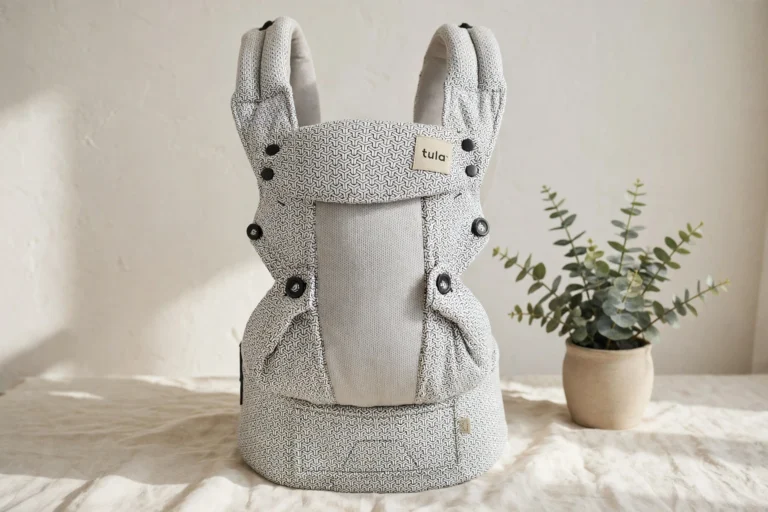
| Baby Tula Explore Mesh Baby Carrier | Structured | 7–45 lb | 3 (in, out, back) | Waistband 27–57 in (4XL) | You want the widest fit and a breathable mesh panel |
| Infantino Flip 4-in-1 Convertible Baby Carrier | Structured | 8–32 lb | 4 (in narrow, in wide, out, back) | Wide padded waist belt | You want the lowest price for a full-featured carrier |
| Beco Gemini Baby Carrier | Structured | 7–35 lb | 4 (in, out, hip, back) | Belt ~52 in, extenders available | You want straps that cross or wear straight |
| LÍLLÉbaby Complete All Seasons Baby Carrier | Structured | 7–45 lb | 6 (in narrow/wide, out, hip, back + newborn) | Waistband 24–61.5 in with extender | You want one carrier for summer and winter |
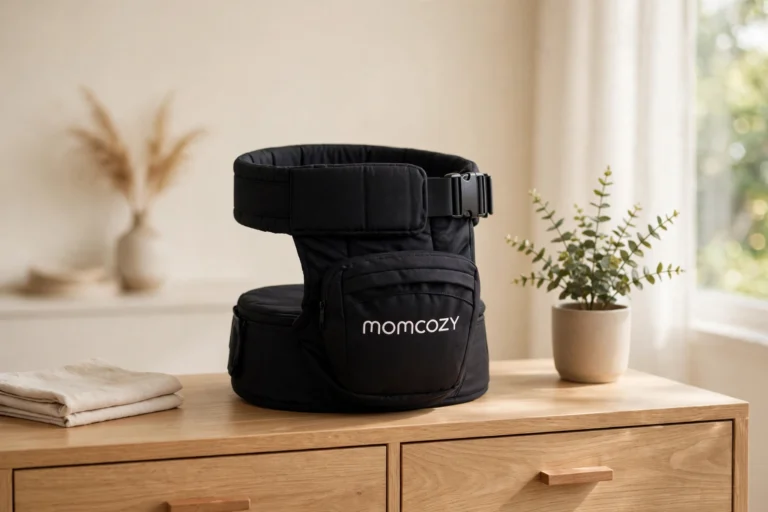
| Momcozy PureHug Baby Carrier | Structured | 7–45 lb | Front-in only (3-stage sizing) | Padded waistband, EVA lumbar support | Back support matters most to you |
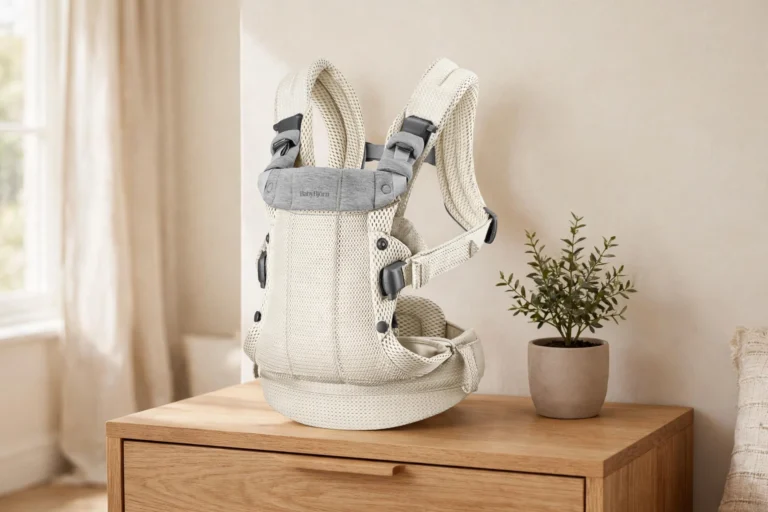
| BabyBjörn Baby Carrier Harmony | Structured | 7–33 lb | 4 (newborn in, in, out, back) | Padded waist belt, lumbar support | You want the lightest structured carrier |
| Boba Baby Wrap Carrier | Wrap | 7–35 lb | 1 wrap method (front/hip) | One size, no waistband | You want a soft wrap with no buckles |
| Moby Classic Wrap | Wrap | 8–33 lb | Front + hip, buckle-free | Listed to XXL, fit mixed | You want the classic cotton wrap |
| KeaBabies Baby Wrap Carrier | Wrap | Up to 35 lb (best under 20 lb) | Front/hip wrap | One size, up to size 24 (disputed) | You want the longest wrap for bigger bodies |
| Momcozy Hip Seat Baby Carrier | Hip seat | 6–36 mo, up to 45 lb | 4 ways (cradle, face-to-face, forward, hip) | Wide Velcro waist belt | You want a seat to perch your toddler on |
This carrier is also one of our picks in Best Baby Carriers for Plus Size Moms.
Where to Buy
Best All-Rounder
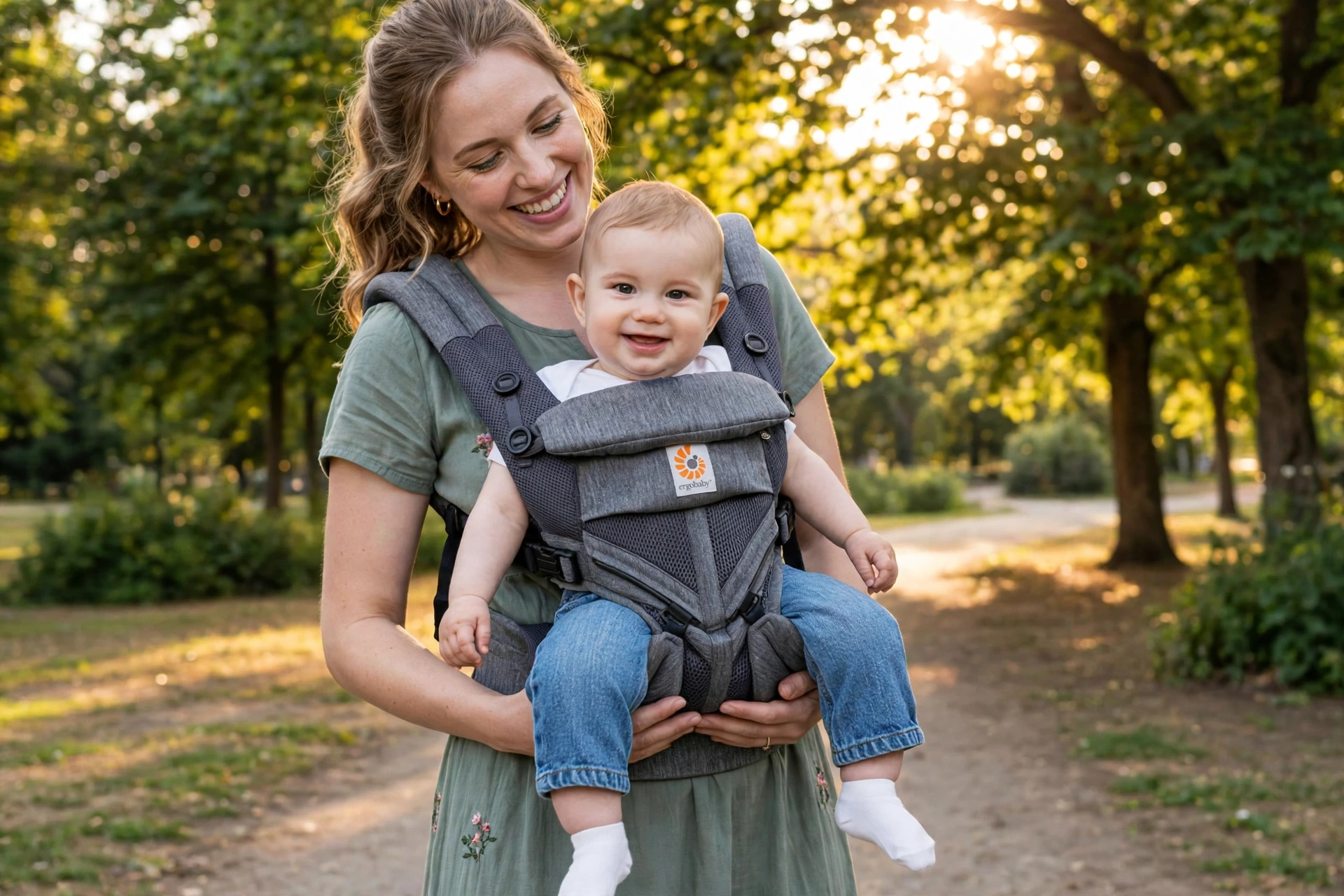
Ergobaby Omni Classic Baby Carrier
Customer Rating ★★★★☆ 4.6/5 (3,836 Amazon reviews)
All-round carrier for newborn to toddler with 4 ergonomic carry positions, lumbar support, and no infant insert needed.
Frequently Asked Questions
How do you wash the Ergobaby Omni Classic? Machine wash cold on a gentle cycle and air dry. Spot clean small messes right away so the carrier stays fresh between washes.
Omni Classic or Cool Air Mesh: which one should I buy? The Classic is 100% cotton, for everyday carrying and cooler weather. The Cool Air Mesh has mesh panels that keep you and your baby cooler in hot weather and with a summer baby. Both have the same four positions and the same fit.
Is the Omni Classic too bulky for a petite parent? It can feel big on a small frame: the panel is tall and the belt is wide. If you are under about 5 ft 4 in, try it on first; some petite parents use a softer carrier for the first months and switch to the Omni once their baby is sturdier.