LILLEbaby Complete All Seasons Review: One Carrier for Every Season

I live somewhere the weather changes its mind three times before lunch. A carrier that is perfect in January is a sweatbox in July, and the one that breathes in July leaves my baby cold in January. The LÍLLÉbaby Complete All Seasons solves that with a zip: one panel down and it breathes, one panel up and it is warm.
This review covers how the zip-down panel actually works across the seasons, what all six carry positions are for, how the fit works across body sizes, and the honest downsides you should know before you buy. I am Sarah Mitchell, mom of two (ages 4 and 2), and I have carried both of my kids through grocery runs, park mornings, and airport lines. A carrier earns its place in my house by fitting my body, keeping us both comfortable in any weather, and adjusting fast when my husband takes over.
Heads up: this post contains affiliate links. If you buy through them, MamaKinder may earn a small commission at no extra cost to you, and it helps keep these guides free.

At a Glance
Verdict: The carrier I recommend first to a mom who wants one carrier for the whole year and the whole baby, and it is our Best All-Season Carrier pick. The zip-down panel is a real solution, not a gimmick: it turns a warm carrier into a cool one in seconds, and it means you never have to choose between a mesh carrier and a solid one.
Amazon rating: ★★★★☆ 4.5/5 (6,786 ratings)
Best for: unpredictable weather, long wearing days, and babies who nap in the carrier.
Buy it if: you want one carrier for July and January, with six positions and strong lumbar support.
Skip it if: you switch directions mid-outing a lot, or you want the lightest carrier to pack.
How I Tested It
- Carried both of my kids (ages 4 and 2) on grocery runs, park mornings, and airport lines
- Wore it with the panel zipped up on cold mornings and unzipped on warm afternoons
- Set the seat narrow for a newborn and wide for a bigger baby, and narrow again for facing out
- Practiced switching from facing in to facing out at home before the first outing
Specifications
Pros and Cons
👍 Pros
- Zip-down front panel reveals breathable mesh for hot days and zips up for warmth, so one carrier works all year
- Six carry positions, the most of any carrier on our list
- Newborn to toddler, 7 to 45 pounds, with no infant insert needed
- Lumbar support and wide padded waistband put the weight on your hips
- Best head support tested, with a cinching cushion that cradles a sleeping baby
- Waist strap reported from 24 to 61.5 inches with an extender, the widest range on our list
- Zippered pouch holds your phone and keys
- Hip-healthy rated
👎 Cons
- Slow to switch between facing in and facing out
- Stiff buckles until broken in
- Bulkier than most competitors when folded
- Back carry has a steep learning curve without a helper
- Seat-width rules (narrow, wide, outward) confuse people at first
- Padding can leave marks on little thighs
The Zip-Down Panel, Season by Season

Here is how the panel works in real life. The front of the carrier has a zippered panel. On a hot day, unzip it and fold it down, and a grey mesh layer is revealed underneath. Air moves through the mesh and across your baby, which is the difference between a baby who stays settled and a baby who gets sweaty and fussy twenty minutes into a summer walk. On a cold morning, zip the panel back up and the solid fabric blocks the wind and holds the warmth in.
Spring and autumn are where this carrier really earns its keep. Start the morning with the panel zipped up, and by midday when the sun comes out, unzip it without taking the carrier off. You do not need two carriers, one mesh and one solid, and you do not need to guess the weather before you leave the house. That is the all-season promise, one carrier with full temperature control, and it works exactly as advertised.
One practical note: the panel is a zip, so it needs two hands to open and close cleanly. Do it before you put the carrier on, or with your baby settled and a hand free. It becomes second nature after a week.
Six Carry Positions, Newborn to Toddler
Six carry positions, the most of any carrier on our list, and each one has a season in your baby’s life.
Front facing in with the narrow seat is where you start. Your newborn rides chest to chest, knees tucked up in the M position with the seat supporting knee to knee. This is the position for naps on the go, for fussy evenings, and for the first months when your baby wants nothing more than to hear your heartbeat.
Front facing in with the wide seat comes as your baby grows. The seat has two widths: narrow for babies from 7 to 20 pounds, and wide for babies above 20 pounds. Set the width before you put your baby in, and the fabric keeps supporting knee to knee as little legs get longer.
Front facing out comes once your baby has strong head and neck control, typically around five months, and starts craning to see the world. Front outward always uses the narrow seat setting, whatever your baby weighs, which is the rule most people get wrong. Keep facing out sessions shorter than facing in ones, and watch for overstimulation: if your baby turns their head away or gets fussy, turn them back in.
Hip carry is the position most carriers skip, and it is the one I missed most before I had it. Once your baby can sit with support, you slide them to your hip for quick ups and downs around the house, for a toddler who wants to be held but also wants to look around.
Back carry is for toddlers. Once your baby is sitting well and getting heavy, moving them to your back frees your front and balances the weight better. The cinching head cushion is a quiet star here: it cradles a sleeping head on your back better than any other carrier I have used, which is why Wirecutter rated it the best head support it tested.
A Fit That Works Across Body Sizes

Fit is where this carrier stands out. The waist strap is reported to run from 24 to 61.5 inches with an extender, which is the widest range on our whole list. Wirecutter’s testers ranged from 5 foot 4 to 6 foot 3, and all of them loved the fit. That range matters in real households: it fits a plus size mom with room to spare, and it also adjusts down small enough to share between parents.
The wide padded waistband puts the weight on your hips instead of your shoulders, and the lumbar support panel backs it up. Parents who wear this carrier for hours, including a full day at a theme park with a 10-month-old, report their backs surviving the day. Good Housekeeping gave this carrier its back-pain award, and if your lower back is the first thing to complain on a long carry, this is the carrier built for you.
The zippered pouch holds your phone and keys, so you can leave the diaper bag in the car for a quick errand. Before you buy, do what I do with every carrier: measure around your waist where the belt will sit and compare it to the stated range. Look for a belt that closes with two or three inches to spare, which leaves room for a winter coat and for your body to change across the postpartum months. With a 61.5 inch top end, this one gives most moms that margin and then some.
One honest note on fit: the padding is generous, and it can feel bulky, especially when the carrier is folded for storage. A few parents also report the padding leaving marks on their baby’s thighs. Check the seat width on the first wear and make sure little legs sit comfortably in the M position with room to move.
Setting It Up the First Time
Plan on ten unhurried minutes with the carrier and your baby the first time, not a rushed attempt at the front door. Set the seat width first, because this is the step most people get wrong: narrow for babies from 7 to 20 pounds, wide for babies above 20 pounds, and always narrow for front outward facing, whatever your baby weighs. Read the manual for the width settings before your first wear; it takes two minutes and saves a lot of confusion later.
Put the waistband on first and tighten it snugly at your natural waist, where the belt sits level all the way around and the lumbar panel rests against your lower back. Then settle your baby into the seat, knees up in the M shape, and bring the shoulder straps over. Tighten the straps until the baby sits high enough to kiss, which is the quick safety check I use every time: if you can lean forward and kiss the top of your baby’s head without straining, the height is right.
The part that takes practice is switching direction. Going from facing in to facing out means taking the carrier off and rebuilding the seat, which Wirecutter calls cumbersome, and they are right. It is not hard, just slow, so plan the switch at home rather than in the middle of an outing. The buckles are stiff for the first week or two and then break in, and some are hard to reach while you are wearing the carrier alone, so practice at home before your first outing.
The cinching head cushion is worth knowing about before you need it. It tightens around your baby’s head for naps and loosens when your baby is awake.
What Other Parents Say
Reading through buyer reviews turned up a few things my own testing had not: one parent credits LÍLLÉbaby’s customer service with fixing her fit after a few adjustments, and several parents use the same carrier for a toddler and a newborn at once. A few buyers say they chose it after comparing it with the Ergobaby and finding the back neck clip easier to reach and buckle.
“LOVE this baby carrier as did 3 of our children, Had given it away and woops a 4th on the way.”
— Amazon customer review
“The name of this baby carrier is 100% true I carried my newborn in it while it was cold outside she stayed comfortable! Now she’s 8 months I’ve continued to use it now it’s getting hot out and she’s still just as COMFORTABLE!!”
— Amazon customer review
“This is one of my favorite baby gear purchases thus far.”
— Amazon customer review
How It Compares
Our roundup tested eleven carriers side by side. The Complete All Seasons is the all-season pick; here is how the full set compares on type, weight range, positions, and fit.
| Carrier | Type | Weight range | Positions | Fit highlight | Pick it if |
|---|---|---|---|---|---|
| LÍLLÉbaby Complete All Seasons Baby CarrierOUR PICK | Structured | 7–45 lb | 6 (in narrow/wide, out, hip, back + newborn) | Waistband 24–61.5 in with extender | You want one carrier for summer and winter |
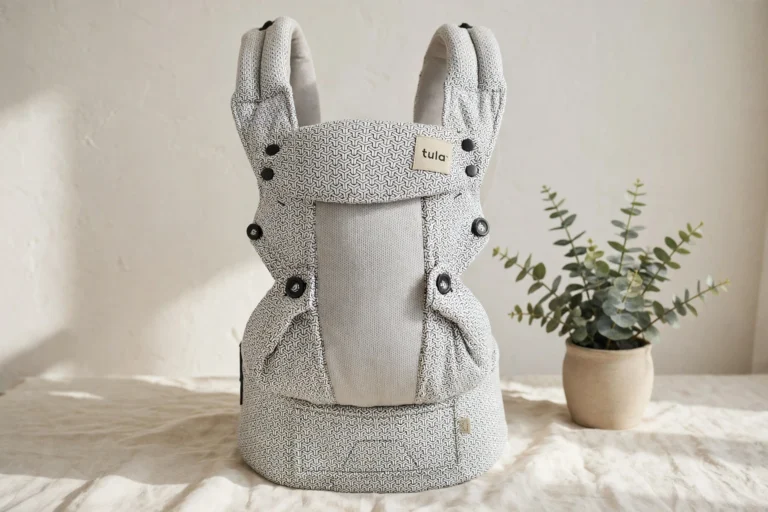
| Baby Tula Explore Mesh Baby Carrier | Structured | 7–45 lb | 3 (in, out, back) | Waistband 27–57 in (4XL) | You want the widest fit and a breathable mesh panel |
| Ergobaby Omni Classic Baby Carrier | Structured | 7–45 lb | 4 (in, out, hip, back) | Waist ~24–52 in, lumbar support | You want one carrier that does every position well |
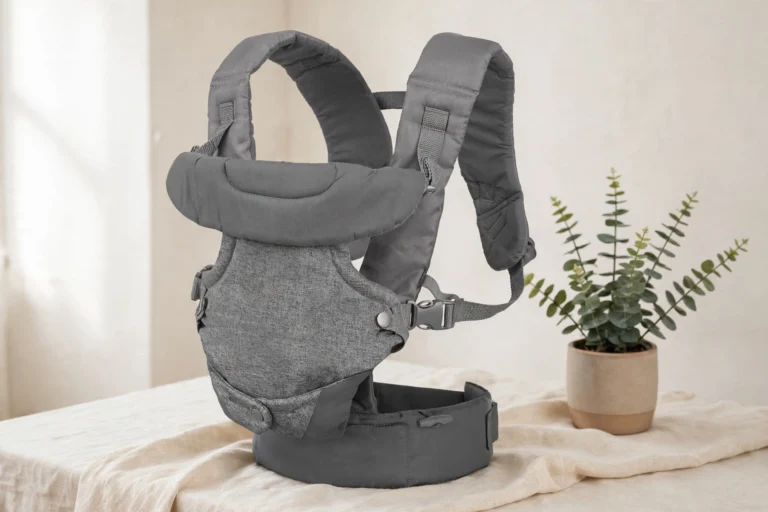
| Infantino Flip 4-in-1 Convertible Baby Carrier | Structured | 8–32 lb | 4 (in narrow, in wide, out, back) | Wide padded waist belt | You want the lowest price for a full-featured carrier |
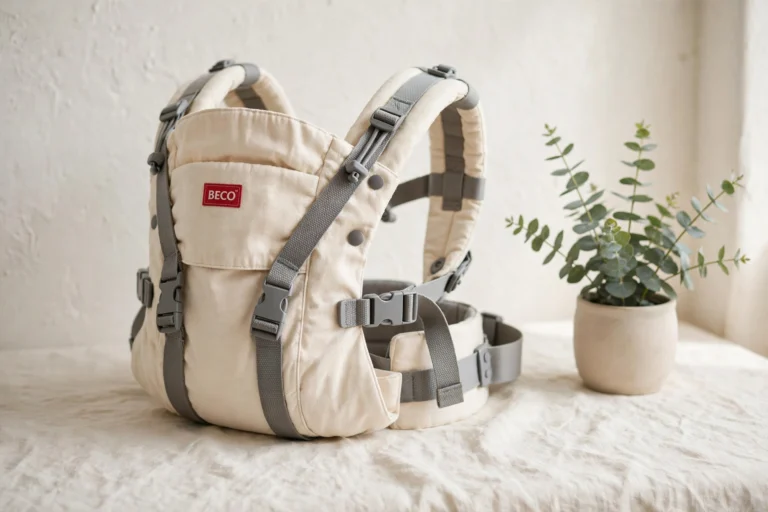
| Beco Gemini Baby Carrier | Structured | 7–35 lb | 4 (in, out, hip, back) | Belt ~52 in, extenders available | You want straps that cross or wear straight |
| Momcozy PureHug Baby Carrier | Structured | 7–45 lb | Front-in only (3-stage sizing) | Padded waistband, EVA lumbar support | Back support matters most to you |
| BabyBjörn Baby Carrier Harmony | Structured | 7–33 lb | 4 (newborn in, in, out, back) | Padded waist belt, lumbar support | You want the lightest structured carrier |
| Boba Baby Wrap Carrier | Wrap | 7–35 lb | 1 wrap method (front/hip) | One size, no waistband | You want a soft wrap with no buckles |
| Moby Classic Wrap | Wrap | 8–33 lb | Front + hip, buckle-free | Listed to XXL, fit mixed | You want the classic cotton wrap |
| KeaBabies Baby Wrap Carrier | Wrap | Up to 35 lb (best under 20 lb) | Front/hip wrap | One size, up to size 24 (disputed) | You want the longest wrap for bigger bodies |
| Momcozy Hip Seat Baby Carrier | Hip seat | 6–36 mo, up to 45 lb | 4 ways (cradle, face-to-face, forward, hip) | Wide Velcro waist belt | You want a seat to perch your toddler on |
This carrier is also one of our picks in Best Baby Carriers for Plus Size Moms.
Where to Buy
Best All-Season Carrier

LÍLLÉbaby Complete All Seasons Baby Carrier
Customer Rating ★★★★☆ 4.5/5 (6,786 Amazon reviews)
All-season carrier for newborn to toddler with 6 carry positions, a zip-down mesh panel, and lumbar support.
Frequently Asked Questions
How do you wash the LÍLLÉbaby Complete All Seasons? Check the care instructions on the Amazon listing before washing, since care details can vary by listing. As a rule, spot clean small messes right away so the carrier stays fresh between washes.
What is the difference between the Complete All Seasons and the Complete Airflow? The Airflow is the all-mesh version of the same carrier, built for maximum breathability in hot weather. The All Seasons in this review has the zip-down panel, so it switches between mesh and solid fabric with the weather instead of staying mesh all the time.
What warranty does the LÍLLÉbaby Complete All Seasons come with? A limited 2-year warranty. Check the listing for the current warranty terms before you buy, since they can vary by seller.