
Baby Sleep Guide: 14 Gentle Moves That Actually Help Everyone Sleep

If you are reading this one-handed, in the dark, while a small human breathes on your chest — welcome. You are exactly who this guide is for. I am Sarah, mom of two (a 4-year-old and a 2-year-old), and I have done the newborn nights twice. Some of it I did well; some of it I googled at 3 a.m. This is the guide I wish someone had handed me: the safe-sleep rules first, then how baby sleep works, then the gentle moves that genuinely help.
One honest promise before we start: no guide, gadget, or routine makes a newborn sleep through the night, and any page that promises one is selling you something. What you CAN do is set sleep up safely, learn your baby’s rhythms, and make the nights steadily more predictable. “Sleeping through” clinically means a five-to-six-hour stretch — and by that definition many babies get there between 4 and 6 months, with a wide range of normal.
Quick safety note: Everything here follows the American Academy of Pediatrics (AAP) safe-sleep basics. General information, not medical advice — check anything specific with your own pediatrician.
This post contains affiliate links. If you buy through them, I may earn a small commission at no extra cost to you — I only link to products that genuinely fit the advice on the page.
Safe Sleep First: The Non-Negotiables
These AAP basics are the floor every sleep setup stands on, for naps and nights alike:
- On the back, every sleep, until the first birthday. Side and tummy sleeping are not safe for babies who cannot yet roll both ways themselves.
- A firm, flat surface. A crib, bassinet, or play yard with a firm mattress and a fitted sheet. No inclined sleepers, swings, bouncers, or car seats for routine sleep — if baby falls asleep in one (car rides happen), move them to the flat surface as soon as you can.
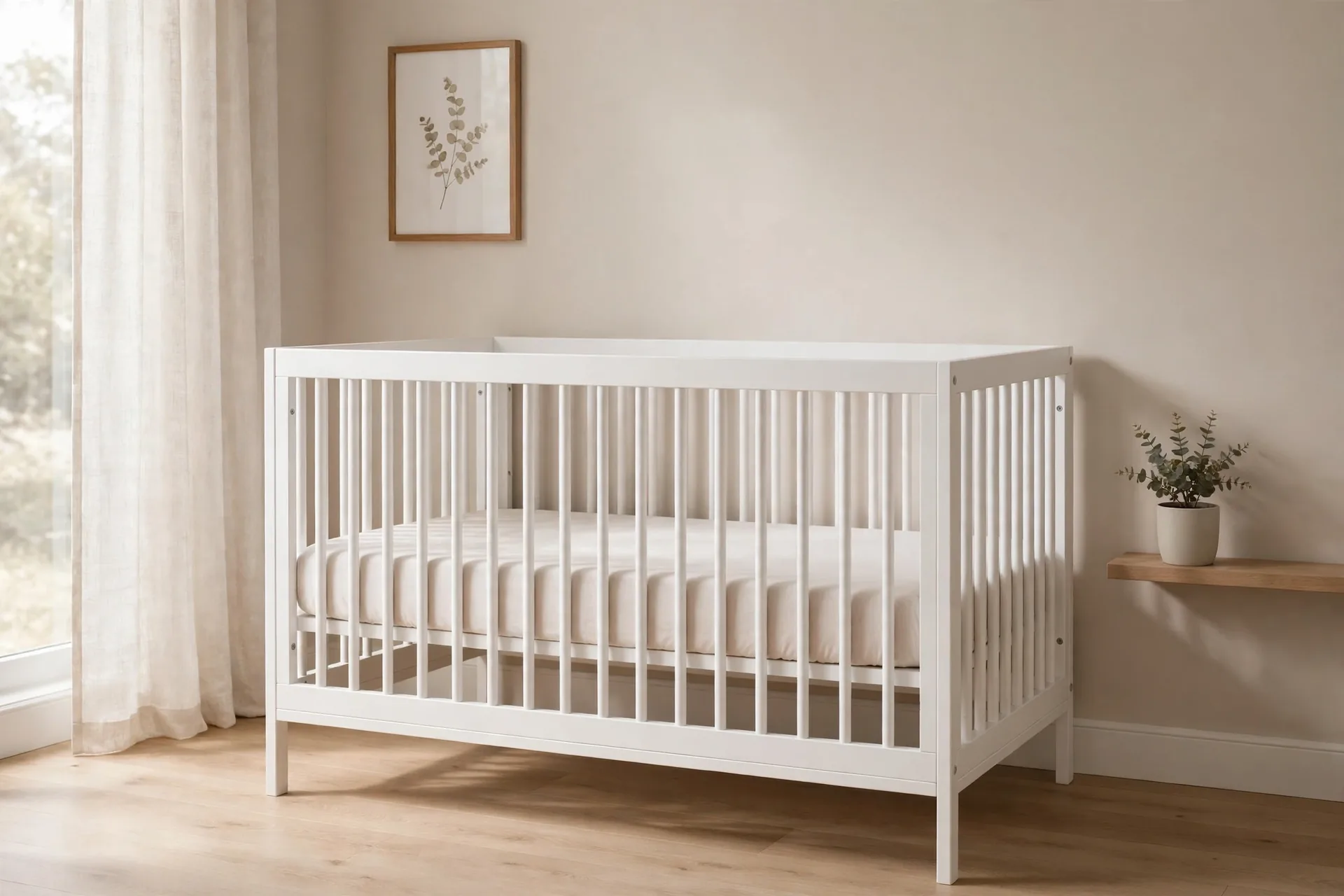
- An empty crib. Nothing soft inside: no pillows, loose blankets, bumpers, stuffed animals, or sleep positioners. A wearable blanket is the warm layer — not a loose blanket.
- Room-sharing, not bed-sharing. Baby sleeps in your room, in their own crib or bassinet, ideally for at least the first six months. Sharing a room lowers risk; sharing a bed raises it — and falling asleep with a baby on a sofa or armchair is the most dangerous spot of all. If you feed in bed, clear the pillows and blankets first and move baby back before you sleep.
- No weighted anything. Weighted sleep sacks, swaddles, and blankets are not recommended for babies — if the selling point is weight on a baby’s chest, skip it.
- Cool, not hot. Overheating is a risk factor, so dress baby for the room (Move 7) and skip hats indoors.
- A pacifier is fine. Once feeding is established, offering a pacifier at naps and bedtime is linked to lower SIDS risk.
Still choosing the sleep space? Our mini crib vs. regular crib comparison breaks down sizes and how long each lasts.
How Baby Sleep Actually Works (The 2-Minute Version)
Newborn sleep is not broken adult sleep — it runs on different hardware. Babies cycle between active sleep (twitchy, noisy, eyes fluttering — their REM) and quiet sleep (still and deep), and one full cycle lasts only about 50–60 minutes. That is why babies surface, grunt, and half-wake so often: they pass through light sleep every hour, and some of those transitions become full wake-ups. It is also why the 3 a.m. grunting does not always need rescuing — more on that in Move 10.
For the first weeks, day and night are one long blur: the body clock is not wired up yet, which is why newborns party at midnight and nap through noon. Total sleep is huge but scattered in short bursts — the quick chart below has the numbers by age.
The Moves That Actually Help
Nothing below requires signing up for anything or letting a tiny baby cry alone. These are the levers that genuinely move the needle, in roughly the order I would try them.
1. Follow wake windows, not the clock. A “wake window” is how long your baby can happily stay awake before needing sleep again, and it grows fast: roughly 35–60 minutes in the first month, 1–1.5 hours around 2 months, 1.5–2 hours at 3–4 months, about 2–2.5 hours at 4–6 months, 2.5–3.5 hours at 6–9 months, and 3–4 hours by 9–12 months. A by-the-clock schedule fights biology; a wake-window rhythm works with it. Let your baby’s cues (next move) make the final call.

2. Catch the first sleepy cues. Early cues are quiet: staring into space, slower movements, losing interest, turning away, a first yawn. Those are your ten-minute warning. Late cues — fussing, arching, eye-rubbing, full crying — mean baby is already overtired, and an overtired baby fights sleep with everything she has. Most “she just won’t nap” battles are really “we started twenty minutes too late.”

3. Build a tiny bedtime routine — and repeat it. Not a production: the same 4–5 steps in the same order every night, 20–30 minutes total. Ours is feed, warm bath or wipe-down, pajamas and sleep sack, one short book or song, lights out. Babies are pattern-recognition machines; the routine becomes a sleep cue in itself, and it travels — to grandparents and weird nights too. It pays off most from 6–8 weeks onward.

4. Put baby down drowsy but awake (when you can). The classic advice exists because it works: a baby who drifts off in the crib learns the crib is where sleep happens, so the 1 a.m. cycle transitions get easier over time. Real talk: newborns often need to be fed or rocked fully to sleep, and that is normal — you cannot spoil a newborn. Treat it as one practice rep a day, not a rule; it clicks gradually over weeks. Our full walkthrough on getting baby to sleep in the crib through the night goes deeper on the transfer itself.

5. Make the room dark and switch on white noise. True darkness (blackout dark) tells baby’s clock it is night, and continuous white noise — all night, not a 30-minute timer — masks the doorbell and the dog. The Yogasleep Dohm is the machine I landed on: a real fan inside makes the sound, so there is no electronic loop your brain starts hearing at 2 a.m., and tone and volume adjust by twisting the cap.

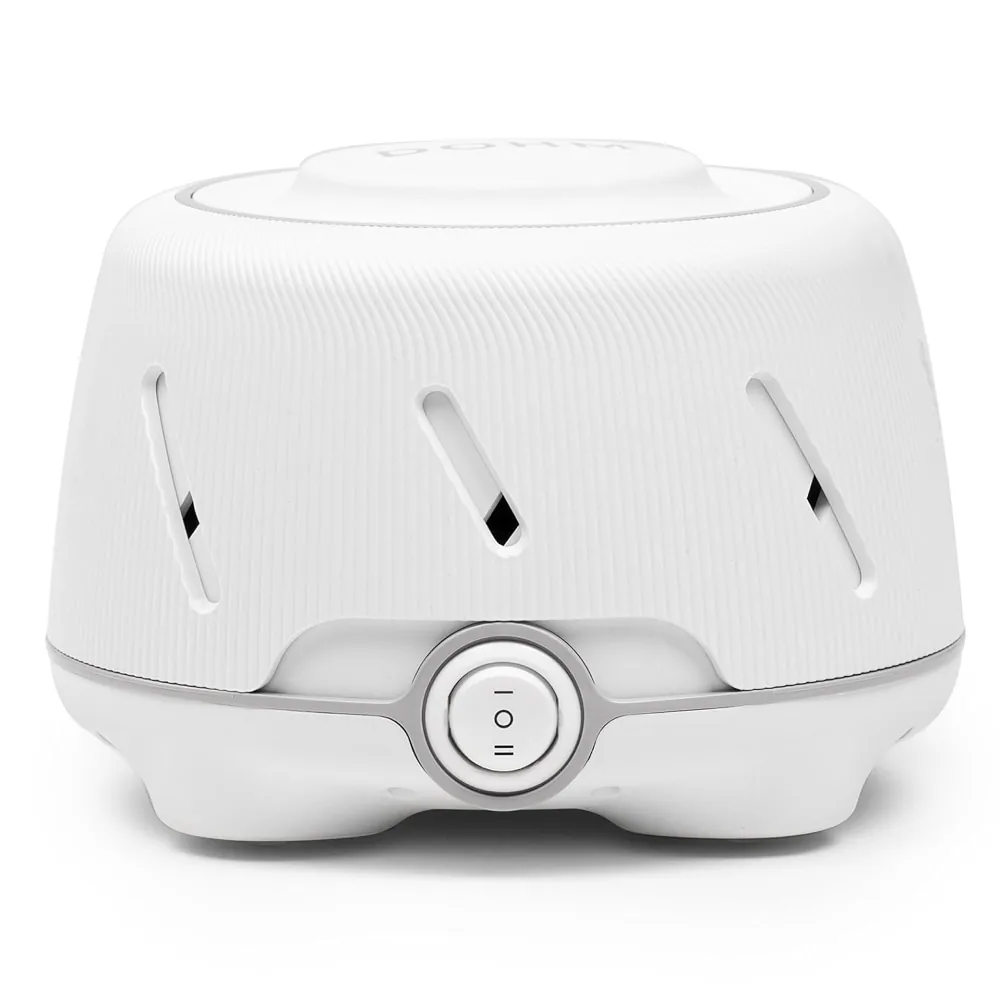
Yogasleep’s original white noise machine — soothing, natural sound from a real fan, with two speeds and adjustable tone and volume.
6. Swaddle the newborn weeks — and stop at the first roll. A snug swaddle recreates the contained feeling newborns love and tames the startle reflex that wakes them. Two safety lines never bend: snug at the chest but loose at the hips so legs can bend and spread, and stop swaddling at the first sign of rolling — many babies show signs between 2 and 4 months. My go-to was the HALO SleepSack Swaddle: the wings adjust three ways (arms in, one arm out, both out), so one sack carries a baby through the transition, and the inverted zipper opens from the bottom for diaper changes. After swaddle days, a regular wearable blanket keeps the sleep cue alive — our roundup of toddler sleep sacks and wearable blankets covers the next sizes up.


HALO’s 3-way adjustable cotton swaddle — arms in, one arm out, or both arms out. The original wearable blanket, with an inverted zipper for easy diaper changes.
7. Dress baby for the room, not the season. The comfortable zone for a baby’s room is roughly 68–72°F (20–22°C). Dress baby in about one more light layer than you are wearing, and match a sleep sack’s TOG (warmth rating) to the room — the HALO in Move 6 is a 1.5 TOG cotton, made for that 68–75°F band. Check the back of the neck or chest: warm and dry is right; hot or sweaty means a layer comes off. No hats or hoods for indoor sleep.

8. Teach day from night. Your baby’s clock learns from contrast. Days: bright rooms, normal household noise, a bit of social time after feeds. Nights: dark, quiet, business-like — feed, change if needed, back down, minimal chat. Most babies show a longer first stretch at night around 6–8 weeks, because the contrast stacks up.

9. Feed on cue — including the cluster-feed evenings. Hungry babies do not settle, full stop. In the early weeks most pediatricians want newborns fed every 2–3 hours until birth weight is regained and gaining is steady — ask yours at the two-week check, then let baby set the pace. The evening cluster-feeding marathon is normal, not a sign anything is failing, and it often buys the longest stretch of the night. One old tip to retire: cereal in the bottle does not make babies sleep and is not safe unless your pediatrician directs it.

10. Take the pause. Babies grunt, squirm, fuss, and even cry out briefly while still asleep, then settle again within a minute or two. If we swoop in at the first squeak, we sometimes wake a baby who was never awake. So unless it escalates into real crying, give it a beat: watch, breathe, let the cycle turn. Half the time, the “wake-up” ends on its own.

11. Practice one nap a day in the real sleep space. Night sleep consolidates first; naps take longer. One crib nap a day — even a short one — builds the association without making you a prisoner of the nursery. Other naps can happen in your arms while you are awake, or in the stroller. The one hard line: if YOU are getting sleepy while holding the baby, put baby down on the flat surface first. An awake arm-nap is lovely; an asleep-on-the-sofa one is exactly the danger spot from the safe-sleep section.

12. Try the dream feed — honestly labeled “maybe.” A dream feed is a feed offered around 10–11 p.m., before your own bedtime: lift baby gently, feed half-asleep, straight back down. The theory: it resets the hunger clock so the long stretch lines up with your sleep. Some families swear it bought two extra hours; for others it changed nothing. Try it for a week, then keep or drop it by results.

13. Split the night into shifts. The best baby-sleep product is a rested parent, and the most reliable way to get one is shifts: one parent takes 8 p.m.–1 a.m., the other 1 a.m.–morning, and the off-duty parent sleeps out of monitor earshot (earplugs are not a moral failing). Even one protected four-hour block changes how a human functions. Solo nights happen too — then let the dishes lose, and sleep whenever you safely can.

14. Ride out the regressions. Right around 4 months, baby sleep architecture permanently changes — cycles become more adult-like, and a baby who “was sleeping so well” starts surfacing between every cycle for a few weeks. It is a development sign, not a step backward, even though it feels like one at 2 a.m. Keep the routine boring and consistent, lean on drowsy-but-awake practice, and it passes for most babies within a few weeks; our survival guide to the 4 month sleep regression has the week-by-week version.

Sleep by Age: The Quick Chart
| Age | Total sleep (24h) | Typical wake windows | Naps |
|---|---|---|---|
| 0–1 month | 14–17 hours | 35–60 min | Many, irregular |
| 1–3 months | 14–17 hours | 1–1.5 hours | 4–5 |
| 4–6 months | 12–16 hours | 2–2.5 hours | 3 |
| 6–9 months | 12–16 hours | 2.5–3.5 hours | 2–3 |
| 9–12 months | 12–16 hours | 3–4 hours | 2 |
Read the chart as a map of the neighborhood, not your baby’s exact address — totals vary by a couple of hours between babies, and growth spurts shuffle everything for a few days. A baby who eats well, grows along her curve, and has happy awake windows is getting the sleep she needs. Toddlerhood changes the game again (our crib-to-toddler-bed transition guide covers the when and how), and if gentle methods later turn into real sleep-training questions, read our honest pieces on toddler sleep training techniques — plus the sleep training mistakes almost every parent makes once.
More Baby Sleep Guides
- The Best Toddler Sleep Sacks and Wearable Blankets
- How to Get Baby to Sleep in the Crib Through the Night
- Sleep Training Toddlers: Techniques Sleep Experts Approve
- Baby Sleep Training Mistakes Almost Every Parent Makes
- Mini Crib vs. Regular Crib: What’s the Difference?
- Surviving the 4 Month Sleep Regression
- The Crib-to-Toddler-Bed Transition, Step by Step
Shop This Post
| Product | Used For | ||
|---|---|---|---|
|
HALO SleepSack Swaddle, Cotton (1.5 TOG) | The swaddle that transitions arms-in to arms-out (Move 6) | Check Price |
|
Yogasleep Dohm Classic White Noise Machine | Real-fan white noise, all night long (Move 5) | Check Price |
Frequently Asked Questions
When will my baby actually sleep through the night?
First, the definition: “sleeping through” medically means a stretch of about five to six hours, not a 12-hour marathon. Many babies manage that between 4 and 6 months, some earlier, some much later — all of it normal. If long stretches are not happening yet, it is a season, not a verdict on your parenting.
Is white noise safe for babies?
Used sensibly, yes — it is a widely recommended sleep cue. Keep the volume modest (you should be able to hold a conversation over it), place the machine across the room rather than in or on the crib, and run it continuously rather than cycling it. The fan-based Dohm in Move 5 makes the modest-volume part easy to judge by ear.
My baby fell asleep in the car seat or swing. Do I really have to move her?
For a car ride, no panic — just move her to the flat crib or bassinet when you arrive, or as soon as it’s practical. The risk builds with long, routine sleep in a sitting or inclined position, which is why car seats and swings are travel and play gear, not sleep spaces.
When exactly do we stop swaddling?
At the first sign your baby is trying to roll — rocking to one side, pushing up and twisting, or rolling during play. For many babies that’s between 2 and 4 months, and it can arrive overnight, which is why arms-in swaddling ends then even if nights get bumpy for a bit. The three-way HALO in Move 6 lets you go one-arm-out first, as a halfway step to a regular wearable blanket.
Should I sleep train?
That is a family decision, not a milestone, and anyone who pressures you either way is overstepping. Most pediatric guidance suggests waiting until at least 4–6 months if you do; methods run from gentler to firmer, and what matters is what fits your baby and your household. If you explore it, start with our breakdown of sleep training mistakes so the common traps are already marked.
You Are Not Doing It Wrong
Two newborn seasons taught me this: babies learn to sleep the way they learn everything — unevenly, on their own timeline. Your job is smaller than the internet makes it sound: keep the sleep space safe, offer the routine, watch your actual baby, and protect your own rest. The long stretches come. In the meantime, the coffee is hot, the baby is safe, and you are doing fine.
When your night owl becomes a toddler with opinions, our Toddler Parenting Tips pillar is the next stop.