Halloween Bingo Game: 9 Cards for a Spooky Family Night
Last October our street threw its first Halloween potluck — eight families, one driveway strung with lights, and somebody’s idea to run bingo for the kids while the grown-ups ate. I volunteered to call, handed out cards I’d drawn that afternoon, and watched my four-year-old cover her pumpkin square with a candy corn like it was serious business. Twenty minutes later the teenagers had joined in, my two-year-old was “playing” by eating the markers, and nobody had touched a screen. That’s the night I became a Halloween bingo evangelist.
This guide is everything that night taught me: how to play, nine themed bingo cards you can draw yourself tonight (no printer, no download), what to use as markers, prizes that cost almost nothing, and the little-kid rules that keep it fun instead of tearful. If you can draw a wobbly pumpkin, you can deal this game.
Heads up: this post contains affiliate links. If you buy through them, MamaKinder may earn a small commission at no extra cost to you — it helps keep these guides free.
⬇ Download the 9 bingo cards (PDF)
Why Bingo Wins Halloween Night
Most Halloween party games have a flaw: they need reading, or running, or a host with improv skills. Bingo needs none of that — which is why it works for the hardest crowd there is, a mixed-age gathering where players range from three to seventy-three.
Nobody has to read. Picture squares put a preschooler on equal footing with a grandparent. My four-year-old can’t read “tombstone,” but she can spot one from across the table.
It absorbs any group size. Four on the couch? Perfect. Twenty kids at a classroom party? Deal more cards — the rules don’t change, only the noise level does.
The caller is the whole show. One grown-up with the calling tiles controls the pace, the drama, and the kindness level. (The caller playbook below is the most important section here.)
It’s naturally screen-free. Cards, markers, a bowl of tiles. At our potluck the kids didn’t ask for a tablet for forty minutes — in October, that’s a miracle.
It stretches or shrinks. One quick round fills ten minutes; three rounds plus a finale fills an hour.
How To Play
The classic version first — everything else here is a variation on this flow.
Supplies: one bingo card per player, one set of calling tiles (slips of paper with each square’s picture or word), markers to cover squares (candy corn, mini marshmallows, pom-poms, buttons, coins), and a bowl or plastic cauldron for the tiles. That’s the whole list.
Set up. Give every player a different card — if two share a card, they’ll bingo together. Put the tiles in the bowl and pick a caller (a grown-up for young kids’ games). Everyone covers the free center space before the first call, or skip it on 3×3 toddler cards.
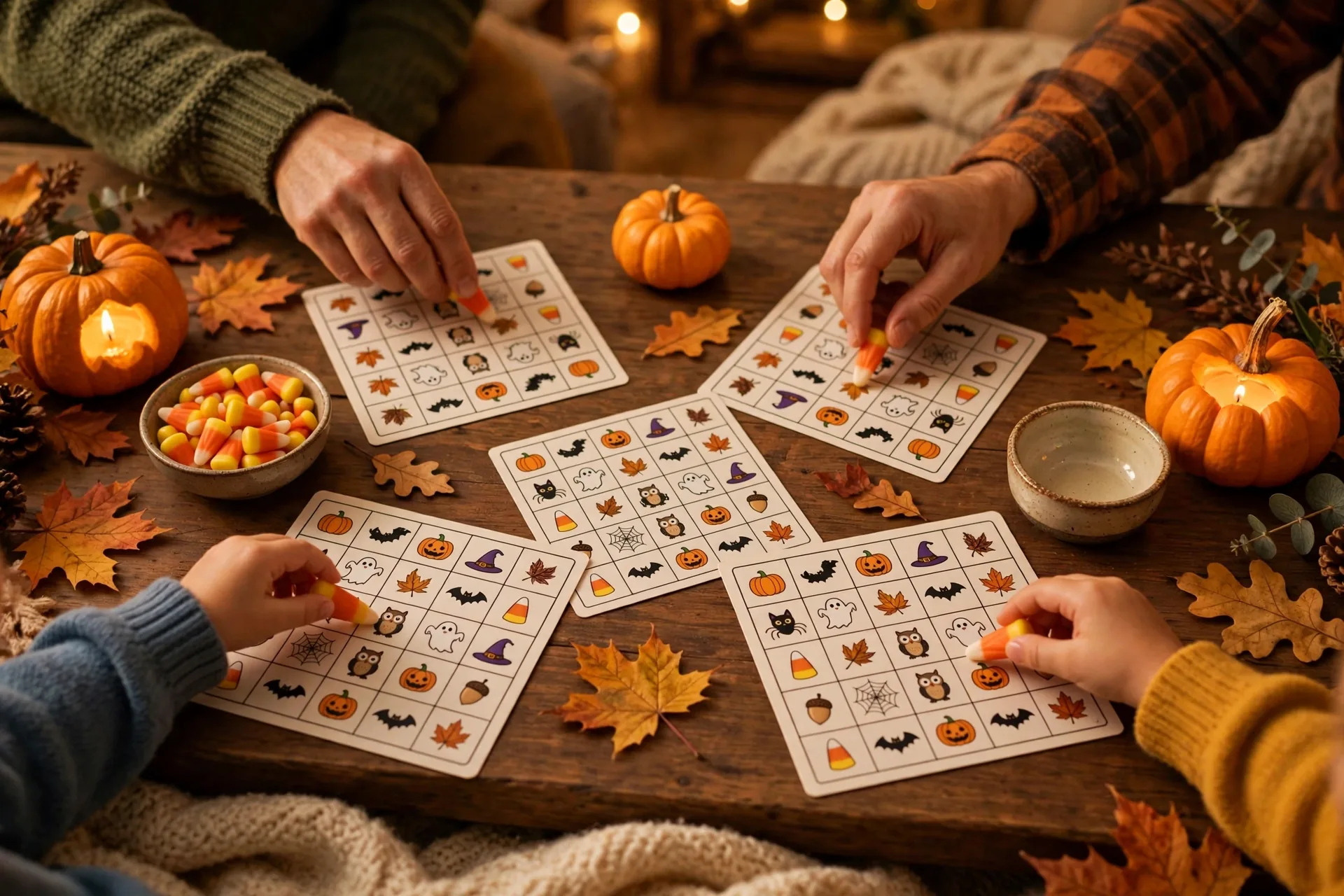
Play. The caller draws one tile, holds it up, and announces it: “Black cat! Who’s got the black cat?” Players cover matching squares. The caller sets drawn tiles aside face-up so wins check fast.
Win. First to cover five in a straight line — across, down, or diagonal — shouts “BINGO!” (or “BOO!” if you’re festive). The caller checks the line, the winner takes a prize, everyone clears their cards, and you play again with a new theme.
The tie rule — agree on it first. Two players sometimes bingo on the same call. Decide upfront: split the prize, or play one sudden-death call. Ten seconds now prevents bingo’s only argument.
Make Your Cards: Two Ways
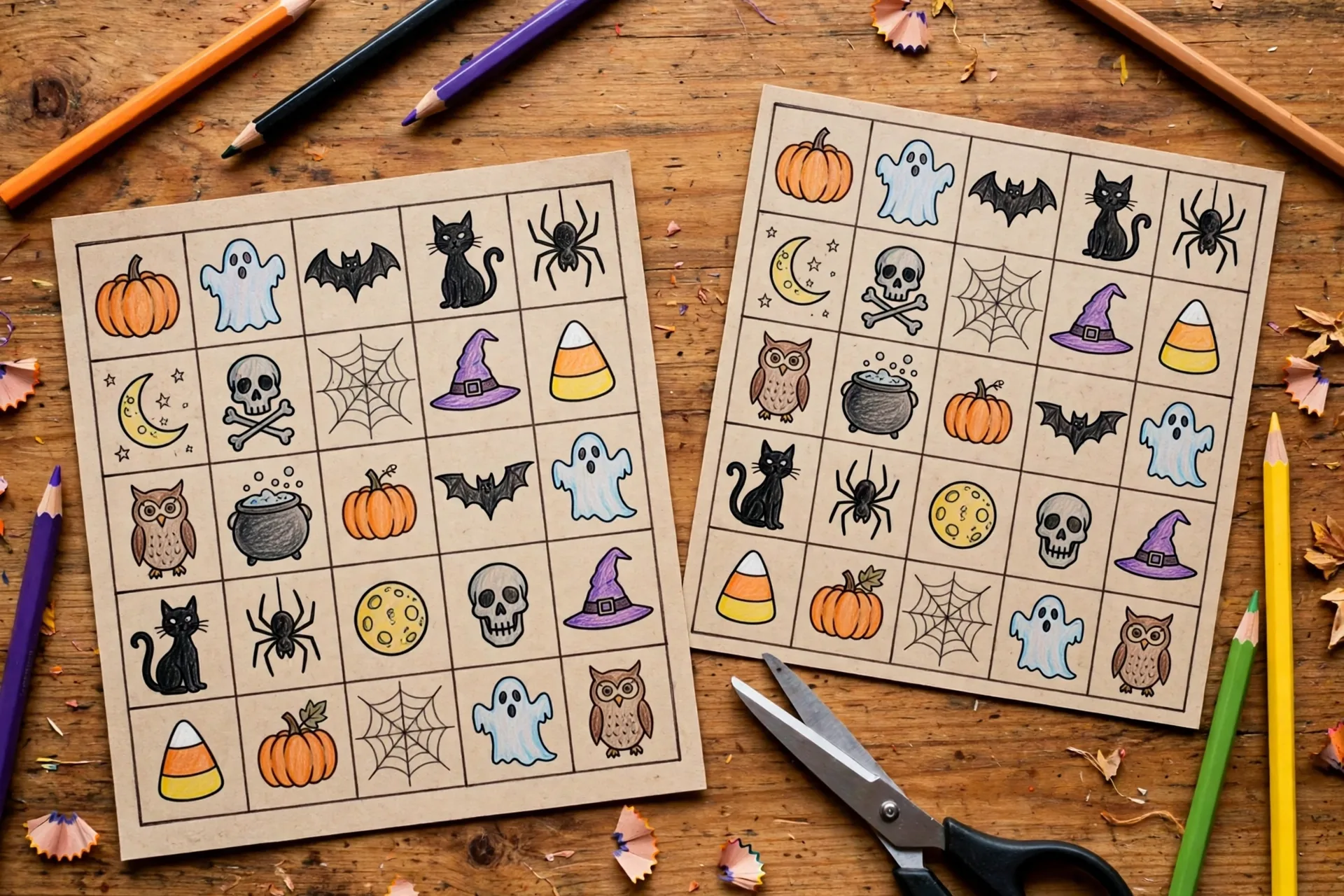
You don’t need a printer for any of this. The hand-drawn cards were half the charm at our potluck — the kids could tell I’d drawn them, and that made it ours.
Draw them (my favorite). Take plain paper, draw a 5×5 grid (3×3 for under-fives), and fill each square with a doodle or word from the nine themes below. Shuffle the squares so no two cards match. Draw the calling tiles on little slips too — twenty minutes of drawing while the kids “help” is part of the fun.
Buy a set (the no-time option). If tonight is already full, a ready-made 30-player Halloween bingo card set covers a whole party or classroom in one box — 30 player cards, a calling-card set, pumpkin bingo chips, and an instruction card. Either way, deal one card per player and keep two or three spares.
⬇ Download the 9 bingo cards (PDF)
The 9 Cards
Nine themed cards, each with the squares to draw, the ages it suits, and the win pattern. Pick two or three for a family night, or run all nine across a party.
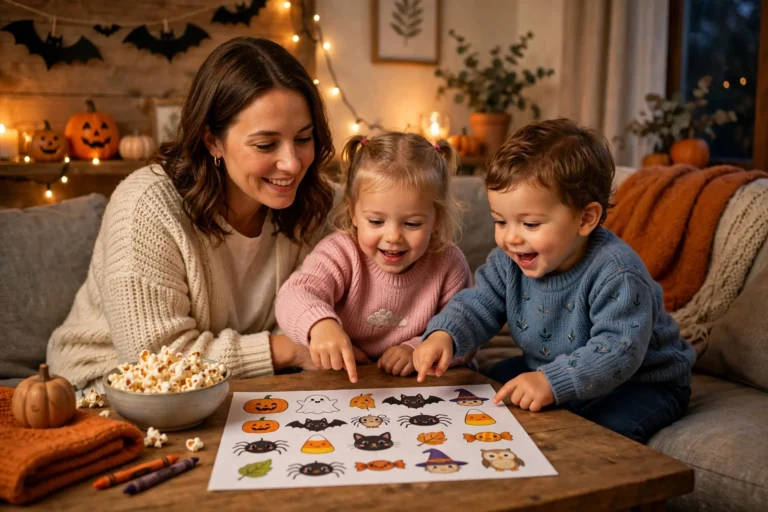
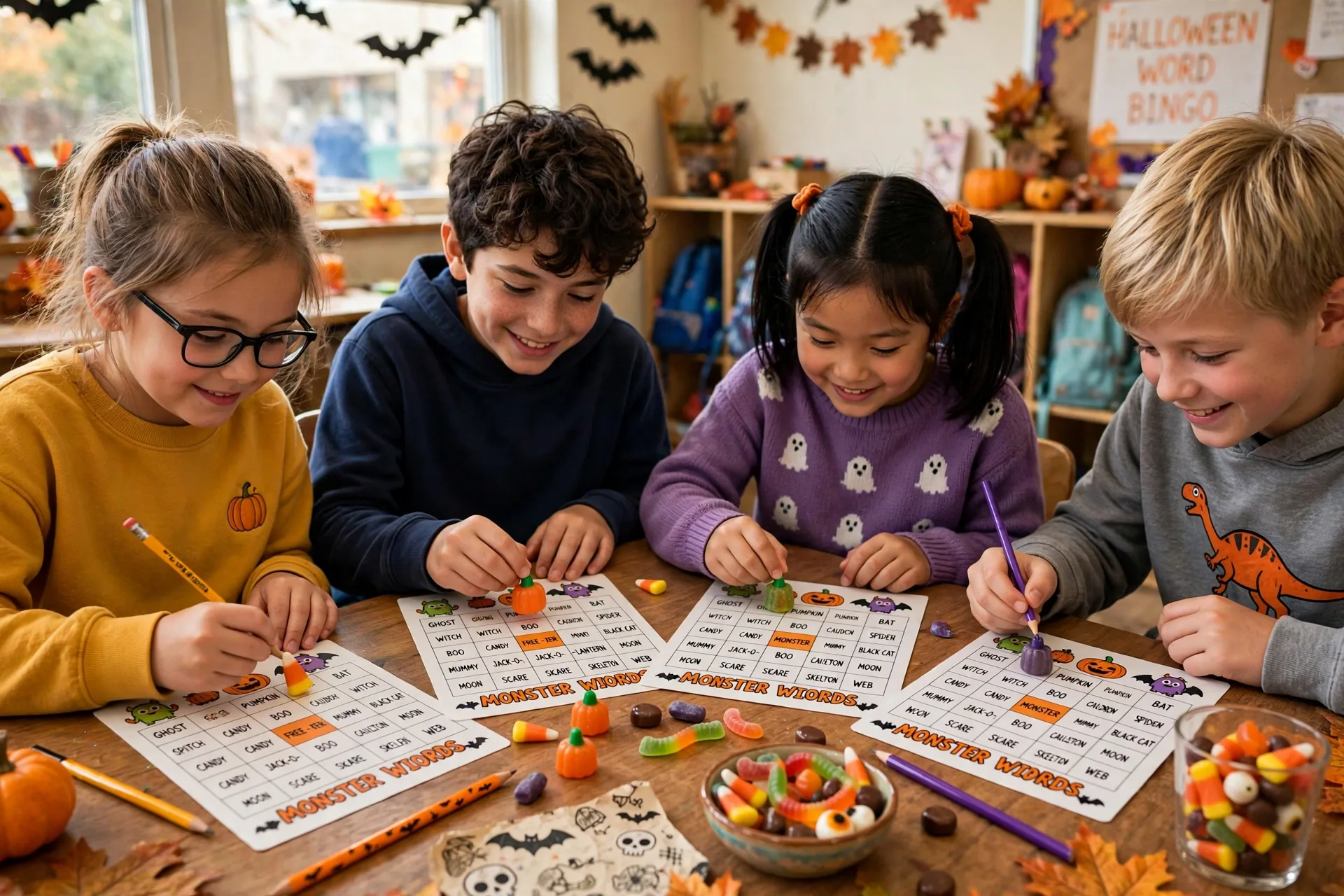
1. Spooky Picture Bingo (ages 3+). The starter card. Fill a 5×5 grid with pictures: pumpkin, friendly ghost, bat, black cat, witch hat, candy corn, spider web, full moon, owl, haunted house, cauldron, skeleton, mummy, vampire, scarecrow. Win: five in a row. The caller holds up each tile AND says the word, so little kids match pictures and big kids hear words.
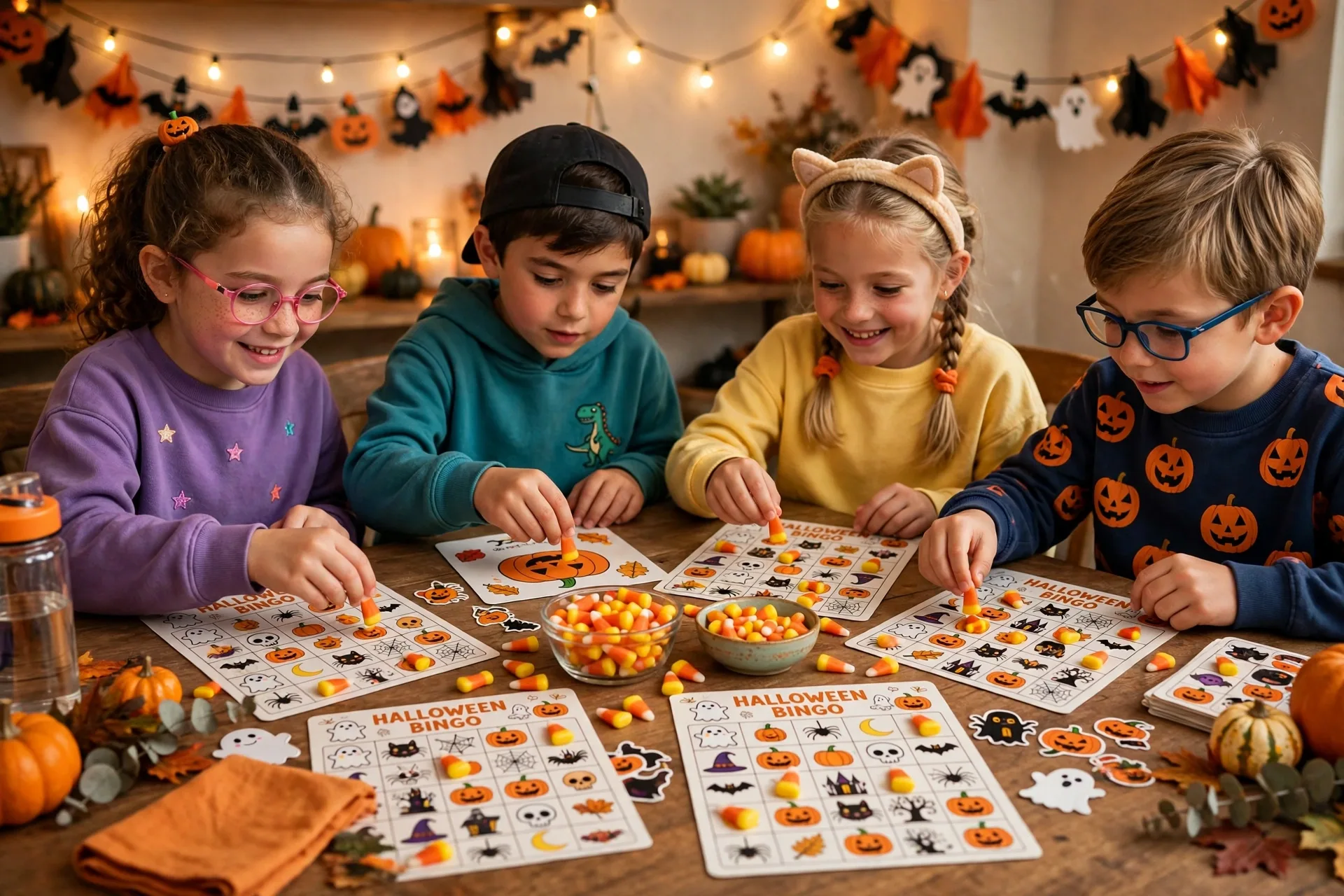
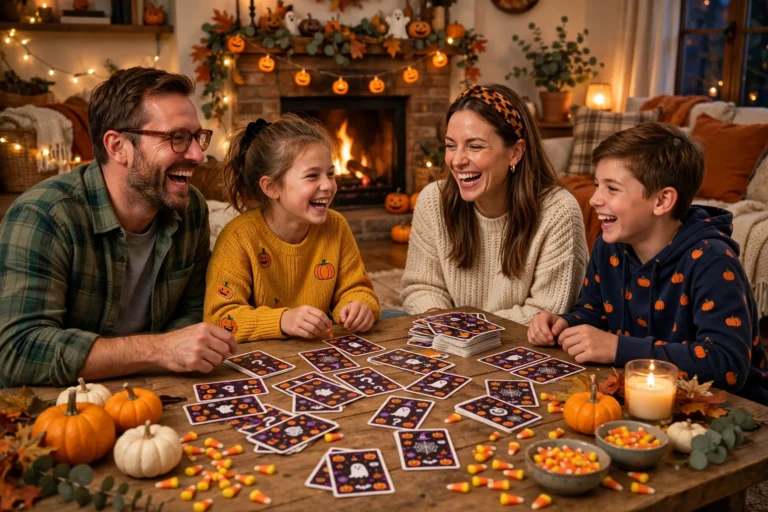
2. Candy Bingo (ages 4+). Every square is something sweet: candy corn, chocolate bar, lollipop, gummy worm, caramel apple, wrapped candy, jelly bean, popcorn ball, licorice twist. Use candy corn as markers — the theme commits fully. Win: five in a row. Players keep their markers; the candy IS the consolation prize.
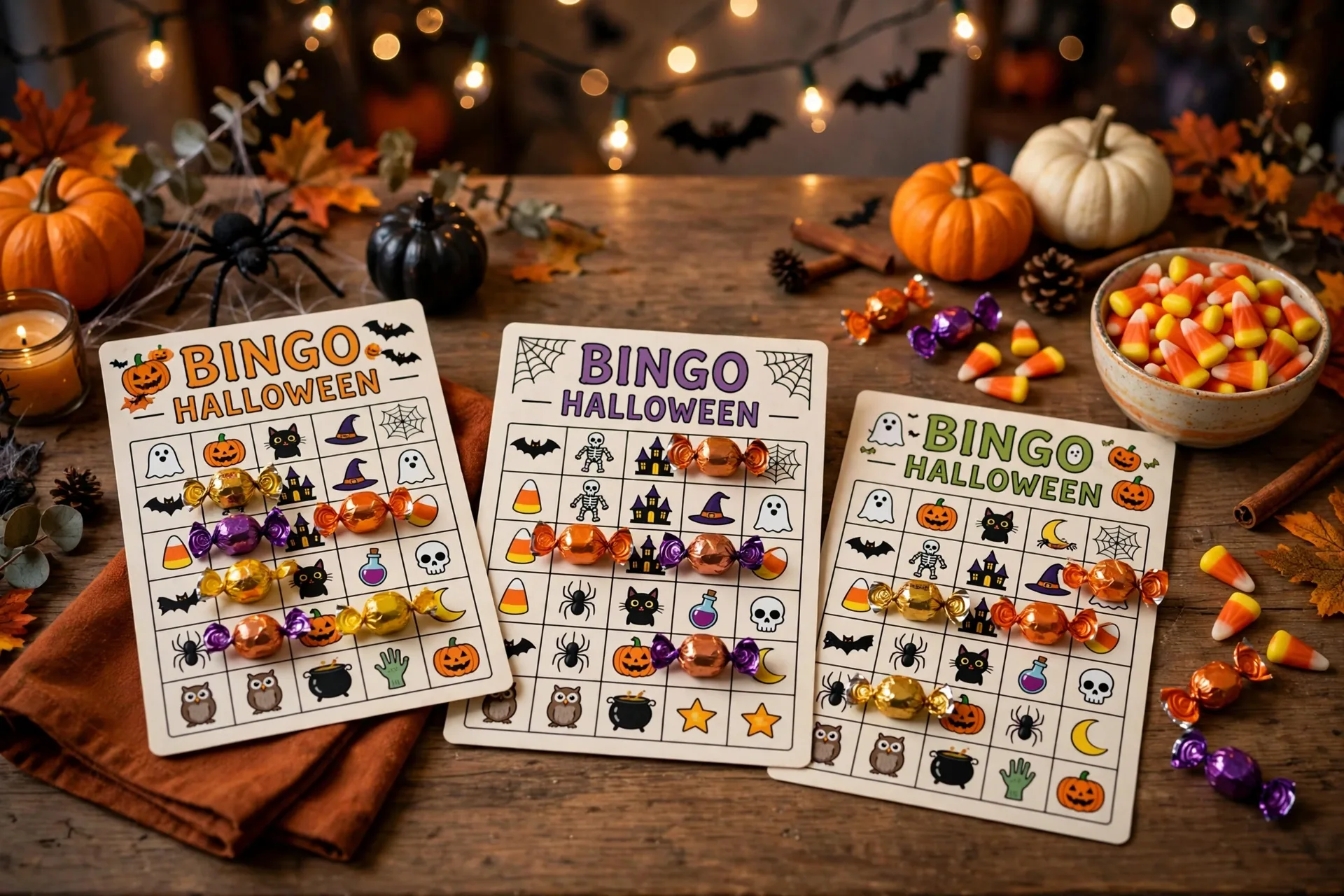
3. Costume-Spot Bingo (ages 5+, no caller). No calling at all — players mark costumes they SEE: dinosaur costume, princess, ghost sheet, superhero cape, witch hat, vampire cape, pirate hat, fairy wings, skeleton suit, mummy wrap. Play it at the party, or while handing out candy at the door. Win: first to five in a row, or most squares by a set time.
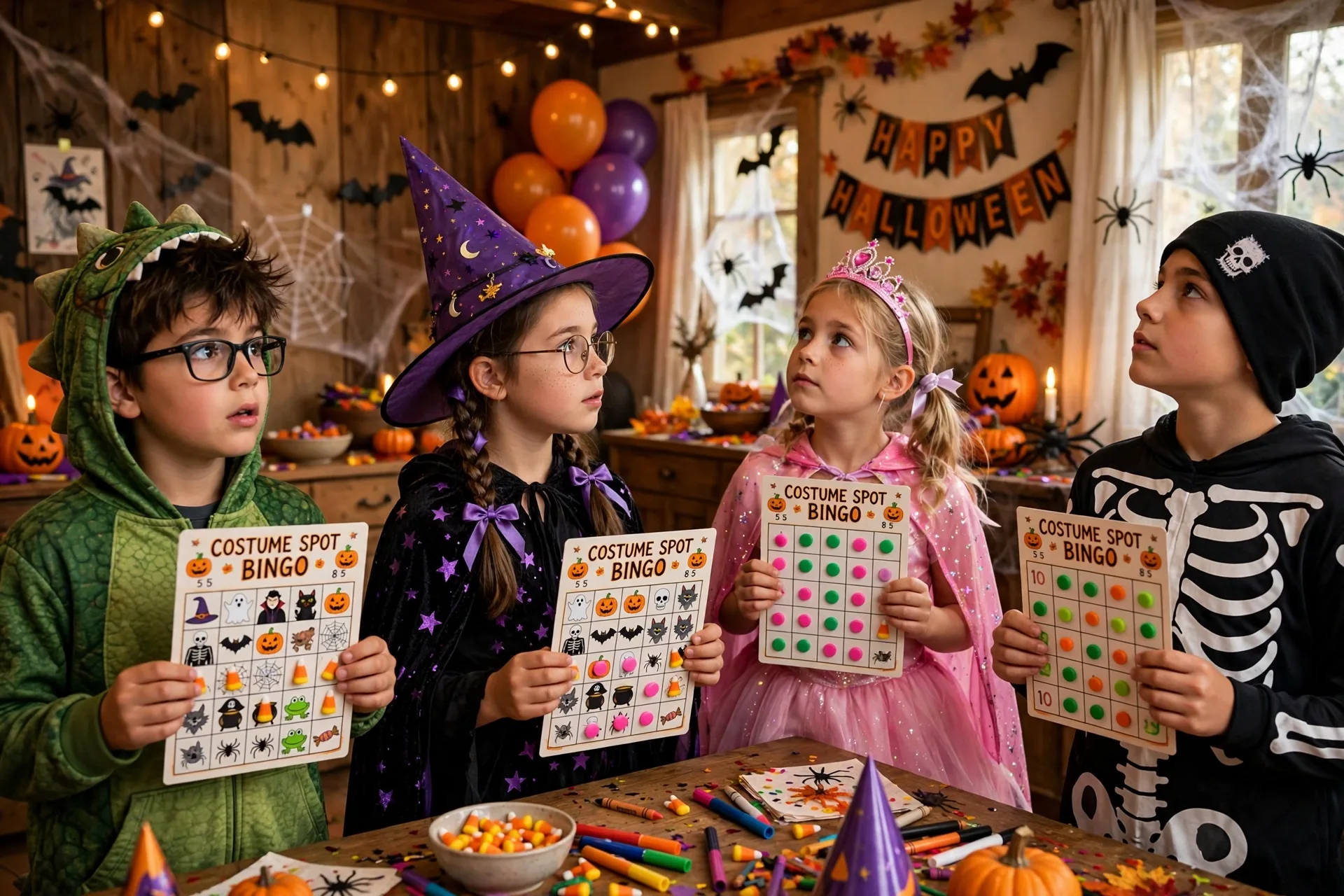
4. Trick-or-Treat Night Bingo (ages 4+, on the walk). A card for the street: porch light, doorbell, spider web decoration, black cat decoration, full moon, fog machine, hay bale, jack-o-lantern, candy bowl, inflatable ghost, spooky doormat, skeleton decoration. Carry it with a crayon on the route and mark what you spot. Win: most squares by home time. Give every kid the same card — it’s a scavenger hunt.
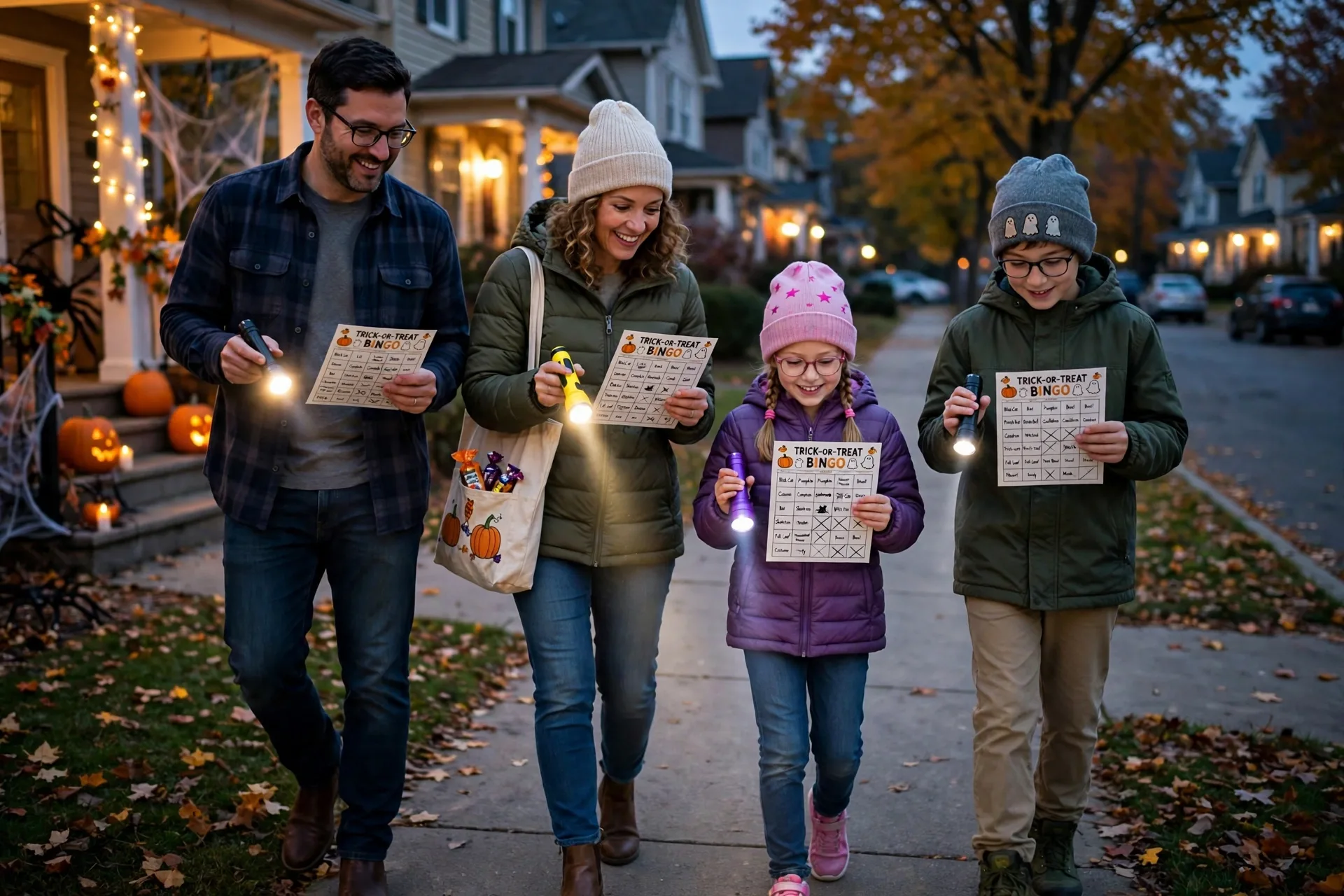
5. Monster Words Bingo (ages 6+, readers). Words instead of pictures: vampire, mummy, werewolf, haunted, cauldron, potion, tombstone, midnight, spooky, cobweb, howl, broomstick, eerie, goblin, shadow. Win: five in a row. For mixed ages, the caller reads the word and shows a quick doodle.
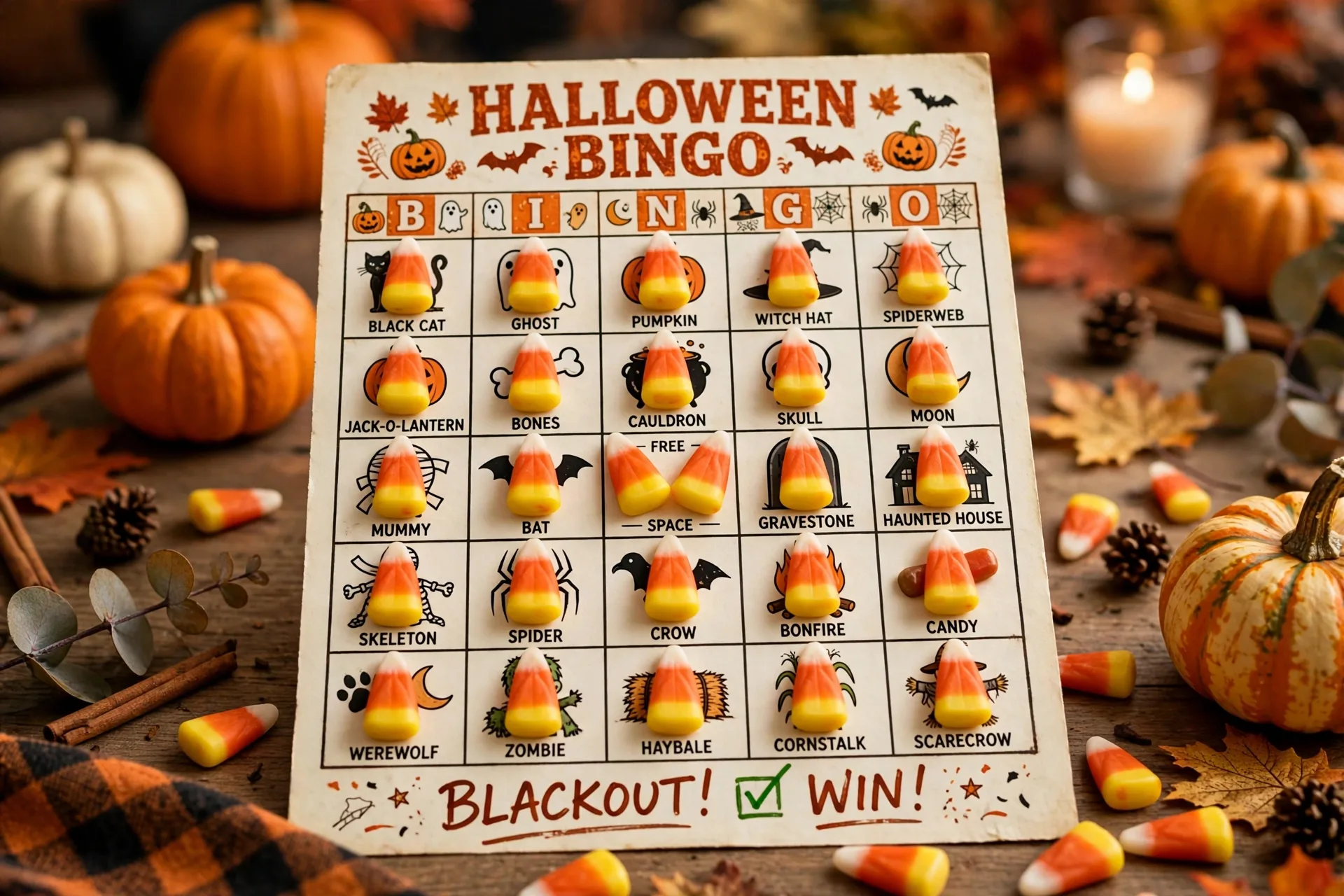
6. Blackout Bingo (ages 5+). Any card from above — but you must cover EVERY square. The long game (fifteen to twenty minutes) and the perfect finale. Announce it last with a slightly bigger prize — the slow build of nearly-full cards is delicious.
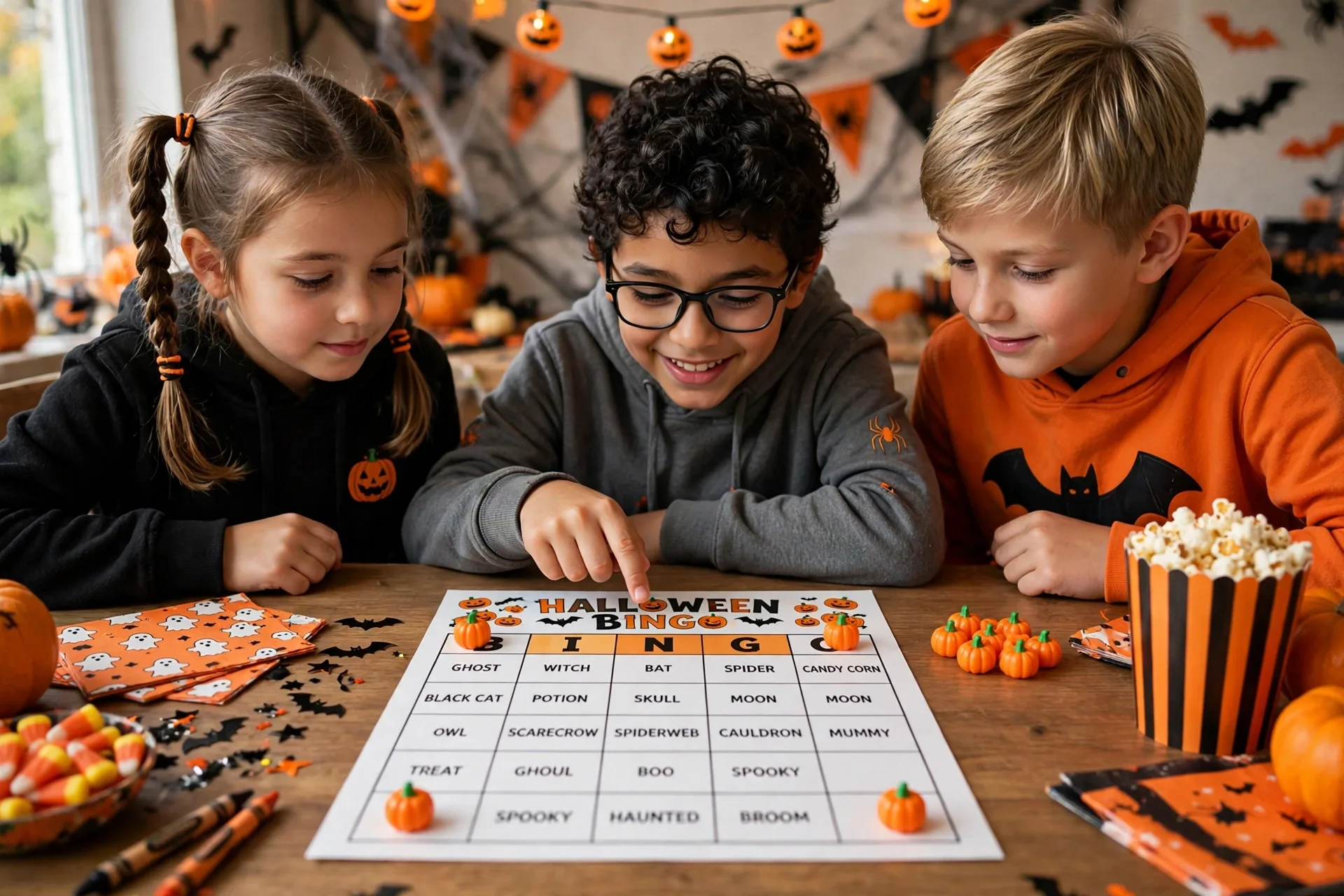
7. Four Corners (all ages). Win by covering just the four corner squares. Ten minutes, tops. Open the night with this — it’s fast enough that nobody’s invested, so nobody’s upset. The perfect warmup while latecomers arrive.
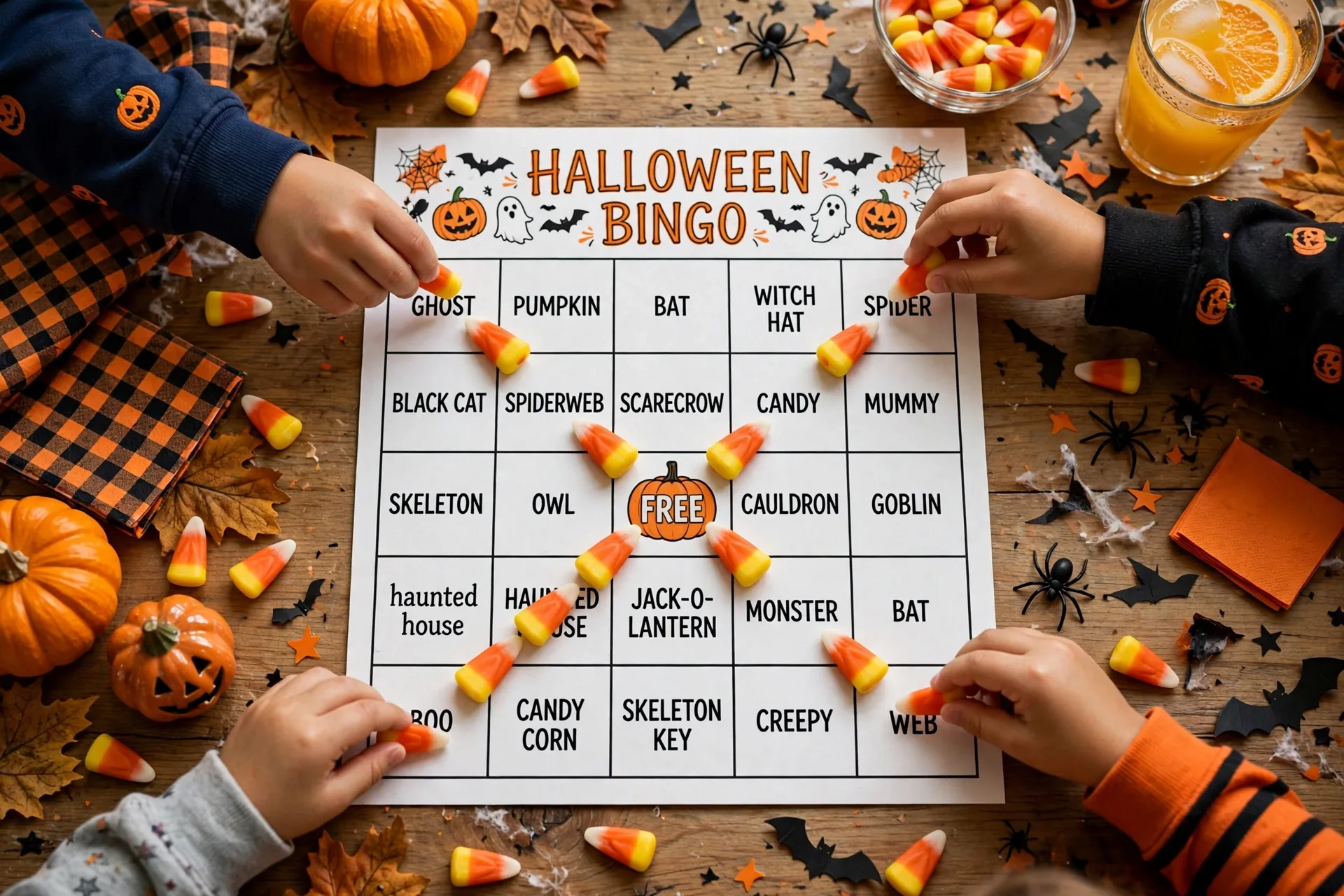
8. X Marks the Spot (ages 5+). Cover both diagonals so they cross — an X across the card. It feels completely different from line bingo on the same card, because players watch two lines at once. Call it “the pirate round” and let the winner do their best “AAARGH!” instead of shouting bingo.
9. DIY Blank Card (ages 4+, the wildcard). Hand out blank grids and let each player invent a card — “things in our haunted hallway,” “my costume and my friends’ costumes,” “candy I hope I get tonight.” Each artist makes matching calling tiles, and you pool them all for the round. Win: five in a row. Set it up thirty minutes early and the cards make themselves.
Markers: What To Cover Squares With
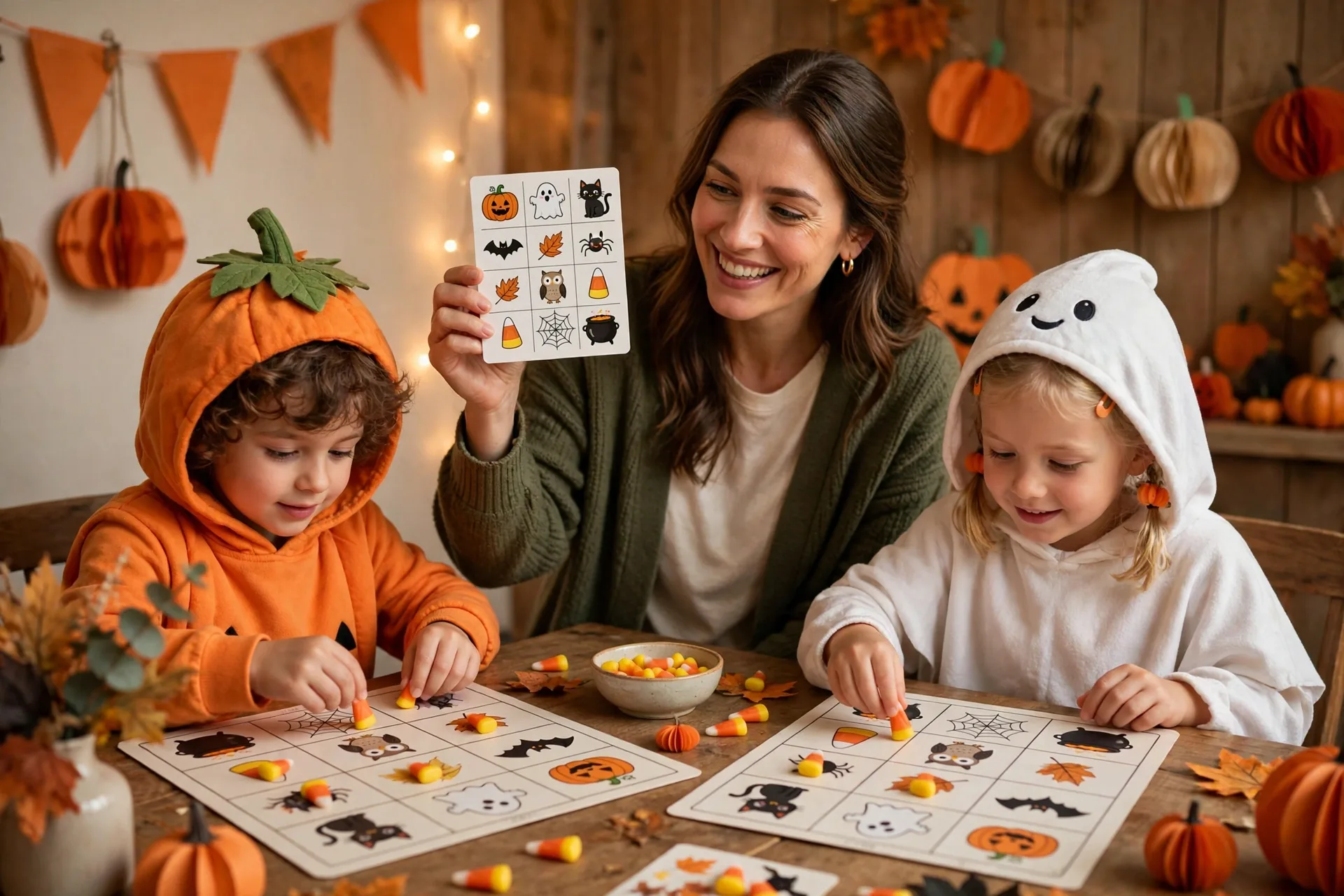
Match the marker to the crowd. Candy corn is the classic — festive, cheap, and every kid gets it. Mini marshmallows survive little hands better. Pom-poms are the reusable pick: no eating, no stickiness, and they come in orange and black. Buttons or coins suit the grown-up table — satisfying weight, zero mess.
Two honest notes. Small markers are a choking hazard for under-threes — use big pom-poms or chunky buttons for the littlest players, and keep eyes on them either way. Bingo daubers stain through thin paper and kill reuse — use cardstock for those cards. For a family night, candy corn wins. Markers becoming snacks is a feature, not a bug.
Prizes That Cost Almost Nothing
Prizes aren’t required — kids play bingo for the shouting alone — but a small prize per round keeps the energy up.
Glow-stick bracelets are my number-one bingo prize: a 100-pack of glow sticks costs less than a pizza, each round’s winner gets one cracked and glowing on the spot, and they double as party favors. A grown-up cracks and activates the sticks — little hands don’t do the bending — and keep little ones supervised, since the inside liquid isn’t for chewing.
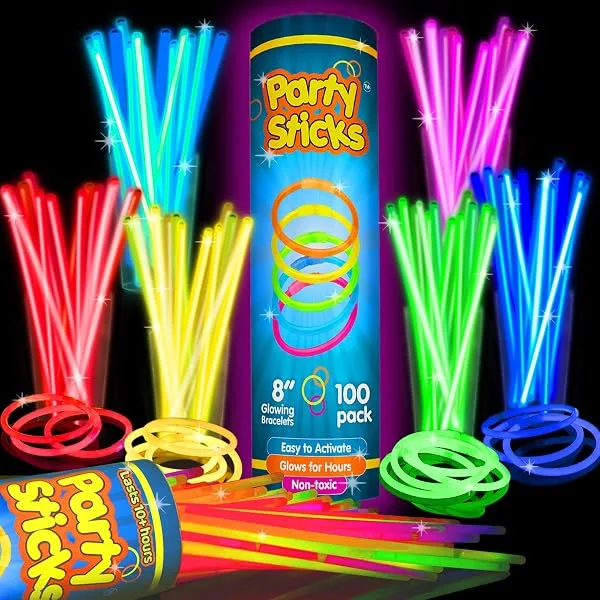
Glow Sticks — 100 Pack
The winner prize that doubles as a party favor — hand out a glowing bracelet at the end of each round. The 100-pack covers a whole party with plenty left for trick-or-treat night. A grown-up cracks and activates the sticks; little hands don’t do the bending.
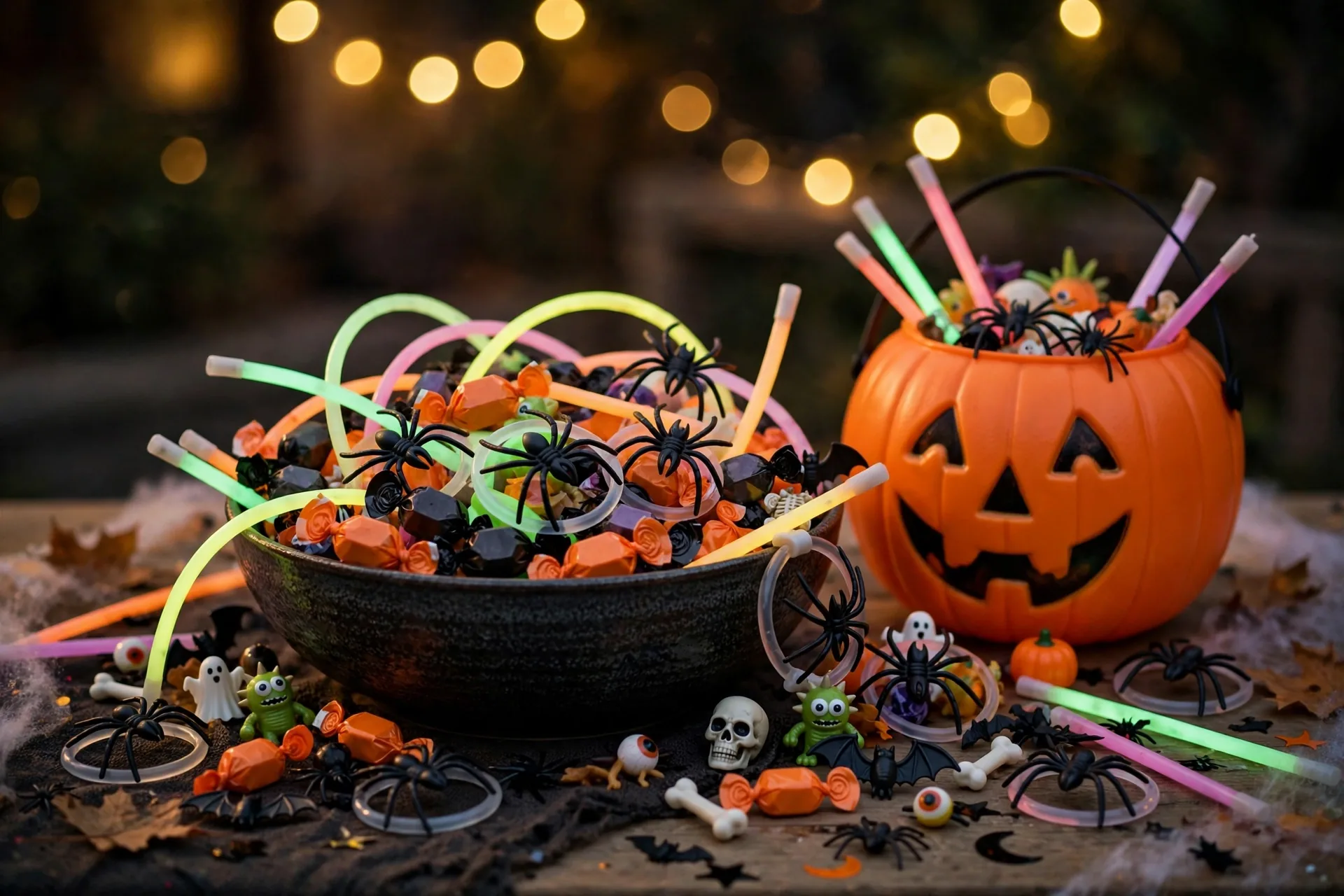
The prize bucket is the other move: fill a jack-o-lantern bucket with spider rings, temporary tattoos, mini erasers, and fun-size candy, and let each winner pick one thing. Choice IS the prize — kids would rather choose a 10-cent spider ring than be handed a dollar toy.
Skip one big prize for the whole night. It turns every round high-stakes and somebody cries. Small prizes, every round, everybody wins something by the end — that’s the formula.
The Caller Playbook
Mechanics are above. This is what actually decides whether the night is fun.
A grown-up calls at young kids’ games. The caller sets the pace, shows the pictures, and kindly, instantly settles disputed squares. Little kids can’t self-officiate — asking them to try is how games end in tears.
Show AND say. Hold each tile up high and announce it twice: “Black cat! Who’s got the black cat?” Little kids match the picture, readers match the word, nobody gets left behind.
Pace it like a story, not a drill. A tile every ten to fifteen seconds — slow enough for small hands, fast enough that nobody wanders. If the little ones fall behind, you’re going too fast. Watch the players, not the bowl.
Verify wins fast and cheerfully. Read the winning line out loud — “Pumpkin, ghost, bat, black cat, witch hat — that’s a bingo!” — and let the table applaud.
Fresh cards every round. Nobody keeps a “lucky card” — thirty seconds to redeal kills every fairness argument before it starts.
Let the little kids win sometimes. The caller’s quiet superpower: if a four-year-old is one square away and the room is restless, nothing’s wrong with the next tile being exactly what she needs. Nobody audits the bowl. Joy is the point.
Little-Kid Rules (Ages 3–5)
Bingo genuinely works for preschoolers with three adjustments.
Shrink the card. A 3×3 grid instead of 5×5. Faster wins — a preschooler’s attention span is exactly one fast win long.
Team the under-fours. A two- or three-year-old “plays” on a grown-up’s lap, covering squares with big pom-poms while the grown-up finds them. My two-year-old’s technique is eating the candy corn markers and shouting “BOO!” at random. It counts.
Pass is always okay. If a little one can’t find the square, the caller moves on — no spotlight, no “are you sure you looked?” In our house, nobody loses bingo before kindergarten.
Your Game-Night Plan
The whole evening, timed from our potluck:
6:30 — Cards and markers out. DIY blank cards (card 9) on the table as the pre-game craft. Kids arrive, draw, settle.
7:00 — Round 1: Four Corners. Ten minutes, low stakes; latecomers jump in mid-round.
7:15 — Rounds 2–3: two themed cards. Spooky Picture Bingo, then Candy Bingo. Fifteen minutes each.
7:45 — Round 4: X Marks the Spot. The twist round, while energy is high.
8:00 — Finale: Blackout. The long game, slightly bigger prize. By now even the teenagers are invested.
8:20 — Done. Cards cleared, markers eaten, glow sticks cracked. Zero screens, one happy street.
Between trick-or-treating and the movie is the sweet spot — everyone’s home with candy and wired. As a classroom party station, it fills a twenty-minute rotation beautifully.
Shop This Post
Everything used in this guide, in one place:
| Product | Used For | Price |
|---|---|---|
| Augisteen 30-Player Halloween Bingo Card Set | The no-time option — 30 player cards, calling cards, pumpkin chips in one box | Check Price |
| Glow Sticks — 100 Pack |
Winner prizes that double as party favors | Check Price |
Frequently Asked Questions
How many people can play Halloween bingo?
Any number. Four is cozy; a whole classroom works too — just deal more cards. One unique card per player is the only real rule (and the tie rule covers the rest).
What ages is Halloween bingo good for?
Three and up with picture cards. Under-threes “play” teamed with a grown-up; six and up handle word cards. Teenagers pretend they’re too cool until the blackout round.
Do I need to print anything?
No. Every card here is designed to be hand-drawn on plain paper — that’s the point of the nine themes. A ready-made set is the shortcut, but nothing requires a printer.
How long does one round take?
Four Corners: about ten minutes. Standard five-in-a-row: fifteen to twenty. Blackout: twenty to thirty. Three rounds plus a finale fills an hour.
What can I use as bingo markers?
Candy corn is the classic; mini marshmallows and pom-poms are the reusable picks; buttons or coins suit the grown-up table. For under-threes, big pom-poms or chunky buttons only — small markers are a choking hazard.
Deal the Cards
That’s the whole game: draw or buy the cards, pick a caller, and let the room shout. Start with Four Corners, save Blackout for the finale, keep prizes small and instant.
Our potluck ended with the teenagers demanding a rematch and my four-year-old asleep on the couch still clutching a candy corn marker. Your night will have its own version. Happy haunting, mama.
More Halloween guides on MamaKinder