Halloween Candy Dice Game Printable: How to Play
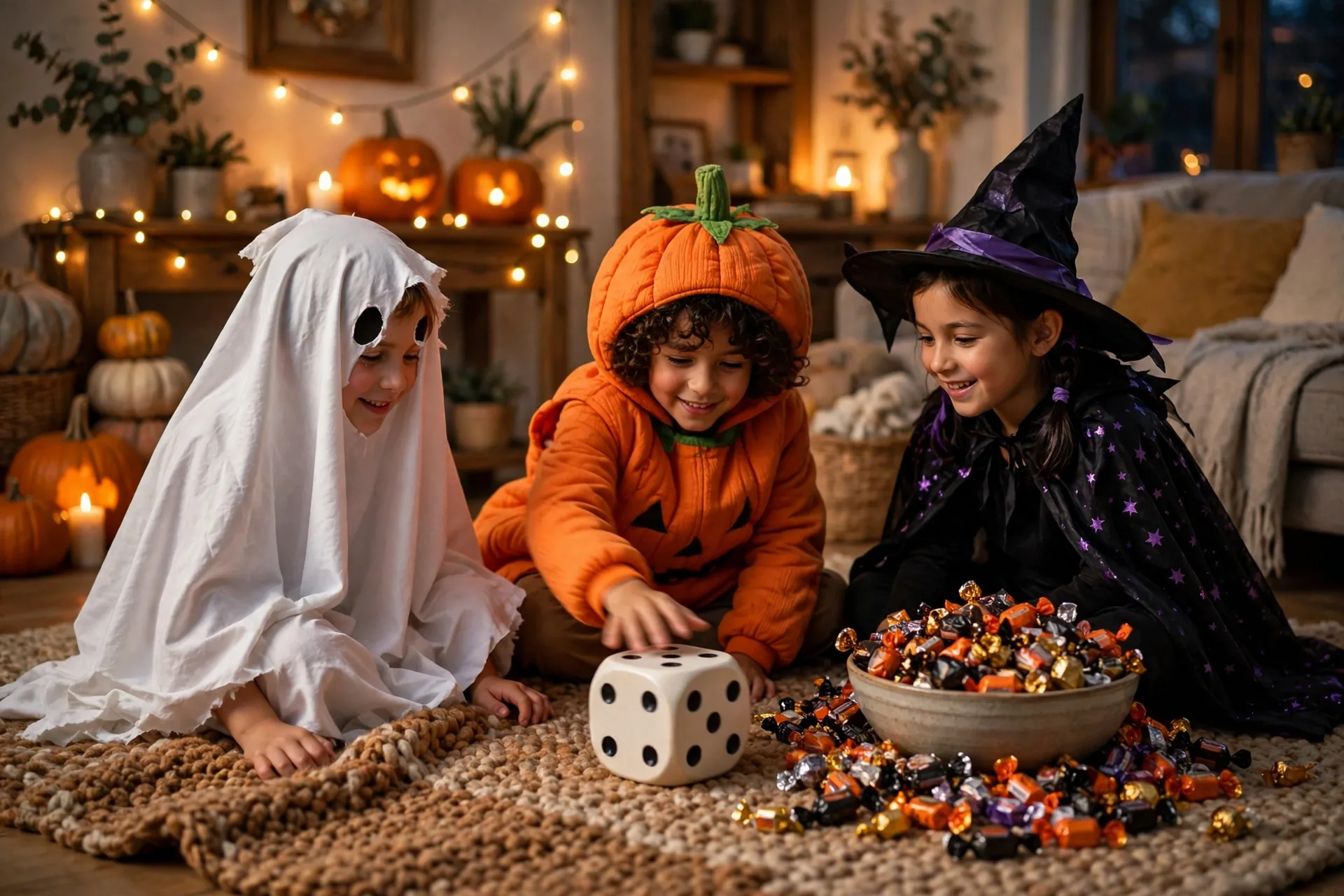
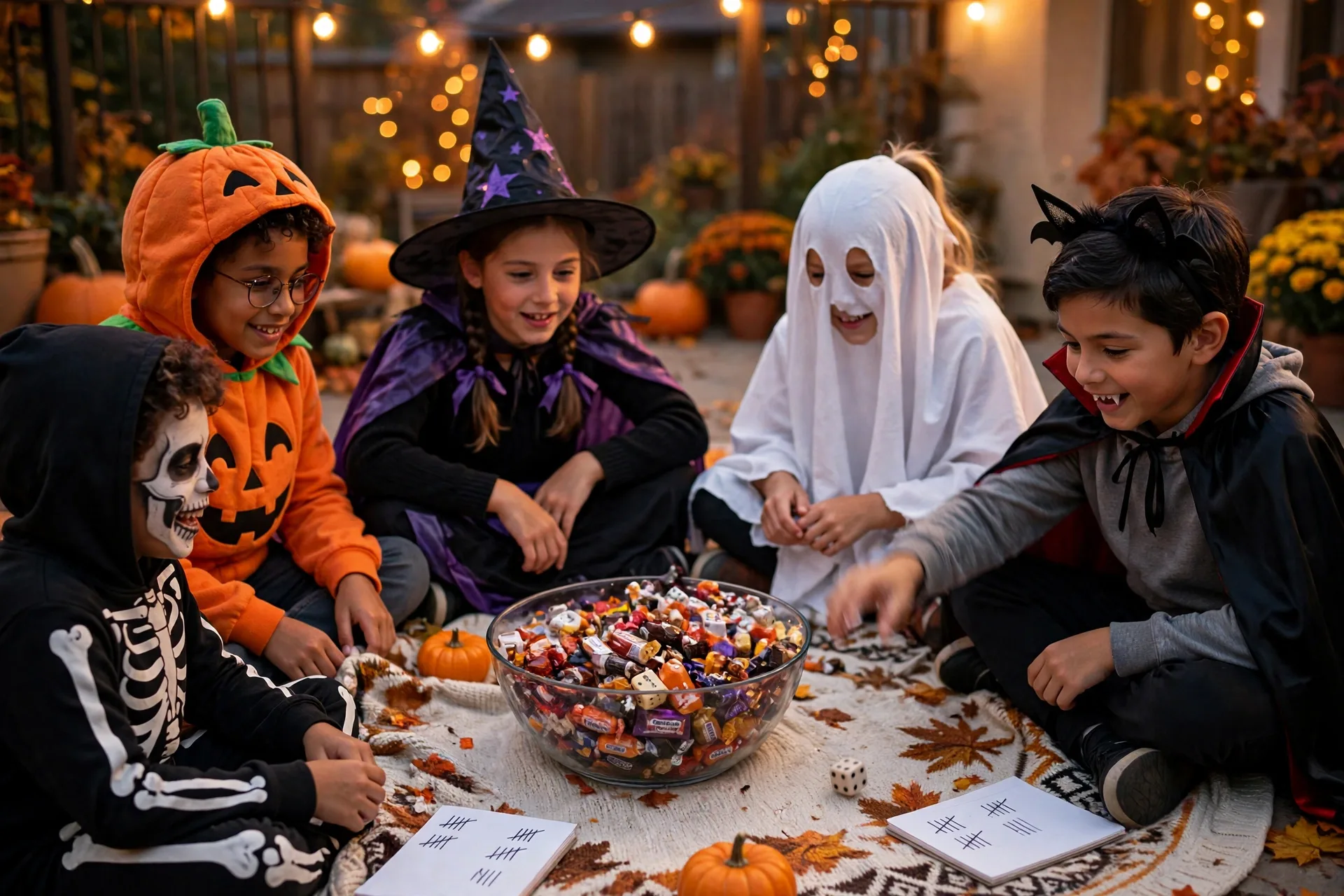
Last Halloween, after the last trick-or-treater rang our bell, my living room looked like a candy store had exploded. My four-year-old was sorting her haul into “chocolate” and “not chocolate” piles, my two-year-old was chewing the wrappers, and six sugar-drunk neighbor kids were running laps around the couch. I needed a game — fast. I grabbed one die from a board game, dumped a bowl of candy in the middle of the rug, and taught them the Halloween Candy Dice Game. Twenty minutes of shrieking and dramatic dice rolls later, the sugar had somewhere to go and the evening had a shape again.
That’s the magic of this game: one die, a bowl of candy, rules you can explain in sixty seconds. No board, no pieces, no printer — and no need to hunt down a printable, because the full rules table is right here. Read it off your phone and you’re set.
Heads up: this post contains affiliate links. If you buy through them, MamaKinder may earn a small commission at no extra cost to you — it helps keep these guides free.
⬇ Download the game card (PDF)
What the Halloween Candy Dice Game Actually Is
Strip away the Halloween branding and this is one of the oldest party formulas there is: roll a die, follow the instruction, try to end up with the most candy. Each roll tells you to take candy from the center bowl, pass candy to a neighbor, or — the one that makes kids lose their minds — steal candy from another player.
It’s a Halloween game because it runs on October’s universal currency: wrapped candy. It fits the situations Halloween creates — the wired post-trick-or-treat hour, the classroom party, the family night when someone’s already cried over a board game — and it works for genuinely mixed ages. Below: the classic rules first, then five more ways to play.
What You Need
The full supply list:
One die. Steal it from any board game in your house — you only need one, and the rattlier the better.
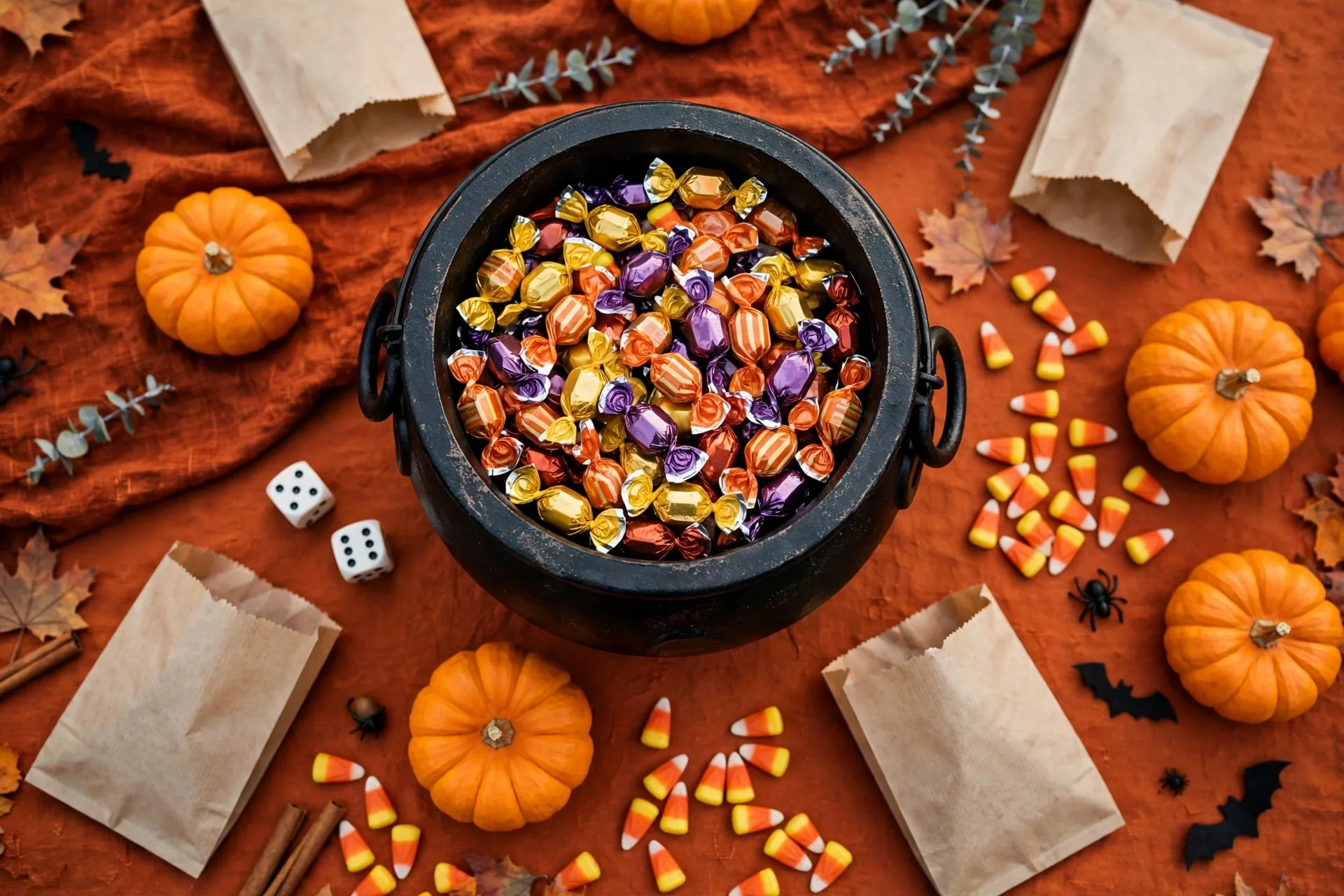
Wrapped Halloween candy — about 8 to 10 pieces per player. Use the trick-or-treat haul or a mixed bag. The key word is wrapped — unwrapped candy goes in the eating pile, never the game bowl (see the safety section).
A bowl, jar, or container for the center. Anything that holds the shared pile works — a plastic pumpkin bucket is on-theme and you already own three.
A timer (optional but recommended). Your phone timer is perfect — it gives you a clean ending when “first to 10” runs long.
Treat bags (optional). Everyone bags their winnings — no loose candy in the couch cushions.
Prizes for the winner (optional). Keep them cheap and instant. Glow-stick bracelets are my go-to — they double as party favors and kids go feral for them. A grown-up cracks and activates the sticks before handing them out; little ones stay supervised with them.

Glow Sticks — 100 Pack
Winner prizes that double as party favors — crack a few for the champions and watch the dance party start itself.
How to Play: The Full Rules
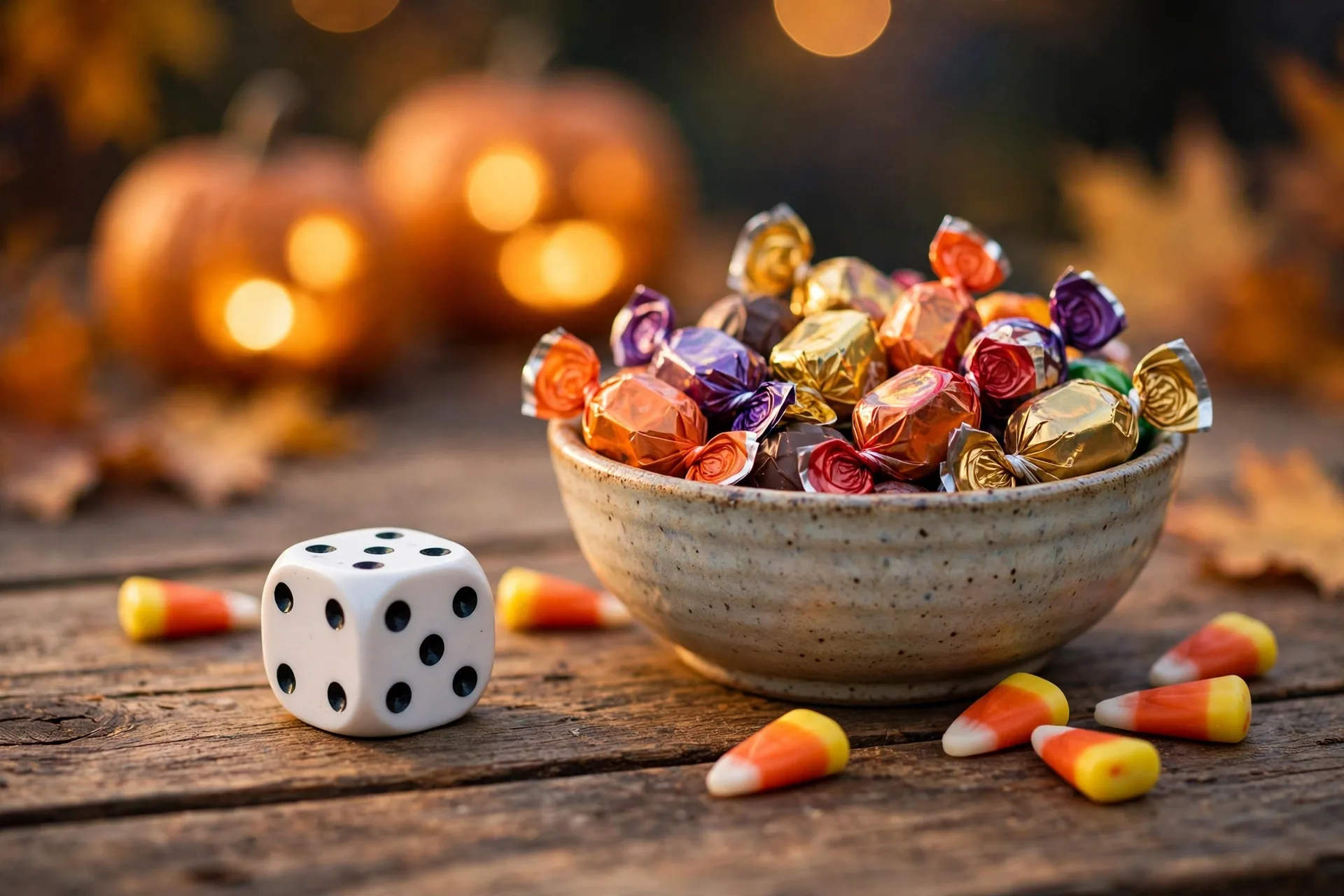
This is the classic version — the same game behind every “Halloween candy dice game printable” online, except you don’t need the printable. Everything that would be on the card is here.
Setup (2 minutes)
- Count out the candy. Each player starts with 3 pieces in front of them — their stash. The rest goes in the center bowl. Plan on 8–10 pieces per player total (a 6-player game needs about 50–60 pieces).
- Sit in a circle with the center bowl in everyone’s reach.
- The youngest player goes first. Every version of this game agrees on this — it kills the “I never get to start” argument before it begins. Play continues clockwise.
The Turn
Roll the die and follow the instruction for your number:
| Roll | What Happens |
|---|---|
| 1 | Take 1 candy from the center bowl |
| 2 | Take 2 candies from the center bowl |
| 3 | Give 1 candy to the player on your LEFT |
| 4 | Give 1 candy to the player on your RIGHT |
| 5 | Put 1 candy from your stash back in the center bowl |
| 6 | Steal 1 candy from ANY player — the Goblin Roll |
Then pass the die on. Can’t do what your roll says — a 5 with an empty stash — just skip and pass. Nobody is ever out.
Winning
Pick the ending that fits your night:
- First to 10. First player holding 10 pieces wins — about 10–15 minutes with 4–6 players.
- Timed round. Five minutes on your phone timer; most candy when it buzzes wins. Better for big groups and classrooms because the ending is guaranteed.
The one house rule you need: the empty center bowl

Two-thirds through any game, the center runs dry and rolls of 1–2 would do nothing. House rule: when the center is empty, rolls of 1 and 2 become “take 1 candy from the player with the biggest stash.” Every roll stays meaningful and the leader can’t coast. Announce it before you start — a surprise new steal rule mid-game is how you get a crying six-year-old.
Kid Rules: Keeping It Fair (and Tear-Free)
This game involves stealing candy from children, so here are the guardrails that keep it fun at my table:
A grown-up rolls for under-4s. My two-year-old “plays” — she shakes the cup with both hands while I guide it, then points at who gets her candy. Full experience, zero frustration. Under-3s should never handle small dice (choking hazard), so the grown-up rolls, full stop.
The kindness rule: no stealing from a player with 1 or fewer candies. Nobody gets cleaned out, the Goblin Roll stays fun instead of cruel, and the game self-balances. Kids enforce this one themselves once they know it.
“Pass” is always allowed. Any kid can skip their action, no explanation needed. Some kids need one pressure-free round to warm up, and the game is short enough that it barely matters.
Classrooms: teams, not individuals. Split into teams of 4–6 with one shared die per table; the team decides moves together. No individual targets, and the teacher manages a handful of dice instead of thirty.
6 Ways to Play It
Same supplies, six games. Match the version to your crowd.
1. The Classic
The pass-and-steal version with the 6-roll table above. Best all-rounder, ages 5 and up.
2. Speed Round
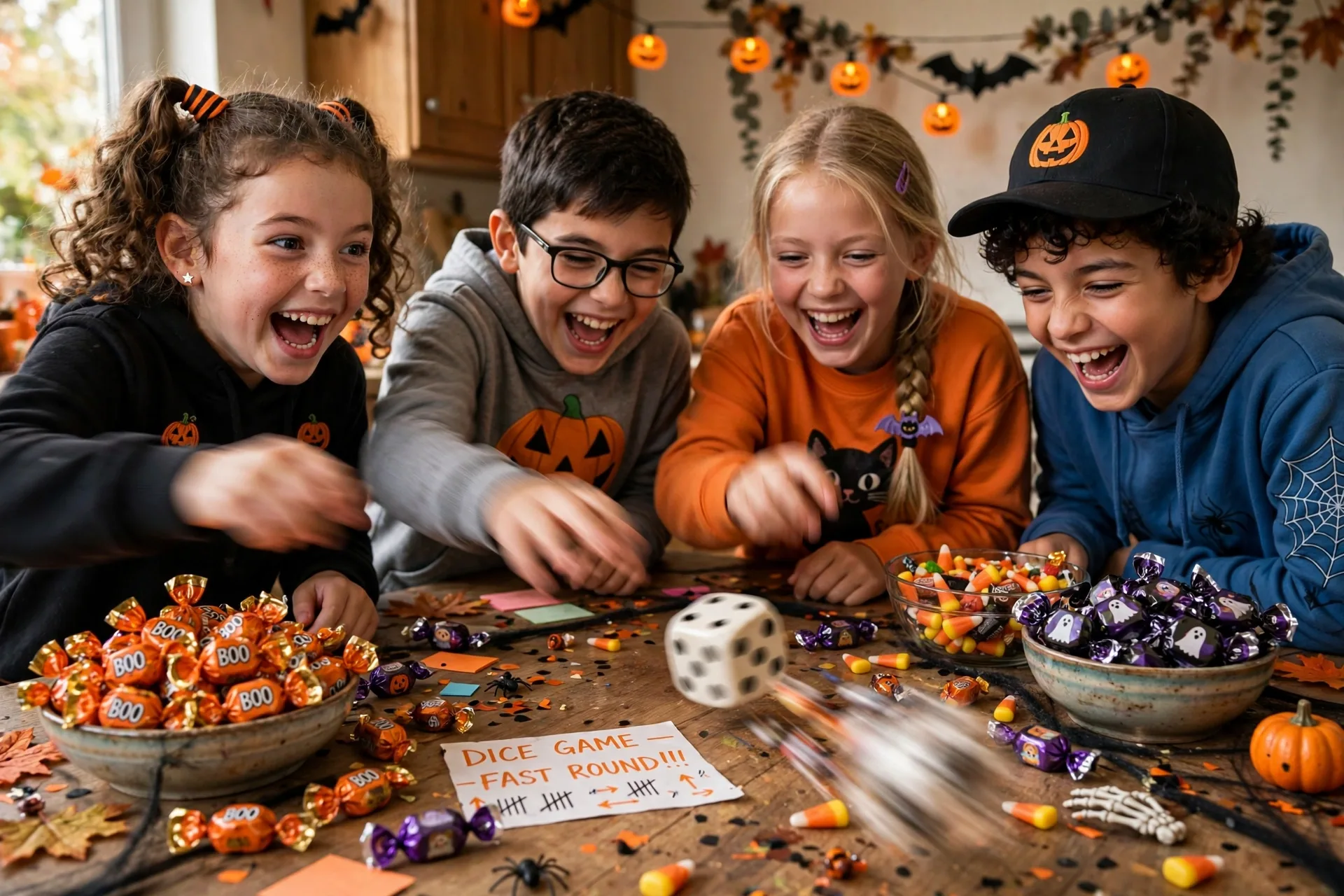
Same rules, but the 5-minute timer is the game — most candy when it buzzes wins. Every roll feels enormous and the ending is guaranteed. Perfect for restless groups; play the last 60 seconds standing up for extra drama.
3. Candy Bowl Jackpot
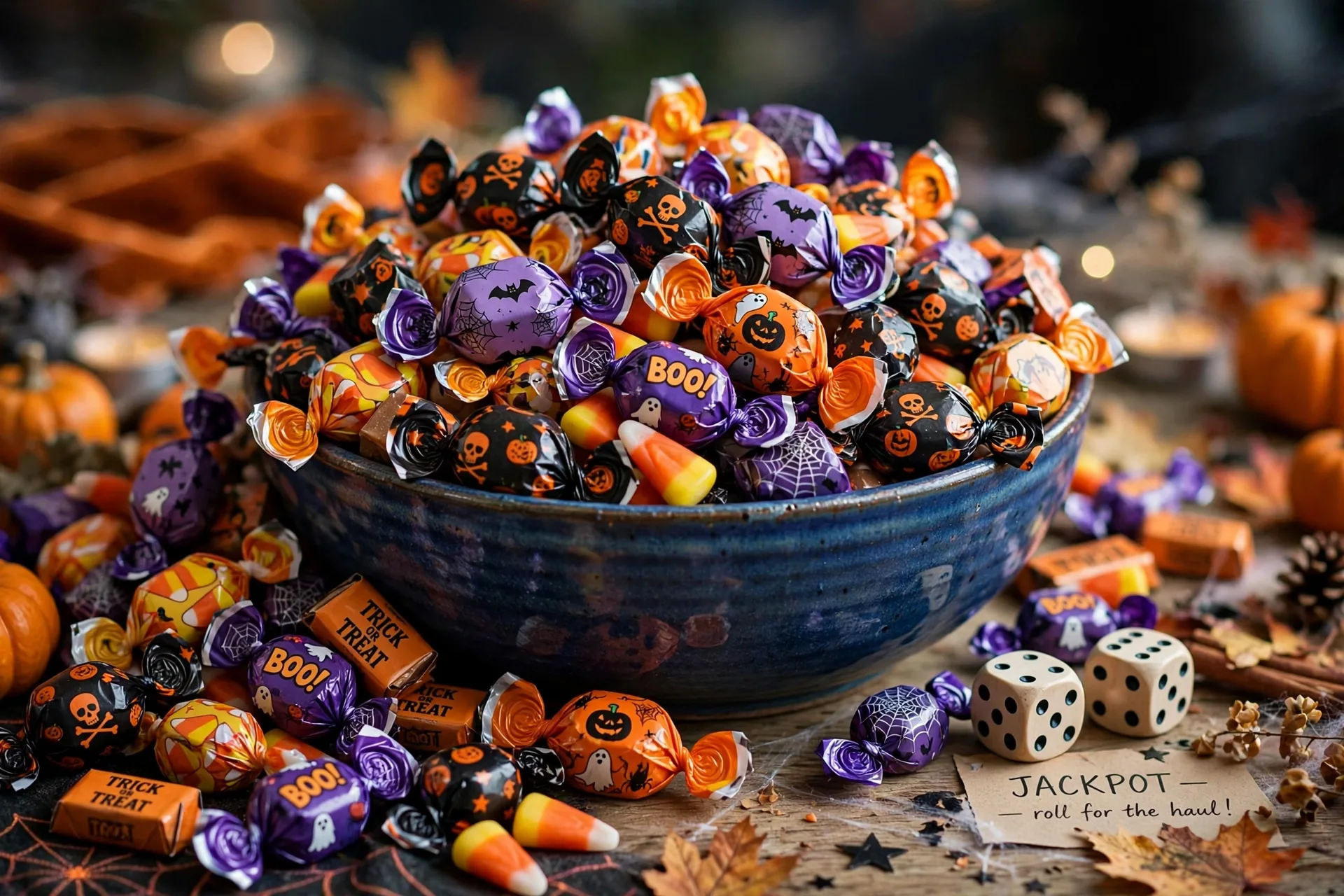
The high-stakes version. Everyone starts with 3–4 candies, then rolls one die for every candy currently held, reading each die separately: evens (2, 4, 6) = keep one candy; 1 = the player on your left takes one from you; 3 = one of yours goes into the center bowl; 5 = the player on your right takes one from you. Broke players are skipped, never eliminated. Play until one player holds everything — the winner claims the entire center bowl. Runs 20–30 minutes; save it for older kids and adults.
4. Bingo Board
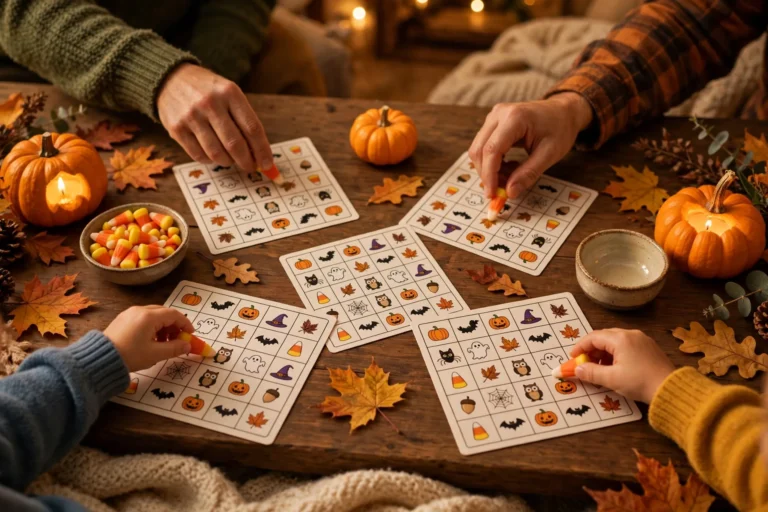
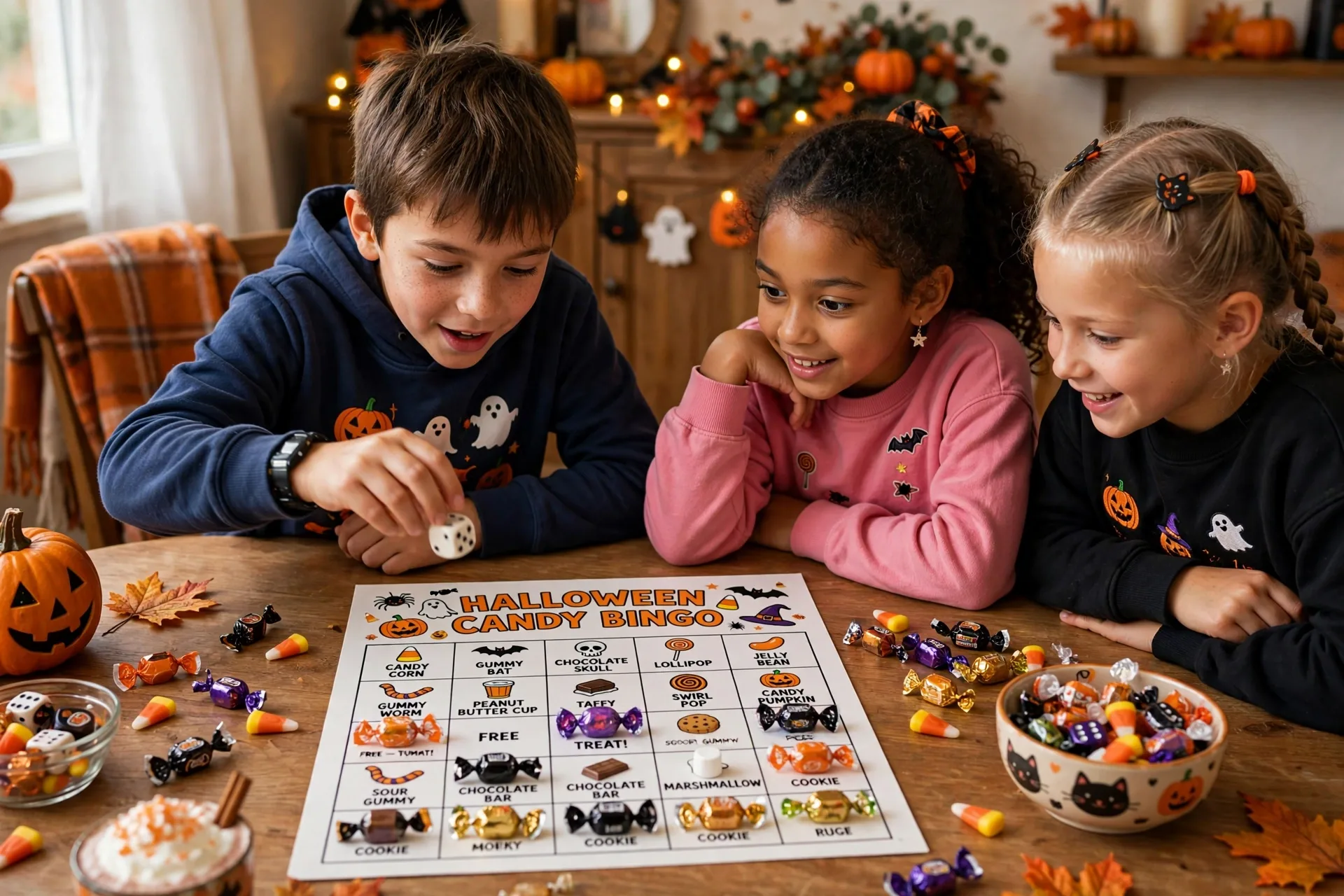
The no-stealing version for little kids and classrooms. Draw a grid and fill it with Halloween symbols — ghost, pumpkin, witch hat, bat, spider, candy corn — assigning each a die number (1 = ghost, 2 = pumpkin, and so on). Roll and cover the matching symbol with a piece of candy; small ones like M&Ms or Skittles fit best. First full row — horizontal, vertical, or diagonal — wins. Zero tears, and the covered boards make cute fridge art.
5. No-Candy Classroom Version
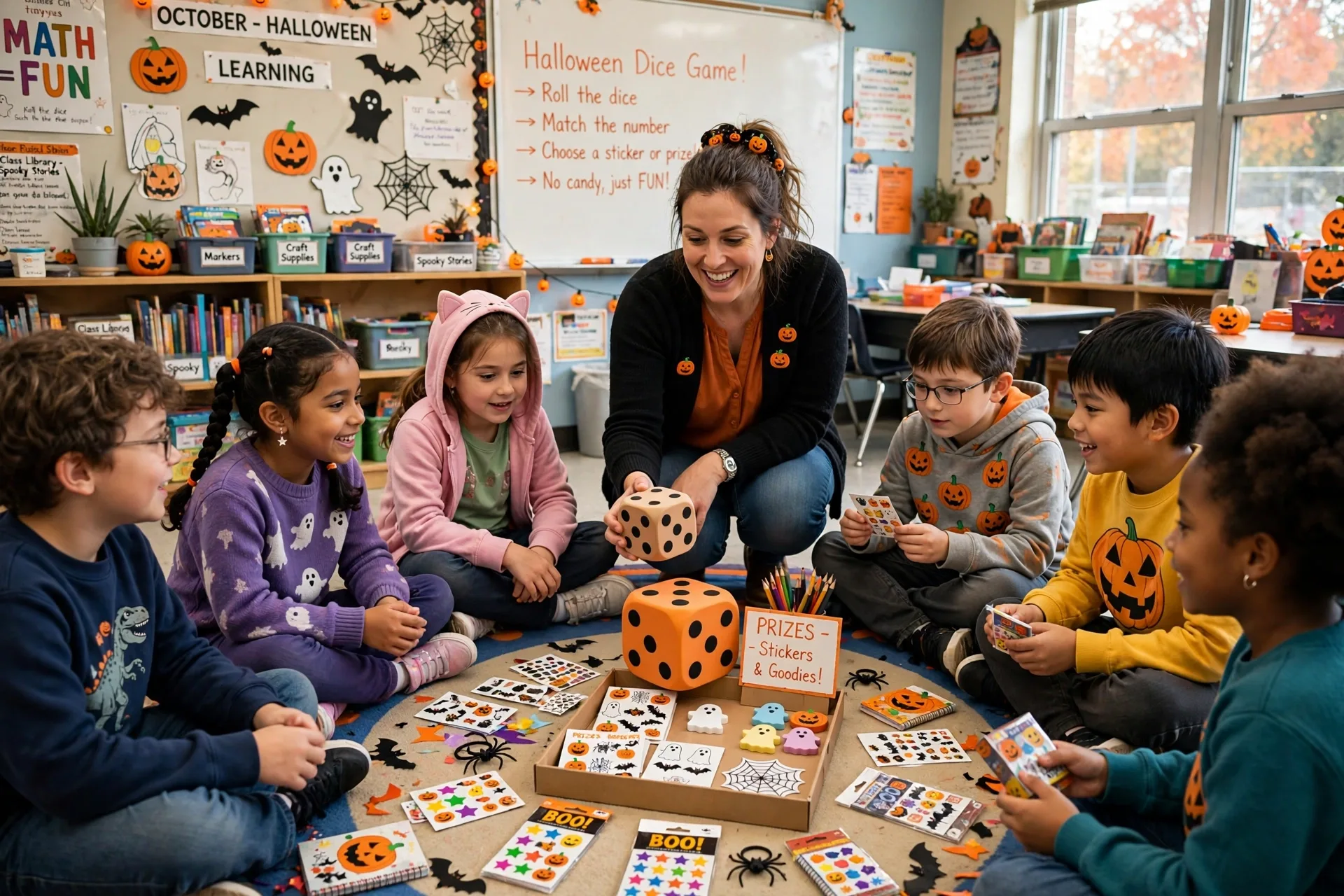
Same rules as the classic, but swap candy for counters: pom-poms, dot stickers, mini erasers, or dried beans. The winner gets first pick from the real candy bowl at the end. No sugar mid-game, no allergy worries during play — and the prize bowl is still real.
6. Team Play
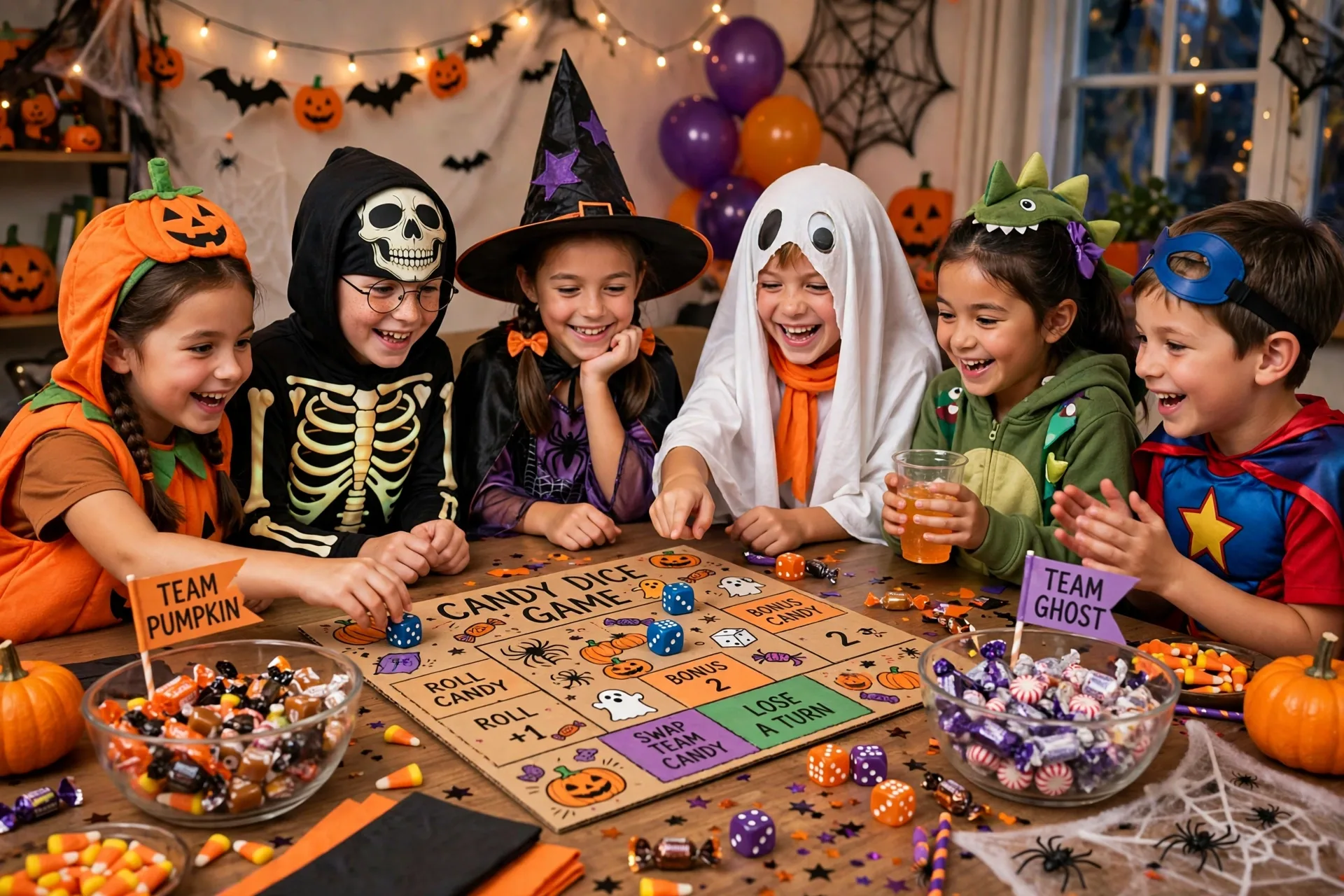
For big parties: 4–6 players per table, one die per table, one shared team stash. The team huddles on each roll and the captain executes the move. Steals target other teams — inter-table rivalry instead of anyone picking on one kid. First team to 20 candies, or the leader when the timer buzzes, wins. A host floats between tables as judge.
Hosting It Without the Chaos
Play it at the right moment. The sweet spot is the hour after trick-or-treating and before the movie or bedtime. It also works as one station in a classroom party rotation: 10 minutes per group, then rotate.
Demo one round before it counts. Roll once yourself and narrate it (“I rolled a 3, so I give one candy to my left — sorry, kiddo”). Sixty seconds of demo saves ten minutes.
Appoint a judge for young kids’ games. One adult or teen who doesn’t play — they read rolls for the littles, enforce the kindness rule, and settle “she took MY candy” disputes in seconds.
Laminate your rules table for reuse. Screenshot the 6-roll table or print this page into a sheet protector — you’ll play this every October, and a wipeable card survives sticky fingers.
End with the treat-bag ritual. Everyone bags their winnings to take home. Clean ending, no post-game candy-grabbing, and the sugar is contained.
Keep winner prizes cheap and instant. The prize should arrive the second the game ends. Glow-stick bracelets are perfect — crack them before the party, hand them to the winners, and they double as favors on the way out. A grown-up cracks and activates the sticks; keep little ones supervised with them.
Glow Sticks — 100 Pack
Winner prizes that double as party favors — crack a few for the champions and watch the dance party start itself.
The Candy Safety Talk (Read This Before You Play)
A game built on shared candy needs a two-minute safety check — the grown-up stuff that lets the kids play freely:
- Wrapped candy only in the game bowl. Unwrapped pieces go in the eating pile, never the shared bowl. Every piece in play stays identifiable and hygienic.
- Check for allergies before mixing a shared bowl. If any player has a nut allergy, build the center from nut-free candy only or run separate team bowls. Read the labels — “may contain” counts. The no-candy version above sidesteps this entirely.
- Small hard candies are a choking hazard for under-4s. At tables with toddlers, the grown-up sorts the bowl first: only larger wrapped pieces go in, and the small stuff stays out of reach.
- The die is a choking hazard for under-3s. A grown-up handles all rolling for the littlest players — they still point, choose, and celebrate.
- Wash hands before the game. Everyone touches the same bowl. Thirty seconds at the sink, then play.
Shop This Post
Everything we used in this guide, in one place:
| Product | Used For | Price |
|---|---|---|
| Glow Sticks — 100 Pack |
Winner prizes + party favors | Check Price |
Frequently Asked Questions
What is the Halloween candy dice game?
Players roll a die and follow the instruction for each number — take candy from the center bowl, pass candy to a neighbor, or steal from another player. Everyone starts with 3 pieces; the first to 10 (or the leader when a timer buzzes) wins. The full 6-roll table is in the “How to Play” section — no printable needed.
How many people can play?
Four to six is the sweet spot for one die and one bowl. For bigger groups, split into teams of 4–6 with one die per table (the Team Play variation) — it scales to a whole classroom.
What ages is it good for?
The classic steal version works from about age 5 up. Under-4s can join with a grown-up rolling for them — my two-year-old’s job is dramatic dice shaking and pointing. For mostly under-5s, use the Bingo Board variation; there’s no stealing in it.
Do I need to print anything?
No. Every “Halloween candy dice game printable” online is just the rules on a card — and the complete table is in this article. Read it off your phone, or screenshot the table for a reusable card.
How long does a game take?
First-to-10 with 4–6 players runs 10–15 minutes. The 5-minute Speed Round is exactly 5 minutes. The Candy Bowl Jackpot runs 20–30 minutes.
What candy works best?
Anything wrapped — fun-size bars, wrapped caramels, fruit chews — with labels readable for allergy checks. For the Bingo Board version, use small die-sized candy like M&Ms or Skittles. Keep small hard candies out of shared bowls at tables with under-4s.
Roll the Die and Go
That’s the whole game: three candies each, one die, one bowl, and a rules table you can read off your phone. Demo one round, enforce the kindness rule, and keep a grown-up on dice duty for the littles.
Our post-trick-or-treat chaos last year ended with the neighbor kids begging for “one more round” and my four-year-old declaring the Goblin Roll “the best rule ever invented.” Happy haunting, mama.
More Halloween guides on MamaKinder