Halloween Word Search: 13 Free Puzzles for Kids
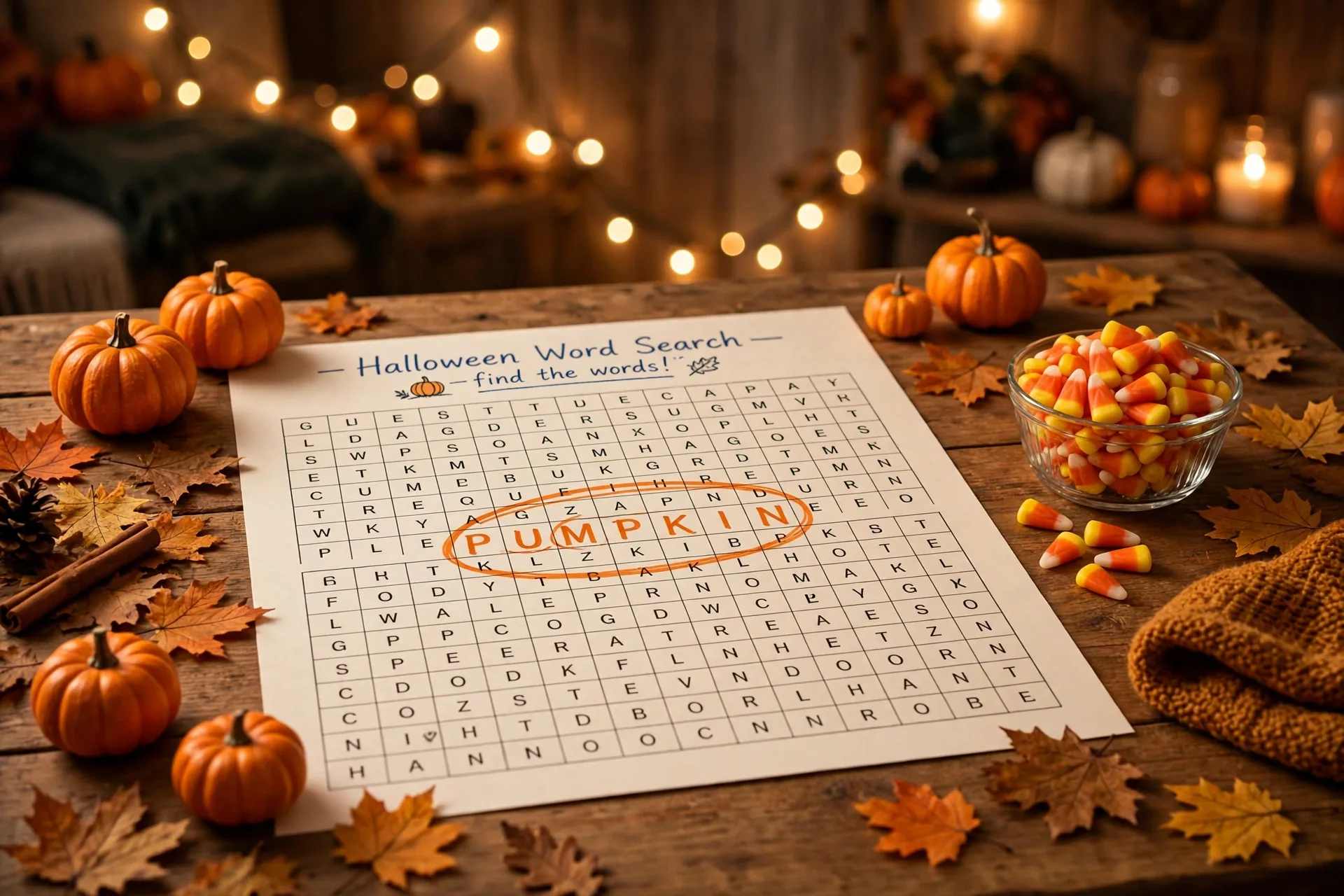
The first time I made a word search by hand, my oldest was four and it was raining in a way that meant we were not going anywhere. I drew an 8-by-8 grid on the back of a grocery list, wrote BAT and CAT and PUMPKIN into it in wobbly pencil, filled the rest with random letters, and slid it across the table like I had just invented something. She found BAT in about six seconds, screamed like she had won the lottery, and demanded another one. We made four that afternoon.
That is the whole pitch for the Halloween word search: screen-free, quiet, costs nothing — and underneath the fun it is doing real work (spelling, visual scanning, sustained focus). This post gives you thirteen puzzles laddered by age, with real word lists, grid sizes, and direction rules. You can make every puzzle at home tonight with paper and a pencil, and I will walk you through exactly how. Prefer to print? The free PDF below has all thirteen puzzles plus the grown-up answer key.
Heads up: this post contains affiliate links. If you buy through them, MamaKinder may earn a small commission at no extra cost to you — it helps keep these guides free.
⬇ Download all 13 puzzles + answer keys (PDF)
Quick Picks: Which Puzzle Tonight?
| If this is you… | Start here |
|---|---|
| A preschooler (4–6) still learning letters | Puzzle 1: Little Pumpkins — tiny grid, across and down only |
| A kindergartner who wants trick-or-treat words | Puzzle 2: Trick-or-Treat Night — candy vocabulary, gentle rules |
| A kid who finds “spooky” delightful, not scary | Puzzle 3: Friendly Monsters — monsters as buddies |
| A confident reader (7–9) ready for diagonals | Puzzle 4: Witch’s Kitchen — bigger grid, diagonal words |
| An older kid (8–10) who wants a real challenge | Puzzle 5: The Quiet Graveyard — adds backwards words |
| A fall-kid who prefers pumpkins to ghosts | Puzzle 6: Pumpkin Patch Days — all autumn, zero spook |
| A tween who finishes everything in five minutes | Puzzle 7: The Midnight Spooktacular — 15×15, all directions |
| A candy lover (5–7) who wants sweet words | Puzzle 8: Candy Corn Countdown — sweet words, gentle rules |
| A kid who loves haunted houses but not scares | Puzzle 9: Haunted House Hiding — house words with diagonals |
| A cat kid ready for all four diagonals | Puzzle 10: Black Cat Crossing — twelve words, all diagonals |
| A pumpkin carver on carving night | Puzzle 11: The Pumpkin Carving Party — carving words, gentle rules |
| A storytime kid (8–10) who likes a little spook | Puzzle 12: Spooky Story Night — adds backwards words |
| A tween who wants the grand finale | Puzzle 13: The Great Halloween Parade — 15×15, all directions |
What You Need (and What You Don’t)
The complete supply list: paper, a pencil, a ruler if you like straight lines, and one of the word lists below. No printer, no software, no signup. Kids solve best with pencil or crayon — markers bleed, and un-circling a wrong guess is part of the game.
If you are making a classroom batch or party station, construction paper holds pencil lines nicely, and the orange and purple sheets double as festive backing when finished puzzles go on the fridge.
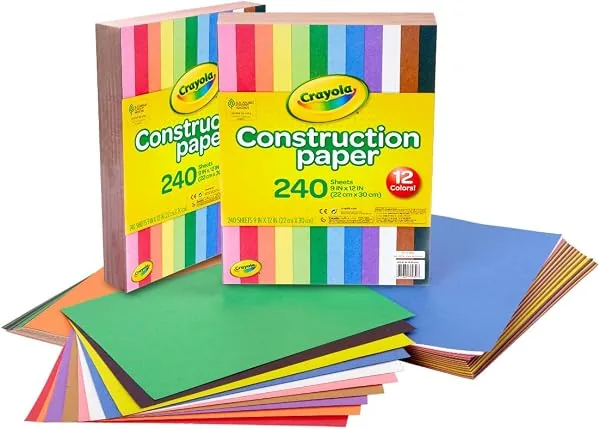
Crayola Construction Paper — 480 Sheets
The grid-making paper for this whole post — pencils grip it well, and the orange and black sheets make festive backing when finished puzzles go on the fridge. Enough sheets for a whole classroom batch.
One safety note: if little kids help draw grids, they do the ruling and writing while a grown-up handles any cutting and keeps sharp pencils away from faces during the inevitable “I found it!” desk pounding.
Make Your Own Grids: The 10-Minute Method
Once you can make one word search, you can make all thirteen, and so can your kid, eventually, which is a whole second activity.
1. Pick your word list. Take one from the puzzles below, matched to your child’s age. Short words for little kids, longer ones for big kids.
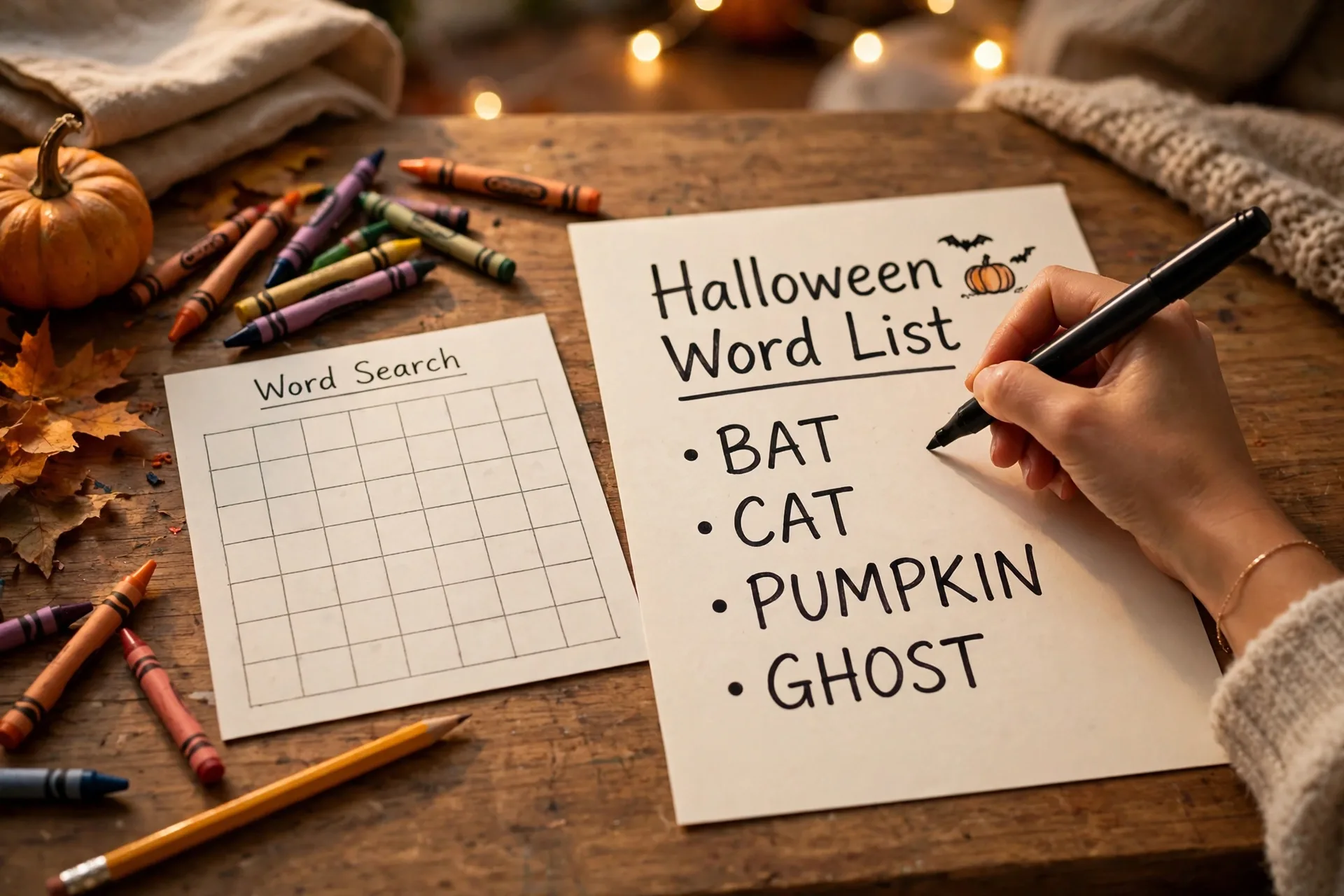
2. Rule the grid. Count the letters of your longest word and add one or two — that is your minimum grid size (an 8-letter word needs at least a 9×9 or 10×10 grid). Draw it with pencil and ruler, one letter per square, lines kept light.
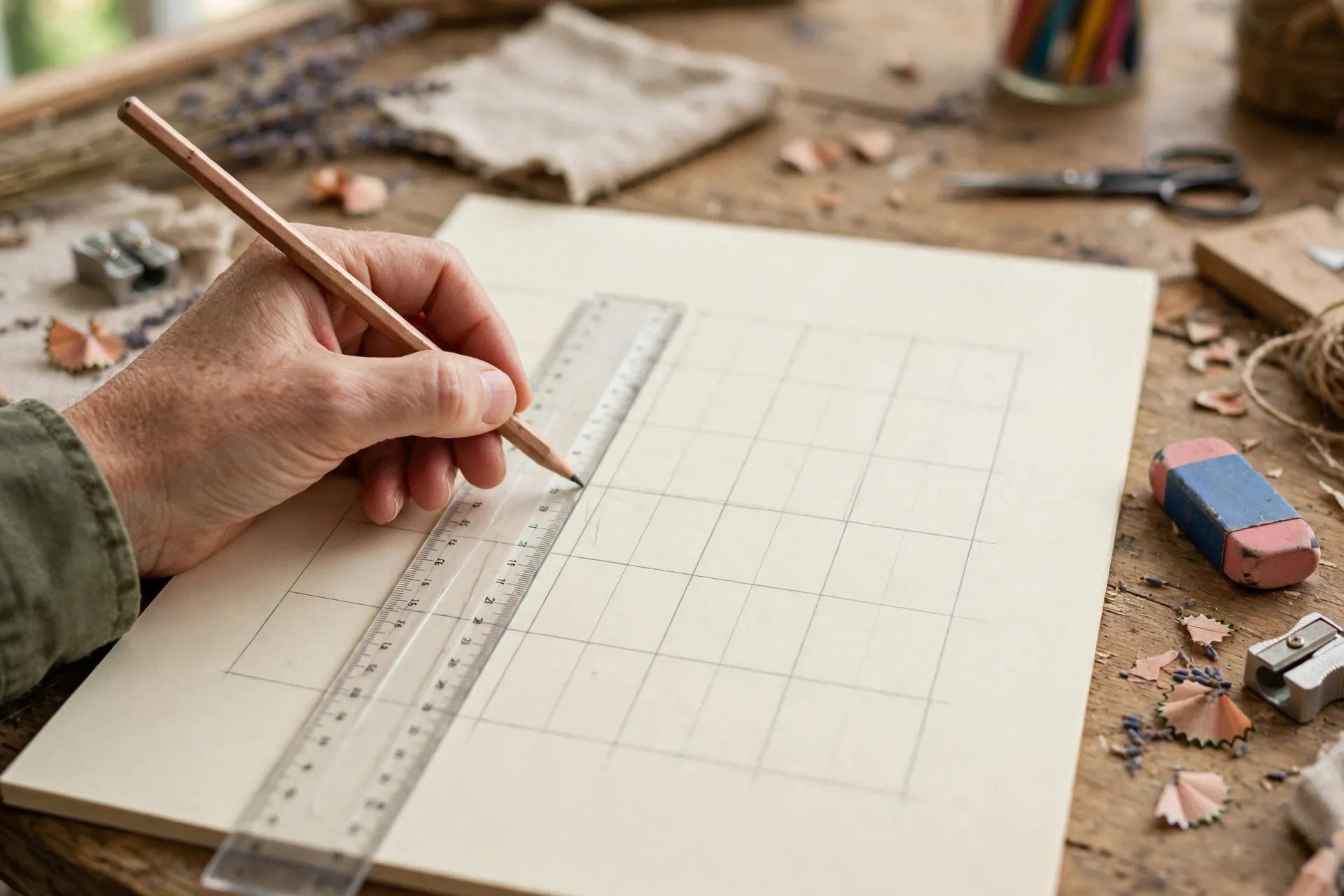
3. Place the words one at a time. Write each word in using whatever directions your puzzle allows. Words can share letters where they cross. If a word will not fit, erase and try a different spot.

4. Fill the empty squares. Write random letters into every blank square. Keep it fair: fill mostly with letters that are not the first letter of any word on your list, so kids are not chasing false starts.
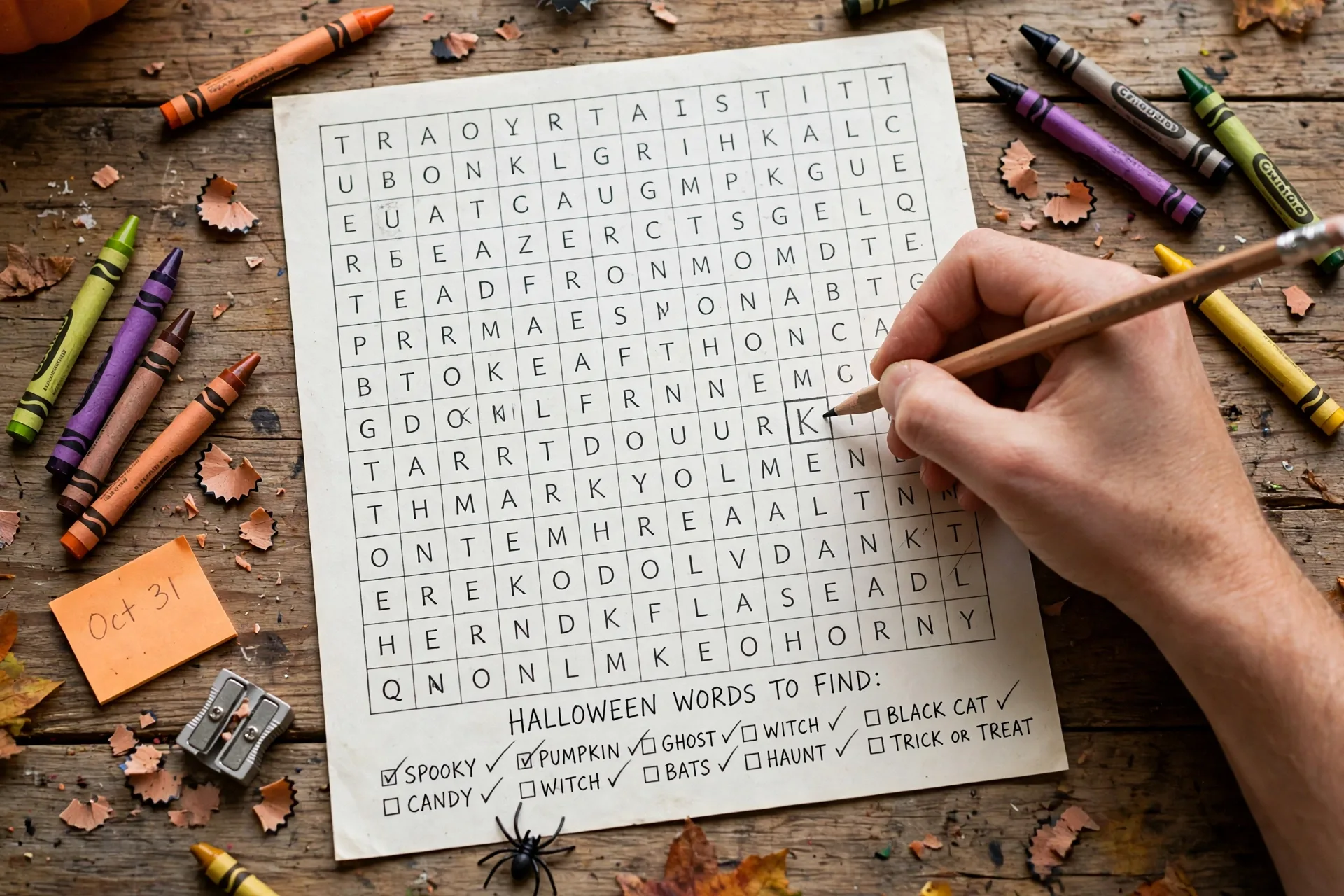
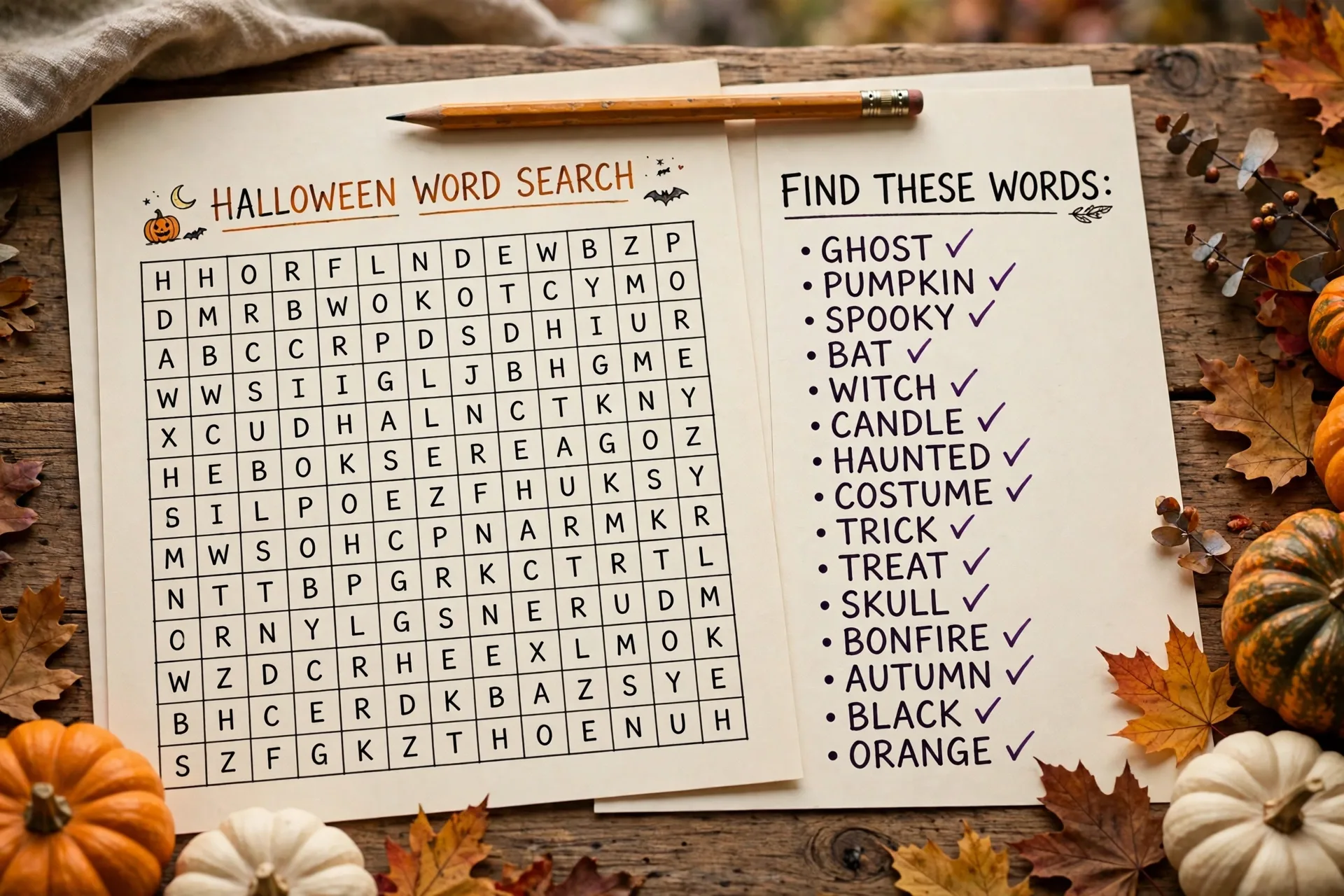
5. Write the word list beside the grid. The list is what turns a page of letters into a game.
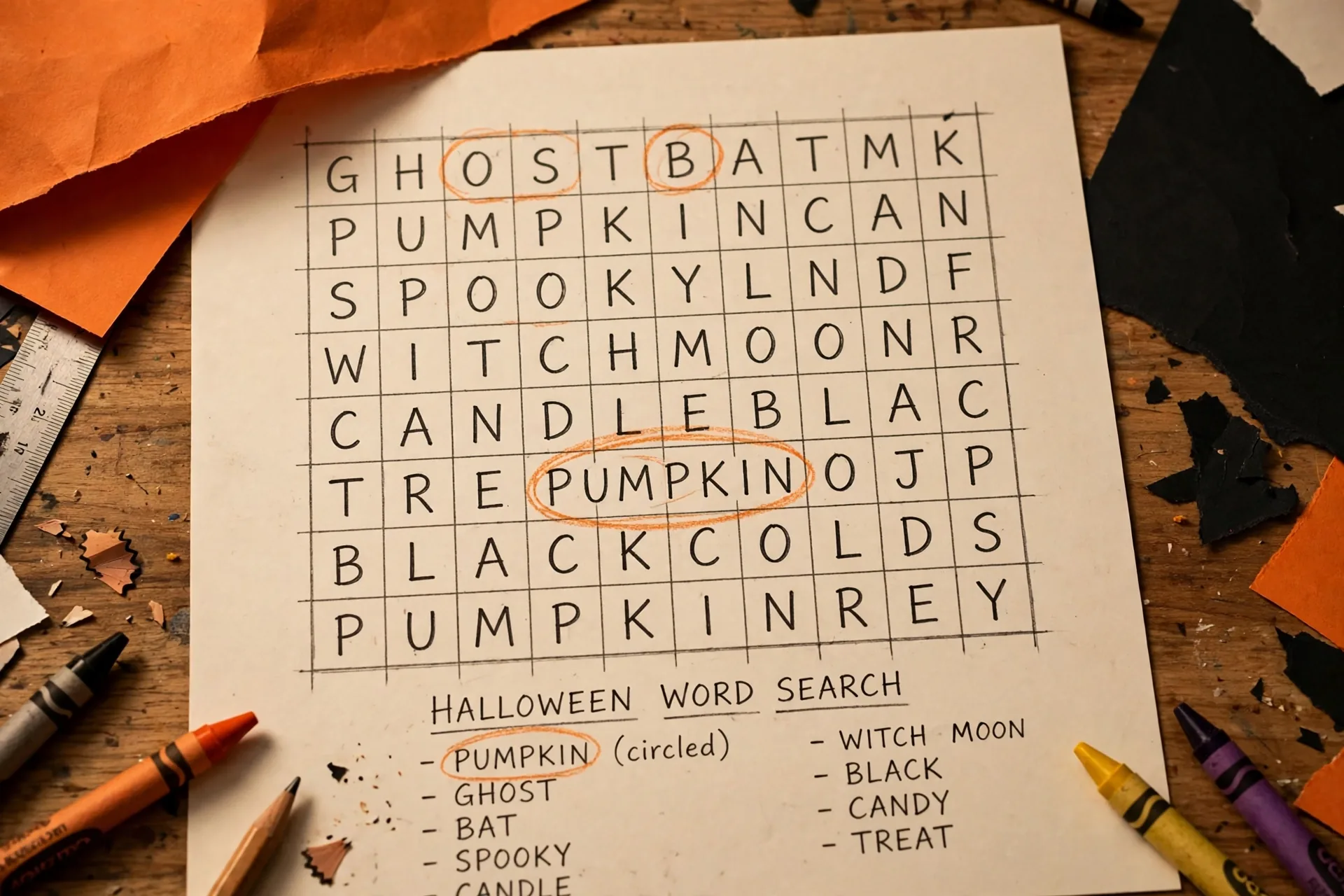
6. Make an answer key. On a separate sheet, mark where you hid each word. Keep the key to yourself.
Bonus move — the hidden message. Arrange filler letters so the leftover squares spell BOO. Double the delight, zero extra work.
Want to Print Instead of Hand-Drawing?
⬇ Download all 13 puzzles + answer keys (PDF)
Fair, hand-drawing thirteen grids is a project. The PDF button above has all thirteen ready to print, grids and answer key included. Prefer the maker route instead? Print the word lists from this page and run them through any free online word search maker (search “word search maker”). Set the printer to “Actual size” or 100%, print one test page before a classroom stack, and use grayscale unless you have ink to burn. For party stations, cardstock survives little hands far better than copy paper.
Puzzle 1: Little Pumpkins (Ages 4–6)
The starter puzzle. Eight short words, a small grid, only two directions — every word runs left-to-right or top-to-bottom. This is the grocery-list one. Read the word list out loud together first; for pre-readers, “find the letter that looks like this” is a perfectly good way to play.
Grid: 8×8. Directions: across and down only.
The 8 words: BAT, CAT, GHOST, MOON, CANDY, WITCH, PUMPKIN, SPIDER
Tip: Let little kids circle with a chunky crayon — messier, more satisfying. If a word proves too hard, solve it together; the win is finishing, not finishing alone.
Puzzle 2: Trick-or-Treat Night (Ages 5–7)
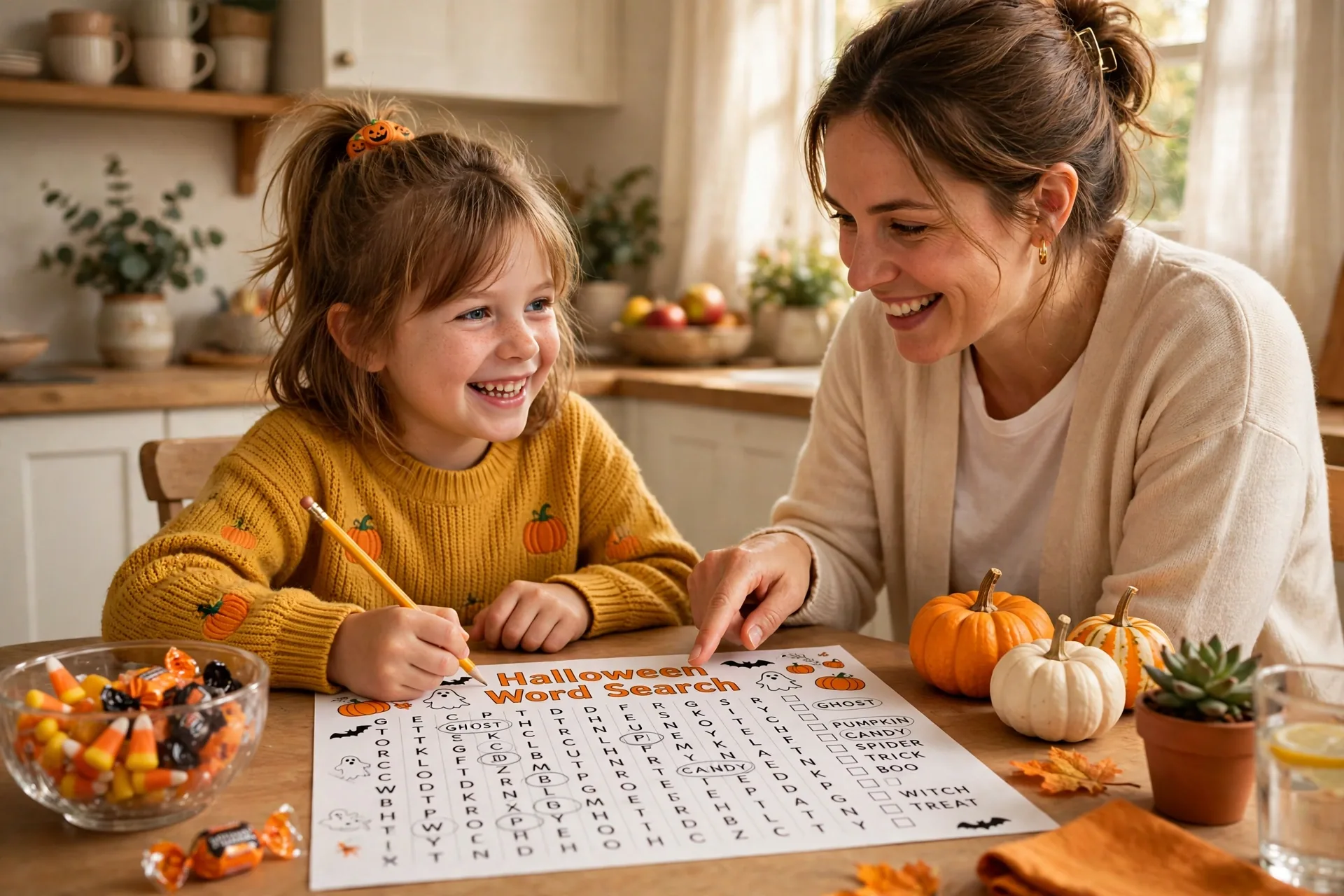
The vocabulary of October 31st itself. Every word here is something your child will see, hear, or say on trick-or-treat night, so this puzzle secretly pre-teaches the evening’s words. Make it while costumes are being laid out, and let it be the calm activity while everyone waits for it to get dark enough to go out.
Grid: 10×10. Directions: across and down only.
The 10 words: TRICK, TREAT, CANDY, COSTUME, MASK, KNOCK, PORCH, BOWL, SWEETS, LANTERN
Tip: After solving, have your child use three words in a sentence about their costume. Teachers: this list doubles as the week’s spelling list — solve Monday, spell Friday.
Puzzle 3: Friendly Monsters (Ages 6–8)
Gently spooky — the monsters in this puzzle are buddies, not frights, and MONSTER sits next to FRIEND in the word list for a reason. For the kid who finds haunted houses delightful. If yours hides during spooky parts, start with Puzzle 6 and come back next year.
Grid: 10×10. Directions: across, down, plus the two downward diagonals. No backwards words yet.
The 10 words: MONSTER, FRIEND, GHOST, MUMMY, ZOMBIE, FANGS, BAT, OWL, HOWL, HUGS
Tip: Introduce diagonals by finding one together — point at the F in FANGS and show how it tilts down. Once a kid “gets” diagonals, every future puzzle gets twice as fun.
Puzzle 4: Witch’s Kitchen (Ages 7–9)
The confident-reader puzzle. Twelve words, a bigger grid, the full diagonal treatment — a solid fifteen to twenty minutes and a real accomplishment at the end. Built-in follow-up: “brew” a real potion after (warm cider, cinnamon, orange slices — a grown-up handles the stove).
Grid: 12×12. Directions: across, down, and all four diagonal directions. Still no backwards words.
The 12 words: CAULDRON, POTION, BROOM, SPELL, MAGIC, CACKLE, HAT, CAT, STIR, BREW, FROG, TOAD
Tip: Perfect for the hidden-message bonus: arrange filler letters so the leftovers spell BOO down the first column. Do not tell them — the gasp is worth the extra five minutes.
Puzzle 5: The Quiet Graveyard (Ages 8–10)
Backwards words enter the chat. A backwards word breaks every pattern a kid has built up to this point, which is exactly why this puzzle feels like a graduation. Spooky-sounding but gentle — a graveyard in October is fall scenery: crows, fog, moonlight. Atmosphere, not horror.
Grid: 12×12. Directions: across, down, diagonals — and now words can run backwards too.
The 12 words: TOMBSTONE, GHOST, SPOOKY, HAUNTED, EERIE, FOG, CROWS, COBWEB, SKELETON, MIDNIGHT, CRYPT, SHADOW
Tip: Teach the backwards scan: look for the last letter and read in reverse. EERIE reads the same both ways — findable from either end, and kids feel clever when they notice.
Puzzle 6: Pumpkin Patch Days (Ages 6–9)
The no-spook option. Not every kid wants ghosts, and October is bigger than Halloween anyway — hayrides, cider, crunchy leaves, the smell of a pumpkin patch. Pure fall, which also makes this the puzzle you can pull out all month, not just the week of the 31st. My pick for the kid who finished Puzzle 1 last year and wants a bigger grid without new direction rules.
Grid: 10×10. Directions: across and down only — same rules as the early puzzles, just more words.
The 10 words: PUMPKIN, PATCH, VINE, SEEDS, ORANGE, HARVEST, APPLE, CIDER, FALL, HAYRIDE
Tip: Solve it while the pumpkin guts are being scooped, then roast the seeds after. The puzzle covers the boring middle part of pumpkin carving beautifully.
Puzzle 7: The Midnight Spooktacular (Ages 10+)
The boss level. A 15×15 grid, twelve words, every direction including backwards — for the kid (or grown-up) who finishes everything in five minutes and asks “is there a harder one?” FRANKENSTEIN at twelve letters needs the big grid. Making this one by hand takes twenty careful minutes — this is where a free online word search maker earns its keep.
Grid: 15×15. Directions: all eight — across, down, diagonals, forwards and backwards.
The 12 words: FRANKENSTEIN, VAMPIRE, WEREWOLF, DRACULA, GARGOYLE, PHANTOM, THIRTEEN, NIGHTMARE, CREEPY, COFFIN, WITCHING, BLACKCAT
Tip: Run it as a race: two copies, two solvers, first to all twelve wins — a word only counts when circled and crossed off, because false finds are guaranteed and arguing about them is half the fun.
Puzzle 8: Candy Corn Countdown (Ages 5–7)
The candy puzzle, and the sweetest one on the list. Every word here is something your child will meet in a candy bowl or a lunchbox: CANDYCORN at nine letters is the longest word, so it sets the pace, and the rest are short and friendly. This is the puzzle to hand a five-year-old who already finished Puzzle 1 and wants a new list without new rules. Make it the week before Halloween, when the candy is already in the house and every word on the list is sitting in a bowl on the counter. If your kid gets stuck on CANDYCORN, cover all but the first three letters and let them sound it out.
Grid: 10×10. Directions: across and down only.
The 10 words: CANDYCORN, SWEET, TREAT, SUGAR, ORANGE, YELLOW, WHITE, KERNEL, SNACK, SHARE
Tip: After solving, sort a real handful of candy corn by color and count each pile. The puzzle teaches the words, the candy teaches the counting, and nobody minds the homework.
Puzzle 9: Haunted House Hiding (Ages 6–8)
The haunted house puzzle, built for the kid who loves spooky houses and hates being scared. Every word is a part of the house: the door, the stairs, the attic, the chimney. Diagonals enter here, but only the two downward ones, so it is a gentle step up from Puzzles 1 and 2. Read the list out loud first and let your child picture the house, room by room, before they start hunting. The trick with this one is the stairs: STAIRS runs diagonally more often than not, so teach them to look for the S and follow the tilt.
Grid: 10×10. Directions: across, down, plus the two downward diagonals. No backwards words yet.
The 10 words: HAUNTED, HOUSE, DOOR, STAIRS, ATTIC, CREAK, WINDOW, CHIMNEY, PORCH, KNOCK
Tip: Build the house after solving: draw a simple house together and label each room with a word from the list. The puzzle becomes a map, and the map becomes the next game.
Puzzle 10: Black Cat Crossing (Ages 7–9)
The cat puzzle. Twelve words, all four diagonals, and a black cat who wanders through every one of them. WHISKERS is the word to hunt first: nine letters, one W, and it crosses half the grid. MOONLIGHT is the second gift, long and easy to spot once you know to look for the M. This is the puzzle for the kid who finished Puzzle 4 and asked for more diagonals, and for the cat kid who has been waiting for their puzzle since Puzzle 1. Black cats get a bad rap in October; this one is all purrs.
Grid: 12×12. Directions: across, down, and all four diagonal directions. Still no backwards words.
The 12 words: BLACKCAT, WHISKERS, PURR, TAIL, NIGHT, ALLEY, MOONLIGHT, SHADOW, SNEAK, LUCKY, MIDNIGHT, PAWS
Tip: Hunt the rare letters first: the W in WHISKERS and the Y in LUCKY. Find the weird letter, then read outward from it.
Puzzle 11: The Pumpkin Carving Party (Ages 6–9)
The carving party puzzle. Twelve words, gentle rules, and the longest word on the list is JACKOLANTERN itself, twelve letters that need the full twelve squares across. That is the whole lesson of this puzzle: the grid fits the word, not the other way around. Solve it while the pumpkin guts are being scooped, then carve the face after. The words on this list are the steps of the evening: carve, scoop, grin, glow. If your kid finishes early, hand them the marker and let them draw the face on the pumpkin before a grown-up cuts it.
Grid: 12×12. Directions: across and down only.
The 12 words: JACKOLANTERN, CARVE, SCOOP, SEEDS, GRIN, GLOW, CANDLE, STEM, RIND, SMILE, SPOOKY, LIGHT
Tip: Save the seeds while you solve. Scoop them out, rinse them, roast them after, and the puzzle covers the boring middle part of carving night.
Puzzle 12: Spooky Story Night (Ages 8–10)
The story night puzzle. Twelve words, every direction including backwards, and every word belongs around a campfire: CAMPFIRE, FLASHLIGHT, WHISPER, GOOSEBUMPS. This is the puzzle to solve by flashlight under a blanket, the night before Halloween, when the house is dark and the stories are just scary enough. MARSHMALLOW is the longest word at eleven letters, and GOOSEBUMPS is the one kids remember finding. Backwards words hide best here, so teach the reverse scan: find the last letter first, then read the word backwards.
Grid: 12×12. Directions: across, down, diagonals, and backwards too.
The 12 words: STORY, CAMPFIRE, FLASHLIGHT, WHISPER, GOOSEBUMPS, THRILL, CHILLS, DARK, TENT, BLANKET, MARSHMALLOW, SCARE
Tip: Tell one short story after solving, with every kid adding one sentence. The puzzle sets the mood, and the story is the prize.
Puzzle 13: The Great Halloween Parade (Ages 10+)
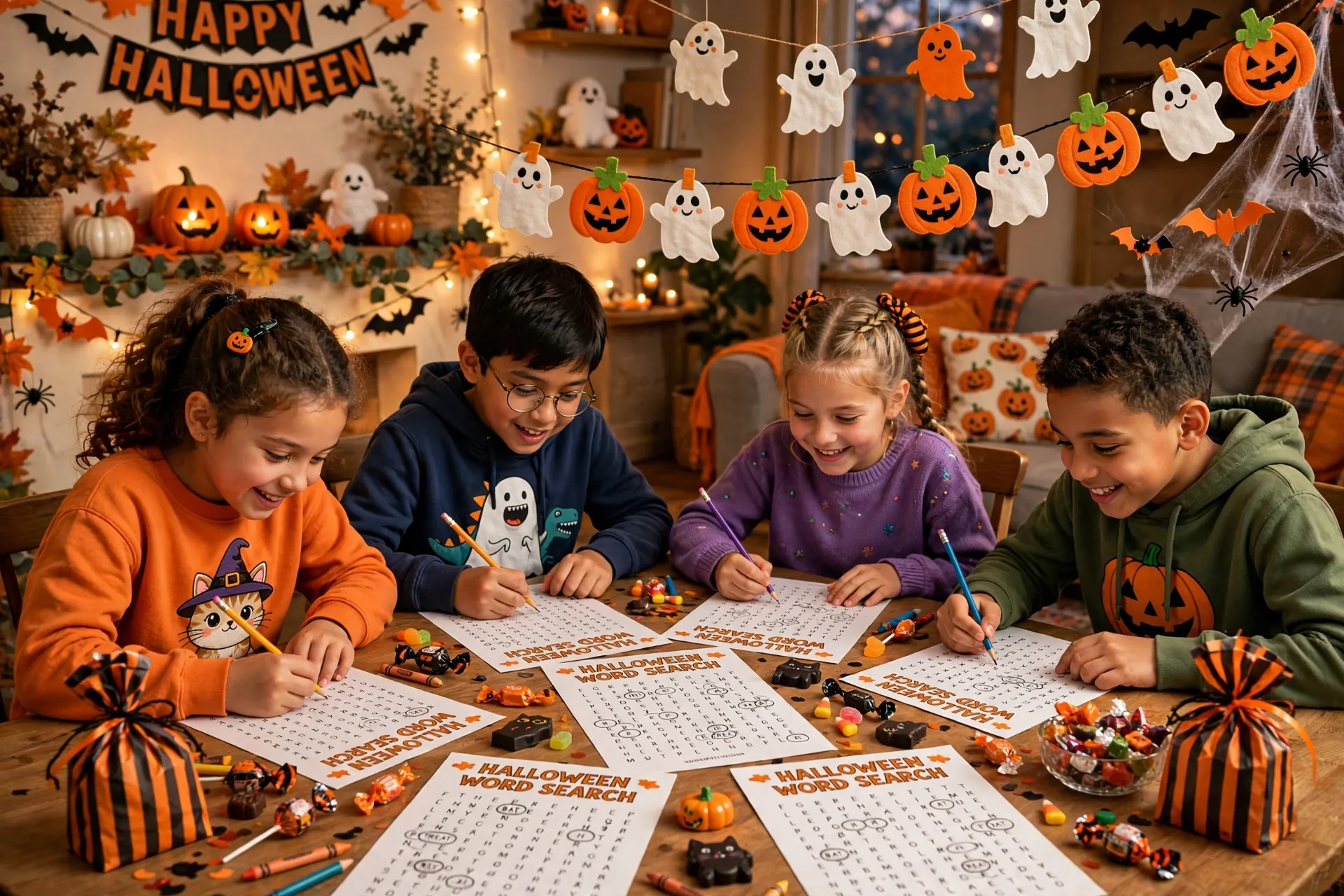
The grand finale. A 15×15 grid, twelve words, all eight directions, and a parade worth of words: MARCHING, CONFETTI, BALLOONS, MASQUERADE. This is the puzzle for the kid who finished Puzzle 7 and asked if there was a harder one. There is, and it is this one. MASQUERADE is the word to hunt first, ten letters with a Q that stands out like a flag. Make two copies and race: first to all twelve wins, and a word only counts when it is circled and crossed off.
Grid: 15×15. Directions: all eight: across, down, diagonals, forwards and backwards.
The 12 words: PARADE, COSTUME, MARCHING, BAND, FLOAT, CONFETTI, BALLOONS, CANDY, CHEER, MASQUERADE, FIREWORKS, SPARKLER
Tip: Run it as a parade: solve it at the table while the parade playlist plays, and the first finisher gets to pick the next puzzle. The boss level deserves a finish line.
6 Ways to Use These Puzzles
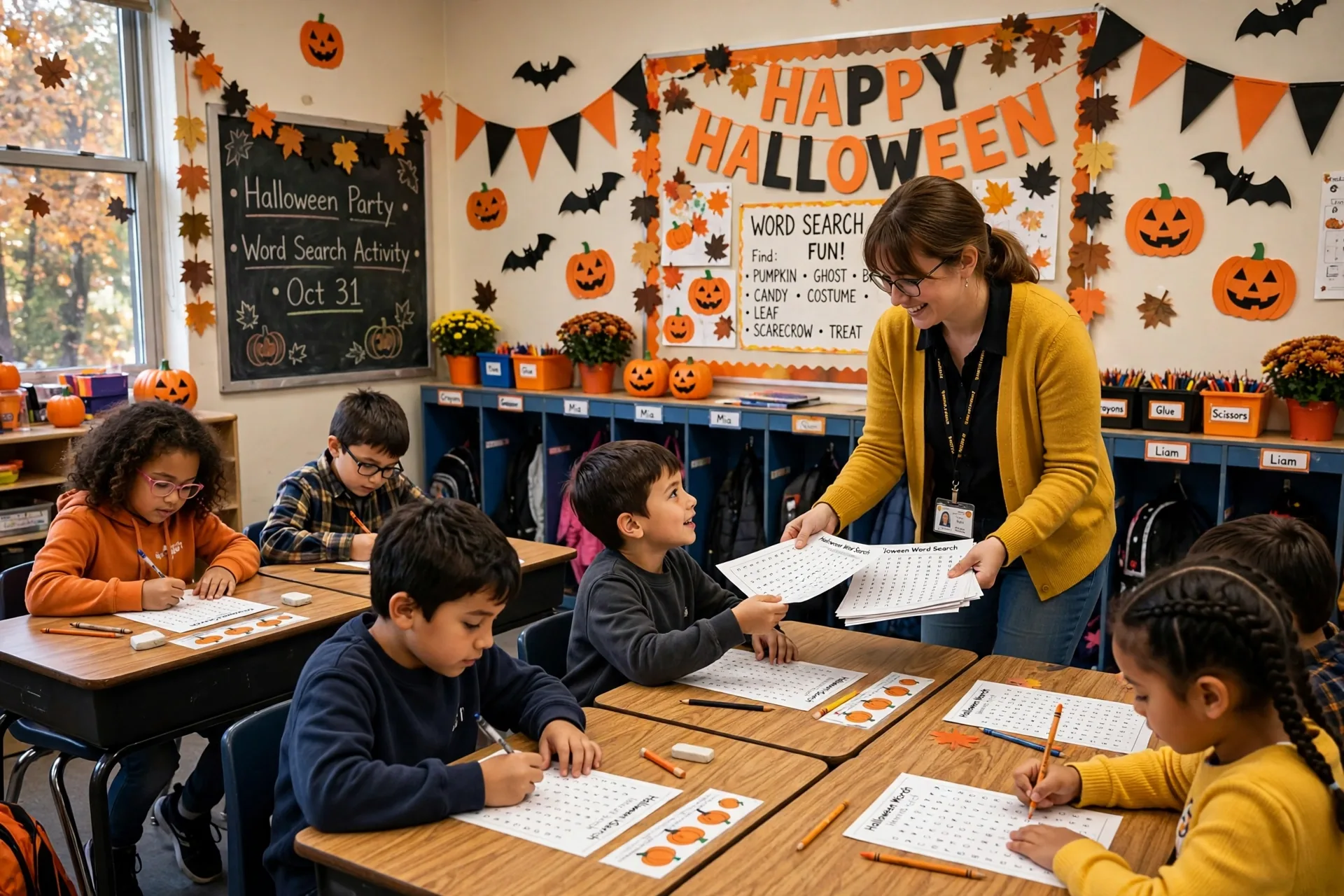
The classroom arrival calm. Hand a puzzle to each kid as they walk in on party day — early arrivals get something quiet while the room fills, and you get ten minutes of calm on the most chaotic morning of October.
The early-finisher stash. Keep the age-appropriate puzzle in a folder by the door or the homeschool desk. “Done with your work? Grab a word search” beats “sit quietly” every time.
Homeschool spelling practice. Solve Monday, copy each word onto the page back, spell them Friday. The puzzle introduces vocabulary; the test holds accountability.
The party race. Several copies, one timer, first finished wins. For prizes, crack open a pack of glow sticks: winners pick colors first, and every kid leaves with something that is not candy — the sticks double as trick-or-treat visibility gear, which parents quietly thank you for.
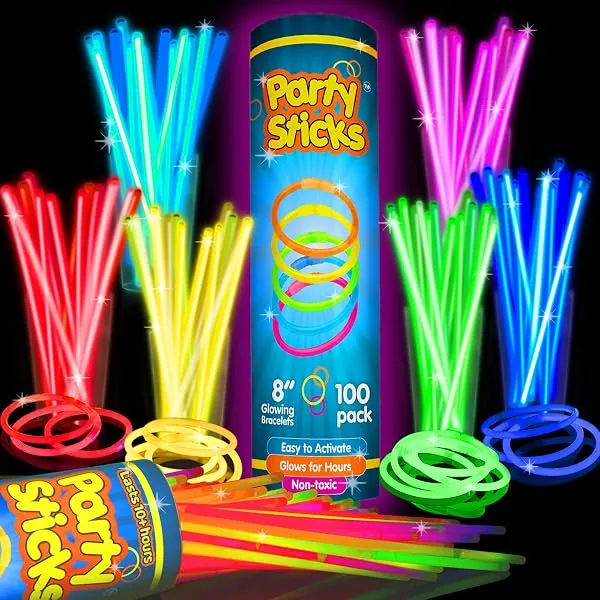
Glow Sticks — 100 Pack
Party-race prizes that are not candy — winners pick colors first, and every kid takes one home for trick-or-treat visibility after dark.
The trick-or-treat countdown calm. The hour before trick-or-treating is pure feral energy — costumes half on, candy bowls being “quality tested.” A word search on the table gives that energy somewhere to land.
The travel quiet-time. The rare car activity with no screen, no battery, and no “are we there yet” every four minutes. Tuck a puzzle and a pencil into the back seat for the drive to grandma’s.
Word-Search Strategy: Teach Them to Hunt, Not Stare
New solvers stare at the whole grid hoping a word jumps out. It does not work. Teach the hunt instead:
1. The first-letter sweep. Pick one word. Scan the whole grid for its first letter only. Every time you spot it, stop and check the letters around it. One word at a time, always.
2. Hunt the rare letters. Words with unusual letters are gifts — the K in SPOOKY, the W in WITCH. Teach kids to find the weird letter first and work outward.
3. Long words first. CAULDRON and FRANKENSTEIN are the easiest words in their puzzles, not the hardest — more letters to spot, fewer places to hide. Always start with the longest word on the list.
4. Cross it off. The moment a word is found, cross it off the list. Non-negotiable. Half of all word-search frustration is re-hunting a word you already found.
5. Fresh eyes. Stuck on the last two? Walk away, get a snack, come back in ten minutes. The brain keeps scanning in the background.
What Word Searches Quietly Teach
Nobody assigns a word search for learning outcomes, but the learning happens anyway. Spelling is reinforced every time a child checks a found word against the list. Seasonal vocabulary sticks because it is attached to an activity, not a worksheet. Visual scanning across rows is genuine reading practice. Sustained attention gets a workout without anyone calling it that. And a finished puzzle is visible proof: kids who finish hard things willingly try the next hard thing.
Shop This Post
Everything mentioned in this guide, in one place:
| Product | Used For | Price |
|---|---|---|
| Crayola Construction Paper — 480 Sheets |
Hand-drawing puzzle grids; colored sheets as festive puzzle backing | Check Price |
| Glow Sticks — 100 Pack |
Party-race prizes that double as trick-or-treat visibility gear | Check Price |
Frequently Asked Questions
What ages are these word searches for?
Puzzle 1 fits ages 4–6 (read the list aloud together), puzzles 2, 3, and 6 fit ages 5–9, puzzle 4 fits confident readers around 7–9, puzzle 5 fits ages 8–10, puzzle 8 fits ages 5–7, puzzle 9 fits ages 6–8, puzzle 10 fits ages 7–9, puzzle 11 fits ages 6–9, puzzle 12 fits ages 8–10, and puzzles 7 and 13 are the challenge rounds for ages 10 and up.
Are these word searches really free?
Yes. The free PDF has all thirteen puzzles plus the answer key, no email signup, and every puzzle can also be made at home with paper and pencil: free forever, in any quantity.
Do I need a printer?
No. Hand-draw with the 10-minute method above, or print the word lists and run them through any free online word search maker at “Actual size”/100%.
How long does each puzzle take?
Puzzle 1 takes a preschooler five to ten minutes with help. The middle puzzles run ten to twenty minutes depending on age. Puzzles 7 and 13 can take a tween twenty-five minutes or more. That is the point.
What if my child finds it too hard?
Drop back one puzzle, or simplify the one you are on: remove diagonals and backwards rules, shorten the list to the five easiest words, or solve it together with them doing the circling. A puzzle finished together beats a puzzle abandoned alone.
Can teachers use these in the classroom?
Absolutely. Make one master grid, copy it for the class, keep the answer key. Add students’ names as hidden bonus words — the DIY method makes it free.
How do I make an answer key?
When placing words, mark each location on a separate sheet — a quick circled sketch is enough. Solvers get the clean puzzle; the key stays with the grown-up.
Make One Tonight
Grab paper, a pencil, and the word list that matches your kid’s age, and rule a grid while dinner cooks. Fifteen minutes of setup buys a genuinely quiet half hour — the best trade in all of October.
Then keep the grid. Tuck it in the Halloween box with the costumes. Next year, when you unfold it and find BAT circled in wobbly crayon, you will be very glad you did not throw it out. Happy hunting, mama.