Halloween Worksheets, Activities and Coloring Pages for Kids: 15 Free Packs
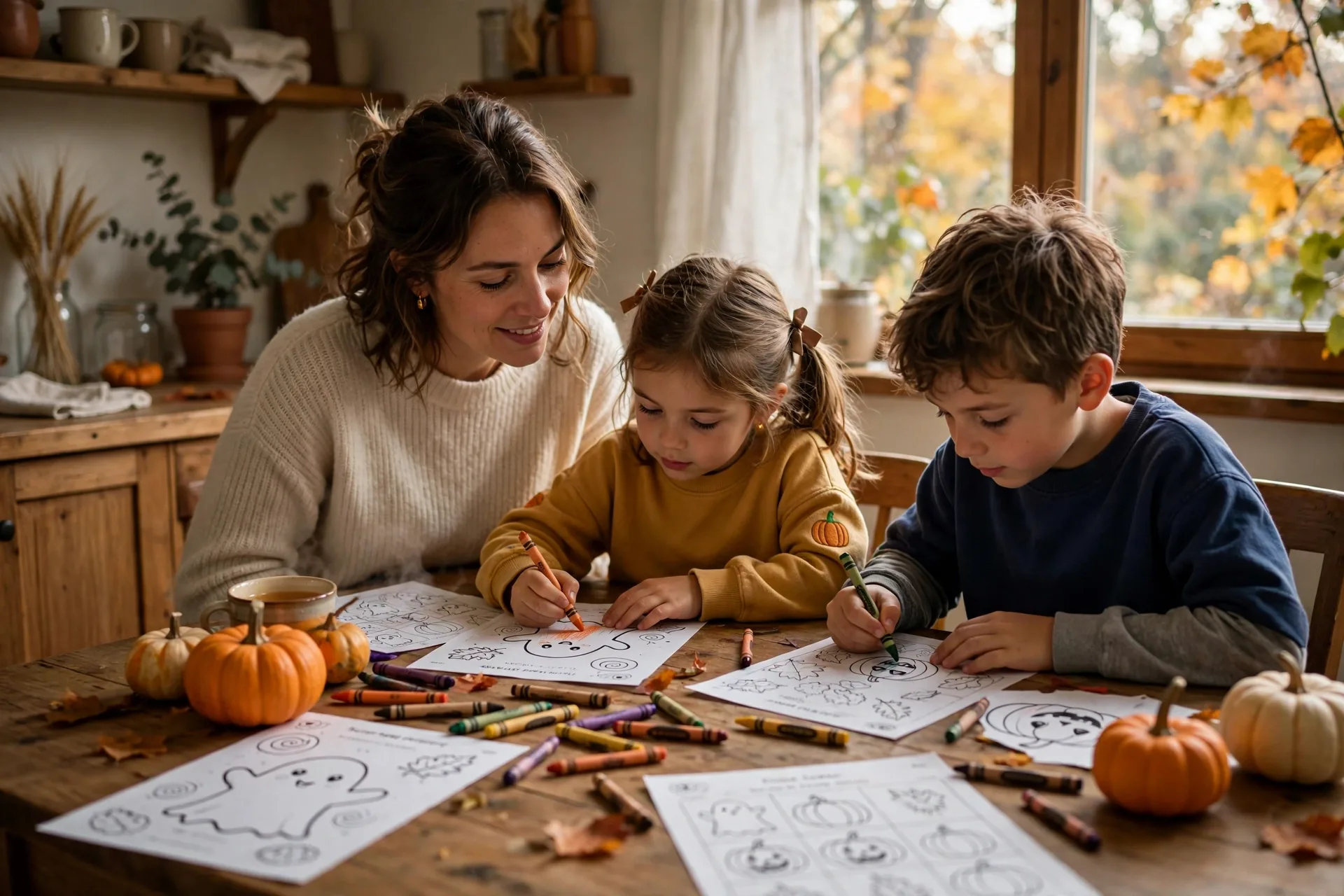
Every October I hit the same wall: the kids are bouncing off the walls, the printer is sitting right there, and every “free printable” I find wants my email address before it shows me a single page. So this year I made the thing I actually wanted — one pack, fifteen sheets, nothing to sign up for. My four-year-old claimed the maze before the ink was dry; my two-year-old just wanted to color the ghost orange.
This post is the whole pack, sheet by sheet: what each one practices, which age it fits, and how to print it so it actually works. The download is the real file — fifteen activity sheets plus a grown-up answer key, free, no signup. Most sheets take five to fifteen minutes.
Heads up: this post contains affiliate links. If you buy through them, MamaKinder may earn a small commission at no extra cost to you — it helps keep these guides free.
What’s Inside: The 15 Packs at a Glance
| # | Pack | Ages | What it practices |
|---|---|---|---|
| 1 | I-Spy Count & Write | 3–5 | Counting, one-to-one correspondence |
| 2 | Count & Write 1–10 | 4–6 | Counting, number recognition |
| 3 | Trace the Numbers | 3–5 | Number formation, pencil control |
| 4 | Color by Number | 4–7 | Number matching, following a key |
| 5 | Ghost Letter Hunt | 4–6 | Letter recognition |
| 6 | Trace the Alphabet | 3–6 | Letter formation, pencil control |
| 7 | Beginning Sounds Match | 4–7 | Beginning sounds, vocabulary |
| 8 | Halloween Maze | 4–8 | Problem solving, pencil control |
| 9 | Dot-to-Dot Pumpkin | 4–7 | Number order, fine motor |
| 10 | Spot the Difference | 5–8 | Visual discrimination, focus |
| 11 | Cut & Paste Pumpkin Faces | 3–6 | Scissor skills, creativity |
| 12 | Word Search | 6–8 | Spelling patterns, scanning |
| 13 | Halloween Patterns | 4–7 | Sequencing, reasoning |
| 14 | Color: Friendly Ghost | 3–8 | Creativity, fine motor |
| 15 | Color: Trick-or-Treat Night | 3–8 | Creativity, fine motor |
Print It Right (So the Sheets Actually Work)
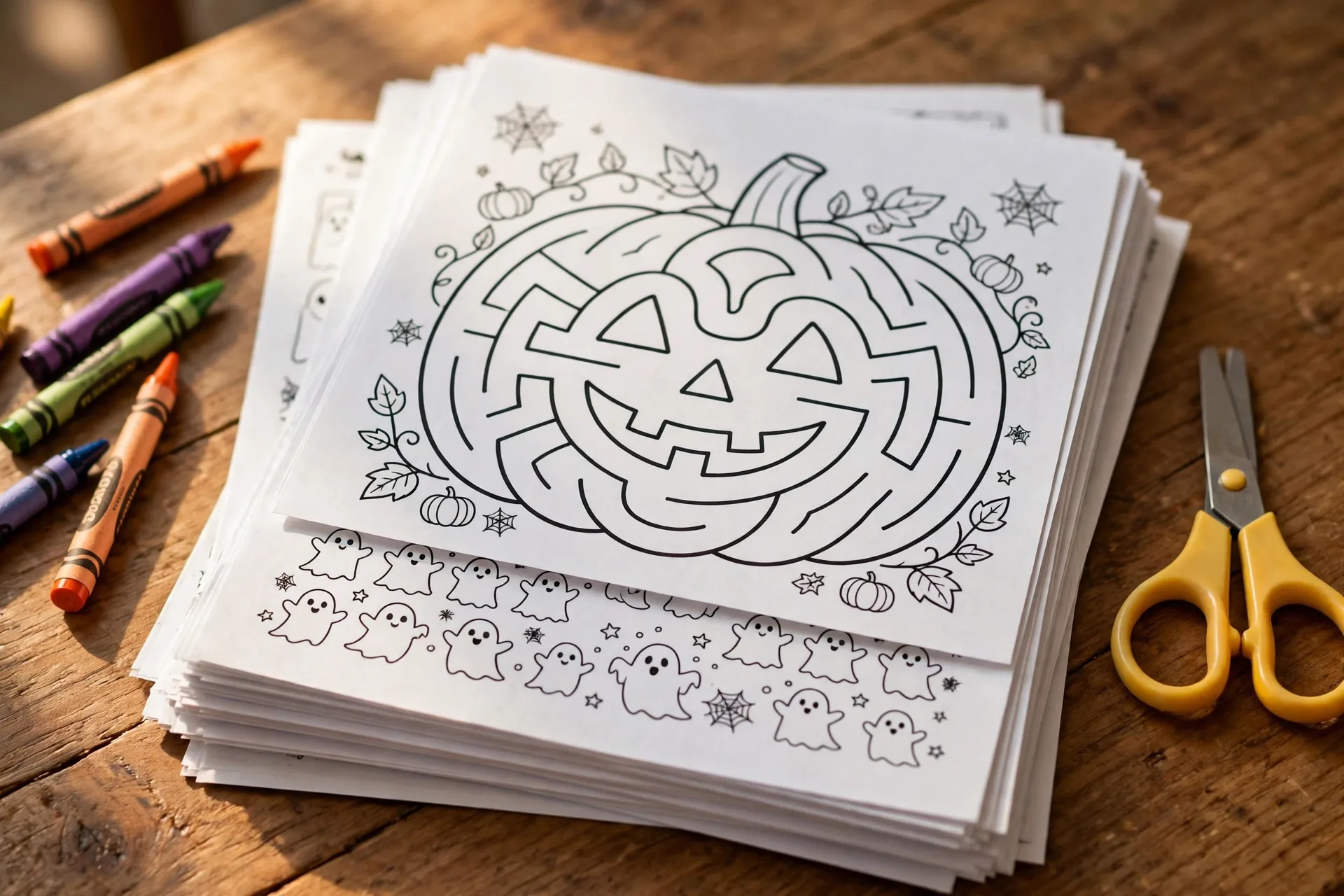
Print at “Actual size” (100%) on US Letter paper — not “fit to page,” or the maze walls and dot numbers shrink into a squint. Print one test sheet before a classroom stack. Grayscale works beautifully for every sheet and saves your ink; the color-by-number key still reads fine in gray because the numbers do the work.
For one-time use, plain copy paper is perfect. If markers are entering the picture, construction paper or cardstock survives little hands far better — marker doesn’t bleed through, and finished sheets go straight on the fridge. To reuse the counting and letter sheets all month, slip them into dry-erase pockets or laminate them and hand over dry-erase markers. A clipboard makes any sheet portable — waiting room, restaurant, back seat.
Two safety notes, because they matter: a grown-up handles the scissors for little kids on the cut-and-paste sheet, and small manipulatives (pom-poms, mini erasers, counters — great on the I-Spy and counting sheets) are for ages 3 and up with supervision.
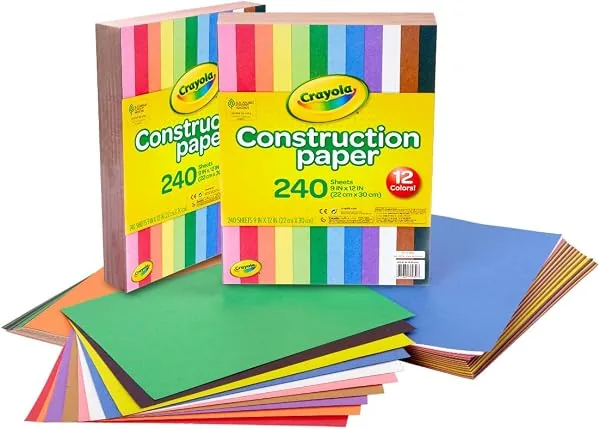
Crayola Construction Paper — 480 Sheets
The printing paper for this whole pack — pencils and crayons grip it well, markers don’t bleed through, and the orange and black sheets make festive backing when finished sheets go on the fridge.
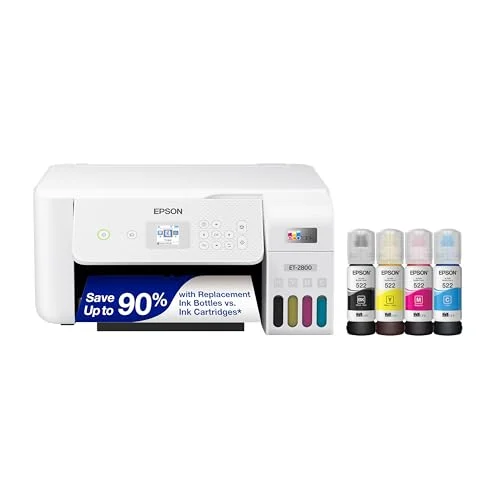
Epson EcoTank ET-2800 Printer
Fifteen packs means a lot of pages, and the test sheet before a big stack adds up fast. The EcoTank ET-2800 skips cartridges for refillable ink tanks — Epson rates one ink set at up to 4,500 black and 7,500 color pages, with up to 2 years of ink in the box. Per page, that makes printing the whole set far cheaper than feeding a cartridge printer.
Get the Free Printable
Download the Free Printable (PDF, 17 pages)
No email, no signup — the button gives you the whole pack: the fifteen sheets below plus the grown-up answer key on the last page. (Print the answer key once and keep it to yourself; half the fun is the hunt.)
The 15 Packs
Pack 1: I-Spy Count & Write (Ages 3–5)
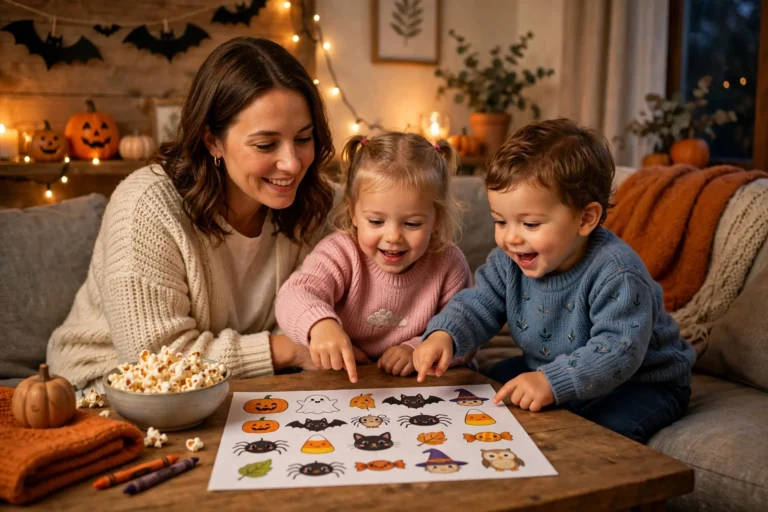
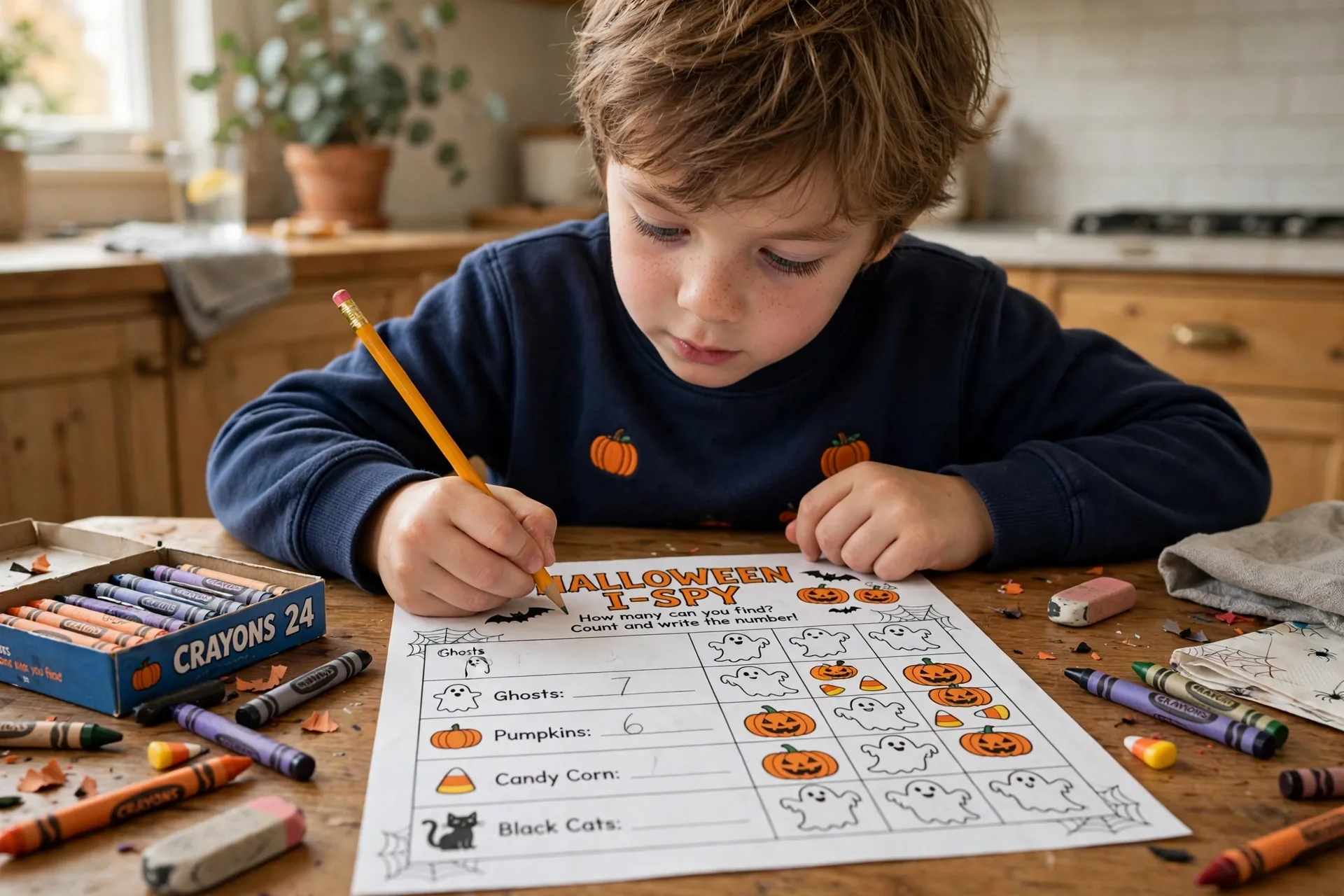
Ghosts, pumpkins, bats, candy corn, spiders, and witch hats are scattered across the page — find each kind, count them, write the number. For the littlest ones, cover each counted picture with a pom-pom or counter as they go; it turns counting into a treasure hunt and stops the re-counting spiral. This sheet quietly builds one-to-one correspondence — each thing gets exactly one count — the real foundation under all later math.
Pack 2: Count & Write 1–10 (Ages 4–6)
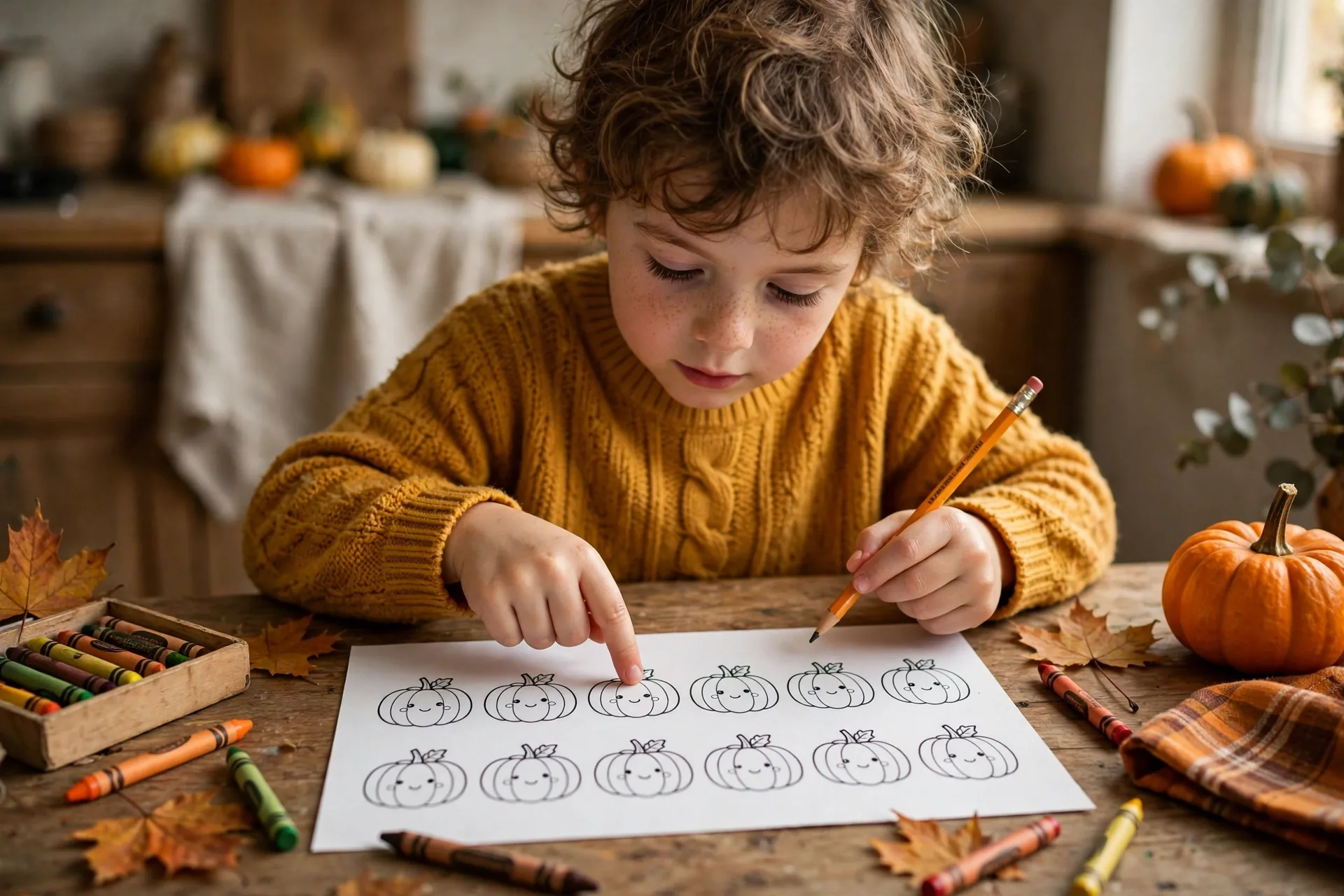
Five neat rows — pumpkins, ghosts, bats, candy corn, spiders — each with a big answer box. Count the row, write the number. If ten feels big, cover all but one row with paper and do the rest tomorrow; no worksheet must be finished in one sitting. Recognizing a printed 7 is a different skill from chanting to ten, and this sheet bridges the two.
Pack 3: Trace the Numbers (Ages 3–5)
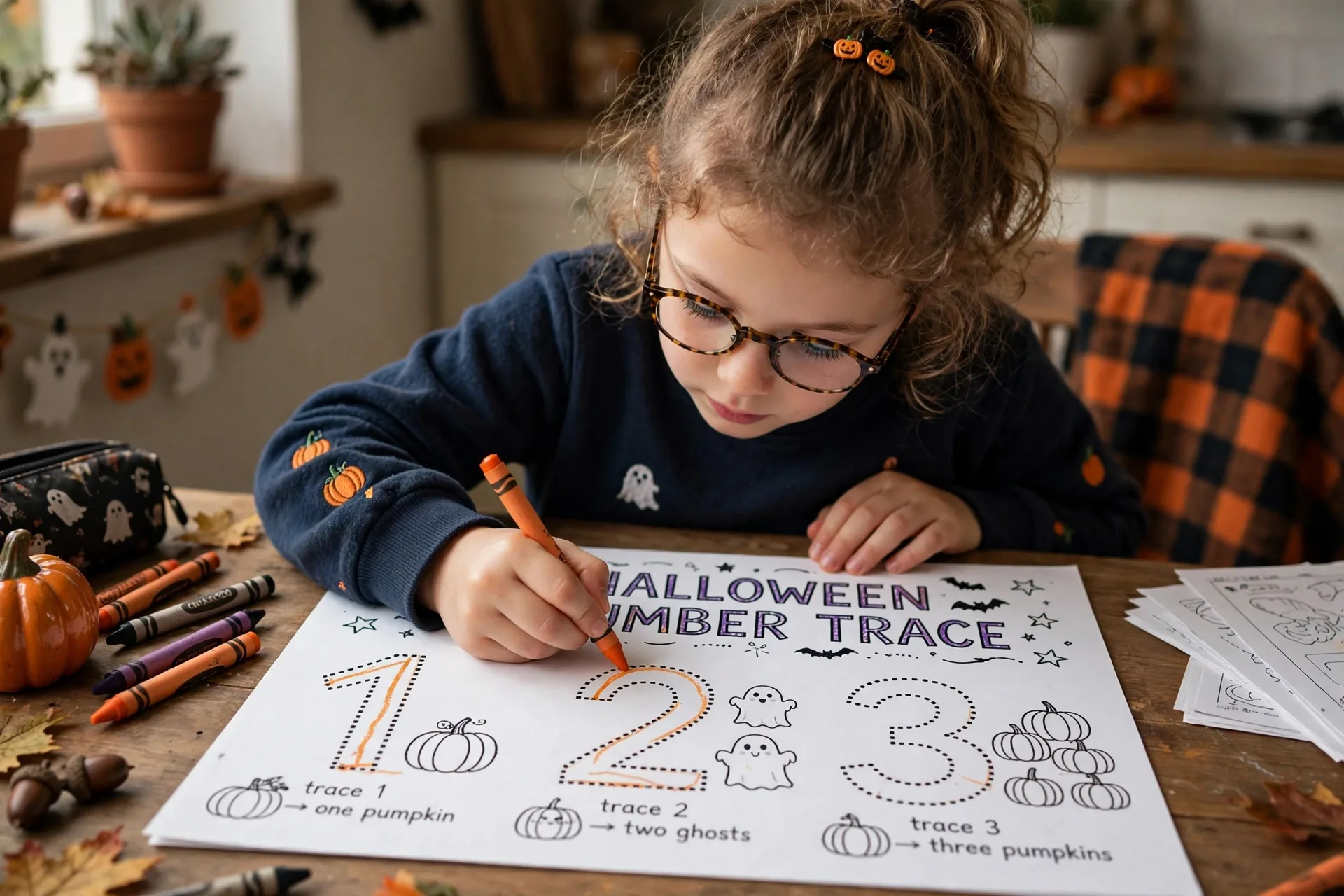
Big gray 1-through-10s, waiting for a crayon. Have your child say each number out loud as they trace — hearing it, seeing it, and moving the hand through it all at once is how the shape sticks. The dotted baselines underneath are for writing them solo afterward. Chunky crayons beat pencils here; the grip is easier and the lines are more satisfying.
Pack 4: Color by Number (Ages 4–7)
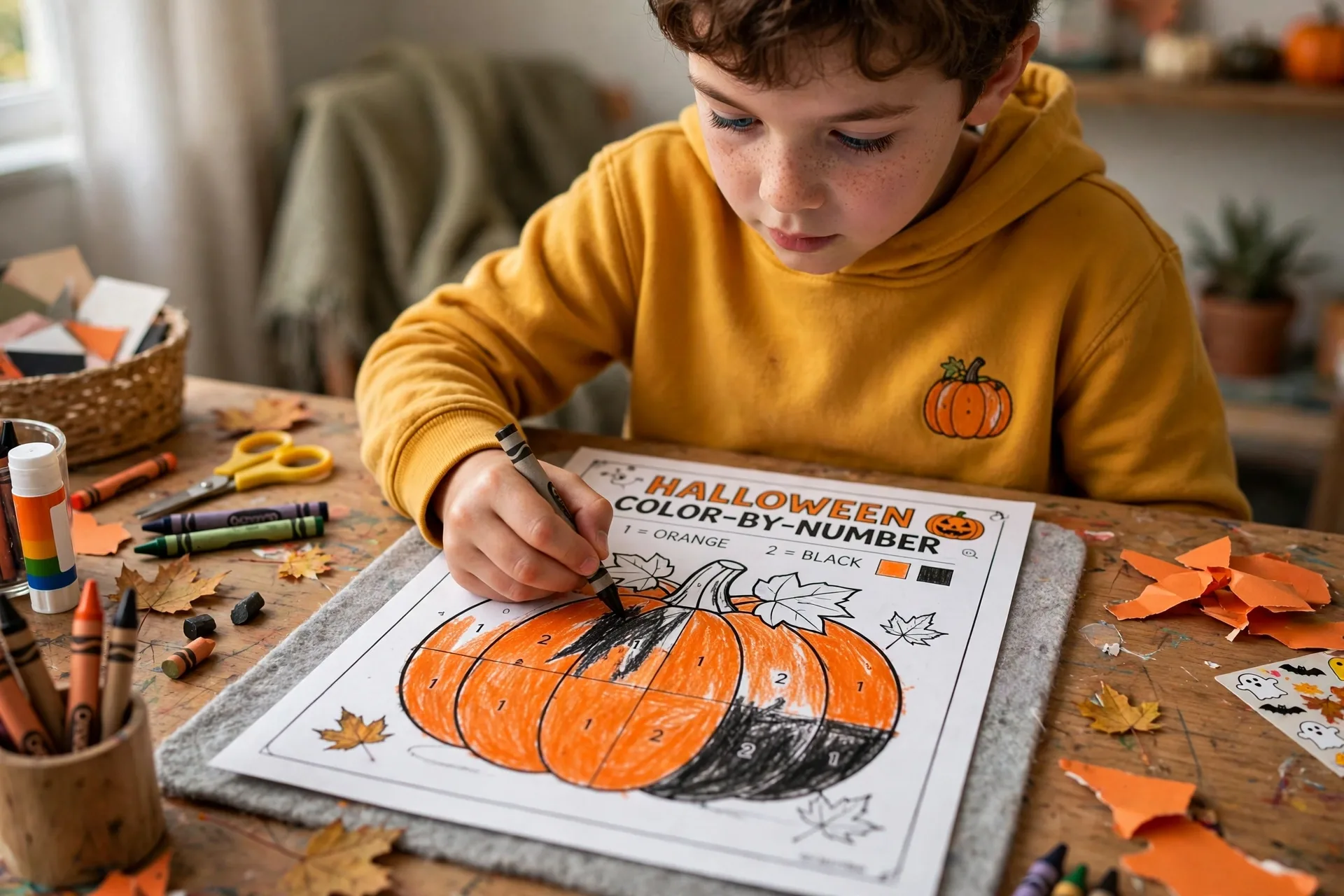
Match each number to the color key — 1 is orange, 2 is purple, 3 is yellow, 4 is black — then color the pumpkin, the witch hat, the moon, and the bats. Kids who “can’t do worksheets” will happily do this one because it reads as coloring, not math. It prints beautifully in grayscale, since the numbers carry all the information.
Pack 5: Ghost Letter Hunt (Ages 4–6)
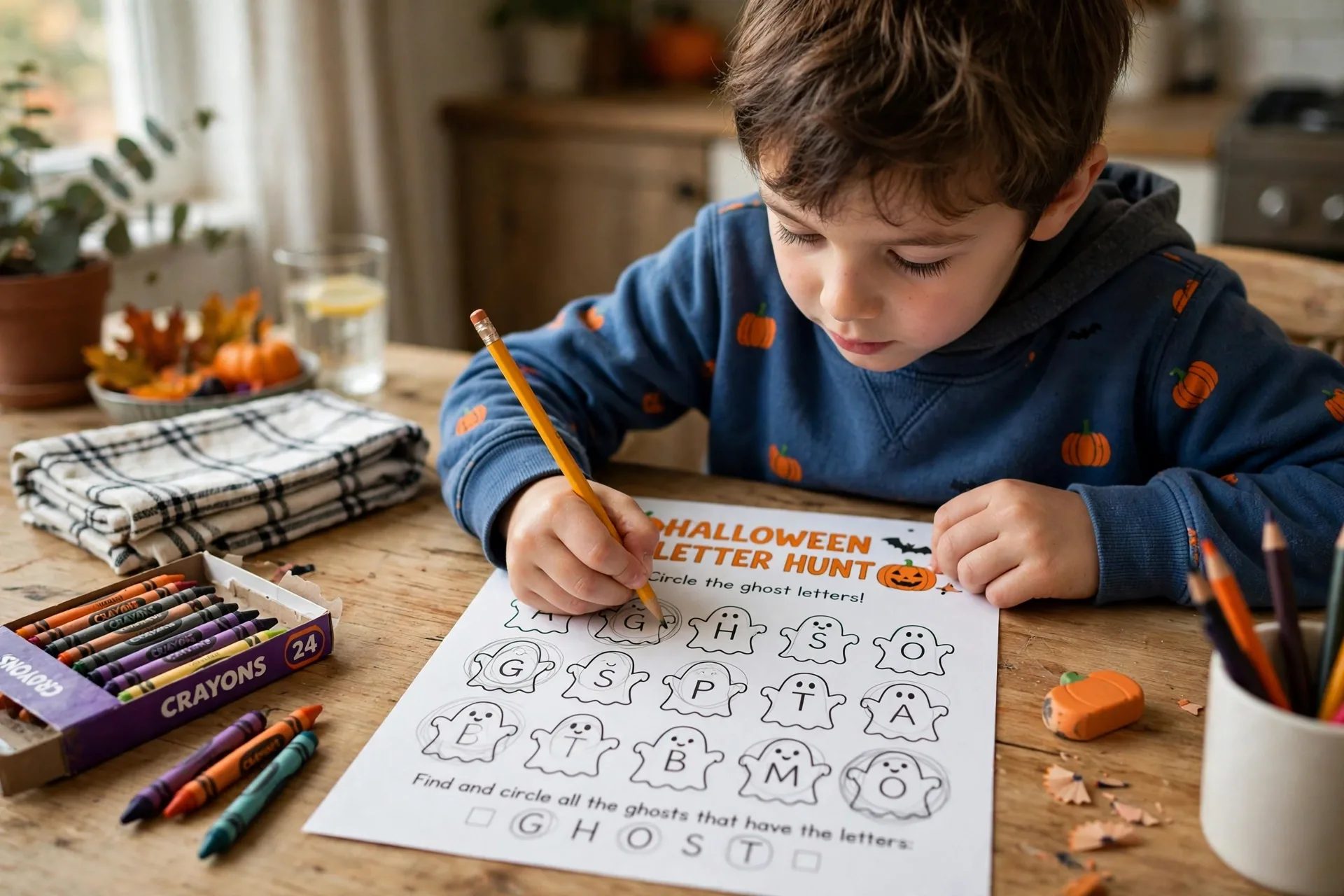
The ghosts are hiding the letters B and P among a whole field of letters. Color every B orange and every P purple, then count how many of each you found (the answer key has the totals — eight of each). Start with letters your child already knows if B and P feel random; the letters in their own name are always the best first hunt.
Pack 6: Trace the Alphabet (Ages 3–6)
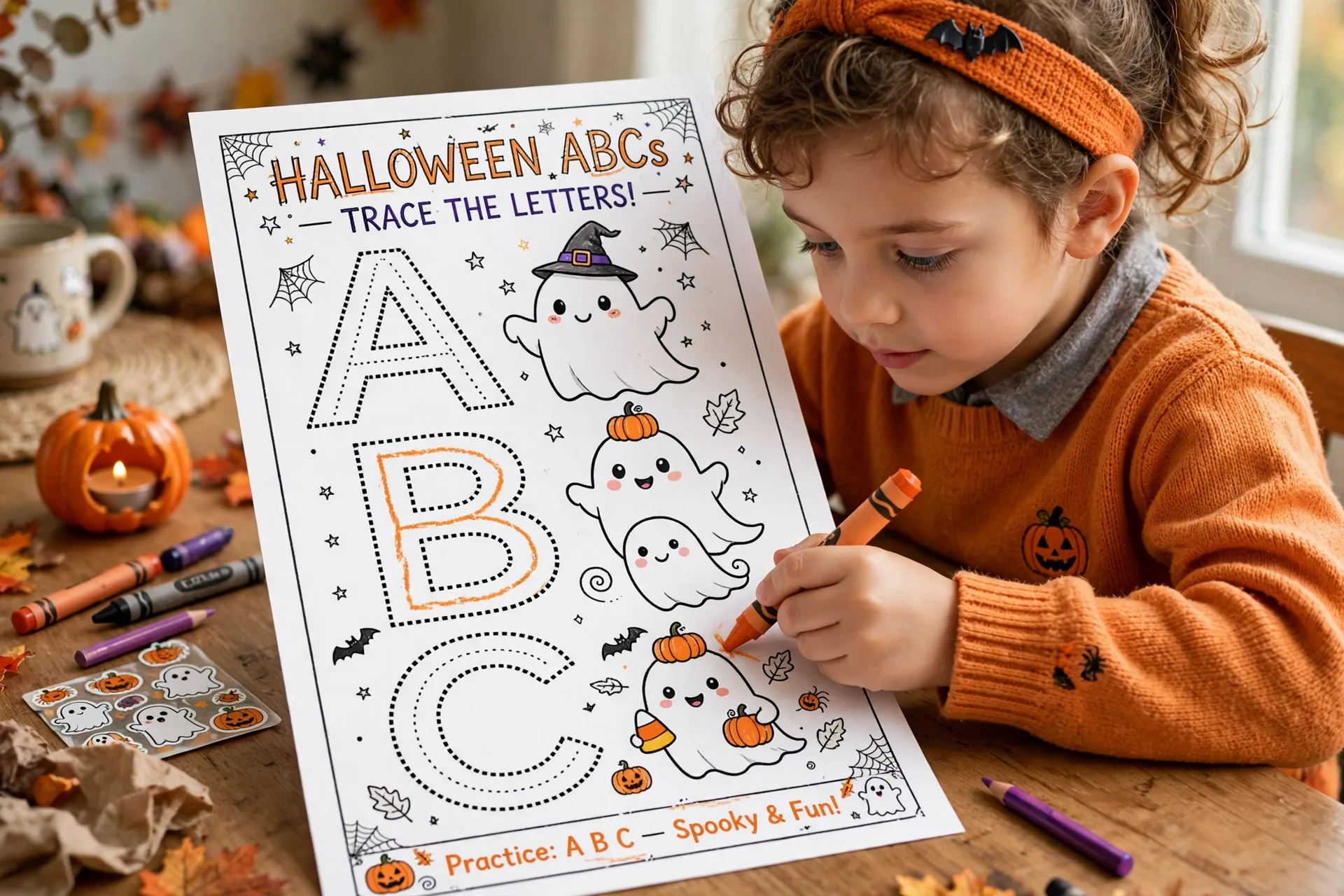
All twenty-six letters in traceable gray, with space at the bottom for the most important letter of all: the first letter of your child’s name, written big and proud. Whisper each letter’s name while tracing — A, B, C — slow and unhurried. For pre-writers, tracing the letters of their name ten times beats tracing the whole alphabet once.
Pack 7: Beginning Sounds Match (Ages 4–7)
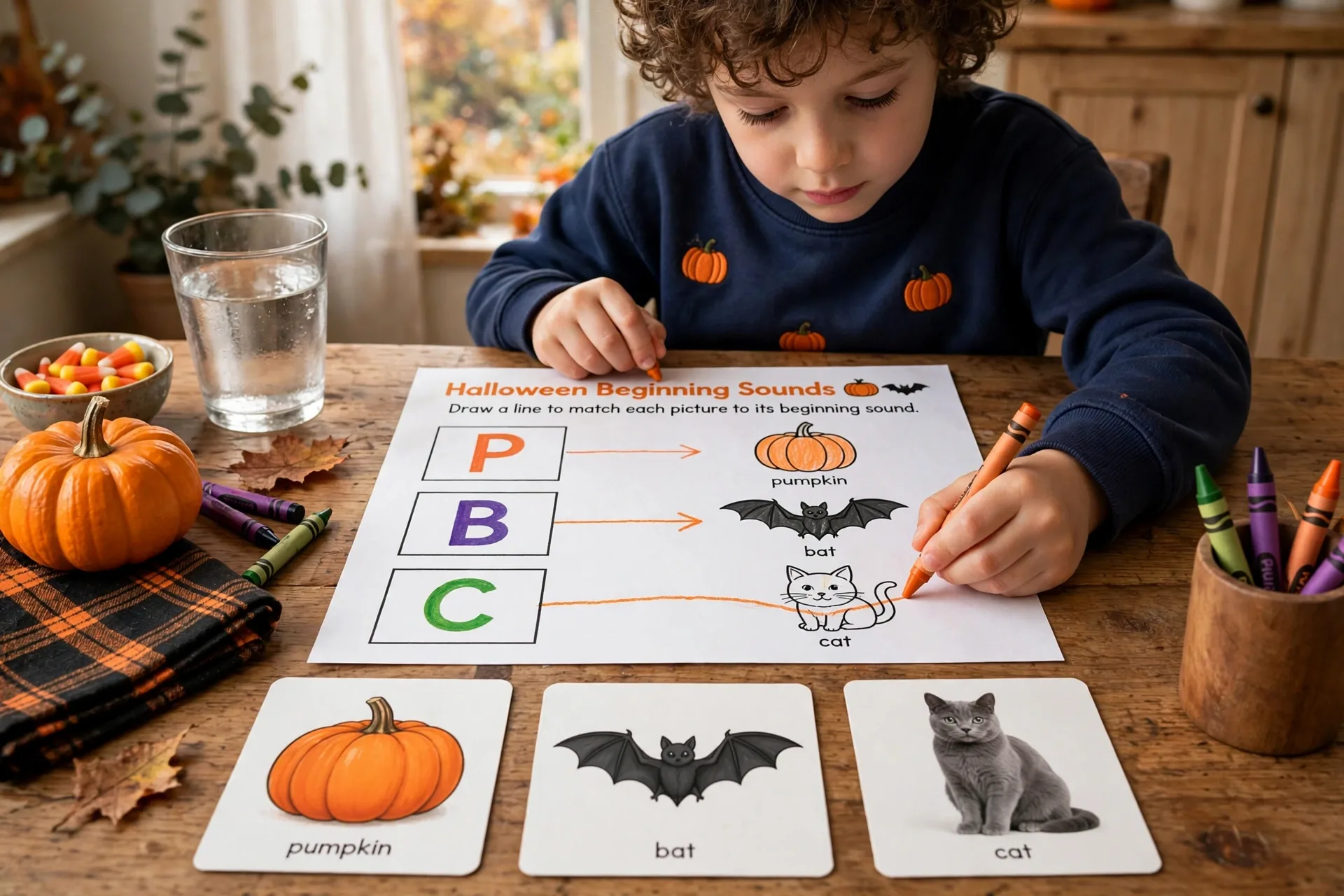
Six pictures — bat, pumpkin, ghost, witch hat, moon, candy — and six letters to match them to by first sound. Draw a line from each picture to its letter. The grown-up move: say each word stretched out slowly (“mmmm-oon”) and let little ears catch the first sound. This is the sheet that turns into a game at the dinner table — “what starts with B?” on repeat.
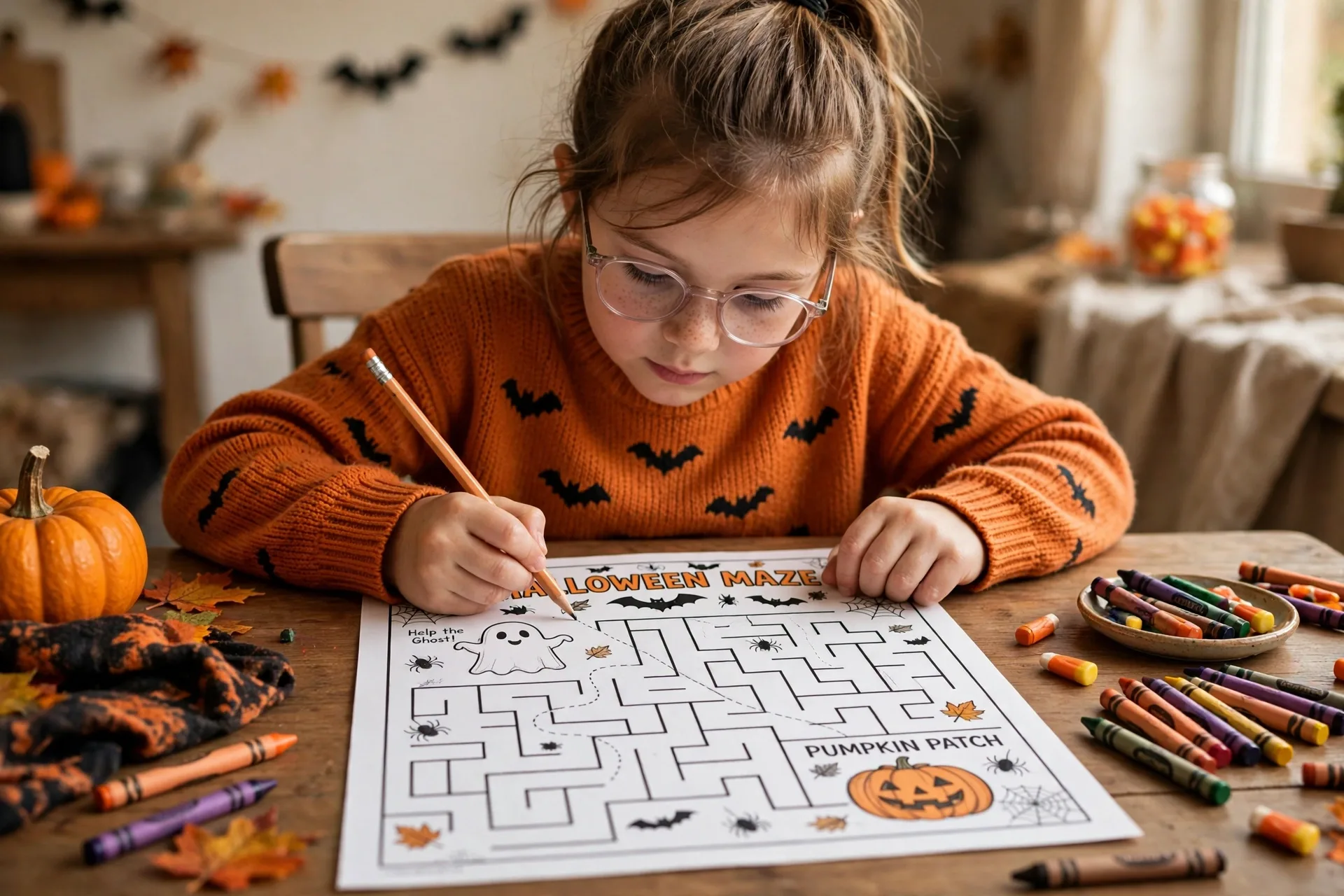
Pack 8: Halloween Maze (Ages 4–8)
Help the little ghost find the candy bucket. One winding path — a four-year-old can solve it with a finger first, then trace it with a crayon. Older kids get the speed challenge: solve it once slowly, then race the clock on a fresh print. Mazes are pencil-control workouts in disguise, and this one ends at candy.
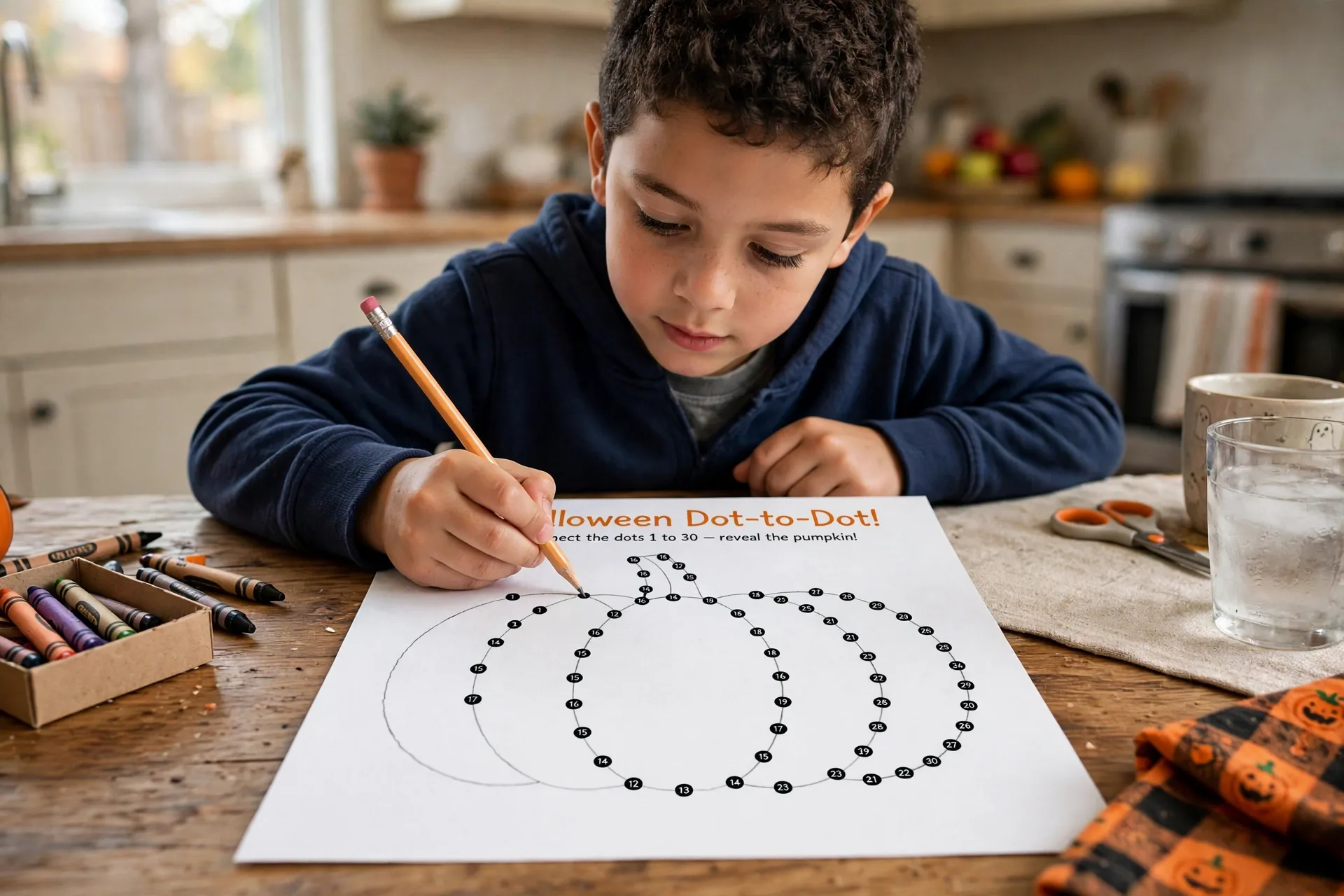
Pack 9: Dot-to-Dot Pumpkin (Ages 4–7)
Connect the dots from 1 to 24 and a pumpkin appears — then color it, give it a face, and name it. (Ours was named “Greg.”) Number order gets real practice here because skipping a dot visibly breaks the pumpkin. If 24 dots feels long, do the first twelve together and let them finish; the pumpkin still shows up.
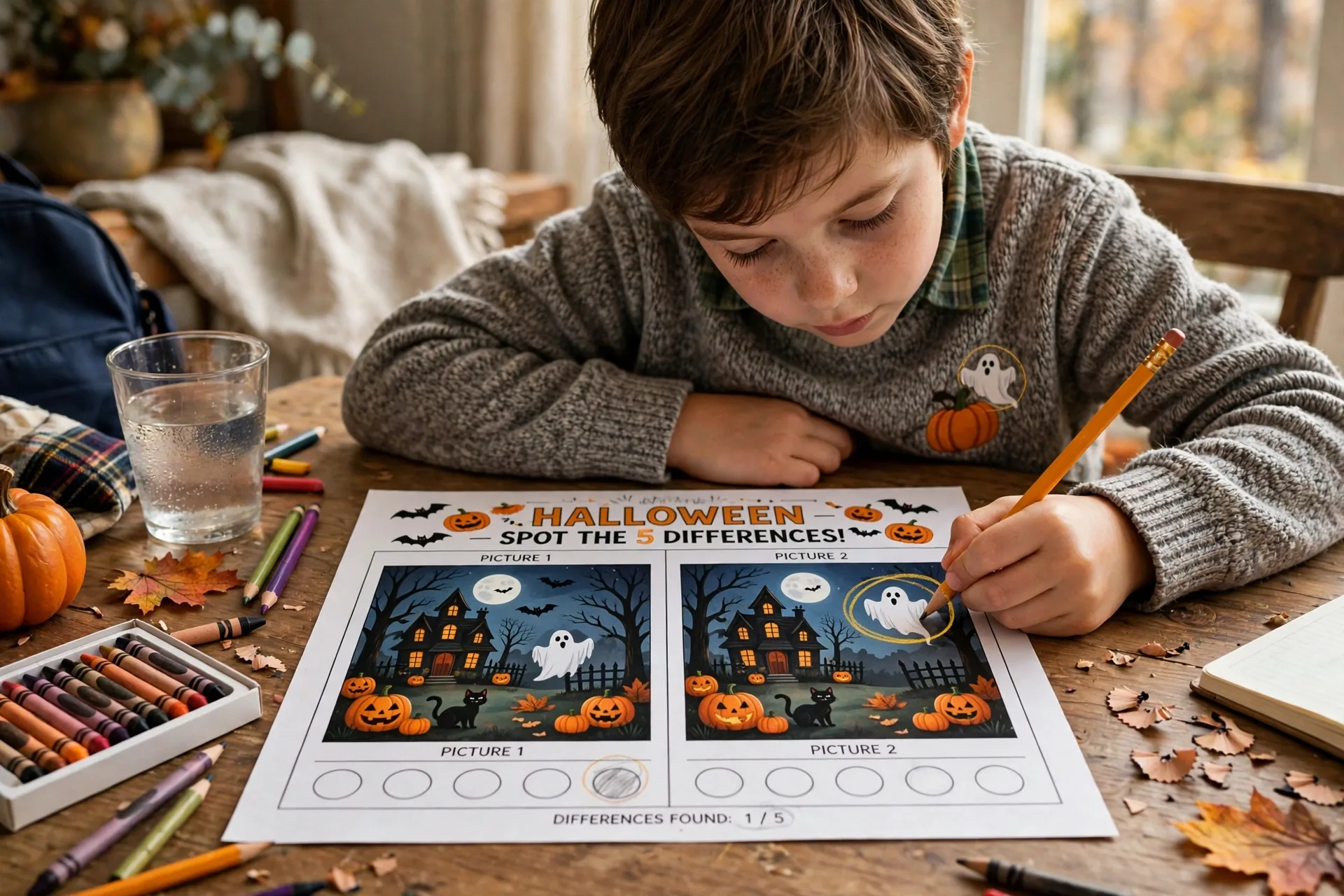
Pack 10: Spot the Difference (Ages 5–8)
Two Halloween scenes that look identical — except five things changed. The moon faces the other way, the pumpkin lost its face, a bat and a star went missing, and an extra candy corn snuck in. Circling all five takes genuine sustained focus, which is why this sheet buys the longest quiet stretch of the pack. Resist the urge to point; the struggle is the skill.
Pack 11: Cut & Paste Pumpkin Faces (Ages 3–6)
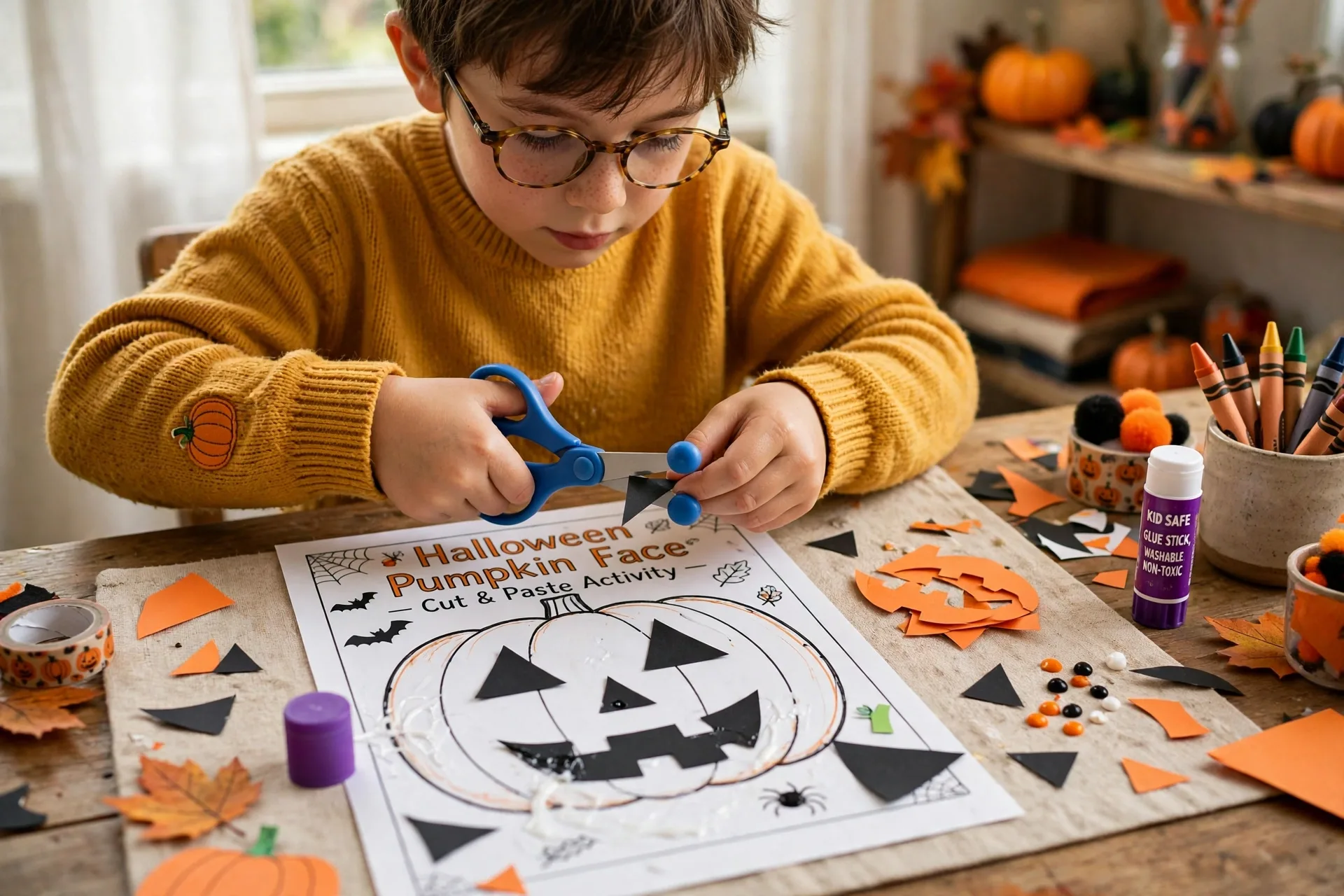
Six dashed pieces — round eyes, triangle eyes, two noses, a big smile, a zigzag grin — and one big blank pumpkin waiting for the silliest face your child can build. A grown-up does the cutting for little kids; the child does the arranging and pasting, which is where the creativity lives. Washable school glue keeps the table salvageable.
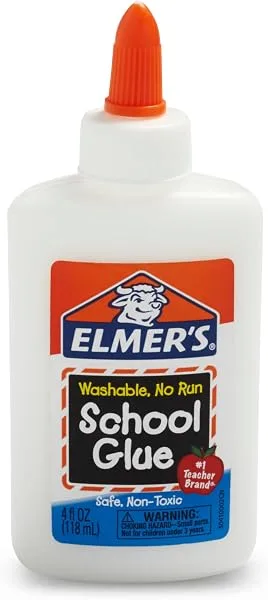
Elmer’s Washable School Glue — 4 oz
For the cut-and-paste pumpkin faces in Pack 11 — washable school glue that keeps little hands and the kitchen table salvageable.
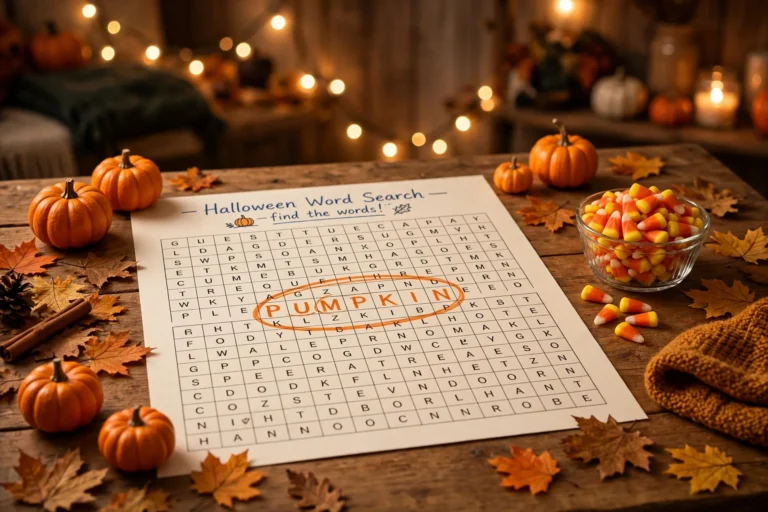
Pack 12: Word Search (Ages 6–8)
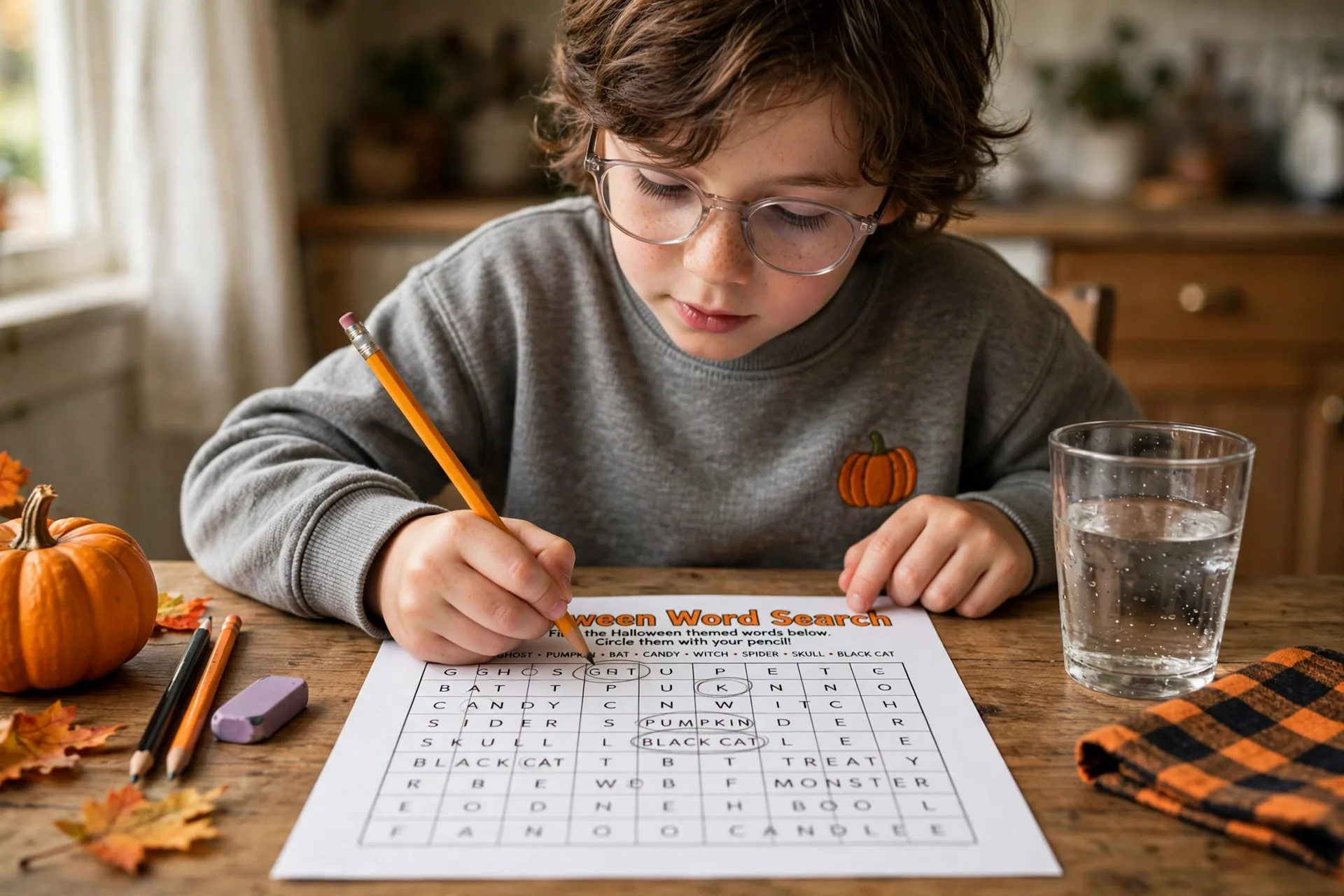
Six hidden words — BAT, CAT, GHOST, MOON, CANDY, WITCH — running across or down in an 8×8 grid. Read the word list together first. The rule that saves the day: hunt one word at a time, scanning for its first letter only. The answers are on the grown-up key — no peeking.
Pack 13: Halloween Patterns (Ages 4–7)
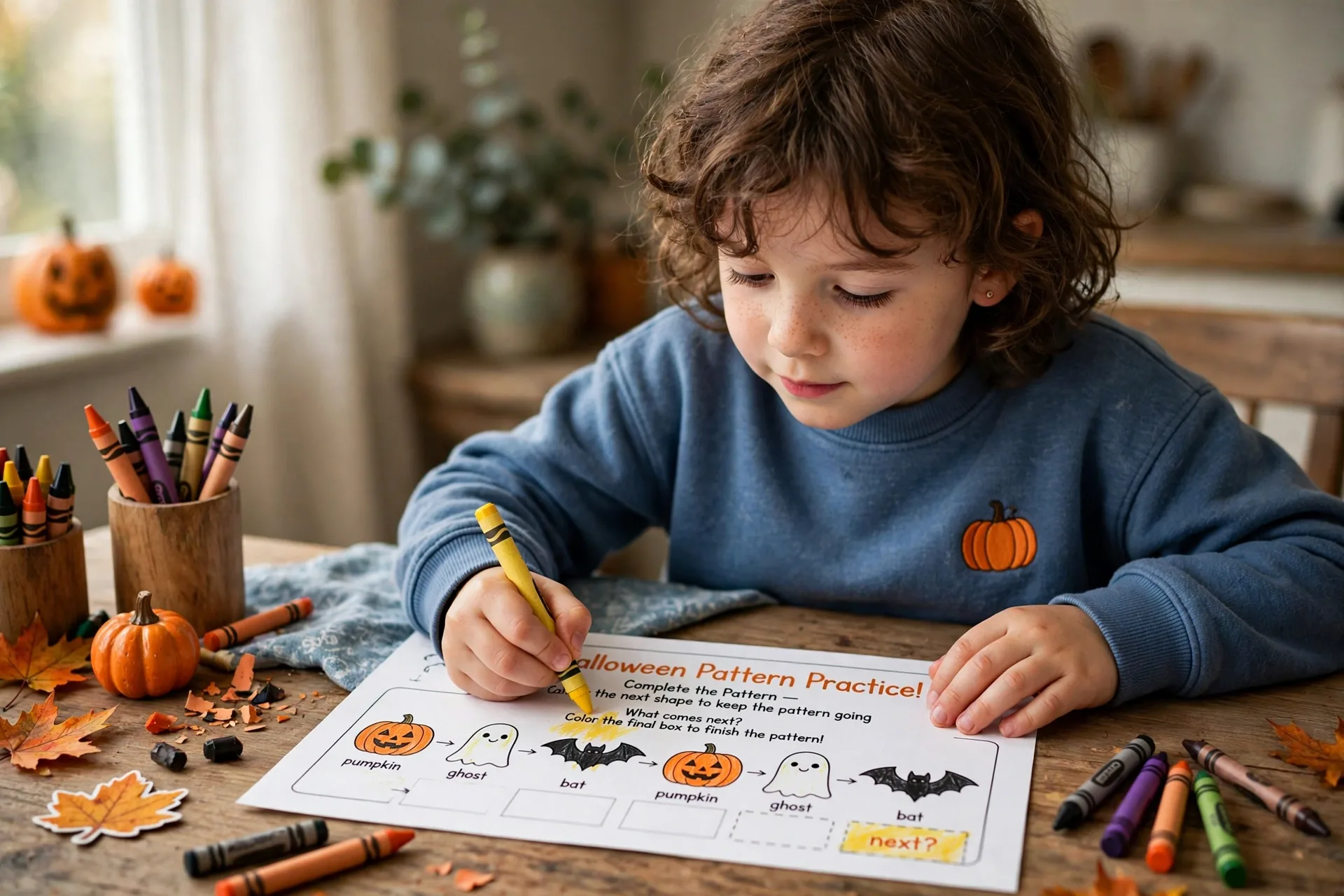
Four pattern rows — pumpkin-ghost, bat-bat-moon, candy-pumpkin-ghost, hat-moon-moon-hat — each with two empty boxes for what comes next. Say the pattern out loud together (“pumpkin, ghost, pumpkin, ghost…”) because hearing the rhythm makes the rule obvious. Patterns are early algebra wearing a costume, and this sheet is the friendliest introduction I know.
Pack 14: Color: Friendly Ghost (Ages 3–8)
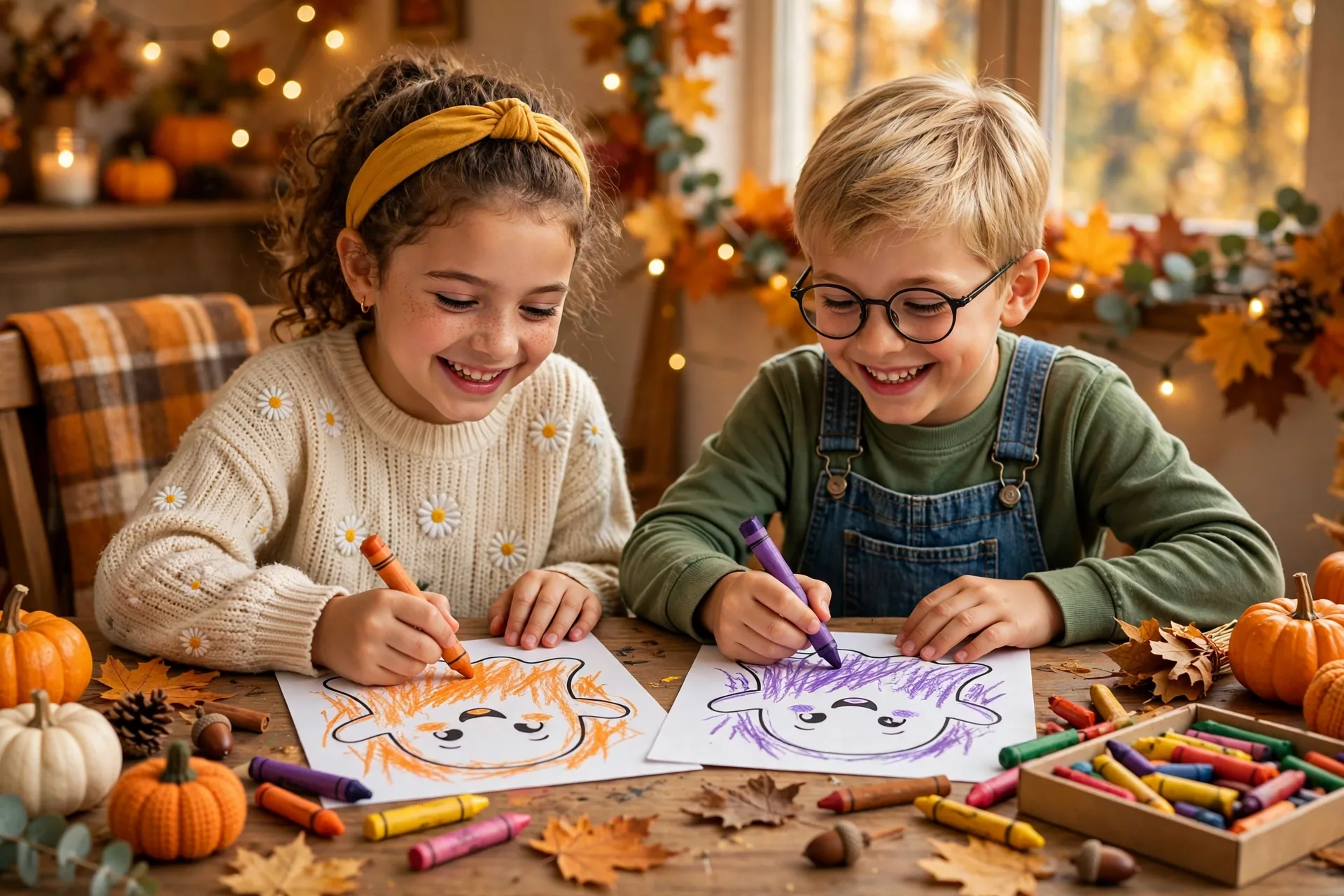
A big smiling ghost shouting BOO, with stars, a moon, and candy corn to fill in. The outlines are thick enough for a three-year-old’s crayon and interesting enough for an eight-year-old’s shading. House rule from our table: unexpected colors are celebrated — a purple pumpkin is a correct pumpkin.
Pack 15: Color: Trick-or-Treat Night (Ages 3–8)
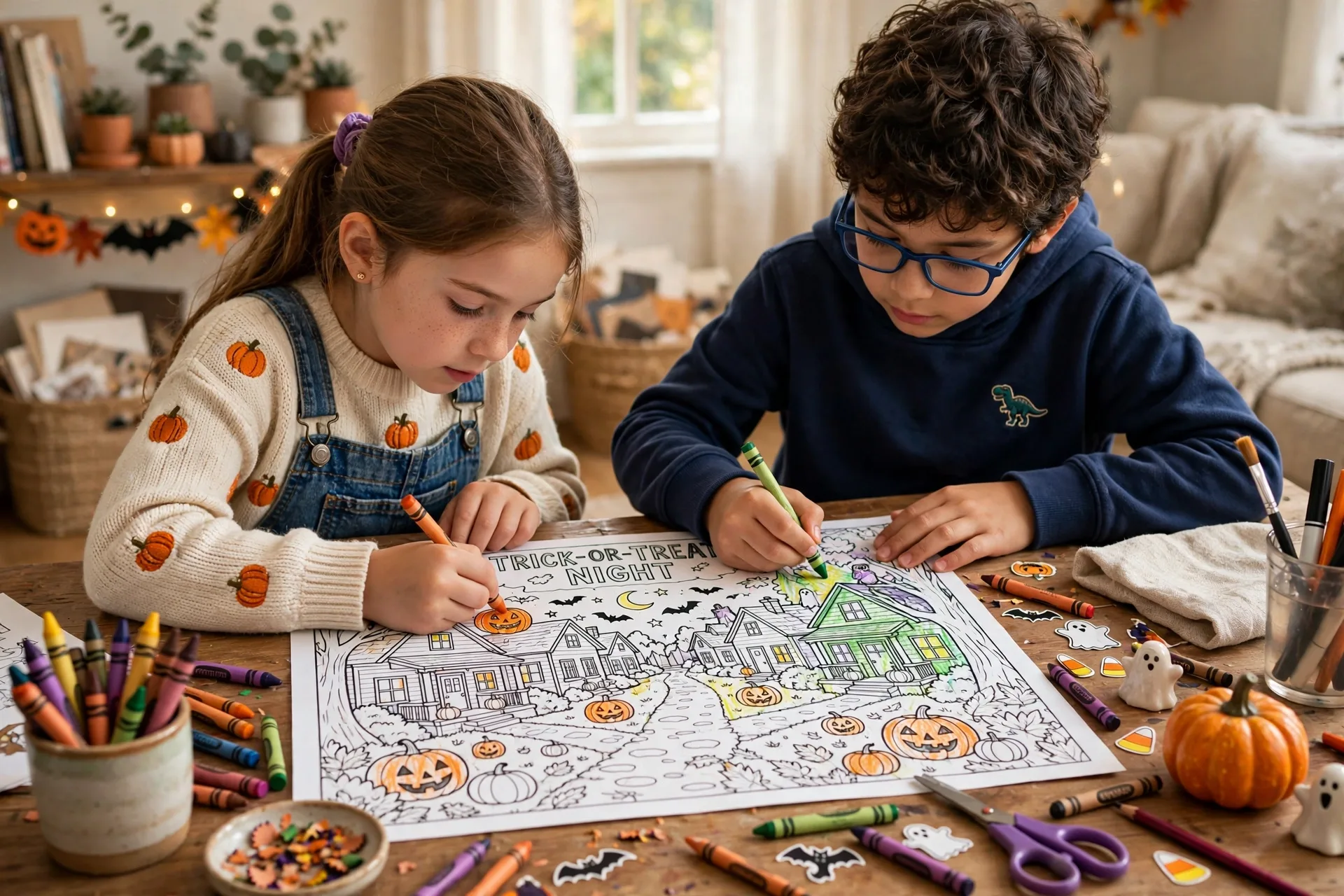
The finale: a whole Halloween night scene — jack-o’-lantern with a proper grin, friendly ghost, bats, crescent moon, candy corn, wrapped candy, and big “Happy Halloween!” lettering. This is the sheet that ends up on the fridge, so print it on the good paper. If your kids are painters, washable kids’ paint turns this into a full art session — it comes off little hands with soap and water.
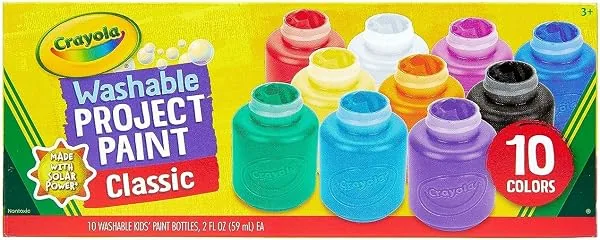
Crayola Washable Kids’ Paint — 10 Count
Turns the two coloring sheets (Packs 14–15) into a full art session — washable kids’ paint that comes off little hands with soap and water.
5 Ways to Use These Sheets
The calm-before-the-costume hour. The sixty minutes before trick-or-treating is pure feral energy — costumes half on, candy bowls being “quality tested.” Put the maze and a coloring sheet on the table and that energy has somewhere to land.
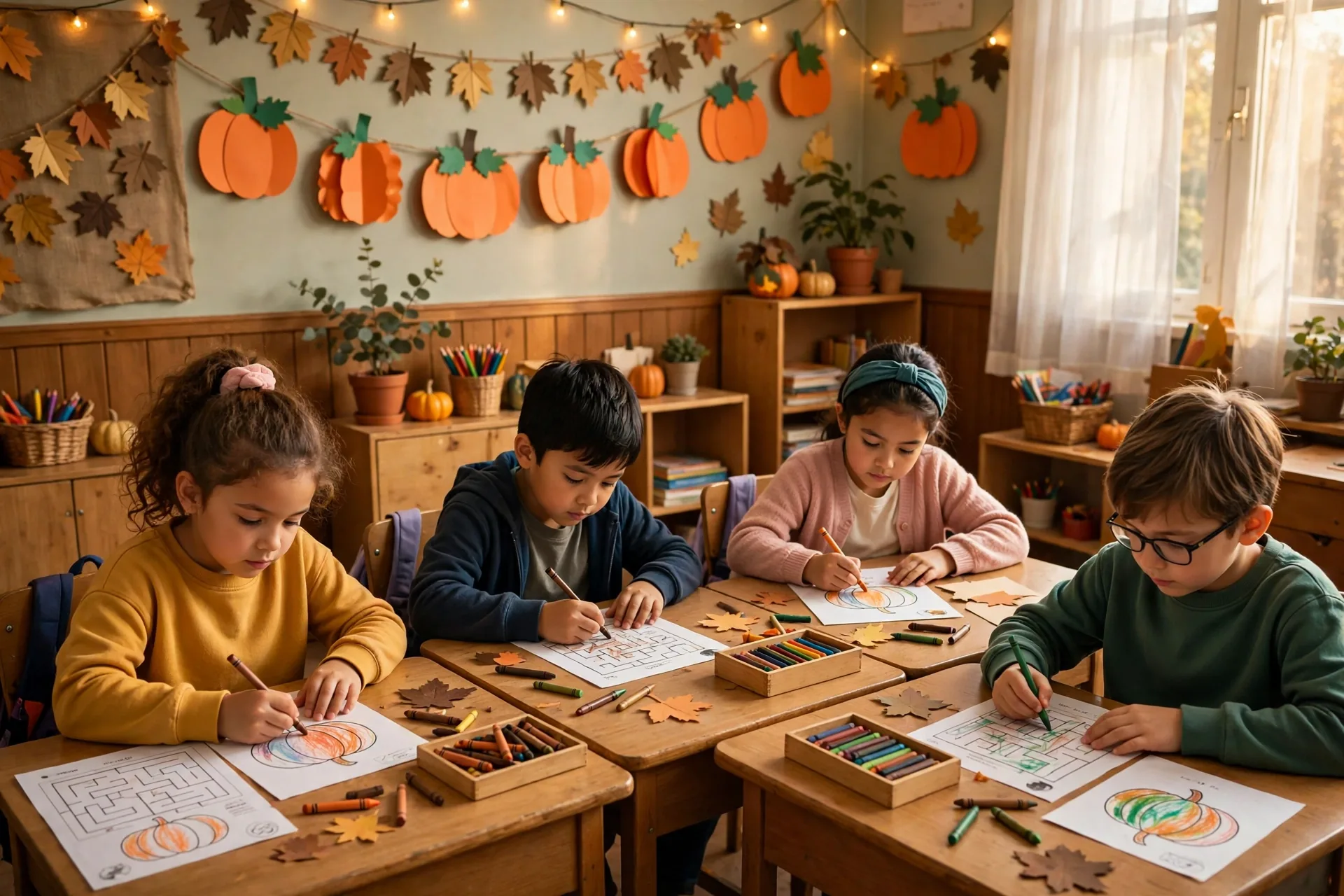
Classroom morning work. A stack by the door beats a chaotic ten minutes while everyone arrives. The counting and letter sheets work as morning work; the word search and spot-the-difference live in the early-finisher folder.
The homeschool centers. Literacy center: the letter hunt, alphabet tracing, and beginning-sounds match. Math center: I-Spy counting, count-and-write, patterns. Art table: both coloring sheets and the cut-and-paste faces.
The restaurant folder. Clipboard, three sheets, a pencil — the I-Spy and maze sheets have saved more restaurant dinners in our house than I can count.
The activity basket. Keep the printed pack in a basket by the couch for the whole month of October. Kids revisit favorites on their own, especially when the sheets are in dry-erase pockets.
What These Sheets Quietly Teach
Nobody prints a worksheet for the learning objectives, but they’re in there anyway. The counting sheets build one-to-one correspondence and cardinality — the understanding that the last number you say is how many there are. Tracing builds the pencil control and number/letter formation that handwriting needs later. The letter hunt and beginning-sounds match feed early reading: recognizing letters, then hearing the sounds they start with.
The puzzle sheets — I-Spy, word search, spot the difference, maze — train visual scanning and sustained attention, the exact muscles reading demands. Cut-and-paste builds scissor skills and hand strength; patterns sneak in sequencing and reasoning. And every finished sheet is visible proof to a small person that they can start something hard and finish it — which is the whole game, really.
Shop This Post
Everything mentioned in this guide, in one place:
| Product | Used For | Price |
|---|---|---|
| Epson EcoTank ET-2800 Printer | Printing all 15 worksheet packs plus test sheets — refillable tanks keep per-page ink cost tiny | Check Price |
| Crayola Construction Paper — 480 Sheets | Printing the sheets; marker-proof paper + festive colored backing | Check Price |
| Elmer’s Washable School Glue — 4 oz | Cut-and-paste pumpkin faces (Pack 11) | Check Price |
| Crayola Washable Kids’ Paint — 10 Count | Painting the coloring sheets (Packs 14–15); washes off hands with soap and water | Check Price |
Frequently Asked Questions
What ages are these Halloween worksheets for? The pack spans ages 3 to 8. The tracing and cut-and-paste sheets fit preschoolers (3–5), the counting and letter sheets fit ages 4–7, and the word search and spot-the-difference challenge ages 6–8. Readiness matters more than the number — start where your child feels comfortable.
Do I really not need an email address to download it? Correct — no signup, no inbox. The download button gives you the whole 17-page PDF directly: the cover, all fifteen activity sheets, and the grown-up answer key on the last page.
Do I have to print all 15 sheets? No. Print the ones that fit your child right now, or print the whole pack for a classroom or activity basket. Start with the sheet that matches your child’s age in the table above.
Can the sheets be reused? Yes. Slip printed sheets into dry-erase pockets or laminate them, then use dry-erase markers — the counting, letter, maze, and word-search sheets wipe clean and work again.
Can teachers use these in the classroom? Absolutely — they’re free for home and classroom use. They work as morning work, math and literacy centers, early-finisher folders, and party-day calm. Print the answer key once for your desk.
Which sheet should my 3-year-old start with? Trace the Numbers or Trace the Alphabet — big shapes, no wrong answers, five happy minutes. The cut-and-paste pumpkin faces are the other perfect first sheet (you cut, they arrange and paste).
What if a sheet is too hard? Adjust the activity, not the child: do half the sheet, model the first item together, let them answer out loud, or hand them counters to make counting physical. Drop back one sheet and try again next week — a sheet finished together beats a sheet abandoned alone.
Print One Tonight
Pick the sheet that matches your kid’s age, hit print at Actual size, and put it on the table while dinner cooks. Fifteen minutes of setup buys a genuinely quiet half hour — the best trade in all of October.
Then keep the finished sheets. Tuck the best coloring page in the Halloween box with the costumes. Next year, when you unfold a ghost colored entirely orange, you will be very glad you did not throw it out. Happy Halloween, mama.
More Halloween fun for kids