
My Big Fat Bollywood Baby Shower: Whats a Bangle Ceremony Valaikappu?
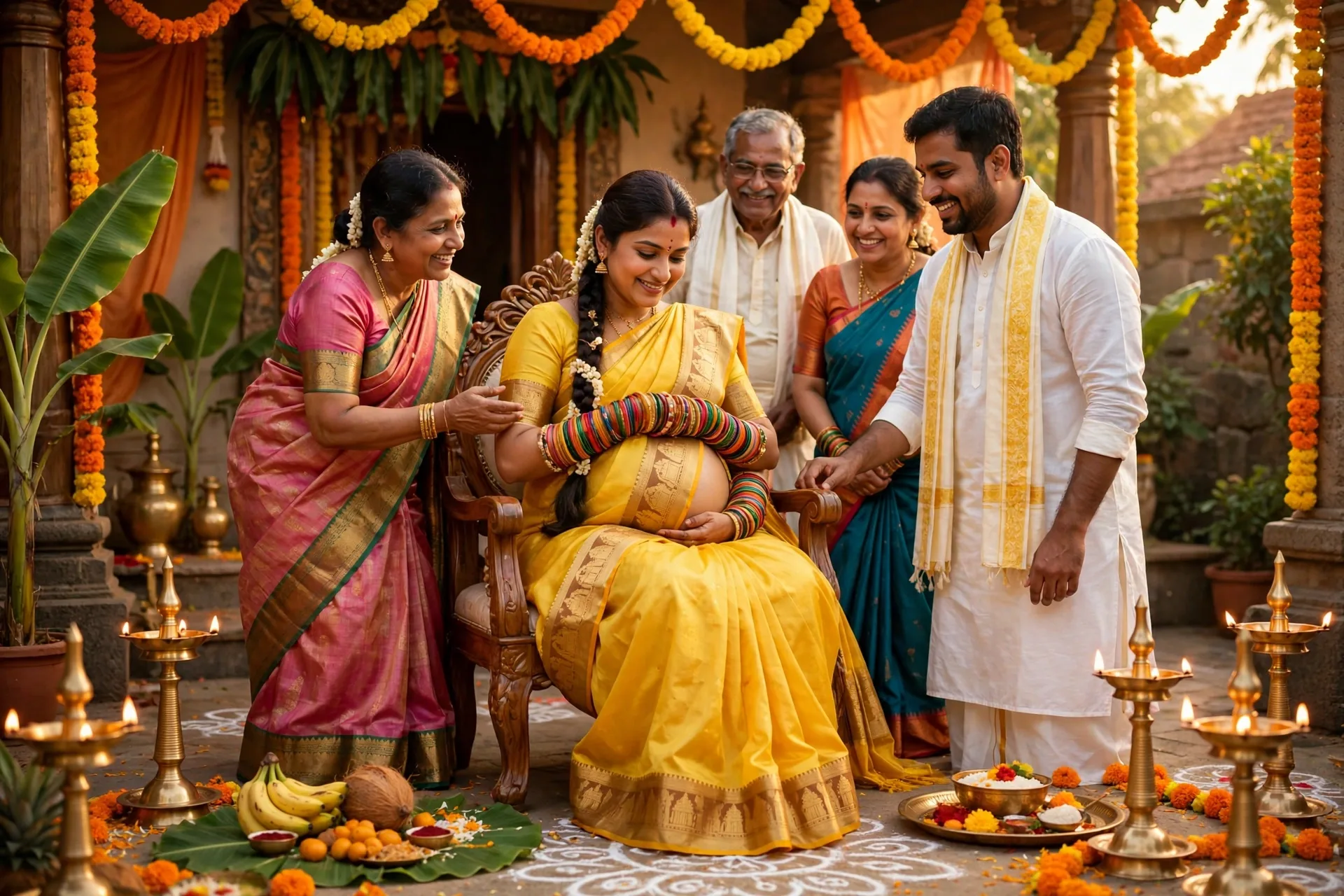
If you have ever watched a Bollywood baby shower scene, you have probably seen a valaikappu without knowing its name. The mom-to-be sits in the middle of the room in a bright silk saree, her arms slowly filling with glass bangles while the women around her sing. It looks like a party, and it is one, but underneath the color it is a blessing: a room telling a new mother she is loved and protected.
This guide explains what a valaikappu is, when it happens, what actually takes place, and how to host one yourself, whether your family has done this for generations or you are planning your very first one.
Heads up: this post contains affiliate links. If you buy through them, MamaKinder may earn a small commission at no extra cost to you.
Plan It in Three Anchors
Do not try to do everything here. Pick three anchors: the ceremony done properly, one backdrop guests photograph, and a feast nobody forgets. A small home valaikappu runs about $80 in supplies, a full one about $250, plus catering.
Quick Picks: Find Your Valaikappu Fast
| If this is your valaikappu… | Start with |
|---|---|
| First time hosting | What Is Valaikappu, the ceremony steps, and the planning timeline |
| Mostly the ritual | The ceremony steps, offerings and seer trays, and the outfit |
| A big Bollywood party | Decor, the feast, and music and games |
What Is Valaikappu, Exactly?
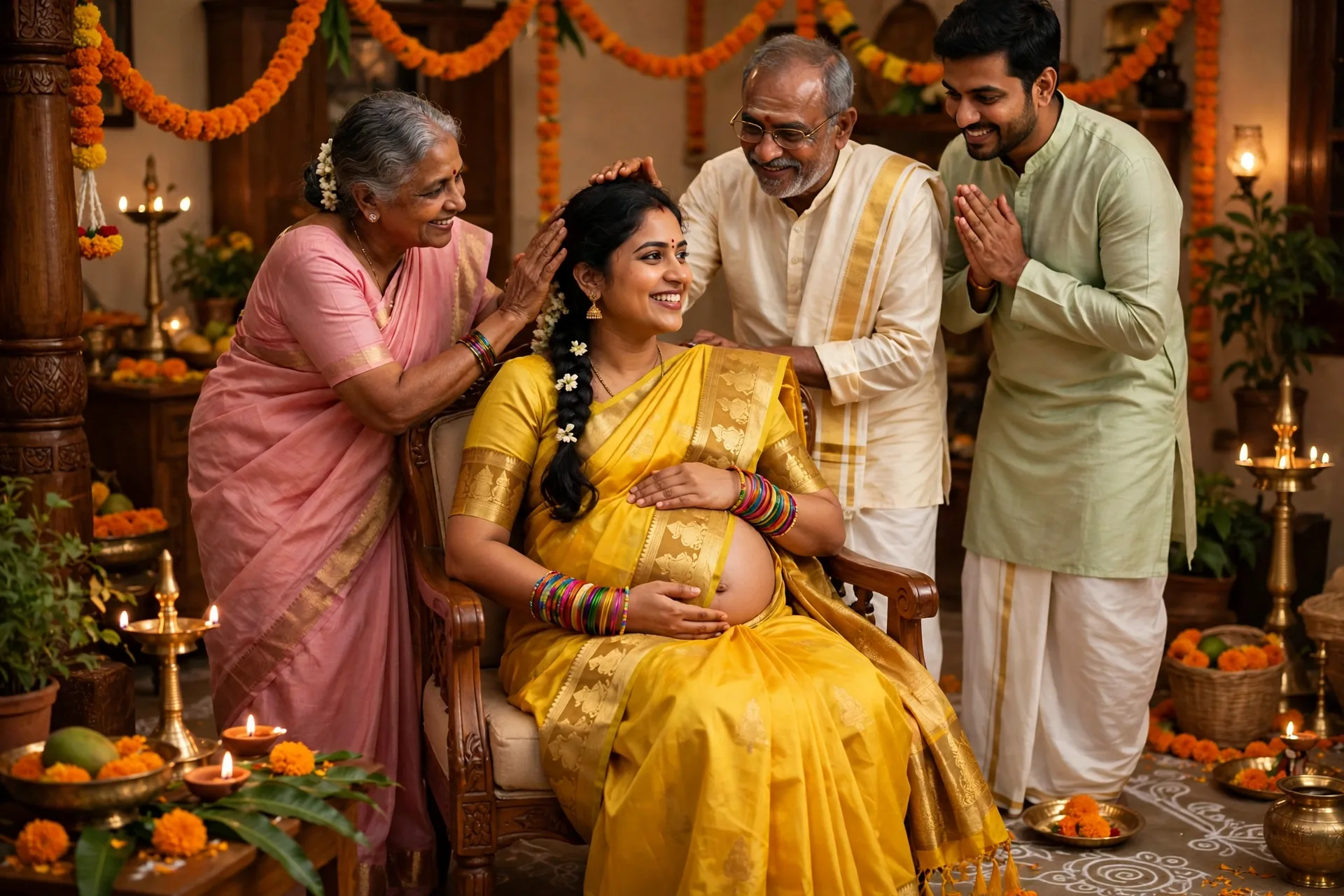
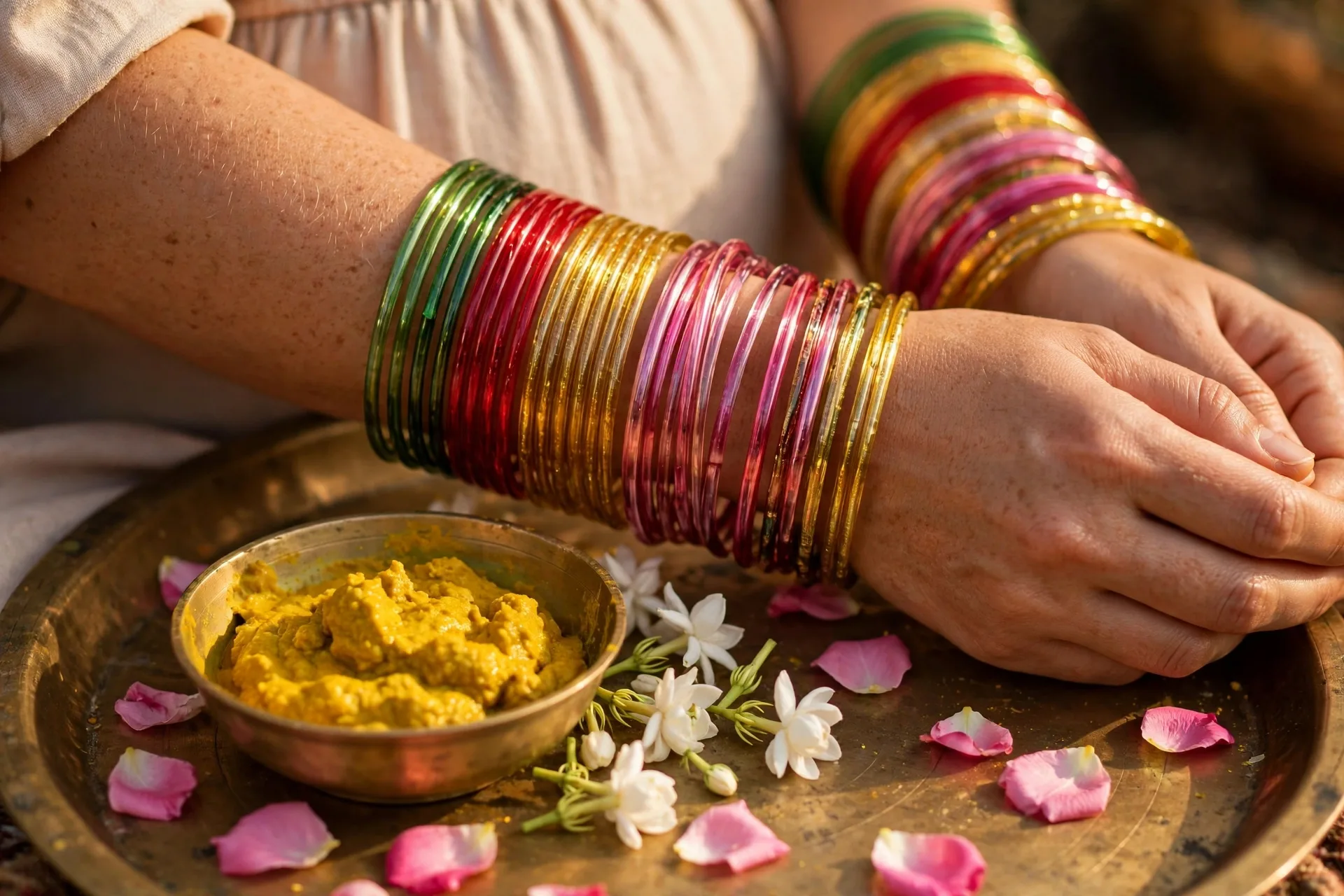
Valaikappu is the Tamil bangle ceremony, the South Indian baby shower. The name says it in two words: valai means bangles, kappu means protection. During the ceremony, the women of the family slide glass bangles onto the mom-to-be’s arms, one after another, until her arms are covered, a blessing and a shield for mother and baby.
Tamil tradition says the gentle music of the glass bangles can be heard by the baby in the womb. The bangles stay on until the mother is ready to deliver, and many moms keep a few gold bangles forever. A valaikappu is a social ceremony first, hosted by the mother of the mom-to-be, at home or in a small hall: the women gathering around one pregnant woman and covering her with love.
When Is a Valaikappu Held?
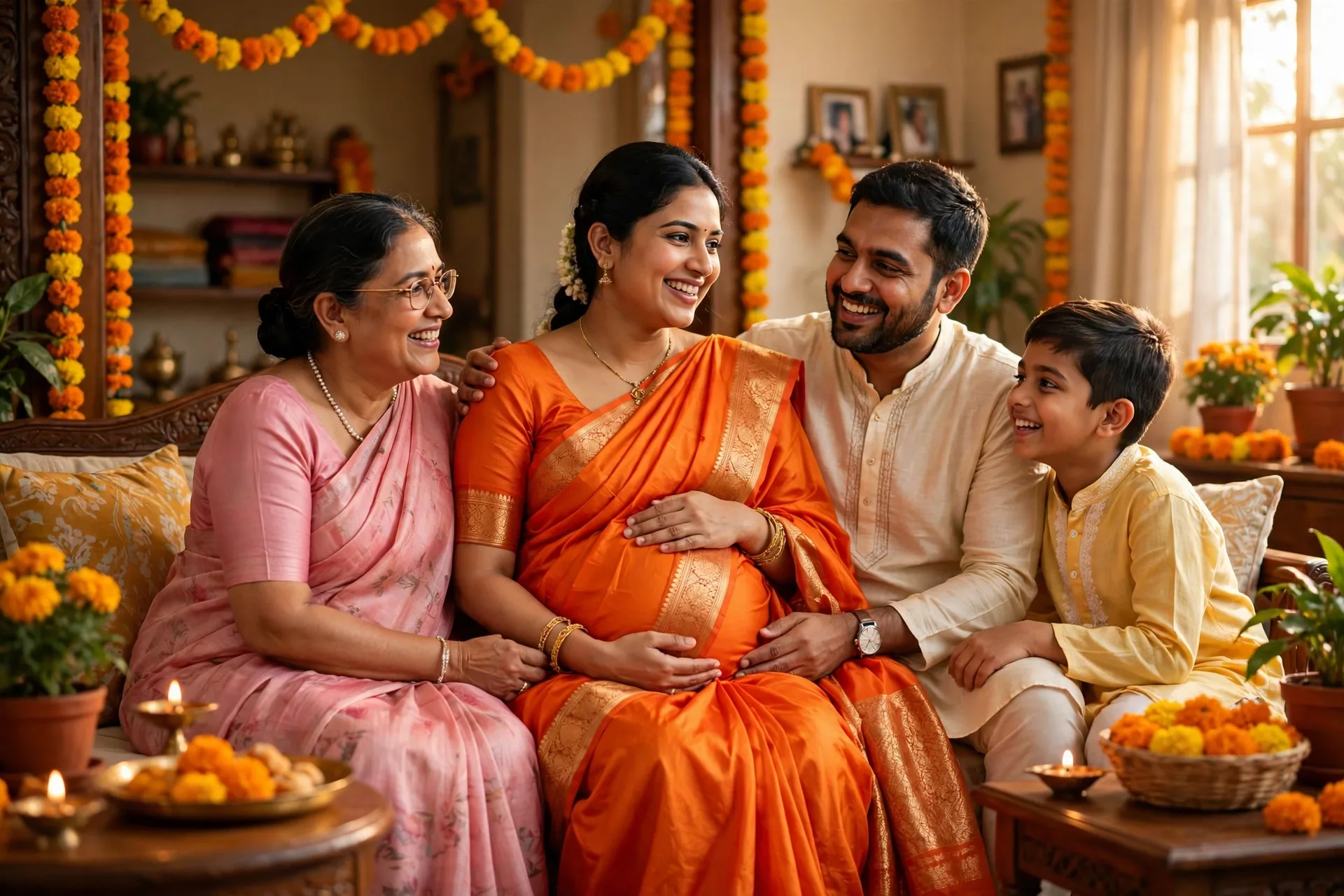
A valaikappu is held in the third trimester, in an odd month: the seventh month or the ninth. Most families choose the seventh month, because the ninth can cut it too close to delivery. Pick an auspicious day with an elder or a priest, and hold it in the morning. The ritual takes one to two hours.
The odd-number rule runs through the whole day: offerings in odd numbers, usually 9 or 11 pieces of fruit, and the bangles on each hand in odd numbers too, a different count on each hand. Ask one elder to keep the count and everyone else follows her lead. If the mom-to-be has gestational diabetes, plan the menu around her and keep snacks and water within reach.
Valaikappu vs Seemantham: What Is the Difference?
Valaikappu and seemantham often happen on the same day, and they are easy to mix up. Valaikappu is the bangle ceremony: social, joyful, centered on the women blessing the mom-to-be with bangles. Seemantham is the religious ceremony: longer, led by a priest, with chanting and a fire ritual.
The valaikappu usually happens in the morning and the seemantham follows, the same day or the next. The seemantham is usually hosted by the in-laws, the valaikappu by the mom-to-be’s own mother. If your family only does one, do the valaikappu: the one guests remember, the one with the bangles. Ask one elder to lead while everyone else follows.
The Ceremony, Step by Step
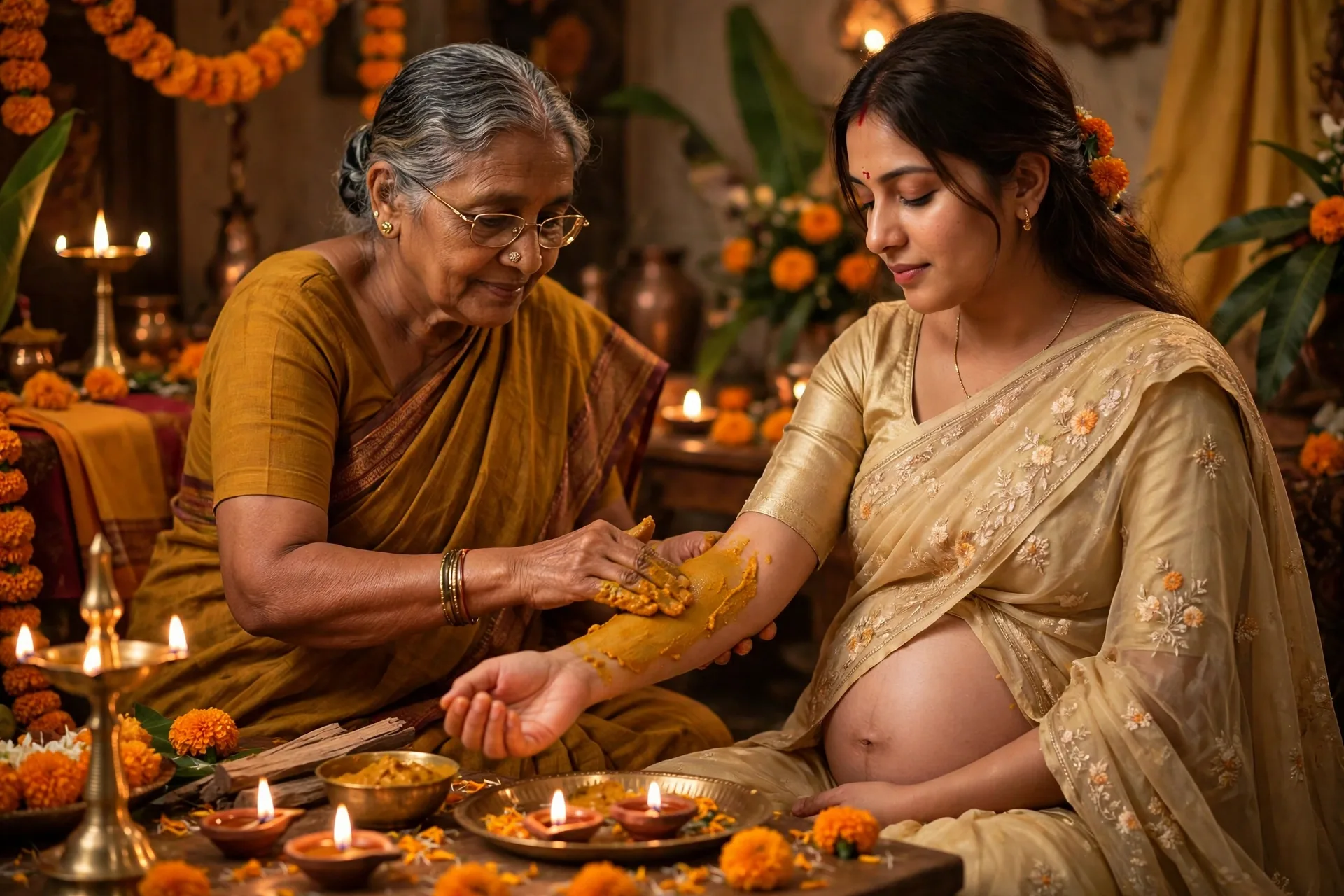
The ceremony starts with the oil lamps. Someone lights the deepam, the brass lamps, and the room fills with the warm smell of oil and incense. Then a short prayer to Lord Ganesha, because no Tamil ceremony begins without him. The mom-to-be sits facing east, in her new saree, with the trays in front of her.
Then everyone forms a line, with three steps each. First, turmeric and sandalwood paste on her arms and face, and a little kumkum on her forehead. Second, glass bangles slid onto her arms. Third, a shower of flowers and uncooked rice, called akshadai, and a blessing out loud. The father-to-be goes first, then family, then every guest, until her arms are covered. It closes with aarti, the waving of the lamp to ward off the evil eye, and then the feast begins.
The lamps stay lit through the whole ceremony, so use a proper set: a Brass Five Face Diya Traditional Pooja Oil Lamp, Set of 2 gives you the classic five-face shape in solid brass, and two of them frame the mom-to-be’s seat beautifully.
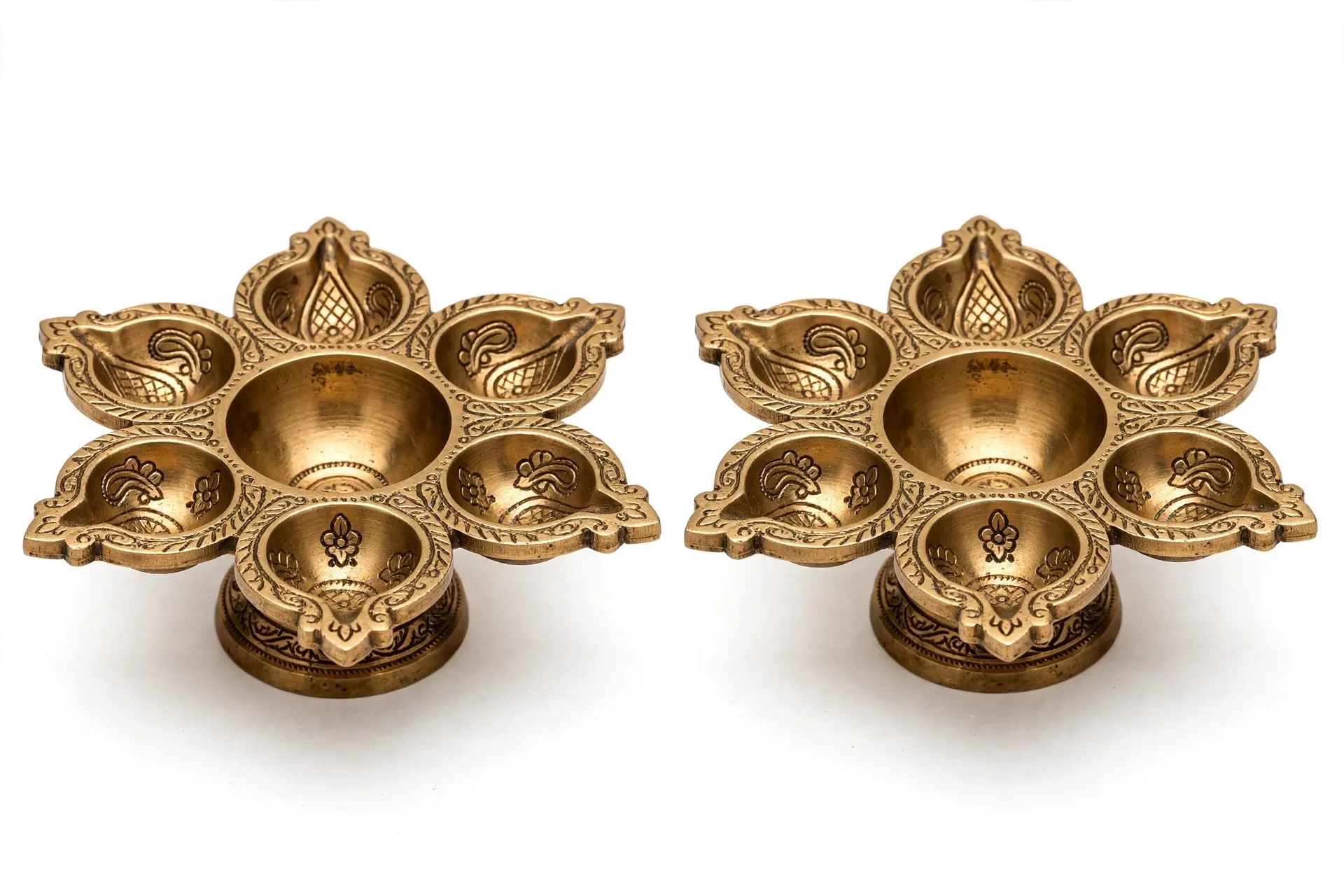
Brass Five Face Diya Traditional Pooja Oil Lamp, Set of 2
A set of 2 traditional five-face brass diya oil lamps, 2 by 2 by 2.5 inches, for pooja and festive decor.
Buy the bangles in sets: one mom-to-be can wear dozens, and every woman in the room gets bangles too. A PRIYA KANGAN Traditional Indian Handcrafted Glass Bangles set gives you handcrafted glass bangles with gold glitter detailing in deep red, maroon, and green.
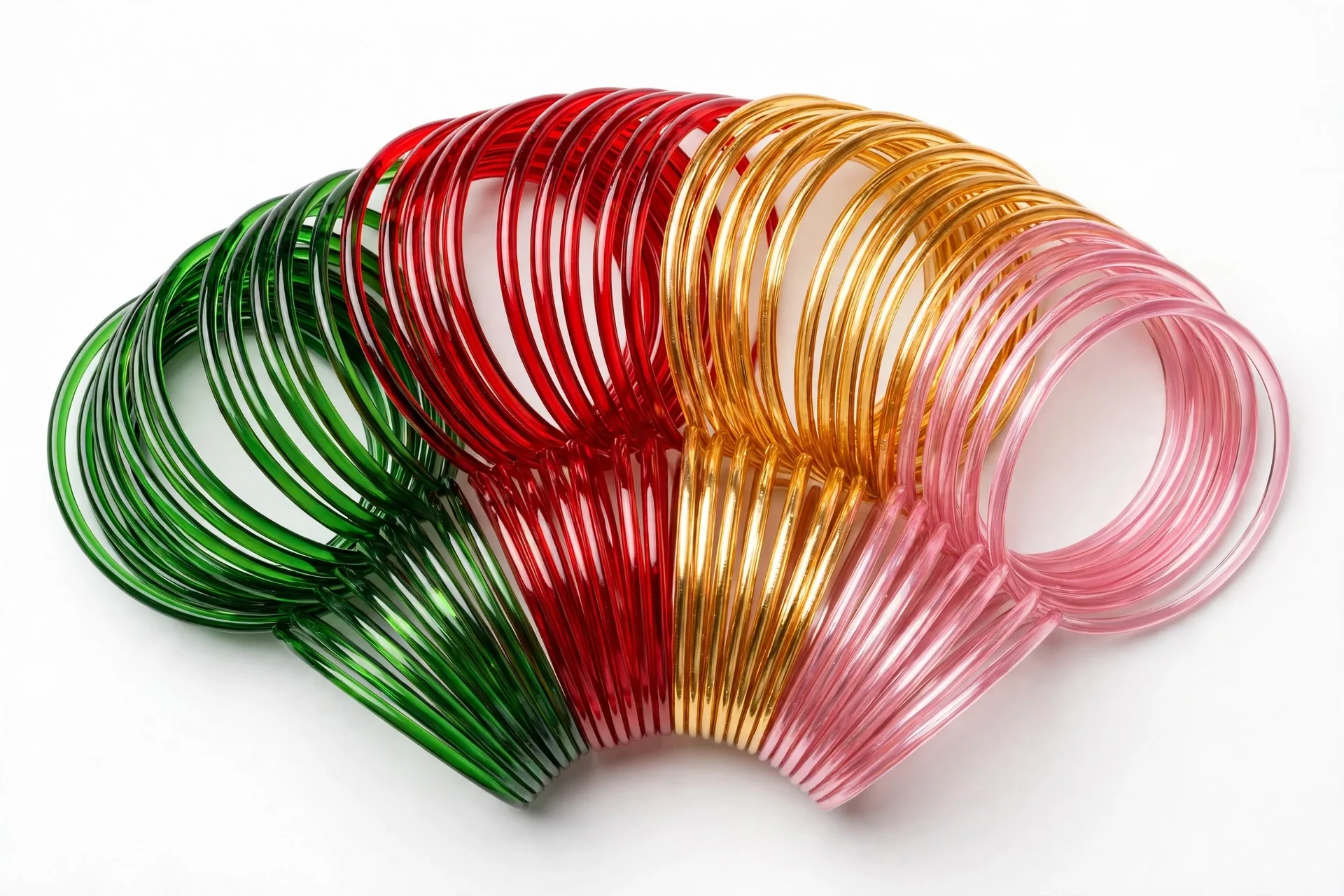
PRIYA KANGAN Traditional Indian Handcrafted Glass Bangles
Traditional handcrafted Indian glass bangles with gold glitter design, in deep red, maroon, and green.
What the Mom-to-Be Wears
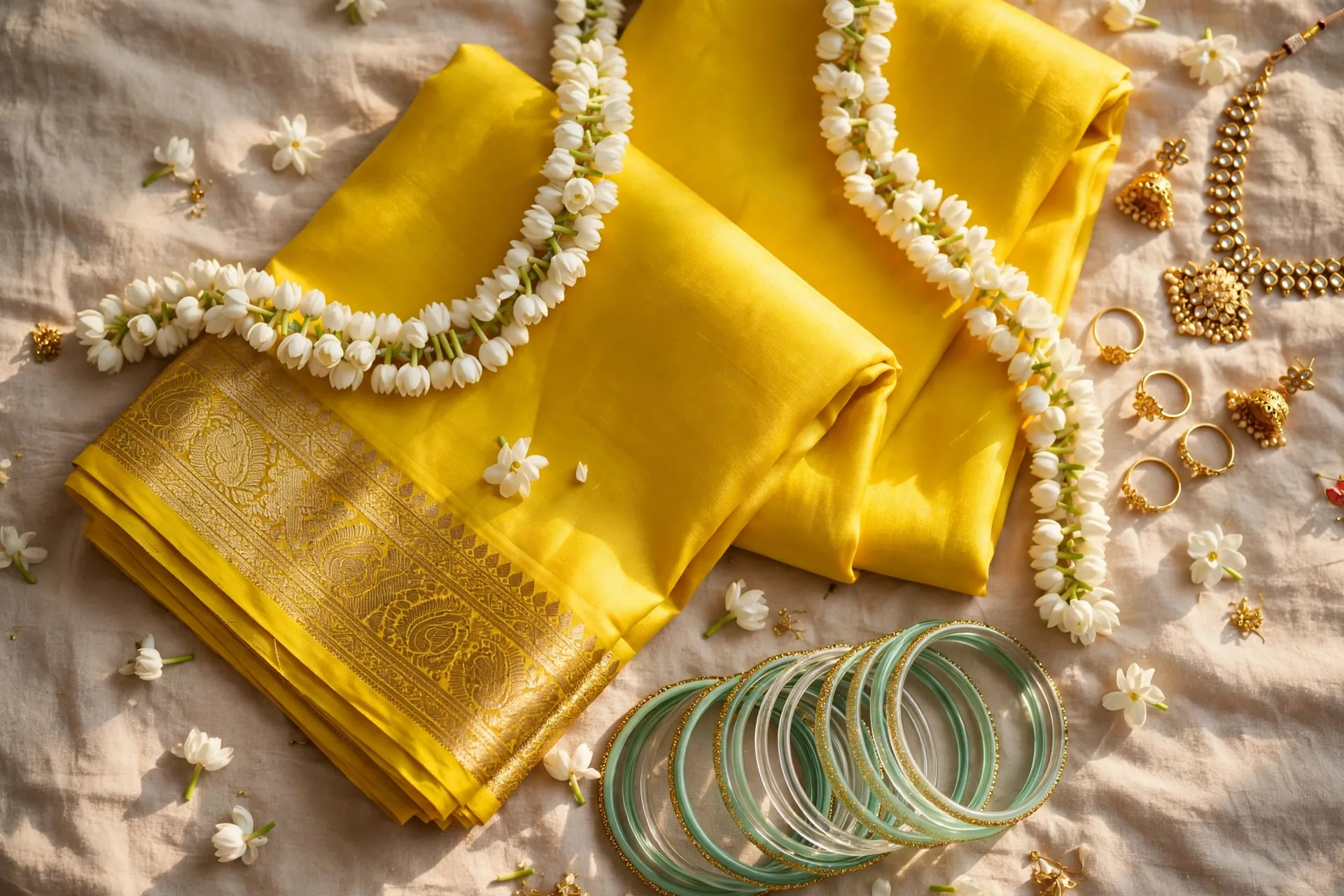
The mom-to-be gets all dressed up. She wears a new silk saree, traditionally given by her own mother, in yellow or orange, the lucky colors. Pink and green are popular now too: wear the color that makes her glow. A Kanjeevaram silk saree with a gold zari border is the classic choice.
Jasmine flowers go in her hair: their smell reminds Tamil families of weddings. She wears her gold jewelry, and the family often gifts her one more piece. A silk saree over a seven-month bump takes practice: over the bump is more comfortable, under it looks cuter in photos. Henna is customary on her hands and feet, best done the day before. A Neeta 4 Pack 100% Natural Ready to Use Henna Paste Cones gives you ready-to-use cones for drawing designs, and the listing says they are made from 100 percent pure henna leaves with no chemical dye. Do a small patch test first.
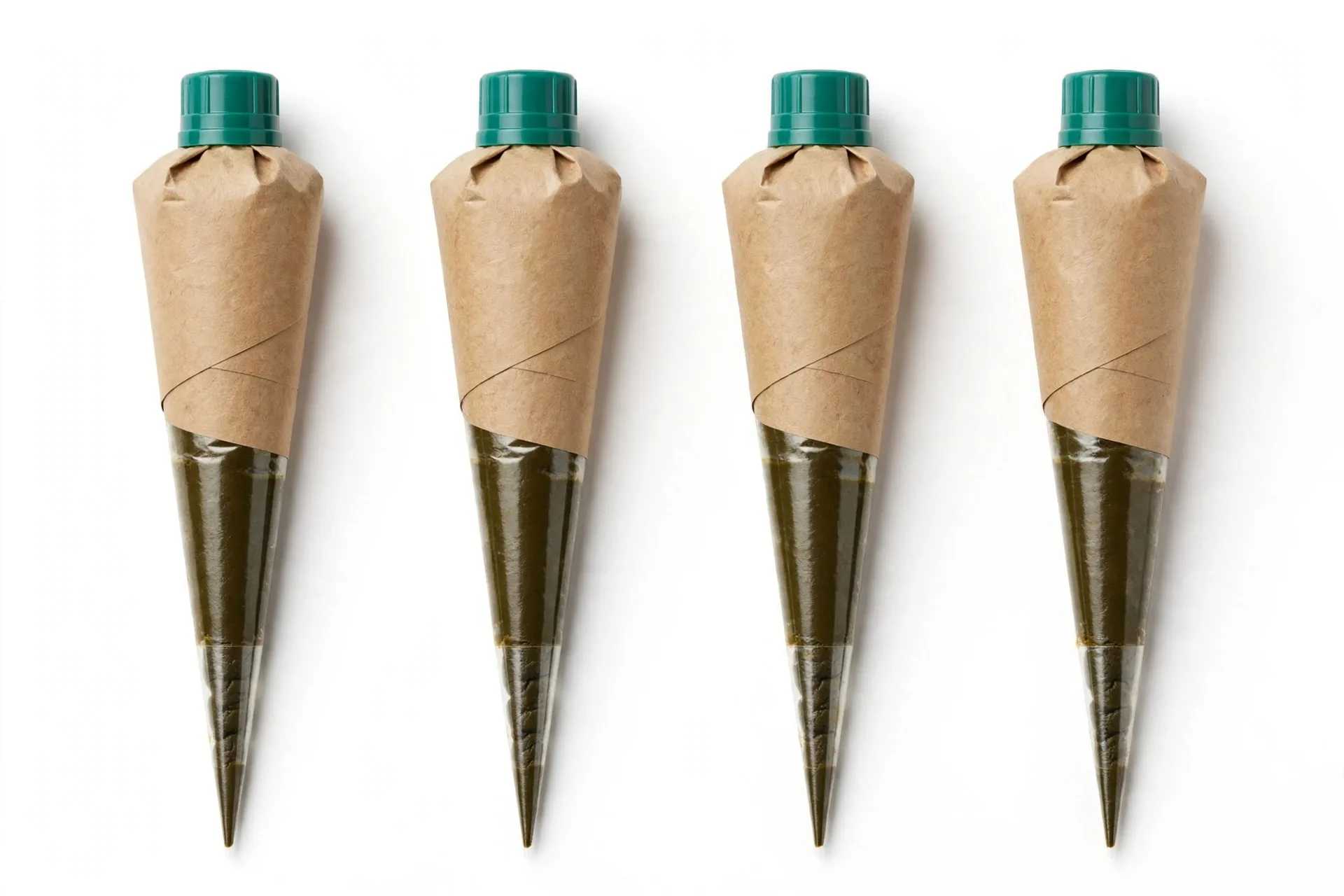
Neeta 4 Pack 100% Natural Ready to Use Henna Paste Cones
Four ready-to-use henna paste cones for drawing designs; the listing says 100 percent pure henna leaves, chemical dye-free.
Who Comes: The Guest List
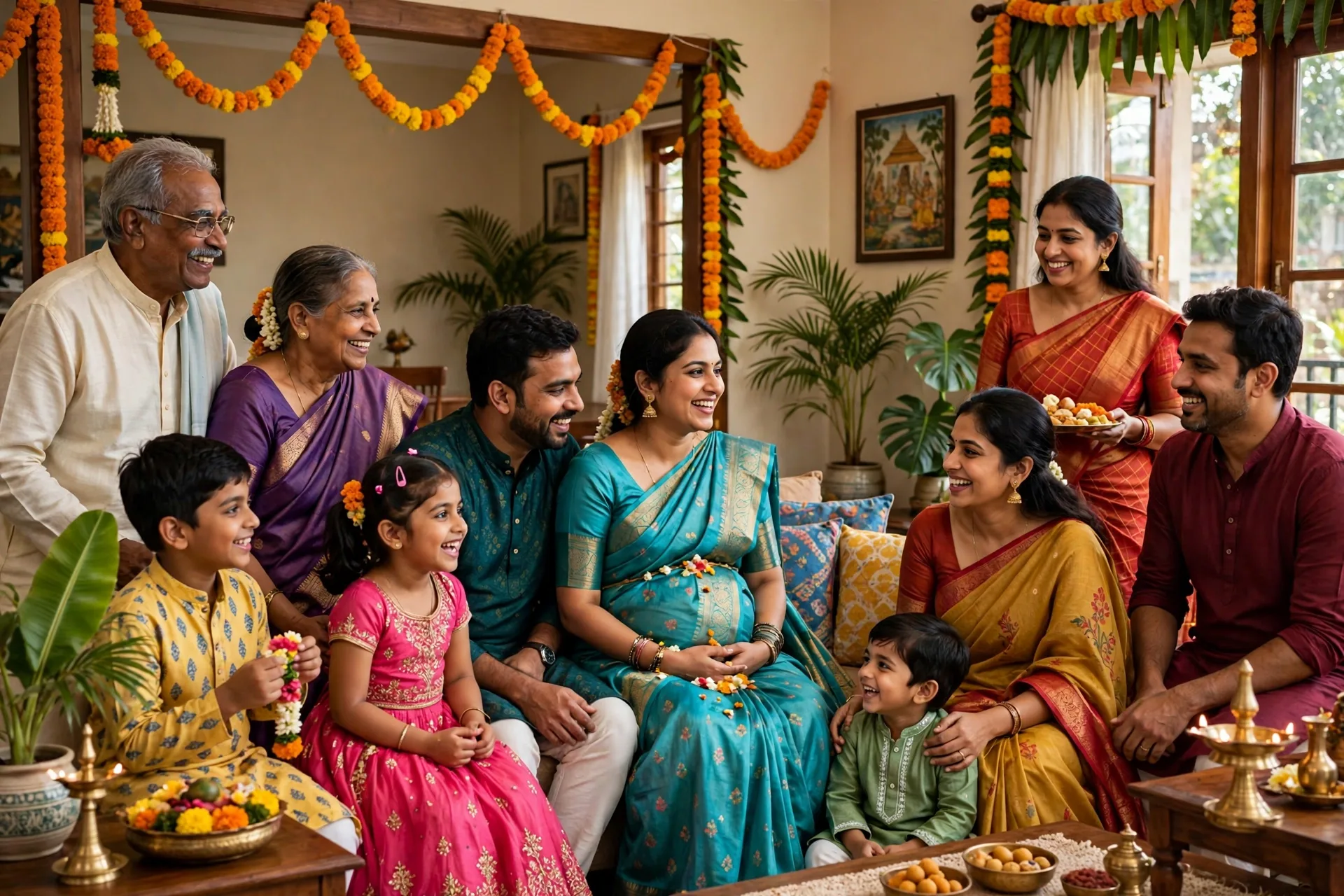
Unlike a Western baby shower, the whole family is invited to a valaikappu: men, women, and children. The dad-to-be is there from the start, and he is usually the first to bless the mom-to-be, which is exactly as it should be. Parents, sisters, in-laws, cousins, nieces, nephews, and close friends all fit in one room, and that full room is the whole point.
Invite generously but plan the seating honestly. The mom-to-be sits in the center, the elders sit closest to her, and everyone else forms the blessing line. If your living room holds twenty and your list has forty, book a small hall. Tell guests what to expect on the invitation. The free guest info card below saves you from explaining the ceremony forty times.
Offerings and Seer Varisai Trays
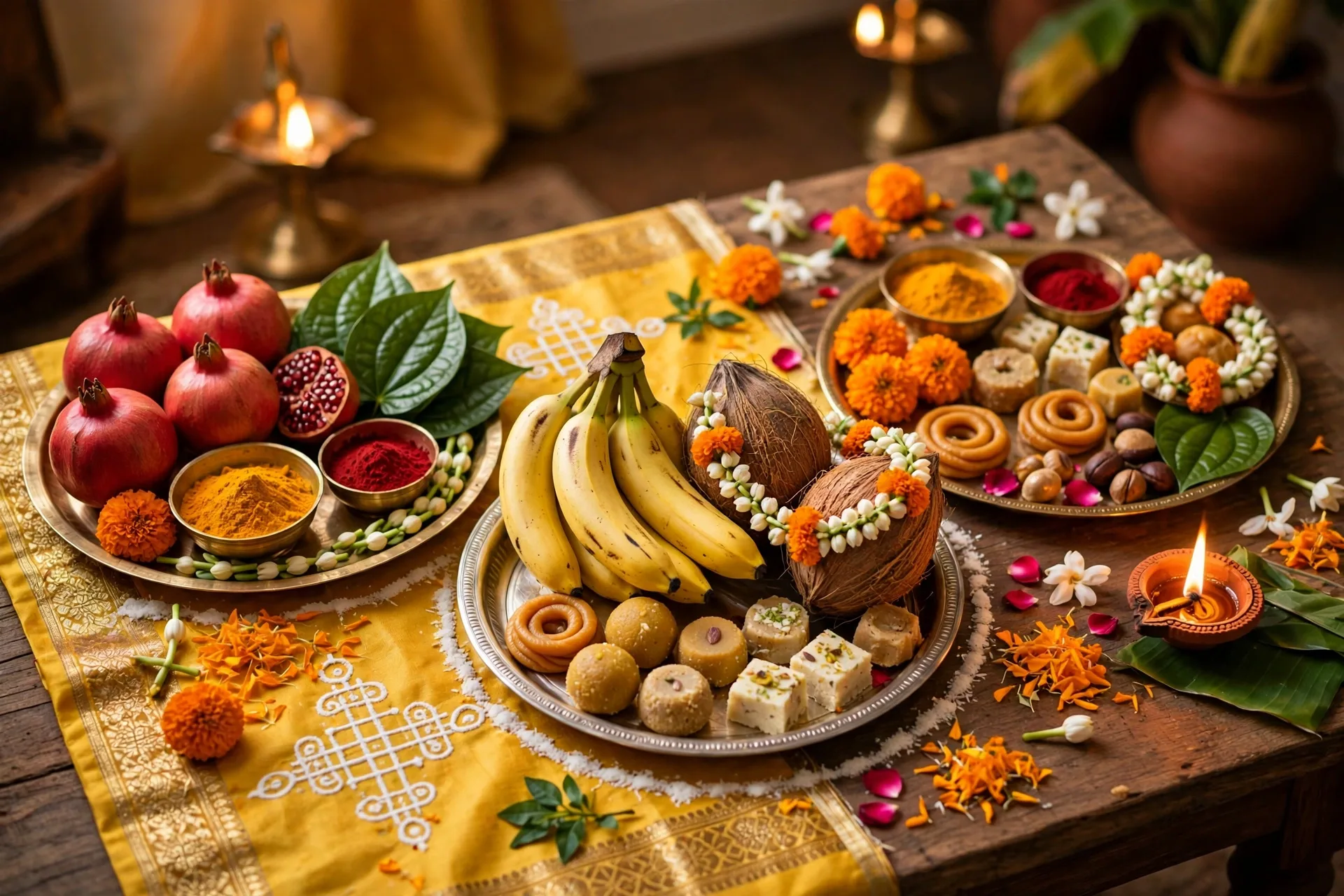
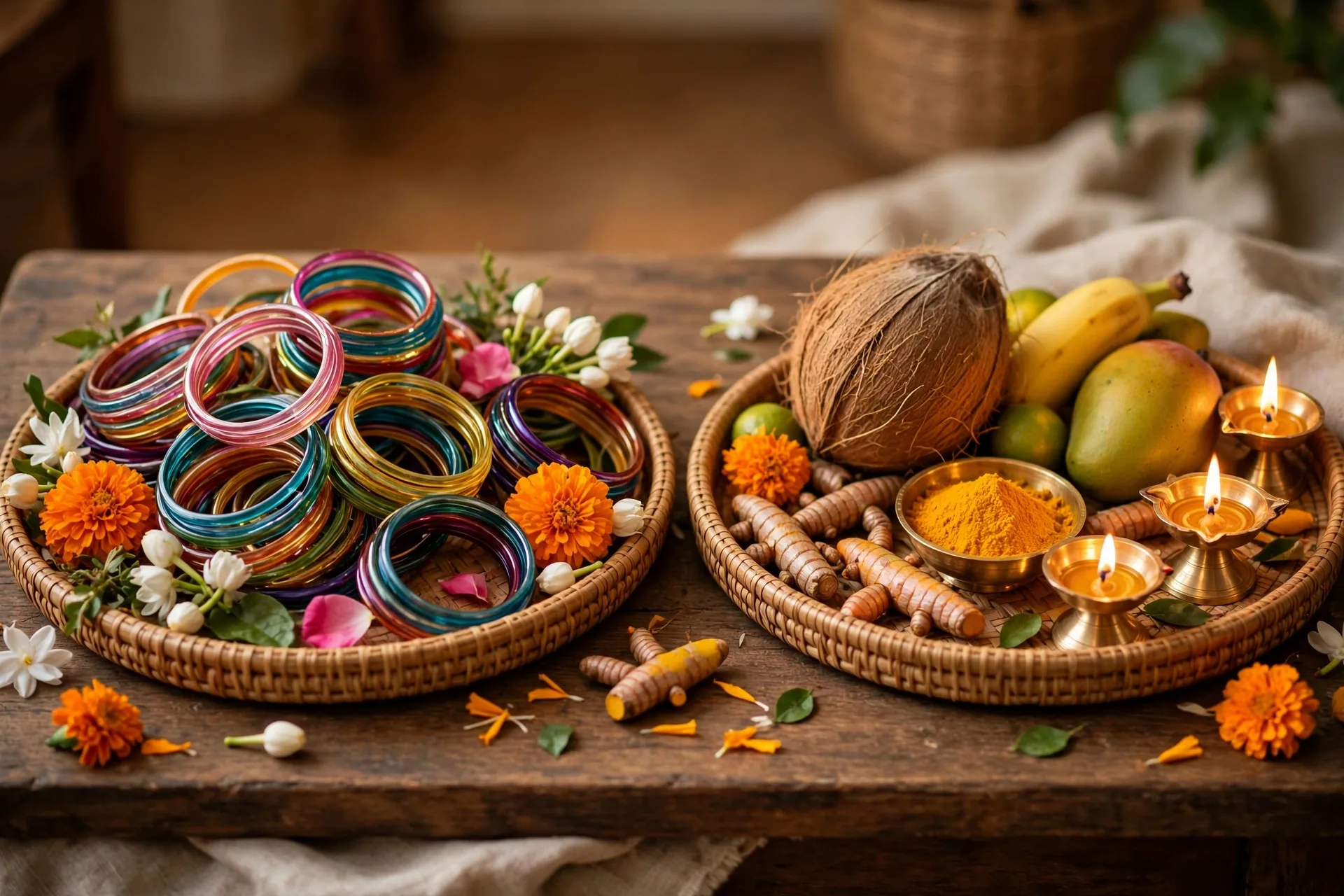
Food and fruit offerings surround the mom-to-be in a circle of color. The offerings are given in odd numbers, usually 9 or 11 pieces: pomegranates, bananas, jackfruit, apples, grapes, and coconut, plus sweets like laddu, jangri, and mysore pak, and savories like murukku and thattai. Turmeric, kumkum, betel leaves, and flowers sit beside them, on decorated trays called thattu.
The seer varisai is the formal gift of trays: a sweet tray, a savories tray, a fruit tray, a bangle tray, and a clothing tray holding her saree. Each tray is decorated with jasmine and roses. You do not need all five trays for a small home valaikappu: the bangle tray, the fruit tray, and the sweet tray carry the whole tradition. Lay the trays out the night before, because fruit bruises, flowers wilt, and sweets dry out.
Decor That Makes It Feel Like Bollywood
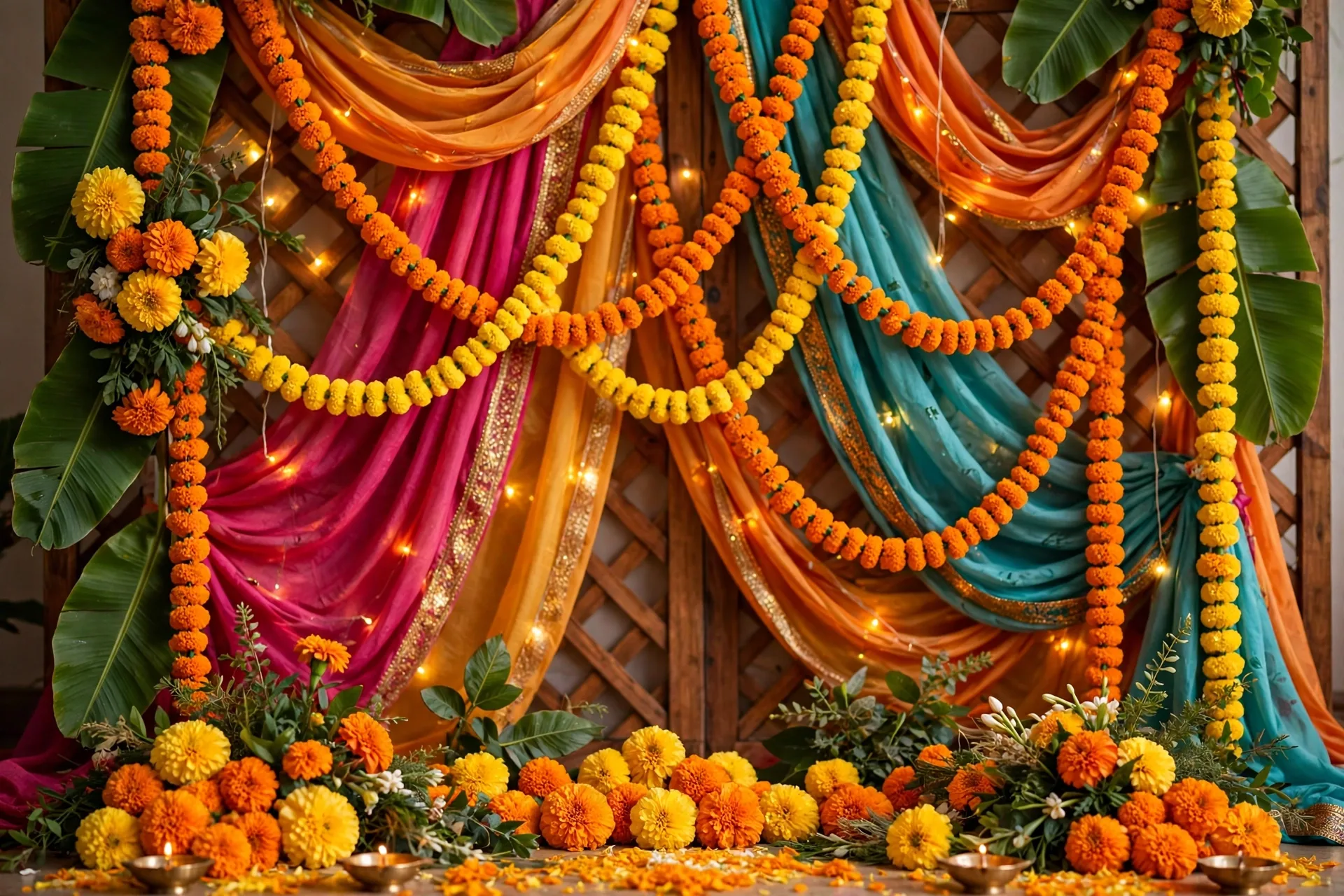
This is where the Bollywood part comes alive. Marigold garlands in orange and yellow are the classic decoration, strung across doorways, around her chair, and along the photo backdrop. Banana leaves frame the entrance, and a kolam, the colorful floor pattern drawn in rice powder at the door, welcomes guests. Old sarees make gorgeous backdrops: drape two or three behind her chair and you have a photo wall for the price of nothing.
Artificial marigold garlands are the smart buy: real ones wilt by the afternoon, and you can reuse the fake ones for Diwali. A DIYANA IMPEX Marigold Garland, 5 Pcs of 5 Feet gives you five 5-foot strands, handmade by Indian artisans and reusable for weddings, pooja, and Bollywood theme parties.
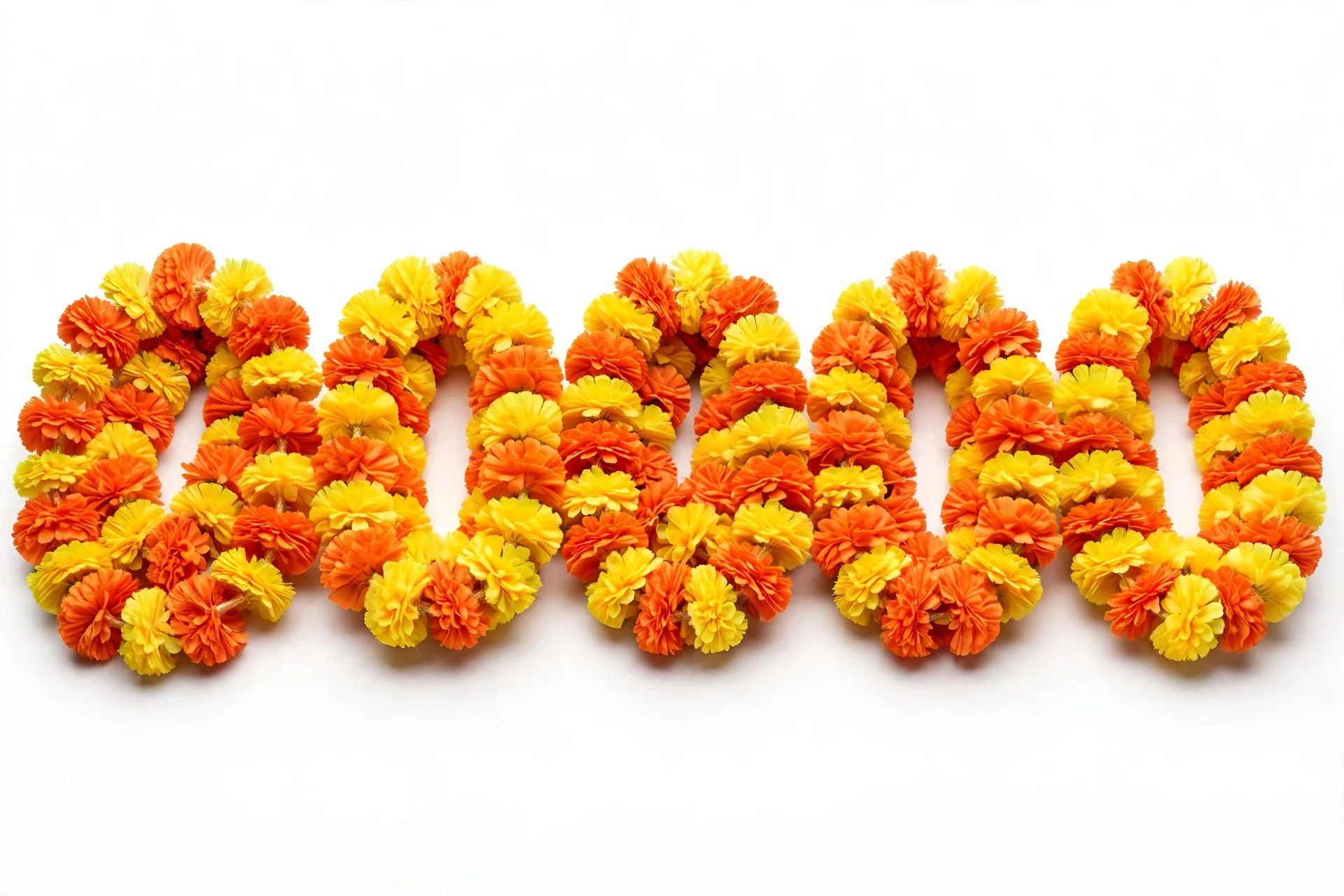
DIYANA IMPEX Marigold Garland, 5 Pcs of 5 Feet
Five 5-foot strands of artificial marigold flowers, handmade by Indian artisans, reusable for weddings and parties.
For the photo wall, add a balloon garland in pink, orange, and gold around the marigold backdrop. A Slant Collections Balloon Garland Arch Kit makes the build easy.
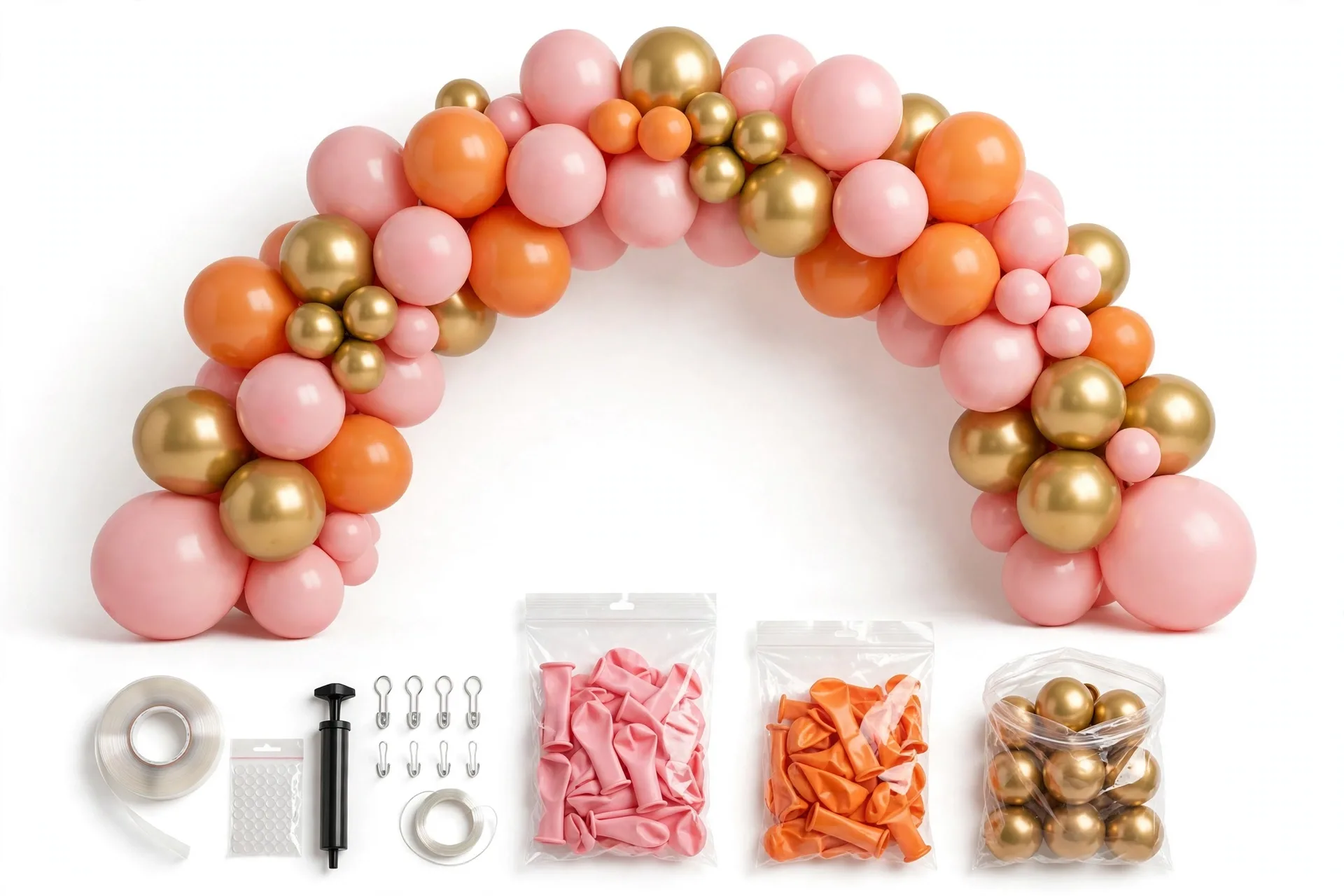
Slant Collections Balloon Garland Arch Kit
A balloon garland arch kit for building a full party garland at home.
Hang the backdrop first, because everything else photographs against it. Keep the fairy lights warm white, not cool blue: warm light flatters silk and skin, and cool light turns a yellow saree green.
The Feast: What Everyone Eats
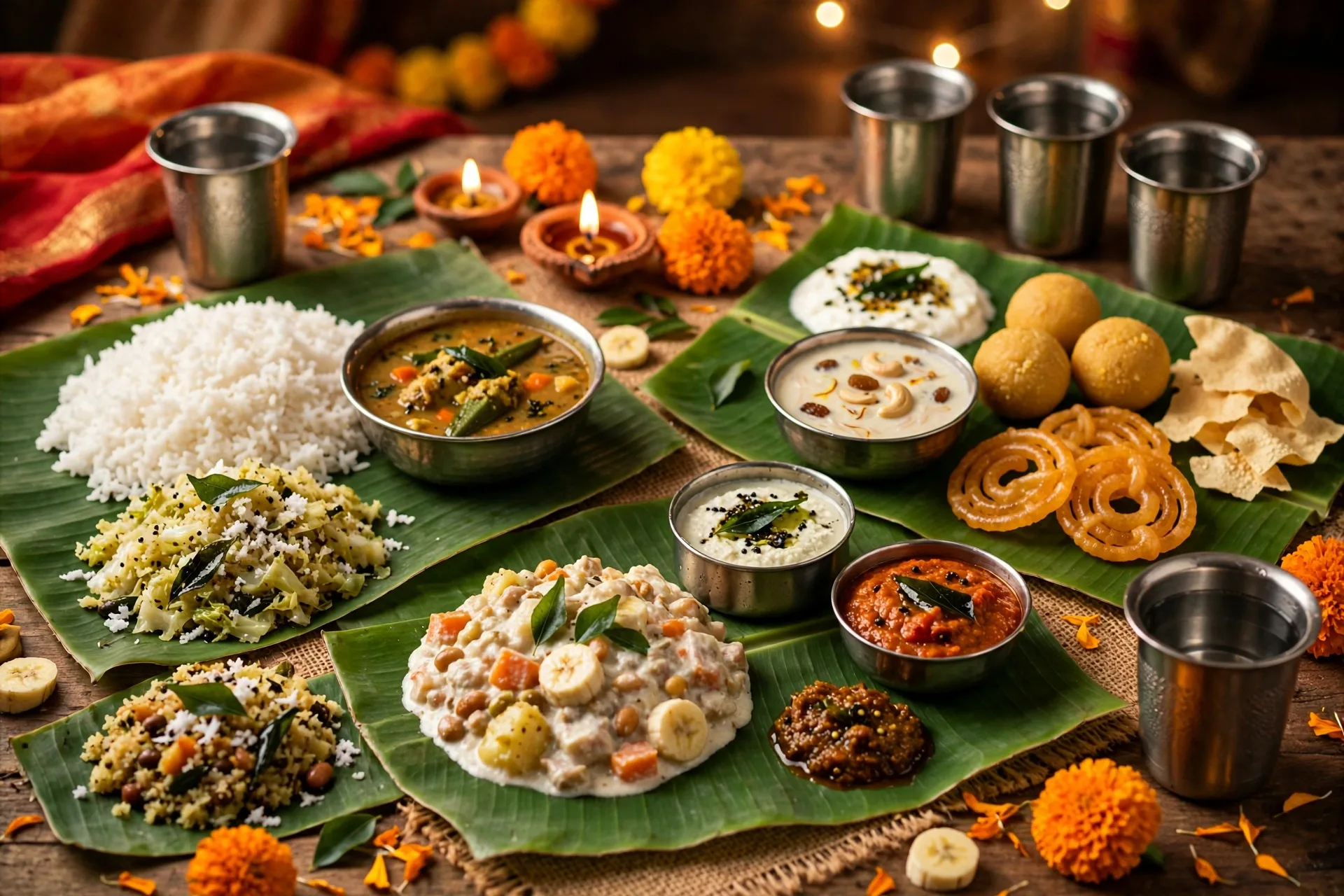
No South Indian party is complete until everyone has eaten so much they can hardly move. The traditional feast is vegetarian: rice and the mom-to-be’s favorite curries, served on banana leaves, with sweets for dessert. Payasam, the sweet milk pudding, is the classic finish.
Serve the feast after the ceremony, and seat the mom-to-be first with the elders beside her. Cook everything through, use pasteurized dairy, and label anything with nuts. If she has gestational diabetes, put the sweets on a separate table with a sugar-free option. Catering is worth it once the guest list passes thirty: a South Indian caterer will know the menu and the timing. Book three weeks out and confirm the headcount the week of the party.
Music, Songs and Games
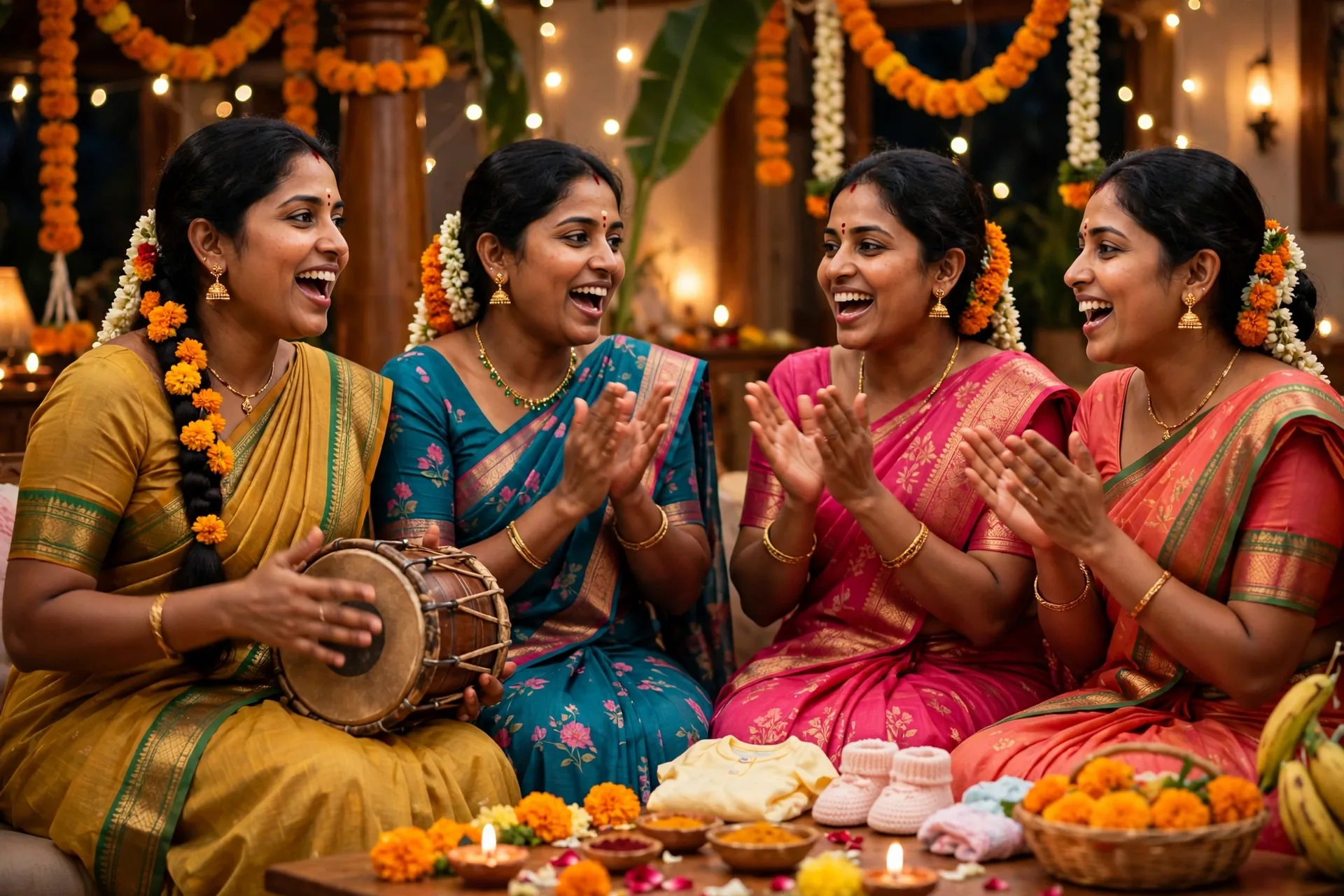
The women sing through the whole ceremony: it is part of the blessing, not background music. Traditional songs like Gowri Kalyanam fill the room while the bangles go on, and the older women lead while everyone else joins in. If your family does not know the old songs, record one aunt singing them, or print the words on the guest info card.
After the feast, the Bollywood part takes over: a playlist of joyful Bollywood dance songs, and the younger guests dance. Games fit naturally after the meal: guess the baby food with South Indian flavors, a bangle-counting game, and a sari-draping race for the dads. Keep the games short and gentle, because the mom-to-be has had a long morning.
Gifts and Tamboolam: What Guests Take Home
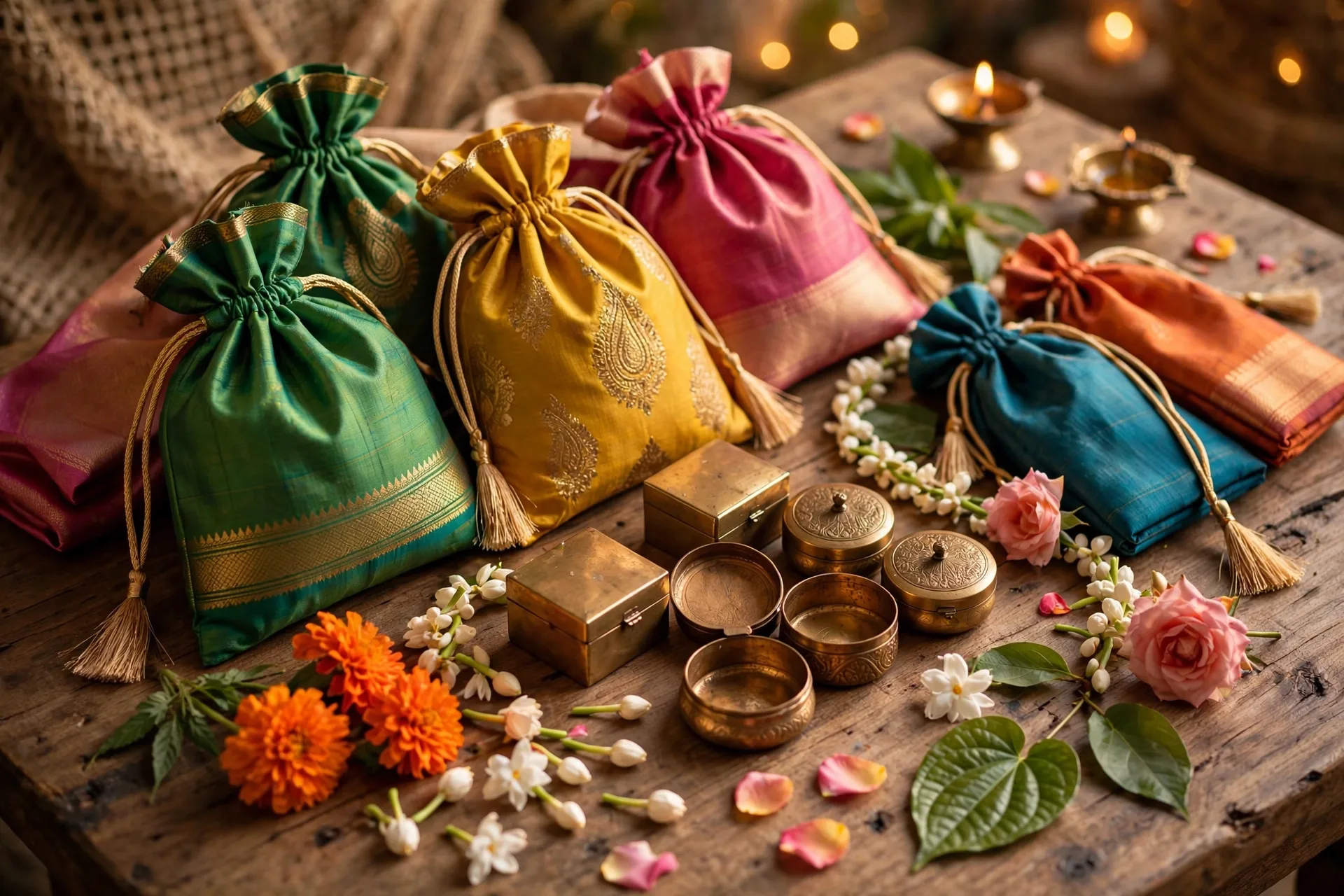
Gifts at a valaikappu go to the mom-to-be, not to the baby: that is the tradition, and the kindest part of it. The closest family gives her a saree or jewelry; guests bring a silk scarf, a spa hamper, or a keepsake. Buying one more baby onesie is the most common first-timer mistake, so say it on the invitation: gifts for mom, please.
Tamboolam is the return gift every guest leaves with: a small bag with betel leaves, turmeric, kumkum, a sweet, and a small gift. A ready-made set makes this easy at scale: a Brass Pooja Thali Set, 6 Inch, with Kumkum Box and Gift Bag gives you a 6-inch brass plate with Pichwai art, a matching brass kumkum box, and a sequin gift bag, made for return gifts.
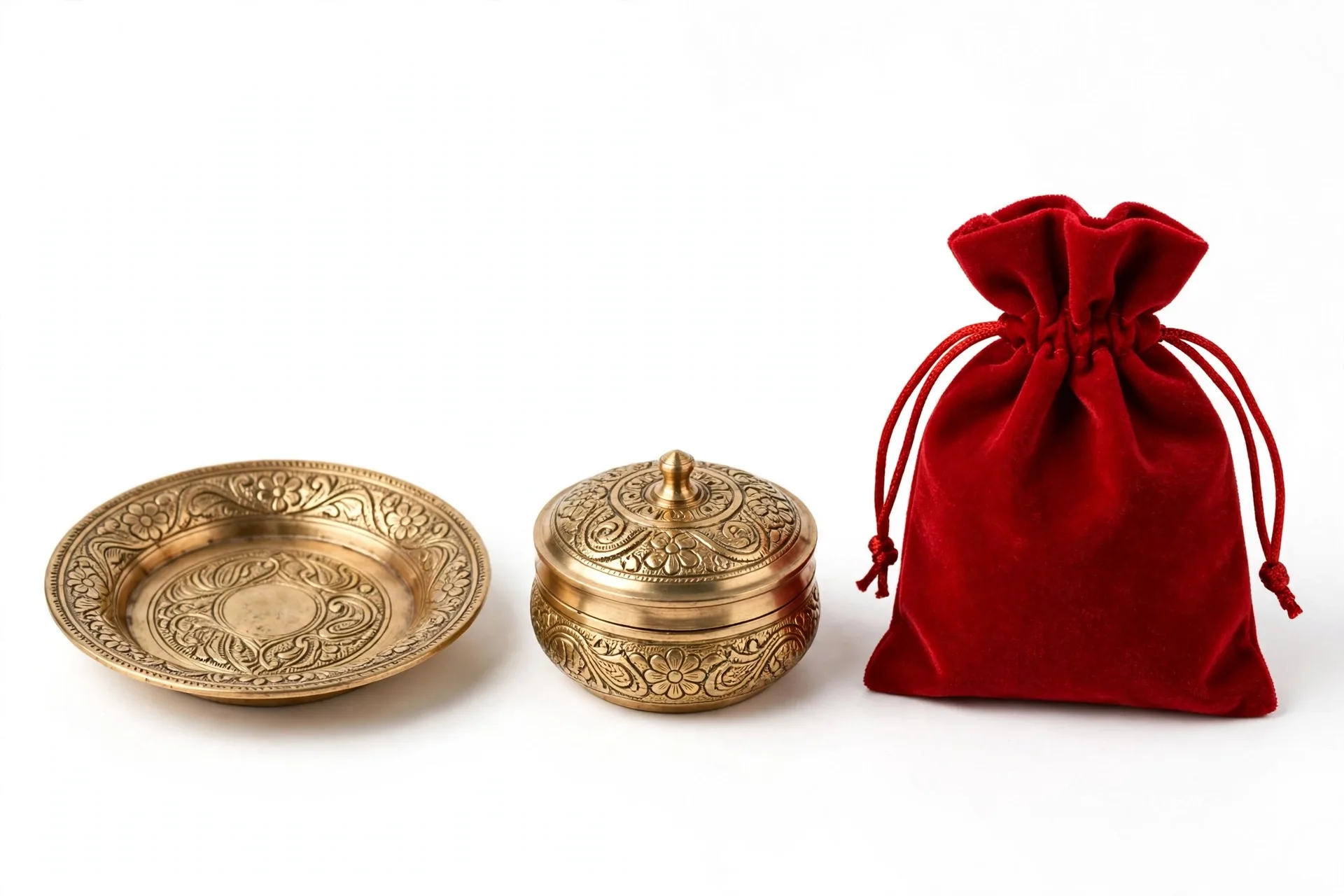
Brass Pooja Thali Set, 6 Inch, with Kumkum Box and Gift Bag
A 6-inch brass pooja plate with Pichwai art, a matching brass kumkum box with lid, and a sequin gift bag, made for return gifts.
Pack the tamboolam bags the night before and stack them by the door. One bag per guest, plus five extra.
Photography: Capturing the Bangles
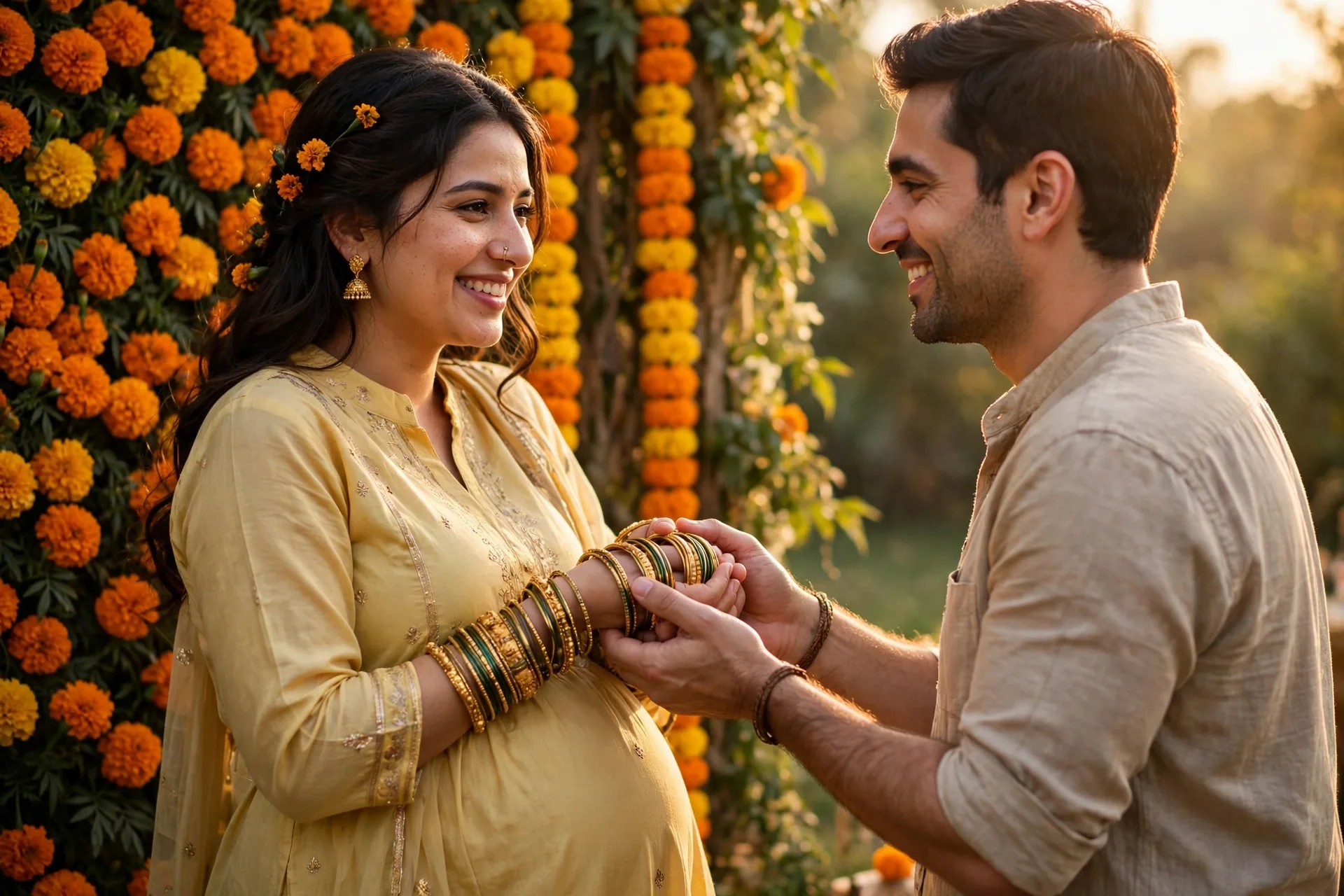
Delegate the photos: the host cannot photograph and host at the same time. Give one person the job of photographer for the day, and tell them the three shots that matter most: the bangles going on, the mom-to-be’s face while the women sing, and the full family photo.
The bangle close-up is the money shot: the partner’s hands sliding bangles onto her wrist, her wedding rings beside the glass. Take the group photo early, right after the ceremony. Leave an instant camera on the photo table so guests can take home a photo. A Fujifilm Instax Mini 12 prints small photos on the spot for the guest book.
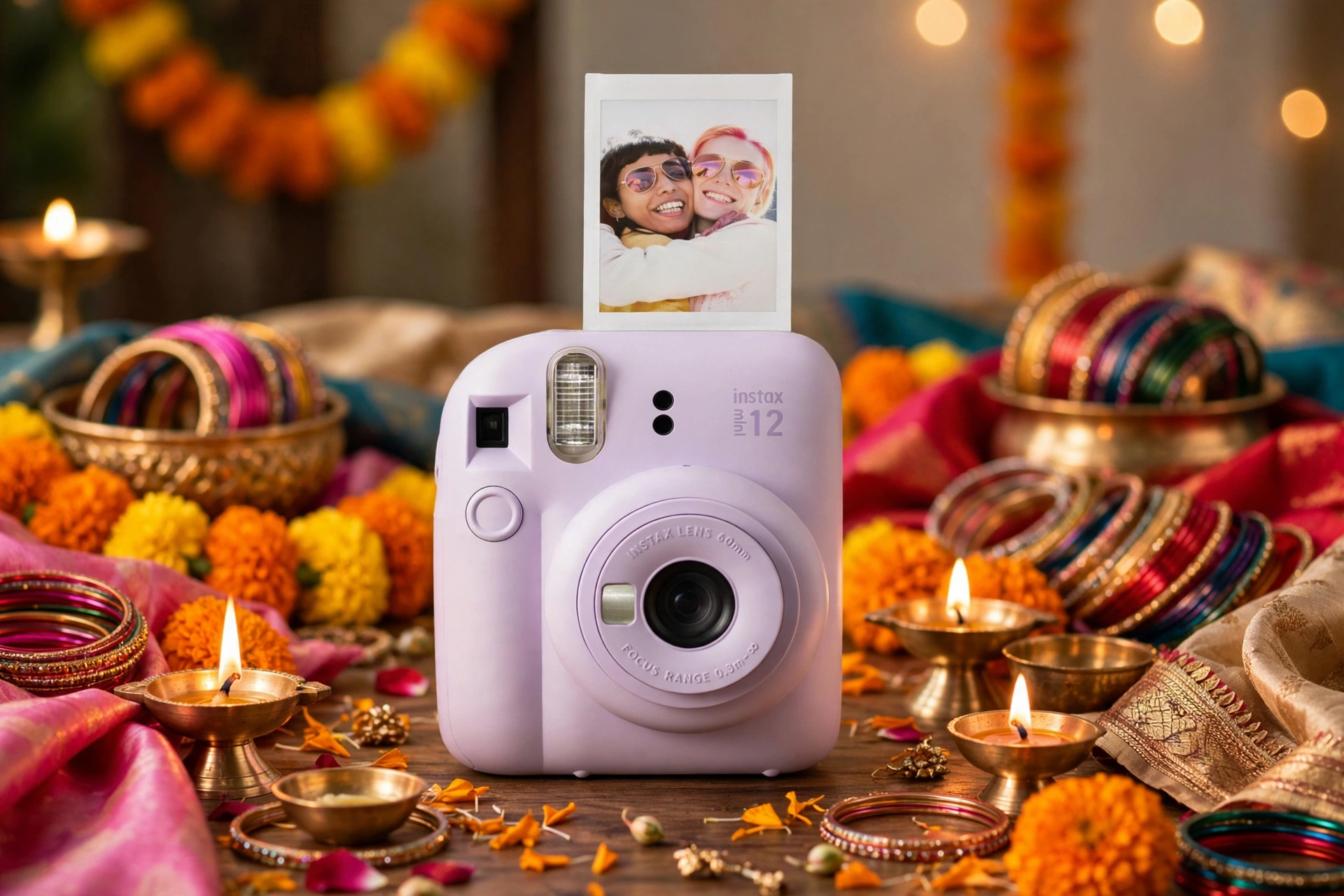
Fujifilm Instax Mini 12
An instant camera that prints small photos on the spot.
Your Valaikappu Planning Timeline
A valaikappu is easy to host when the work is spread out. Six weeks out, fix the date with an elder, book the hall, and send the invitations. Three weeks out, order the bangles, the garlands, and the saree, and book the caterer and henna artist. Two weeks out, buy the trays and tamboolam gifts, and print the guest info cards below.
The week of the party, confirm the headcount, buy the fruit and flowers, and pack the bags. The day before, drape the backdrop, hang the garlands, and lay out the trays. The morning of the ceremony, light the lamps, set out the bangles by color, and put one calm person in charge.
Free Printables: Checklist and Guest Info Card
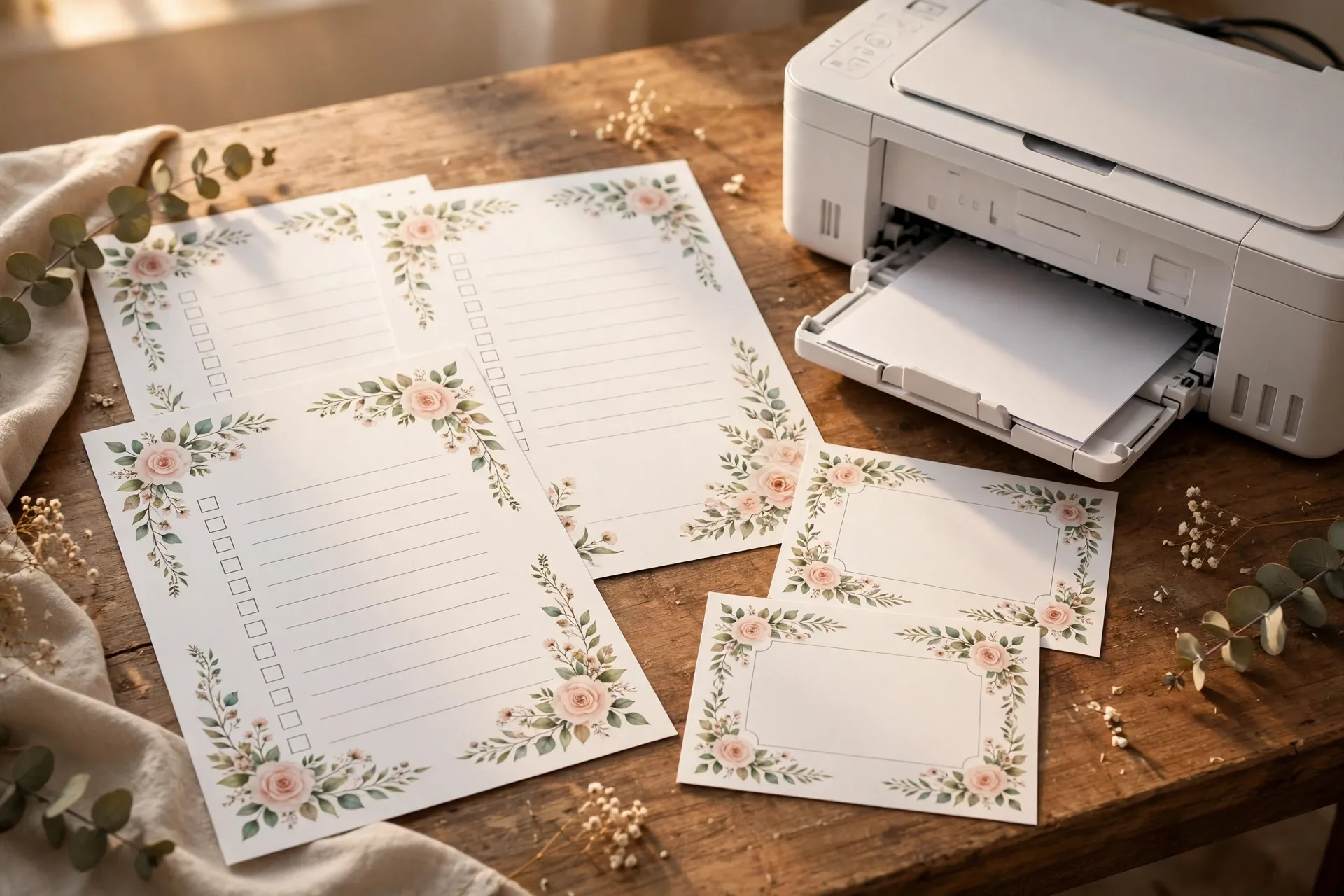
Two free printables go with this guide, and both are real files you can download right now. The Valaikappu Planning Checklist covers every task from six weeks out to the morning of the ceremony, with boxes to tick as you go. The Guest Info Card is a one-page explainer for guests who have never been to a valaikappu: what it is, what happens, and what to bring.
Download the Valaikappu Planning Checklist (PDF)
Download the Guest Info Card (PDF)
Print the checklist on cardstock, and one info card per guest to tuck into the invitation. An Epson EcoTank ET-2800 prints the checklists and cards at home, and its refillable ink tanks keep a big print run cheap.
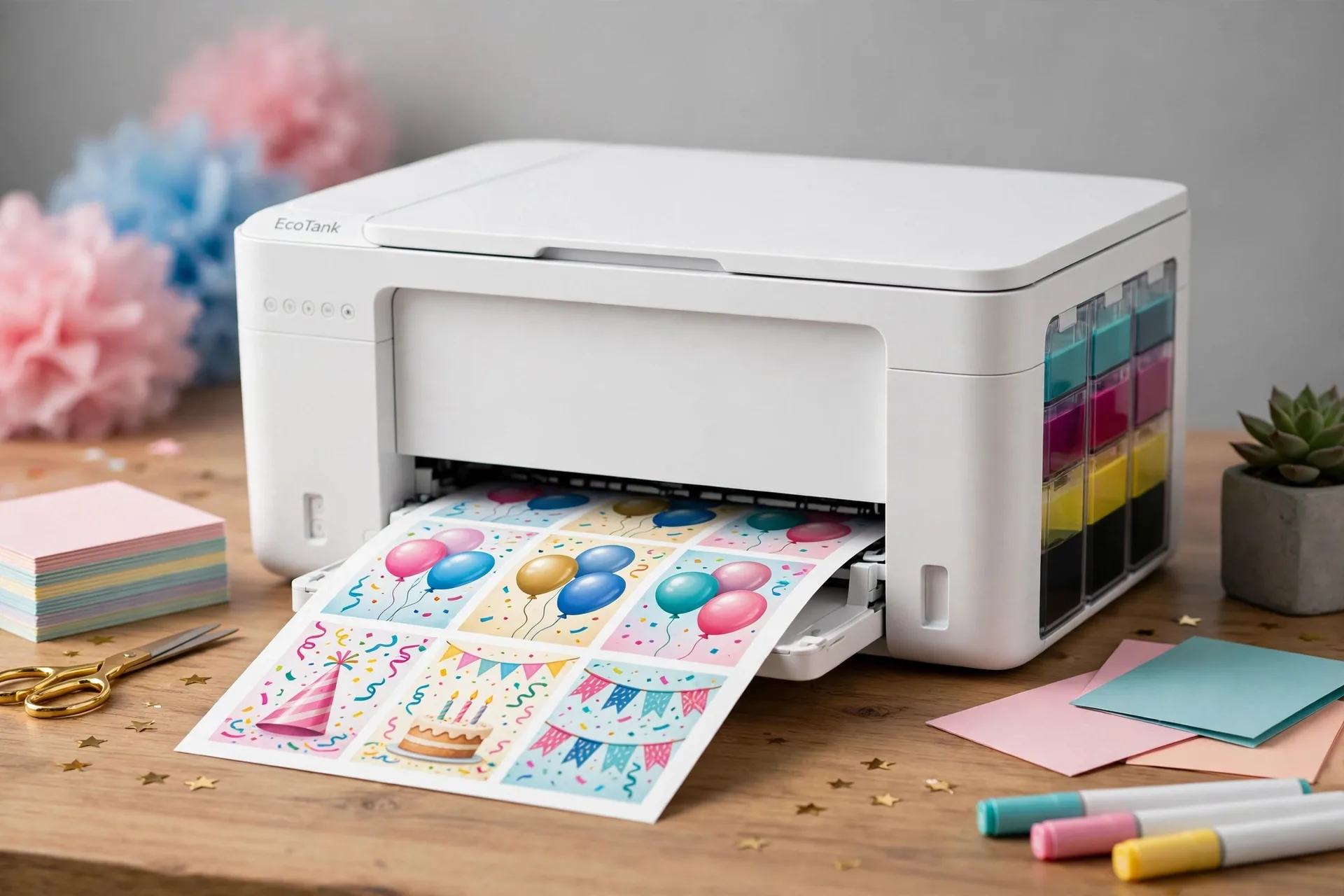
Epson EcoTank ET-2800
An EcoTank printer with refillable ink tanks for printing cards and signs at home.
Shop This Post
| Product | Used For | Price |
|---|---|---|
| Brass Five Face Diya Traditional Pooja Oil Lamp, Set of 2 |
Lighting the lamps, the ceremony | Check Price |
| PRIYA KANGAN Traditional Indian Handcrafted Glass Bangles |
The bangles, the ceremony | Check Price |
| Neeta 4 Pack 100% Natural Ready to Use Henna Paste Cones |
Henna for hands and feet, the outfit | Check Price |
| DIYANA IMPEX Marigold Garland, 5 Pcs of 5 Feet |
Marigold decor, the backdrop | Check Price |
| Slant Collections Balloon Garland Arch Kit |
The photo wall garland, decor | Check Price |
| Brass Pooja Thali Set, 6 Inch, with Kumkum Box and Gift Bag |
Tamboolam return gifts | Check Price |
| Fujifilm Instax Mini 12 |
Instant photos, photography | Check Price |
| Epson EcoTank ET-2800 |
Printing checklists and info cards | Check Price |
Frequently Asked Questions
When is a valaikappu held?
In the third trimester, in an odd month: the seventh or the ninth. Most families choose the seventh, so the ninth does not cut too close to delivery.
What is the difference between valaikappu and seemantham?
Valaikappu is the social bangle ceremony. Seemantham is the religious ceremony, led by a priest with chanting and a fire ritual. Many families do both, often on the same day.
How many bangles does the mom-to-be wear?
There is no single number: odd numbers per hand, a different count on each hand, until her arms are covered. She keeps them on until delivery, and many moms keep a few gold bangles.
Can guests who are not South Indian attend a valaikappu?
Yes. The whole family is invited, and guests from any background are welcome. The free guest info card explains the ceremony in one page.
What should guests bring to a valaikappu?
Gifts for the mom-to-be, not for the baby: a silk scarf, a spa hamper, or jewelry. Every guest goes home with a tamboolam return gift.
A Small Ritual That Is Only Yours
My ritual after every shower is the same: once the last guest leaves, I sit with the mom-to-be, pour the leftover payasam into two small bowls, and listen to her tell me which blessing made her cry. The bangles stay on her arms, and the house still smells like jasmine and marigold.
You do not need everything in this guide, mama. Do the ceremony properly, hang one beautiful backdrop, and feed everyone well. For the games after the feast, our Baby Shower Games are the companion guide.
Set the room in this order: hang the marigold backdrop first, then light the lamps and lay out the trays, then set the mom-to-be’s chair in the center. Put the feast and the tamboolam bags out last, right before guests arrive.