
My Husband Is Moving Out but I Want to Save the Marriage

There is a suitcase by the door, or a car half packed in the driveway, and the man you married is about to walk out of the house you built together. He says he needs space. He says he does not know what he wants. And you are standing there with one clear, fierce wish: you want to save this marriage.
Before you do anything else, hear the honest part first. You cannot make him stay, and no list of steps can promise you he will come back. A marriage is saved by two people, and right now only one of them is reaching for it. That is a painful truth, and it is also a freeing one, because it tells you exactly where your power is: in what you do next, how steady you stay, and what kind of home he remembers when the quiet sets in.
These 15 steady steps run in that order: first steady yourself, then give him room without disappearing, then rebuild the connection one small step at a time. None of them ask you to beg, chase, or pretend everything is fine. They only ask you to be calm, kind, and honest, and to leave the door open so he can actually walk back through.
Heads up: this post contains affiliate links. If you buy through them, MamaKinder may earn a small commission at no extra cost to you, and it helps keep these guides free.

Quick Picks: Find Your Place Fast
| If this is where you are… | Start with |
|---|---|
| The boxes are by the door and your head is spinning | #1 to #5, steady yourself first |
| He has moved out and you are working out how to stay in touch | #6 to #10, give him room without disappearing |
| You are ready to rebuild, slowly and honestly | #11 to #15, rebuild the connection |
First, Steady Yourself
1. Pause before you react.

The worst decisions in a marriage are made in the ten minutes after the suitcase appears. Do not decide the whole future of your marriage in one afternoon, and do not say the thing you will spend months trying to take back. Take one slow breath. Put the kettle on. You do not have to solve this today, and certainly not while your hands are shaking. A pause is not giving up. It is the first brave thing you can do.
2. Let him go without a chase.

Chasing him right now is the fastest way to push him further away. Begging, blocking the door, promising to change everything overnight, calling him ten times before he is gone: all of it tells him the house is a place of pressure, and pressure is exactly what he is walking away from. Letting him leave is not the same as letting the marriage go. It is giving him the space he asked for, and giving yourself the dignity of not begging someone to love you. Say something simple instead: “I love you, I want us to work, and I will be here when you are ready to talk.”
3. Write down what actually happened.

Feelings blur fast. By next week, “he said he needed space” may have become “he said he never loved me.” Write down the plain facts on a private page: what he said, what you said, what happened next. Keep it to facts, not verdicts about his character. I keep The Five Minute Journal by my bed for exactly this: its morning prompts include a daily affirmation starting with “I am,” and the routine takes about five minutes.

Intelligent Change The Five Minute Journal
A guided daily gratitude journal with a morning affirmation prompt built in. Undated, so you can start any day, and the routine takes about five minutes.
A written record also protects you on your worst nights. When you are sure he is gone forever, open the page and see what was actually said. It is usually kinder than the story fear is telling you.
4. Lean on your people, not your children.

No separation should be carried alone. Call a friend who listens without taking sides, your sister, your mom, a moms group, a counselor of your own. Tell them how scared you are, and let them hold you steady while you figure out the next step. One line matters most: do not make your children your confidants. They need you to be their calm parent right now, not their fellow worrier. Keep the adult worries with the adults.
5. Sort the practical stuff calmly.

A move-out is not only emotional, it is logistical, and the logistics are easier to handle now than in a fight later. When you are both calm, talk through the plain facts: where the kids sleep on which nights, how the bills get paid, who picks up whom from school, what happens with the house. Write the answers down together so neither of you has to guess. Keep it short, keep it to facts, and keep a tone you would be glad for a stranger to hear. Calm logistics show him something surprising: even in the hardest week of your marriage, you can still be a steady, fair partner to deal with.
Give Him Room Without Disappearing
6. Agree on how you will stay in touch.

Silence with no plan feels like abandonment, and constant texting feels like a chase. Agree together on how you will stay in touch while he is away. Pick one channel, agree on how often, and agree on what it covers: the kids, the house, the bills, and a short check-in, not a nightly replay of the whole marriage. Put it in plain words so both of you know what to expect. It gives him the room he asked for, and it gives you the reassurance that you have not lost him. Only the address has changed.
7. Keep contact short, warm, and light.

When you do talk, keep it short, warm, and light. Ten minutes of easy conversation does more than two hours of heavy talk that leaves you both exhausted. Share one small good thing, ask one easy question, handle the logistics, then stop while it is still pleasant. The goal is simple: every time he talks to you, he should walk away thinking, “That was not so bad.” If every contact ends in tears or a fight, he will start avoiding contact, and then you have lost the very thread you are trying to keep. Short and warm keeps the thread alive.
8. Be graceful when he reaches out.

Your husband may reach out for plenty of reasons. It may be because you have kids to co-parent, or something to pick up or drop off. Perhaps he wants to clear the air. There is even a chance that he, hesitantly, wants to try to save the marriage too. No matter the reason, remain graceful. Do not punish the contact with coldness, and do not flood it with tears or a list of everything that is wrong. Show him that time spent with you is calm and pleasant. If reaching out leads to a good moment, he will reach out again. If it leads to a hard one, he will stop.
9. Do not read into every message.

Separation makes every message feel like a clue. A friendly text means he is coming home. A short reply means he is done forever. None of that is true. A friendly text is a friendly text, and a short reply is often just a busy man, not a verdict on your marriage. Enjoy the good moments when they come, without asking them to carry the whole future. Take each contact one day at a time. The moment you stop treating every message like a test result, you will both breathe easier.
10. Live a life worth coming back to.

This is the step nobody wants to hear, and it is the one that matters most. While he is away, live your life. Keep your routines. See your friends. Take the walk, try the class, laugh at something that has nothing to do with your marriage. This is not a performance to make him jealous. It is you remembering that you are a whole person, not only a wife waiting by the door. A husband who sees his wife living well remembers what he is missing. A husband who sees her frozen, waiting, and miserable only feels guilt, and guilt never brought anyone home. Live well, for you first, and let him notice.
Rebuild the Connection, One Small Step at a Time
11. Own your part, honestly.

Few marriages fall apart because of one person alone. Take one honest look at your own part, not to blame yourself, and not to let him off the hook, but because owning your part is the one thing fully in your hands. Ask yourself one question, and answer it without flinching: what is one thing I did, or stopped doing, that made this marriage harder? Maybe you stopped listening. Maybe the criticism crept in. Maybe the baby years swallowed you both. Name it plainly, to yourself first. A wife who can say, “Here is what I would do differently,” is a wife her husband can believe when she says she wants to try again.
12. Start forgiving the old hurts.

Old problems plague marriages. You will not save a marriage held up by old resentment, and you will not move forward while carrying every argument from the last three years. Forgiveness here does not mean pretending nothing happened, and it does not mean he is off the hook. It means you stop letting the old hurts run the new conversations. When you are ready, say it out loud: “I forgive you for that, and I am asking you to forgive me for my part too.” A fresh slate is not forgetting. It is choosing, together, to stop fighting the past and start building the future.
13. Read one book together, a chapter at a time.

When every conversation becomes the same argument, a book gives you both a third thing to talk about. Read The Seven Principles for Making Marriage Work by John Gottman and Nan Silver together, one short chapter at a time: the Gottmans’ guide to moving from gridlock to dialogue, with questionnaires and exercises for couples working through the issues they cannot seem to resolve. If the baby years are part of the strain, our Marriage Advice For New Parents guide covers the everyday side of this season.
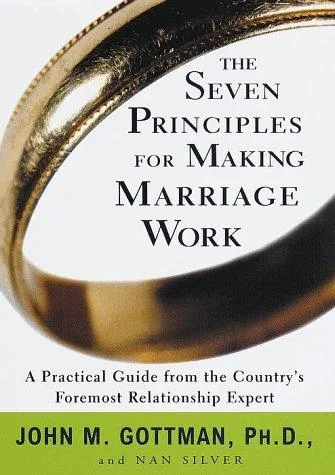
The Seven Principles for Making Marriage Work: John Gottman & Nan Silver
The Gottmans’ guide to moving from gridlock to dialogue, with questionnaires and exercises for couples working through the issues they cannot seem to resolve.
One chapter a week is enough. Talk about the chapter, not about each other, and let the book do the heavy lifting.
14. Invite counseling. Do not demand it.

A couples counselor can do what a list cannot: sit in the room with both of you, hear both sides, and teach you how to talk about the hard things without either of you shutting down. But the invitation matters as much as the counseling itself. Offer it as a place to talk, not a courtroom where a stranger decides who was right. Try: “I found someone who helps couples talk through this kind of thing. Would you come with me once, just to see?” If he says no, you can still go on your own, and a good counselor will help you with your half of the marriage either way. A few sessions is maintenance, and plenty of strong couples use it that way.
15. Decide together what “better” looks like.

Sit down together, when you are both calm, and name it in plain words: what would better look like a month from now? Maybe “we talk for ten minutes every evening.” Maybe “he comes home for Sunday dinner with the kids.” Maybe “we finish the book and talk about one chapter a week.” Write it down, both of you, and check in after a month. A shared goal turns “you need to try harder” into “we are building this together.” And if he will not decide with you yet, decide your own next step anyway: what you will do, how long you will wait, and what a good life looks like for you and the kids either way.
When to Get Outside Help
Some things are bigger than a list of steps, and knowing that is strength, not failure. If you have tried talking calmly, several times, over several weeks, and nothing changes, a couples counselor can help in a way no article can.
There is also a line that matters more than any step on this list. If he controls who you see, tracks your phone, belittles you in front of the children, drinks or uses substances and becomes frightening, or if you ever feel unsafe in your own home, that is not a communication problem. Reach out to a trusted professional, a doctor, or a local support service right away. You deserve to feel safe, and so do your children.
Shop This Post
| Product | Used For | Price |
|---|---|---|
| The Five Minute Journal |
The private page from step 3, five quiet minutes with the facts | Check Price |
| The Seven Principles for Making Marriage Work |
The read-together starting point from step 13 | Check Price |
 Flameless LED Tea Lights |
The small evening ritual from the closing, the click that ends the day | Check Price |
Frequently Asked Questions
Can a marriage survive when he moves out? Sometimes, yes. Moving out is not the same as divorce, and many couples have come back from a separation stronger than they went into it. But there is no promise, and anyone who guarantees you he will come back is selling you something. A move-out gives you both room to see the marriage clearly, and what happens next depends on what you both do with that room. Your job is to make the most of your half.
How long should I wait before asking him to talk about the future? Give the dust a few weeks to settle before you ask for a big conversation about the future. One calm ask, in a quiet moment, is worth far more than the same question asked every day. Try: “When you are ready, I would like us to talk about what comes next. No rush.” Then watch what he does, not only what he says. Actions over weeks tell you more than one emotional evening ever will.
What if he will not answer my calls or texts at all? Stop flooding him with messages, because more messages will only push him further away. Send one short, warm note, something like, “I love you, the door is open, and I am here when you are ready,” and then let it sit. Keep living your life, keep the kids steady, and consider seeing a counselor on your own about your half of this. You cannot force contact, and you cannot save a marriage alone, but you can keep yourself steady and the door open while he decides.
A Small Ritual That Is Only Yours
Before you do anything else, protect one small thing that belongs to you alone. Mine is embarrassingly small: after the kids are down, the flameless LED tea lights click on, the tea goes in the same mug, and I get ten minutes with a book before the day officially ends. There is no open flame around little hands, and the click is the sound of the day being over.
Flameless LED Tea Lights
Battery tea lights with no open flame, so the evening wind-down is safe around little hands and paperback pages. One click and the day is officially over.
You are not a bad wife for wanting to save your marriage, mama, and you are not weak for loving a man who is walking out the door. Wanting to fight for it is the most ordinary thing in a marriage, and neither is knowing that the fight is only yours to fight halfway. Try the steps in order, give him a real chance to come back, and then trust what the pattern tells you. Our Mom Life Tips are the companion for the you side of this season.