17 Easy Beach Trip Tips for Babies and Toddlers That Keep the Day Calm and Fun

Our first beach trip with a baby lasted forty minutes. My four-year-old wanted the waves, my two-year-old wanted to eat the sand, and I wanted shade and a do-over. We went home sandy and sun-pink.
The next trip went better, and the one after that better still. The beach did not change. Our plan did. Below are the 17 tips that turned our beach days from survival mode into days we actually want to repeat. Every tip works for babies and toddlers, and most cost nothing at all.
Heads up: this post contains affiliate links. If you buy through them, MamaKinder may earn a small commission at no extra cost to you. It helps keep these guides free.

How to Use This Guide
Read the “Before You Go” tips tonight, then print the free packing checklist at the end of this guide and tick things off as they go in the bag. At the beach, start with shade and sunscreen, then let the kids lead. Skip any tip that does not fit your baby’s age.
Quick Picks: start here
| You need… | Start with | Why it works |
|---|---|---|
| A calmer first trip | Tip 1, go early or go late | Cooler sand, softer sun, fewer crowds |
| Shade that stays put | Tip 5, set up shade first | A tent beats chasing a moving umbrella shadow |
| A baby who stays safe in the sun | Tip 8, under-6-months rule | The AAP guidance, plain and simple |
| Water play without the waves | Tip 10, bring a baby pool | Splashing in the shade, on your terms |
| A car that does not smell like wet swimsuits | Tip 16, wet bags | Zip the soggy stuff away from the dry stuff |
Before You Go
Four small moves tonight save an hour of chaos tomorrow.
1. Go early or go late

The sun is strongest midday, and that is when babies and toddlers melt down fastest. Aim for the first two hours after sunrise, or the last two hours before sunset. The sand is cooler on little feet and the crowds are thinner.
A short morning trip beats a long midday one every time. Plan for one to two hours with a baby under a year old, and leave while everyone is still happy.
2. Pick a lifeguarded beach with gentle water

Not every beach suits small children. Before you drive anywhere, check whether the beach has lifeguards on duty and gentle waves. A lifeguarded beach with a shallow, calm shoreline gives you trained eyes and a calmer first step into the water.
Skip beaches with steep drop-offs, strong currents, or rocky entries for now.
3. Pack the night before with a checklist

Packing with a tired toddler clinging to your leg is how the sunscreen gets left on the kitchen counter. Pack the bag the night before, while the kids are asleep. Tick each item off the free checklist at the end of this guide.
Put the bag by the door, shoes and hats on top, and the car keys in the front pocket.
4. Freeze pouches and water bottles tonight

Toss a few applesauce pouches and two water bottles into the freezer before bed. By mid-morning they have thawed into cold, slushy treats, and until then they work as extra ice packs inside the cooler. One trick, two problems solved, zero cost.
Pack more water than you think you need. Babies and toddlers dehydrate faster than grown-ups, and sea air makes everyone thirstier than expected. Offer water often.
Sun and Shade
Sun protection is the whole game with little ones. Get this section right and the rest of the day is play.
5. Set up shade first, before anything else
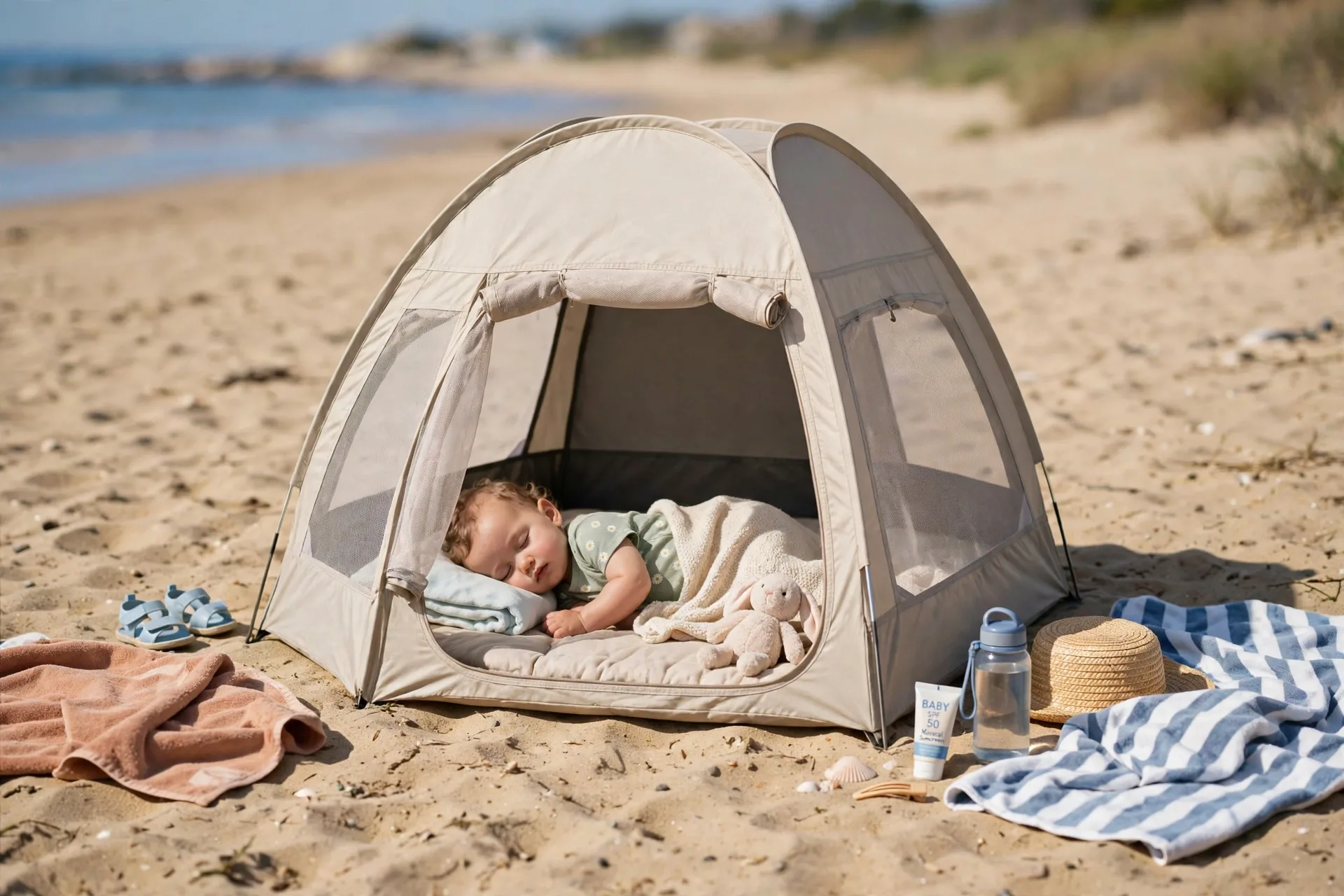
The first thing you do on the sand is build the shade. Not the towels, not the toys, the shade. A baby with nowhere cool to retreat to will be cranky within the hour, and a cranky baby is nobody’s idea of a holiday.
Our house uses a pop-up baby beach tent. The Kapeazo tent opens to 54 by 35 by 26 inches, carries a UPF 50+ rating that blocks 98 percent of UVA and UVB rays, and pops up in seconds with mesh windows for airflow. It weighs about 1.32 pounds, folds into its own carry bag, and comes with two pegs so it stays put in a light breeze. A grown-up does the setup.

Kapeazo Baby Beach Tent, UPF 50+
Opens to 54 by 35 by 26 inches, carries a UPF 50+ rating that blocks 98 percent of UVA and UVB rays, and pops up in seconds with mesh windows for airflow. It weighs about 1.32 pounds, folds into its own carry bag, and comes with two pegs so it stays put in a light breeze. A grown-up does the setup.
6. Put sunscreen on before you leave the house

Sunscreen goes on at home, on clean, dry, sand-free skin, about fifteen minutes before you step outside. Rubbing lotion onto a sandy, wriggling toddler is a wrestling match you will lose.
We use Blue Lizard Baby Mineral Sunscreen SPF 50+. It is a mineral formula with zinc oxide, water resistant for 80 minutes, and fragrance free. Reapply every two hours, and again after swimming or heavy sweating. The bottle turns pink in UV light, a handy reminder that it is time for another coat.

Blue Lizard Baby Mineral Sunscreen SPF 50+, 5 oz
A mineral formula with zinc oxide, water resistant for 80 minutes, and fragrance free. Reapply every two hours, and again after swimming or heavy sweating. The bottle turns pink in UV light, a handy reminder that it is time for another coat.
7. Dress them in a rash guard and a wide-brim hat
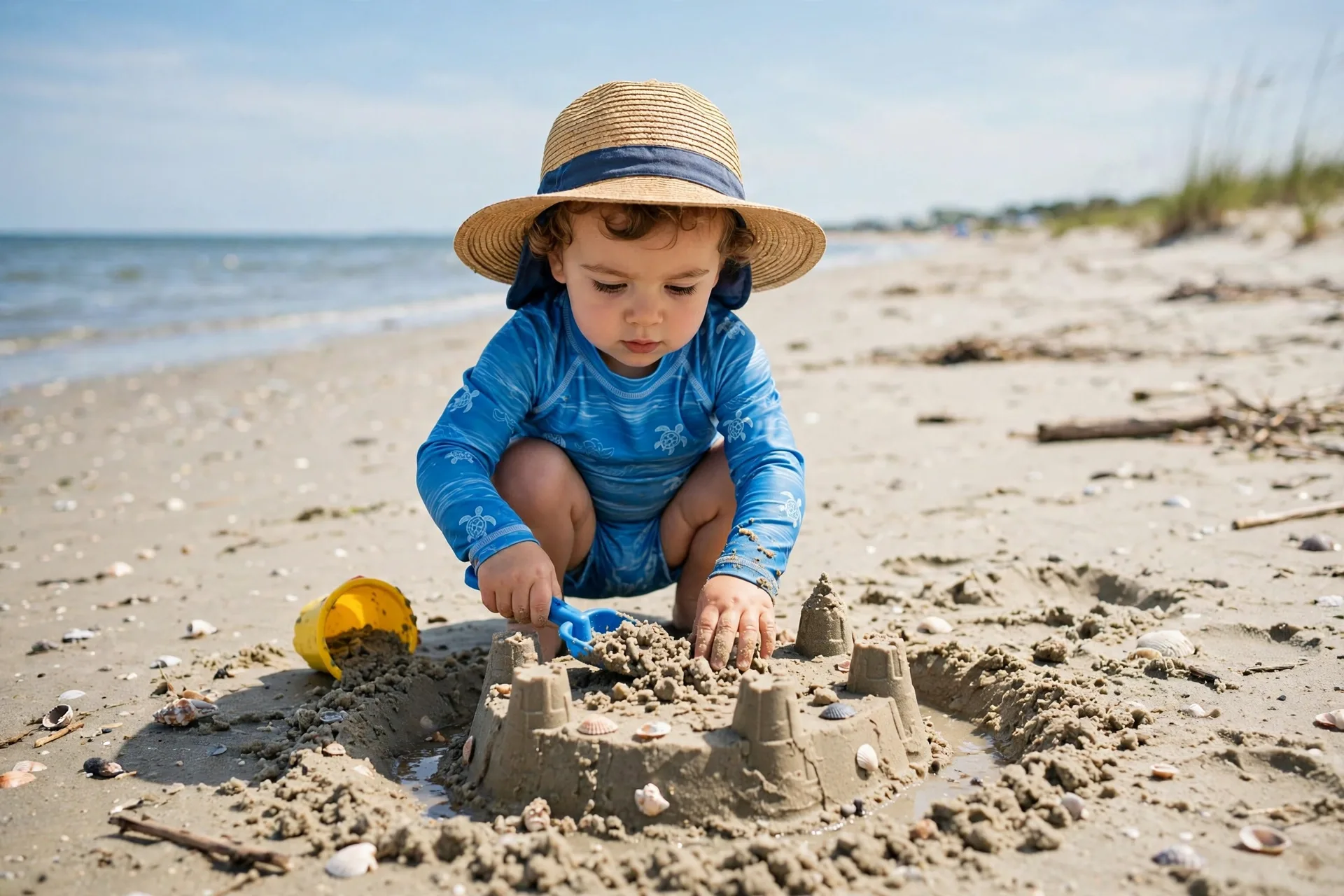
Sunscreen is the backup. Clothing is the first line of defense. A long-sleeve rash guard covers the shoulders and back that burn first, and a wide-brim hat shades the face, ears, and neck that sunscreen never quite reaches. Choose a hat with a chin strap, or it will be in the sea within five minutes.
Pack a spare hat, too. Hats get sandy, wet, and lost.
8. Babies under 6 months stay out of direct sun

The American Academy of Pediatrics advises that babies under 6 months stay entirely out of direct sunlight. Their skin is thinner, they cannot regulate temperature the way older children do, and most pediatricians suggest avoiding sunscreen altogether before 6 months. If shade is inadequate, the AAP says sunscreen may be applied to small areas like the face and hands.
So for a baby under 6 months, the beach trip is a shade trip: tent, lightweight long sleeves, a hat, and a short stay. Keep it to an hour or two, watch for fussiness or flushed skin, and head home at the first sign of overheating.
Water Safety
The water is the best part and the part that needs the most respect. These three tips are non-negotiable in our house.
9. Remember that swim diapers only contain solids

This is the tip nobody tells you until it is too late. A swim diaper contains solids. It does not absorb liquid the way a regular diaper does, so if your baby pees in the water, the pee escapes. Plan for that, and change out of the swim diaper for the ride home.
We pack the i Play Eco Snap reusable swim diaper. It has a patented triple-layer design: a wicking liner to keep skin dry, an absorbent inner layer, and a waterproof outer layer, plus easy-lock side snaps and UPF 50+ sun protection. It is machine washable and made from recycled polyester. Bring two, and check the fit before every swim.

i Play Eco Snap Reusable Swim Diaper
Patented triple-layer design: a wicking liner to keep skin dry, an absorbent inner layer, and a waterproof outer layer, plus easy-lock side snaps and UPF 50+ sun protection. Machine washable and made from recycled polyester. Bring two, and check the fit before every swim.
10. Bring a baby pool for safe splashing
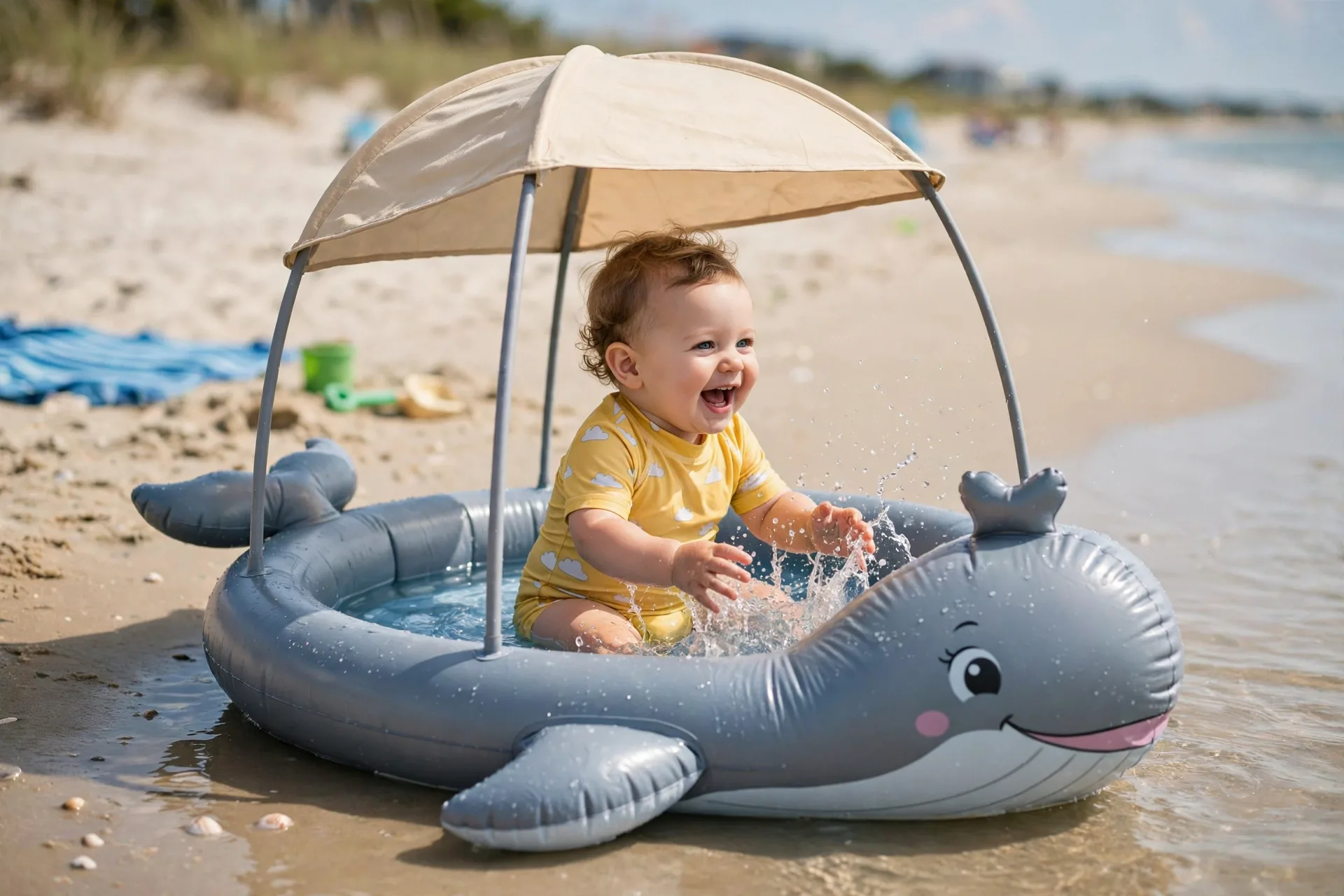
A small inflatable pool in the shade gives a baby their own private ocean. Fill it with a few inches of water and let them splash, pour, and sit without a wave ever knocking them over. It also keeps the sand out of their mouth for a while.
Our pick is the JOYIN inflatable shade kiddie pool. It measures about 54 by 56 by 28 inches, holds 14 gallons, and has a padded bottom and a sun-protection canopy built in. It meets US safety standards and is non-toxic. Never leave a child unattended in it, even with only a few inches of water.

JOYIN Inflatable Shade Kiddie Pool, Whale
Measures about 54 by 56 by 28 inches, holds 14 gallons, and has a padded bottom and a sun-protection canopy built in. It meets US safety standards and is non-toxic. Never leave a child unattended in it, even with only a few inches of water.
11. One grown-up is always on water watch
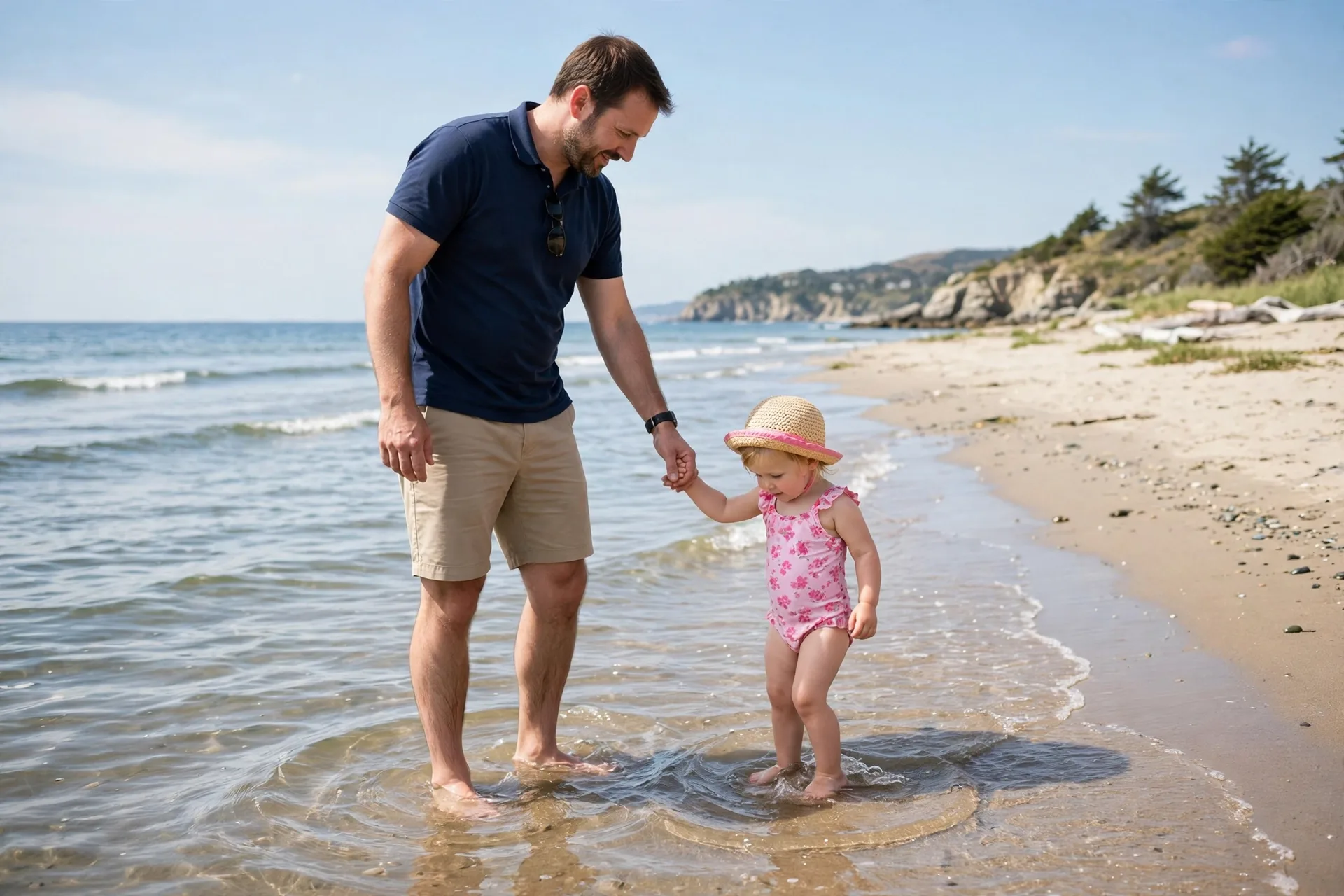
This is the most important tip in the whole guide. Whenever a child is in or near the water, one grown-up is the designated water watcher: within arm’s reach, eyes on the child, phone in a pocket. No checking messages, no chatting with the next blanket over. Take turns in shifts, so the watcher gets a real break.
The sea changes fast, even on a calm day. Stay in the shallows, hold hands at the shoreline, and never rely on inflatables as safety devices. A float is a toy, not a lifeguard.
Food, Naps, and Comfort
A fed, rested, comfortable toddler is a happy toddler. A hungry, tired, sandy one is a countdown to the car.
12. Pack the cooler like a lunchbox

Beach play and hot sun make for hungry kids, so pack like you are feeding a small army. Finger foods travel best: fruit slices, cheese cubes, crackers, and squeezable yogurt pouches. Watermelon and cucumber do double duty as snacks and hydration.
We carry it all in the Titan by Arctic Zone zipperless cooler. It holds 16 cans, has Deep Freeze performance insulation with a radiant heat barrier, and comes with a removable HardBody liner and SmartShelf that keeps sandwiches from getting crushed. Pack it with the frozen bottles from tip 4 and everything stays cold until lunch.

Titan by Arctic Zone Zipperless Cooler, 16-Can
Holds 16 cans, with Deep Freeze performance insulation and a radiant heat barrier, plus a removable HardBody liner and SmartShelf that keeps sandwiches from getting crushed. The adjustable shoulder strap has an anti-slip pad, and the outside wipes clean.
13. Guard the nap, even at the beach

A missed nap is the fastest way to end a beach day early. Plan the trip around the nap, not the other way around: go early and leave before nap time, or arrive after the nap and stay for the golden hour. If your toddler still naps midday, the shade tent from tip 5 doubles as a nap nook. Lay a familiar blanket inside, keep the mesh open for airflow, and let the waves do the rest.
Never cover a stroller with a blanket to make shade. It traps heat inside and the temperature climbs fast. Use the tent or a real patch of shade.
14. Water shoes save little feet

Sand gets hot enough to burn small feet by late morning, and shells and sharp stones hide in the shallows. Water shoes solve both problems at once. They also stop slips on wet rocks and pool decks, where most beach tears come from.
Our pair is the BARERUN toddler water shoes. They have a quick-dry breathable mesh upper, a hook-and-loop strap a toddler can manage, and a non-slip rubber sole with a closed toe cap that protects against rocks and shells. A grown-up helps with the first fitting so the strap sits snug but not tight.

BARERUN Toddler Water Shoes
Quick-dry breathable mesh upper, a hook-and-loop strap a toddler can manage, and a non-slip rubber sole with a closed toe cap that protects against rocks and shells. A grown-up helps with the first fitting so the strap sits snug but not tight.
Packing and Play
The last three tips are about what comes with you and how it all gets home again.
15. Bring sand toys, not the whole toy box
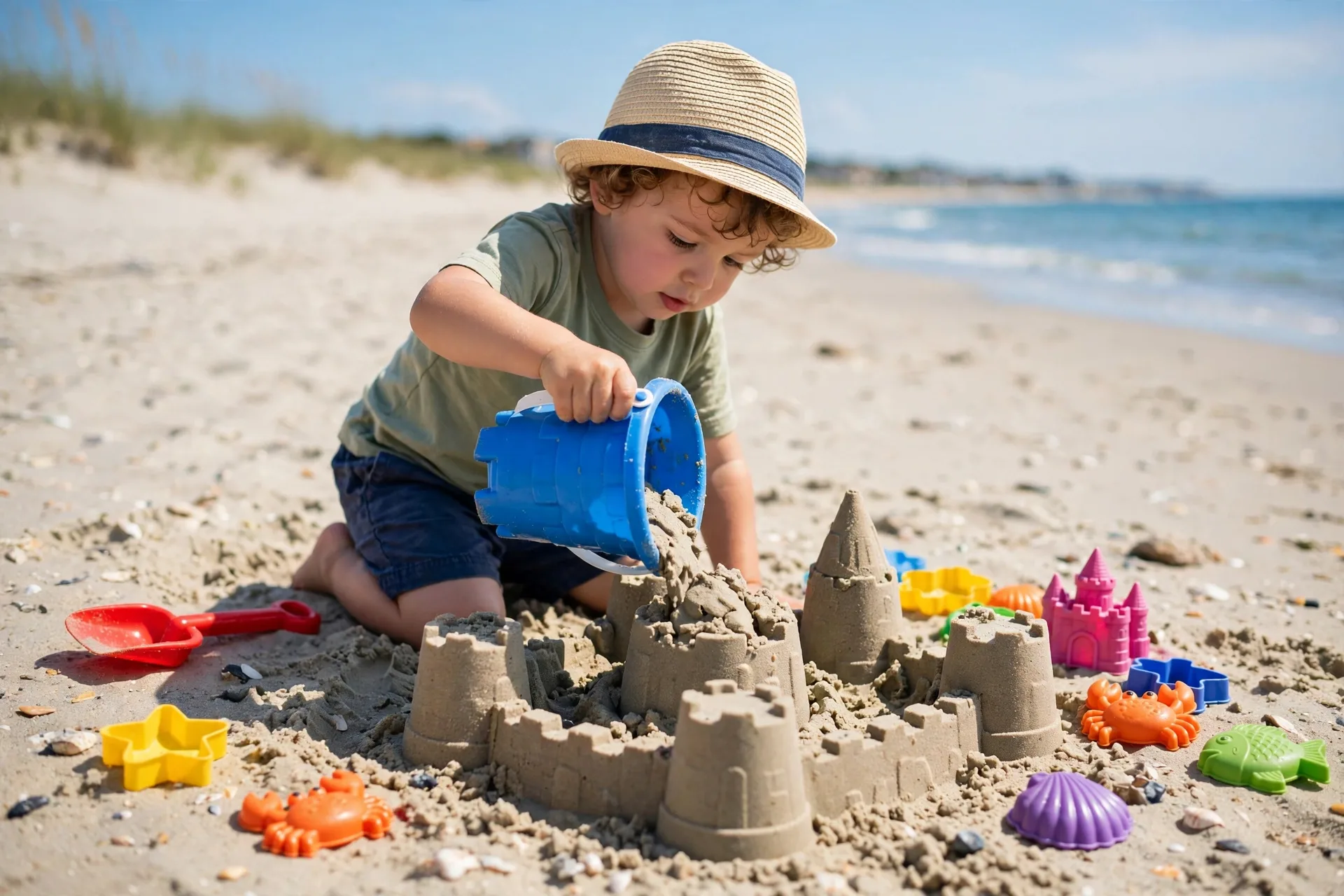
You do not need much. A bucket, a shovel, and a few molds will entertain a toddler longer than a bag full of toys ever will. Digging, pouring, and patting wet sand into shapes is the whole game.
We bring the FUSPWEAO 21-piece beach toy set. It has two castle buckets, four big molds, six small molds, four cake molds, two shovels, two rakes, and a mesh bag that shakes the sand out at the end of the day. The maker rates it for ages 3 and up, so for younger toddlers a grown-up picks the pieces. Keep small parts away from under-3 mouths.
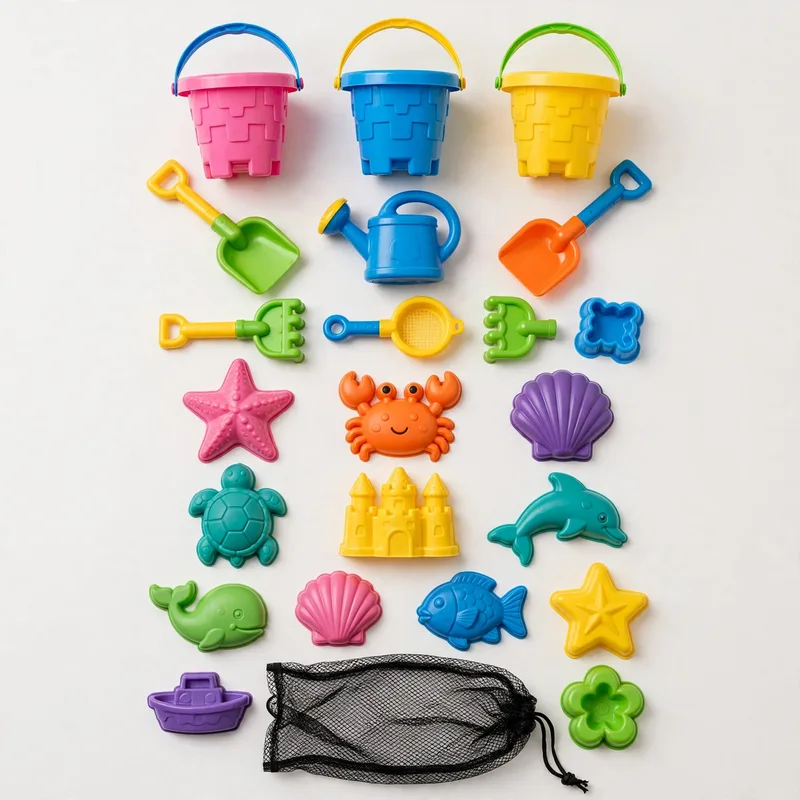
FUSPWEAO Beach Toy Set, 21 Pieces
Two castle buckets, four big molds, six small molds, four cake molds, two shovels, two rakes, and a mesh bag that shakes the sand out at the end of the day. The maker rates it for ages 3 and up, so for younger toddlers a grown-up picks the pieces.
16. Wet bags save the car ride home
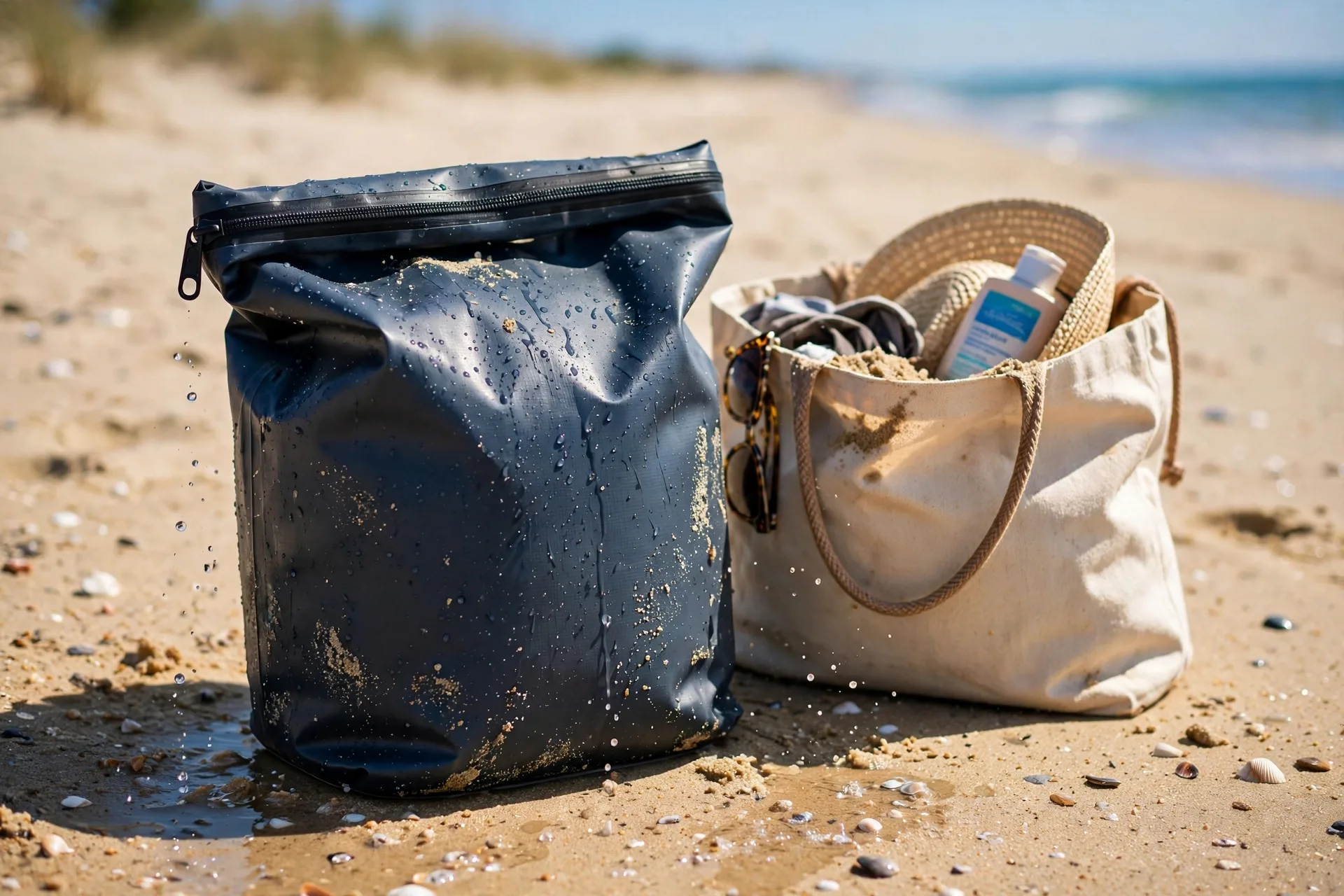
Everything at the beach ends up wet, sandy, or both, and it all rides home in the same car as your dry clothes. Wet bags are the answer. One for wet swimsuits, one for sandy clothes, and the dry stuff stays dry. Bring at least two.
We use the Bumkins waterproof wet bag. It measures 12 by 14 inches, has heat-sealed seams for true waterproof protection, and a snap handle that hooks onto a stroller or a beach bag. It fits about six cloth diapers, which is plenty for a day of wet swimsuits and sandy outfits. It is machine washable, so toss it in with the towels when you get home.

Bumkins Waterproof Wet Bag, 12 x 14 in
Heat-sealed seams for true waterproof protection, and a snap handle that hooks onto a stroller or a beach bag. It fits about six cloth diapers, which is plenty for a day of wet swimsuits and sandy outfits. Machine washable.
17. Let the wagon carry everything

This is the tip that changed our beach days the most. One trip from the car, everything in the wagon, no second load, no toddler melting down in the parking lot while you run back for the cooler.
Our wagon is the Mac Sports heavy duty collapsible beach wagon. It opens to about 31.8 by 21.5 by 17 inches, carries up to 150 pounds, and folds down to 9.7 inches thick with its own carry case. It weighs 23.1 pounds, has extra-large wheels for sand, and two mesh cup holders. One honest note from the maker: it is not made to transport children, so the kids walk and the gear rides.

Mac Sports Heavy Duty Collapsible Beach Wagon
Opens to about 31.8 by 21.5 by 17 inches, carries up to 150 pounds, and folds down to 9.7 inches thick with its own carry case. It weighs 23.1 pounds, has extra-large wheels for sand, and two mesh cup holders. One honest note from the maker: it is not made to transport children, so the kids walk and the gear rides.
Free Packing Checklist (Printable)
Do not trust your memory at 6 in the morning. Print the checklist, stick it on the fridge, and tick things off as they go in the bag.
⬇ Download the free beach trip packing checklist (PDF)
The checklist covers shade, sun protection, swim gear, food and water, comfort, and cleanup, with a box to tick next to every item. Print it on US Letter paper; a grown-up runs the printer. If you print a lot of checklists and coloring pages, a refillable ink-tank printer changes the math. Epson rates one ink set at 4,500 black and 7,500 color pages, so a one-page checklist costs almost nothing in ink.
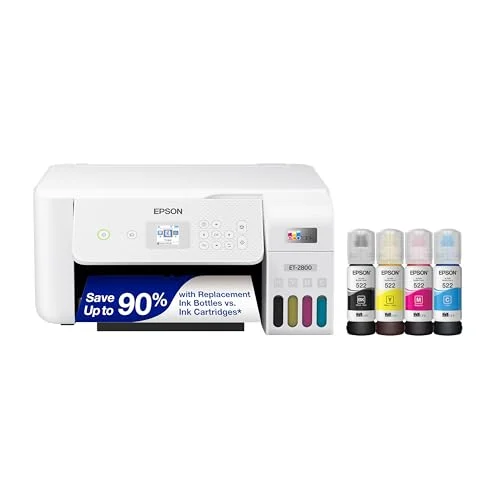
Epson EcoTank ET-2800 Printer
The one upgrade that changes the math on a print-heavy week: a refillable ink-tank printer, so no cartridges at all. Epson rates one ink set at 4,500 black and 7,500 color pages, so a one-page checklist costs almost nothing in ink.
Want the bigger pack? A full beach-trip pack with a 7-day beach holiday planner, a toddler beach activity book, and a laminated quick-reference card is in the works. The free checklist above stays free forever.
Shop This Post
Everything used in this guide, in one place:
| Product | Used For | Price |
|---|---|---|
| Kapeazo Baby Beach Tent, UPF 50+ |
Shade first: the cool retreat for naps and breaks | Check Price |
| Blue Lizard Baby Mineral Sunscreen SPF 50+, 5 oz |
First coat at home, reapply every 2 hours | Check Price |
| i Play Eco Snap Reusable Swim Diaper |
Swim diapers: contains solids, machine washable | Check Price |
| JOYIN Inflatable Shade Kiddie Pool, Whale |
Safe splashing in the shade, away from the waves | Check Price |
| Titan by Arctic Zone Zipperless Cooler, 16-Can |
Cold snacks, fruit, and frozen bottles all day | Check Price |
| BARERUN Toddler Water Shoes |
Hot sand, sharp shells, and slippery rocks | Check Price |
| FUSPWEAO Beach Toy Set, 21 Pieces |
Buckets, shovels, and molds for sandcastles | Check Price |
| Bumkins Waterproof Wet Bag, 12 x 14 in |
Wet swimsuits and sandy clothes ride home dry | Check Price |
| Mac Sports Heavy Duty Collapsible Beach Wagon |
One trip from the car with everything in it | Check Price |
| Epson EcoTank ET-2800 Printer |
Printing the free packing checklist | Check Price |
Frequently Asked Questions
What age can a baby go to the beach?
There is no exact age. Babies under 6 months can enjoy brief beach trips as long as they stay fully shaded and out of direct sun.
Can babies wear sunscreen at the beach?
Babies older than 6 months can and should use a mineral sunscreen with zinc oxide at SPF 30 or higher. For babies under 6 months, keep them out of the sun and in protective clothing, and only use sunscreen on small areas like the face and hands if shade is inadequate.
How long should a baby stay at the beach?
Keep it between one and three hours and avoid peak sun. Under 6 months, one to two hours is plenty. Head home while everyone is still happy.
What should babies wear to the beach?
Coverage is key: a long-sleeve rash guard, a wide-brim hat with a chin strap, and a swim diaper.
How do I keep sand off my baby?
Sprinkle baby powder or cornstarch on dry, sandy skin and brush it off with your hands. A baby pool or a beach mat keeps a sand-free patch for the littlest ones.
What do I really need for a baby beach day?
Shade, sunscreen, towels, hydration, diapers, wipes, feeding supplies, and protective clothing. The free checklist at the end of this guide has the full list.
Can babies go in the ocean?
Dip their tiny toes in calm water, but wait until they are at least 6 months old and can hold their head up before going further, and even then keep them in your arms and under close supervision.
That is the whole plan: go early, shade first, sunscreen at home, one grown-up always watching the water, and a wagon that carries it all. Start with tip 1 tonight, print the checklist, and let the beach do the rest.
More toddler guides on MamaKinder