27 Smooth Road Trip With Toddlers Tips for a Calmer Drive

A road trip with a toddler sounds simple until the first hour, when the snacks run out, the sun hits the car seat, and the whining starts. We have driven hundreds of miles with a four-year-old and a two-year-old, and the trips that worked all had the same secret: the car was ready before we left. This guide has 27 tips that make the drive calmer, grouped by what they fix. Our toddler parenting tips guide has the daily routines that make travel days easier, too. Ages are listed wherever the maker states one.
Heads up: this post contains affiliate links. If you buy through them, MamaKinder may earn a small commission at no extra cost to you, and it helps keep these guides free.

Pick Your Tips by Trip Length
Use this table to pick fast.
| Trip length | Start with |
|---|---|
| 1 hour | 1, 5, 12 |
| Half a day | 2, 7, 13, 17 |
| A full day | 3, 6, 11, 14, 23, 26 |
The 27 Smooth Road Trip With Toddlers Tips
Before You Leave
1. Leave at Nap Time

Start the drive when your toddler usually naps. A sleepy toddler often falls asleep in the first 20 minutes, and you get a quiet stretch for free. If naps do not line up, leave right after lunch. The goal is the same: cover the first miles while your toddler sleeps. A nap that starts in the car usually lasts longer than one at home.
2. Drive in Short Stretches

Plan to stop every two hours, even if nobody asks. Toddlers need to move, stretch and use the bathroom often. A 15 minute stop at a rest area beats 45 minutes of crying in the back seat. Short stretches keep everyone kinder. A stop with a fenced playground beats a gas station every time.
3. Map Playgrounds Before You Go

Look at your route the night before and mark two or three parks near the highway. A stop with a slide and open grass resets a toddler far better than a gas station parking lot. Pick the stops now, so you are not searching while your toddler melts down. Pick stops with shade and a bathroom, not just the biggest slide.
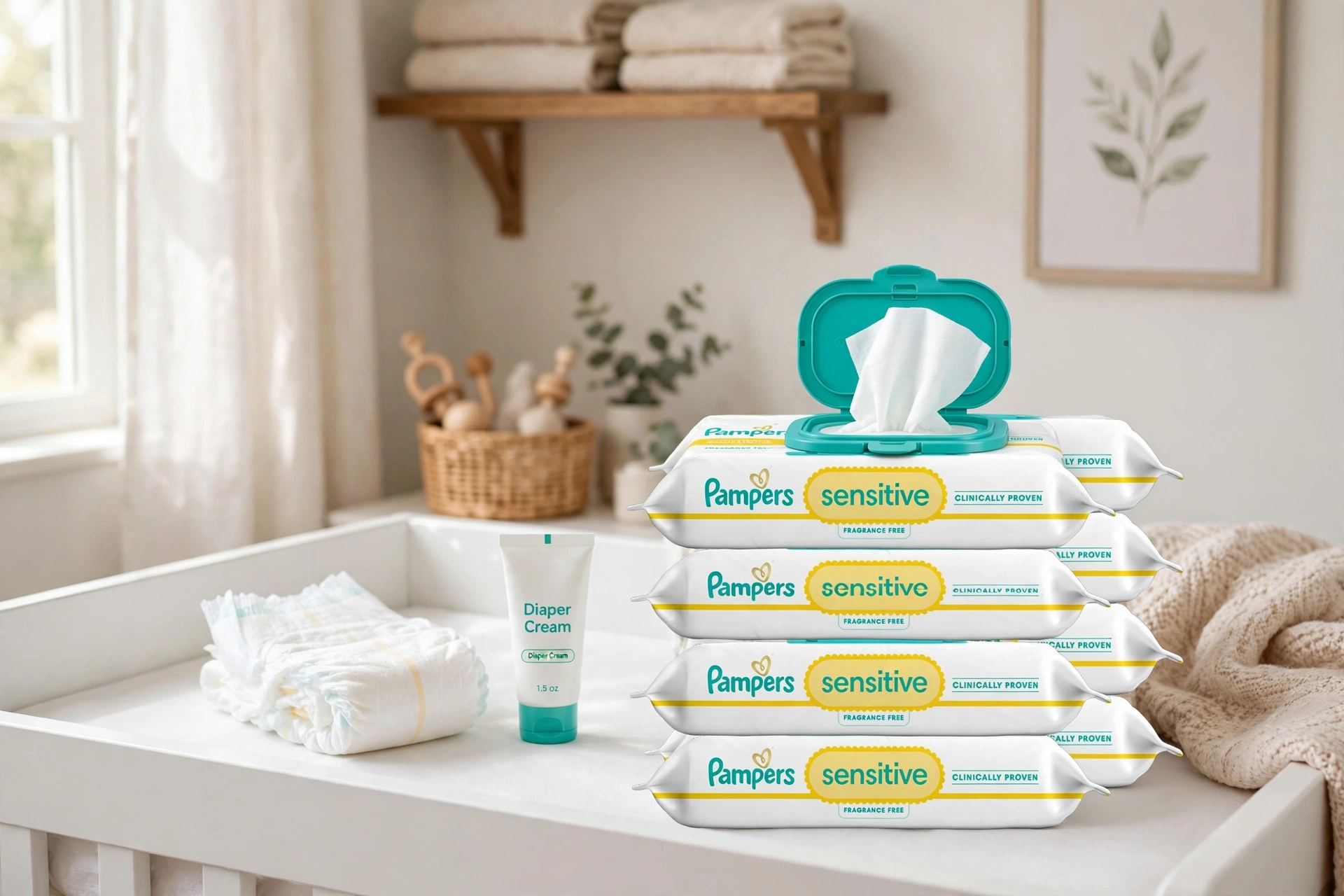
4. Pack a Rest-Stop Bag

Keep one small bag by the door with diapers, wipes, a change of clothes and a snack, and take only that bag into rest stops. Nothing you need while driving goes in it. When you stop, you grab one bag, not the whole trunk. Keep it light enough to carry with one hand while holding your toddler.
5. Set Simple Car Rules

Before you leave, agree on three car rules: bottom in the seat, inside voice, hands to yourself. Say them once, and repeat them at every stop. Toddlers follow rules they helped say out loud far better than rules shouted from the front seat. Three rules are enough to remember, and five are too many.
6. Pack a Spill Kit
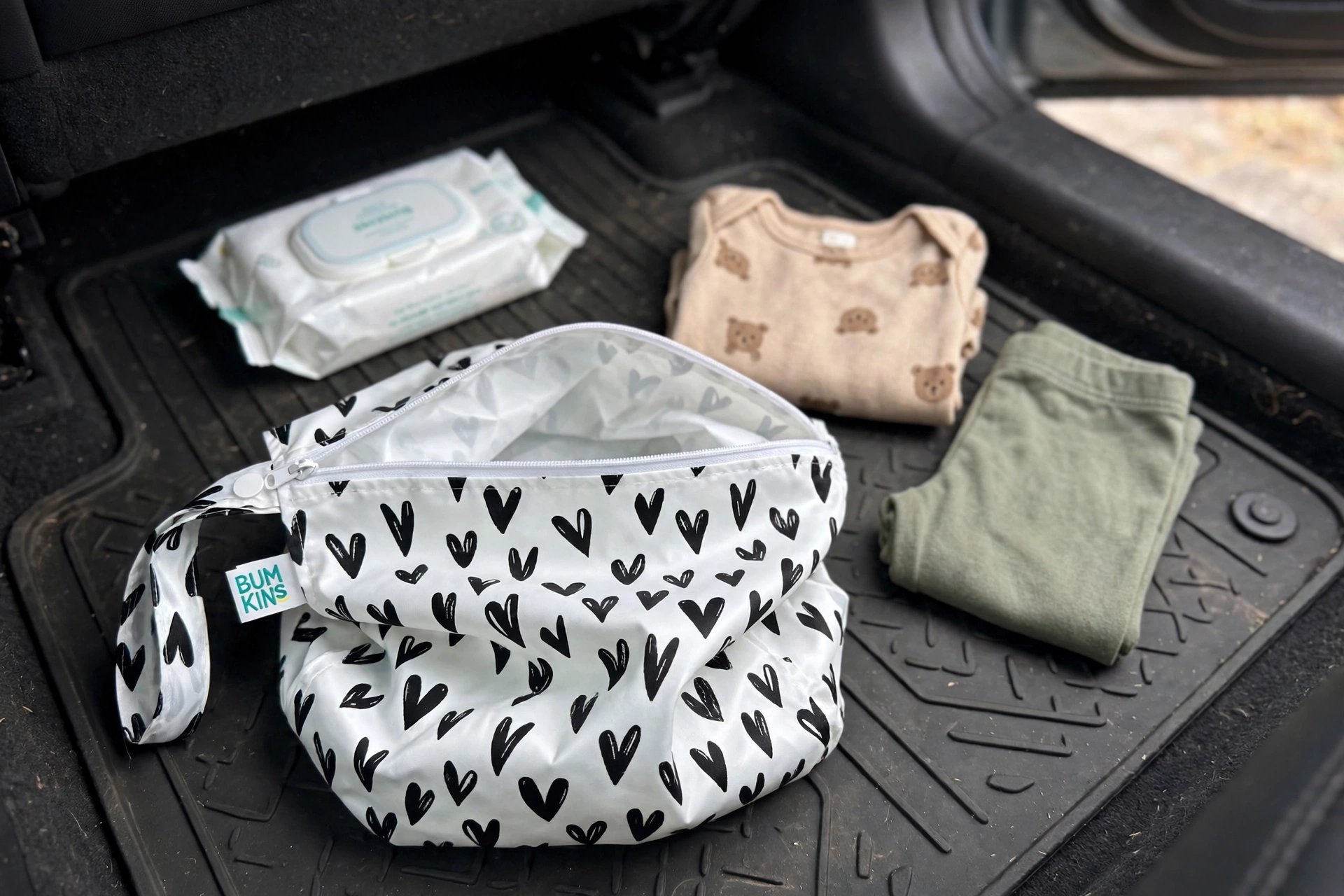
Spills will happen. Keep a wet bag with a spare outfit, wipes and a small towel in the footwell, not the trunk. When juice lands on a shirt, you change it in two minutes and drive on. A wet bag keeps the wet things away from the clean things. A spare outfit in the bag saves a wet drive home in damp clothes.

Comfort in the Car Seat
7. Give the Car Seat a Travel Tray

A travel tray turns a car seat into a small table. Snacks, crayons and toys stay on the tray instead of the floor, and your toddler can see everything without unbuckling. Strap it on before you leave, with the tray already loaded for the first hour. Load the tray the night before, so the morning is just buckle and go.
8. Block the Sun

Afternoon sun in a toddler’s eyes ends naps fast. Press static cling shades onto the back windows before you leave. They block glare and UV rays, and they peel off without marks when the trip ends. Keep one spare shade in the glove box for the other side. Test the fit the night before, because a sliding shade helps nobody.
9. Bring a Neck Pillow for Naps

A soft neck pillow keeps a sleeping head from flopping forward at every turn. The Wolf Essentials pillow is made for ages 3 and up, it is machine washable, and it is light and easy to pack. For a one or two year old, use their own small pillow from home instead. Try it on a short drive first, so a slipping pillow stays home.
10. Pack a Cozy Blanket

Bring the blanket your toddler sleeps with at home, not a new one. A familiar blanket signals sleep, even in a strange car, and it doubles as a lap cover when the air conditioning runs cold. Tuck it where you can reach it without stopping. A blanket that smells like home works faster than a new one.
11. Bring the Travel Potty

A newly potty trained toddler gives you about 90 seconds of warning. The OXO Tot 2-in-1 Go Potty folds into its own travel bag, works as a standalone potty with disposable bags or as a seat on a public toilet, and three bags come in the box. Practice the fold at home first, not in a parking lot.
Snacks That Travel Well
12. Use Snack Cups That Do Not Spill
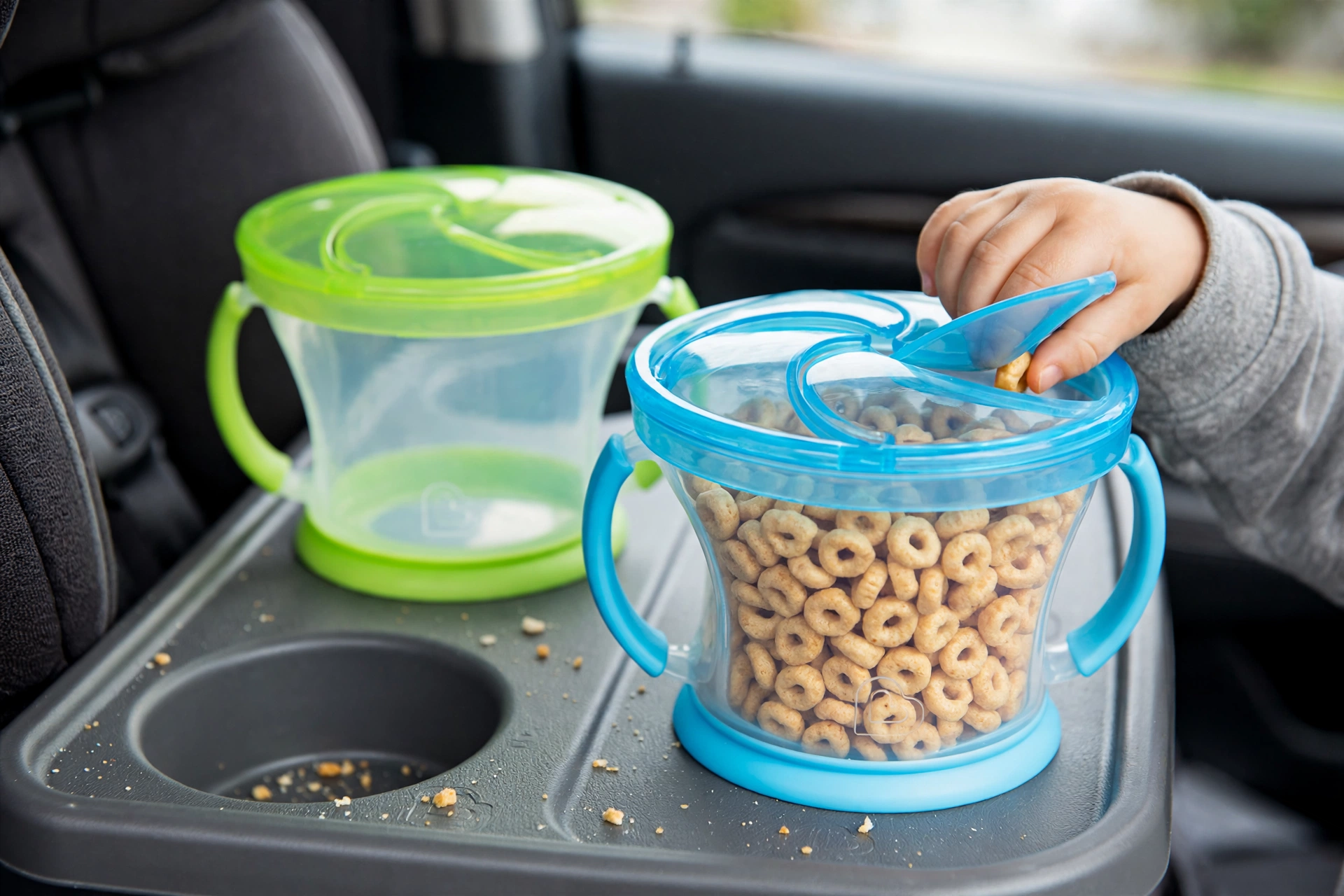
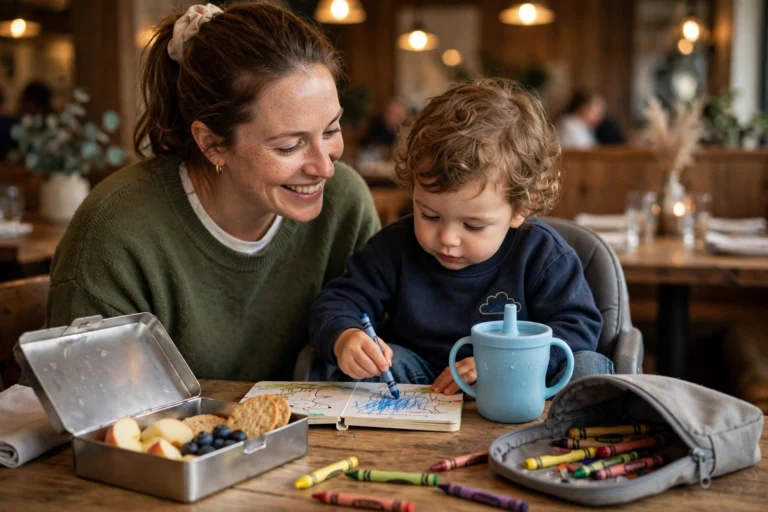
Hand your toddler the cup, not the bag. Munchkin Snack Catcher cups have soft flaps that let little hands reach in without tipping the snacks out, they hold 9 ounces, and they are made for ages 12 months and up. Fill two before you leave: one for now, one for later. Dry snacks travel best, since sticky ones turn the tray into a mess.
13. Pack a Small Cooler

A small cooler keeps cheese, fruit and drinks cold for the whole drive, and it stops you buying fast food at every exit. The Titan 9 can cooler has a hard liner and a shelf that keeps soft food from getting crushed. Pack it the night before, so the morning stays calm. Freeze a water bottle overnight and let it double as the ice pack.
14. Bring a Leak-Proof Bottle

A bottle that leaks soaks a car seat in minutes. The Thermos Funtainer holds 12 ounces, keeps drinks cold for 12 hours, and its straw lid stays shut. For younger toddlers, the Munchkin Miracle 360 cup drinks from any edge and seals itself when they stop. Fill it the night before and set it by the door.

15. Serve Lunch in a Bento Box

Pack lunch in a bento box and hand it over when everyone is hungry, then stop 30 minutes later to play. The Bentgo Kids box is leak proof, has its own ice pack, and is made for ages 3 to 7. Pack finger food, because a spoon and a moving car rarely mix.
16. Eat in the Car, Play After

Stopping for a meal with toddlers takes 45 minutes. Eating in the car takes the same 45 minutes and moves you 40 miles down the road. Drive through, eat while you drive, then stop at a park so your toddler can run. The meal becomes part of the trip, not a delay. Keep a trash bag beside the seat for wrappers and peels.
Activities That Hold Attention
17. Fill a Book Basket

Put five to ten books in a basket at your toddler’s feet. Old favorites first, because toddlers love repeats, then one new book for the second half. The Wonderful Things You Will Be and The Very Hungry Caterpillar are the two our kids ask for by name on every trip. A loved book buys more quiet minutes than a brand new one.


18. Stickers That Peel and Restick

Reusable stickers are the quietest activity in the car. The Melissa and Doug puffy sticker books come as a set of three with 118 reusable stickers, and they are made for ages 4 and up. Peel the backing off the first sheet, so your toddler can start alone. Start with one sheet out and the rest in the bag.
19. Color With Water, Not Ink

Water Wow books color with a refillable water pen, so there is no ink on hands, seats or clothes. The Fairy Tale book has four scenes and a search and find game on each page, and it is made for ages 3 and up. When a page dries, it erases itself. Refill the pen at every stop, so the game never ends mid-page.
20. Doodle on an LCD Tablet

An LCD tablet gives your toddler a fresh page with one tap and no paper to lose. The KOKODI 10 inch tablet has a colorful screen, a stylus that stores on the side, and a battery that only powers the erase button. It is made for ages 3 and up. Keep the stylus clipped on, since a lost one ends the drawing.
21. Build With Magnetic Tiles

Give your toddler two or three magnetic tiles at a time on the travel tray. Playmags tiles click together into towers and houses, and the 100 piece set comes with letter tiles and an idea book. The set is made for ages 3 and up. Count the tiles as you pack up, so none hide under the seat.
22. Color With Washable Markers

Washable markers turn the tray into an art table. Crayola washable markers wash off skin and most clothing with soap and water, and the broad tips are easy for small hands to hold. Pack a small notebook, not loose paper, so nothing slides off the tray. A dark shirt hides the marks that soap and water miss.
23. Play Audiobooks With Volume-Limited Headphones

Audiobooks carry the middle hours of a long drive. CozyPhones are a soft headband with thin speakers inside, they limit volume to protect little ears, and they are made for ages 3 and up. Start with a story your toddler already knows, so the listening feels easy. Save the story offline before you leave, because dead zones arrive mid-chapter.
When Things Go Wrong
24. Keep Carsickness Bags Within Reach

Carsickness arrives without warning, and a spare bag is never ready. ATDAWN emesis bags come 50 to a pack, hold over 1000 milliliters, and twist shut into a ring so nothing leaks or smells. Keep two in the seat pocket, not in the trunk. A bag that seals keeps the smell in, which matters on a hot day.
25. Carry a Small First Aid Kit

A scraped knee at a rest stop should not end the trip. The Johnson and Johnson Travel Ready kit has 80 pieces, including bandages, cleansing wipes, antibiotic ointment and gauze pads, in a case that fits in the glove box. Check it before you leave and refill what you used last time. Tuck a small trash bag beside it for used wipes and wrappers.
Johnson & Johnson Travel Ready First Aid Kit
80 pieces: bandages, wipes, ointment, gauze.
26. Wrap a Surprise for the Hard Hour
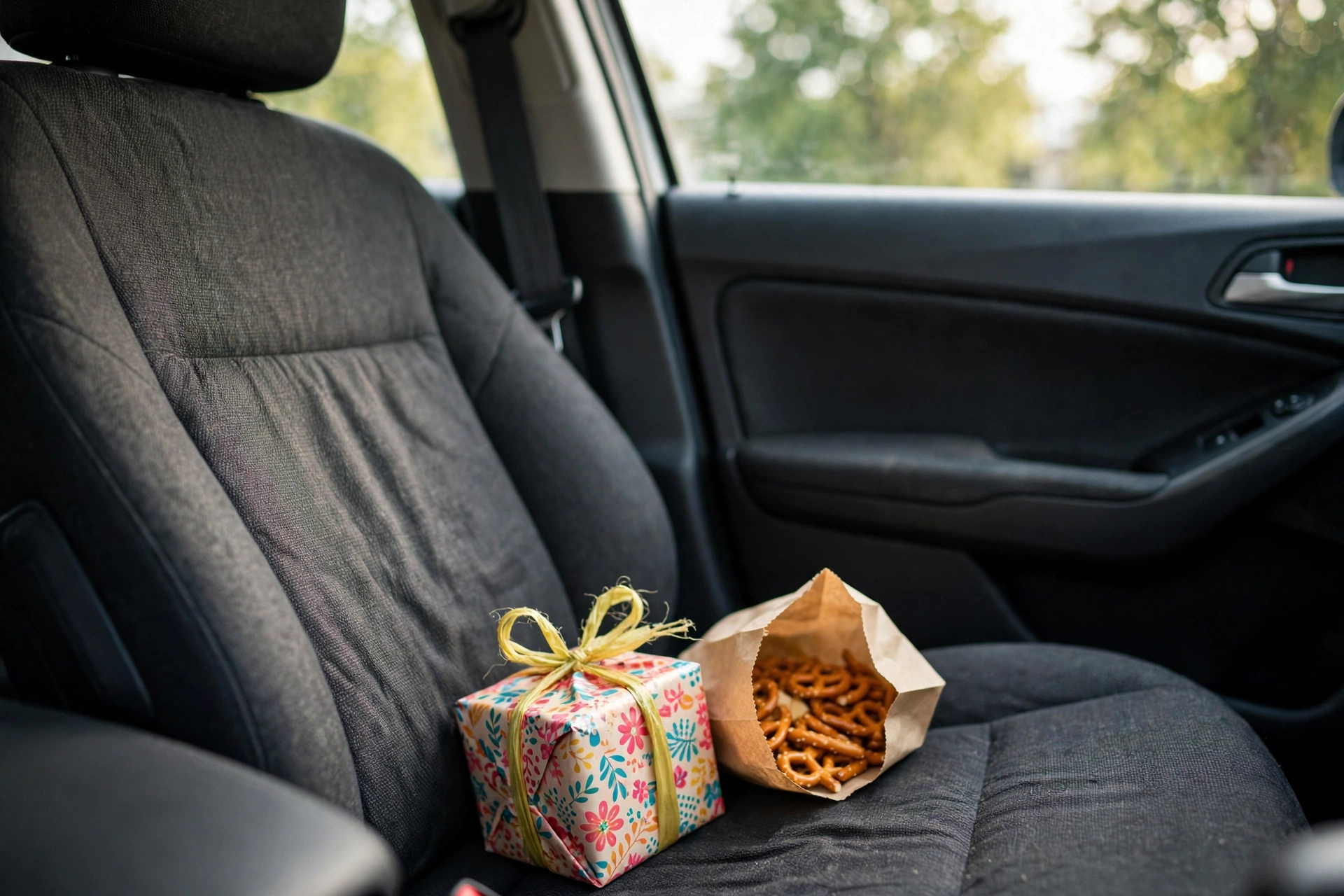
Every long drive has one hard hour, usually the last one. Wrap a small new toy or snack in paper before you leave and hand it over when the whining starts. The unwrapping buys a few minutes, the new toy buys twenty more, and the trip is nearly over by then. Hide it well, or the surprise will be unwrapped before the hard hour.
27. Give Everyone Grace

No plan survives a toddler perfectly. Someone will spill, someone will cry, and you will stop more than you planned. That is a normal road trip with a toddler, not a failed one. Arrive late, hug your toddler at the door, and remember the trip was the point. The trips you remember fondly are rarely the smooth ones.
Car-Seat Safety on the Road
Your car seat is the most important gear on the trip. Keep your toddler rear facing as long as the seat allows, up to its height and weight limits, and check the manual before you leave. The harness should sit snug, with no slack you can pinch at the shoulder, and the chest clip at armpit level. Skip bulky coats in the seat, since padding compresses in a crash and leaves the harness loose. Use only the inserts your car seat maker approves. Never leave your toddler alone in the car, not even for a quick stop.
The Expanded Road Trip Pack
Want the bigger pack?
These 27 tips are free and complete on their own. A paid expanded pack is planned for families who want more: 40 extra road-trip games and a packing checklist in one place. There is no buy link yet.
Shop This Post
Everything with a link in this guide:
Frequently Asked Questions
How long can a toddler ride in a car? Plan for no more than 3 to 4 hours of driving a day with a toddler, with a stop every two hours. A one year old needs shorter stretches than a three year old.
What is the best time to leave on a road trip with a toddler? Leave at nap time or right after lunch, when your toddler is ready to sleep. An early morning start works too, if your toddler wakes happy.
How do I stop carsickness on a road trip? Keep your toddler looking forward, open a window for fresh air, and stop at the first sign of nausea. Keep emesis bags in the seat pocket, and ask your pediatrician before the trip if your toddler gets sick often.
What if my toddler cries the whole way? Pull over, hold your toddler, and check the simple things first: hungry, wet, tired, too hot, or a strap that pinches. Most backseat crying has a small cause, and a 15 minute stop fixes it.
Start With Three
You do not need all 27 tips. Pick three: one timing tip, one snack tip, and one activity tip. Pack them tonight, leave at nap time tomorrow, and let the first trip teach you what your toddler needs.