Halloween Scavenger Hunt PDF: 21 Free Printable Clues for Spooky Fun

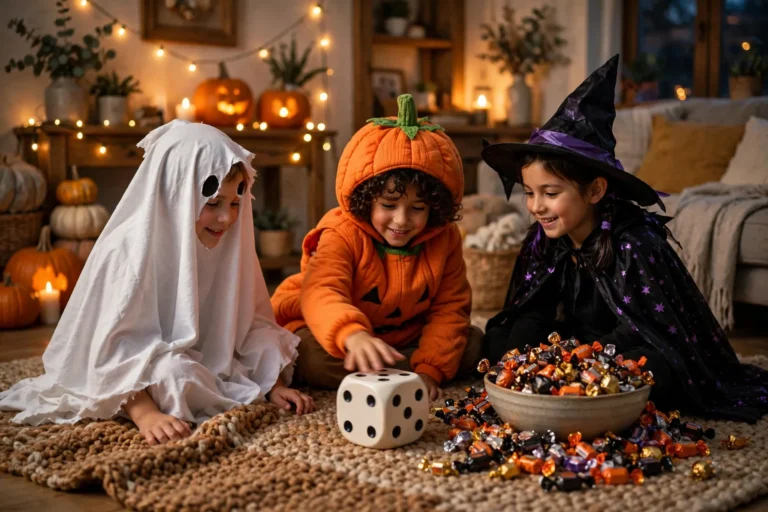
Last October, my four-year-old announced she wanted to “hunt for Halloween,” and my two-year-old announced — with great confidence — that she would carry the bucket. So we did a scavenger hunt instead: I hid Halloween things around the house and yard, wrote little rhyming clues, and the four-year-old read while the two-year-old pointed and shrieked with delight at every find.
It was the best Halloween activity we did all month. So this year I made it into a proper printable: 21 rhyming clues on a check-off sheet, plus a grown-up setup guide with the safety rules I wish someone had handed me last year. No email gate, no watermark, no “sign up to unlock” — it’s right here, free, ready to print tonight.
Heads up: this post contains affiliate links. If you buy through them, MamaKinder may earn a small commission at no extra cost to you — it helps keep these guides free.
Quick Picks: Which Hunt Tonight?
| If this is you… | Start with |
|---|---|
| Rainy day, everyone’s indoors | The Indoor Hunt — all 21 clues work inside; stage while they nap |
| Dusk in your own yard | The Night Hunt — glow sticks on, tea lights marking hiding spots |
| Trick-or-treat route with friends | The Neighborhood Walk — look-don’t-touch rules, spot decorations |
| A classroom or party group | The Classroom Hunt — one sheet per kid, buddy pairs, 20 minutes |
The Free Printable: What’s Inside
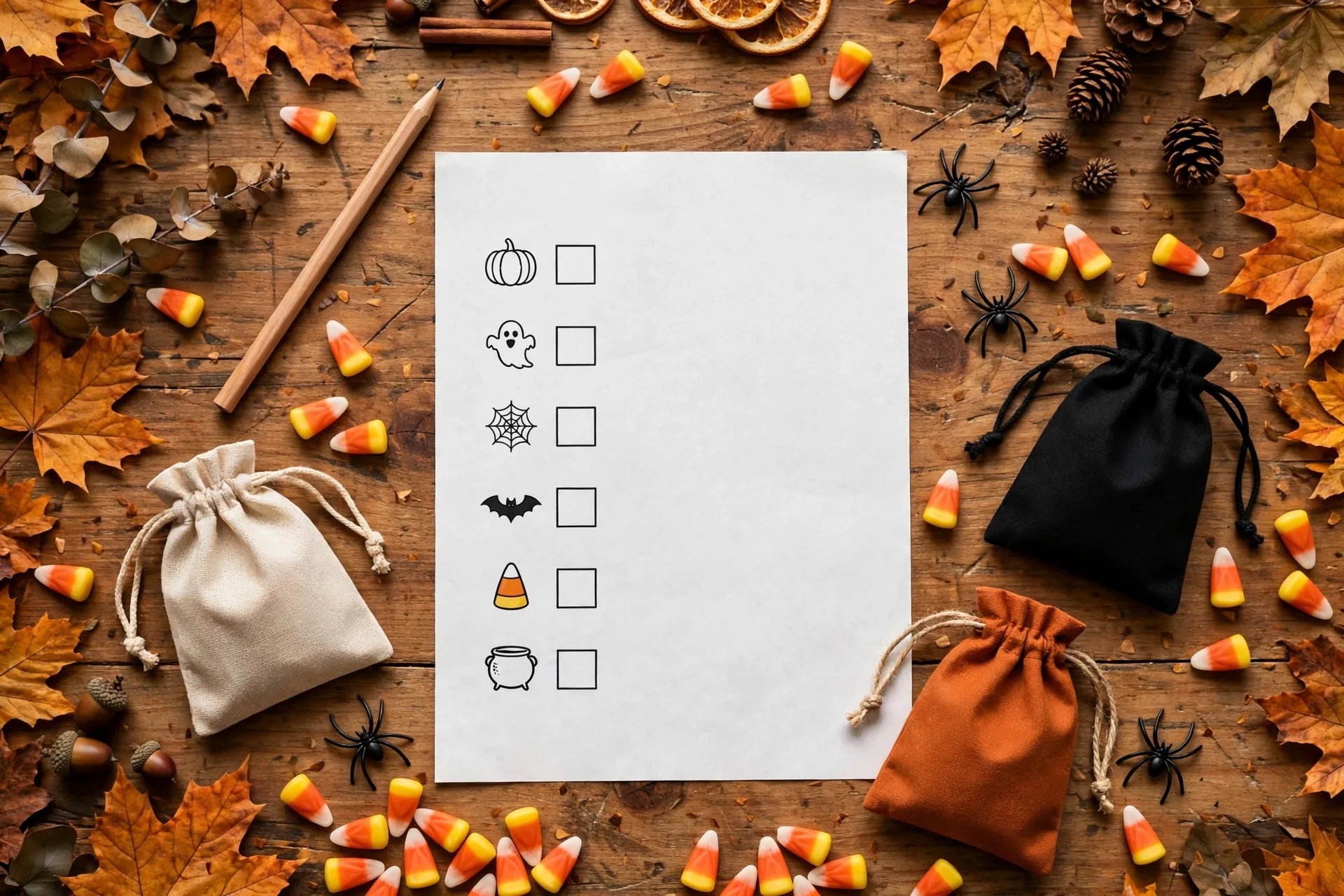
Two pages, US Letter size, made for this article — no email gate, no watermark games.
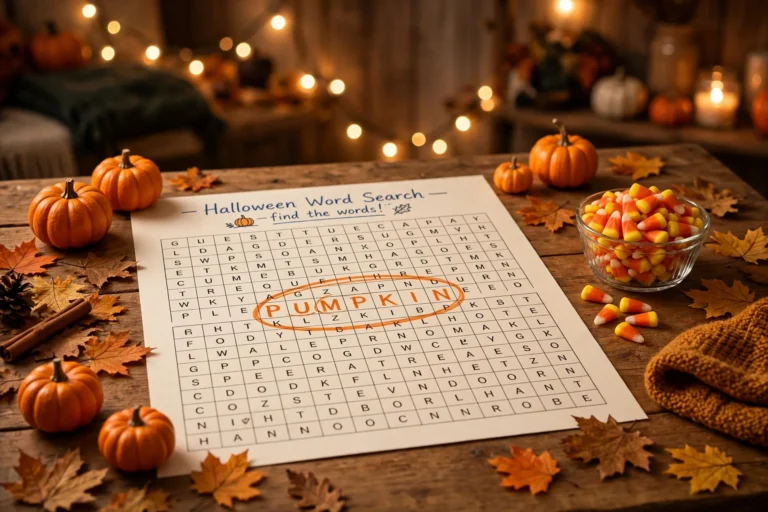
Page 1 — the check-off sheet. All 21 rhyming clues with an empty box beside each one. Kids read (or hear) each clue, find the item, and check it off. The clues are written so a grown-up can read them aloud to a two-year-old and a six-year-old can read them solo.
Page 2 — the grown-up setup guide. How to stage the hunt in ten minutes, how to read clues by age, the safety rules to read aloud before anyone moves, and prize ideas. Keep it on your phone or print one copy for yourself — the kids get page 1 only.
Download the Free Printable (PDF, 2 pages)
Free for personal and classroom use. If your printer asks, choose “Fit to page” — the sheet is US Letter.
Print It Right the First Time
One per kid, plus two spares. Someone always wants a second round, and a spare beats a mid-hunt printer queue. For a classroom, print the setup guide once for yourself — the kids get page 1 only.
Color if you can, black and white if you must. The sheet is designed to read clearly in grayscale — the checkboxes and clue numbers carry it.
Plain paper is fine; cardstock is better. Cardstock survives a toddler’s grip and a damp evening. The one upgrade actually worth it.
Walk the space yourself first. Before the kids see a single clue, walk your route and stage every item where its clue points. Every box on that sheet should be honestly findable — nothing kills a hunt faster than a clue that leads nowhere.
Clipboard for the couch. Hunts that start indoors need a hard surface under the sheet — a clipboard, or any hard book in a pinch.
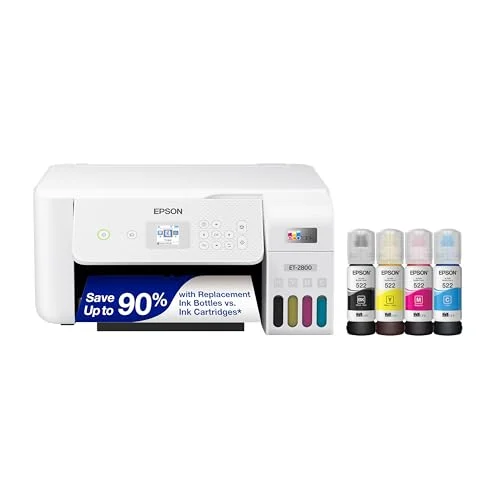
Epson EcoTank ET-2800 Printer
If your hunt prints run to a sheet per kid plus spares — or a whole classroom stack — the printer matters as much as the paper. The EcoTank ET-2800 uses refillable ink tanks instead of cartridges, and Epson rates one ink set at up to 4,500 black and 7,500 color pages, with up to 2 years of ink in the box. That turns a last-minute reprint from a cartridge panic into a non-event.
How to Run a Hunt (Rules, Teams, Timing, Prizes)
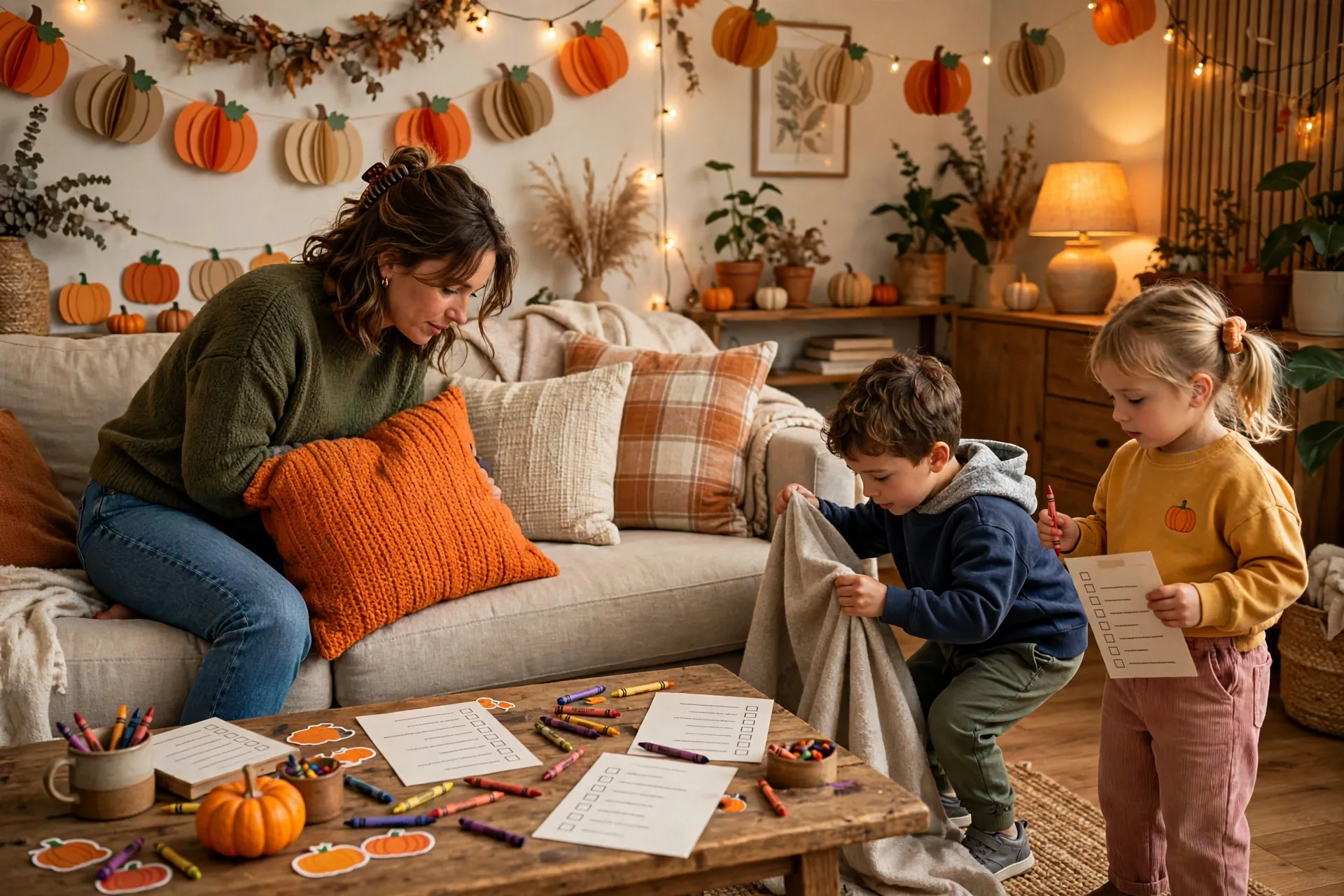
The rules fit in sixty seconds:
- Hand out the sheet. One per kid, pencil or crayon each. Read clue #1 aloud together.
- Find, don’t take. Kids look for the item and check the box — most items stay where they are. You only need to look; there is nothing to collect. (If an item can’t be found where you are — a full moon on a cloudy night — agree that spotting a picture of it counts.)
- Stay in the hunting area. Agree on the boundaries before clue #1: this room, this yard, this block. Nobody hunts alone — see the safety section below.
- Check in. Pick one spot as home base. Anyone who gets separated goes back to home base; the grown-up does headcounts there.
Teams that actually work. Ages 2–3 hunt with a grown-up, always — the grown-up reads, the toddler points. Ages 4–6 can pair up as buddies with one grown-up per pair. Ages 7+ can run in teams of two or three with a grown-up watching the area. Mixed-age siblings make the best team: the big kid reads the clue, the little kid does the finding, and nobody is the slow one.
Timing. Fifteen minutes for an indoor hunt with little kids — their attention is the real timer. Twenty to twenty-five minutes for a yard or neighborhood hunt. Set a phone timer and call everyone back to home base when it buzzes, finished or not. You do not need to find every item to enjoy the hunt.
Prizes. Nobody “loses” a scavenger hunt at our house. Everybody who finishes gets something — and clue #21 hides the real prize wherever your treats live (the cookie jar in our house). Non-candy prizes work great: stickers, a glow bracelet, picking tomorrow’s breakfast.
Hunt Safety: Read This Before Night Hunts
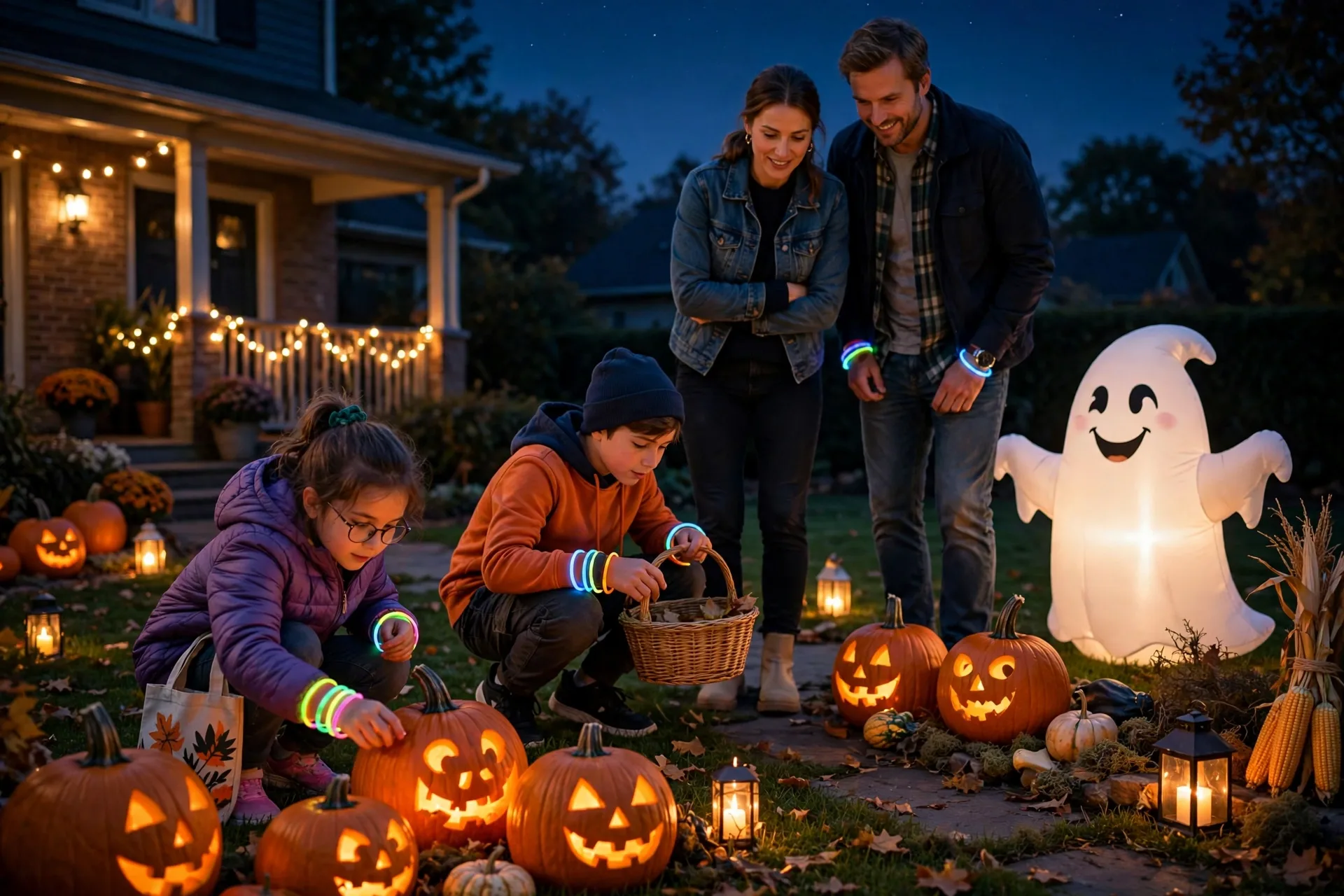
This is the section I care about most. A scavenger hunt after dark is magical — and it needs grown-up rules, stated out loud, before anyone takes a step.
A grown-up watches the whole time. Not from the porch with a phone — eyes on the kids, the full hunt. After dark, there is no solo hunting, not even for the confident seven-year-old.
Stay in your own yard or the agreed route. This is the big one: never enter a stranger’s yard, even if the coolest decoration on the block is in it. On a neighborhood walk, kids look from the sidewalk. If your hunt crosses to neighbors’ houses, those neighbors agreed in advance and their porch lights are on.
Be visible. Every hunter wears something that glows or reflects: glow stick bracelets (a grown-up cracks and activates them), light-colored clothes, reflective tape on the treat bag. A kid you can see is a kid who’s safe.

Glow Sticks — 100 Pack
Night-hunt visibility — a grown-up cracks a few per hunter before the hunt starts; the rest become finisher prizes.
Masks come off while moving. This is our house rule and it’s not flexible: costume masks cut peripheral vision to almost nothing. Masks are for photos at home base; walking the route happens with faces uncovered.
Walk, don’t run. Say it out loud, say it twice. Excited kids sprint toward the next clue — and trip over the garden hose every single time.
Set boundaries and a check-in point. Before clue #1: “We stay between our fence and the big oak. If you can’t see me, come back to the porch.” Anyone separated goes to the check-in spot and stays there.
Costumes and candy sense. Keep costume hems above the ankles for the route, skip anything that drags. If the hunt ends at trick-or-treating, the grown-up checks candy before anyone eats — standard practice, every year.
The 21 Clues
Every clue below is also on the printable. Each one gives you the hiding spot we use — swap in your own spots freely; the rhyme still works.
1. Pumpkin on the Porch
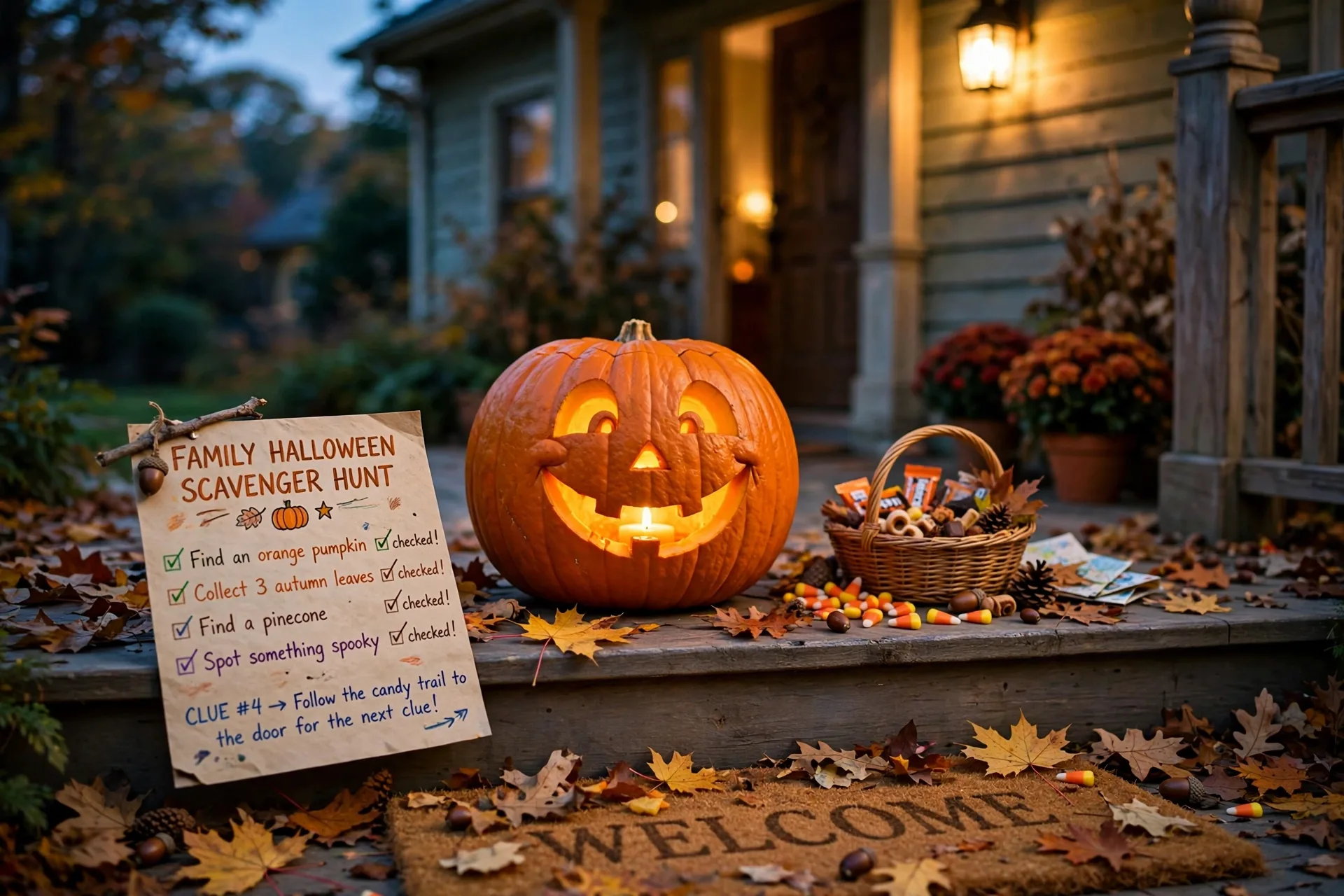
The clue: “Round and orange with a face so wide — count my teeth on the step outside.”
Where to hide: a pumpkin on the porch step (yard version), or a toy pumpkin by the front door mat (indoor version).
Ages: 2 and up — the perfect first clue; it should be almost too easy.
2. The Friendly Ghost
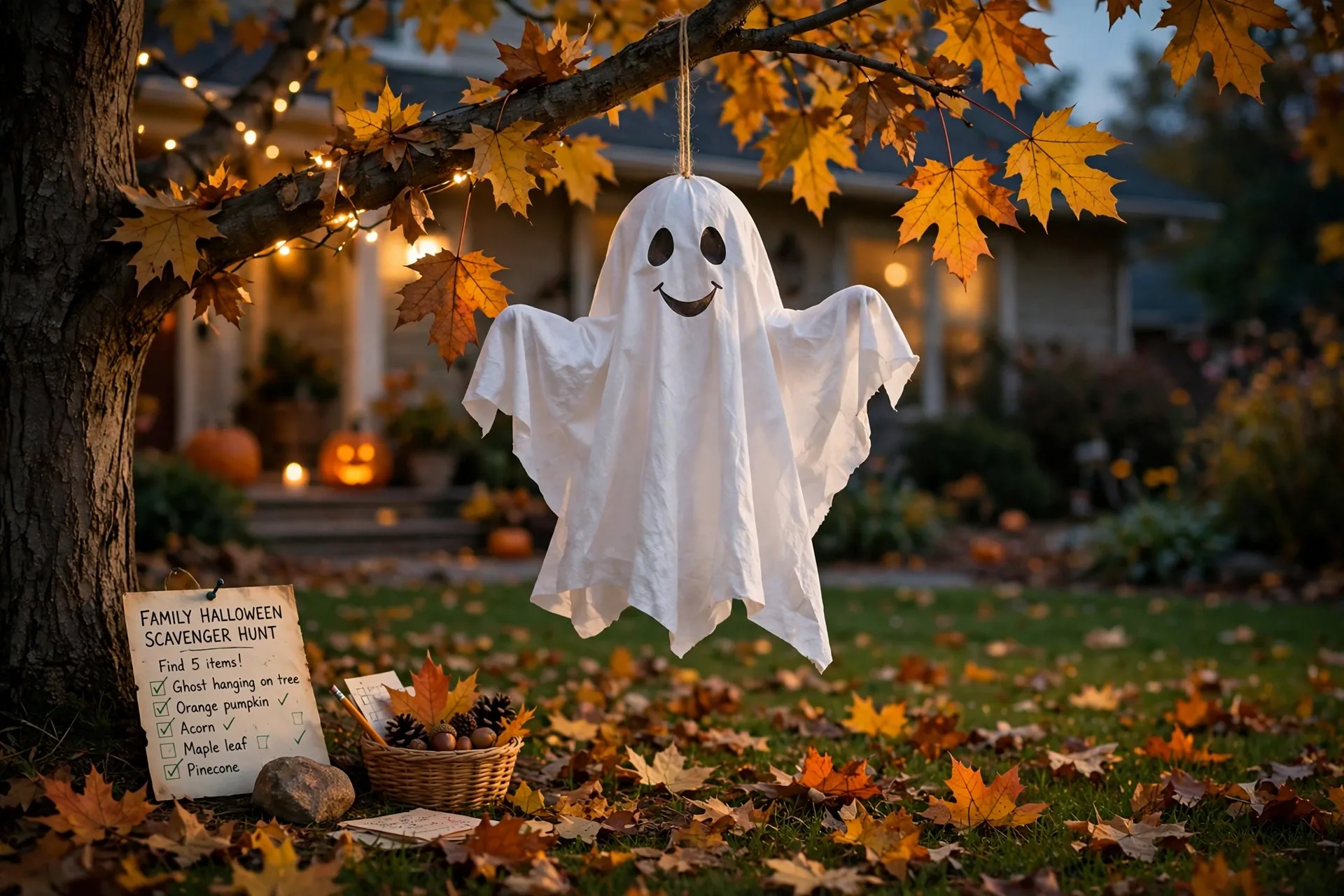
The clue: “I say ‘boo’ but I’m not scary — I hang where the white sheets get airy.”
Where to hide: a paper ghost taped to the laundry-room door (indoor), or hanging from a low tree branch (yard).
Ages: 2 and up — nothing here has teeth; the ghost is smiling.
3. Black Cat
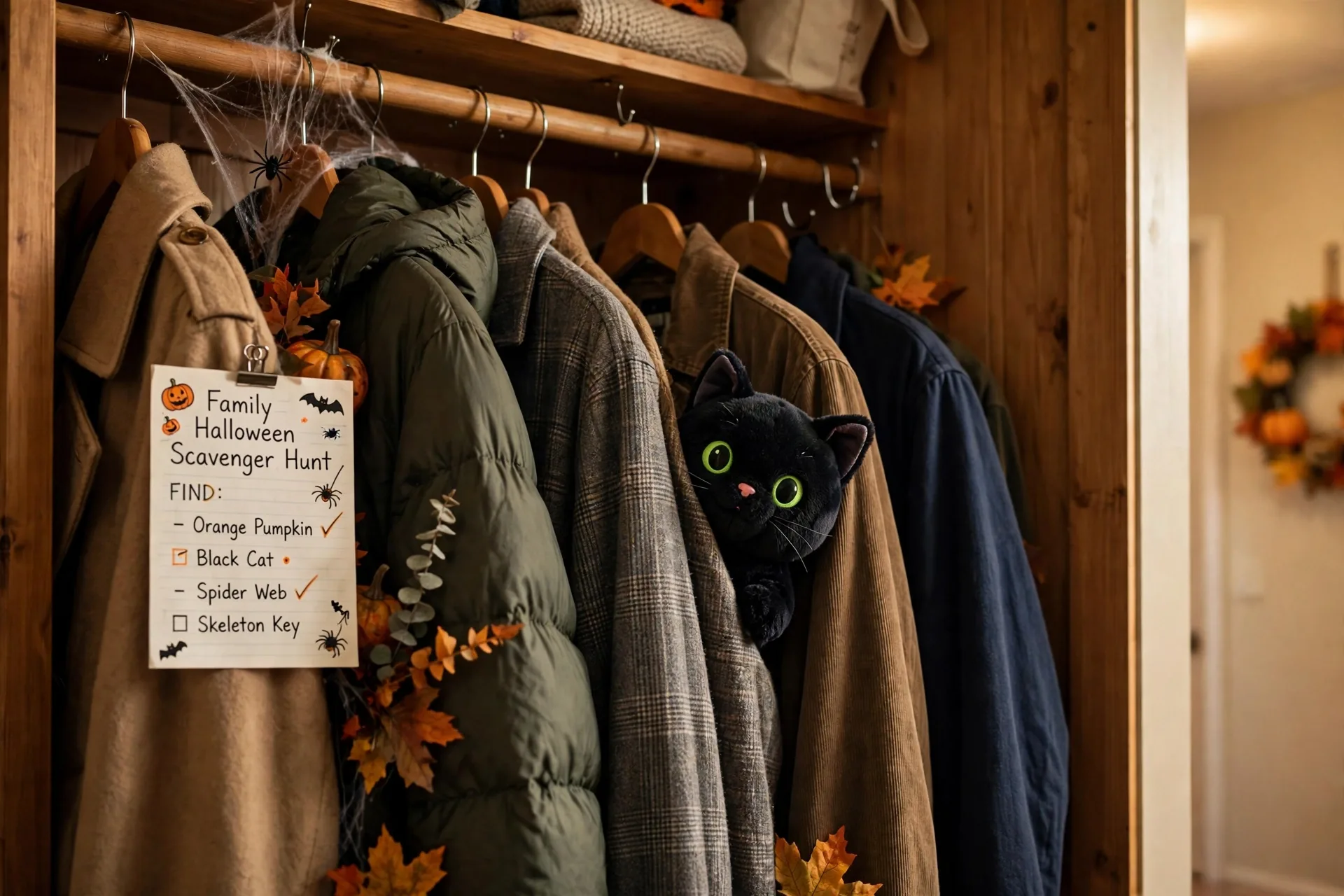
The clue: “Whiskers, tail, a midnight coat — find me where the coats all float.”
Where to hide: a plush cat in the coat closet (indoor), or a cat decoration by the garden fence (yard).
Ages: 3 and up — closets are exciting at three; that’s the whole appeal.
4. Spider in the Web
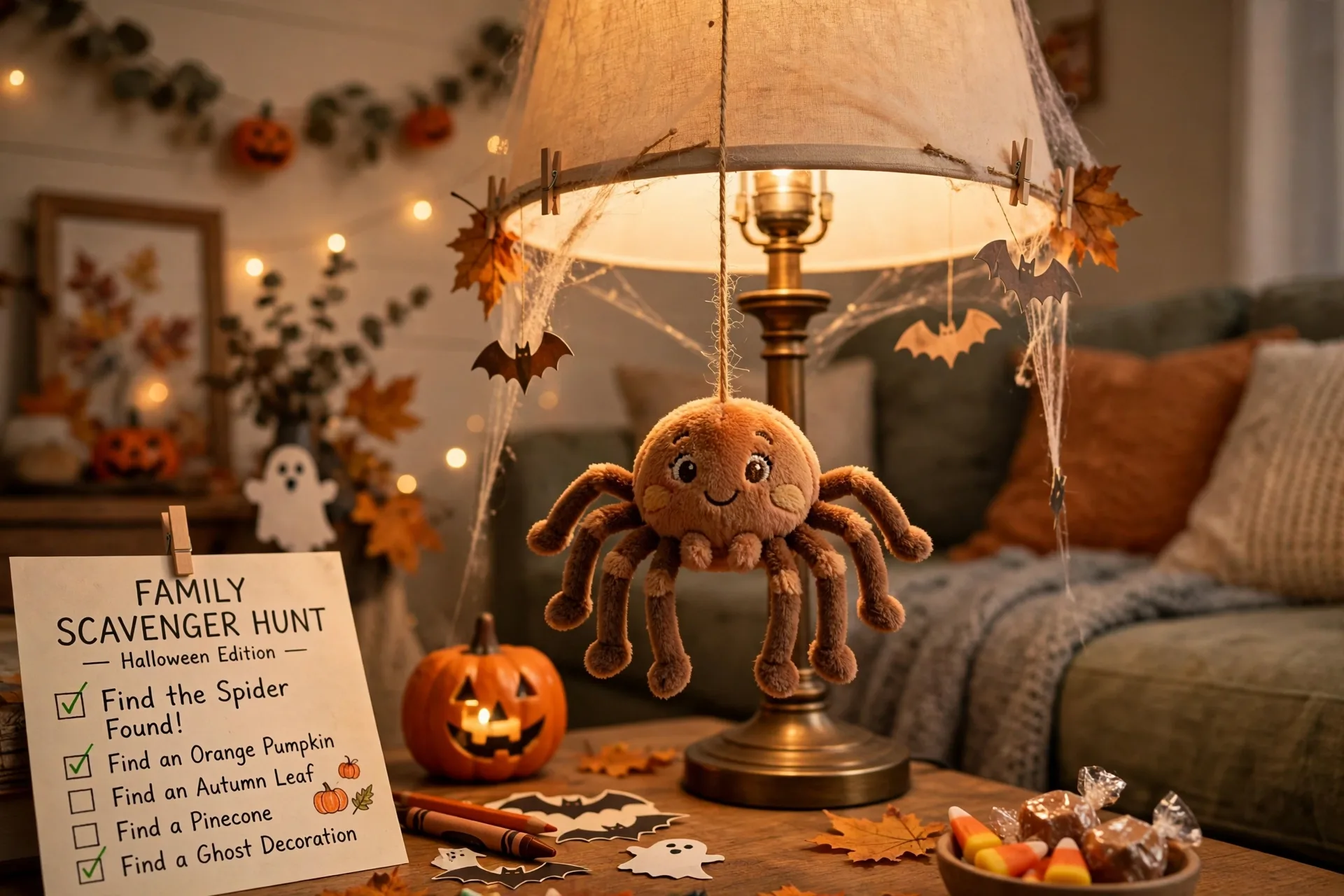
The clue: “Eight legs spinning, oh what a sight — I’m dangling where the lamps give light.”
Where to hide: a toy spider on the living-room lampshade (indoor; a grown-up places it), or dangling from the porch eave (yard).
Ages: 3 and up — count the legs together for a sneaky math moment.
5. The Witch’s Hat
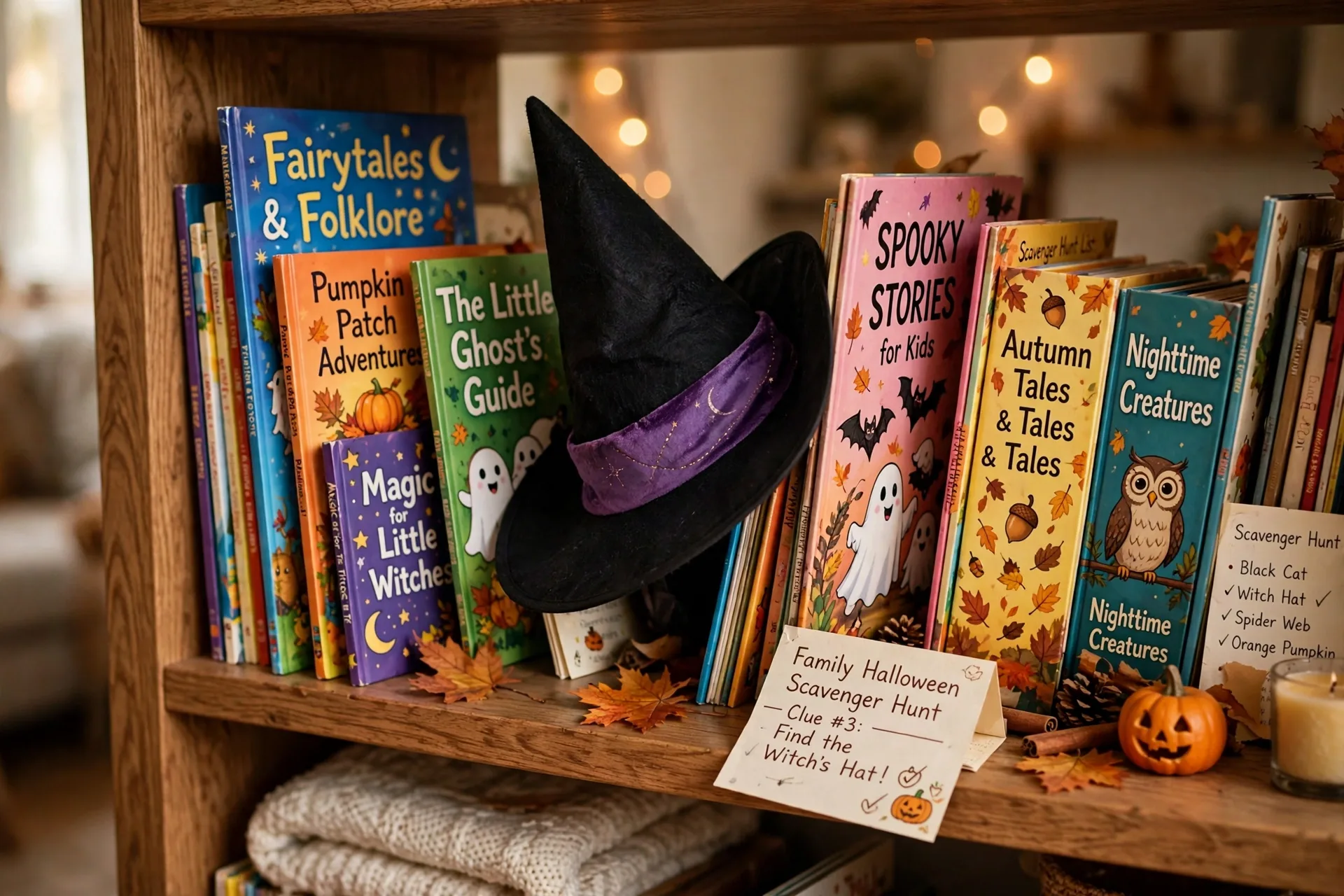
The clue: “Pointy top for a magic spell — I’m waiting where the storybooks dwell.”
Where to hide: tucked between books on the bookshelf (indoor), or on the mailbox post (yard).
Ages: 3 and up — bookshelf hunts buy you quiet minutes.
6. Candy Corn
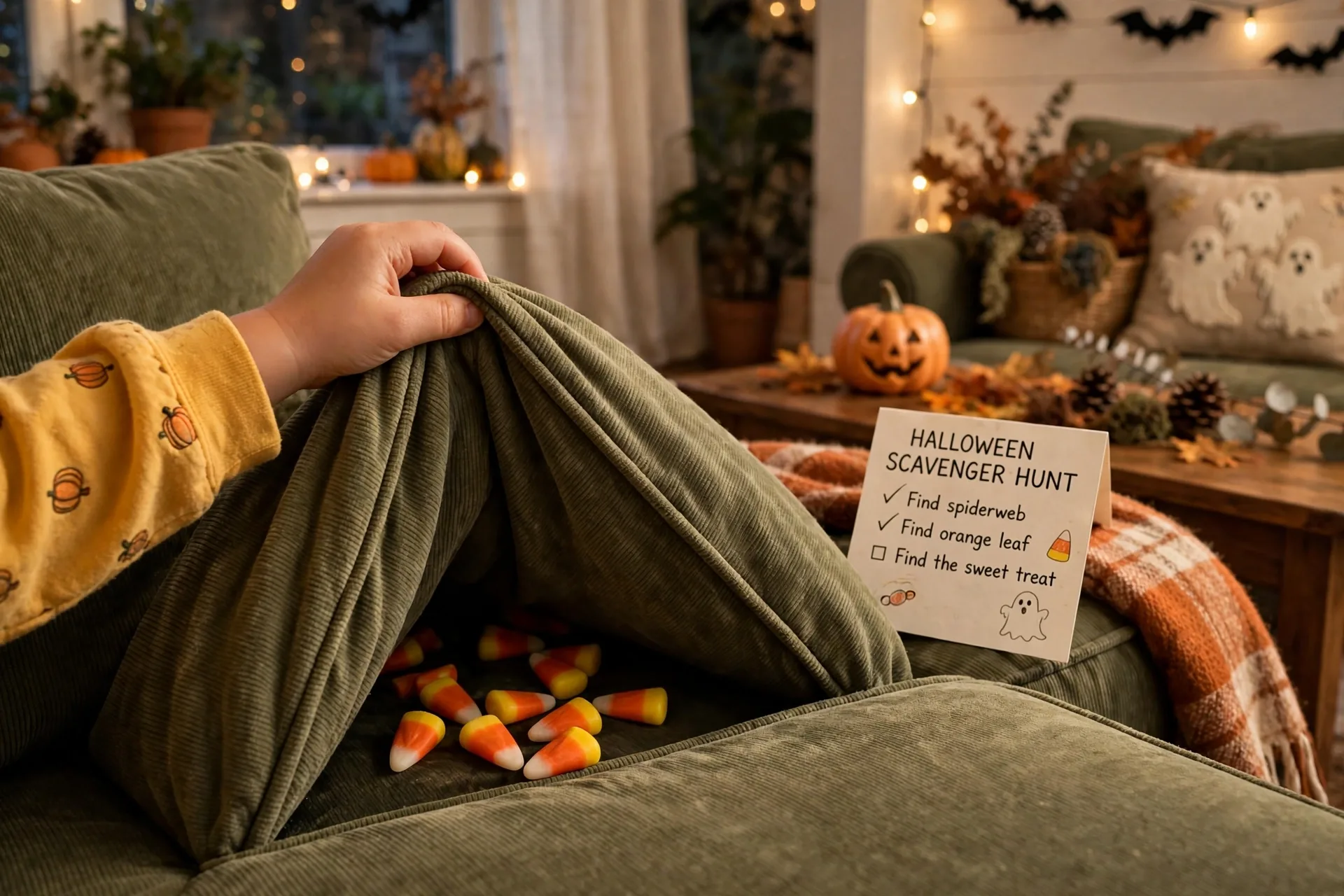
The clue: “Orange, yellow, white — a triangle treat. Find me where you take a seat.”
Where to hide: under a couch cushion (indoor), or under the doormat (yard).
Ages: 2 and up — toddlers can absolutely find this one alone.
7. The Bat
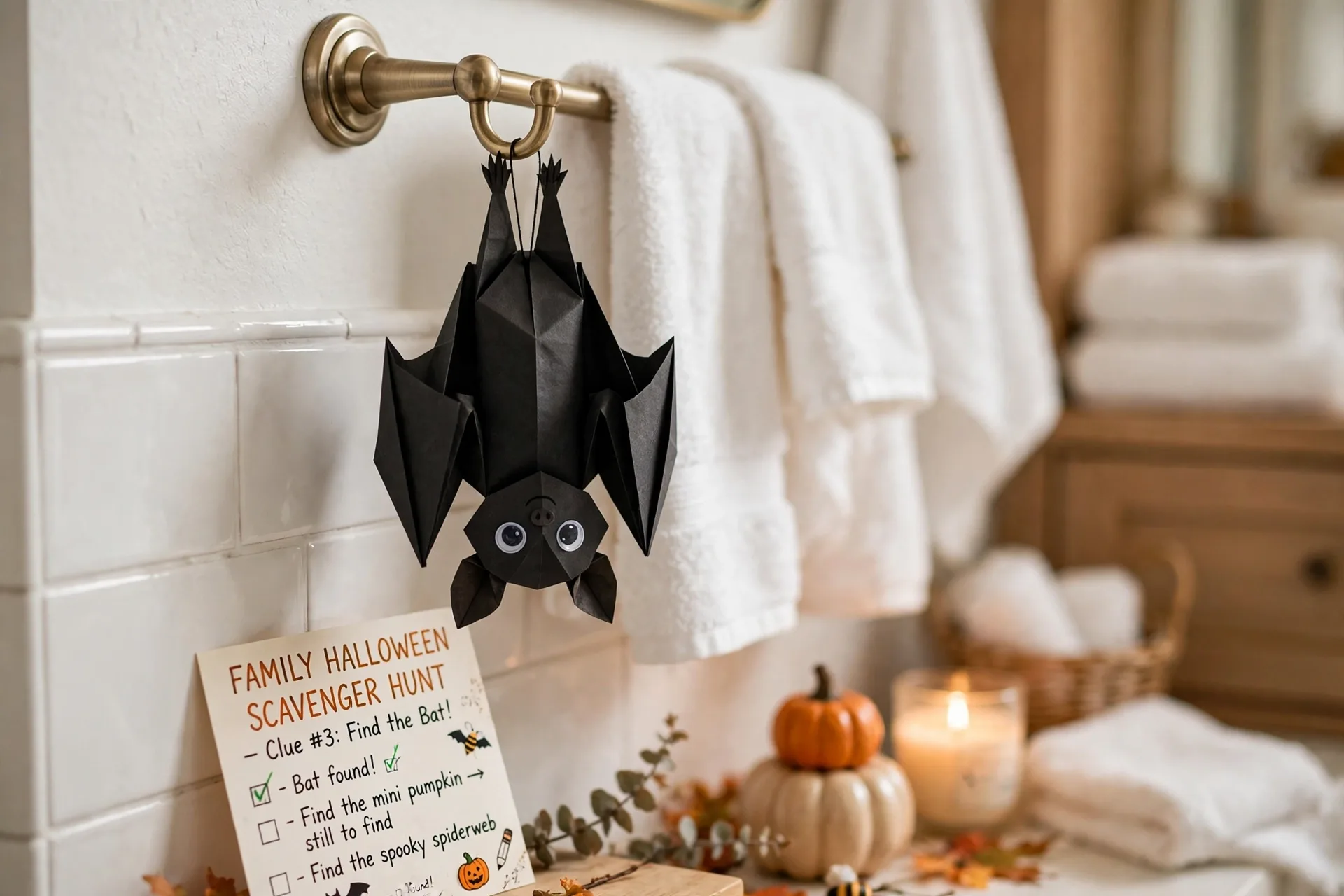
The clue: “I hang upside down and sleep all day — I’m flapping where the towels sway.”
Where to hide: a paper bat on the bathroom towel hook (indoor), or the garage door handle (yard).
Ages: 4 and up — the upside-down detail makes this one a thinker.
8. Mummy
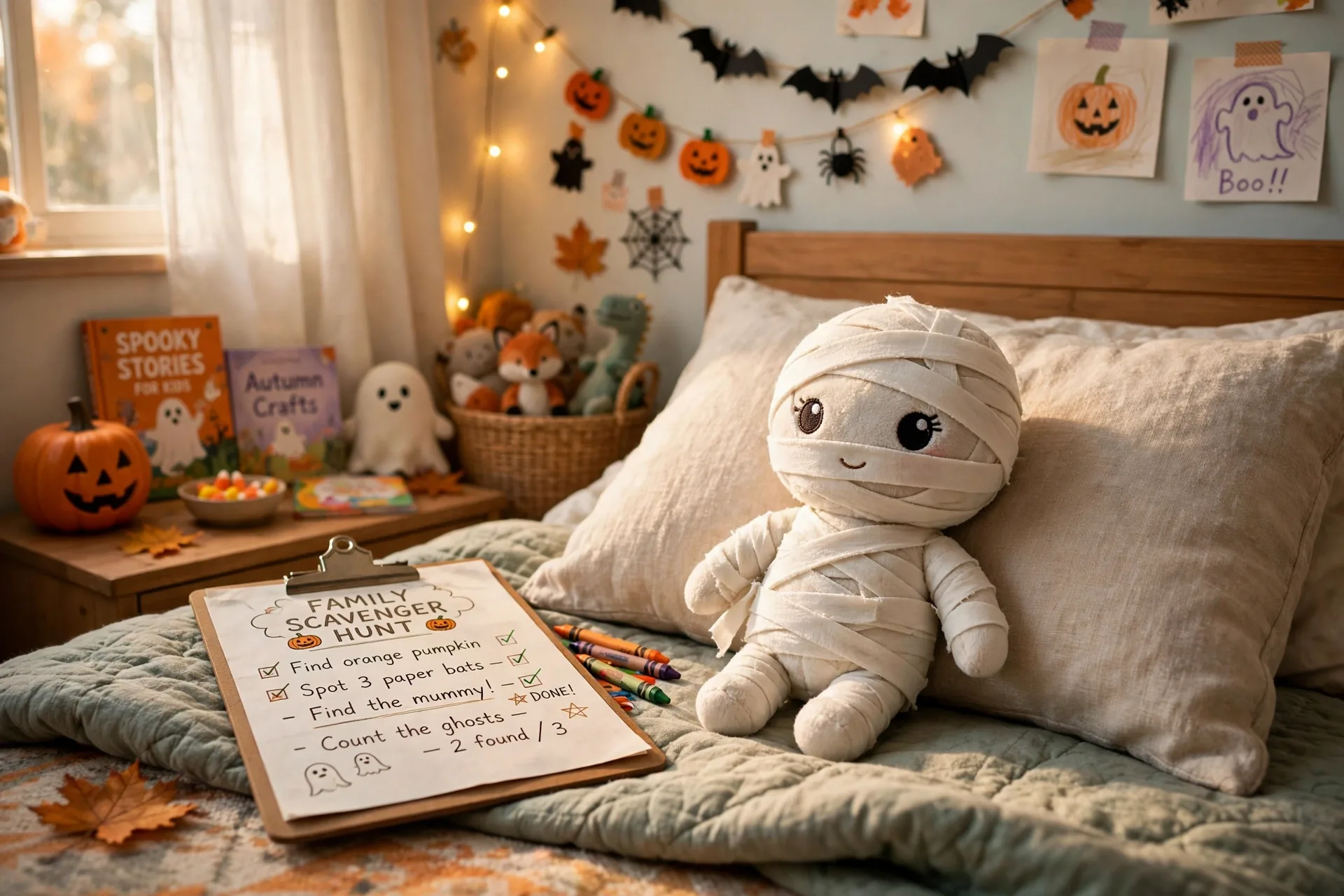
The clue: “Wrapped in white from head to toe — I’m resting where the pillows go.”
Where to hide: a mummy toy (or a toilet-paper-wrapped doll) on the bed pillow (indoor), or a wrapped cushion on a lawn chair (yard).
Ages: 3 and up — let them do the wrapping; it’s half the fun.
9. The Owl
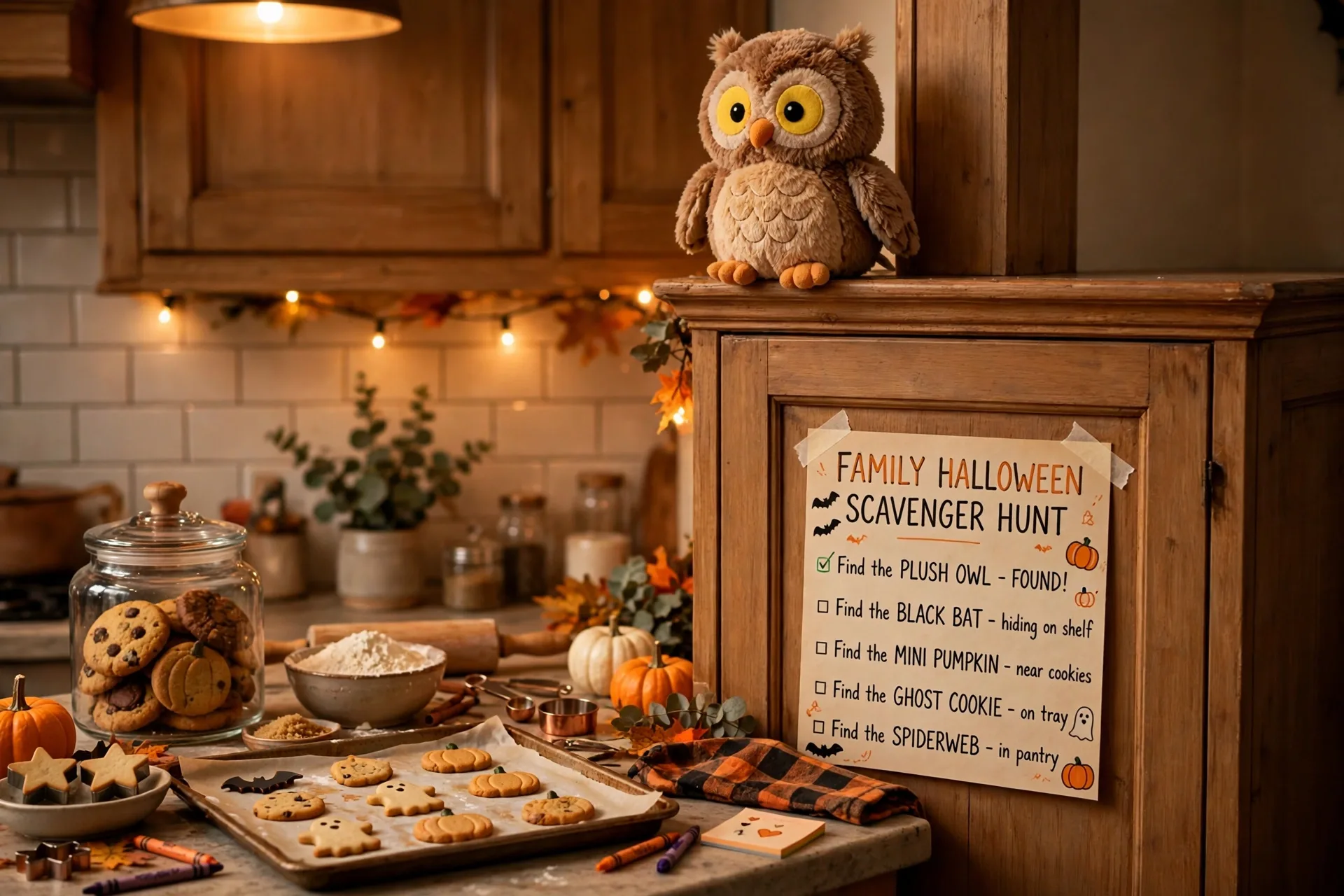
The clue: “‘Whooo’ is hiding, wide awake? I’m perched above where the cookies bake.”
Where to hide: top of the kitchen cabinet (indoor; grown-up retrieves it), or a tree branch (yard).
Ages: 4 and up — high hiding spots are for the big kids; toddlers get to point.
10. Skeleton
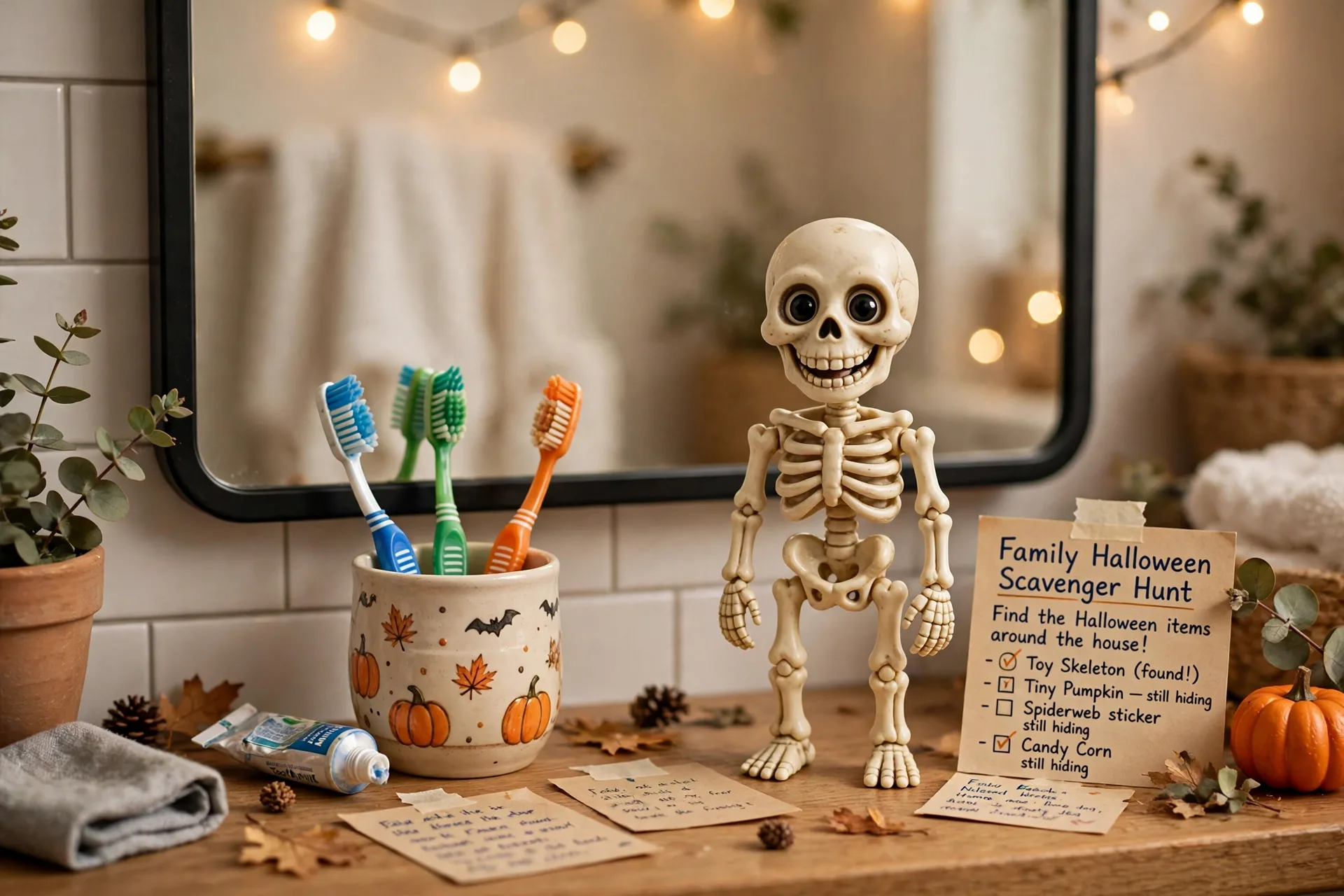
The clue: “Rattle my bones, I dance with glee — where you brush your teeth, that’s me!”
Where to hide: a toy skeleton by the bathroom mirror (indoor), or leaning on the fence (yard).
Ages: 4 and up — dancing skeletons only; nothing scary.
11. The Haunted House
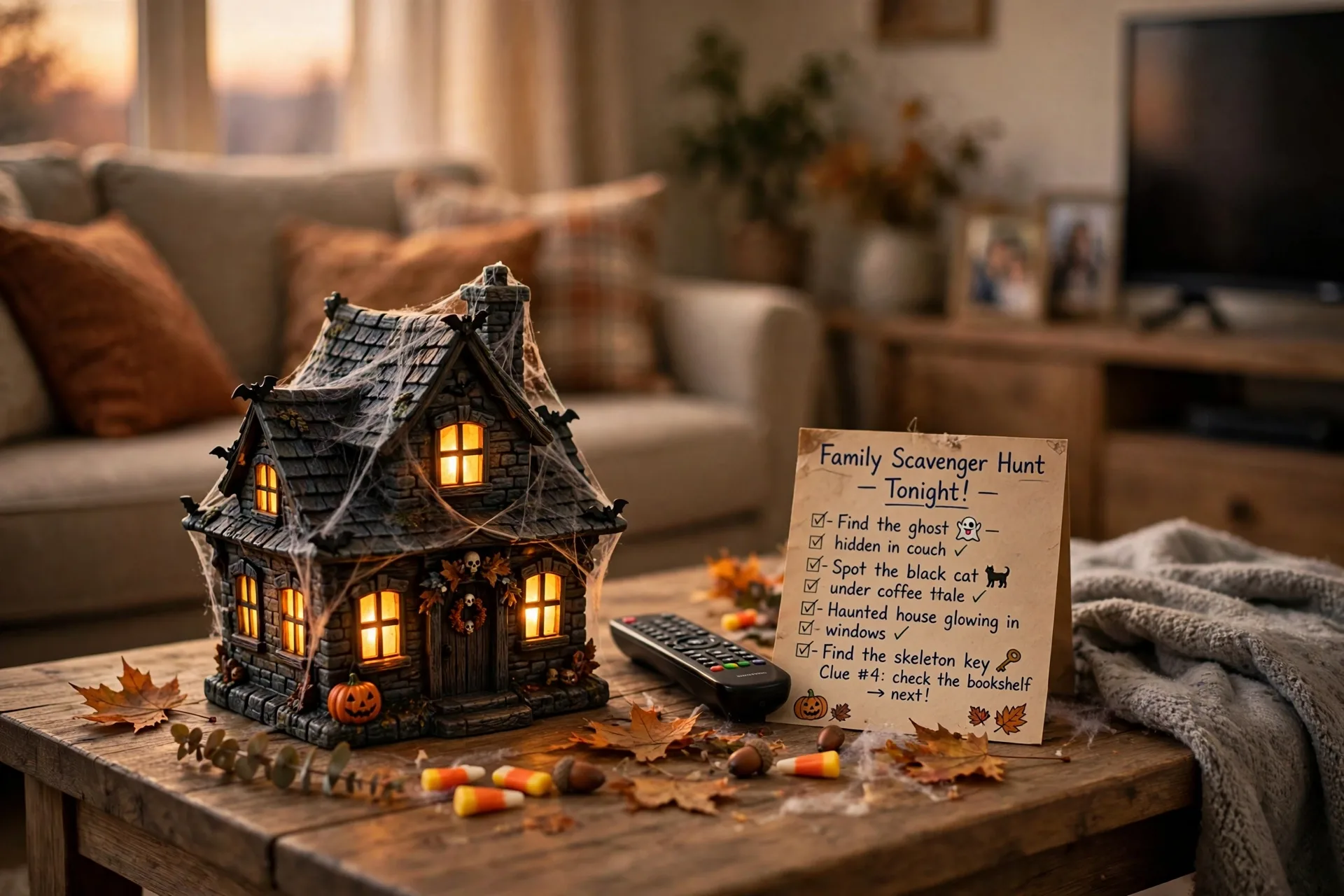
The clue: “I creak and groan, my windows glow — check the spot where the remotes go.”
Where to hide: a small haunted-house decoration under the TV remote (indoor), or by the garden gnome (yard).
Ages: 5 and up — the trickiest find on the list; save it for last among the big kids.
12. The Vampire
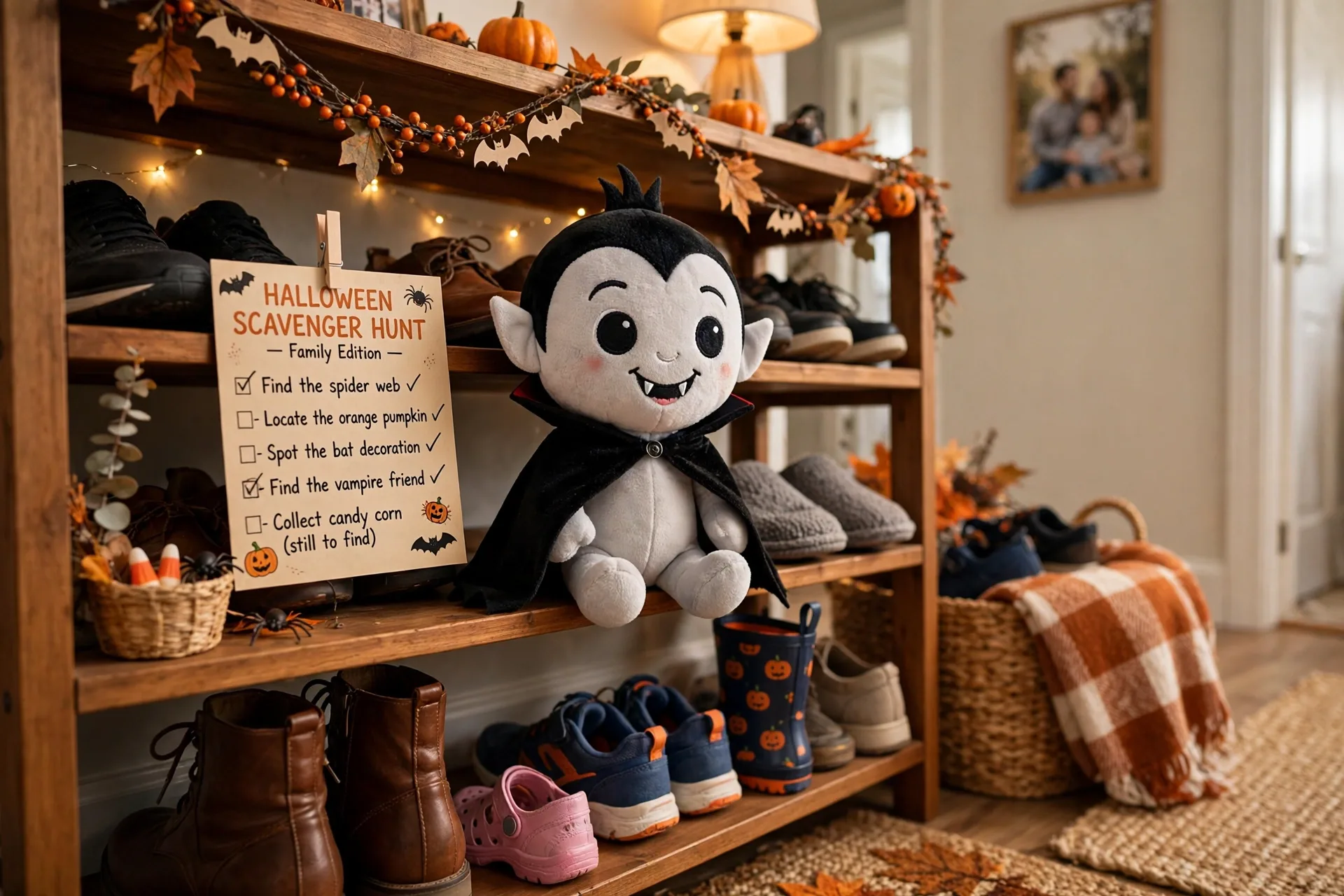
The clue: “My cape is black, my nap is long — find me where the shoes belong.”
Where to hide: the shoe rack (indoor), or behind the planter (yard).
Ages: 4 and up — capes are for napping, and that’s the lore now.
13. The Full Moon
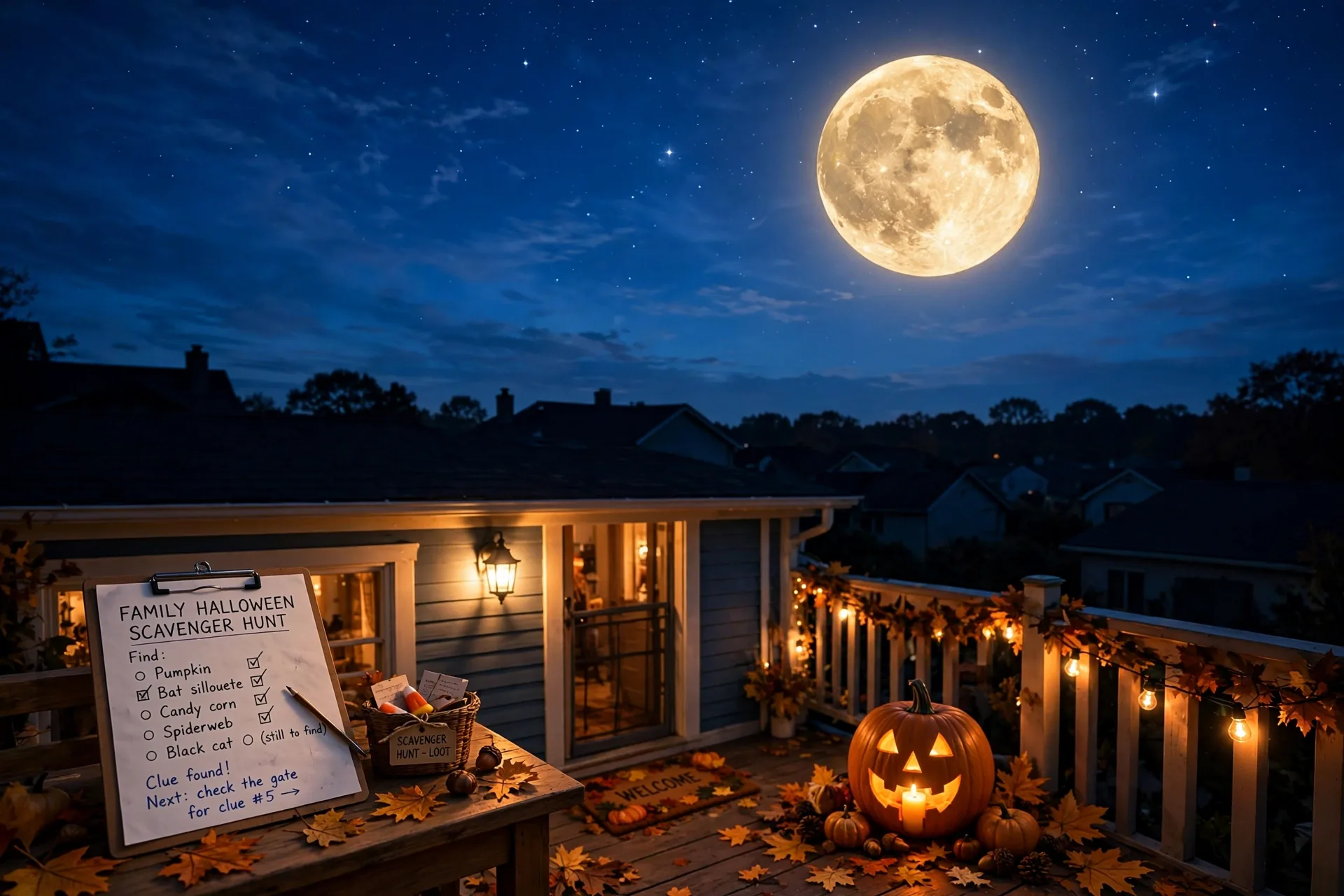
The clue: “Big and round and glowing bright — I shine above the porch light.”
Where to hide: look, don’t touch — the real moon above the porch light (outdoor), or a paper moon on the hallway night-light (indoor).
Ages: 2 and up — the free space of the scavenger hunt world.
14. The Spider Web
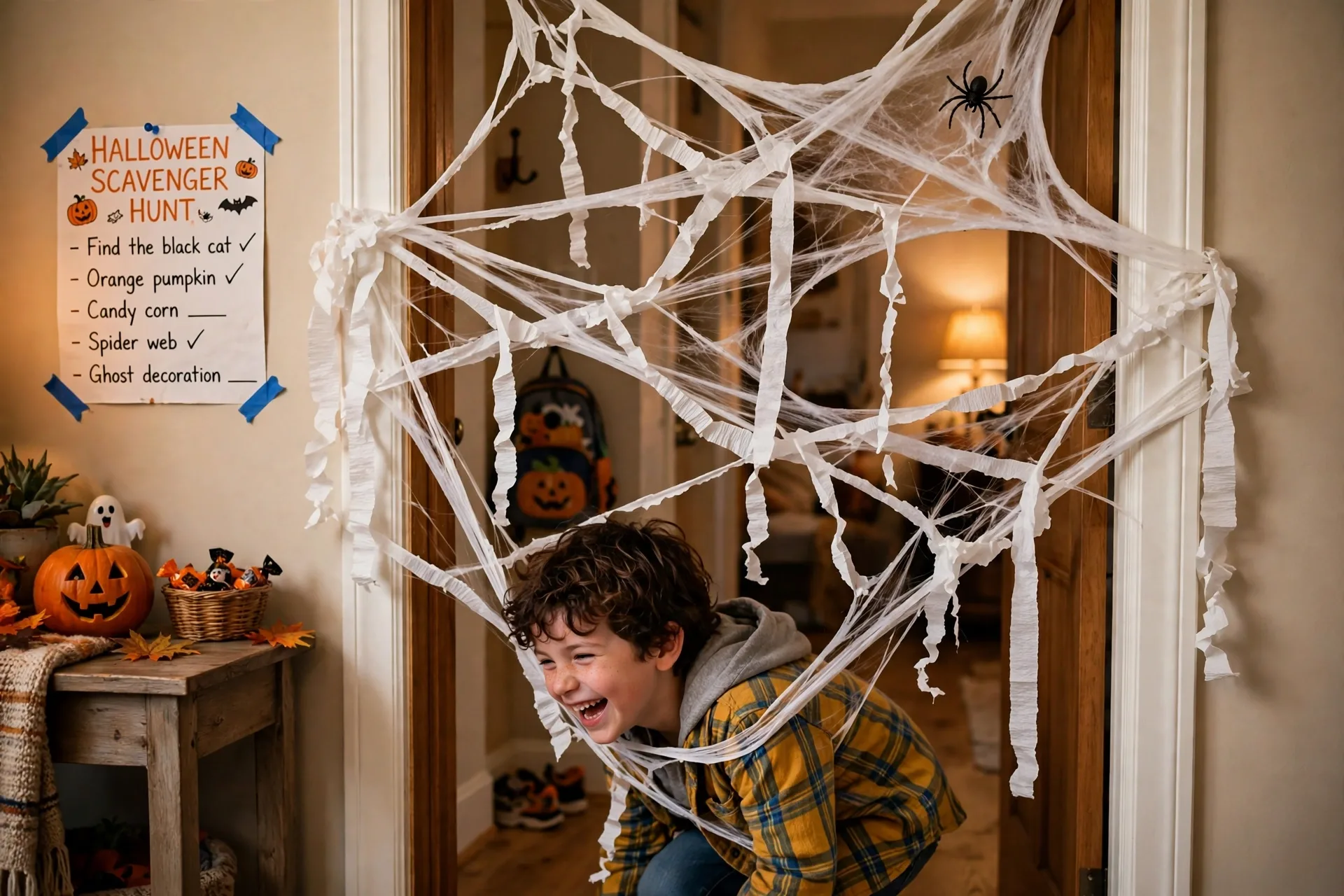
The clue: “Sticky strings from wall to wall — I’m stretched across the hallway tall.”
Where to hide: crepe-paper webbing across the hallway doorway (indoor), or between two bushes (yard).
Ages: 3 and up — they have to duck under it, which is the best part.
15. The Friendly Scarecrow
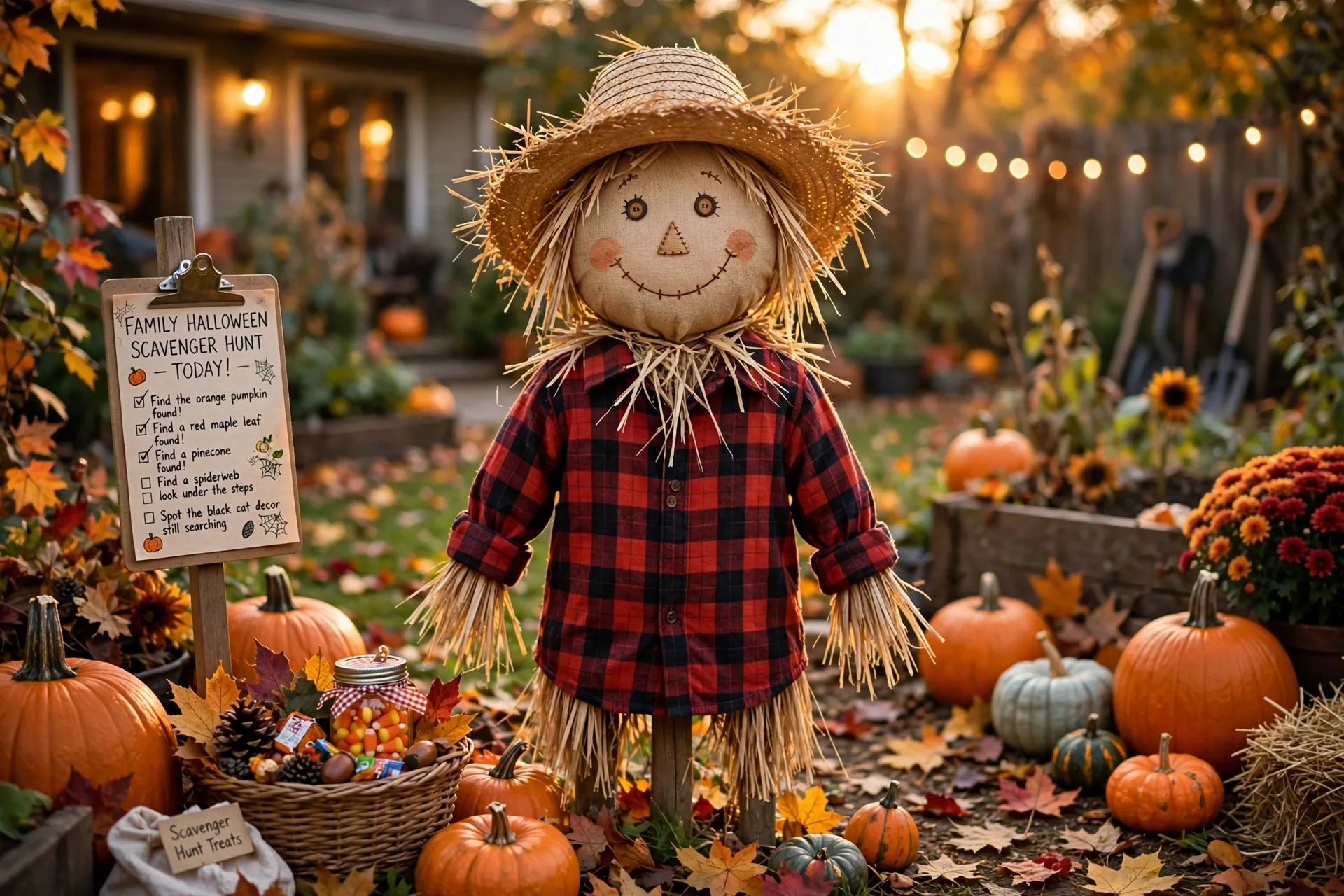
The clue: “Straw hat, plaid shirt, a grin so wide. I guard the pumpkins, standing with pride.”
Where to hide: a garden scarecrow among the pumpkins (yard), or a paper scarecrow taped to the fridge (indoor). Set it up the night before so it is standing guard when the kids wake up, and let the big kids help stuff the shirt with straw or old towels.
Ages: 3 and up, scarecrows are silly, not scary, and the garden version gives the hunt a reason to go outside.
16. The Witch’s Cauldron

The clue: “I bubble and brew with a stir and a clank. I hide where the snacks are stacked.”
Where to hide: a toy cauldron on the snack shelf (indoor), or on the picnic table with the treat bowl (yard). Drop a few glow sticks inside so the brew glows green when the kids lift the lid.
Ages: 4 and up, the glowing brew reveal is the payoff, so save this one for the middle of the hunt when energy dips.
17. The Broomstick
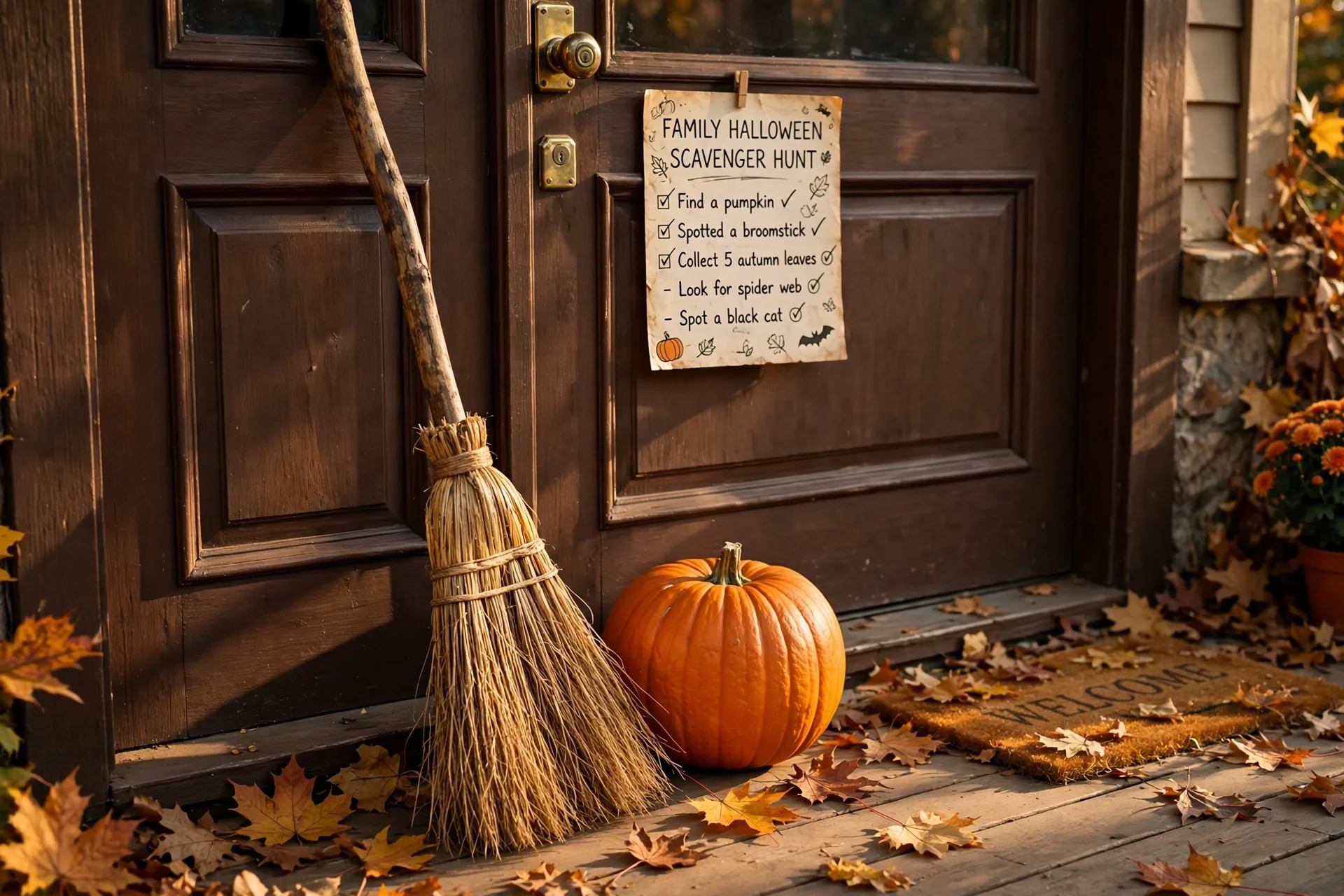
The clue: “I sweep the floor and I fly at night. I lean where the coats hang tight.”
Where to hide: a toy broom leaning by the front door (indoor), or the real broom by the porch (yard). A grown-up places it low enough that little kids can spot the bristles without reaching.
Ages: 3 and up, every kid who has seen a witch movie knows this one, and they will run for it.
18. The Candy Apple
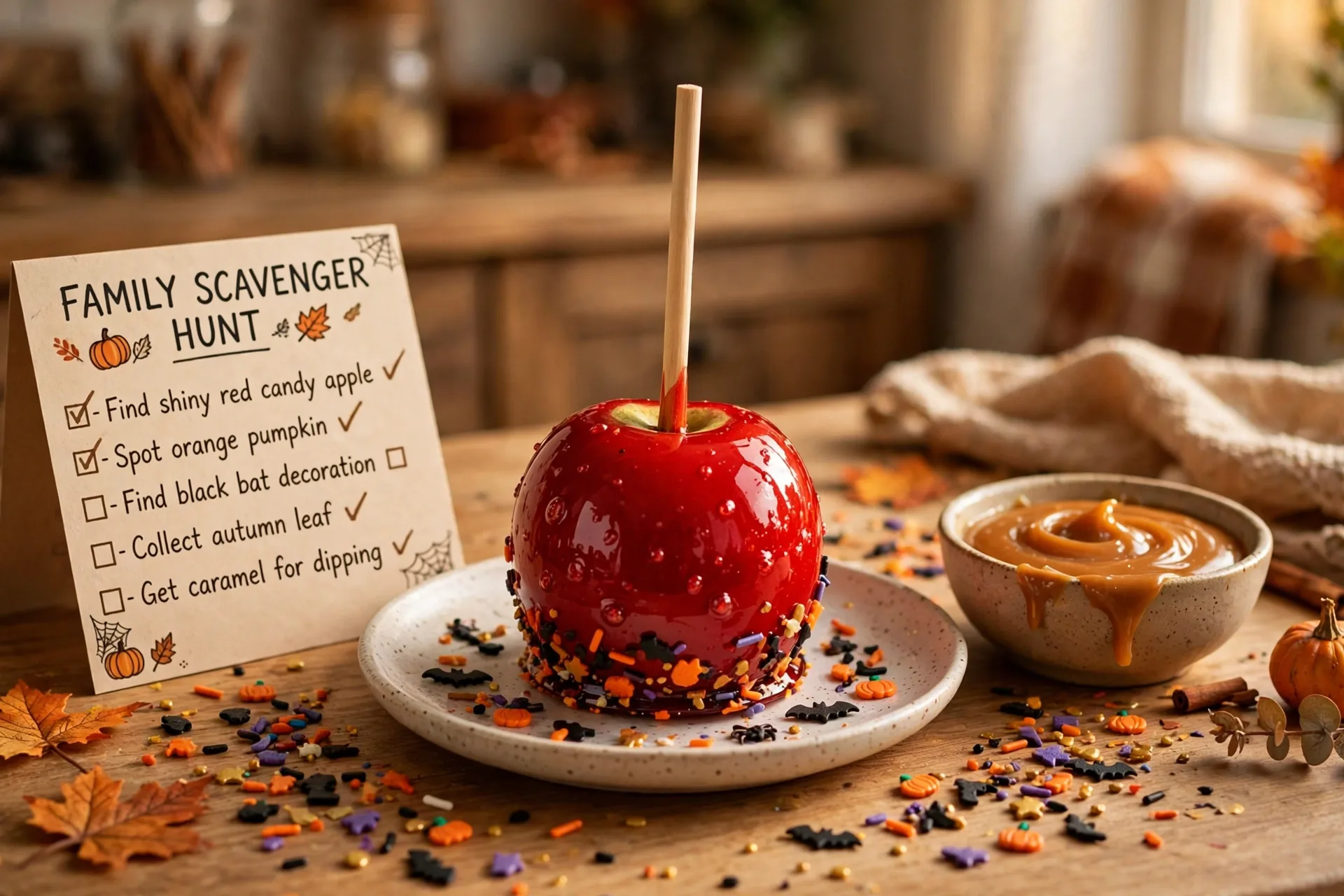
The clue: “Shiny and red on a stick so sweet. Find me where you eat your treats.”
Where to hide: a candy apple on the kitchen table (indoor), or a toy apple in the fruit bowl (yard version: on the picnic table). If you use a real one, it becomes the snack after the find, which is the best kind of clue.
Ages: 3 and up, food clues are always the fastest finds, so this one works well right before a snack break.
19. The Friendly Monster
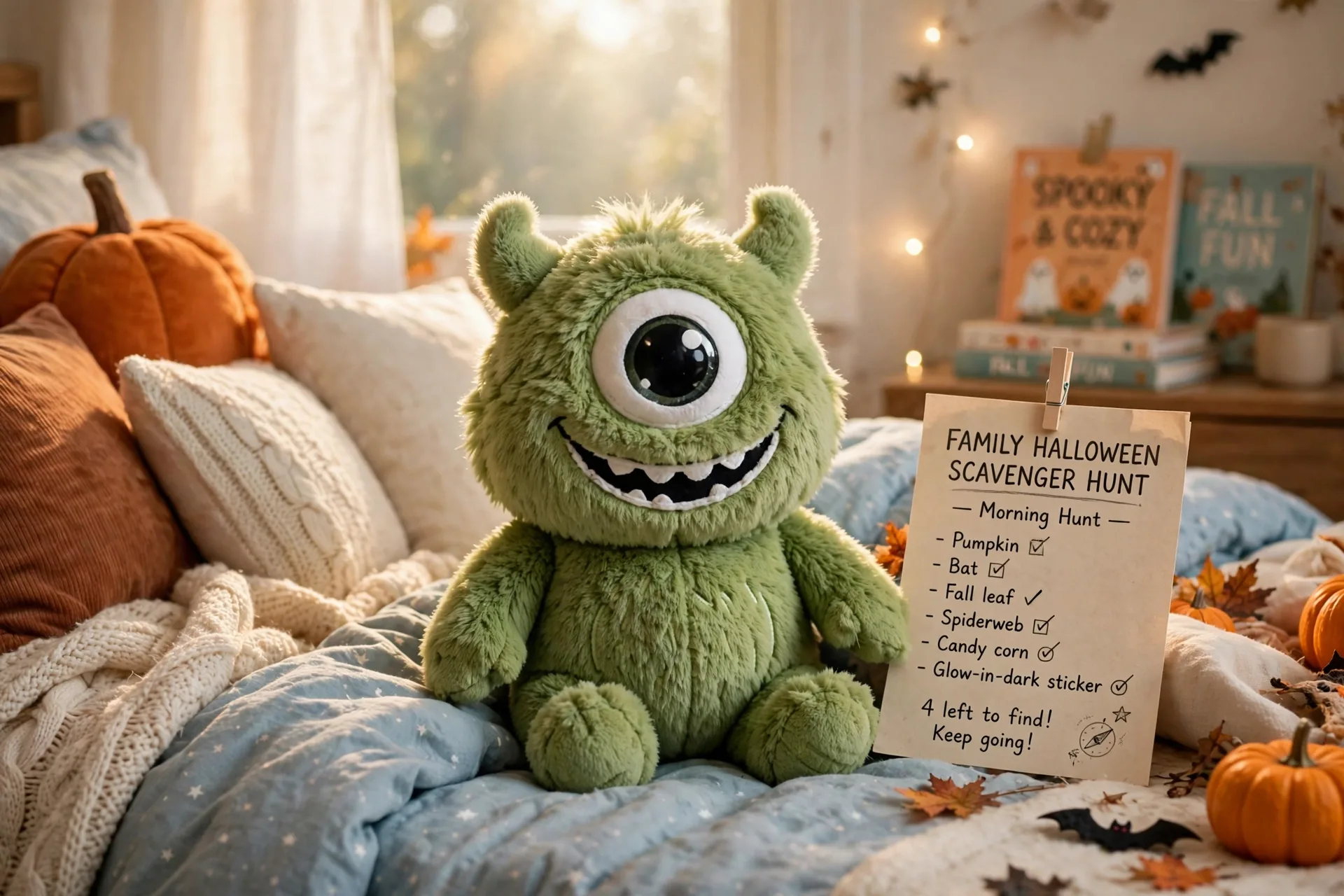
The clue: “One big eye and a grin so wide. I hide where the toys reside.”
Where to hide: a monster toy in the toy box (indoor), or on the bookshelf between the stuffed animals (yard version: in the wagon with the outdoor toys). Pick the silliest monster you own, not the scariest one.
Ages: 2 and up, the easiest hide on the list after the pumpkin, and toddlers love finding a friend.
20. The Magic Potion

The clue: “Purple and sparkly, a magical brew. I hide where the bubbles are too.”
Where to hide: a potion bottle on the bathroom shelf beside the bubble bath (indoor), or on the windowsill with the plants (yard version: on the garden bench). Fill a small bottle with water, a drop of food coloring, and a pinch of glitter for a potion that actually sparkles.
Ages: 4 and up, the sparkle bottle is the prize of the hunt for the crafty kids, so let the finder keep it.
21. The Treasure Chest

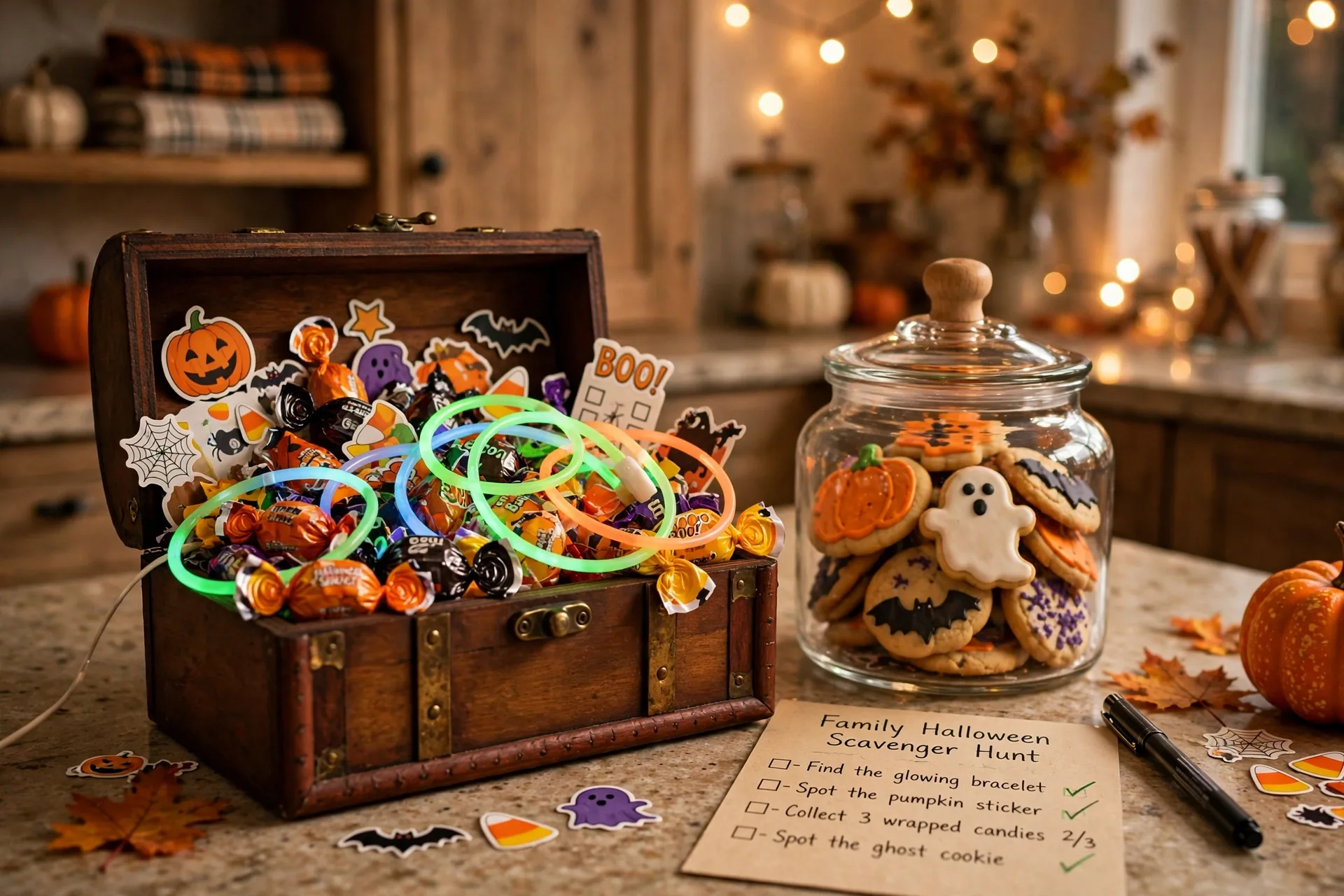
The clue: “You found them all — you’re the star! Your prize is hiding in the cookie jar.”
Where to hide: the cookie jar, a small prize basket, wherever your treats live.
Ages: all ages — every finisher gets something; nobody loses a scavenger hunt.
The Classroom Version
Teachers and room parents: this hunt was built for you too. Print one page-1 sheet per kid plus two spares; print the setup guide once for yourself. Tape picture cards or small Halloween toys to the clue spots around the room before the kids arrive — the clues work indoors with zero changes.
Run it in buddy pairs (one reader, one finder), twenty minutes on the timer, everybody back to the rug when it buzzes. The prize can be a sticker per finisher and the treasure chest can hold the class treat box. Free for classroom use — no permission needed, no email required.
Shop This Post
For the yard version at dusk, tuck a flameless LED tea light beside each outdoor hiding spot — kids spot the warm glow before they spot the clue, and there’s no open flame anywhere near little hands or dry leaves.

Flameless LED Tea Light Candles
Dusk yard markers — tuck one beside each outdoor hiding spot so kids spot the glow before the clue. Zero open flame near little hands or dry leaves.
Everything mentioned in this guide, in one place:
| Product | Used For | Price |
|---|---|---|
| Epson EcoTank ET-2800 Printer |
Printing every hunt sheet — a set per kid plus spares; refillable tanks keep per-page ink cost tiny | Check Price |
| Glow Sticks — 100 Pack |
Night-hunt visibility — a grown-up cracks a few per hunter; the rest become finisher prizes | Check Price |
| Flameless LED Tea Light Candles |
Marking hiding spots at dusk — tuck one by each outdoor clue so kids can spot them safely | Check Price |
Frequently Asked Questions
What ages is a Halloween scavenger hunt good for?
Ages 2 and up, with the format matched to the kid. Toddlers (2–3) hunt with a grown-up who reads one clue at a time — the toddler points and finds. Ages 4–6 work in buddy pairs. Ages 7+ can run in small teams with a grown-up watching the area. The clues are written to work read-aloud or read-solo.
Can we do the scavenger hunt indoors?
Yes — every one of the 21 clues has an indoor hiding spot listed, and the printable works with zero changes. Stage the items while little kids nap, hand out the sheets, and you’ve got a fifteen-minute rainy-day hunt.
Is the printable really free?
Yes. Two pages, US Letter, no email gate and no watermark — download it, print it, use it in your classroom. It’s free for personal and classroom use.
How do you keep a night scavenger hunt safe?
A grown-up watches the whole time; stay in your own yard or an agreed route and never enter a stranger’s yard; every hunter wears something visible like glow sticks; masks come off while moving; walk, don’t run; and set a check-in spot before clue #1. The full rules are in the safety section above and on page 2 of the printable.
What if we can’t find every item?
You don’t need to — nobody has to find all 21 to have fun. If an item isn’t visible where you’re hunting (a full moon on a cloudy night), agree that spotting a picture of it counts, or just skip that clue. The timer ending the hunt is normal; the prize is for finishing, not for a perfect sheet.
Start With Clue #1 Tonight
Twenty-one clues and two kids bouncing off the walls? Print the sheet, hide the pumpkin on the porch step, and read clue #1 aloud. That’s the whole setup — ten minutes, and you’ll know by clue #3 whether you’ve got hunters on your hands.
Then keep the sheet. October is short, the clues work indoors and out, and next year’s hunt will have a bigger reader behind it. Happy hunting, mama.
More Halloween guides on MamaKinder