
Why Does My Husband Always Correct Me? 13 Ways to Respond

You are mid-story at dinner when he jumps in. “That is not what happened.” He retells it his way, and the table goes quiet. Or you are loading the dishwasher, and there it is again: a small correction. Everything you do gets checked.
If that sounds familiar, you are not imagining it, and you are not too sensitive. Being corrected wears you down and makes you second-guess yourself. Most husbands have no idea how it lands. They think they are helping. You feel small. Both can be true.
This guide starts with why it happens, because the reason changes what you do next. Then it gives you 13 calm, respectful ways to respond. Read the reasons first, then pick the way that fits.
Heads up: this post contains affiliate links. If you buy through them, MamaKinder may earn a small commission at no extra cost to you.

Quick Picks: Find Your Place Fast
| If this is what is happening… | Start with |
|---|---|
| He corrects you in front of others | Way 4, the public boundary |
| You freeze or defend every time | Way 1, the pause |
| You never told him how it feels | Way 2, the calm conversation |
| You want to know what is underneath | Way 3, ask what he is worried about |
| He tries, but it slips back | Ways 5, 6 and 12, the signal, the praise, the slip-back plan |
Why He Keeps Correcting You
A correction is rarely about the dishwasher or the story. It is usually about something older. Here are the six reasons. None excuse the behavior. They just explain it.
He thinks he is helping.

Some men believe they are helping. He heard a date wrong, so he fixed it. He does not see that being corrected feels like being graded. The most common reason, and the most fixable: a man who thinks he is helping will stop once he sees the cost.
He learned it at home.

If he grew up in a house like that, the pattern can feel normal. Love, in his childhood, was expressed as fixing. He may have hated it as a child and do it now. That is not your job to fix. The habit runs deeper than one conversation.
He is overwhelmed, and control is how he copes.

Stress narrows people. When work is heavy, money is tight, or the baby years are sleepless, some men steady themselves by controlling the small things. It is a man who feels out of control, holding on to the nearest thing. If it got worse when life got harder, this is why.
He has no other words for what he feels.

Many husbands were never taught to say “I feel lonely” or “I feel unheard.” So the feeling comes out sideways, as a correction. A clumsy reach for connection, dressed as a fact. That does not make it okay. If you only answer the fact, you never reach the feeling underneath, and they keep coming.
He is protecting himself, and it looks like superiority.

Sometimes the correcting has a swagger, like an expert. Underneath it is usually the opposite of confidence. A man who feels unsure can correct his wife to feel competent. Seeing the shield does not mean accepting it. It means you stop taking every correction as a verdict on you. It was never about you.
The two of you are stuck in a loop.

Nobody tells you this. How you respond to a correction can keep it going, even when you did nothing. When he corrects you, you defend or go quiet. Both make sense, but both tell him his correction landed, and now it is about who is right. Breaking a loop is not about winning. It is about stepping out, which is what the thirteen ways below do.
13 Ways to Respond
Thirteen responses for the next time a correction lands. You do not need all thirteen. Start with the one that fits your worst moment, and practice it for a week.
1. Pause before you answer.

The moment a correction lands, your body reacts before your mind does. Your chest tightens. That is the loop starting. The pause breaks it. One slow breath. Let the correction sit for three seconds, then decide what to say.
The pause feels like losing. It is the opposite. A pause tells your body you are safe, and tells him you are steady. If you need a line, try this: “Give me a second.” Nobody can argue with it, and it gives you back the moment.
2. Name it in a calm moment.

Not right after a correction. Have it when you are both calm, kids down. First, get your thoughts onto a page. Feelings blur in your head, and a blurry conversation ends in a fight. Write down the two or three moments that hurt most. I keep The Five Minute Journal by my bed: its morning prompts include a daily affirmation starting with “I am.”

Intelligent Change The Five Minute Journal
A guided daily gratitude journal with a morning affirmation prompt built in. Undated, so you can start any day, and the routine takes about five minutes.
Say it in one sentence that starts with “I,” not “you.” Try this: “I feel small when I am corrected in front of other people, and I need it to stop.” It does not call him a bad husband. It tells him what happens inside you. If he gets defensive, do not chase him. Repeat it once, and let it sit.
3. Ask what he is actually worried about.

Most corrections guard a worry. He corrects the route because he fears being late. He corrects the story because he fears looking foolish. Answer the correction and you argue about the route. Ask about the worry and you talk about the real thing. Try this: “What are you worried will happen if I do it my way?”
Then wait. Really wait. The first answer is often another correction, or “nothing, I just know the right way.” That is fine. Ask it again another day. It plants a seed: you are curious about him, not just defending yourself. Over time, he will tell you the worry first.
4. Set one clear boundary for public corrections.

Private corrections are one thing. Public ones add an audience. Set this boundary first, short and specific. Say this: “If something I said is wrong, tell me later, just the two of us. Please do not correct me in front of other people.” That is a boundary, not a threat. It says where and when, and lets him be right without making you small.
When it happens again, remind him with the same short line: “Later, just us, remember?” Keep your voice level, then go back to your story. A boundary repeated calmly three times beats one shouted once. If he agrees and then forgets, that is normal. The reminder is part of the work, not proof it failed.
5. Agree on a small in-the-moment signal.

Some couples do better with a signal. Pick one together and agree what it means. A touch on the arm, a word like “pause,” or a look you both understand. The signal means: “You are doing the thing. I am not angry. Let us reset.” Private, quick, and kind. It does not embarrass him, and it does not ask you to swallow the correction.
The signal only works if you both choose it. Do not spring one on him mid-dinner. Say: “When you correct me, I go quiet, and then we both feel bad. Can we pick a signal I can use instead?” If he agrees, you have a tool.
6. Catch him doing it right.

This one feels backwards. When he lets your story finish, notice it. A simple “Thank you for letting me finish that story” does more than a week of arguing. People repeat what gets noticed. If you only mention the correcting when it hurts, he hears criticism. Mention the moments he gets it right, and he hears a direction.
This is not praising basic respect. Change happens slowly, when someone feels seen for trying. Be specific, not general. “You listened to the whole story tonight” lands better than “You were nice today.” Notice your own wins. The night you paused instead of defending counts.
7. Read one book together.

Sometimes a book can carry it. John Gottman calls constant criticism one of the patterns that can break a marriage down. His book The Seven Principles for Making Marriage Work by John Gottman and Nan Silver gives couples a shared language for moving from gridlock to dialogue, with exercises for couples in gridlock. Read it together, one short chapter at a time, and talk about the chapter, not each other.
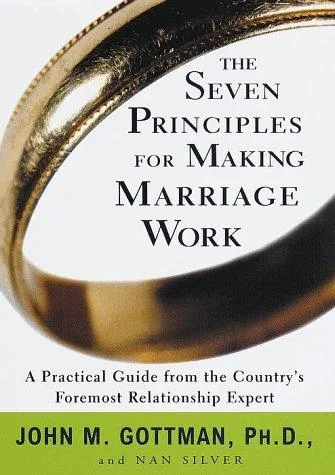
The Seven Principles for Making Marriage Work, John Gottman & Nan Silver
The Gottmans’ guide to moving from gridlock to dialogue, with questionnaires and exercises for couples working through the issues they cannot seem to resolve.
A shared book gives you shared words. Instead of “You always correct me,” you can say, “That felt like one of the patterns in the book.” If he will not read it with you, read it first. The ideas work on your side of the loop, too. If you are in the new-parent years, our guide on Marriage Advice For New Parents covers rebuilding the team.
8. Watch the pattern over weeks, not one bad day.

One correction means little. A pattern over weeks means something. For two weeks, jot down each correction: when it happened, what was said, how it felt. You are not building a case. You are giving yourself information.
After two weeks, look at the page. If the corrections cluster around one topic, you know where to start. Bring the pattern to the calm conversation in Way 2, not the worst day.
9. Start a two-minute check-in each evening.

A correction lands because the two of you have not talked. Try a two-minute check-in after the kids are down: one good thing, one hard thing, one thing you need tomorrow. No fixing, no correcting, just listening.
Keep it short. Two minutes is small enough to keep, and it gives feelings somewhere to go before they come out as corrections. Try this: “Two minutes, just us. What was the best part of your day?”
10. Decide together what “right” means before the next decision.

Many corrections are a fight about whose version of right wins. Before the next decision, agree together on what a good outcome looks like. Not who is right, but what right means for this choice.
Try this: “Before we decide, can we agree on what matters most here?” Once you name the goal, the corrections lose their fuel. If you disagree on the goal, that is the conversation, not the correction.
11. Agree when to pause a conversation and when to keep going.

Not every correction needs an answer. Agree on a simple rule: if voices rise or the same point repeats twice, pause for twenty minutes and come back to it. If voices stay calm, keep going.
The pause is not walking away. Say it: “Let us take twenty minutes and come back to this.” A pause you agreed on feels like teamwork. A pause sprung on the other feels like a door slamming.
12. Plan for the slip-back before it happens.

He will try, and then he will slip back. That is how change works, not proof that it failed. Agree what happens next: one reminder, in the same short words, then you move on. No lecture, no keeping score.
Try this: “That was the thing again. We are okay, let us reset.” One reminder, then move on. If the slips keep coming for weeks, bring the pattern from Way 8 to the calm conversation, and consider a counselor.
13. Thank him when he catches himself.

The moment worth noticing is when he starts to correct you, stops himself, and lets you finish. That is harder than getting it right at first, and it deserves one. Try this: “Thank you for catching that. It means a lot.”
This is not praising basic respect. You are thanking the effort of changing. People repeat what gets noticed, and a man who feels seen will keep trying. Notice your own catches. The night you paused instead of defending counts.
What This Is Not
A few lines about what these thirteen ways are not. They are not a diagnosis. A husband who corrects you is not controlling, and he is not a narcissist. Those labels get thrown around online, but they are a dead end.
These ways are not silent treatment, and they are not recording him. Going quiet to punish him, or playing back a recording, does not build trust. It builds a courtroom. The thirteen ways are built the other way: toward the conversation. They are not a promise. They will not fix a marriage in a week.
When to Get Outside Help
Some things are bigger than thirteen ways, and knowing that is strength, not failure. If the pattern keeps going after weeks of calm responses, if the conversation goes nowhere, or if you cannot tell hope from fear anymore, a couples counselor can help. A counselor helps you both talk about the hard things without shutting down.
There is a line that matters more. If he controls who you see, tracks your phone, belittles you in front of the children, drinks or uses substances and becomes frightening, or if you feel unsafe at home, that is not a communication problem. Reach out to a professional or a doctor. You deserve to feel safe, and so do your children.
Shop This Post
| Product | Used For | Price |
|---|---|---|
| The Five Minute Journal |
The private page from Way 2, five quiet minutes to get your thoughts straight before the calm conversation | Check Price |
| The Seven Principles for Making Marriage Work |
The read-together starting point from Way 7 | Check Price |
Frequently Asked Questions
What if he corrects me even when I am right? That is the hardest version. It is not about the facts at all. Do not spend your energy proving it. He will hear it as another argument. Use Way 1, the pause, and Way 4, the boundary, then Way 2 to say what it feels like. If he carries on, bring it to a counselor together.
Should I correct him back? It is tempting, and it never works. Correcting him back turns the marriage into a contest, and contests have no winners at home. The thirteen ways break the loop, not mirror it.
How long should I try these before deciding anything? Give it a few weeks, a month if you can. Real change is slow, and a husband who is listening will still be listening. Watch for the pattern, not the day. If nothing changes after a month, that is information too, and a counselor can help.
A Small Ritual That Is Only Yours
Protect one small thing that is only yours. Mine is small: after the kids are down, I write down the one thing I did well today. Some nights it is “I paused instead of defending myself.” Some nights it is “I made dinner.” The page does not grade me. Nobody corrects it. It reminds me I am a person, not a list of mistakes.
You are not too sensitive, mama. Wanting to finish your own story is ordinary, and one pattern does not have to define the whole marriage. Try one way this week. Staying together and parting are both real, and the decision stays yours. If the small things feel like the place to start, our guide on Why Does My Husband Get Angry Over Small Things? 7 Reasons is the companion piece, and our Mom Life Tips are the companion for the you side.