
Why Does My Husband Get Angry Over Small Things? 7 Reasons

The milk spilled. That is all that happened. A small carton, a small puddle, and then his voice went sharp enough to stop the whole kitchen. You cleaned it up in silence while the kids went quiet, thinking the same thought you have had a hundred times: it was just milk. Why did it sound like a crisis?
If that sounds familiar, you are not imagining it, and you are not too sensitive. When a husband gets angry over small things again and again, the house starts to feel like a place where you have to be careful. You watch his face when he walks in and edit what you say. That is an exhausting way to live.
This guide starts with why it happens, because the reason changes what you do next. Then it gives you four things that actually help, with word-for-word scripts. Read the reasons first, then pick the help that fits your worst moment.
Heads up: this post contains affiliate links. If you buy through them, MamaKinder may earn a small commission at no extra cost to you, and it helps keep these guides free.

Quick Picks: Find Your Place Fast
| If this is what is happening… | Start with |
|---|---|
| He snaps the minute he walks in | Reason 1, he arrived home already full |
| It is never about the thing he snapped at | Reason 3, something he has not said |
| You freeze or go quiet when it happens | Do not argue about the small thing |
| You have never told him how it lands | Name the pattern in a calm moment |
| When is it more than stress | When to Get Outside Help |
7 Honest Reasons That Explain It
A flare-up over the milk is rarely about the milk. It is usually the end of something you did not see. Here are the seven reasons that show up most often. None of them excuse the anger. They just explain it.
1. He arrived home already full.

Think of his patience as a cup. A hard day at work fills it, money worry fills it, a bad night of sleep fills it. By the time he walks through the door, the cup is full, and the smallest thing, a question about dinner, a toy on the stairs, tips it over. The thing he snapped at did not cause the anger. It just arrived last.
This is the most common reason, and the easiest to misread. When you only ever see the last drop, it looks like he is furious about the milk. He is not. He has been running without a break for weeks, and anger is the fastest way his body knows to let pressure out. That does not make it okay. The fix is not a better way to clean up milk. It is margin, rest, and a talk about the load he carries.
2. Anger is the only feeling he was taught to show.

Many men were raised with a short list of feelings they were allowed to show. Anger is on it. Almost nothing else is. Sadness, fear, loneliness, shame, failing at work or at home: those were not on the list. So when one of those feelings rises, it comes out wearing anger’s clothes. He is not lying when he says he is fine. He may not have the words for what is underneath.
Watch what happens after the flare-up. If he goes quiet, leaves the room, or looks almost surprised at himself, that is a man who does not know what he is feeling, only that it is too much. That does not make the shouting okay. But if you only ever answer the anger, you will never reach the feeling underneath it, and the flare-ups will keep coming.
3. He is carrying something he has not said.

Resentment is anger with a history. When a husband is upset about something real, a money decision, a parenting disagreement, a feeling of being unappreciated, and he never says it, the feeling does not dissolve. It ferments. Then one ordinary Tuesday the dishwasher is loaded wrong, and all of it comes out at once.
The clue is the size of the reaction. If the anger is wildly bigger than the moment, the moment is probably not the subject. Something older is. That is why arguing about the dishwasher never works: you are debating the wrong thing. The real conversation is the one he has not had yet.
4. He learned this at home.

If he grew up in a house where his father dealt with frustration through rage, or where feelings were never discussed, that pattern can feel normal. It was the language of his childhood. He may have hated it as a boy and still do it as a husband. A man who watched anger solve problems at home will reach for anger first, because it is the only tool he was handed.
That does not make it your job to fix his childhood. The habit runs deeper than one conversation, and he may genuinely not know another way to handle a hard feeling. The pattern can change, but only if he wants it to, and only with practice.
5. He is angry at himself.

Sometimes the person he is angriest with is himself. He wanted to be further along by now, at work, with money, as a husband, as a father. He is not. That disappointment sits quietly all day, and then a small thing goes wrong and the anger he has been aiming at himself spills out sideways, onto you. It is unfair, and it is also human.
You can spot this one by what happens right after. He snaps, then he looks deflated, apologizes too fast, or gets even angrier, as if the apology itself is one more failure. None of that is yours to fix. But seeing it can stop you from taking every flare-up as a verdict on you. It was never really about you.
6. He needs the small things to go right.

Some men steady themselves by controlling the small things around them. When work is heavy, money is tight, or the baby years run on broken sleep, the big things feel out of reach, so he grips the little ones: the shoes by the door, the thermostat, the folded towels. When one of those goes wrong, it feels like the last solid thing slipping.
If the anger got worse when life got harder, this is probably part of it. It is not really about the towels. It is a man who feels out of control reaching for the nearest thing he can control. The kinder question, asked when things are calm, is not “why are you so angry about the towels” but “what feels out of control right now.”
7. His body is running the show.

Sleep, hunger, and health shape mood more than most couples talk about. One bad night measurably shortens a person’s fuse. Weeks of broken sleep, the kind the baby years are famous for, can turn a patient man into someone who snaps at a spilled glass. Low mood can show up as irritability instead of sadness, especially in men, and poor sleep, low energy, and constant tension are worth a doctor’s visit, not just patience.
This reason is easy to check. Is he worse in the evening, when the day’s tiredness has piled up? Worse when he has skipped a meal or slept badly? Better on a rested weekend? If the pattern follows his body, the first step is not a marriage conversation. It is sleep, food, and a checkup.
What Helps When It Happens
The reasons explain the pattern. These four things are what to do with it. You do not need all four. Start with the one that fits your worst moment, and practice it for a week. Before any of them, one test: is this one bad week, or a pattern? A bad week has a clear cause and it lifts. A pattern lasts for weeks and leaves you editing yourself to keep the peace. If it is a pattern, these four things are your starting point, not the finish line.
Do not argue about the small thing.

When he snaps about the milk, your first instinct is to explain the milk. Do not. Arguing about the small thing never works, because the small thing was never the subject. You will win the argument about the milk and lose the evening.
Instead, pause. Take one slow breath. Then say the shortest true thing you can: “I can see you are having a hard day. I am going to give us both a minute.” Then step away. Go to another room, take the kids for a walk, make tea. You are not running away. You are refusing the wrong conversation, and giving two flooded nervous systems twenty minutes to settle.
Name the pattern in a calm moment.

Do not have this conversation right after a flare-up. Have it when you are both calm and the kids are down. Before you say a word, get your thoughts onto a page where you can look at them. Feelings blur in your head, and a conversation that starts from a blur ends in a fight about the wrong thing. Write down the two or three moments that hurt most. I keep The Five Minute Journal by my bed for exactly this kind of thinking: its morning prompts include a daily affirmation starting with “I am,” and the routine takes about five minutes.

Intelligent Change The Five Minute Journal
A guided daily gratitude journal with a morning affirmation prompt built in. Undated, so you can start any day, and the routine takes about five minutes.
Then say it in one short sentence that starts with “I,” not “you.” Try this: “I feel anxious when small things turn into angry arguments, and I need us to talk about what is underneath it.” It does not accuse him of being a bad husband. It names the pattern, not the last incident. If he gets defensive, do not chase him into the argument. Repeat the sentence once, slowly, and let it sit.
Ask for one small, specific change.

Vague requests cannot be met, so they become evidence that nothing changes. “I need you to be less angry” cannot be acted on. Something small and concrete can. Try this: “When you come in the door, can you give yourself ten minutes before we get into anything? I would rather wait than have the first conversation be the bad one.” One request, specific, aimed at the shape of the evening, not his personality.
Then let it be tested a few times before you evaluate it. New patterns fail twice before they hold. If he tries and slips, notice the trying. “You gave yourself ten minutes tonight, and the evening was easier” does more than a week of arguing about the flare-ups. People repeat what gets noticed.
Read one book together, one chapter at a time.

Sometimes a book can carry the hard conversation for a while. John Gottman calls constant criticism one of the patterns that can quietly break a marriage down, and his book The Seven Principles for Making Marriage Work by John Gottman and Nan Silver gives couples a shared language for it: the Gottmans’ guide to moving from gridlock to dialogue, with exercises for couples working through issues they cannot resolve. Read it together, one short chapter at a time, and talk about the chapter, not each other. That distance is the point.
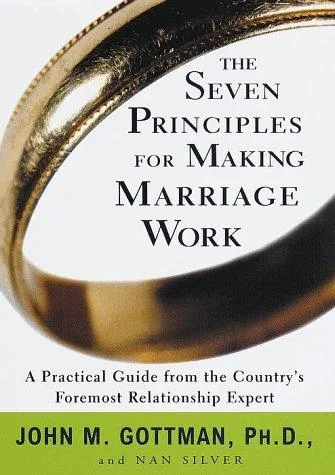
The Seven Principles for Making Marriage Work, by John Gottman and Nan Silver
The Gottmans’ guide to moving from gridlock to dialogue, with questionnaires and exercises for couples working through the issues they cannot seem to resolve.
A shared book gives you a shared vocabulary. Instead of “You always explode over nothing,” you can say, “That felt like one of the patterns in the book.” If he will not read it with you, read it yourself first. The ideas are useful on your side, too. If you are in the new-parent years, our guide on Marriage Advice For New Parents covers rebuilding the team in that season.
What This Is Not
Before you put these four things to work, a few honest lines. They are not a diagnosis. A husband who snaps over small things is not automatically controlling, and he is not automatically a narcissist. Those labels get thrown around online because they give you a villain, but they are a dead end.
They are also not your fault, and they are not an excuse. Understanding why he gets angry is not the same as accepting it. You can understand the reason and still say, clearly, that the shouting has to stop. And they are not a promise. Four calm responses will not fix a marriage in a week. They are a starting point.
When to Get Outside Help
Some things are bigger than four calm responses, and knowing that is strength, not failure. If the pattern keeps going after weeks of calm, clear responses, if the same conversation goes nowhere, or if you cannot tell hope from fear anymore, a couples counselor can help. A counselor sits with both of you and helps you talk about the hard things.
There is also a line that matters more than any small thing. If he controls who you see, tracks your phone, belittles you in front of the children, drinks or uses substances and becomes frightening, or if you ever feel unsafe at home, that is not a communication problem. Reach out to a trusted professional, a doctor, or a local support service. You deserve to feel safe, and so do your children.
Shop This Post
| Product | Used For | Price |
|---|---|---|
| The Five Minute Journal |
The private page from the calm conversation, five quiet minutes to get your thoughts straight | Check Price |
| The Seven Principles for Making Marriage Work |
The read-together starting point, one chapter at a time | Check Price |
Frequently Asked Questions
What if he gets angry even when I am right? That is the hardest version, because it is not about the facts at all. Do not spend your energy proving you were right. He will hear the proof as another argument. Use the pause in the moment, then the calm conversation, to say what it feels like. If he still carries on, bring it to a counselor together.
Should I just stay quiet to keep the peace? Going quiet and careful works briefly, and it costs you enormously. It also removes the only real information he has that something needs to change. Quiet is a pause, not a plan.
How long should I try these before deciding anything? Give the pattern a few weeks, ideally a month. Real change is slow. Watch for the pattern, not the single day. If nothing changes, that is information too, and a counselor can help you read it.
A Small Ritual That Is Only Yours
Before you do anything else, protect one small thing that belongs to you alone. Mine is embarrassingly small: after the kids are down, I sit with my journal for five minutes and write down the one thing I did well today. Some nights it is “I paused instead of arguing about the milk.” Some nights it is just “I made dinner.” The page does not grade me. Nobody raises their voice at it. It reminds me I am a person with a voice, not a list of mistakes waiting to be corrected.
You are not too sensitive for minding this, mama. Wanting a calm house is ordinary, and one pattern does not have to define the whole marriage. Try one thing this week. Remember that staying together and parting are both real outcomes, and the decision stays yours. If the correcting side of this pattern sounds familiar too, our guide on Why Does My Husband Always Correct Me? 7 Ways to Respond is the companion piece, and our Mom Life Tips are the companion for the you side of this season.


