Will You Do It for the Culture? 10 Things Brown Parents Are Known For

Some of my favorite mom friends grew up in brown households, and the stories they tell about their parents could fill a whole bookshelf. The sentences are always the same, the timing is always perfect, and the delivery is always completely serious, which is exactly what makes it funny.
If you grew up in a South Asian family, you already know every line on this list by heart. You heard them at the dinner table, on the phone with relatives, and in the car on the way to every family function. These 11 things brown parents are known for are the habits, sayings, and house rules that show up in brown families again and again. They are not a complaint. They are a love letter.
Heads up: this post contains affiliate links. If you buy through them, MamaKinder may earn a small commission at no extra cost to you, and it helps keep these guides free.
Before We Start: This List Is a Love Letter
Brown parents do not do anything halfway. When they worry, they worry with their whole chest. When they feed you, they feed you like a small army is coming. Every item here is something real brown kids recognize instantly, and every one of them comes from love, even the ones that made you roll your eyes at sixteen. The joke is never on the parents. The joke is that we all heard the exact same sentences in completely different houses and knew exactly what they meant.
Quick Picks: Find Your Family in This List
| If this sounds like your house… | Start with |
|---|---|
| Careers were decided before you were born | Item 1, the career shortlist |
| A 95% on a test was a tragedy | Item 2, the missing 5% |
| Aunty’s daughter is the family gold standard | Item 3, the comparison game |
| Dinner is a second dinner, then a third | Item 5, food is love |
| The fancy plates only appear for guests | Item 6, the good dishes |
| Every decision starts with “what will people say” | Item 7, log kya kahenge |
| Your phone is blamed for every problem | Item 10, the phone |
| Mom forwards everything on WhatsApp | Item 11, the forwards |
The Classics Everyone Knows
These four are the foundation. Ask any brown kid anywhere in the world, and they will nod before you finish the sentence.
1. The career shortlist: doctor, lawyer, engineer (or doctor)

Every brown kid grows up with the same three career options: doctor, lawyer, or engineer. There is sometimes a fourth option, which is doctor again, just in case you missed it the first time. Artist, chef, teacher, writer: these are hobbies, not careers.
It comes from a real place. Many brown parents left everything they knew, moved to a new country, and built a life from nothing. A safe, respected, well-paid career was the promise they made to themselves about their children’s future. The funny part is how early it starts. At five you are told you will be a doctor. At fifteen you are reminded that your cousin is already in medical school.
2. “You got 95%? What happened to the other 5%?”
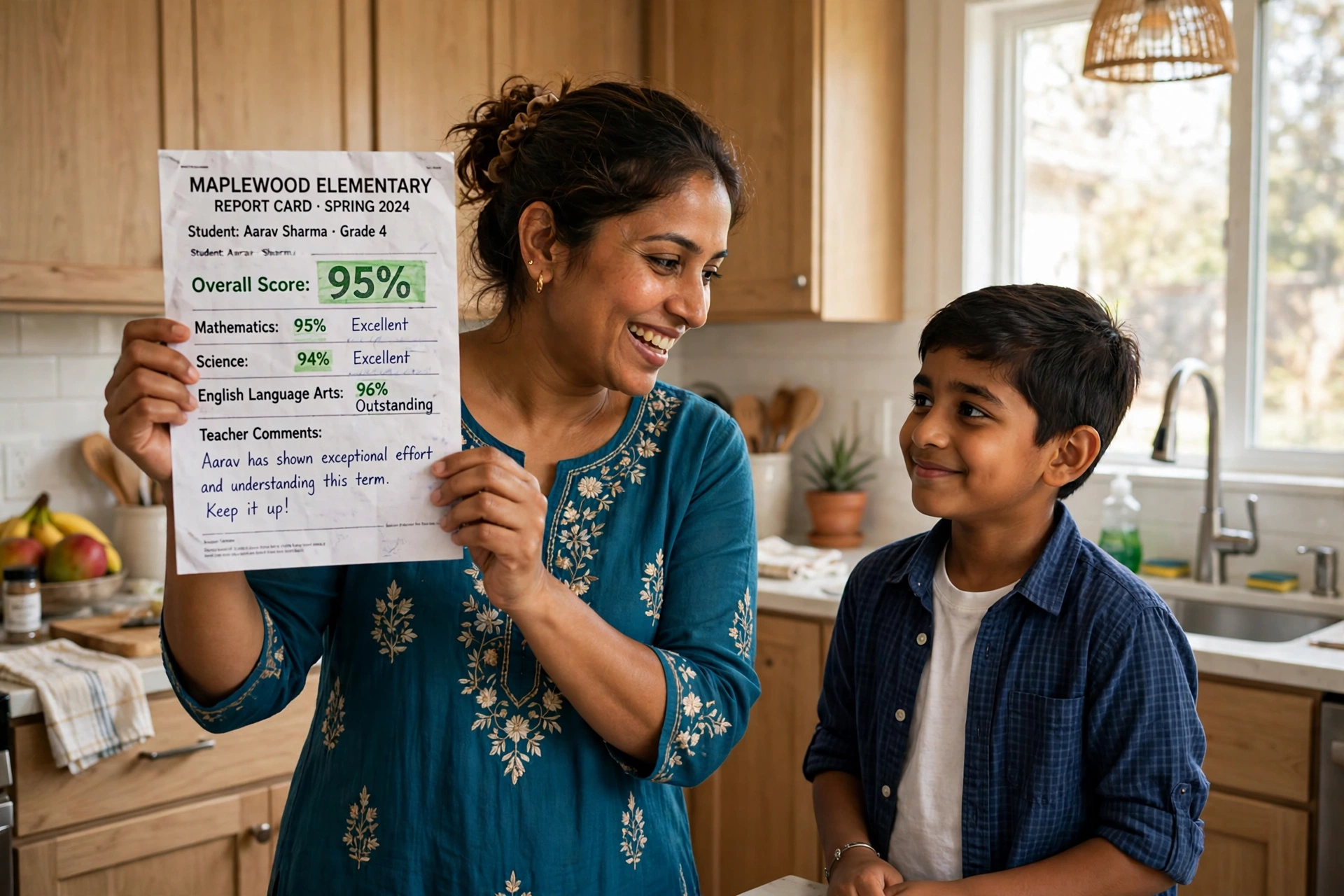
You come home glowing with a 95% on your exam. You hand over the paper. Your mother looks at it, nods, and asks the question every brown kid knows by heart: what happened to the other 5%?
It is not that she is unhappy. It is that in her mind, 95% means 5% was left on the table, and 5% left on the table means there is room to do even better next time. Grades were never just grades in a brown household. They were proof the sacrifices were worth it. The same mother who asked about the missing 5% will tell every relative at the next family gathering that you got the highest marks in your class.
3. The comparison game: Aunty’s daughter got 98%

Somewhere in every brown family there is a perfect child. She is Aunty’s daughter, or Sharma ji’s son, or the cousin who lives three streets away. She got 98%. She plays piano and volunteers at the temple on Sundays. And your parents will mention her at least once a week, usually right after you have done something they consider less than perfect.
“Why can’t you be like her?” is the question. It sounds like a criticism, and at fourteen it certainly feels like one. But underneath it is a strange kind of compliment: your parents think you are capable of anything, so they point at the highest example they can find and tell you to aim there. The best part is that the perfect child usually turns out to be just as human as you are. Years later you meet her at a wedding and discover she also got compared to you.
4. “Humare zamane mein” (back in my day)

“Humare zamane mein” means “in our time,” and it is the opening line of every brown parent’s favorite speech. In their time, they walked ten kilometers to school, uphill both ways, in the rain, carrying their books in a plastic bag. They studied by candlelight. They shared one pencil between three siblings. And they still came first in class.
The details grow a little with every telling. The walk gets longer, the hill gets steeper, and the rain gets heavier. Underneath the exaggeration is a real story about resilience. Many brown parents genuinely did grow up with far less than their children have now, and they want you to know it, not to make you feel guilty, but so you understand where you come from.
Food, Guests, and the House
If the first section is the sayings, this section is the house itself. In a brown home, food is love, guests are royalty, and the rules are written in the kitchen.
5. Food is love, and love means second helpings
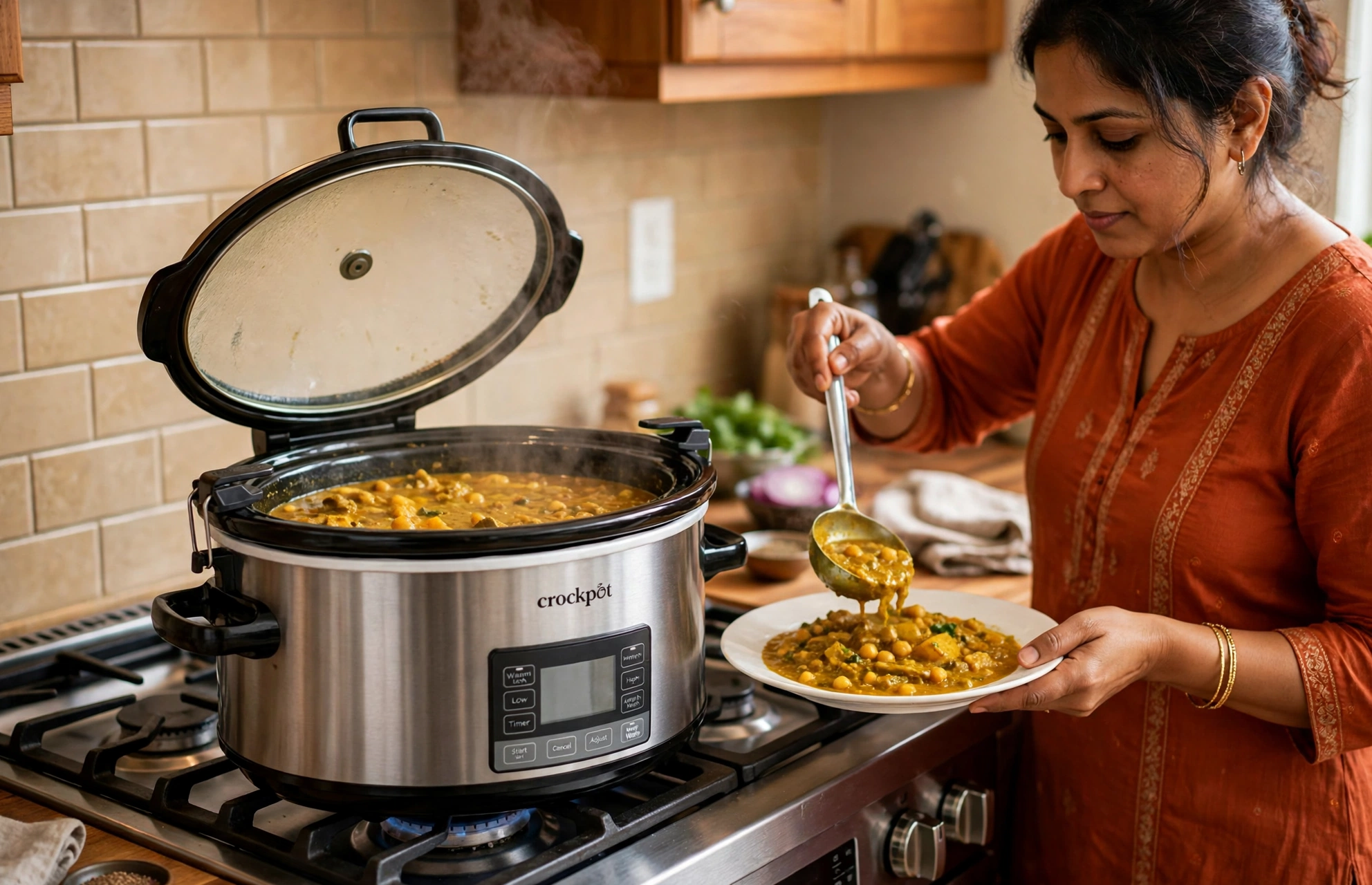
In a brown household, “have you eaten?” is not a question. It is a greeting, a check-in, and a love language all in one. Your mother does not ask if you are hungry. She puts food in front of you. If you finish your plate, she takes it as a compliment and immediately refills it.
This is why there is always too much food. The pot is big enough for twice as many people as are actually coming, because what if someone drops by? A brown mother would rather throw food away than run out. The slow cooker is the quiet hero of this system in our house now. A big pot of daal or curry can simmer all afternoon in the Crock-Pot 7-Quart Slow Cooker, portable with a programmable timer and a locking lid, so there is always something warm on the stove when someone walks through the door.
Crock-Pot 7-Quart Slow Cooker, Portable Programmable with Timer, Locking Lid, Stainless Steel
A 7-quart slow cooker with a programmable timer and locking lid, made to keep a big family pot warm all afternoon so there is always something ready when someone walks in.
6. The good dishes are only for guests
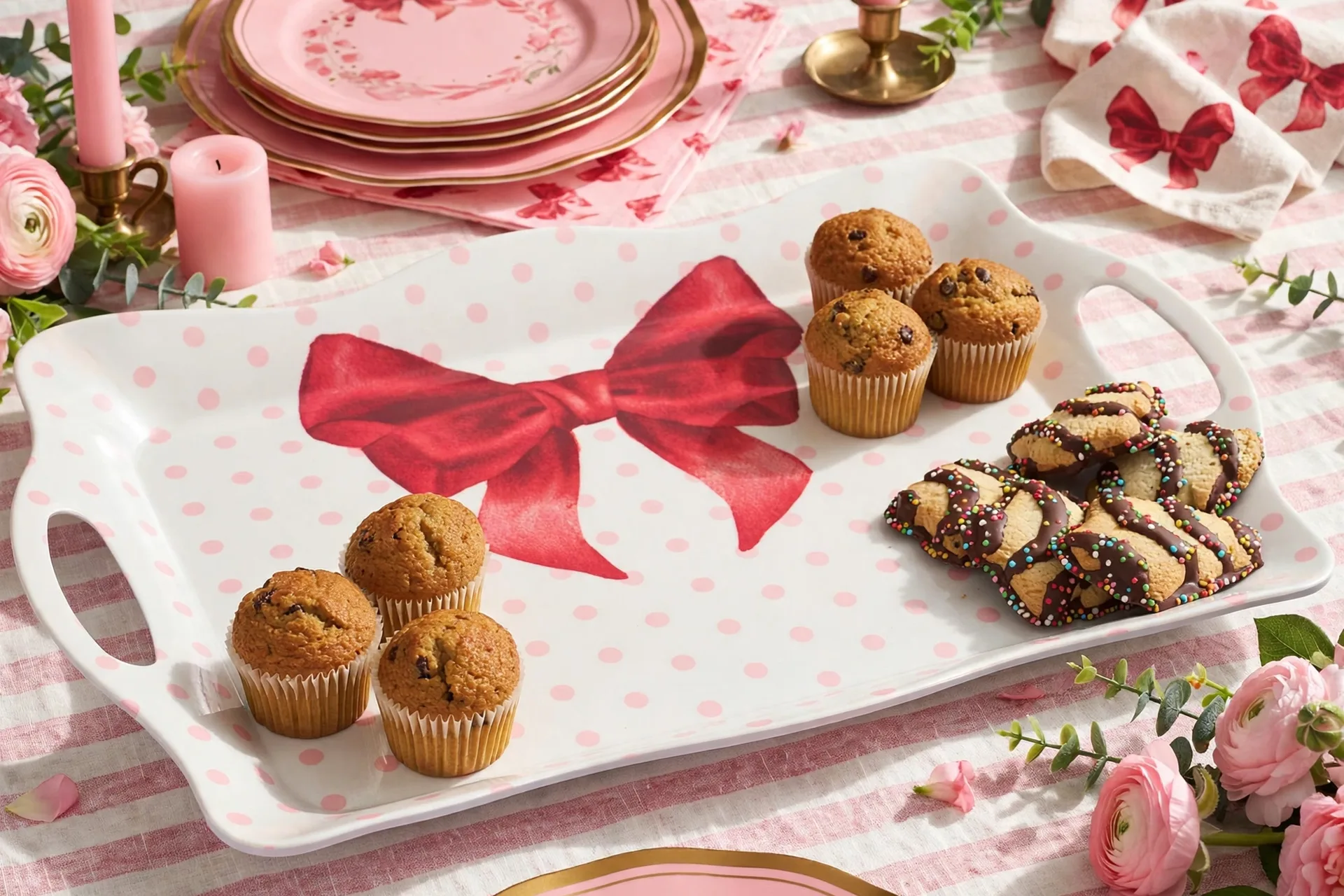
Every brown home has two sets of dishes. There are the everyday plates, chipped at the edges and completely fine. And then there are the good dishes, kept in a cabinet, behind glass, possibly still in their original box. They come out for guests, for festivals, and for that one relative whose opinion matters most.
The same rule covers the good towels and the living room that nobody is allowed to sit in. The house has a whole room that exists mainly to impress visitors, and the family lives happily in the kitchen instead. A pretty serving tray is the one piece of the good set that earns its keep. The Sophistiplate Melamine Serving Tray by Meg Quinn, Pink looks like it belongs on the guest table, and it is sturdy enough to survive the everyday too, so it can come out for guests and stay out for family. If your own good dishes need replacing, our Best Amazon Prime Day Deals for Parents guide tracks when the best deals run.
Sophistiplate Melamine Serving Tray by Meg Quinn, Pink
A melamine serving tray in pink, made for the guest table and sturdy enough for everyday family use too.
7. “Log kya kahenge” (what will people say)

“Log kya kahenge” means “what will people say,” and it is the sentence that governs a surprising number of brown household decisions. What will people say if you wear that, come home late, or quit your job to start a business? The people in question are never named. They are simply “log,” the people, and their opinion carries real weight.
It sounds controlling, and sometimes it is. But it also comes from a community where reputation was survival. In a tight community, what the neighbors thought decided who got invited, who got helped, and who got trusted. The same parents who worry about what people will say are also the first to defend you to those very people. The worry is real, and so is the pride.
8. “Turn off the lights, money doesn’t grow on trees”
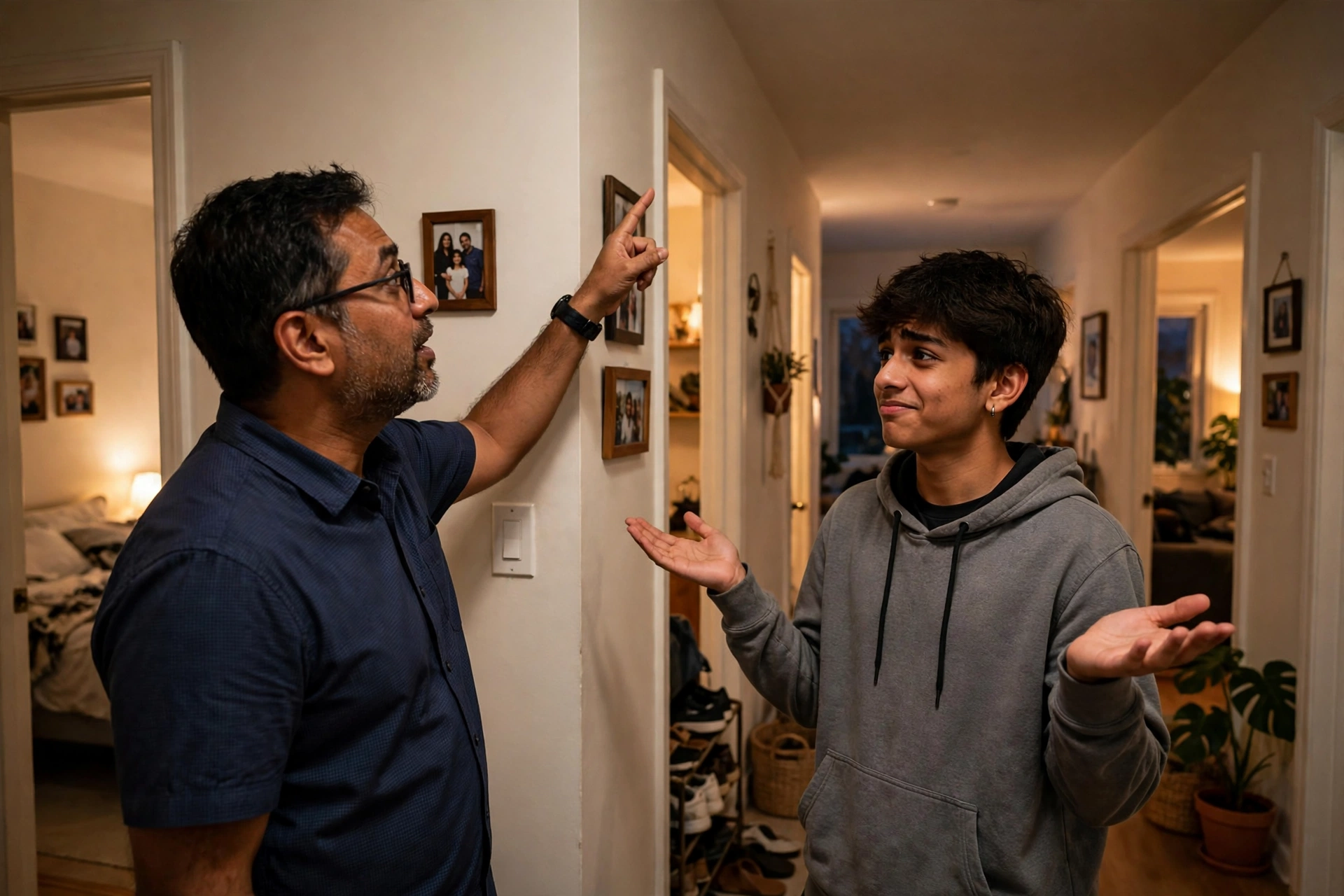
Walk through a brown household and you will hear it at least once a day: turn off the lights. Close the fridge. Do you think money grows on trees? The lights are on in three rooms, nobody is in any of them, and your father is standing in the hallway like a detective who has just solved the case.
It is not really about the electricity bill, although the bill does get mentioned. It is about a habit learned in a house where nothing was wasted. Food was finished, clothes were handed down, and lights were turned off. The lecture usually ends with a story about how expensive everything was in their day, which brings us right back to item four. Every brown parent saying connects to another one.
The Modern Classics
The last three are newer, but they have earned their place. They are the ones brown kids text each other about.
9. “When are you getting married?”

You can be twenty-two or thirty-two. You can have a degree, a career, and a mortgage. None of it matters. At every wedding, every family gathering, and every phone call with a distant relative, someone will ask: when are you getting married? If you are married, the question simply changes to: when are you having a baby?
The aunties do not ask because they are nosy, although it certainly feels that way at the time. In their world, marriage was the moment life began, and they genuinely want that happiness for you. They also have a list of suitable matches in their heads at all times, and they are not afraid to share it. Your cousin’s friend’s brother is very nice. The best response is the one every brown kid learns eventually: smile, say “when the time is right,” and change the subject to the food. And if the questions ever turn into real pressure about marriage and the years after it, our Marriage Advice For New Parents guide has the longer version.
10. The phone gets blamed for everything

Bad grades? The phone. Tired eyes? The phone. Late to dinner? The phone. In a brown household, the smartphone is the cause of every problem, including the ones that existed long before smartphones did. Your parents will say this while holding their own phone, which they use to watch videos, forward messages, and video-call relatives for an hour at a time.
The double standard is the best part. Your screen time is a crisis. Their screen time is “just checking one thing.” Your phone at the dinner table is rude. Their phone at the dinner table is showing you a video of a baby elephant, which is completely different, and you have to watch it now. Underneath the blame is something real: they worry it is pulling you away from the family, from your studies, from real life.
11. Mom’s WhatsApp forwards
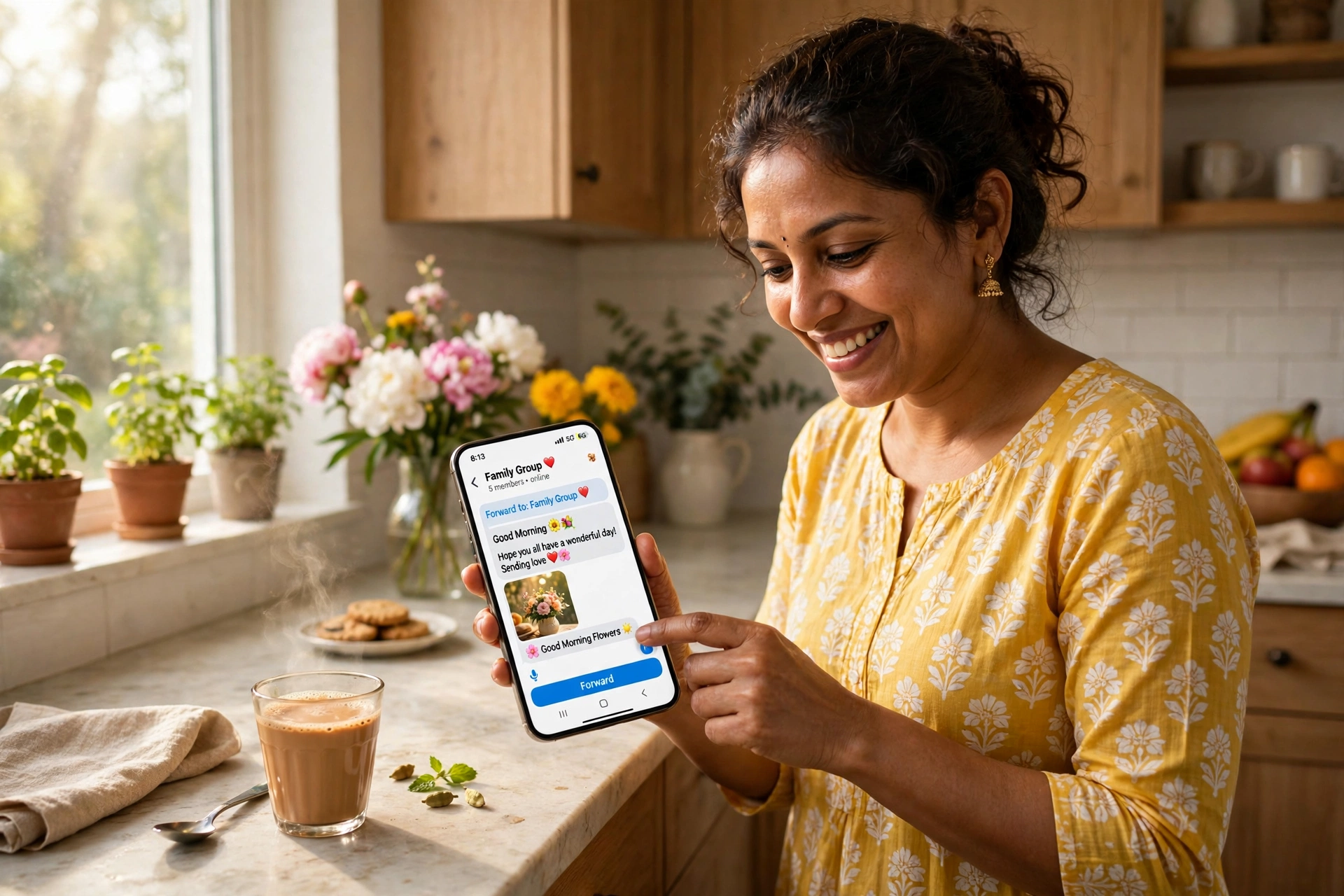
Somewhere around the time your mother learned to use a smartphone, she discovered WhatsApp, and your life changed forever. Good morning messages with flowers. Health tips from strangers. Videos about the dangers of everything. A photo of a sunset with an inspirational quote. All of it forwarded to the family group, usually before 7 AM, usually in all caps, usually with three emojis.
Do not try to fact-check them. She has already forwarded the next one. Do not ask where she got it. She got it from Aunty, who got it from her sister, who got it from a very reliable source. The forwards are not really about the information. They are her way of saying good morning, I am thinking of you, please drink more water, and call your grandmother. The family group chat is the modern version of the dinner table: everyone talks at once, nobody listens properly, and somehow it holds the whole family together.
The Part Worth Keeping
Here is the thing about all eleven items: they are not really about careers or grades or phones. They are about parents who loved their children so loudly that the whole neighborhood could hear it. The sayings were strict because the stakes felt high, and the food was endless because love had to be visible.
If you are a brown parent yourself now, you get to choose. Keep the food, keep the pride, keep the phone calls to grandmother. Let go of the parts that hurt, and keep the rest with a smile. That is what doing it for the culture really means: taking the best of what you were given and passing it on, a little lighter and a little kinder. And if you are raising your own little ones through the newborn fog right now, our Surviving the Newborn Stage guide has the small, honest hacks that get you through the first three months.
Shop This Post
| Product | What it is for | |
|---|---|---|
| Crock-Pot 7-Quart Slow Cooker, Portable Programmable with Timer, Locking Lid, Stainless Steel | A big family pot that stays warm all afternoon | Check Price |
| Sophistiplate Melamine Serving Tray by Meg Quinn, Pink | The guest-table tray that survives everyday use | Check Price |
Frequently Asked Questions
Is this list making fun of brown parents? No, it is the opposite. Every item here is written with affection, and every one of them comes from love. The joke is that we all recognize the same sentences, not that the parents who said them were wrong. This list celebrates that.
I grew up in a brown household and some of these hurt. Is that normal? Yes, and it is worth saying out loud. The comparisons and the pressure were real, and they left marks on a lot of us. You can love your parents and still decide to do some things differently with your own kids. Keeping the warmth and dropping the pressure is not disrespect.
Why 11 things and not 10? Because the list kept growing. Ten was the plan, and then the WhatsApp forwards showed up and refused to be left out. Eleven covers the classics and the modern ones.
Can I share this with my parents? Yes, and you should. Send it to your mom first. She will laugh at item eleven, forward it to the family group, and then call you about the lights. Tell her it is item eight.
Keep the Best, Laugh at the Rest
If this list feels familiar, here is the whole guide in one line: keep the love, keep the food, keep the family, and let the pressure go. They are all the same story told eleven different ways: your parents cared so much they could not keep it quiet.
Our Mom Life Tips guide has the small systems that keep the rest of the house running, for brown households and every other kind. And if you ever want to write all of this down for other moms, our How to Start a Mom Blog in 2026 guide is the honest starting point.