
Why Does My Toddler Hit Me but Not Daddy? 7 Gentle Fixes

My two-year-old smacked me across the face in the cereal aisle last week. Not hard enough to hurt, hard enough to sting, and in front of a stranger. Then, ten minutes later, Daddy walked in the door and got a running hug. Same child, same day. If that sounds familiar, here is the short version first: your toddler hits you and not Daddy because you are the safe person, not because you did something wrong.
This guide has 8 gentle fixes for the hitting, from the exact words to say in the moment to the small tools that give little hands something better to do. In our house, with a four-year-old and a two-year-old, these are the fixes that actually stuck. Our toddler parenting tips guide has the routines these fixes fit into.
Heads up: this post contains affiliate links. If you buy through them, MamaKinder may earn a small commission at no extra cost to you, and it helps keep these guides free.

Why You, Not Daddy? The Safe-Person Answer
You are the safe person. Toddlers save their biggest feelings for the person they trust most to hold them. Your toddler knows you will still love them after the hit, still comfort them after the scream, still be there in the morning. Daddy gets the giggles and the hugs because he is the fun one, or the one who rarely says no. You get the storm because you are the harbor.
You also set most of the limits. If you are the one who says no to the third cookie, ends the bath, and turns off the show, you are the one your toddler bumps into all day. Every limit is a small frustration, and a toddler with no words for frustration uses their hands. Daddy sets fewer limits, so he collects fewer hits. It is not favoritism. It is arithmetic.
And you are simply there more. The parent who does the diaper changes, the meals, and the bedtime battles is the parent who sees the most of the hard hours. Hitting peaks when your toddler is tired, hungry, overstimulated, or going through a big change, and those moments happen on your watch. None of this means you should accept being hit. It means the hitting is a message about safety and limits, not about love.
How to Use These 8 Fixes
You do not need all 8 fixes. Pick one for the moment and one for prevention, and use them for a week before you judge them. Start with the quick-pick table below, which matches the moment to the fix that fits it best. The fixes work in order, in the moment, then teaching, then prevention, but any single one helps on its own. If a fix does not fit your toddler, skip it.
| Moment | Start with |
|---|---|
| The hand is already up | Fixes 1, 2 |
| Right after the hit, everyone is upset | Fixes 2, 5 |
| Your toddler cannot say what is wrong | Fixes 3, 8 |
| Little hands need something to do | Fixes 4, 5, 6 |
| Leaving the park, ending screen time | Fix 7 |
| Calm practice for tomorrow | Fixes 3, 8 |
The 8 Gentle Fixes for Calmer Days
In the Moment: Stop the Hit Gently
1. Do Not Take It Personally: Reframe the Hit

The first fix happens in your head, not in your hands. A toddler who hits you is not giving you a hard time. Your toddler is having a hard time, and you are the person they trust enough to fall apart in front of. That reframe does not make the slap hurt less, but it stops the spiral where you feel disliked, then guilty for feeling disliked, then angry at a two-year-old for making you feel that way.
Say it to yourself before you say anything to your toddler: this is developmental, not personal. Toddlers hit because their feelings are bigger than their words and their impulse control is still under construction. The hitting peaks between 18 and 36 months for most children and fades as language grows. You are not raising a hitter. You are raising a small person who is still learning how to be upset without using their hands.
2. Stop the Hand Calmly and Say One Short Line

When the hand comes up, stop it gently and say one short line: “I can’t let you hit. Hitting hurts.” That is the whole script. No lecture, no long explanation, no asking why they did it. A toddler mid-feeling cannot hear a paragraph, and every extra word is just noise on top of a storm.
If you missed the first one, say the same line anyway and be ready to block the next one. Put your toddler down safely if they are on your lap, or move yourself a step back, still close enough to be seen. Staying calm is the lesson here: your steady body shows them what calm looks like before they have the words for it.
Teach the Feeling Another Way
3. Name the Feeling With a Book
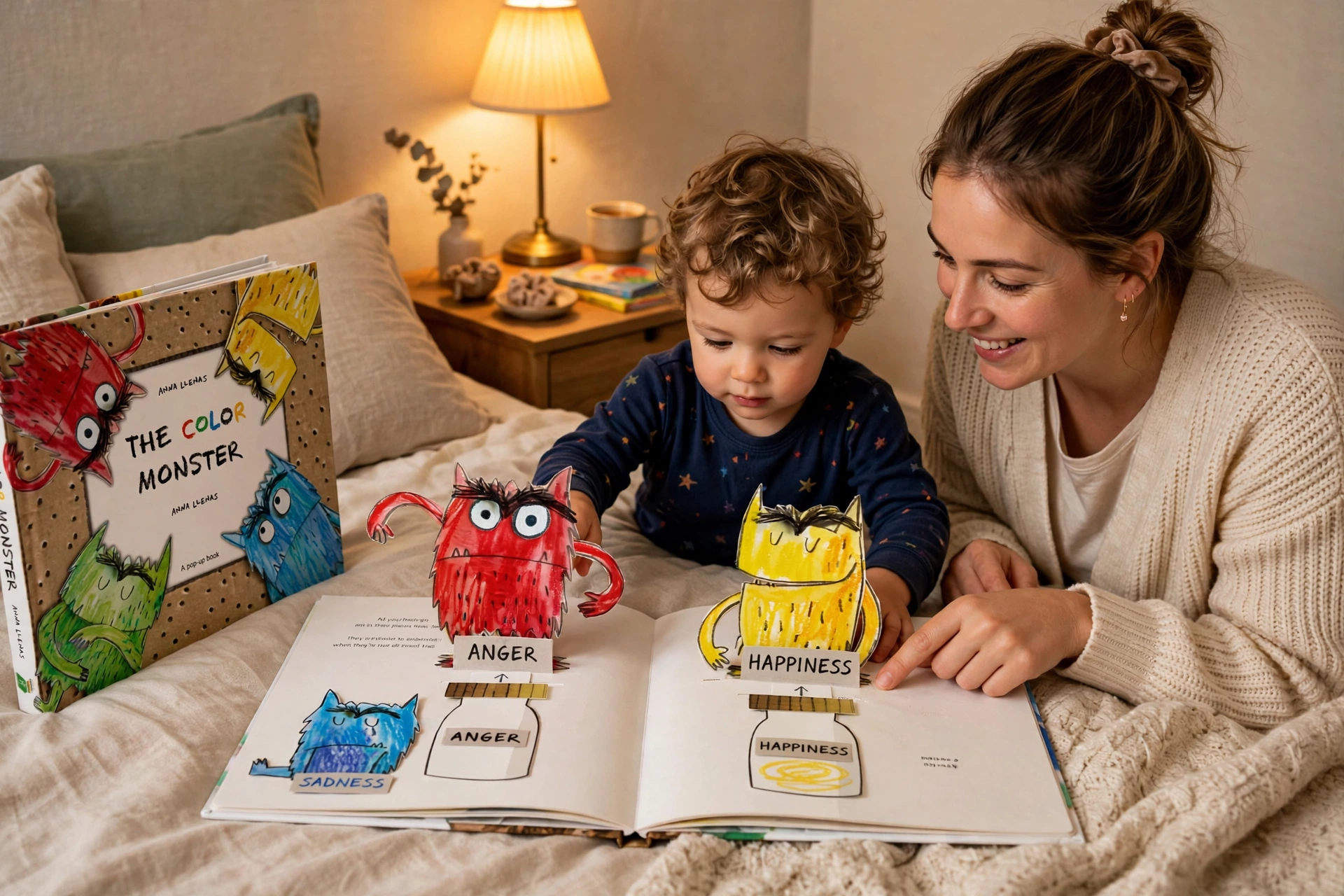
A toddler who can say “I am mad” is less likely to scream it with their hands. The trick is teaching the words when everyone is calm, not in the middle of the hitting. At bedtime, read a book that sorts feelings by color and name each one out loud: mad is red, happy is yellow, sad is blue.
In The Color Monster, a little girl helps a mixed-up monster sort five feelings, happiness, anger, sadness, fear, and calm. It is made for ages 2 to 4, with 20 pop-up pages, so keep it for lap reading with a grown-up. Then use its words in the storm: “You are feeling red right now. That is the mad feeling.” The book gives your toddler a word to reach for instead of a hand.
The Color Monster: A Pop-Up Book of Feelings
A little girl helps a mixed-up monster sort five feelings by color. Pop-up pages, 20 pages, reading age 2 to 4.
4. Give the Mad Hands Something to Squeeze
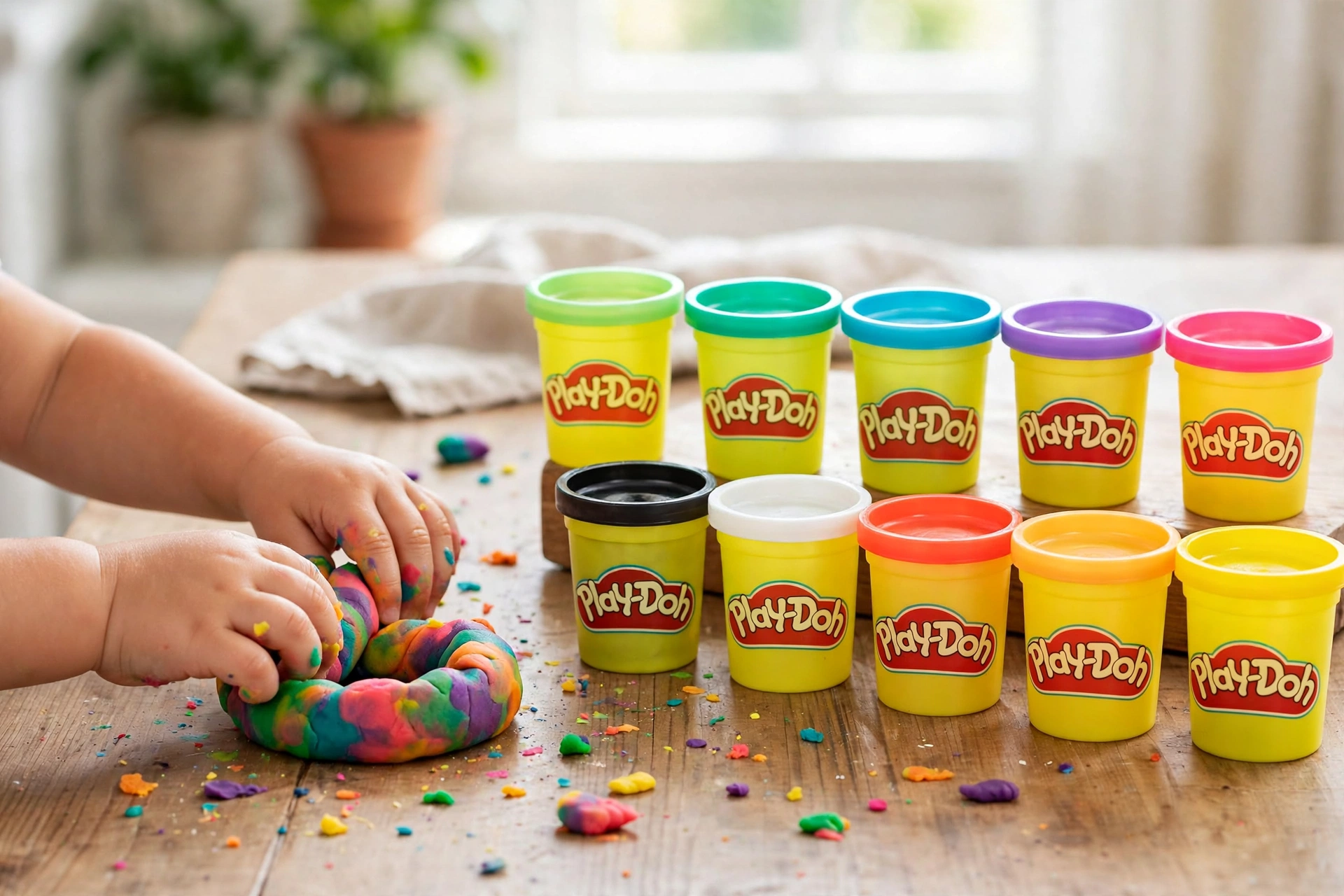
Some hitting is a body looking for a job. When your toddler’s hands are full, they cannot hit with them, and squeezing is one of the fastest ways to let a big feeling out through the body instead of at a person. Keep a can of dough where the hitting usually happens, by the couch, in the kitchen, in the car.
When the storm starts, offer it fast: “Your hands are mad. Squeeze this instead.” Play-Doh comes in a 10-pack of cans, made for ages 2 and up. Roll it, squash it, poke it. Dough is for hands, not mouths, so a grown-up stays close. One can in the calm-down spot and one in the going-out bag covers most afternoons.
Play-Doh 10-Pack
Ten cans of modeling dough for squeezing and rolling. Made for ages 2 and up.
5. Shake a Sensory Bottle and Watch It Settle
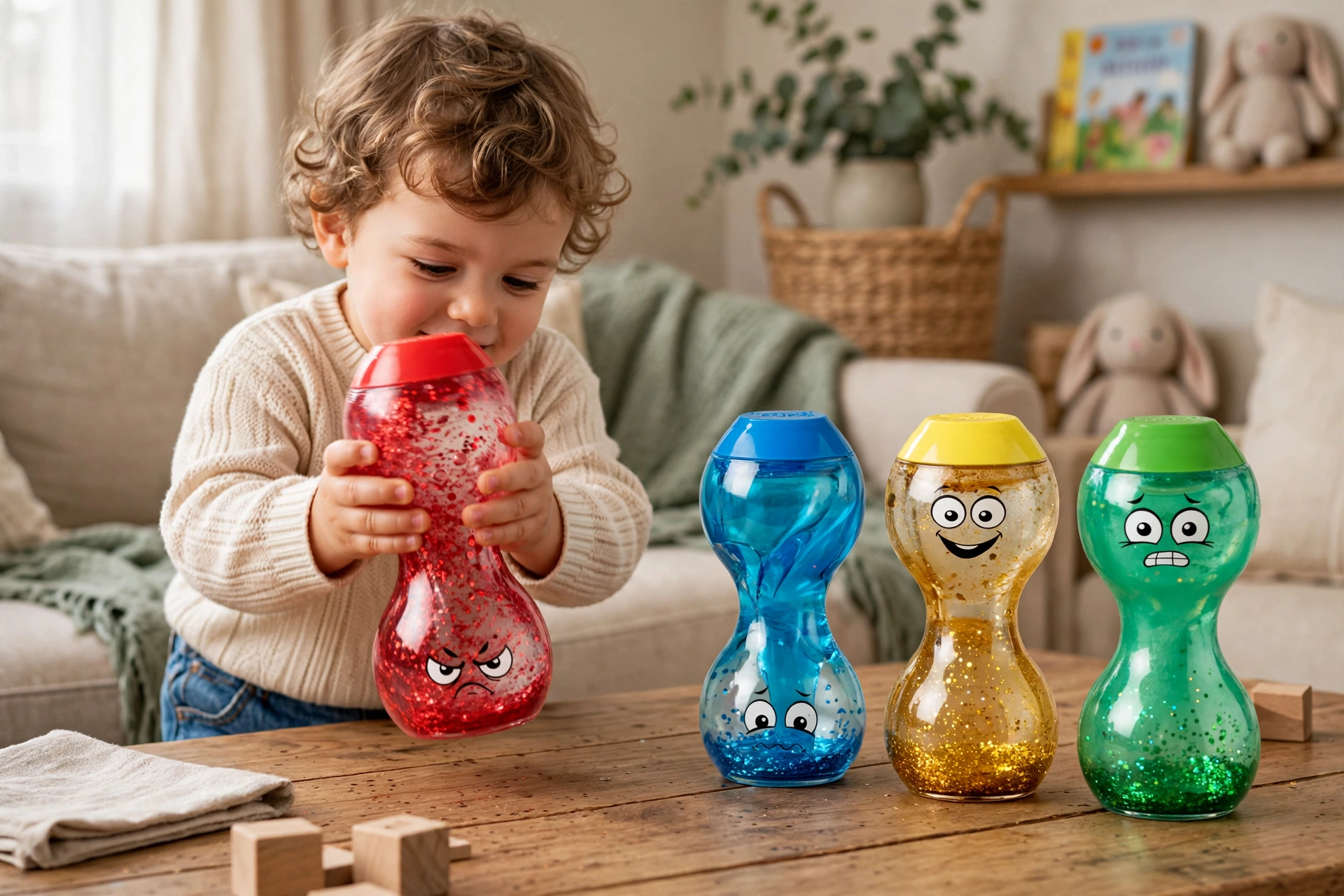
Watching glitter settle is a whole calm-down lesson in a bottle. Hand your toddler a sensory bottle, let them shake it as hard as they like, and watch the sparkles drift down together. The shaking gets the mad out, and the settling shows them what calming down looks like, without a single word from you.
The hand2mind Express Your Feelings Sensory Bottles are four sealed, easy-to-grip bottles for Happy, Angry, Scared, and Sad, with an activity guide. Pick the bottle that matches the feeling, shake it, and wait for the glitter to land before you talk. A bottle your toddler chooses is a bottle they will actually use.
hand2mind Express Your Feelings Sensory Bottles
Four sealed, easy-to-grip bottles for Happy, Angry, Scared, and Sad, with an activity guide.
6. Blow Slow Bubbles to Slow the Breathing
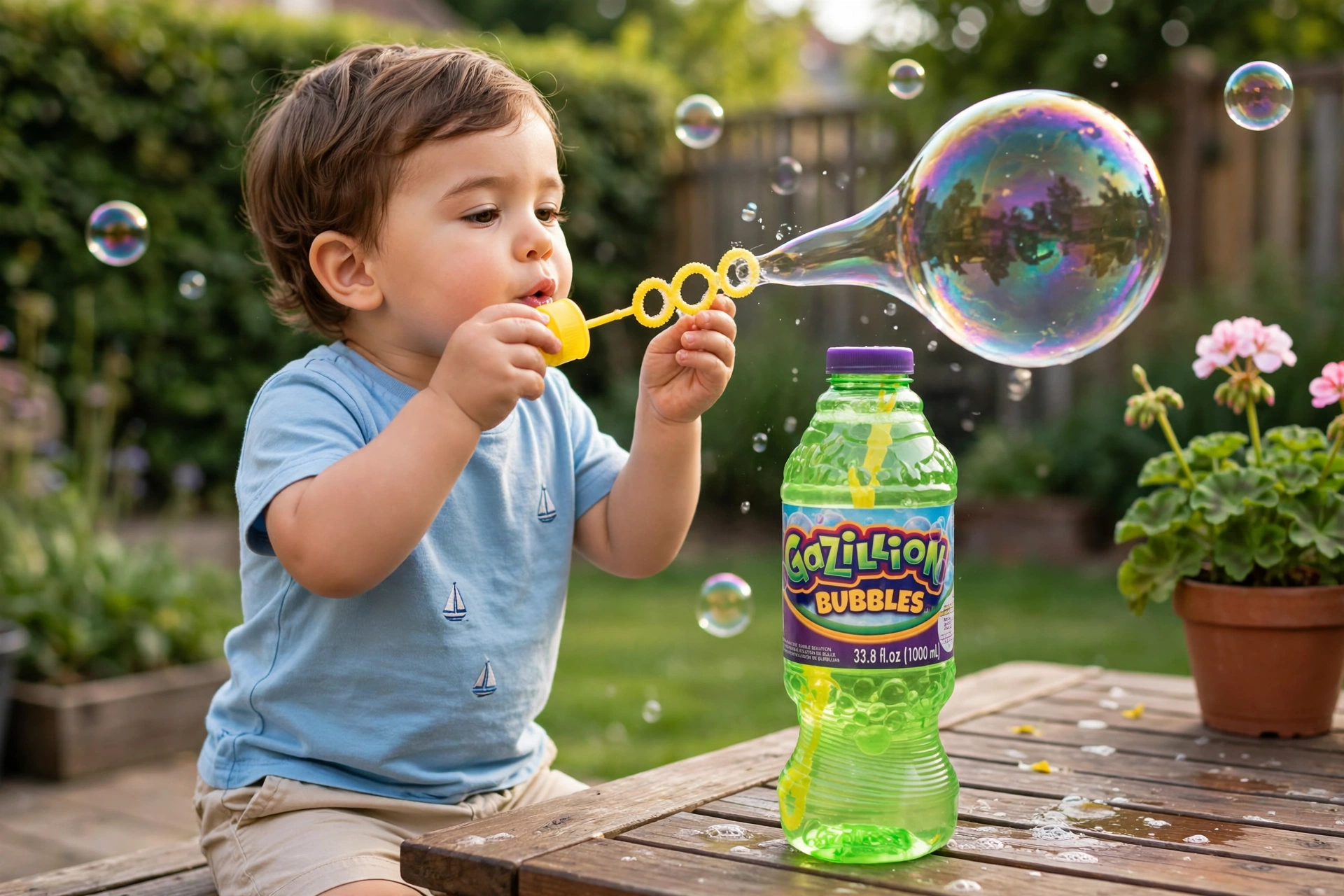
Slow breathing is hard to teach and easy to copy. Blow bubbles together and your toddler has to breathe out slowly to make a big one, which is the same slow breath that calms a body down. One bubble at a time, no rushing, no counting, just watching it float.
Gazillion Bubbles solution comes in a 1 liter bottle with a 7-in-1 wand, is non-toxic, and is made for ages 3 and up. Blow one bubble, watch it float, then blow another. A grown-up holds the bottle for under-threes. Keep the bottle by the back door, so the calm-down walk outside starts with bubbles, not with a lecture.
Gazillion Bubbles Original Bubble Solution 1L
One liter of bubble solution with a 7-in-1 wand. Non-toxic, made for ages 3 and up.
Before the Next One: Prevention That Works
7. Warn Before the Switch With a Sand Timer

A lot of hitting happens at the switch: park to car, play to bath, screen off to dinner. Your toddler is not being difficult. They are being surprised, and a surprised toddler hits first and asks questions never. A warning your toddler can see turns an ending into a choice.
Flip a one-minute hourglass timer and say, “When the sand runs out, we go.” A sand timer beats a phone here, because your toddler can watch the sand fall. It is glass, so a grown-up holds it. One minute of warning, given every single time, is worth more than any calm-down trick used after the fact.
SuLiao 1-Minute Hourglass Sand Timer
Flip it and watch the sand fall. Runs a full minute, for one-minute warnings. Glass, so a grown-up holds it.
8. Practice Gentle Hands When Everyone Is Calm

The best time to practice gentle hands is when nobody is upset. When everyone is calm, make a small set of feelings cards together: a happy face, a mad face, a sad face, and a scared face on thick paper, one feeling per card. Your toddler points at the card instead of screaming the feeling, and pointing is a skill a two-year-old can actually use.
Thick construction paper holds up to little hands, and washable markers wash off skin and most clothing. The Crayola Construction Paper pack has 480 sheets. Keep the finished cards where the hitting happens, on the fridge or by the couch, and practice every day: “Show me the mad face. Now show me gentle hands.” A card practiced on a calm Tuesday is a card your toddler remembers on a hard Thursday.
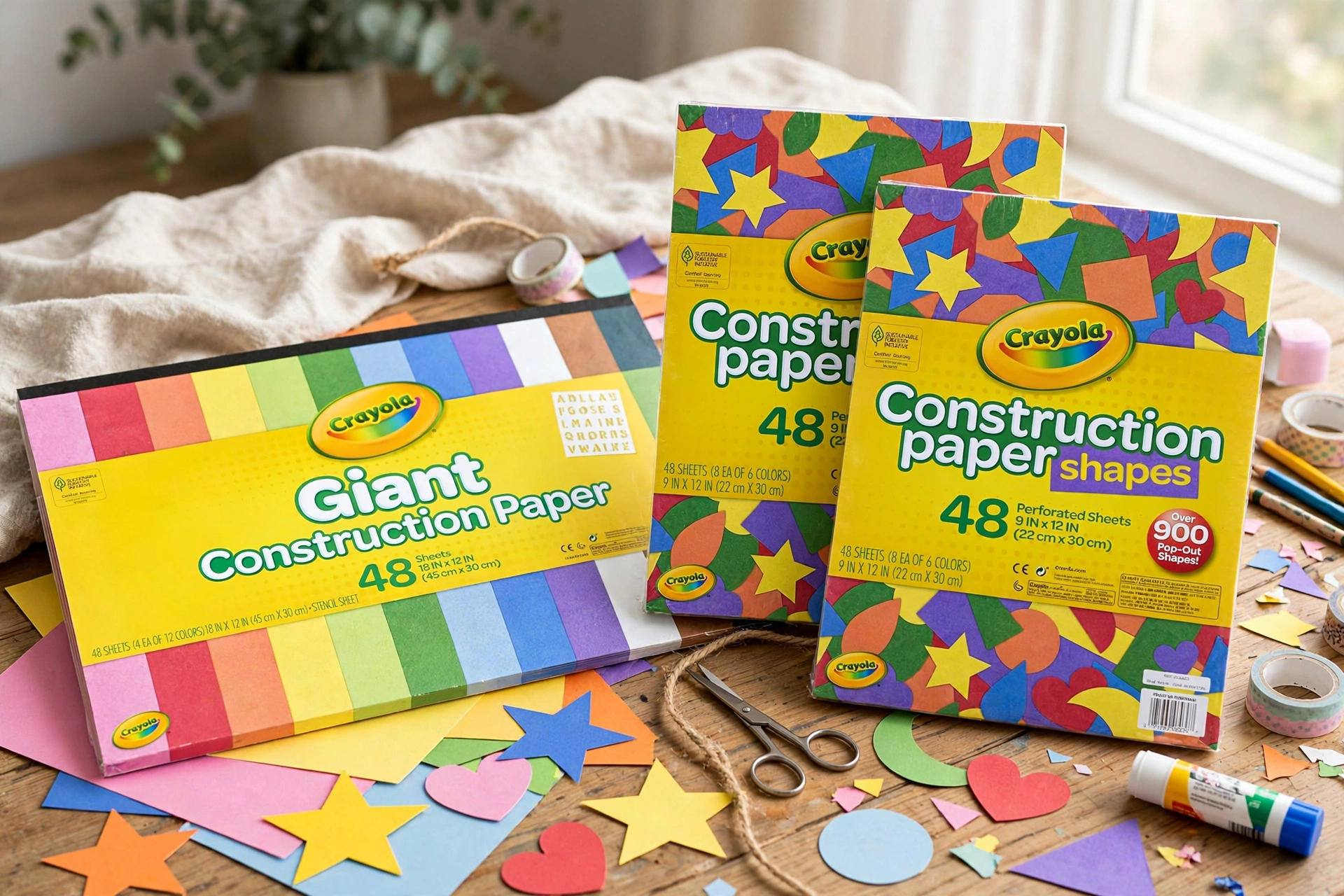
Crayola Construction Paper, 480 Sheets
480 heavy sheets in assorted colors, thick enough for feelings cards little hands grab every day.

Crayola Washable Markers
Broad-line markers that wash off skin and most clothing. Made for big, bold feelings faces.
The Gentle Fixes Card Pack
Want these 8 fixes on cards you can grab mid-meltdown? The expanded version of this guide is a 20-fix Gentle Fixes Card Pack, one card for each fix here plus 12 extra calm-down games and scripts. There is no purchase link yet.
Shop This Post
Everything with a link in this guide:
| Product | Used for |
|---|---|
| The Color Monster: A Pop-Up Book of Feelings | Fix 3 (Check Price) |
| Play-Doh 10-Pack | Fix 4 (Check Price) |
| hand2mind Express Your Feelings Sensory Bottles | Fix 5 (Check Price) |
| Gazillion Bubbles Original Bubble Solution 1L | Fix 6 (Check Price) |
| SuLiao 1-Minute Hourglass Sand Timer | Fix 7 (Check Price) |
| Crayola Construction Paper, 480 Sheets | Fix 8 (Check Price) |
| Crayola Washable Markers | Fix 8 (Check Price) |
What Not to Do When Your Toddler Hits
Do not shout. A big reaction is what an experimenting toddler is testing for, and a shout teaches them that hitting gets a show. Do not hit back or spank. Hitting your toddler for hitting tells them the rule is that bigger people may hit, which is the opposite of the lesson. Do not laugh, even when it looks funny at first, because a laugh is a reward and your toddler will try for it again. And do not lecture in the middle of the storm. A toddler mid-meltdown cannot take in new information, so save the teaching for a calm moment, when their brain is actually listening.
Daddy’s Part: One Script, Two Parents
The fixes only work if both parents use the same words and the same limit. Sit down together, away from your toddler, and agree on the one short line: “I can’t let you hit. Hitting hurts.” Then both of you say it, every time, in the same calm voice. A toddler who gets one script from Mom and a different one from Dad learns that the rule depends on who is in the room.
It also helps if Daddy takes on one of the daily care routines, bath time, bedtime, or the morning routine, so he is not only the fun parent. When Daddy is the one who sometimes says no and sometimes sets the limit, the hitting spreads out instead of landing on one person. It is about your toddler learning that limits and love come from both of you.
When to Talk to Your Pediatrician
Most hitting is normal and most of it fades as your child grows, usually by age 3 or 4, as language and self-control catch up. Talk with your pediatrician if hitting gets worse after age 4, if your child often hurts themselves or others, if meltdowns regularly last longer than 15 to 25 minutes, if hitting happens many times a day, or if your child stays upset long after the moment has passed.
The same goes if you feel unsure, stressed, or overwhelmed. Asking early is always okay. Your pediatrician can tell you whether what you are seeing is typical for your child’s age.
Frequently Asked Questions
Why does my toddler hit me but not Daddy?
Most often because you are the safe person. Children let their biggest feelings out with the one they trust most to hold them. It is not personal, it is developmental. You also set more limits and spend more of the hard hours with your toddler, so you collect more of the hits.
Is it normal for a 2 year old to hit their parents?
Yes. Hitting is common in toddlers aged 1 to 3, when big feelings outrun language and impulse control. Most toddlers outgrow it by age 3 or 4 as their words improve. The hitting usually peaks between 18 and 36 months.
Should I punish my toddler for hitting?
No harsh punishment. Stop the hand calmly, say one short line, and teach a replacement later, when everyone is calm. Shame and spanking tend to make hitting worse, because they add fear to a child who is already overwhelmed.
How long until the hitting stops?
With the same calm response every time, most families see it fade over weeks to months, as language improves. Consistency matters more than speed. If it is getting worse after age 4, or your child often hurts themselves or others, talk with your pediatrician.
Start With Fix 1 Tonight
Start with fix 1 tonight, before the next hit lands. Remind yourself that you are the safe person, not the problem, and then use fix 2 the next time a hand comes up. One short line, said the same way every time. The hitting will not vanish in a week, but it will get shorter and quieter, and one day Daddy will walk in the door and get a hug, and you will get one too.
More toddler guides on MamaKinder


