
My Husband Says I Don’t Respect Him: 12 Honest Ways to Show Him He Matters

It lands like a slap, even when he says it quietly. “You don’t respect me.” Maybe it came out in the middle of an argument. Maybe he said it calmly, after the kids were in bed, and that somehow stung worse. Either way, you are standing there thinking what every wife thinks in that moment: but I do respect him. I love him. How can he possibly think I don’t?
Here is the part worth sitting with before you answer him. Respect is not only what you feel. It is also what he receives. You can love your husband deeply and still, without meaning to, talk over him, correct him in front of other people, or brush past his opinions like they do not count. He is not saying you are a bad wife. He is telling you what the marriage feels like from his side of the table, and that is information you can actually use.
These 12 honest ways run in order: first hear what he is actually saying, then change the small daily moments where respect is won or lost, then rebuild it together. None of them ask you to shrink yourself, agree with everything he says, or pretend a real problem does not exist. Respect runs both ways, and this list holds that line the whole way through. You will also find, near the end, the line where a conversation stops being enough and outside help is the right call.
Heads up: this post contains affiliate links. If you buy through them, MamaKinder may earn a small commission at no extra cost to you, and it helps keep these guides free.

Quick Picks: Find Your Place Fast
| If this is where you are… | Start with |
|---|---|
| He just said it and you are still stinging | #1 to #4, hear what he is actually saying |
| You know the feeling is real but the habit is unclear | #5 to #8, respect in the everyday moments |
| You are both ready to rebuild, together | #9 to #12, rebuild respect together |
First, Hear What He Is Actually Saying
1. Pause and ask him what he means.

The worst answer to “you don’t respect me” is an instant “yes I do.” It shuts the conversation down and tells him you heard an attack instead of a message. Pause. Then ask the simplest question in this whole list: “Can you tell me what respect looks like to you? What did I do, or not do, that made you feel that way?” Then stop talking and let him answer. You may be surprised by what he actually means. Some men mean “you correct me in front of my friends.” Some mean “you never ask my opinion before you decide.” Some mean “I feel like your employee, not your husband.” You cannot fix a feeling you have not actually heard yet.
2. Ask for one specific example.

A general complaint is impossible to fix; a specific moment is easy to learn from. Ask him for one: “Can you give me one time this week when you felt it?” If he says “last Tuesday, when your mom was here and you corrected how I told the story,” you now know exactly what to work on. If he cannot give you even one example, that tells you something too. It may mean the feeling is real but the cause is older and vaguer than one moment, and that is a longer conversation, not a reason to dismiss him. Write the example down in his words, so you remember what he actually said, not the version your hurt feelings rewrite by morning.
3. Look for the pattern, not one bad day.

One sharp comment on a tired Tuesday is not a disrespect problem. A pattern is. For one week, keep a private note of the moments that fit what he described: the times you interrupted him, corrected him, decided without asking, or rolled your eyes when he was mid-sentence. I keep The Five Minute Journal by my bed for exactly this kind of honest check: its morning prompts include a daily affirmation starting with “I am,” and the routine takes about five minutes.

Intelligent Change The Five Minute Journal
A guided daily gratitude journal with a morning affirmation prompt built in. Undated, so you can start any day, and the routine takes about five minutes.
At the end of the week, look at the page with fresh eyes. If the same moment shows up three or four times, you have found the habit. If the page is mostly empty, say so kindly, and ask him to help you see what you are missing. Either way, you are now working with facts, not feelings, and facts are much easier to fix.
4. Own your part, honestly.

This is the hardest step on the list, and the one that changes the most. Owning your part does not mean agreeing that you are the whole problem. It means looking at your own half of the pattern and naming it out loud, without excuses and without turning it back on him. Try one plain sentence: “You are right, I do correct you in front of people, and I am going to stop.” That one sentence does more than a week of defending yourself, because it tells him you heard him, you believe him, and you are willing to change. It also sets the only fair standard in a marriage: if you can own your part, you can ask him, calmly, to own his.
Show Respect in the Everyday Moments
5. Listen all the way through.

Most of us do not listen. We wait. We wait for our turn, we plan our reply, we jump in at the first pause to correct a detail that does not matter. To a husband who already feels unheard, every interruption is proof. Try this for one week: when he talks, let him finish the whole thought before you say anything. No finishing his sentences, no correcting small facts, no eye roll. Put the phone down, turn toward him, and give him your full attention for the two minutes it takes. It sounds small. It is not small. Being fully listened to is one of the clearest ways a person feels respected, and it costs you nothing but patience.
6. Stop correcting him in front of other people.

This is the one almost every husband names first, and the one almost every wife is surprised to hear. He tells a story at dinner and gets a detail wrong. You jump in to fix it. He explains something to your parents and you add the part he left out. You mean well. He hears something else entirely: in front of the people whose opinion matters to him, his own wife does not trust him to speak for himself. From now on, let the wrong detail go. If it truly matters, bring it up later, in private, softly: “Hey, I think the story happened a little differently, but it does not matter.” Protecting him in public is not lying for him. It is showing him, in front of the people he cares about, that you are on his team.
7. Give his answers room.

Ask him a question, then wait. Really wait. Many men think before they speak, and the pause that feels like ignoring you is usually him working out what he actually thinks. If you fill every silence with a second question, a suggestion, or your own answer, he learns that his opinion is only welcome when it arrives fast. The same goes for his decisions. When he does something his own way, loading the dishwasher wrong or fixing the shelf in the slow way, let him finish it his way. Thank him when he is done. A husband allowed to think at his own speed and do things his own way feels like a partner. A husband who is constantly managed feels like an employee.
8. Thank him out loud for the everyday things.

Respect is not only what you stop doing. It is also what you start saying. The everyday things are the ones that disappear first: he went to work, he fixed the leak, he took the trash out, he played with the kids so you could rest. Say it out loud, in front of the kids when you can: “Thank you for fixing that.” “Thank you for working so hard this week.” “The kids had a great time with you today.” Do not assume he knows. A man who hears every day that his effort is noticed will believe you respect him far faster than one who only hears about it when something goes wrong. Thanking him does not make you small. It makes the marriage warmer, and warmth is what you both actually want.
Rebuild Respect Together
9. Ask his opinion before the big decisions.

Nothing says “you do not matter” faster than a decision he hears about after it is made. The holiday plans, the big purchase, the change in the kids’ schedule, the visit from his family: if it affects him, ask him before you decide, not after. That does not mean he gets a veto over your life. It means his view gets a real hearing before the answer is settled. Try it plainly: “I am thinking about this. What do you think?” Then actually listen, even if it complicates your plan. A husband who is consulted feels like a partner. A husband who is informed feels like a bystander. The difference between those two words is most of this whole article.
10. Make time that is just for the two of you.

Respect withers when a marriage becomes a schedule. Work, kids, laundry, bills, repeat, and the two of you become co-managers of a household instead of a couple. Set aside one small pocket of time that belongs to the two of you and nothing else. It needs no babysitter, no reservation. Coffee on the porch after the kids are down. A walk around the block, phones left inside. Ten minutes on the couch with no television and no chores between you. The point is that you chose him, on purpose, in a day that gave you a hundred other things to choose. A man who is chosen on purpose feels respected. A man who only gets the leftovers of your day does not.
11. Read one book together, a chapter at a time.

When every conversation becomes the same argument, a book gives you both a third thing to talk about. Read The Seven Principles for Making Marriage Work by John Gottman and Nan Silver together, one short chapter at a time: the Gottmans’ guide to moving from gridlock to dialogue, with questionnaires and exercises for couples working through the issues they cannot seem to resolve. If the baby years are part of the strain, our Marriage Advice For New Parents guide covers the everyday side of this season.
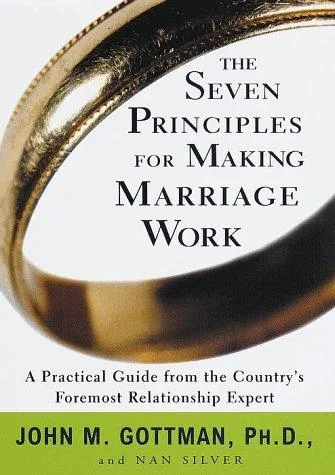
The Seven Principles for Making Marriage Work, John Gottman & Nan Silver
The Gottmans’ guide to moving from gridlock to dialogue, with questionnaires and exercises for couples working through the issues they cannot seem to resolve.
One chapter a week is enough. Talk about the chapter, not each other, and let the book do the heavy lifting.
12. Decide together what respect looks like from here.

Sit down together, when you are both calm, and name it in plain words: what does respect look like in our house, from now on? Maybe it is “no correcting each other in front of the kids.” Maybe it is “we ask before big decisions.” Maybe it is “we say thank you out loud every day.” Write down three small promises, one from each of you and one you share, and check in after a month. A shared list turns “you need to respect me” into “we agreed on how we treat each other.” That is the real goal of this whole list: not one wife trying harder while her husband watches, but two people agreeing, together, on what respect means in their marriage.
When to Get Outside Help
Some things are bigger than a list of steps, and knowing that is strength, not failure. If you have tried talking calmly, several times, over several weeks, and nothing changes, a couples counselor can help in a way no article can. A good counselor sits with both of you, hears both sides, and teaches you how to talk about the hard things without either of you shutting down.
There is also a line that matters more than any step on this list. If he controls who you see, tracks your phone, belittles you in front of the children, drinks or uses substances and becomes frightening, or if you ever feel unsafe in your own home, that is not a communication problem. Respect is a two-way street, and no one earns respect by frightening their partner. Reach out to a trusted professional, a doctor, or a local support service right away. You deserve to feel safe, and so do your children.
Shop This Post
| Product | Used For | Price |
|---|---|---|
| The Five Minute Journal |
The honest pattern check from step 3, five quiet minutes with the facts | Check Price |
| The Seven Principles for Making Marriage Work |
The read-together starting point from step 11 | Check Price |
 Flameless LED Tea Lights |
The small evening ritual from the closing, the click that ends the day | Check Price |
Frequently Asked Questions
What does my husband mean when he says I don’t respect him? Usually he means something specific, even if he says it in general words. Most often it is one of three things: he feels corrected in front of other people, his opinions are skipped over, or he feels like an employee in his own home instead of a partner. Ask him for one specific example (step 2) and you will usually find the real meaning in one conversation. If he cannot give an example, the feeling may be older and vaguer, and a counselor can help you both find it.
Does showing him respect mean I have to agree with everything he says? No. Respect is not agreement, and it is not silence. It means you hear him out fully before you disagree, you disagree in private instead of in front of other people, and you treat his view as worth considering even when you land somewhere else. You can hold your own opinion and still show respect.
What if I try all of this and he still says I don’t respect him? Then it is time for a different kind of conversation, ideally with a couples counselor in the room. Say it plainly: “I have been working on this, and I want to understand what is still missing. Will you come with me to talk it through with someone?” If he will not come, you can still go on your own, and a good counselor will help you with your half of the marriage either way. And if the real issue is control or fear rather than respect, the safety line in “When to Get Outside Help” applies right away, not after another month of trying.
A Small Ritual That Is Only Yours
Before you do anything else, protect one small thing that belongs to you alone. Mine is embarrassingly small: after the kids are down, the flameless LED tea lights click on, the tea goes in the same mug, and I get ten minutes with a book before the day officially ends. There is no open flame around little hands, and the click is the sound of the day being over.
Flameless LED Tea Lights
Battery tea lights with no open flame, so the evening wind-down is safe around little hands and paperback pages. One click and the day is officially over.
You are not a bad wife for hearing those words, mama, and you are not weak for wanting to answer them well. Wanting to understand what your husband means, and changing the small things honestly, is one of the bravest moves in a marriage. Try the steps in order, give him a real chance to feel the difference, and then trust what the pattern tells you. Our Mom Life Tips are the companion for the you side of this season.


