20 Gentle Ways to Tame Toddler Tantrums That Bring Back the Calm

If your toddler has ever dropped to the floor of a grocery store over the wrong color cup, you are not alone. In our house, with a four-year-old and a two-year-old, that cup has ended a whole afternoon. Toddler temper tantrums are a normal part of growing up, and they are also one of the hardest parts of parenting a one to four year old. Your toddler has big feelings in a small body, a brain that is still learning self-control, and not enough words to say what is wrong. So the feelings come out as screaming, kicking, and tears.
This guide has 20 gentle ways to tame toddler tantrums in four phases: five tricks to stop the next one before it starts, eight calm-down tricks for the middle of the storm, four tools that help little bodies settle, and three ways to reconnect and teach once it is over. Many tricks come with the exact words to say, so you are rarely guessing in the moment. Our toddler parenting tips guide has the routines these tricks fit into.
Heads up: this post contains affiliate links. If you buy through them, MamaKinder may earn a small commission at no extra cost to you, and it helps keep these guides free.

Toddler Temper Tantrums: What Is Really Happening
A tantrum is not bad behavior, and it is not a verdict on your parenting. Toddlers handle big feelings with a brain that is still building self-control, and language is still catching up to emotion. So when your toddler wants the toy, the snack, or five more minutes and cannot have it, the frustration has nowhere to go but out.
Common triggers are easy to spot: hunger, tiredness, overstimulation, wanting to do it alone, and transitions. Tantrums are most common between ages 1 and 4, and most fade as language and self-control grow. Your job is not to stop every tantrum. It is to stay steady, keep everyone safe, and teach the skill that makes the next one shorter.
How to Use These 20 Tricks
You do not need all 20 tricks. Pick one from each phase and practice it this week. Start with the quick-pick table below, which matches the moment to the trick that fits it best. The tricks work in order, before, during, after, but any single one helps on its own. If a trick does not fit your toddler, skip it.
| Moment | Start with |
|---|---|
| Everyday prevention | Tricks 1, 2, 5 |
| Leaving the house or the park | Tricks 2, 3, 4 |
| Mid-meltdown at home | Tricks 6, 7, 12 |
| Mid-meltdown in public | Tricks 6, 11, 13 |
| After it is over | Tricks 18, 19, 20 |
| When little hands need something to do | Tricks 14, 15, 16, 17 |
The 20 Gentle Ways to Tame Toddler Tantrums
Before the Storm: Stop the Next Tantrum Early
1. Run the HALT Check First

Before anything else, run a quick body check: hungry, angry or scared, lonely or bored, or tired? Most toddler temper tantrums start in the body, not in the attitude. A snack, a cuddle, or a nap fixes what no lecture can.
Keep it short. One look at the clock and one question, ‘When did you last eat or sleep?’ tells you most of what you need.
2. Keep Meals, Naps, and Bedtime Steady

Toddlers run on rhythm. When meals, naps, and bedtime happen at roughly the same time every day, your toddler knows what comes next, and that keeps big feelings smaller.
Keep the anchors steady, breakfast, lunch, nap, dinner, bed, and let the rest flex around them. Tired toddlers melt down over nothing.
3. Warn Before Every Transition

Surprises start tantrums. Before you leave the park, end screen time, or head to the car, give a warning your toddler can see: flip a one-minute hourglass timer and say, ‘When the sand runs out, we go.’
A sand timer beats a phone here, because your toddler can watch the sand fall. It is glass, so a grown-up holds it. One minute of warning turns an ending into a choice.
SuLiao 1-Minute Hourglass Sand Timer
Flip it and watch the sand fall. Runs a full minute, for one-minute warnings. Glass, so a grown-up holds it.
4. Offer Two Choices, Not Twenty

A toddler who feels powerless will fight for control anywhere they can get it. Two small choices hand it back without handing over the day. ‘Red shoes or blue shoes?’ beats ‘Put on your shoes’ every time.
Keep both choices ones you can live with. The choice is the point, not the shoes. A child who picked the blue shoes walks to the car like it was their idea, because it was.
5. Fill the Connection Tank Every Day

Some tantrums are just a bid for you. Ten or fifteen minutes of undivided attention a day, no phone, no chores, just play, fills a tank for the hard hours.
Call it special time. Let your toddler lead the play. A child who felt seen at breakfast is less likely to demand to be seen in the grocery store.
In the Moment: Calm-Down Tricks That Work Mid-Tantrum
6. Calm Yourself First

Your nervous system sets the tone for theirs. Before you say a word, take one slow breath. A calm grown-up is the fastest calm-down tool in the house.
This is the hardest trick on the list, and the most important. If you lose your cool, forgive yourself, breathe, and start again. Your toddler learns regulation by watching you.
7. Get Low and Get Close

A toddler mid-tantrum looks up at a towering, loud grown-up. Kneel so your eyes are level with theirs, close enough to be felt, not just heard.
Eye contact and a soft voice say ‘I am with you’ faster than any sentence. Your body is the message before your words are.
8. Name the Feeling Out Loud
A toddler who can say ‘I am mad’ is less likely to scream it. Name the feeling with simple words: ‘You are mad because playtime is over.’
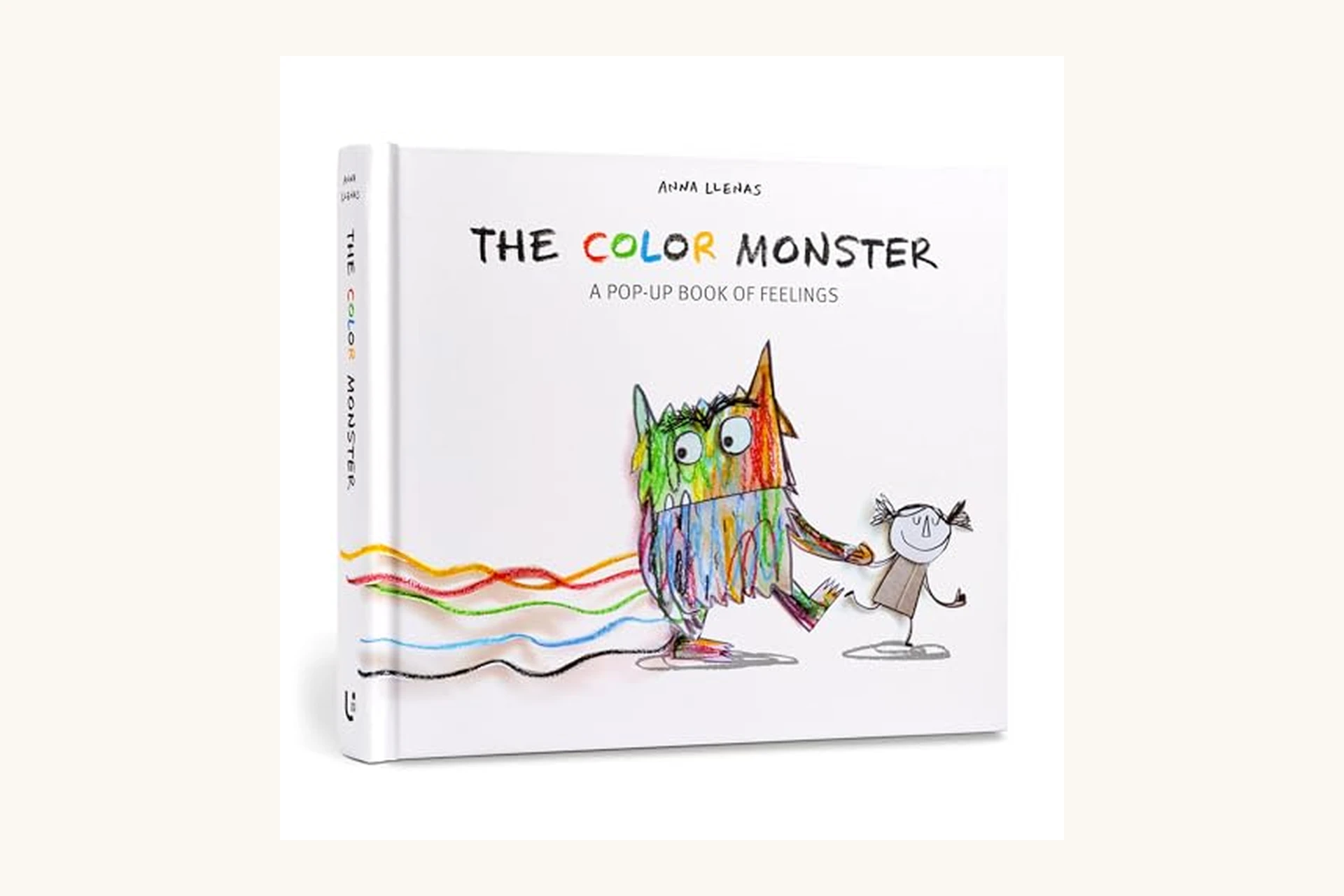
Practice naming feelings when everyone is calm, with a book that sorts feelings by color. In The Color Monster, a little girl helps a mixed-up monster sort five feelings, happiness, anger, sadness, fear, and calm. It is made for ages 2 to 4. Read it at bedtime, use its words in the storm, and keep pop-up pages for lap reading with a grown-up. Another good read-aloud for naming feelings is Todd Parr’s The Feelings Book.
The Color Monster: A Pop-Up Book of Feelings
A little girl helps a mixed-up monster sort five feelings by color. Pop-up pages, 20 pages, reading age 2 to 4.
9. Say One Short Line, Then Stop Talking

At the peak of a tantrum, your toddler’s thinking brain is offline and long explanations are just noise. Say one short line, ‘I see you are upset. I am right here,’ and then stop talking.
Silence feels wrong, but it works. Your toddler hears the calm in your voice, not the number of your words.
10. Offer a Hug, or Space to Breathe

Some toddlers melt into a hug, others push you away and need room. Offer comfort once, ‘I am here for a hug when you want one,’ and then follow their lead.
If they push you away, stay nearby where they can see you. Your presence says it without a single word. Never force a hug on a child who is saying no with their body.
11. Move to a Private Spot

A public tantrum has an audience, and an audience makes everything louder. If your toddler is kicking or screaming in a store, pick them up gently and carry them to the car or a quiet corner.
Your only job is a safe, private place where the storm can pass. Once the eyes are gone, most tantrums shrink fast.
12. Wait It Out and Stay Nearby

Sometimes there is nothing to fix, and the kindest move is to stay. Sit nearby, stay quiet, and let the wave pass.
Waiting is not ignoring. Ignoring walks away. Waiting stays close and says, with your body, ‘I am not going anywhere.’
13. Redirect With Something New

Young toddlers have short attention spans, and a fresh sight can break the spell. Point at something real and surprising: ‘Look at that dog outside!’
Redirection works best early, before the crying peaks. And never use a treat or a toy as the redirect, or your toddler learns that screaming buys things.
Calm-Down Tools: Things That Help Little Bodies Settle
14. Build a Calm-Down Corner

Give big feelings a place to go. Pick one quiet corner and make it soft and welcoming, with a small chair, cushions you already own, and the calm-down tools from this list.
Introduce the corner when everyone is calm, never mid-tantrum the first time. A soft foam chair gives the corner a home base: the Delta Children Cozee Chair is made for ages 18 months and up and holds up to 100 lb. Practice going there together for quiet minutes, so the corner feels safe before it is needed.

Delta Children Cozee Chair
A soft foam chair for the calm-down corner. Made for ages 18 months and up, holds up to 100 lb.
15. Shake a Sensory Bottle and Watch It Settle

Watching glitter settle is a whole calm-down lesson in a bottle. Hand your toddler a sensory bottle, let them shake it hard, and watch the sparkles drift down together.
The hand2mind Express Your Feelings Sensory Bottles are four sealed, easy-to-grip bottles for Happy, Angry, Scared, and Sad, with an activity guide. Pick the bottle that matches the feeling, shake it, and wait for the glitter to land before you talk.
hand2mind Express Your Feelings Sensory Bottles
Four sealed, easy-to-grip bottles for Happy, Angry, Scared, and Sad, with an activity guide.
16. Squeeze, Roll, and Squash Play Dough

Big feelings live in little hands, and squeezing gives them somewhere to go. A can of play dough turns a tantrum into a job: roll it, squash it, poke it.
Play-Doh comes in a 10-pack of cans, made for ages 2 and up. Keep one can in the calm-down corner and one in the car. Dough is for hands, not mouths, so a grown-up stays close.

Play-Doh 10-Pack
Ten cans of modeling dough for squeezing and rolling. Made for ages 2 and up.
17. Breathe Out Slowly With Bubbles

Slow breathing is hard to teach and easy to copy. Blow bubbles together and your toddler has to breathe out slowly to make a big one.
Gazillion Bubbles solution comes in a 1 liter bottle with a 7-in-1 wand, is non-toxic, and is made for ages 3 and up. Blow one bubble at a time and watch it float. A grown-up holds the bottle for under-threes.

Gazillion Bubbles Original Bubble Solution 1L
One liter of bubble solution with a 7-in-1 wand. Non-toxic, made for ages 3 and up.
After the Storm: Reconnect, Then Teach
18. Hug It Out and Reconnect

You will know the storm is over when you hear the big shaky breath. Offer a hug right away and say nothing about the tantrum yet.
Reconnection repairs the bond before any lesson lands. A hug says ‘We are okay’ in a way words cannot. If your toddler is not ready, sit close and wait.
19. Make Feelings Cards Together

When everyone is calm, make a small set of feelings cards: a happy face, a mad face, a sad face, and a scared face on thick paper, one feeling per card. Your toddler points at the card instead of screaming the feeling.
Thick construction paper holds up to little hands, and washable markers wash off skin and most clothing. The Crayola Construction Paper pack has 480 sheets. Keep the finished cards in the calm-down corner, where they are easy to grab.

Crayola Construction Paper, 480 Sheets
480 heavy sheets in assorted colors, thick enough for feelings cards little hands grab every day.

Crayola Washable Markers
Broad-line markers that wash off skin and most clothing. Made for big, bold feelings faces.
20. Practice the Next One With Play

The best time to practice a tantrum is when there is no tantrum. Role-play with stuffed animals or dolls: the bear wants the toy, the bear is mad, the bear takes deep breaths and asks for help.
Call it a meltdown replay. Your toddler gets to be the teacher, showing the bear what to do. Every replay makes the real storm a little shorter.
The Calm-Down Card Pack
Want these 20 tricks on cards you can grab mid-tantrum? The expanded version of this guide is a 30-card Calm-Down Card Pack, one card for each trick here plus 10 extra calm-down games. There is no purchase link yet.
Shop This Post
Everything with a link in this guide:
| Product | Used for |
|---|---|
| SuLiao 1-Minute Hourglass Sand Timer | Trick 3 (Check Price) |
| The Color Monster: A Pop-Up Book of Feelings | Trick 8 (Check Price) |
| Delta Children Cozee Chair | Trick 14 (Check Price) |
| hand2mind Express Your Feelings Sensory Bottles | Trick 15 (Check Price) |
| Play-Doh 10-Pack | Trick 16 (Check Price) |
| Gazillion Bubbles Original Bubble Solution 1L | Trick 17 (Check Price) |
| Crayola Construction Paper, 480 Sheets | Trick 19 (Check Price) |
| Crayola Washable Markers | Trick 19 (Check Price) |
When to Talk to Your Pediatrician
Most tantrums are normal and most fade as your child grows. Talk with your pediatrician if tantrums get worse after age 4, if your child often hurts themselves or others, if meltdowns regularly last longer than 15 to 25 minutes, if tantrums happen many times a day, or if your child stays upset long after the moment has passed.
The same goes if you feel unsure, stressed, or overwhelmed. Asking early is always okay. Your pediatrician can tell you whether what you are seeing is typical for your child’s age.
Frequently Asked Questions
Are toddler tantrums normal?
Yes. Tantrums are most common between ages 1 and 4, when big feelings outrun language and self-control. Most fade as your child learns words for feelings.
What should I do when my toddler has a temper tantrum in public?
Move to a private spot, stay calm, and wait it out. A quiet corner or the car takes the audience away, and most toddler temper tantrums shrink fast once the eyes are gone.
Should I use timeouts for tantrums?
This guide uses time-ins instead. Go with your toddler to a quiet spot and stay with them while they calm down.
How many of these tricks should I try at once?
One from each phase. Start with the HALT check, naming the feeling mid-storm, and the feelings cards after. Add more only when the first three feel natural.
Start With One Trick Tonight
You do not need all 20 tricks. Pick one, the HALT check before breakfast, or the one short line for the next meltdown, and use it three times before you judge it. Tantrums will not vanish in a week, but they will get shorter and quieter. Your toddler is learning to handle big feelings, and every calm response is a lesson they keep.
More toddler guides on MamaKinder