7 Gentle Fixes for a Toddler Picking Up Bad Habits at Daycare That Bring Back the Calm

The first time my two-year-old came home from daycare and called her brother a word I will not repeat here, I laughed, then I stopped laughing. She had learned it that morning from a boy in her class, and she said it with the same proud grin she uses for a new puzzle. Toddlers are copy machines with legs. They pick up bad habits at daycare the same way they pick up songs and games, by watching the children around them and trying it out at home.
This guide has 7 gentle fixes for a toddler picking up bad habits at daycare, in three phases: two fixes to understand the habit and team up with the teacher, three fixes to teach a better habit at home, and two fixes to make the good habit stick. Each fix comes with the words to say, so you are not guessing in the moment. Our toddler parenting tips guide has the routines these fixes fit into.
Heads up: this post contains affiliate links. If you buy through them, MamaKinder may earn a small commission at no extra cost to you, and it helps keep these guides free.

Why Toddlers Copy Bad Habits at Daycare
Copying is how toddlers learn, and it is not naughtiness. A toddler watches the children around them all day, and whatever gets a reaction gets copied first. A rude word that makes the grown-ups gasp, a shove that gets the toy, a whine that gets a fast answer, all of these are lessons in cause and effect. The habit is not a verdict on your parenting, and it is not a verdict on the daycare either. It is a toddler doing exactly what toddlers are built to do.
The habits daycare sends home most are easy to spot: whining for everything, hitting and biting, swearing or rude words, nose picking, nail biting, thumb sucking, and grabbing toys instead of sharing. Most of them are phases, and most fade as language and self-control grow. Your job is not to stop every habit on day one. It is to stay steady, teach the replacement, and give it time.
It also helps to know that copying peaks between ages 2 and 3, when toddlers spend the most time watching other children and have the fewest words of their own. A three-year-old who copies a rude word usually drops it within a few weeks, because a new word arrives to replace it. A two-year-old may hold onto a habit longer, because the habit is doing a job for them, like soothing or getting attention. Either way, the fix is the same: a calm response, a better habit to use instead, and time.
How to Use These 7 Fixes
You do not need all 7 fixes. Pick the fix that matches the habit in the table below, and use it for a week before you judge it. The fixes work in order, understand, teach, reinforce, but any single one helps on its own. If a fix does not fit your toddler, skip it.
| Habit | Start with |
|---|---|
| Whining for everything | Fixes 1, 3, 6 |
| Hitting or biting | Fixes 1, 2, 4 |
| Swearing or rude words | Fixes 1, 3, 7 |
| Nose picking or nail biting | Fixes 1, 5, 6 |
| Thumb sucking | Fixes 1, 5, 7 |
| Grabbing toys, not sharing | Fixes 2, 4, 6 |
The 7 Gentle Fixes for a Toddler Picking Up Bad Habits at Daycare
First, Understand the Habit
1. Stay Calm and Name It, Never Shame It

The first time you hear the new habit, your face does the teaching. A big gasp, a laugh, or a sharp scolding all tell your toddler the habit is powerful, and a powerful habit gets repeated. Stay calm, keep your voice flat, and name the behavior in plain words: ‘That is a hitting hand. We do not hit. Hands are for hugging.’
Shaming backfires. A child who is laughed at or scolded for a habit often repeats it just to get the same big reaction again. Keep your voice boring, keep your face calm, and move on fast. The less fuel the habit gets, the faster it fades.
Watch for the trigger too. Does the habit show up when your toddler is tired, hungry, or fresh from daycare? Most copied habits ride on a tired body. A snack and ten quiet minutes after pickup fix what no lecture can.
2. Talk to the Teacher Before You Try to Fix It at Home
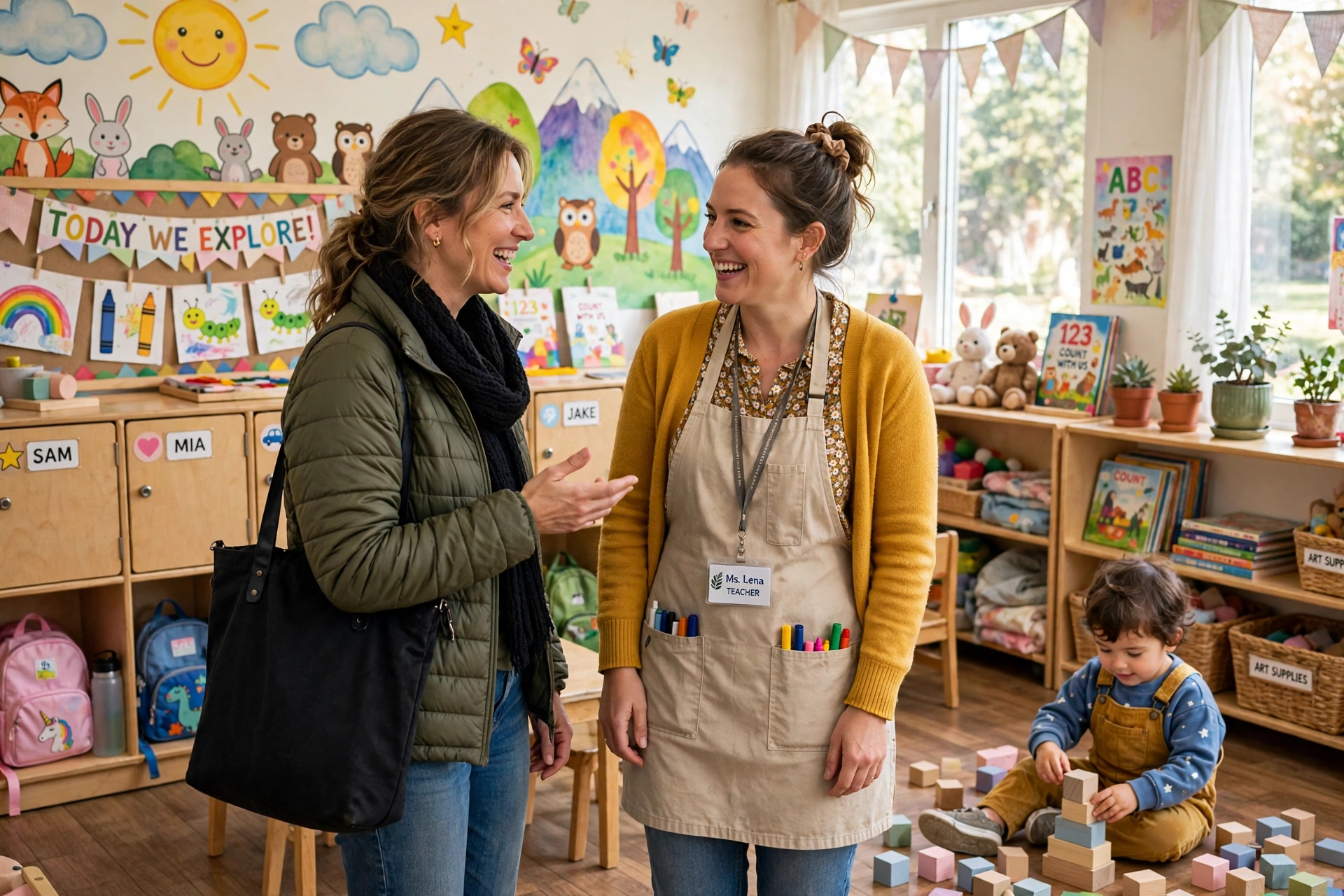
Your toddler spends the day with their teacher, so the teacher is your teammate, not your opponent. Ask one calm question at pickup: ‘Has she been copying any new words or habits this week?’ Teachers see the pattern across the whole class, and they often already have a plan for it.
Agree on the same words and the same response at home and at daycare. If the teacher says ‘We use gentle hands’ and you say the same words at home, your toddler hears one rule instead of two. Share what works at home too, so the teacher can use it in the classroom.
If the habit is hurting other children, ask how the daycare handles it and what you can repeat at home. A short daily check-in for one week tells you whether the habit is fading or growing.
If the teacher seems defensive, keep it light. You are not blaming the daycare, you are asking for help with a normal toddler phase. A simple line works: ‘She learned a new word this week and we are working on it at home. What are you seeing in class?’ Most teachers are glad to hear it, because a parent who works with them makes the classroom calmer for everyone.
Teach the Replacement at Home
3. Teach the Words for the Feeling
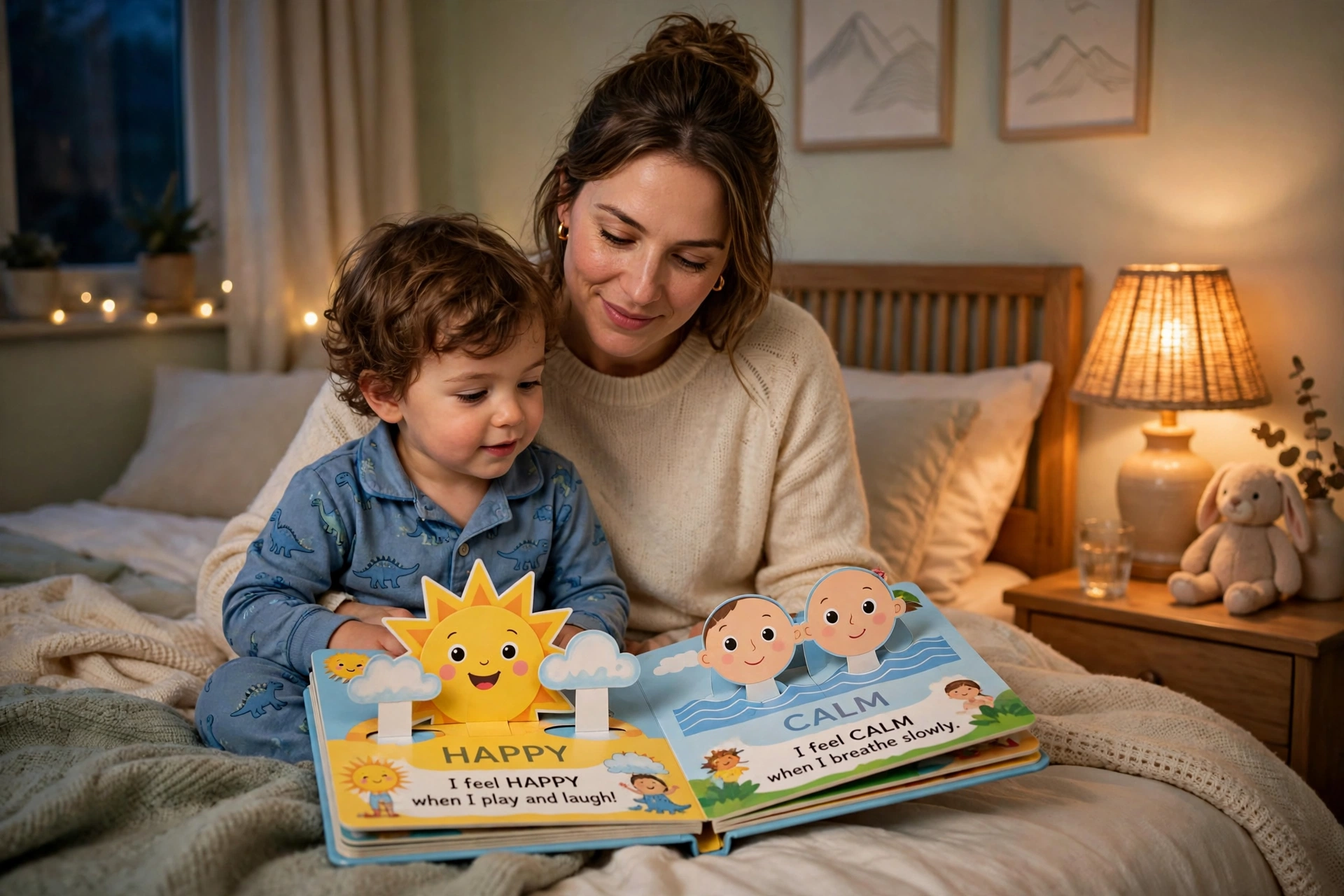
Many copied habits are feelings without words. A toddler who whines at daycare has learned that whining gets a fast answer, and a toddler who hits has not yet learned to say ‘I am mad.’ Give them the words: ‘You are mad because playtime is over. Say, I am mad!’
Practice naming feelings when everyone is calm, with a book that sorts feelings by color. In The Color Monster, a little girl helps a mixed-up monster sort five feelings, happiness, anger, sadness, fear, and calm. It is made for ages 2 to 4. Read it at bedtime, use its words after daycare, and keep pop-up pages for lap reading with a grown-up.
Keep the words short and the same every time. ‘I am mad’ beats a long talk about manners, because a two-year-old can remember one sentence and use it tomorrow.

The Color Monster: A Pop-Up Book of Feelings
A little girl helps a mixed-up monster sort five feelings by color. Pop-up pages, 20 pages, reading age 2 to 4.
4. Practice the Right Move With Role Play
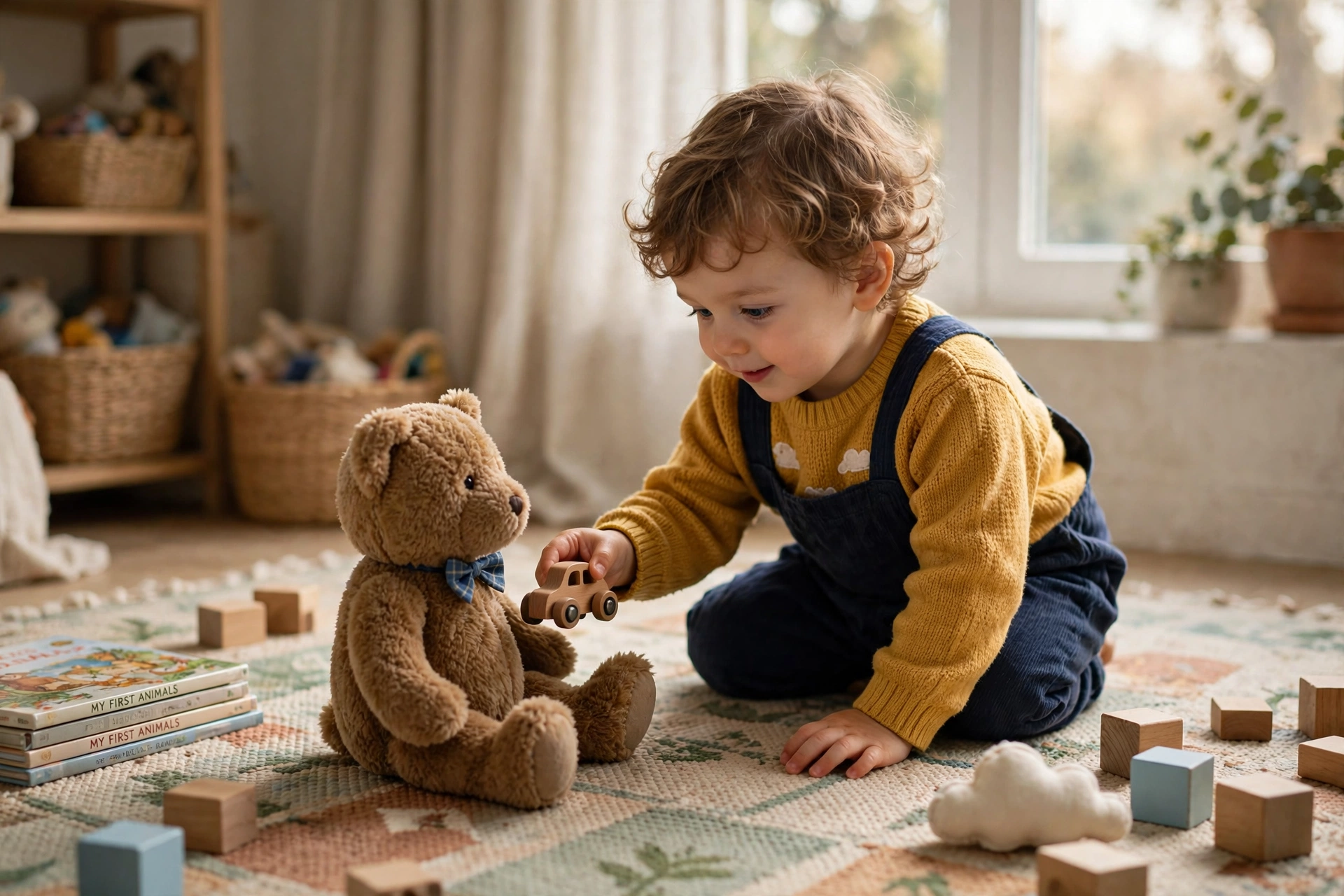
The best time to practice a habit is when there is no habit happening. After dinner, grab a stuffed animal and replay the daycare moment: the bear wants the toy, the bear grabs it, and then the bear tries again with words. ‘Bear, say Can I have a turn, please?’ Your toddler gets to be the teacher, showing the bear what to do.
Role play works because toddlers learn by doing, not by being told. Five minutes of pretend sharing teaches more than five lectures about sharing. Let your toddler direct the play, and praise the bear when it gets it right.
Replay the same scene for a few nights in a row. Repetition is how a new habit replaces the old one, and a stuffed bear never gets tired of practicing.
If your toddler will not play along, let them watch you play both parts. You be the bear and the friend, and let your toddler watch the scene. Toddlers learn plenty from watching, and most join in by the second or third night once they know the game is safe.
5. Give Busy Hands Something Better to Do

Nail biting, nose picking, and thumb sucking are hands looking for a job. Give those hands a job they can do anywhere: squeeze, roll, and squash a ball of play dough. ‘Here, squeeze this instead.’ A can of dough turns a habit into a task.
Play-Doh comes in a 10-pack of cans, made for ages 2 and up. Keep one can in the calm-down corner and one in the car, so the replacement is ready at pickup, when the habit usually shows up. Dough is for hands, not mouths, so a grown-up stays close.
A sensory bottle works the same way for a child who needs to watch something settle. Hand your toddler a sensory bottle, let them shake it hard, and watch the sparkles drift down together. The hand2mind Express Your Feelings Sensory Bottles are four sealed, easy-to-grip bottles for Happy, Angry, Scared, and Sad, with an activity guide. Pick the bottle that matches the feeling. The goal is not to ban the hands, it is to give them better work.

Play-Doh 10-Pack
Ten cans of modeling dough for squeezing and rolling. Made for ages 2 and up.

hand2mind Express Your Feelings Sensory Bottles
Four sealed, easy-to-grip bottles for Happy, Angry, Scared, and Sad, with an activity guide.
Make the Good Habit Stick
6. Catch the Good and Reward It Fast

The fastest way to end a bad habit is to reward the good habit that replaces it. Praise the absence of the behavior, not just the behavior itself: ‘You used your words when you wanted the truck. That was kind.’ A child who is noticed for the good repeats the good.
Make the good visible with a reward chart on the fridge. The Melissa and Doug My Magnetic Responsibility Chart is a behavior chart on one side and a magnetic dry-erase board on the other, with 90 magnets for responsibilities, positive behaviors, and rewards, and a blank magnet for personalizing. It is made for ages 3 and up. Let your toddler place the magnet for each kind moment, so the chart belongs to them.
Keep the rewards small and quick, a sticker, an extra story, or picking dinner. A big prize promised for next month means nothing to a two-year-old. One small win today beats a big promise tomorrow.
Melissa & Doug My Magnetic Responsibility Chart
A behavior chart on one side and a magnetic dry-erase board on the other, with 90 magnets for responsibilities, positive behaviors, and rewards. Made for ages 3 and up.
7. Keep Home Rules Steady and Give It Time

A copied habit fades when home stays steady. Keep the same rule, the same words, and the same calm response every single time, even when you are tired. ‘In our house we use kind words.’ Toddlers test a rule to see if it is still there, and a rule that never moves is a rule they can trust.
Work on one habit at a time. A toddler who is fixing whining, hitting, and swearing all at once is fixing nothing. Pick the habit that matters most, use its fix for two weeks, and only then move to the next one.
Most daycare habits fade in a few weeks once the home response is steady and the teacher is using the same words. If the habit grows instead of shrinking, or a new habit appears every week, that is worth a call to the teacher and your pediatrician.
Habits sometimes come back after they fade, especially after a holiday, a new sibling, or a change of classroom. A comeback is not a failure. Use the same fix again, the same words, the same calm response, and the habit usually fades faster the second time, because your toddler already knows the better habit.
The Daycare Habits Fix-It Pack
Want these 7 fixes as cards you can grab at pickup? The expanded version of this guide is a 20-card Daycare Habits Fix-It Pack, one card for each fix here plus 13 extra role-play scripts for the habits daycare sends home most. There is no purchase link yet.
Shop This Post
Everything with a link in this guide:
| Product | Used for |
|---|---|
| The Color Monster: A Pop-Up Book of Feelings | Fix 3 (Check Price) |
| Play-Doh 10-Pack | Fix 5 (Check Price) |
| hand2mind Express Your Feelings Sensory Bottles | Fix 5 (Check Price) |
| Melissa & Doug My Magnetic Responsibility Chart | Fix 6 (Check Price) |
When to Talk to Your Pediatrician
Most copied habits are normal and most fade as your child grows. Talk with your pediatrician if the habit gets worse after age 4, if your child often hurts themselves or others, if biting or hitting happens many times a day, or if your child stays upset long after the moment has passed.
The same goes if the habit comes with other worries, like not talking, not sleeping, or pulling away from other children. Asking early is always okay. Your pediatrician can tell you whether what you are seeing is typical for your child’s age.
Frequently Asked Questions
Is it normal for toddlers to pick up bad habits at daycare?
Yes. Toddlers learn by copying the children around them, and daycare is full of children to copy. Whining, hitting, rude words, and nose picking are all common daycare imports, and most fade within a few weeks once home and daycare use the same calm response.
Should I pull my toddler out of daycare because of a bad habit?
No, not for a copied habit alone. Pulling your child out does not teach the replacement habit, and the same copying happens at the park, at preschool, and with cousins. Work with the teacher first, use the fixes here for two weeks, and only talk to your pediatrician if the habit grows instead of fading.
How long does it take to break a habit my toddler picked up at daycare?
Most copied habits fade in two to four weeks when the response is steady at home and at daycare. Work on one habit at a time, praise the good habit that replaces it, and keep the same words every day. If a habit is still growing after a month, ask your pediatrician.
What if my toddler only does the bad habit at home, not at daycare?
That is common. Home is the safe place to test a new habit, and daycare has more eyes and more structure. Use the same fix at home and tell the teacher what you are doing, so the rule stays the same in both places.
What if my toddler copies a bad habit from a sibling, not daycare?
Use the same fixes. A sibling is just another child to copy, and the habit works the same way. Teach the replacement habit, keep the same words for both children, and praise the good habit when you see it. The teacher step is the only one that changes: swap it for a chat with the other grown-up in the house.
Start With One Fix Tonight
You do not need all 7 fixes. Pick the one that matches the habit your toddler brought home today, the calm naming, the teacher chat, or the busy hands, and use it three times before you judge it. Copied habits fade fastest when the grown-ups stay calm, steady, and on the same team. Your toddler is learning how the world works by copying it, and every calm response is a lesson they keep.