20 Brilliant Learning Toys for Toddlers That Teach Through Play
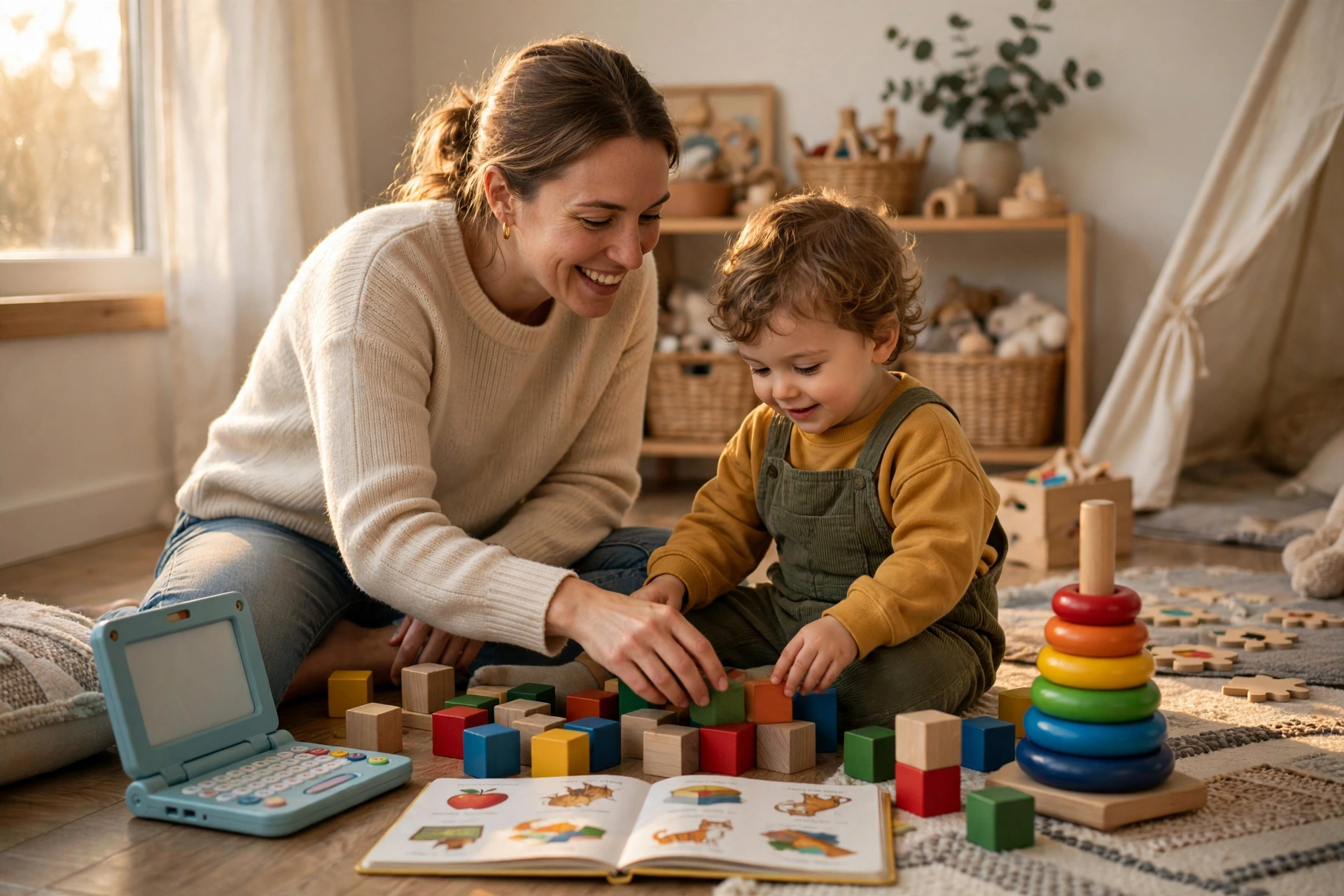
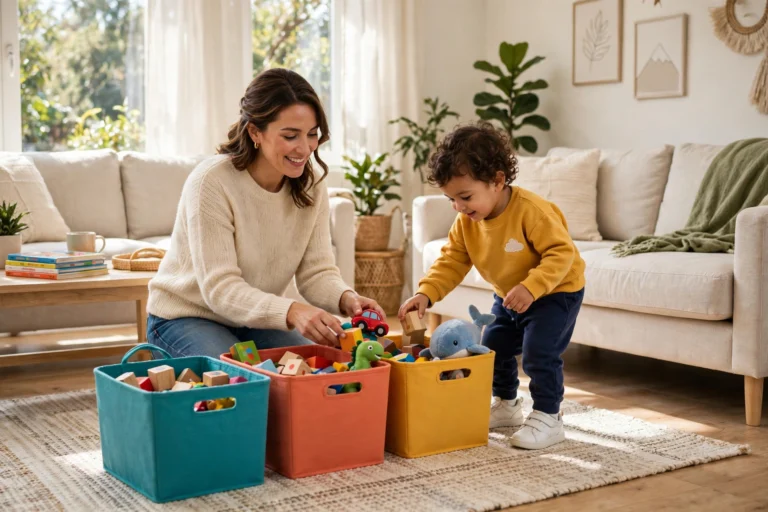
The best learning toy is the one your toddler reaches for without being asked. In our house, with a four-year-old and a two-year-old, the toys that actually teach are the ones that ask for hands: blocks to stack, letters to press, rings to sort, paint to smear.
Start with the quick picker if you are in a hurry, or read straight through and build a small rotation. Our toddler parenting tips guide has the routines that make this play fit into a real day.
Heads up: this post contains affiliate links. If you buy through them, MamaKinder may earn a small commission at no extra cost to you, and it helps keep these guides free.
How to Pick the Right Learning Toy
Match the toy to the age on the box first, then to what your toddler is doing right now. A one-year-old needs big pieces that stack. A two-year-old needs letters, numbers and sorting. One toy per skill is enough to start.
| If your toddler is… | Start with |
|---|---|
| 12 to 18 months | 11, 5, 2 |
| 18 to 24 months | 6, 9, 12 |
| 2 years | 8, 3, 10 |
| 2 to 3 years | 1, 4 (3+), 13 |
| Rainy day | 16, 17, 19 |
The 20 Brilliant Learning Toys for Toddlers
Building and stacking first. Five sets that teach hands, balance and early math.
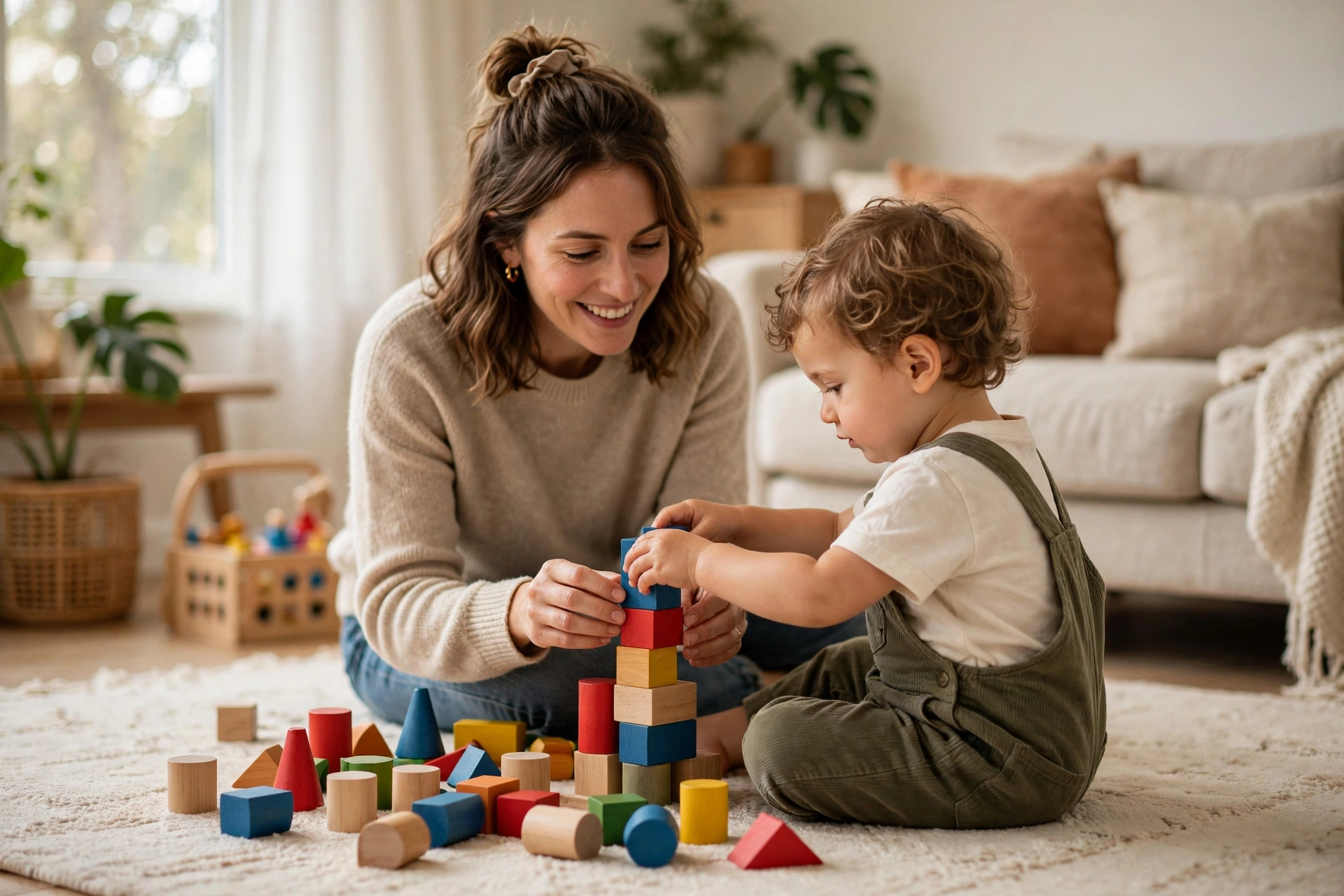
1. Wooden Building Blocks
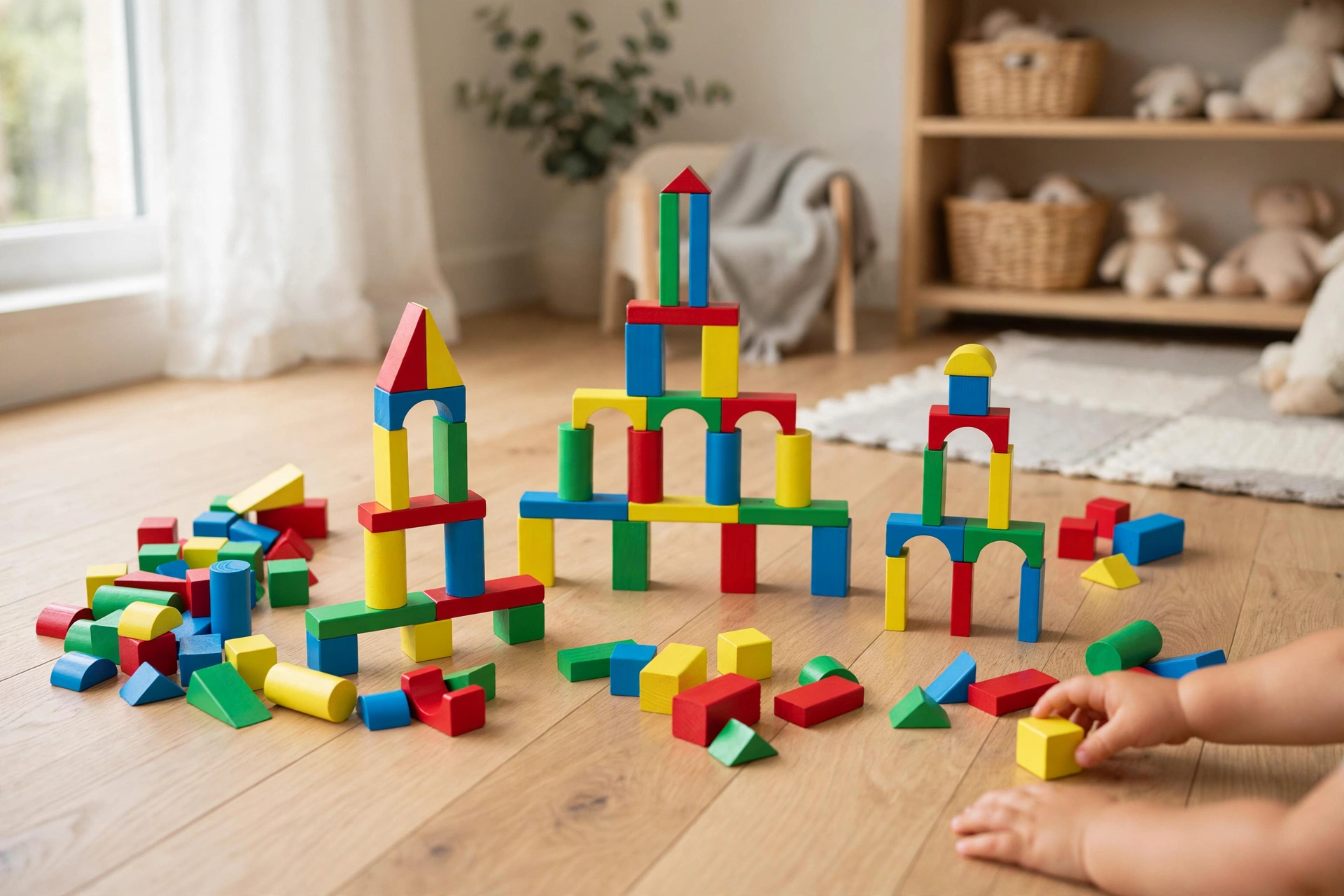
One hundred solid wood blocks in four colors and nine shapes, made for ages 2 and up. Stacking them teaches counting, sorting and balancing.
Sarah’s note: start with towers, then bridges, then whole towns. Keep the set on a low shelf your toddler can reach alone.
Melissa & Doug Wooden Building Blocks – 100-Piece Set
100 solid wood blocks, 4 colors, 9 shapes, with a storage box.
2. Mega Bloks Building Bag
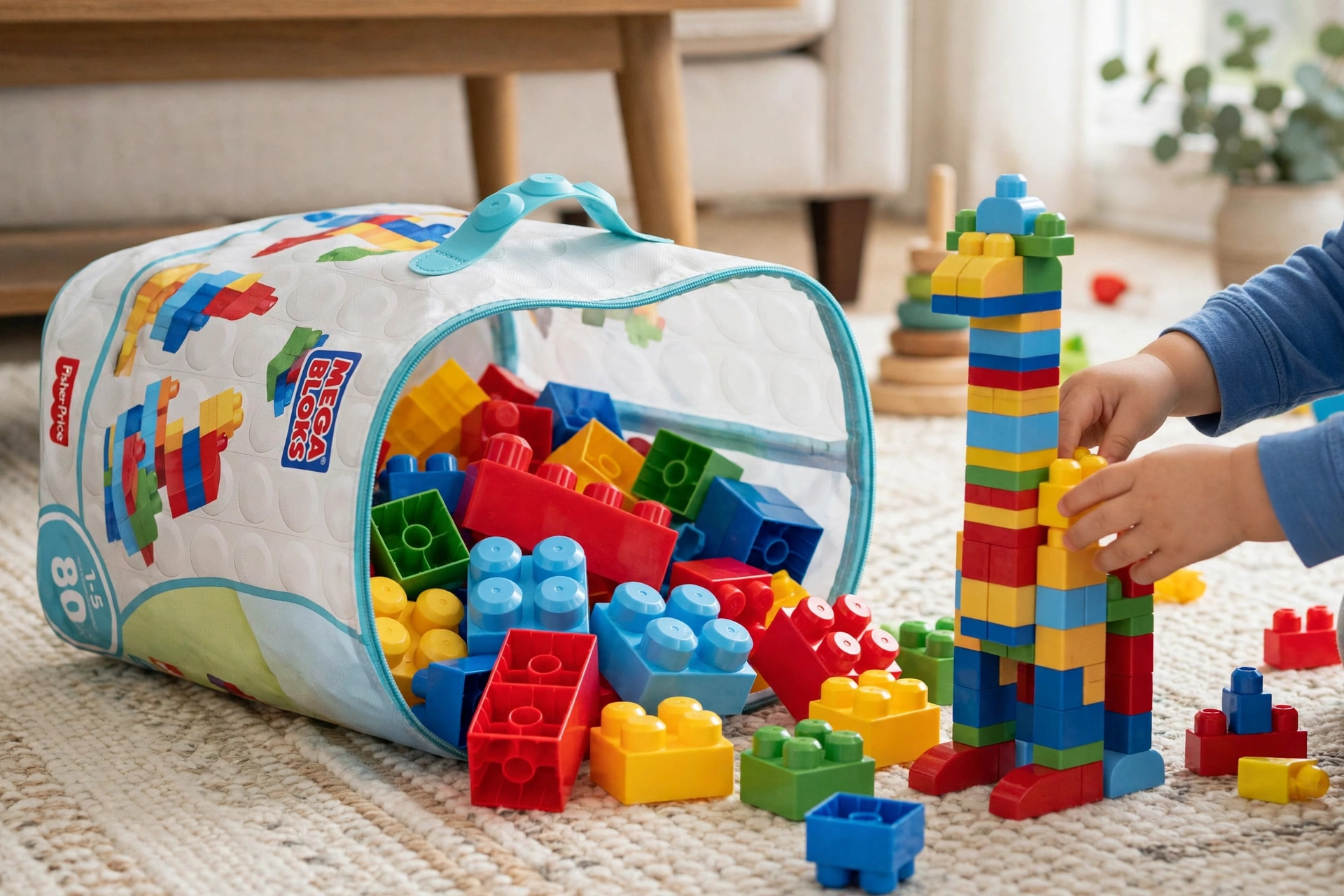
Eighty big blocks made for ages 1 and up, sized for small hands to grip and stack. The set builds fine motor skills, and everything goes back into the storage bag.
Mega Bloks First Builders Big Building Bag – 80 Pieces
80 big blocks, easy to grip and stack, with a reusable storage bag.
3. DUPLO Number Train
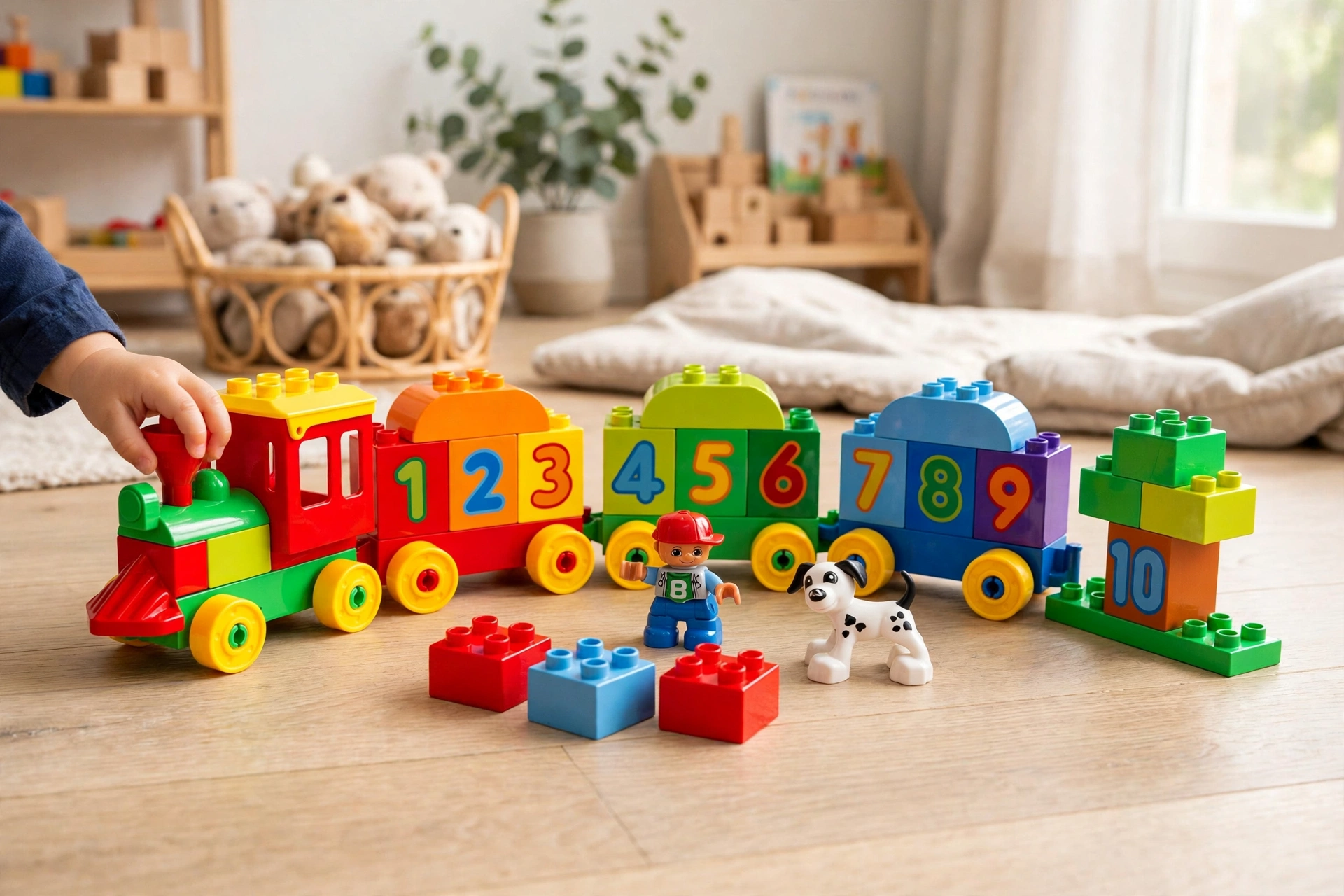
A 23-piece push-along train for ages 18 months and up, with ten colored number bricks and friendly figures. Loading the bricks in order teaches counting, colors and sequencing.
Sarah’s note: count out loud every time you load a brick, and let your toddler unload them in the wrong order sometimes. The train is the hook; the numbers sneak in.
LEGO DUPLO Number Train 10954 – 23 Pieces
A push-along train with 10 colored number bricks and friendly figures.
4. MAGNA-TILES Classic Set
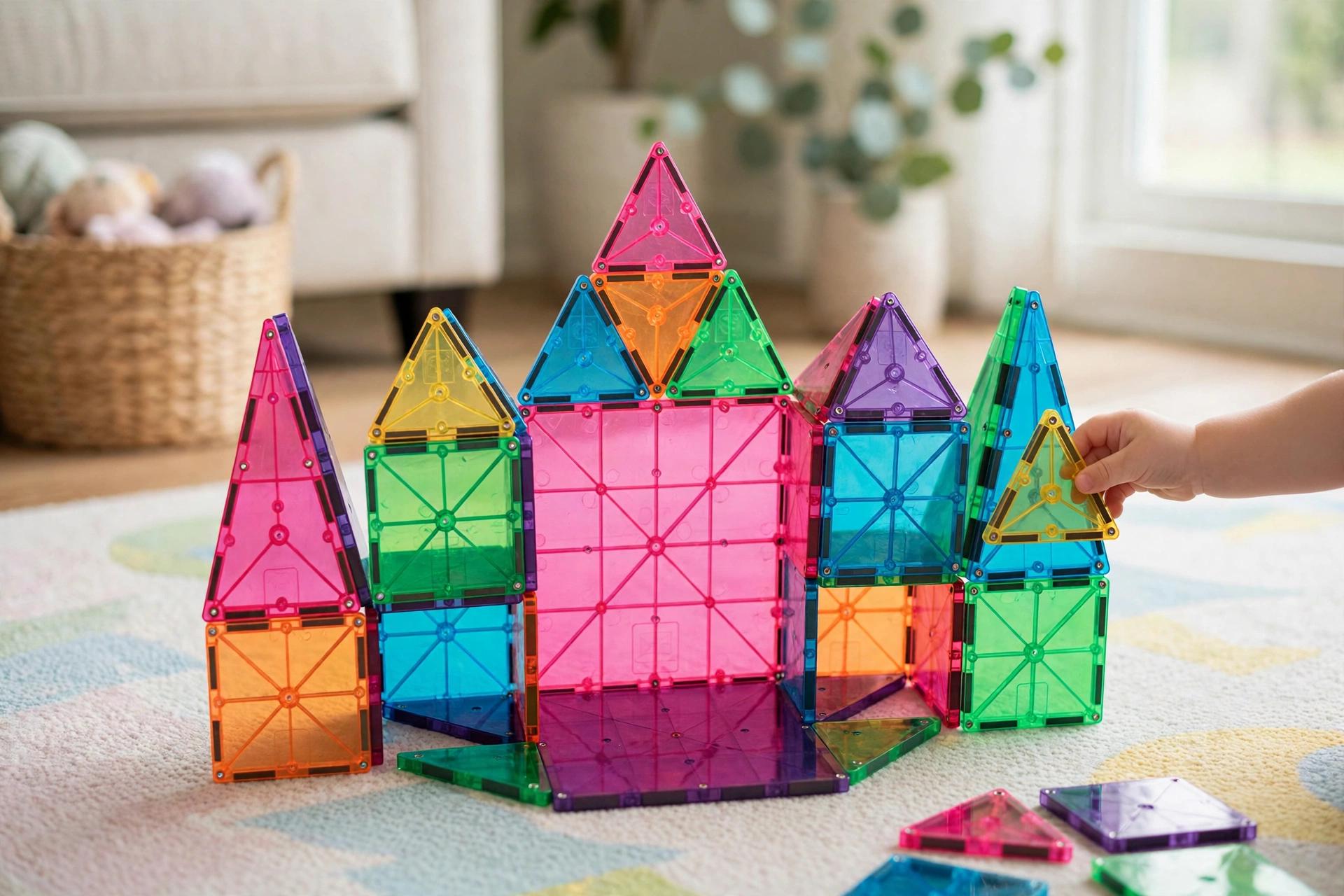
Thirty-two translucent magnetic tiles in six colors, made for ages 3 and up. They click into houses, towers and bridges, teaching shapes and spatial thinking.
Sarah’s note: for the older toddler in the house, because the manufacturer age is 3 and up. Start with flat shapes on the floor, then walls, then a roof.
MAGNA-TILES Classic 32-Piece Magnetic Construction Set
32 translucent magnetic tiles for shapes, spatial thinking and early STEM play.
5. Baby’s First Blocks
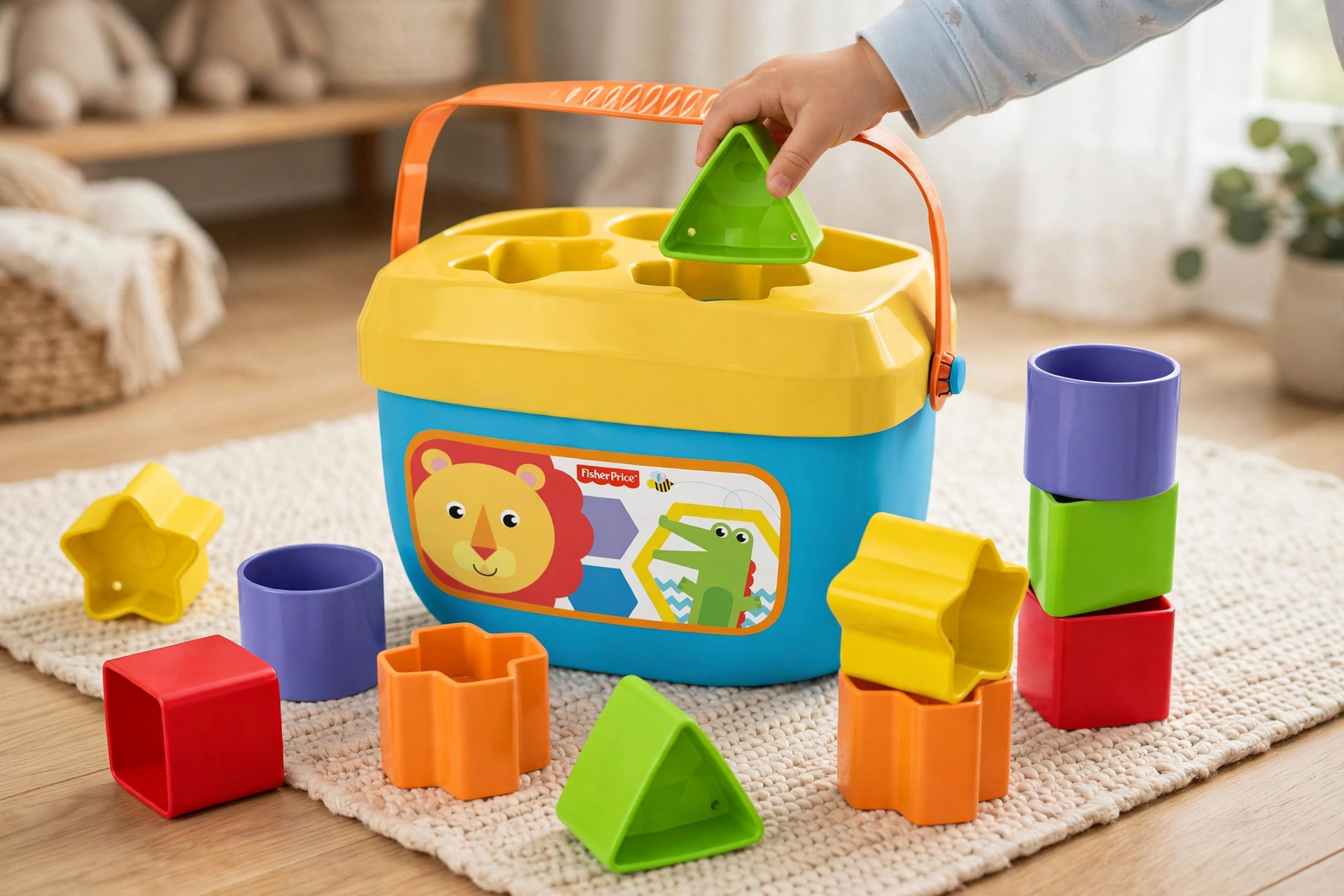
Ten bright blocks and a bucket with a shape-sorting lid, made for ages 6 months and up. Babies fill and dump the bucket, and older toddlers match each block to its hole.
Sarah’s note: the toy that grows the longest, because the same bucket works at six months and at two years. Name each shape as it drops through.
Fisher-Price Baby’s First Blocks – Set of 10
10 bright blocks with a bucket and shape-sorting lid.
First words and letters next. Four books and laptop-style toys that turn vocabulary into games.
6. 100 Words Book
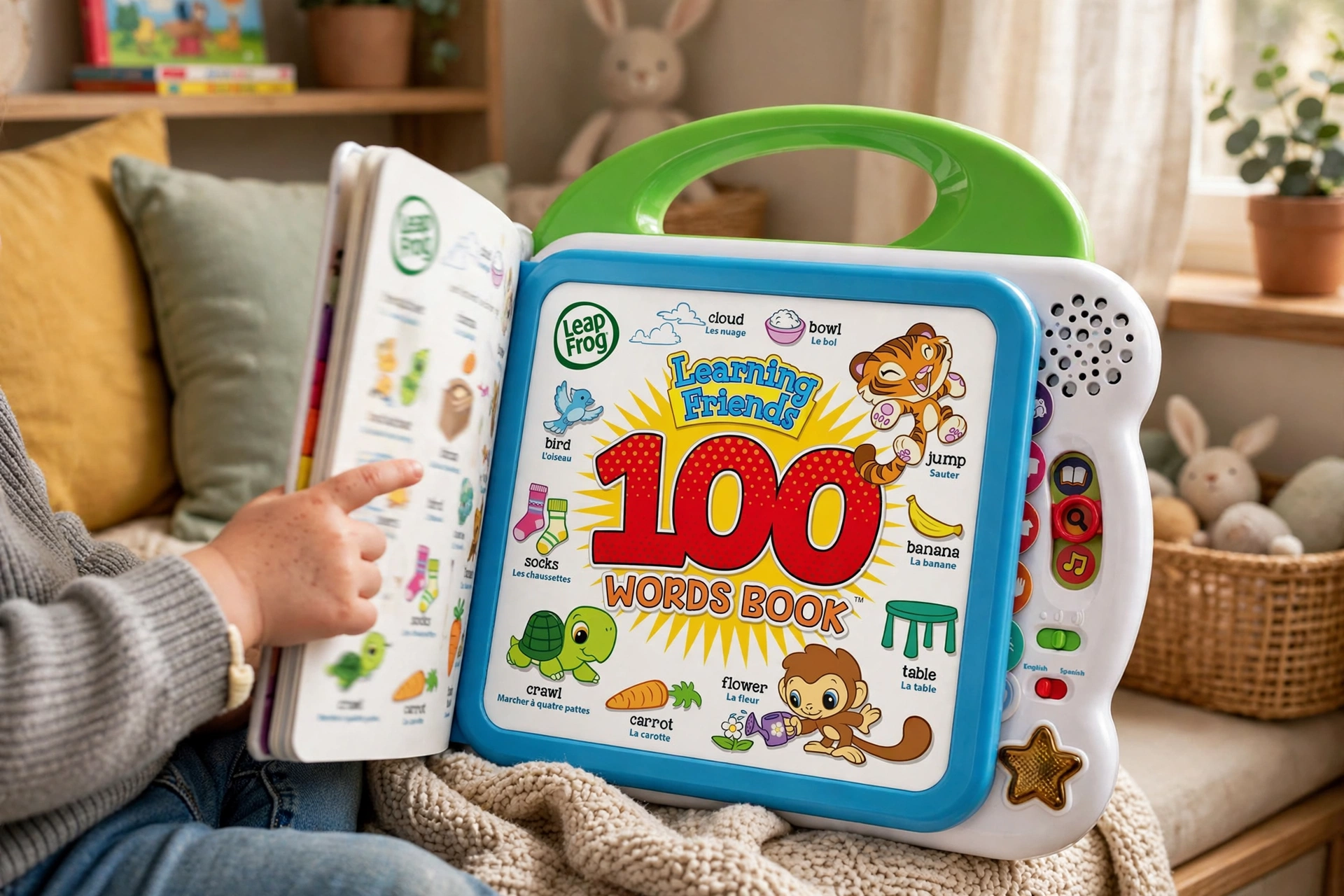
An interactive book for ages 18 months and up, with more than 100 words in twelve categories like pets, food and colors. Touch a word to hear it spoken, in English or Spanish.
LeapFrog Learning Friends 100 Words Book
100+ words in 12 categories, in English and Spanish, with a light-up star.
7. LeapTop Touch
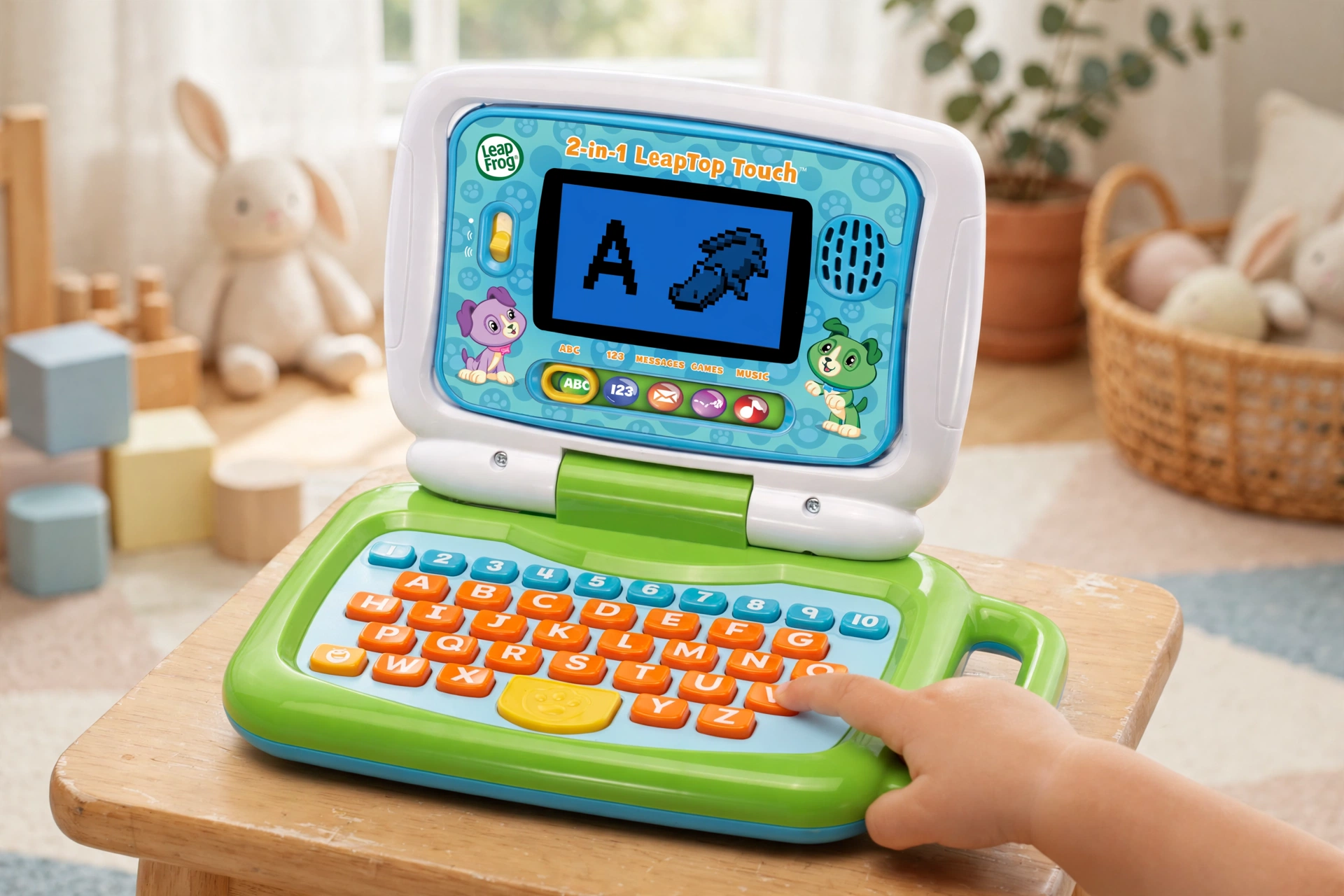
A laptop that flips into a tablet, made for ages 2 to 5, with an A-to-Z keyboard, number buttons 1 to 10, and five learning modes. Parents can customize it to help their child spell her name.
Sarah’s note: the flip is the feature your toddler will love most, so let her open and close it as much as she wants. Play the email game together first.
LeapFrog 2-in-1 LeapTop Touch
A laptop that flips into a tablet, with an A-to-Z keyboard and five learning modes.
8. Fridge Phonics Letter Set
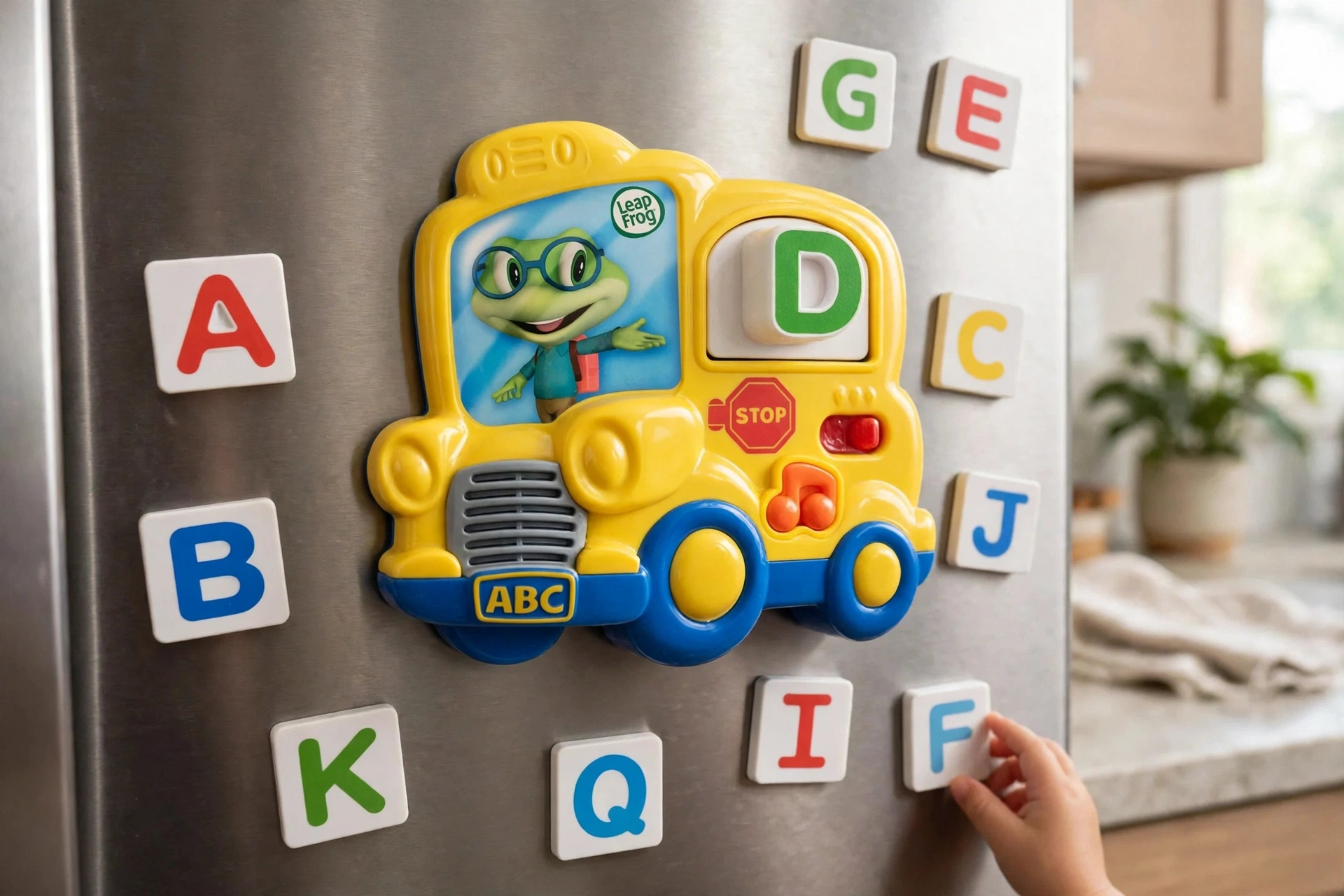
Twenty-six musical letter tiles and a magnetic apple base, made for ages 2 and up, that stick to the fridge. Press a tile into the apple to hear the letter name, its sound, and a word that starts with it.
Sarah’s note: the kitchen toy. Stick it at your toddler’s height on the fridge and let her play while you cook. Start with the letters of her name.
LeapFrog Tad’s Fridge Phonics Magnetic Letter Set
26 musical letter tiles with a magnetic apple base, for letters, sounds and words.
9. Musical Rhymes Book
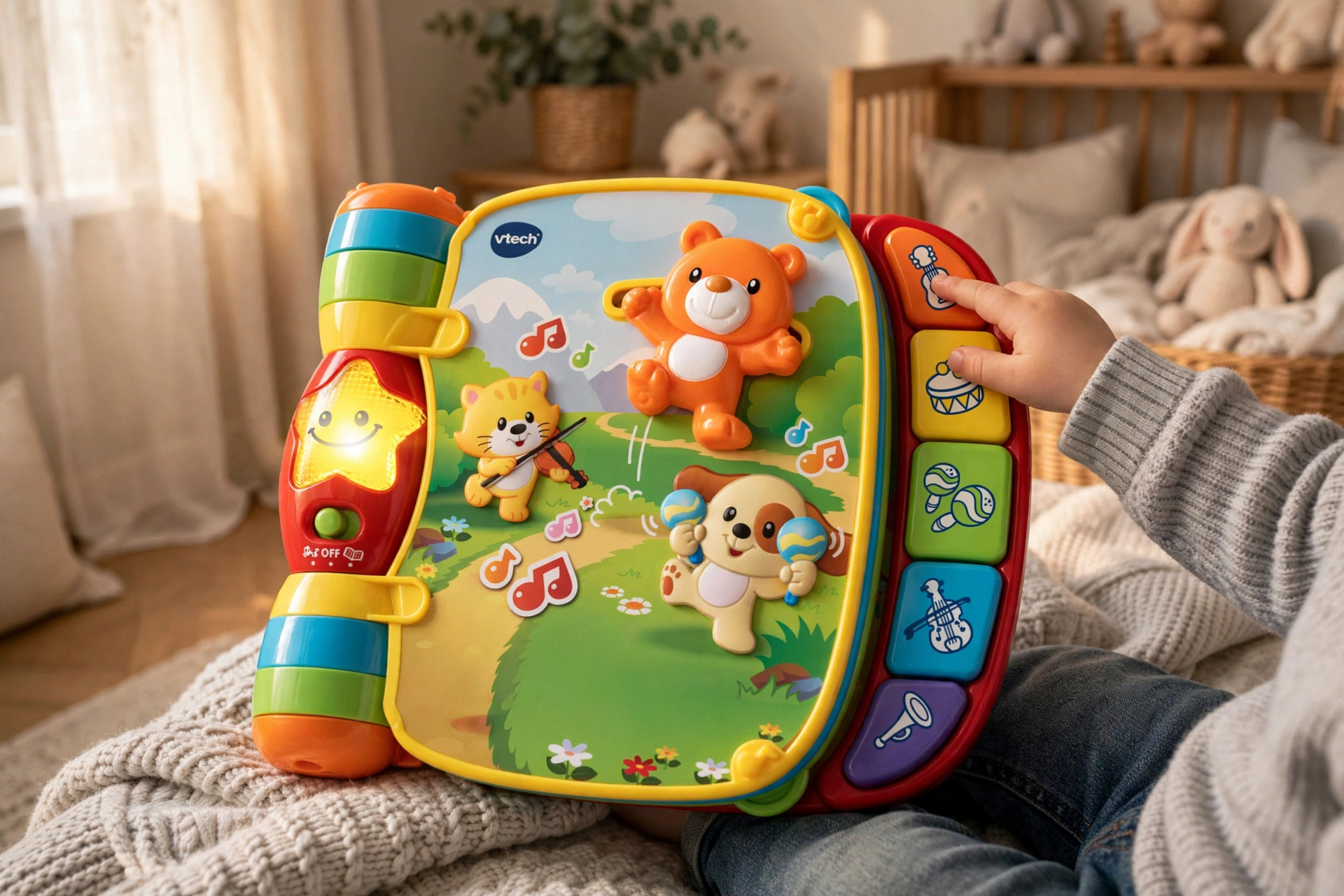
A musical storybook for ages 6 months to 3 years, with five colorful piano keys, two play modes, and a light-up star. Nursery rhymes introduce vocabulary and rhythm while sliding pieces build motor skills.
Sorting, counting and cause and effect now. Four toys that show actions have results.
10. Shape Sorting Cube
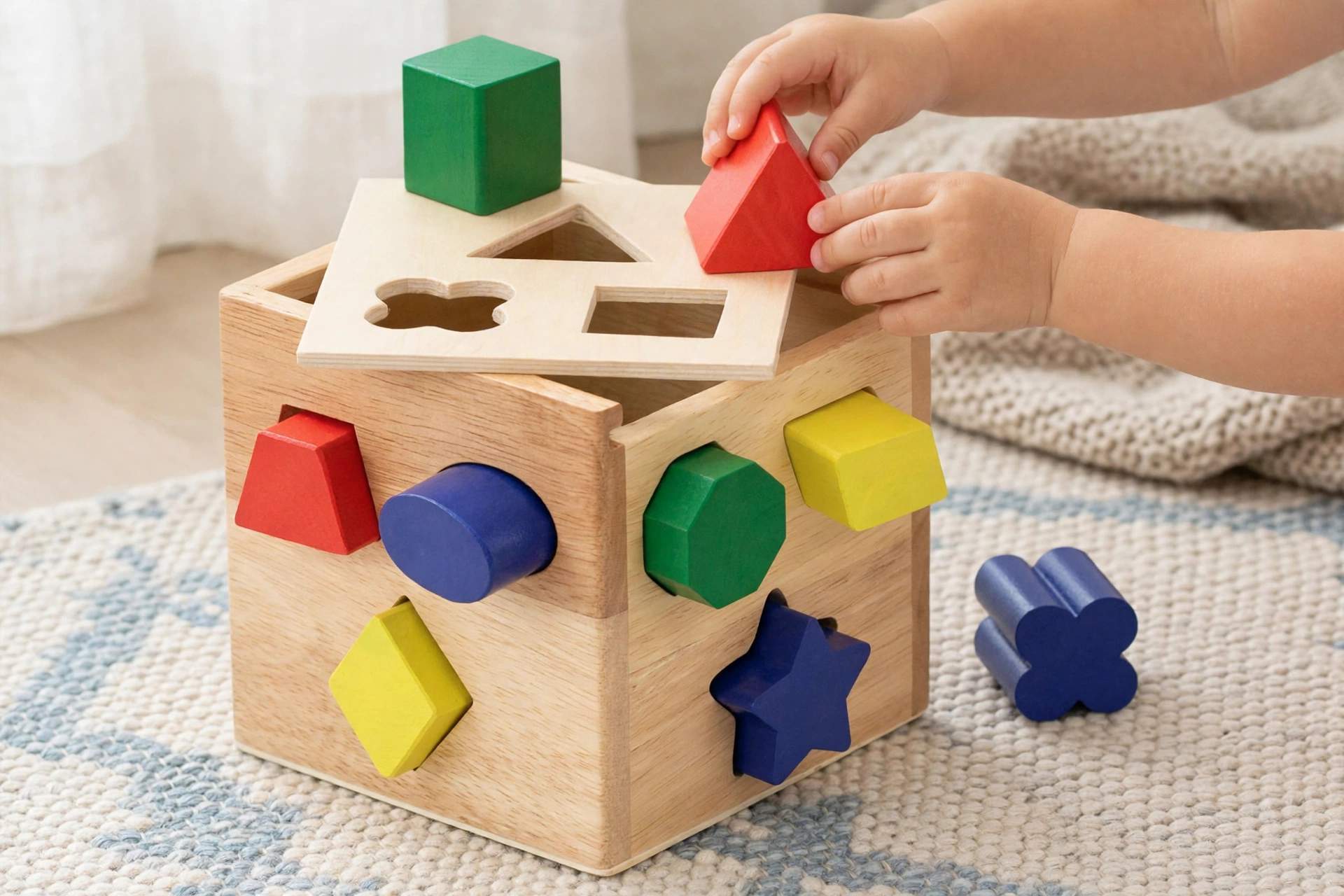
A classic wooden cube with twelve shapes, made for ages 2 and up. Each shape fits one hole, so your toddler learns shapes, colors and problem solving by trying and trying again.
Sarah’s note: hand your toddler one shape at a time at first, and let her turn it in her hands before she tries the hole. When she gets stuck, ask which hole looks the same shape.
Melissa & Doug Shape Sorting Cube – 12 Shapes
A classic wooden cube with 12 shapes, for shapes, colors and problem solving.
11. Rock-a-Stack
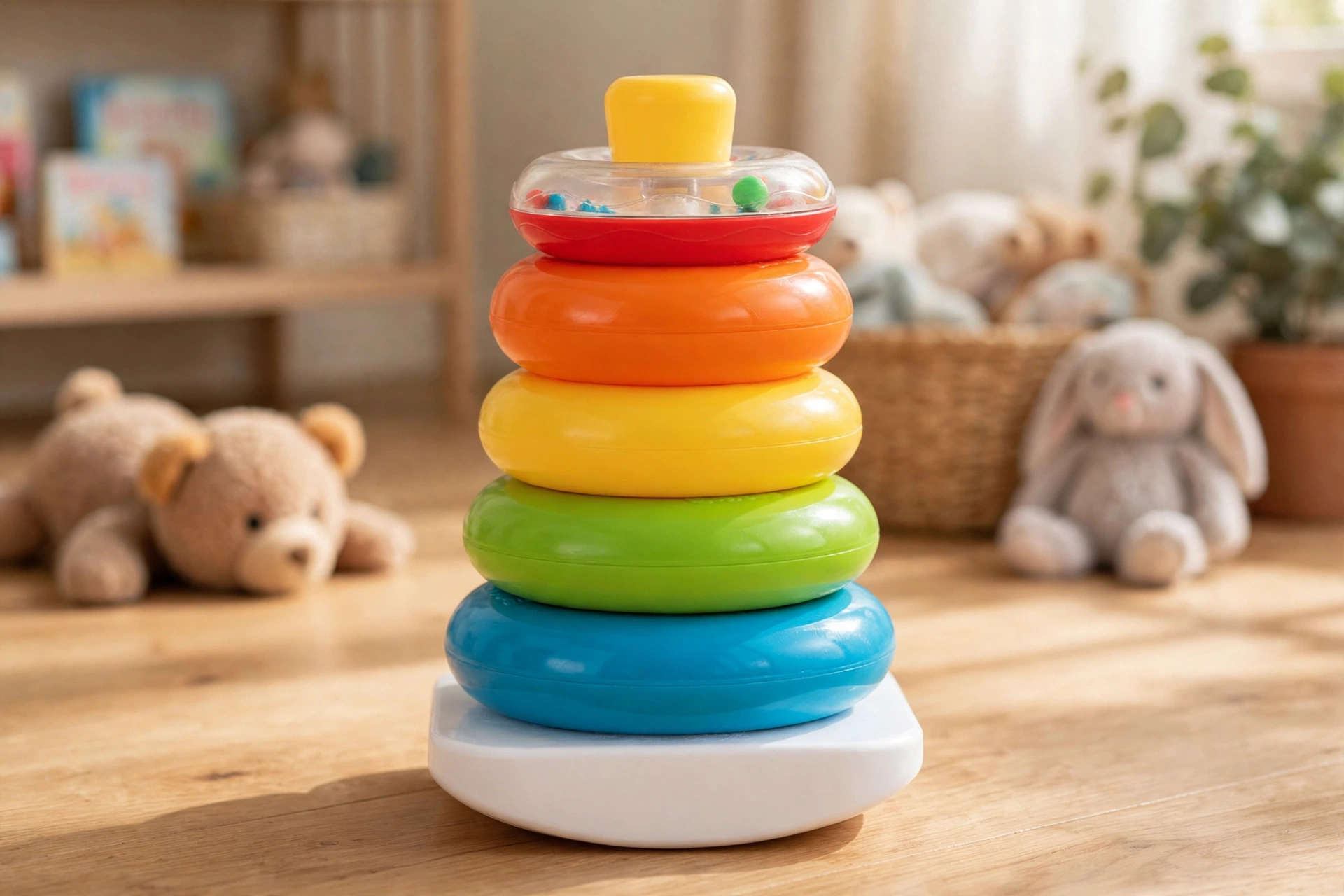
Five colorful rings on a wobbly base, made for ages 6 months and up. Younger babies grasp, shake and explore the rings, and older babies stack biggest to smallest, which teaches relative size.
Sarah’s note: the simplest toy on this list and the one that stays out the longest. Start with the rings as rattles, then stack them together once your baby sits up.
Fisher-Price Rock-a-Stack – 5 Rings
Five colorful rings on a wobbly base, for stacking and relative size.
12. Busy Learners Activity Cube
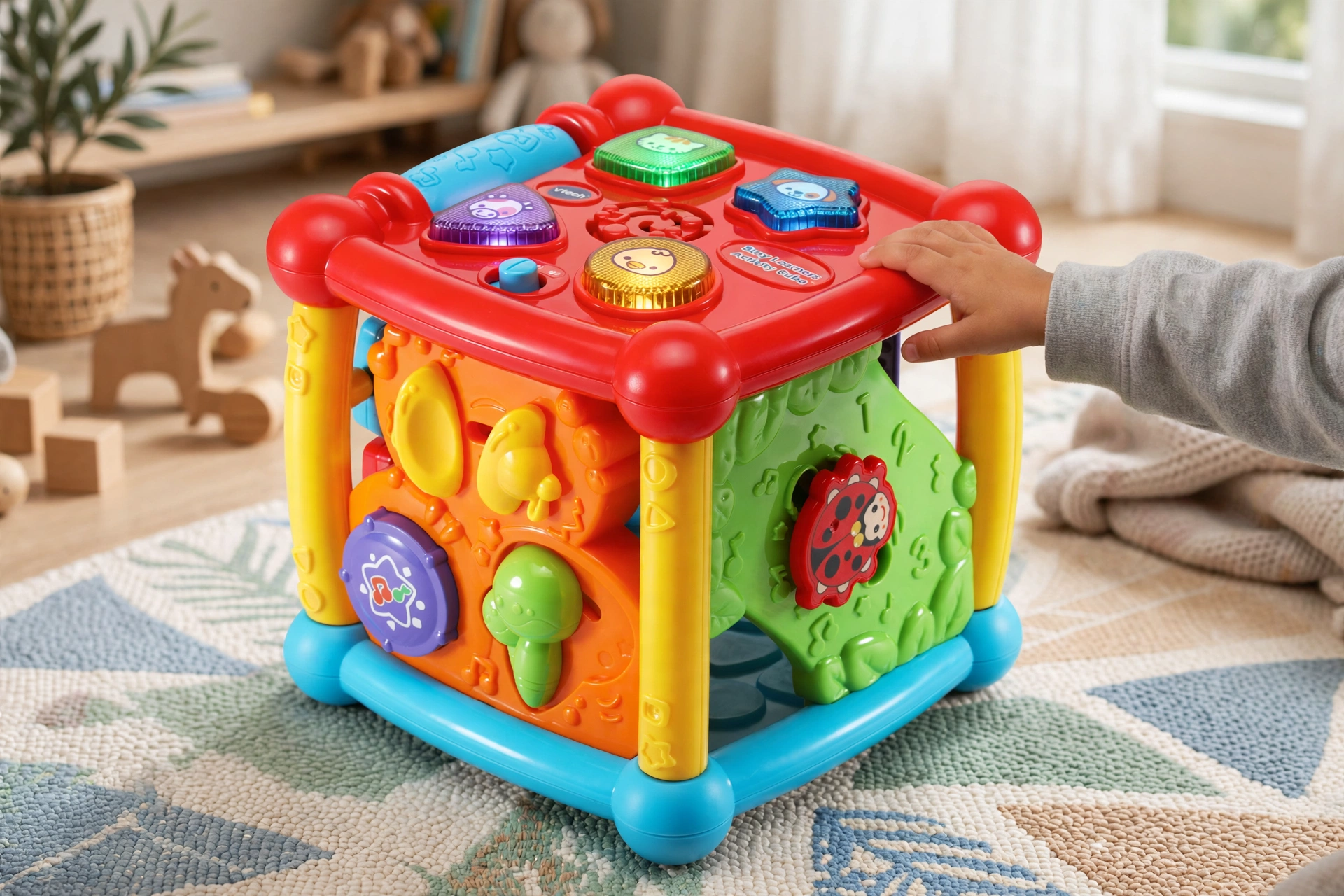
Five sides of play for ages 6 months to 3 years, with fourteen features, four light-up buttons, and twenty-five songs. A motion sensor plays sounds when the cube moves, which encourages babies to crawl toward it.
VTech Busy Learners Activity Cube
Five sides of play with 14 features, light-up buttons and 25 songs.
13. Pound & Tap Bench
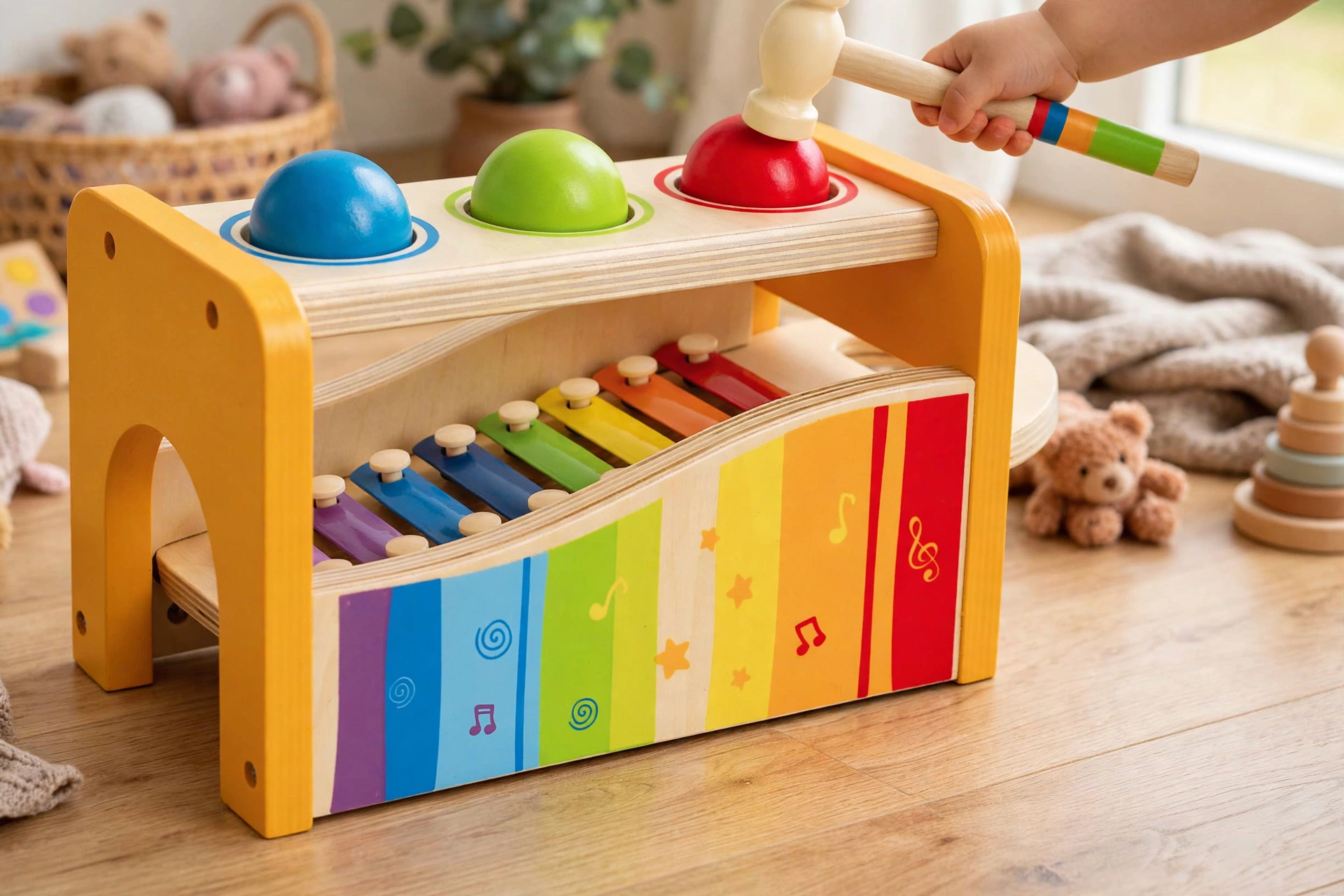
A wooden pounding bench for ages 12 months and up, with three balls, a hammer and a slide-out xylophone. Pound a ball through and it rolls down playing notes, teaching hand-eye coordination, cause and effect and early music.
Sarah’s note: the balls fit a one-year-old’s grip, so the pounding stays gentle. Keep the balls with the bench, because a single lost ball ends the game.
Hape Pound & Tap Bench with Slide Out Xylophone
A wooden pounding bench with three balls and a slide-out xylophone.
Music, puzzles and water play next. Two toys that use sound and water to teach.
14. Farm Animals Sound Puzzle
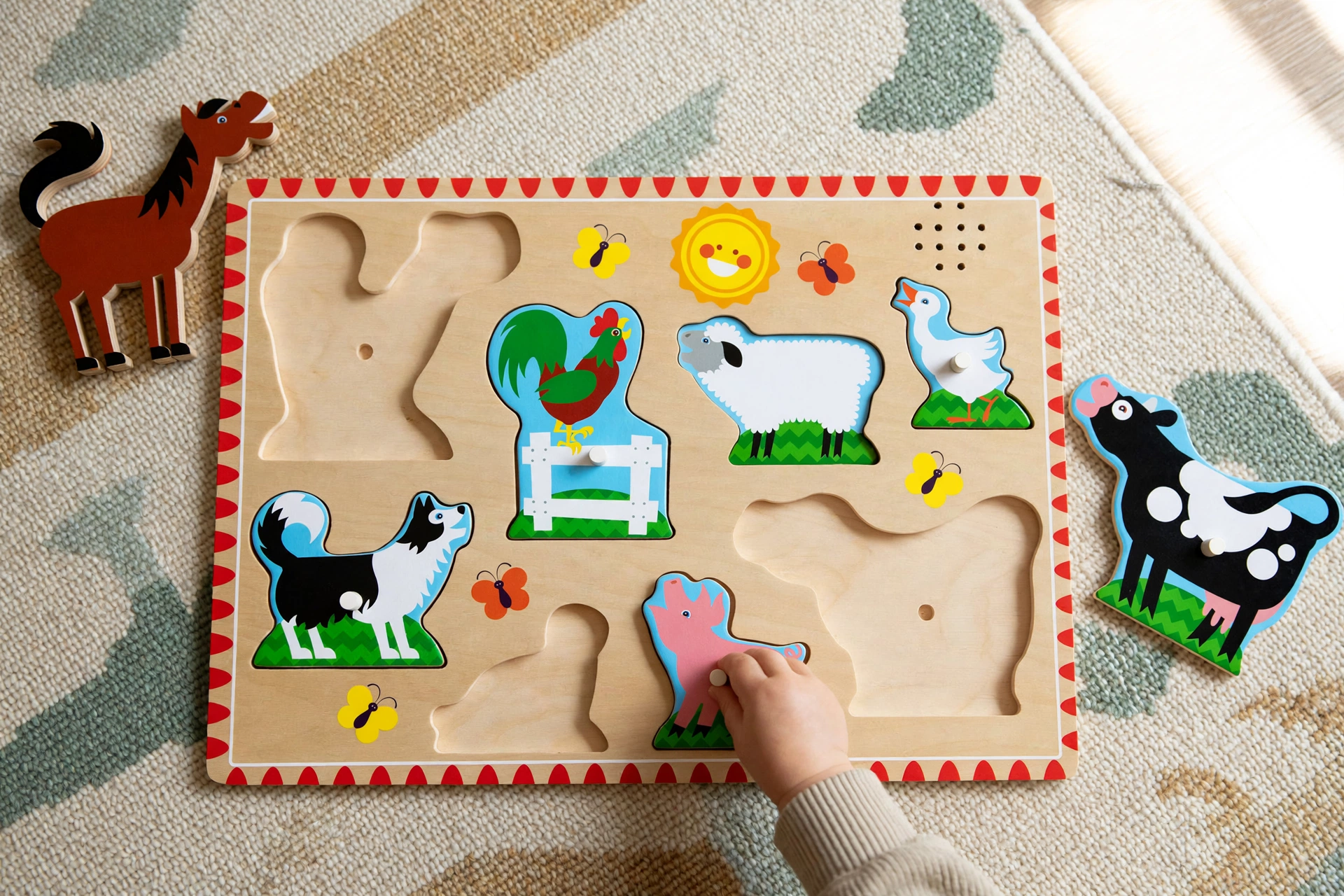
An eight-piece wooden peg puzzle for ages 2 and up, with light-activated sounds. Place each farm animal in its spot and it plays its sound, and placing all eight plays the Old MacDonald song.
Sarah’s note: name the animal and make its sound together before your toddler places the piece, so the puzzle becomes a game instead of a test. Keep it on the table, not the floor.
Melissa & Doug Farm Animals Sound Puzzle – 8 Pieces
An 8-piece wooden peg puzzle with light-activated animal sounds and a farm song.
15. Boon Pipes Bath Toy
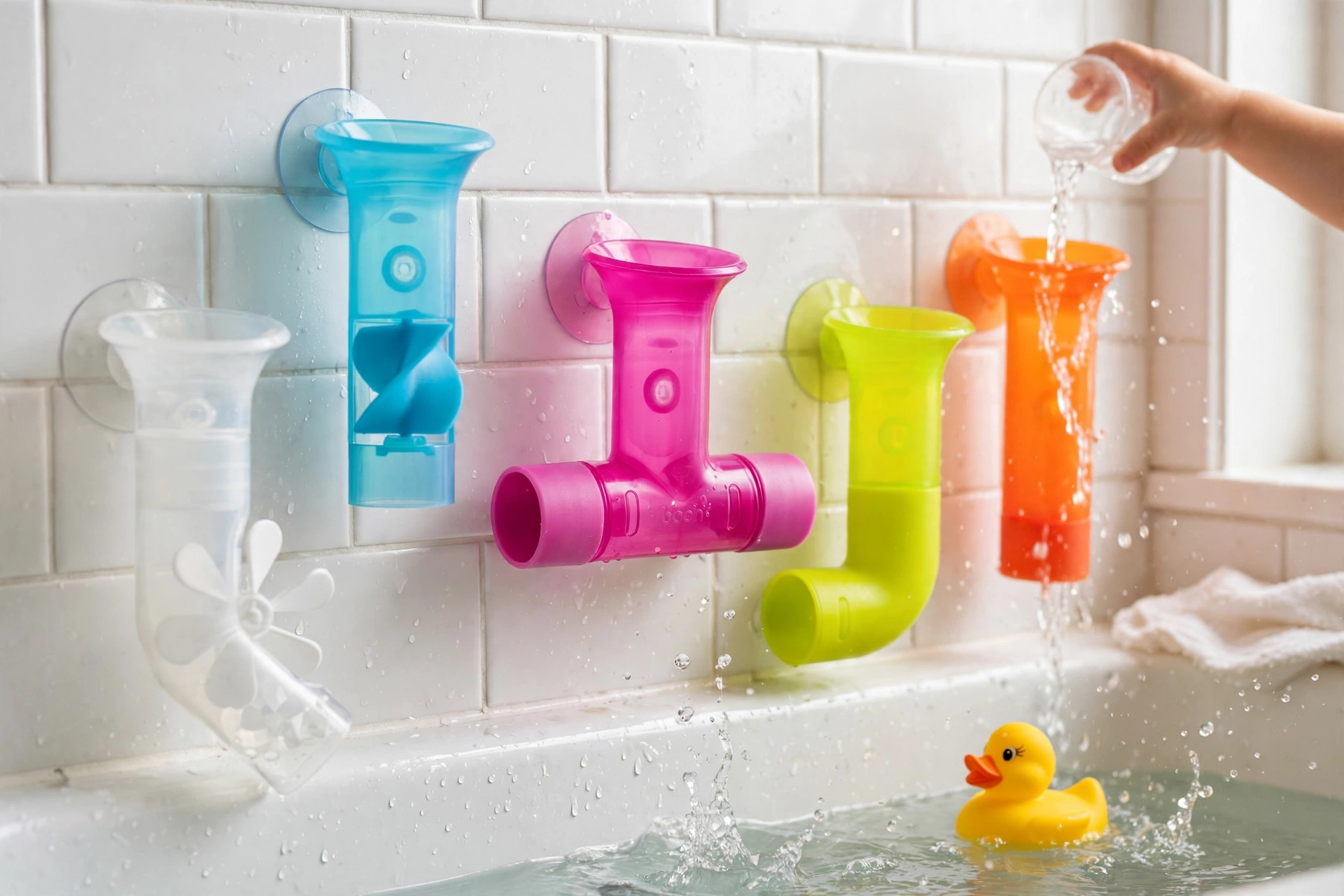
Five colorful pipes for ages 12 months and up, with suction cups that stick to the bath wall. Toddlers link the pipes into chains and pour water through, which teaches cause and effect and early pouring skills.
Boon Pipes Building Bath Toy – 5 Pieces
Five suction-cup pipes for pouring, chaining and cause and effect in the bath.
Art and making last. Five supplies that turn your kitchen table into a studio.
16. Play-Doh 10-Pack
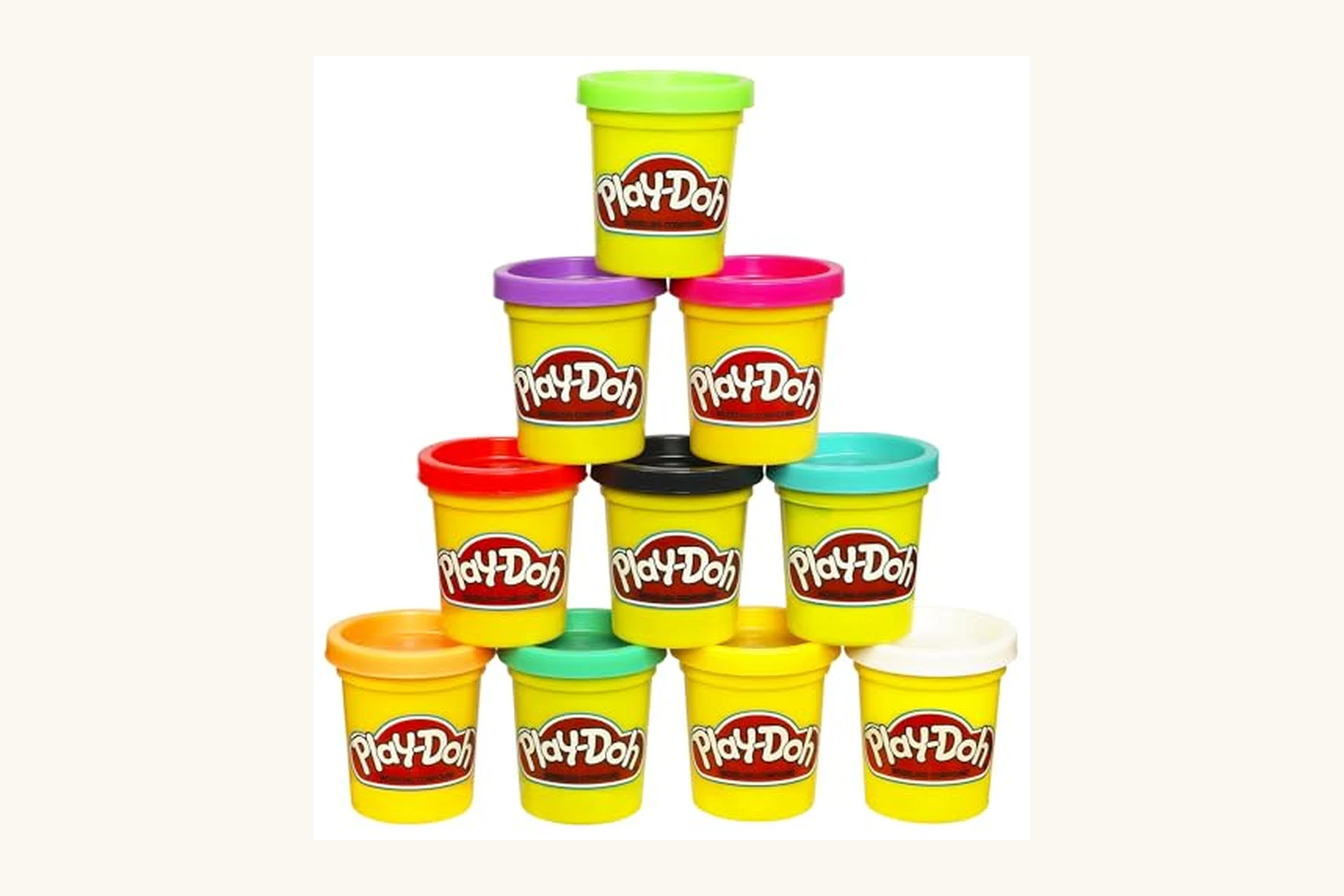
Ten cans of modeling compound in ten colors, made for ages 2 and up. Rolling, squishing and cutting dough builds hand strength and fine motor skills, and the colors invite mixing and naming.
Sarah’s note: open one or two cans at a time, not all ten, or the colors end up as one brown ball by lunch. Roll snakes first, then balls, then flat pancakes.
Play-Doh 10-Pack – 2 oz Cans
Ten cans of modeling compound for hand strength, fine motor skills and color play.
17. Washable Kids Paint
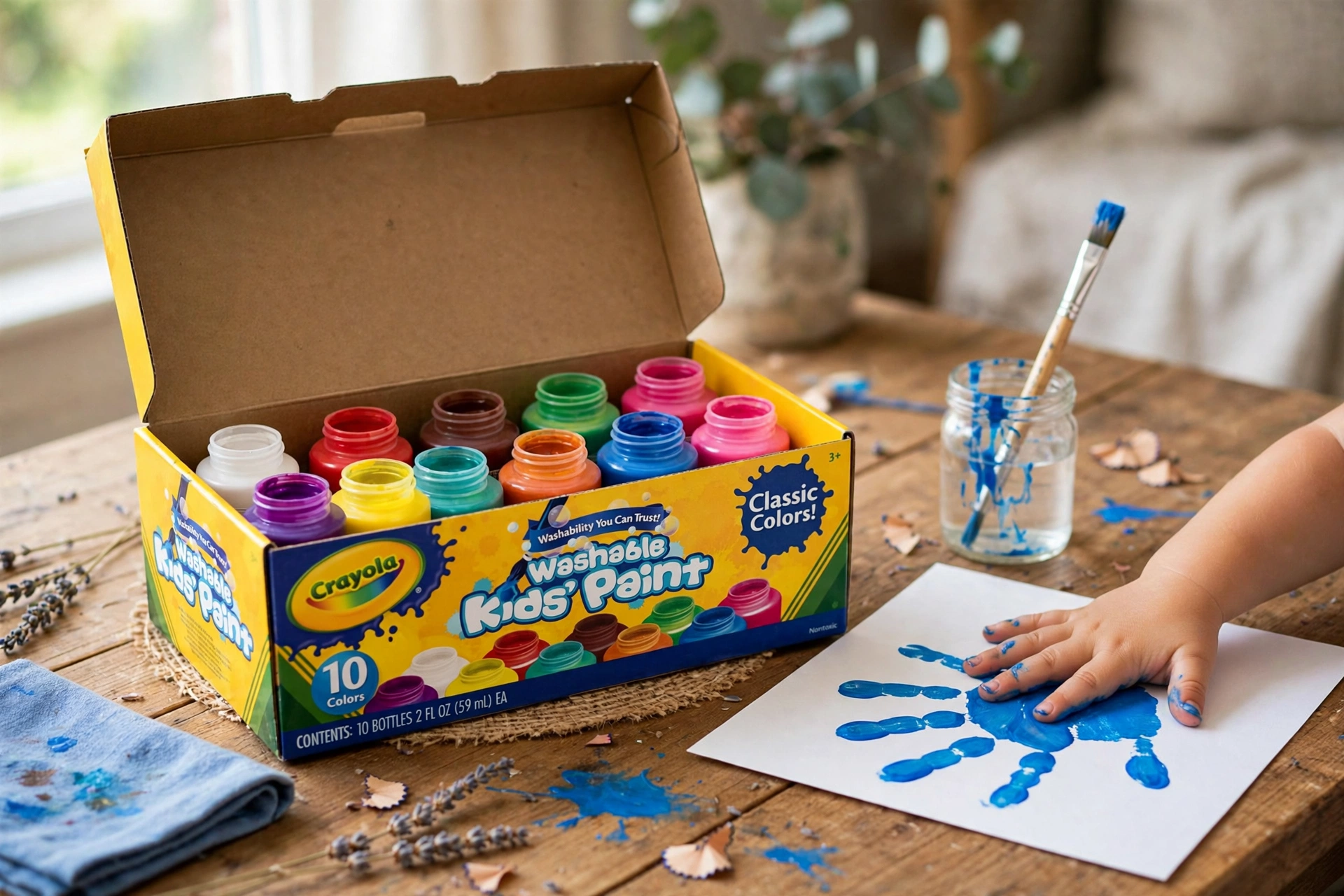
Ten bottles of washable paint made for kids, in bright colors that come off hands, tables and sleeves with soap and water. Painting teaches color mixing, brush control and creative confidence.
Crayola Washable Kids Paint – 10 Count
Ten bottles of washable kids paint that come off hands with soap and water.
18. Crayons, 24 Count
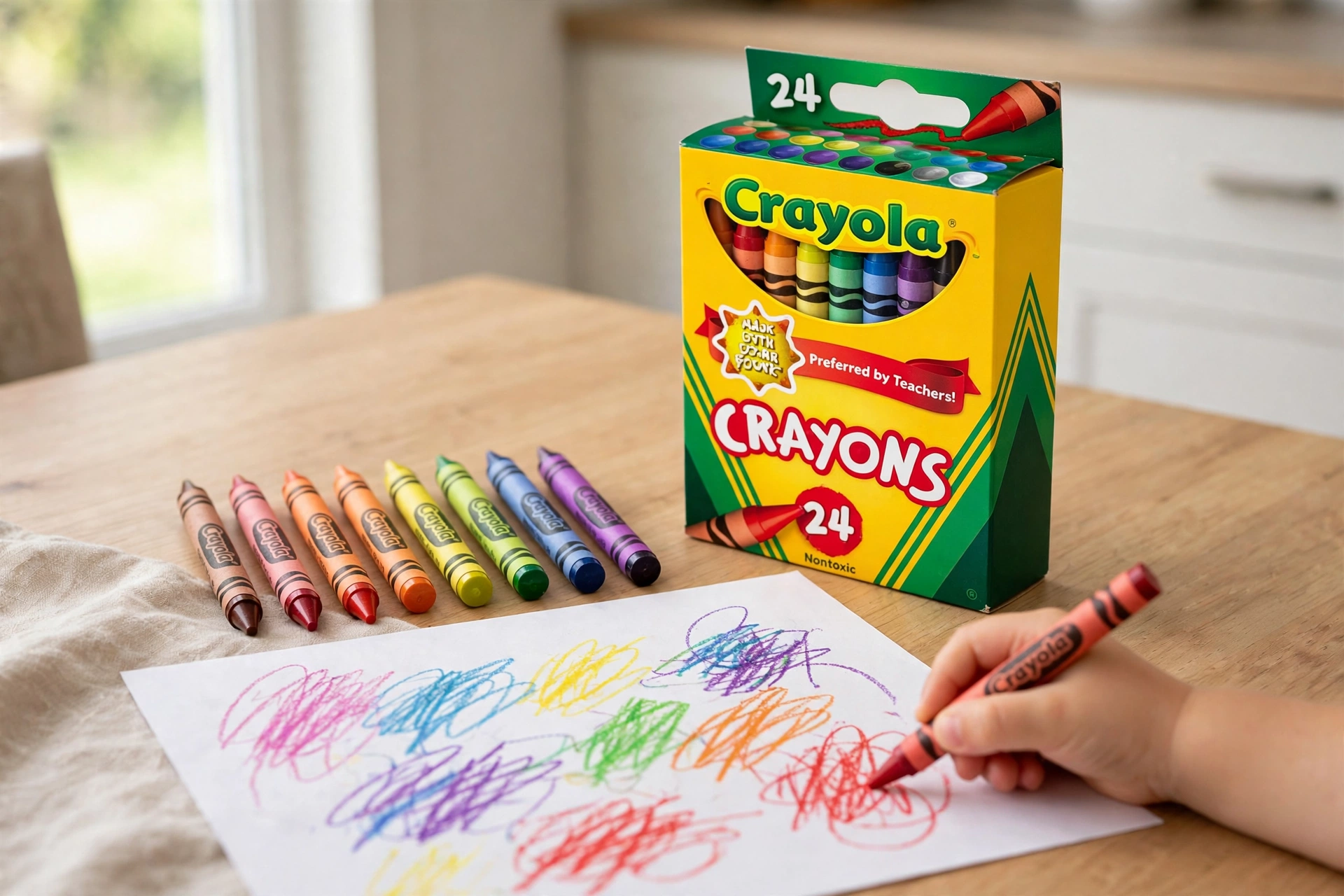
Twenty-four crayons in the classic colors, sized for small hands learning their first grip. Scribbling builds the hand strength that later becomes writing, and naming colors turns every drawing into a vocabulary lesson.
Sarah’s note: start with the fat grip, not the perfect picture. Let your toddler scribble big circles and lines, and praise the circles.
Crayola Crayons – 24 Count
24 classic crayons sized for small hands, for first grips and color naming.
19. Ultra-Clean Washable Markers
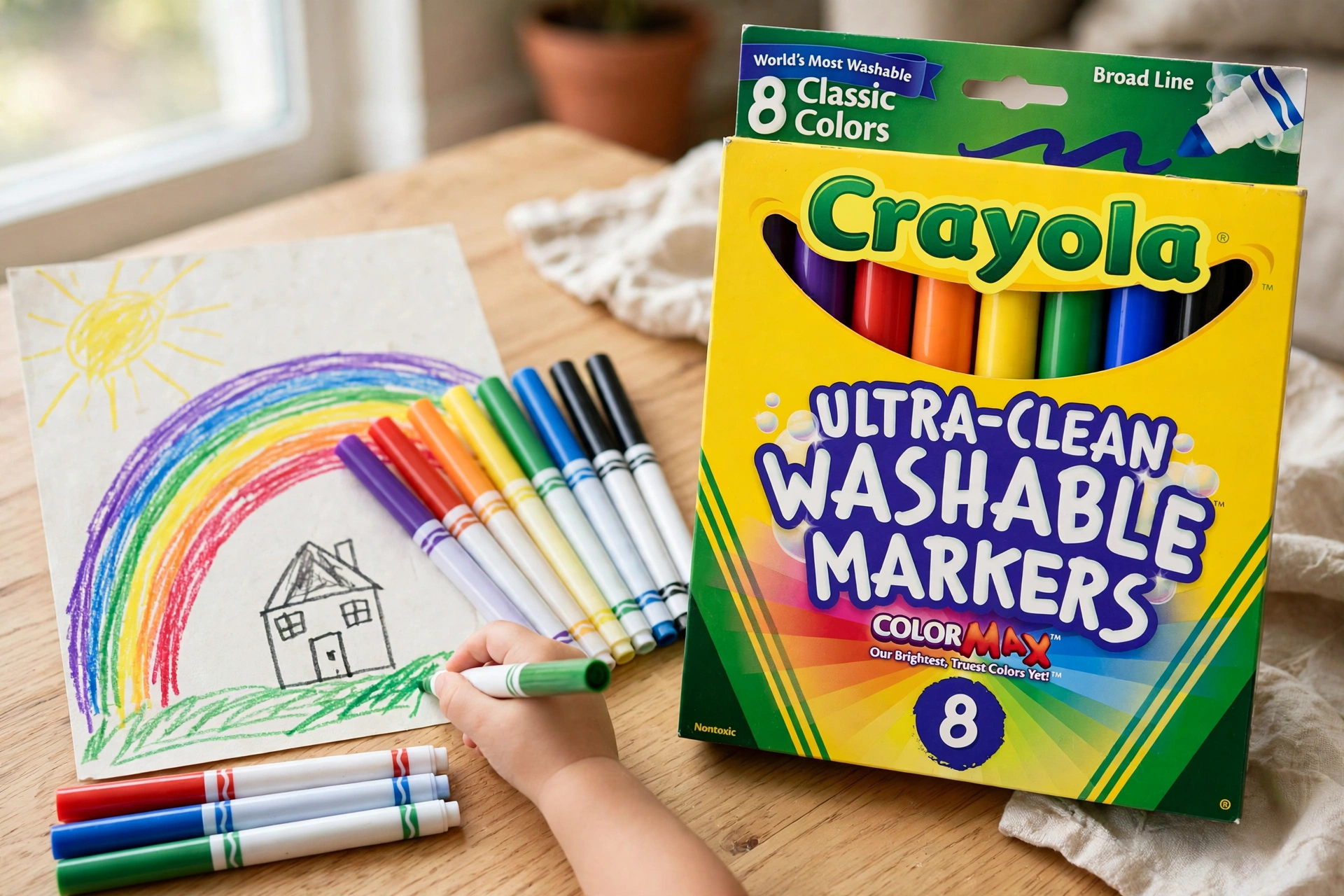
Ten broad-line markers made for kids, with ink that washes off skin and most clothing. Markers teach the same grip and color skills as crayons, with bolder lines that show up fast.
Sarah’s note: markers are the travel art supply in our house, because they draw bold and dry fast. Use them on the construction paper below, not on the walls.
Crayola Ultra-Clean Washable Markers – 10 Count
Ten broad-line washable markers with ink that washes off skin and most clothing.
20. Construction Paper, 480 Sheets
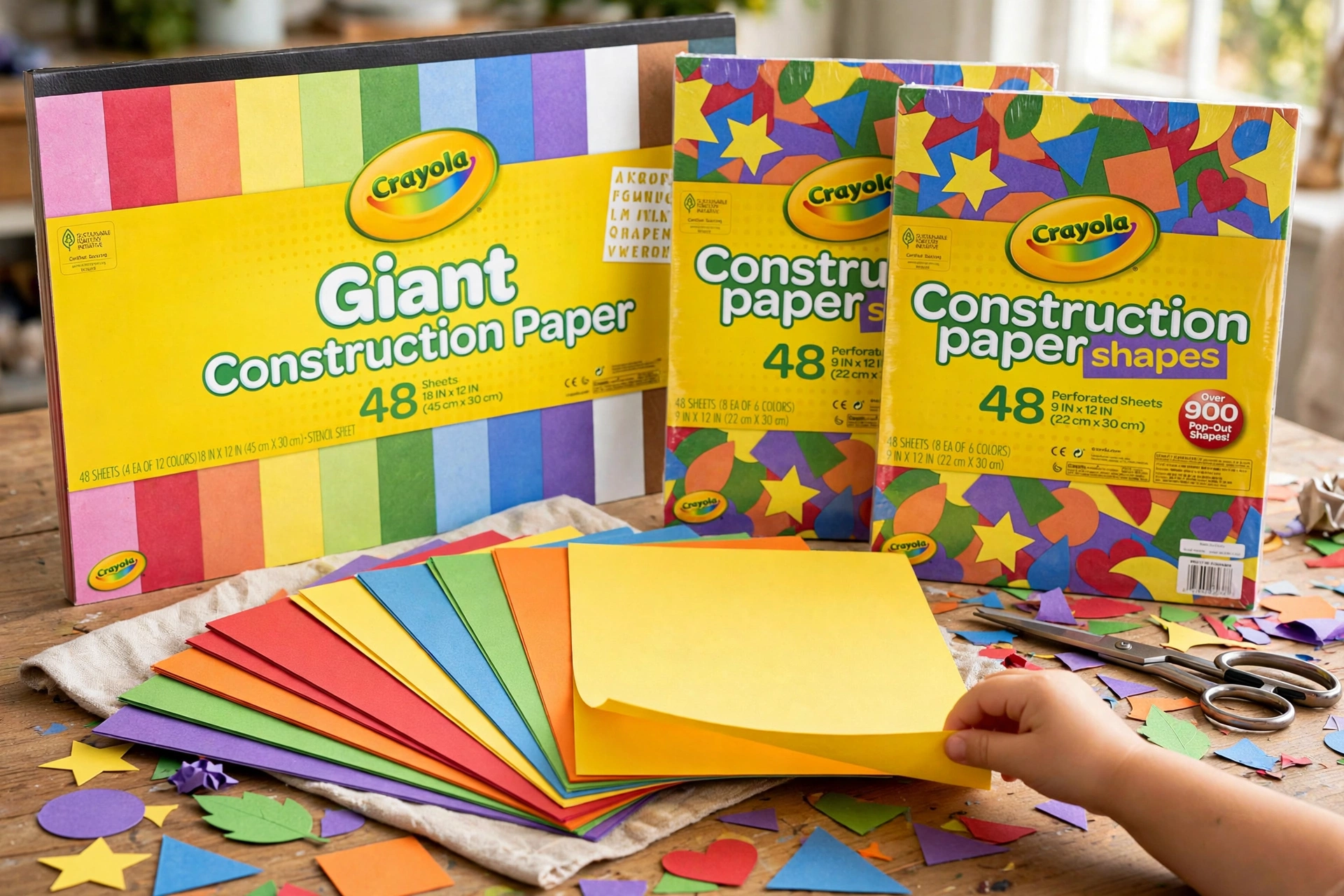
Four hundred and eighty sheets of heavy construction paper in assorted colors, thick enough to hold paint and glue without warping. It is the surface for every drawing and gluing project in this list.
Sarah’s note: keep one stack at toddler height and the rest put away, or all 480 sheets become confetti in one afternoon. Tear the paper for collages before you cut it.
Crayola Construction Paper – 480 Sheets
480 heavy sheets in assorted colors, thick enough to hold paint and glue.
Toy Safety, the Short Version
First, follow the manufacturer age on every toy. Ages 3 and up on the Magna-Tiles set means exactly that, and small pieces need a grown-up nearby for children under two. Second, check toys for damage before play. A cracked magnetic tile goes away for good, and a loose battery cover or a split bath pipe goes away until it is fixed. Grown-ups handle all battery changes. Third, never leave a toddler alone in water, even with bath toys. Stay within arm’s reach for every bath. Fourth, only washable, non-toxic paint and markers go on toddler skin.
Shop This Post
Everything with a link in this guide:
Frequently Asked Questions
What age should I start with learning toys? From about six months, with toys made for that age like the Rock-a-Stack and Baby’s First Blocks. The manufacturer age on each pick above is the guide.
How many learning toys does a toddler need? Fewer than you think. Five to eight toys out at a time is plenty, with the rest rotated weekly. A small rotation keeps old toys feeling new.
Are electronic learning toys bad for toddlers? Not on their own, but they work best as one tool among many. Pair them with wooden toys, books and art supplies, keep sessions short, and play together.
What if my toddler only plays with one toy? That is normal, and it is a good sign. Follow the interest and let her master that toy, then rotate one new toy in beside it.
Do wooden toys teach more than plastic ones? Both teach, in different ways. Wooden toys last longer and invite open-ended play, while electronic toys add sounds, words and songs. A mix of both is the setup that works in our house.
For Real Life?
You do not need all twenty toys. Pick three: one for building, one for words, and one for art. Put them where your toddler can reach them, and play beside her for the first few rounds. The toy teaches the skill, but your voice is what makes it stick.