Crib to Toddler Bed: When and How to Transition

There is a night in every toddler house when the crib stops working. You hear the thump, then the patter of little feet, and there is your two-year-old standing in the doorway, wide awake and very pleased with herself. The crib did its job. Now the rails are a ladder, not a wall.
Most toddlers move to a bed between 18 months and 3 years, and the exact month matters far less than the signs. The American Academy of Pediatrics says to move your child once they can climb out of the crib, once they are about 35 inches tall, or once the crib rail sits below their chest. Climbing out is the sign that decides it, because a fall from the top rail is the injury you are trying to prevent.
These 12 gentle crib to toddler bed steps are the sequence that worked in our house, with a 4-year-old and a 2-year-old, from picking the bed to the morning the sticker chart fills up. Our Baby Sleep Guide has the safe-sleep basics. Nothing here is a race. If your toddler is still sleeping happily and safely in the crib, the crib can wait.
Heads up: this post contains affiliate links. If you buy through them, MamaKinder may earn a small commission at no extra cost to you, and it helps keep these guides free.
Is Your Toddler Ready? 6 Signs to Watch For
A single rough night means nothing. Count a sign only when it shows up most days for about two weeks, and count the change only when you see two or more signs at once.
| Sign | What it looks like | What it means |
|---|---|---|
| Climbing out | One leg over the rail, or a foot on the mattress edge | Move now, for safety |
| About 35 inches tall | The rail sits below their chest while they stand | The rail cannot contain a fall |
| Asking for a big bed | “Big kid bed, please,” or pointing at a sibling’s bed | They are ready |
| Night potty trips | Waking to use the potty and unable to get out alone | The crib blocks a skill |
| New baby needs the crib | A sibling is on the way and the crib has a next owner | Move months early, not the week the baby arrives |
| Sleeping well and over 2 and a half | Solid nights, plus enough impulse control to follow one rule | The smoothest transitions |
Two warnings first. Do not stack this change on top of potty training or a house move. One big change at a time keeps sleep regressions short. And the move is reversible. If the first week is a disaster, put the crib back for a month and try again. Going back is not failing.
The 12 Gentle Steps
1. Wait for the right moment, not the right birthday

The calendar is the worst reason to move a toddler. Some 18-month-olds climb out and need a bed, and some 3-year-olds sleep happily in their cribs. Toddlers who stay in cribs a little longer tend to fall asleep faster and sleep longer, so waiting protects the sleep you already have. Move now if your child has climbed out more than once. Move soon if a new baby needs the crib. Wait if the only reason is a birthday or a sale.
2. Pick the bed together, and keep it low
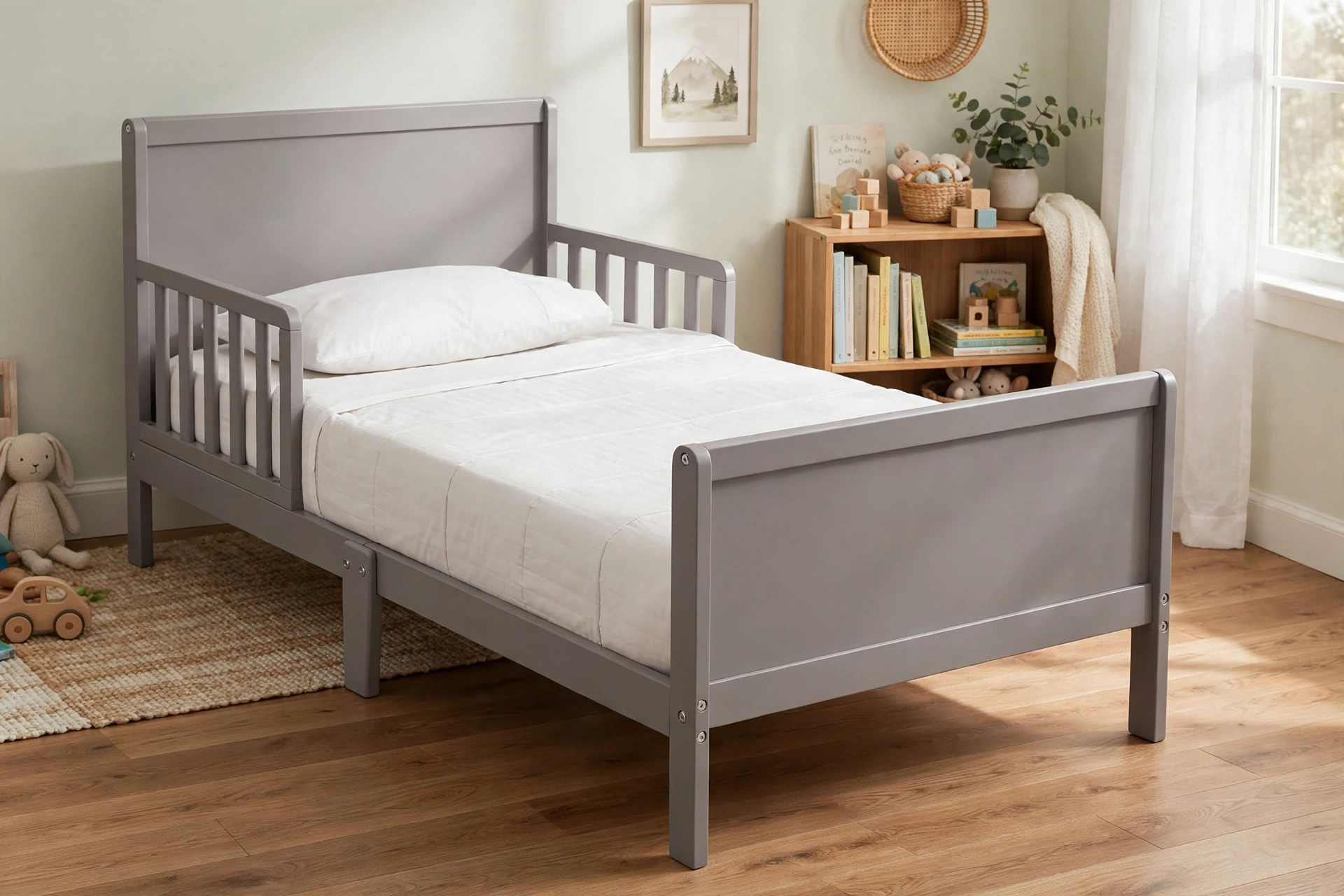
There are three honest options. A toddler bed uses the crib mattress, sits low, and comes with guardrails built in. A convertible crib becomes a toddler bed when you remove one side, following the manufacturer’s instructions. The crib mattress on the floor is the cheapest start. Let your toddler help choose, within the options you approved. Check that it meets the current safety standard, with side rails at least 5 inches above the mattress.
Delta Children Fancy Wood Toddler Bed
Greenguard Gold Certified wood toddler bed, fits a standard crib mattress.
3. Put the new bed where the crib stood

A bedroom looks completely different from a new angle at 2 a.m., and that is exactly when your toddler will notice. Put the new bed in the same spot the crib occupied. Familiarity does more work here than any gadget. Set the bed up a few days before the first night, and let your toddler play on it and nap on it once. By bedtime, it is already their bed. If the layout forces a move, keep one anchor the same.
4. Let them pick the bedding

This is the cheapest excitement in the whole transition. Let your toddler choose the sheets for their big-kid bed. A dinosaur print, a star print, a color they love: the print does not matter, the ownership does. A child who chose the sheets will tell everyone about them. Keep the sleep space simple: a firm mattress, a fitted sheet, and nothing loose around a small sleeper. The set below is 4-piece, so the comforter and pillowcase match the sheets.
Toddler Bedding Set, 4-Piece
A 4-piece toddler bedding set with a comforter and pillowcase.
5. Keep the sleepwear and the lovey exactly the same

Everything about the bed can change except the things that touch your child’s skin at night. Keep the same wearable blanket or sleep sack, the same pajamas, the same stuffed bunny. Toddlers need the old things to believe the new bed is safe. If your toddler has outgrown their sleep sack, size up in the same style rather than switching to a loose blanket. The toddler version below is 100 percent cotton, TOG 0.5, with foot openings for walking to the potty.
HALO SleepSack Toddler Sleeping Bag
100% cotton wearable blanket, TOG 0.5, with foot openings for kids on the move.
6. Add a soft guard on the open side
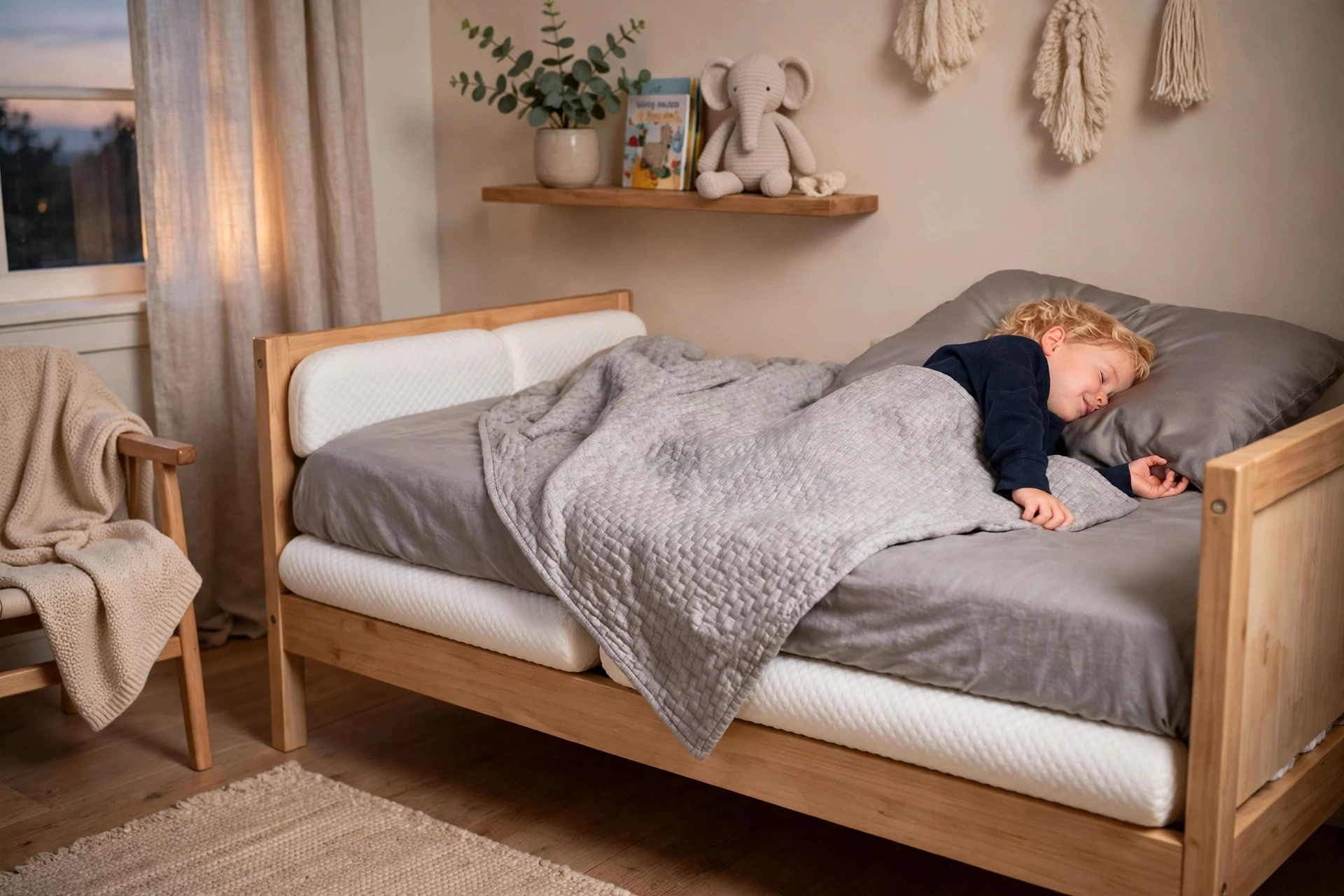
A toddler bed sits low, but a rolling toddler can still find the floor, and one hard landing can undo weeks of confidence. Guard the open side for the first few months. A foam bumper that slides under the fitted sheet is the gentlest option: a soft reminder at the edge, not a cage. The bumpers below come as a 2-pack, so the second one covers the other side. They are CertiPUR-US foam with a water-resistant, machine-washable cover, and the listing states they pass federal safety standards for bedrails.
Hiccapop Foam Bed Bumpers, 2-Pack
CertiPUR-US foam bumpers with a water-resistant, machine-washable cover.
7. Make the whole room safe before the first night
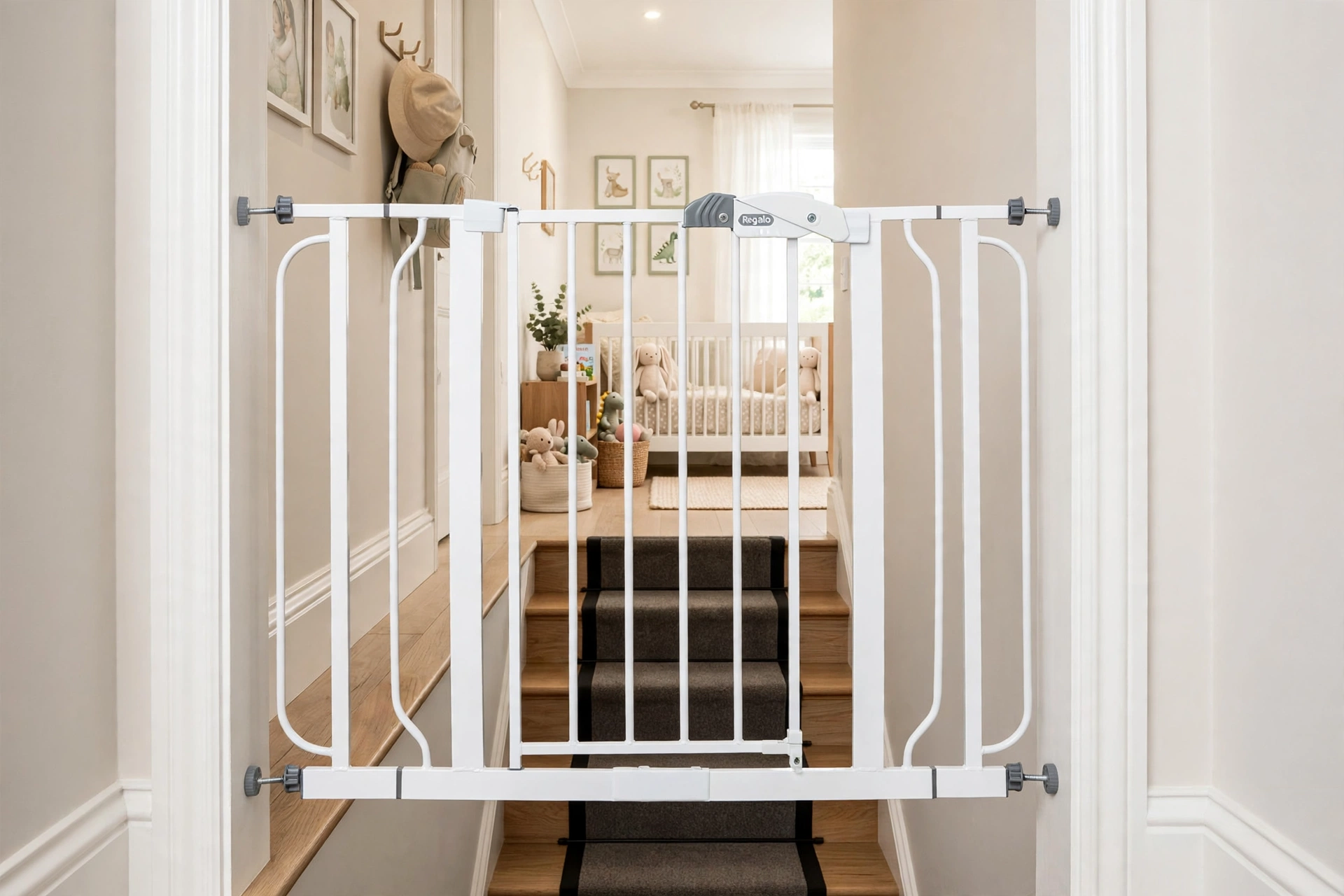
The crib was a fence. The toddler bed is not. Before the first night, walk the room on your knees at toddler height and look for everything a curious two-year-old can reach in the dark. Anchor every tall dresser and bookshelf to the wall, tie up blind cords and charger cables out of reach, and clear the path from the bed to the door. Put a safety gate on the bedroom door or at the top of the stairs. The gate below is all-steel, pressure mounted, adjusts from 29 to 49 inches wide, and has a walk-through door with a one-touch lever.
Regalo Easy Step Extra Wide Baby Gate
All-steel gate, adjusts 29 to 49 inches wide, pressure mounted with a walk-through door.
8. Keep the bedtime routine exactly the same

The bed is allowed to change. The routine is not. Keep the same bath, the same pajamas, the same two books, the same song, in the same order, at the same time. A toddler’s brain reads the routine as the signal that sleep is coming. The one thing that can change is where you read the books: sit on the edge of the new bed instead of in the rocking chair. Keep the lights low for the last ten minutes, and keep screens off for the hour before bed.
9. Keep the night sounds, and add a soft light
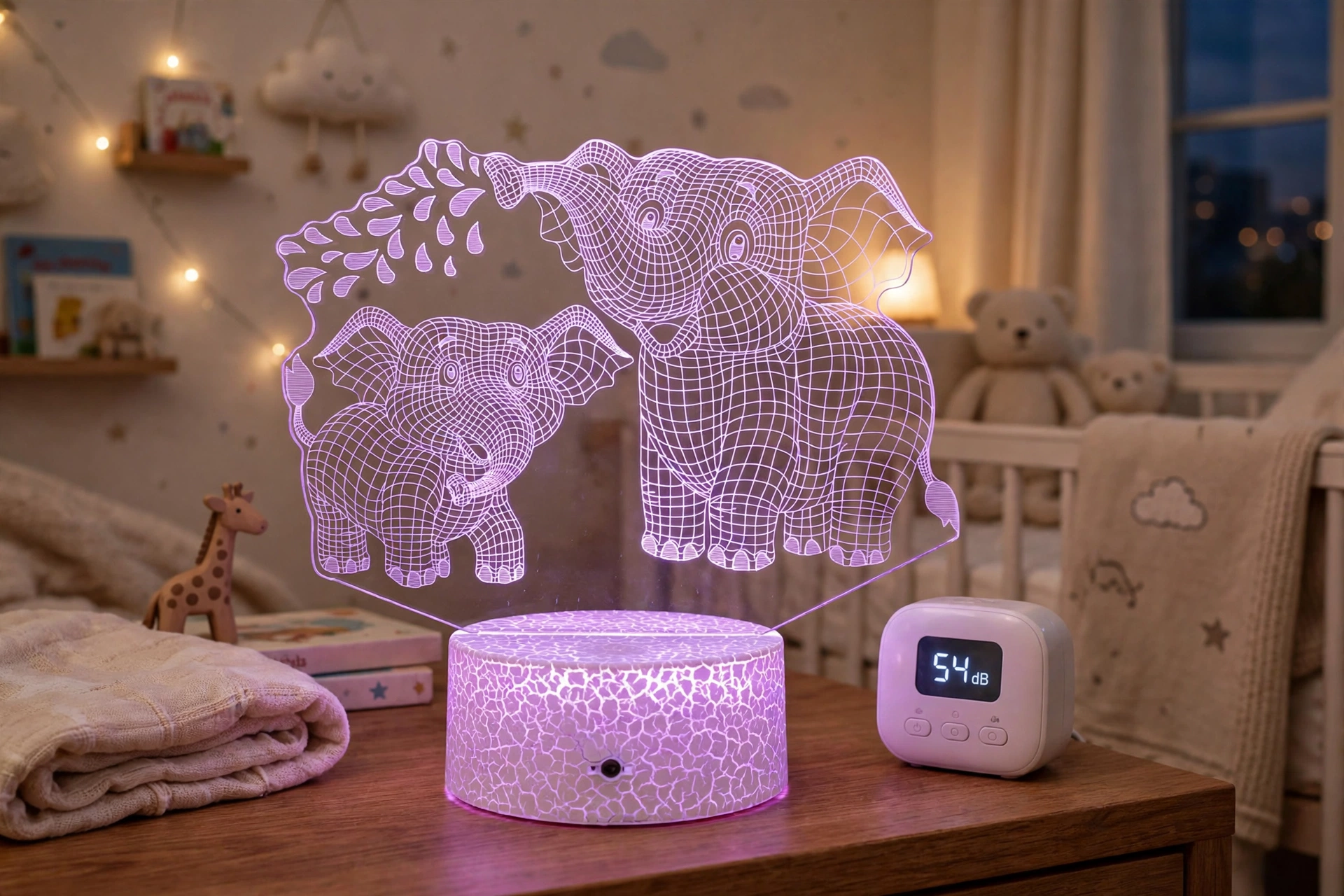
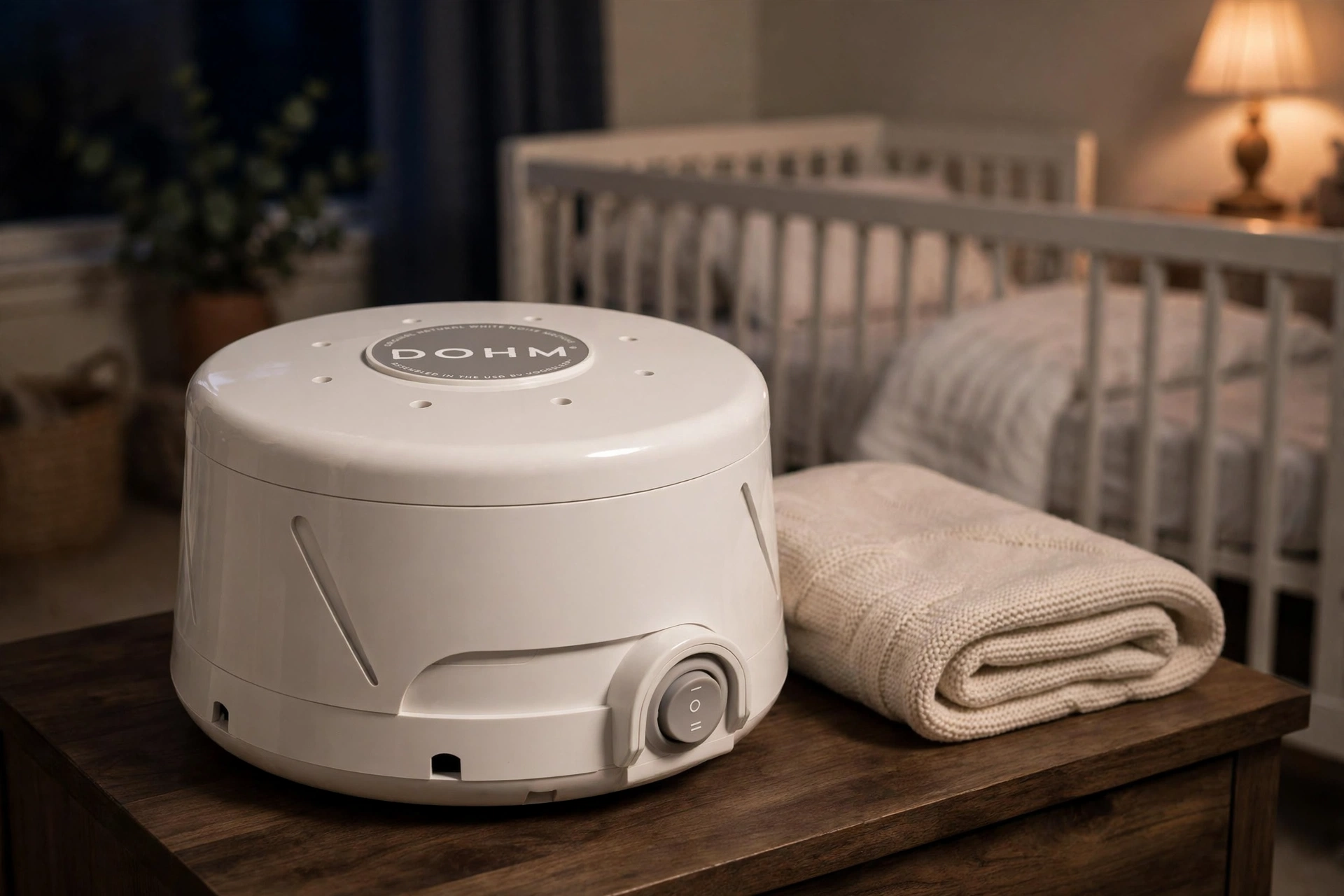
A dark, silent room feels bigger from a low bed, and a scared toddler is a wandering toddler. Keep the white noise machine your child already sleeps with, at the same volume and in the same spot, so the sound of the room does not change even though the bed did. The Dohm below makes its sound with a real fan inside, not a recording. Then add a soft night light, low and warm, near the floor. A toddler who wakes up needs to see that the room is the same room. The elephant light below changes color, so your child can pick the color of the night.

10. Teach the stay-in-bed rule with a clock they can see
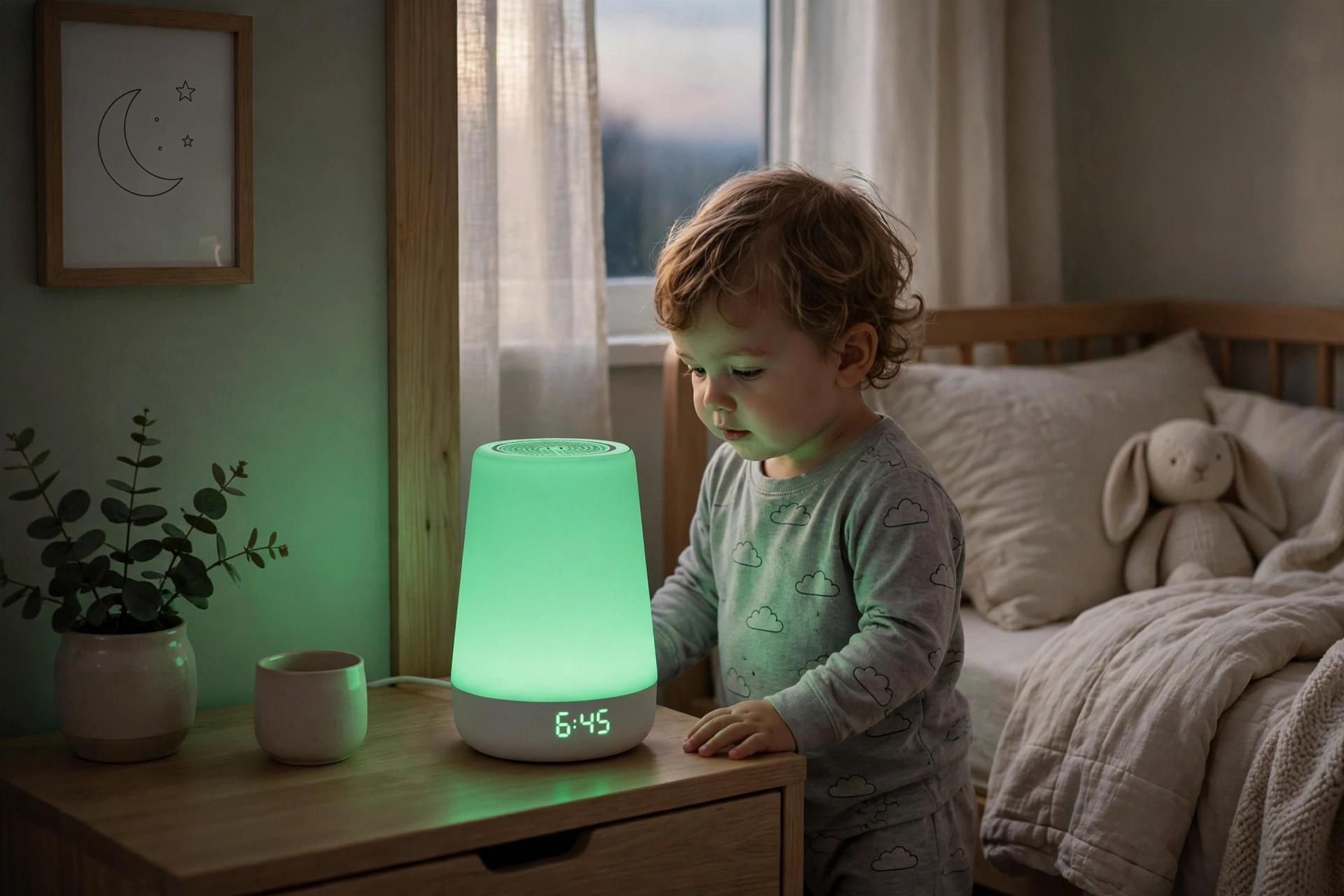
A toddler cannot read a clock, but they can read a color, and that is the whole trick of the stay-in-bed rule. Teach one rule, in one sentence, and say it the same way every night: “Stay in your bed until the light turns green.” Then keep the rule for a month without exceptions. A rule that bends on Tuesday is not a rule. The clock below does this job without you having to explain it twice. The Hatch Rest is a sound machine and a night light in one, with a Time-to-Rise light you set to turn green at wake-up time.
Hatch Rest 2nd Gen Sound Machine and Night Light
Time-to-Rise light, 18+ sounds, night light.
11. Fix early mornings with darkness, not earlier bedtimes

If your toddler starts waking at 5 a.m. in the new bed, the first suspect is light, not the bed. A toddler bed puts your child closer to the window, and a bright room at dawn tells a small brain that the day has started. Before you move bedtime earlier or cut the nap, darken the room properly and give it three nights. The curtains below are a set of two with a sewn-in black liner, and the listing describes them as 100 percent blackout. Hang them wide enough to cover the whole window frame. If the early waking survives a dark room for a week, talk to your pediatrician.
12. Celebrate every morning they stay put
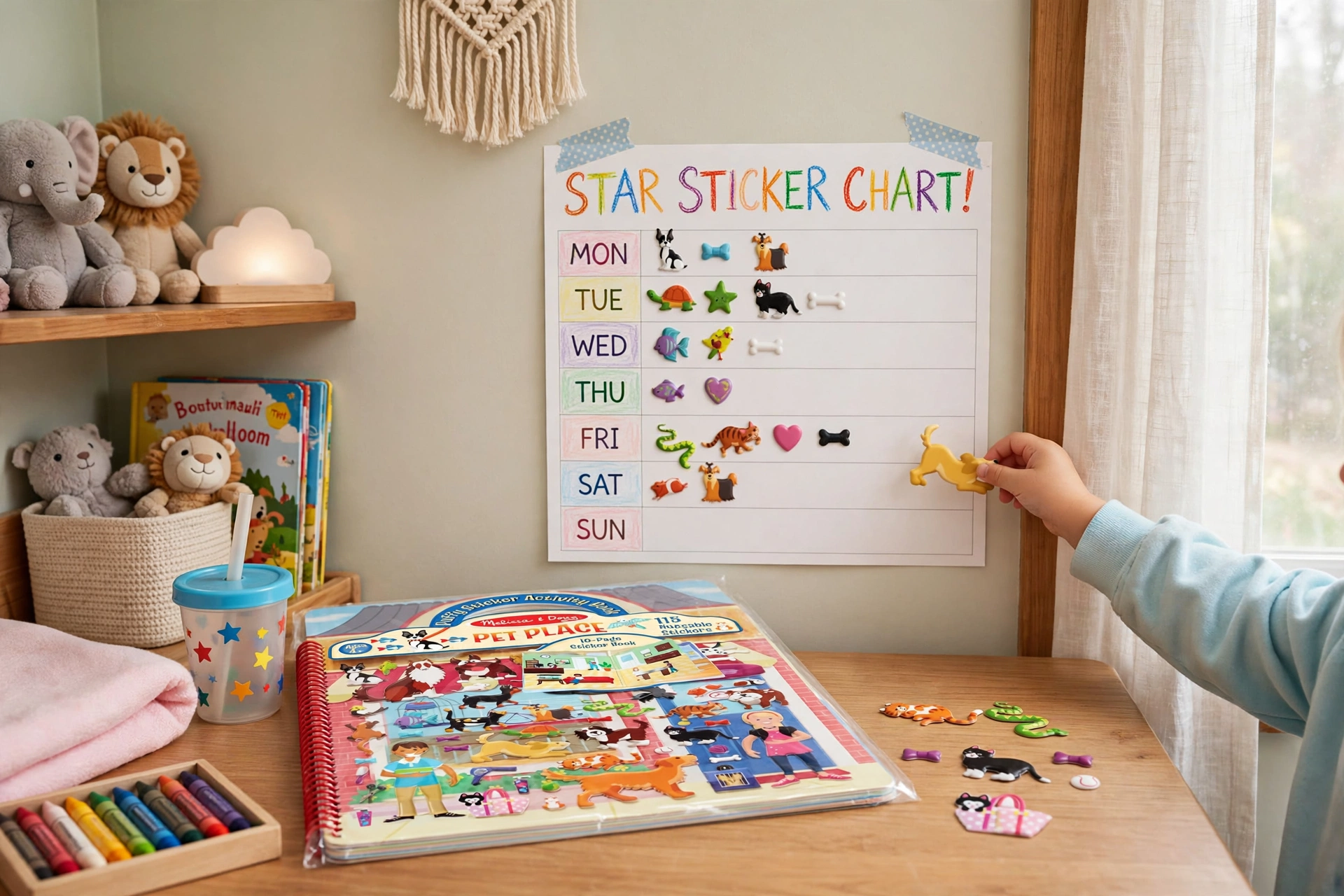
The last step is the one most parents skip. Every morning your toddler stays in bed until the light turns green, celebrate it: a sticker on the chart, a big specific praise (“You stayed in your big-kid bed all night!”), and a small breakfast privilege, like choosing the bowl. Praise the staying, not just the sleeping, because staying is the skill you are teaching. Keep the chart at your toddler’s eye level, and let them place the sticker themselves. The sticker books below give you three books with 118 reusable stickers, so the chart never runs out in week one. After a full week of stickers, mark it with a special breakfast.
When the First Week Falls Apart
It usually does, a little, and that is normal. A toddler who escapes at 2 a.m. needs the same calm walk back, the same one sentence (“It is still sleep time”), and the same closed door, every single time, with no singing, no stories, and no lying down with them, because attention at 2 a.m. is a reward. Most escapes fade within a week if the response never changes. If the nights get worse for more than a week, or your child is terrified rather than just excited, put the crib back for a month.
Shop This Post
| Product | Used For | |
|---|---|---|
| Delta Children Fancy Wood Toddler Bed | The bed (Step 2) | (Check Price) |
| Toddler Bedding Set, 4-Piece | Bedding (Step 4) | (Check Price) |
| HALO SleepSack Toddler Sleeping Bag | Wearable blanket (Step 5) | (Check Price) |
| Hiccapop Foam Bed Bumpers, 2-Pack | Soft guard (Step 6) | (Check Price) |
| Regalo Easy Step Extra Wide Baby Gate | Door safety (Step 7) | (Check Price) |
| Goodnight Moon (Board Book) | Bedtime story (Step 8) | (Check Price) |
| Yogasleep Dohm White Noise Machine | Night sounds (Step 9) | (Check Price) |
| Elephant 3D Night Light | Soft glow (Step 9) | (Check Price) |
| Hatch Rest 2nd Gen Sound Machine | Ok-to-wake clock (Step 10) | (Check Price) |
| NICETOWN Blackout Curtains, Set of 2 | Dark mornings (Step 11) | (Check Price) |
| Melissa & Doug Puffy Sticker Books | Sticker chart (Step 12) | (Check Price) |
Frequently Asked Questions
What age should a toddler move to a toddler bed? Most toddlers move between 18 months and 3 years, but age is not the trigger. The triggers are climbing out, reaching about 35 inches tall, or the rail sitting below their chest. If none of those are true, wait. Toddlers who move around age 3 settle faster, because they understand the stay-in-bed rule. A move before 18 months is rarely worth it, because a baby that young cannot follow a stay-in-bed rule at all, and the freedom of an open bed usually means more night waking, not less. If your toddler is climbing out before 18 months, lower the crib mattress to the floor first and try that for a few weeks. The bed will still be there when the signs line up.
What do I do when my toddler keeps getting out of bed? Walk them back calmly, say the same one sentence every time (“It is still sleep time”), and leave without singing or lying down with them. Keep the response identical for a week, and praise every morning they stay put. If the escapes do not fade in a week or two, the move came too early. One more thing that helps is keeping the room boring after lights out. No new toys in reach, no screen glow from the hallway, and the same dim night light every night, so there is nothing worth getting up for. Most toddlers test the boundary for three or four nights, then the novelty wears off and the rule starts to stick.
Should my toddler have a pillow in the new bed? A pillow is not needed for the transition, and many toddlers sleep fine without one. If your child is over 2 and already has a small, flat pillow they love, that is fine too.
Is a convertible crib or a toddler bed better? A convertible crib keeps the most familiar thing, the bed itself, and costs nothing extra if you already own one. A toddler bed is lower, lighter, and easier to climb into alone. Either works. The deciding factor is usually whether a sibling needs the crib.
How long does the transition take? Most families see the worst of it in the first week and a new normal by the end of week two. If nights are still falling apart after two weeks of a consistent response, step back and ask whether the timing was right.
The Short Version
The crib to toddler bed switch is a safety decision first and a milestone second. Wait for the signs, pick the bed together, keep the routine and the sleepwear the same, make the room safe, teach one rule you can see, and celebrate every morning it works. The bed is furniture. The routine is the real transition, and the routine is already yours. Start with step 1 this weekend.