8 Clear Differences Between a Mini Crib and a Regular Crib: How to Pick the Right One
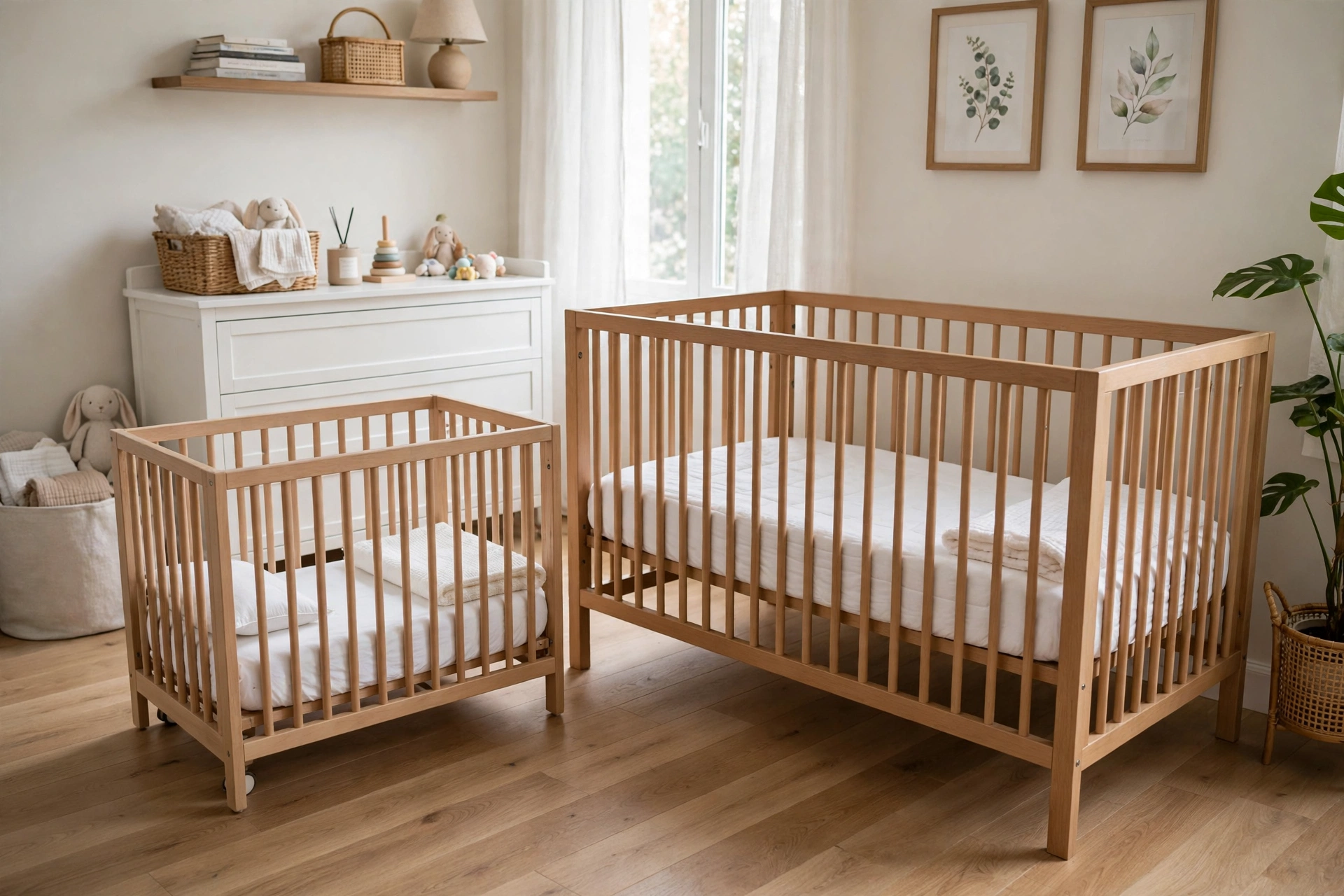
Shopping for a first crib should be simple. Then you open a nursery catalog and find two sizes of the same piece of furniture. A mini crib looks like a regular crib that shrank in the wash, and a regular crib looks like a commitment.
Here is the short version: a mini crib is a smaller, lighter crib built for tight spaces and short-term use, while a regular crib is the full-size, federally regulated crib built to last from birth into the toddler years. The difference is size, lifespan, and what your room can hold.
We used both in our house, with a 4-year-old and a 2-year-old. Our first baby slept in a mini crib beside our bed, because our bedroom could not fit anything bigger. Our second went straight into a regular crib in the nursery, because by then we had the room and wanted one bed that would last for years. Our Baby Sleep Guide has the safe-sleep basics this guide builds on.
Heads up: this post contains affiliate links. If you buy through them, MamaKinder may earn a small commission at no extra cost to you, and it helps keep these guides free.
The Short Answer
If your room is small, if the baby will sleep beside your bed, or if this is a second crib for the grandparents’ house, buy the mini crib. It fits where a regular crib cannot, it moves between rooms, and it costs less up front. If you have a dedicated nursery and want one bed that lasts until your child is three or four, buy a regular convertible crib. It takes standard sizes and turns into a toddler bed when the time comes. Most families who can fit a regular crib end up happiest with it. Families in small spaces end up happiest with the mini crib, because it is the only crib that fits.
Mini Crib vs Regular Crib at a Glance
| Difference | Mini Crib | Regular Crib |
|---|---|---|
| Mattress size | About 24 by 38 inches, varies by model | 28 by 52 inches, federally regulated |
| How long it lasts | Birth to about 18 to 24 months | Birth to 3 or 4 years, longer if convertible |
| Weight and height limit | About 35 inches tall, around 40 to 50 pounds | About 35 inches tall, around 50 pounds |
| Portability | Often on wheels, some fold flat | Heavy and stationary once assembled |
| Price | Lower up front | Higher up front, better long-term value |
| Bedding | Specialty sizes, fewer prints | Standard sizes, endless choice |
| Conversion | A few convert to a daybed or twin bed | Most convert to a toddler bed and daybed |
| Safety standard | Non-full-size crib standard | Full-size crib standard, regulated size |
The 8 Differences That Matter
1. Size and footprint

Size is the whole reason the mini crib exists. A typical mini crib takes a mattress around 24 by 38 inches, and the frame is only a little bigger. A regular crib takes a mattress 28 by 52 inches. On the floor, that is roughly 8 square feet against roughly 11. Three square feet sounds small until you try to fit a crib, a dresser, and a chair into one bedroom.
Before you buy either one, measure the spot where the crib will live and tape its outline on the floor. Then measure the doorways it has to pass through: a regular crib usually goes up in the room it stays in, while a mini crib on wheels can roll through a standard doorway. If the outline leaves you less than an arm’s length to walk past at night, the mini crib is the honest answer. If it fits with room to spare, the regular crib is a value question, not a space problem.
Dream On Me Aden 4-in-1 Convertible Mini Crib
Greenguard Gold Certified mini crib with 3 mattress heights, converts to a mini daybed and twin bed.
2. Mattress size and fit

The mattress is where the two cribs differ most. A regular crib mattress is standard: about 52 by 28 inches, about 5 inches thick, and any standard crib mattress fits any standard crib. A mini crib mattress has no single standard size. Most are around 38 by 24 inches and about 3 inches thick, but the exact size depends on the crib, so measure yours and buy the mattress that matches it. A mattress sold as a mini crib mattress can still be wrong for your particular crib.
Fit is a safety issue, not a comfort preference. The rule is the two-finger test: no more than two fingers should fit between the mattress and the crib sides. A bigger gap is an entrapment risk, and a mattress that is too big bends and will not lie flat. Buy the mattress the crib maker names for your model, and test the fit with your own fingers before the first nap. One more trap: many mini cribs arrive with only a thin 1-inch pad, so plan on buying a real 3-inch mattress.
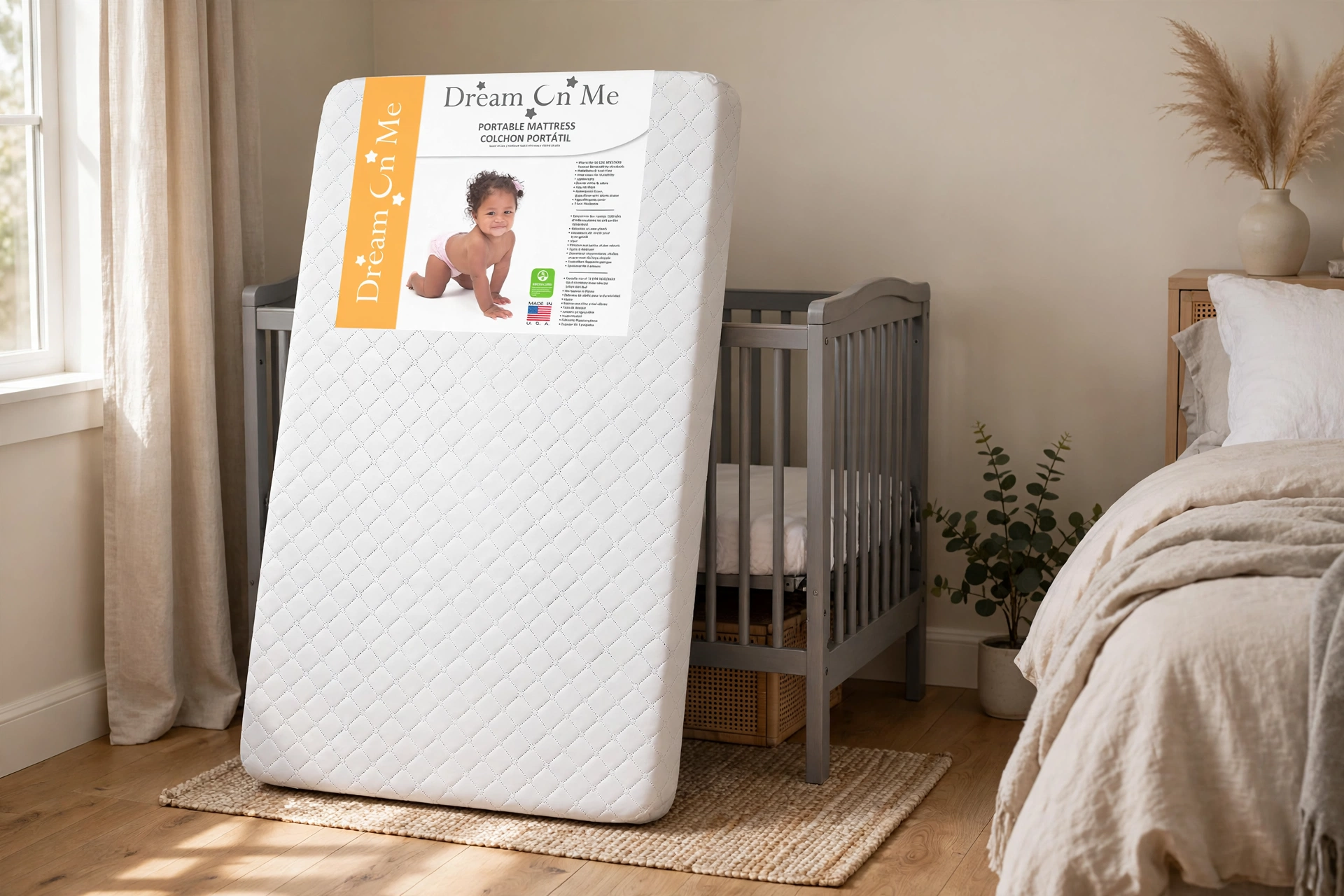
Dream On Me Sunset 3″ Mini Crib Mattress
Extra-firm mini crib mattress, 38 by 24 by 3 inches, Greenguard Gold Certified with a waterproof vinyl cover.
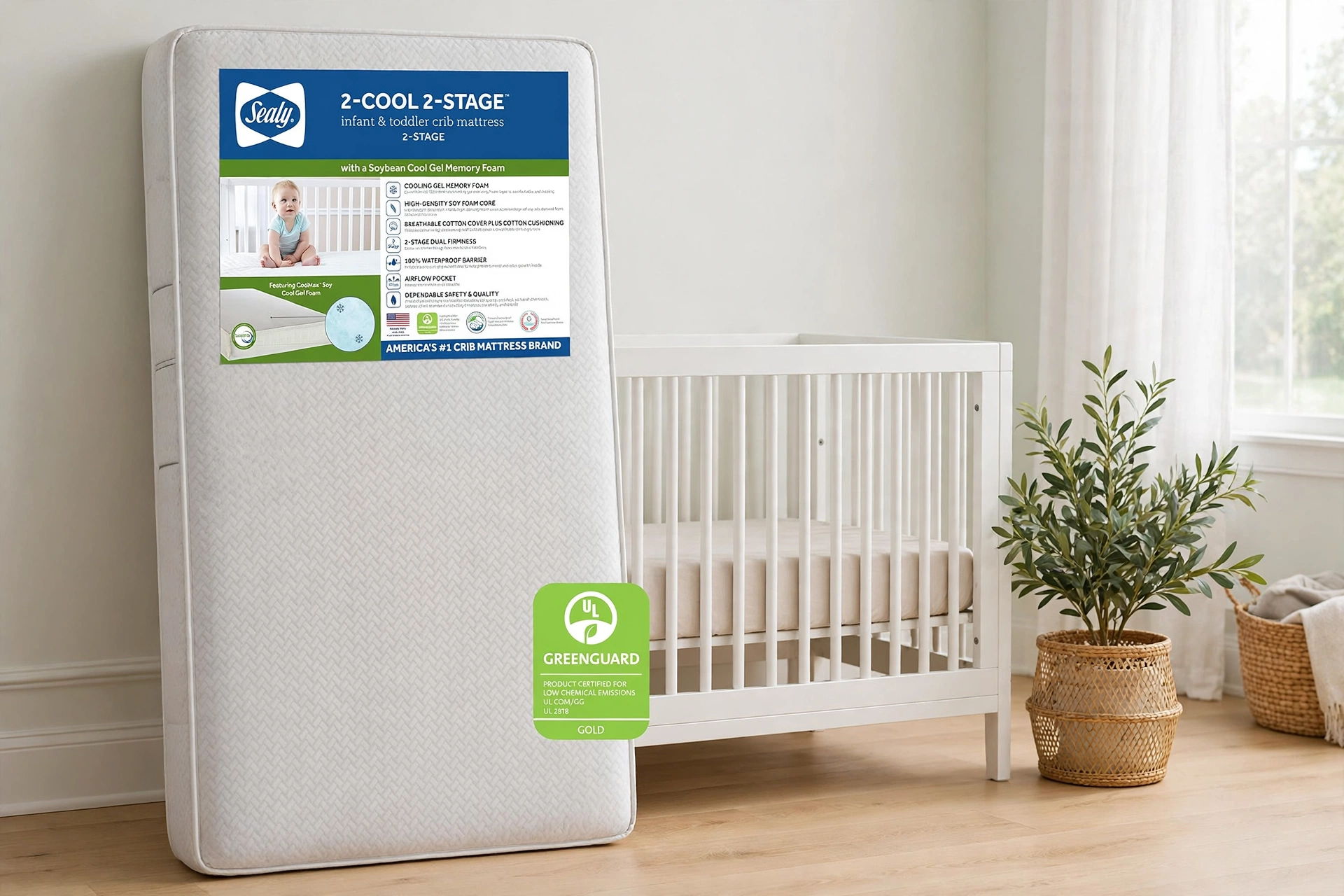
Sealy Baby Soybean 2-Stage Crib Mattress
Two-stage standard crib mattress, 52 by 28 inches, Greenguard Gold Certified with a waterproof cover.
3. How long your baby can use it

A mini crib is a short-term bed. Most babies outgrow one between 18 and 24 months, and the limit is usually height, not weight. The rule for either crib is the same: stop using it when your child can climb out or reaches 35 inches tall. A tall baby can hit that limit well before the second birthday. Our daughter moved out of hers at six months, once she could sit up and pull herself around.
A regular crib lasts longer because it starts bigger. Most children use one until age three or four, and a convertible keeps going as a toddler bed and then a daybed. That extra year or two is the real value of the regular crib, and it is also why the mini crib can cost more in the end: a mini crib plus a toddler bed later can cost more than one convertible crib bought once. If you buy the mini crib, budget for that second purchase.
4. Portability
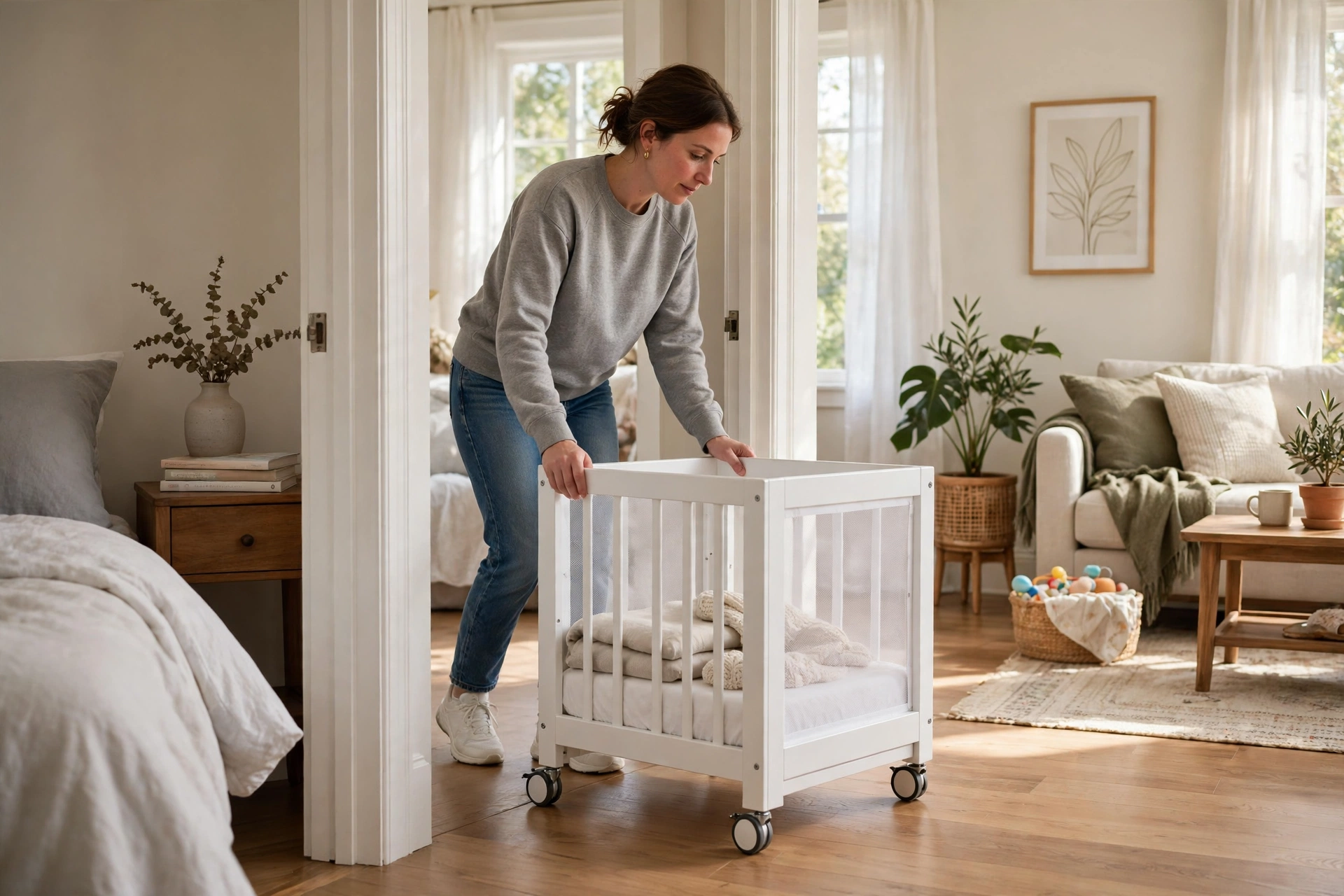
Portability is the mini crib’s best feature after size. Many sit on caster wheels, so you can roll the sleeping baby from the bedroom to the living room for a nap and back again at bedtime. Some fold flat for storage or travel, which makes them the natural second crib for the grandparents’ house.
A regular crib does not move. It is heavy, it is assembled in the room it lives in, and taking it apart is a weekend job. That is fine when the crib has a permanent home. If your life involves frequent moves, shared rooms, or regular overnight stays with family, the mini crib’s wheels are not a nice extra. They are the feature that decides the purchase.
5. Price and total cost
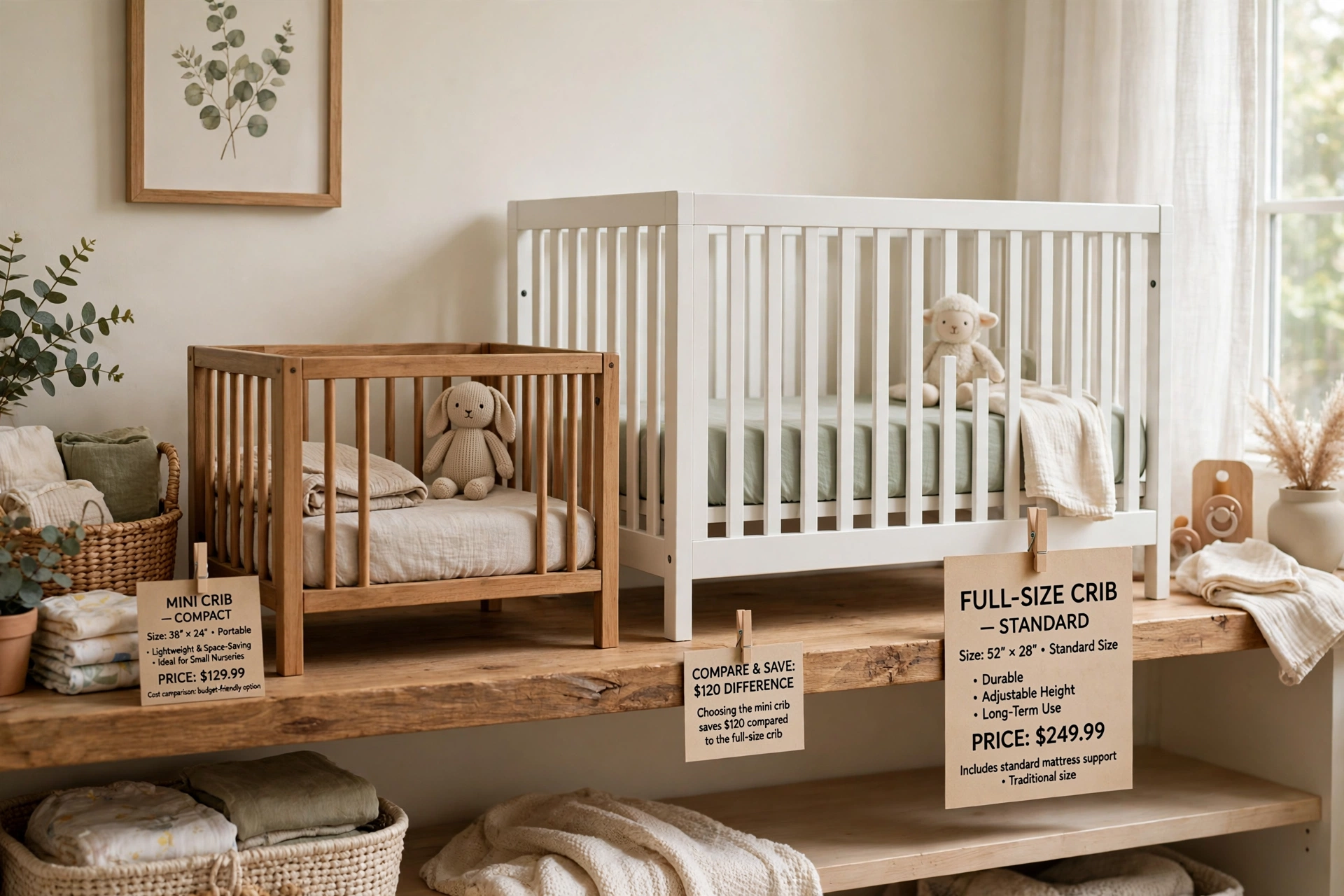
A mini crib costs less than a regular crib, and that is a real advantage when the nursery budget is tight. The catch is that the price tag on the box is not the whole cost. A mini crib needs its own mattress and its own sheets, and then, a year or two later, it needs replacing with a bigger bed. A regular crib costs more on day one, but its mattress and sheets are standard sizes, and a convertible becomes the toddler bed for free or for the price of a conversion kit.
Do the total-cost math before you decide. Add up the mini crib, its mattress, its sheets, and the toddler bed you will buy later, then add up the convertible regular crib and its mattress and sheets. For many families the two totals come out close. The mini crib still wins when the budget only stretches to one small purchase now, or when the room cannot hold the bigger bed.
6. Bedding, sheets, and mattress protectors
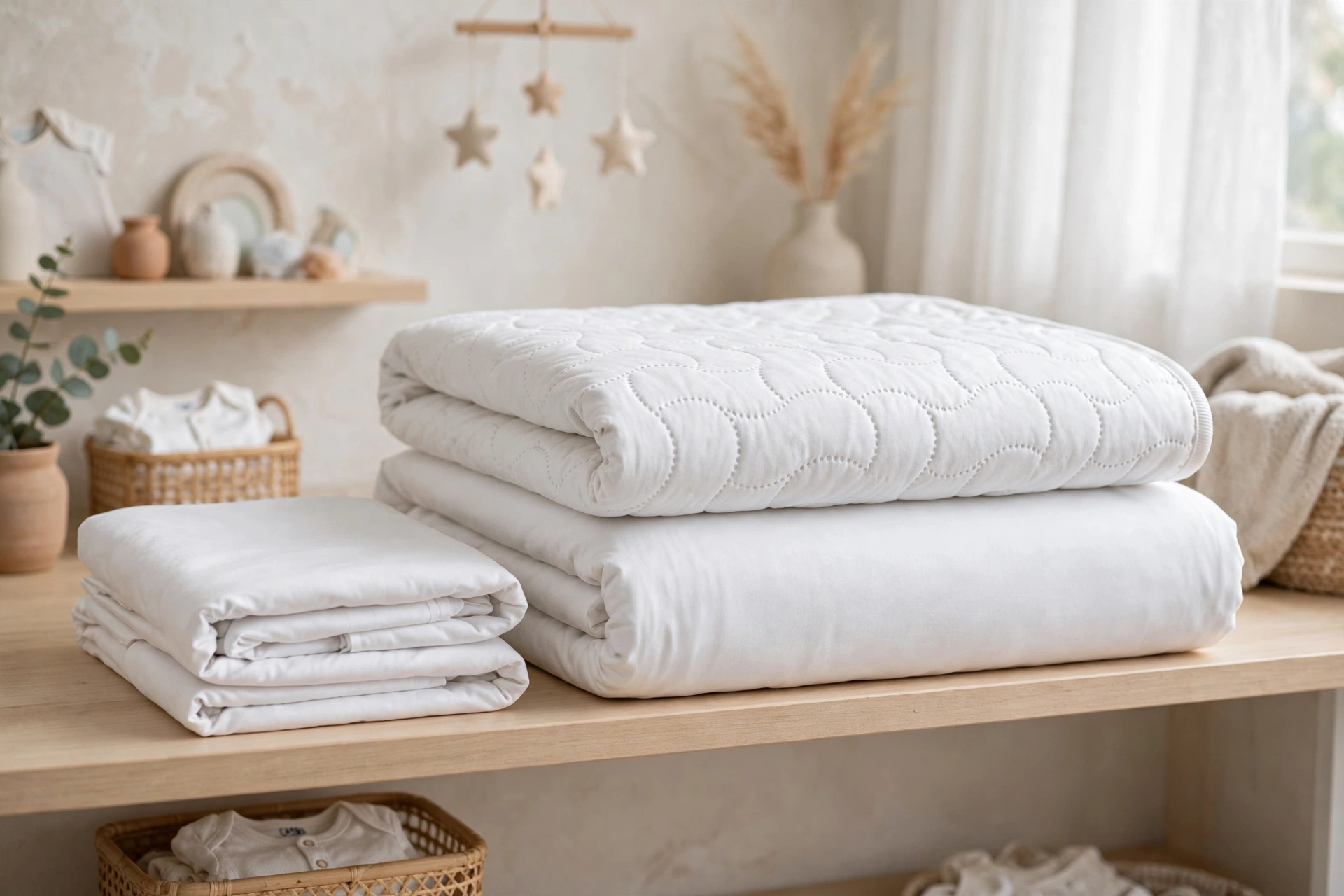
Bedding is the quiet difference that shows up every laundry day. Standard crib sheets are sold everywhere, in every color and print, because every standard crib takes the same sheet. Mini crib sheets are a specialty size, with a smaller choice and fewer prints, and you must match the exact dimensions of your crib, because a loose sheet can bunch up around a sleeping baby.
Whatever size you buy, the sleep surface stays the same: a firm mattress, one fitted sheet, nothing else. No pillows, no blankets, no bumpers, no toys in the crib. A waterproof fitted mattress protector goes under the sheet, not over it, and it saves the mattress from leaks and spit-up. Buy two sets of sheets and two protectors in the right size, so a 2 a.m. change never leaves you washing sheets.
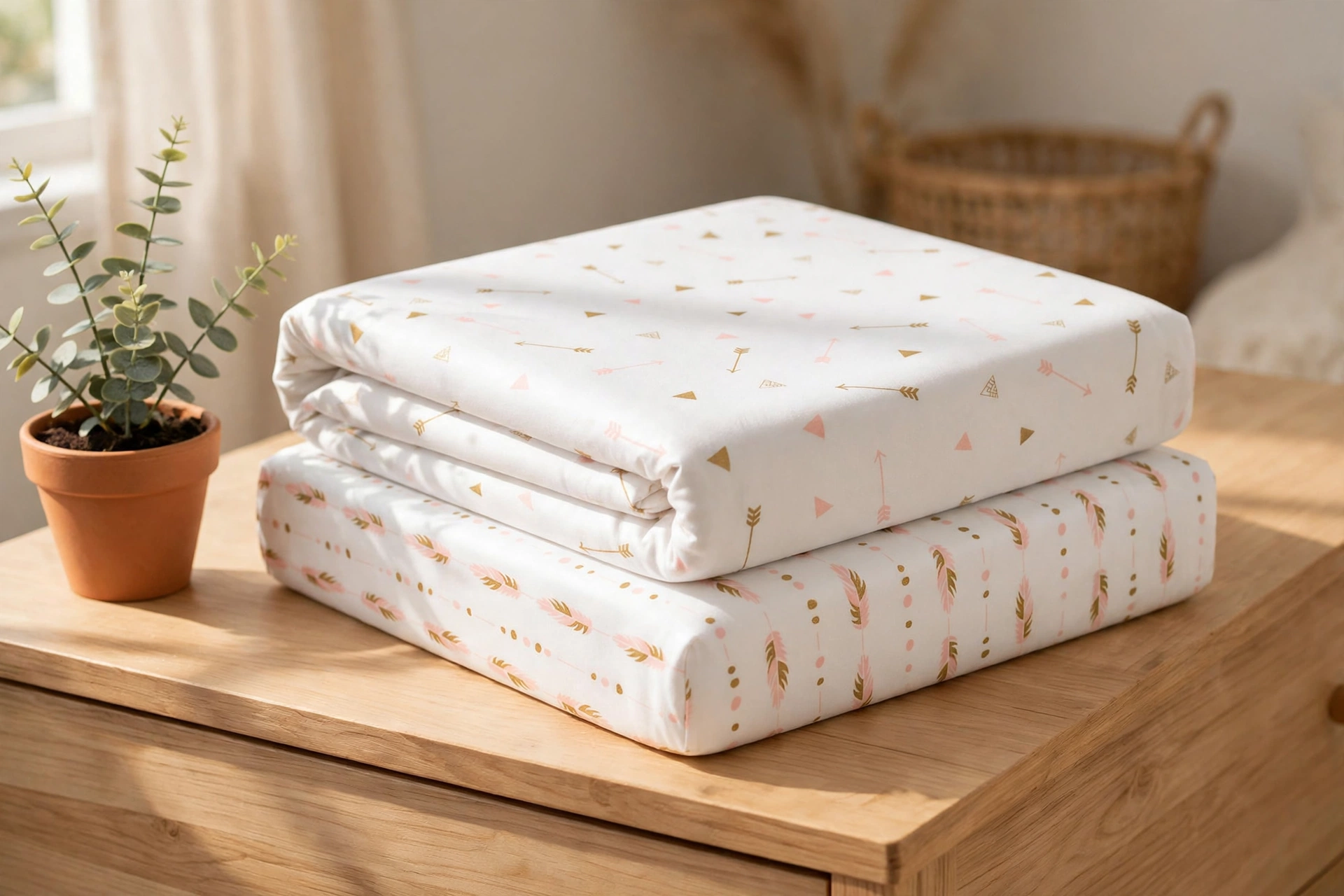
American Baby Company Mini Crib Sheets, 2-Pack
100 percent cotton fitted mini crib sheets, 38 by 24 inches, machine washable.
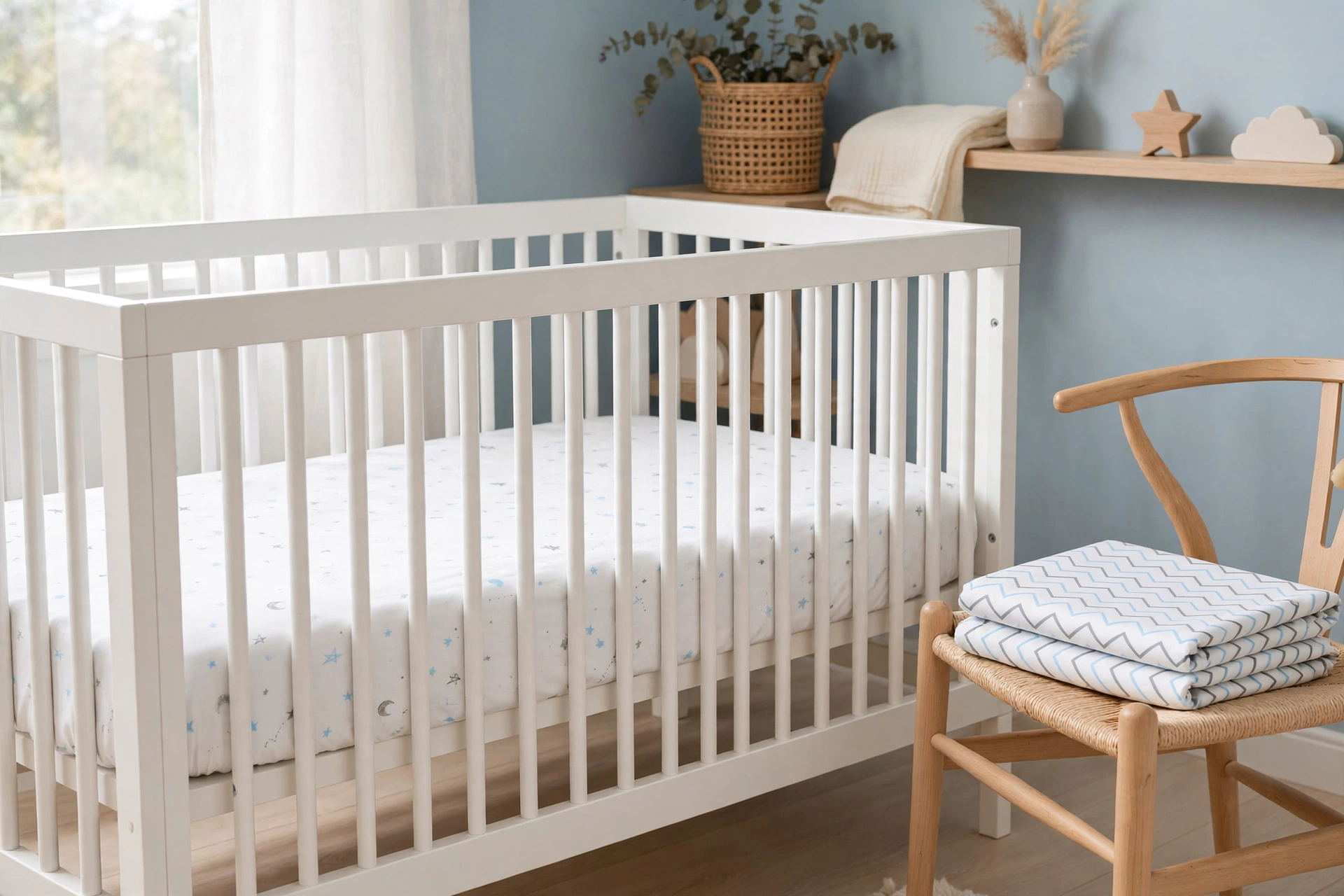
American Baby Company Crib Sheets, 2-Pack
100 percent cotton fitted crib sheets, 52 by 28 inches, machine washable.
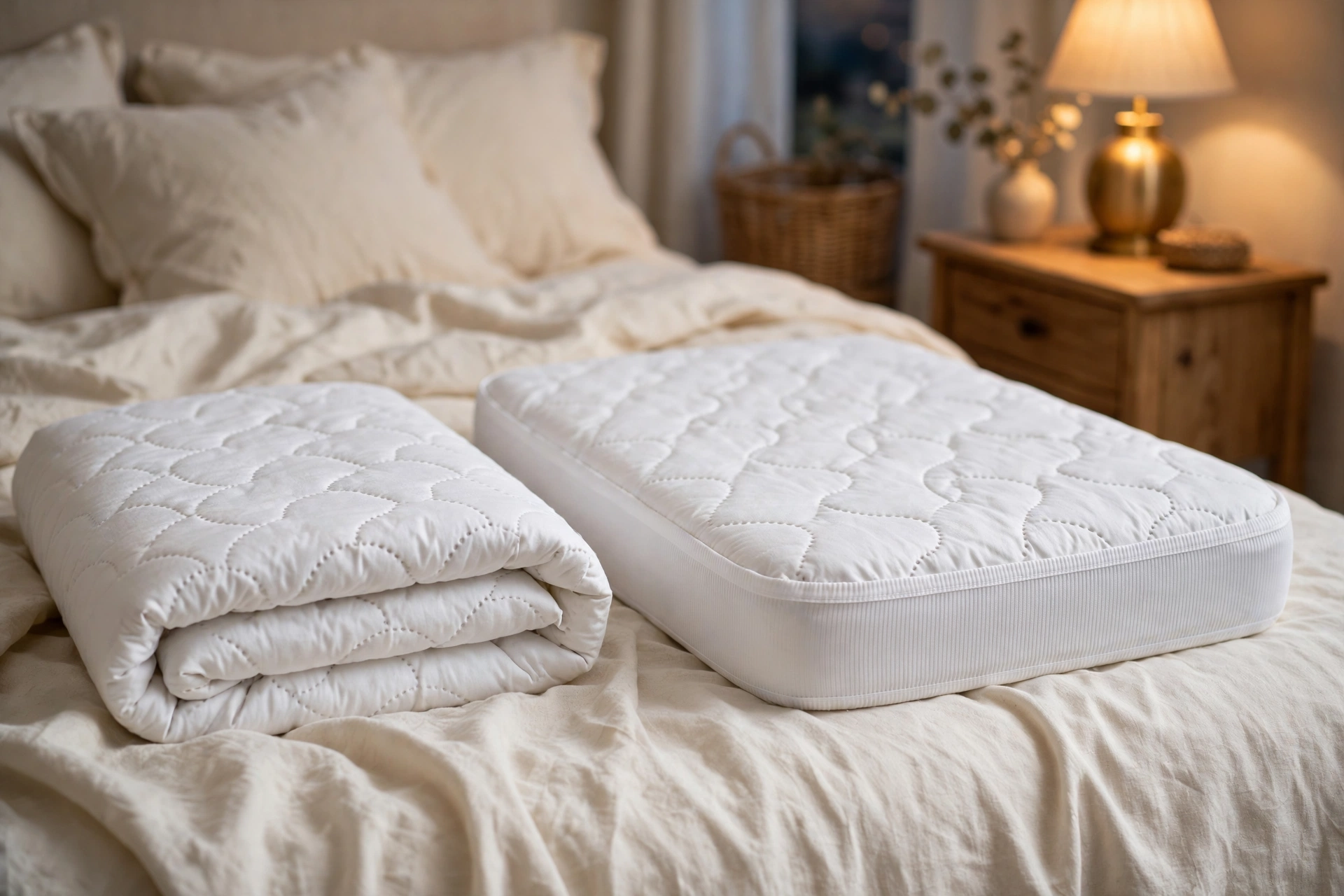
American Baby Company Waterproof Mini Crib Mattress Protector
Waterproof fitted mini crib mattress protector, 38 by 24 inches, quilted cotton top, machine washable.
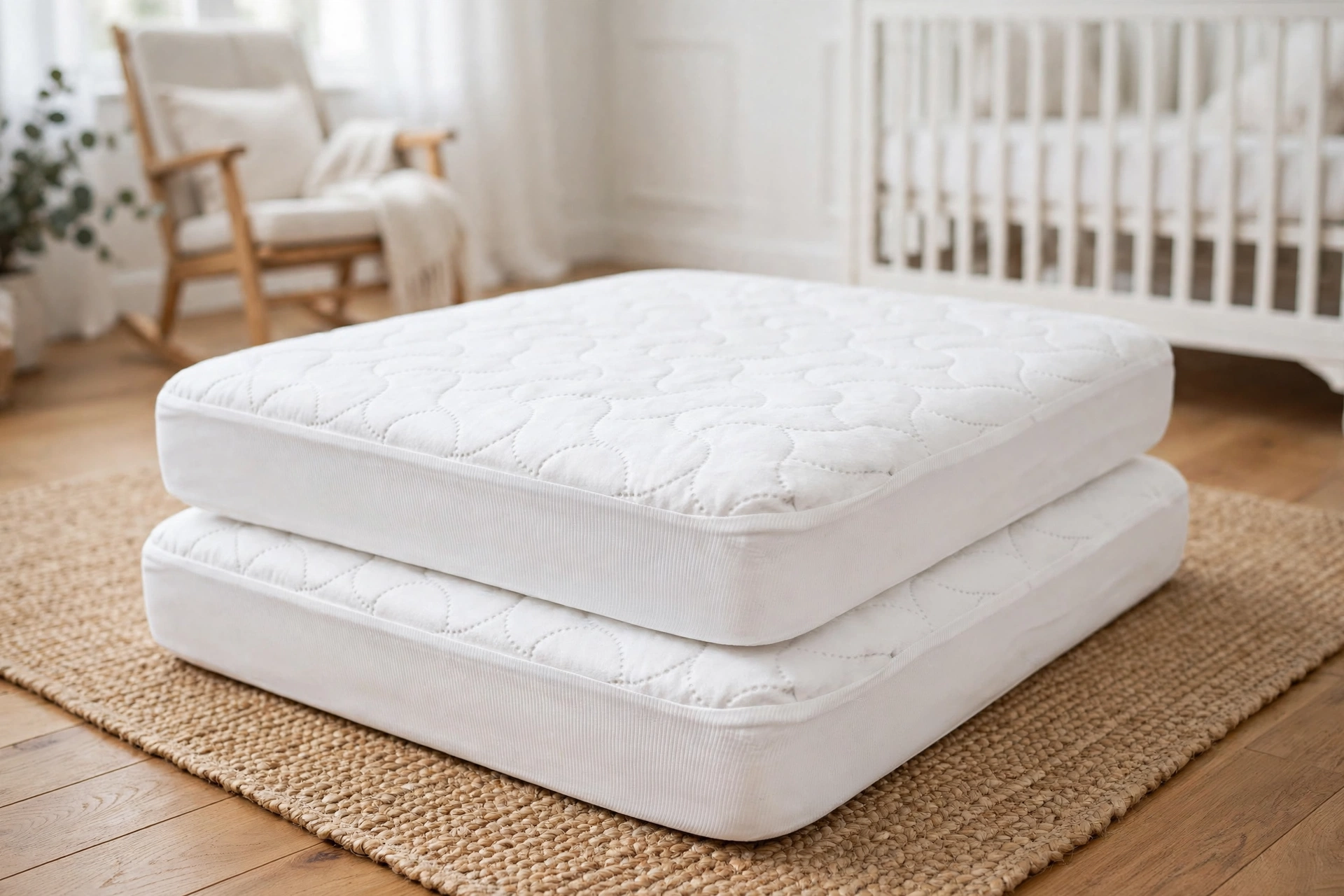
American Baby Company Waterproof Crib Mattress Protector
Waterproof fitted crib mattress protector, 52 by 28 inches, quilted and noiseless, machine washable.
7. Conversion options
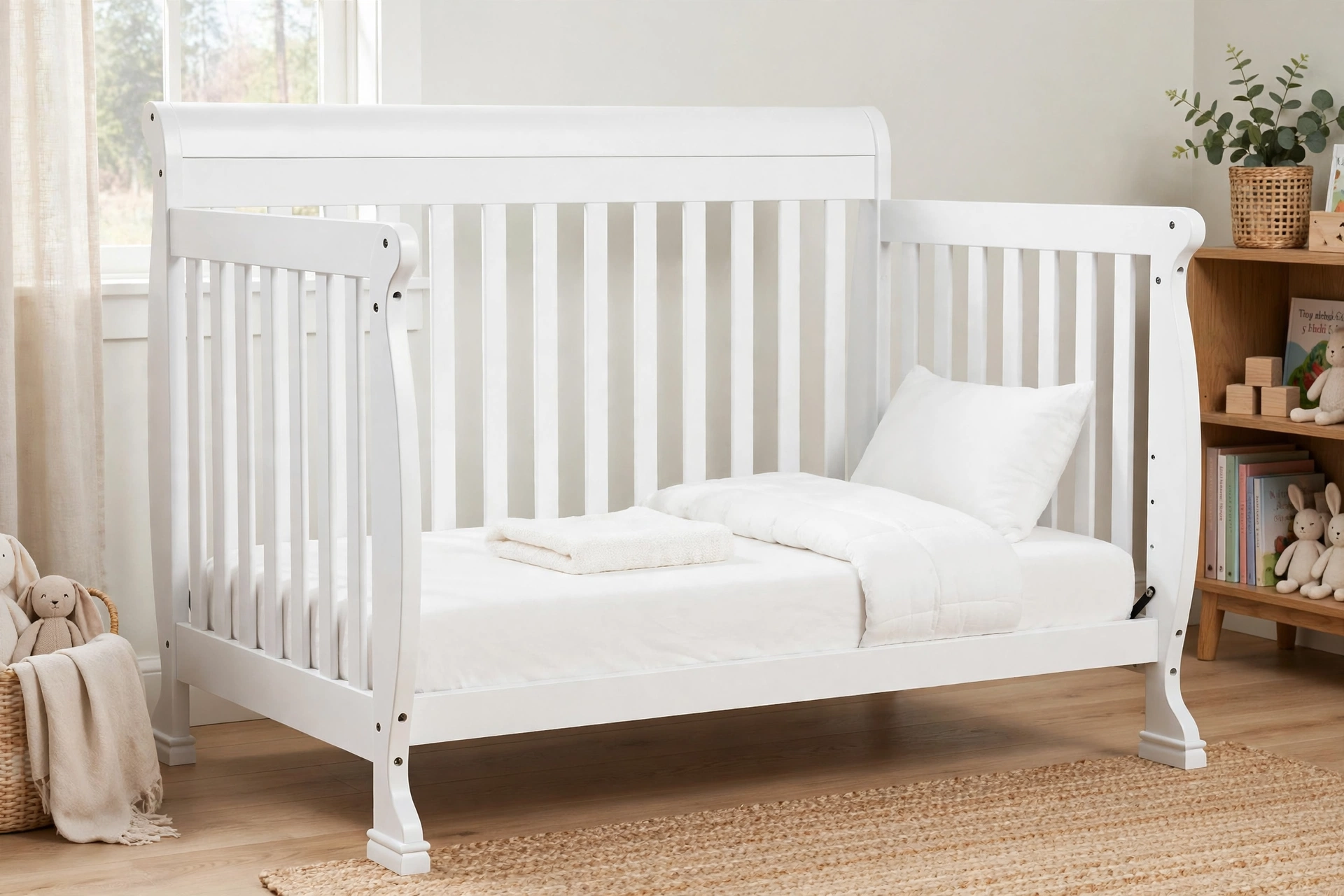
Conversion is where the regular crib earns its price. Most regular cribs are sold as 3-in-1 or 4-in-1 convertibles: crib, toddler bed, daybed, and sometimes a full-size bed. The toddler bed conversion usually needs only the rail in the box or a small kit, and it keeps the most familiar thing in your child’s life, the bed itself. Our second child’s crib became her toddler bed with one rail removed, and that familiarity made the switch far easier than starting over.
Some mini cribs convert too. The Aden above is a 4-in-1 that becomes a mini daybed and then a twin bed. But the conversion matters less on a mini crib, because the child usually outgrows the length before it is useful. A daybed that is too short is still too short. Check what is included before you buy: some cribs ship with the toddler rail in the box, and some sell it separately.
Babyletto Lolly 3-in-1 Convertible Crib
Greenguard Gold Certified convertible crib with 4 mattress heights and the toddler conversion kit included.
8. Safety standards

The two crib sizes live under two different safety rules. A regular crib is a full-size crib under the federal standard, which fixes its interior size at 28 by 52 and 3/8 inches and sets the rules for slats, rails, and mattress support. A mini crib is a non-full-size crib under a separate federal standard, which sets safety rules for its structure but does not fix one universal size. That is why mini crib sizes vary by brand.
Both standards agree on what keeps babies safe. Slats must be no more than 2 and 3/8 inches apart, so a baby’s head cannot fit through. There must be no drop side, no cutouts that could trap a head, and no missing or loose hardware. Check the CPSC recall list before you buy, and again if you accept a secondhand crib. A used crib is only safe if it meets the current standard, has all its parts, and has never been recalled. When in doubt, buy new, mattress included.
Which Crib Fits Your Life?

The right crib is the one that fits your room, your baby’s age, and your plans, in that order. A small apartment or a shared bedroom points to the mini crib, because it is the only size that fits and the wheels let you move it where the naps happen. A dedicated nursery with room to spare points to the regular convertible crib, because one purchase covers birth to age four.
Twins change the math in both directions. Two mini cribs can fit where two regular cribs cannot, and that alone settles it for many twin families. But twins outgrow mini cribs at the same time, so the second purchase comes twice over. If the room can hold two regular cribs, that is the calmer choice. For the grandparents’ house, a mini crib wins every time: it folds away between visits, it fits in the spare room, and it costs less for a bed used a few nights a month. For travel or a holiday home, the same logic holds.
Safe Sleep, Whichever Crib You Pick
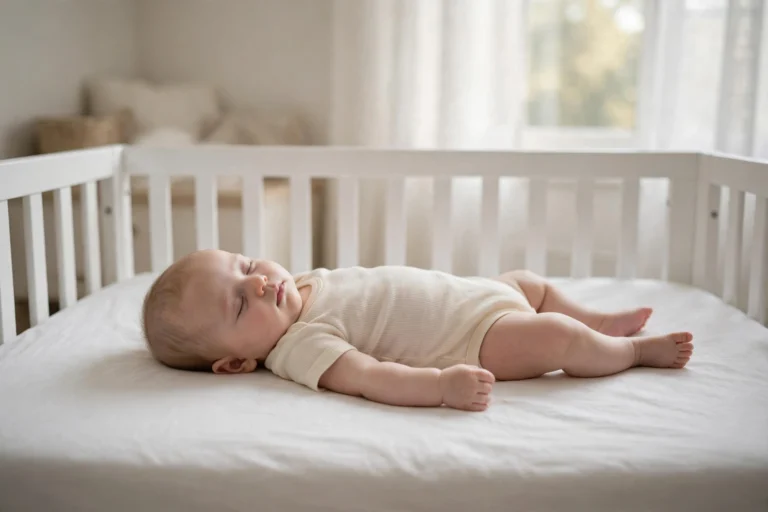
The crib you choose matters less than how you use it. The American Academy of Pediatrics safe-sleep rules are the same for both sizes: baby sleeps on their back, on a firm flat mattress, with only a fitted sheet, in a bare crib with no pillows, blankets, bumpers, or toys. Share the room for the first year if you can, but do not share the bed. Lower the mattress as your baby learns to sit, pull up, and stand. And move your child out of the crib, whichever size it is, as soon as they can climb out or reach 35 inches tall. A crib that cannot contain a climber is a fall waiting to happen.
Shop This Post
| Product | Used For | |
|---|---|---|
| Dream On Me Aden 4-in-1 Convertible Mini Crib | The mini crib (Difference 1) | (Check Price) |
| Dream On Me Sunset 3″ Mini Crib Mattress | Mini crib mattress (Difference 2) | (Check Price) |
| Sealy Baby Soybean 2-Stage Crib Mattress | Regular crib mattress (Difference 2) | (Check Price) |
| American Baby Company Mini Crib Sheets, 2-Pack | Mini crib bedding (Difference 6) | (Check Price) |
| American Baby Company Crib Sheets, 2-Pack | Regular crib bedding (Difference 6) | (Check Price) |
| American Baby Company Waterproof Mini Crib Mattress Protector | Mini mattress protection (Difference 6) | (Check Price) |
| American Baby Company Waterproof Crib Mattress Protector | Regular mattress protection (Difference 6) | (Check Price) |
| Babyletto Lolly 3-in-1 Convertible Crib | The regular crib (Difference 7) | (Check Price) |
Frequently Asked Questions
Can a newborn sleep in a mini crib? Yes. A mini crib is a safe sleep space from birth, as long as it meets the current safety standard and the mattress fits snugly with no gaps. What matters most is the safe-sleep rules you follow in it: back to sleep, firm flat mattress, fitted sheet only, bare crib.
Is a mini crib as safe as a regular crib? Yes, when it meets the safety standard for its size. Regular cribs follow the full-size crib standard, which fixes their dimensions by law. Mini cribs follow the non-full-size crib standard, which tests their structure without fixing one universal size. Either crib is safe when the slats are close, the mattress fits, and it has never been recalled. Check the CPSC recall list before you buy.
Can you use a regular crib mattress in a mini crib? No. A regular crib mattress is 52 by 28 inches, and a mini crib takes a mattress around 38 by 24 inches. The bigger mattress will not fit, and forcing it in bends it so it will not lie flat. Buy the mattress that matches your crib’s exact dimensions, and test the fit with the two-finger rule. If more than two fingers fit, the mattress is too small and must be replaced.
Do mini cribs need special sheets? Yes. Mini crib sheets are made for the smaller 38 by 24 inch mattress. The choice of prints is smaller, so buy at least two sets in the right size, plus a waterproof fitted protector that matches. A loose or bunched sheet is a safety risk, so the sheet must fit snugly, with elastic all the way around.
When should I switch from a mini crib to a regular crib? Switch when your baby reaches 35 inches tall, can climb out, or reaches the weight limit in your crib’s manual, whichever comes first. For most babies that happens between 18 and 24 months, but tall babies can get there sooner. Do not wait for a fall to decide. If your baby is still sleeping well and safely in the mini crib, there is no rush, but start shopping for the next bed as soon as the signs show up.
Is a mini crib the same as a pack n play? No, though they are often confused. A pack n play is around 28 by 40 inches, with mesh sides and a folding frame, built for travel and play as well as sleep. A mini crib is a wooden crib with rigid sides and a real crib mattress, built as a smaller permanent sleep space. A pack n play is the better travel bed, and a mini crib is the better everyday bed.
The Short Version
A mini crib is smaller, lighter, cheaper, and shorter-lived. A regular crib is bigger, sturdier, convertible, and longer-lived. Measure your room, count the total cost including the next bed, check the safety standard and the mattress fit, and pick the crib your family can live with. Either one is a safe bed when you follow the safe-sleep rules.