10 Sneaky Baby Sleep Training Mistakes to Avoid for Calmer Nights

Sleep training mistakes are almost invisible while you are making them. You rock a little longer, skip the routine one night, answer the 2 a.m. wake differently than last night, and a week later everyone is more tired than when you started. I have made most of them myself, across two babies and two very different newborn seasons.
These 10 baby sleep training mistakes are the ones that quietly stall progress, from starting at the wrong time to forgetting the safe-sleep basics while chasing a method. Each one comes with a fix you can start tonight. None of them requires buying anything, and none of them asks you to let a tiny baby cry alone.
This post contains affiliate links. If you buy through them, I may earn a small commission at no extra cost to you, which helps keep these guides free.
If you are new to the subject, start with our Baby Sleep Guide first. It covers the safe-sleep rules and how baby sleep actually works, and everything below builds on it.
Quick Picks: Find Your Mistake Fast
| If this sounds like your house… | Start with |
|---|---|
| Started too early, or waited too long | Mistake 1: timing |
| Bedtime looks different every night | Mistake 2: the routine |
| Your baby is wired and cranky by 7 p.m. | Mistake 3: sleepy cues |
| Nothing works unless you rock or feed baby fully to sleep | Mistake 4: the crutch |
| The room is bright, noisy, or too warm | Mistake 5: the room |
| Night wakings get a different answer every night | Mistake 6: consistency |
| You have switched methods three times this week | Mistake 7: quitting too soon |
| Nights are rough and naps are chaos too | Mistake 8: daytime rhythm |
| You started training right as teething or a cold hit | Mistake 9: bad timing |
| The method works but the setup is not safe | Mistake 10: safe sleep |
Before the First Night
1. Starting too early, or waiting too long. Most pediatric guidance points to around 4 to 6 months as the window when sleep training starts to make sense. Before that, a baby’s sleep is still mostly reflex and hunger, and no method can teach a skill the brain has not grown into yet. Wait much past that, and those habits have had months to set, which makes the change slower and louder. The fix is simple: watch for readiness instead of watching the calendar. Longer stretches of night sleep, steadier weight gain, a baby who can settle with brief reassurance, and a predictable nap pattern are the signs. If you are unsure, ask your pediatrician, and if a method is not working after a week or two of fair effort, pause and try again in a few weeks. A baby who is not ready is not a baby who is failing.
2. Skipping the bedtime routine, or changing it nightly. A routine is not a luxury extra. It is the cue that tells your baby sleep is coming, the same way the smell of coffee tells you the morning has started. Without it, bedtime is a surprise every night, and surprised babies do not settle. The fix is a short, boring, repeatable sequence: feed, warm bath or wipe-down, pajamas and sleep sack, one short book, lights out, about 20 to 30 minutes total, in the same order every night. Ours ends with one book, and the book that has survived both of my kids is Goodnight Moon, short enough to finish before anyone gets restless, and familiar enough that my 4-year-old now says the lines along with me. Keep it small enough to pack.
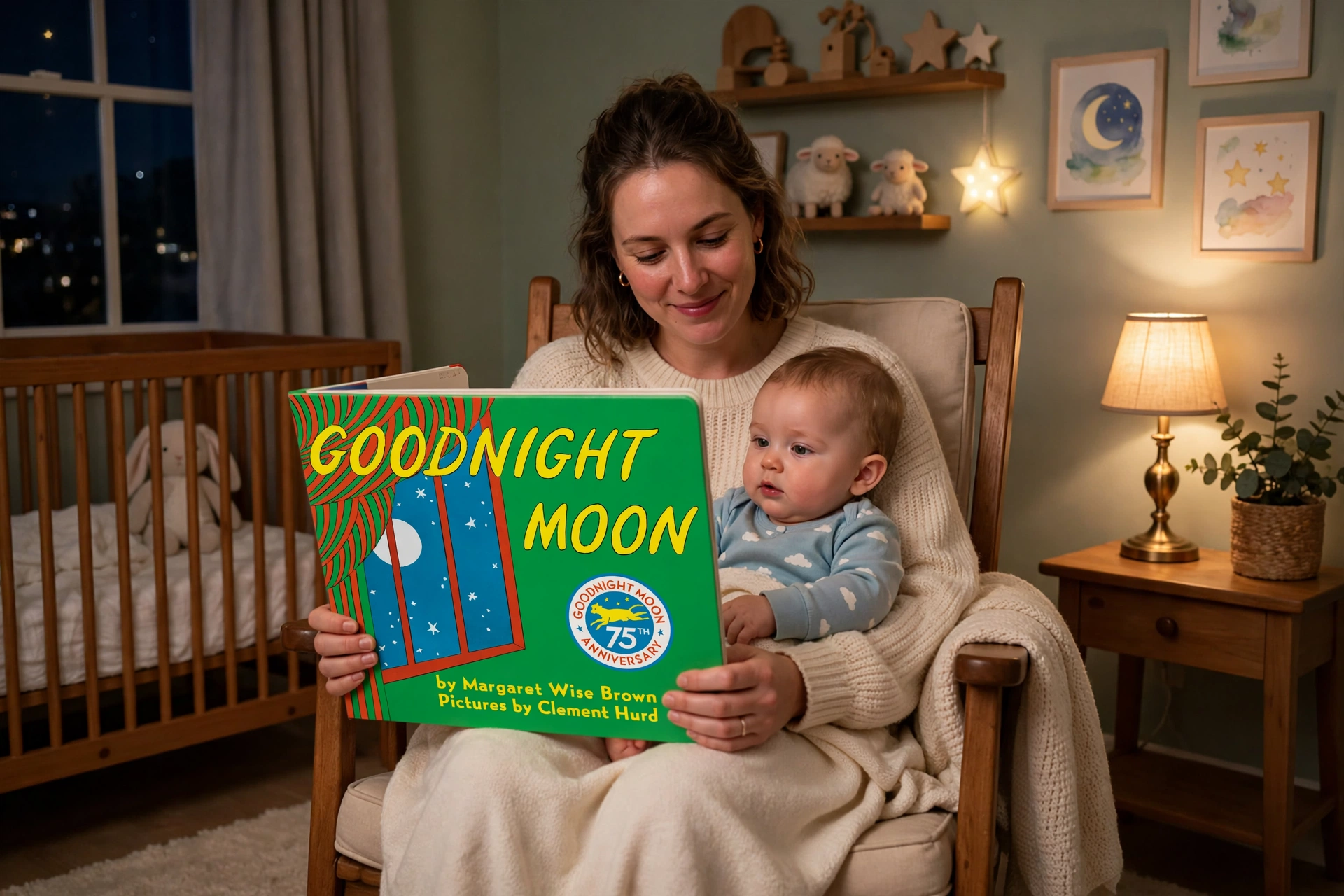
Goodnight Moon (Board Book)
The classic goodnight book, short enough to finish before anyone gets restless.
At Bedtime
3. Missing the sleepy cues, then fighting an overtired baby. Early cues are quiet: staring into space, slower movements, losing interest in a toy, a first soft yawn. Those are your ten-minute warning. Late cues, fussing, arching, eye-rubbing, full crying, mean the window has already closed, and an overtired baby fights sleep with everything she has. Most “she just will not nap” battles are really “we started twenty minutes too late” battles. The fix is to watch the clock less and the baby more. Learn your baby’s first two cues, and start the wind-down the moment you see one. A baby put down ten minutes early settles faster than one put down ten minutes late.

4. Rocking or feeding baby all the way to sleep, every single time. Rocking and feeding are lovely, not the enemy. The mistake is when they are the only way sleep ever starts, so a baby who wakes between sleep cycles at 1 a.m. has no idea how to get back to sleep without them. The fix is not to stop comforting your baby. It is to move the comfort earlier in the routine and let the last step happen in the crib: feed or rock, then put baby down drowsy but awake, even if it only works once a day at first. A sleep sack helps here, because it becomes part of the cue. My go-to was the HALO SleepSack Swaddle: its wings adjust three ways, arms in, one arm out, or both out, and the inverted zipper opens from the bottom for diaper changes. Stop swaddling at the first sign of rolling, and switch to a regular wearable blanket after that. One practice rep a day is enough.
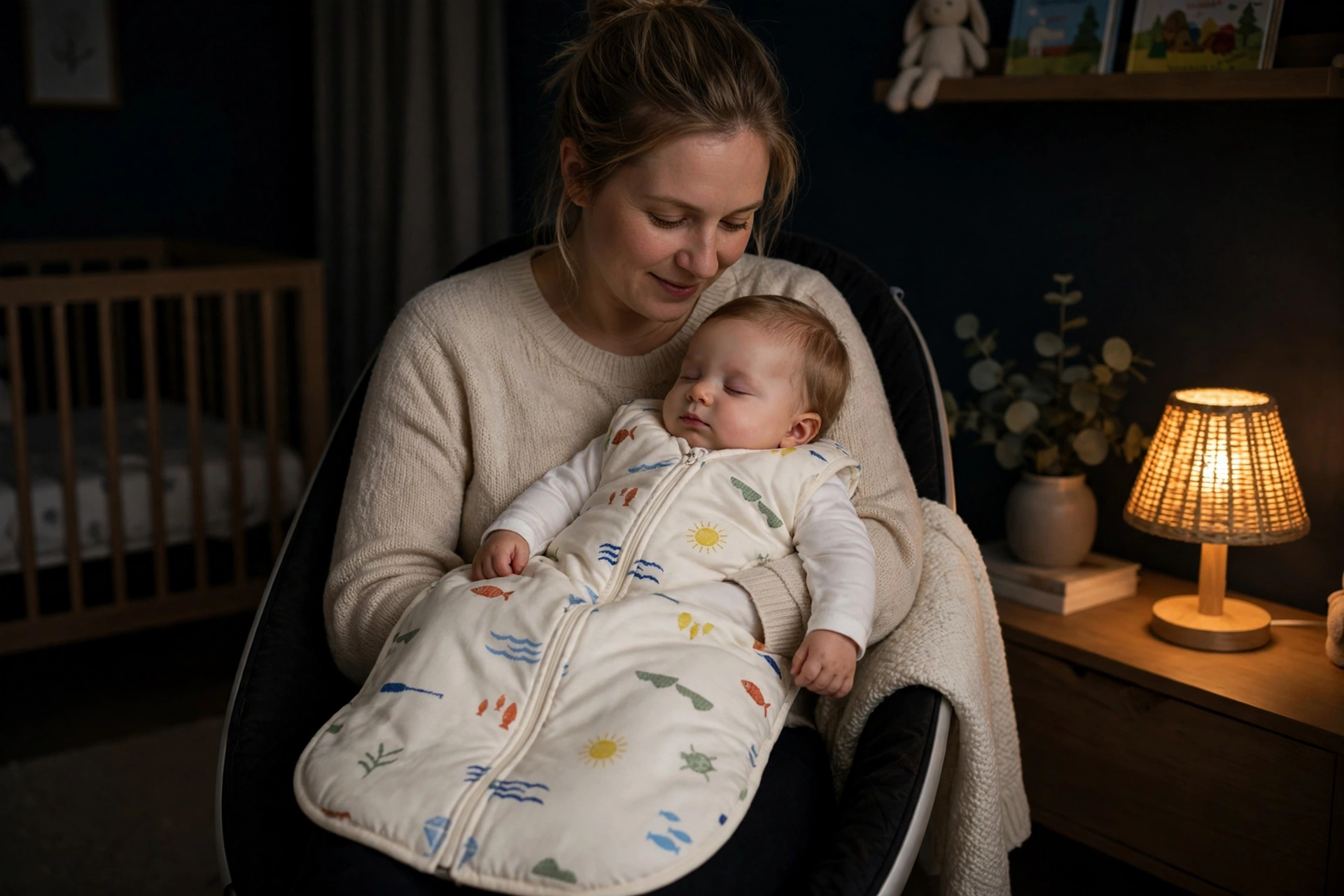
HALO SleepSack Swaddle, Cotton (1.5 TOG)
HALO’s 3-way adjustable cotton swaddle: arms in, one arm out, or both arms out. The original wearable blanket, with an inverted zipper for easy diaper changes.
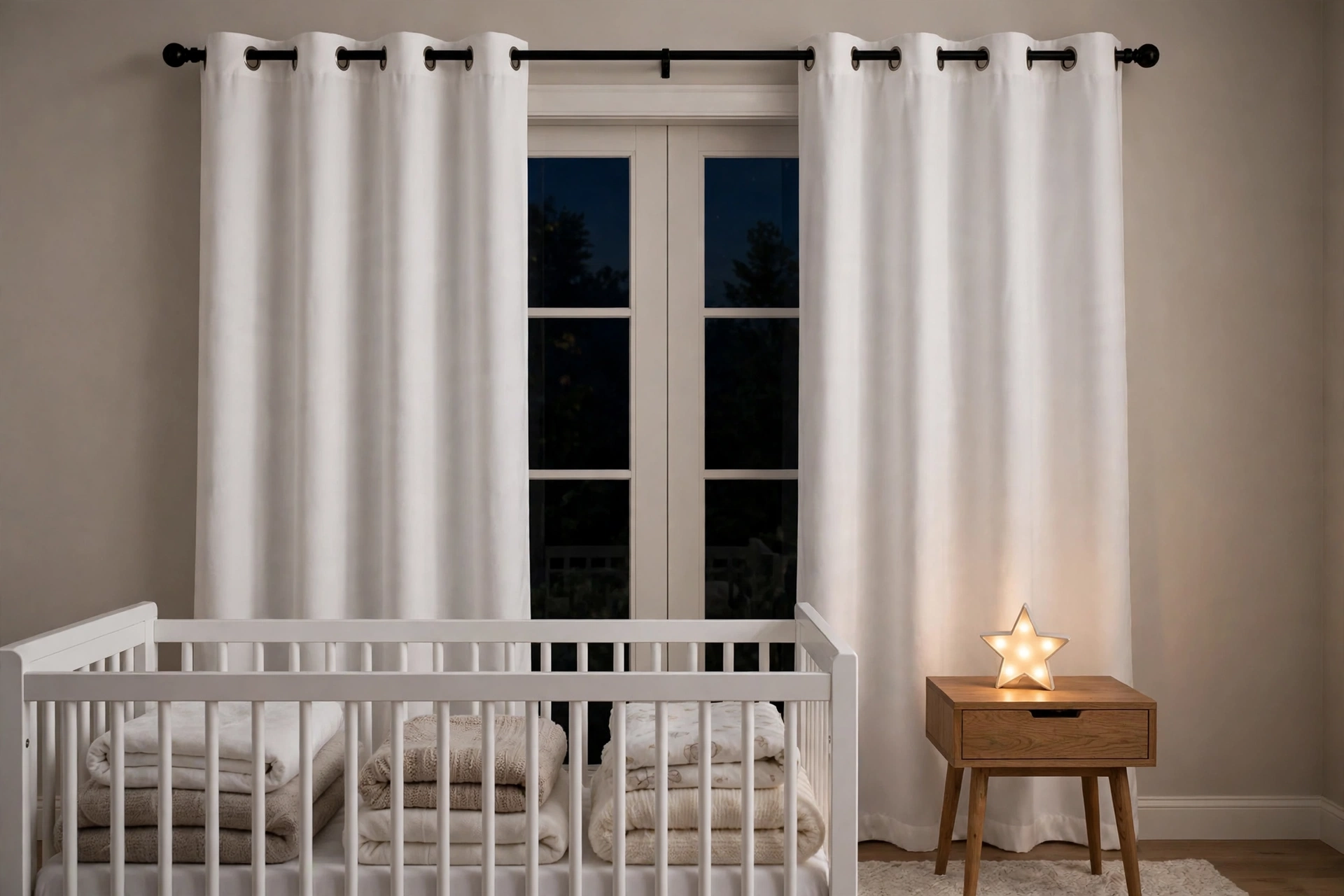
5. Letting the room fight sleep. Light, noise, and temperature are doing quiet work against you if the room is bright, the hallway TV is audible, or the room runs hot. Babies read their environment the way we read a clock, and a bright warm room says daytime. The fix has three parts: true darkness, steady background sound, and a cool room. Blackout curtains make the biggest difference for naps and early bedtimes, and the NICETOWN set is the one I reach for, because its sewn-in black liner actually blocks light instead of just dimming it. For sound, a real-fan machine beats a looping recording, and the Yogasleep Dohm is the machine I landed on, with a real fan inside, so there is no electronic loop your brain starts hearing at 2 a.m., and tone and volume adjust by twisting the cap. Keep the volume modest and across the room, not in the crib, and aim for roughly 68 to 72 degrees. A dark, cool, steadily humming room is doing half the training for you.

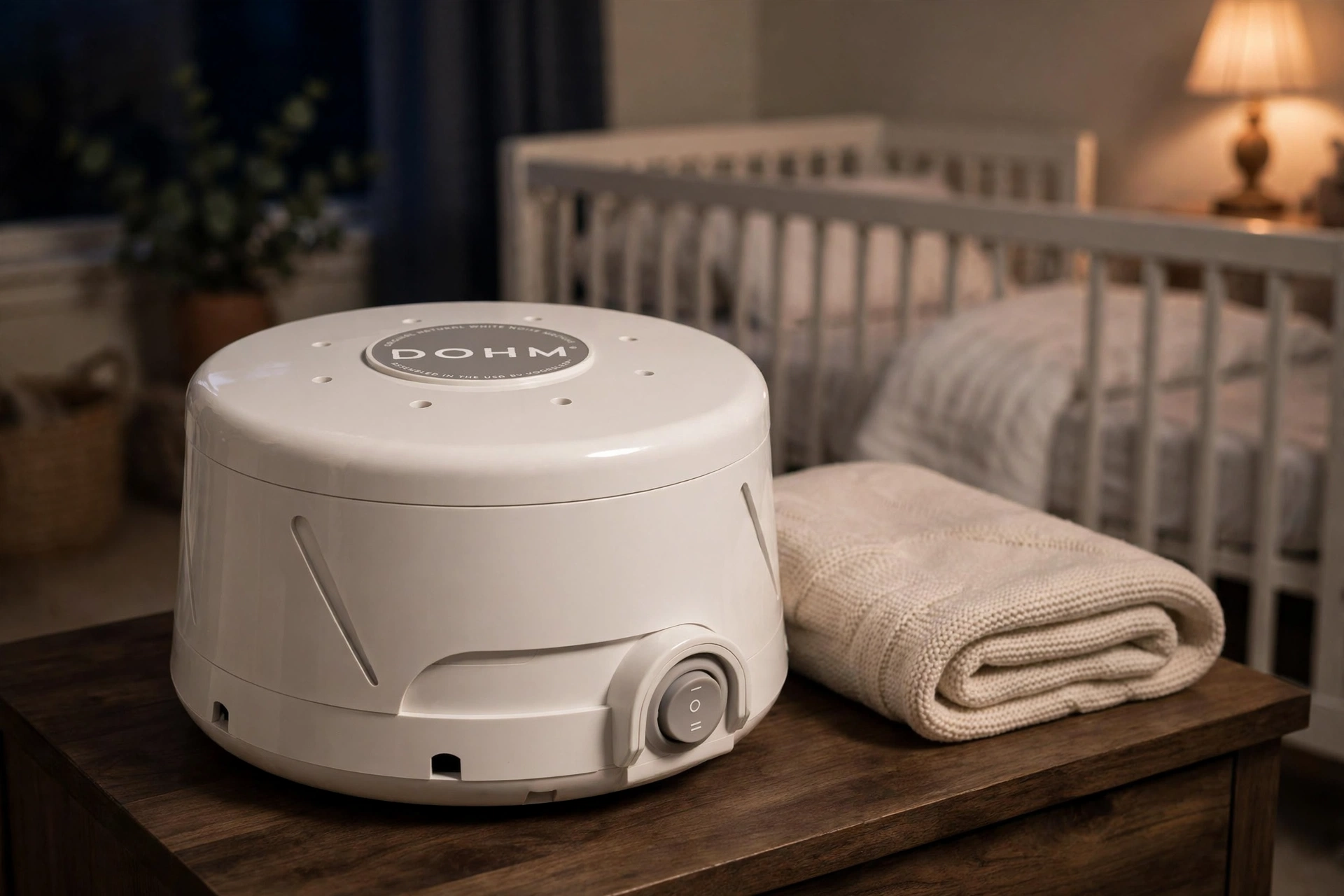
Yogasleep Dohm Classic White Noise Machine (White/Gray)
Yogasleep’s original white noise machine: soothing, natural sound from a real fan, with two speeds and adjustable tone and volume.
Through the Night
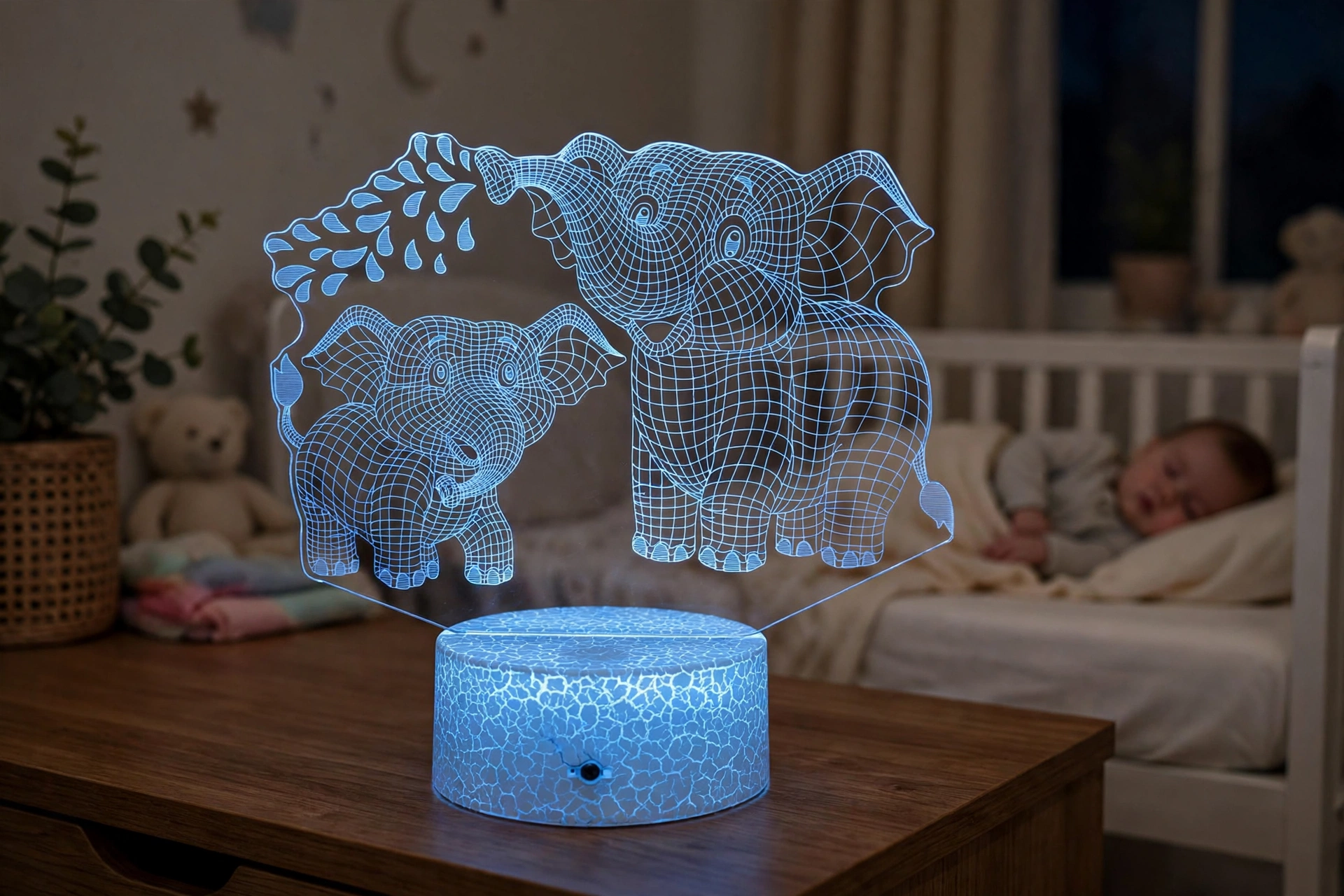
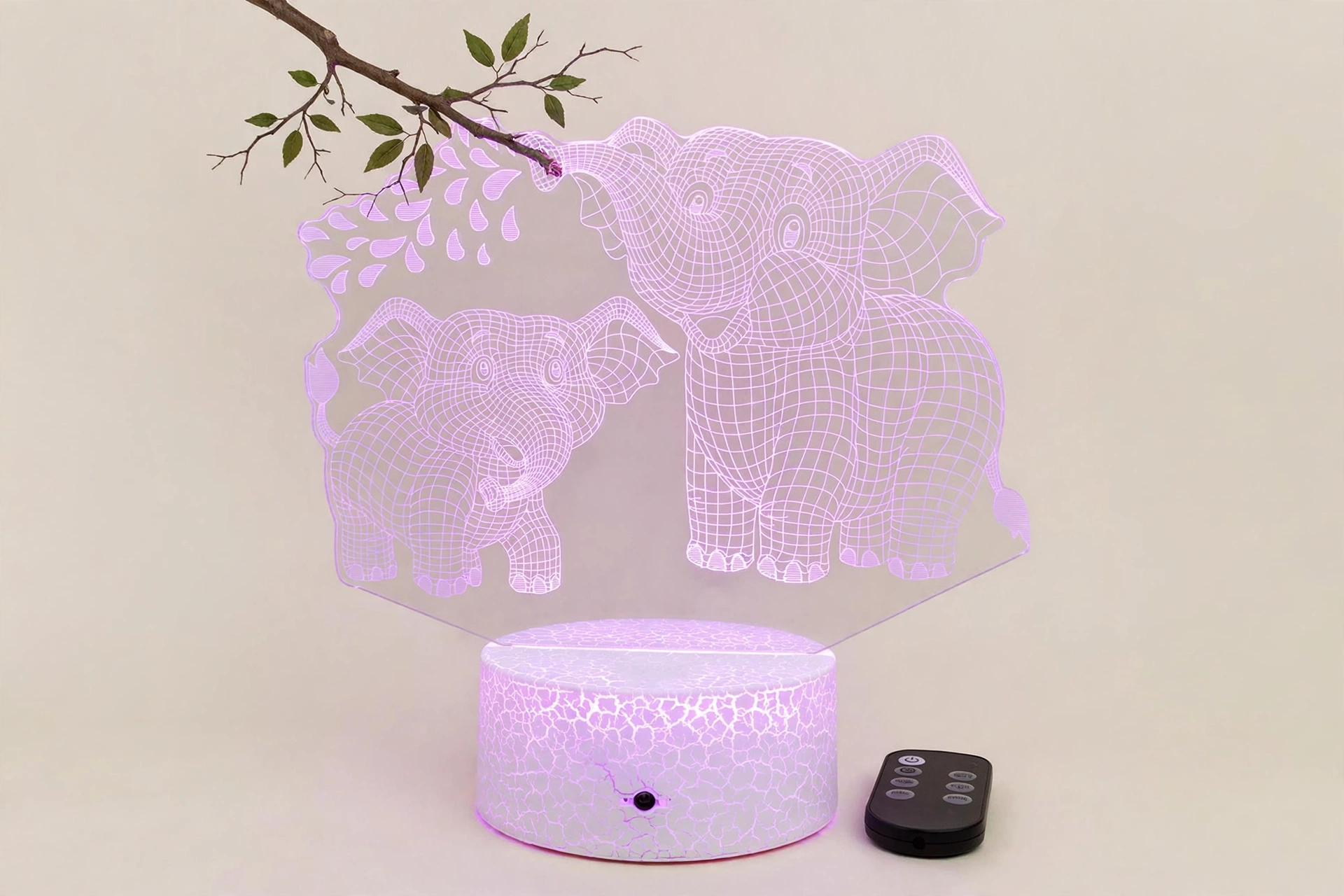
6. Answering night wakings a different way every night. Pat on Monday, rock on Tuesday, feed on Wednesday, and by Friday your baby has learned exactly one thing: crying longer changes the answer. Inconsistency is the single most common reason sleep training stalls, because babies learn patterns, and a changing pattern teaches them to keep testing. The fix is to pick one response plan and hold it for a full week: brief check-ins at set intervals, or a short pat and a few soothing words, then leave so baby practices the last step of falling asleep. Keep the checks dim and quiet. The Elephant 3D Night Light gives a soft glow you can see by without switching on a real lamp, and its color-changing light and remote mean you never have to cross a dark room to adjust it. Keep the sound machine the same every night too. The Hatch Rest 2nd Gen helps here, with 18-plus sounds, a night light, and a routine builder that keep the cues identical night after night. One plan, one week, then judge it.
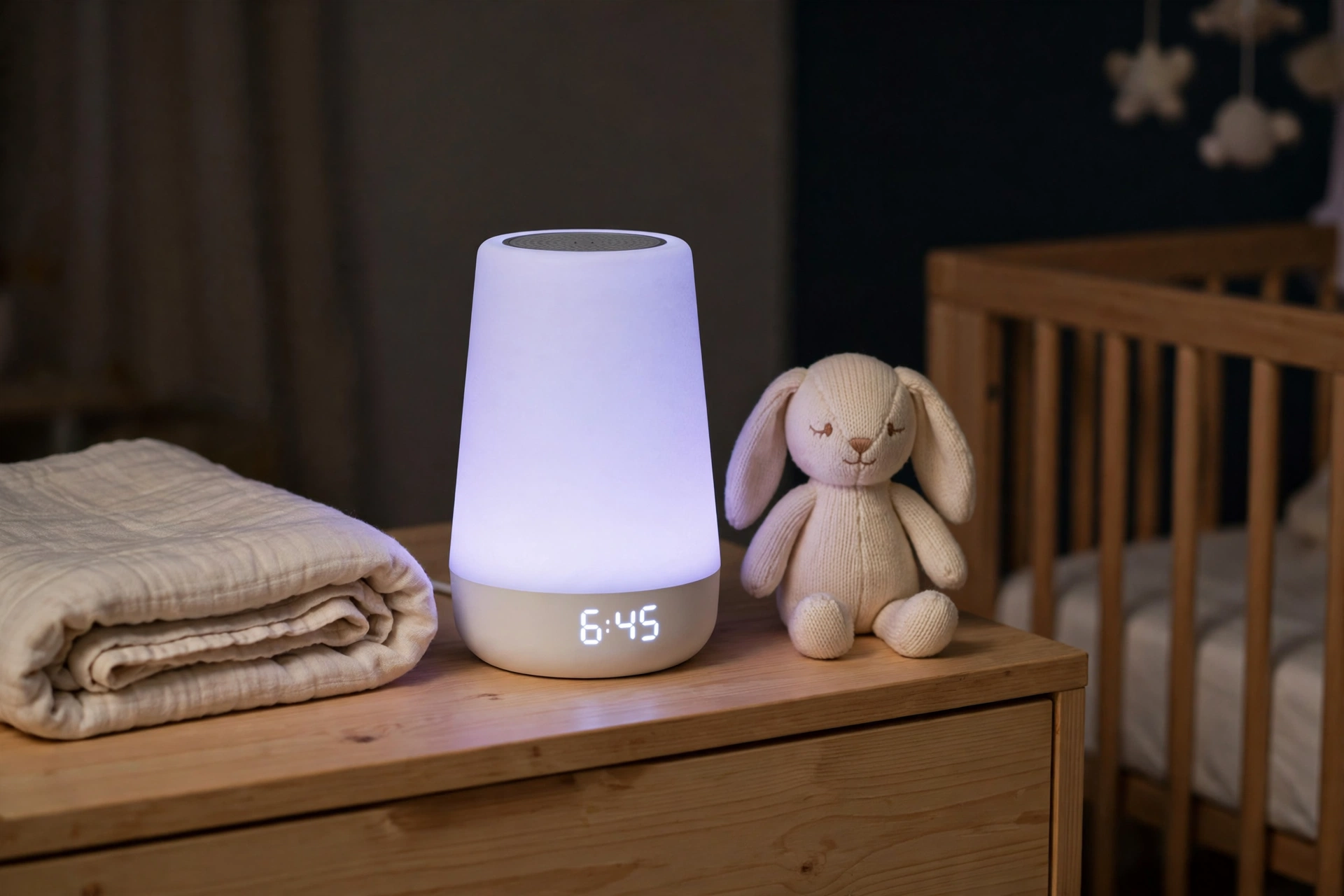
Hatch Rest 2nd Gen Sound Machine and Night Light
Time-to-Rise light, 18+ sounds, night light.
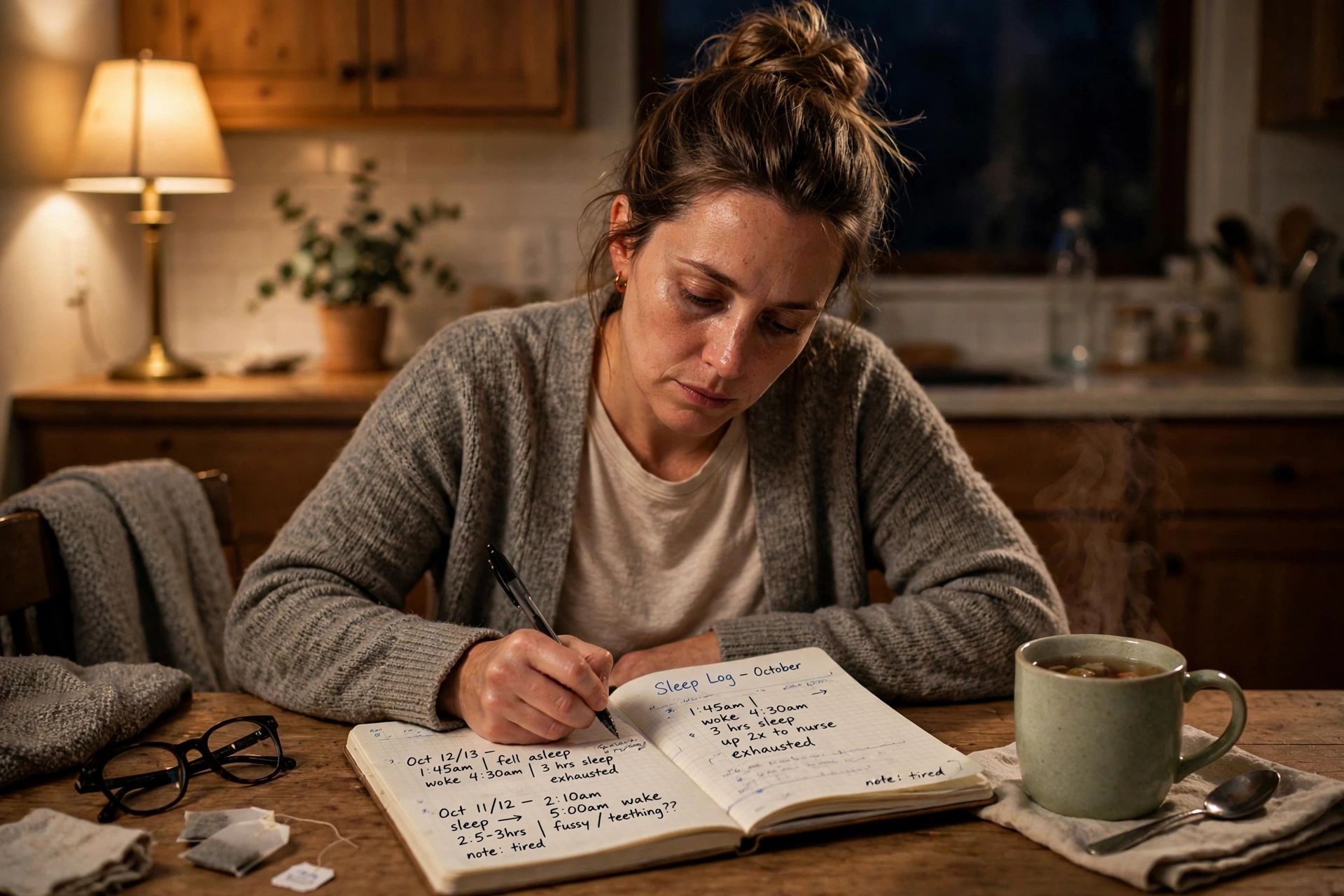
7. Quitting after two hard nights, or switching methods midweek. Sleep training is not a two-night project. Most babies need several nights to link the new cues, and the first two nights are usually the hardest, which is exactly when tired parents are most tempted to declare the method a failure and try a different one. Switching methods midweek is worse, because now the baby is learning two plans at once. The fix is a deal you make with yourself before night one: one method, seven nights, no changes, and a simple log of bedtime, wake-ups, and how long each took. Write it down, because tired brains lie about how bad last night was. If there is no improvement at all after a full week, then change one thing, not everything, and give that one thing another week. Progress usually looks like shorter wake-ups and an earlier bedtime, not a perfect night. If the method itself is the question, our guide to sleep expert approved techniques for sleep training toddlers lays out the gentler-to-firmer range.
The Longer Game
8. Ignoring naps and wake windows. Night sleep does not live alone. A baby who naps badly all day arrives at bedtime either overtired or under-tired, and both versions fight sleep. The fix is to anchor the day: wake windows that grow with age, roughly 35 to 60 minutes in the first month, 1 to 1.5 hours around 2 months, 1.5 to 2 hours at 3 to 4 months, about 2 to 2.5 hours at 4 to 6 months, 2.5 to 3.5 hours at 6 to 9 months, and 3 to 4 hours by 9 to 12 months. One crib nap a day, even a short one, builds the association. And the wake window is a guide, not a jail sentence: if the cues from Mistake 3 show up early, the window is over. Fix the days and the nights get easier, usually within a week.

9. Training through a cold, teething, or a big change. Sleep training will not fix a medical problem, and it will not survive a bad week. A baby with an ear infection, reflux flare, or a tooth cutting through is not being difficult, she is uncomfortable, and learning a new skill while she hurts is asking too much. The same goes for travel, a move, a new caregiver, or the 4-month sleep regression, when baby sleep architecture permanently changes and a baby who was sleeping well starts surfacing between every cycle for a few weeks. The fix is to pause without guilt: treat the illness or the change first, keep the routine boring and consistent, and restart when the house is calm again. If snoring, labored breathing, chronic congestion, or unusual restlessness shows up, talk with your pediatrician before you train at all. Our survival guide to the 4 month sleep regression has the week-by-week version, and the rule is the same: regressions pass faster when you do not fight them.

10. Forgetting the safe-sleep basics while chasing a method. This is the mistake that matters most, and the one no method can excuse. A sleep plan built on an unsafe setup is not a plan, it is a risk. The American Academy of Pediatrics basics are the floor every sleep setup stands on: baby on the back for every sleep until the first birthday, a firm flat surface with a fitted sheet, an empty crib with no pillows, loose blankets, bumpers, stuffed animals, or sleep positioners, and room-sharing without bed-sharing, ideally for at least the first six months. Weighted sleep sacks, swaddles, and blankets are not recommended for babies, so skip anything whose selling point is weight on a baby’s chest. Falling asleep with a baby on a sofa or armchair is the most dangerous spot of all. A pacifier at naps and bedtime, once feeding is established, is linked to lower SIDS risk, so if your baby already uses one, keep offering it. Check the setup before you check the method: the best-trained sleeper still needs a safe crib to sleep in.

If You Have Already Made One (or All Ten)
Good news: every mistake on this list is fixable, and most of them are fixed by doing less, not more. Pick the one that matches your worst night, fix only that one for a week, and leave the rest alone. Sleep training is a slow skill built in small steps, and the parents who get there are the ones who changed one thing at a time and waited long enough to see it work. You are not behind, and your baby is not broken. You are just tired, and tired parents deserve a plan that is simple enough to follow at 2 a.m.
Want the fixes in one place? We are putting together a Sleep Training Mistakes Fix-It Pack: a workbook with a 7-night tracking log, a routine-builder card, and 10 extra scenario fixes for teething, travel, regressions, and partner handoffs. There is no buy link yet, so nothing here is for sale today. When the pack is ready, it will be linked right here.
Shop This Post
| Product | Used For | ||
|---|---|---|---|
|
Goodnight Moon (Board Book) | The one short book in the routine (Mistake 2) | Check Price |
|
HALO SleepSack Swaddle, Cotton (1.5 TOG) | The swaddle-to-sleep-sack transition (Mistake 4) | Check Price |
|
Yogasleep Dohm Classic White Noise Machine | Real-fan white noise, all night long (Mistake 5) | Check Price |
|
NICETOWN Blackout Curtains, Set of 2 | True darkness for naps and bedtime (Mistake 5) | Check Price |
|
Elephant 3D Night Light | Dim light for night checks (Mistake 6) | Check Price |
|
Hatch Rest 2nd Gen Sound Machine | Same sound and light cues every night (Mistake 6) | Check Price |
Frequently Asked Questions
When should I start sleep training?
Most pediatric guidance points to around 4 to 6 months, when babies start showing readiness signs like longer night stretches and the ability to settle with brief reassurance. Before 4 months, most babies are not developmentally ready. If you are unsure, ask your pediatrician.
Is sleep training the same as letting my baby cry it out?
No. “Sleep training” is a family of methods that runs from gentler approaches, like gradual fading and spaced check-ins, to firmer ones. What they share is a consistent plan and a baby who is old enough for it. No method in this guide asks you to leave a tiny baby to cry alone, and if a method ever feels wrong for your baby, pause and talk to your pediatrician.
How long does sleep training take to work?
Give any one method a full week before you judge it. Most families see the first real improvement, shorter wake-ups and an earlier bedtime, within three to seven nights, and steadier nights over the next two to three weeks. If nothing has changed after a full week, change one thing and give that another week.
What if my baby was sleeping well and suddenly is not?
That is usually a regression, teething, illness, or a big change, not a failure of your training. Keep the routine boring and consistent, treat the cause first, and restart the training push when the house is calm again.
Is white noise safe for babies?
Used sensibly, yes. Keep the volume modest, place the machine across the room rather than in or on the crib, and run it continuously rather than cycling it on and off. The fan-based Dohm in Mistake 5 makes the modest-volume part easy to judge by ear.
You Are Not Doing It Wrong
Two babies taught me this: babies learn to sleep the way they learn everything, unevenly and on their own timeline. Your job is smaller than the internet makes it sound. Keep the sleep space safe, offer the routine, watch your baby, and protect your own rest. The long stretches come. In the meantime, the coffee is hot, the baby is safe, and you are doing fine.
When your night owl becomes a toddler with opinions, our Toddler Parenting Tips guide is the next stop.