
How to Get Baby to Sleep in Crib Through the Night: 14 Gentle Tips for Longer Stretches and Calmer Nights

She is fast asleep in your arms, warm and heavy, breathing slow. You lower her into the crib, inch by inch, and the second her back touches the mattress her eyes fly open. If that scene plays in your house every night, you are not doing anything wrong. She is learning a skill she has never practiced, in a place that still feels strange to her.
Getting a baby to sleep in the crib through the night is not one trick. It is small things that add up: a familiar crib, a dark and steady room, the same routine every night, and boring answers to 2 a.m. wakings. Most babies need a week or two of steady practice first.
These 14 gentle tips are the sequence that worked in our house, with a 4-year-old and a 2-year-old, from the first crib nap to the night she finally slept a six-hour stretch. Our Baby Sleep Guide has the safe-sleep basics. Nothing here asks you to let your baby cry alone. Pick one tip, try it tonight, and keep it steady for a week.
Heads up: this post contains affiliate links. If you buy through them, MamaKinder may earn a small commission at no extra cost to you. It helps keep these guides free.
Why She Wakes at 2 A.M. (And Why It Is Normal)
Babies do not sleep the way adults do. Their sleep cycles last about 45 minutes, and between cycles they partly wake. Adults roll over and fall back asleep without thinking. Your baby has not learned that part yet, so she calls for you instead. The waking itself is not the problem. The problem is what she needs to fall back asleep, and whether the crib is part of that picture.
If she always falls asleep in your arms, in the rocking chair, or at the breast, then the crib is where she wakes up, not where she falls asleep. These tips change that association slowly: first the crib becomes familiar, then it becomes the place sleep happens, and finally the place she returns to sleep on her own.
What “Through the Night” Really Means at Each Age
“Sleeping through the night” means something different at every age, and expecting the wrong version is how parents end up feeling like failures. A newborn who sleeps four hours is doing beautifully. A six-month-old who sleeps six hours has made real progress. Use the table as a rough guide, not a deadline: illness, teething, and growth spurts can break a good stretch for a week or two.
| Age | What a long stretch usually looks like | What is still normal |
|---|---|---|
| 0 to 3 months | 2 to 4 hours between feeds | Waking every 2 to 3 hours, day and night |
| 4 to 6 months | A first 5 to 6 hour stretch may appear | 1 to 2 night feeds, short naps, uneven nights |
| 6 to 12 months | Many babies link cycles for 6 to 8 hours | Waking with teething, illness, or new skills |
Quick Picks: Start Here Tonight
| When this is your problem | Start with |
|---|---|
| She falls asleep in your arms, then wakes on transfer | Tips 11 and 1 |
| She hates the crib itself | Tips 2 and 3 |
| Light or noise wakes her | Tips 4 and 5 |
| She is too hot or too cold | Tip 6 |
| Bedtime has become a battle | Tips 8 and 9 |
| She wakes and cannot resettle | Tips 12 and 13 |
| You are not sure it is safe | Safe sleep box below |
Safe Sleep Comes First
Before any tip, the safety rules that never bend: always place your baby on her back to sleep, on a firm flat surface, in her own sleep space with nothing in it (no pillows, blankets, bumpers, toys, or positioners). Share the room, not the bed, for at least the first six months. Keep the room near 68 to 72 degrees. Never use weighted sleep products; if the selling point is weight on a baby’s chest, skip it. If your baby is still swaddled, stop at the first sign of rolling and switch to a sleep sack instead.
Make the Crib Feel Like Home
1. Start with one crib nap a day

Nights are high stakes, and naps are not, so start where the pressure is lowest. Pick one nap a day, usually the midday one, and put her in the crib for it. Keep the other naps easy: contact naps, stroller naps, whatever works. One crib nap a day gives her daily practice without turning every sleep into a battle. After a week, add a second one.
2. Give her calm crib time while she is awake
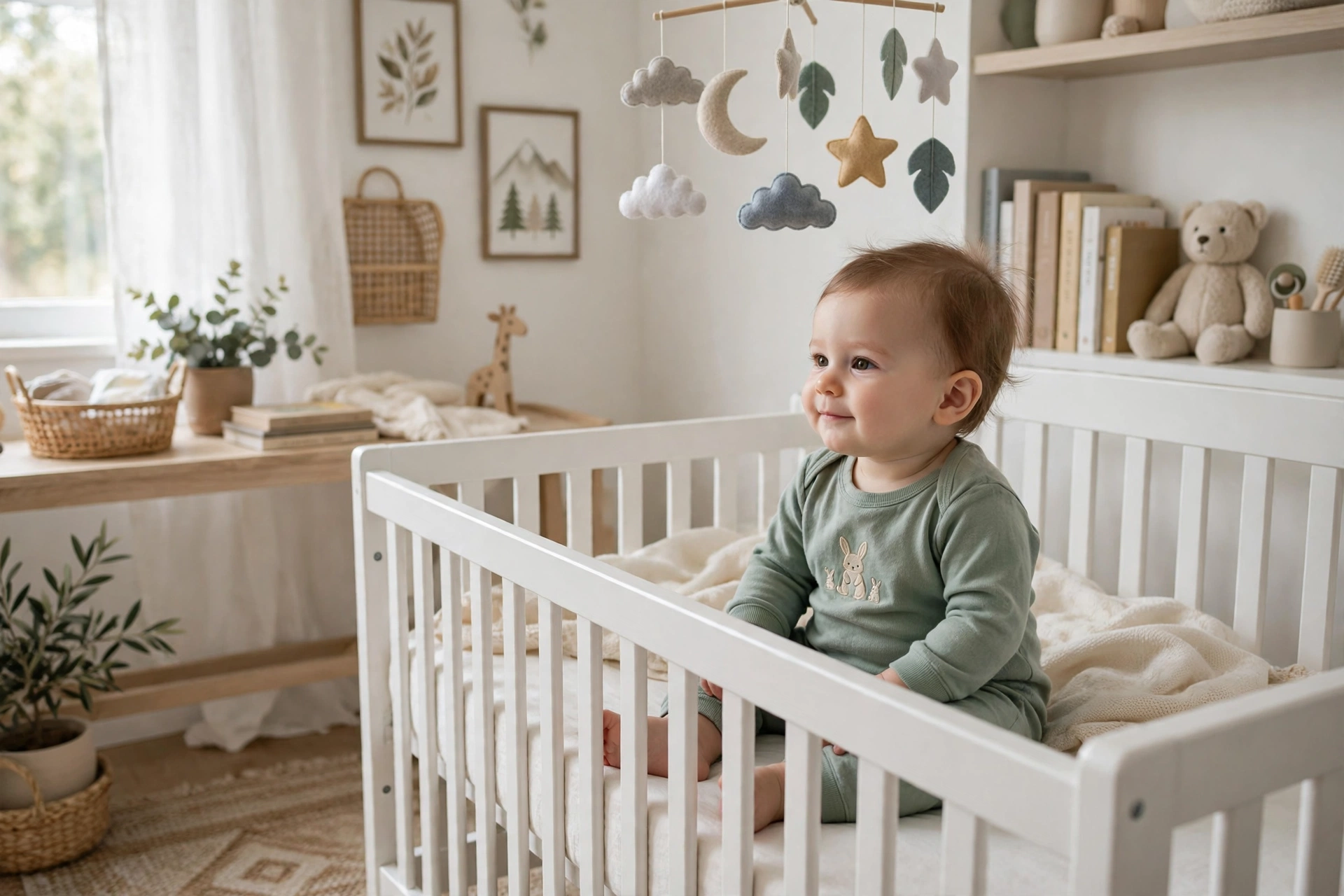
A baby who only ever sees the crib at bedtime, when she is tired and you are leaving, learns that the crib means separation. Change that during the day. Once or twice a day, put her in the crib for five to ten minutes while she is awake and happy, and stay right beside her. Talk to her, sing, let her look around, then pick her up. The crib is a safe, boring, familiar place. Keep it short.
3. Keep the crib in your room first

Pediatric guidance recommends room-sharing, with the baby on a separate sleep surface in your room, for at least the first six months, and it also makes the crib transition easier. When the crib stands beside your bed, she can hear you breathe, and you can reach her in seconds. Move the crib to her own room later, when the nights are steadier, and keep everything else the same: same crib, same sleep sack, same sounds, same routine.
Set the Stage for the Night
4. Make the room truly dark
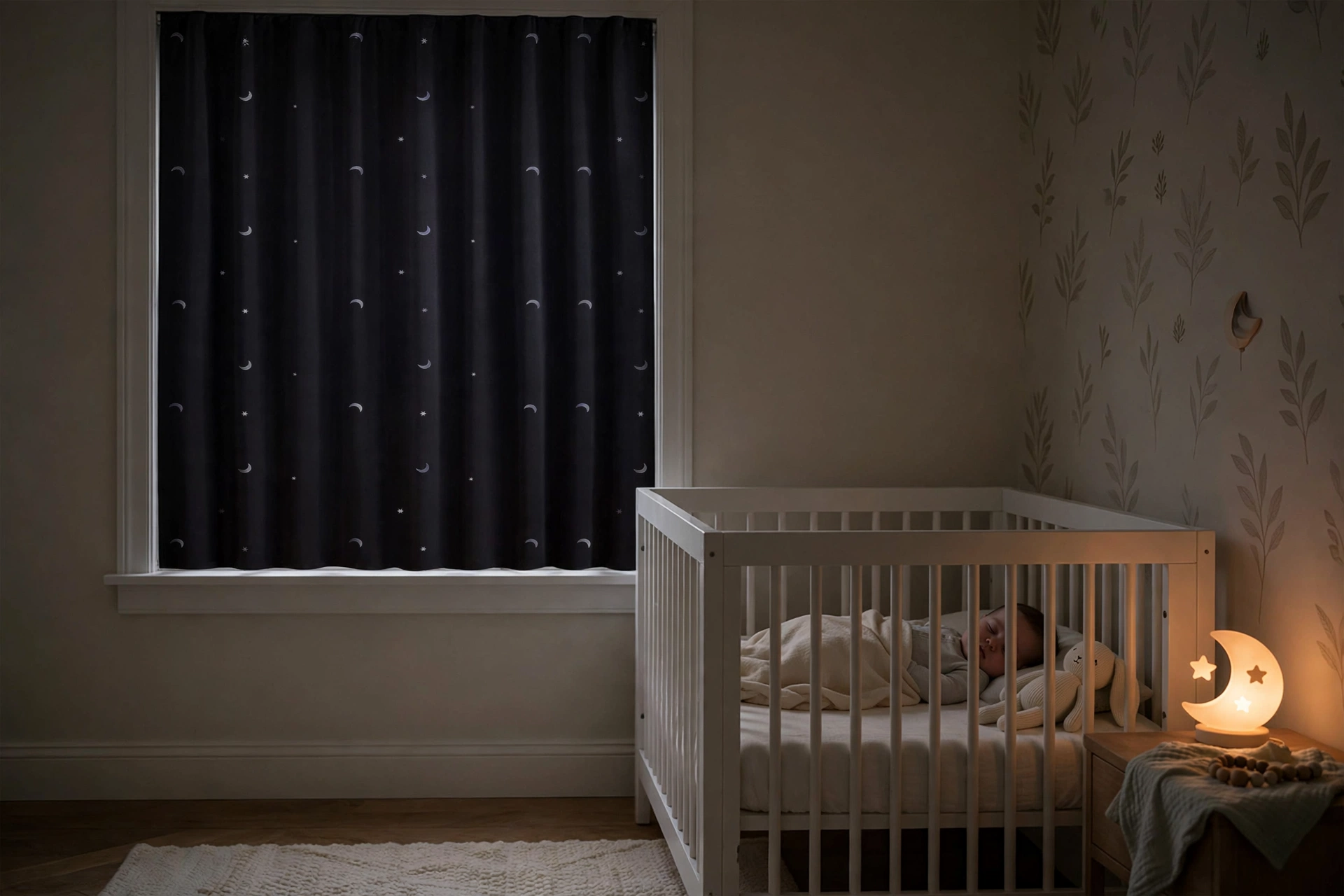
Light is the strongest signal to a baby’s clock that it is daytime. True darkness tells her clock it is night, and it helps her link sleep cycles instead of waking fully at every light change. For early mornings it is the difference between a 5 a.m. wake-up and a 6:30 one. If your curtains leak light, a portable blackout shade is the cheapest fix I know. The Amazon Basics portable shade (moon and stars print, 50 by 78 inches) is the one we used.
Amazon Basics Portable Blackout Curtain Shade, Moon and Stars
Portable blackout shade with suction cups, 50 by 78 inches, moon and stars print.
5. Run white noise all night

Continuous white noise does two jobs at once: it masks the doorbell, the dog, and the older sibling’s footsteps, and it becomes a sleep cue she recognizes between cycles. The key word is continuous. A machine that switches off after thirty minutes leaves her in silence right when the next light-sleep stage arrives. Keep the volume modest, about as loud as a running shower heard from the next room, and place the machine across the room from the crib, never inside it or clipped to it. The Yogasleep Dohm is the machine I landed on.
Yogasleep Dohm Classic White Noise Machine
A real fan inside makes the sound, with two speeds and adjustable tone and volume.
6. Dress her for the room, not the season
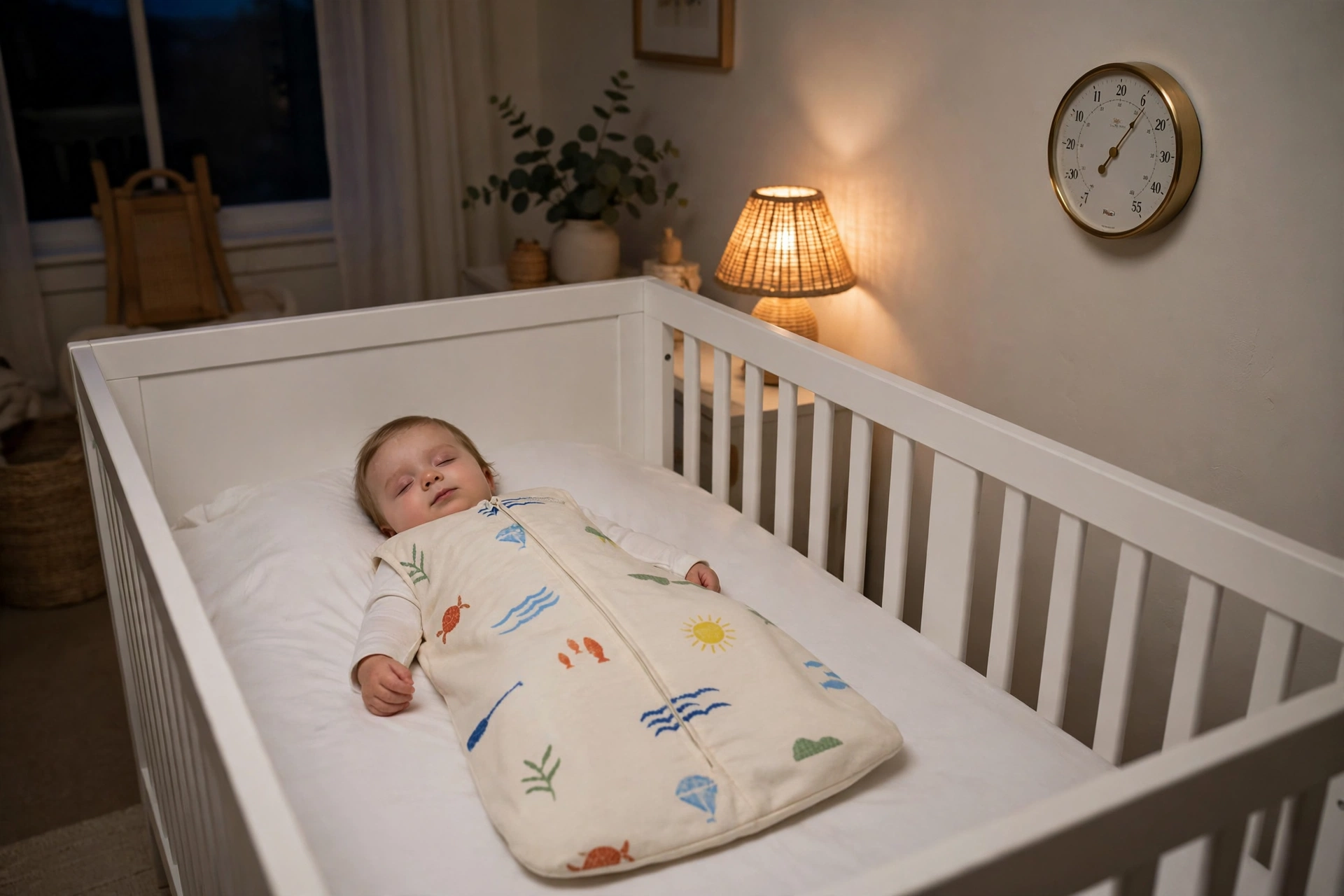
The comfortable zone for a baby’s room is roughly 68 to 72 degrees Fahrenheit. Dress her in about one more light layer than you are wearing, and match her bedtime layer to the room, not to the weather outside. A sleep sack is the usual answer once swaddling ends: it keeps her warm without loose blankets, and it becomes a sleep cue in itself. Check the back of her neck: warm and dry is right, hot or sweaty means a layer comes off. My pick is the HALO SleepSack Swaddle: the wings adjust three ways, so once she shows any sign of rolling, use it arms-out.
HALO SleepSack Swaddle, Cotton (1.5 TOG)
Three-way adjustable swaddle that transitions arms-in to arms-out, with an inverted zipper.
7. Check the mattress fit
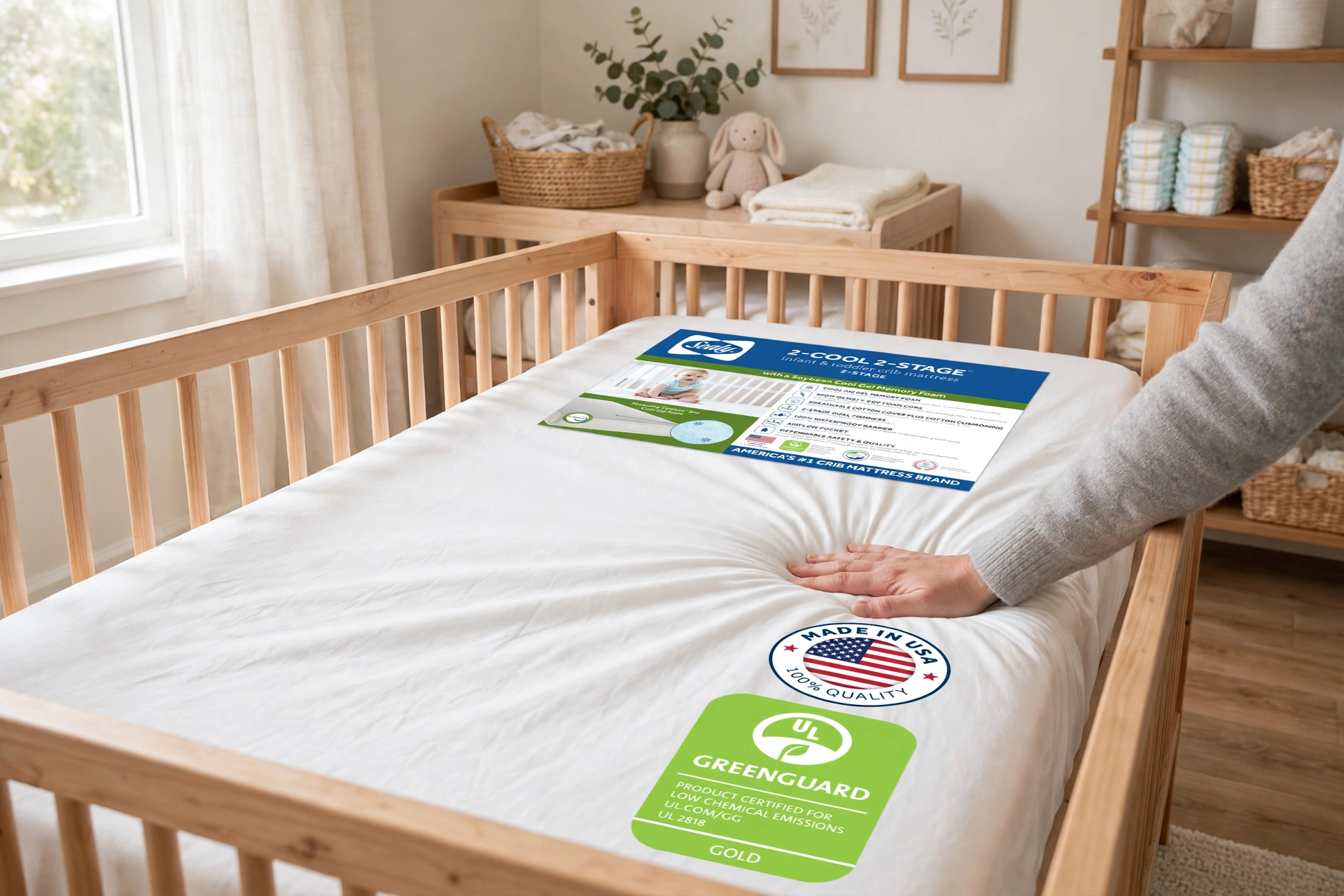
A baby notices a bad mattress, except she cannot tell you about it, so she just wakes up. The mattress should be firm and flat, with a tight-fitting sheet and nothing else on it. Do the two-finger test: if you can fit more than two fingers between the mattress and the crib side, the fit is too loose and the mattress needs replacing. A standard crib mattress measures about 52 by 28 inches. If yours is soft, sagging, or secondhand with an unknown history, replace it. The Sealy Soybean is the one I would buy: a firm two-stage mattress, GREENGUARD Gold Certified.
Sealy Baby Soybean 2 Stage Crib Mattress
Firm two-stage crib mattress, GREENGUARD Gold Certified, 52 by 28 inches, fits standard cribs.
The Bedtime Routine That Works
8. Keep the same short routine every night

A routine is not a performance. It is the same four or five steps, in the same order, every single night, for about twenty to thirty minutes: feed, warm bath or wipe-down, pajamas and sleep sack, one short book or song, lights out. The order matters more than the steps: when the same thing always follows the same thing, her body starts to wind down before the lights go out.
9. Read the same short book

The book is the calmest step of the routine, and the same book every night is the point. The same words, the same rhythm, the same lap, every night: that repetition tells her sleep is coming. Pick a short one, because a book that drags on past her sleepy window wakes her back up. Ours was Goodnight Moon, the board book edition, short enough to finish before she gets restless.
Goodnight Moon Board Book
The classic short bedtime board book, sturdy enough to survive being grabbed.
10. Move the last feed earlier

If she always falls asleep while feeding, then feeding is the thing she needs at 2 a.m., and she will ask for it at every cycle change. Move the feed earlier in the routine, so the feed ends and something else comes last. Feed her first, then do the bath, the pajamas, and the book, so the last thing she remembers before the crib is a song. A hungry baby still gets fed at night. The goal is only to break the link between feeding and falling asleep.
11. Put her down drowsy but awake

Watch for sleepy cues (slower blinks, rubbing eyes, zoning out), then put her in the crib while she is drowsy but still awake. She needs practice falling asleep where she wakes between cycles, so the place feels familiar at 2 a.m. If you transfer a baby who is already fully asleep, wait 15 to 20 minutes after sleep starts, lower her slowly (feet, then bottom, then head), and keep a hand on her chest for 60 to 90 seconds before you step away.
When She Wakes at 2 A.M.
12. Pause before you rush in
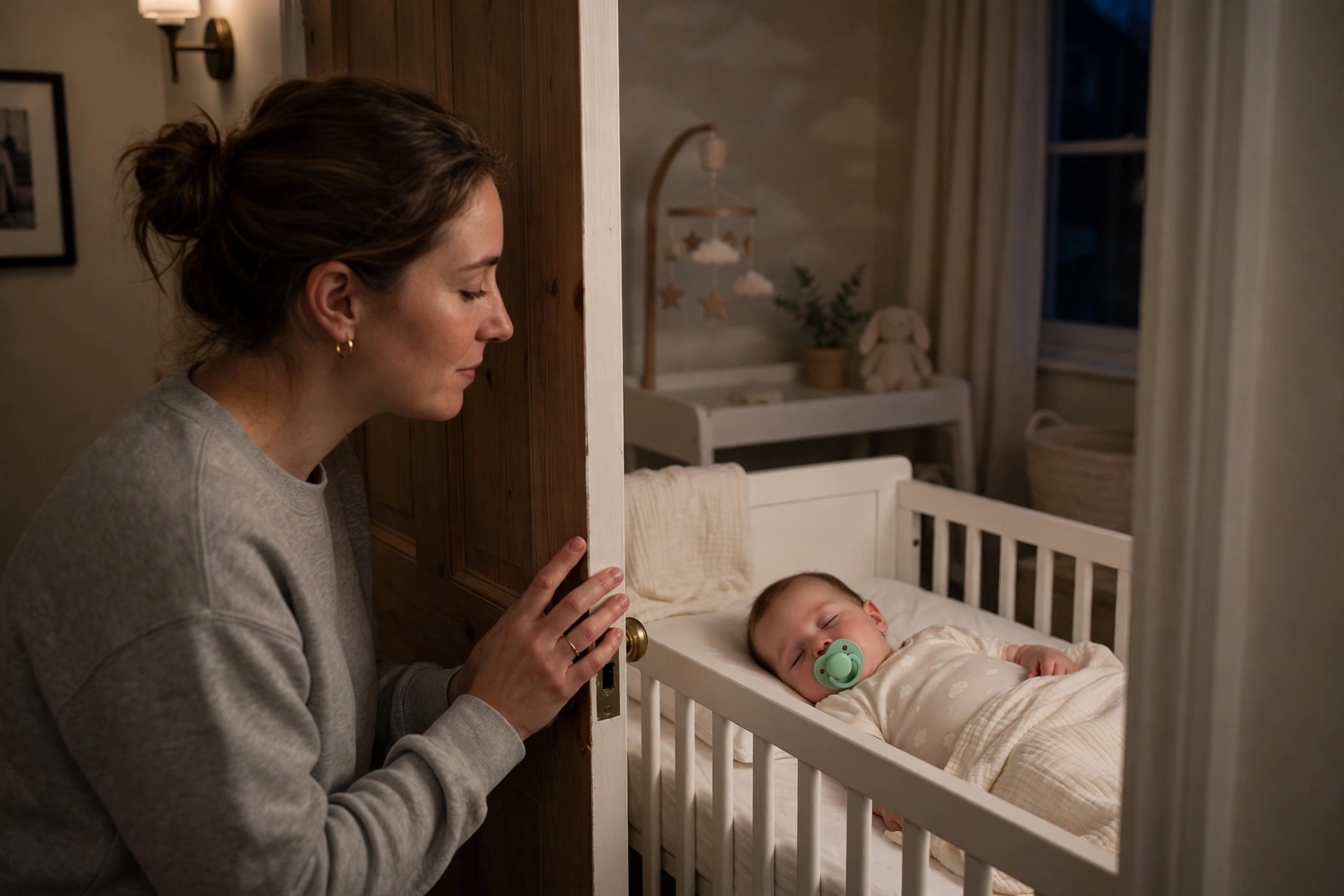
When she wakes, wait two to three minutes before going to her. Babies make a surprising amount of noise between sleep cycles (grunts, whimpers, half-cries) without being fully awake, and many settle on their own if nobody arrives to wake them up properly. Listen first. If the sounds are soft and fading, she is likely resettling. If they build into a real cry, go in, and keep it boring. If she takes a pacifier, offer it at bedtime once feeding is established: the Philips Avent Soothie is the one hospitals hand out.
Philips Avent Soothie Pacifier, 0-3 Months, 4-Pack
One-piece pacifier in medical-grade silicone, sized for babies 0 to 3 months.
13. Keep night wakings boring

Every night waking is a test of whether the night is interesting. If the lights come on, if there is talking and eye contact and a tour of the room, the night becomes worth waking up for. If the night stays dark, quiet, and dull, there is nothing to stay awake for. Change her only if she needs it. Feed her if she is hungry, and put her straight back down. No new toys, no bright phone screen, no conversation. A small elephant night light gives a soft glow for night checks.
Elephant 3D Night Light
A color-changing elephant lamp with a soft glow for night checks.
14. Know when to call the pediatrician

Most crib sleep trouble is normal, but some sleep changes are worth a call. Contact your pediatrician if you notice a fever alongside the sleep changes, refusal to eat during the day and night, weight loss or poor weight gain, excessive sleepiness (hard to wake, floppy, not alert during awake time), no improvement after eight weeks of disrupted sleep, or loud, persistent snoring or pauses in breathing. Bring your notes: bedtime, wake times, and night feeds.
Want More Than 14 Tips?
The 14 tips above are free, complete, and enough to get most families through the crib transition. If you want the deeper version, we are putting together a Crib Sleep Survival Pack: the 14 tips expanded to 30, with a sleep log, a wake-window card, and a sample routine card. There is no buy link yet, because the pack is still being built.
Shop This Post
| Product | Used For | |
|---|---|---|
| Amazon Basics Portable Blackout Shade | Dark room (Tip 4) | (Check Price) |
| Yogasleep Dohm White Noise Machine | White noise (Tip 5) | (Check Price) |
| HALO SleepSack Swaddle | Sleep sack (Tip 6) | (Check Price) |
| Sealy Baby Soybean Crib Mattress | Mattress fit (Tip 7) | (Check Price) |
| Goodnight Moon (Board Book) | Bedtime story (Tip 9) | (Check Price) |
| Philips Avent Soothie Pacifier | Bedtime pacifier (Tip 12) | (Check Price) |
| Elephant 3D Night Light | Soft glow (Tip 13) | (Check Price) |
Frequently Asked Questions
How long does it take for a baby to sleep in the crib through the night? Most families see the first longer stretch after one to two weeks of steady practice, and a reliable pattern after three to four weeks. The exact timing depends on age: a four-month-old is learning to link sleep cycles for the first time, while a nine-month-old usually has the skill and only needs the crib to feel familiar.
Should I sleep train to get my baby to sleep in the crib? You do not have to. The tips in this guide are gentle methods: crib familiarity, a steady routine, drowsy-but-awake practice, and boring night wakings. If you do want a structured method, most pediatric guidance considers sleep training safe from around four to six months onward, and the gentle options (gradual withdrawal, pick-up/put-down, the chair method) fit this guide.
What if my baby only sleeps when held? Start with tip 1, one crib nap a day, and tip 2, calm crib time while she is awake. A baby who only sleeps when held has never had the chance to learn anything else, and the crib is not the problem, the lack of practice is. Keep the held naps for the rest of the day, and let the crib naps build the skill slowly. Most held-sleepers take two to three weeks.
Is it safe to run a white noise machine all night? Yes, when it is used the right way: continuous sound, modest volume (about as loud as a running shower heard from the next room), and the machine placed across the room from the crib, never inside it or clipped to it. A machine that runs all night is safer than one that switches off, because silence at 2 a.m. is what wakes her.
When should I move the crib out of my room? Pediatric guidance recommends room-sharing for at least the first six months, and many families keep the crib in their room until nine to twelve months. Move it when the nights are steadier and she is linking cycles on her own. When you do move it, keep everything else the same.
Longer Nights Are Coming
Getting your baby to sleep in the crib through the night feels endless at 2 a.m., and then one morning you realize she slept a six-hour stretch and you cannot quite remember the last bad night. Pick one tip from this list and try it tonight. Not all fourteen, just one. One small change, kept steady for a week, does more than a whole new system abandoned by Thursday.
More Baby Sleep Guides