10 Gentle Sleep Expert Approved Techniques for Sleep Training Toddlers That Actually Work
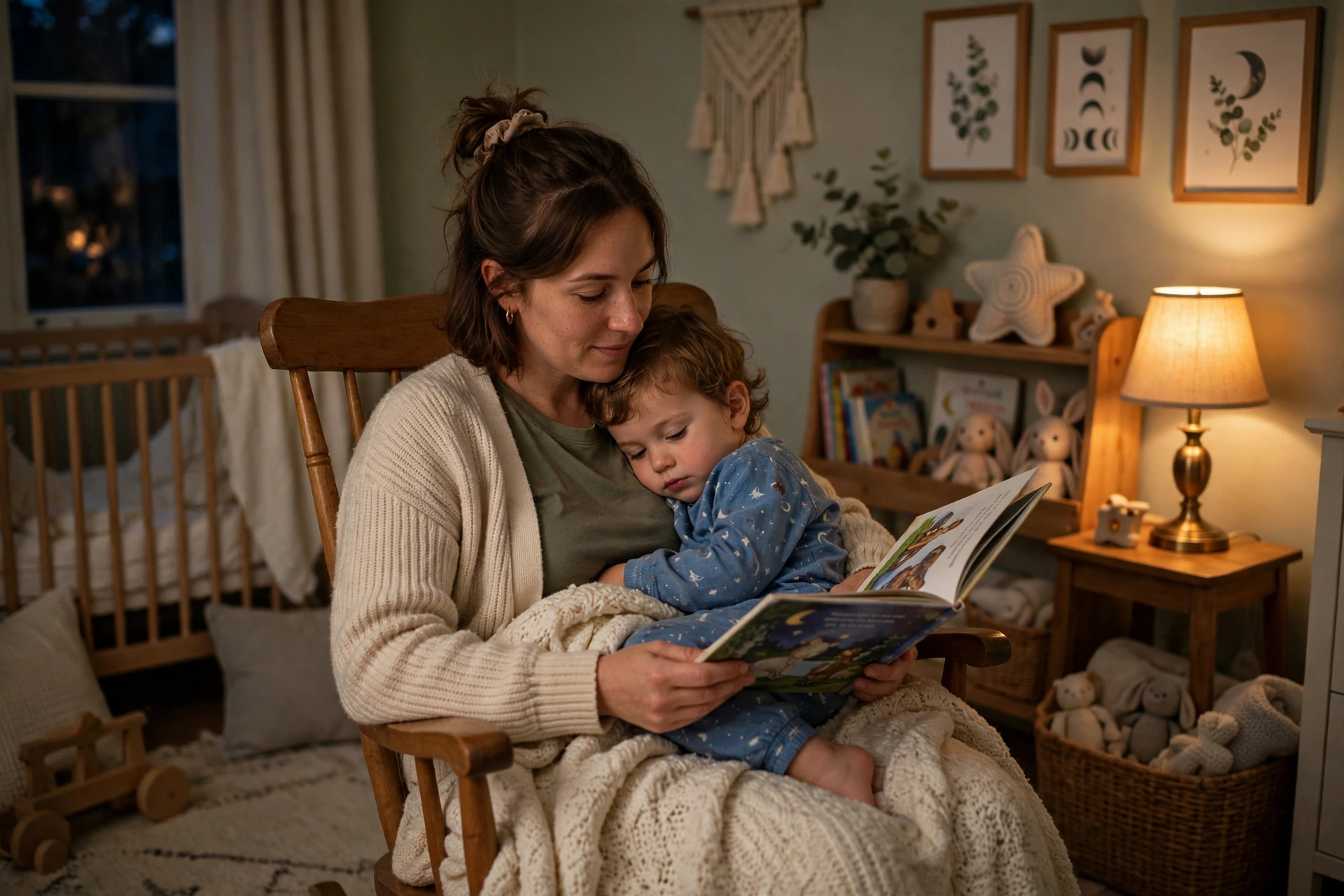
Sleep training a toddler is not the same job as sleep training a baby. A baby cries and you guess. A toddler negotiates. Mine once asked for water, then a different cup, then a story about the water. Toddlers have opinions, strong legs, and a deep understanding of how to stall.
These 10 sleep expert approved techniques for sleep training toddlers come from the published guidance of pediatric sleep specialists, from Dr. Richard Ferber’s graduated check-ins to Elizabeth Pantley’s no-cry approach. Each one comes with its honest trade-offs, so you can pick the technique that fits your toddler and your family’s limits.
Heads up: this post contains affiliate links. If you buy through them, MamaKinder may earn a small commission at no extra cost to you, which helps keep these guides free.
If you are new to the subject, start with our Baby Sleep Guide first. It covers the safe-sleep rules and how toddler sleep actually works, and everything below builds on it.
Quick Picks: Which Technique Fits Your Toddler?
| Technique | How fast | Tears | Best for |
|---|---|---|---|
| 1. The same-every-night routine | 1 to 2 weeks | Almost none | Every family, the foundation |
| 2. The sleep-ready room | A few nights | Almost none | Light sleepers and early risers |
| 3. The wind-down hour | 1 to 2 weeks | Almost none | Toddlers who stall with big feelings |
| 4. The chair method | 2 to 3 weeks | Low to medium | Separation anxiety, gentle parents |
| 5. Pick up, put down | 2 to 4 weeks | Low | Toddlers who need touch to calm |
| 6. Bedtime fading | 1 to 3 weeks | Low | Toddlers who fight an early bedtime |
| 7. Graduated extinction (Ferber) | 3 to 7 nights | Medium | Parents who want a clear, fast plan |
| 8. The toddler clock | 1 to 2 weeks | Low | Early risers and bedtime escapers |
| 9. The Sleep Fairy rewards | 1 to 2 weeks | Almost none | Toddlers who love games and stickers |
| 10. Choice and control | A few nights | Almost none | Strong-willed toddlers who say no |
Before You Pick One: Is Your Toddler Ready?
Most pediatric sleep guidance puts formal sleep training in the window from about 5 months to 5 years, but for toddlers the sweet spot is usually 18 months and up, when a child can understand a simple instruction like “stay in bed until the light turns green.” Look for the readiness signs first: your toddler falls asleep at a predictable time most nights and can settle with brief reassurance. Talk to your pediatrician before you start, especially if your toddler snores or breathes loudly in sleep, and pause the whole project during illness, teething, travel, or a big change like a new sibling or a move. It also helps to know the common baby sleep training mistakes so you do not repeat them.
The Foundation First
1. The same-every-night routine. Every method on this list works better on top of a routine. A routine is a sequence, not a show: bath or wipe-down, pajamas, brush teeth, one short book, a song, lights out, about 20 to 30 minutes, same order every night. The sameness is the point. After a week or two the routine itself starts making her sleepy before the lights go off. Ours ends with one book: Goodnight Moon, short enough to finish before anyone gets restless, and familiar enough that my 4-year-old now says the lines along with me. Best for every family, and the one technique you should never skip.
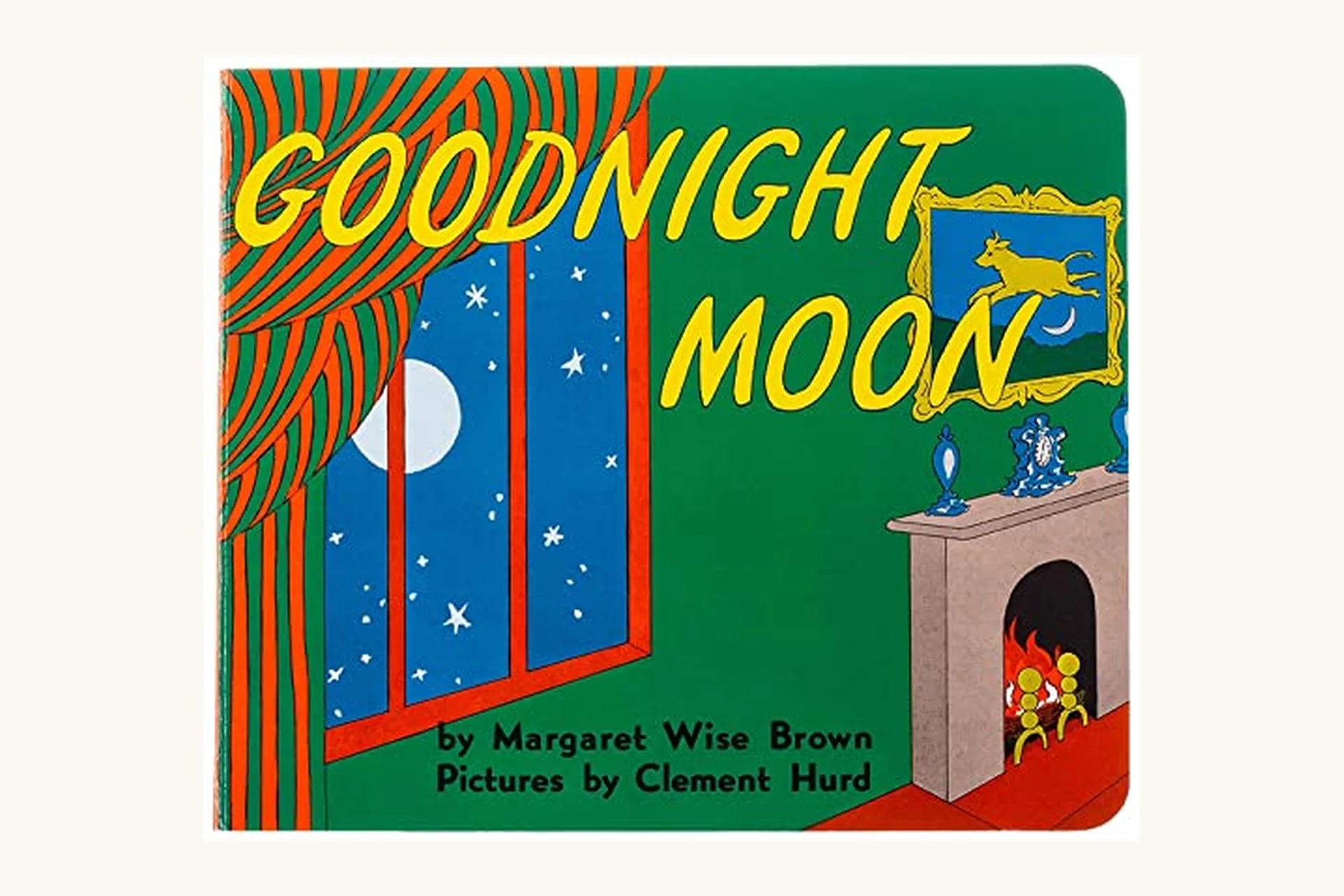
Goodnight Moon (Board Book)
The classic goodnight book, short enough to finish before anyone gets restless.
2. The sleep-ready room: dark, cool, and steady. A toddler’s room can quietly fight sleep all night. Light says morning, a warm room says playtime, and a hallway TV says something interesting is happening without her. True darkness matters most for naps and early bedtimes. The NICETOWN set is the one I reach for, because its sewn-in black liner actually blocks light instead of just dimming it. For sound, a real-fan machine beats a looping recording. The Yogasleep Dohm is the machine I landed on, with a real fan inside, and tone and volume adjust by twisting the cap. Keep the volume modest and across the room, not in the bed, and aim for roughly 68 to 72 degrees. Best for light sleepers and early risers.
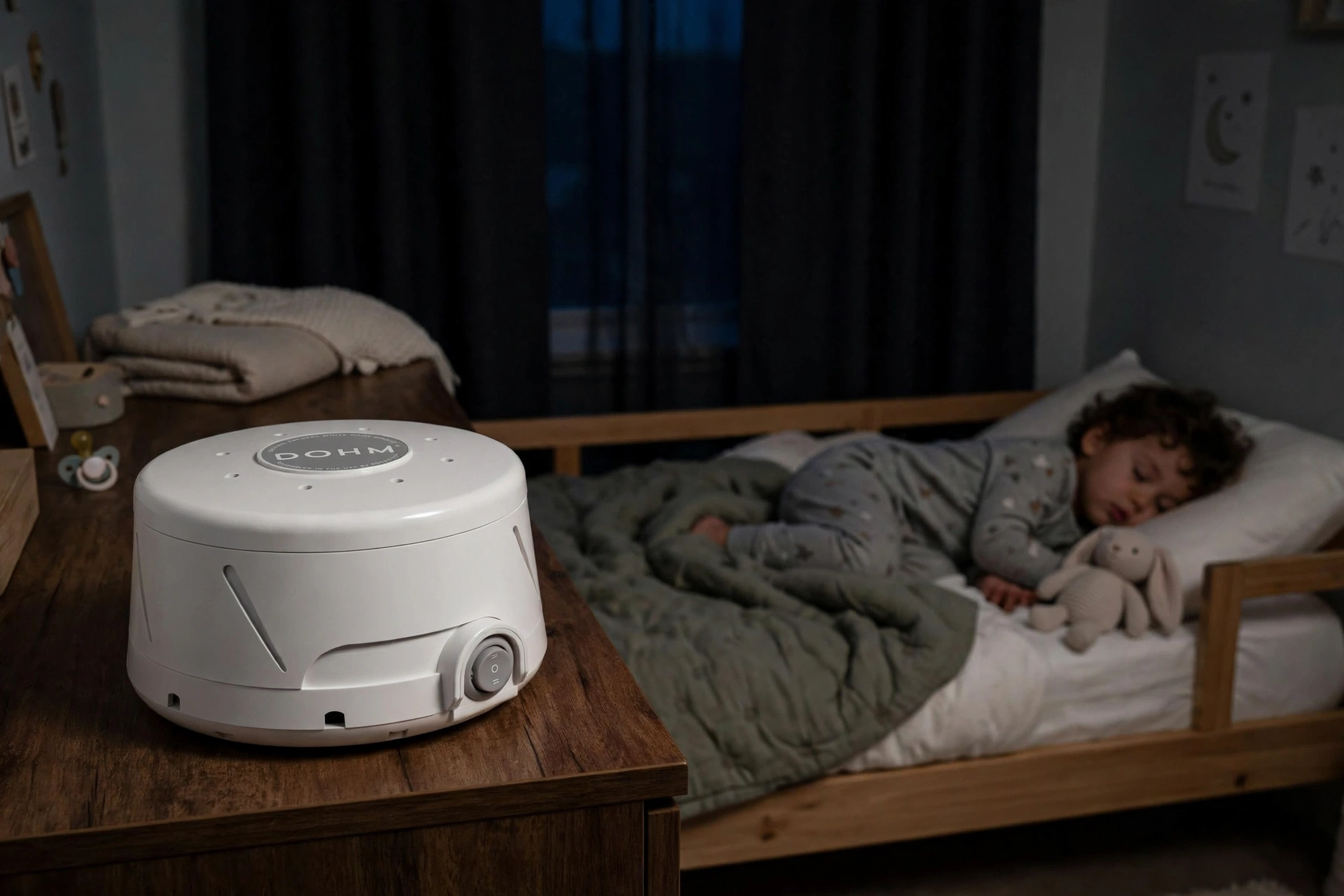

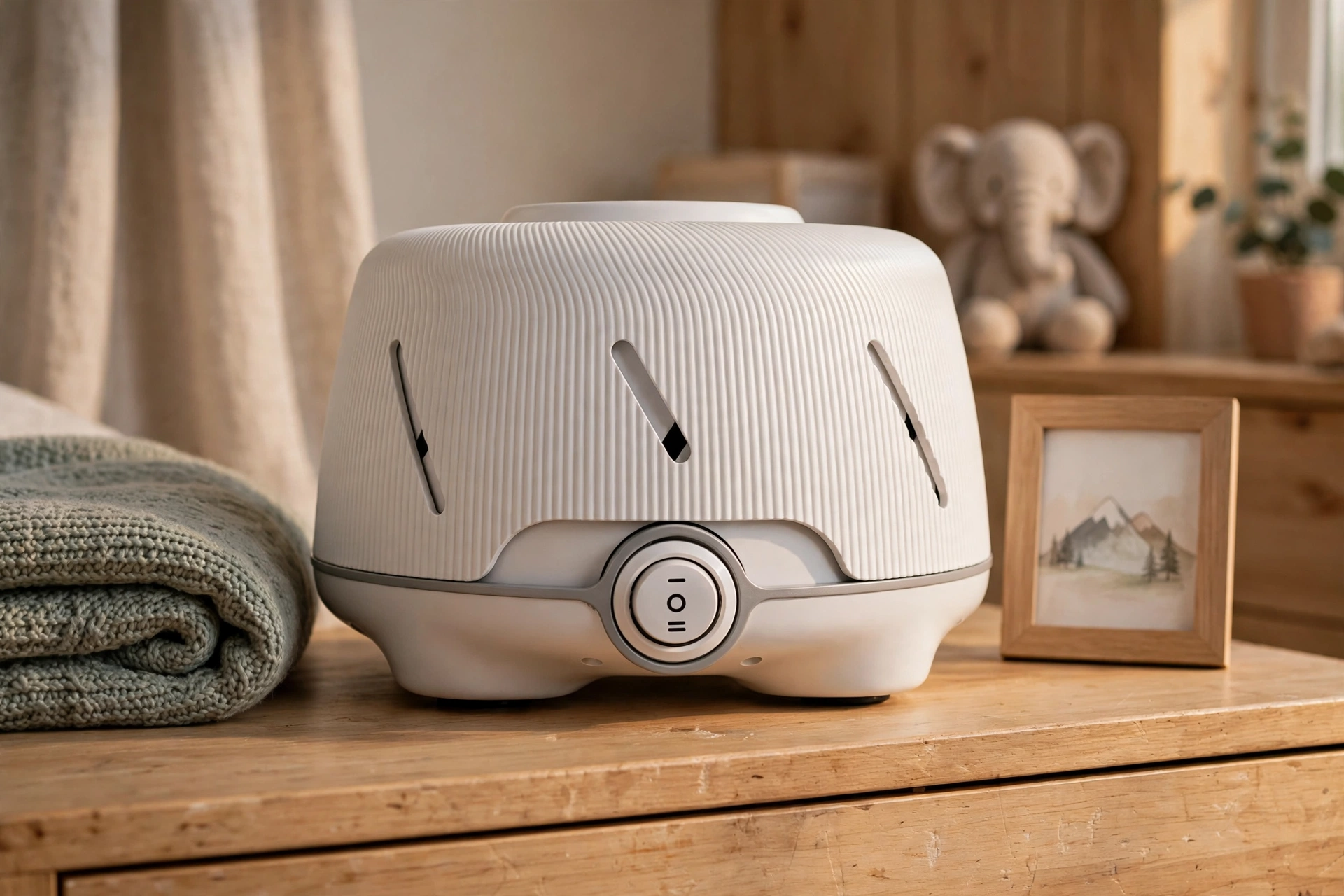
Yogasleep Dohm Classic White Noise Machine (White/Gray)
Yogasleep’s original white noise machine: soothing, natural sound from a real fan, with two speeds and adjustable tone and volume.
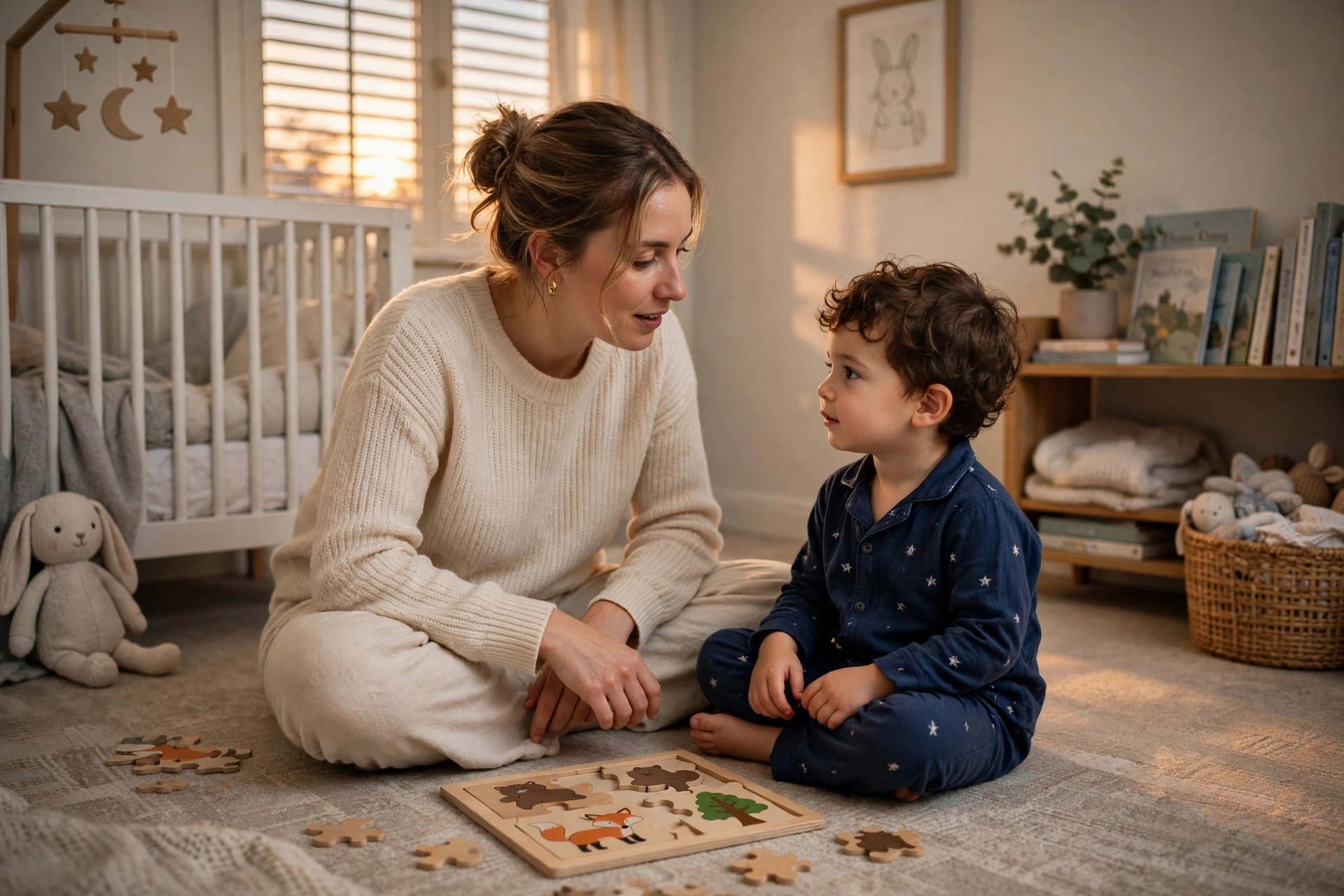
3. The wind-down hour: screens off, feelings out. Toddlers are tiny emotional tornadoes, and half the time they do not even know what they are feeling, they just know it is a lot. Screens make it worse: the light and the pace push melatonin down and wind a toddler up, so an hour of no screens before bed is one of the simplest sleep moves there is. Replace the screen with 5 to 10 minutes of feelings time, a short, calm chat about the day. Ask one small question, like “tell me one thing that felt big today,” and then just listen. Best for toddlers who stall bedtime with tears and sudden urgent feelings.
The Gentle Methods
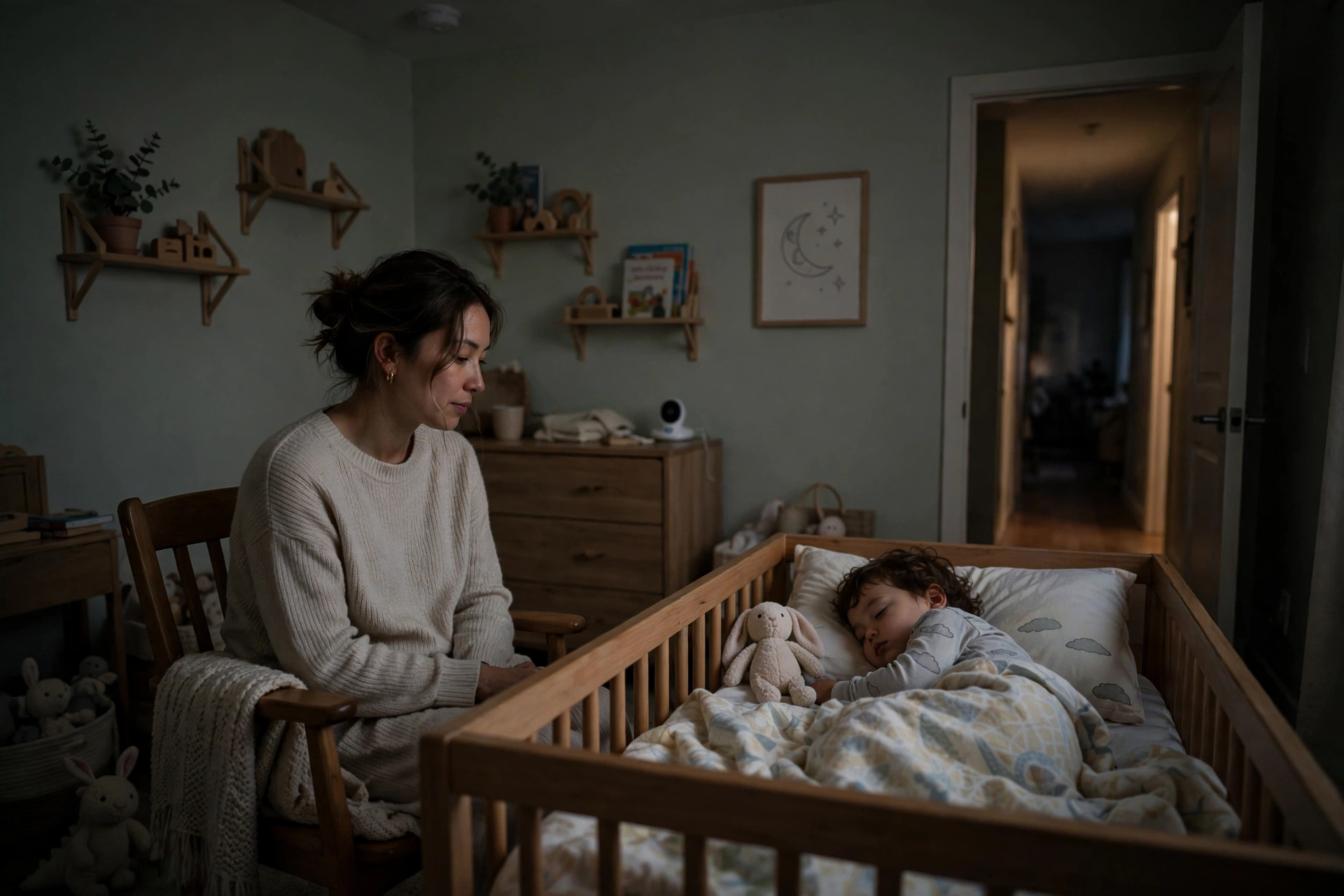
4. The chair method, or gradual retreat. This is the gentlest of the structured methods, popularized by sleep experts like Dr. Jodi Mindell, and often called camping out. You sit in a chair beside your toddler’s bed until she falls asleep, offering quiet reassurance but no rocking, no picking up, and no conversation. Every few nights, once she is comfortable, you move the chair a little farther away: to the middle of the room, then to the doorway, then just outside it where she can still hear you. Best for toddlers with separation anxiety. The trade-off is time: often two to three weeks, and it needs a parent who can sit quietly in a dark room without giving in and climbing into the bed.
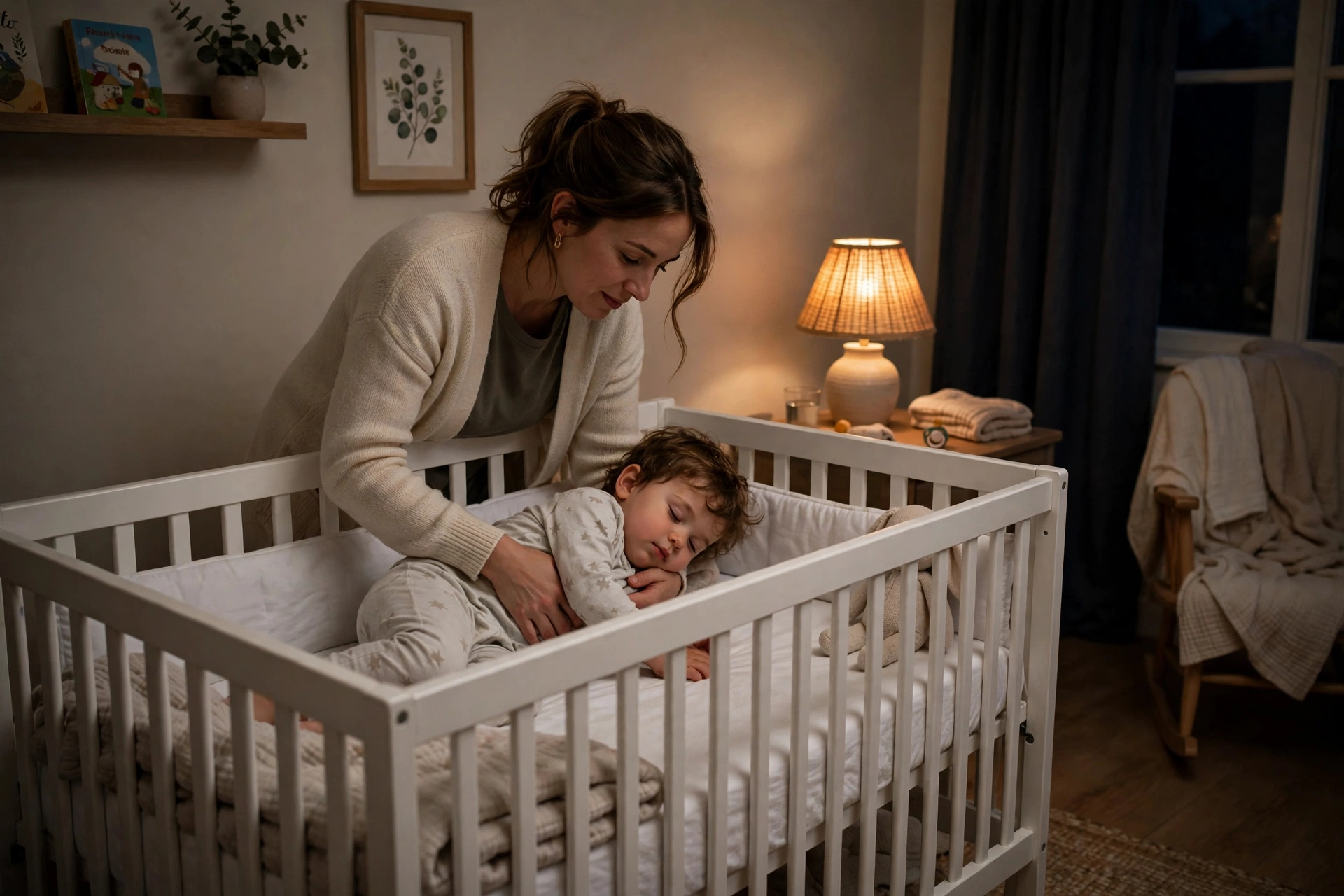
5. Pick up, put down. Popularized by Tracy Hogg in “The Baby Whisperer,” this one is exactly what it sounds like. You put your toddler down awake. When she cries, you pick her up, comfort her until she calms, and put her back down while she is still awake. Then you repeat it, as many times as it takes, until she falls asleep in her own bed. The first nights can mean dozens of pick-ups, so this method asks a lot of your back and your patience. Best for younger toddlers who need touch to calm down. The trade-off is stamina, and progress can look slow for the first week, which is when most parents quit.
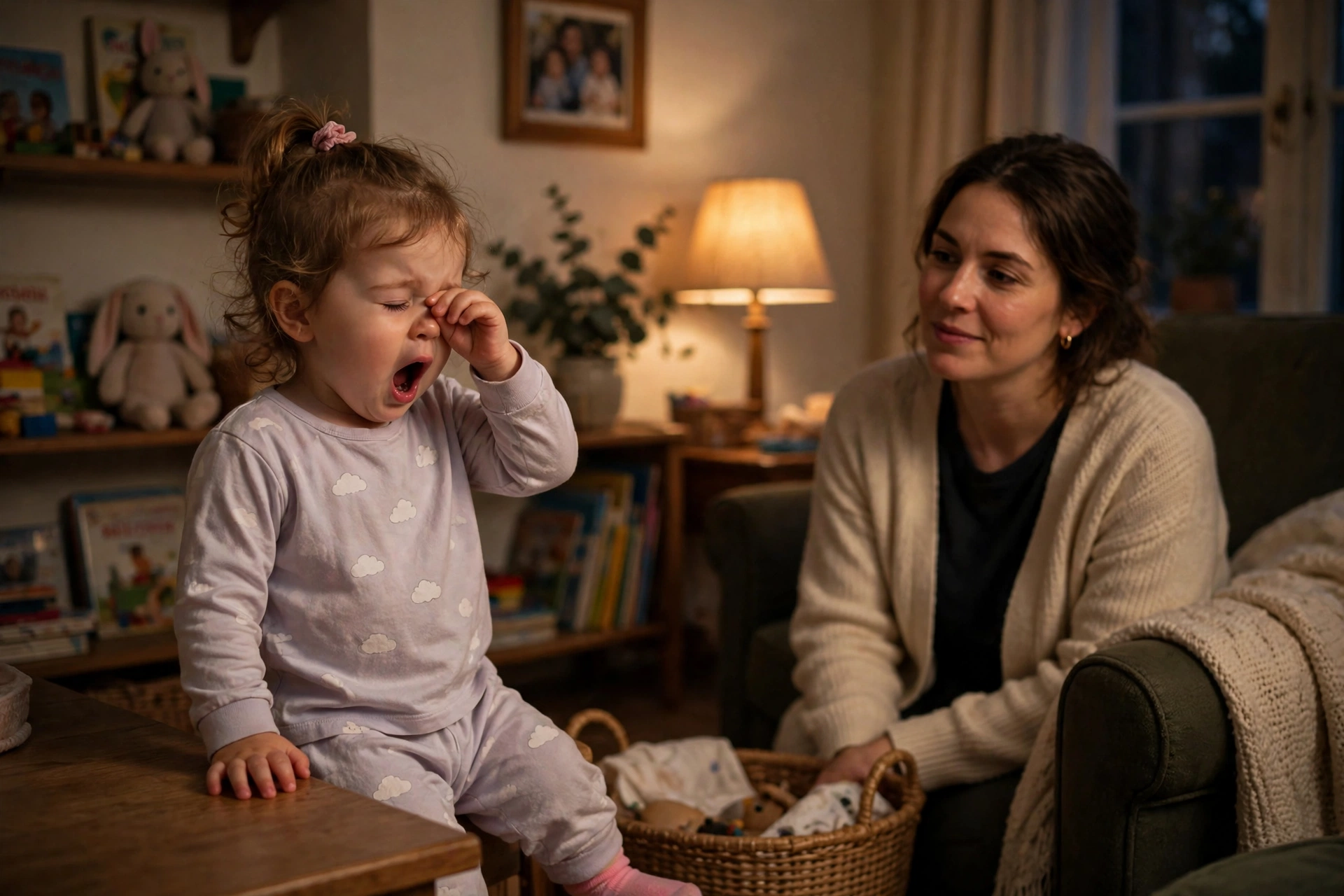
6. Bedtime fading. If your toddler treats bedtime like a suggestion and lies awake for an hour no matter what you do, the problem may be the clock, not the child. Bedtime fading: you stop trying to put her down when the clock says bedtime and instead watch for when her body actually starts winding down, even if that is 20 to 30 minutes later than usual for a few nights. Once she is falling asleep easily at that later time, you shift bedtime earlier by about 10 to 15 minutes every few nights. Best for toddlers who fight an early bedtime or wake up wired at 5 a.m. The trade-off is that it needs a consistent wake time in the morning to anchor the shift.
The Structured Methods
7. Graduated extinction, the Ferber check-ins. This is the most studied sleep training method there is, developed by pediatric sleep specialist Dr. Richard Ferber and described in his book “Solve Your Child’s Sleep Problems.” You put your toddler down awake after the routine, leave the room, and return at set intervals to offer brief verbal reassurance, without picking her up. Night one, the classic schedule is 3 minutes, then 5, then 10, then 10 minutes until she falls asleep, with the first interval a little longer each night. Best for parents who want a clear, fast plan, usually real improvement in 3 to 7 nights. The trade-off is honest: there will be crying, especially on nights one and two. Keep the checks dim and boring, and a small light helps. The Elephant 3D Night Light gives a soft glow you can see by. If the crying ever feels wrong for your child, pause and talk to your pediatrician.

8. The toddler clock. If your toddler pops out of bed like a toast slice at 5 a.m., a sleep training clock can be life-changing. Toddlers cannot read numbers, but they can read color: one color means stay in bed, another means it is morning. You set the clock so a sleep color glows all night, and when it switches to the wake color, your toddler is allowed to get up. The clock becomes the rule instead of you. The Hatch Rest 2nd Gen works well here, with a time-to-rise light, 18-plus sounds, and a night light that keep the cues identical night after night. Best for early risers. The trade-off is that it takes a week or two to click, and it will not work for a toddler under about 2.
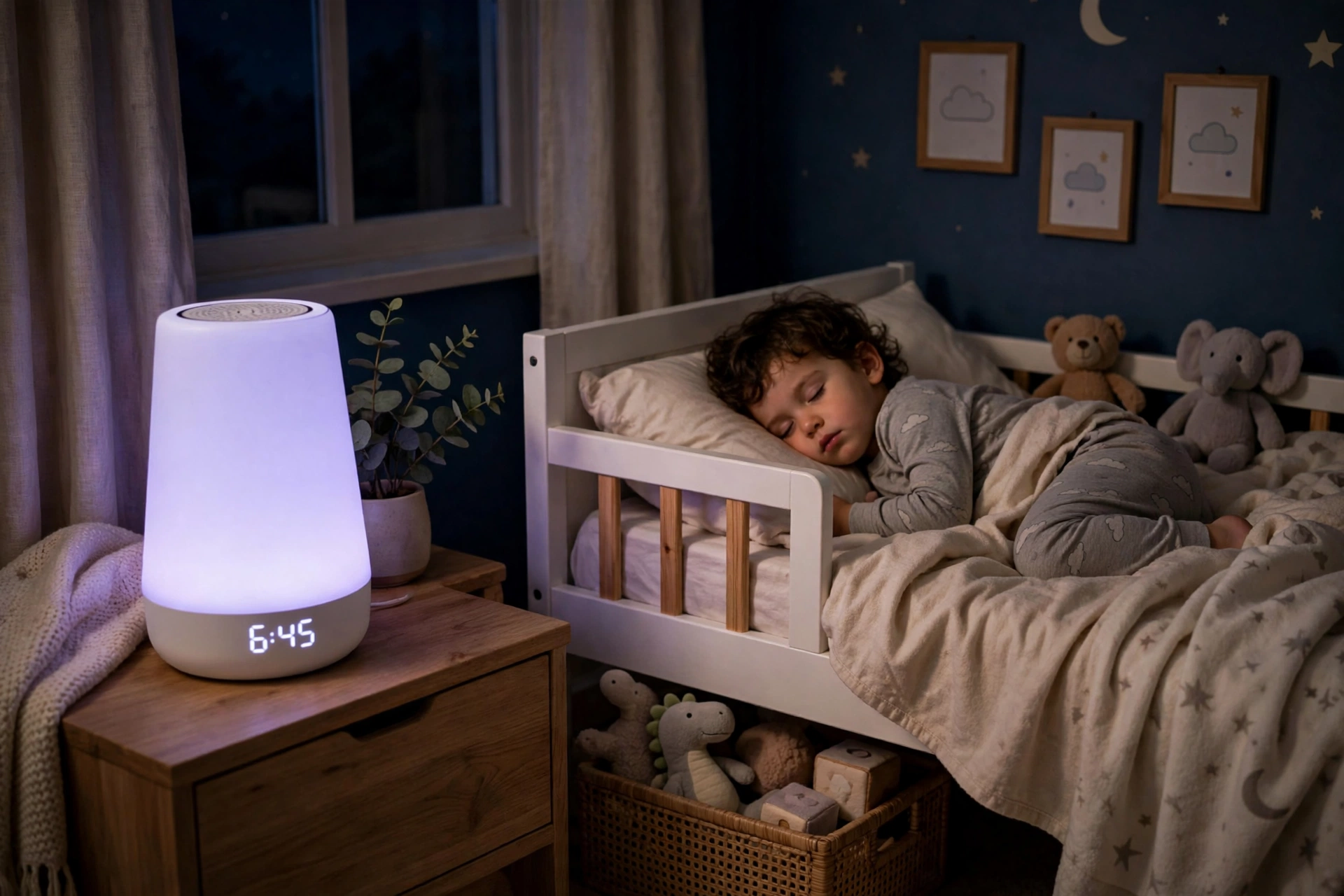
Hatch Rest 2nd Gen Sound Machine and Night Light
Time-to-Rise light, 18+ sounds, night light.
9. The Sleep Fairy reward system. Toddlers love games, and this one turns staying in bed into an adventure. Like the Tooth Fairy, the Sleep Fairy visits children who stay in bed and try their best to sleep, leaving a small token under the pillow: a sticker, a tiny note of praise, or a small trinket. Explain the rule once, in the daytime, and keep the reward small: the point is the celebration, not the prize. Use stickers you already have at home, there is no need to buy a special kit. Best for toddlers aged 2 and up who love praise and games. The trade-off is that rewards only work when the rest of the plan is consistent: a fairy cannot fix a bedtime that changes every night.

10. Choice and control, plus a sleep buddy. Toddlers love being in charge. Bedtime is the one part of the day where they get almost no say, so giving them a little control can turn a power struggle into a team effort. The trick is guided choices, options you approve of that still make them feel like the boss: dinosaur pajamas or rocket ones, Goodnight Moon or the puppy book, nightlight blue or purple, two goodnight kisses or three. Pair the choices with a sleep buddy, a special stuffed animal or blanket that lives only in the bed. Use the one they already love, there is no need to buy a new one. Best for strong-willed toddlers who stall with endless requests. The trade-off is that choices only work when they are real and small: offering a choice and then overruling it teaches your toddler the choices are a trick.

The Safe-Sleep Rules That Come First
The American Academy of Pediatrics basics are the floor every sleep plan stands on: baby on the back for every sleep until the first birthday, a firm flat surface with a fitted sheet, an empty crib with no pillows, loose blankets, bumpers, stuffed animals, or sleep positioners, and room-sharing without bed-sharing, ideally for at least the first six months. For toddlers in a bed: a safe, childproofed room, no loose cords, and a bed they cannot fall far from. Weighted sleep sacks and blankets are not recommended for babies. Falling asleep with a baby on a sofa or armchair is the most dangerous spot of all. A pacifier at naps and bedtime, once feeding is established, is linked to lower SIDS risk. Check the setup before you check the method.
Your 7-Night Plan
Pick ONE technique from this list, the one that fits your toddler and your limits, and give it seven full nights before you judge it. Write down bedtime, wake-ups, and how long each took: tired brains lie about how bad last night was. Keep the routine and the room the same every night. If there is no improvement at all after a full week, change one thing, not everything, and give that one thing another week. If your toddler was sleeping well and suddenly is not, check for the usual suspects first, teething, a cold, a regression, or a big change, and pause the training until the house is calm again. Our survival guide to the 4 month sleep regression has the week-by-week version for younger babies.
Want the whole plan in one place? We are putting together a Sleep Training Toolkit Pack: a workbook with a 7-night tracking log, a routine-builder card, a toddler-clock setup guide, a Sleep Fairy sticker chart, and 10 extra scenario fixes for teething, travel, regressions, and partner handoffs. There is no buy link yet, so nothing here is for sale today. When the pack is ready, it will be linked right here.
Shop This Post
| Product | Used For | ||
|---|---|---|---|
|
Goodnight Moon (Board Book) | The one short book in the routine (Technique 1) | Check Price |
|
NICETOWN Blackout Curtains, Set of 2 | True darkness for naps and bedtime (Technique 2) | Check Price |
|
Yogasleep Dohm Classic White Noise Machine | Real-fan white noise, all night long (Technique 2) | Check Price |
|
Elephant 3D Night Light | Dim light for Ferber check-ins (Technique 7) | Check Price |
|
Hatch Rest 2nd Gen Sound Machine | The toddler clock and same cues nightly (Technique 8) | Check Price |
Frequently Asked Questions
When should I start sleep training a toddler?
Most pediatric sleep guidance points to 18 months and up for toddlers, when a child can understand simple instructions like staying in bed until a light turns green. Formal training can be appropriate from about 5 months to 5 years.
Is sleep training the same as letting my toddler cry it out?
No. Sleep training is a family of methods that runs from gentler approaches, like the chair method and pick up, put down, to firmer ones like graduated extinction. Cry it out, or total extinction, is only one method on the firmer end.
How long does toddler sleep training take?
Give any one method a full week before you judge it. Firmer methods like graduated extinction often show improvement in 3 to 7 nights, while gentler methods like the chair method or pick up, put down can take 2 to 4 weeks.
What if my toddler was sleeping well and suddenly is not?
That is usually teething, illness, a regression, or a big change, not a failure of your training. Treat the cause first, and restart when the house is calm again.
Is white noise safe for toddlers?
Used sensibly, yes. Keep the volume modest, place the machine across the room rather than in or on the bed, and run it continuously rather than cycling it on and off.
You Are Not Doing It Wrong
Two babies taught me this: toddlers learn to sleep the way they learn everything, unevenly and on their own timeline. Keep the sleep space safe, offer the routine, pick one method, and protect your own rest. The long stretches come.
When your night owl becomes a toddler with opinions, our Toddler Parenting Tips guide is the next stop.